Every successful interview starts with knowing what to expect. In this blog, we’ll take you through the top SAR Data Analysis interview questions, breaking them down with expert tips to help you deliver impactful answers. Step into your next interview fully prepared and ready to succeed.
Questions Asked in SAR Data Analysis Interview
Q 1. Explain the difference between Stripmap and Spotlight SAR modes.
Stripmap and Spotlight are two fundamental acquisition modes in Synthetic Aperture Radar (SAR) that differ primarily in their antenna pointing strategy and the resulting spatial resolution and coverage. Imagine a spotlight focusing on a specific area, versus a strip of land being illuminated by a flashlight sweeping across it. That’s the essence of the difference.
Stripmap: In Stripmap mode, the SAR antenna points in a fixed direction, perpendicular to the flight path. As the sensor moves, it continuously illuminates a swath of terrain along its path. This results in a relatively wide swath width, but with lower resolution compared to Spotlight. Think of it like a wide-angle lens taking a panoramic picture – you get a broad view, but less detail. It’s ideal for large-area mapping projects.
Spotlight: In Spotlight mode, the antenna beam is steered electronically to continuously illuminate a smaller, pre-selected target area. This focusing effect yields much higher spatial resolution than Stripmap. It’s similar to using a telephoto lens to zoom in and capture fine details of a particular object. This mode is commonly used for applications requiring high-resolution imagery, like monitoring infrastructure or geological formations.
In summary:
- Stripmap: Wider swath, lower resolution, good for large area mapping.
- Spotlight: Narrower swath, higher resolution, good for detailed observation of specific areas.
Q 2. Describe the phenomenon of speckle noise in SAR imagery and methods for its reduction.
Speckle noise is a granular, multiplicative noise inherent in SAR imagery. It’s caused by the constructive and destructive interference of the radar waves reflected from multiple scatterers within a single resolution cell. Imagine looking at the ocean from a helicopter – the surface looks speckled and textured due to the varying reflections. This same phenomenon happens with radar signals.
Speckle reduction is crucial for accurate image interpretation. Several techniques are used:
- Spatial Filtering: Techniques like averaging adjacent pixels (e.g., using a moving average filter) smooth out the noise, but at the cost of some spatial resolution. This is a common and relatively simple approach.
- Adaptive Filtering: These filters adjust their parameters based on the local image characteristics, effectively reducing speckle while preserving edges and details better than fixed filters.
- Multi-looking: By combining multiple images with slightly different looks (angles), the speckle effect can be significantly reduced because the noise is partially uncorrelated across the looks. It is the most common method in practice
- Wavelet Transform Filtering: This sophisticated approach decomposes the image into different frequency components, allowing selective filtering of noise in specific frequency bands.
The choice of method depends on the application and the trade-off between noise reduction and preservation of image details. For example, in applications requiring precise measurements, adaptive filtering or wavelet methods might be preferred over simple averaging.
Q 3. What are the advantages and disadvantages of SAR compared to optical remote sensing?
SAR and optical remote sensing offer complementary capabilities for Earth observation. Optical sensors rely on reflected sunlight, while SAR uses its own emitted microwave signals. This fundamental difference leads to distinct advantages and disadvantages.
SAR Advantages:
- All-weather capability: SAR can penetrate clouds and darkness, making it ideal for monitoring in challenging weather conditions. Optical sensors are severely limited by cloud cover.
- Day and night operation: SAR is not dependent on sunlight.
- Penetration capability: Depending on the frequency used, SAR can penetrate certain materials like vegetation and dry soil, revealing subsurface structures.
- High resolution: Especially in spotlight mode, SAR can achieve very high spatial resolution.
SAR Disadvantages:
- Lower spatial resolution than the best optical sensors: While SAR can achieve high resolution, top-of-the-line optical systems can surpass this in some cases.
- Speckle noise: This inherent noise requires processing to mitigate.
- Higher cost: SAR systems are generally more expensive to develop and operate than optical systems.
- Geometric distortion: SAR images are often subject to geometric distortions that require correction.
Optical Advantages:
- High spectral resolution and natural color: Optical sensors capture detailed spectral information and produce images with natural color rendering.
- Lower cost generally: Optical systems are generally less expensive than SAR systems.
- Simpler data processing: Compared to SAR data, optical data processing is typically simpler.
Optical Disadvantages:
- Susceptible to weather conditions: Cloud cover significantly impacts data acquisition.
- Limited to daylight operation: Optical data acquisition is impossible at night.
- No penetration capability: Optical sensors can only image the surface.
In essence, SAR and optical are often used together for enhanced insights. For instance, a SAR image might help monitor deforestation in a cloudy region, while optical data provides details about vegetation types.
Q 4. Explain the concept of Interferometric SAR (InSAR) and its applications.
Interferometric SAR (InSAR) is a powerful technique that exploits the phase information of SAR signals acquired from slightly different positions (or at slightly different times) to measure the distance between the sensor and the Earth’s surface. By comparing the phases of two SAR images, we can detect minute changes in surface elevation or displacement. Think of it like creating a 3D topographic map by measuring the differences in the time it takes for radar waves to return.
The basic principle involves acquiring two SAR images of the same area, either from slightly different positions (using a single satellite with a baseline) or from the same position at different times (repeat-pass InSAR). The phase difference between the two images is directly related to the change in the distance between the sensor and the ground.
InSAR Applications:
- Digital Elevation Model (DEM) generation: InSAR is very effective at generating high-resolution DEMs.
- Ground deformation monitoring: This includes monitoring land subsidence, volcanic activity, earthquakes, and glacier movement.
- Infrastructure monitoring: Detecting structural changes in bridges, buildings, and dams.
- Precision agriculture: Assessing changes in soil moisture and topography for optimal farming practices.
However, InSAR processing is complex, requiring techniques to deal with atmospheric effects (like water vapor) and other error sources. Careful processing and validation are essential for reliable results.
Q 5. How does the choice of polarization affect SAR image interpretation?
The choice of polarization significantly impacts the backscattered signal and thus the interpretation of SAR images. Polarization refers to the orientation of the electric field vector of the electromagnetic wave. Common polarizations include HH (horizontal transmit, horizontal receive), VV (vertical transmit, vertical receive), HV (horizontal transmit, vertical receive), and VH (vertical transmit, horizontal receive). These combinations provide different information about the target’s surface properties.
HH and VV: These like-polarized configurations are sensitive to the surface roughness. Smooth surfaces, like water, generally have low backscatter in HH and VV, while rough surfaces show higher backscatter.
HV and VH: These cross-polarized configurations are sensitive to the scattering properties related to the orientation of scatterers. For example, they are sensitive to the presence of dihedrals (two flat surfaces forming a corner reflector) or trihedrals.
Example: HH polarization might be more effective in detecting buildings due to their strong backscattering; while HV can be useful in detecting features exhibiting a strong double-bounce effect.
Polarimetric SAR (PolSAR): This advanced technique uses multiple polarizations simultaneously to provide even richer information about the target. Analysis of the full polarimetric information can reveal details about the surface type, roughness, and orientation of scatterers which is very useful for classification. For example, PolSAR techniques can be used for land cover mapping, vegetation analysis, and urban area characterization.
Q 6. Describe different SAR data pre-processing techniques.
SAR data pre-processing is crucial for ensuring the quality and usability of the data. It involves various steps that correct for geometric distortions, radiometric inconsistencies, and noise.
Key pre-processing techniques include:
- Radiometric Calibration: Converting the raw sensor signal into physical units (e.g., backscatter coefficient). This corrects for variations in the sensor’s response and ensures consistent measurements across the image.
- Geometric Correction: Removing geometric distortions like range curvature and terrain effects to ensure correct spatial representation. Techniques like terrain correction and orthorectification are used here.
- Speckle Filtering: Reducing the inherent speckle noise, as discussed earlier.
- Atmospheric Correction: Correcting for the effects of atmospheric attenuation and phase delay on the signal. This is especially important for InSAR processing.
- Multilooking: Reducing speckle noise by averaging multiple looks of the same scene.
- Terrain Correction: Correcting for the effects of terrain variations on the image geometry. Orthorectification is the most common and precise terrain correction method.
The specific pre-processing steps required depend on the application and the quality of the raw data. Software packages like SNAP, ENVI, and SARscape provide tools for these processes.
Q 7. Explain the concept of geometric correction in SAR imagery.
Geometric correction in SAR imagery is the process of transforming the raw SAR data to a map projection, accurately representing the geographic location of features on the Earth’s surface. Raw SAR images suffer from various geometric distortions primarily caused by the sensor’s geometry, the Earth’s curvature, and the terrain relief.
Types of Geometric Distortions:
- Range and Azimuth distortions: These distortions arise from the geometry of the SAR acquisition process, leading to non-uniform scaling across the image.
- Terrain effects: Slopes and elevation variations cause foreshortening (near slopes appear compressed) and layover (high points appear shifted), altering the true positions of features.
Geometric Correction Techniques:
- Orthorectification: The most precise method. It involves using a digital elevation model (DEM) to correct for terrain-induced distortions and project the image to a map projection. This creates a georeferenced image, suitable for accurate geographic analysis. It effectively removes foreshortening and layover effects.
- Simple geometric correction: Using ground control points (GCPs) and a transformation model (e.g., polynomial transformation) to map the raw SAR pixel coordinates to geographic coordinates. This is less precise than orthorectification, especially in hilly areas.
The choice of geometric correction method depends on the accuracy requirements and the availability of DEM data. Orthorectification, while computationally more demanding, is crucial for applications needing high geographic accuracy.
Q 8. How do you perform radiometric calibration of SAR data?
Radiometric calibration in SAR data is crucial for converting the raw sensor measurements (digital numbers or DN) into physically meaningful units, usually backscattering coefficient (σ⁰) expressed in decibels (dB). This process corrects for various system-dependent factors that affect the received signal strength, ensuring accurate quantitative analysis. It’s like calibrating a kitchen scale – you need to ensure it accurately reflects the true weight of ingredients before using it for a recipe.
The process typically involves several steps:
- Sensor-specific calibration: Manufacturers provide calibration parameters that account for antenna gain, system losses, and other internal factors. This information is used to correct the raw DN values.
- Atmospheric correction: The Earth’s atmosphere attenuates the radar signal. Atmospheric models or empirical methods are used to estimate and remove this attenuation effect. Think of this like accounting for fog obscuring visibility – you need to clear the fog to see the true image.
- Terrain correction: Variations in terrain slope and aspect can significantly influence backscattering. Techniques like incidence angle normalization are applied to correct for these geometrical effects. This is like making sure you’re comparing apples to apples – you can’t fairly compare the reflection from a flat field to the reflection from a steep mountainside.
- Radiometric normalization: This step ensures that the data is consistent across different acquisitions, or images taken at different times or with different sensors. This is critical when comparing data from multiple sources.
The final result is a calibrated SAR image where the pixel values represent the true backscattering coefficient, allowing for meaningful comparisons and analysis across different areas and time periods.
Q 9. What are common SAR data formats and their characteristics?
SAR data comes in various formats, each with its own characteristics. Choosing the right format depends on the specific application and processing needs.
- GeoTIFF (.tif): This is a widely used format that stores the SAR data along with geospatial metadata, which links the image pixels to geographic coordinates. It’s versatile and readily compatible with many GIS software packages.
- HDF5 (.h5): Hierarchical Data Format 5 is a powerful format that can handle large, complex datasets. It’s often used for storing multi-channel or multi-polarization SAR data, offering flexibility in organizing the data in a hierarchical manner. Think of it as a well-organized filing cabinet for your data.
- CEOS (.CEOS): This is a common format for distributing SAR data from spaceborne sensors. It follows standard conventions defined by the Committee on Earth Observation Satellites (CEOS), ensuring interoperability.
- SLC (Single Look Complex): This is a raw or nearly raw data format that retains the complex (magnitude and phase) information from the SAR sensor. It’s often the starting point for processing because the complex data contains all the information needed for further processing like interferometry.
- GRD (Ground Range Detected): This format represents SAR data in a ground range geometry, meaning the image pixels are projected onto a flat surface. It is relatively easy to interpret and use for visualization.
Each format has its strengths and weaknesses. For example, GeoTIFF is great for visualization and integration with GIS, but HDF5 is better suited for managing large, complex datasets. Understanding these characteristics is crucial for efficient data handling and analysis.
Q 10. Describe different techniques for SAR target detection and classification.
SAR target detection and classification involve identifying and categorizing objects of interest within SAR imagery. It’s like a detective searching for clues in a crime scene, but the clues are reflected radar signals.
Several techniques are commonly employed:
- Constant False Alarm Rate (CFAR) detectors: These statistical detectors adapt to local background noise levels to maintain a constant false alarm rate. It’s like setting a threshold that automatically adjusts to the surrounding environment’s noise level.
- Thresholding: This simple technique involves setting a threshold on the backscattering intensity values to identify potential targets. It’s effective for targets with significantly higher backscattering than their surroundings.
- Wavelet transforms: These decompose the SAR image into different frequency components, allowing for better separation of targets from the background clutter. Think of it as decomposing the scene into different frequencies, akin to a musical piece separated into instruments.
- Machine learning algorithms: Advanced techniques like Support Vector Machines (SVMs), Random Forests, and Convolutional Neural Networks (CNNs) can be trained on labeled SAR data to automatically detect and classify targets with high accuracy. This approach leverages the power of artificial intelligence for improved accuracy and efficiency.
Classification goes a step further, assigning a label to detected targets (e.g., buildings, vehicles, ships). The choice of technique depends on factors such as the type of targets, the complexity of the background, and the availability of labeled data for training machine learning models. Often, a combination of techniques provides optimal results.
Q 11. Explain the concept of SAR backscattering and its relation to surface properties.
SAR backscattering refers to the amount of radar energy reflected back to the sensor from the Earth’s surface. This reflection is dependent on many factors, and understanding this relationship is key to interpreting SAR imagery. Think of it as shining a flashlight at different surfaces – a mirror reflects most of the light, while a dark cloth absorbs most of it.
The backscattering coefficient (σ⁰) quantifies this reflection and is influenced by several surface properties:
- Surface roughness: Rough surfaces scatter energy in many directions, resulting in lower backscattering towards the sensor. Smooth surfaces, on the other hand, reflect most energy back, leading to higher backscattering.
- Dielectric constant: This property describes the material’s ability to store electrical energy. Materials with higher dielectric constants (e.g., water) generally exhibit higher backscattering than materials with lower dielectric constants (e.g., dry soil).
- Surface moisture: The presence of moisture significantly affects the dielectric constant and thus the backscattering. Wet surfaces generally have higher backscattering than dry surfaces.
- Incidence angle: The angle at which the radar signal hits the surface affects the amount of backscattered energy. The relationship isn’t linear; there are optimal angles for different surface types.
- Polarization: The polarization of the transmitted and received radar signals influences backscattering. Different polarizations (e.g., HH, VV, HV) provide different sensitivity to surface features.
Understanding these relationships allows us to interpret SAR images and infer surface properties. For example, high backscattering in a certain area might indicate the presence of water or a smooth surface, while low backscattering might suggest a rough surface or dense vegetation.
Q 12. How do you handle layover and shadowing effects in SAR imagery?
Layover and shadowing are geometrical distortions specific to SAR imagery caused by the sensor’s side-looking geometry and the terrain’s topography. Imagine trying to photograph a mountain range from the side – parts of the mountain will overlap (layover), while others will be hidden in the shadows (shadowing).
Layover occurs when the slope of the terrain is steeper than the radar’s look angle, causing the radar return from the upper parts of the slope to arrive at the sensor before the return from the lower parts. This leads to a compression of the features in the image, making it difficult to interpret the actual geometry.
Shadowing occurs when the terrain blocks the radar signal from reaching the surface, resulting in dark areas in the image with no radar return. This obscures information about the shadowed areas.
Techniques to handle these effects include:
- Geometric correction: Sophisticated geometric correction techniques, which involve creating a Digital Elevation Model (DEM) of the area and using it to rectify the SAR image, can mitigate layover and shadowing to some extent. This is like using a 3D model to correct the distortions in the 2D image.
- Shadow removal algorithms: Several algorithms attempt to estimate the backscattering values in the shadowed areas by using information from the surrounding illuminated areas. It’s like filling in missing puzzle pieces with best guesses based on the surrounding pieces.
- Data fusion: Combining SAR data with other datasets, such as optical imagery or DEM, can help to infer information about shadowed or layovers areas. This is like using multiple sources of information to get a complete picture.
The best approach depends on the severity of the effects and the quality of the available data. In some cases, the distortions are so severe that parts of the image might be unusable.
Q 13. What are the applications of SAR in disaster monitoring?
SAR’s ability to penetrate cloud cover and darkness makes it an invaluable tool for disaster monitoring. It provides critical information even when other sensors cannot operate.
- Flood mapping: SAR can map the extent of flooded areas, assess damage to infrastructure, and aid in rescue operations.
- Earthquake damage assessment: By comparing pre- and post-event imagery, SAR can identify collapsed buildings, landslides, and other damage caused by earthquakes.
- Landslide detection: SAR can detect subtle ground deformations that indicate the potential for landslides, allowing for early warning systems.
- Wildfire monitoring: SAR can map the extent of burned areas and assess the severity of the damage to vegetation.
- Hurricane/Cyclone Impact Assessment: SAR is used to map wind damage, assess flooding, and track the movement of the storm.
In each of these scenarios, SAR provides timely, valuable information to aid in response and recovery efforts, often when other information sources are unavailable.
Q 14. Describe the applications of SAR in agriculture monitoring.
SAR offers unique capabilities for agricultural monitoring, providing insights that are difficult or impossible to obtain using other methods.
- Crop classification: Different crops exhibit different backscattering characteristics due to variations in their structure, height, and moisture content. SAR can be used to classify different crop types and monitor their growth stages.
- Crop yield estimation: By analyzing backscattering patterns and relating them to known yield data, SAR can be used to estimate crop yields before harvest.
- Irrigation management: SAR can detect soil moisture variations, enabling farmers to optimize irrigation schedules and conserve water.
- Disease and pest detection: Changes in backscattering patterns can indicate the presence of diseases or pests affecting crops, allowing for early intervention.
- Precision farming: SAR data can be integrated with other data sources (GPS, sensors) to provide spatial information for precision farming operations, such as variable rate fertilization or pesticide application.
The use of SAR in agriculture contributes to improving crop management practices, optimizing resource utilization, and increasing overall productivity. It’s like giving farmers a high-resolution view of their fields, allowing them to make informed decisions based on detailed information.
Q 15. Explain the applications of SAR in urban planning and development.
Synthetic Aperture Radar (SAR) data provides invaluable insights for urban planning and development by offering high-resolution imagery regardless of weather conditions or time of day. This is a crucial advantage over optical imagery which is highly susceptible to cloud cover and sunlight limitations.
- Urban Growth Monitoring: SAR can track changes in land use over time, identifying areas of new construction, infrastructure development, or urban sprawl. For example, by comparing SAR images from different years, we can precisely map the expansion of a city and identify areas experiencing rapid growth.
- Infrastructure Assessment: High-resolution SAR data allows detailed analysis of infrastructure such as roads, bridges, and buildings. Damage assessment after natural disasters like earthquakes or floods is particularly efficient with SAR, as it can penetrate vegetation and see through debris.
- Flood Mapping and Risk Assessment: SAR’s ability to penetrate clouds and see through water makes it an indispensable tool for mapping flood extents and assessing flood risk. This information is vital for creating effective urban planning strategies to mitigate flood damage.
- Building Height Estimation: Advanced SAR processing techniques can extract building height information, which is essential for optimizing building density and planning urban skylines. This avoids the use of costly and time consuming traditional surveying techniques.
- Environmental Monitoring: SAR can monitor changes in soil moisture, vegetation health, and pollution levels within urban areas, providing data for sustainable urban planning strategies.
In essence, SAR empowers urban planners to make data-driven decisions, leading to more sustainable, resilient, and efficient urban development.
Career Expert Tips:
- Ace those interviews! Prepare effectively by reviewing the Top 50 Most Common Interview Questions on ResumeGemini.
- Navigate your job search with confidence! Explore a wide range of Career Tips on ResumeGemini. Learn about common challenges and recommendations to overcome them.
- Craft the perfect resume! Master the Art of Resume Writing with ResumeGemini’s guide. Showcase your unique qualifications and achievements effectively.
- Don’t miss out on holiday savings! Build your dream resume with ResumeGemini’s ATS optimized templates.
Q 16. What are the challenges in processing and analyzing large SAR datasets?
Processing and analyzing large SAR datasets presents several significant challenges:
- Computational Cost: SAR data is voluminous, often requiring substantial computing power and storage capacity for processing. A single SAR image can easily be several gigabytes in size.
- Data Volume: The sheer volume of data necessitates efficient data handling, storage, and processing techniques. This can be particularly problematic when dealing with multiple SAR acquisitions, covering extensive geographical areas.
- Processing Time: Many SAR processing steps are computationally intensive, making the overall processing time lengthy and potentially hindering timely decision-making. For instance, Interferometric SAR (InSAR) processing for deformation analysis can take days or even weeks for large areas.
- Data Heterogeneity: SAR data often exhibits significant spatial and radiometric variations due to factors such as topography, incidence angle, and sensor characteristics. This heterogeneity needs to be carefully addressed during processing to ensure accurate and reliable results.
- Expertise Required: Effective processing and analysis of SAR data requires specialized knowledge and expertise in remote sensing, signal processing, and geospatial analysis.
These challenges highlight the need for advanced processing techniques, optimized algorithms, and robust computational infrastructure to handle the ever-increasing volumes of SAR data effectively.
Q 17. What is the role of cloud computing in SAR data processing?
Cloud computing plays a pivotal role in addressing the challenges associated with SAR data processing by providing scalable and cost-effective solutions.
- Scalability: Cloud platforms offer on-demand access to vast computing resources, enabling the processing of large SAR datasets that would be difficult or impossible to handle on a single local machine.
- Cost-Effectiveness: Cloud computing eliminates the need for expensive hardware investments, reducing the overall cost of SAR data processing. You only pay for the resources you use.
- Parallel Processing: Cloud platforms support parallel processing, significantly reducing the time required for computationally intensive SAR algorithms.
- Data Storage: Cloud storage provides secure and readily accessible repositories for massive SAR datasets, simplifying data management and sharing.
- Software Availability: Many SAR processing software packages are available as cloud-based services, making them accessible to a broader range of users without needing to install and maintain the software locally.
In summary, cloud computing empowers researchers and practitioners to tackle the challenges of big data in SAR processing and analysis by making powerful processing tools accessible at a reduced cost and in a timely fashion.
Q 18. Describe your experience with specific SAR processing software (e.g., SNAP, ENVI, SARscape).
I have extensive experience using various SAR processing software packages, including SNAP, ENVI, and SARscape.
- SNAP (Sentinel Application Platform): I’ve used SNAP extensively for processing Sentinel-1 data, specifically for applications like InSAR processing for deformation monitoring and change detection. I’m proficient in using the various tools within SNAP, including the TOPSAR-Split, InSAR processing workflow, and the various geometric and radiometric correction tools. I’ve utilized this for large-scale projects, effectively processing terabytes of data. For example, I utilized SNAP to monitor glacier movement in the Himalayas.
- ENVI: My experience with ENVI centers around its capabilities for advanced image analysis and visualization. I’ve used it to integrate SAR data with other datasets such as optical imagery and elevation models for enhanced analysis. This software excels in post-processing and interpretation of SAR products.
- SARscape: I’ve employed SARscape for more specialized SAR processing tasks, particularly for polarimetric SAR data analysis. Its robust capabilities for polarimetric decomposition, target detection and classification have been very useful in my work. For instance, I used this software for classifying different urban land covers and assessing soil moisture using polarimetric data.
My proficiency in these software packages allows me to choose the most appropriate tool for specific tasks and data, ensuring efficient and accurate processing results.
Q 19. How would you assess the accuracy of SAR-derived measurements?
Assessing the accuracy of SAR-derived measurements is critical for ensuring the reliability of any analysis. Several methods are used depending on the application:
- Ground Truth Data: Comparing SAR-derived measurements (e.g., building heights, flood extents) with independently acquired ground truth data such as GPS measurements, field surveys, or high-resolution optical imagery is the most direct way to assess accuracy. This offers a robust quantitative assessment.
- Accuracy Assessment Metrics: Statistical metrics like Root Mean Square Error (RMSE), mean absolute error, and correlation coefficients are used to quantify the differences between SAR-derived measurements and ground truth data. A lower RMSE generally indicates higher accuracy.
- Cross-Validation: This technique involves splitting the SAR data into training and testing sets. The SAR processing algorithms are trained on the training data and then tested on the unseen testing data to evaluate their generalization ability and predict potential errors.
- Uncertainty Estimation: SAR processing involves uncertainties stemming from factors such as atmospheric effects, sensor noise, and processing algorithms. Quantifying these uncertainties provides a measure of the confidence in SAR-derived measurements.
- Comparison with other Datasets: Comparing SAR-derived measurements with data from other sensors (e.g., LiDAR) or models can provide an independent assessment of accuracy.
The choice of accuracy assessment method depends on the specific application, available ground truth data, and the level of accuracy required.
Q 20. Explain the concept of polarimetric SAR and its advantages.
Polarimetric SAR (PolSAR) uses multiple polarization channels (e.g., HH, HV, VH, VV) to transmit and receive radar signals. Unlike single-polarization SAR which only provides amplitude information, PolSAR captures the complete scattering matrix, providing rich information about the target’s scattering properties.
- Enhanced Target Discrimination: The multiple polarizations allow for better discrimination between different targets based on their scattering mechanisms. For example, PolSAR can distinguish between different types of vegetation, urban land cover, and man-made structures more effectively than single-polarization SAR.
- Improved Classification: The enhanced target discrimination capabilities of PolSAR lead to improved classification accuracy in applications such as land cover mapping, urban planning, and deforestation monitoring.
- Soil Moisture Estimation: PolSAR data is useful for retrieving information about soil moisture because the scattering properties of the soil are sensitive to its moisture content.
- Sea Ice Monitoring: PolSAR can be used to monitor sea ice conditions by distinguishing between different types of sea ice based on their polarization signatures.
The advantage of PolSAR lies in its ability to extract far more information from the same scene than single-polarization SAR, leading to significantly enhanced classification, monitoring, and characterization of land surface features.
Q 21. Describe different techniques for SAR change detection.
Several techniques exist for SAR change detection, each with its strengths and weaknesses:
- Image differencing: This is a simple approach involving subtracting one SAR image from another. Changes are highlighted as areas with significant differences in pixel values. While straightforward, it’s susceptible to noise and atmospheric effects.
- Ratioing: Instead of subtracting, the ratio of pixel values from two images is calculated. This method is less sensitive to multiplicative noise but can be influenced by radiometric variations.
- Post-classification comparison: In this technique, both SAR images are independently classified, and then the classification maps are compared to identify changes in land cover or land use.
- Bitemporal Coherence: This method utilizes the phase information between two SAR images to identify changes. Areas with significant changes exhibit reduced coherence values. It’s particularly useful for detecting subtle changes like subsidence or building construction.
- InSAR-based change detection: By subtracting interferograms created from different time periods, it is possible to detect surface displacement changes that are an indicator of alteration in the area of interest. This technique is powerful for detecting deformation related changes.
The choice of technique depends on the type of change being detected, the characteristics of the SAR data, and the desired level of accuracy. Often, a combination of techniques is used for optimal results.
Q 22. What is your experience with SAR data fusion with other data sources?
SAR data fusion significantly enhances the information extracted from single-source analysis. My experience involves integrating SAR data with optical imagery, LiDAR data, and even elevation models. For instance, combining SAR’s ability to penetrate cloud cover and see through vegetation with high-resolution optical imagery provides a comprehensive view of an area. This is particularly useful in disaster assessment, where optical imagery might be unavailable due to cloud cover, while SAR can reveal the extent of damage to infrastructure.
Another example is the fusion of SAR data with digital elevation models (DEMs) to create more accurate and detailed 3D models of terrain. By combining the textural information from SAR with the height information from the DEM, we can generate more realistic and accurate representations of the land surface. The specific fusion techniques vary depending on the data types and the application, ranging from simple overlay techniques to advanced methods like co-registration and data assimilation. I’ve used techniques such as image registration, feature extraction, and pixel-level fusion methods like weighted averaging and wavelet transforms.
Q 23. How do you handle data inconsistencies or errors during SAR data analysis?
Data inconsistencies and errors are common in SAR data analysis, stemming from various sources, including speckle noise, geometric distortions, and atmospheric effects. My approach to handling these is multi-faceted. First, I employ rigorous pre-processing techniques such as speckle filtering (using methods like Lee filtering or Frost filtering) to reduce noise and enhance image quality. Geometric corrections are crucial to accurately align the SAR data with other datasets or geographical coordinates, often using ground control points (GCPs) and techniques like orthorectification.
Furthermore, I leverage advanced filtering techniques to remove or mitigate the effects of atmospheric attenuation and terrain effects. This often involves using digital elevation models and atmospheric correction models to adjust the SAR backscatter values. If inconsistencies persist despite preprocessing, I use robust statistical methods to identify and potentially exclude outliers or use interpolation techniques to fill in missing data. Finally, thorough quality control checks at each step of the analysis are essential to detect and correct errors as early as possible. It’s all about a systematic approach, starting with good data handling and incorporating quality control into every step.
Q 24. Explain the importance of metadata in SAR data analysis.
Metadata is absolutely crucial in SAR data analysis; it’s the key that unlocks the full potential of the data. Think of it as the data’s identity card—it provides essential information about how the data was acquired, processed, and what it represents. This includes information such as the sensor parameters (e.g., frequency, polarization, incidence angle), acquisition time and date, geographic location, and processing steps undertaken. Without accurate metadata, it’s almost impossible to interpret SAR data correctly, ensuring that the analysis is accurate and reliable.
For example, knowing the incidence angle is critical when interpreting backscatter values, as it significantly affects the signal strength. Similarly, understanding the processing steps applied to the data is crucial for avoiding misinterpretations or errors in the analysis. In a project, the missing or erroneous metadata can lead to faulty interpretations, wasted time and resources, and ultimately, incorrect conclusions. Therefore, careful metadata management and validation are integral to the success of any SAR data analysis project.
Q 25. Describe a challenging SAR data analysis project you worked on and how you overcame the challenges.
One challenging project involved analyzing SAR data to monitor deforestation in a dense, mountainous region. The challenge stemmed from the complex topography leading to significant layover and shadowing effects in the SAR images, making accurate feature extraction difficult. Additionally, the dense vegetation canopy further masked ground features of interest.
To overcome these challenges, we employed a multi-step approach. First, we used advanced techniques like terrain-corrected geometric processing to minimize the effects of layover and shadowing. Then, we incorporated a digital elevation model (DEM) to improve geometric accuracy and enhance the interpretation of the SAR data. We also utilized a combination of different SAR polarizations (e.g., HH, HV) and speckle filtering techniques to optimize the detection of forest cover changes. Finally, we validated our results using independent ground-truth data from field surveys and high-resolution optical imagery where available. This multi-faceted approach allowed us to generate accurate and reliable deforestation maps, demonstrating the power of combining sophisticated techniques with on-the-ground validation.
Q 26. What are some limitations of SAR technology?
While SAR is a powerful technology, it does have limitations. One major limitation is the presence of speckle noise, a granular pattern inherent in SAR images that can obscure details and make image interpretation difficult. Another limitation arises from the difficulty in penetrating very dense vegetation or deep water, which can severely limit the information obtainable on the ground.
Furthermore, SAR systems are susceptible to geometric distortions, particularly in mountainous areas, requiring specialized processing techniques to correct these distortions. The acquisition cost and processing complexity of SAR data are also higher compared to some other remote sensing technologies. Finally, the interpretation of SAR data requires significant expertise and is not as straightforward as interpreting optical imagery. Understanding the nuances of backscatter mechanisms and their relation to various surface characteristics is crucial for accurate interpretation.
Q 27. What are your future aspirations in the field of SAR data analysis?
My future aspirations involve expanding the application of SAR data analysis to address pressing environmental challenges, such as climate change monitoring, precision agriculture, and natural disaster response. I’m particularly interested in exploring advanced machine learning and deep learning techniques to automate SAR data processing and interpretation. This includes developing robust algorithms for automated feature extraction and classification, aiming to increase efficiency and accuracy in large-scale projects.
Another area of interest is the integration of SAR data with other sensor data streams (e.g., IoT sensors, weather data) to create comprehensive monitoring systems. The goal is to develop holistic solutions that provide actionable insights from multi-source data. Ultimately, I aim to contribute to the development of new tools and methodologies that enhance the accessibility and usability of SAR data for a wider range of applications and users.
Q 28. Are you familiar with different SAR satellite missions and their capabilities?
Yes, I am familiar with various SAR satellite missions and their capabilities. My experience spans several missions, including Sentinel-1 (with its wide swath coverage and frequent revisit time, ideal for monitoring dynamic processes), TerraSAR-X and TanDEM-X (known for their high-resolution capabilities and interferometric applications), and RADARSAT-2 (offering versatility in various imaging modes). I understand their distinct characteristics such as spatial resolution, frequency bands (e.g., C-band, X-band), polarizations, and imaging modes (e.g., stripmap, spotlight).
This knowledge allows me to select the most appropriate mission and data for a specific application. For example, if high-resolution imagery is needed for detailed feature extraction, I’d consider using data from TerraSAR-X or TanDEM-X. For large-scale monitoring with frequent revisits, Sentinel-1 is a better choice. My familiarity extends beyond data selection; it includes understanding the inherent strengths and limitations of each mission’s specifications, directly influencing data processing strategies and result interpretation.
Key Topics to Learn for SAR Data Analysis Interview
- SAR Image Formation: Understand the principles behind Synthetic Aperture Radar (SAR) image acquisition, including different imaging modes (e.g., stripmap, spotlight) and their implications for data analysis.
- SAR Data Preprocessing: Master techniques like radiometric calibration, speckle filtering, and geometric correction. Be prepared to discuss the impact of these steps on subsequent analysis.
- Feature Extraction and Classification: Explore methods for extracting meaningful information from SAR imagery, such as texture analysis, polarimetric decomposition, and object-based image analysis. Discuss different classification algorithms and their suitability for various applications.
- Change Detection Techniques: Understand how to identify changes over time using SAR data, including techniques like differencing, ratioing, and advanced time-series analysis. Be ready to discuss the challenges and limitations of these methods.
- SAR Interferometry (InSAR): Familiarize yourself with the principles of InSAR and its applications in measuring surface deformation, elevation mapping, and monitoring infrastructure. Discuss the concepts of coherence and phase unwrapping.
- Polarimetric SAR (PolSAR) Analysis: If relevant to the position, understand the principles of PolSAR and how to extract information about target scattering mechanisms. Discuss polarimetric decomposition techniques and their interpretation.
- Applications and Case Studies: Be prepared to discuss practical applications of SAR data analysis in fields like environmental monitoring, disaster response, precision agriculture, and infrastructure management. Having specific examples readily available will be beneficial.
- Problem-solving and Data Interpretation: Practice interpreting SAR imagery and solving analytical problems. Be able to articulate your approach to data analysis and justify your conclusions.
Next Steps
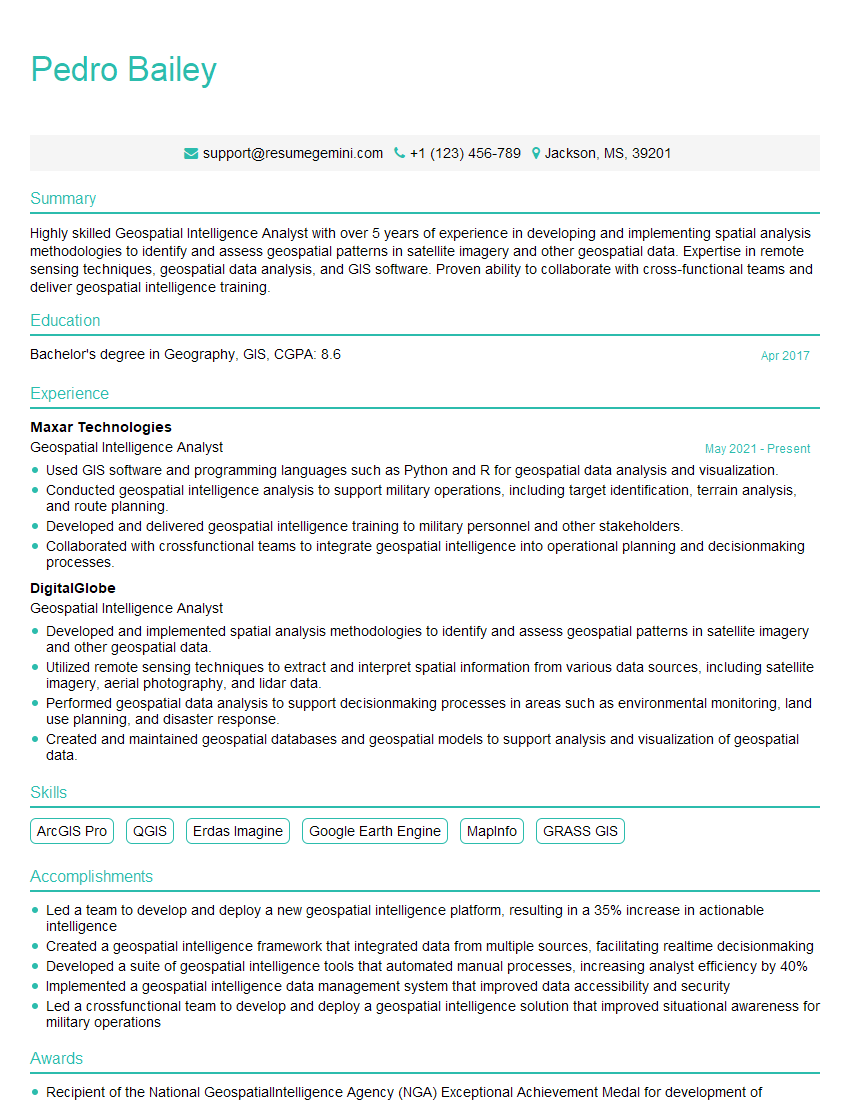
Mastering SAR Data Analysis opens doors to exciting and impactful career opportunities in diverse fields. To maximize your chances of landing your dream job, focus on creating a compelling and ATS-friendly resume that showcases your skills and experience effectively. ResumeGemini is a trusted resource to help you build a professional and impactful resume tailored to the specific requirements of SAR Data Analysis roles. Examples of resumes tailored to SAR Data Analysis positions are available to guide you. Invest time in crafting a strong resume – it’s your first impression on potential employers.
Explore more articles
Users Rating of Our Blogs
Share Your Experience
We value your feedback! Please rate our content and share your thoughts (optional).
What Readers Say About Our Blog
Very informative content, great job.
good