The thought of an interview can be nerve-wracking, but the right preparation can make all the difference. Explore this comprehensive guide to Strategic Intelligence interview questions and gain the confidence you need to showcase your abilities and secure the role.
Questions Asked in Strategic Intelligence Interview
Q 1. Explain the difference between strategic, tactical, and operational intelligence.
The terms strategic, tactical, and operational intelligence describe different levels of analysis and planning, each with distinct time horizons and objectives. Think of it like a military campaign: strategic intelligence informs the overall war aims and grand strategy; tactical intelligence supports immediate battlefield decisions; and operational intelligence bridges the gap, focusing on the intermediate-term objectives and execution of the campaign.
- Strategic Intelligence: This focuses on long-term goals and broad trends. It addresses questions like, “What are the long-term geopolitical goals of Country X?” or “What are the major threats to global stability in the next decade?” Analysis at this level often involves identifying emerging threats, assessing the capabilities of potential adversaries, and forecasting future scenarios. For example, predicting the potential for a major conflict between two countries based on their economic interdependence, military buildup, and political rhetoric would fall under strategic intelligence.
- Operational Intelligence: This bridges the gap between strategic goals and tactical actions. It focuses on the specific plans and resources needed to achieve intermediate objectives. Questions addressed might be: “How can we effectively disrupt a specific drug trafficking route?” or “What resources are needed to successfully implement a specific counter-terrorism operation?” It involves translating strategic goals into actionable plans.
- Tactical Intelligence: This is focused on immediate actions and short-term objectives. It provides the real-time information needed for decision-making in ongoing operations. For example, “What is the current location of the enemy forces?” or “What is the best approach for a specific raid?” It directly supports day-to-day operations.
Q 2. Describe your experience with OSINT (Open Source Intelligence) gathering and analysis.
My experience with OSINT is extensive. I’ve leveraged various open-source platforms, including social media, news articles, government reports, academic journals, and commercial databases, to gather and analyze intelligence. For example, during a recent project assessing the potential for civil unrest in a specific region, I used social media sentiment analysis to gauge public opinion regarding government policies. This involved identifying key hashtags and keywords, tracking the volume and tone of online discussions, and correlating this data with other open sources, like news reports detailing economic hardship and human rights violations, to build a comprehensive picture of the situation. I am proficient in using various OSINT tools and techniques, including data mining, web scraping, and social network analysis, to extract, process, and analyze information efficiently.
Q 3. How do you assess the credibility and reliability of intelligence sources?
Assessing source credibility is paramount. I use a multi-faceted approach, considering several factors: the source’s track record, its motivations, the consistency of the information with other sources, and the overall context. Think of it like a detective investigating a crime; you wouldn’t rely solely on one witness.
- Source Track Record: Does the source have a history of providing accurate information? Has it been previously biased or unreliable?
- Source Motivation: What are the source’s incentives for providing this information? Are they trying to manipulate or influence the situation?
- Cross-referencing: Does the information align with what other credible sources are saying? Discrepancies may signal issues with reliability.
- Contextual Analysis: Does the information fit within the broader context of known facts and events? Outliers need further investigation.
I often employ techniques like triangulation – verifying information from multiple independent sources – to build confidence in the accuracy of intelligence.
Q 4. What methods do you use to identify and prioritize intelligence requirements?
Identifying and prioritizing intelligence requirements involves understanding the decision-maker’s needs and the available resources. I typically use a structured approach:
- Define the Problem: Clearly articulate the specific intelligence needed to support a decision. For example, “What is the likelihood of a competitor launching a new product in the next six months?”
- Identify Key Questions: Break down the main problem into smaller, manageable questions that can be answered through intelligence gathering. This might involve identifying market trends, competitor investments, and R&D activities.
- Assess the Value of Information: Determine the potential impact of the intelligence on the decision-making process. Information that could significantly influence the outcome is prioritized.
- Prioritize Requirements: Rank the intelligence requirements based on their importance and feasibility of collection. This often involves considering the time constraints, resource availability, and potential risks associated with gathering the information.
- Develop a Collection Plan: Outline a plan for gathering the necessary intelligence, specifying the sources, methods, and timelines.
This structured process helps ensure that intelligence efforts are focused on the most critical needs, maximizing their impact and efficiency.
Q 5. Explain your understanding of the intelligence cycle.
The intelligence cycle is a cyclical process consisting of several key phases, each building upon the previous one. It’s a continuous loop, not a linear progression. Think of it like a feedback loop, constantly refining understanding and improving future estimations.
- Planning and Direction: This stage identifies intelligence needs based on policy objectives and decision-making requirements. It’s about defining what we need to know.
- Collection: This involves gathering information from various sources using a variety of methods, including human intelligence (HUMINT), signals intelligence (SIGINT), open-source intelligence (OSINT), etc.
- Processing and Exploitation: Raw data is transformed into usable intelligence. This includes translating languages, analyzing signals, and extracting relevant information.
- Analysis and Production: This stage involves interpreting the processed information and producing intelligence assessments and reports.
- Dissemination: The finished intelligence product is shared with the relevant decision-makers in a timely and effective manner.
- Feedback: The cycle continues with feedback from consumers on the usefulness and accuracy of the intelligence, helping refine future efforts.
Q 6. How do you handle conflicting intelligence reports?
Conflicting intelligence reports are common. Instead of dismissing one report outright, I conduct a thorough evaluation using several methods. This involves comparing the sources’ credibility, looking for corroborating evidence, and analyzing the methodologies used to collect the information.
- Source Evaluation: I reassess the credibility of each source, weighing their track records and motivations.
- Evidence Correlation: I look for corroborating information from independent sources to determine which account is more likely accurate.
- Methodological Analysis: I examine the methods used by each source to collect the information. Were they reliable and robust?
- Contextual Reconciliation: I attempt to reconcile conflicting reports by examining the overall context. Are there possible explanations for the discrepancies? Could the differences relate to the timeliness or scope of data collection?
- Qualitative Assessment: Ultimately, it sometimes involves making a judgment call based on the weight of evidence and understanding potential biases.
Sometimes, the best conclusion is that the situation is uncertain, requiring further investigation and analysis before a confident assessment can be made.
Q 7. Describe your experience with geopolitical risk assessment.
Geopolitical risk assessment involves identifying and analyzing potential threats to organizations operating in international environments. My approach uses a framework combining quantitative and qualitative analysis to provide a holistic assessment. This often involves identifying political instability, economic downturns, social unrest, security threats, and environmental risks that could impact operations.
For example, in assessing the risk of operating in a particular country, I might consider factors like:
- Political Stability: Risk of coups, civil wars, or changes in government policy.
- Economic Conditions: Currency fluctuations, inflation, economic sanctions, and potential financial crises.
- Social Conditions: Levels of social unrest, crime rates, and potential for protests or riots.
- Security Threats: Terrorism, insurgency, organized crime, and the effectiveness of local law enforcement.
- Regulatory Environment: The complexity and stability of legal and regulatory frameworks.
This analysis helps organizations make informed decisions regarding international investments, business strategies, and operational security, mitigating potential losses and enhancing resilience.
Q 8. How do you use analytical tools and techniques to process large datasets of intelligence information?
Processing vast intelligence datasets requires a multi-faceted approach leveraging various analytical tools and techniques. The process begins with data cleaning and preprocessing, which involves handling missing values, identifying outliers, and ensuring data consistency. Then, we employ a combination of quantitative and qualitative methods.
Quantitative techniques include statistical analysis (e.g., regression analysis to identify correlations, anomaly detection to spot unusual patterns), data mining (using algorithms to discover hidden patterns and relationships), and machine learning (for predictive modelling of future events based on historical data). For example, we might use natural language processing (NLP) to analyze large volumes of text data from social media or news sources, identifying key themes and sentiment.
Qualitative techniques are equally crucial. These involve content analysis to identify key themes and narratives within documents, network analysis to map relationships between individuals or organizations, and open-source intelligence (OSINT) techniques to integrate information from publicly available sources.
Finally, the use of specialized software like Palantir or Analyst’s Notebook is instrumental in visualizing connections, enabling the analyst to see the ‘big picture’ and identifying patterns often missed by manual review alone. The process is iterative, constantly refining our analysis based on new data and insights gleaned during the process.
Q 9. How do you present complex intelligence findings to both technical and non-technical audiences?
Presenting complex intelligence findings effectively requires tailoring the communication style to the audience. For technical audiences, I can utilize detailed analytical reports with technical jargon, graphs, and charts showcasing statistical analysis. I might include specific algorithms used and the confidence levels of our predictions.
For non-technical audiences, a more narrative-driven approach is necessary. I would focus on concise summaries, using clear and simple language, avoiding jargon, and visualizing data with easily understandable charts and infographics. Analogies and real-world examples are crucial to make complex concepts relatable and accessible. For example, instead of discussing probability distributions, I might use a metaphor like a weather forecast to illustrate the level of uncertainty associated with a prediction.
Regardless of the audience, clarity, conciseness, and visual aids are paramount. Transparency about the limitations of the intelligence and the underlying assumptions is also essential to build trust and credibility.
Q 10. Describe a time you had to make a critical decision based on incomplete intelligence.
During a past assignment involving a potential cyberattack against a critical infrastructure system, we received fragmented and incomplete intelligence regarding the attacker’s capabilities and intentions. We only had partial logs from the compromised system and some unconfirmed reports from external sources.
Faced with a rapidly evolving situation and the potential for significant damage, we had to make a critical decision on whether to implement a precautionary system shutdown. This decision carried substantial risk: a false positive would cause significant disruption, but a false negative could lead to catastrophic consequences.
Our approach involved a structured decision-making process. We first evaluated the available evidence, weighting the credibility of each source and identifying the gaps in our knowledge. We then constructed several plausible scenarios, ranging from a low-level probe to a full-scale attack. We assigned probabilities to each scenario based on our analysis of the evidence. Finally, we carefully weighed the potential costs and benefits of each course of action, considering the impact on the affected systems and the wider community. Based on this analysis, we opted for a partial system shutdown, minimizing disruption while mitigating the risk of a significant breach.
While this decision was later proven correct, it highlighted the importance of transparently communicating the uncertainties inherent in incomplete intelligence and engaging in rigorous risk assessment.
Q 11. What are the ethical considerations in intelligence gathering and analysis?
Ethical considerations in intelligence gathering and analysis are paramount. They involve adhering to strict legal and regulatory frameworks, respecting human rights, and ensuring accountability and transparency. Key ethical principles include:
- Legality: All intelligence activities must comply with national and international laws, including those relating to privacy, surveillance, and data protection.
- Proportionality: The means used to gather intelligence must be proportionate to the threat being addressed.
- Necessity: Intelligence gathering should only be undertaken when it is strictly necessary to protect national security or public safety.
- Accountability: There must be mechanisms in place to ensure that intelligence agencies are accountable for their actions and that any abuses of power are investigated and addressed.
- Privacy: Protecting the privacy of individuals whose data is collected is paramount. Data should only be collected and used for legitimate purposes, and appropriate safeguards should be in place to prevent unauthorized access or disclosure.
These principles are not just theoretical; they’re integral to maintaining public trust and ensuring the ethical conduct of intelligence operations. Breaches of these principles can have serious consequences, including legal repercussions, damage to national reputation, and erosion of public confidence.
Q 12. How familiar are you with different intelligence methodologies (e.g., competitive, threat, etc.)?
I’m highly familiar with various intelligence methodologies. My experience encompasses:
- Competitive Intelligence: This focuses on understanding the competitive landscape, analyzing competitors’ strengths and weaknesses, identifying emerging market trends, and anticipating their future strategies. I’ve used this extensively in assessing market dynamics and informing business decisions.
- Threat Intelligence: This focuses on identifying, assessing, and mitigating threats to an organization or nation. This includes identifying potential cyberattacks, terrorist threats, and other security risks. I’ve used threat modeling frameworks and various threat intelligence platforms to conduct threat assessments and develop mitigation strategies.
- Open-Source Intelligence (OSINT): This involves using publicly available information to gather intelligence. This is critical for both competitive and threat intelligence, often providing crucial context and corroborating data from other sources. I’m proficient in leveraging various online tools and techniques to collect and analyze OSINT.
- Signals Intelligence (SIGINT): While I don’t have direct access to classified SIGINT data, I understand its role and how it integrates with other intelligence sources to provide a comprehensive picture. I’m skilled in interpreting and analyzing SIGINT-derived reports.
- Human Intelligence (HUMINT): While I don’t directly conduct HUMINT operations, I understand its importance and how to incorporate HUMINT reports into broader analytical assessments.
My proficiency in these methodologies allows me to adopt a holistic approach to intelligence analysis, combining various sources and perspectives to gain a complete understanding of the subject matter.
Q 13. Explain your experience in using data visualization to present intelligence findings.
Data visualization is critical for effective communication of intelligence findings. I have extensive experience using various tools to create compelling visualizations that highlight key insights and trends.
For instance, I’ve used network graphs to illustrate relationships between individuals or organizations, revealing hidden connections and patterns. I’ve utilized geographic information systems (GIS) to map events, highlighting geographic clusters and potential trends. I’ve also extensively employed charts and graphs (bar charts, line graphs, scatter plots) to present quantitative data in an accessible and meaningful manner. The choice of visualization technique depends on the data and the message I want to convey.
Furthermore, I utilize interactive dashboards, enabling dynamic exploration of the data and allowing for a deeper understanding of complex relationships. For example, I might create a dashboard showing real-time threat indicators, enabling stakeholders to track emerging risks and adapt their strategies accordingly. My goal is always to create visualizations that are not only visually appealing but also clear, accurate, and insightful.
Q 14. How do you stay current with geopolitical events and emerging trends?
Staying current with geopolitical events and emerging trends is a continuous process. I utilize a multi-pronged approach that combines various information sources and analysis techniques:
- News Monitoring: I regularly monitor reputable news sources, including international news outlets, specialized journals, and think tanks, for in-depth analysis and commentary.
- Social Media Monitoring: Social media platforms, while requiring careful evaluation for accuracy and bias, provide real-time insights into public opinion and unfolding events.
- Academic Research: I actively engage with academic publications, conference proceedings, and policy papers to understand the latest scholarly insights and perspectives on emerging issues.
- Intelligence briefings and reports: I regularly review intelligence reports and briefings from government and private agencies, always assessing their sources and methodology critically.
- Expert Networks: I engage with expert networks, attending conferences, and engaging in discussions with professionals in related fields to gain insights and perspectives.
This multi-faceted approach allows me to synthesize information from diverse sources, identify emerging trends, and anticipate potential future developments, essential for proactive and effective intelligence analysis.
Q 15. What is your experience with predictive modeling and forecasting?
Predictive modeling and forecasting are crucial in strategic intelligence. It involves using historical data, current trends, and analytical techniques to anticipate future events or outcomes. My experience encompasses developing and deploying various models, from simple time-series analyses to more complex Bayesian networks and machine learning algorithms. For example, I’ve used regression models to predict the likelihood of civil unrest based on economic indicators and social media sentiment analysis. In another project, I employed Markov chains to model the potential escalation of a geopolitical conflict, factoring in the actions and reactions of involved parties. The key is not just building the model, but also understanding its limitations and validating its predictions against new information.
The process typically starts with defining the problem and identifying relevant data sources. Data cleaning and feature engineering are crucial steps before model selection and training. Regular model evaluation and recalibration are essential to maintain accuracy as conditions change. This iterative process allows for continuous improvement and refined forecasting.
Career Expert Tips:
- Ace those interviews! Prepare effectively by reviewing the Top 50 Most Common Interview Questions on ResumeGemini.
- Navigate your job search with confidence! Explore a wide range of Career Tips on ResumeGemini. Learn about common challenges and recommendations to overcome them.
- Craft the perfect resume! Master the Art of Resume Writing with ResumeGemini’s guide. Showcase your unique qualifications and achievements effectively.
- Don’t miss out on holiday savings! Build your dream resume with ResumeGemini’s ATS optimized templates.
Q 16. Describe your proficiency in using specific intelligence analysis software (e.g., Palantir, etc.)
I’m proficient in several intelligence analysis software platforms, including Palantir Gotham. My experience with Palantir involves leveraging its capabilities for data integration, visualization, and network analysis. For instance, I’ve used Palantir to map complex relationships between individuals and organizations within a transnational criminal network, identifying key players and vulnerabilities. The software’s ability to link disparate datasets – from financial transactions to communications intercepts – is invaluable for building a comprehensive understanding of a situation. Furthermore, I’ve utilized Palantir’s visualization tools to present findings in a clear and concise manner, facilitating effective communication to decision-makers.
Beyond Palantir, I have experience with other tools like Analyst’s Notebook, which is particularly useful for link analysis and building visual representations of intelligence. My skillset also includes programming languages like Python and R, which allows me to automate data processing, build custom analytical tools, and conduct more sophisticated statistical analyses not readily available through commercial software.
Q 17. How do you manage competing priorities and deadlines in an intelligence role?
Managing competing priorities and deadlines in an intelligence role requires a structured approach and strong organizational skills. I use prioritization matrices to rank tasks based on urgency and importance, ensuring critical intelligence requirements are met first. This often involves employing time management techniques like the Eisenhower Matrix (urgent/important), which helps categorize tasks effectively. For example, if we have a looming deadline for a high-priority briefing on a developing crisis and a less urgent request for long-term trend analysis, I’d prioritize the immediate briefing.
Effective communication with stakeholders is paramount. I keep them updated on progress, potential roadblocks, and any necessary adjustments to timelines. Open communication helps manage expectations and ensures everyone is aligned on priorities. Delegation, where appropriate, is another critical skill. I work effectively within a team, assigning tasks based on individual strengths and capabilities.
Q 18. What are the key characteristics of a successful strategic intelligence team?
A successful strategic intelligence team is characterized by several key attributes. First, it needs a diverse skillset, encompassing analysts with expertise in various fields (e.g., open-source intelligence, signals intelligence, human intelligence). Second, the team must possess strong collaborative and communication skills. Information sharing and effective teamwork are essential for synthesizing intelligence from multiple sources. Third, a culture of critical thinking and intellectual honesty is crucial; analysts should be comfortable challenging assumptions and questioning information.
Furthermore, a successful team should have a clear understanding of its mission and priorities. This requires strong leadership and clear communication of goals. Finally, a commitment to continuous learning and adaptation is vital. The intelligence landscape is constantly evolving, and the team must be able to adjust its methods and analyses to reflect these changes. Think of it like a high-performance sports team – each member has specialized skills, they work together seamlessly, and they are always striving to improve their performance.
Q 19. Describe your experience in collaborating with other intelligence agencies or departments.
I have extensive experience collaborating with various intelligence agencies and departments, both domestically and internationally. This includes working with agencies responsible for signals intelligence, human intelligence, and open-source intelligence. Collaboration typically involves sharing information, coordinating analytical efforts, and integrating different perspectives to develop a comprehensive understanding of a given situation. For instance, in one project, I worked closely with a signals intelligence agency to analyze intercepted communications, which were then combined with open-source data to create a detailed picture of a terrorist organization’s activities.
Effective collaboration requires strong communication protocols and secure information sharing mechanisms. It’s also important to establish clear roles and responsibilities to avoid duplication of effort and ensure efficient information flow. Building trust and rapport with colleagues from different organizations is crucial for successful collaboration. Respecting different agency cultures and operational constraints is essential for seamless cooperation.
Q 20. How do you measure the effectiveness of an intelligence operation?
Measuring the effectiveness of an intelligence operation is a complex task, often involving qualitative and quantitative metrics. Quantitative measures might include the accuracy of predictions, the timeliness of intelligence products, or the number of actionable leads generated. For example, if we predicted a specific event and it occurred as predicted, that contributes positively to the effectiveness metric. Qualitative measures include the impact of the intelligence on decision-making, the contribution to policy formulation, or the prevention of negative outcomes.
A crucial aspect is determining the impact of the intelligence. Did it lead to a successful operation? Did it prevent a threat? Did it inform a critical policy decision? These are harder to quantify but equally important. A balanced approach, combining quantitative and qualitative assessment, is necessary for a comprehensive evaluation. The methods used will vary depending on the specific nature of the operation and the objectives being pursued.
Q 21. How do you identify and mitigate biases in intelligence analysis?
Identifying and mitigating biases in intelligence analysis is paramount. Cognitive biases, such as confirmation bias (favoring information that confirms pre-existing beliefs) and anchoring bias (over-reliance on initial information), can significantly distort analysis. To mitigate these, I employ a structured analytical technique such as the Analysis of Competing Hypotheses (ACH). ACH involves systematically evaluating multiple competing hypotheses, considering alternative explanations, and actively seeking out disconfirming evidence. This structured approach reduces the influence of personal biases.
Another crucial strategy is promoting diversity within the team. A diverse group brings varying perspectives and backgrounds, reducing the risk of groupthink and enhancing critical analysis. Regular reviews of analytical products by independent analysts help identify and correct biases. Transparency and open discussion about potential biases within the team are also essential. Finally, continuous professional development and training in cognitive biases and analytical techniques are critical to maintaining objectivity and accuracy in intelligence analysis.
Q 22. Explain your understanding of different intelligence gathering techniques (e.g., HUMINT, SIGINT, etc.)
Intelligence gathering employs various techniques, each focusing on different types of information. Think of it like a detective investigating a crime – they use many tools to find the truth.
- HUMINT (Human Intelligence): This involves gathering information from human sources, such as informants, spies, or defectors. It relies heavily on personal relationships and trust. For example, recruiting a source within a rival company to gain insight into their product launch strategy.
- SIGINT (Signals Intelligence): This focuses on intercepting and analyzing electronic signals, including communications (e.g., phone calls, emails), radar, and other electronic emissions. Imagine monitoring radio frequencies to detect troop movements or intercepting encrypted communications to understand enemy plans.
- IMINT (Imagery Intelligence): This uses satellite imagery, aerial photography, and other visual sources to collect information. For instance, analyzing satellite images to assess the damage caused by a natural disaster or to monitor the construction of a new military facility.
- OSINT (Open-Source Intelligence): This involves gathering information from publicly available sources, such as news articles, social media, and government reports. It’s like piecing together a puzzle using freely available information. An example would be using social media posts to track the spread of disinformation or analyzing publicly available financial reports to assess a company’s stability.
- MASINT (Measurement and Signature Intelligence): This uses technical sensors to detect and analyze physical phenomena, such as nuclear explosions, chemical releases, or acoustic signatures. This is often highly technical and requires sophisticated equipment and analysis.
- GEOINT (Geospatial Intelligence): This integrates information from various sources (IMINT, SIGINT, etc.) to create a comprehensive geographical understanding. This might involve combining satellite images with intelligence reports to create a detailed map of enemy troop deployments.
Each technique has its strengths and weaknesses. A successful intelligence operation often involves a combination of these methods, using them in a synergistic way to create a complete picture.
Q 23. Describe a time you identified a critical intelligence gap and proposed a solution.
During a project assessing the stability of a key geopolitical partner, I identified a critical intelligence gap regarding the effectiveness of their counterterrorism programs. While we had access to overall statistics on terrorist activity, we lacked granular data on the actual effectiveness of specific counterterrorism initiatives at the local level. This gap meant our strategic assessments were based on incomplete information, leading to potentially flawed policy recommendations.
To address this, I proposed a three-pronged solution: First, we initiated a program of targeted HUMINT collection, focusing on recruiting sources with access to local-level information. Secondly, I developed a data collection and analysis framework that leveraged OSINT to supplement the HUMINT, verifying data and filling gaps. Finally, we collaborated with international partners to share best practices and access their data, ensuring we had a more holistic understanding. The implementation of this multi-faceted approach significantly improved our understanding of the counterterrorism landscape, leading to more effective and nuanced policy recommendations.
Q 24. How do you ensure the security and confidentiality of sensitive intelligence information?
Securing sensitive intelligence information is paramount. It’s not just about preventing leaks; it’s about safeguarding national security and protecting sources and methods. Think of it like a high-security vault, with multiple layers of protection.
- Classification and Handling Procedures: We strictly adhere to classification guidelines, ensuring that information is marked with appropriate security levels. This determines who can access it and under what conditions. We also maintain rigorous document control procedures, tracking every document from creation to destruction.
- Secure Communication Channels: All communication involving sensitive information is conducted through secure channels using encryption and other protective measures. Think encrypted emails or secure communication networks.
- Personnel Security: Thorough background checks and ongoing security training for personnel are crucial. We need to be confident that everyone handling sensitive information is trustworthy and understands the implications of a breach.
- Physical Security: Secure facilities, access control systems, and advanced surveillance technologies are employed to protect physical documents and equipment. This includes controlled access to offices and data centers, along with measures to prevent unauthorized entry.
- Cybersecurity: Robust cybersecurity protocols are critical in today’s digital world. This includes firewalls, intrusion detection systems, and regular security audits to prevent cyberattacks and data breaches.
- Data Loss Prevention (DLP): Implementing DLP tools and measures to prevent sensitive data from leaving our control through various channels.
The security of intelligence information is an ongoing process, requiring constant vigilance and adaptation to evolving threats.
Q 25. Explain your understanding of strategic decision-making processes and how intelligence informs them.
Strategic decision-making involves a structured process of defining problems, analyzing options, and selecting the best course of action. Intelligence plays a crucial role in informing each stage of this process.
Intelligence provides the foundation for understanding the operational environment. It helps decision-makers to understand the challenges, risks, and opportunities they face. Think of it as providing the context for the decision. For example, assessing the capabilities of a potential adversary before engaging in negotiations.
Intelligence informs the analysis of potential courses of action. By modeling different scenarios and predicting their likely outcomes, intelligence provides decision-makers with the data they need to evaluate the risks and benefits of each option. We could project the likely consequences of imposing economic sanctions.
Finally, intelligence supports the evaluation of the effectiveness of chosen courses of action. It enables decision-makers to track the outcomes of their decisions and make necessary adjustments. We might monitor the effects of a diplomatic initiative through ongoing intelligence collection.
In short, intelligence provides the essential information needed for informed, effective, and timely strategic decision-making.
Q 26. How do you adapt your intelligence analysis techniques to different contexts and challenges?
Adaptability is crucial in intelligence analysis. The contexts and challenges we face vary greatly – from geopolitical conflicts to economic instability to technological breakthroughs.
My approach involves a combination of structured analytical techniques and flexible thinking. I regularly employ methods like:
- Structured Analytic Techniques (SATs): Techniques such as Analysis of Competing Hypotheses (ACH) help to mitigate bias and ensure thorough consideration of all possible scenarios. This systematic approach ensures we don’t miss key details.
- Scenario Planning: Developing multiple plausible scenarios helps to anticipate and prepare for various contingencies. This forward-thinking approach ensures we are not caught off guard by unexpected events.
- Data Fusion: Integrating information from multiple sources and using advanced analytical tools to identify patterns and insights. Data visualization and pattern recognition software help connect seemingly disparate data points.
However, equally important is the ability to adjust my approach based on the specific context. This involves being open to new methodologies, collaborating with experts from other fields, and constantly updating my knowledge of emerging trends and technologies. For example, adapting analysis techniques to the unique challenges posed by the rapid evolution of social media as an intelligence source.
Adaptability isn’t just about changing techniques; it’s about maintaining a flexible mindset and continuously seeking new ways to improve the quality and effectiveness of our analysis.
Q 27. Describe your experience in developing and implementing intelligence training programs.
I’ve been involved in developing and implementing several intelligence training programs, focusing on both foundational skills and advanced analytical techniques.
In one instance, I designed and delivered a training course on open-source intelligence (OSINT) for a team of analysts. The program covered everything from identifying reliable sources to using specialized tools for data analysis. The program incorporated a mix of theoretical instruction, practical exercises, and simulations to ensure participants could apply what they learned in real-world settings. Post-training assessments showed a significant improvement in the participants’ ability to collect and analyze OSINT.
Another project involved developing a tailored training program for senior policymakers on the effective use of intelligence in decision-making. This program focused on the ethical considerations of intelligence analysis and emphasized critical thinking skills. The program utilized case studies and interactive simulations to demonstrate how intelligence can both support and sometimes hinder effective decision-making. The success of these programs is evident in the enhanced performance of participants and improved collaboration across teams.
My focus is on creating engaging and practical training programs that build both the analytical skills and the ethical awareness essential for effective intelligence professionals.
Q 28. How familiar are you with the legal and regulatory frameworks governing intelligence operations?
Familiarity with legal and regulatory frameworks governing intelligence operations is absolutely critical. These frameworks define the boundaries of acceptable conduct and help to ensure that intelligence activities are both effective and lawful. A thorough understanding of this area is essential for responsible and ethical intelligence work.
My understanding encompasses areas such as:
- Privacy laws: These laws govern the collection and use of personal information. Intelligence agencies must operate within strict guidelines to protect individual privacy rights.
- National security laws: These laws authorize certain intelligence activities, defining the limits of what is permissible in the name of national security.
- International law: Intelligence operations often have international implications. Therefore, understanding relevant international laws and treaties is critical.
- Internal agency regulations: Intelligence agencies have their own internal regulations and standards that dictate operational procedures and ensure accountability.
Continuously staying updated on legal and regulatory changes is essential. Failure to comply can have significant legal and ethical consequences, potentially undermining the legitimacy and effectiveness of the entire intelligence operation.
Key Topics to Learn for Strategic Intelligence Interview
- Geopolitical Analysis: Understanding international relations, power dynamics, and regional conflicts. Practical application: Analyzing the impact of a specific geopolitical event on a target country’s stability.
- Competitive Intelligence: Gathering and analyzing information about competitors to gain a strategic advantage. Practical application: Developing a competitive intelligence report to inform a company’s market entry strategy.
- Risk Assessment & Management: Identifying, analyzing, and mitigating potential risks to an organization or government. Practical application: Creating a risk matrix to prioritize threats and allocate resources effectively.
- Data Analysis & Interpretation: Extracting insights from large datasets to inform strategic decisions. Practical application: Using statistical methods to identify trends and patterns in intelligence data.
- Forecasting & Predictive Modeling: Utilizing various methods to anticipate future events and their potential impact. Practical application: Developing a scenario planning exercise to prepare for different potential outcomes.
- Information Gathering & Verification: Employing effective techniques to collect and validate information from diverse sources. Practical application: Evaluating the credibility and reliability of various intelligence sources.
- Strategic Communication & Briefing: Effectively presenting intelligence findings to stakeholders. Practical application: Developing a clear and concise briefing document for senior leadership.
- Ethical Considerations in Intelligence: Understanding and adhering to ethical principles and legal frameworks governing intelligence activities. Practical application: Analyzing a case study to evaluate the ethical implications of a specific intelligence operation.
Next Steps
Mastering Strategic Intelligence opens doors to exciting and impactful career opportunities in various sectors, from government agencies to private corporations. To maximize your chances of landing your dream role, focus on crafting a compelling and ATS-friendly resume that highlights your relevant skills and experience. ResumeGemini is a trusted resource to help you build a professional and effective resume. They provide examples of resumes tailored to Strategic Intelligence roles, allowing you to learn from best practices and create a document that truly showcases your capabilities. Take advantage of these resources and elevate your job search today!
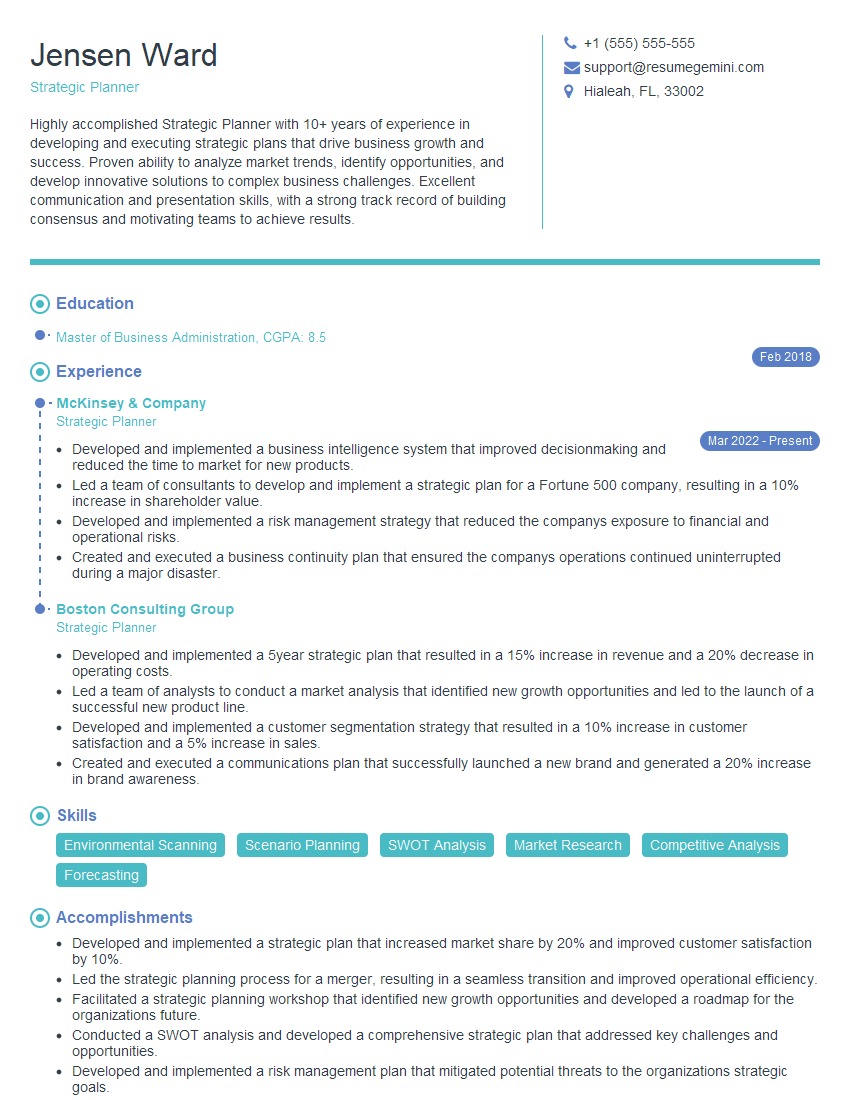
Strategic Planner Resume Sample
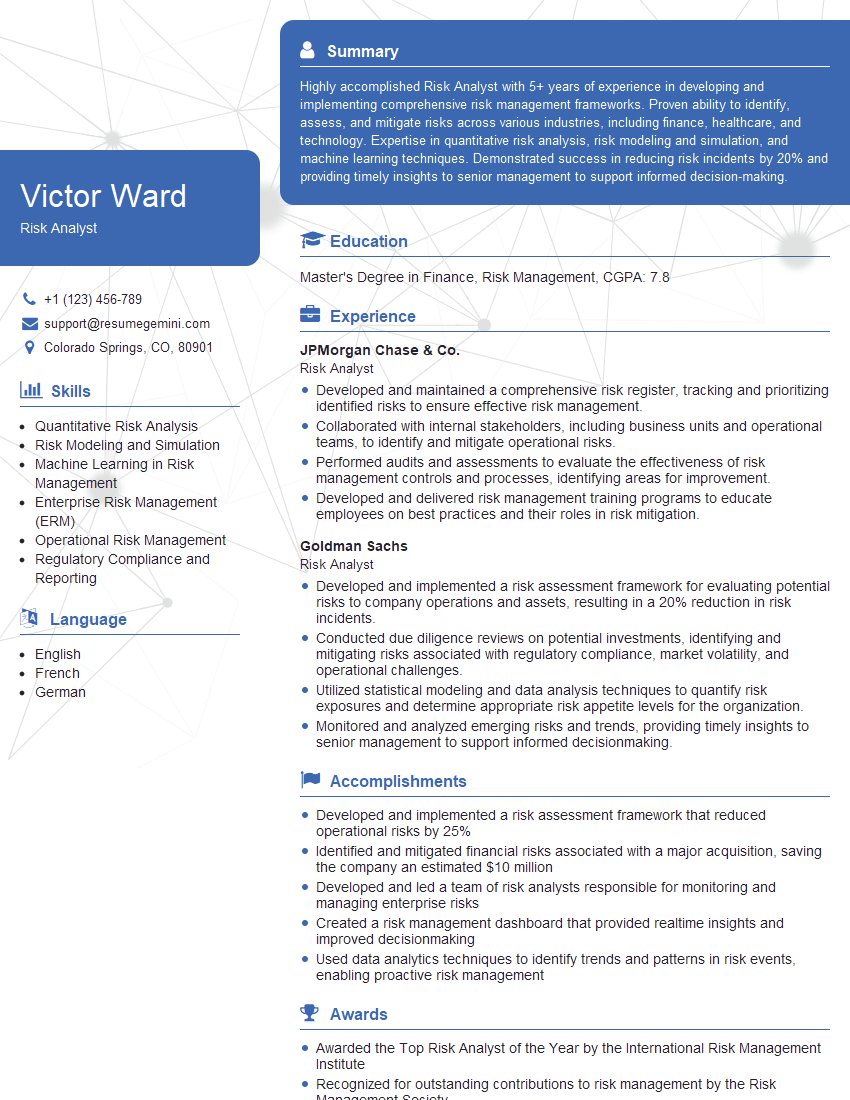
Risk Analyst Resume Sample
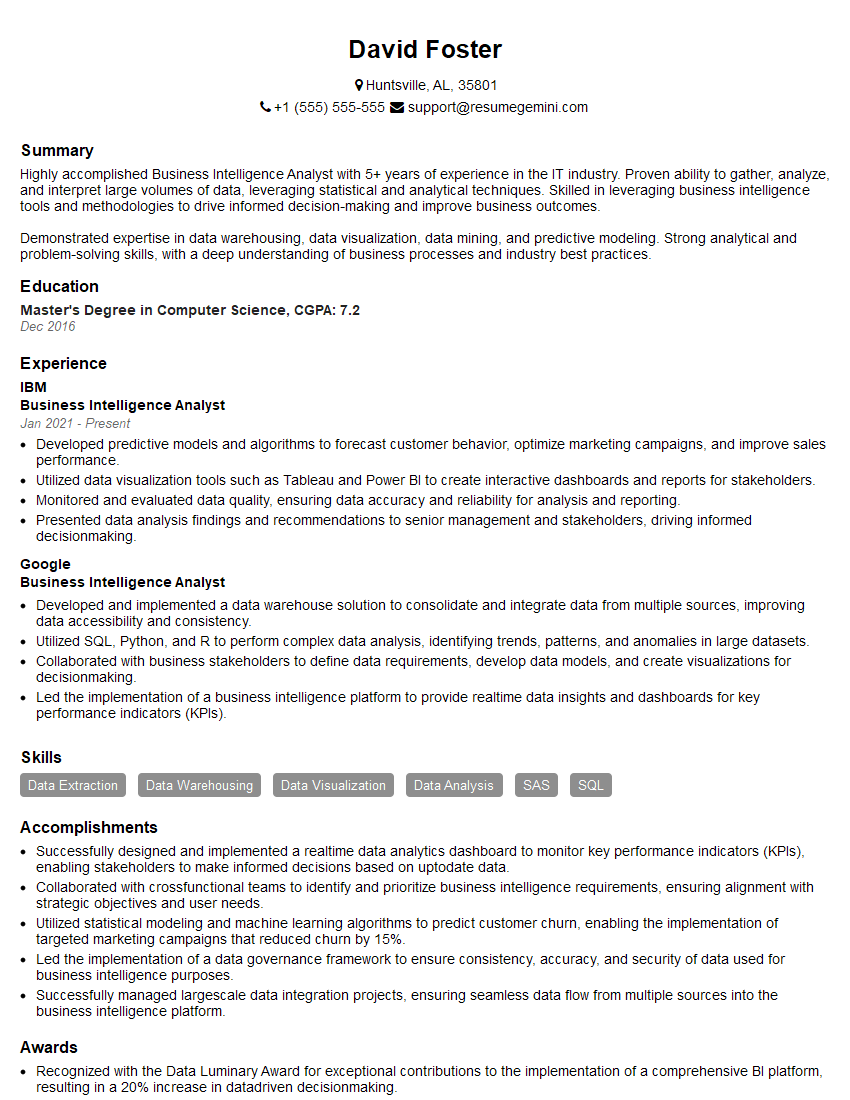
Business Intelligence Analyst Resume Sample
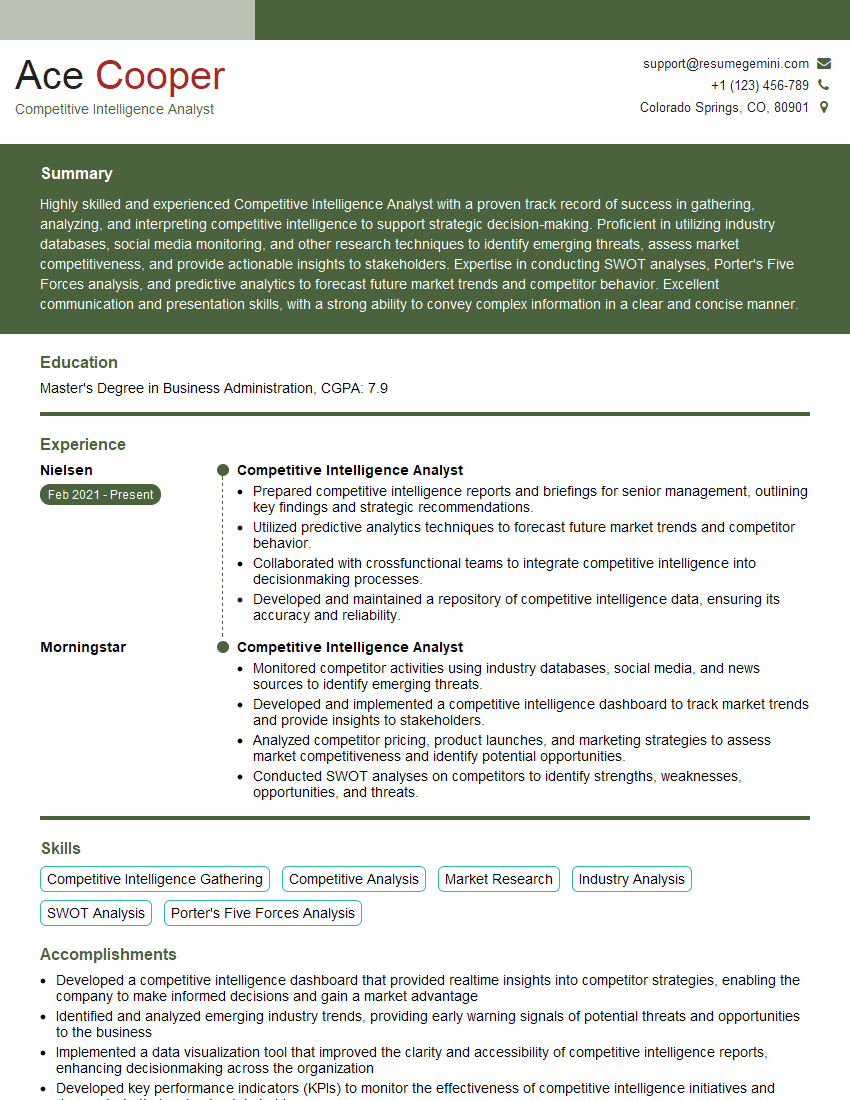
Competitive Intelligence Analyst Resume Sample
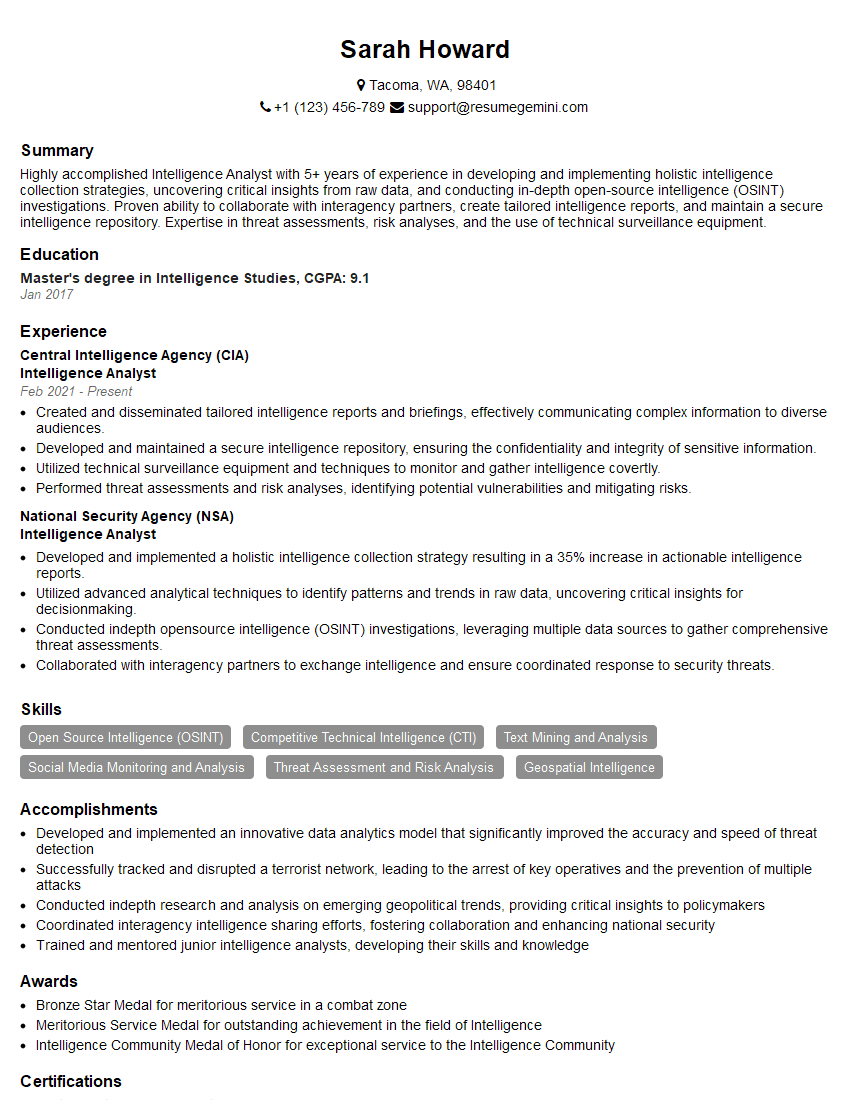
Intelligence Analyst Resume Sample
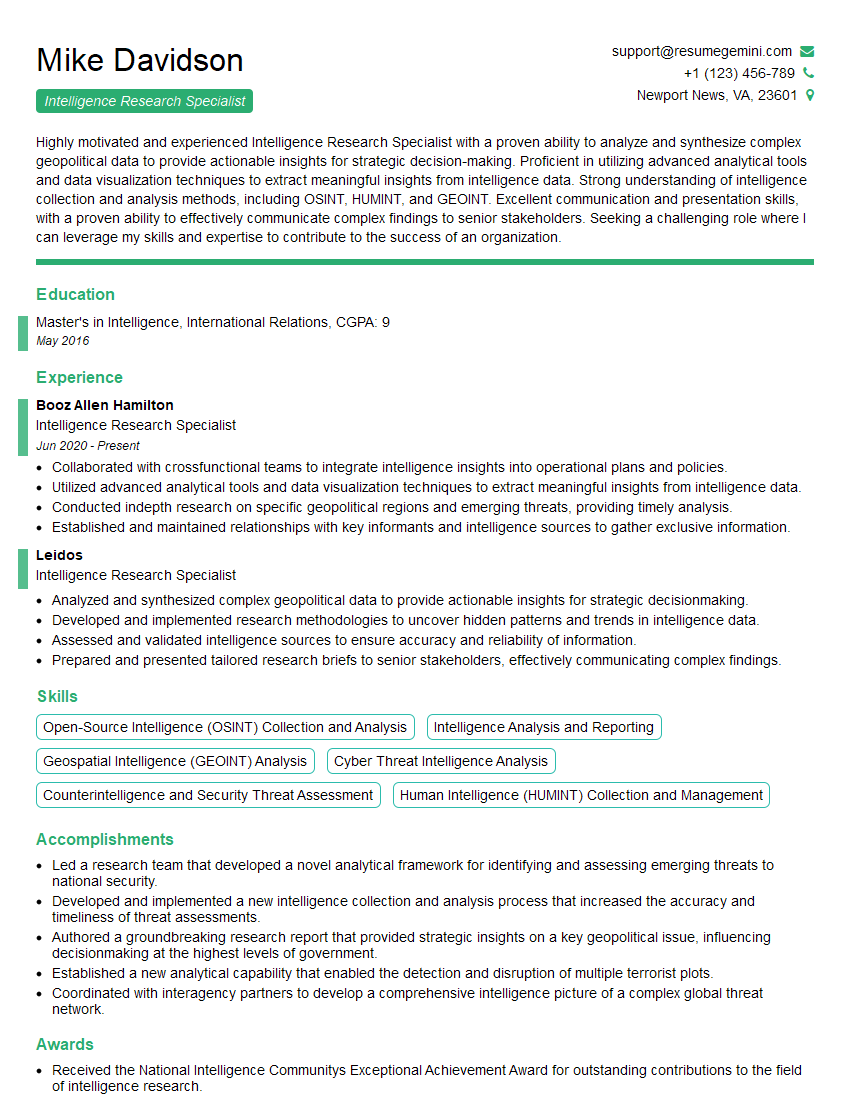
Intelligence Research Specialist Resume Sample
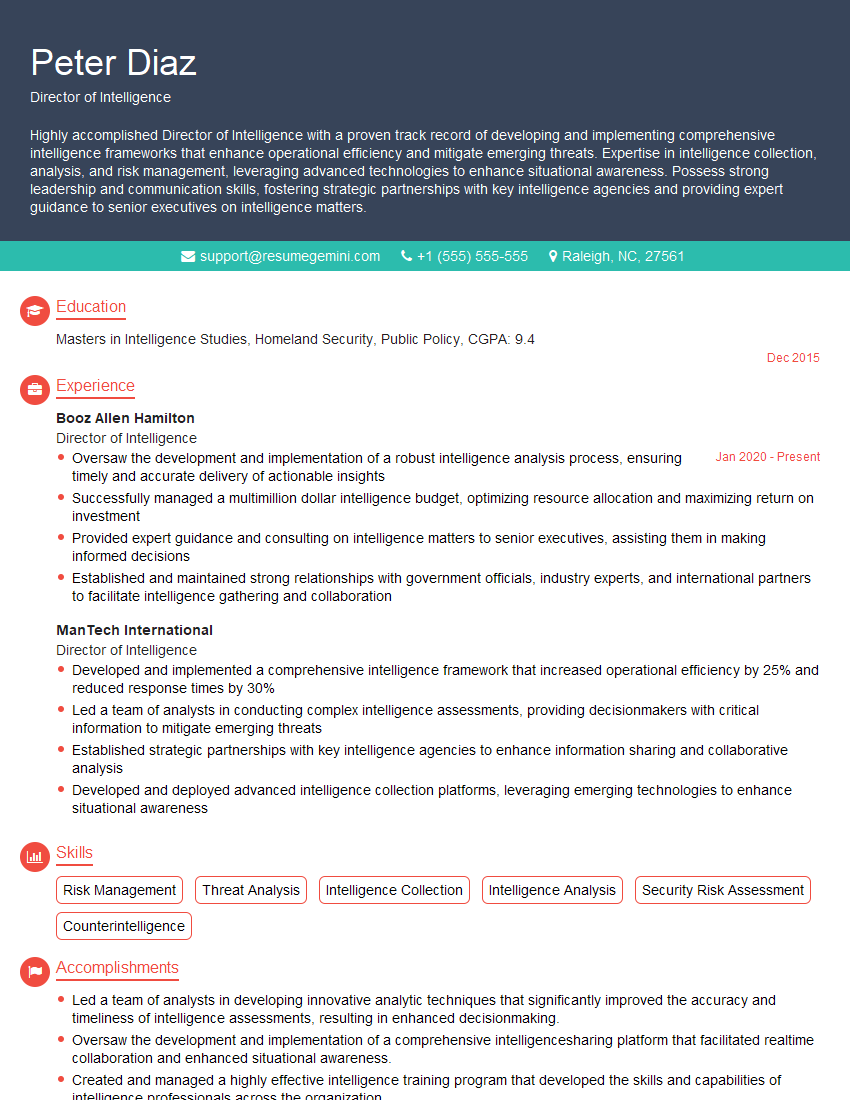
Director of Intelligence Resume Sample
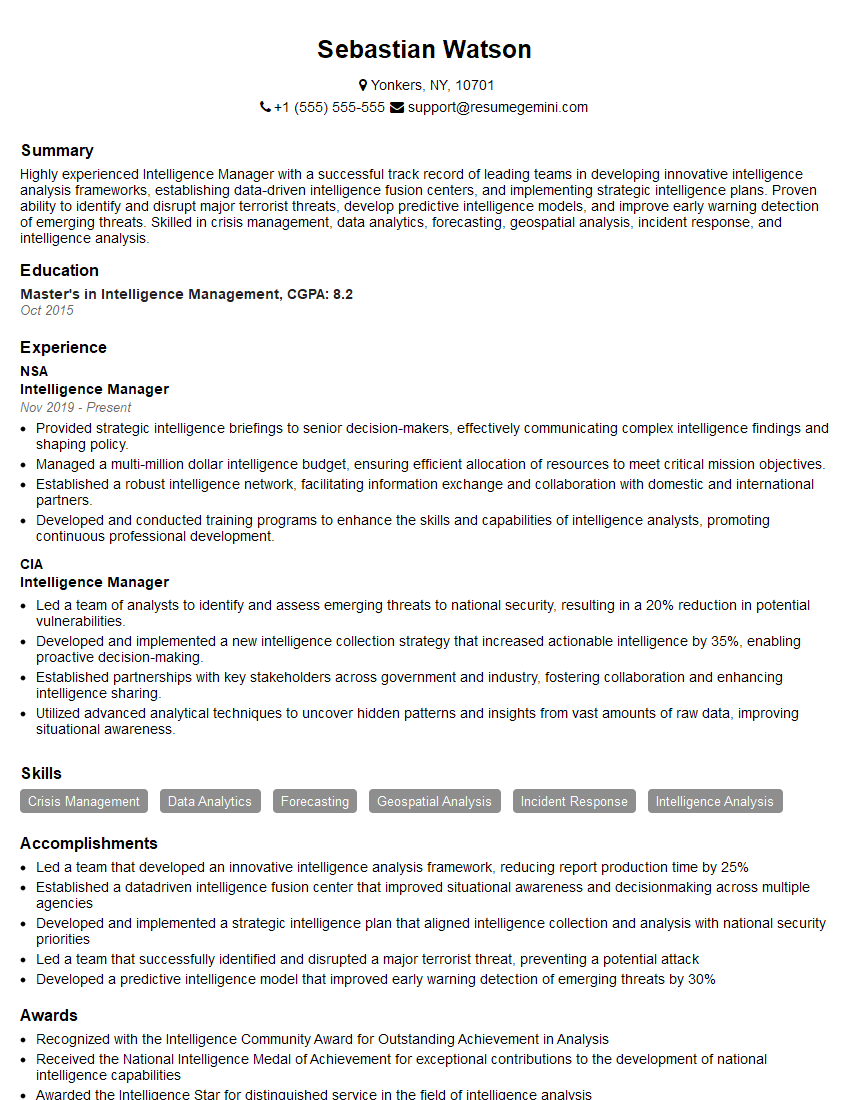
Intelligence Manager Resume Sample
Explore more articles
Users Rating of Our Blogs
Share Your Experience
We value your feedback! Please rate our content and share your thoughts (optional).
What Readers Say About Our Blog
Very informative content, great job.
good