The right preparation can turn an interview into an opportunity to showcase your expertise. This guide to Textile Fabric Handling interview questions is your ultimate resource, providing key insights and tips to help you ace your responses and stand out as a top candidate.
Questions Asked in Textile Fabric Handling Interview
Q 1. Describe your experience with different fabric types (e.g., cotton, silk, synthetics).
My experience encompasses a wide range of fabric types, from natural fibers like cotton and silk to various synthetics such as polyester, nylon, and blends. Cotton, known for its breathability and absorbency, requires careful handling to prevent wrinkling and shrinkage. Silk, with its delicate structure, demands even more gentle treatment to avoid snags and damage. Synthetics, while often more durable, can be prone to pilling or static cling, requiring specific handling techniques. I’ve worked extensively with each, understanding their unique properties and how these influence processing and final product quality. For example, I’ve managed projects involving high-thread-count Egyptian cotton sheets, requiring precise cutting and sewing to avoid damaging the delicate fibers, and I’ve also worked with performance fabrics containing nylon and spandex which require specialized knowledge of heat-setting and elasticity retention during production.
Q 2. Explain the proper methods for handling delicate fabrics.
Handling delicate fabrics involves a combination of care and technique. Think of them like precious artwork – they demand respect! Firstly, always handle them with clean hands, avoiding harsh chemicals or lotions. Secondly, avoid harsh pulling or stretching, especially when wet. Use soft, flat surfaces for laying out and processing. When pressing, always use a low heat setting with a press cloth to prevent scorching or damage. Delicate fabrics, such as silk chiffon or lace, should ideally be dry-cleaned; if hand-washing is necessary, use cool water and a gentle detergent, avoiding harsh scrubbing. For storage, it’s crucial to avoid crushing or folding sharply, using acid-free tissue paper and breathable garment bags. I always advise my team to visualize themselves handling a baby bird – gentle, supportive, and slow movements are key.
Q 3. How do you identify fabric defects during inspection?
Identifying fabric defects requires a keen eye and a systematic approach. My inspection process starts with a visual examination, checking for irregularities such as holes, snags, stains, and discoloration. I then use touch to assess texture and identify inconsistencies, like uneven weaving or excessive piling. For further assessment, we use specialized equipment like magnifying glasses or fabric testing machines to identify microscopic flaws such as broken yarns or weak points. I document every defect found, noting its type, location, and severity, using a standardized checklist and photography. For instance, a broken warp yarn in a woven fabric can severely affect its strength and must be noted and, depending on the severity, the fabric may need to be rejected. Similarly, color inconsistencies across the fabric length are noted for quality control.
Q 4. What are the common causes of fabric damage during handling and storage?
Fabric damage during handling and storage stems from several common causes. Improper folding or stacking can cause creasing and weakening of fibers, especially in delicate fabrics. Exposure to sunlight, excessive heat, or moisture can also cause discoloration, fading, and mildew. Pests, like moths, can damage natural fibers. Rough handling during transport or processing leads to snags, tears, and abrasion. Improper storage in humid environments can encourage mold growth. For example, improperly stored silk scarves can be damaged by exposure to direct sunlight which can lead to discoloration. Using archival quality storage solutions, such as acid-free boxes and cotton muslin, helps mitigate these risks. Proper climate control during storage and transportation is also essential.
Q 5. Describe your experience with fabric measuring and cutting techniques.
My experience in fabric measuring and cutting techniques is extensive, ranging from simple hand-cutting to using automated cutting systems. For hand-cutting, accuracy is paramount, and I’ve mastered techniques to ensure precise cuts, minimizing waste. I understand the importance of using sharp shears and appropriate cutting mats. For larger-scale operations, I’m proficient in using computerized cutting machines, ensuring accurate pattern placement and efficient material utilization. Software proficiency in design and cutting optimization is key, and I routinely ensure that all cuts are within industry-defined tolerance levels. In addition, pattern grading and making adjustments for different sizes also fall under my responsibilities. This ensures uniformity in final products and minimizes material waste.
Q 6. How do you maintain the quality of fabrics during the production process?
Maintaining fabric quality throughout the production process requires meticulous attention to detail at every stage. This includes careful selection of raw materials, precise control over environmental conditions (temperature and humidity) during processing, and consistent monitoring of machinery and equipment. Regular inspections and quality checks are crucial to identify and rectify defects early on. Following best practices for each type of fabric – from pre-treatment to finishing – is non-negotiable. I always advocate for a proactive approach, emphasizing preventative measures rather than solely focusing on reactive solutions. For example, regularly calibrating cutting machines prevents inaccurate cuts and material waste, maintaining high quality and efficiency. A strict adherence to standardized operating procedures (SOPs) is paramount in maintaining this consistency.
Q 7. Explain your understanding of fabric pre-treatment processes.
Fabric pre-treatment processes prepare the fabric for subsequent stages of production, enhancing its quality and performance. These processes can include desizing (removing sizing agents added during weaving), scouring (cleaning the fabric to remove impurities), bleaching (whitening the fabric), and mercerizing (treating cotton to improve its luster and strength). The specific pre-treatments depend on the fabric type and its intended use. For instance, cotton fabrics often require desizing and scouring before dyeing to ensure even color absorption. Silk, being a delicate fiber, requires more gentle pre-treatment processes to avoid damage. Selecting the appropriate chemicals and controlling parameters such as temperature and time are essential for achieving desired results while preserving the fabric’s integrity. Improper pre-treatment can lead to uneven dyeing, reduced strength, and other quality issues. My expertise lies in selecting the optimal pre-treatment process for various fabrics, ensuring consistent and high-quality results.
Q 8. What are the safety precautions you take when handling large quantities of fabric?
Safety is paramount when handling large quantities of fabric. My approach is multifaceted, prioritizing both individual and collective safety. It begins with a thorough risk assessment of the specific fabric type – for example, some fabrics are more prone to static electricity buildup which could lead to fire, while others might have sharp edges or cause skin irritation. Based on this assessment, appropriate personal protective equipment (PPE) is mandated. This could include safety glasses to protect against loose fibers, gloves to prevent skin irritation or cuts, and steel-toe boots to protect against dropped materials. Furthermore, the work area must be kept clean and free of obstacles to prevent trips and falls. Proper lighting is essential, and all heavy lifting should adhere to strict ergonomic principles, often utilizing mechanical aids like forklifts or pallet jacks to avoid strain injuries. We also conduct regular safety training sessions to refresh employees on proper lifting techniques, emergency procedures, and the importance of reporting any unsafe conditions immediately.
For instance, when handling large bolts of heavy denim, we always utilize a forklift for transport and employ two-person lift teams for manual handling to minimize strain and potential injury. We’ve also implemented a ‘buddy system’ where individuals working alone with large quantities of fabric are paired with a colleague for added safety and supervision.
Q 9. How do you ensure the efficient storage and retrieval of fabrics in a warehouse?
Efficient fabric storage and retrieval is crucial for minimizing waste and maximizing operational efficiency. We utilize a system based on clear organization and optimized warehouse layout. Fabrics are categorized by fiber type (cotton, silk, wool, synthetics), weight, color, and width. This allows for quick identification and retrieval. We use a combination of vertical racking systems for efficient space utilization and horizontal shelving for lighter fabrics or those requiring easier access. Each roll or bale is clearly labeled with its contents, lot number, and date of arrival. A robust inventory management system, preferably a computerized one, keeps track of stock levels in real-time, allowing for immediate identification of shortages and streamlining replenishment processes. Utilizing barcodes and RFID tags further enhances tracking accuracy and speed. Proper climate control is also essential to prevent damage caused by moisture or excessive heat.
In one instance, we improved retrieval time by 25% by implementing a new zone-based storage system. This system grouped frequently accessed fabrics together, reducing travel time for warehouse staff. We also color-coded zones to improve navigation within the warehouse.
Q 10. Describe your experience with different fabric folding and stacking methods.
My experience encompasses various fabric folding and stacking methods, each tailored to the fabric type and intended use. For delicate fabrics like silk or lace, we use a gentler, more precise method, often involving careful hand-folding to avoid creasing or damage. Heavier fabrics like denim or canvas are folded more roughly, but still meticulously, to maintain even layers and facilitate easier stacking. Stacking techniques are crucial for maintaining fabric integrity and preventing damage. We avoid uneven stacks, ensuring each layer is aligned and firmly pressed to prevent slippage. The use of pallet jacks and appropriate shelving keeps stacks stable and secure. Proper stacking is critical to protect against crushing or damage during transport. Some fabrics require specific folding methods to minimize wrinkling, for example, lengthwise folding for certain knits to maintain drape, and cross-folding for woven materials to prevent crease lines.
For instance, when handling luxurious silks, we employ a specific method of hand-folding, starting from the center and carefully folding outwards. This technique minimizes stress on the fabric and ensures that the finished folds are elegant and crease-free.
Q 11. How do you manage fabric inventory to minimize waste and loss?
Minimizing fabric waste and loss is a top priority, achieved through a combination of strategies. Accurate inventory management, as mentioned earlier, is foundational. This includes regular stock checks, reconciliation processes, and meticulous record-keeping. This allows us to identify discrepancies early on and take corrective action. We also implement strict quality control measures throughout the supply chain, from the initial purchase to the final product. This includes inspecting fabrics for defects upon arrival and regularly monitoring storage conditions. Any damaged or unusable fabric is documented and appropriately handled – potentially recycled or disposed of responsibly, depending on the nature of the damage.
Implementing a ‘first-in, first-out’ (FIFO) inventory system helps prevent fabric from becoming outdated or deteriorating in storage. Furthermore, collaborating closely with suppliers allows for more precise ordering, minimizing overstocking. Regular audits of inventory processes help to identify areas for improvement and enhance our efficiency in managing fabric resources.
Q 12. Explain your experience with using specialized fabric handling equipment.
My experience with specialized fabric handling equipment is extensive. I’m proficient in operating various types of forklifts, pallet jacks, and overhead cranes for the safe and efficient movement of large quantities of fabric. I’m also familiar with automated guided vehicles (AGVs) used in modern warehouses for transporting materials. For more delicate fabrics, I have experience using specialized conveyors with gentler handling mechanisms and vacuum systems to prevent damage. Understanding the limitations and capabilities of each piece of equipment is crucial to ensure safe and efficient operation. Regular maintenance checks and operator training are essential for preventing accidents and extending the lifespan of these valuable tools.
For example, I’ve used a specialized fabric-handling crane equipped with soft grippers to move large rolls of fine silk without causing any damage to the delicate material. This experience highlights my understanding of matching the right equipment to the specific needs of the fabric being handled.
Q 13. How do you handle fabric returns and damaged goods?
Handling fabric returns and damaged goods requires a systematic approach to minimize losses and maintain quality control. Upon receiving returned goods, we carefully inspect them for damage, noting the extent of the defect and its cause. Returns are categorized based on their condition. Items deemed reusable are cleaned and re-integrated into inventory, while those that are beyond repair are disposed of responsibly or, if possible, recycled. For damaged goods within the warehouse, a root cause analysis is conducted to identify the source of the problem and prevent future occurrences. Detailed records of all returns and damaged goods are maintained, providing valuable insights for process improvement and loss prevention. This process also helps in assessing the cost associated with returns and damaged goods and making adjustments to warehouse practices or supply chain relationships.
In one case, we implemented a new quality inspection protocol for incoming shipments that reduced the number of returns by 15% within six months by identifying faulty material at the source rather than later in the process.
Q 14. Describe your experience with fabric dyeing and finishing processes.
While my primary expertise is fabric handling, I possess a solid understanding of fabric dyeing and finishing processes. This knowledge is critical for understanding the properties of fabrics and their handling requirements. I understand the different dyeing techniques (reactive, disperse, acid, etc.), their impact on fabric properties, and the potential challenges they may present during handling. Similarly, I’m familiar with various finishing processes, including calendaring, mercerization, and water-repellent treatments. Understanding these processes allows me to anticipate potential handling challenges; for instance, a heavily starched fabric will handle differently than a loosely woven one. Knowledge of these processes ensures that appropriate handling precautions are taken at each stage of the process to preserve fabric quality and prevent damage. I understand the importance of appropriate equipment and safety procedures for each stage of dyeing and finishing.
For example, I know that after a mercerization treatment, cotton fabric becomes stronger and smoother, but it may also be more prone to shrinkage. This knowledge is directly applied in our handling procedures by using extra care when storing and handling the mercerized cotton.
Q 15. What are the key considerations for transporting fabrics to prevent damage?
Safe fabric transportation hinges on protecting against damage from compression, abrasion, moisture, and extreme temperatures. Think of it like moving a fragile piece of art – it requires careful handling.
- Proper Packaging: Rolls should be secured on sturdy cores, wrapped in protective materials like acid-free paper or plastic sheeting, and then further protected with cardboard or crates. Loose fabrics should be folded carefully to avoid creases and packaged in breathable bags to prevent mildew.
- Suitable Transportation: The mode of transport is crucial. For delicate fabrics, climate-controlled trucks or containers are essential to prevent moisture damage or temperature fluctuations. Heavy fabrics need vehicles that can support their weight without causing crushing.
- Clear Labeling and Handling Instructions: Every package should be clearly labeled with its contents, handling instructions (e.g., ‘fragile,’ ‘handle with care,’ ‘keep dry’), and the intended destination. This ensures all handlers understand how to treat the goods.
- Tracking and Monitoring: Real-time tracking allows monitoring the shipment’s location and conditions, providing early warning of potential problems. For instance, if a truck breaks down in a rainy area, immediate action can be taken to prevent water damage.
For example, I once oversaw the transport of a large order of silk charmeuse. We used specialized climate-controlled containers, ensuring the fabric arrived perfectly undamaged, despite a long ocean voyage.
Career Expert Tips:
- Ace those interviews! Prepare effectively by reviewing the Top 50 Most Common Interview Questions on ResumeGemini.
- Navigate your job search with confidence! Explore a wide range of Career Tips on ResumeGemini. Learn about common challenges and recommendations to overcome them.
- Craft the perfect resume! Master the Art of Resume Writing with ResumeGemini’s guide. Showcase your unique qualifications and achievements effectively.
- Don’t miss out on holiday savings! Build your dream resume with ResumeGemini’s ATS optimized templates.
Q 16. How do you ensure compliance with safety regulations when handling fabrics?
Safety compliance in fabric handling centers around minimizing risks of injury and damage. This involves adhering to OSHA (Occupational Safety and Health Administration) regulations and implementing company-specific safety procedures.
- Personal Protective Equipment (PPE): Ensuring workers wear appropriate PPE such as gloves (to prevent irritation from dyes or fibers), safety glasses (to protect eyes from dust or flying debris), and closed-toe shoes (to prevent foot injuries).
- Ergonomic Practices: Implementing ergonomic principles to prevent musculoskeletal injuries. This includes using appropriate lifting techniques, providing ergonomic workstations, and minimizing repetitive movements.
- Machine Safety: Regular maintenance and safety checks on machinery are essential. Machines should have proper safety guards in place and workers should receive thorough training on their safe operation.
- Fire Safety: Fabric is flammable; therefore, maintaining a clean workspace free of debris and storing flammable materials properly is crucial. Fire extinguishers should be readily accessible and employees should be trained in their use.
- Environmental Safety: Proper disposal of waste materials (fabric scraps, dye solutions) is crucial to protect the environment. Compliance with local regulations for waste disposal is essential.
We conduct regular safety audits and training sessions to maintain compliance and ensure a safe working environment. A simple, yet effective measure is color-coding safety equipment, making it instantly identifiable and easier for workers to remember to use it.
Q 17. What is your experience with quality control procedures in fabric handling?
Quality control is paramount in fabric handling. It ensures that the fabrics meet the required standards throughout the entire process, from arrival to final delivery.
- Incoming Inspection: Upon arrival, each fabric shipment undergoes a thorough inspection to verify it matches the order specifications – including fabric type, color, quantity, and quality. This often involves checking for defects like holes, stains, inconsistencies in weave or print, and measuring the fabric’s dimensions.
- In-Process Monitoring: Throughout the handling process, regular checks ensure the fabric remains in good condition. This might involve checking for damage during storage, transport within the facility, or during processing like cutting or sewing.
- Outgoing Inspection: Before shipment, a final quality check is performed to ensure the fabric meets the customer’s specifications. Any discrepancies are noted, and appropriate actions are taken.
- Documentation: Detailed records of all inspections, including findings and corrective actions, are kept. This documentation provides a crucial audit trail and helps identify trends or recurring issues.
In my previous role, I implemented a statistical process control (SPC) system for monitoring fabric quality. This system helped us to identify and address potential quality issues before they escalated, leading to a significant reduction in customer complaints.
Q 18. How do you identify and resolve discrepancies in fabric orders?
Discrepancies in fabric orders can arise due to various reasons – incorrect counts, mislabeling, damaged goods, or even clerical errors. Addressing these requires a systematic approach.
- Verification: First, carefully verify the discrepancy. This involves comparing the received materials against the original purchase order and any associated documentation.
- Investigation: Investigate the root cause of the discrepancy. This may involve reviewing shipping documents, contacting the supplier, or examining the handling process within the facility.
- Documentation: Document all findings, including photos or videos of damaged goods, discrepancies in quantity, and any communication with the supplier.
- Resolution: Depending on the nature and severity of the discrepancy, different actions are taken. This may involve returning damaged goods, requesting replacements, adjusting invoices, or negotiating a settlement with the supplier.
- Preventive Measures: Implement changes in the process to prevent similar discrepancies in the future. This could involve improved inventory management, stricter quality control procedures, or better communication between departments.
For example, I once identified a discrepancy where a shipment of denim was significantly short in quantity. By thoroughly investigating the shipping documents and tracking the shipment’s journey, we discovered a mislabeling at a distribution center, and the missing denim was quickly located and delivered.
Q 19. What are your strategies for minimizing fabric shrinkage and stretching?
Minimizing fabric shrinkage and stretching requires understanding the fabric’s properties and applying appropriate handling techniques.
- Pre-Treatment: Certain fabrics benefit from pre-treatment processes before cutting and sewing. This can involve preshrinking or stabilizing the fabric to minimize dimensional changes.
- Proper Cutting and Sewing Techniques: Careful cutting and sewing techniques minimize stress on the fabric. This includes using sharp shears, accurate cutting patterns, and appropriate seam allowances.
- Appropriate Storage: Fabrics should be stored correctly to minimize shrinkage and stretching. This means storing them flat, in a cool, dry environment away from direct sunlight and extreme temperatures. Heavy fabrics should be supported properly to avoid sagging or stretching.
- Careful Handling: Avoid excessive pulling or stretching of the fabric during handling and processing. Use gentle motions and avoid any sharp bending or folding that may cause damage or distortion.
- Fabric Selection: Choosing fabrics known for their dimensional stability is important. Some fabrics inherently shrink or stretch less than others. Understanding fiber content and construction significantly impacts this.
I’ve seen instances where improper storage led to significant stretching in knit fabrics. By implementing proper storage procedures, and educating the team on fabric handling, we significantly reduced these issues.
Q 20. Describe your experience with fabric printing and finishing techniques.
My experience encompasses a wide range of fabric printing and finishing techniques. This includes digital printing, screen printing, reactive dyeing, pigment dyeing, and various finishing treatments.
- Digital Printing: Offers high-quality, detailed prints with vibrant colors and precise designs. It’s ideal for small-scale production and customized prints.
- Screen Printing: A cost-effective method for large-scale production of simple designs with bold colors. It is robust but less precise than digital printing.
- Reactive Dyeing: A versatile method for dyeing cellulosic fibers (cotton, linen) resulting in colorfast and vibrant colors.
- Pigment Dyeing: Used for both natural and synthetic fibers, it’s known for its bright colors but may be less colorfast than reactive dyeing.
- Finishing Treatments: These treatments enhance the fabric’s properties. Examples include calendaring (for smoothness), mercerizing (for increased luster and strength), and softening (for improved hand feel).
I’ve worked on numerous projects, from designing custom prints for high-end fashion garments to overseeing large-scale dyeing and finishing operations for industrial textiles. The choice of printing and finishing technique depends heavily on the fabric type, the desired design, and budget constraints.
Q 21. How do you maintain a clean and organized fabric handling workspace?
Maintaining a clean and organized workspace is fundamental for efficient and safe fabric handling. This contributes directly to quality control and prevents damage.
- Regular Cleaning: Implementing a daily cleaning schedule for all work areas, including machinery, floors, and storage spaces. Spills should be cleaned up immediately to prevent staining or damage.
- Organized Storage: Develop a clear system for storing fabrics. This might involve using clearly labeled shelving units, racks for rolls, or bins for smaller pieces. Fabrics should be protected from dust, moisture, and light.
- Waste Management: Proper disposal of fabric scraps, packaging materials, and other waste is essential. Designated waste containers should be readily available and clearly marked.
- Inventory Control: Implementing a robust inventory management system to track fabric movement and ensure easy identification of materials. This minimizes searching and minimizes the chance of misplacing fabrics.
- 5S Methodology: Adopting the 5S methodology (Sort, Set in Order, Shine, Standardize, Sustain) helps create and maintain an organized and efficient workspace.
A well-organized workspace directly impacts efficiency. In one instance, we implemented a color-coded storage system which drastically improved fabric retrieval time, streamlining the production process.
Q 22. What are your experience with different fabric finishes (e.g., water-resistant, wrinkle-resistant)?
My experience with fabric finishes encompasses a wide range, from basic treatments to highly specialized applications. I’m familiar with water-resistant finishes like Durable Water Repellent (DWR) treatments, often achieved through fluorocarbon or silicone-based coatings. These provide water resistance without sacrificing breathability, crucial for outdoor apparel. Wrinkle-resistant finishes, on the other hand, are often achieved through resin treatments that modify the fiber structure, reducing creasing. I have hands-on experience with other finishes including flame retardant treatments (essential for certain industries), anti-microbial finishes (important for hygiene), and soil-release finishes which make cleaning easier. I understand the impact of different finishing processes on fabric hand (feel), drape, and overall performance. For example, a heavily resin-treated fabric might feel stiffer than an untreated one, and the choice of finish is highly dependent on the intended end-use of the fabric.
I’ve worked with various types of fabrics, including cotton, linen, polyester, silk, and blends, understanding that the optimal finish differs greatly depending on the fiber composition. For instance, a water-resistant finish on a delicate silk requires a different approach compared to a durable cotton canvas.
Q 23. How do you ensure the correct identification and labeling of fabrics?
Accurate fabric identification and labeling are paramount to avoid costly mistakes and maintain quality control. My approach is multifaceted. Firstly, each fabric bale or roll receives a unique identification number at the point of receipt, linked to its corresponding purchase order and quality control documentation. This number is meticulously tracked throughout the entire process. Secondly, I utilize clear and concise labeling systems that include the fabric type (e.g., cotton twill, polyester satin), color, weight, width, fiber content (with percentages), and any applied finishes. These labels are securely attached to each unit and are also digitally recorded in our inventory management system. Finally, regular audits are conducted to ensure the accuracy and integrity of the labeling across all stages.
Imagine a scenario where a client requires a specific shade of blue cotton. Incorrect labeling could result in the shipment of the wrong fabric, leading to significant delays, rework, and financial losses. My robust system prevents such occurrences.
Q 24. What software or systems do you have experience using for tracking fabrics?
Throughout my career, I have utilized various software and systems for fabric tracking. My experience includes working with enterprise resource planning (ERP) systems such as SAP and Oracle, which provide comprehensive inventory management capabilities. These systems allow for real-time tracking of fabric movement, from initial receipt to final product shipment, including detailed information about the quantity, location, and quality status. I am also proficient in utilizing specialized textile management software that incorporates features like dye-lot tracking, quality control metrics, and detailed reports for compliance and analysis. Furthermore, I’m comfortable working with barcoding and RFID (Radio-Frequency Identification) technologies for accurate and efficient tracking of individual units.
These systems are not only crucial for efficient operations but also ensure traceability and compliance with industry regulations.
Q 25. Explain your knowledge of fabric flammability standards and regulations.
I possess a thorough understanding of fabric flammability standards and regulations, which vary depending on the intended use of the textile. I am familiar with standards such as those set by the Consumer Product Safety Commission (CPSC) in the United States and equivalent regulations in other countries. These regulations outline specific flammability tests (e.g., vertical flame test, smolder test) that fabrics must pass to be considered safe for specific applications, such as children’s sleepwear or upholstery. I understand the importance of using certified flame-retardant chemicals and treatments when necessary, always ensuring adherence to relevant safety guidelines and maintaining thorough documentation to prove compliance.
Knowing these standards is critical to prevent potential hazards and ensure the safety of consumers. Non-compliance can lead to serious legal consequences and brand damage.
Q 26. How do you handle situations where fabric quality doesn’t meet specifications?
When fabric quality fails to meet specifications, a systematic approach is crucial. Firstly, a thorough inspection is carried out to identify the specific defect – be it color variations, inconsistencies in weave, or flaws in the finish. Then, we collaborate with the supplier to analyze the root cause of the problem. This may involve reviewing production records, testing raw materials, or conducting further fabric analysis in a lab. Depending on the severity and nature of the defect, we determine the best course of action. This could involve negotiating a price reduction with the supplier, returning the defective fabric, or potentially using the fabric for a lower-grade application if feasible.
Effective communication with the supplier and the client is key throughout this process. We maintain detailed records of all findings, corrective actions taken, and the final resolution to prevent similar issues from occurring in the future.
Q 27. Describe your problem-solving skills in a situation involving fabric damage during transport.
Fabric damage during transport can be a significant challenge. My approach to resolving such situations is methodical and focused on minimizing losses and identifying the source of the problem. Firstly, I assess the extent of the damage, documenting it with photographs and detailed notes. This documentation serves as evidence for insurance claims or negotiations with the transport provider. Secondly, I investigate the cause of the damage – was it due to improper handling, inadequate packaging, or unforeseen weather conditions? This investigation involves reviewing the transport documentation, contacting the carrier, and potentially examining the damaged packaging. Based on the findings, we determine responsibility for the damage and pursue the appropriate course of action, whether that be filing an insurance claim, negotiating with the transport provider, or seeking compensation for the losses incurred.
A proactive approach, such as using appropriate packaging and clearly labelling the fragility of the goods, can greatly minimize the risk of such incidents.
Q 28. What are your salary expectations for this textile fabric handling role?
My salary expectations for this textile fabric handling role are commensurate with my experience, skills, and the responsibilities of the position. I am open to discussing a competitive salary range based on the specifics of the job description and the overall compensation package. I am confident that my contributions will significantly benefit your organization and am prepared to negotiate in good faith.
Key Topics to Learn for Textile Fabric Handling Interview
- Fiber Properties & Classification: Understanding the characteristics of different fibers (natural and synthetic) and their impact on handling methods. This includes knowledge of fiber strength, elasticity, and moisture absorption.
- Fabric Construction & Properties: Knowledge of different weave structures (plain, twill, satin), knit structures, and their influence on fabric drape, strength, and susceptibility to damage during handling. Practical application includes identifying fabric types and predicting their behavior during processing.
- Fabric Defects & Their Identification: Learning to identify common fabric defects (e.g., holes, stains, irregularities) and understanding their causes and impact on quality control. This also includes knowledge of appropriate handling techniques to minimize further damage.
- Storage & Handling Techniques: Understanding best practices for storing and handling fabrics to prevent damage, maintain quality, and ensure efficient workflow. This includes knowledge of appropriate environmental conditions and handling equipment.
- Quality Control & Inspection: Understanding the importance of quality control throughout the fabric handling process. This includes familiarity with inspection methods, documentation procedures, and quality standards.
- Safety Procedures & Regulations: Understanding and adhering to safety regulations related to fabric handling, including proper lifting techniques, use of personal protective equipment (PPE), and hazard identification.
- Material Handling Equipment: Familiarity with different types of equipment used in textile fabric handling (e.g., conveyors, forklifts, automated systems) and their safe operation.
- Problem-Solving & Troubleshooting: Developing the ability to identify and resolve issues related to fabric handling, such as damaged materials, equipment malfunctions, or process inefficiencies.
Next Steps
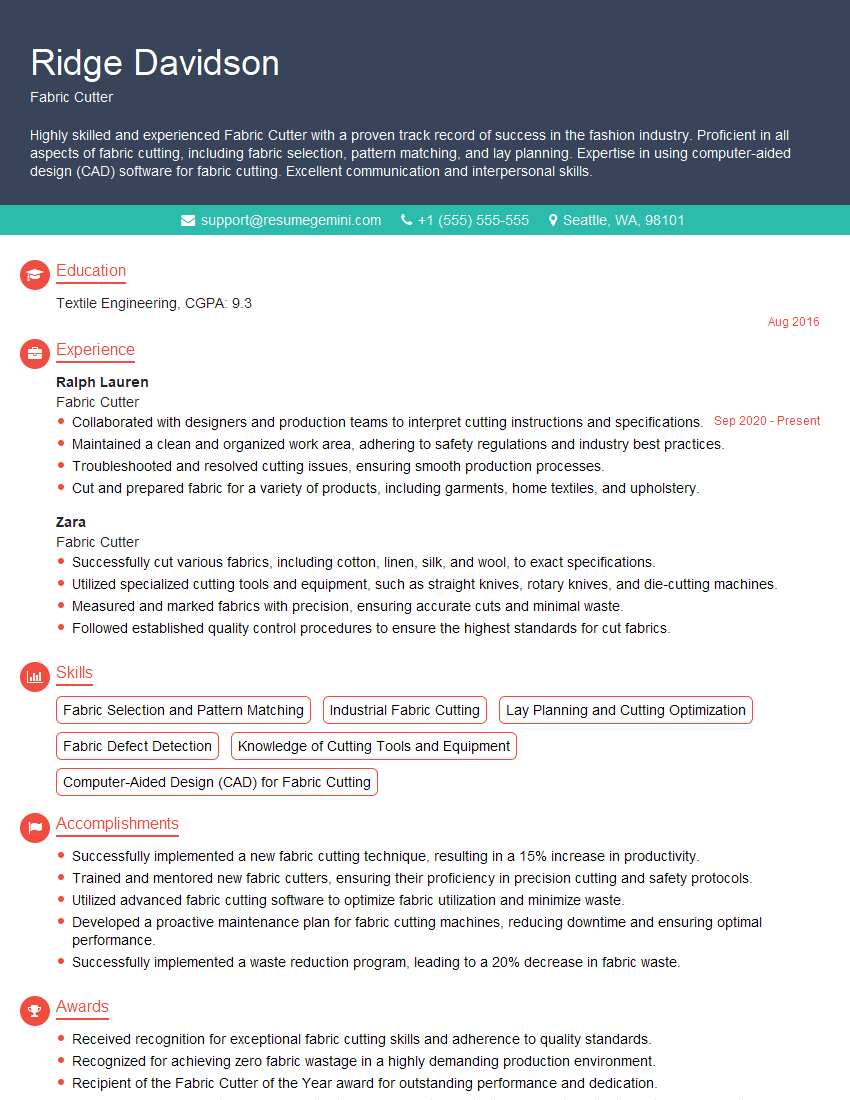
Mastering textile fabric handling is crucial for career advancement in the textile industry, opening doors to more specialized roles and increased earning potential. A well-crafted resume is key to showcasing your skills and experience to potential employers. Building an ATS-friendly resume significantly increases your chances of getting noticed by recruiters. We recommend using ResumeGemini, a trusted resource, to create a professional and impactful resume. ResumeGemini provides examples of resumes tailored to Textile Fabric Handling to help you get started. Take the next step towards your dream career – build a winning resume today!




Explore more articles
Users Rating of Our Blogs
Share Your Experience
We value your feedback! Please rate our content and share your thoughts (optional).
What Readers Say About Our Blog
Attention music lovers!
Wow, All the best Sax Summer music !!!
Spotify: https://open.spotify.com/artist/6ShcdIT7rPVVaFEpgZQbUk
Apple Music: https://music.apple.com/fr/artist/jimmy-sax-black/1530501936
YouTube: https://music.youtube.com/browse/VLOLAK5uy_noClmC7abM6YpZsnySxRqt3LoalPf88No
Other Platforms and Free Downloads : https://fanlink.tv/jimmysaxblack
on google : https://www.google.com/search?q=22+AND+22+AND+22
on ChatGPT : https://chat.openai.com?q=who20jlJimmy20Black20Sax20Producer
Get back into the groove with Jimmy sax Black
Best regards,
Jimmy sax Black
www.jimmysaxblack.com
Hi I am a troller at The aquatic interview center and I suddenly went so fast in Roblox and it was gone when I reset.
Hi,
Business owners spend hours every week worrying about their website—or avoiding it because it feels overwhelming.
We’d like to take that off your plate:
$69/month. Everything handled.
Our team will:
Design a custom website—or completely overhaul your current one
Take care of hosting as an option
Handle edits and improvements—up to 60 minutes of work included every month
No setup fees, no annual commitments. Just a site that makes a strong first impression.
Find out if it’s right for you:
https://websolutionsgenius.com/awardwinningwebsites
Hello,
we currently offer a complimentary backlink and URL indexing test for search engine optimization professionals.
You can get complimentary indexing credits to test how link discovery works in practice.
No credit card is required and there is no recurring fee.
You can find details here:
https://wikipedia-backlinks.com/indexing/
Regards
NICE RESPONSE TO Q & A
hi
The aim of this message is regarding an unclaimed deposit of a deceased nationale that bears the same name as you. You are not relate to him as there are millions of people answering the names across around the world. But i will use my position to influence the release of the deposit to you for our mutual benefit.
Respond for full details and how to claim the deposit. This is 100% risk free. Send hello to my email id: lukachachibaialuka@gmail.com
Luka Chachibaialuka
Hey interviewgemini.com, just wanted to follow up on my last email.
We just launched Call the Monster, an parenting app that lets you summon friendly ‘monsters’ kids actually listen to.
We’re also running a giveaway for everyone who downloads the app. Since it’s brand new, there aren’t many users yet, which means you’ve got a much better chance of winning some great prizes.
You can check it out here: https://bit.ly/callamonsterapp
Or follow us on Instagram: https://www.instagram.com/callamonsterapp
Thanks,
Ryan
CEO – Call the Monster App
Hey interviewgemini.com, I saw your website and love your approach.
I just want this to look like spam email, but want to share something important to you. We just launched Call the Monster, a parenting app that lets you summon friendly ‘monsters’ kids actually listen to.
Parents are loving it for calming chaos before bedtime. Thought you might want to try it: https://bit.ly/callamonsterapp or just follow our fun monster lore on Instagram: https://www.instagram.com/callamonsterapp
Thanks,
Ryan
CEO – Call A Monster APP
To the interviewgemini.com Owner.
Dear interviewgemini.com Webmaster!
Hi interviewgemini.com Webmaster!
Dear interviewgemini.com Webmaster!
excellent
Hello,
We found issues with your domain’s email setup that may be sending your messages to spam or blocking them completely. InboxShield Mini shows you how to fix it in minutes — no tech skills required.
Scan your domain now for details: https://inboxshield-mini.com/
— Adam @ InboxShield Mini
support@inboxshield-mini.com
Reply STOP to unsubscribe
Hi, are you owner of interviewgemini.com? What if I told you I could help you find extra time in your schedule, reconnect with leads you didn’t even realize you missed, and bring in more “I want to work with you” conversations, without increasing your ad spend or hiring a full-time employee?
All with a flexible, budget-friendly service that could easily pay for itself. Sounds good?
Would it be nice to jump on a quick 10-minute call so I can show you exactly how we make this work?
Best,
Hapei
Marketing Director
Hey, I know you’re the owner of interviewgemini.com. I’ll be quick.
Fundraising for your business is tough and time-consuming. We make it easier by guaranteeing two private investor meetings each month, for six months. No demos, no pitch events – just direct introductions to active investors matched to your startup.
If youR17;re raising, this could help you build real momentum. Want me to send more info?
Hi, I represent an SEO company that specialises in getting you AI citations and higher rankings on Google. I’d like to offer you a 100% free SEO audit for your website. Would you be interested?
Hi, I represent an SEO company that specialises in getting you AI citations and higher rankings on Google. I’d like to offer you a 100% free SEO audit for your website. Would you be interested?