The right preparation can turn an interview into an opportunity to showcase your expertise. This guide to Hydrogen Power Plant Codes and Standards interview questions is your ultimate resource, providing key insights and tips to help you ace your responses and stand out as a top candidate.
Questions Asked in Hydrogen Power Plant Codes and Standards Interview
Q 1. Explain the role of ASME Boiler and Pressure Vessel Code Section VIII in hydrogen storage tank design.
ASME Boiler and Pressure Vessel Code, Section VIII, Division 1 and Division 2, are crucial for designing safe and reliable hydrogen storage tanks. These codes provide rules for design, fabrication, inspection, testing, and certification of pressure vessels, including those intended for hydrogen storage. They address critical aspects like material selection (considering hydrogen embrittlement), stress analysis (accounting for cyclic loading and pressure fluctuations), welding procedures (ensuring robust and leak-free joints), and non-destructive examination (NDE) methods to detect flaws.
For instance, Section VIII, Division 2, allows for a more detailed and sophisticated approach to design, often using finite element analysis (FEA) to model complex stress distributions within the tank. This is particularly important for larger-scale hydrogen storage solutions where precise stress management is crucial for preventing failure. The selection of materials must comply with the code’s requirements, often demanding high-strength, low-permeability materials resistant to hydrogen embrittlement, such as certain grades of stainless steel or specialized alloys. The rigorous testing and inspection procedures mandated by the code help to ensure the tank meets the specified safety and performance standards.
Q 2. What are the key differences between API standards and ISO standards for hydrogen pipelines?
API (American Petroleum Institute) and ISO (International Organization for Standardization) standards for hydrogen pipelines differ primarily in their scope and approach. API standards are typically developed and used within the US and often focus on specific aspects of pipeline design, construction, and operation, drawing on the extensive experience with hydrocarbon pipelines. ISO standards, conversely, offer a more globally harmonized approach, striving for international compatibility and broader applicability.
Key differences may include specific material requirements, leak detection technologies, safety protocols, and regulatory compliance aspects. For example, an API standard might emphasize certain types of pipeline coatings or welding techniques, whereas an ISO standard might provide a broader framework accommodating diverse approaches while ensuring a minimum safety level. The detailed requirements for pressure testing, cathodic protection, and operational monitoring might also differ. Imagine a situation where a pipeline project spans multiple countries – aligning with ISO standards might be necessary for seamless international cooperation and regulatory approval.
Q 3. Describe the safety considerations specific to hydrogen handling and storage.
Hydrogen handling and storage present unique safety challenges due to its flammability, low ignition energy, wide flammability range, and ability to embrittle certain materials. These factors necessitate rigorous safety protocols. Key considerations include:
- Leak detection and prevention: Implementing robust leak detection systems using sensors and regular inspections to minimize the risk of ignition.
- Ventilation and purging: Maintaining adequate ventilation in storage areas and implementing procedures to purge the space with inert gas before performing maintenance or other potentially hazardous operations.
- Material compatibility: Selecting materials resistant to hydrogen embrittlement, and designing systems to minimize stress concentrations.
- Pressure relief systems: Installing pressure relief valves and rupture discs to prevent over-pressurization and potential vessel failure.
- Emergency shutdown systems: Implementing reliable emergency shutdown systems that can quickly isolate and secure the system in case of an emergency.
- Operator training and emergency response: Providing comprehensive training to operators on safe handling procedures, emergency response protocols, and the use of personal protective equipment (PPE).
Failure to address these aspects can lead to significant hazards, including explosions and fires.
Q 4. How do you ensure compliance with NFPA standards in a hydrogen power plant?
NFPA (National Fire Protection Association) standards are critical for ensuring fire safety in hydrogen power plants. Compliance involves adhering to relevant NFPA codes, including NFPA 2, NFPA 50A, and NFPA 70 (National Electrical Code), among others. This involves multiple steps:
- Hazard assessment: Identifying potential fire and explosion hazards associated with hydrogen handling, storage, and processing.
- Design and construction: Designing the plant to minimize fire risks, including appropriate building materials, fire suppression systems, and electrical protection measures.
- Fire protection systems: Installing fire suppression systems (e.g., water mist, foam, or inert gas systems) designed for hydrogen fires.
- Emergency response planning: Developing and implementing comprehensive emergency response plans that address potential fire and explosion scenarios.
- Regular inspections and maintenance: Conducting routine inspections and maintenance of fire protection systems and equipment to ensure their readiness.
- Personnel training: Training personnel on fire safety procedures, emergency response protocols, and the use of fire suppression equipment.
Regular audits and compliance checks help maintain adherence to the standards, ensuring the safety of personnel and the plant.
Q 5. What are the critical aspects of hydrogen leak detection and mitigation?
Hydrogen leak detection and mitigation are critical for preventing accidents. Multiple techniques are employed, often in combination:
- Leak detection sensors: Using various sensors like catalytic combustion sensors, infrared sensors, and electrochemical sensors to detect even small leaks.
- Regular inspections: Implementing visual inspections, pressure testing, and acoustic leak detection to identify potential leaks.
- Leak mitigation strategies: Employing strategies like automatic shutoff valves, ventilation systems, and inert gas purging to contain and mitigate leaks.
- Emergency response plan: Having a well-defined emergency response plan for addressing leaks, including evacuation procedures and emergency personnel notification.
For example, a catalytic combustion sensor might trigger an alarm if hydrogen concentration exceeds a predetermined threshold, leading to an automatic shutdown of the system. Regular inspections and maintenance of detection systems are equally important, as sensor drift can impact the reliability of leak detection.
Q 6. Explain the importance of material selection for hydrogen service.
Material selection for hydrogen service is paramount because hydrogen can cause hydrogen embrittlement, a phenomenon that reduces the ductility and strength of certain metals. Careful consideration of the material’s compatibility with hydrogen at various pressures and temperatures is crucial. Factors to consider include:
- Hydrogen embrittlement resistance: Choosing materials with high resistance to hydrogen embrittlement, such as austenitic stainless steels (like 316L), certain nickel-based alloys, and specialized polymers.
- Permeability: Selecting materials with low hydrogen permeability to minimize hydrogen leakage.
- Strength and ductility: Selecting materials with sufficient strength and ductility to withstand operating pressures and potential stresses.
- Corrosion resistance: Choosing materials resistant to corrosion from hydrogen or other components in the system.
- Weldability: Selecting materials that can be reliably welded using appropriate techniques to maintain structural integrity.
Poor material selection can lead to catastrophic failures. Therefore, rigorous material testing and qualification are essential before deployment in hydrogen systems.
Q 7. What are the common codes and standards related to hydrogen refueling stations?
Several codes and standards govern hydrogen refueling stations (HRS), ensuring safe and reliable operation. These often depend on the geographic location, but common examples include:
- SAE International standards: SAE offers standards related to hydrogen fueling nozzles, connectors, and dispensing equipment.
- ISO standards: Various ISO standards address different aspects of HRS design, operation, and safety.
- National and regional standards: Many countries and regions have their own standards and regulations specifically addressing HRS.
- NFPA standards: NFPA standards address fire safety aspects of HRS, including ventilation, leak detection, and emergency response.
These standards cover aspects ranging from pressure vessel design to safety systems, dispensing equipment, and emergency procedures. Adherence to these standards is vital for ensuring the safe and efficient operation of hydrogen refueling stations.
Q 8. Discuss the regulatory requirements for hydrogen plant emissions.
Regulatory requirements for hydrogen plant emissions are stringent and vary depending on the location and the specific type of plant. Generally, they focus on minimizing emissions of pollutants such as NOx, SOx, and particulate matter, often mirroring regulations for other combustion-based power plants, though the specifics differ due to hydrogen’s unique combustion properties. For example, some jurisdictions may have stricter limits on fugitive emissions of hydrogen itself, as it can contribute to greenhouse gas emissions indirectly (though far less so than fossil fuels) depending on its production method. Furthermore, regulations often cover water emissions, particularly regarding purity and temperature, as hydrogen production processes often involve significant water usage. Specific codes and standards such as those from ISO, IEC, and national regulatory bodies will provide detailed emission limits and monitoring requirements. Compliance is typically demonstrated through regular stack testing, continuous emission monitoring systems (CEMS), and detailed reporting to environmental agencies.
For instance, a plant using electrolysis may be subject to different water quality regulations than one using steam methane reforming (SMR). The SMR method will have additional regulations surrounding methane emissions and other byproducts. Ensuring compliance involves meticulous record-keeping, regular audits, and investment in emission control technologies.
Q 9. How do you assess and mitigate risks associated with hydrogen embrittlement?
Hydrogen embrittlement is a serious risk in hydrogen plants, as hydrogen atoms can diffuse into certain metals, causing them to become brittle and prone to cracking. Assessing this risk involves material selection (using hydrogen-compatible materials like austenitic stainless steels), careful design to avoid stress concentrations, and rigorous inspection and testing. Mitigation strategies include employing pre-cleaning processes to remove contaminants from materials, choosing appropriate welding techniques, and implementing surface treatments to reduce susceptibility. Regular inspections using non-destructive techniques, such as ultrasonic testing and dye penetrant testing, are crucial to detect early signs of embrittlement. In addition to material selection, controlling the hydrogen partial pressure and temperature within the system is vital in reducing the risk. Think of it like slowly soaking a sponge in water – if the sponge is already stressed it’s more likely to tear under pressure, which is analogous to hydrogen diffusing into stressed metal.
For example, a cracked high-pressure hydrogen storage tank could lead to catastrophic failure. A proactive approach involving regular inspections, proper material selection, and a robust maintenance plan is essential to prevent such events.
Q 10. What are the key safety features of a hydrogen electrolyzer system?
Key safety features in a hydrogen electrolyzer system prioritize preventing hydrogen leaks and explosions. These include:
- Pressure relief valves: To release excess pressure and prevent over-pressurization.
- Flame arresters: To prevent the propagation of flames in the event of a leak and ignition.
- Hydrogen leak detection systems: To detect even minor leaks using sensors and alarms.
- Emergency shutdown systems (ESD): To rapidly shut down the system in case of emergencies, including automated controls that react to various sensor readings.
- Ventilation systems: To ensure adequate ventilation to prevent the accumulation of hydrogen in hazardous concentrations.
- Overcurrent and over-voltage protection: To prevent damage to the electrolyzer stack.
- High-purity water supply monitoring: To ensure that the electrolyte does not have contaminants that impact operation or produce undesirable byproducts.
Moreover, the system should be designed to minimize the accumulation of hydrogen in enclosed spaces. The location of the electrolyzer system must be carefully chosen and designed for safety to prevent potentially catastrophic scenarios. Regular testing and maintenance of these safety systems are paramount for safe and reliable operation.
Q 11. Explain the process for commissioning a hydrogen power plant in accordance with relevant codes.
Commissioning a hydrogen power plant is a multi-stage process governed by relevant codes and standards, such as those from ASME, API, and relevant national or international safety regulations. The process generally includes:
- Pre-commissioning: This stage involves thorough inspection and testing of all components and systems individually, verifying their proper installation and function, usually performed by the construction team.
- System integration testing: This involves testing the interaction of various plant subsystems to ensure their compatibility and proper functioning as a complete integrated unit.
- Performance testing: This phase tests the overall performance of the plant under various operating conditions, verifying that it meets design specifications for efficiency, and safety, using various acceptance test procedures, usually performed by the plant owner or an independent third party.
- Safety and environmental compliance testing: This crucial step involves verifying that the plant meets all applicable safety and environmental regulations, for example emission testing.
- Operator training: Comprehensive training of plant operators is essential to ensure safe and efficient operation.
- Final documentation: All commissioning procedures, test results, and as-built documentation should be prepared for review and approval.
The specific steps and procedures will vary depending on the plant design and size, but the emphasis throughout the entire process is on ensuring safety and regulatory compliance.
Q 12. Describe the procedures for routine inspections and maintenance of hydrogen equipment.
Routine inspections and maintenance of hydrogen equipment are critical to prevent failures and ensure safety. A comprehensive maintenance plan should include:
- Visual inspections: Regularly checking for leaks, corrosion, and damage.
- Leak detection testing: Using specialized equipment to detect even small leaks.
- Non-destructive testing (NDT): Employing techniques like ultrasonic testing and radiography to detect internal flaws in pressure vessels and piping.
- Pressure testing: Periodically testing pressure vessels and piping systems to verify their integrity.
- Component replacement: Replacing components according to a predefined schedule or when necessary based on inspection findings.
- Calibration of safety instruments: Regularly calibrating pressure sensors, flow meters, and safety systems to ensure accuracy.
The frequency of inspections and maintenance will depend on factors such as operating conditions, component criticality, and industry best practices. Proper record-keeping is essential to track maintenance activities and ensure compliance with regulatory requirements. Think of it like regularly servicing your car—preventative maintenance is far cheaper than dealing with a major breakdown.
Q 13. How do you ensure the integrity of hydrogen piping systems?
Ensuring the integrity of hydrogen piping systems requires careful consideration of material selection, design, construction, and maintenance. Hydrogen’s unique properties—its small molecular size and ability to embrittle certain metals—demand stringent standards. Key aspects include:
- Material selection: Using materials known for their resistance to hydrogen embrittlement, such as austenitic stainless steels, and specific grades of carbon steel which have been treated to reduce the risk of hydrogen ingress.
- Welding techniques: Employing appropriate welding procedures to minimize stress concentrations and prevent defects.
- Leak detection and monitoring: Installing leak detection systems to identify and address leaks promptly.
- Stress analysis: Performing stress analysis during the design phase to ensure the system can withstand operating pressures and temperatures.
- Regular inspections: Carrying out routine visual inspections, pressure testing, and NDT to detect potential issues.
- Proper purging and cleaning: Purging the system with an inert gas before introducing hydrogen to prevent unwanted reactions or formation of flammable atmospheres.
A failure in a hydrogen piping system could result in a catastrophic leak, posing severe safety risks. A proactive approach combining high-quality materials, meticulous design, thorough construction, and regular maintenance is crucial to prevent such incidents.
Q 14. What are the common failure modes of hydrogen plant components and how are they addressed?
Common failure modes of hydrogen plant components vary depending on the specific component and operating conditions. Some common failure modes and their corresponding mitigation strategies are:
- Hydrogen embrittlement: As discussed previously, material selection, stress reduction, and regular inspection are key mitigation strategies.
- Corrosion: Both general corrosion and localized corrosion, such as pitting and crevice corrosion, can weaken components. Proper material selection, corrosion inhibitors, and protective coatings can minimize corrosion.
- Fatigue failure: Cyclic loading can lead to fatigue cracks. Design considerations, material selection, and careful monitoring of operating conditions are crucial in avoiding fatigue failure.
- Creep: At high temperatures, materials can deform slowly over time. Selecting materials with high creep resistance is essential, along with operating at temperatures within the material’s design limits.
- Leaks: Leaks in valves, seals, and piping can lead to hydrogen loss and safety hazards. Regular inspection, preventative maintenance, and leak detection systems are essential.
Addressing these failure modes involves a combination of proper design, material selection, rigorous quality control during manufacturing and construction, and a robust maintenance program. Regular inspections and risk assessments are crucial for early detection and proactive mitigation of potential problems.
Q 15. What are the environmental regulations pertaining to hydrogen production and use?
Environmental regulations surrounding hydrogen production and use are multifaceted and vary depending on the production method and geographical location. However, common themes include minimizing greenhouse gas emissions, managing water consumption, and preventing air and water pollution.
Greenhouse Gas Emissions: Regulations often focus on reducing CO2 emissions associated with hydrogen production, particularly for ‘grey’ hydrogen (produced from natural gas). Carbon capture and storage (CCS) technologies are increasingly important in meeting these standards. ‘Green’ hydrogen (produced from renewable sources like electrolysis powered by solar or wind) generally faces less stringent emissions regulations due to its inherently lower carbon footprint.
Water Consumption: Electrolysis, a common green hydrogen production method, requires significant amounts of water. Regulations may address water usage efficiency and potential impacts on local water resources. This often involves permitting processes and water usage limits.
Air and Water Pollution: Regulations cover pollutants released during hydrogen production and use, including nitrogen oxides (NOx), sulfur oxides (SOx), and particulate matter. Stricter emission standards for industrial facilities are often in place to ensure air quality and prevent water contamination from waste streams.
Land Use: Large-scale hydrogen production facilities, particularly those involving renewable energy sources, can require substantial land areas. Regulations may address land-use planning, habitat protection, and minimizing environmental disturbances.
Specific regulatory frameworks include those under the Clean Air Act (in the US), the EU Emissions Trading System (ETS), and national-level regulations in various countries. These frameworks are constantly evolving to reflect advancements in technology and a growing understanding of hydrogen’s environmental implications. For example, many jurisdictions are implementing carbon pricing mechanisms that incentivize low-carbon hydrogen production.
Career Expert Tips:
- Ace those interviews! Prepare effectively by reviewing the Top 50 Most Common Interview Questions on ResumeGemini.
- Navigate your job search with confidence! Explore a wide range of Career Tips on ResumeGemini. Learn about common challenges and recommendations to overcome them.
- Craft the perfect resume! Master the Art of Resume Writing with ResumeGemini’s guide. Showcase your unique qualifications and achievements effectively.
- Don’t miss out on holiday savings! Build your dream resume with ResumeGemini’s ATS optimized templates.
Q 16. Explain your understanding of hydrogen safety management systems (SMS).
A Hydrogen Safety Management System (SMS) is a comprehensive framework designed to proactively identify, assess, and mitigate risks associated with hydrogen throughout its lifecycle, from production and storage to transportation and utilization. It’s not just about reacting to incidents; it’s about creating a safety culture that prevents them.
Hazard Identification & Risk Assessment: This involves identifying potential hazards (e.g., leaks, fires, explosions) and assessing their likelihood and consequences. Techniques like HAZOP (Hazard and Operability Study) and FMEA (Failure Mode and Effects Analysis) are crucial here.
Engineering Controls: Implementing safety systems like leak detection and prevention systems, automatic shutdown mechanisms, and appropriate ventilation are essential. These controls minimize the probability of hazardous events.
Administrative Controls: Establishing operating procedures, training programs, emergency response plans, and permit-to-work systems ensures safe work practices and rapid response to incidents.
Personal Protective Equipment (PPE): Providing appropriate PPE, such as respiratory protection, flame-resistant clothing, and safety eyewear, protects personnel from potential hazards.
Monitoring & Auditing: Regularly monitoring equipment performance, conducting inspections, and reviewing safety records helps identify potential weaknesses and ensures the effectiveness of the SMS.
A well-implemented SMS is a cyclical process of continuous improvement, constantly refining safety procedures and enhancing mitigation strategies based on lessons learned from incidents, audits, and technological advancements.
Q 17. Discuss the importance of hydrogen purity and its impact on plant operation.
Hydrogen purity is paramount in hydrogen power plant operation. Impurities can severely impact the performance, efficiency, and longevity of plant components. The required purity level depends on the specific application; fuel cells are particularly sensitive to contaminants.
Fuel Cell Performance: Even trace amounts of impurities like carbon monoxide (CO), sulfur compounds, and oxygen can poison fuel cell catalysts, reducing their efficiency and lifespan. High-purity hydrogen (typically 99.999% or higher) is often required for fuel cell applications.
Equipment Degradation: Impurities can cause corrosion and erosion of plant equipment, leading to premature failure and costly maintenance. For instance, sulfur compounds can corrode many metals commonly used in hydrogen systems.
Safety Concerns: Certain impurities can increase the flammability or explosiveness of hydrogen, exacerbating safety risks. Careful purification is crucial for safe operation.
Turbine Operation: In gas turbines using hydrogen, impurities can lead to fouling and damage to turbine blades, affecting power output and efficiency. Regular monitoring and purification are necessary to maintain performance.
Hydrogen purification methods include various technologies such as pressure swing adsorption (PSA), membrane separation, and cryogenic distillation. The choice of purification method depends on the desired purity level, the types and concentrations of impurities present, and economic considerations. Regular monitoring of hydrogen purity using online analyzers is essential for maintaining optimal plant operation and preventing damage.
Q 18. How do you manage hydrogen emergencies and incidents?
Managing hydrogen emergencies and incidents requires a well-defined emergency response plan and a highly trained workforce. This plan should be regularly practiced and updated to reflect any changes in the facility or operational procedures.
Leak Detection & Response: The plant must have a robust leak detection system, coupled with procedures for isolating and repairing leaks quickly and safely. This includes emergency shut-down procedures and techniques to control or vent hydrogen safely. Training includes the use of leak detection equipment, understanding the properties of hydrogen (lighter than air, rapid diffusion), and the use of specialized extinguishing agents.
Fire Suppression: Hydrogen fires require specialized suppression methods. Water is generally ineffective; inerting with nitrogen or carbon dioxide may be more effective. Training should emphasize the use of appropriate fire suppression systems and procedures for evacuating personnel.
Emergency Shutdown Procedures: These procedures should be clearly defined and regularly practiced to ensure a coordinated and efficient response in the event of an emergency. This includes communication protocols, evacuation plans, and personnel responsibilities.
Post-Incident Investigation: A thorough investigation of every incident, including root cause analysis, is vital to identify contributing factors and prevent future occurrences. Lessons learned should be documented and incorporated into revised safety procedures and training programs.
Regular drills and simulations are crucial to ensure that the emergency response plan is effective and that personnel are adequately trained and prepared. Collaboration with local emergency services is essential to coordinate a comprehensive response.
Q 19. What are the key performance indicators (KPIs) for a hydrogen power plant?
Key Performance Indicators (KPIs) for a hydrogen power plant are crucial for assessing its overall performance, efficiency, and safety. These KPIs can be grouped into operational, economic, and environmental categories.
Operational KPIs:
- Capacity Factor: The percentage of time the plant is operating at its maximum capacity.
- Efficiency: The ratio of electricity generated to hydrogen consumed (or to the primary energy input depending on hydrogen production method).
- Uptime: The percentage of time the plant is operational without major outages.
- Hydrogen Purity: The level of purity maintained throughout operation.
- Fuel Cell Degradation Rate (for fuel cell plants): How much the performance of fuel cells declines over time.
Economic KPIs:
- Levelized Cost of Electricity (LCOE): The average cost per unit of electricity over the plant’s lifetime.
- Return on Investment (ROI): The profitability of the investment in the plant.
- Operating and Maintenance (O&M) Costs: The costs associated with running and maintaining the plant.
Environmental KPIs:
- Greenhouse Gas (GHG) Emissions: Total GHG emissions per unit of electricity generated.
- Water Consumption: The amount of water used in the plant’s operation.
- Waste Generation: The amount and type of waste generated by the plant.
Tracking these KPIs helps identify areas for improvement, optimize plant operation, and demonstrate the plant’s economic and environmental viability.
Q 20. Explain the role of HAZOP studies in hydrogen power plant safety.
A Hazard and Operability Study (HAZOP) is a systematic and comprehensive technique used to identify potential hazards and operability problems in a process system, like a hydrogen power plant. It’s a proactive risk assessment method that helps prevent accidents before they occur.
Methodology: HAZOP involves a team of experts systematically reviewing each element of the process using predefined guide words (e.g., ‘no,’ ‘more,’ ‘less,’ ‘part of’). Each guide word is applied to each process parameter (flow rate, temperature, pressure, etc.) to identify deviations from the intended operation. For example, asking ‘What if the flow rate of hydrogen is less than intended?’ can uncover potential risks.
Importance in Hydrogen Plants: Hydrogen’s unique properties (flammability, lightness) demand rigorous hazard identification. HAZOP helps uncover potential scenarios like leaks, fires, explosions, or equipment failures that could lead to serious incidents. It can also highlight operability problems that might impact efficiency, safety, or maintenance.
Outputs: The HAZOP study produces a detailed report documenting identified hazards, their causes, potential consequences, and recommended mitigation strategies. This helps prioritize safety improvements and inform the design and operation of the plant.
Practical Application: HAZOP findings often lead to changes in design, operational procedures, safety systems, and training programs. For instance, a HAZOP might recommend installing additional safety valves, improving leak detection systems, or developing more robust emergency response protocols.
By using HAZOP proactively during the design and commissioning phases, potentially serious incidents can be prevented, resulting in a safer and more efficient hydrogen power plant.
Q 21. What are the different types of hydrogen storage technologies and their associated codes?
Several technologies exist for hydrogen storage, each with its advantages and disadvantages, and often subject to specific codes and standards for safe operation.
Compressed Gas Storage: Hydrogen is stored under high pressure (e.g., 200-700 bar) in high-strength cylinders or tanks. Codes and standards governing these systems focus on pressure vessel design, materials, testing, and safety devices to prevent leaks or explosions. Examples include ASME Boiler and Pressure Vessel Code Section VIII, Division 1, and relevant national and international standards for cylinder design and testing.
Liquefied Hydrogen Storage: Hydrogen is liquefied at cryogenic temperatures (-253°C) to reduce its volume. This requires specialized cryogenic tanks and equipment. Codes and standards emphasize insulation, vaporization control, and safe handling of cryogenic fluids. Relevant standards include those from organizations like ASME, ISO, and national regulatory bodies.
Metal Hydride Storage: Hydrogen is stored by absorbing it into a metal alloy, forming a metal hydride. This offers a relatively safe and compact storage option but has limitations in terms of storage capacity and hydrogen release rate. Relevant standards might include those related to material properties, tank design, and thermal management.
Underground Storage (Salt Caverns, Depleted Gas Fields): Large-scale hydrogen storage may involve utilizing existing underground cavities or creating new ones. This necessitates geological assessments, structural analysis, and leak detection monitoring. Safety standards would encompass those related to underground storage of gases, geological stability, and environmental protection.
The choice of storage technology depends on factors such as storage capacity, pressure, cost, location, and safety requirements. It’s essential to select a technology that complies with all relevant codes and standards to ensure safe and reliable operation.
Q 22. Describe the procedures for hydrogen plant shutdown and start-up.
Hydrogen plant shutdown and start-up procedures are critical for safety and operational efficiency. They involve a sequential process to ensure the safe handling of hydrogen, a highly flammable gas.
Shutdown: Typically begins with a gradual reduction in power generation. This involves slowly decreasing the flow of hydrogen to the fuel cells or turbines, depending on the plant design. Simultaneously, we cool down various components to prevent thermal stress and potential damage. This is followed by a complete isolation of the hydrogen supply, purging the system with an inert gas like nitrogen to eliminate any remaining hydrogen. Finally, all power is disconnected, and safety systems are engaged. Specific steps will vary greatly based on the type of plant (e.g., PEM electrolyzer based, alkaline electrolyzer based, etc) and the specific equipment used, which is why adherence to detailed plant-specific procedures is paramount. A thorough checklist system is vital.
Start-up: This is the reverse process. First, a thorough safety inspection is done, confirming that all systems are functional. The system is then depressurized, often with inert gas, before introducing hydrogen. We gradually increase the hydrogen flow, carefully monitoring pressures and temperatures throughout the process. Once the desired operating parameters are reached, full power generation commences. Every step is meticulously documented. For instance, in one project I managed, we employed a sophisticated SCADA (Supervisory Control and Data Acquisition) system that provides real-time monitoring and automated shutdown capabilities should any parameter deviate from the set point.
Q 23. How does hydrogen infrastructure interact with existing energy grids?
Hydrogen infrastructure can integrate with existing energy grids in several ways, offering opportunities for grid stabilization and renewable energy integration. Imagine electricity grids as the circulatory system of our energy ecosystem; hydrogen can act as a powerful storage and transport mechanism.
One approach is using hydrogen as an energy storage medium. Excess renewable energy (solar, wind) can be used to produce hydrogen through electrolysis, storing this hydrogen for later use in fuel cells or combustion turbines when renewable generation is low. This provides grid balancing and reduces intermittency.
Another method is direct injection of hydrogen into natural gas pipelines, although this requires careful consideration of material compatibility and pipeline modifications. This approach allows for gradual integration of hydrogen into the existing natural gas infrastructure.
Finally, hydrogen can be used in power plants directly connected to the grid. This allows for flexible dispatch and can help manage peak loads. This requires dedicated infrastructure, including hydrogen pipelines and storage facilities.
Q 24. Discuss the implications of different hydrogen production methods on plant design.
Different hydrogen production methods significantly impact plant design. The choice of production method dictates the required equipment, safety protocols, and overall plant layout.
Electrolysis: Plants using electrolysis (water splitting using electricity) require significant electrical infrastructure, including power conditioning units and potentially large-scale energy storage solutions. The design needs to accommodate electrolyzer stacks, water purification systems, and hydrogen storage and compression equipment. The type of electrolyzer (alkaline, PEM, solid oxide) impacts the plant’s overall footprint and operational characteristics. For instance, PEM electrolyzers are generally more compact but may be less tolerant of impurities in the feed water compared to alkaline electrolyzers.
Steam Methane Reforming (SMR): Plants using SMR rely on natural gas as a feedstock, necessitating gas supply infrastructure and systems for managing carbon dioxide emissions if carbon capture and storage (CCS) isn’t implemented. These plants will include reforming reactors, CO shift converters, and potentially gas purification units, leading to a more complex layout.
Gasification: Gasification of biomass or coal produces syngas which can then be converted to hydrogen. Gasification plants are inherently more complex, requiring systems for handling solid feedstocks, managing ash, and dealing with various byproducts. The design must incorporate stringent environmental controls to minimize emissions.
Q 25. Explain your experience with hydrogen quality control and testing procedures.
Hydrogen quality control and testing are crucial due to its impact on fuel cell performance, material compatibility and safety. My experience involves implementing and overseeing a rigorous testing regime following industry standards like ISO 14687.
We regularly assess hydrogen purity levels, checking for contaminants such as oxygen, carbon monoxide, and nitrogen. Techniques like Gas Chromatography (GC) are routinely employed for precise measurement of impurities.
Moreover, moisture content is carefully monitored using techniques like dew point measurement because even trace amounts of moisture can degrade the performance of certain components and lead to safety concerns.
In addition to routine purity checks, we conduct regular pressure and leak tests on all hydrogen handling systems to guarantee operational safety. I’ve been personally involved in developing and implementing procedures for emergency shutdowns to mitigate risks associated with hydrogen leaks. A thorough understanding of these procedures is essential in preventing potentially hazardous situations.
Q 26. What is your experience with different hydrogen compression technologies?
I’ve worked with various hydrogen compression technologies, each with its own advantages and disadvantages. The choice of technology is determined by several factors, including the required pressure, hydrogen flow rate, and cost considerations.
Reciprocating compressors: These are suitable for smaller plants and offer high pressure ratios. However, they can be less efficient at high flow rates and generate vibrations.
Centrifugal compressors: They are efficient for higher flow rates and are often used in large-scale hydrogen production and distribution facilities. They are typically more cost-effective at larger scales.
Diaphragm compressors: These are useful for applications where complete separation of the hydrogen from the compressor mechanism is critical. These systems are particularly valuable where minimizing the risk of oil contamination within the hydrogen stream is important.
In a previous project involving a large-scale PEM electrolyzer facility, we opted for centrifugal compressors due to their higher efficiency and capacity. The selection also involved a detailed analysis of the lifecycle cost, considering maintenance requirements and energy consumption.
Q 27. How familiar are you with the latest advancements in hydrogen power plant technology?
The field of hydrogen power plant technology is constantly evolving, with significant advancements in materials science, component design, and system integration.
One key area is the development of more efficient and cost-effective electrolyzers. Improvements in membrane technology for PEM electrolyzers are increasing efficiency and reducing manufacturing costs. Solid oxide electrolyzers (SOECs) are also gaining traction, as they offer potential for higher efficiencies at higher temperatures.
Furthermore, research into novel hydrogen storage methods, such as metal hydrides and liquid organic hydrogen carriers (LOHCs), is opening avenues for improved hydrogen storage density and transportation.
Advances in fuel cell technology are leading to more durable and efficient fuel cells with higher power densities. These developments, along with improvements in power electronics and system control, pave the way for more compact and efficient hydrogen power plants.
Q 28. Describe your approach to problem-solving in a high-pressure hydrogen plant environment.
My approach to problem-solving in a high-pressure hydrogen plant environment emphasizes safety and efficiency. The key is a systematic and methodical approach incorporating several steps.
1. Safety First: The immediate priority is to ensure the safety of personnel and equipment. This involves isolating affected systems and implementing emergency procedures as needed. For example, identifying and isolating any potential hydrogen leaks is the first step in most cases.
2. Diagnostics: After securing the site, we employ diagnostic tools to pinpoint the problem’s root cause. This involves analyzing data from SCADA systems, reviewing operational logs, and conducting thorough physical inspections of affected equipment.
3. Root Cause Analysis: Once the problem is identified, we conduct a thorough root cause analysis to prevent recurrence. This could involve reviewing operating procedures, conducting failure analyses on components, or implementing new safety mechanisms.
4. Corrective Action: Following the root cause analysis, corrective actions are implemented, which can involve repairs, replacements, modifications, or procedural updates.
5. Verification and Documentation: Finally, we verify the effectiveness of the corrective actions and meticulously document the entire process, including the problem, its solution, and preventative measures. This documentation is critical for future reference and continuous improvement. The key is a blend of practical expertise and careful documentation and analysis, prioritizing safety and efficiency.
Key Topics to Learn for Hydrogen Power Plant Codes and Standards Interview
- Hydrogen Production Technologies and Codes: Understanding the safety and operational standards for various hydrogen production methods (e.g., electrolysis, steam methane reforming). This includes familiarity with relevant codes addressing pressure vessels, piping, and electrical systems.
- Storage and Handling: Mastering the codes and standards related to the safe storage, transportation, and handling of hydrogen, including pressure relief systems, leak detection, and emergency response procedures. Practical application involves analyzing risk assessments and safety protocols for hydrogen storage facilities.
- Plant Design and Safety Systems: Familiarization with codes governing the design, construction, and operation of hydrogen power plants, encompassing aspects like fire protection, hazard analysis, and process control systems. This includes understanding the interplay between different safety systems and their redundancy.
- Instrumentation and Control: Knowledge of the instrumentation and control systems specific to hydrogen power plants, their calibration, maintenance, and safety interlocks. Practical application might involve troubleshooting a malfunctioning sensor or control system.
- Environmental Regulations and Compliance: Understanding the environmental regulations and emission standards relevant to hydrogen power plants, including monitoring, reporting, and minimizing environmental impact. This requires understanding the life cycle assessment of hydrogen production and utilization.
- Risk Assessment and Management: Developing proficiency in conducting thorough risk assessments specific to hydrogen power plants, identifying potential hazards, and implementing mitigation strategies compliant with relevant codes and standards. This includes understanding HAZOP (Hazard and Operability) studies and other risk analysis methodologies.
- Quality Assurance and Control: Understanding the quality assurance and quality control procedures essential for ensuring the safe and reliable operation of hydrogen power plants. This involves familiarity with testing and inspection protocols for materials and components.
Next Steps
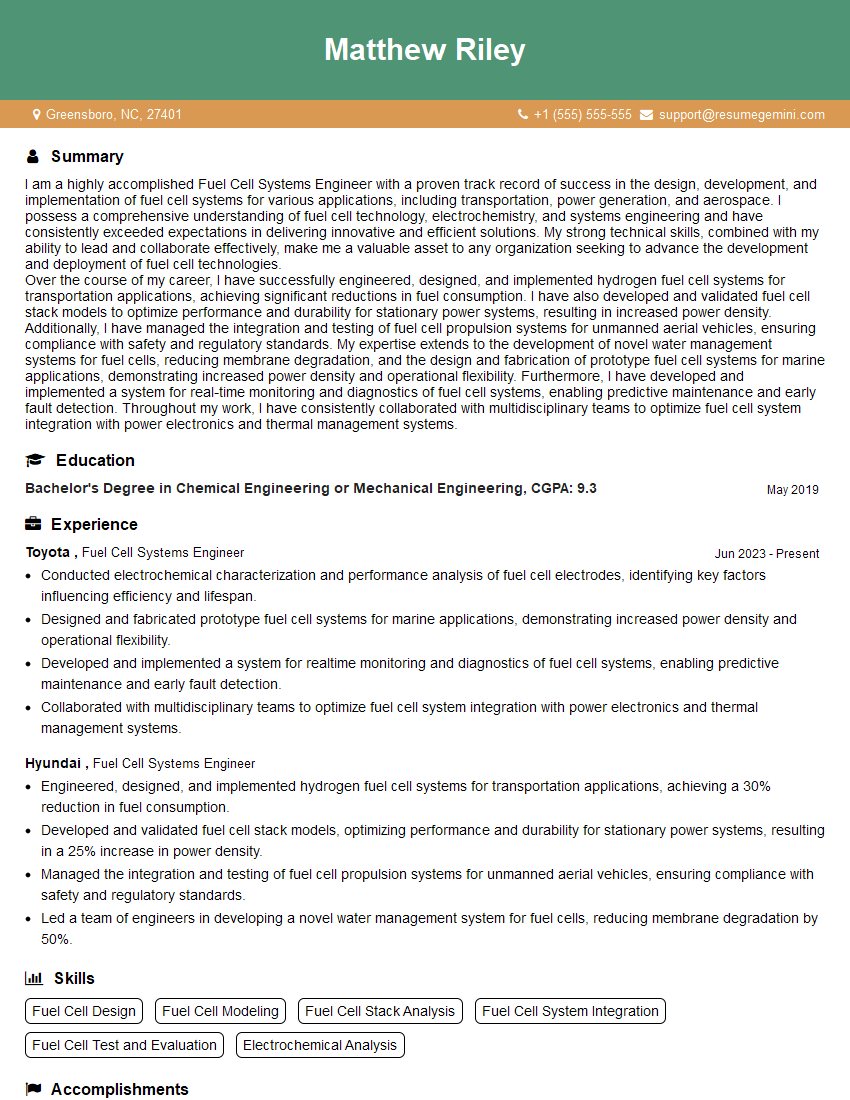
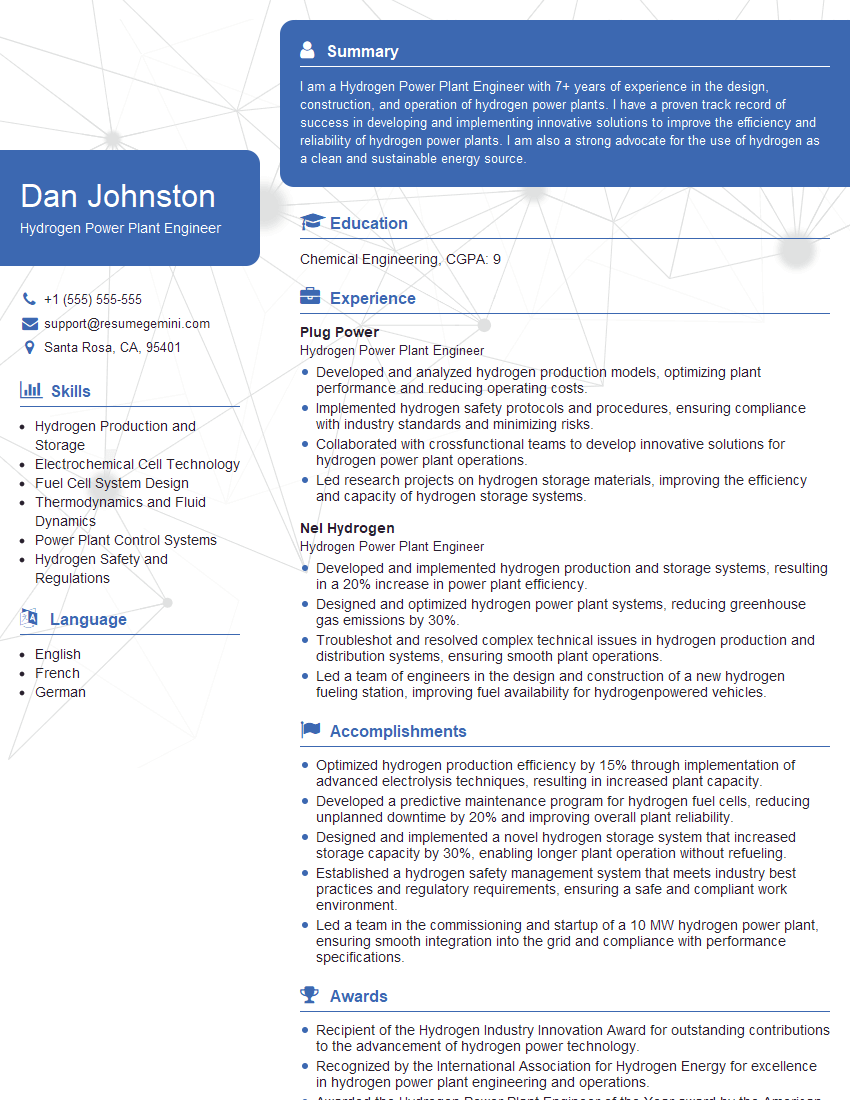
Mastering Hydrogen Power Plant Codes and Standards is crucial for a successful career in this rapidly expanding field. A strong understanding of these standards demonstrates your commitment to safety and operational excellence, making you a highly desirable candidate. To further enhance your job prospects, creating an ATS-friendly resume is essential. An effectively designed resume ensures your qualifications are highlighted and easily identified by Applicant Tracking Systems. We recommend using ResumeGemini, a trusted resource, to build a professional and impactful resume. ResumeGemini provides examples of resumes tailored specifically to Hydrogen Power Plant Codes and Standards, helping you present your skills and experience in the best possible light. Take the next step towards your dream career today!
Explore more articles
Users Rating of Our Blogs
Share Your Experience
We value your feedback! Please rate our content and share your thoughts (optional).
What Readers Say About Our Blog
Very informative content, great job.
good