Interviews are more than just a Q&A session—they’re a chance to prove your worth. This blog dives into essential Event and Tournament Organization interview questions and expert tips to help you align your answers with what hiring managers are looking for. Start preparing to shine!
Questions Asked in Event and Tournament Organization Interview
Q 1. Describe your experience in managing event budgets.
Managing event budgets requires a meticulous approach, combining strategic planning with proactive cost control. It starts with a comprehensive budget proposal, broken down into distinct categories like venue rental, catering, marketing, entertainment, staffing, and contingency funds. I typically use a spreadsheet or dedicated project management software to track expenses against allocated budgets. For example, when budgeting for a large corporate conference, I’d initially allocate X% for venue rental, Y% for catering based on anticipated attendees and menu options, and Z% for marketing and promotion across various channels (social media, email, print).
Throughout the event lifecycle, I actively monitor spending, comparing actual costs against projected figures. Regular budget review meetings help identify potential overspending early on, allowing for timely adjustments. This might involve negotiating better rates with vendors, exploring cost-effective alternatives (e.g., opting for a less expensive but equally effective AV setup), or reallocating funds from less critical areas. A crucial aspect is maintaining a detailed record of all transactions, receipts, and invoices for accurate financial reporting and auditing purposes. Finally, I always include a contingency fund (typically 10-15% of the total budget) to address unforeseen expenses.
Q 2. How do you handle unexpected issues during an event?
Handling unexpected issues during an event demands quick thinking, decisive action, and a calm demeanor. My approach is based on a three-pronged strategy: Assess, Act, and Communicate.
- Assess: Quickly identify the nature and scope of the problem. Is it a minor inconvenience or a major crisis? Who is affected? What resources are available?
- Act: Implement a solution, prioritizing the most urgent needs. This might involve contacting backup vendors, rearranging schedules, or improvising solutions. For instance, if the main speaker cancels at the last minute, I have a pre-arranged backup speaker ready to step in. If there’s a power outage, having emergency lighting and a contingency plan for presentations are essential.
- Communicate: Keep all stakeholders informed. This includes attendees, sponsors, vendors, and staff. Transparency helps manage expectations and minimizes panic. A clear and concise communication strategy (e.g., email alerts, on-site announcements) is critical.
For example, during a large music festival, a sudden downpour threatened to disrupt the outdoor performances. We immediately activated our contingency plan: rerouting attendees to indoor venues, providing ponchos and temporary shelter, and adjusting the schedule to account for the delays. We kept the audience informed through social media, announcements and on-site signage, minimizing disruption and ensuring a positive experience.
Q 3. Explain your process for event risk assessment and mitigation.
Event risk assessment and mitigation is a crucial aspect of planning. I use a systematic approach that involves identifying potential risks, analyzing their likelihood and impact, developing mitigation strategies, and regularly reviewing the plan.
The process typically starts with brainstorming potential problems: venue issues, weather disruptions, speaker cancellations, security breaches, technical failures, etc. Each risk is then assessed based on its probability (how likely is it to occur?) and its impact (how severe would the consequences be?). This helps prioritize risks and allocate resources accordingly. A risk matrix is a useful tool for visualizing this assessment.
For example, a high-probability/high-impact risk might be a power outage at a technology conference. The mitigation strategy would involve securing backup generators, having contingency plans for presentations, and clearly communicating the backup plan to attendees. Less critical risks, like minor equipment malfunctions, might only require having spare parts readily available. I regularly review and update the risk assessment throughout the event planning process, adapting strategies as needed based on new information or changing circumstances.
Q 4. What software or tools do you use for event management?
My event management toolkit includes a combination of software and tools, depending on the scale and complexity of the event. For project management, I use Asana or Trello to track tasks, deadlines, and team assignments. For registration and ticketing, Eventbrite or Ticketmaster are frequently used. Google Sheets or Excel are invaluable for budgeting and data analysis. For communication, Slack or Microsoft Teams facilitates seamless teamwork. Depending on the event, specialized software like Cvent or Social Tables might be employed for venue management and seating arrangements.
For smaller events, simpler tools like shared online calendars and email lists may suffice. The key is selecting tools that fit the specific event requirements and enhance team collaboration and efficiency.
Q 5. Describe your experience with vendor management.
Effective vendor management is crucial for a successful event. My approach focuses on clear communication, detailed contracts, and proactive monitoring. I start by carefully vetting potential vendors, checking references, and comparing proposals. Contracts should be comprehensive, outlining deliverables, timelines, payment terms, and responsibilities.
Regular communication is essential – I hold regular meetings with key vendors to discuss progress, address concerns, and ensure alignment with the event plan. For example, I’d meet with the caterer to confirm menu details, seating arrangements, and dietary restrictions. With the AV provider, I’d confirm the technical setup and sound check schedule.
Finally, proactive monitoring helps identify and address potential problems early on. This might involve site visits, test runs of equipment, and regular check-ins with vendors. A transparent, collaborative relationship with vendors fosters mutual trust and ensures a smooth event execution.
Q 6. How do you track event registration and attendance?
Tracking event registration and attendance involves leveraging technology and robust data management. I typically use online registration platforms like Eventbrite or dedicated event management software to collect attendee information and manage registrations. This data usually includes names, contact information, dietary requirements, and any special needs.
Real-time attendance tracking can be achieved using check-in systems like QR code scanners or dedicated event apps. This data feeds into the overall registration system, providing an accurate count of attendees and helping to manage any waitlists or on-site registration. Post-event, I analyze the data to understand attendance patterns, identify trends, and improve future events. This data also informs post-event communication and feedback collection.
Q 7. How do you ensure the smooth flow of an event’s logistics?
Ensuring smooth event logistics requires meticulous planning and coordination. My approach begins with a detailed logistics plan that covers all aspects of the event, from venue setup and transportation to staffing and security. This plan involves creating detailed timelines, assigning responsibilities to specific individuals or teams, and mapping out all processes involved.
For example, this might include a detailed schedule for venue setup, including the arrival times for vendors, stage setup, and equipment checks. It would also address transportation logistics, ensuring adequate transportation for attendees, speakers, and staff, perhaps involving pre-arranged shuttle services or clear parking instructions.
Effective communication is key: a clear communication plan ensures that everyone involved is informed about their roles, responsibilities, and the event schedule. This might involve using project management tools, regular meetings, and a dedicated communication channel for updates and announcements. Regular site visits and rehearsals are valuable in identifying potential bottlenecks and refining the logistics plan. The ultimate goal is a seamlessly executed event that provides a positive experience for all attendees.
Q 8. What strategies do you use to manage event volunteers?
Managing event volunteers effectively is crucial for a successful event. My strategy involves a multi-stage approach, starting with robust recruitment and ending with heartfelt appreciation. First, I create clear and engaging volunteer descriptions, highlighting the impact their contributions will have. I utilize various channels, from online volunteer platforms to social media outreach, targeting individuals with relevant skills and interests.
Once recruited, I conduct thorough training sessions, providing detailed instructions, clear roles, and expectations. This includes team briefings, safety protocols, and a designated point of contact for questions and concerns. Throughout the event, I maintain open communication, offering regular updates and providing support as needed. I use a volunteer management system to track hours, assign tasks, and ensure proper coordination. Finally, post-event, I send personalized thank-you notes and evaluate feedback, incorporating learnings into future volunteer programs. For example, during a large music festival, I implemented a tiered volunteer system, assigning roles based on experience and skill level, leading to increased efficiency and satisfaction.
Q 9. How do you measure the success of an event?
Measuring event success goes beyond simply counting attendees. It’s a multifaceted assessment that considers pre-defined objectives. Key metrics include attendance figures, but also attendee satisfaction (measured through surveys or feedback forms), sponsor satisfaction (via post-event surveys and reports), social media engagement (tracking hashtags, mentions, and reach), and financial performance (comparing revenue against budget). I also consider qualitative factors like media coverage and the overall event experience. For instance, at a charity gala, while attendance was high, we also tracked donations raised, exceeding our target by 15%, indicating a highly successful event beyond simple headcount.
Q 10. Describe your experience with event marketing and promotion.
Event marketing and promotion is a crucial element for success. My approach involves a targeted, multi-channel strategy. I begin by identifying the target audience and crafting a compelling brand message. This message is then disseminated across various platforms including social media (Facebook, Instagram, Twitter, etc.), email marketing campaigns, paid advertising (Google Ads, social media ads), public relations (press releases, media outreach), and potentially influencer marketing depending on the event type and target audience. I track campaign performance closely using analytics dashboards and adjust the strategy as needed. For example, while planning a tech conference, we used targeted LinkedIn ads to reach professionals, and engaging Instagram content to connect with a younger tech-savvy audience.
Q 11. What are your strategies for acquiring event sponsorships?
Securing event sponsorships requires a strategic approach. I begin by identifying potential sponsors whose brands align with the event’s values and target audience. I then create a detailed sponsorship proposal highlighting the benefits of partnering, including branding opportunities, audience reach, and potential ROI. The proposal outlines various sponsorship packages tailored to different budget levels. This is followed by direct outreach, personalized communication, and building strong relationships with potential sponsors. I track sponsor satisfaction continuously throughout the event and post-event to ensure long-term relationships. For a local arts festival, I created tiered sponsorship packages with varying levels of visibility and engagement opportunities, successfully attracting a mix of local businesses and national brands.
Q 12. How do you handle event security and safety protocols?
Event security and safety are paramount. My strategy includes a layered approach: pre-event planning, on-site management, and post-event review. Pre-event, I conduct thorough risk assessments, identifying potential security threats and vulnerabilities. This informs the development of a comprehensive security plan, which includes adequate staffing (security personnel, first aid responders), emergency procedures, crowd control measures (e.g., clearly marked exits, designated smoking areas), and potentially security technology like CCTV. During the event, I ensure strict adherence to the security plan, maintaining constant communication with security personnel and emergency services. Post-event, a comprehensive review is conducted, identifying areas for improvement and updating the security plan accordingly. For a large-scale sporting event, this involved collaborating with local law enforcement, implementing bag checks, and having a dedicated medical team on-site.
Q 13. Explain your experience in managing event technology and AV needs.
Managing event technology and AV needs requires meticulous planning and coordination. I begin by identifying the technological requirements of the event, considering factors such as registration systems, presentation equipment, audio-visual needs, internet connectivity, and any specific software required. I then source and contract reputable vendors, ensuring equipment reliability and compatibility. Prior to the event, I conduct thorough testing to prevent technical glitches. During the event, I appoint a dedicated tech support team to address any issues promptly. For a corporate conference, this involved coordinating a complex setup including live streaming capabilities, interactive presentation tools, and on-site tech support throughout the duration of the event.
Q 14. Describe your experience in designing event layouts and floor plans.
Event layout and floor plan design is a crucial element for maximizing attendee flow, engagement, and experience. I start with understanding the event’s objectives, considering the number of attendees, event activities, and the venue’s characteristics. I then create a detailed floor plan using specialized software, ensuring optimal space allocation for registration, seating, stages, exhibitions, food and beverage areas, restrooms, and other essential elements. The design considers accessibility, safety regulations, and the overall attendee experience. I use color-coding and clear signage in the final plan to ensure seamless navigation. For a trade show, I designed the layout to maximize booth visibility and minimize congestion in high-traffic areas, resulting in a positive feedback from exhibitors and attendees alike.
Q 15. How do you ensure timely communication with event stakeholders?
Timely communication is the backbone of any successful event. I utilize a multi-pronged approach, starting with a clearly defined communication plan that outlines key stakeholders, communication methods, and frequency. This plan is distributed at the outset and updated as needed.
For instance, with sponsors, I use a combination of regular email updates, personalized calls, and perhaps monthly progress reports detailing key metrics. With vendors, I prioritize clear contracts outlining deadlines and communication channels, often using project management software for tracking progress and tasks. For attendees, we leverage email marketing, social media, and an event app to share updates, schedules, and important information promptly. This layered approach ensures that everyone receives the right information, in the right way, at the right time.
For crisis communication, I’ve established a clear chain of command and pre-written templates to respond swiftly and consistently to unexpected situations. This reduces the risk of misinformation and keeps stakeholders informed during challenging periods.
Career Expert Tips:
- Ace those interviews! Prepare effectively by reviewing the Top 50 Most Common Interview Questions on ResumeGemini.
- Navigate your job search with confidence! Explore a wide range of Career Tips on ResumeGemini. Learn about common challenges and recommendations to overcome them.
- Craft the perfect resume! Master the Art of Resume Writing with ResumeGemini’s guide. Showcase your unique qualifications and achievements effectively.
- Don’t miss out on holiday savings! Build your dream resume with ResumeGemini’s ATS optimized templates.
Q 16. Describe your experience in post-event analysis and reporting.
Post-event analysis is crucial for continuous improvement. My approach involves collecting data from various sources: attendee surveys, financial records, vendor feedback, social media sentiment, and internal team reviews. I then analyze this data to identify areas of strength and weakness. This might involve calculating key performance indicators (KPIs) such as attendee satisfaction, ROI, and operational efficiency.
For example, in a recent conference, we found that attendee engagement was high during interactive workshops but low during some of the keynote speeches. This feedback informed our planning for future events, leading us to allocate more resources to interactive sessions and incorporate more audience participation elements into keynote presentations. The final report includes a comprehensive summary of the event’s performance, along with specific recommendations for future improvements. This documented analysis ensures we build upon our successes and address any shortcomings proactively.
Q 17. What is your experience with event ticketing and registration systems?
I have extensive experience with various event ticketing and registration systems, including Eventbrite, Ticketmaster, and custom-built solutions. My expertise extends beyond simply selecting a platform; it involves strategic planning for optimizing the user experience, minimizing errors, and ensuring secure data handling.
Selecting the right platform depends on the scale and complexity of the event. For smaller events, a user-friendly platform like Eventbrite might suffice. Larger events often require more robust systems with features like advanced reporting, integration with other software, and scalability to handle large volumes of registrations. I always consider factors such as integration with payment gateways, customer support responsiveness, and data security capabilities.
For example, for a recent music festival, we implemented a customized ticketing system integrated with a mobile app to allow for seamless ticket access, real-time updates, and personalized recommendations for attendees.
Q 18. How do you manage event contracts and agreements?
Managing event contracts is a meticulous process requiring attention to detail and legal understanding. My approach begins with a standardized template that covers all essential elements: scope of work, payment schedules, deliverables, liability clauses, and termination conditions. Each contract is reviewed carefully with the vendor before signing to ensure clarity and mutual understanding.
I utilize a centralized system – usually a cloud-based platform – for storing and tracking all contracts. This ensures easy access for all relevant parties and simplifies the process of managing revisions and amendments. I also maintain a detailed record of all communication related to the contract, which is invaluable in resolving any disputes. Clear communication and proactive problem-solving are crucial in maintaining positive vendor relationships.
A specific example involves negotiating contracts with catering companies. We always specify not only the menu but also the service style, staffing levels, and contingency plans in case of unexpected issues, thereby minimizing potential conflicts.
Q 19. Explain your approach to resolving conflicts or disputes during an event.
Conflict resolution is an inevitable part of event management. My approach is proactive and emphasizes open communication and collaboration. I always strive to address issues promptly and fairly, ensuring all parties involved feel heard and respected.
My process typically involves actively listening to all sides, identifying the root cause of the conflict, exploring various solutions, and negotiating a mutually agreeable outcome. Documentation is key – maintaining a detailed record of all communication and agreements helps prevent misunderstandings and ensures accountability. In some cases, mediation or arbitration might be necessary to resolve more complex disputes.
For instance, I once had a dispute between a sponsor and a vendor regarding the placement of their branding at an event. Through careful mediation, I helped both parties find a solution that met their needs and preserved the event’s overall aesthetic integrity.
Q 20. How do you ensure compliance with all relevant event regulations?
Compliance is paramount. My approach is multi-faceted, starting with thorough research to identify all applicable regulations, including licensing, permits, safety standards, and accessibility requirements. This includes local, state, and sometimes federal regulations depending on the nature and scale of the event.
I develop a comprehensive compliance checklist and assign specific team members to ensure adherence to each requirement. This might include securing necessary permits, implementing safety protocols, and providing accessible facilities. Regular audits are conducted to ensure continued compliance. We maintain meticulous records to demonstrate our commitment to legal and ethical conduct. Failure to comply can lead to significant legal and financial repercussions, so proactive measures are essential.
For instance, in organizing outdoor events, we ensure compliance with fire safety regulations, obtaining necessary permits and having a detailed emergency evacuation plan in place, readily available to all event personnel.
Q 21. Describe your experience with managing diverse teams and volunteers.
Managing diverse teams and volunteers requires strong leadership and communication skills. I focus on creating a positive and inclusive environment where everyone feels valued and respected. Clear roles, responsibilities, and expectations are outlined at the outset, and regular communication ensures everyone is on the same page.
Effective delegation is crucial. I identify the strengths and weaknesses of each team member and assign tasks accordingly. Regular training and support ensure that everyone is equipped with the necessary skills to succeed. I provide opportunities for feedback and actively solicit input from team members. This collaborative approach fosters a sense of ownership and strengthens team cohesion.
For a large-scale fundraising event, we relied heavily on volunteers with diverse backgrounds and skillsets. By creating a detailed volunteer handbook and conducting thorough training sessions, we ensured that every volunteer knew their role and felt empowered to contribute effectively. The result was a seamless and highly efficient operation.
Q 22. What are your strategies for ensuring event sustainability?
Event sustainability isn’t just about environmental friendliness; it encompasses economic and social viability too. My strategy focuses on a three-pronged approach: environmental responsibility, economic efficiency, and community engagement.
Environmental Responsibility: This involves minimizing waste through meticulous planning. For example, I’d prioritize reusable materials over single-use plastics, implement robust recycling programs, and partner with local organizations for composting food waste. I also ensure that the venue itself aligns with sustainable practices.
Economic Efficiency: Careful budgeting and sponsorship acquisition are crucial. I explore diverse funding options, negotiating favorable terms with vendors and maximizing sponsorship packages to minimize event costs. Analyzing past event data allows for informed budgeting and resource allocation for future events.
Community Engagement: Sustainability extends to the community. I’d work with local businesses to source food and services, supporting the local economy. I’d also promote volunteering opportunities, giving participants a sense of ownership and reducing reliance on paid staff where possible. For instance, a recent event saw us partner with a local bakery for catering, supporting a small business and reducing our carbon footprint from transportation.
Q 23. How do you handle event cancellations or postponements?
Handling cancellations or postponements requires a swift, transparent, and empathetic approach. My process prioritizes minimizing disruption and financial losses while maintaining positive relationships with stakeholders.
Immediate Communication: I would immediately notify all affected parties – attendees, sponsors, vendors, and staff – clearly outlining the reason for the cancellation or postponement.
Refund/Reschedule Policy: A well-defined policy for refunds or rescheduling must be in place beforehand. This avoids confusion and allows for efficient processing. For example, I’ve previously implemented a system using an online ticketing platform with automatic refund processing features.
Damage Control: I assess potential financial losses and explore options such as insurance claims or renegotiating contracts with vendors. I maintain open communication with sponsors to mitigate the impact on their investments.
Future Planning: I’d analyze the reasons for the cancellation or postponement to identify areas for improvement in risk management for future events. This might include incorporating contingency plans, such as alternative venues or backup dates.
Q 24. How do you manage the expectations of diverse event attendees?
Managing diverse attendee expectations requires proactive communication and careful planning. It’s about creating an inclusive environment that caters to a wide range of needs and preferences.
Needs Assessment: Before the event, I conduct surveys or focus groups to gauge attendee interests and concerns. This helps identify potential accessibility issues or preferences in terms of food, activities, or entertainment.
Accessibility: I ensure the event venue and activities are accessible to people with disabilities. This includes providing wheelchair access, sign language interpreters, and accessible information formats.
Cultural Sensitivity: I make sure all communication and event materials are culturally sensitive and inclusive. This includes selecting diverse speakers, performers, and vendors, and ensuring appropriate representation in promotional materials. For example, I once curated a food stall selection that reflected the diverse nationalities of our attendees.
Feedback Mechanisms: I provide ample opportunities for feedback during and after the event, such as surveys, suggestion boxes, and social media engagement. This allows me to address concerns promptly and improve future events.
Q 25. What is your experience with different event formats (e.g., virtual, hybrid)?
I have extensive experience across various event formats, including in-person, virtual, and hybrid events. Each format presents unique challenges and opportunities.
In-Person Events: I’m proficient in managing logistics, venue selection, catering, and on-site technical support. For instance, I recently managed a large-scale outdoor festival, overseeing everything from permits to security.
Virtual Events: I’m adept at using virtual event platforms, managing online registration, and ensuring a smooth and engaging virtual experience. I have experience leveraging interactive elements and networking features to replicate the social aspects of in-person events. Recently, I organized a successful online conference with over 500 attendees using Zoom and a custom event platform.
Hybrid Events: Combining in-person and virtual elements requires careful coordination. I understand the technical requirements and logistical considerations involved in delivering a seamless experience for both in-person and online attendees. This demands meticulous planning and skilled use of technology.
Q 26. Describe your experience with creating and implementing event schedules.
Creating and implementing event schedules is a critical aspect of event management. It requires careful consideration of time constraints, resource allocation, and attendee expectations. My approach is systematic and data-driven.
Needs Analysis: I begin by identifying all activities and sessions, considering their duration and dependencies. I analyze attendee demographics and their likely interests to optimize the schedule.
Resource Allocation: I allocate resources, such as speakers, venues, equipment, and staff, based on the schedule. This might involve creating detailed spreadsheets or using scheduling software.
Timeline Development: I develop a detailed timeline, ensuring sufficient time for setup, breaks, transitions, and cleanup. This timeline acts as a blueprint throughout the event. For example, I use Gantt charts to visualize tasks and dependencies.
Communication and Distribution: I distribute the final schedule clearly and in accessible formats to all stakeholders, ensuring everyone understands their roles and responsibilities.
Q 27. How do you utilize data analytics to improve future events?
Data analytics are crucial for enhancing future events. By tracking key metrics, I can identify areas for improvement and make data-driven decisions.
Data Collection: I collect data from various sources, including registration forms, surveys, feedback forms, and social media engagement.
Key Metrics: I focus on metrics such as attendance rates, attendee satisfaction, sponsor engagement, revenue generated, and cost analysis.
Analysis and Interpretation: I use data analysis tools to identify trends, patterns, and areas of improvement. This might involve creating charts, graphs, or reports to visualize the data.
Actionable Insights: Based on the analysis, I make informed decisions to improve future events. For example, if attendee feedback indicates a need for more interactive sessions, I can adjust the schedule and activities for the next event.
Q 28. What is your experience with tournament rule enforcement and fair play?
Fair play and rule enforcement are paramount in tournaments. My experience covers establishing clear rules, ensuring consistent enforcement, and addressing disputes fairly.
Rule Development: I start by developing clear, concise, and easily understandable rules. These rules are communicated to participants well in advance.
Referee/Judge Selection: I select qualified and impartial referees or judges with experience and a thorough understanding of the rules.
Consistent Enforcement: Consistent application of the rules is crucial to maintain fairness. I provide referees with clear guidelines and mechanisms for handling disputes.
Dispute Resolution: A transparent and fair process for handling disputes is essential. This might involve a formal appeals process or a review panel to resolve disagreements.
Technology Integration: Technology can enhance fairness and efficiency. For instance, using a software system for scoring or tracking results minimizes human error and facilitates a transparent process.
Key Topics to Learn for Event and Tournament Organization Interview
- Event Planning & Logistics: Understanding the entire event lifecycle, from initial concept to post-event analysis. This includes budgeting, scheduling, venue selection, and risk management.
- Tournament Structure & Rules: Designing fair and engaging tournament formats, understanding various scoring systems, and ensuring rule adherence throughout the competition.
- Marketing & Promotion: Developing effective marketing strategies to attract participants and sponsors, leveraging social media and other channels to maximize reach.
- Volunteer & Staff Management: Recruiting, training, and managing volunteers and staff efficiently, ensuring clear communication and delegation of tasks.
- Budgeting & Financial Management: Creating and managing budgets, tracking expenses, securing sponsorships, and ensuring profitability (or staying within allocated funds).
- Technology Integration: Utilizing registration software, live scoring systems, communication platforms, and other technologies to streamline operations and enhance the participant experience.
- Risk Assessment & Mitigation: Identifying potential problems (e.g., weather, safety, logistical issues) and developing contingency plans to minimize disruptions.
- Post-Event Analysis & Reporting: Evaluating the success of the event or tournament, gathering feedback, and creating reports to inform future planning.
- Communication & Stakeholder Management: Effectively communicating with participants, sponsors, volunteers, staff, and other stakeholders throughout the process.
- Legal & Compliance: Understanding relevant regulations and ensuring compliance with all applicable laws and regulations.
Next Steps
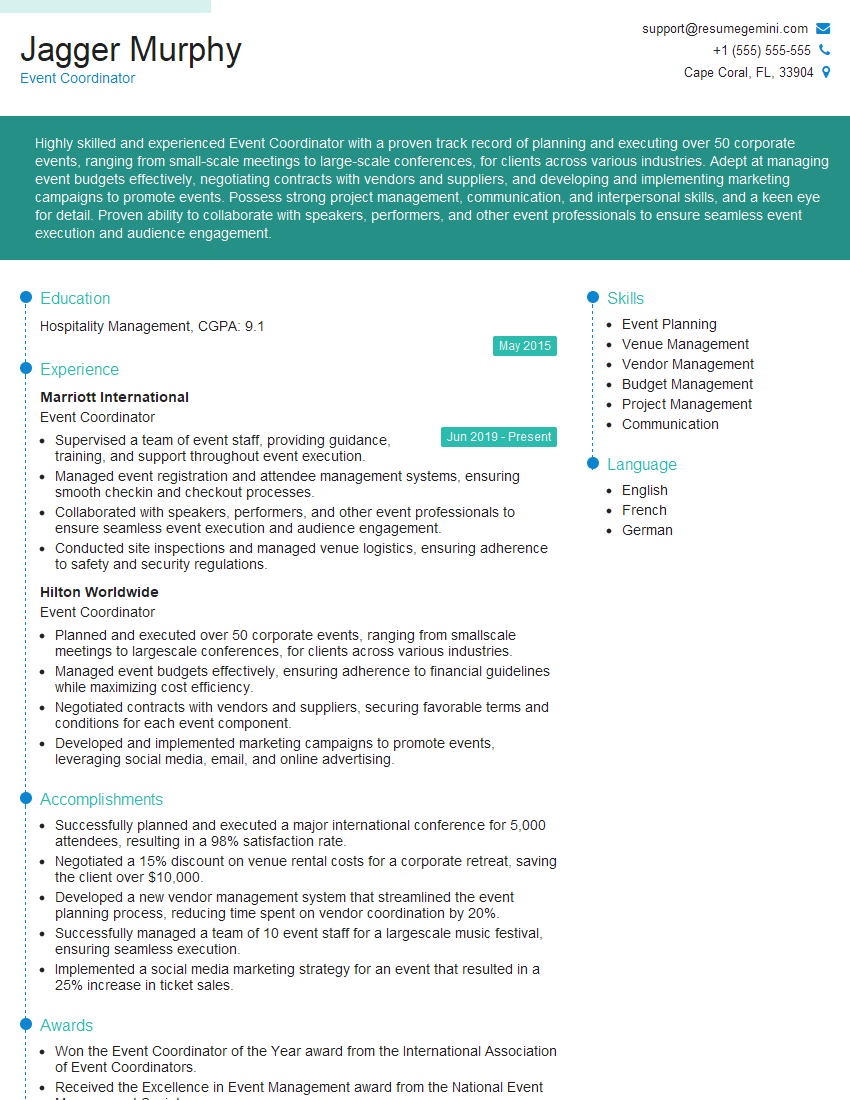
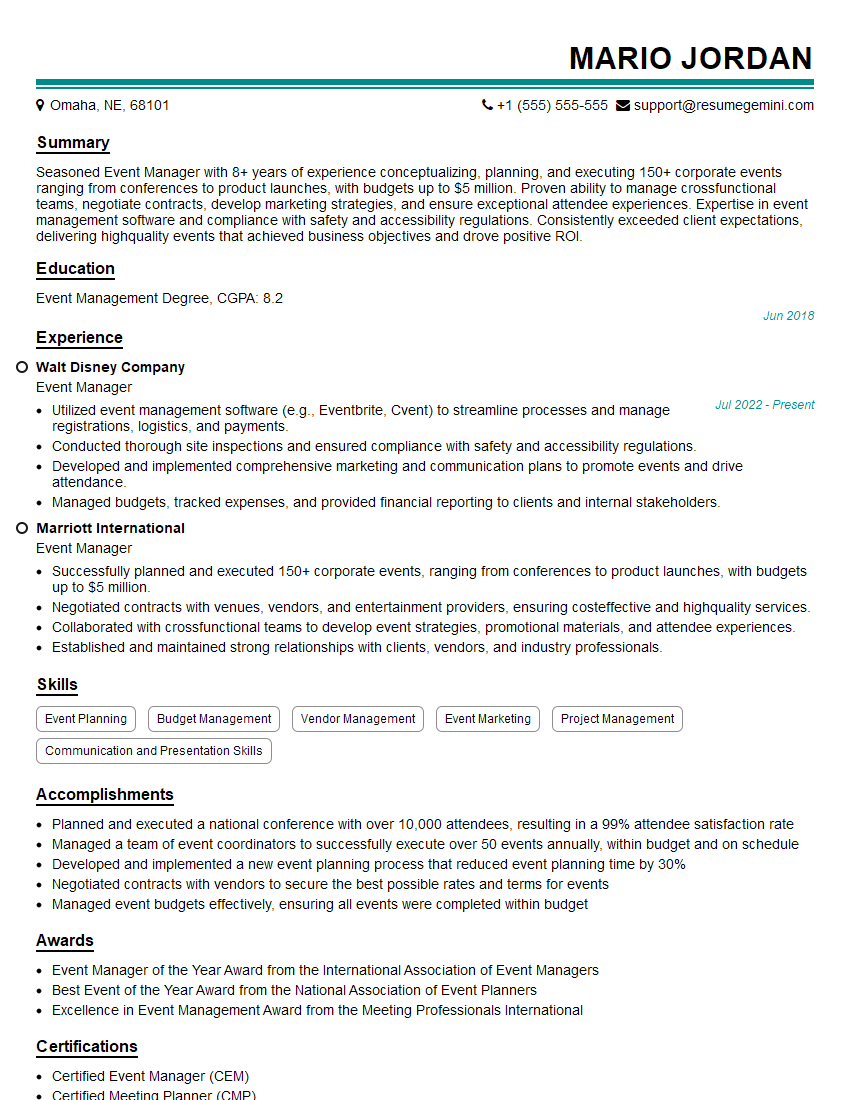
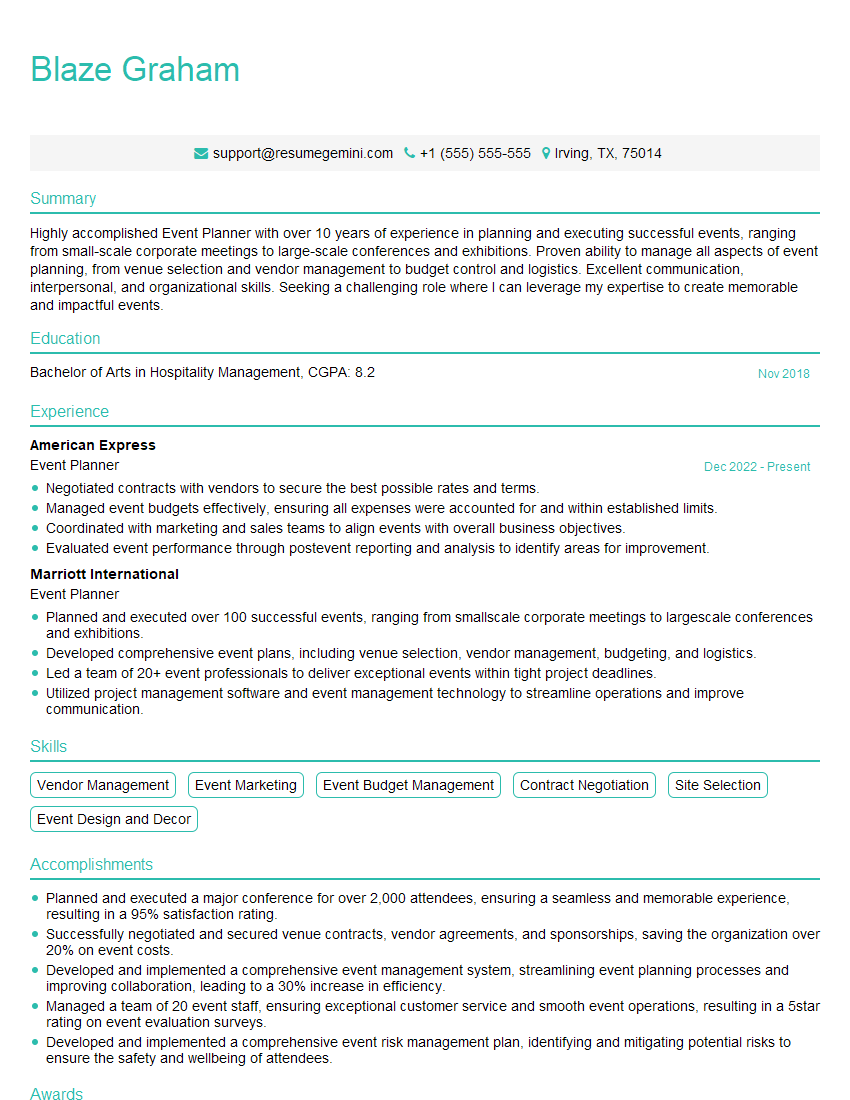
Mastering Event and Tournament Organization opens doors to exciting careers in sports, entertainment, and beyond. Strong organizational skills, attention to detail, and problem-solving abilities are highly valued. To maximize your job prospects, creating an ATS-friendly resume is crucial. ResumeGemini is a trusted resource to help you build a professional and impactful resume that gets noticed by recruiters. Examples of resumes tailored to Event and Tournament Organization roles are available to guide you. Invest the time in crafting a strong resume – it’s your first impression and a key to unlocking your career potential.
Explore more articles
Users Rating of Our Blogs
Share Your Experience
We value your feedback! Please rate our content and share your thoughts (optional).
What Readers Say About Our Blog
Very informative content, great job.
good