Feeling uncertain about what to expect in your upcoming interview? We’ve got you covered! This blog highlights the most important Human Intelligence (HUMINT) Collection and Analysis interview questions and provides actionable advice to help you stand out as the ideal candidate. Let’s pave the way for your success.
Questions Asked in Human Intelligence (HUMINT) Collection and Analysis Interview
Q 1. Describe the different methods of HUMINT collection.
HUMINT collection employs various methods to gather intelligence from human sources. These methods range from the relatively straightforward to the highly sophisticated and clandestine. The choice of method depends heavily on the target, the available resources, and the overall operational context.
- Open Source Collection: This involves gathering information from publicly available sources like newspapers, websites, social media, and academic publications. It’s a cost-effective starting point but may not yield sensitive information.
- Elicitation: This is a skilled technique of extracting information through subtle questioning and conversation. It often involves building rapport and trust with the source. Think of it like a skilled interviewer gently guiding a conversation to reveal key details.
- Debriefing: This focuses on obtaining information from individuals who have direct knowledge of a particular event or situation. For example, debriefing a returning diplomat or a soldier after a mission.
- Surveillance: While often associated with SIGINT (signals intelligence), HUMINT surveillance involves observation and tracking of individuals or groups of interest. It’s crucial to maintain legal and ethical boundaries.
- Covert Recruitment & Handling of Assets: This involves identifying, recruiting, and managing human sources who provide intelligence on a regular basis. This is a high-risk, high-reward approach requiring careful vetting and security protocols.
- Interrogation: This method aims to obtain information from an unwilling or resistant source, often in a controlled environment. This must always adhere to strict legal and ethical guidelines, and only employed when absolutely necessary.
Each method has its own strengths and weaknesses, and successful HUMINT operations often involve combining multiple techniques.
Q 2. Explain the process of source validation and verification in HUMINT.
Source validation and verification are crucial steps in ensuring the reliability of HUMINT. It’s a multi-layered process aimed at determining the accuracy and trustworthiness of the information provided.
- Initial Assessment: This involves evaluating the source’s background, motivations, and potential biases. We look for inconsistencies in their stories and cross-reference their information with other available data.
- Cross-Referencing and Corroboration: Information from a single source is rarely sufficient. We strive to corroborate their claims using information from multiple independent sources or other forms of intelligence.
- Source Reliability Assessment: We evaluate the source’s track record, past performance, and any potential vulnerabilities that might compromise their information.
- Information Analysis and Validation: We critically analyze the information provided, checking for internal consistency and plausibility. We also compare it with other intelligence, looking for discrepancies or contradictions.
- Ongoing Monitoring: Even after initial validation, we continue to monitor the source and their information, reassessing their reliability based on new information and developments.
Think of it like a detective investigating a crime. They wouldn’t rely solely on one witness’s testimony. They’d seek corroborating evidence, investigate the witness’s background, and look for any inconsistencies in their story before reaching a conclusion.
Q 3. How do you assess the reliability and credibility of a HUMINT source?
Assessing source reliability and credibility is a complex process requiring careful judgment and experience. It involves a combination of quantitative and qualitative factors.
- Track Record: Has the source provided accurate information in the past? A consistent history of accurate information boosts credibility.
- Motivation: What motivates the source to provide information? Are they seeking financial gain, revenge, ideological alignment, or genuine concern for national security? Understanding their motivation helps gauge their bias and potential for manipulation.
- Bias and Potential Biases: All sources have biases; the key is recognizing and accounting for them. Understanding the source’s background, relationships, and affiliations helps assess their objectivity.
- Information Corroboration: Does the information provided align with other intelligence, open-source information, or known facts? Corroboration significantly enhances the credibility of the information.
- Method of Information Acquisition: How did the source obtain the information? Direct observation carries more weight than hearsay.
- Consistency and Plausibility: Is the information consistent with itself and with other known facts? Does it make sense in the context of the overall situation?
In practice, we assign a reliability rating (e.g., high, medium, low) to each source, reflecting our assessment of their credibility and the information they provide. This rating is then factored into the overall intelligence assessment.
Q 4. What are the ethical considerations in HUMINT collection?
Ethical considerations are paramount in HUMINT collection. Operating within a clear ethical framework is not just morally right, it’s essential for maintaining the integrity of the intelligence process and building trust.
- Respect for Human Rights: HUMINT operations must always respect the fundamental human rights of all individuals, regardless of their involvement or status. This includes the prohibition of torture, coercion, and other inhumane treatment.
- Informed Consent: When possible, individuals should be fully informed of the purpose and implications of their cooperation, and consent to their participation should be freely given.
- Data Privacy and Protection: Collected information must be handled securely and confidentially, in line with all applicable data protection laws and regulations.
- Transparency and Accountability: HUMINT activities should be subject to appropriate oversight and accountability mechanisms to prevent abuses of power and ensure compliance with ethical guidelines.
- Minimization of Harm: HUMINT operations should be planned and conducted in a way that minimizes any potential harm to individuals or groups involved, both directly and indirectly.
Ethical breaches can have devastating consequences, undermining the credibility of the intelligence community and causing irreparable damage to relationships. A strong ethical framework is vital for ensuring that HUMINT operations are conducted responsibly and effectively.
Q 5. Describe your experience with different types of HUMINT reporting.
My experience encompasses various HUMINT reporting formats, each suited to a different purpose and audience.
- Situation Reports (SITREPS): These provide timely updates on ongoing situations or events, often used for rapid dissemination of crucial information.
- Intelligence Summaries (INTSUMs): These synthesize information from multiple sources to provide a comprehensive overview of a specific topic or issue.
- Analytical Reports: These delve deeper into specific issues, providing analysis, interpretation, and assessments of intelligence data. They might explore trends, predict future events, or evaluate the effectiveness of specific actions.
- Briefings: Oral presentations of intelligence, tailored to the audience’s needs and level of understanding. These often include visual aids like maps and charts.
- Special Reports: These cover specific, often sensitive topics that require detailed examination and analysis.
The choice of reporting format depends on the urgency, complexity, and sensitivity of the information, as well as the needs of the recipient. Effective HUMINT reporting requires clear, concise writing and a keen understanding of the audience’s perspective.
Q 6. How do you handle conflicting information from multiple HUMINT sources?
Handling conflicting information from multiple HUMINT sources requires careful analysis and judgment. It’s not about simply discarding information; it’s about understanding the source of the conflict and integrating the findings.
- Source Assessment: Re-evaluate the reliability and credibility of each source involved. Which sources have a better track record? Which are more likely to be biased or misinformed?
- Information Corroboration: Look for other sources of intelligence that might support one version of the story over another. This could involve open-source research or data from SIGINT or IMINT.
- Bias Identification: Consider the potential biases of each source. Are their viewpoints influenced by personal relationships, political affiliations, or other factors?
- Data Reconciliation: Try to reconcile the conflicting information. Is there a common thread or underlying truth that could explain the differences?
- Qualitative Assessment: Consider the overall context and the broader implications of each piece of information. Which version better fits the bigger picture?
- Uncertainty Acknowledgment: If the conflict cannot be resolved, acknowledge the uncertainty in your assessment. It’s important to be transparent about the limitations of the available information.
It’s often a process of iteration and refinement, where new information helps to clarify earlier contradictions.
Q 7. Explain the importance of maintaining operational security (OPSEC) in HUMINT.
Maintaining operational security (OPSEC) in HUMINT is paramount to the success and safety of operations. A single compromise can expose sources, jeopardize operations, and even put lives at risk. OPSEC is about proactively identifying and mitigating vulnerabilities.
- Source Protection: Protecting the identity and security of sources is critical. This involves careful vetting, secure communication methods, and rigorous compartmentalization of information.
- Communication Security: Using secure communication channels, such as encrypted messaging systems, is essential to prevent eavesdropping and interception of sensitive information.
- Compartmentalization: Limiting access to sensitive information on a need-to-know basis helps prevent leaks and compromises.
- Counter-surveillance Measures: Being aware of potential surveillance and employing counter-surveillance techniques protects sources and operations.
- Physical Security: Safeguarding physical locations and documents prevents unauthorized access to sensitive information.
- Information Handling: Implementing strict procedures for the handling, storage, and destruction of classified materials prevents unauthorized access and leaks.
OPSEC is not just about preventing leaks; it’s about fostering a culture of security awareness throughout the HUMINT team. It’s a continuous process that requires constant vigilance and adaptation.
Q 8. Describe your experience with debriefing HUMINT sources.
Debriefing HUMINT sources is a crucial process that involves systematically extracting information from human sources. It’s a delicate balance of building rapport, employing effective questioning techniques, and ensuring the safety and well-being of the source. My experience encompasses various contexts, from debriefing captured enemy combatants to interviewing informants providing critical information on criminal networks. A successful debrief starts with establishing a safe and comfortable environment. This includes understanding the source’s background, motivations, and anxieties. We use a range of techniques, from open-ended questions to more directed inquiries, adapting our approach based on the source’s personality and the sensitivity of the information. For example, I’ve used rapport-building techniques to gain the trust of a reluctant informant by focusing on shared experiences and establishing common ground before delving into sensitive topics. Careful documentation is paramount. We maintain detailed records of every debriefing, including the date, time, location, individuals present, and a verbatim transcript (or detailed notes) of the conversation. This documentation is crucial for analysis, validation, and protecting the source’s identity.
Furthermore, we always adhere to strict ethical guidelines and legal protocols, ensuring the source’s rights are protected throughout the process. Post-debriefing, we assess the information received, identifying any inconsistencies or areas needing further investigation. We may need to conduct follow-up debriefings to clarify specific points or corroborate information from other sources.
Q 9. How do you identify and mitigate risks associated with HUMINT operations?
Identifying and mitigating risks in HUMINT operations is paramount. It’s not just about protecting the source; it’s about protecting the operation itself and preventing compromising intelligence. Risk assessment involves a thorough evaluation of several factors, including the source’s reliability, the potential for compromise (e.g., surveillance, double-agents), the sensitivity of the information, and the geopolitical environment. We use a structured risk assessment framework to systematically identify and analyze potential threats. For instance, if a source is known to have ties to a hostile intelligence service, we’d need to implement enhanced security measures, perhaps using secure communication channels and multiple layers of verification.
Mitigation strategies vary depending on the identified risks. This can range from adjusting the meeting location and time to employing counter-surveillance techniques, using secure communication methods (e.g., encrypted messaging apps), and implementing robust operational security (OPSEC) procedures. Furthermore, we might employ deception and misdirection to protect the source and the operation’s integrity. Regularly reviewing and updating the risk assessment is critical, as the security landscape and source’s circumstances can change. For example, if a source’s living situation changes, we reassess the risk of compromise and adjust our meeting arrangements accordingly. This continuous risk management approach is essential for successful HUMINT operations.
Q 10. What are the key differences between strategic and tactical HUMINT?
Strategic and tactical HUMINT differ primarily in their scope and objectives. Strategic HUMINT focuses on long-term, high-level intelligence needs, addressing broader geopolitical issues and national security concerns. Think of it as providing the ‘big picture.’ For example, gathering information on a foreign government’s long-term intentions, their military build-up, or their economic strategies falls under strategic HUMINT. The timelines are longer, the goals are more ambitious, and the analytical process is often more complex. Tactical HUMINT, on the other hand, addresses immediate, operational needs. This might include gathering information about an imminent terrorist attack, identifying the location of a high-value target, or supporting a specific military operation. Tactical HUMINT is more time-sensitive, requiring rapid collection and analysis to inform immediate decision-making. While distinct, they are interconnected. Tactical intelligence often supports strategic goals, and successful strategic HUMINT relies on solid tactical intelligence groundwork.
Q 11. Explain the process of analyzing HUMINT information.
Analyzing HUMINT information is a multi-step process that goes beyond simply reading a report. It involves rigorous evaluation, validation, and interpretation. The first step involves assessing the credibility of the source. This considers the source’s background, motivations, past performance, and any potential biases. Next, we evaluate the information itself, looking for inconsistencies, contradictions, and potential deception. We cross-reference the information with data from other intelligence sources (e.g., SIGINT, OSINT) to corroborate or refute the findings. This process of validation is critical to ensure the reliability and accuracy of the intelligence.
After validation, we analyze the information within the broader context of the intelligence question. This may involve linking the information to other intelligence reports, constructing timelines of events, or identifying patterns and trends. Finally, we produce a concise, accurate, and actionable intelligence assessment. This report summarizes the findings, assesses their significance, and makes recommendations for action. We might use analytical tools and techniques such as link analysis, network analysis, and geospatial analysis to enhance our understanding of the information and to visually represent relationships and patterns.
Q 12. How do you integrate HUMINT with other intelligence disciplines (e.g., SIGINT, OSINT)?
Integrating HUMINT with other intelligence disciplines is crucial for achieving a comprehensive understanding of a situation. HUMINT often provides context and human insight that other disciplines lack. For example, SIGINT (signals intelligence) might intercept communications, but HUMINT can help interpret the meaning and intent behind those communications. Similarly, OSINT (open-source intelligence) provides a wealth of publicly available data, but HUMINT can verify the accuracy of that data and provide additional detail.
We use a process of ‘fusion’ to combine intelligence from different sources. This isn’t simply combining information; it’s critically evaluating the data from each source, comparing and contrasting it, and identifying corroborating or contradictory evidence. For example, we might use OSINT to identify potential targets for recruitment, then use HUMINT to build relationships with those individuals and extract valuable information. This fusion process allows us to develop a more complete and accurate picture of the target, leading to more effective decision-making.
Q 13. Describe your experience with using analytical tools and techniques for HUMINT analysis.
My experience involves utilizing a range of analytical tools and techniques, both qualitative and quantitative. Qualitative analysis often focuses on textual data from debriefings, interviews, and reports. We use techniques like content analysis to identify themes, patterns, and key insights within large volumes of textual information. Quantitative analysis, on the other hand, might involve statistical methods to analyze large datasets, identify trends, and assess the probability of certain events. For example, we might use network analysis software to visualize relationships between individuals within a criminal organization, revealing key players and potential vulnerabilities.
Software tools like link analysis programs, geospatial mapping software, and database management systems are regularly used to organize, analyze, and visualize the data. These tools allow for efficient processing of large datasets and enhance the identification of patterns and connections that might otherwise be missed. The selection of the appropriate tools and techniques depends on the specific nature of the information and the analytical goals.
Q 14. How do you develop and maintain relationships with HUMINT sources?
Developing and maintaining relationships with HUMINT sources is a long-term investment, requiring trust, mutual respect, and careful management. Building rapport is paramount. This involves actively listening to their concerns, understanding their motivations, and showing genuine empathy. Transparency, to the extent possible, is important, as is clear communication about the risks and benefits of cooperation. We maintain regular contact with sources, even when we aren’t actively seeking information. This demonstrates our commitment to the relationship and helps us to remain aware of any changes in their situation that might impact their security or willingness to cooperate.
Confidentiality and security are crucial. Protecting the identity and safety of the source is essential for maintaining their trust and the long-term success of the relationship. We use secure communication channels and adhere to strict operational security protocols to minimize the risk of compromise. The process often involves careful management of expectations, ensuring that the sources understand the process, the limits of our capabilities and their role in the intelligence gathering process. Rewards and incentives might be considered within ethical and legal bounds. The long-term success of any HUMINT operation rests on the relationships forged with our sources, and carefully managing those relationships is a cornerstone of success.
Q 15. What is your experience with handling classified information?
Throughout my career, I’ve consistently handled classified information up to the Top Secret level, adhering strictly to all security protocols and regulations. This includes understanding and applying compartmentalization, need-to-know principles, and secure communication practices. My experience encompasses handling highly sensitive intelligence reports, briefing senior officials, and maintaining secure databases. I’ve completed numerous security clearances and training courses to ensure my competence and compliance with all relevant laws and regulations. I understand the gravity of handling classified information and the potential consequences of mishandling it. My record reflects a commitment to absolute confidentiality and security.
Career Expert Tips:
- Ace those interviews! Prepare effectively by reviewing the Top 50 Most Common Interview Questions on ResumeGemini.
- Navigate your job search with confidence! Explore a wide range of Career Tips on ResumeGemini. Learn about common challenges and recommendations to overcome them.
- Craft the perfect resume! Master the Art of Resume Writing with ResumeGemini’s guide. Showcase your unique qualifications and achievements effectively.
- Don’t miss out on holiday savings! Build your dream resume with ResumeGemini’s ATS optimized templates.
Q 16. How do you prioritize HUMINT collection efforts?
Prioritizing HUMINT collection efforts requires a strategic approach that considers several key factors. We use a framework that balances the urgency and importance of intelligence requirements with the feasibility and risk associated with acquiring that intelligence. This often involves a process of:
- Assessing the Threat: Identifying the most critical threats and vulnerabilities. What is the most pressing intelligence need?
- Evaluating Resources: Considering available human assets, financial resources, and technological capabilities. Can we realistically obtain this intelligence?
- Analyzing Risk: Determining the potential risks to sources, operations, and personnel. What are the potential consequences of failure?
- Prioritizing Targets: Focusing on high-value targets that provide maximum impact. Where will our effort yield the best return?
For instance, if we’re facing an imminent terrorist threat, that naturally prioritizes collection efforts related to that specific threat over long-term strategic intelligence gathering. It’s a dynamic process that requires constant reassessment and adjustment based on evolving circumstances.
Q 17. Describe a time you had to make a difficult decision regarding the use of HUMINT information.
During an operation targeting a suspected arms dealer, we received HUMINT indicating a planned weapons shipment. The information was credible but lacked definitive proof of the shipment’s exact location or timing. Approving a raid based on this information risked compromising a valuable source and potentially triggering a violent response, while inaction risked allowing the weapons to reach their destination.
After careful deliberation, weighing the risks and potential rewards with my team, I decided to proceed with a covert surveillance operation first, using the HUMINT as a foundation to gather more concrete evidence before authorizing any forceful action. This allowed us to confirm the shipment details and conduct the raid at an optimal time and place, leading to a successful outcome with minimal risk to our sources and personnel. The decision highlighted the need for cautious but decisive action, emphasizing verification and risk mitigation within HUMINT operations.
Q 18. How do you handle pressure and stress in a fast-paced HUMINT environment?
The HUMINT environment can be intensely demanding. I manage pressure and stress through a combination of effective planning, strong teamwork, and personal resilience. This includes:
- Detailed Planning: Meticulous planning minimizes unexpected challenges and reduces stress during execution.
- Teamwork: A strong, supportive team is crucial for sharing the workload and providing emotional support.
- Stress Management Techniques: I utilize mindfulness, regular exercise, and sufficient sleep to maintain my physical and mental well-being.
- Compartmentalization: Separating work from personal life helps maintain a healthy balance.
Maintaining a clear head under pressure is paramount in HUMINT, and it is achieved through consistent training and diligent self-care.
Q 19. Explain your understanding of the intelligence cycle.
The intelligence cycle is a continuous process used to acquire, process, and disseminate intelligence. It generally involves these key steps:
- Planning & Direction: Identifying intelligence needs and establishing priorities.
- Collection: Gathering information through various sources, including HUMINT.
- Processing: Organizing, evaluating, and analyzing the collected data.
- Analysis & Production: Interpreting the information to create actionable intelligence reports.
- Dissemination: Sharing the intelligence with relevant decision-makers.
- Feedback: Evaluating the effectiveness of the intelligence and making adjustments.
It’s a cyclical process, with feedback from the dissemination phase informing future planning and direction, ensuring continuous improvement and relevance.
Q 20. What are some common challenges in HUMINT collection and analysis?
HUMINT collection and analysis face several significant challenges:
- Source Reliability: Determining the credibility and trustworthiness of human sources is crucial but challenging. Sources may be motivated by self-interest, misinformation, or deception.
- Security Risks: Protecting sources and operations from compromise is paramount. Exposure can lead to devastating consequences.
- Information Gaps: Often, it is difficult to obtain complete and accurate information. Sources may be reluctant or unable to provide all the necessary details.
- Bias and Subjectivity: Human sources are inherently subjective, and their perspectives can influence the information they provide. Analyst bias can also affect interpretations.
- Ethical Considerations: HUMINT involves working with individuals who may operate in morally ambiguous situations, creating ethical dilemmas.
Successfully overcoming these challenges requires a combination of rigorous vetting procedures, sophisticated tradecraft, and ethical decision-making.
Q 21. Describe your experience with using different communication methods for HUMINT operations.
My experience encompasses a variety of communication methods for HUMINT operations, ranging from secure, encrypted channels for sensitive information exchange to more discreet methods for establishing and maintaining contact with sources. This includes:
- Encrypted Communications: Using secure messaging apps, and other technologies for confidential conversations.
- Dead Drops: Employing covert methods for exchanging physical materials in a clandestine manner.
- Covert Meetings: Arranging face-to-face meetings in secure, discreet locations, following strict operational security protocols.
- Technical Surveillance Countermeasures (TSCM): Employing counter-surveillance techniques to ensure secure communications and prevent interception.
The choice of communication method always depends on the specific operational context, weighing security, practicality, and the source’s capabilities and preferences. Maintaining secure and reliable communication is critical to the success of any HUMINT operation.
Q 22. How do you ensure the accuracy and completeness of HUMINT reports?
Ensuring the accuracy and completeness of HUMINT reports is paramount. It’s a multi-layered process that begins with meticulous source vetting and continues through rigorous analysis and verification. We employ several key strategies:
- Source Validation: We assess the reliability and credibility of each source using multiple independent verification methods. This could involve cross-referencing information with other sources, corroborating details through open-source intelligence (OSINT), or using technical means like geolocation verification. For example, if a source claims to have witnessed an event, we’d attempt to verify their location at the time through phone records or social media activity.
- Triangulation: We rarely rely on a single source. Instead, we gather information from multiple independent sources to triangulate the facts. If several unrelated sources provide consistent information, confidence in the report’s accuracy increases significantly. Disagreements among sources are carefully analyzed to determine their causes and which version is most likely to be accurate.
- Chain of Custody: Maintaining a clear chain of custody for all information is crucial. This ensures that the origin and handling of the intelligence are transparent and auditable. Every step in the process, from initial contact with a source to the final report, is meticulously documented.
- Analytical Rigor: The analysis phase involves critical thinking, questioning assumptions, and identifying potential biases. Analysts carefully examine the context of the information, consider alternative explanations, and assess the potential for deception or misinformation.
- Peer Review: Before finalization, reports undergo rigorous peer review by other experienced HUMINT analysts. This ensures a fresh perspective and helps to identify potential errors or biases in the analysis.
These methods, when applied consistently, significantly enhance the accuracy and completeness of our HUMINT reports, making them valuable assets for decision-making.
Q 23. What is your experience with using technology to support HUMINT operations?
Technology plays an increasingly vital role in supporting HUMINT operations. My experience encompasses the use of several key technologies:
- Secure Communication Platforms: I’m proficient in using encrypted communication tools to maintain secure contact with sources and protect sensitive information. This includes secure messaging apps and encrypted email systems.
- Data Analysis Tools: I utilize various software applications to analyze large datasets, identify patterns, and visualize relationships within the intelligence gathered. This aids in identifying potential leads and connections between individuals or events.
- Geospatial Intelligence (GEOINT) Integration: I have experience integrating GEOINT data, such as satellite imagery and mapping tools, with HUMINT to enhance situational awareness and provide geographical context to the information gathered. For instance, verifying a source’s claimed location using satellite imagery.
- Social Media Monitoring: I’m skilled in using social media monitoring tools to identify potential sources, track activities of interest, and verify information provided by human sources. This can provide real-time updates and valuable context.
- Database Management Systems: I’m adept at using database management systems to organize and manage HUMINT data efficiently, ensuring easy retrieval and analysis of information. This facilitates the effective tracking of sources and their reports over time.
In essence, technology acts as a force multiplier, improving the efficiency, security, and analytical capabilities of HUMINT operations, allowing us to make better-informed decisions.
Q 24. How do you adapt your HUMINT techniques to different cultural contexts?
Adapting HUMINT techniques to different cultural contexts is crucial for success. A one-size-fits-all approach is ineffective and can even be detrimental. My approach focuses on:
- Cultural Sensitivity Training: I undergo regular cultural sensitivity training to understand the nuances of different cultures, including communication styles, social norms, and power dynamics. This helps me build rapport and trust with sources from diverse backgrounds.
- Language Proficiency: Proficiency in multiple languages is essential. It allows me to directly communicate with sources in their native language, fostering trust and improving the quality of information gathered.
- Local Expertise: I collaborate closely with local partners and experts who possess in-depth knowledge of the local culture, customs, and social networks. Their insights are invaluable in navigating complex social environments and identifying credible sources.
- Relationship Building: Building strong relationships with sources requires patience, understanding, and respect for their culture. This involves adapting my communication style, recognizing social hierarchies, and demonstrating genuine interest in their perspectives.
- Contextual Awareness: Understanding the historical, political, and social context of a specific region is crucial for interpreting information accurately. A piece of information might have different meanings depending on its cultural context.
By emphasizing cultural sensitivity, language proficiency, and collaboration with local experts, I can effectively adapt my HUMINT techniques to diverse environments and obtain reliable intelligence.
Q 25. Explain your understanding of different types of HUMINT sources (e.g., walk-ins, agents).
HUMINT sources are diverse, each presenting unique challenges and opportunities. Here are some examples:
- Walk-ins: These are individuals who voluntarily approach intelligence agencies with information. They require careful vetting to assess the credibility and motivations of their offer. A walk-in might have personal agendas or be acting under duress. Thorough background checks and corroboration are essential.
- Agents: These are individuals who are recruited and managed by intelligence agencies to provide ongoing information. Cultivating and maintaining a strong relationship with an agent requires trust, discretion, and effective communication. Regular communication and debriefings are key.
- Informants: Similar to agents, but often providing information on a less frequent or more ad-hoc basis. They may not be directly recruited but provide valuable intelligence in exchange for compensation or other considerations. Careful management of the relationship and their expectations is vital.
- Open Sources: While not strictly human sources, open-source intelligence (OSINT) gathered from publicly available information can be combined with HUMINT to verify claims and complete the picture. This can include media reports, social media posts, and publicly accessible databases.
- Double Agents: These are sources who work for multiple agencies simultaneously, creating significant challenges in verifying information. Identifying and managing double agents requires high-level expertise and significant caution.
Understanding the strengths and limitations of each type of source is essential for effective HUMINT operations.
Q 26. Describe your experience with conducting background investigations.
My experience in conducting background investigations is extensive. This involves a thorough and systematic process to verify information about individuals, often including:
- Record Checks: I meticulously check various databases and records, including criminal records, employment history, financial records, and educational qualifications. This can involve liaising with various government agencies and private organizations.
- Interviewing: I conduct structured interviews with individuals who know the subject of the investigation, such as family members, colleagues, and former associates. I carefully document their statements and compare them with other evidence.
- Surveillance (when legally permitted and authorized): In some cases, I may conduct surveillance to corroborate information gathered from other sources. This is always performed within the bounds of the law and ethical guidelines.
- Open-Source Investigation: I utilize open-source intelligence (OSINT) to gather information about the subject, cross-referencing findings with other evidence. This might include reviewing social media activity, news articles, and online forums.
- Analysis and Reporting: Once all the information has been gathered, I analyze the findings and prepare a comprehensive and objective report summarizing the results of the investigation.
My experience ensures I can conduct thorough background investigations that adhere to legal and ethical standards, providing reliable and accurate information.
Q 27. How do you ensure the safety and security of HUMINT sources?
The safety and security of HUMINT sources are of paramount importance. My approach involves:
- Risk Assessment: A thorough risk assessment is conducted for each source to identify potential threats and vulnerabilities. This includes assessing the source’s personal circumstances, the nature of the information they are providing, and the potential consequences of exposure.
- Security Measures: Appropriate security measures are implemented to protect the source’s identity and location. This may include the use of secure communication methods, secure meeting locations, and alternative identities or cover stories.
- Protection Protocols: Detailed protection protocols are developed and implemented to mitigate potential risks, such as physical threats, surveillance, and blackmail. This might involve providing security personnel or offering relocation assistance.
- Compartmentalization: Information about sources is strictly compartmentalized within the agency, limiting access to only those individuals with a legitimate need to know. This reduces the risk of compromise.
- Ongoing Support: Sources receive ongoing support and guidance to manage the risks associated with their cooperation. This includes regular communication, access to legal counsel, and assistance with relocation or financial support when necessary.
Protecting our sources is not just an ethical obligation; it’s essential for maintaining the integrity and effectiveness of our HUMINT operations. Compromised sources can have devastating consequences.
Q 28. What are your salary expectations for this HUMINT position?
My salary expectations for this HUMINT position are commensurate with my experience, skills, and the responsibilities associated with the role. I’m confident that my expertise in HUMINT collection and analysis, coupled with my proven track record, makes me a valuable asset to your organization. I’m open to discussing a competitive salary range based on the specific details of the position and industry benchmarks.
Key Topics to Learn for Human Intelligence (HUMINT) Collection and Analysis Interview
- Source Development & Management: Cultivating and maintaining relationships with human sources; understanding techniques for recruitment, handling, and debriefing; assessing source reliability and motivation.
- Elicitation Techniques: Mastering effective communication strategies for extracting information; adapting questioning styles to different personalities and situations; recognizing and overcoming resistance.
- Information Gathering & Analysis: Utilizing various methods for collecting information (interviews, surveillance, open-source intelligence); employing analytical frameworks to assess credibility, validity, and relevance of information.
- Report Writing & Presentation: Structuring clear, concise, and well-supported intelligence reports; presenting findings effectively to diverse audiences; adhering to security protocols and classification guidelines.
- Ethical Considerations & Legal Frameworks: Understanding legal and ethical boundaries in HUMINT; adhering to professional codes of conduct; managing sensitive information responsibly.
- Threat Assessment & Risk Management: Identifying and assessing potential risks associated with HUMINT operations; developing mitigation strategies; ensuring operational security.
- Technology & HUMINT Integration: Understanding how technology supports HUMINT collection and analysis (e.g., database management, communication tools); recognizing the ethical and operational implications of technological advancements.
- Counterintelligence Awareness: Recognizing and mitigating counterintelligence threats; understanding deception and misinformation techniques.
Next Steps
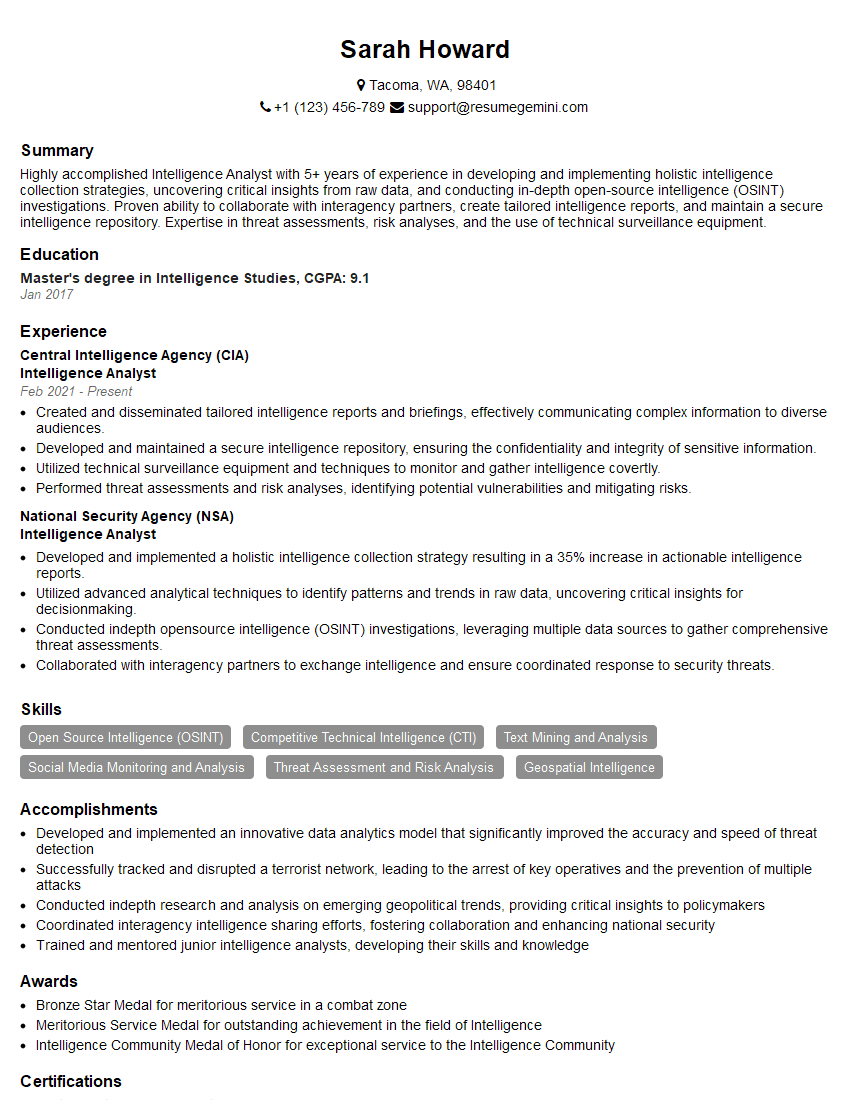
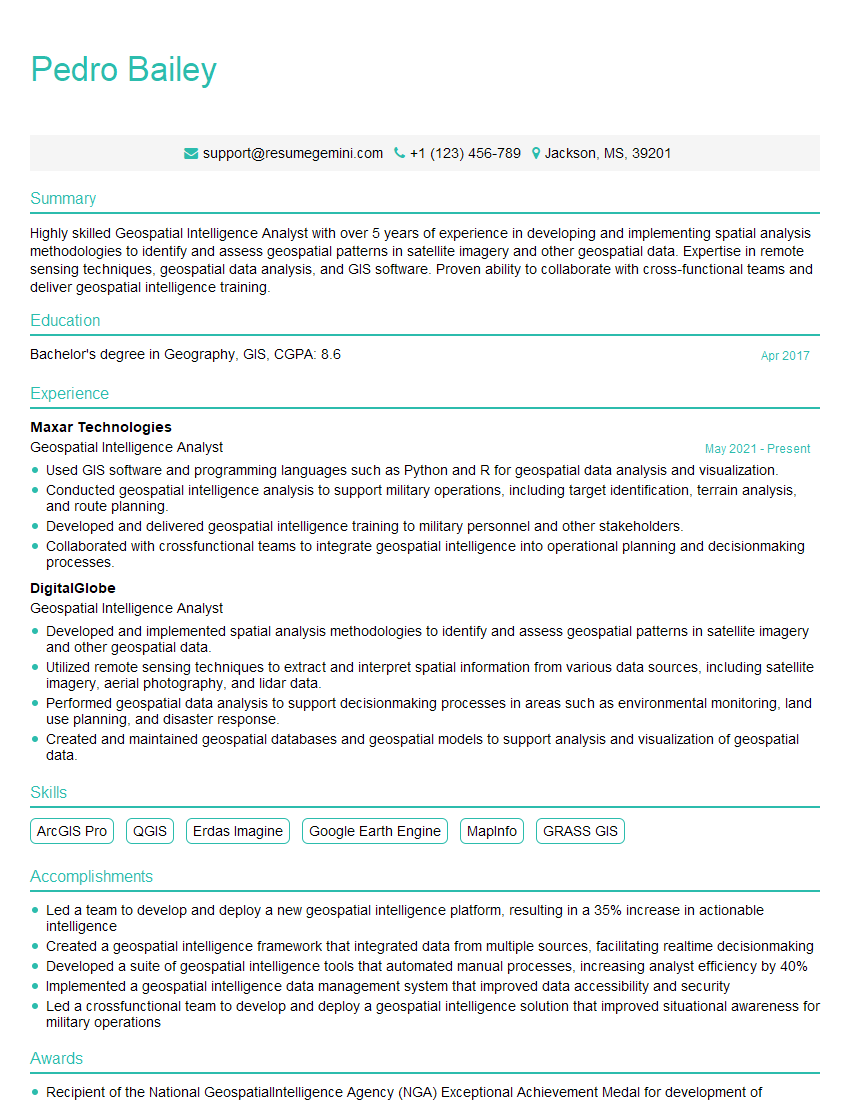
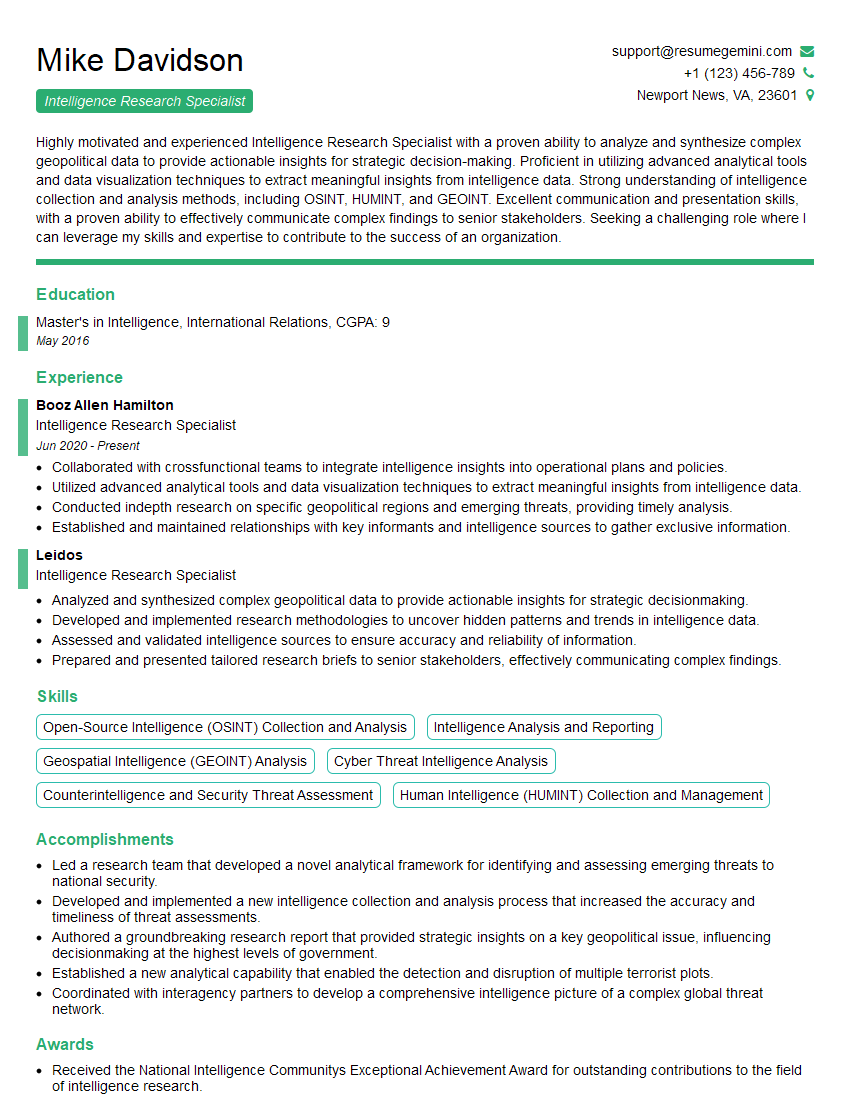
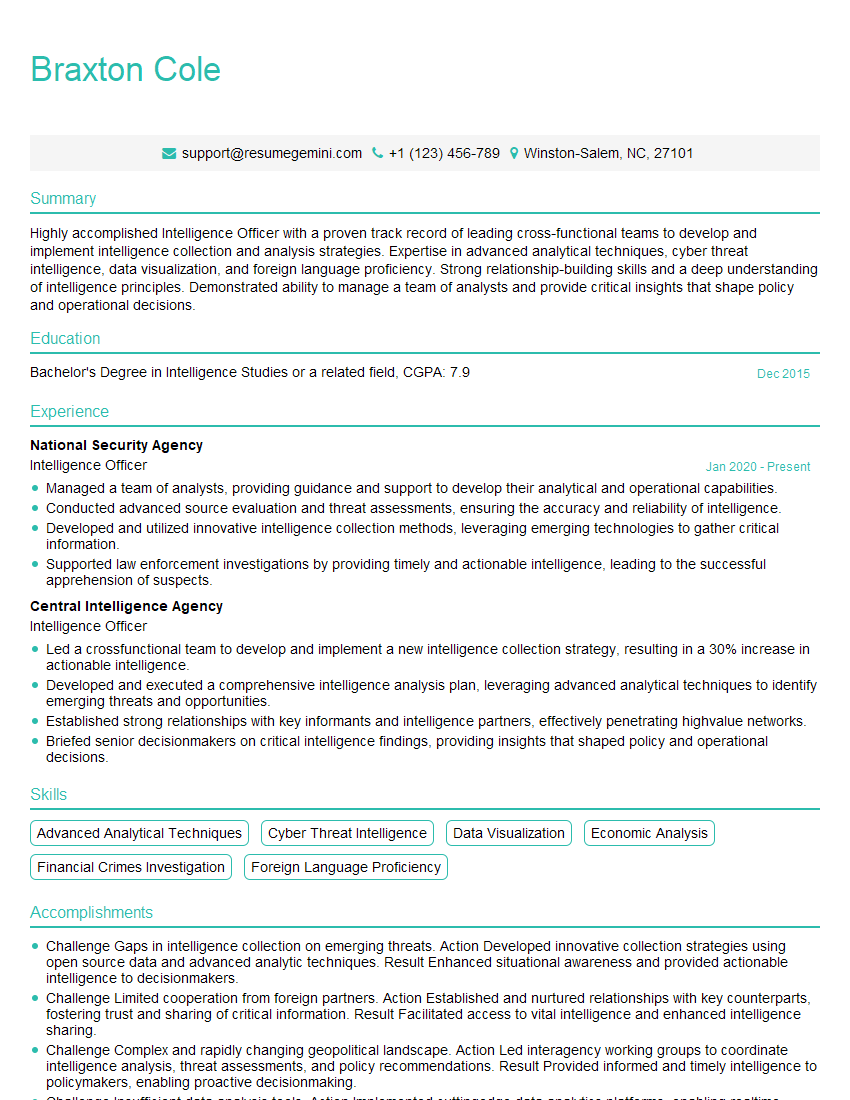
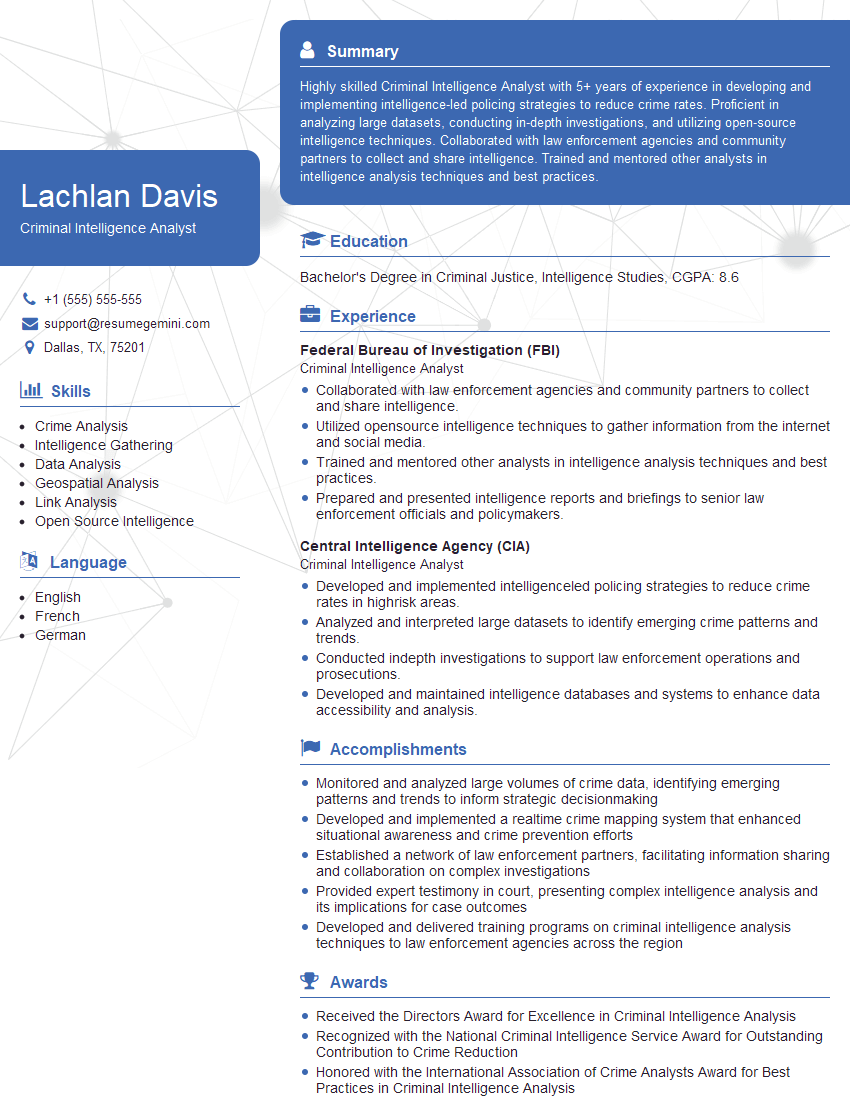
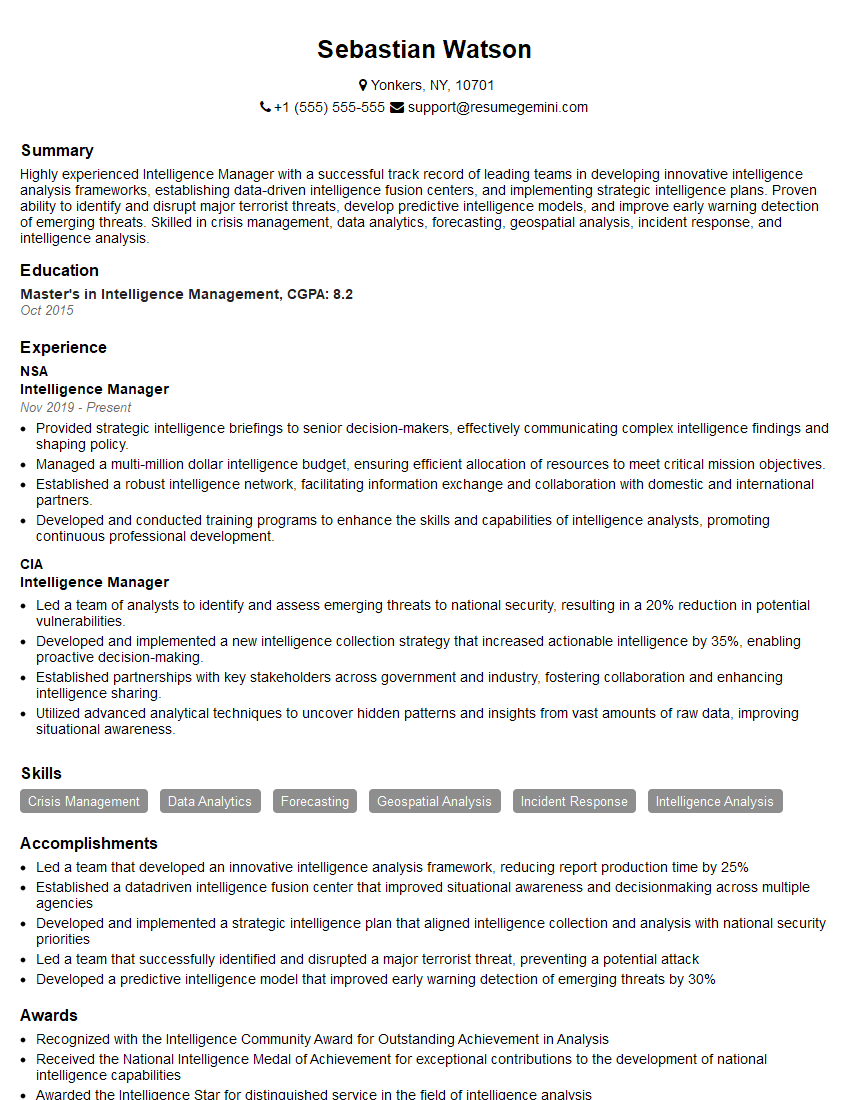
Mastering Human Intelligence (HUMINT) Collection and Analysis opens doors to exciting and impactful careers in national security, law enforcement, and private sector intelligence. To maximize your job prospects, crafting a compelling and ATS-friendly resume is crucial. ResumeGemini is a trusted resource that can help you build a professional and impactful resume, tailored to showcase your unique skills and experience in this field. Examples of resumes specifically designed for Human Intelligence (HUMINT) Collection and Analysis professionals are available to guide you through the process.
Explore more articles
Users Rating of Our Blogs
Share Your Experience
We value your feedback! Please rate our content and share your thoughts (optional).
What Readers Say About Our Blog
Attention music lovers!
Wow, All the best Sax Summer music !!!
Spotify: https://open.spotify.com/artist/6ShcdIT7rPVVaFEpgZQbUk
Apple Music: https://music.apple.com/fr/artist/jimmy-sax-black/1530501936
YouTube: https://music.youtube.com/browse/VLOLAK5uy_noClmC7abM6YpZsnySxRqt3LoalPf88No
Other Platforms and Free Downloads : https://fanlink.tv/jimmysaxblack
on google : https://www.google.com/search?q=22+AND+22+AND+22
on ChatGPT : https://chat.openai.com?q=who20jlJimmy20Black20Sax20Producer
Get back into the groove with Jimmy sax Black
Best regards,
Jimmy sax Black
www.jimmysaxblack.com
Hi I am a troller at The aquatic interview center and I suddenly went so fast in Roblox and it was gone when I reset.
Hi,
Business owners spend hours every week worrying about their website—or avoiding it because it feels overwhelming.
We’d like to take that off your plate:
$69/month. Everything handled.
Our team will:
Design a custom website—or completely overhaul your current one
Take care of hosting as an option
Handle edits and improvements—up to 60 minutes of work included every month
No setup fees, no annual commitments. Just a site that makes a strong first impression.
Find out if it’s right for you:
https://websolutionsgenius.com/awardwinningwebsites
Hello,
we currently offer a complimentary backlink and URL indexing test for search engine optimization professionals.
You can get complimentary indexing credits to test how link discovery works in practice.
No credit card is required and there is no recurring fee.
You can find details here:
https://wikipedia-backlinks.com/indexing/
Regards
NICE RESPONSE TO Q & A
hi
The aim of this message is regarding an unclaimed deposit of a deceased nationale that bears the same name as you. You are not relate to him as there are millions of people answering the names across around the world. But i will use my position to influence the release of the deposit to you for our mutual benefit.
Respond for full details and how to claim the deposit. This is 100% risk free. Send hello to my email id: lukachachibaialuka@gmail.com
Luka Chachibaialuka
Hey interviewgemini.com, just wanted to follow up on my last email.
We just launched Call the Monster, an parenting app that lets you summon friendly ‘monsters’ kids actually listen to.
We’re also running a giveaway for everyone who downloads the app. Since it’s brand new, there aren’t many users yet, which means you’ve got a much better chance of winning some great prizes.
You can check it out here: https://bit.ly/callamonsterapp
Or follow us on Instagram: https://www.instagram.com/callamonsterapp
Thanks,
Ryan
CEO – Call the Monster App
Hey interviewgemini.com, I saw your website and love your approach.
I just want this to look like spam email, but want to share something important to you. We just launched Call the Monster, a parenting app that lets you summon friendly ‘monsters’ kids actually listen to.
Parents are loving it for calming chaos before bedtime. Thought you might want to try it: https://bit.ly/callamonsterapp or just follow our fun monster lore on Instagram: https://www.instagram.com/callamonsterapp
Thanks,
Ryan
CEO – Call A Monster APP
To the interviewgemini.com Owner.
Dear interviewgemini.com Webmaster!
Hi interviewgemini.com Webmaster!
Dear interviewgemini.com Webmaster!
excellent
Hello,
We found issues with your domain’s email setup that may be sending your messages to spam or blocking them completely. InboxShield Mini shows you how to fix it in minutes — no tech skills required.
Scan your domain now for details: https://inboxshield-mini.com/
— Adam @ InboxShield Mini
support@inboxshield-mini.com
Reply STOP to unsubscribe
Hi, are you owner of interviewgemini.com? What if I told you I could help you find extra time in your schedule, reconnect with leads you didn’t even realize you missed, and bring in more “I want to work with you” conversations, without increasing your ad spend or hiring a full-time employee?
All with a flexible, budget-friendly service that could easily pay for itself. Sounds good?
Would it be nice to jump on a quick 10-minute call so I can show you exactly how we make this work?
Best,
Hapei
Marketing Director
Hey, I know you’re the owner of interviewgemini.com. I’ll be quick.
Fundraising for your business is tough and time-consuming. We make it easier by guaranteeing two private investor meetings each month, for six months. No demos, no pitch events – just direct introductions to active investors matched to your startup.
If youR17;re raising, this could help you build real momentum. Want me to send more info?
Hi, I represent an SEO company that specialises in getting you AI citations and higher rankings on Google. I’d like to offer you a 100% free SEO audit for your website. Would you be interested?
Hi, I represent an SEO company that specialises in getting you AI citations and higher rankings on Google. I’d like to offer you a 100% free SEO audit for your website. Would you be interested?