Are you ready to stand out in your next interview? Understanding and preparing for Ability to work on complex renewable energy projects interview questions is a game-changer. In this blog, we’ve compiled key questions and expert advice to help you showcase your skills with confidence and precision. Let’s get started on your journey to acing the interview.
Questions Asked in Ability to work on complex renewable energy projects Interview
Q 1. Explain the difference between onshore and offshore wind energy projects.
Onshore and offshore wind energy projects differ primarily in their location and the resulting challenges. Onshore projects, as the name suggests, are located on land, typically in areas with high wind speeds and sufficient space. Offshore projects, on the other hand, are situated in bodies of water, often further from the coast to harness stronger, more consistent winds. This difference leads to significant variations in project development and operation.
- Onshore: Easier access for construction and maintenance, lower initial capital costs, but potential for land use conflicts and visual impact concerns. Permitting processes are generally simpler, but community acceptance can be a hurdle.
- Offshore: Higher initial capital costs due to complex installation and maintenance procedures requiring specialized equipment and vessels, but higher capacity factors thanks to stronger and more consistent winds. Environmental impact assessment is more rigorous and involves navigating marine regulations.
For example, a typical onshore wind farm might involve erecting dozens of turbines on a designated land parcel, while an offshore wind farm might involve hundreds of turbines spread across a large area of the sea, connected to the grid via underwater cables. The scale and complexity differ drastically.
Q 2. Describe your experience with different renewable energy technologies (solar, wind, hydro, etc.).
My experience spans various renewable energy technologies, providing me with a holistic understanding of their strengths, weaknesses, and integration challenges.
- Wind Energy: I’ve been involved in both onshore and offshore wind projects, from initial site assessments and feasibility studies to construction management and operations. This includes detailed analysis of wind resource data, turbine selection, grid connection studies, and environmental impact assessments. I’ve worked on projects ranging from small community-scale wind farms to large utility-scale developments.
- Solar Energy: My experience with solar includes utility-scale photovoltaic (PV) projects, encompassing site selection, system design, procurement, construction, and commissioning. I’ve worked on projects employing various PV technologies, including fixed-tilt, single-axis tracking, and dual-axis tracking systems, analyzing their performance under different climatic conditions.
- Hydropower: While my primary focus has been wind and solar, I’ve consulted on several small-scale hydropower projects, contributing expertise in environmental permitting and power system integration. This involved assessing the environmental impacts of dams and reservoirs, along with analyzing the technical feasibility of integrating hydropower generation into existing grids.
This diverse experience allows me to contribute effectively to complex renewable energy projects requiring integrated solutions involving multiple energy sources.
Q 3. What are the key challenges in integrating renewable energy sources into the existing grid?
Integrating renewable energy sources into the existing grid presents significant challenges due to the intermittent and variable nature of these resources. The grid was originally designed for centralized, predictable power generation from fossil fuel sources.
- Intermittency: Solar and wind power are dependent on weather conditions, resulting in fluctuating power output. This requires sophisticated forecasting and grid management strategies to ensure system stability.
- Grid Infrastructure: Existing grids might lack the capacity to handle the influx of renewable energy, necessitating upgrades or expansion. This often involves investments in transmission and distribution infrastructure.
- Voltage and Frequency Regulation: Maintaining stable grid voltage and frequency is crucial. Renewable energy sources can introduce variations that require advanced control systems and energy storage solutions.
- Balancing Supply and Demand: Accurate forecasting and demand-side management are essential to match fluctuating renewable energy production with real-time energy consumption.
For example, a sudden drop in solar power output due to cloud cover could lead to grid instability if not properly managed. Solutions involve grid modernization, smart grids, advanced forecasting models, and energy storage technologies such as batteries or pumped hydro storage.
Q 4. How do you assess the financial viability of a renewable energy project?
Assessing the financial viability of a renewable energy project involves a comprehensive analysis of its costs and revenues over its lifespan. A key metric is the Levelized Cost of Energy (LCOE), which we’ll discuss later. The process usually involves these steps:
- Cost Estimation: Detailed estimation of capital expenditures (CAPEX) including land acquisition, equipment, construction, and permitting costs; and operating expenditures (OPEX) including maintenance, insurance, and operations and maintenance (O&M) personnel.
- Revenue Projection: Forecasting revenue based on power production estimates, electricity prices, and potential government incentives (e.g., tax credits, subsidies, Renewable Portfolio Standards).
- Financial Modeling: Building a financial model to project cash flows, considering factors like inflation, discount rates, and debt financing. The model should account for potential risks and uncertainties.
- Sensitivity Analysis: Evaluating the impact of changes in key variables (e.g., electricity prices, interest rates, operating costs) on the project’s profitability.
- Risk Assessment: Identifying and quantifying potential risks, such as technology failures, regulatory changes, and fluctuating electricity prices, and developing strategies for risk mitigation.
Software tools like SAM (System Advisor Model) are commonly used for these analyses. Ultimately, the project’s financial viability hinges on demonstrating a positive net present value (NPV) and an acceptable internal rate of return (IRR).
Q 5. What are the environmental impact considerations for a large-scale solar farm?
Large-scale solar farms, while environmentally beneficial in reducing carbon emissions, have potential environmental impacts that require careful consideration:
- Habitat Loss and Fragmentation: Construction can lead to habitat loss for plants and animals. Careful site selection and mitigation measures are crucial.
- Water Consumption: Some solar technologies require water for cleaning panels, particularly in arid regions. Efficient water management strategies are essential.
- Land Use Changes: Solar farms can consume significant land areas, potentially impacting agricultural land or other valuable ecosystems. Careful planning is needed to minimize land use conflicts.
- Soil Degradation and Erosion: Construction activities can disturb topsoil and increase soil erosion if not managed properly.
- Impact on Biodiversity: Changes in land cover can affect biodiversity, potentially harming local flora and fauna. Measures to enhance biodiversity, such as creating wildlife corridors, can help mitigate these effects.
- Visual Impacts: Large solar farms can alter the landscape, potentially affecting scenic views and property values. Careful site planning and visual screening techniques can mitigate this impact.
Environmental Impact Assessments (EIAs) are required to assess and address these potential impacts before project approval. The goal is to minimize negative consequences while maximizing environmental benefits.
Q 6. Explain your understanding of Levelized Cost of Energy (LCOE).
Levelized Cost of Energy (LCOE) is a crucial metric for evaluating the overall cost-competitiveness of different electricity generation technologies, including renewable energy. It represents the average cost per unit of electricity generated over the entire lifespan of a project.
LCOE considers all costs associated with the project, including capital costs (initial investment), operating costs (maintenance, fuel, etc.), and financing costs, spread out over the project’s lifetime. A lower LCOE indicates a more cost-effective technology.
The formula is usually represented as:
LCOE = (Total discounted costs) / (Total discounted electricity generation)The calculation involves several factors and assumptions, such as project lifetime, discount rate, capacity factor (percentage of time a plant is operating at its maximum capacity), and fuel prices (if applicable). The accuracy of the LCOE relies heavily on reliable input data and appropriate assumptions.
In practical terms, comparing the LCOE of different renewable technologies like solar and wind helps policymakers and investors make informed decisions about energy infrastructure development. For example, a lower LCOE for solar PV compared to a wind project in a particular region could influence the investment decisions and deployment of these technologies.
Q 7. Describe your experience with energy storage technologies and their applications in renewable energy systems.
Energy storage technologies are crucial for addressing the intermittency of renewable energy sources. My experience includes working with several types of energy storage systems:
- Batteries: Lithium-ion batteries are becoming increasingly prevalent for grid-scale energy storage and are used to store excess renewable energy for later use during periods of low renewable generation or peak demand. I have experience specifying, integrating and monitoring battery storage systems in several renewable energy projects. This includes assessing different battery chemistries and evaluating their performance and lifespan.
- Pumped Hydro Storage: Pumped hydro is a mature technology suitable for large-scale applications. It uses excess electricity to pump water uphill, which is then released to generate electricity when needed. While it is capital intensive, it provides a long duration storage solution.
- Thermal Storage: This approach involves storing energy as heat (e.g., molten salt) and later converting it back to electricity. I’ve evaluated its application in concentrated solar power (CSP) plants to improve their operational flexibility and dispatchability.
The choice of energy storage technology depends on factors like project scale, duration of storage needed, cost, and environmental impacts. The integration of energy storage improves the reliability and stability of renewable energy systems, allowing for a more predictable and efficient power supply.
Q 8. How do you manage risks associated with renewable energy project development?
Managing risks in renewable energy projects requires a proactive and multi-faceted approach. We employ a robust risk management framework that begins with thorough due diligence during the initial feasibility study. This includes identifying potential hazards across the project lifecycle – from site selection and permitting to construction, operation, and decommissioning.
For example, we assess environmental risks like potential impacts on wildlife or water resources, as well as technical risks such as equipment failures or grid integration issues. We also consider financial risks, such as fluctuating energy prices or delays in obtaining financing. Each identified risk is then analyzed, determining its likelihood and potential impact.
Based on this assessment, we develop mitigation strategies. These can range from purchasing insurance to implement robust quality control measures during construction, to developing contingency plans for potential delays or cost overruns. We regularly monitor the identified risks throughout the project, adjusting our mitigation strategies as needed and documenting all actions taken. This ensures that we are always prepared to adapt to changing circumstances and minimize potential disruptions.
- Example: On a recent solar farm project, we identified a high likelihood of permitting delays. Our mitigation strategy involved proactively engaging with regulatory bodies early in the process, hiring a specialized permitting consultant, and building additional time buffers into our project schedule. This allowed us to complete the permitting process ahead of schedule despite facing some unforeseen bureaucratic hurdles.
Q 9. What are the key regulatory and permitting requirements for renewable energy projects in your region?
Regulatory and permitting requirements for renewable energy projects vary significantly depending on the specific location and project type. In my region, (You would insert your specific region here, e.g., California, Texas, etc. and tailor the following answer accordingly), the process typically involves multiple agencies and levels of government.
Generally, it includes obtaining:
- Land use permits: From local authorities, addressing zoning regulations, environmental impact assessments, and any necessary land acquisition approvals.
- Environmental permits: These assess the project’s environmental impact, including potential impacts on wildlife, water resources, and air quality. Agencies such as the Environmental Protection Agency (EPA) or state-level equivalents are often involved.
- Interconnection agreements: With the relevant electricity grid operator to ensure the project can safely and reliably connect to the electricity grid. This involves detailed technical studies.
- Construction permits: For building infrastructure and installing equipment. These might be issued by local or state authorities.
- Operating permits: Once the project is completed, operating permits are necessary to ensure ongoing compliance with environmental and safety regulations.
Navigating these requirements often necessitates engaging with legal and regulatory experts to ensure compliance and minimize project delays.
Q 10. Describe your experience with project planning and scheduling for renewable energy projects.
My experience in project planning and scheduling for renewable energy projects involves utilizing a combination of established methodologies and project management software. I typically begin with a detailed work breakdown structure (WBS) to break down the project into smaller, manageable tasks. This WBS forms the basis of our project schedule.
I leverage critical path method (CPM) techniques to identify the sequence of tasks that determine the overall project duration and pinpoint tasks that are crucial for timely completion. We use Gantt charts to visually represent the project schedule, including task dependencies, durations, and milestones. This allows for easy tracking of progress and identification of potential delays.
To mitigate risks associated with weather or supply chain disruptions, we incorporate buffers into the schedule, providing flexibility. Regular progress meetings with the project team are crucial for early identification and resolution of any issues that may arise, enabling proactive adjustments to the plan.
Example: In a recent wind farm project, we successfully integrated a detailed risk assessment into our schedule. This meant that potential delays from turbine delivery or foundation installation were factored in, with contingency plans already in place. This proactive approach ensured the project was completed on time and within budget.
Q 11. How do you ensure stakeholder engagement throughout the project lifecycle?
Effective stakeholder engagement is critical for the success of any renewable energy project. We prioritize open communication and transparency throughout the project lifecycle. We actively engage with various stakeholders, including:
- Local communities: We hold public forums, conduct surveys, and engage with local leaders to address community concerns and obtain their support.
- Landowners: We ensure fair compensation and address their concerns regarding land use and environmental impacts.
- Regulatory agencies: Maintaining open communication with regulatory agencies is crucial for timely approvals and compliance.
- Investors: Regular updates and transparent reporting build trust and secure investment.
- Contractors and suppliers: Effective coordination and communication are essential for successful project implementation.
We leverage various tools such as newsletters, websites, and regular meetings to ensure consistent information flow. Active listening and proactive responses to stakeholder concerns are paramount. Building trust and fostering strong relationships with stakeholders are essential for navigating challenges and securing project approvals.
Q 12. What software or tools are you proficient in for renewable energy project management?
I am proficient in several software and tools crucial for renewable energy project management. These include:
- Microsoft Project: For project scheduling, task management, and resource allocation.
- Primavera P6: For complex project scheduling and resource optimization, especially for large-scale projects.
- Autodesk AutoCAD/Revit: For design and engineering aspects of the project.
- GIS software (e.g., ArcGIS): For site selection, environmental impact assessment, and spatial data analysis.
- Specialized renewable energy software (e.g., PVsyst, SAM): For detailed analysis of solar and wind energy resources.
- Collaboration platforms (e.g., Microsoft Teams, Slack): For efficient communication and information sharing within the project team and stakeholders.
My expertise extends beyond simply using these tools; I understand how to effectively integrate them to create a holistic project management system.
Q 13. Explain your understanding of different renewable energy interconnection studies.
Renewable energy interconnection studies are crucial for determining the technical feasibility and safety of connecting a renewable energy project to the existing electricity grid. They are typically conducted by the grid operator and involve several key aspects:
- Power flow studies: Analyze how the project’s power generation will affect the grid’s voltage and current levels.
- Short-circuit studies: Assess the potential impact of faults on the grid, ensuring the system’s stability and safety.
- Transient stability studies: Evaluate the grid’s stability under dynamic conditions, such as sudden changes in generation or load.
- Protection and relay coordination studies: Ensure that the project’s protective devices are properly coordinated with the existing grid protection system.
- Harmonic studies: Assess the impact of harmonic currents generated by certain renewable energy technologies, like inverters in solar systems, on the grid’s quality.
Understanding these studies is crucial for effective project design, permitting, and construction. They inform decisions on equipment selection, grid upgrade requirements, and the overall technical viability of the project.
Q 14. How do you handle budget constraints and cost overruns in renewable energy projects?
Budget constraints and cost overruns are common challenges in renewable energy projects. We address these through a combination of proactive planning, rigorous cost control, and contingency planning.
Our approach includes:
- Detailed budgeting: Creating a comprehensive budget during the planning phase, breaking down costs into various categories (e.g., land acquisition, equipment, construction, permitting, operation & maintenance).
- Value engineering: Analyzing all aspects of the project to identify opportunities for cost savings without compromising quality or performance.
- Regular cost monitoring: Tracking actual costs against the budget throughout the project lifecycle, identifying variances early.
- Contingency planning: Setting aside funds to address unforeseen expenses, including potential delays or supply chain disruptions.
- Negotiating favorable contracts: Securing competitive pricing from contractors and suppliers.
- Efficient project management: Implementing streamlined processes to minimize delays and unnecessary expenses.
In the event of cost overruns, we work with stakeholders to develop solutions, such as securing additional funding or making adjustments to the project scope while maintaining its overall viability.
Q 15. Describe your experience with renewable energy performance monitoring and optimization.
Renewable energy performance monitoring and optimization is crucial for maximizing energy output and minimizing operational costs. It involves continuously tracking key performance indicators (KPIs) like energy generation, system efficiency, and equipment health. This data is then analyzed to identify areas for improvement and implement corrective actions.
In my experience, I’ve used sophisticated Supervisory Control and Data Acquisition (SCADA) systems to monitor real-time performance data from various renewable energy assets, including solar PV farms and wind turbines. For example, I worked on a project where we identified a significant drop in energy production from a section of a solar farm due to shading from unexpectedly overgrown vegetation. By using drone imagery and SCADA data correlation, we pinpointed the problem and implemented targeted vegetation management, restoring the farm’s output to its expected levels. We also employed predictive maintenance techniques, using machine learning algorithms to analyze sensor data and predict potential equipment failures before they occurred, minimizing downtime and costly repairs.
Optimization strategies vary depending on the technology. For solar PV, this might involve optimizing tilt angles and azimuth based on solar irradiance patterns, while for wind turbines, it can involve adjusting blade pitch angles to maximize energy capture in varying wind speeds. The ultimate goal is to achieve maximum energy yield with the lowest possible operational expenditure.
Career Expert Tips:
- Ace those interviews! Prepare effectively by reviewing the Top 50 Most Common Interview Questions on ResumeGemini.
- Navigate your job search with confidence! Explore a wide range of Career Tips on ResumeGemini. Learn about common challenges and recommendations to overcome them.
- Craft the perfect resume! Master the Art of Resume Writing with ResumeGemini’s guide. Showcase your unique qualifications and achievements effectively.
- Don’t miss out on holiday savings! Build your dream resume with ResumeGemini’s ATS optimized templates.
Q 16. What are the key considerations for the site selection of a wind farm?
Wind farm site selection is a critical process that involves a multifaceted assessment to ensure optimal energy production and minimize environmental impact. Key considerations include:
- Wind Resource Assessment: This is paramount. We need detailed wind speed and direction data, typically collected over a year using meteorological towers (met masts) and advanced modeling techniques like LiDAR (Light Detection and Ranging). We aim for locations with consistent, high wind speeds at hub height.
- Terrain and Topography: Hills and ridges can significantly influence wind patterns, creating areas of higher or lower wind speeds. The terrain’s effect on wind flow needs careful analysis.
- Grid Connection: Proximity to the electricity grid is essential to minimize transmission losses and costs. The grid’s capacity to handle the additional power generated by the wind farm must also be evaluated.
- Environmental Impact: Careful consideration is given to potential impacts on wildlife (birds, bats), ecosystems, and visual landscapes. Environmental impact assessments are crucial, often involving consultations with regulatory agencies and local communities.
- Land Ownership and Regulatory Approvals: Securing necessary land rights and obtaining all required permits and approvals from relevant authorities (local, state, and federal) is a time-consuming but vital aspect of the process.
- Infrastructure: Accessibility for construction and maintenance is a factor. This includes access roads, sufficient space for turbine erection, and proximity to maintenance facilities.
For instance, in a recent project, we carefully evaluated various sites based on these criteria, using advanced wind resource modeling software to predict annual energy production for each potential location. This allowed us to select a site that offered the optimal balance between high wind resource, minimal environmental impact, and cost-effective grid connection.
Q 17. Explain your understanding of different solar PV technologies.
Solar photovoltaic (PV) technology has evolved significantly, resulting in several distinct types of solar cells. The most common are:
- Crystalline Silicon: This is the most widely used technology, employing either monocrystalline (single-crystal silicon) or polycrystalline (multi-crystalline silicon) silicon wafers. Monocrystalline cells are more efficient but typically more expensive than polycrystalline cells.
- Thin-Film Solar Cells: These use thin layers of semiconductor materials deposited on a substrate, often glass or plastic. Thin-film technologies, such as cadmium telluride (CdTe) and copper indium gallium selenide (CIGS), are generally less expensive but typically have lower efficiencies than crystalline silicon cells.
- Perovskite Solar Cells: A newer technology that is rapidly advancing, Perovskite solar cells exhibit high efficiencies and are potentially less expensive to produce. However, they’re still under development regarding long-term stability and scalability.
Each technology has its own advantages and disadvantages in terms of efficiency, cost, durability, and environmental impact. The choice of technology depends on factors such as project budget, climate, and the specific application. For example, in high-irradiance areas, monocrystalline silicon may be the preferred option, while in regions with lower irradiance, a cost-effective thin-film solution might be more appropriate.
Q 18. How do you address technical challenges during the construction phase of a renewable energy project?
Addressing technical challenges during the construction phase requires a proactive and well-organized approach. This involves anticipating potential problems, establishing robust quality control procedures, and assembling a skilled and experienced team.
Common challenges include unforeseen site conditions (e.g., unstable ground, unexpected underground utilities), equipment delays, and adverse weather. My strategy involves:
- Thorough Site Investigations: Conducting comprehensive site surveys and geotechnical investigations to identify and mitigate potential risks before construction begins.
- Detailed Project Planning: Developing a detailed construction schedule with clear milestones, incorporating contingency plans for potential delays or setbacks.
- Rigorous Quality Control: Implementing rigorous quality control measures at every stage of construction, ensuring adherence to engineering specifications and safety standards.
- Effective Communication: Maintaining open and transparent communication among all stakeholders, including contractors, engineers, and clients, to promptly address any issues that arise.
- Problem-Solving Expertise: Employing problem-solving techniques, such as root cause analysis and value engineering, to identify and resolve technical issues efficiently and effectively.
For instance, on a wind farm project, we encountered unexpected bedrock during foundation construction. By promptly engaging a geotechnical expert, we revised the foundation design, minimizing delays and ensuring the structural integrity of the turbines.
Q 19. Describe your experience with commissioning and testing of renewable energy systems.
Commissioning and testing are crucial for ensuring the safe and efficient operation of renewable energy systems. It involves a systematic process of verifying that all components and systems are functioning as designed and meet performance specifications.
My experience involves conducting thorough inspections, functional tests, and performance testing of various renewable energy systems, including solar PV arrays, wind turbines, and energy storage systems. This typically includes:
- Pre-commissioning inspections: Verifying the correct installation and wiring of all components.
- Functional testing: Testing the operation of individual components and systems to ensure they function as designed.
- Performance testing: Measuring the performance of the entire system to verify it meets the required specifications, including energy yield and efficiency.
- Safety testing: Ensuring the system meets all relevant safety standards and regulations.
- Documentation: Preparing comprehensive commissioning reports detailing the testing procedures, results, and any necessary corrective actions.
For example, during the commissioning of a large-scale solar PV plant, we identified a mismatch in the performance of several inverters. By conducting detailed diagnostic tests, we identified a software glitch and implemented a firmware update, restoring optimal system performance.
Q 20. What are the key factors influencing the long-term performance of renewable energy assets?
Several key factors significantly influence the long-term performance of renewable energy assets. These factors can be broadly categorized as:
- Environmental Factors: Exposure to harsh weather conditions (e.g., extreme temperatures, high winds, UV radiation, icing) can degrade the performance of components over time. For example, solar panel degradation is influenced by UV radiation and temperature extremes. Wind turbine components are affected by high winds, while extreme cold can impact the functioning of some systems.
- Operational Factors: Regular maintenance and operational practices significantly impact long-term performance. Proper cleaning of solar panels, timely lubrication of wind turbine components, and effective fault detection systems are essential.
- Material Degradation: The materials used in renewable energy systems degrade over time due to various factors. For example, the efficiency of solar cells typically declines gradually with age. Wind turbine blades experience erosion and fatigue from wind loading.
- Technological Advancements: Ongoing technological advancements lead to improvements in the performance and lifespan of renewable energy assets. For example, newer solar panel materials offer improved durability and efficiency. Advances in wind turbine blade design reduce fatigue and improve energy capture.
To mitigate these factors, proactive maintenance, regular inspections, and the implementation of predictive maintenance strategies are critical for maximizing the lifespan and performance of renewable energy assets.
Q 21. How do you ensure the safety of workers during the construction and operation of renewable energy projects?
Ensuring worker safety is paramount throughout the lifecycle of a renewable energy project. This requires a multifaceted approach encompassing comprehensive safety plans, regular training, and strict adherence to safety regulations.
My approach involves:
- Detailed Safety Plans: Developing comprehensive safety plans that address all potential hazards associated with each phase of the project (design, construction, operation, and maintenance). These plans should include site-specific risk assessments, emergency response procedures, and personal protective equipment (PPE) requirements.
- Regular Safety Training: Providing regular safety training to all workers, including contractors, on topics such as hazard recognition, risk assessment, safe work procedures, and emergency response.
- Strict Adherence to Regulations: Ensuring strict compliance with all relevant safety regulations and standards.
- Safety Audits and Inspections: Conducting regular safety audits and inspections to identify and address potential hazards proactively.
- Incident Reporting and Investigation: Establishing a robust system for reporting and investigating safety incidents, identifying root causes, and implementing corrective actions to prevent recurrence.
- Use of Technology: Utilizing technology such as wearable sensors and drones to monitor worker safety and improve situational awareness.
For example, on a wind farm construction project, we implemented a comprehensive safety program that included regular safety meetings, strict adherence to fall protection protocols, and the use of specialized equipment for safe turbine assembly. This resulted in a zero-incident safety record throughout the construction phase.
Q 22. Explain your understanding of power quality issues related to renewable energy integration.
Power quality issues in renewable energy integration stem from the intermittent and variable nature of renewable sources like solar and wind. Unlike traditional power plants, these sources don’t provide a constant, predictable power flow. This variability can lead to several problems:
- Voltage fluctuations: Sudden changes in solar irradiance or wind speed can cause rapid voltage changes, potentially damaging sensitive equipment.
- Frequency deviations: The frequency of the electricity grid needs to remain stable (typically 50Hz or 60Hz). Fluctuations from renewable sources can disrupt this stability, leading to system instability.
- Harmonics: Power electronic converters used in renewable energy systems can introduce harmonics – unwanted frequencies that distort the sinusoidal waveform of the electricity. These harmonics can overheat equipment and reduce efficiency.
- Flicker: Rapid and small voltage variations can cause noticeable flickering of lights, especially with high penetration of intermittent renewables.
Addressing these issues requires sophisticated grid management techniques, including advanced forecasting, energy storage solutions (like batteries), and smart grid technologies that can dynamically adjust to fluctuating power supply. For example, using predictive algorithms to anticipate solar output and adjusting generation from conventional sources accordingly can mitigate voltage fluctuations.
Q 23. How do you analyze and interpret data from renewable energy monitoring systems?
Analyzing data from renewable energy monitoring systems involves a multi-step process. First, I ensure data quality by checking for anomalies, missing values, and sensor errors. I then use data visualization techniques like graphs and charts to identify trends and patterns. This helps identify underperforming assets or potential issues. For instance, a sudden drop in solar panel output might indicate shading or a malfunctioning inverter.
Specific software and statistical methods are used for more in-depth analysis. For example, I might use time-series analysis to predict future energy generation based on historical weather data, or employ machine learning algorithms to detect anomalies and predict equipment failures. I frequently use tools like Python libraries (Pandas, NumPy, Scikit-learn) to process, analyze and visualize this data. A key aspect is understanding the context of the data – for instance, knowing local weather conditions and understanding the equipment’s technical specifications can dramatically improve the accuracy of interpretation.
Q 24. What is your experience with different energy modeling software?
My experience encompasses several leading energy modeling software packages. I’m proficient in HOMER Pro for microgrid design and optimization, considering various renewable energy sources, storage technologies, and load profiles. I’ve also used PVsyst for detailed photovoltaic system design and performance simulation, allowing me to optimize panel placement and system sizing to maximize energy output. Furthermore, I have experience with RETScreen Expert for evaluating the financial and environmental aspects of renewable energy projects. Each software has its strengths – HOMER is great for system-level optimization, while PVsyst focuses on detailed PV system design and RETScreen is crucial for project appraisal.
Q 25. Describe your experience working with interdisciplinary teams on renewable energy projects.
I’ve consistently collaborated with diverse teams, including engineers (electrical, mechanical, civil), environmental scientists, economists, and project managers. A recent project involved designing a hybrid solar-wind farm. The team included electrical engineers focusing on grid connection, mechanical engineers handling turbine maintenance, and environmental scientists assessing the project’s impact on local wildlife. Effective communication and shared project management platforms were key to success. Regular meetings, clear task assignments, and transparent communication ensured everyone remained aligned with project goals. I often find that actively fostering a collaborative environment, where every team member’s expertise is valued, leads to innovative solutions and increased project success.
Q 26. How do you manage conflicts and disagreements within a project team?
Conflict resolution requires a structured approach. I typically start by actively listening to understand each party’s perspective. This avoids premature judgment and allows for a comprehensive understanding of the issue. Then, I focus on identifying the root cause of the disagreement, rather than simply addressing the symptoms. Sometimes, this involves facilitating a brainstorming session to explore different solutions. Finally, I work with the team to reach a mutually agreeable solution, focusing on finding common ground and compromising where necessary. Documentation of agreed-upon solutions and responsibilities ensures clarity and minimizes the risk of recurrence.
For example, on a recent project, disagreements arose over the optimal turbine placement. Using GIS mapping and wind resource assessment data, we were able to objectively evaluate the different proposals, eventually reaching a consensus based on data-driven analysis.
Q 27. Explain your understanding of carbon accounting and its relevance to renewable energy projects.
Carbon accounting is the process of measuring, monitoring, and reporting greenhouse gas emissions associated with a particular activity or project. In renewable energy projects, carbon accounting is crucial for demonstrating the environmental benefits. It quantifies the reduction in greenhouse gas emissions achieved by replacing fossil fuel-based energy sources with renewables. This involves calculating the emissions avoided through renewable energy generation, considering factors like manufacturing, transportation, and installation of renewable energy technologies. The results are then reported using standardized frameworks like the Greenhouse Gas Protocol, providing verifiable evidence of the project’s positive environmental impact. This data is vital for attracting investment, meeting regulatory requirements, and demonstrating the project’s contribution towards climate change mitigation.
Q 28. Describe a time you had to solve a complex technical problem in a renewable energy project.
During the construction of a large-scale solar farm, we encountered unexpected geological challenges. The soil conditions were not as expected from initial site surveys, leading to significant instability during the foundation work for the solar trackers. This threatened project timelines and potentially the structural integrity of the whole system. To solve this, I collaborated with the geotechnical engineers to conduct more in-depth soil analysis and propose alternative foundation designs. This involved using specialized software to model the soil behavior under different loading conditions and selecting a more robust foundation solution that could accommodate the unstable soil. We also implemented rigorous quality control measures during construction to ensure the new foundation design was properly implemented. This required effective communication with contractors, engineers, and the project management team. The successful resolution involved not only technical expertise but also strong project management skills to ensure that the new solution was implemented effectively and within the revised budget and timeline.
Key Topics to Learn for Ability to Work on Complex Renewable Energy Projects Interviews
- Project Management in Renewable Energy: Understanding project lifecycle phases (initiation, planning, execution, monitoring & controlling, closure), risk management strategies specific to renewable energy projects (e.g., weather dependency, permitting challenges), and resource allocation techniques.
- Technical Proficiency in Renewable Energy Technologies: Demonstrate a strong grasp of at least one renewable energy technology (solar PV, wind, hydro, geothermal, biomass). This includes understanding system components, energy conversion principles, and operational characteristics. Be prepared to discuss practical applications and limitations of chosen technologies.
- Grid Integration and Energy Storage: Explain the challenges of integrating renewable energy sources into existing grids (intermittency, stability issues). Discuss the role and types of energy storage solutions (batteries, pumped hydro, compressed air) in mitigating these challenges.
- Environmental Impact Assessment and Sustainability: Understand the environmental considerations of renewable energy projects, including lifecycle assessments, land use impacts, and biodiversity concerns. Be prepared to discuss mitigation strategies and best practices for sustainable development.
- Economic and Financial Analysis: Demonstrate knowledge of evaluating the financial viability of renewable energy projects, including understanding levelized cost of energy (LCOE), return on investment (ROI), and various financing models.
- Regulatory Compliance and Permitting: Familiarity with relevant regulations and permitting processes for renewable energy projects at local, state, and national levels. Understanding of interconnection procedures with grid operators.
- Problem-Solving and Analytical Skills: Showcase your ability to analyze complex data sets, identify bottlenecks, and propose solutions to challenges encountered during project execution. Be ready to discuss your approach to troubleshooting technical issues.
Next Steps
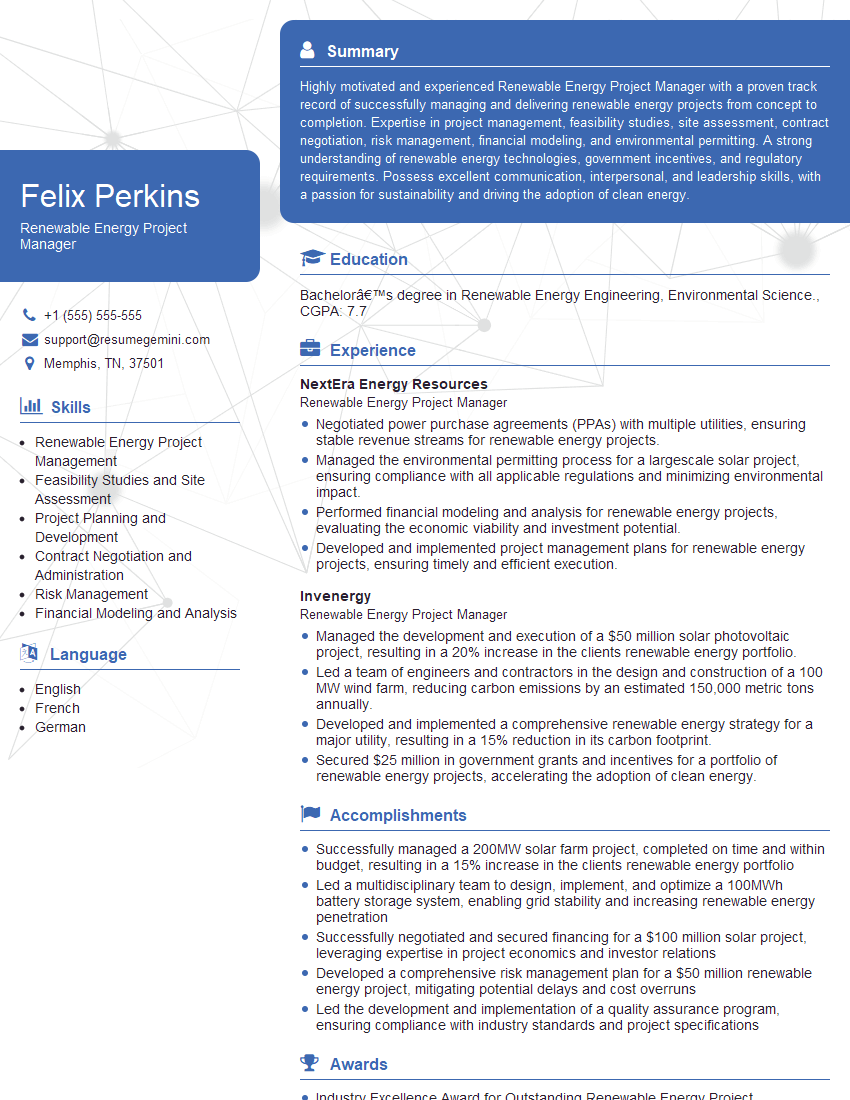
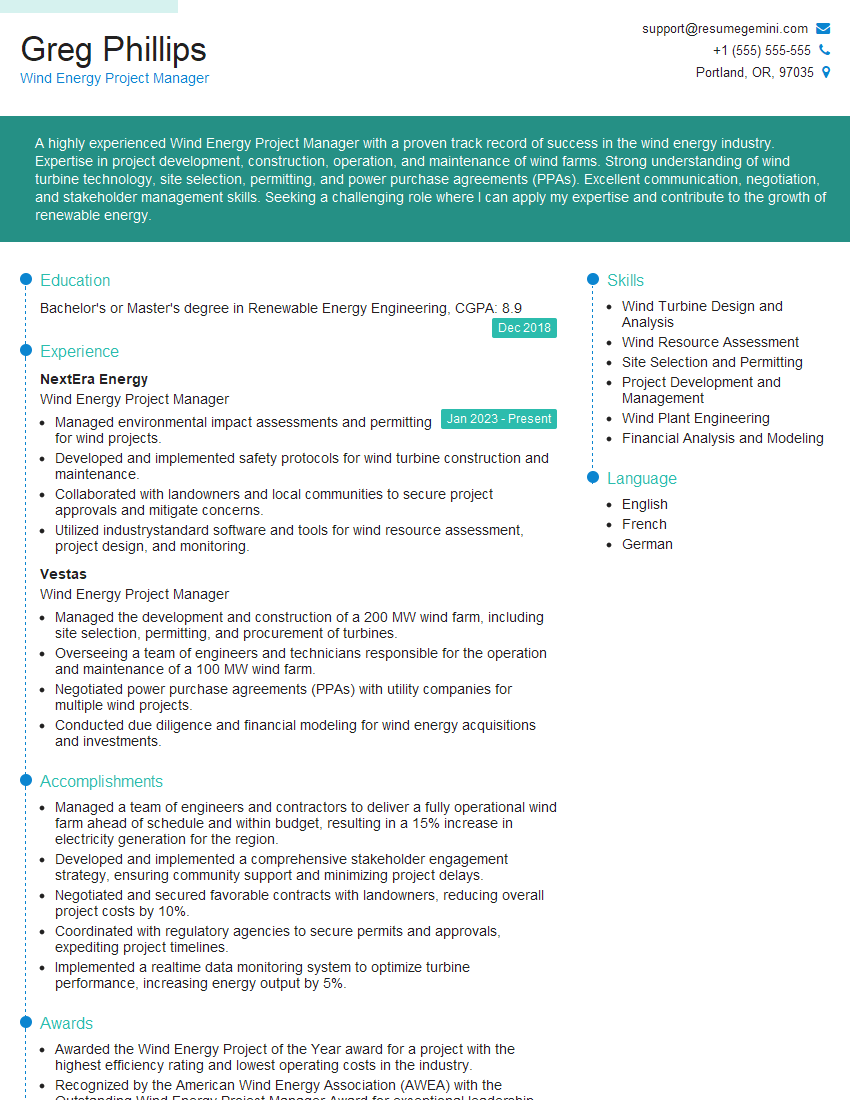
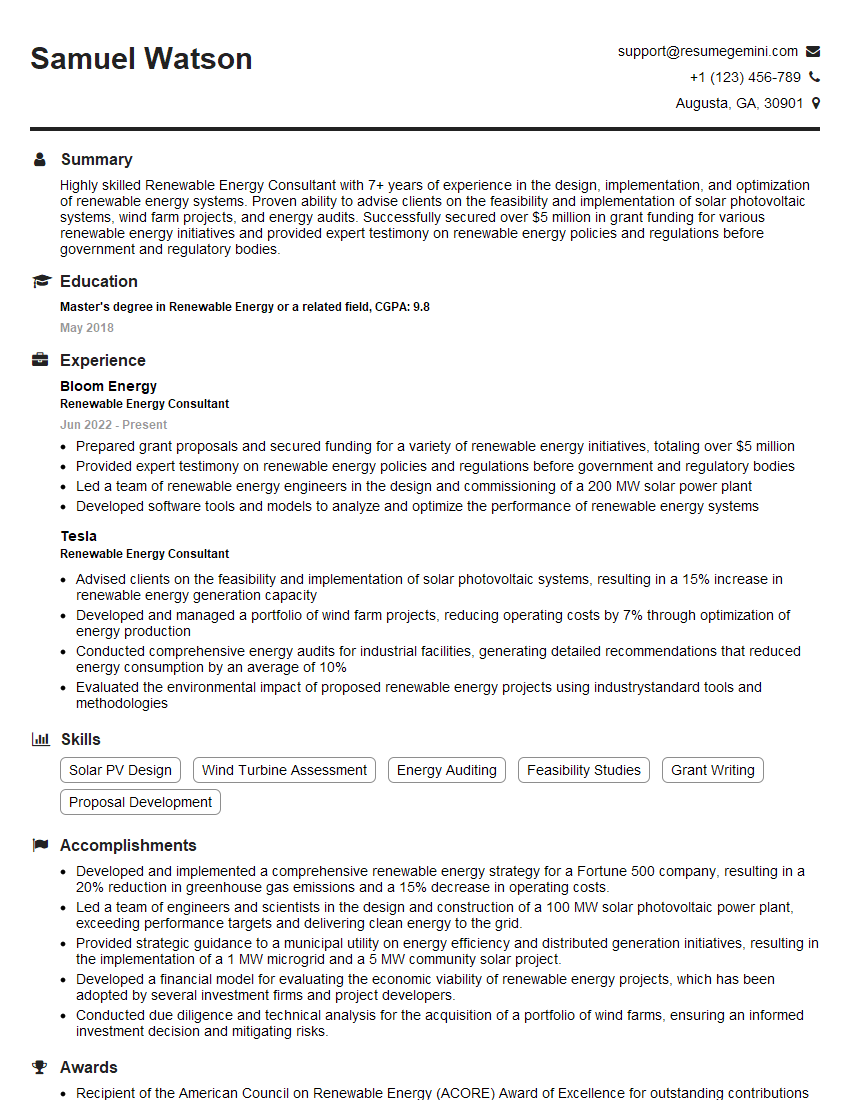
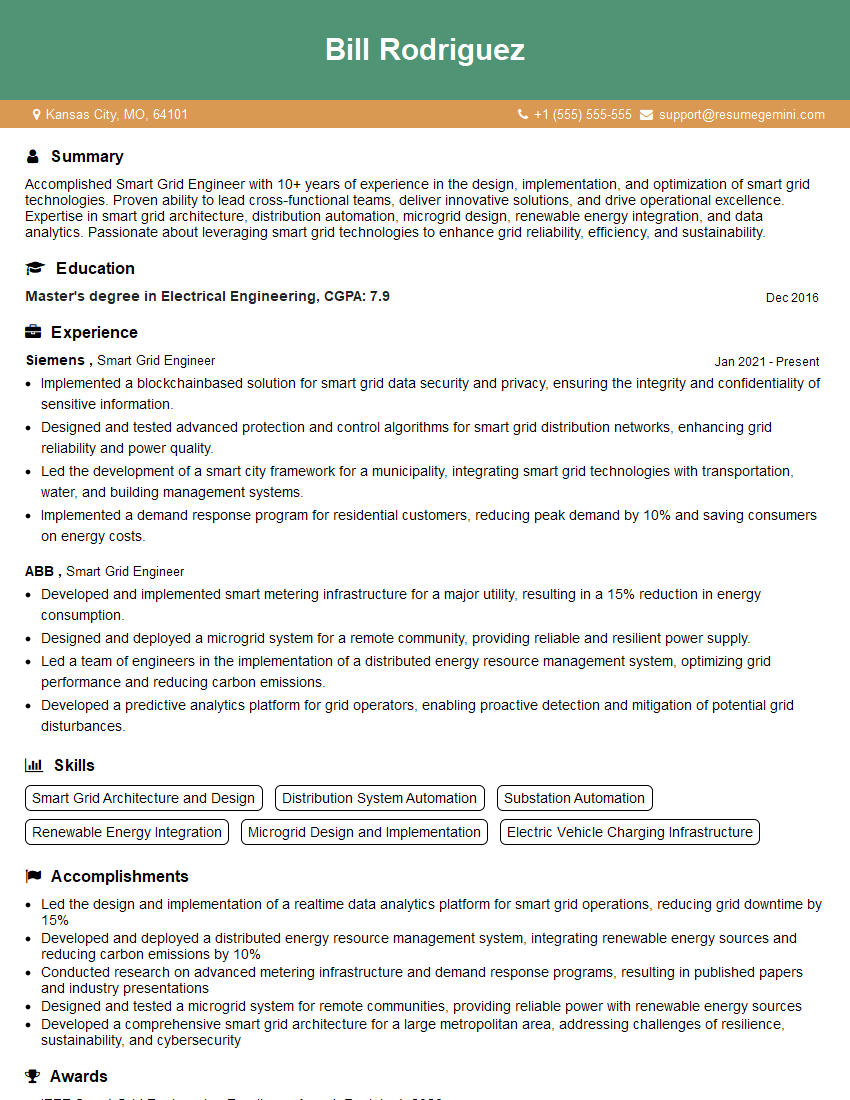
Mastering the ability to work on complex renewable energy projects is crucial for career advancement in this rapidly growing sector. Demonstrating expertise in this area opens doors to exciting and impactful roles with significant growth potential. To maximize your job prospects, crafting an ATS-friendly resume is essential. ResumeGemini is a trusted resource that can help you build a professional and effective resume that highlights your skills and experience. We provide examples of resumes tailored to highlight experience in complex renewable energy projects to help you get started.
Explore more articles
Users Rating of Our Blogs
Share Your Experience
We value your feedback! Please rate our content and share your thoughts (optional).
What Readers Say About Our Blog
Very informative content, great job.
good