Cracking a skill-specific interview, like one for Ironing and Finishing, requires understanding the nuances of the role. In this blog, we present the questions you’re most likely to encounter, along with insights into how to answer them effectively. Let’s ensure you’re ready to make a strong impression.
Questions Asked in Ironing and Finishing Interview
Q 1. What types of fabrics require different ironing techniques?
Different fabrics require varying ironing techniques due to their unique fiber compositions and sensitivities to heat and moisture. For instance, linen, with its strong fibers, can tolerate higher temperatures and more aggressive pressing than delicate silks or rayons, which are prone to scorching or damage with even moderate heat.
- Linen and Cotton: These sturdy fabrics can handle high heat and steam, allowing for crisp, sharp creases.
- Silk and Wool: These delicate fibers require low heat, minimal steam, and often need to be ironed on the reverse side to prevent shine or damage.
- Synthetic Fabrics (Polyester, Nylon): These materials usually require low to medium heat and may benefit from a pressing cloth to prevent melting or sticking.
- Velvet and other pile fabrics: These fabrics should be ironed on the reverse side with a low heat and light pressure to maintain the pile’s integrity.
Understanding a fabric’s composition is key. Always check the care label for specific ironing instructions. Think of it like cooking; you wouldn’t cook a delicate fish at the same temperature as a tough steak!
Q 2. Explain the process of pressing a shirt with a collar.
Pressing a shirt collar requires precision and attention to detail. The goal is to achieve a crisp, sharp edge without creating unwanted creases or shine.
- Prepare the collar: Lay the shirt flat on an ironing board, ensuring the collar is smooth and free of wrinkles. If the collar is stiff, lightly mist it with water.
- Iron the underside: Begin by ironing the underside of the collar, starting from the center and working your way outwards. Use a moderate temperature and gentle pressure, avoiding harsh movements that might distort the shape.
- Iron the topside: Flip the collar and iron the topside, using the same technique. Pay close attention to the points and edges, ensuring they are perfectly aligned and sharp. A tailor’s ham can be helpful here, providing support and preventing creases.
- Finish: Allow the collar to cool completely before handling to set the press. To avoid pressing wrinkles into the collar band from the buttoned portion, you may choose to unbutton the collar prior to pressing.
Practicing this process several times will help refine your technique and develop muscle memory for consistently professional-looking results.
Q 3. How do you identify and handle delicate fabrics?
Identifying and handling delicate fabrics requires a careful approach. Firstly, always check the garment’s care label; this is your bible for handling delicate fabrics.
Look for clues in the fabric’s texture and drape. Delicate fabrics are typically lightweight, often sheer or translucent, and may have a soft, flowing drape. Examples include silk, lace, chiffon, and some types of wool.
- Testing: Before ironing a large area, test your chosen heat setting on an inconspicuous area (like an inside seam) to ensure it doesn’t damage the fabric.
- Pressing cloth: Always use a pressing cloth, ideally made of a lightweight, breathable material like cotton or muslin. This protects the fabric from direct heat and prevents shine.
- Low heat and steam: Use a low iron setting with minimal or no steam. Excessive heat can scorch or melt delicate fibers. For some, a cool iron or even just steam alone is ideal.
- Gentle pressure: Avoid pressing too hard; instead, lightly glide the iron over the fabric.
- Ironing board: A padded ironing board will give better support and prevent accidental creasing.
Think of delicate fabrics like precious works of art. They demand gentle care to maintain their integrity and beauty.
Q 4. What are the common causes of fabric scorching during ironing?
Fabric scorching during ironing is often caused by using too high a temperature for the specific fabric type. Other causes include:
- Too much pressure: Applying excessive pressure can concentrate heat in one spot, leading to scorching.
- Ironing for too long: Prolonged contact with the iron, even at a low temperature, can cause scorching.
- Dry ironing: Ironing without steam (when the fabric requires it) can lead to scorching, especially with synthetic materials.
- Built-up starch or residue: Starch residue or other build-up on the iron’s soleplate can scorch the fabric. Regular cleaning of the iron is essential.
- Improper iron settings: Using the wrong iron setting for the fabric type (e.g., using a high setting for silk) is a common culprit.
Always test the iron setting on an inconspicuous area before ironing the entire garment. It’s better to be cautious than to ruin a garment through negligence.
Q 5. Describe your experience with different types of ironing equipment.
My experience encompasses a wide range of ironing equipment, from basic household irons to professional-grade steam generators. I’m proficient in using irons with various soleplate materials (stainless steel, ceramic, titanium), understanding that each material offers unique benefits. For instance, ceramic soleplates tend to distribute heat more evenly, while titanium soleplates are known for their durability and resistance to scratching.
I’ve also worked with professional-grade steam generators that provide a consistent, powerful steam supply. These machines are particularly helpful when dealing with stubborn wrinkles in thicker fabrics or large quantities of laundry. Additionally, I’m comfortable using pressing equipment, including a tailor’s ham, sleeve board, and point presser, to achieve precise shaping and creases in garments.
Understanding the capabilities and limitations of different equipment is crucial for efficient and effective ironing. Choosing the right tool for the job ensures a professional-quality finish.
Q 6. How do you handle wrinkles on different fabric types?
Handling wrinkles on different fabric types requires adapting the ironing technique based on the fabric’s sensitivity to heat and moisture.
- Cotton and Linen: These fabrics generally respond well to high heat and steam. Ironing while the fabric is slightly damp will often yield the best results.
- Silk and Wool: Delicate fabrics like silk and wool benefit from a cool iron and minimal steam, often requiring a pressing cloth to prevent damage or shine.
- Synthetic Fabrics: Synthetics may require a low heat setting, and a pressing cloth is often helpful to prevent melting or sticking. Using steam may also help to soften wrinkles but avoid leaving the iron on the fabric for too long.
- Wrinkles in Delicate fabrics: Often, a light spray of water followed by careful stretching will remove wrinkles in delicate fabrics without the need for an iron.
For stubborn wrinkles, consider steaming the garment with a handheld steamer prior to ironing. This can loosen the fibers and make ironing much easier. Always prioritize a gentle touch when dealing with delicate or fragile materials.
Q 7. What safety precautions do you follow when using ironing equipment?
Safety is paramount when using ironing equipment. My safety practices include:
- Unplug the iron: Always unplug the iron from the power outlet before filling the water reservoir or cleaning the soleplate. Never leave a hot iron unattended.
- Stable surface: I always use a stable, heat-resistant ironing board and make sure it’s securely positioned.
- Proper water level: I never overfill the water reservoir to avoid spills or damage to the iron.
- Protective clothing: I’ve always been vigilant in avoiding contact with hot surfaces. Use a protective mat and avoid contact with the hot soleplate.
- Child safety: When working around children, I ensure that the iron is unplugged and out of reach when not in use.
- Regular Maintenance: I regularly clean the soleplate to prevent build-up and ensure optimal performance. Descaling is also vital for steam irons to prevent mineral deposits from damaging the iron.
Safety is not just a set of rules; it’s a mindset. By consistently following these practices, I ensure my safety and the safety of those around me.
Q 8. Explain the differences between ironing and pressing.
Ironing and pressing, while both aiming to smooth fabric, differ significantly in their approach. Ironing involves moving the iron back and forth across the fabric, gliding it over the surface. This is great for everyday wrinkles on items like shirts and blouses. Pressing, however, involves applying the iron to a specific area, lifting and repositioning it without sliding. This method is more precise and ideal for delicate fabrics or sharp creases, such as those found on suit pants or tailored garments.
Think of it like this: ironing is like sweeping a floor, covering a broad area. Pressing is more like spot-cleaning a stain, focusing on a particular area for precision.
Q 9. How do you maintain the quality and cleanliness of ironing equipment?
Maintaining clean and quality ironing equipment is crucial for professional results. For irons, regular cleaning is essential. After each use, I wipe the soleplate with a damp cloth to remove any starch residue or burnt fibers. A periodic deeper clean involves filling the iron with distilled water and allowing it to steam for several minutes to dislodge any build-up. For ironing boards, I always check the cover for tears or burns; replacing it regularly is important. The board itself should be wiped clean and the legs checked for stability to ensure safety.
Using distilled water in steam irons is key to preventing mineral deposits that can clog the steam vents and damage the iron over time.
Q 10. What is your experience with steam ironing?
Steam ironing is an indispensable part of my finishing process. It significantly improves the quality and speed of my work. Steam penetrates fabrics deeply, relaxing fibers and removing wrinkles more efficiently than dry ironing. I regularly use steam to refresh garments, achieving a crisp look with minimal effort. Steam is especially effective on heavy fabrics and stubborn wrinkles that resist dry ironing. I have experience with various steam iron models, from traditional ones to those with advanced features such as variable steam settings and automatic shut-off functions, choosing the right tool depending on the garment and fabric.
For example, I might use a high-steam setting for a heavy cotton shirt but a lower setting for a delicate silk scarf.
Q 11. How do you remove stubborn creases?
Stubborn creases require a strategic approach. First, I always check the garment’s care label to determine the appropriate heat setting. Then, I often use a pressing cloth—a thin, damp cotton cloth placed between the iron and the fabric—to protect the fabric from scorching. For very stubborn creases, I might use a combination of steam and pressing techniques, applying pressure to the crease with the iron and then allowing the fabric to cool completely before moving on. Sometimes a little spray misting can help loosen the fibers before applying the iron.
If the crease persists, I may use a professional garment steamer for a deeper penetration of steam, or consider professional dry cleaning to remove wrinkles without damaging the fabric.
Q 12. What are the common finishing techniques for different garments (e.g., shirts, pants, dresses)?
Finishing techniques vary considerably depending on the garment type. For shirts, I pay close attention to collars, cuffs, and pleats, using a pressing cloth and precise movements to achieve a crisp, sharp finish. With pants, pressing the creases sharply along the legs and creating a clean crease at the waist is essential. I often use trouser clamps to maintain a straight crease during pressing. For dresses, the approach is more nuanced; I focus on smoothing the fabric, maintaining the silhouette and avoiding excessive pressure in delicate areas such as lace or embroidery.
Each garment requires a tailored approach to achieve a polished look and maintain its shape and structural integrity.
Q 13. How do you ensure consistent quality in your work?
Consistent quality is paramount. I achieve this through careful attention to detail, following established procedures, and using high-quality equipment. Before each task, I inspect the garment for any damage or specific requirements. I use standardized techniques and always check my work carefully before deeming a garment finished. Regular self-evaluation and seeking feedback help identify areas for improvement and maintaining a consistently high standard.
Using a checklist or a systematic approach during ironing helps to avoid mistakes and ensures consistency.
Q 14. How do you deal with difficult or damaged fabrics?
Dealing with difficult fabrics or damaged garments demands a careful and adaptable approach. For delicate fabrics like silk or lace, I use low heat and a pressing cloth. Damaged fabrics require extra caution; I might reinforce weakened areas before ironing, using interfacing to support the fabric. For stubborn stains, I always address these first (before ironing) and consult care instructions. If I am unsure of how to proceed safely with damaged fabrics, I refer the garment to a professional dry cleaner.
Safety and preservation of the garment are top priorities when dealing with unusual challenges.
Q 15. What is your experience with industrial pressing machines?
My experience with industrial pressing machines spans over 10 years, encompassing a wide range of models from various manufacturers. I’m proficient in operating both steam and vacuum presses, understanding their nuances and capabilities. This includes regular maintenance, troubleshooting malfunctions (like pressure gauge issues or steam leaks), and knowing when to call for professional servicing. For example, I’ve mastered the art of using a vacuum press to remove wrinkles from delicate fabrics like silk without causing damage, and I understand how to adjust the pressure and temperature settings on steam presses to achieve optimal results for different materials, from heavy cotton to lightweight linen.
I’m familiar with safety protocols associated with these machines, including proper handling of high-pressure steam and ensuring the machine is securely locked before operation. My experience also extends to understanding the different functionalities available in advanced models, such as programmable settings for different fabric types and automated features to improve efficiency.
Career Expert Tips:
- Ace those interviews! Prepare effectively by reviewing the Top 50 Most Common Interview Questions on ResumeGemini.
- Navigate your job search with confidence! Explore a wide range of Career Tips on ResumeGemini. Learn about common challenges and recommendations to overcome them.
- Craft the perfect resume! Master the Art of Resume Writing with ResumeGemini’s guide. Showcase your unique qualifications and achievements effectively.
- Don’t miss out on holiday savings! Build your dream resume with ResumeGemini’s ATS optimized templates.
Q 16. Describe your experience with different types of starch.
My experience with different types of starch is extensive. I’ve worked with everything from traditional wheat starch to more modern formulations like spray starch and liquid starch, each with its own properties and ideal applications. Wheat starch, for instance, provides a crisp, firm finish ideal for stiff collars and cuffs, but it can be quite heavy on delicate fabrics. Spray starch offers a lighter finish, perfect for everyday garments, providing a subtle crispness without stiffness. Liquid starches vary in their concentration and often contain additives for added wrinkle resistance and softness.
I understand how different starches react to various fabric types and heat levels. For example, I would never use a heavy wheat starch on a sheer silk blouse as it would likely cause damage or leave an undesirable stiffness. My selection always depends on the fabric, desired finish, and the garment’s overall style. I also know the importance of proper application techniques to avoid streaking or build-up.
Q 17. How do you adapt your technique based on the fabric content label?
Fabric content labels are my bible! They’re crucial for determining the appropriate ironing techniques. For example, a garment labeled ‘100% cotton’ can generally withstand higher heat and more aggressive pressing than a ‘silk blend’ garment. I adjust my ironing techniques in several ways:
- Temperature: I always use the lowest setting for delicate fabrics like silk, rayon, or wool. For cotton, linen, and other durable materials, I can use higher temperatures.
- Moisture: I use a steam iron for most fabrics, but sometimes employ a dry iron for delicate items or when dealing with potential shrinkage. The amount of steam also varies depending on the fabric.
- Pressure: I apply less pressure when working with delicate fabrics to prevent damage or shine. For heavier fabrics like denim, more pressure can be used to achieve sharp creases.
- Ironing Board: I may use a padded ironing board cover for delicate materials to provide extra cushioning and protection.
Always checking the care label helps prevent damage and ensures the garment maintains its quality and shape. It’s like following a recipe; each fabric has its own specific needs!
Q 18. How do you handle different types of stains before ironing?
Pre-treatment of stains is paramount before ironing. Ironing a stained garment can set the stain permanently, making it impossible to remove. My approach is methodical and depends on the type of stain:
- Fresh stains: I immediately blot (never rub!) the stain with a clean cloth, absorbing as much of the stain as possible.
- Set-in stains: I pre-treat the stain using a suitable stain remover, following the product instructions carefully. This might involve soaking the garment, applying a paste, or using a specialized stain-removing pen.
- Specific Stain Types: I have specific techniques for different stains. For example, grease stains often require pre-treatment with dish soap, while ink stains may respond better to rubbing alcohol. Always test a hidden area first.
Once the stain is treated, I allow it to air dry completely before ironing, to ensure the stain remover has fully worked and to avoid accidentally transferring the stain to the iron.
Q 19. What is your experience with quality control checks in the finishing process?
Quality control is integral to the finishing process. My checks are thorough and multi-stage:
- Visual Inspection: This is the first and most crucial step. I meticulously inspect each garment for wrinkles, creases, puckers, and any remaining stains. I check for proper seam alignment and overall garment presentation.
- Fabric Examination: I pay attention to the texture and feel of the fabric, ensuring it’s smooth and free from damage. I carefully examine delicate areas such as buttons, embroidery, and embellishments.
- Dimensional Checks: Where applicable, I verify that the garment’s dimensions meet the specifications. This is particularly important for tailored garments.
Any defects found are immediately reported and addressed. I believe in a zero-tolerance policy for sub-standard work; it’s about taking pride in delivering a flawless product.
Q 20. How do you organize and prioritize your tasks in a high-volume environment?
In high-volume environments, organization and prioritization are key. I use a combination of techniques:
- Batch Processing: I group similar items together (e.g., all cotton shirts, all linen pants) to streamline the ironing process and optimize the use of heat settings.
- Sequencing: I prioritize urgent orders, such as those with tight deadlines, ensuring they are completed first. I also consider the complexity of the garments, tackling simpler items before moving on to more intricate ones.
- Workflow Management: I maintain a clean and organized workspace to avoid unnecessary delays. I keep all tools and supplies readily accessible and maintain a consistent workflow to maximize efficiency.
Think of it as a well-orchestrated symphony; each movement and instrument (garment and tool) must work in harmony to create a beautiful finished product.
Q 21. What is your experience with working with different types of seams?
My experience with different types of seams is extensive. I understand how different seam constructions affect ironing techniques. For example, French seams require delicate handling to avoid flattening or damaging the finished seam, whereas flat-felled seams can withstand more aggressive pressing. I’m familiar with:
- French seams: These seams are very neat and durable, requiring careful ironing to maintain their shape.
- Flat-felled seams: These seams are strong and durable, allowing for more aggressive pressing to achieve sharp creases.
- Overlocked seams: These seams are usually pressed open to create a flat finish, but some require pressing to one side depending on the fabric and garment.
- Top-stitched seams: These require careful pressing to avoid flattening the top stitching.
Understanding these nuances is crucial for achieving a professional and consistent finish. Improper ironing can ruin the integrity of the seam, so knowledge is key. It’s a matter of knowing how to work *with* the seam to highlight its strengths and create a high-quality finish.
Q 22. How do you handle urgent orders and meet deadlines?
Handling urgent orders requires a strategic approach combining prioritization, efficient workflow, and clear communication. I start by assessing the urgency and complexity of each order, prioritizing those with the tightest deadlines. I then break down the tasks into smaller, manageable steps to optimize workflow and minimize bottlenecks. For example, if I have several shirts requiring a quick turnaround, I might dedicate a specific section of my ironing board for them and employ a rapid-pressing technique. Open communication with the client or team leader is key – if an unexpected delay occurs, I proactively inform them, outlining the issue and proposed solution. This proactive communication ensures transparency and maintains trust. This approach has allowed me to consistently meet deadlines even under pressure, such as during peak seasons or when unexpected orders arise.
Q 23. Describe your experience with troubleshooting ironing equipment malfunctions.
Troubleshooting ironing equipment malfunctions is a critical skill for maintaining productivity and quality. My experience encompasses a range of issues, from simple problems like a clogged steam vent to more complex electrical problems. I always start with a visual inspection, checking for obvious issues like frayed cords or water leaks. If the problem persists, I systematically check other components: the thermostat, the heating element, and the water pump, following the manufacturer’s troubleshooting guide. For instance, if the iron isn’t heating properly, I check the power cord and outlet, then the thermostat and finally the heating element itself (after ensuring the iron is unplugged!). I’m comfortable performing minor repairs, such as cleaning vents or replacing a simple fuse. However, for major repairs, I would immediately report the issue to the appropriate maintenance personnel, ensuring the safety of myself and others. In this way, I minimize downtime and prevent potential damage to the equipment or harm to myself.
Q 24. How do you maintain a clean and organized workspace?
Maintaining a clean and organized workspace is paramount for efficiency and safety. My approach involves a systematic cleaning routine incorporating both daily and weekly tasks. Daily, I ensure my ironing board is clear of wrinkles and debris. I clean the iron’s soleplate after each use, wiping it down with a damp cloth to prevent buildup. Weekly, I deep clean my workspace, including vacuuming the floor, organizing supplies, and sanitizing surfaces. I employ a 5S methodology: Seiri (Sort), Seiton (Set in Order), Seiso (Shine), Seiketsu (Standardize), Shitsuke (Sustain). This ensures that everything has its place, is easily accessible, and contributes to a safe and productive work environment. Think of it like this: a cluttered space leads to wasted time searching for tools and increased risk of accidents; a clean, organized space promotes efficiency and reduces stress.
Q 25. What are the common problems encountered in garment finishing and how do you resolve them?
Common problems in garment finishing include wrinkles, creases, scorch marks, and shrinkage. Wrinkles and creases are typically addressed through proper pressing techniques, using the appropriate temperature and pressure for the fabric. Scorch marks, often caused by overheating the iron, can sometimes be minimized by using a pressing cloth and applying lower heat. For more stubborn marks, gentle wet-cleaning may be necessary. Shrinkage, frequently caused by improper washing or high heat, is more difficult to rectify, and preventative measures are crucial. Using appropriate laundry settings and checking garment care labels are vital. For example, a delicate silk blouse requires low heat and a silk pressing cloth to avoid damage. Understanding fabric types and their properties is key to preventing and resolving these problems. If a problem is beyond my expertise, I would seek advice from a senior colleague or refer to relevant resources.
Q 26. What is your understanding of workplace safety regulations relevant to ironing and finishing?
Workplace safety regulations relevant to ironing and finishing are critical to my practice. These include the proper use of personal protective equipment (PPE), such as heat-resistant gloves and eye protection. I am meticulous about following the manufacturer’s instructions for all equipment, ensuring that the iron is used at the correct temperature and steam setting. I’m familiar with emergency procedures, including knowing the location of fire extinguishers and emergency exits, and I understand the importance of reporting any accidents or near misses immediately. Furthermore, I maintain a safe workspace, ensuring cords are properly managed to prevent tripping hazards, and the area is free of clutter. Regular maintenance checks on the equipment are essential to prevent malfunctions and ensure continuous safe operation. Adhering to these regulations protects me, my colleagues, and our workplace.
Q 27. How do you work effectively as part of a team in a fast-paced environment?
Working effectively in a fast-paced team environment relies on clear communication, collaboration, and mutual respect. I’m adept at prioritizing tasks, assisting colleagues when needed, and readily sharing my expertise. In a busy environment, efficient communication prevents bottlenecks. For example, if one team member falls behind, I might assist them with a portion of their workload without compromising the quality of my own tasks. Active listening and providing constructive feedback are also crucial for maintaining positive team dynamics and ensuring everyone is on the same page. I believe that teamwork is the foundation of success in a high-pressure environment; by collaborating and supporting each other, we achieve greater efficiency and higher quality outcomes.
Q 28. Describe your experience with using different types of pressing cloths.
My experience encompasses using a variety of pressing cloths, each suited to different fabrics and pressing techniques. Pressing cloths act as a buffer between the hot iron and the garment, preventing scorching and shine. I regularly use cotton cloths for general-purpose pressing, linen cloths for heavier fabrics, and silk cloths for delicate materials like silk and satin. Press cloths made from Teflon or silicone are excellent for reducing friction and preventing sticking. The choice of pressing cloth depends on the fabric’s sensitivity and the desired finish. For instance, a thick, absorbent cotton cloth is ideal for damp pressing cotton shirts to remove wrinkles, while a thin, smooth silk cloth is necessary for preventing shine when pressing delicate fabrics. Properly selecting and using pressing cloths is a key element in achieving a professional finish.
Key Topics to Learn for Your Ironing and Finishing Interview
- Fabric Knowledge: Understanding different fabric types (cotton, linen, silk, etc.), their properties, and appropriate ironing techniques. This includes recognizing delicate fabrics requiring specialized care.
- Ironing Techniques: Mastering various ironing techniques for different garments (shirts, pants, dresses, etc.), including pressing, steaming, and using different types of irons.
- Finishing Techniques: Proficiency in pressing seams, pleats, and collars to achieve a professional finish. Understanding the use of pressing cloths and other tools.
- Stain Removal and Pre-Treatment: Knowing how to identify and treat common stains before ironing to prevent setting and damage.
- Equipment Operation and Maintenance: Familiarization with various ironing equipment (industrial irons, steam presses, etc.) and their proper operation and maintenance.
- Quality Control and Inspection: Understanding the importance of quality control in ironing and finishing, and the ability to identify and correct imperfections.
- Safety Procedures: Awareness and adherence to safety regulations related to handling hot irons and equipment, and proper handling of chemicals.
- Production Efficiency and Time Management: Demonstrating an understanding of optimizing workflow to meet production demands within given time constraints.
- Problem-Solving: Ability to troubleshoot common ironing and finishing problems, such as wrinkles, burns, or uneven pressing.
- Teamwork and Communication: Highlighting your ability to work effectively as part of a team and communicate clearly with colleagues and supervisors.
Next Steps
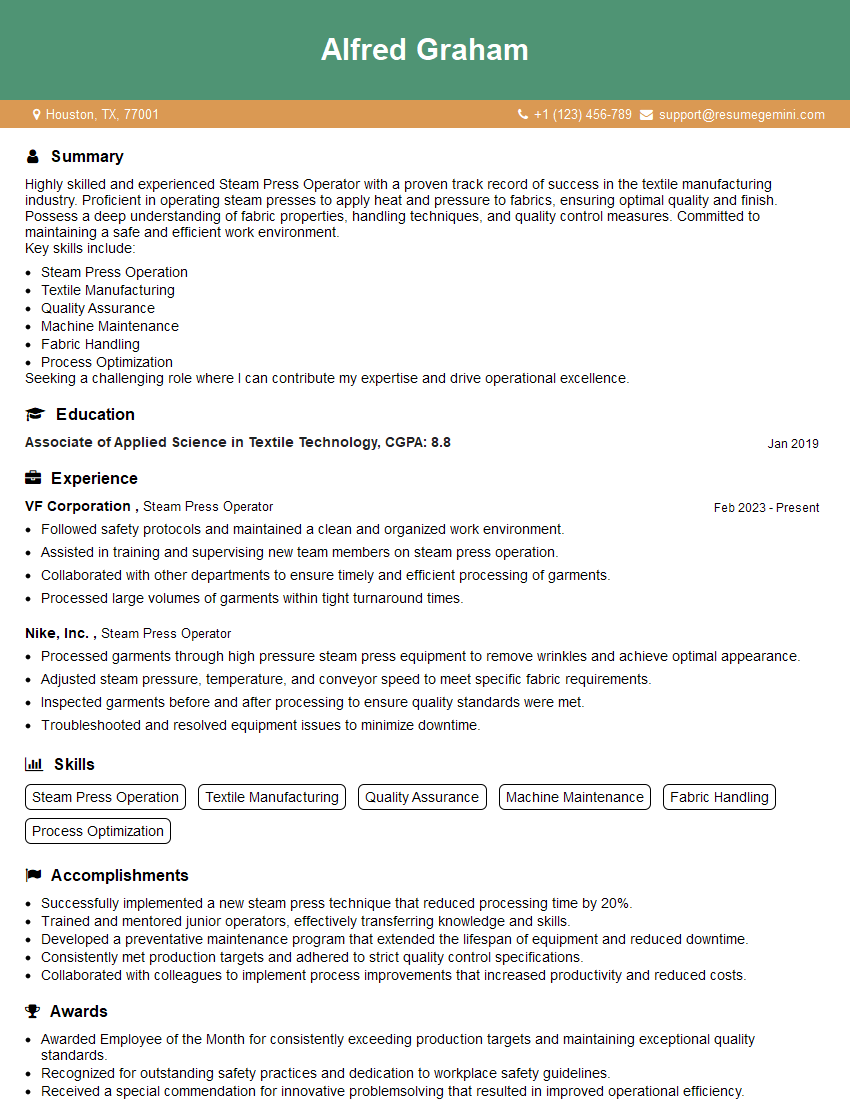
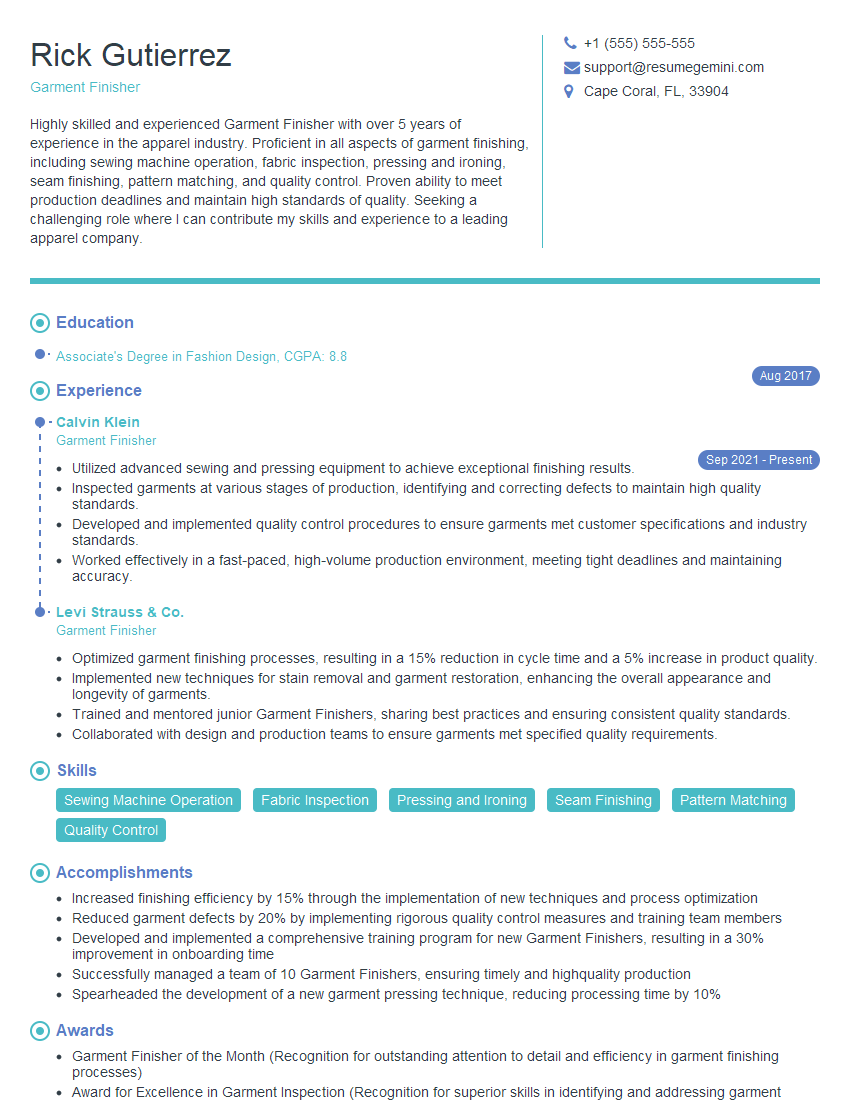
Mastering ironing and finishing techniques opens doors to diverse career opportunities with excellent growth potential. A well-crafted resume is your key to unlocking these opportunities. To make a strong first impression, focus on building an ATS-friendly resume that highlights your skills and experience effectively. ResumeGemini can help you create a professional and impactful resume tailored to the Ironing and Finishing industry. We provide examples of resumes specifically designed for this field to guide you.
Explore more articles
Users Rating of Our Blogs
Share Your Experience
We value your feedback! Please rate our content and share your thoughts (optional).
What Readers Say About Our Blog
Very informative content, great job.
good