Interviews are opportunities to demonstrate your expertise, and this guide is here to help you shine. Explore the essential Conservation and Management Practices interview questions that employers frequently ask, paired with strategies for crafting responses that set you apart from the competition.
Questions Asked in Conservation and Management Practices Interview
Q 1. Explain the principles of sustainable resource management.
Sustainable resource management hinges on the principle of meeting present needs without compromising the ability of future generations to meet their own. This requires a delicate balance between resource extraction, conservation, and equitable distribution. It’s like managing a bank account: you can spend some, but you need to ensure there’s enough left for the future, and everyone gets a fair share.
- Renewal and Regeneration: Focus on using resources at or below their rate of natural replenishment. For example, sustainable forestry involves harvesting trees at a rate that allows the forest to regenerate naturally.
- Efficiency and Optimization: Reducing waste and maximizing the efficiency of resource use is crucial. This could involve using less water in agriculture through drip irrigation, or minimizing energy consumption in manufacturing.
- Environmental Protection: Sustainable management minimizes negative environmental impacts. This means mitigating pollution, protecting biodiversity, and preventing habitat degradation. For example, sustainable fishing practices aim to avoid overfishing and protect marine ecosystems.
- Social Equity: Ensuring fair access to resources and benefits is critical. Sustainable resource management should consider the needs of all stakeholders, including local communities, businesses, and future generations.
For example, a successful community-based forest management project would involve local communities participating in the decision-making process, harvesting timber sustainably, and reinvesting profits in community development, ensuring both environmental protection and social justice.
Q 2. Describe your experience with habitat restoration techniques.
My experience with habitat restoration spans diverse ecosystems, from riparian zones to coastal wetlands. I’ve been involved in projects employing various techniques, tailoring strategies to specific site conditions and ecological goals.
- Revegetation: I’ve overseen the planting of native species to restore degraded areas, selecting species best suited to the soil type, climate, and desired habitat structure. This involved meticulous site preparation, seed sourcing, and monitoring of seedling establishment.
- Erosion Control: Implementing techniques such as contour plowing, terracing, and bioengineering (using live plants to stabilize slopes) to prevent further soil erosion and habitat loss. In one project, we successfully stabilized a steep riverbank prone to landslides using a combination of willow stakes and coir logs.
- Water Management: Restoring water flow patterns in degraded wetlands through channel reconstruction or dam removal. In another project, we restored hydrological connectivity in a wetland, leading to an increase in biodiversity and improved water quality.
- Invasive Species Removal: Developing and implementing strategies for controlling or eradicating invasive species that threaten native flora and fauna. This often involves integrated pest management techniques, combining mechanical, chemical, and biological controls.
For instance, in a coastal wetland restoration project, we employed a combination of techniques to restore natural hydrological processes, remove invasive phragmites, and replant native salt marsh vegetation, resulting in a significant increase in bird species and fish populations.
Q 3. How do you assess the ecological impact of a development project?
Assessing the ecological impact of a development project requires a systematic approach, incorporating various scientific methods and regulatory frameworks. It’s crucial to anticipate potential impacts and implement mitigation measures proactively.
- Baseline Studies: Initial ecological surveys are essential to document the existing biodiversity, habitat quality, and ecosystem services. This includes vegetation surveys, wildlife surveys, water quality assessments, and soil analysis.
- Impact Prediction: Using ecological models and expert judgment to predict the potential impacts of the project on various ecological components. This might involve GIS modeling to predict habitat loss or hydrological models to assess the impacts on water resources.
- Mitigation Planning: Developing strategies to minimize or offset the predicted negative impacts. This might involve habitat creation, habitat restoration, or the implementation of pollution control measures.
- Monitoring and Evaluation: Regular monitoring of ecological indicators post-development to assess the effectiveness of mitigation measures and to detect any unanticipated impacts.
- Reporting and Compliance: Preparing comprehensive reports documenting the assessment process, findings, and mitigation measures. Compliance with all relevant environmental regulations is paramount.
For example, before constructing a highway through a forested area, we would conduct thorough surveys to identify sensitive habitats and species. Based on these surveys, we’d develop mitigation plans, such as creating wildlife corridors or restoring degraded habitats elsewhere to offset the loss of habitat caused by the highway construction.
Q 4. What are the key challenges in biodiversity conservation?
Biodiversity conservation faces a multitude of intertwined challenges, hindering effective protection and management of our planet’s irreplaceable natural capital.
- Habitat Loss and Degradation: The primary driver of biodiversity loss, primarily caused by deforestation, urbanization, agriculture, and infrastructure development.
- Climate Change: Altering habitats, disrupting species interactions, and causing range shifts, threatening species survival and ecosystem stability.
- Invasive Species: Outcompeting and displacing native species, disrupting ecological processes, and causing significant economic damage.
- Overexploitation: Unsustainable harvesting of resources (e.g., overfishing, illegal wildlife trade) depleting populations and threatening species extinction.
- Pollution: Chemical, noise, and light pollution harming organisms, disrupting ecosystems, and degrading habitat quality.
- Lack of Funding and Resources: Inadequate funding and resources limit conservation efforts, hampering effective protection and management of biodiversity.
- Lack of Awareness and Public Engagement: Insufficient understanding of the importance of biodiversity and lack of public support for conservation efforts hindering effective action.
Effectively addressing these challenges requires a multi-pronged approach involving international cooperation, policy changes, technological advancements, and public awareness campaigns.
Q 5. Discuss various methods for monitoring wildlife populations.
Monitoring wildlife populations is crucial for understanding population trends, assessing conservation effectiveness, and informing management decisions. A range of methods is employed, depending on the species and habitat.
- Visual Surveys: Direct observation of animals, often using binoculars or spotting scopes, providing qualitative and quantitative data. This is suitable for species easily visible and identifiable.
- Camera Trapping: Using motion-activated cameras to photograph or video-record animals, providing evidence of species presence, abundance, and behavior. Particularly effective for elusive or nocturnal species.
- Mark-Recapture Studies: Involving capturing, marking, and releasing animals, followed by subsequent recapture events to estimate population size and other parameters. Requires careful consideration of capture methods and potential impacts on animals.
- Acoustic Monitoring: Recording and analyzing animal vocalizations to identify species, estimate abundance, and assess habitat use. Useful for vocal species in challenging terrain.
- Genetic Monitoring: Using DNA analysis to identify species, assess genetic diversity, and study population structure. Valuable for identifying cryptic species or populations.
- Remote Sensing: Using satellites and aerial surveys to monitor habitat changes and animal movements over large areas. Provides valuable spatial information for conservation planning.
For example, to monitor a population of endangered birds, we might use a combination of visual surveys, acoustic monitoring, and camera trapping to gain a comprehensive understanding of their distribution, abundance, and habitat use.
Q 6. Explain your understanding of protected area management.
Protected area management involves the planning and implementation of strategies to conserve biodiversity and ecosystem services within designated areas. It requires a multi-faceted approach, balancing conservation goals with the needs of local communities and other stakeholders.
- Planning and Zoning: Developing management plans that outline specific conservation goals, zoning regulations, and permitted activities within the protected area.
- Resource Monitoring: Regular monitoring of biodiversity, habitat condition, and ecosystem services to assess the effectiveness of management strategies.
- Visitor Management: Regulating visitor access and activities to minimize negative impacts on the environment and ensure visitor safety. This might involve trail construction, visitor centers, and educational programs.
- Law Enforcement and Compliance: Enforcing regulations to prevent illegal activities, such as poaching, illegal logging, or encroachment.
- Community Engagement: Involving local communities in planning and management to foster support for conservation and ensure the sustainable use of resources.
- Adaptive Management: Continuously evaluating management strategies and adapting them based on new information and changing circumstances.
Effective protected area management requires collaboration between government agencies, conservation organizations, local communities, and other stakeholders. For example, a successful national park might involve collaboration with local communities to develop sustainable tourism opportunities, while simultaneously protecting endangered species and key habitats.
Q 7. How do you address conflicts between conservation and human development?
Conflicts between conservation and human development are inevitable, given the increasing demand for resources and land. Addressing these conflicts requires finding sustainable solutions that balance human needs with environmental protection.
- Strategic Environmental Assessment: Conducting thorough environmental assessments early in the development planning process to identify potential conflicts and incorporate conservation measures into project design.
- Habitat Compensation: Creating or restoring habitats elsewhere to offset the loss of habitats caused by development projects. This might involve creating wildlife corridors or restoring degraded ecosystems.
- Sustainable Development Planning: Integrating conservation goals into development plans to promote environmentally sound and socially equitable development. This might involve zoning regulations, building codes, and incentives for sustainable practices.
- Community-Based Conservation: Working with local communities to develop conservation strategies that meet their needs and enhance their livelihoods. This could involve ecotourism, sustainable resource management, and other community-based initiatives.
- Conflict Resolution and Negotiation: Facilitating dialogue and negotiation between different stakeholders to reach mutually acceptable solutions.
- Policy and Legislation: Developing and implementing effective policies and legislation to protect biodiversity and regulate development activities. This includes environmental impact assessments, protected area establishment, and regulations on resource use.
For example, a successful approach to balancing hydroelectric power development with fish conservation might involve constructing fish passages to allow fish migration and implementing measures to mitigate the impacts on downstream ecosystems.
Q 8. Describe your experience with GIS and its application in conservation.
Geographic Information Systems (GIS) are invaluable tools in conservation. I’ve extensively used GIS software like ArcGIS and QGIS throughout my career to map and analyze spatial data relevant to conservation efforts. This includes mapping habitat distribution, identifying protected areas, tracking species movements, and assessing the impact of human activities on ecosystems. For example, I used GIS to model the potential spread of invasive species in a national park, allowing for targeted management interventions. Another instance involved using GIS to identify optimal locations for reforestation projects based on factors like soil type, elevation, and proximity to existing forest patches. The ability to visualize and analyze spatial patterns is crucial for effective conservation planning and decision-making.
Specifically, I’ve leveraged GIS for:
- Habitat suitability modeling: Predicting where species are most likely to thrive based on environmental variables.
- Conservation prioritization: Identifying areas of high biodiversity that warrant protection.
- Monitoring and evaluation: Tracking changes in habitat over time and assessing the effectiveness of conservation interventions.
- Stakeholder engagement: Communicating complex spatial information to diverse audiences through maps and visualizations.
Q 9. What are the key indicators of ecosystem health?
Ecosystem health is a complex concept, but key indicators can be grouped into several categories. Think of it like assessing the health of a human body – we look at various vital signs. Similarly, for ecosystems, we monitor:
- Biodiversity: Species richness (number of species), species evenness (relative abundance of each species), and genetic diversity within species. A healthy ecosystem usually exhibits high biodiversity.
- Habitat integrity: The extent to which habitat structures and functions remain intact. This includes factors like vegetation cover, water quality, and soil health. Consider a forest – the presence of different layers (understory, canopy) indicates healthy structure.
- Trophic structure: The flow of energy through the food web. A balanced trophic structure, with predators and prey in appropriate ratios, suggests a healthy ecosystem. For instance, a decline in top predators can signal an imbalance.
- Ecosystem services: The benefits that humans derive from ecosystems, such as clean water, pollination, and climate regulation. Reduced provision of these services can indicate ecosystem degradation.
- Resilience: The ability of an ecosystem to withstand disturbances and recover. A resilient ecosystem can bounce back from events like wildfires or droughts.
Monitoring these indicators helps assess the overall health of an ecosystem and identify areas needing intervention.
Q 10. Explain your understanding of climate change impacts on ecosystems.
Climate change poses a significant threat to ecosystems worldwide. Changes in temperature, precipitation patterns, and extreme weather events are altering habitat suitability, disrupting species interactions, and increasing the risk of extinction. For instance, rising sea levels are inundating coastal wetlands, while changes in temperature are shifting the ranges of many species.
Specific impacts include:
- Range shifts: Species are moving towards higher altitudes or latitudes in response to changing climate conditions.
- Phenological mismatches: The timing of biological events (e.g., migration, flowering) is shifting, disrupting interactions between species.
- Increased frequency and intensity of extreme weather events: Hurricanes, droughts, and wildfires can severely damage ecosystems.
- Ocean acidification: Increased CO2 absorption by oceans is making them more acidic, harming marine organisms with calcium carbonate shells or skeletons.
- Changes in hydrological cycles: Altered precipitation patterns are affecting water availability and leading to droughts or floods.
Understanding these impacts is critical for developing effective adaptation and mitigation strategies.
Q 11. How do you develop and implement a conservation plan?
Developing and implementing a conservation plan is a multi-step process requiring careful planning and stakeholder collaboration. It starts with a thorough assessment of the situation and the establishment of clear goals. A robust plan will include:
- Problem definition and goal setting: Clearly identifying the conservation challenge and setting specific, measurable, achievable, relevant, and time-bound (SMART) goals. For example, ‘Increase the population of the endangered species X by 20% within 5 years’.
- Ecosystem assessment: Conducting thorough surveys to understand the current state of the ecosystem, including biodiversity, habitat condition, and threats.
- Threat assessment: Identifying and prioritizing the major threats to the ecosystem, such as habitat loss, pollution, or invasive species.
- Strategy development: Formulating specific actions to address the identified threats. This might include habitat restoration, species protection, or community engagement initiatives.
- Implementation: Putting the plan into action, monitoring progress, and making adjustments as needed.
- Monitoring and evaluation: Regularly tracking progress towards goals and evaluating the effectiveness of implemented strategies. This often involves data collection and analysis, potentially using GIS.
- Adaptive management: Adjusting the plan based on the monitoring and evaluation results. Conservation is an iterative process, and plans need to adapt to changing conditions.
The entire process relies heavily on collaboration with stakeholders, including local communities, government agencies, and other organizations.
Q 12. Describe your experience with community engagement in conservation projects.
Community engagement is absolutely crucial for successful conservation. My experience has shown that conservation projects are far more sustainable and effective when local communities are actively involved. I’ve been involved in numerous projects where we worked closely with communities to understand their needs, priorities, and traditional ecological knowledge.
My approach involves:
- Participatory mapping: Working with communities to map important natural resources and areas of cultural significance.
- Community-based monitoring: Training local people to monitor ecosystem health and biodiversity.
- Co-management agreements: Establishing collaborative management structures that empower local communities to participate in decision-making.
- Capacity building: Providing training and resources to enhance the skills and knowledge of community members.
- Benefit-sharing: Ensuring that local communities receive tangible benefits from conservation projects, such as improved livelihoods or access to resources.
For example, in one project, we worked with a fishing community to develop a sustainable fishing plan, which not only protected fish stocks but also improved the community’s income and food security.
Q 13. How do you evaluate the success of a conservation program?
Evaluating the success of a conservation program requires a multifaceted approach using both quantitative and qualitative data. It’s not just about counting numbers, but also understanding the social and ecological impacts.
Methods include:
- Monitoring indicators: Tracking changes in key indicators of ecosystem health and biodiversity, such as species populations, habitat area, or water quality. This often involves statistical analysis to determine if there are significant changes over time.
- Surveys and interviews: Assessing changes in community perceptions and attitudes towards conservation. This can be vital for gauging the program’s social acceptance and impact.
- Economic valuation: Measuring the economic benefits of the conservation program, such as increased tourism revenue or improved ecosystem services.
- Cost-benefit analysis: Comparing the costs of the program with the economic and ecological benefits.
- Adaptive management framework: Continuously evaluating data and adjusting the plan to optimize results. This ensures that the program remains effective and responsive to changing conditions.
Ultimately, success is judged by the extent to which the conservation program achieves its stated goals, contributes to the long-term health of the ecosystem, and empowers local communities.
Q 14. What are the ethical considerations in conservation practices?
Ethical considerations are paramount in conservation. We must strive to ensure that our practices are fair, just, and sustainable. Key ethical issues include:
- Social justice: Ensuring that conservation efforts do not disproportionately impact marginalized communities or infringe on their rights. For example, displacement of indigenous communities for the establishment of protected areas is a serious ethical concern.
- Environmental justice: Ensuring that the benefits and burdens of conservation are distributed equitably among different stakeholders. Pollution from industrial activities should not disproportionately impact vulnerable populations.
- Animal welfare: Treating animals with respect and minimizing harm in our conservation activities. This includes humane wildlife management techniques.
- Transparency and accountability: Being open and honest about our methods, data, and decision-making processes. This includes properly engaging with stakeholders in a democratic fashion.
- Sustainability: Ensuring that our conservation actions do not compromise the ability of future generations to meet their own needs.
Ethical decision-making requires careful consideration of all stakeholders and potential impacts. It requires a commitment to both ecological and social well-being.
Q 15. Explain your knowledge of endangered species protection laws.
Endangered species protection laws are crucial for biodiversity conservation. These laws vary by country and region but generally aim to prevent extinction by regulating activities that threaten vulnerable species. Key elements often include:
- Species listing and designation: Scientific assessments determine which species are endangered, threatened, or of special concern, triggering legal protection.
- Habitat protection: Laws often protect critical habitats, preventing destruction or degradation of areas essential for the species’ survival. This can involve establishing protected areas like national parks or wildlife reserves.
- Trade restrictions: International agreements like CITES (Convention on International Trade in Endangered Species) regulate the trade of endangered species and their products to curb poaching and illegal wildlife trafficking.
- Recovery plans: These detailed plans outline specific actions to improve the species’ status, often involving captive breeding, habitat restoration, and public awareness campaigns.
- Enforcement mechanisms: Penalties for violating the laws provide disincentives for harmful activities. These can include fines, imprisonment, and asset forfeiture.
For example, the US Endangered Species Act provides a framework for protecting endangered and threatened species within the US. Internationally, the Convention on Biological Diversity (CBD) sets broader conservation goals and promotes international cooperation.
Career Expert Tips:
- Ace those interviews! Prepare effectively by reviewing the Top 50 Most Common Interview Questions on ResumeGemini.
- Navigate your job search with confidence! Explore a wide range of Career Tips on ResumeGemini. Learn about common challenges and recommendations to overcome them.
- Craft the perfect resume! Master the Art of Resume Writing with ResumeGemini’s guide. Showcase your unique qualifications and achievements effectively.
- Don’t miss out on holiday savings! Build your dream resume with ResumeGemini’s ATS optimized templates.
Q 16. Describe your experience with data analysis in conservation science.
Data analysis is fundamental to modern conservation science. It allows us to track populations, understand habitat use, and evaluate the effectiveness of conservation interventions. My experience includes using various statistical techniques and software packages to analyze diverse datasets.
For instance, I’ve used GIS (Geographic Information Systems) software to analyze spatial data on species distribution, habitat fragmentation, and human land use to identify critical conservation areas. I’ve also applied statistical modeling to assess population trends, predict future changes, and evaluate the impact of environmental factors like climate change on species survival. Time series analysis is crucial for identifying long-term patterns and detecting trends, such as population decline or recovery. Furthermore, I’m proficient in using R and Python for data manipulation, statistical analysis, and visualization. #Example R code: model <- glm(presence ~ variable1 + variable2, data = mydata, family = binomial)
In a recent project, we used occupancy modeling in R to estimate the probability of a rare bird species' presence across different habitat types, informing targeted conservation efforts.
Q 17. How do you utilize remote sensing technologies in conservation efforts?
Remote sensing technologies are invaluable for large-scale conservation monitoring. They provide a cost-effective and efficient way to collect data on habitat condition, species distribution, and human impacts across vast areas.
I utilize satellite imagery (e.g., Landsat, Sentinel) to map forest cover change, detect deforestation, and monitor habitat degradation. This data allows for the identification of areas experiencing rapid habitat loss, providing crucial information for prioritizing conservation actions. Aerial photography and drone-based imagery are also frequently used for more detailed assessments of specific areas of interest. For example, drones equipped with high-resolution cameras can be used to monitor nesting sites of endangered species without causing disturbance.
Furthermore, I use spectral indices derived from satellite data (e.g., NDVI – Normalized Difference Vegetation Index) to assess vegetation health and monitor changes in biodiversity. This information is key for assessing the impact of land use change and for planning habitat restoration projects.
Q 18. What are the different approaches to invasive species management?
Managing invasive species requires a multi-faceted approach tailored to the specific species and context. There's no one-size-fits-all solution.
- Prevention: Preventing the introduction of invasive species is the most cost-effective approach. This includes strict biosecurity measures at ports and borders, regulation of trade in potentially invasive species, and public awareness campaigns.
- Early detection and rapid response: Early detection of new invasions allows for quick and effective control before the species becomes widespread. This may involve intensive monitoring and surveillance programs.
- Biological control: Introducing natural enemies (predators, parasites, or pathogens) of the invasive species can help to suppress its population. This method requires careful research to ensure that the introduced biological control agent doesn't become an invasive species itself.
- Physical control: This includes methods such as manual removal, trapping, and mechanical control. Effective for small-scale infestations or localized areas.
- Chemical control: Herbicides and pesticides can be used to control invasive plants and animals. However, this approach needs careful consideration of non-target impacts on native species and the environment.
- Integrated Pest Management (IPM): This approach combines various control methods in a strategic way to minimize environmental impact while maximizing effectiveness. It often relies on monitoring, prevention, and a combination of control methods depending on the infestation level.
For example, in the case of an invasive plant species, an integrated approach may involve mapping the spread using GIS, followed by manual removal in sensitive areas, targeted herbicide application in less sensitive locations, and long-term monitoring to prevent re-invasion.
Q 19. Explain your understanding of water resource management strategies.
Water resource management involves the sustainable allocation and use of water resources to meet the needs of humans and ecosystems. Effective strategies consider both quantity and quality aspects.
- Water conservation: Implementing measures to reduce water consumption in agriculture, industry, and domestic use, including efficient irrigation techniques, water-saving appliances, and public awareness campaigns.
- Water harvesting and storage: Collecting rainwater and storing it for later use can supplement supplies during dry periods. This includes constructing reservoirs and building small-scale water harvesting systems.
- Groundwater management: Sustainable groundwater extraction practices are crucial to prevent depletion and land subsidence. This involves monitoring groundwater levels, setting extraction limits, and promoting artificial recharge.
- Water quality management: Reducing pollution from various sources, such as industrial discharge, agricultural runoff, and sewage, to maintain water quality for human consumption and ecosystem health.
- Integrated water resource management (IWRM): A holistic approach that considers all aspects of water resources, including social, economic, and environmental factors, within a participatory framework involving stakeholders.
For example, in arid regions, water harvesting and efficient irrigation techniques are crucial for sustainable agriculture. In urban areas, wastewater treatment and reuse can help reduce pressure on freshwater resources.
Q 20. Describe your experience with environmental impact assessments.
Environmental impact assessments (EIAs) are systematic processes to evaluate the potential environmental consequences of development projects. My experience involves conducting and reviewing EIAs for various projects, ranging from infrastructure development to resource extraction.
The process typically involves:
- Scoping: Identifying potential impacts and defining the scope of the EIA.
- Baseline data collection: Gathering information on the existing environmental conditions of the project area.
- Impact prediction: Assessing the likely environmental effects of the project using various modeling techniques and expert judgment.
- Mitigation measures: Developing strategies to reduce or avoid negative impacts.
- Public consultation: Involving stakeholders and the public in the assessment process.
- Reporting: Preparing a comprehensive report that summarizes the findings and recommendations.
I've worked on EIAs for a variety of projects including road construction, mining operations, and hydroelectric dams. In each case, my role involved analyzing the potential impacts on biodiversity, water resources, air quality, and socio-economic conditions, proposing mitigation strategies, and ensuring compliance with environmental regulations.
Q 21. How do you balance economic development with environmental protection?
Balancing economic development with environmental protection requires a strategic approach that recognizes the interconnectedness of these two domains. It's not a question of choosing one over the other, but rather finding synergistic solutions.
Key strategies include:
- Sustainable development principles: Adopting a long-term perspective that considers environmental limits and social equity, ensuring that economic growth does not come at the cost of environmental degradation.
- Environmental regulations and incentives: Implementing effective environmental regulations and providing incentives (e.g., tax breaks, subsidies) for environmentally friendly practices. This can encourage businesses to adopt cleaner technologies and sustainable practices.
- Green economy initiatives: Promoting industries and technologies that generate economic growth while protecting the environment, such as renewable energy, eco-tourism, and sustainable agriculture.
- Ecosystem services valuation: Quantifying the economic value of ecosystem services (e.g., clean water, pollination, carbon sequestration) to demonstrate the economic benefits of environmental protection.
- Participatory decision-making: Involving stakeholders (local communities, businesses, government agencies) in decision-making processes to find solutions that meet both economic and environmental goals.
For example, promoting sustainable forestry practices can generate economic benefits through timber production while also protecting biodiversity and carbon sinks. Similarly, investing in renewable energy can create jobs and reduce reliance on fossil fuels, leading to environmental and economic benefits.
Q 22. What are your strategies for conflict resolution in conservation initiatives?
Conflict resolution in conservation is crucial because initiatives often involve diverse stakeholders with competing interests. My strategy is multifaceted and begins with proactive engagement. I believe in fostering open communication channels early on, involving all parties – local communities, government agencies, NGOs, and businesses – in the planning and decision-making processes. This fosters a sense of ownership and reduces the likelihood of conflict.
When conflicts arise, I employ a collaborative approach, focusing on mediation and negotiation. This involves identifying the root causes of the conflict, clarifying each party's concerns, and exploring mutually beneficial solutions. For instance, in a project involving a protected area and local communities relying on its resources, I might facilitate negotiations to establish sustainable harvesting practices that ensure both conservation goals and community livelihoods.
If negotiation fails, I am proficient in using facilitation techniques to guide parties toward consensus. This might involve structured dialogues, brainstorming sessions, or the development of a conflict resolution framework. Finally, if all else fails, I am prepared to utilize alternative dispute resolution mechanisms, such as arbitration or mediation by an independent third party.
- Transparency: Ensuring all information is readily available to stakeholders.
- Fairness: Treating all parties equitably.
- Flexibility: Being willing to adapt solutions based on changing circumstances.
Q 23. Describe your proficiency in using relevant conservation software.
My proficiency in conservation software spans a range of applications crucial for data management, spatial analysis, and modeling. I'm adept at using Geographic Information Systems (GIS) software like ArcGIS and QGIS for mapping biodiversity hotspots, analyzing habitat fragmentation, and designing protected areas. I'm also skilled in using statistical software such as R and SPSS for analyzing ecological data, population trends, and the effectiveness of conservation interventions. Further, I have experience with database management systems (DBMS) such as PostgreSQL for managing large datasets related to species populations, habitat characteristics, and conservation efforts.
For example, in a recent project, I used ArcGIS to model the potential impact of climate change on a specific endangered species’ habitat. This involved overlaying climate change projections with species distribution data to identify areas of future habitat suitability. The results informed the development of a conservation strategy that included habitat restoration and translocation initiatives.
Q 24. Explain your experience with grant writing and fundraising for conservation.
Securing funding is critical for successful conservation projects. My experience encompasses all stages of grant writing, from identifying suitable funding opportunities to crafting compelling proposals and managing awarded grants. I'm skilled in researching and tailoring proposals to align with the specific priorities and guidelines of various funding agencies, including foundations, government organizations, and international conservation bodies.
I've successfully secured funding for numerous projects, ranging from small-scale community-based conservation initiatives to large-scale landscape-level projects. A recent example involved securing a grant from a major foundation to establish a community-based ecotourism program in a biodiversity-rich region. The proposal highlighted the economic benefits for the local communities, the conservation value of the initiative, and a robust monitoring and evaluation plan to demonstrate impact.
Beyond grant writing, I've also developed experience in cultivating relationships with potential donors and engaging in fundraising events. I believe a strong narrative and a clear demonstration of impact are essential for attracting funding.
Q 25. How do you ensure the long-term sustainability of conservation programs?
Ensuring the long-term sustainability of conservation programs requires a holistic and adaptive approach. It's not enough to simply implement a project; we need to build capacity and empower local communities to continue the work long after external funding ends. This involves several key strategies:
- Community engagement: Involving local communities in all aspects of the project from planning to implementation and monitoring ensures ownership and long-term commitment.
- Capacity building: Providing training and technical assistance to local communities builds their ability to manage and maintain conservation efforts independently.
- Financial sustainability: Developing diverse funding mechanisms, such as ecotourism, sustainable harvesting, or carbon credits, reduces reliance on external funding and creates local economic benefits.
- Policy integration: Working with governments to integrate conservation goals into national and local policies creates a supportive policy environment.
- Adaptive management: Regularly monitoring and evaluating project outcomes and making adjustments based on new information and changing conditions ensures continued effectiveness.
For example, in a community-based forest conservation project, we might train local people in sustainable forestry practices, help them establish a community forest management organization, and support them in developing a marketing strategy for forest products.
Q 26. Discuss your understanding of ecosystem services and their valuation.
Ecosystem services are the myriad benefits that humans derive from ecosystems, such as clean water, pollination, climate regulation, and recreation. Valuation of these services involves assigning economic value to them, often using a variety of methods including market-based approaches (e.g., the value of timber), revealed preference methods (e.g., hedonic pricing of real estate near parks), and stated preference methods (e.g., contingent valuation surveys). This valuation is crucial for informing decision-making and demonstrating the economic importance of conservation.
For instance, the value of a wetland in providing flood control services can be estimated by calculating the cost of engineering solutions that would provide the same level of flood protection. Similarly, the value of pollination services provided by bees can be estimated by calculating the loss in agricultural production that would result from their absence. This valuation can then be used to justify investments in wetland conservation or bee habitat protection.
Q 27. Explain your knowledge of international conservation agreements.
My knowledge of international conservation agreements is extensive. I am familiar with key agreements like the Convention on Biological Diversity (CBD), the Convention on International Trade in Endangered Species (CITES), and the Ramsar Convention on Wetlands. These agreements provide the legal and policy frameworks for international cooperation on conservation, including setting targets, promoting sustainable use of biodiversity, and combating illegal wildlife trade. Understanding these agreements is essential for designing and implementing effective conservation strategies at both the national and international levels.
For example, knowledge of CITES is crucial when working with species that are internationally traded, ensuring that any conservation initiatives comply with its regulations. Similarly, understanding the CBD’s Aichi Biodiversity Targets is critical for aligning national conservation strategies with global objectives.
Q 28. How do you adapt conservation strategies to changing environmental conditions?
Conservation strategies must be adaptive to respond to changing environmental conditions, such as climate change, land-use changes, and invasive species. My approach involves continuous monitoring of environmental conditions and the effectiveness of existing conservation measures. This allows for timely adjustments to strategies and the incorporation of new scientific findings and technological advancements. This might involve shifting conservation priorities, adapting management techniques, or implementing new technologies to enhance conservation outcomes.
For instance, if climate change projections indicate that a protected area will become unsuitable for a particular species, the conservation strategy might need to be revised to incorporate habitat restoration efforts elsewhere or assisted migration programs. The use of predictive modeling, coupled with on-the-ground monitoring and local ecological knowledge, provides valuable inputs for adapting conservation strategies to these changes. Adaptability is key to the long-term success of any conservation endeavor.
Key Topics to Learn for Conservation and Management Practices Interview
- Habitat Restoration & Management: Understanding ecological principles behind habitat restoration, including techniques like reforestation, wetland creation, and invasive species control. Consider practical applications in different ecosystems (e.g., forest, marine, grassland).
- Protected Area Management: Explore the challenges and strategies involved in managing protected areas, including zoning, visitor management, and community engagement. Think about real-world case studies and the importance of balancing conservation with human needs.
- Wildlife Conservation & Management: Learn about population dynamics, species-specific conservation strategies (e.g., captive breeding, habitat corridors), and the role of monitoring and data analysis in effective wildlife management. Consider practical application to specific threatened or endangered species.
- Sustainable Resource Management: Understand principles of sustainable forestry, fisheries management, and agriculture. Focus on balancing resource extraction with environmental protection and long-term sustainability. Explore the role of certification schemes and policy.
- Climate Change Adaptation & Mitigation: Explore the impacts of climate change on ecosystems and biodiversity, and discuss strategies for adaptation and mitigation within conservation and management practices. This includes carbon sequestration and climate-resilient land management.
- Conservation Policy & Legislation: Familiarize yourself with key environmental laws and policies relevant to conservation and management. Understand the role of government agencies and NGOs in shaping conservation outcomes.
- Data Analysis & GIS: Develop your understanding of how spatial data and statistical analysis are used in conservation planning and monitoring. Knowing basic GIS skills is highly beneficial.
- Stakeholder Engagement & Collaboration: Learn effective strategies for working with diverse stakeholders, including local communities, government agencies, and private landowners, to achieve conservation goals.
Next Steps
Mastering Conservation and Management Practices is crucial for a successful and rewarding career in environmental stewardship. It opens doors to diverse roles with significant impact. To maximize your job prospects, it's essential to present your skills and experience effectively. Creating an ATS-friendly resume is key to getting your application noticed by recruiters. ResumeGemini is a trusted resource to help you build a professional and impactful resume that highlights your qualifications. Examples of resumes tailored to Conservation and Management Practices are available to guide you through this process.
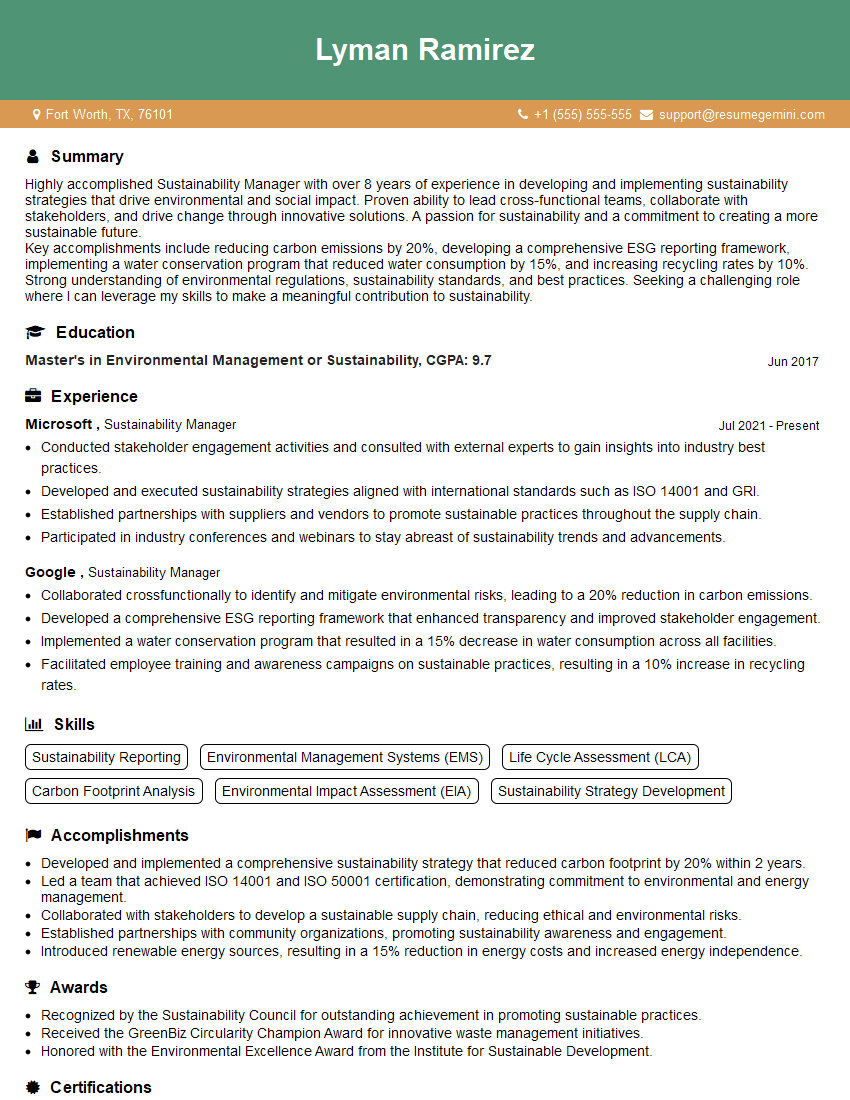
Sustainability Manager Resume Sample
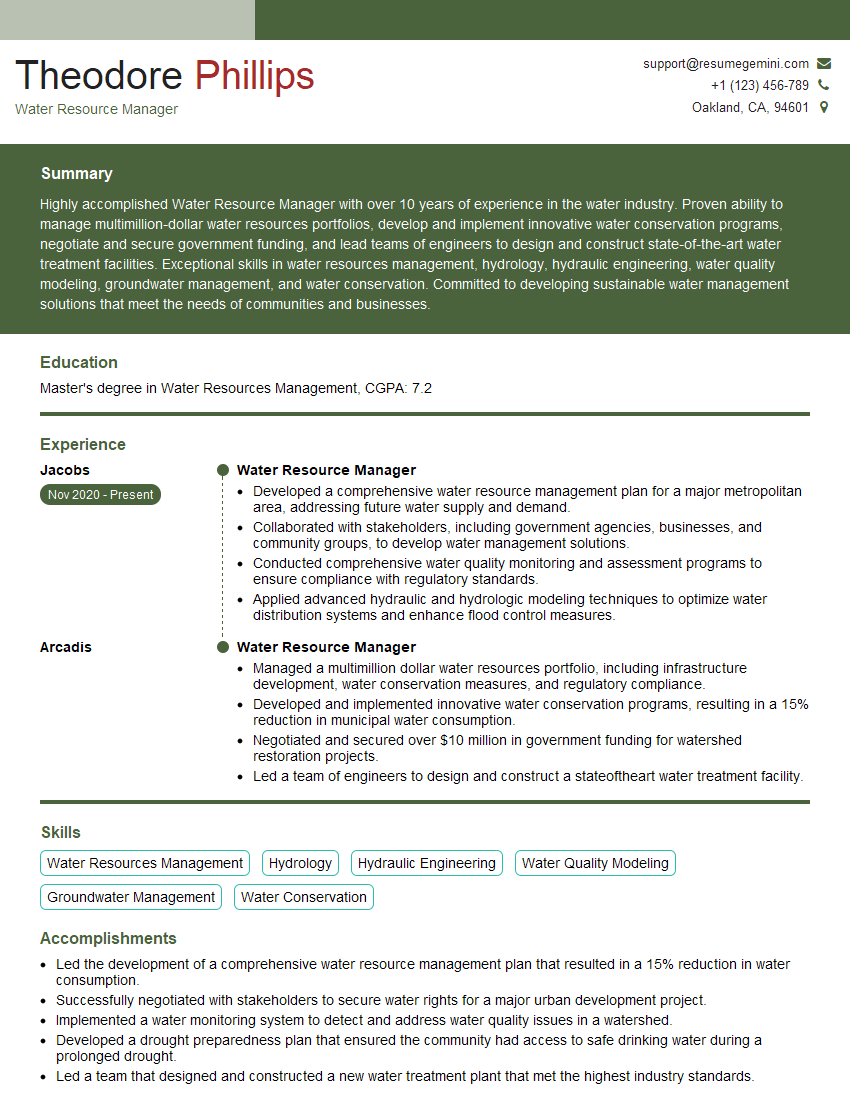
Water Resource Manager Resume Sample
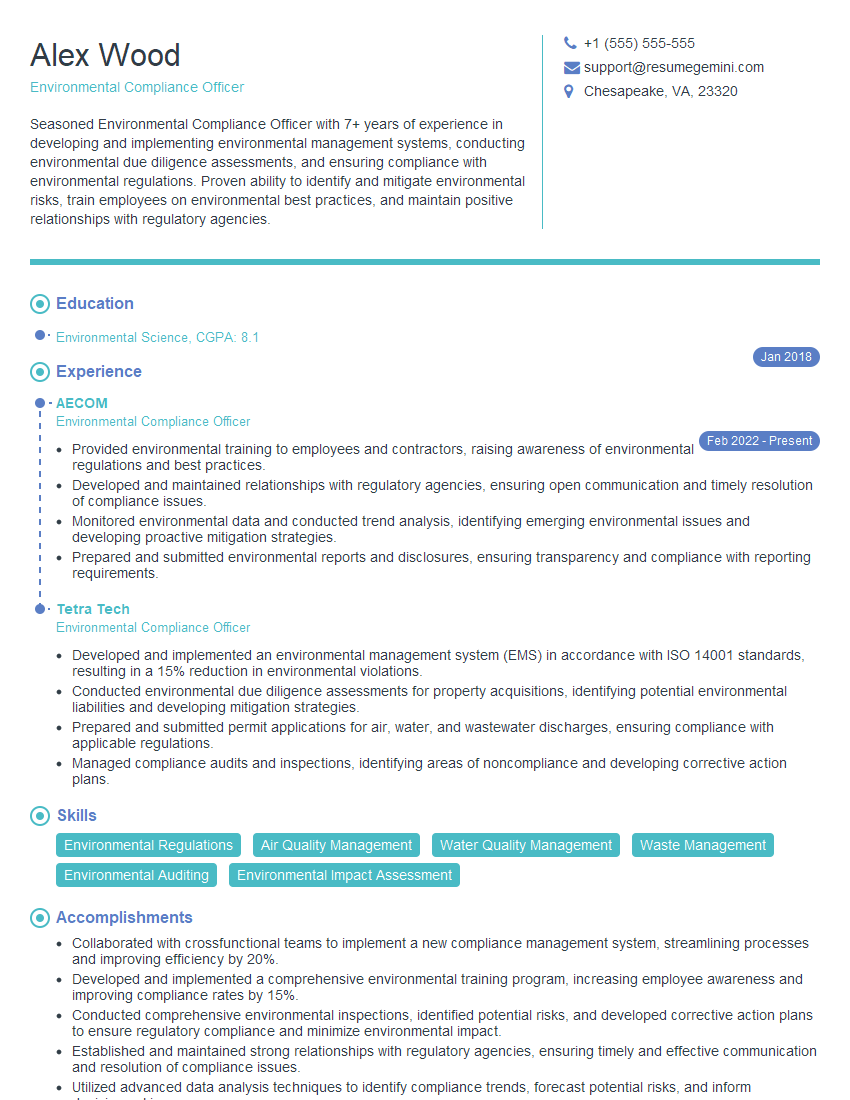
Environmental Compliance Officer Resume Sample

Sustainability Consultant Resume Sample
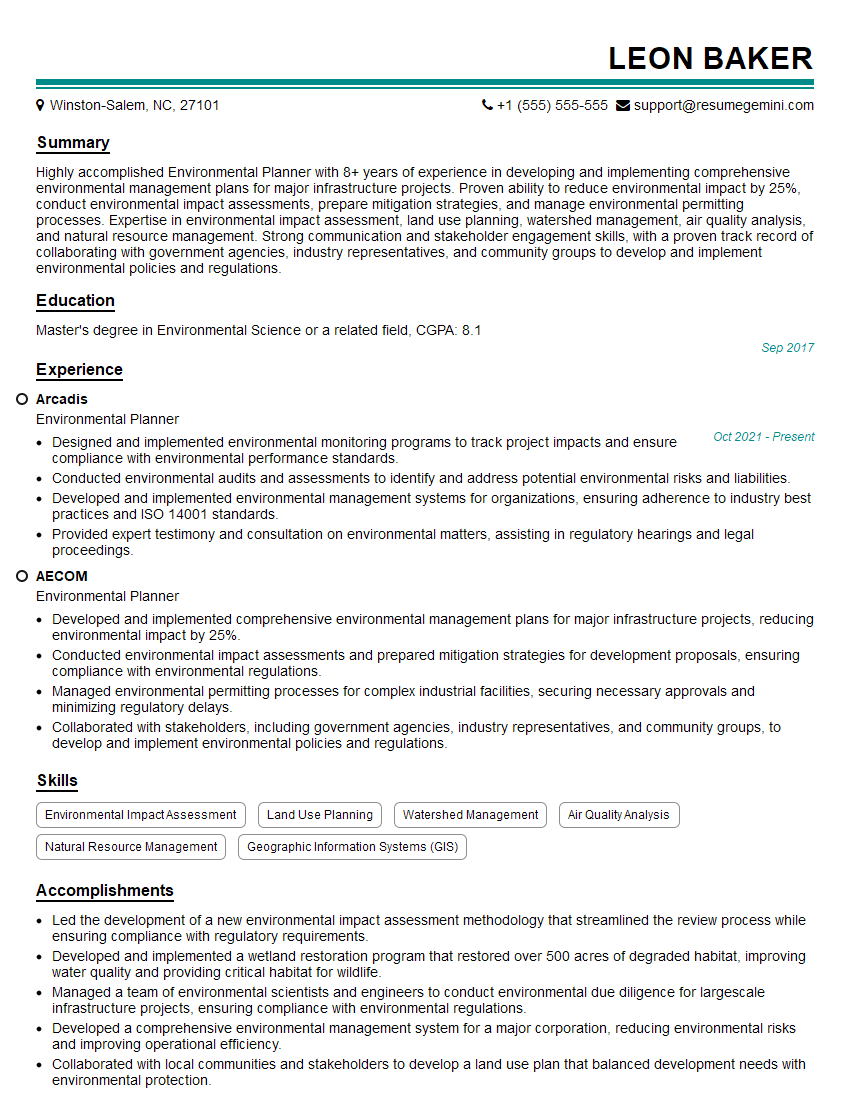
Environmental Planner Resume Sample
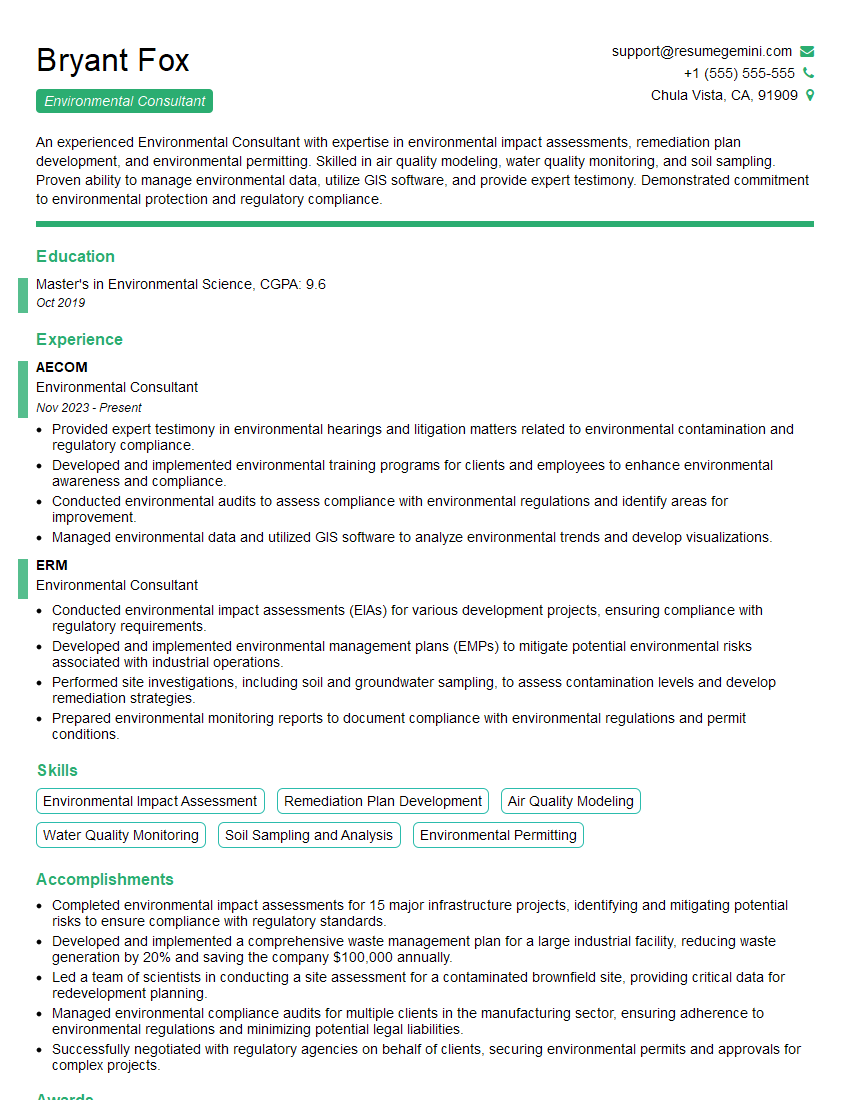
Environmental Consultant Resume Sample

Wildlife Biologist Resume Sample
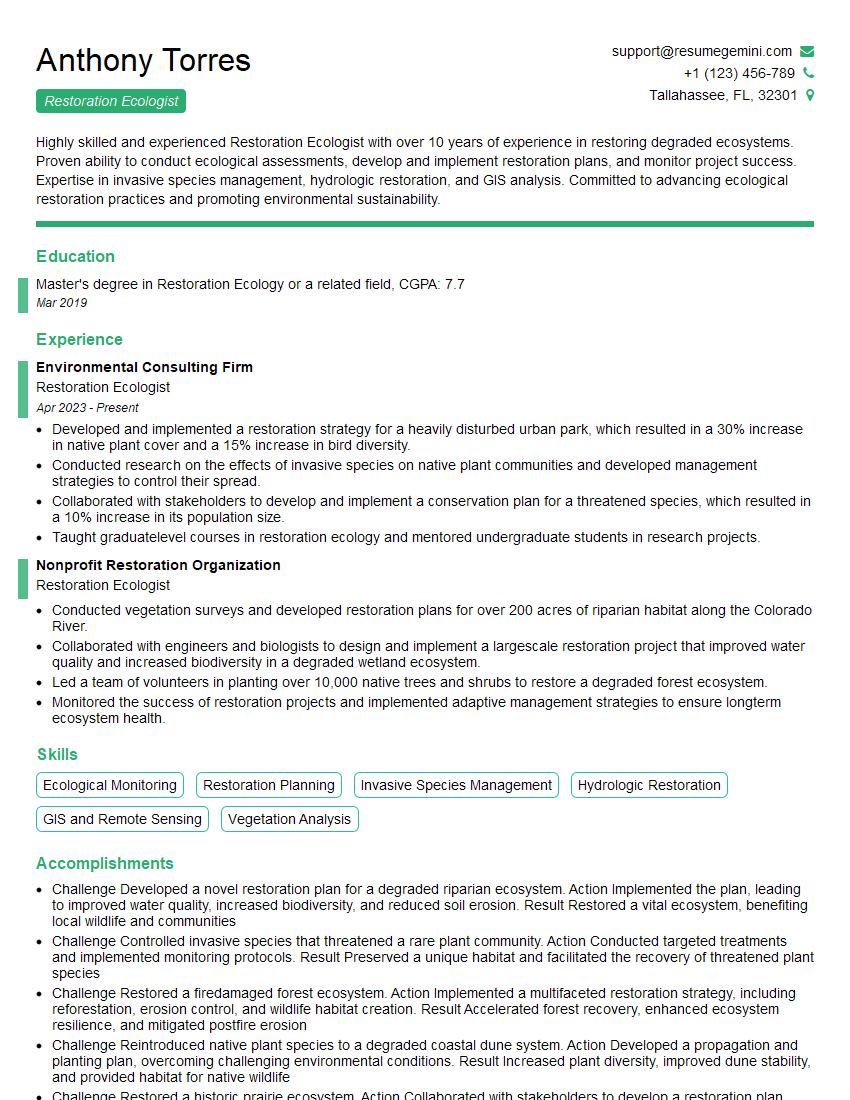
Restoration Ecologist Resume Sample
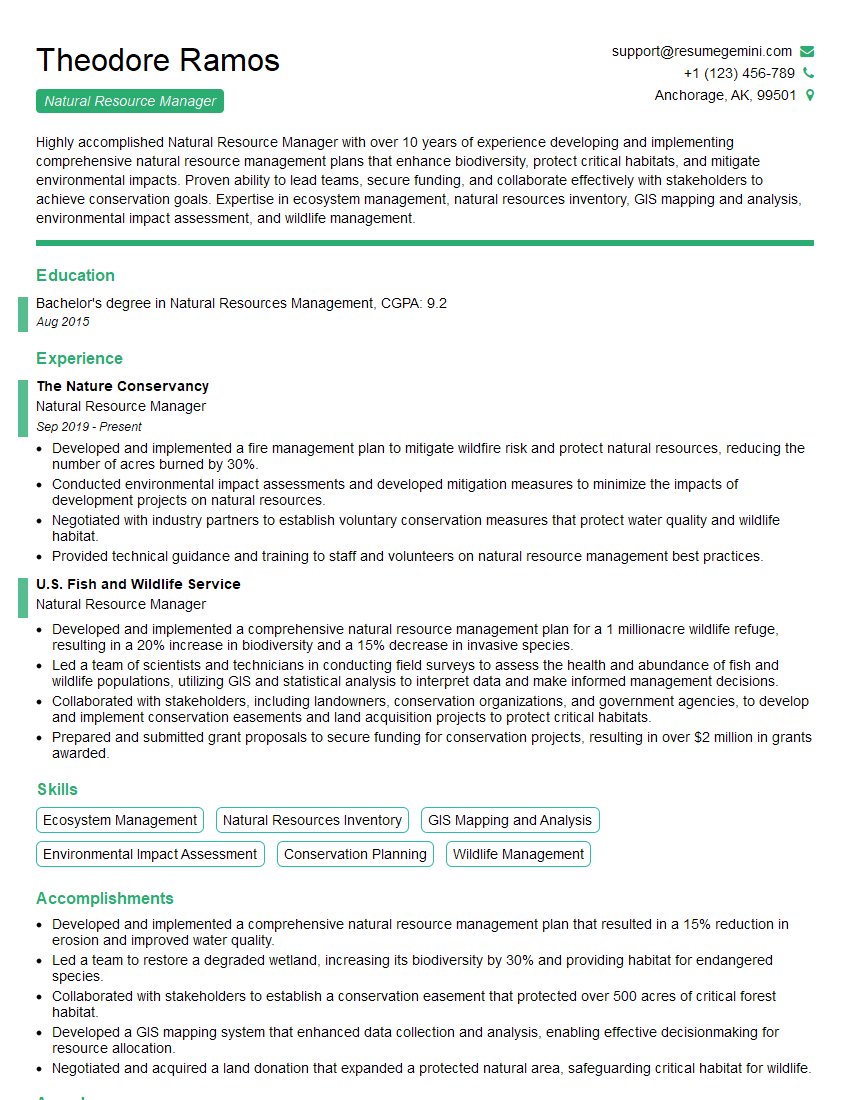
Natural Resource Manager Resume Sample

Environmental Educator Resume Sample
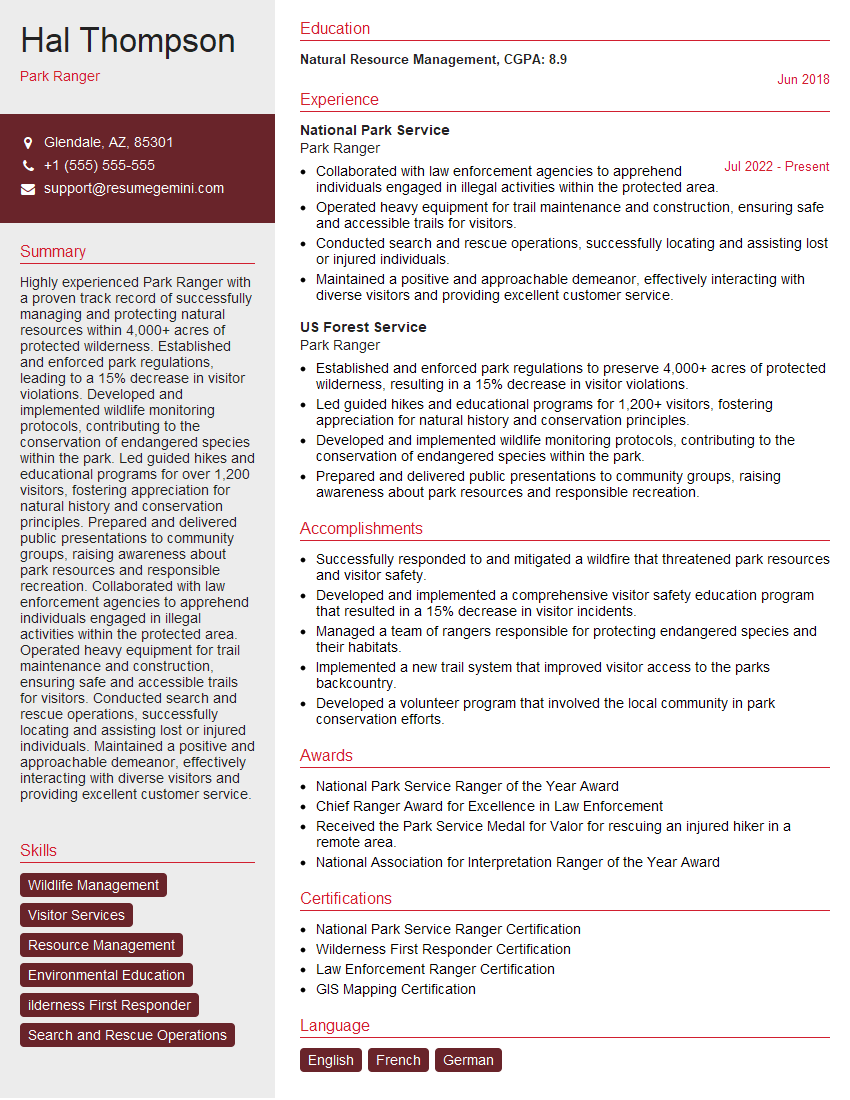
Park Ranger Resume Sample
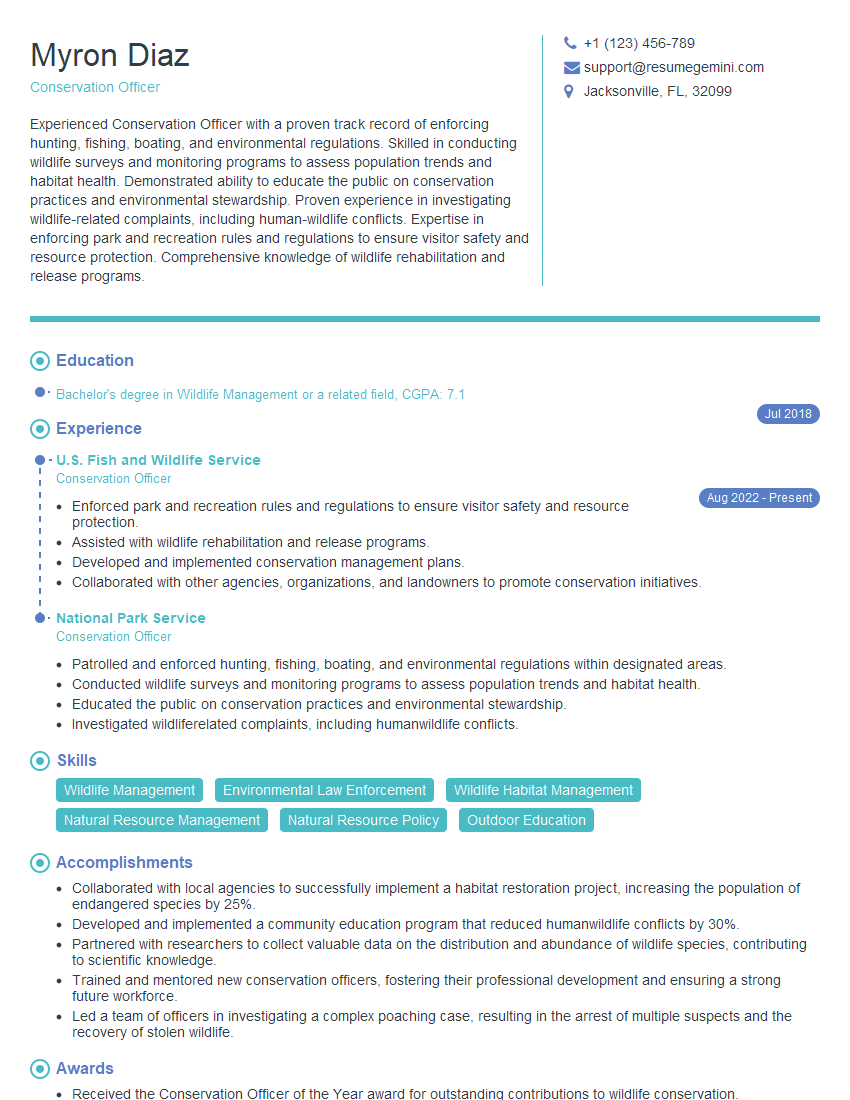
Conservation Officer Resume Sample

Wildlife Rehabilitator Resume Sample
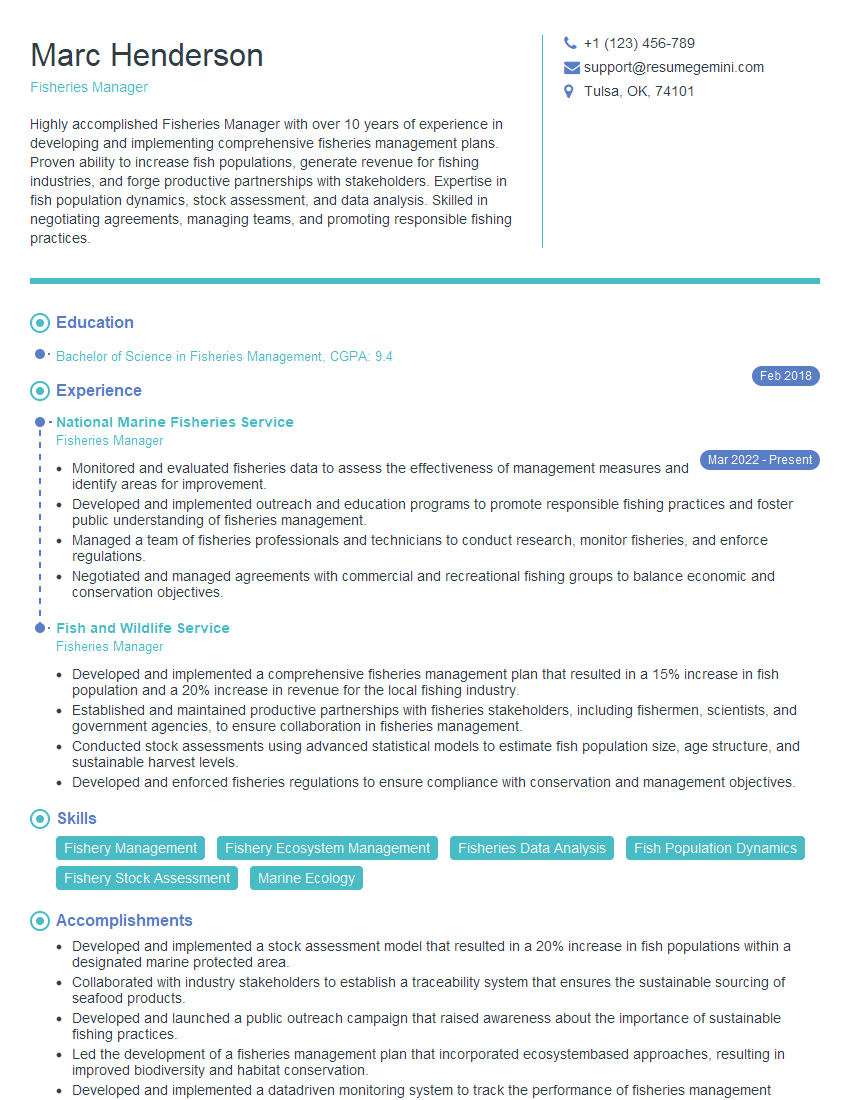
Fisheries Manager Resume Sample
- Sustainability Manager
- Water Resource Manager
- Environmental Compliance Officer
- Sustainability Consultant
- Environmental Planner
- Environmental Consultant
- Wildlife Biologist
- Restoration Ecologist
- Natural Resource Manager
- Environmental Educator
- Park Ranger
- Conservation Officer
- Wildlife Rehabilitator
- Fisheries Manager
Explore more articles
Users Rating of Our Blogs
Share Your Experience
We value your feedback! Please rate our content and share your thoughts (optional).
What Readers Say About Our Blog
Very informative content, great job.
good