Unlock your full potential by mastering the most common Ability to translate engineering designs into manufacturable processes interview questions. This blog offers a deep dive into the critical topics, ensuring you’re not only prepared to answer but to excel. With these insights, you’ll approach your interview with clarity and confidence.
Questions Asked in Ability to translate engineering designs into manufacturable processes Interview
Q 1. Explain the Design for Manufacturing (DFM) process.
Design for Manufacturing (DFM) is a systematic approach to designing products that are easy and cost-effective to manufacture. It involves considering manufacturing processes and capabilities from the initial design stages, ensuring the final product is both functional and producible. Think of it as building a house – you wouldn’t design a mansion with 20-foot ceilings if you only have standard-height doors and windows!
The DFM process typically includes:
- Early collaboration: Bringing manufacturing engineers into the design process early on.
- Process capability analysis: Understanding the limitations and capabilities of your chosen manufacturing processes.
- Design simplification: Reducing complexity to minimize manufacturing steps and costs.
- Material selection: Choosing materials that are easily machinable, readily available, and cost-effective.
- Tolerance analysis: Defining acceptable variations in dimensions and ensuring manufacturability.
- Assembly considerations: Designing parts that are easy to assemble, minimizing the risk of errors and maximizing efficiency.
By implementing DFM, companies can significantly reduce manufacturing costs, lead times, and defects, ultimately leading to a more profitable and successful product launch.
Q 2. Describe your experience in translating engineering drawings into manufacturing specifications.
Throughout my career, I’ve extensively translated engineering drawings into detailed manufacturing specifications. This involves more than just understanding the dimensions; it requires a deep understanding of the manufacturing process. For example, I once worked on a project involving a complex aerospace component. The engineering drawings specified intricate curves and tight tolerances. My role was to analyze these drawings and determine the most efficient manufacturing process – in this case, five-axis CNC machining. I then created detailed specifications including material selection (a specific aerospace-grade aluminum alloy), machining parameters (cutting speeds, feed rates, and toolpaths), quality control checks (dimensional inspections, surface finish analysis), and even the specific tooling required. This detailed specification ensured the component was manufactured precisely to the engineering design while being cost-effective and achievable. I also included specific instructions for post-machining treatments like anodizing to meet the final surface finish requirements.
Q 3. How do you identify potential manufacturing challenges in an engineering design?
Identifying potential manufacturing challenges requires a meticulous review of the engineering design, considering various aspects. I use a checklist approach, examining:
- Geometric complexity: Intricate shapes or features might be difficult and expensive to manufacture. For example, undercuts or internal cavities may require specialized tooling or multiple machining operations.
- Tight tolerances: Extremely precise dimensions can be challenging and costly to achieve. The manufacturing process needs to be capable of meeting these tolerances consistently.
- Material selection: The chosen material might be difficult to machine, weld, or mold. Alternatives might be explored for ease of manufacturing.
- Assembly considerations: Parts might be difficult to assemble due to their shape, size, or lack of access for fasteners. Design changes to facilitate easier assembly should be considered.
- Surface finish requirements: Achieving a specific surface finish may require specialized post-processing treatments, adding to costs and time.
I frequently use Finite Element Analysis (FEA) simulations to predict potential stress concentrations or points of failure, which can be challenging to manufacture or might affect the product’s reliability. This proactive approach helps prevent costly revisions later in the process.
Q 4. What are the key considerations when selecting manufacturing processes?
Selecting the right manufacturing process is critical for cost, quality, and timeliness. Key considerations include:
- Part geometry: Complex shapes may require more advanced processes like 3D printing or CNC machining.
- Material properties: The material’s strength, durability, and machinability dictate the suitable processes. For example, brittle materials may require different processes compared to ductile ones.
- Production volume: High-volume production might favor injection molding or stamping, while low-volume production might utilize CNC machining or 3D printing.
- Cost analysis: A thorough cost-benefit analysis comparing different processes is essential, taking into account tooling costs, material costs, labor costs, and lead times.
- Accuracy and tolerances: The desired precision determines the choice of process. High-precision parts require processes capable of achieving tight tolerances.
- Surface finish: The required surface finish impacts the selection; some processes naturally yield better finishes than others.
For example, a high-volume production of a simple plastic part would likely use injection molding, whereas a low-volume, high-precision metal part might be better suited for CNC machining.
Q 5. Explain the difference between subtractive and additive manufacturing processes.
Subtractive manufacturing, like milling or turning, removes material from a larger block to create the final part. Think of a sculptor chipping away at a block of marble. Additive manufacturing, or 3D printing, builds the part layer by layer from a digital design. Imagine constructing a building brick by brick. Here’s a table summarizing the key differences:
| Feature | Subtractive Manufacturing | Additive Manufacturing | |
|---|---|---|---|
| Process | Material removal | Material addition | |
| Material Waste | High | Low | |
| Complexity | Limited by tooling | High geometric complexity possible | |
| Production Volume | Suitable for both high and low volume | Generally better for low to medium volume | |
| Cost | Can be high for complex parts, tooling costs | Material costs can be significant for some processes |
The choice between them depends on factors such as part complexity, production volume, material, and cost.
Q 6. How do you determine the optimal tolerance for a given design feature?
Determining optimal tolerances requires a careful balance between design requirements and manufacturing capabilities. Too tight tolerances increase manufacturing costs and might be impossible to achieve consistently. Too loose tolerances might compromise the functionality or performance of the part.
My approach involves:
- Understanding functional requirements: What are the critical dimensions affecting the part’s performance? For example, a tight tolerance might be crucial for a bearing’s clearance but less critical for a cosmetic feature.
- Assessing manufacturing capabilities: What are the tolerances achievable with the chosen manufacturing process and equipment? This often involves consulting with manufacturing engineers and reviewing process capability studies.
- Considering statistical variation: Manufacturing processes inherently have variation. Tolerances should account for this variation to ensure a high yield of acceptable parts.
- Using statistical methods: Techniques like process capability analysis (Cp, Cpk) help determine the ability of a process to meet specified tolerances.
Ultimately, the optimal tolerance is the tightest tolerance that can be consistently achieved by the chosen manufacturing process at an acceptable cost.
Q 7. Describe your experience with GD&T (Geometric Dimensioning and Tolerancing).
Geometric Dimensioning and Tolerancing (GD&T) is a symbolic language used on engineering drawings to define part dimensions and tolerances precisely. It’s crucial for communicating design intent clearly to manufacturers and ensuring parts meet specified functional requirements.
My experience with GD&T is extensive. I frequently use GD&T to specify:
- Form tolerances: Controlling the shape of features like straightness, flatness, circularity, and cylindricity.
- Orientation tolerances: Controlling the position of features relative to a datum reference frame, such as perpendicularity, parallelism, and angularity.
- Location tolerances: Defining the position of features, such as position, concentricity, and symmetry.
- Runout tolerances: Controlling the variation in a feature’s orientation or position as it rotates.
I utilize GD&T software and understand the implications of various tolerance types, including their impact on manufacturing processes and costs. For instance, specifying a position tolerance using a feature control frame significantly reduces ambiguity compared to simply stating a dimensional tolerance, clarifying acceptable variation and ensuring the part functions correctly within an assembly. This unambiguous communication is essential for effective manufacturing and assembly.
Q 8. How do you balance design intent with manufacturability constraints?
Balancing design intent with manufacturability constraints is a crucial aspect of successful product development. It’s essentially a delicate dance between achieving the desired functionality and aesthetics of a product (design intent) while ensuring it can be efficiently and cost-effectively produced (manufacturability). This often involves compromises and iterative design refinements.
My approach involves early collaboration with manufacturing engineers. We analyze the design’s features against the capabilities of available manufacturing processes. For instance, a design requiring extremely tight tolerances might necessitate a more precise (and potentially expensive) process like CNC machining instead of injection molding. We’ll then explore alternative design solutions that maintain the core functionality while improving manufacturability. This could involve simplifying complex geometries, standardizing components, or choosing materials that are easier to process.
Example: In a previous project involving a complex plastic housing, the initial design included intricate undercuts which were impossible to achieve using standard injection molding. By collaborating with the manufacturing team, we redesigned the housing using a simpler geometry with draft angles, which eliminated the undercuts and enabled high-volume production via injection molding at a significantly lower cost.
Q 9. Explain your experience with different manufacturing materials and their processing limitations.
My experience spans a range of materials, including metals (aluminum, steel, titanium), plastics (ABS, polycarbonate, nylon), and composites (carbon fiber reinforced polymers). Each material presents unique processing limitations. For instance, titanium alloys are incredibly strong and lightweight but challenging to machine due to their high hardness and tendency to work-harden. Plastics, conversely, are generally easier to mold but have limitations in terms of temperature resistance and strength.
Understanding these limitations is crucial for selecting appropriate manufacturing processes. For example, while injection molding is ideal for high-volume production of plastic parts, it’s unsuitable for titanium due to the material’s high melting point. I always consider factors like material properties (strength, ductility, machinability), cost, and environmental impact when choosing materials and manufacturing processes.
Example: In one project, we initially designed a component using aluminum due to its lightweight nature. However, the high-precision machining required proved both expensive and time-consuming. We switched to a high-strength plastic composite, achieving comparable performance at a fraction of the cost and lead time.
Q 10. How do you assess the cost-effectiveness of different manufacturing methods?
Assessing the cost-effectiveness of different manufacturing methods requires a holistic approach. We consider factors beyond the initial tooling or machine costs. This includes material costs, labor costs, production volume, waste generation, energy consumption, and quality control measures. A simple cost comparison based on unit cost may be misleading without considering the overall lifecycle.
I often use a combination of methods, including detailed cost breakdowns, comparative analysis, and scenario planning (e.g., what-if analysis of different production volumes). Software tools and databases can provide cost estimates for various manufacturing processes. Break-even analysis helps to determine the production volume at which one process becomes more cost-effective than another.
Example: When comparing CNC machining and injection molding, CNC machining might be preferred for low-volume production runs because of lower tooling costs. However, injection molding becomes significantly more cost-effective for high volumes due to the amortization of tooling costs over many parts.
Q 11. Describe your experience with process capability analysis (e.g., Cp, Cpk).
Process capability analysis (PCA), using metrics like Cp and Cpk, is a vital tool for ensuring manufacturing processes consistently produce parts within specified tolerances. Cp measures the potential capability of a process relative to its specifications, while Cpk considers both potential capability and process centering (how close the average output is to the target value).
My experience involves designing and implementing PCA studies. This involves collecting data from the manufacturing process, analyzing it using statistical methods (e.g., control charts), calculating Cp and Cpk values, and identifying areas for process improvement. A Cp and Cpk of 1 indicates the process is capable of meeting specifications, while values above 1.33 are generally considered excellent. Values below 1 signal process improvements are needed.
Example: In a previous project involving the manufacturing of precision screws, initial PCA revealed a low Cpk value. Through adjustments to the machine settings and improvements in operator training, we were able to increase the Cpk value to over 1.5, improving process consistency and reducing waste.
Q 12. How do you handle design changes that impact the manufacturing process?
Handling design changes that impact the manufacturing process requires careful planning and communication. Any changes, no matter how seemingly minor, have the potential to ripple through the entire production chain, impacting cost, schedule, and quality.
My process involves immediately assessing the impact of the change on the manufacturing process. This includes reviewing the drawings, evaluating the feasibility of incorporating the change using the existing processes, and assessing the potential need for tooling modifications or process adjustments. A detailed impact assessment is crucial to quantify the implications of the change.
Effective communication with the manufacturing team is paramount. I typically convene a meeting with all stakeholders (designers, manufacturers, quality control) to discuss the changes, analyze their impact, and develop a revised manufacturing plan. This might involve updating process specifications, adjusting tooling, or even re-evaluating the choice of manufacturing methods.
Q 13. How do you utilize CAD/CAM software in the manufacturing process?
CAD/CAM software is indispensable in modern manufacturing. CAD (Computer-Aided Design) software is used to create and modify 3D models of parts, while CAM (Computer-Aided Manufacturing) software generates toolpaths for CNC machines and other automated manufacturing equipment. Proficiency in these tools allows for efficient design and manufacturing process development.
My experience involves using various CAD/CAM packages (SolidWorks, AutoCAD, Mastercam, etc.) to design parts, simulate manufacturing processes, and generate CNC programs. I use CAD to design parts with manufacturability in mind, and CAM to optimize toolpaths to minimize machining time and improve surface finish. Simulation capabilities within CAM software help to predict potential issues and optimize the process before actual production.
Example: Using CAM software, I optimized toolpaths for a complex milling operation, reducing machining time by 15% and improving surface finish, leading to significant cost savings.
Q 14. Explain your experience with various manufacturing equipment and their capabilities.
My experience encompasses a wide range of manufacturing equipment, including CNC milling machines, lathes, injection molding machines, 3D printers, and various assembly equipment. I understand the capabilities and limitations of each type of equipment. This knowledge is essential for selecting the most appropriate processes for a given product.
I understand the parameters that control these machines and how those parameters influence the quality of the finished product. For example, I know how spindle speed and feed rate affect surface finish in CNC machining and how injection molding parameters (injection pressure, temperature, cooling time) affect the properties and dimensions of the molded parts. This understanding allows me to optimize the manufacturing process for efficiency and quality.
Example: While working on a project involving the production of a complex plastic part, my knowledge of injection molding machine capabilities allowed me to select the optimal machine and parameters to achieve the required tolerances and surface finish. This prevented costly defects and production delays.
Q 15. Describe your problem-solving approach when faced with manufacturing bottlenecks.
My approach to manufacturing bottlenecks is systematic and data-driven. I begin by thoroughly understanding the problem, gathering data from various sources like production reports, operator feedback, and machine logs. This helps identify the root cause, which isn’t always immediately obvious. For example, a seemingly simple delay in one part of the assembly line might be caused by a faulty machine upstream, insufficient material supply, or even a poorly designed process step.
Once the root cause is identified, I develop potential solutions, prioritizing those with the highest impact and feasibility. This involves brainstorming sessions with the manufacturing team, leveraging their on-the-ground expertise. We analyze the cost-benefit of each solution, considering factors such as downtime, repair costs, and potential for future issues. The chosen solution is then implemented, carefully monitored, and adjusted as needed. Post-implementation, I analyze the results to assess the effectiveness of the solution and identify areas for further improvement, ensuring the bottleneck is truly resolved and doesn’t reappear.
For example, I once encountered a significant bottleneck in a packaging line due to a faulty label applicator. Instead of simply replacing the machine (a costly solution), we analyzed the problem more closely. It turned out a minor calibration adjustment was needed, which was implemented quickly and cost-effectively, resolving the bottleneck immediately.
Career Expert Tips:
- Ace those interviews! Prepare effectively by reviewing the Top 50 Most Common Interview Questions on ResumeGemini.
- Navigate your job search with confidence! Explore a wide range of Career Tips on ResumeGemini. Learn about common challenges and recommendations to overcome them.
- Craft the perfect resume! Master the Art of Resume Writing with ResumeGemini’s guide. Showcase your unique qualifications and achievements effectively.
- Don’t miss out on holiday savings! Build your dream resume with ResumeGemini’s ATS optimized templates.
Q 16. How do you ensure manufacturability throughout the product development lifecycle?
Ensuring manufacturability throughout the product development lifecycle requires a proactive and collaborative approach. It starts with Design for Manufacturing (DFM) principles, integrated from the very beginning of the design process. This involves close collaboration between the design and manufacturing teams. We use tools like Design for Assembly (DFA) and Design for X (DFX) analysis to identify potential issues early on, before they become expensive to fix. For instance, DFA helps us optimize the number of parts, their complexity, and the assembly sequence for ease of production.
We use 3D modeling and simulation to virtually prototype and test designs, enabling us to identify potential manufacturing challenges like material incompatibility, assembly difficulties, or tooling limitations. Regular design reviews and feedback loops with the manufacturing team are crucial. Prototyping plays a significant role, allowing for hands-on testing and refinement of the design based on actual manufacturing constraints. This iterative approach ensures we refine the design towards optimal manufacturability before mass production. Furthermore, we employ tolerance analysis to minimize variation and ensure consistency in the final product.
Q 17. What are your preferred methods for communicating technical information to manufacturing teams?
Effective communication with manufacturing teams is paramount. My preferred methods include a combination of clear, concise documentation, visual aids, and hands-on training. Detailed drawings, assembly instructions, and process flowcharts are indispensable. These documents must be unambiguous, using standard industry terminology and avoiding jargon.
Visual aids such as 3D models, videos, and photographs are extremely useful, especially for complex assemblies or processes. These provide a clearer picture than text alone and help to reduce misinterpretations. For instance, a short video demonstration of a specific assembly step can often be much more effective than a lengthy written description. Hands-on training sessions are crucial for ensuring that the team understands the process and can effectively execute it. This might include shadowing experienced operators or working through a mock-up of the assembly process. Regular feedback sessions and open communication channels help to address any questions or concerns the team may have.
Q 18. How do you contribute to continuous improvement efforts in manufacturing?
I actively contribute to continuous improvement efforts in manufacturing through various methods. I encourage a culture of suggestion-sharing and problem-solving within the team. We utilize tools like Kaizen events (focused improvement workshops), where the team collaboratively identifies and resolves process inefficiencies. Data analysis plays a vital role. We track key performance indicators (KPIs) such as cycle time, defect rates, and overall equipment effectiveness (OEE) to identify areas requiring attention.
Lean principles are integral to our improvement initiatives. By systematically eliminating waste (muda), we streamline processes, reduce costs, and improve efficiency. This includes implementing 5S (Sort, Set in Order, Shine, Standardize, Sustain) methodologies for a well-organized workspace and visual management techniques to make problems easily identifiable. I actively participate in root cause analysis (RCA) investigations to understand the underlying causes of recurring problems and develop effective, long-term solutions. We document improvements for future reference and training to ensure they become part of standard operating procedures.
Q 19. Describe your experience with lean manufacturing principles.
My experience with lean manufacturing principles is extensive. I have successfully implemented various lean tools and techniques to optimize manufacturing processes, resulting in significant improvements in efficiency, quality, and cost reduction. For instance, I led a project to implement Value Stream Mapping (VSM) in a production line. This allowed us to visualize the entire process flow, identify bottlenecks, and eliminate non-value-added activities. This resulted in a 15% reduction in lead time.
I’ve also implemented Kanban systems to manage work-in-progress (WIP) inventory, reducing waste and improving workflow predictability. The 5S methodology has been consistently employed to create a more organized and efficient work environment. In one case, implementing 5S significantly reduced search time for parts and tools, leading to improved cycle time and reduced errors. My experience also includes implementing Poka-Yoke (error-proofing) techniques to prevent defects from occurring in the first place. These error-proofing measures resulted in a substantial reduction in the defect rate.
Q 20. What are your experiences using statistical process control (SPC)?
I have extensive experience using Statistical Process Control (SPC) to monitor and improve manufacturing processes. SPC helps us identify variations in production processes and determine if these variations are due to common cause variation (random) or special cause variation (assignable). This allows for proactive adjustments to prevent defects. We use control charts, such as X-bar and R charts, to monitor key process parameters and detect trends or patterns indicating potential problems. For example, we use control charts to monitor the diameter of a machined part, ensuring it stays within the specified tolerance limits.
Understanding and interpreting control charts is critical. By identifying patterns like shifts, trends, or runs, we can investigate the root causes of variation and implement corrective actions. This prevents small variations from escalating into larger problems. My experience includes using SPC software to analyze data, generate control charts, and perform capability analysis. Capability analysis allows us to assess the ability of a process to meet the specified requirements, helping us to identify areas for improvement and ensure consistent product quality.
Q 21. Describe your familiarity with different types of tooling and their applications.
My familiarity with tooling encompasses a wide range of types and applications. This includes machining tools such as drills, mills, lathes, and specialized cutting tools for various materials. I understand the selection criteria for different tools, including considerations such as material hardness, required surface finish, and tolerance requirements. I also have experience with tooling for plastic molding, including injection molds, blow molds, and thermoforming tools. Furthermore, my knowledge extends to assembly tooling, such as jigs and fixtures, that are used to guide and hold parts during assembly. I am also familiar with the use of automated tooling in robotic assembly and CNC machining centers.
The selection of appropriate tooling is crucial for efficiency and quality. Choosing the wrong tool can lead to increased processing time, lower quality parts, or even damage to the equipment. For example, using a dull cutting tool can lead to poor surface finish and reduced tool life. Understanding the wear mechanisms of different tools allows for effective maintenance and replacement strategies. I am experienced in working with tool design engineers to improve tooling designs for enhanced efficiency and reduced downtime. I am also familiar with the safety procedures related to the use and maintenance of various types of tooling.
Q 22. How do you address discrepancies between design specifications and manufacturing capabilities?
Discrepancies between design specifications and manufacturing capabilities are inevitable. Addressing them effectively requires a collaborative approach involving designers and manufacturing engineers. My strategy centers around iterative design reviews and feasibility studies.
First, I’d meticulously analyze the design specifications, identifying features that might pose manufacturing challenges. This often involves considering factors like material properties, available machining processes, tooling limitations, and assembly complexities. For example, a design might call for a surface finish that’s too fine for existing equipment, or tolerances that are tighter than currently achievable with our processes.
Next, I’d initiate discussions with the design team to explore alternative solutions. This could involve suggesting slight modifications to the design, such as simplifying geometries, changing materials, or relaxing tolerances where functionally possible. Sometimes, it’s necessary to explore the use of advanced manufacturing techniques like 3D printing or specialized machining processes, but this needs to be carefully evaluated in terms of cost and lead time.
Finally, we’d conduct prototyping and testing to verify that the revised design is manufacturable within our capabilities while meeting performance requirements. This iterative process ensures a successful transition from design to production, minimizing potential delays and cost overruns.
Q 23. What is your experience with automation in manufacturing processes?
I have extensive experience in automating manufacturing processes, focusing on improving efficiency, reducing human error, and increasing production output. My experience spans various automation technologies, including robotic systems, CNC machining centers, and automated assembly lines.
In a previous role, I led the implementation of a robotic welding system for a large-scale automotive part. This involved programming the robot, designing custom tooling, and integrating the system into the existing production line. The result was a 30% increase in welding efficiency and a significant reduction in defects.
Another project involved the automation of a CNC machining process. By optimizing the CNC program and implementing a sophisticated monitoring system, we improved cycle times by 15% and minimized downtime due to tool changes. I’m proficient in selecting and implementing automation solutions based on a detailed cost-benefit analysis, considering factors like return on investment, operational risks, and the overall impact on production.
Q 24. How do you manage risks associated with new manufacturing technologies?
Managing risks associated with new manufacturing technologies is crucial. My approach is systematic and proactive, relying on a structured risk assessment framework. This usually starts with identifying potential risks through thorough research and analysis. For example, a new additive manufacturing process might introduce risks related to material consistency, part strength, or scalability.
Once risks are identified, I evaluate their likelihood and potential impact. This helps prioritize the risks, focusing resources on the most critical ones. Mitigation strategies are then developed to reduce or eliminate those risks. This may involve piloting the technology on a small scale, investing in operator training, or developing robust quality control procedures.
I also ensure that contingency plans are in place to address unforeseen issues. This might include having backup manufacturing processes ready or securing alternative suppliers for critical materials. Regular monitoring and data analysis are essential to track the performance of the new technology and identify any emerging risks.
Q 25. How do you ensure quality control throughout the manufacturing process?
Ensuring quality control throughout the manufacturing process is paramount. My approach integrates quality control measures at every stage, from raw material inspection to final product testing. This involves a combination of statistical process control (SPC), visual inspection, and advanced testing methods.
For example, SPC techniques are used to monitor key process parameters and identify any deviations from the desired targets. Visual inspections are conducted at various stages to identify defects early on, reducing the risk of costly rework or scrap. Advanced testing methods, such as dimensional inspection using CMMs (Coordinate Measuring Machines) or material testing, are employed to verify that the final product meets the specified requirements.
Furthermore, I believe in a culture of continuous improvement. Data from quality control activities is analyzed to identify trends and root causes of defects. Corrective actions are implemented to prevent recurrence, and the entire process is continually refined to improve overall quality and efficiency.
Q 26. Describe your experience with Failure Mode and Effects Analysis (FMEA) in a manufacturing context.
Failure Mode and Effects Analysis (FMEA) is a critical tool in my arsenal for proactively identifying and mitigating potential failures in manufacturing processes. I’ve used FMEA extensively to analyze and improve various manufacturing processes.
The process involves systematically identifying potential failure modes in each stage of the manufacturing process. For each failure mode, we assess its severity, likelihood of occurrence, and the detectability of the failure. This information is then used to calculate a Risk Priority Number (RPN), which helps prioritize corrective actions.
For example, in a previous project, we used FMEA to analyze the assembly process of a complex electronic device. The analysis identified a potential failure mode related to improper component placement, leading to short circuits. By implementing a more robust assembly process and improved operator training, we were able to significantly reduce the risk of this failure.
FMEA facilitates data-driven decision making, improving overall product reliability and reducing the risk of costly recalls or customer dissatisfaction.
Q 27. Explain how you would approach the manufacturability of a complex part with tight tolerances.
Manufacturing a complex part with tight tolerances requires a strategic approach. I’d start by carefully reviewing the design, identifying critical features and dimensions. This might necessitate the use of advanced manufacturing techniques, specialized tooling, and precise measurement systems.
For example, if the part requires intricate features and tight surface finishes, I’d consider using high-precision CNC machining or even micro-machining processes. To ensure dimensional accuracy, I might employ Coordinate Measuring Machines (CMMs) for precise measurements and verification. If the material is challenging to machine, I might investigate alternative materials or explore techniques like additive manufacturing, which can create complex geometries with high precision.
Process capability analysis would be essential to ensure that the chosen manufacturing process is capable of consistently meeting the tight tolerances. This might involve statistical analysis of process parameters and adjustments to process settings to improve capability. Regular monitoring and control of the process would be critical to maintain consistency and prevent deviations.
Finally, operator training and tooling selection are also crucial aspects. Skilled operators are essential for handling precision tools and machinery while maintaining high accuracy. The right tooling—with the correct geometries and materials—can significantly contribute to achieving the desired tolerances.
Key Topics to Learn for Ability to translate engineering designs into manufacturable processes Interview
- Design for Manufacturing (DFM): Understanding DFM principles, including material selection, tolerance analysis, and assembly considerations. This includes recognizing limitations and opportunities presented by different manufacturing methods.
- Manufacturing Processes: Deep familiarity with various manufacturing techniques such as machining, casting, forging, injection molding, additive manufacturing (3D printing), and their respective capabilities and limitations. Be prepared to discuss the pros and cons of each in relation to specific design features.
- Process Optimization: Knowledge of techniques for optimizing manufacturing processes to improve efficiency, reduce costs, and enhance product quality. This might include lean manufacturing principles, Six Sigma methodologies, or statistical process control (SPC).
- Geometric Dimensioning and Tolerancing (GD&T): A solid grasp of GD&T is crucial for interpreting design specifications and ensuring manufacturability. Understand how tolerances affect the manufacturing process and the final product.
- Material Science Fundamentals: A basic understanding of material properties and their impact on manufacturability. This includes knowledge of different material types, their strengths and weaknesses, and how they behave during manufacturing processes.
- Cost Estimation and Analysis: Ability to estimate manufacturing costs based on design specifications and chosen manufacturing processes. This includes understanding factors that contribute to cost variations.
- Problem-Solving and Troubleshooting: Demonstrate your ability to identify and solve problems related to design manufacturability, including potential issues during production and how to mitigate them proactively.
- Communication and Collaboration: Highlight your experience collaborating with engineers, designers, and manufacturing personnel to ensure seamless transition from design to production.
Next Steps
Mastering the ability to translate engineering designs into manufacturable processes is paramount for career advancement in engineering and manufacturing. It showcases crucial problem-solving skills and a practical understanding of the entire product lifecycle. To significantly boost your job prospects, it’s essential to create a resume that highlights these capabilities effectively, making it easily searchable by Applicant Tracking Systems (ATS). ResumeGemini is a trusted resource to help you build a professional and ATS-friendly resume. We provide examples of resumes tailored specifically to highlight experience in translating engineering designs into manufacturable processes, helping you present your skills in the best possible light. Take the next step in your career journey with a well-crafted resume.
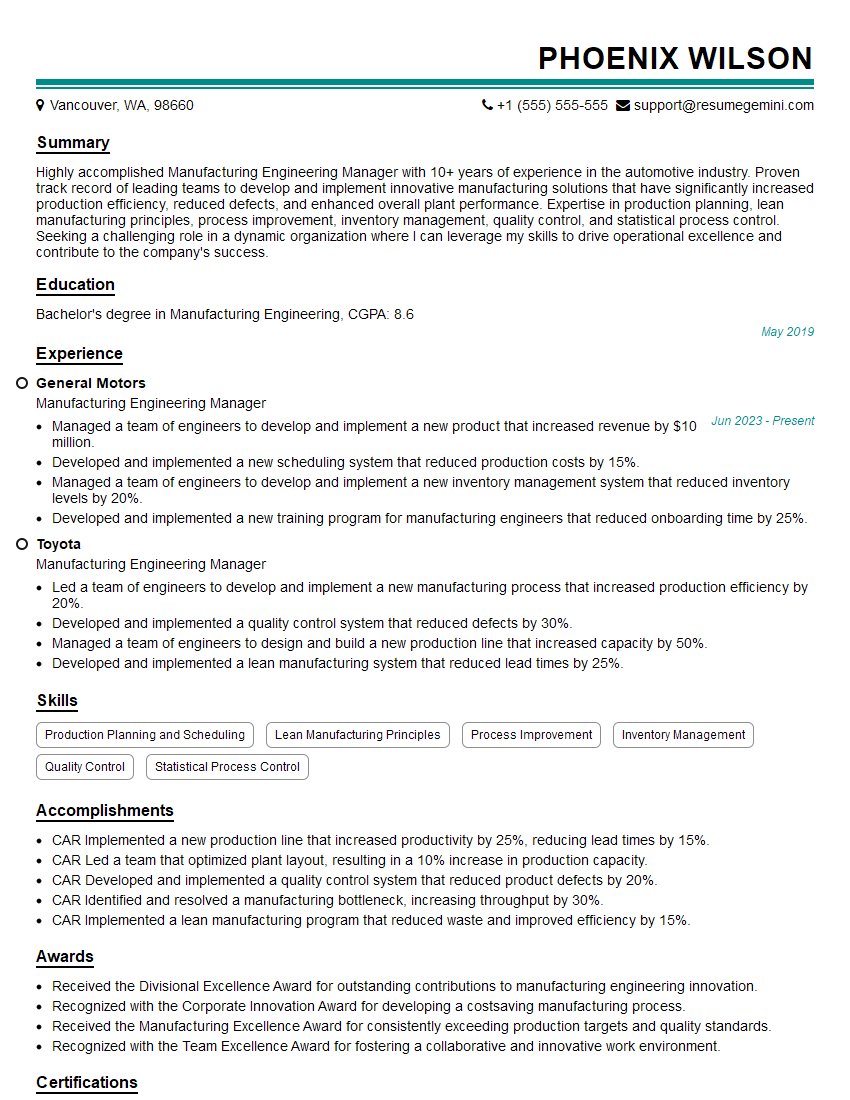
Manufacturing Engineering Manager Resume Sample
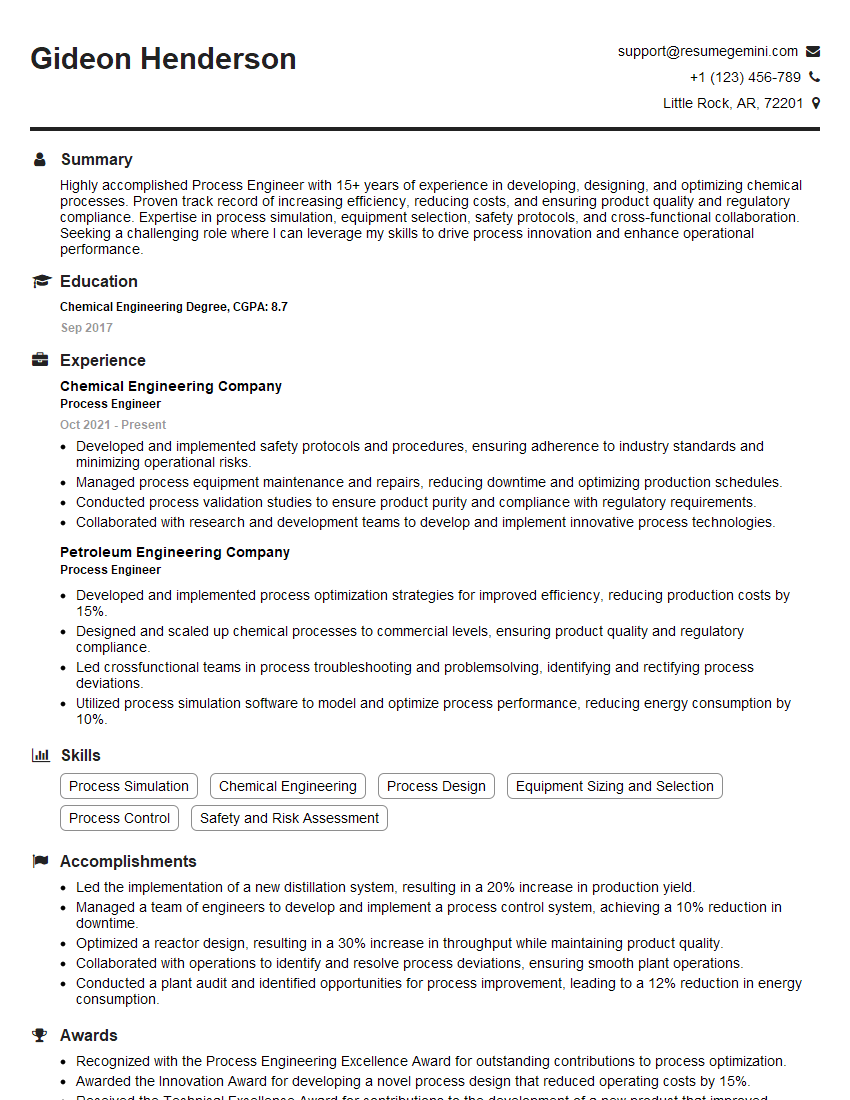
Process Engineer Resume Sample
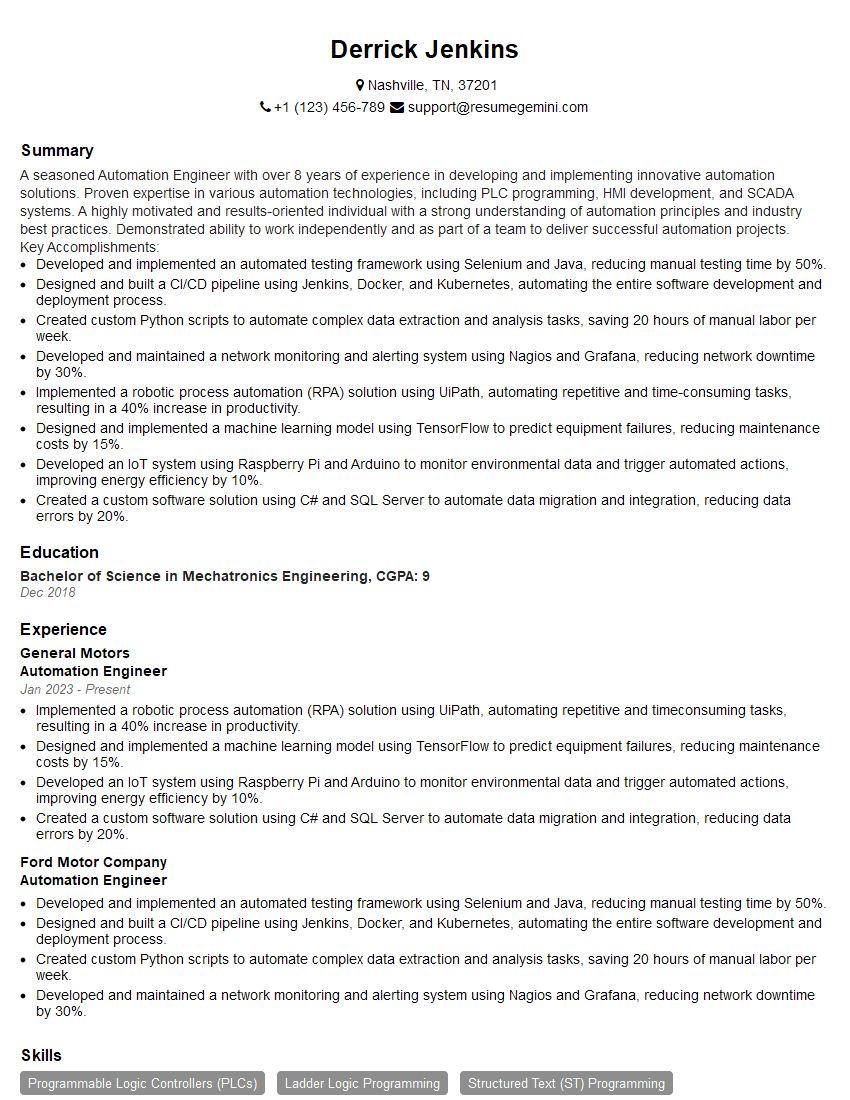
Automation Engineer Resume Sample
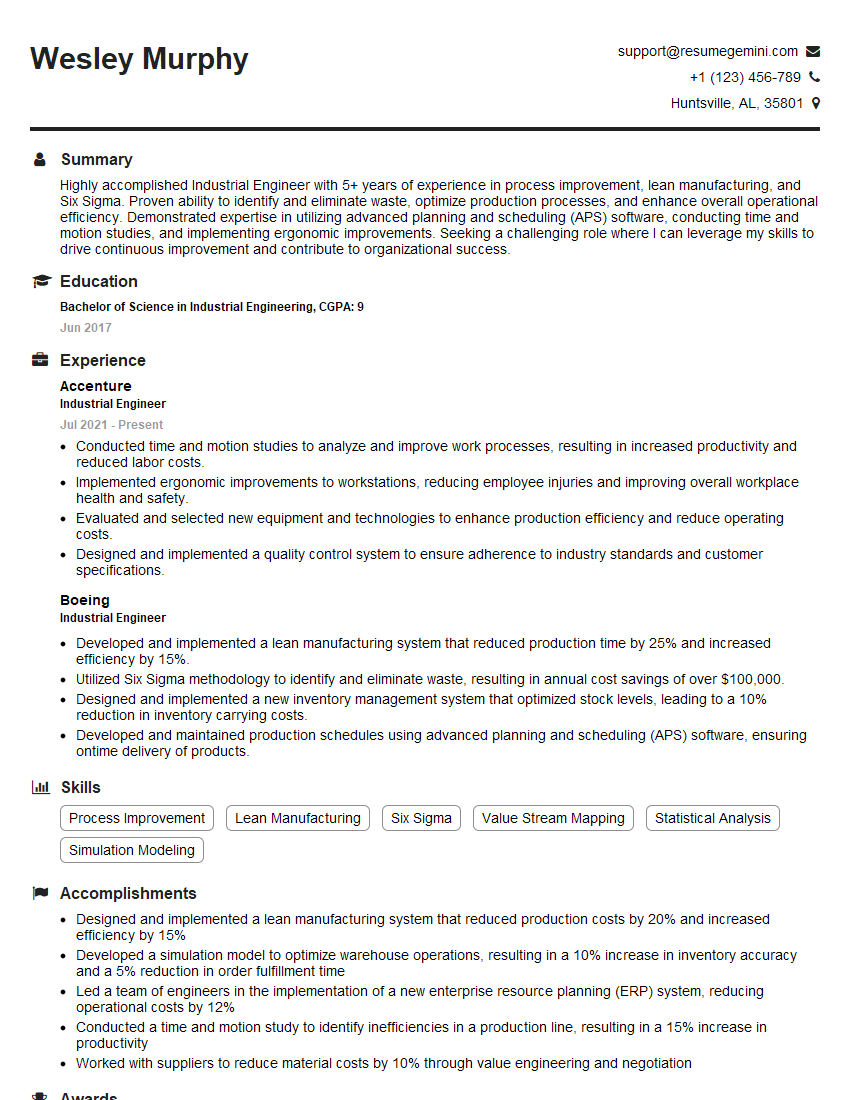
Industrial Engineer Resume Sample
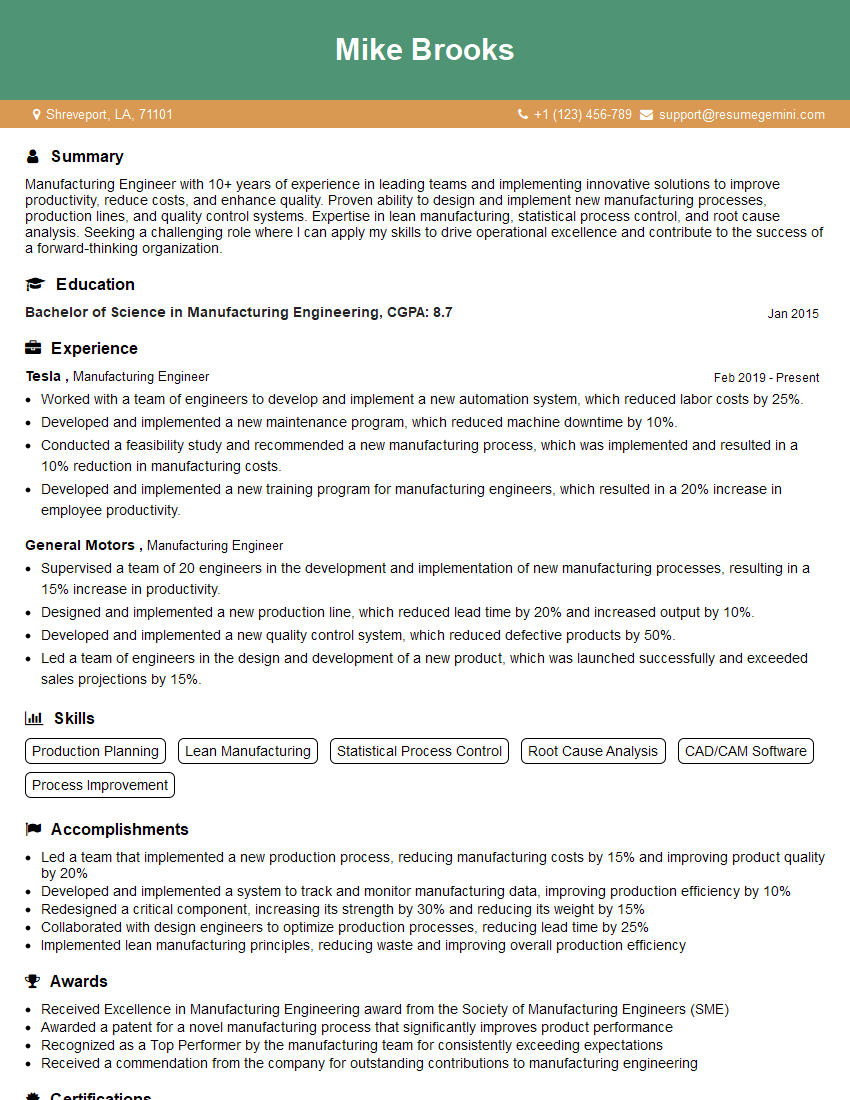
Manufacturing Engineer Resume Sample
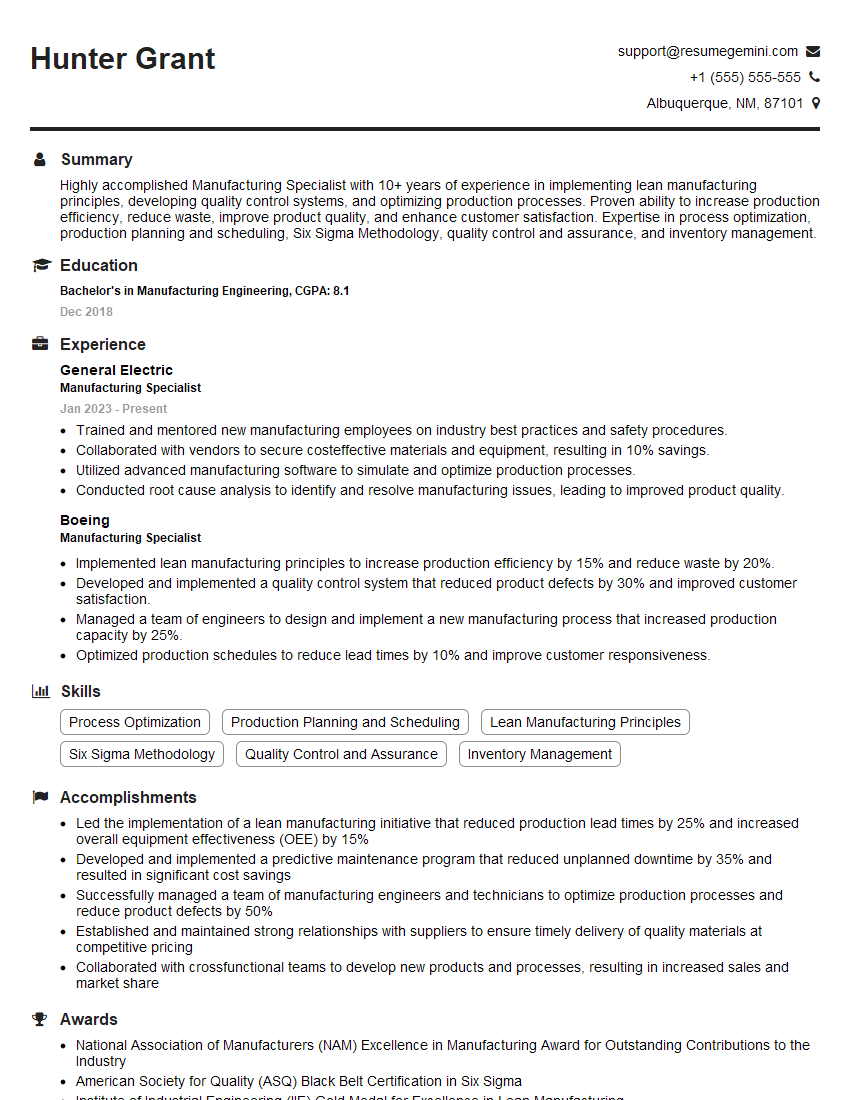
Manufacturing Specialist Resume Sample
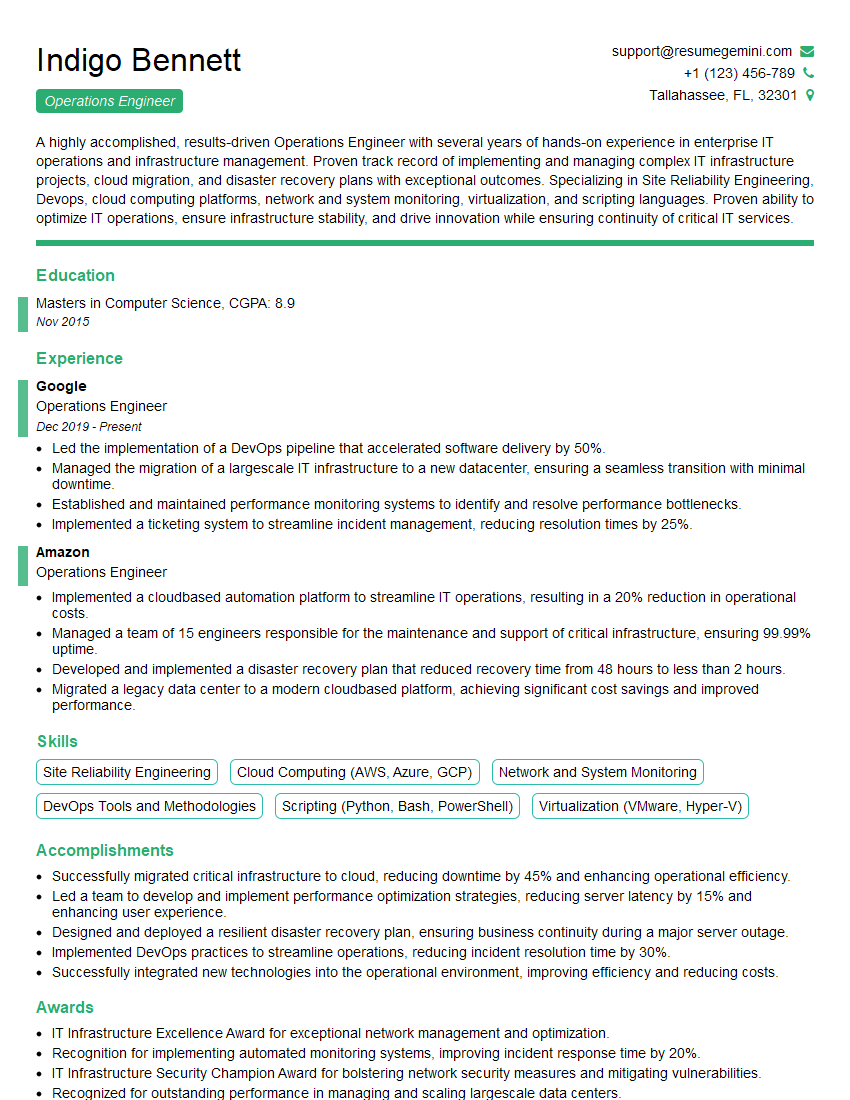
Operations Engineer Resume Sample
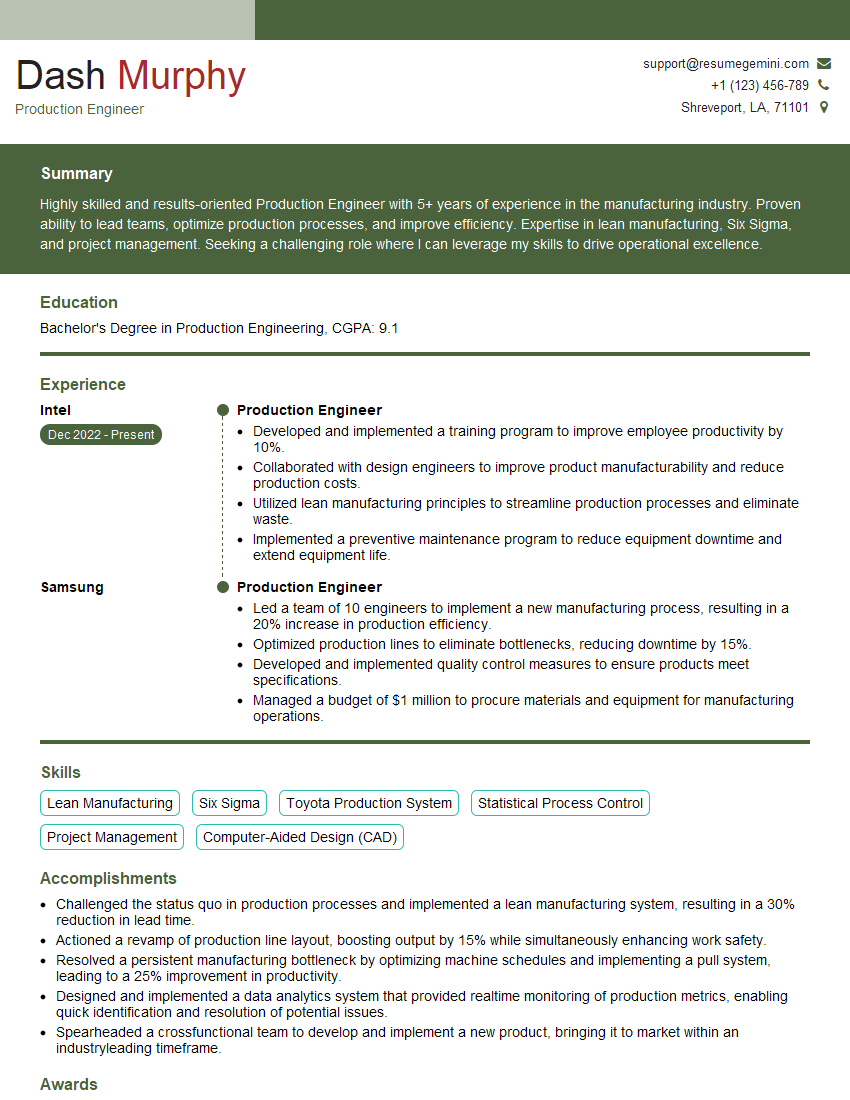
Production Engineer Resume Sample
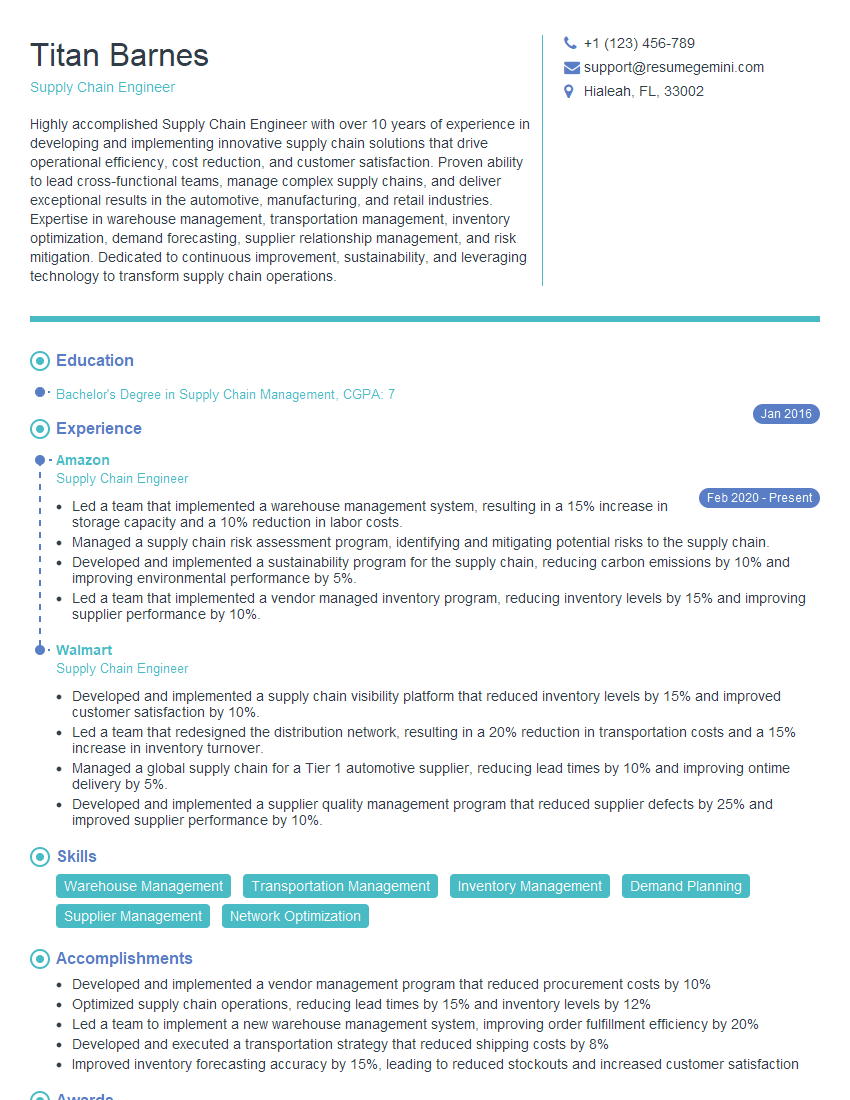
Supply Chain Engineer Resume Sample
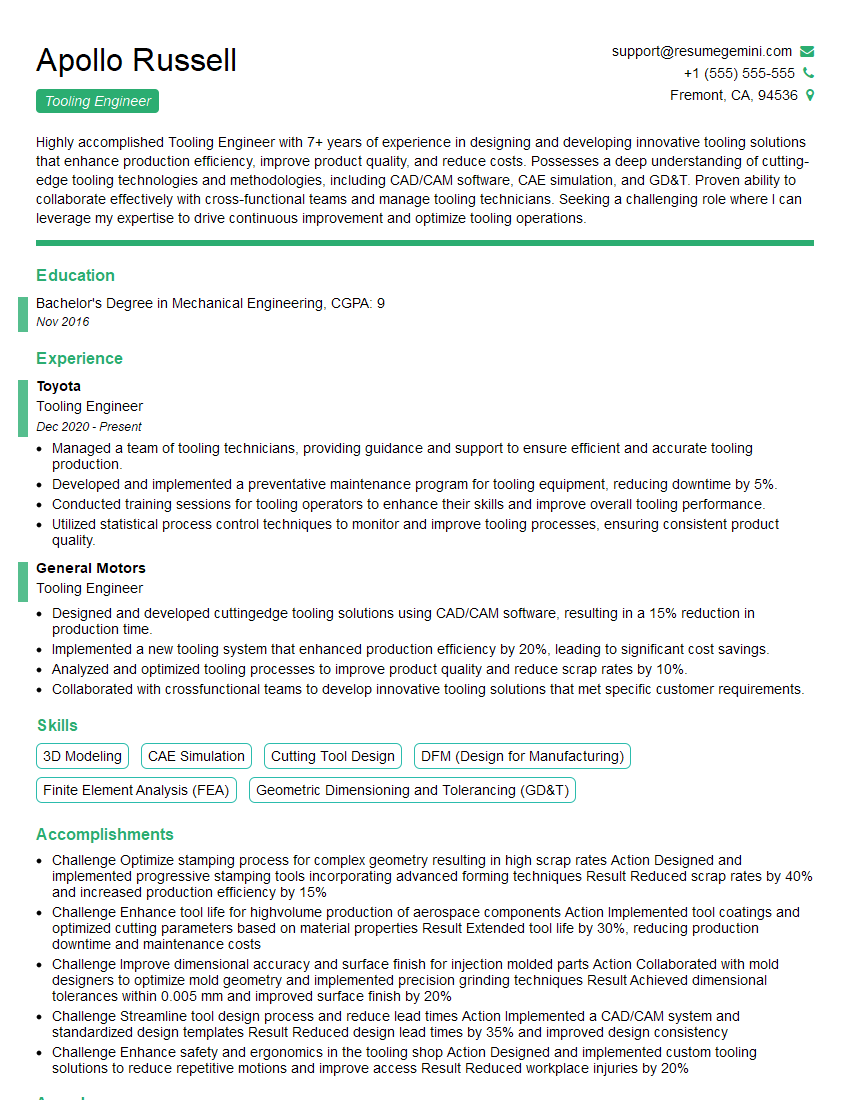
Tooling Engineer Resume Sample
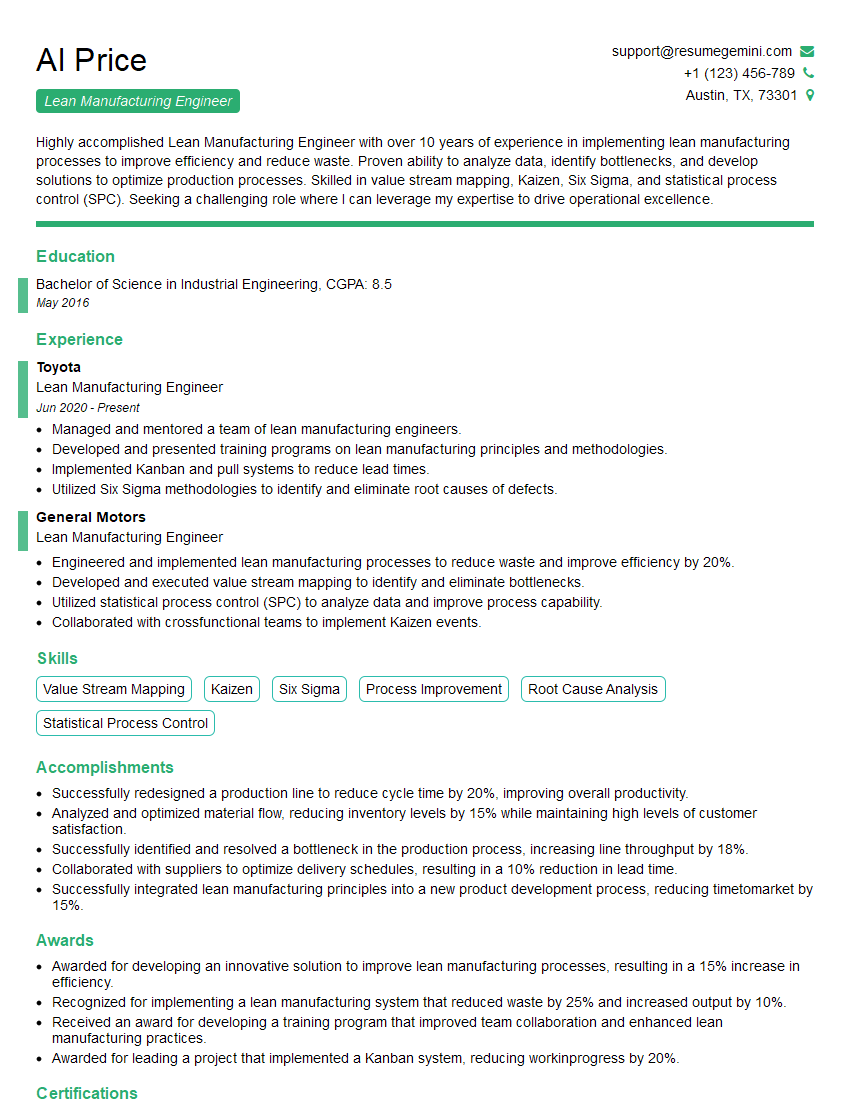
Lean Manufacturing Engineer Resume Sample
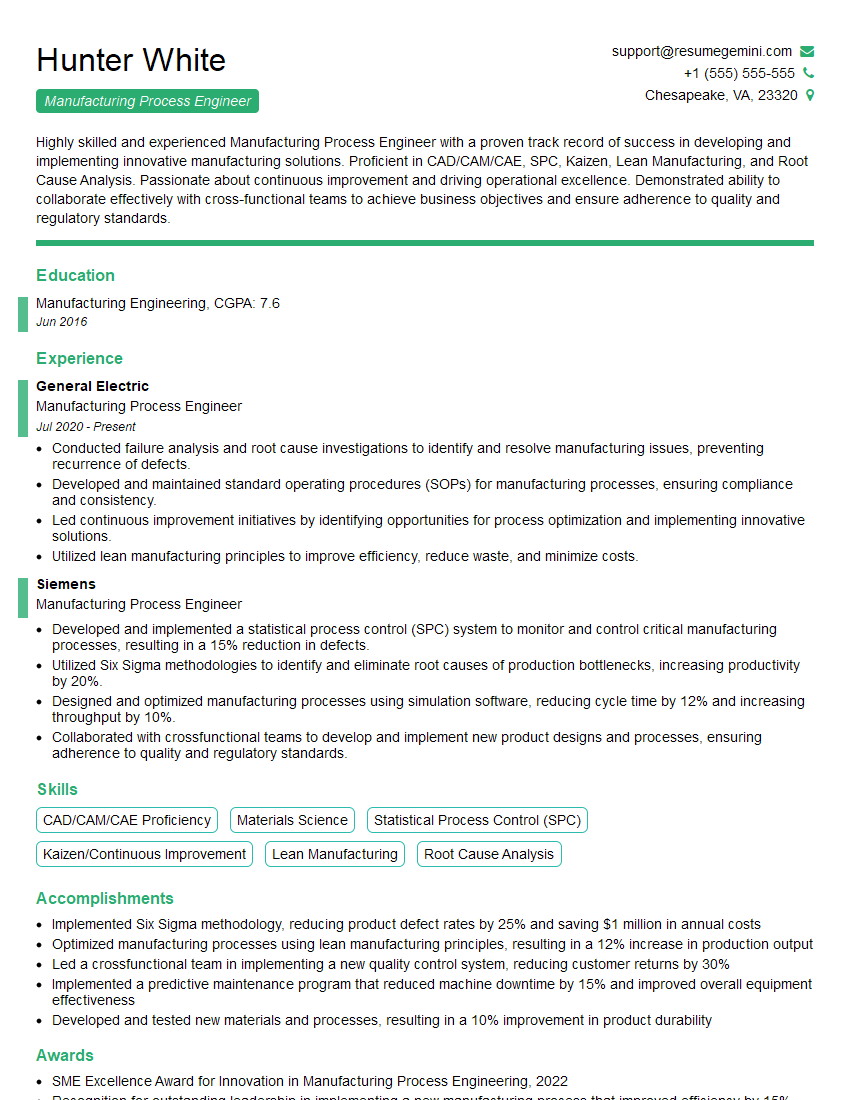
Manufacturing Process Engineer Resume Sample
Explore more articles
Users Rating of Our Blogs
Share Your Experience
We value your feedback! Please rate our content and share your thoughts (optional).
What Readers Say About Our Blog
Very informative content, great job.
good