Interviews are opportunities to demonstrate your expertise, and this guide is here to help you shine. Explore the essential Experience in Sports Media and Broadcasting interview questions that employers frequently ask, paired with strategies for crafting responses that set you apart from the competition.
Questions Asked in Experience in Sports Media and Broadcasting Interview
Q 1. Describe your experience with live broadcasting.
My experience in live broadcasting spans over ten years, encompassing a wide range of sports, from high-school basketball to professional soccer leagues. I’ve worked both in studio environments and on location, handling everything from pre-show preparations to post-game wrap-ups. This includes managing live feeds, coordinating with camera operators, and ensuring seamless transitions during commercial breaks and other segments. For example, during a recent marathon broadcast, I was responsible for switching between live shots of the runners, interviews with spectators, and real-time updates from our commentators. This required meticulous planning and quick reflexes to adapt to unexpected delays or changes in the race dynamics.
I’m proficient in operating broadcast switching equipment, utilizing various communication systems to coordinate with the production team, and ensuring the broadcast maintains a professional, high-quality standard. A key aspect of this experience involves understanding the technical aspects – ensuring optimal audio and video quality, resolving on-air technical glitches swiftly, and proactively preventing issues before they arise.
Q 2. Explain your understanding of different camera angles in sports production.
Understanding camera angles is crucial for effective sports broadcasting. Different angles provide unique perspectives, enhancing the viewer’s engagement and comprehension of the action. Common angles include:
- Wide Shot (WS): Provides a broad view of the playing field or arena, establishing the context and overall scene.
- Medium Shot (MS): Focuses on a group of players or a specific part of the action, maintaining some environmental context.
- Close-Up (CU): Emphasizes a single player’s expression or a crucial moment, creating emotional connection with the audience. This is frequently used during post-play reactions or intense moments.
- Extreme Close-Up (ECU): A highly magnified view, often focusing on a player’s face or a key detail of the game, adding impact.
- Over-the-Shoulder (OTS): Captures the action from behind a player, providing a unique perspective and emphasizing their point of view. Often used during interviews.
- Point-of-View (POV): Mimics a player’s perspective, putting the audience directly into the action.
- Low Angle: Shot from a low position, looking upward. This can make players seem powerful and imposing.
- High Angle: Shot from an elevated position, looking downward. This can make players seem vulnerable or small.
Mastering these angles allows the director to build dynamic storytelling, emphasizing key moments, player emotions, and strategic game analysis through visual narrative.
Q 3. How do you manage on-air pressure and unexpected events?
On-air pressure is a reality in live broadcasting, and unexpected events are inevitable. My approach is based on preparation, adaptability, and a calm demeanor. Thorough pre-production planning, which includes reviewing the day’s schedule and anticipating potential issues (weather delays, player injuries, etc.), is paramount. I also practice a deep-breathing technique to center myself before and during the broadcast.
When unexpected events occur—such as a technical malfunction or an on-field controversy—my response is guided by a systematic approach: 1. Assess the situation quickly; 2. Communicate clearly and efficiently with the team; 3. Implement the contingency plan; and 4. Maintain a professional and composed on-air presence to minimize disruption for viewers. In a recent incident, a power outage briefly interrupted the broadcast. Through swift communication with the technical team and smooth transitions to pre-recorded segments, the disruption was minimized and the broadcast returned to normal within minutes.
Q 4. What is your experience with sports editing software?
I am highly proficient in various sports editing software packages, including Adobe Premiere Pro, Avid Media Composer, and Final Cut Pro. My expertise extends to video editing, audio mixing, color correction, and graphics integration. I’m comfortable with nonlinear editing techniques, and I am adept at creating highlight reels, promotional videos, and feature-length documentaries. For example, I recently used Adobe Premiere Pro to edit a 90-minute documentary on a local basketball team’s championship season, incorporating archival footage, interviews, and game highlights. This required meticulous organization of assets, skillful storytelling, and precision in the final product.
I also understand the importance of efficient workflow, leveraging keyboard shortcuts and advanced editing techniques to maximize productivity. I understand metadata management, optimizing video files for different platforms and resolutions, and creating compelling visual narratives within the constraints of broadcast time and style guidelines.
Q 5. Describe your experience in writing sports news articles or scripts.
I possess extensive experience in writing sports news articles and scripts. My writing style is concise, engaging, and informative, adapted to the specific needs of each platform (e.g., broadcast script vs. online article). I prioritize accuracy, ensuring factual correctness and avoiding sensationalism. My experience extends to writing pre-game and post-game analyses, player profiles, and feature stories.
For instance, I wrote a series of articles on the impact of social media on professional athletes, drawing on interviews and data analysis. For broadcast scripts, I’ve crafted concise summaries of major events and developed compelling narratives for highlight reels. In all my writing, clear and concise language, combined with strong storytelling, has allowed me to create compelling and informative content across platforms.
Q 6. How familiar are you with various sports and their rules?
My familiarity with various sports and their rules is comprehensive. I have an in-depth understanding of the major professional leagues (NBA, NFL, MLB, NHL, EPL, etc.), as well as significant college and international sporting events. My knowledge extends beyond basic rules to encompass strategic nuances, player positions, and historical context. This background allows me to provide insightful commentary and accurate analysis during broadcasts and to tailor my writing to the specifics of each sport.
For example, my understanding of the offside rule in soccer allows me to explain it clearly to viewers while analyzing its impact on a particular match. Similarly, my knowledge of the intricacies of basketball strategy enables me to comment on plays and team dynamics effectively.
Q 7. How do you conduct interviews with athletes and coaches?
Conducting interviews with athletes and coaches requires a balance of professionalism, preparation, and genuine interest. Before an interview, I thoroughly research the athlete or coach, understanding their career highlights and recent performance. I then prepare a list of well-structured questions that explore both technical aspects of their sport and their personal experiences. My approach is conversational yet insightful, drawing out candid responses while respecting their time and allowing for spontaneous moments. I prioritize active listening, clarifying ambiguities, and encouraging them to express themselves authentically.
Following the interview, I review the footage, ensuring clarity and consistency, often using editing to highlight key themes and ensure a cohesive narrative for broadcast. For example, when interviewing a star athlete after a significant win, I balance celebrating their achievement with thoughtful questions about their training regimen and future goals, ensuring a well-rounded and engaging segment.
Q 8. What strategies do you use for delivering concise and engaging commentary?
Concise and engaging sports commentary requires a blend of preparation, clear communication, and an understanding of the audience. It’s about painting a picture with words, not just stating facts.
- Preparation is Key: Before a broadcast, I meticulously research the teams, players, and any significant events leading up to the game. This allows me to anticipate key moments and weave relevant information into the narrative.
- Focus on the Story: Instead of simply describing what’s happening on the field, I strive to tell a story. This involves highlighting the drama, the individual battles, the strategic nuances, and the emotional aspects of the game. For instance, instead of saying ‘Smith passes to Jones,’ I might say, ‘Under immense pressure, Smith delivers a laser-like pass to Jones, keeping their playoff hopes alive!’
- Brevity is Power: I avoid unnecessary jargon and complex sentences. I use strong verbs and descriptive language to paint vivid pictures in the listener’s mind. I also utilize pauses effectively to let the action speak for itself, avoiding constant chatter.
- Know Your Audience: The style of commentary should align with the audience. A casual, light-hearted tone might suit a younger audience, while a more analytical approach might appeal to seasoned sports fans.
For example, during a crucial moment in a basketball game, instead of just announcing a score, I might say something like, “And there it is! A clutch three-pointer from Johnson, silencing the roaring crowd! That gives them the lead with only seconds left! This is electrifying!”
Q 9. How do you adapt your style to different broadcasting platforms?
Adapting my commentary style to different platforms requires understanding each medium’s unique characteristics and its audience.
- Radio: On radio, the primary tool is the voice. I rely on vivid descriptions and sound effects to create an immersive experience. The language needs to be more descriptive since there’s no visual element.
- Television: Television broadcasts offer visuals. My commentary complements the images, providing context, analysis, and insights that enhance the viewing experience. The pace can be slightly slower since visuals assist in conveying information.
- Digital Platforms (Streaming, Social Media): These platforms are often more informal and interactive. Commentary needs to be snappy, engaging, and utilize relevant hashtags and references to social trends. Short-form video clips may require concise and punchy narration.
- International Broadcasts: When broadcasting internationally, I adjust the language style to suit the target audience and may need to incorporate terms they would understand better.
For instance, during a live television broadcast of a soccer match, I might focus on explaining tactical formations and player roles which are visible. Whereas, on a radio broadcast, I would rely on describing the positioning, momentum, and the emotions conveyed through the players’ actions.
Q 10. Explain your approach to fact-checking and ensuring accuracy in your reporting.
Accuracy is paramount in sports broadcasting. My approach to fact-checking involves a multi-layered process that begins long before the broadcast and continues throughout.
- Pre-Broadcast Research: I consult official sources like team websites, league statistics, and reputable news outlets to gather information on player stats, team records, and any relevant news. I verify statistics using multiple sources.
- Collaboration with Researchers and Producers: I work closely with researchers and producers to ensure the information is not only accurate but also presented in a way that’s easily understood by the audience. We discuss possible scenarios and prepare potential talking points in advance.
- Real-time Verification: During the broadcast, I keep a close eye on the game and constantly cross-reference information with official sources, making immediate corrections if necessary. I use the broadcast graphics provided by the team or network to confirm scores, times, and other details.
- Post-Broadcast Review: After the broadcast, I review recordings to identify any potential inaccuracies and take steps to rectify them immediately and prevent recurrence.
For instance, if a player’s statistic is displayed on-screen differently from my notes, I would immediately consult a reliable source to verify before announcing any statistics on air.
Q 11. Describe your experience with audio and visual equipment used in sports broadcasting.
My experience encompasses a wide range of audio and visual equipment used in sports broadcasting. This includes:
- Microphones: I’m proficient in using various microphone types, including lavalier mics, headset mics, and boom mics, understanding their optimal applications and limitations in different environments.
- Audio Mixers and Consoles: I’m familiar with operating audio mixing consoles to manage multiple audio sources, ensuring clear and balanced sound. I understand the importance of proper gain staging and equalization.
- Cameras and Lenses: I have hands-on experience with various camera types, understanding their capabilities and limitations in capturing fast-paced sporting events. I have worked with different lens types and know how to adjust focus and exposure in dynamic scenarios.
- Video Switchers and Graphics Systems: I understand the basics of video switching and integrating graphics and replays into the live broadcast. I know how to use Character Generators to overlay text and information on live feeds.
- Teleprompters: I am comfortable using teleprompters efficiently to maintain a natural delivery while reading information quickly and accurately.
For example, I understand the difference between a cardioid microphone (which picks up sound primarily from the front) and an omnidirectional microphone (which picks up sound from all directions) and select accordingly based on the environment and the need.
Q 12. How do you collaborate effectively within a sports broadcasting team?
Effective collaboration is vital in sports broadcasting. My approach involves:
- Clear Communication: I maintain open and transparent communication with the entire team, including producers, directors, analysts, and other commentators. We use pre-broadcast meetings to discuss strategies, anticipate key moments, and allocate roles.
- Respectful and Supportive Team Dynamics: I treat every member of the team with respect and value their input. I am a supportive team player, understanding that teamwork ensures smooth and engaging broadcasting.
- Active Listening: I pay close attention to the other members of the team during the broadcast. This helps in seamlessly integrating different perspectives and analyses to create a richer narrative.
- Flexibility and Adaptability: I’m flexible and adapt to any unexpected changes that might occur during the broadcast, ensuring that any disruption is handled smoothly and efficiently.
For example, during a live match, if an analyst brings up a surprising statistic that I wasn’t aware of, I weave it into my commentary organically, demonstrating my ability to listen and respond to unexpected developments.
Q 13. What is your experience with social media platforms in relation to sports broadcasting?
Social media plays a significant role in modern sports broadcasting. My experience encompasses:
- Live Tweeting and Engagement: I engage with audiences on platforms like Twitter and X during broadcasts, providing real-time updates, insights, and responding to questions. I also use relevant hashtags to increase visibility and reach.
- Post-Broadcast Analysis and Content Creation: After the broadcast, I create engaging content such as short video clips, highlights, and longer analytical pieces for social media platforms.
- Monitoring Social Media Sentiment: I actively monitor social media sentiment during and after broadcasts to understand audience reactions and identify any potential areas for improvement.
- Utilizing Social Media for Research and Promotion: Social media provides valuable insights into trending topics, player news, and fan sentiments, contributing to my pre-broadcast research. It’s a tool for promoting the broadcast and engaging with potential viewers.
For instance, during a game, if a specific play generates significant buzz online, I can integrate fan comments and highlight the event further on air, connecting with the audience’s online experience.
Q 14. How do you handle criticism or negative feedback on your work?
Constructive criticism is invaluable for growth in any profession. My approach to handling criticism involves:
- Objective Assessment: I objectively assess the criticism, separating constructive feedback from personal attacks. I try to understand the perspective of the person offering feedback, whether it’s a fan, a colleague or a supervisor.
- Seeking Clarification: If the criticism is unclear, I seek clarification from the source. I ask questions to ensure I understand their concerns accurately.
- Self-Reflection and Improvement: I engage in self-reflection to identify areas where I can improve. I review my past performances and strive to learn from my mistakes. This involves reviewing recordings to identify areas for better delivery, commentary or factual accuracy.
- Professional Response: I respond professionally, thanking those who provide constructive criticism, and acknowledging their points. I avoid getting defensive. I might offer an explanation if needed, but the emphasis is on professional improvement.
For example, if someone critiques my commentary as being too technical, I might reflect on whether I’ve focused too much on detailed analysis at the expense of broader engagement, and adjust my style accordingly.
Q 15. How do you prioritize tasks during a live broadcast?
Prioritizing tasks during a live broadcast is crucial for a seamless production. It’s like conducting an orchestra – every instrument (camera, audio, graphics) needs to play in harmony. My approach involves a combination of pre-planning and on-the-fly adaptability.
- Pre-Broadcast Prioritization: Before the broadcast, I meticulously review the run-of-show, identifying key moments and assigning priorities based on importance (e.g., game-changing plays, interviews, halftime reports). This creates a clear roadmap.
- Real-time Adjustment: During the broadcast, unexpected events frequently arise. My strategy is to assess the situation rapidly, deciding which developments demand immediate attention. If a significant play occurs, the director will prioritize replay and analysis, potentially delaying a planned segment. Communication is paramount; clear and concise instructions to the team are essential.
- Delegation and Teamwork: I also leverage the skills of my team. Producers handle segment timings; technical directors oversee camera switching; and audio engineers manage sound levels. Efficient delegation saves time and ensures smoother execution.
For example, during a crucial final seconds of a basketball game, prioritizing instant replays and commentary about the game-winning shot would naturally take precedence over a pre-planned advertisement.
Career Expert Tips:
- Ace those interviews! Prepare effectively by reviewing the Top 50 Most Common Interview Questions on ResumeGemini.
- Navigate your job search with confidence! Explore a wide range of Career Tips on ResumeGemini. Learn about common challenges and recommendations to overcome them.
- Craft the perfect resume! Master the Art of Resume Writing with ResumeGemini’s guide. Showcase your unique qualifications and achievements effectively.
- Don’t miss out on holiday savings! Build your dream resume with ResumeGemini’s ATS optimized templates.
Q 16. Describe your experience with pre-production planning for sports broadcasts.
Pre-production planning is the foundation of a successful sports broadcast. It’s like building a house – you can’t just start laying bricks without a blueprint. My experience includes extensive involvement in various aspects:
- Storyboarding: Creating visual outlines of each segment, detailing camera angles, graphics, and transitions. This ensures a visually compelling narrative.
- Talent Coordination: Scheduling interviews, confirming commentator availability, and briefing them on the storyline.
- Technical Planning: Working with the technical director to set up cameras, microphones, and graphics. This includes determining the ideal camera angles and positions for key events and players.
- Content Gathering: Researching player statistics, team histories, and any relevant news to enrich the commentary and enhance storytelling.
- Contingency Planning: Developing backup plans to deal with potential technical issues or unexpected events – like a sudden power outage or a player injury. For instance, having alternative graphics, interviews, or segments ready.
For a recent college football game, we spent weeks developing our pre-production plan, meticulously mapping out camera placements to capture every pivotal moment, coordinating with the school’s athletic department for player interviews, and even creating interactive graphics showing team statistics in real-time.
Q 17. What is your experience with post-production editing of sports footage?
Post-production editing for sports footage requires precision and efficiency. It’s like sculpting – you need to refine the raw material into a polished piece of art. My experience encompasses:
- Highlight Reels: Creating condensed versions of games or events, focusing on the most exciting moments. This frequently involves selecting the most visually compelling angles and adding impactful music and sound effects.
- Slow-Motion Analysis: Examining key plays frame by frame to provide insightful commentary and enhance understanding for the viewer.
- Graphics Integration: Adding statistical overlays, scores, and team logos to enhance clarity and visual appeal. This often involves synchronization with audio commentary.
- Audio Mixing: Balancing commentary, crowd noise, and sound effects for optimal sound quality and to emphasize important moments.
- Color Correction: Adjusting color and brightness to ensure consistent visual quality and optimal viewing experience.
For example, in post-production of a marathon, we’d use slow-motion to highlight the runners’ finishing moments, add split-time graphics, and incorporate commentary analyzing the race’s crucial turns and competitor performances.
Q 18. How do you manage your time effectively when working under tight deadlines?
Working under tight deadlines in sports broadcasting is the norm. My time management strategy relies on a combination of planning, prioritization, and efficient workflow.
- Detailed Scheduling: I break down large tasks into smaller, manageable components with assigned timelines. This prevents feeling overwhelmed by the overall scope of the project.
- Prioritization Matrix: I use a prioritization matrix (urgent/important) to identify tasks needing immediate attention and those that can be delegated or postponed. This helps prevent time wastage on less critical items.
- Teamwork and Delegation: Effective delegation to team members with specific skills maximizes efficiency and ensures all aspects are handled promptly.
- Technology Utilization: I leverage various tools like project management software to track progress and stay organized. This allows for real-time adjustments to the schedule based on unforeseen circumstances.
During a live event, I may have only minutes to prepare a segment between game breaks. Having a pre-planned structure, clear priorities, and a well-coordinated team helps me deliver flawlessly under pressure.
Q 19. How do you incorporate storytelling techniques into your sports broadcasting?
Storytelling is at the heart of compelling sports broadcasting. It’s about connecting with the audience on an emotional level, not just providing factual information.
- Human Interest Stories: Highlighting the personal journeys and challenges faced by athletes – their dedication, struggles, and triumphs. This adds a dimension that transcends the game itself.
- Building Narrative Arcs: Creating a storyline throughout the game or series, highlighting key moments and drawing parallels to build anticipation and emotional resonance.
- Using Visual Storytelling: Carefully selecting camera angles and shots to convey emotion and emphasize dramatic moments.
- Employing Descriptive Language: Using evocative language to paint a vivid picture of the game’s action and the athletes’ performances.
For example, instead of simply stating a player’s scoring record, I would weave a narrative about their journey from an underdog to a champion, showcasing their unwavering determination and hard work.
Q 20. How do you maintain objectivity and impartiality in your reporting?
Maintaining objectivity and impartiality is paramount in sports broadcasting. It’s about presenting facts fairly and avoiding bias, even when personal feelings might run strong.
- Fact-Based Reporting: Focusing solely on verifiable facts and avoiding speculation or personal opinions, even in the face of intense emotions during a live event.
- Balanced Perspective: Presenting multiple viewpoints and perspectives, giving equal weight to all teams involved.
- Avoiding Loaded Language: Using neutral language and avoiding emotionally charged words or phrases that could sway audience opinion.
- Transparency and Disclosure: If personal feelings or relationships with athletes or teams exist, ensuring complete transparency to maintain credibility and avoid perceived conflicts of interest.
If a controversial call occurs in a game, I would present the facts, showing replays, quotes from coaches or players, and avoiding any interpretation that might favor one side over the other.
Q 21. Describe your experience with different types of microphones used in sports broadcasting.
Different microphones cater to specific needs in sports broadcasting. They are carefully chosen based on the environment and the desired audio quality. My experience includes working with various types:
- Lavaliere Microphones (Lavalier): Small, clip-on microphones used for interviews and on-field reporting. They provide clear audio close to the speaker’s mouth, minimizing background noise.
- Handheld Microphones (Dynamic): Durable and robust microphones used for commentators and sideline reporters. They are less sensitive to feedback and can handle higher sound pressure levels.
- Shotgun Microphones: Highly directional microphones ideal for capturing clear audio from a distance. They are often used to pick up the sounds of the game itself, minimizing ambient noise.
- Wireless Microphones: Provide greater freedom of movement for reporters and interviewers, particularly during fast-paced games. This allows for more dynamic coverage.
For instance, during a football game, commentators would use handheld dynamic microphones, while sideline reporters might use lavalier microphones for interviews, and shotgun microphones could capture the sounds of the crowd and the game itself.
Q 22. How familiar are you with broadcast regulations and ethical standards?
Broadcast regulations and ethical standards are paramount in sports media. My familiarity encompasses a wide range, including rules concerning defamation, copyright infringement, and responsible reporting. I understand the importance of adhering to guidelines set by organizations like the FCC (in the US) or equivalent bodies in other regions. Ethical considerations include ensuring fairness, accuracy, avoiding bias, and protecting the privacy of individuals. For example, I know that using misleading slow-motion replays to create a false narrative is unethical and potentially illegal. Similarly, I’m well-versed in the guidelines around broadcasting violent content or potentially offensive language, often needing to employ delays and bleeping techniques to ensure compliance.
My experience includes navigating these complexities in various broadcast environments, from live events to post-production editing. I’ve directly participated in content reviews and implemented strategies for compliance. This includes establishing clear internal protocols and training staff to understand and follow the relevant regulations. Essentially, I prioritize responsible broadcasting as a foundational element of any production.
Q 23. What is your understanding of using graphics and statistics in sports broadcasting?
Graphics and statistics are crucial for enhancing the viewer experience and providing context during sports broadcasts. They move beyond mere presentation; they are powerful tools for storytelling. My understanding involves selecting the right graphics to complement the narrative – real-time score updates, player statistics, heatmaps showing player positioning, tactical diagrams illustrating game strategies, and even historical data to put current events in perspective.
I have experience working with various graphics packages and integrating data feeds to ensure seamless, accurate, and timely display. For instance, during a football game, we might use a graphic showing a player’s pass completion percentage alongside a highlight reel, reinforcing the narrative about their performance. Similarly, in baseball, a visually engaging graphic can illustrate a batter’s success against a specific pitcher. The key is to be selective, avoiding overwhelming the viewers with unnecessary data. Strategic placement and visual design are just as important as data accuracy.
Q 24. Describe your experience working with remote broadcast technologies.
My experience with remote broadcast technologies is extensive, covering various aspects from IP-based production workflows to cloud-based solutions. I’ve worked with setups that utilize remote cameras, audio feeds, and production control systems, enabling us to broadcast live events from locations with limited on-site personnel. For instance, I have managed productions where commentators were located in a studio hundreds of miles away from the event itself, yet seamlessly integrated into the broadcast.
We utilize various technologies, including IP video encoders and decoders, cloud-based editing platforms, and remote collaboration tools. This includes troubleshooting issues related to network latency, bandwidth limitations, and signal quality. For instance, during a recent event, we encountered a sudden network drop. Our immediate response, leveraging backup internet connections and pre-planned contingency strategies, minimized disruption to the broadcast. Understanding the technological nuances and having robust backup strategies are key for successful remote broadcasting.
Q 25. How do you identify and engage with relevant audiences for sports content?
Identifying and engaging relevant audiences requires a multi-faceted approach. It starts with a thorough understanding of the sport, its fans, and their viewing habits. This involves analyzing demographics, viewing patterns (across various platforms), and social media trends. Tools like social listening and analytics dashboards allow us to monitor real-time audience engagement and tailor our content accordingly. For example, a younger audience might be more responsive to short-form videos and highlight reels on platforms like TikTok or Instagram, whereas older demographics might prefer more in-depth analysis shown on traditional television.
We use targeted advertising, social media campaigns, and even influencer marketing to reach specific audience segments. Personalization is key; crafting messages that resonate with the audience’s interests and preferences is crucial. Constant monitoring and feedback loops help refine our strategies and adapt to evolving audience behavior. Data-driven decisions are essential, constantly evaluating what content is performing well and adjusting accordingly.
Q 26. What strategies do you employ for improving the quality of your sports broadcasts?
Improving the quality of sports broadcasts is a continuous process. It begins with pre-production planning, ensuring that we have the right equipment, personnel, and resources. During production, maintaining seamless coordination between camera operators, commentators, and technical staff is essential. This involves clear communication protocols and a meticulous workflow.
Post-production plays a key role; careful editing, graphics integration, and audio mixing contribute to a polished final product. Utilizing feedback mechanisms, like viewer surveys or social media analysis, helps us identify areas for improvement. For instance, if we notice a recurring complaint about audio mixing, we can analyze the recordings and adjust our techniques accordingly. Regular training for the crew, keeping up with technological advancements, and exploring innovative storytelling techniques further contribute to our pursuit of excellence in sports broadcasting.
Q 27. Explain your understanding of different audio mixing techniques for sports broadcasts.
Audio mixing in sports broadcasts is a complex process involving balancing various audio sources, including commentators, ambient sound, crowd noise, and potentially music or sound effects. My understanding includes utilizing different mixing consoles and software, manipulating levels, equalization (EQ), and compression to achieve clarity and optimal sound quality. The goal is to create an immersive and engaging soundscape that enhances the viewing experience.
Specific techniques I employ include using dynamic EQ to adapt to changing audio levels during a game (e.g., moments of high excitement versus quieter periods), and compression to control the dynamic range, preventing sudden loud or quiet moments. For example, the crowd roar during a crucial play might be compressed to keep it within a reasonable listening level without losing its impact. Proper microphone placement is equally important, minimizing background noise and enhancing clarity. The audio mix is often a crucial element influencing the overall engagement and emotion of the broadcast.
Q 28. How do you stay updated on the latest trends in sports media and broadcasting?
Staying updated in sports media and broadcasting involves a multi-pronged approach. I regularly attend industry conferences and webinars, networking with peers and learning about the latest technologies and techniques. Trade publications, both print and digital, are vital sources of information. Following key industry influencers on social media and subscribing to relevant newsletters keep me informed of emerging trends.
I actively participate in online forums and communities, engaging in discussions with other professionals. This allows for the exchange of ideas and experiences. Moreover, I continuously evaluate new technologies and software, experimenting with them in controlled environments to assess their potential applications in my work. This continuous learning process ensures I remain at the forefront of my field, constantly adapting and evolving my skills and knowledge base.
Key Topics to Learn for Your Sports Media & Broadcasting Interview
- Understanding the Sports Media Landscape: Explore the different segments (TV, radio, digital, print), their unique challenges, and audience expectations. Consider the evolution of sports media and the impact of new technologies.
- Content Creation and Production: Discuss your experience in writing, editing, producing, and presenting sports content. Showcase your understanding of storytelling, visual communication, and the technical aspects of broadcasting.
- Digital Media and Social Media Strategies: Demonstrate your knowledge of engaging digital audiences, utilizing social media platforms effectively, and leveraging data analytics to understand audience behavior and content performance.
- Interviewing and Reporting Techniques: Prepare to discuss your experience conducting interviews, gathering information from various sources, and writing compelling news stories or features about sports events and personalities.
- Broadcast Journalism Ethics and Standards: Highlight your understanding of journalistic integrity, accuracy, fairness, and the importance of adhering to industry best practices.
- Technical Proficiency: Showcase your familiarity with relevant software and equipment, such as audio and video editing suites, broadcasting systems, and content management systems. Be prepared to discuss your problem-solving skills in technical situations.
- Teamwork and Collaboration: Emphasize your experience working effectively in a team environment, collaborating with producers, directors, editors, and other media professionals.
- Adaptability and Innovation: Discuss your ability to adapt to changing technologies and trends within the sports media industry, demonstrating your willingness to learn and embrace new approaches.
Next Steps: Elevate Your Career in Sports Media
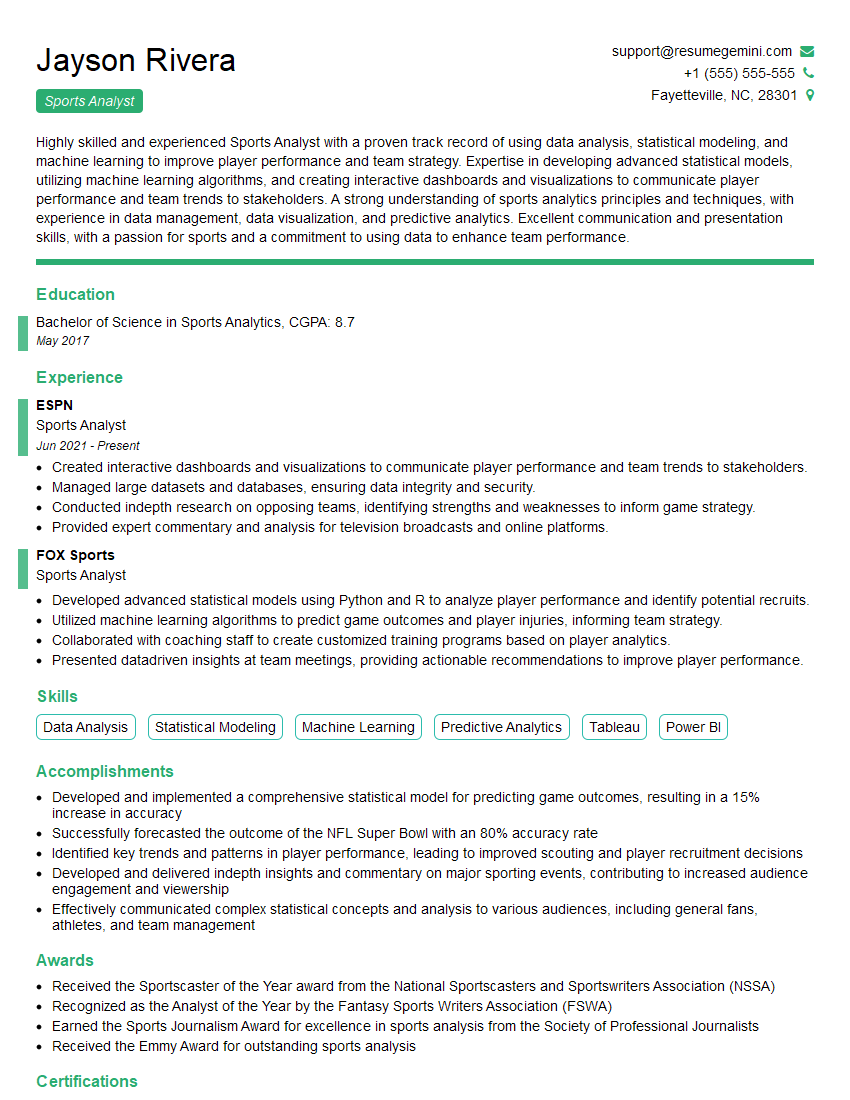
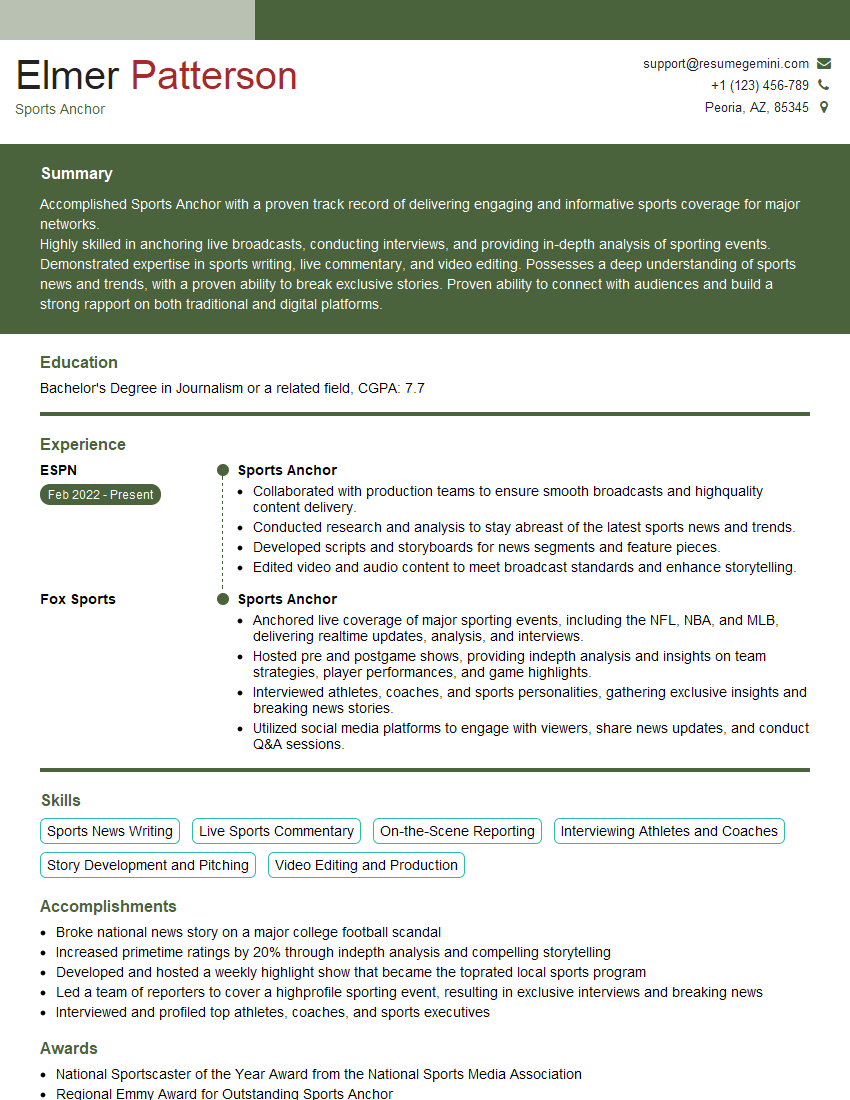
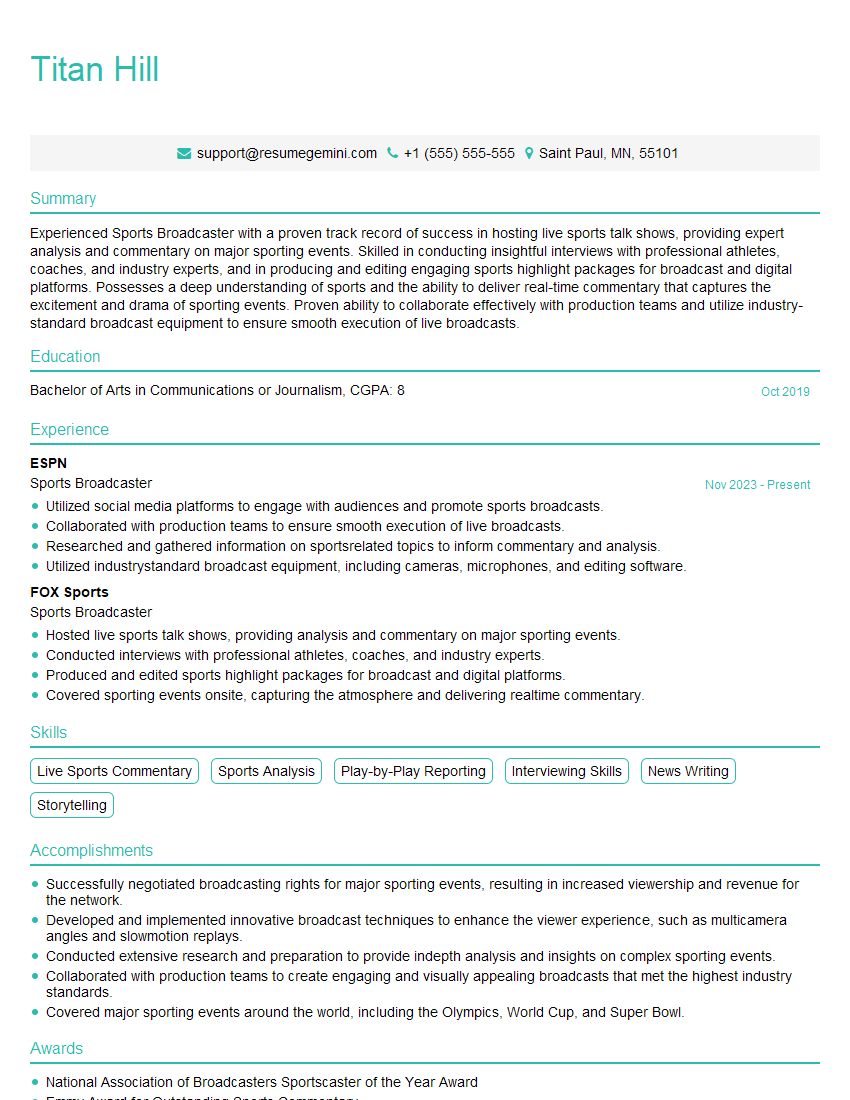
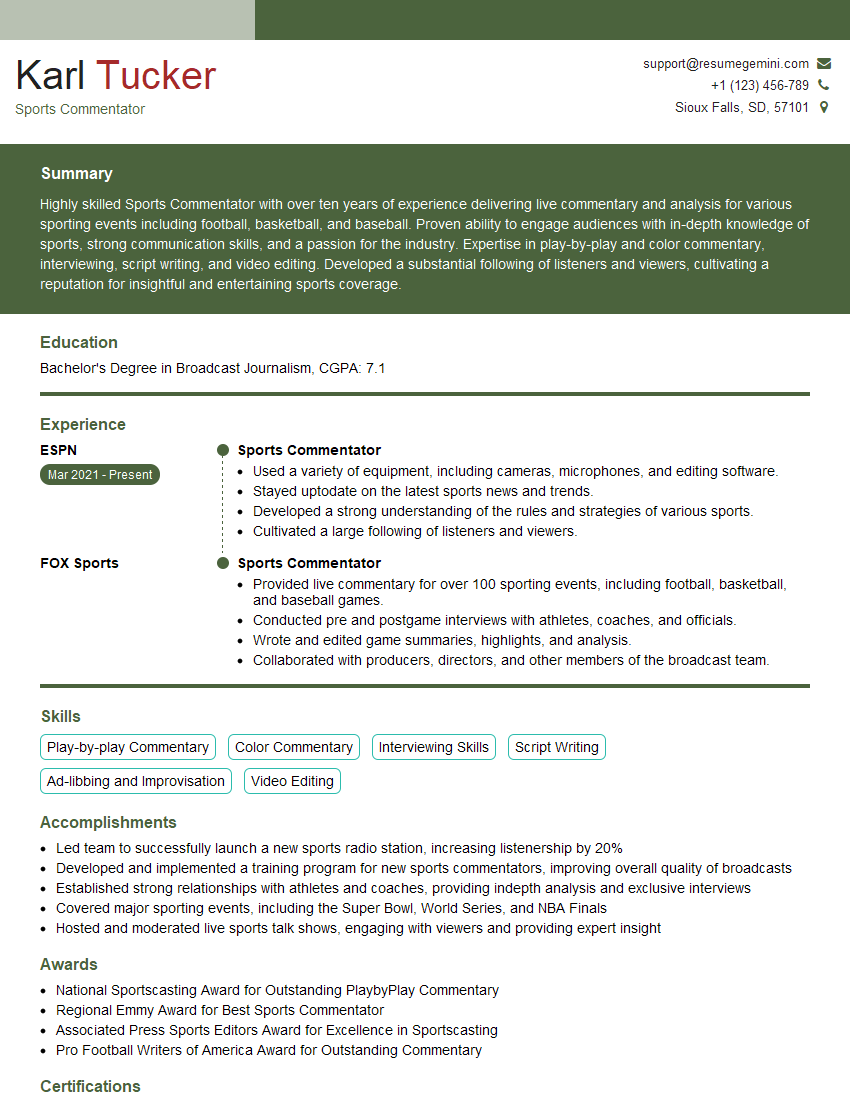
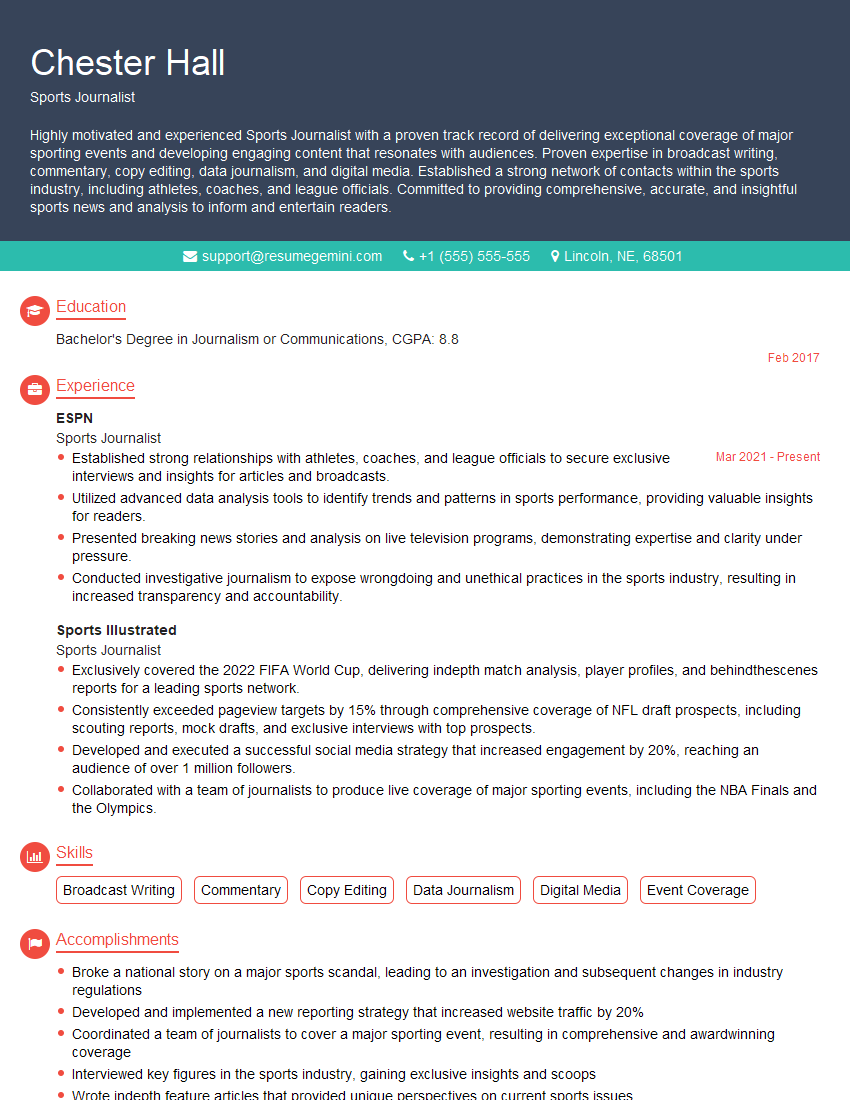
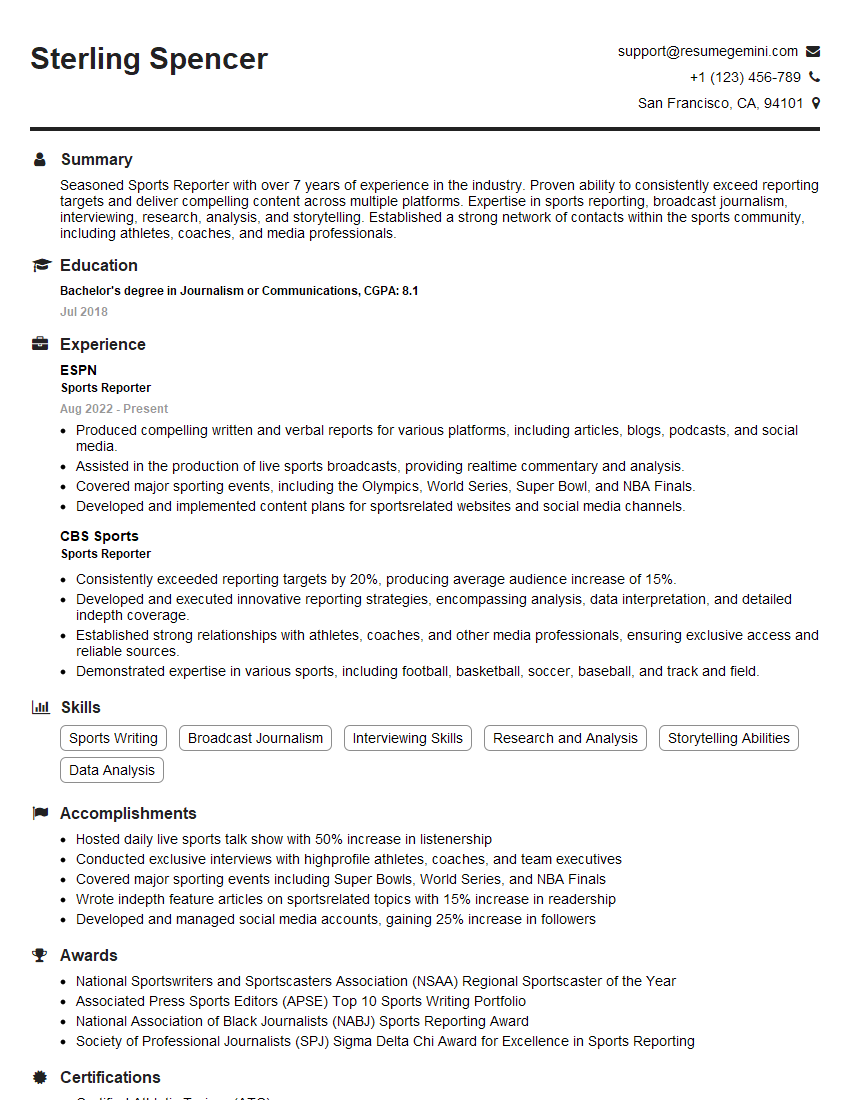
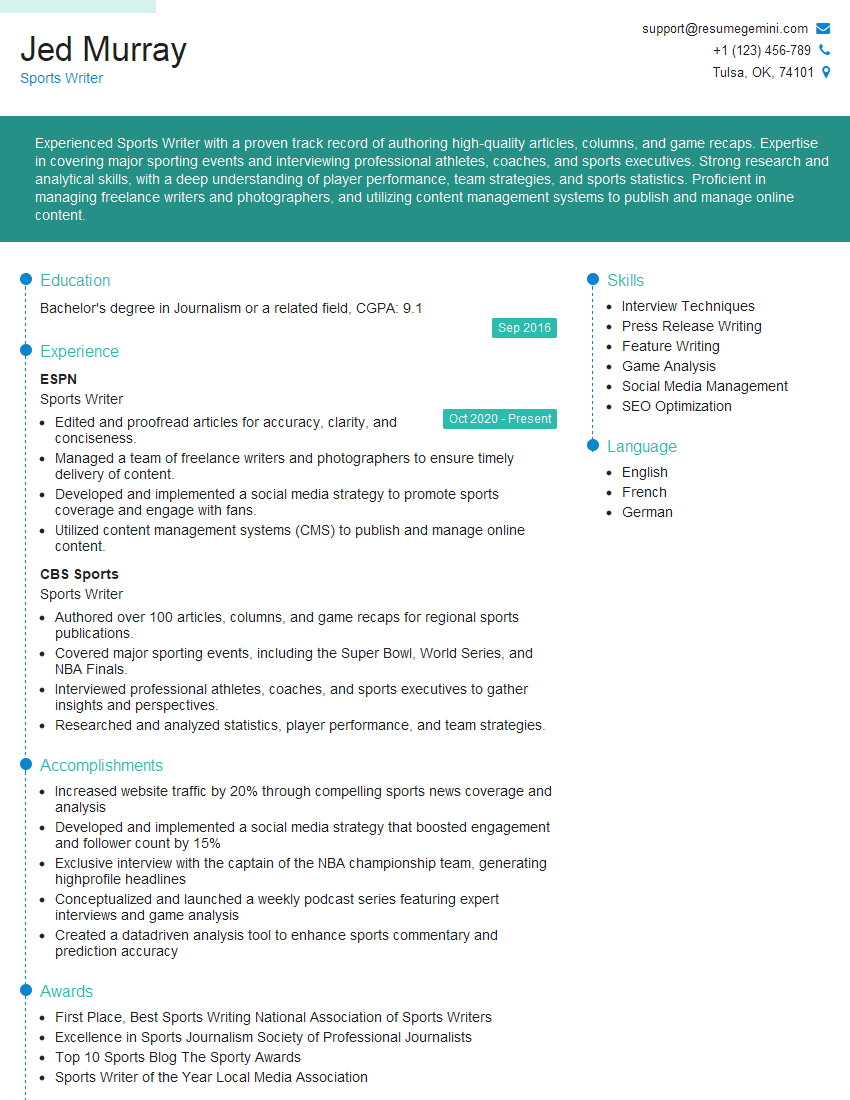
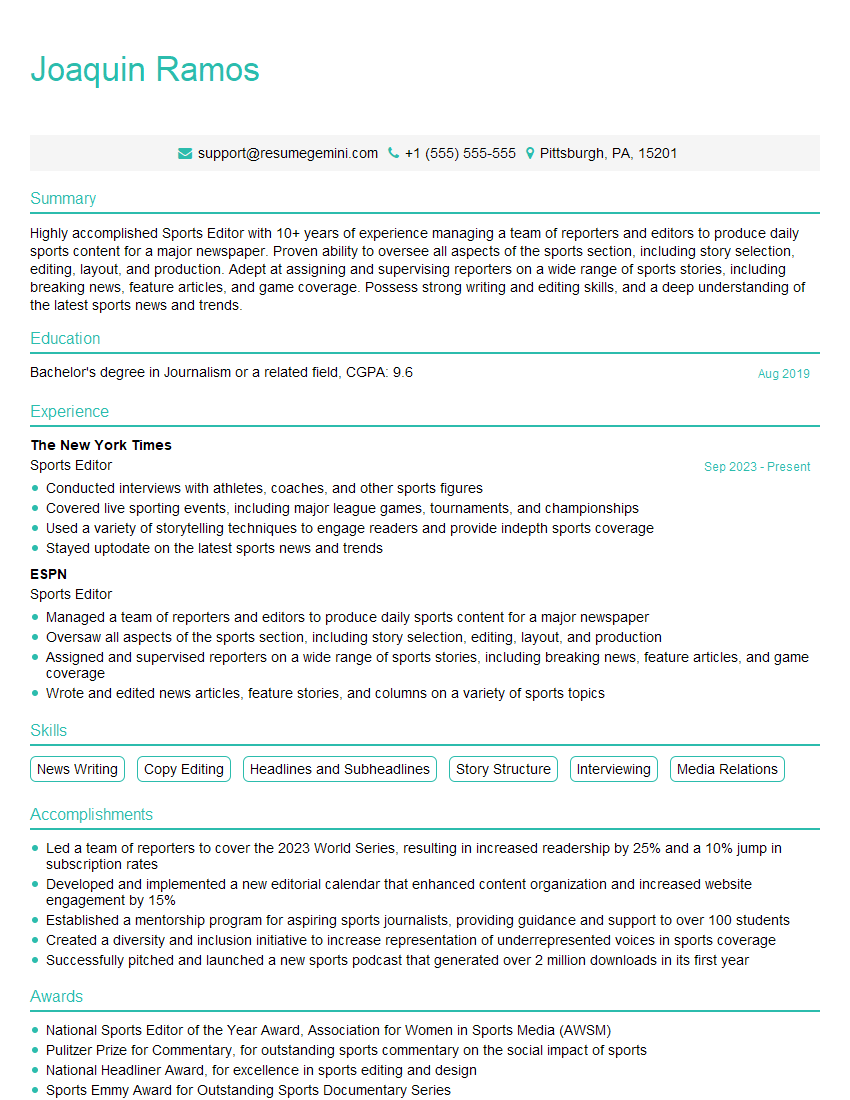
Mastering these key areas significantly boosts your chances of success in the dynamic world of sports media and broadcasting. A strong, ATS-friendly resume is crucial for getting your foot in the door. To create a resume that truly showcases your skills and experience, we highly recommend using ResumeGemini. ResumeGemini provides a streamlined and effective way to build a professional resume, ensuring your qualifications stand out. Examples of resumes tailored to the Sports Media and Broadcasting field are available within ResumeGemini to help guide you. Take the next step towards your dream career today!
Explore more articles
Users Rating of Our Blogs
Share Your Experience
We value your feedback! Please rate our content and share your thoughts (optional).
What Readers Say About Our Blog
Very informative content, great job.
good