Unlock your full potential by mastering the most common Navigation and Maritime Warfare Principles interview questions. This blog offers a deep dive into the critical topics, ensuring you’re not only prepared to answer but to excel. With these insights, you’ll approach your interview with clarity and confidence.
Questions Asked in Navigation and Maritime Warfare Principles Interview
Q 1. Explain the difference between celestial and electronic navigation.
Celestial navigation relies on the precise observation of celestial bodies—the sun, moon, stars, and planets—to determine a vessel’s position. It’s a time-honored method, requiring knowledge of astronomy and spherical trigonometry. In contrast, electronic navigation uses electronic instruments like GPS, radar, and other electronic positioning systems to determine position and other navigational parameters. Think of it like this: celestial navigation is like using a star chart and a sextant, while electronic navigation is like using a high-tech GPS device.
Celestial navigation is independent of external signals or infrastructure, making it invaluable during emergencies or in areas with poor electronic coverage. Electronic navigation offers real-time updates, greater accuracy (generally), and is often automated, reducing workload. However, it’s dependent on the functioning of the electronic equipment and the availability of satellite signals.
Q 2. Describe the process of using a sextant for celestial navigation.
Using a sextant for celestial navigation involves several steps. First, you identify a celestial body whose altitude (angle above the horizon) you’ll measure. You then carefully adjust the sextant to align the image of the celestial body with the horizon. The sextant’s scale then indicates the altitude angle. This measurement is made with precision, minimizing errors due to movement.
Simultaneously, you note the precise time of the observation, typically using a chronometer set to Greenwich Mean Time (GMT). This time, along with the measured altitude and the celestial body’s known coordinates (obtained from nautical almanacs), allows you to calculate your latitude and sometimes longitude. Calculating the position requires detailed calculations, often simplified through the use of pre-calculated tables or navigational software.
Imagine trying to pinpoint your location on Earth using the height of a known star in the sky – that’s essentially what a sextant allows you to do. The process requires practice and meticulous attention to detail to achieve accurate results.
Q 3. How do you correct for magnetic variation and deviation in compass readings?
Magnetic variation and deviation are two sources of error affecting compass readings. Magnetic variation is the difference between true north (the geographic North Pole) and magnetic north (where the Earth’s magnetic field points). It varies with location and is shown on nautical charts. Deviation is the error caused by magnetic interference from the vessel itself—metal in the hull, electronic equipment, etc.
To correct for magnetic variation, you consult a nautical chart or navigational publication to find the variation for your location. If the variation is, for example, 15° East, and your compass reads 100°, you subtract 15° (for East variation) to obtain the magnetic heading (100° – 15° = 85°). To correct for deviation, you perform a deviation check using known landmarks or by aligning with a known magnetic heading. The difference between the compass heading and the magnetic heading is the deviation. Deviation correction tables are typically created for the vessel.
Let’s illustrate with an example. If your compass reads 100°, variation is 15° East, and deviation at 100° is 2° West, the calculation would be: 100° – 15° + 2° = 87°. This 87° would be your true heading.
Q 4. What are the various types of radar used in maritime navigation?
Several types of radar are used in maritime navigation, each serving a specific purpose:
- Navigation Radar: The most common type, used to detect other vessels, landmasses, and navigational hazards. It provides a visual representation of surrounding objects, assisting in collision avoidance and safe navigation.
- X-band Radar: Uses a shorter wavelength, providing higher resolution but with shorter range. Ideal for detecting smaller targets and in close-quarters maneuvering.
- S-band Radar: Employs a longer wavelength, offering greater range but lower resolution. Better for detecting larger targets in poor weather conditions.
- Harbour Radar: Specialized for use in confined waters, offering high resolution and short range.
- Weather Radar: Detects precipitation, allowing navigators to plan routes to avoid storms and severe weather.
The choice of radar depends on the specific navigational needs and the operational environment. For example, a large container ship navigating across an ocean would benefit from S-band radar for its longer range, while a tugboat maneuvering in a busy harbor would use X-band radar for its superior resolution in close proximity.
Q 5. Explain the principles of GPS and its limitations in maritime environments.
GPS (Global Positioning System) uses a constellation of satellites orbiting Earth to provide precise location data. Receivers on vessels calculate their position by measuring the time it takes for signals from multiple satellites to reach them. This time difference allows for the precise calculation of latitude, longitude, and altitude.
However, GPS has limitations in maritime environments. Signal blockage from landmasses, structures, or even heavy weather can disrupt reception. Atmospheric conditions like ionospheric and tropospheric delays can affect the accuracy of the signals. Multipath errors, where signals bounce off objects before reaching the receiver, also reduce accuracy. Moreover, the accuracy of GPS can be intentionally degraded for security reasons in certain areas.
In summary, while GPS is a powerful tool, mariners must be aware of its limitations and use it in conjunction with other navigational methods to ensure safe navigation, especially in challenging environments. This is why other methods like dead reckoning, celestial navigation, and electronic chart displays (ECDIS) are still critical parts of maritime navigation.
Q 6. Describe the different types of nautical charts and their uses.
Nautical charts are indispensable tools for maritime navigation, depicting various information essential for safe passage. Different types cater to specific needs:
- General Charts: Provide a broad overview of an area, showing coastlines, depths, navigational hazards, and aids to navigation. Suitable for planning longer voyages.
- Coastal Charts: Offer greater detail of coastal areas, including harbors, inlets, and other features relevant for coastal navigation.
- Harbor Charts: Show detailed information about ports and harbors, including mooring areas, docks, and depths, vital for safe harbor operations.
- Special Purpose Charts: These charts may focus on specific aspects, such as currents, tides, or ice conditions. They are designed for specialized situations and provide critical data beyond standard navigational information.
The choice of chart depends on the voyage and vessel. A long-distance journey would require general charts, while navigating a busy harbor needs detailed harbor charts. Mariners must carefully select appropriate charts for their navigational needs.
Q 7. How do you calculate a vessel’s position using GPS coordinates and dead reckoning?
Combining GPS coordinates with dead reckoning (DR) provides a robust navigational solution. GPS provides a precise, instantaneous position fix. DR, on the other hand, is an estimation of the vessel’s position based on its known previous position, course, speed, and elapsed time. It’s crucial for situations where GPS is unavailable or unreliable.
To combine the two, you first obtain your GPS position (latitude and longitude). Then, using your vessel’s log (which records speed and course), you calculate the estimated position using DR. By comparing your GPS position to your DR position, you can detect any discrepancies, which might indicate errors in either the GPS reading or the DR calculations. This comparison provides a more reliable and comprehensive understanding of the vessel’s location and movement.
For example, if your GPS indicates a position of 34°N 77°W and your DR position, after accounting for course and speed, is 34.1°N 77.2°W, the discrepancy indicates a possible current affecting the vessel’s track or a small GPS error. Analyzing this difference informs course corrections and enhances navigational safety.
Q 8. Explain the concept of COLREGs and their importance in collision avoidance.
COLREGs, or the International Regulations for Preventing Collisions at Sea, are a set of rules designed to prevent collisions and promote safe navigation at sea. Think of them as the ‘rules of the road’ for ships. They cover everything from the responsibilities of vessels in different situations (like meeting head-on or crossing) to the use of lights and sound signals. Their importance is paramount; failure to adhere to COLREGs can lead to catastrophic accidents, loss of life, and significant environmental damage.
For example, a vessel restricted in her ability to maneuver (like a fishing vessel actively trawling) displays specific lights and must take action to avoid a collision, even if another vessel has the right-of-way. Similarly, two vessels on a crossing course must give way and take action to avoid collision. COLREGs dictate who should give way and how actions should be taken.
Q 9. Describe the procedures for navigating a vessel through a narrow channel.
Navigating a narrow channel requires careful planning and execution. First, a thorough chart review is crucial to identify potential hazards like shallow water, restricted visibility areas, or known traffic congestion. Next, consider the vessel’s draft and maneuverability: you need sufficient water depth and adequate turning radius. Once the plan is in place, maintain a safe speed appropriate for the channel’s conditions and the vessel’s maneuverability. Constant monitoring of radar and AIS is necessary to detect other vessels, and the use of appropriate sound signals is mandatory to alert others to your presence and intentions. Maintaining a good lookout and adhering to the appropriate COLREGs are vital throughout the transit. Think of it like driving through a busy, winding road; careful planning, speed control, and constant awareness are key to a safe passage.
Q 10. What are the key elements of a ship’s maneuvering characteristics?
A ship’s maneuvering characteristics describe how the vessel responds to helm and engine commands. Key elements include:
- Turning circle: The diameter of the circle the vessel describes when making a full turn at full rudder.
- Advance: The distance a vessel travels from when the rudder is put over to when she starts to turn.
- Transfer: The distance a vessel moves laterally from the point of initiation to the center of the turn.
- Response time: The delay between helm input and the vessel’s actual response.
- Rate of turn: How quickly the vessel changes heading.
- Speed of advance: The speed at which the vessel moves ahead during a turn.
These characteristics are affected by factors like hull form, propeller type, and the vessel’s speed. Understanding these is critical for safe and effective navigation, especially in confined waters or during emergency maneuvers. For example, a large tanker has a much larger turning circle and slower response time than a nimble tugboat, requiring more lead time for any maneuver.
Q 11. Explain the concept of ‘rule of the road’ in maritime navigation.
The ‘rule of the road’ in maritime navigation refers to the set of rules and conventions that govern the conduct of vessels at sea to prevent collisions. These rules, primarily found in COLREGs, establish responsibilities for vessels in various situations. The fundamental principle is to avoid causing a collision and maintain a safe distance from other vessels. Like road traffic rules, one vessel may have the ‘right-of-way,’ but this doesn’t absolve the other vessel from the responsibility of avoiding a collision. Both vessels must act to prevent a potential accident, even if one has priority. It’s about shared responsibility and proactive navigation.
A common example is the ‘stand-on’ and ‘give-way’ rule for crossing vessels. The give-way vessel must alter its course and speed to avoid a collision; however, the stand-on vessel must maintain course and speed unless it becomes apparent that the give-way vessel isn’t taking appropriate action.
Q 12. How do you handle a navigation emergency, such as equipment failure?
Handling a navigation emergency, such as equipment failure (e.g., GPS failure, engine failure, or communication breakdown), requires immediate action. First, assess the situation: determine the nature and extent of the failure. Then, initiate emergency procedures as appropriate. This might involve switching to backup systems (like paper charts and hand-held GPS), reducing speed, notifying relevant authorities (like the Coast Guard), and adjusting course to avoid hazards. If engine failure occurs, consider drifting into a safe area, using an alternative means of propulsion if available, or deploying any emergency equipment (like life rafts or flares).
Maintaining a calm and organized approach is crucial. Effective communication with the crew and other vessels is key to mitigating the risk. In the event of a critical failure, a well-rehearsed emergency plan is the best defence. Regular drills and training ensure the crew is proficient in handling various emergency scenarios.
Q 13. Describe the different types of naval weaponry and their applications.
Naval weaponry is diverse and constantly evolving, but some key types include:
- Guns: From small caliber guns for close-range defense to large-caliber naval guns for long-range bombardment.
- Missiles: These include anti-ship missiles (AShM) designed to attack enemy vessels, anti-aircraft missiles (AAM) for defending against air attacks, and land-attack cruise missiles (LACM). AShM, for instance, can be launched from ships, submarines, and aircraft.
- Torpedoes: Underwater weapons used primarily against submarines and surface ships. They’re typically launched from submarines, surface ships, or aircraft.
- Depth charges: Explosives designed to attack submarines underwater.
- Mines: Explosive devices laid underwater to damage or destroy ships.
The application of these weapons depends on the specific mission and target. For instance, a frigate might employ AShM and AAM for offensive and defensive capabilities, while a submarine relies on torpedoes and missiles for stealth attacks. Technological advancements continuously improve these weapons’ range, accuracy, and lethality.
Q 14. Explain the principles of anti-submarine warfare (ASW).
Anti-submarine warfare (ASW) focuses on detecting, tracking, and destroying enemy submarines. It’s a complex undertaking involving multiple sensors and weapons systems working in concert. Key principles include:
- Passive sonar: Listening for submarine sounds without emitting any detectable signals.
- Active sonar: Sending out sound waves and analyzing the echoes to detect submarines. This risks revealing the searcher’s position.
- Magnetic anomaly detection (MAD): Detecting the magnetic field disturbance caused by a submarine.
- Hydrophones: Underwater microphones used to detect submarine noise.
- Sonar buoys: Autonomous listening devices deployed to broaden the search area.
- ASW aircraft: Equipped with sonar buoys, MAD, and other detection equipment.
- ASW helicopters: Provide rapid deployment of sensors and weapons.
ASW is a coordinated effort; ships, aircraft, and submarines might collaborate to locate and engage a target. Effective ASW necessitates a thorough understanding of submarine tactics, sensor capabilities, and the environment.
Q 15. What are the key elements of a successful maritime warfare strategy?
A successful maritime warfare strategy hinges on several key elements, all interconnected and mutually reinforcing. Think of it like a well-oiled machine – if one part fails, the whole system suffers.
- Clear Objectives and Goals: What are you trying to achieve? Is it to protect sea lanes, project power, or conduct a specific operation? Defining clear, measurable objectives is paramount.
- Superior Intelligence: Knowing your enemy is half the battle. This includes their capabilities, intentions, and vulnerabilities. Detailed intelligence allows for effective targeting and resource allocation.
- Effective Command and Control (C2): Seamless communication and decision-making are vital, especially in dynamic environments. C2 ensures coordinated action across multiple platforms and units.
- Operational Flexibility and Adaptability: The maritime environment is unpredictable. A successful strategy must be adaptable to changing circumstances, allowing for rapid responses to evolving threats.
- Integrated Capabilities: Combining different assets – ships, aircraft, submarines, and cyber capabilities – effectively maximizes impact and minimizes risk. Each element supports and complements the others.
- Logistics and Sustainment: Sustaining operations over extended periods requires a robust logistics system for fuel, supplies, and personnel. Without proper resupply, even the best strategy falters.
- Force Protection: Protecting your own assets is fundamental. This involves employing defensive measures, maintaining situational awareness, and effective risk management to minimize casualties and losses.
For example, during the Falklands War, the British Navy’s success was partly due to superior intelligence gathering and a well-executed, albeit initially hastily formed, operational plan which demonstrated effective adaptation to a fast-moving situation.
Career Expert Tips:
- Ace those interviews! Prepare effectively by reviewing the Top 50 Most Common Interview Questions on ResumeGemini.
- Navigate your job search with confidence! Explore a wide range of Career Tips on ResumeGemini. Learn about common challenges and recommendations to overcome them.
- Craft the perfect resume! Master the Art of Resume Writing with ResumeGemini’s guide. Showcase your unique qualifications and achievements effectively.
- Don’t miss out on holiday savings! Build your dream resume with ResumeGemini’s ATS optimized templates.
Q 16. Describe the roles of different sensors in maritime warfare operations.
Sensors are the eyes and ears of maritime warfare, providing crucial information about the surrounding environment. Different sensors play distinct roles, often working together to paint a complete picture.
- Radar: Detects surface and air targets through radio waves. Different types exist, including surface search radar, air search radar, and fire-control radar (used for weapon targeting).
- Sonar (Sound Navigation and Ranging): Uses sound waves to detect underwater targets like submarines and mines. Active sonar emits sound pulses, while passive sonar listens for sounds emitted by targets.
- Electronic Support Measures (ESM): Detects and analyzes electromagnetic emissions from enemy radars, communications, and electronic warfare systems, providing intelligence on enemy activity and capabilities.
- Electro-Optical (EO) Sensors: Include infrared (IR) cameras, thermal imagers, and television cameras, providing visual information, especially useful at night or in low-visibility conditions. These can detect surface and air targets.
- Satellite Surveillance: Satellites provide wide-area coverage, monitoring vessel movements and providing valuable intelligence, even in remote areas.
Imagine a submarine hunter using sonar to locate an enemy submarine. Simultaneously, ESM is used to detect any communications coming from the submarine or accompanying surface ships while the ship’s radar scans the surface and airspace for aerial and surface threats. These sensors work in concert, providing a clearer picture of the maritime battle space.
Q 17. How do you assess threats and risks in a maritime environment?
Threat and risk assessment in a maritime environment is a complex process requiring a multi-faceted approach. It’s not just about identifying potential dangers; it’s about understanding their likelihood and potential impact.
- Intelligence Gathering: Collect all available information about potential threats, including historical data, enemy capabilities, and current geopolitical situations.
- Environmental Factors: Consider weather conditions, sea state, and navigational hazards that could impact operations and increase risks.
- Threat Prioritization: Analyze threats based on their likelihood and potential consequences. High-probability, high-impact threats should receive priority attention.
- Vulnerability Assessment: Identify the vulnerabilities of your own assets and develop mitigation strategies to reduce the impact of potential threats.
- Risk Mitigation: Implement strategies to reduce or eliminate risks. This could include route planning to avoid hazardous areas, deploying defensive systems, or increasing security measures.
For instance, a convoy transiting a piracy-prone area would assess the risk based on historical piracy activity in the region, current intelligence reports about pirate activity, and the convoy’s defensive capabilities. They might choose an alternative route, increase speed, or deploy armed guards to mitigate risk.
Q 18. Explain the importance of intelligence gathering in maritime operations.
Intelligence gathering is crucial for maritime operations; it provides the foundation for informed decision-making and successful mission execution. Lack of adequate intelligence can lead to costly mistakes and mission failure.
- Situational Awareness: Intelligence provides a comprehensive understanding of the operating environment, including enemy capabilities, intentions, and activities.
- Targeting and Weapon Employment: Accurate intelligence pinpoints targets for precise strikes and ensures the effective use of limited resources.
- Force Protection: Intelligence on potential threats enables appropriate defensive measures and reduces the risk of surprise attacks.
- Strategic Planning: Understanding enemy capabilities and intentions is vital in developing effective strategies and war plans.
- Operational Planning: Intelligence informs route planning, tactical deployments, and the selection of appropriate assets for specific missions.
Consider the use of SIGINT (signals intelligence) to intercept and analyze enemy communications, revealing their plans and intentions before they launch an attack. This is a critical component in maintaining the advantage.
Q 19. Describe different types of naval vessels and their roles.
Naval vessels are highly specialized, each designed for a specific role. Here are a few examples:
- Aircraft Carriers: Mobile air bases, providing air power projection far from land bases. They carry fighter jets, helicopters, and early warning aircraft.
- Destroyers/Cruisers: Multi-mission warships, providing air defense, anti-submarine warfare, and surface combat capabilities. They often serve as flagship for task groups.
- Amphibious Assault Ships: Designed to transport and land troops and equipment, supporting amphibious operations.
- Submarines: Operate underwater, capable of long-range patrols, anti-submarine warfare, and strategic strike missions (carrying ballistic missiles).
- Littoral Combat Ships (LCS): Designed for shallow-water operations, performing mine countermeasures, anti-submarine warfare, and surface warfare tasks.
- Frigates: General-purpose escort ships, primarily used for anti-submarine and anti-surface warfare.
Each vessel’s role integrates into the overall naval strategy, working in conjunction with other ships to achieve the mission objective. The different classes complement one another, creating a balanced naval force.
Q 20. How do you maintain situational awareness during a maritime operation?
Maintaining situational awareness (SA) is paramount in maritime operations. It’s about having a comprehensive understanding of everything happening around you – your own forces, your enemy, and the environment.
- Sensor Fusion: Combining data from multiple sensors (radar, sonar, ESM, EO) to create a single, coherent picture of the situation.
- Intelligence Analysis: Integrating intelligence reports to understand enemy intentions and predict their actions.
- Communication Networks: Efficient communication across all platforms and units ensures everyone has the same information.
- Information Management: Organizing and prioritizing information to focus on the most critical aspects of the situation.
- Continuous Monitoring: Regularly updating SA by constantly scanning the environment and reacting to changes.
Imagine a naval task group conducting a maritime interception operation. Maintaining SA requires constant monitoring of radar and ESM, analyzing intelligence reports on the target’s movements, and coordinating information across all ships in the group via communication networks. Failing to maintain situational awareness could lead to surprise attacks or mission failure.
Q 21. What are the communication protocols used in maritime warfare?
Maritime warfare relies on secure and reliable communication protocols, ensuring timely and accurate information exchange. Different protocols cater to various needs and security levels.
- Link 11/16: Tactical data links used for real-time exchange of information between naval vessels and aircraft, enabling coordinated operations.
- HF (High-Frequency) Radio: Used for long-range communication, particularly vital for submarines and ships operating far from shore.
- UHF (Ultra-High Frequency) Radio: Used for shorter-range communications, often with higher bandwidth for data transmission.
- Satellite Communications: Provides global communication coverage, vital for ships and aircraft operating in remote areas.
- Encrypted Communication Systems: Secure communications are vital to prevent interception and ensure the confidentiality of sensitive information.
The choice of communication protocol depends on the distance, security requirements, and type of information being transmitted. A submarine might use HF for long-range contact with headquarters, while a surface action group would use Link 16 for close-quarters coordination.
Q 22. Explain the concept of electronic warfare (EW) in a maritime context.
Electronic Warfare (EW) in a maritime context encompasses the military use of the electromagnetic spectrum to gain an advantage over an opponent. Think of it as a battle fought with radio waves, radar signals, and other forms of electromagnetic energy, rather than bullets or missiles. It involves three core disciplines:
- Electronic Support (ES): This is about passively listening and gathering information. Imagine having highly sensitive ears that can pick up enemy radar transmissions, communications, and other signals to determine their location, capabilities, and intentions. We use sophisticated sensors to detect, identify, and locate enemy emitters, providing crucial situational awareness.
- Electronic Attack (EA): This is the offensive part, disrupting or denying the enemy’s use of the electromagnetic spectrum. This can range from jamming enemy radar to disrupting their communications, effectively blinding or silencing them. A classic example is jamming an enemy’s navigation system, forcing them to rely on less accurate methods.
- Electronic Protection (EP): This is the defensive side, protecting friendly forces from enemy EW attacks. This could involve using countermeasures to jam enemy jamming signals, employing stealth technologies to reduce our radar signature, or implementing secure communications systems to prevent eavesdropping. Imagine using a shield to deflect enemy attacks while maintaining clear communication with your team.
In maritime warfare, EW is crucial for protecting our ships, submarines, and aircraft. It plays a vital role in anti-submarine warfare, surface warfare, and air defense, significantly impacting the outcome of engagements.
Q 23. How do you manage personnel during a maritime warfare operation?
Managing personnel during a maritime warfare operation demands a multifaceted approach prioritizing safety, morale, and efficiency. It starts with meticulous pre-operation training. This isn’t just about weapon systems; it includes comprehensive stress management techniques, communication protocols under pressure, and emergency procedures. During the operation, clear and consistent leadership is paramount. A well-defined chain of command ensures rapid decision-making and reduces confusion in a high-stress environment.
Regular communication updates keep everyone informed, fostering a sense of shared purpose and reducing uncertainty. Psychological support is crucial; we have embedded mental health professionals who can provide counseling and debriefing after high-intensity events. Adequate rest and rotation schedules are essential to prevent fatigue and maintain peak performance. Finally, clear post-operation debriefings allow for lessons learned and improved future operations. A well-managed team, both mentally and physically prepared, is the cornerstone of a successful maritime operation.
Q 24. What is your understanding of naval logistics and supply chain management?
Naval logistics and supply chain management are critical for sustaining naval operations. It’s about getting the right materials, from ammunition and food to spare parts and fuel, to the right place at the right time. This isn’t simply about inventory; it involves complex forecasting, efficient transportation networks, and robust storage facilities, both at sea and on land. Consider a naval task force deployed far from home; reliable resupply is vital to their mission success.
We use sophisticated software systems to track inventory, optimize routes, and predict future needs. These systems integrate data from various sources, such as consumption rates, maintenance schedules, and projected mission requirements. Effective management minimizes delays, reduces costs, and ensures the operational readiness of the fleet. Challenges include maintaining a secure and efficient supply chain in unpredictable environments, managing fluctuating fuel prices, and dealing with potential disruptions like natural disasters or piracy.
Q 25. Describe the importance of international maritime law in naval operations.
International maritime law, primarily governed by the United Nations Convention on the Law of the Sea (UNCLOS), is fundamental to naval operations. It establishes rules for navigation, territorial waters, and the use of the sea, providing a framework for peaceful interactions between nations. Adherence to UNCLOS is critical for maintaining international stability and avoiding escalations.
For instance, UNCLOS defines the limits of territorial waters, exclusive economic zones, and the high seas, dictating where naval vessels can operate without violating another nation’s sovereignty. Understanding and complying with UNCLOS ensures responsible and lawful naval activities. It helps prevent unintended conflict, fosters cooperation, and enhances the legitimacy of our operations on the global stage. Violating UNCLOS can lead to serious diplomatic repercussions.
Q 26. How would you handle a hostile encounter at sea?
Handling a hostile encounter at sea requires a calm, measured, and decisive response. The first step is to assess the situation. This includes identifying the hostile actors, their capabilities, and their intentions.
We would prioritize communication, attempting to de-escalate the situation through established channels. This could involve radio communication or visual signals depending on the situation. Simultaneously, we’d increase our defensive posture – securing the ship, deploying defensive weaponry, and potentially preparing to maneuver to a more advantageous position.
If de-escalation fails, we would engage according to our rules of engagement (ROE) and standing orders. This decision would be made based on the level of threat, the potential for escalation, and the overall strategic context. Throughout the entire engagement, clear and concise communication among the crew is essential. After the encounter, we would document everything thoroughly, including damage assessment, casualty reports, and a comprehensive account of events. This is crucial for future analysis and potentially legal proceedings.
Q 27. Describe your experience with navigational software and systems.
My experience encompasses a wide range of navigational software and systems, from traditional chart plotters to the most advanced integrated navigation systems (INS). I am proficient in using electronic chart display and information systems (ECDIS), which have become the industry standard for modern navigation. I’m also familiar with GPS, inertial navigation systems, and various types of radar systems.
Furthermore, I have worked extensively with voyage management systems (VMS), which incorporate data from multiple sensors to optimize routes and monitor vessel performance. I understand the limitations and potential errors associated with each system and the importance of using multiple sources to verify information. The effective integration of this software improves safety, reduces risks, and enhances efficiency.
Q 28. How do you ensure the safety and security of personnel and equipment during operations?
Ensuring the safety and security of personnel and equipment during naval operations is a top priority. This begins with comprehensive risk assessments that identify potential hazards, from equipment malfunctions to enemy threats. We implement strict safety protocols, including regular safety drills, equipment inspections, and adherence to operational procedures.
We prioritize personal protective equipment (PPE) tailored to the specific tasks and environment. For example, specialized protective gear is used during hazardous material handling or underwater operations. Secure communication systems are vital for maintaining contact with personnel and coordinating responses during emergencies. Finally, post-operation debriefs are used to analyze safety incidents, learn from mistakes, and refine procedures. A safety-conscious culture, supported by rigorous training and strict adherence to protocols, underpins our commitment to the well-being of our personnel and equipment.
Key Topics to Learn for Navigation and Maritime Warfare Principles Interview
- Navigation Fundamentals: Chart reading and interpretation, celestial navigation, electronic navigation systems (GPS, ECDIS), position fixing techniques, and error analysis. Consider practical application in different weather conditions and scenarios.
- Maritime Law and Regulations: COLREGs (International Regulations for Preventing Collisions at Sea), maritime boundaries, search and rescue procedures, and environmental regulations. Think about how these impact decision-making in real-world scenarios.
- Maritime Warfare Tactics and Strategies: Anti-submarine warfare (ASW), surface warfare, mine warfare, and littoral combat. Explore different operational doctrines and their applications.
- Command and Control Systems: Understanding communication protocols, information sharing, and decision-making processes in a naval context. Consider how technology and human factors interplay.
- Weapons Systems and Sensors: Familiarity with various weapon systems, sensors, and their capabilities. Analyze their effectiveness in different operational environments.
- Intelligence and Reconnaissance: Gathering, processing, and utilizing intelligence to inform tactical and strategic decision-making. Consider different intelligence sources and their limitations.
- Operational Planning and Execution: Understanding the planning process, risk assessment, and contingency planning in maritime operations. Focus on practical problem-solving.
Next Steps
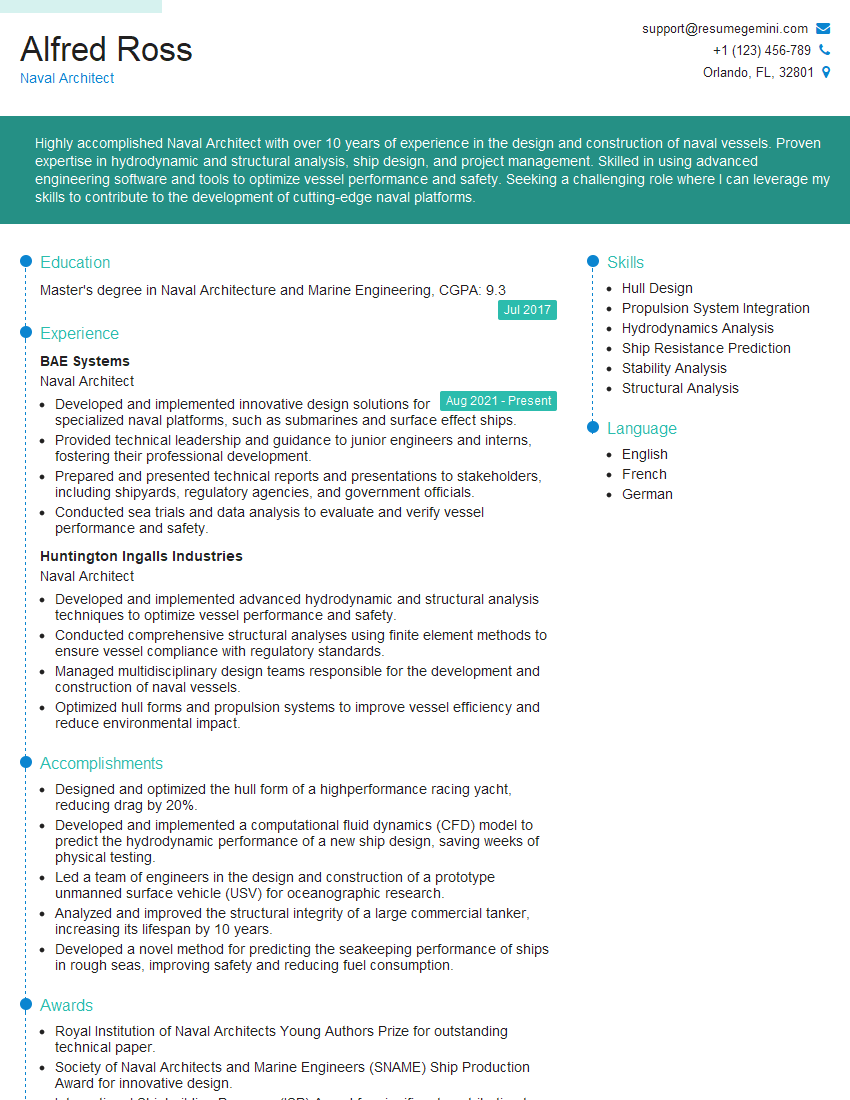
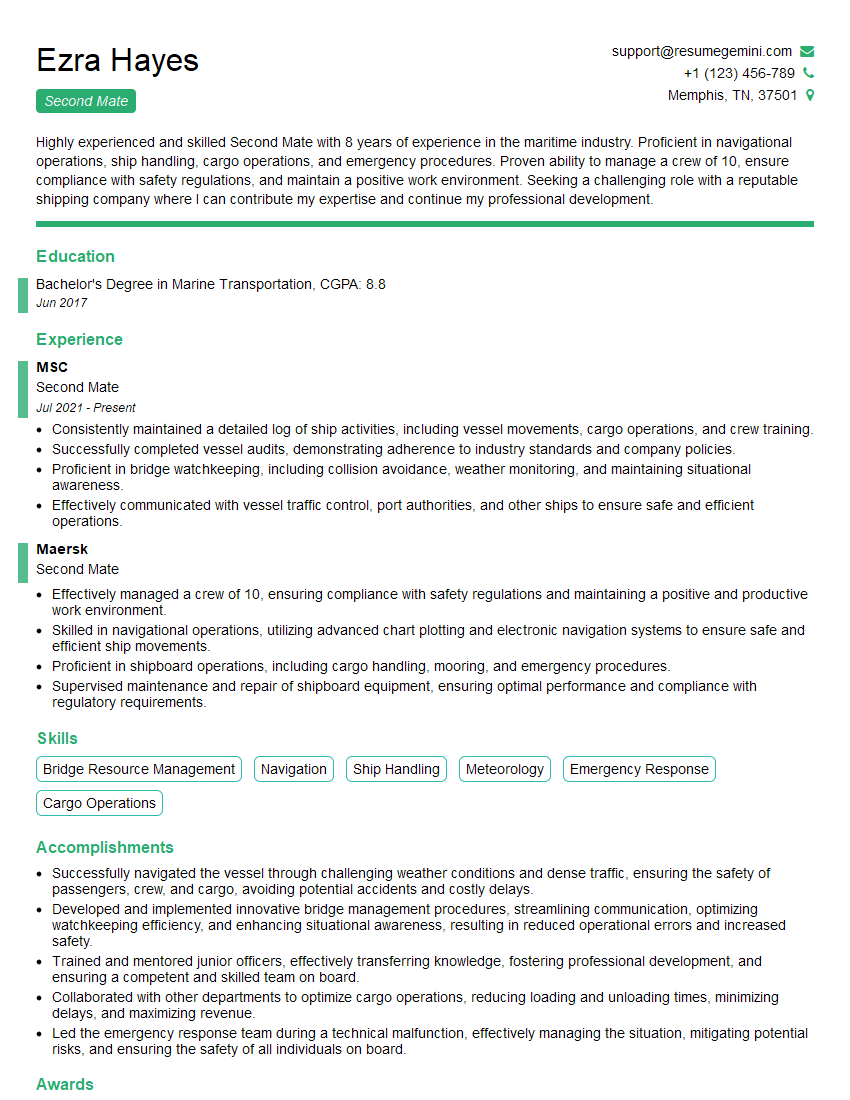
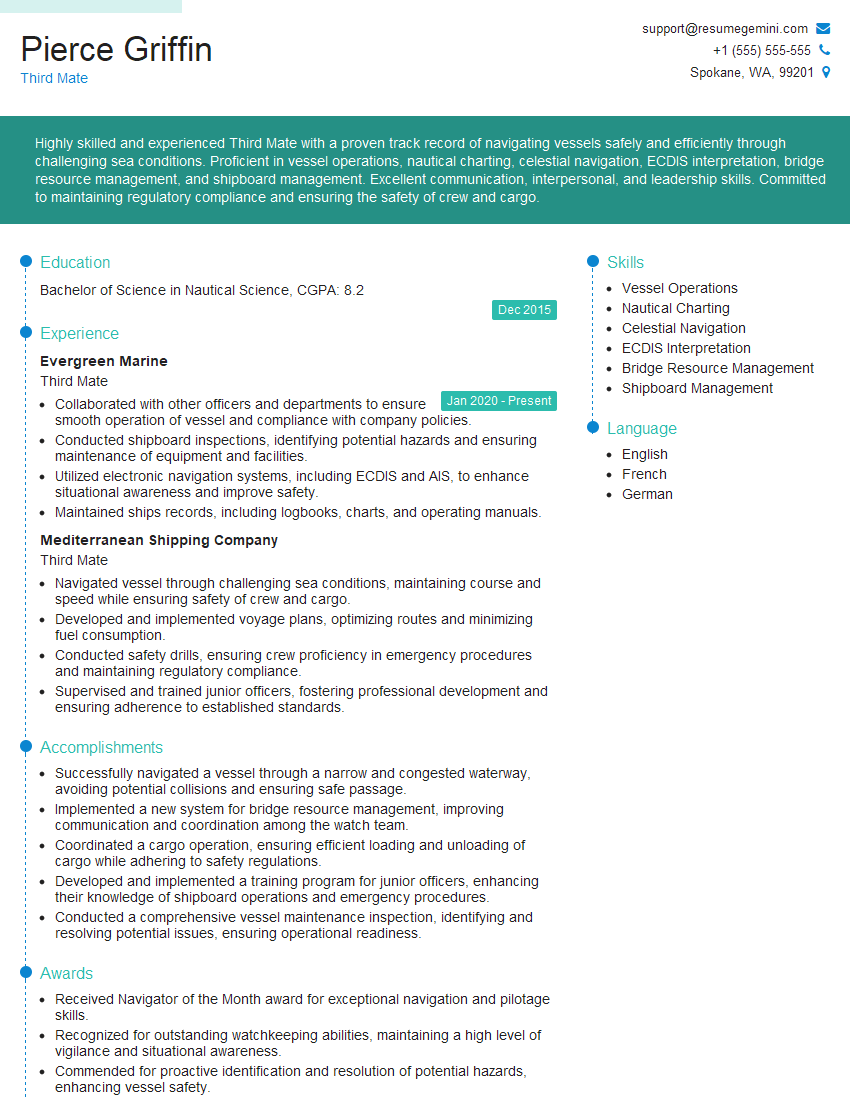
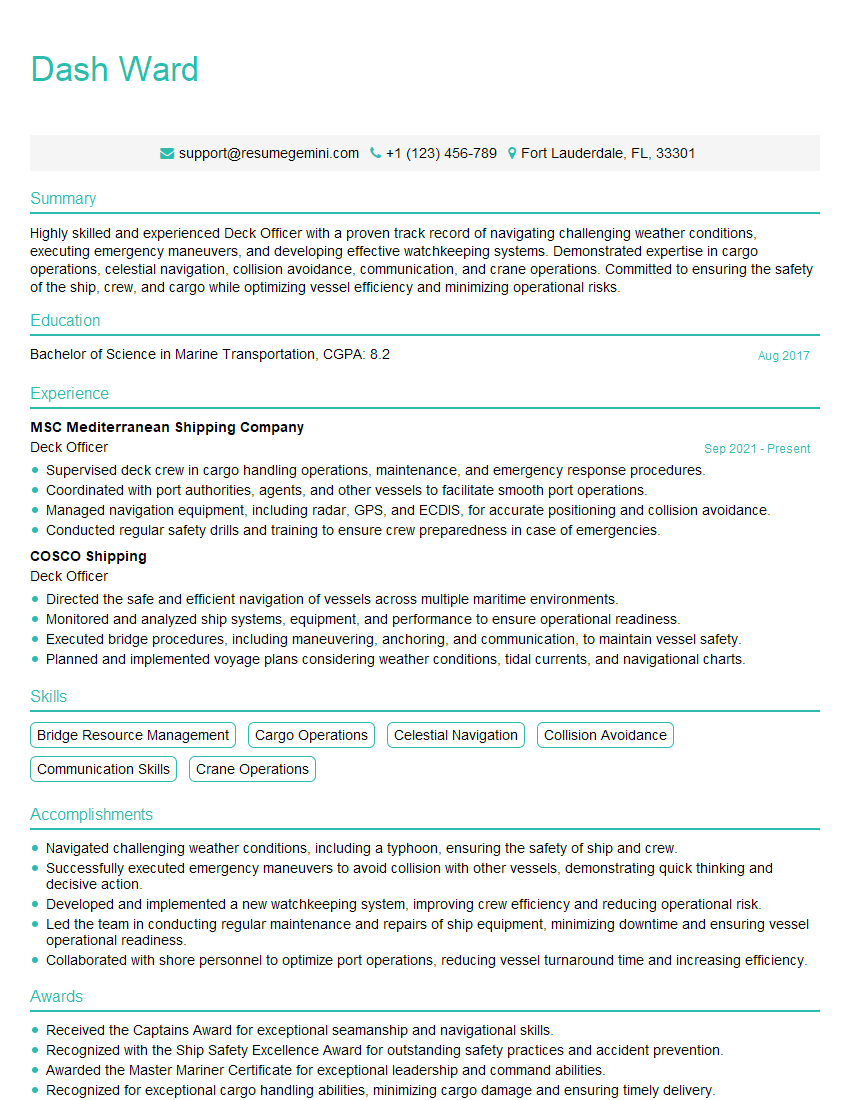
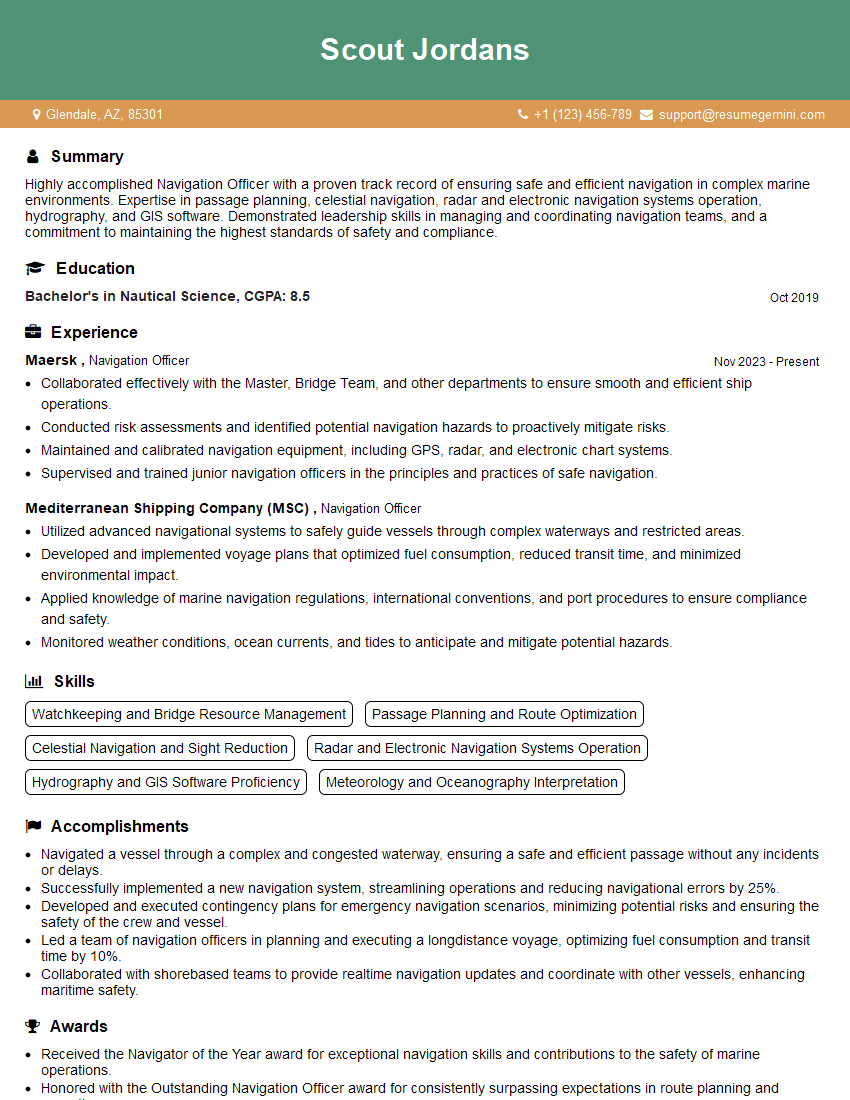
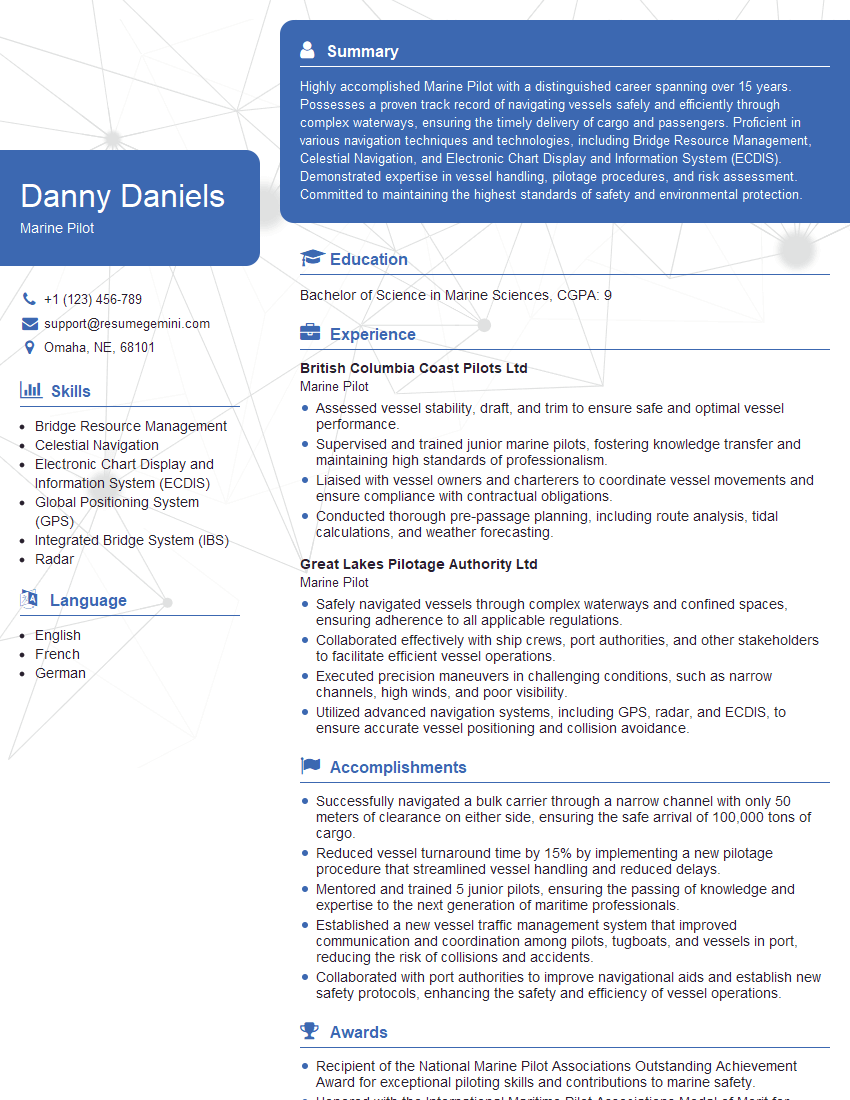
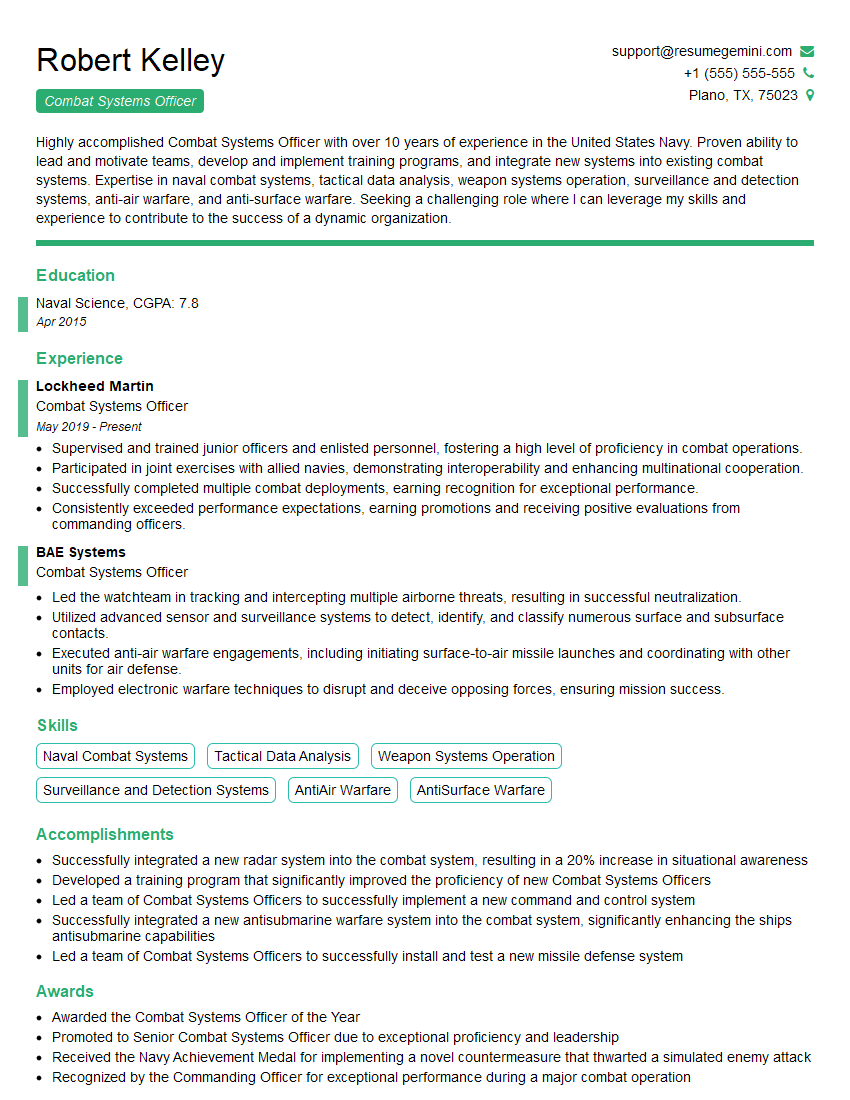
Mastering Navigation and Maritime Warfare Principles is crucial for career advancement in the maritime and defense sectors, opening doors to leadership roles and specialized assignments. A strong resume is your first impression – make it count! Build an ATS-friendly resume to ensure your application gets noticed by recruiters. ResumeGemini can help you craft a compelling and effective resume tailored to the specific demands of this field. We provide examples of resumes tailored to Navigation and Maritime Warfare Principles to give you a head start. Use ResumeGemini to unlock your full potential and confidently present your qualifications to prospective employers.
Explore more articles
Users Rating of Our Blogs
Share Your Experience
We value your feedback! Please rate our content and share your thoughts (optional).
What Readers Say About Our Blog
Very informative content, great job.
good