Are you ready to stand out in your next interview? Understanding and preparing for Rohde & Schwarz SignalShark Software interview questions is a game-changer. In this blog, we’ve compiled key questions and expert advice to help you showcase your skills with confidence and precision. Let’s get started on your journey to acing the interview.
Questions Asked in Rohde & Schwarz SignalShark Software Interview
Q 1. Describe your experience with Rohde & Schwarz SignalShark software.
My experience with Rohde & Schwarz SignalShark spans several years, encompassing various applications from basic spectrum analysis to complex vector signal analysis. I’ve utilized it extensively in a research setting for evaluating wireless communication systems, as well as in a commercial environment for testing and validating the performance of radio frequency (RF) equipment. My proficiency extends to configuring measurement setups, utilizing its advanced analysis features, and even developing custom scripts for automation and specialized analysis tasks. I’m comfortable working with different hardware interfaces and am familiar with troubleshooting connectivity and measurement issues. I’ve had the opportunity to work with various SignalShark versions, allowing me to understand the evolution of its capabilities and adapt to new features.
Q 2. Explain the different measurement types available in SignalShark.
SignalShark offers a comprehensive suite of measurement types, catering to a wide range of RF applications. These can be broadly categorized as:
- Spectrum Analysis: This fundamental measurement reveals the power distribution across a frequency range, crucial for identifying signal presence, interference sources, and channel occupancy. Think of it like looking at a landscape of radio frequencies.
- Vector Signal Analysis (VSA): This powerful tool provides in-depth analysis of modulated signals, allowing you to demodulate and examine the digital data, constellation diagrams, and other key performance indicators (KPIs). It’s like dissecting a complex signal to understand its content and quality.
- Channel Emulation: SignalShark can simulate realistic wireless channels, including multipath fading and impairments, crucial for testing the robustness of wireless devices.
- Power Measurements: Precise power measurements are essential in RF design and compliance testing. SignalShark provides accurate and calibrated power readings across various frequency ranges.
- Impulse Response Measurements: This analysis helps characterize the time-domain behavior of systems, often used in channel sounding and system identification.
- Modulation Analysis: SignalShark can identify and analyze various modulation schemes, determining parameters such as symbol rate, modulation type, and constellation diagrams.
The specific measurement types available often depend on the hardware and installed options associated with your SignalShark setup.
Q 3. How do you set up a basic measurement in SignalShark?
Setting up a basic measurement in SignalShark is intuitive. It generally involves these steps:
- Connect the device under test (DUT): Properly connect the DUT to the SignalShark using appropriate cables and attenuators.
- Select the measurement type: Choose the appropriate measurement from the main menu (e.g., Spectrum Analysis).
- Configure the parameters: Specify the center frequency, span, resolution bandwidth (RBW), and other parameters relevant to your measurement, such as sweep time. For example, if analyzing a 2.4GHz Wi-Fi signal, you might set the center frequency to 2.4 GHz, span to 100 MHz, and RBW to 1 MHz.
- Initiate the measurement: Click the ‘Start’ or equivalent button to begin the measurement.
- Analyze and save the results: Once the measurement is complete, review the results displayed graphically and numerically, and save the data for later analysis or reporting.
For instance, a simple spectrum analysis of an FM radio station might involve setting the center frequency to the station’s frequency, a suitable span to capture adjacent channels, and a resolution bandwidth narrow enough to separate signals but not so narrow that the sweep time becomes excessively long.
Q 4. Describe your experience with SignalShark’s scripting capabilities.
SignalShark’s scripting capabilities, primarily utilizing Python, are a powerful feature for automating measurements, customizing analysis, and creating specialized test routines. I’ve used scripting extensively to automate repetitive tasks, such as running sweep measurements at various power levels and saving the results automatically. For example, I’ve written scripts to perform automated conformance tests against specific standards, greatly improving efficiency and reducing manual intervention. Further, scripting allows for more complex analysis by extracting data from measurements and performing custom calculations or generating custom reports. It’s also invaluable for integrating SignalShark into larger automated test environments.
#Example Python Script (Conceptual):import RohdeSchwarzSignalShark as rssrss.set_frequency(2400e6)rss.set_span(100e6)rss.start_measurement()data = rss.get_measurement_data()#Process data and generate report
Q 5. How would you troubleshoot a connectivity issue with SignalShark?
Troubleshooting connectivity issues with SignalShark involves a systematic approach. First, I’d verify basic connections: cables securely attached, correct instrument power, and the proper USB/LAN/GPIB connection depending on the interface. Next, I would check the instrument’s IP address and ensure it’s correctly configured within the network, making sure the network settings in SignalShark software match the instrument’s. I’d also confirm the network connectivity to the computer by pinging the instrument’s IP address.
If the issue persists, I’d check device drivers, making sure they are up-to-date and correctly installed. Restarting both the SignalShark hardware and the computer is often a surprisingly effective solution. If the problem persists, then I would investigate the network configuration further – firewalls, routing issues, or conflicting IP addresses might be blocking the connection. Finally, consulting the SignalShark documentation and contacting Rohde & Schwarz support may be necessary for more complex situations.
Q 6. Explain how to analyze a spectrum measurement in SignalShark.
Analyzing a spectrum measurement in SignalShark typically involves identifying key features and interpreting their significance. This could include identifying the frequency and power level of signals, recognizing potential interference, and assessing signal-to-noise ratio (SNR). SignalShark provides various tools to facilitate this. Markers can be placed on specific spectral features to determine their precise frequency and power. The integration of different analysis tools, such as the measurement of channel power, adjacent channel power, and spurious emissions, aids in detailed analysis. Finally, comparing measurements with specifications or regulations ensures conformance and compliance. For example, you can check if a device is operating within its allowed frequency band and power limits. Understanding the impact of resolution bandwidth and sweep time on measurement accuracy is critical for making reliable interpretations.
Q 7. How do you perform vector signal analysis in SignalShark?
Vector signal analysis (VSA) in SignalShark is a powerful technique for examining modulated signals in detail. The process starts by selecting the appropriate VSA measurement setting and configuring parameters like center frequency, span, and modulation type. The software then demodulates the signal, providing access to various characteristics such as the constellation diagram, error vector magnitude (EVM), and bit error rate (BER). Examining the constellation diagram gives a visual representation of signal quality; a clustered constellation indicates good signal quality, while a scattered one indicates impairments. EVM provides a quantitative measure of the difference between the received signal and an ideal signal. BER determines the percentage of bits that are received incorrectly. SignalShark allows you to perform further analysis, such as modulating and demodulating different signals like OFDM (Orthogonal Frequency-Division Multiplexing) or QAM (Quadrature Amplitude Modulation). This provides invaluable insights into the quality and performance of communication systems.
Q 8. How would you configure SignalShark for a specific modulation type?
Configuring SignalShark for a specific modulation type involves selecting the appropriate demodulation parameters within the analysis setup. Think of it like choosing the right lens on a camera to capture a specific scene. You wouldn’t use a telephoto lens for a wide landscape shot, right? Similarly, you need to match the demodulation settings to the expected signal.
- First, you’ll navigate to the ‘Demodulation’ settings section, often accessible through the main analysis window. This section will vary slightly based on the SignalShark version you are using but the core concepts remain the same.
- Second, you’ll identify the correct modulation type from a dropdown menu, e.g., ‘QPSK’, ‘OFDM’, ‘AM-DSB’, etc. This tells SignalShark how the data is encoded within the signal.
- Third, and crucially, you will need to specify the relevant parameters for that modulation scheme. For example, for OFDM, this includes parameters such as the subcarrier spacing, cyclic prefix length, and pilot tones. For QPSK, this might include symbol rate and roll-off factor. Incorrect settings here will lead to inaccurate demodulation results. SignalShark’s help files are incredibly useful in determining these, and it often provides pre-sets for common standards.
- Fourth, you might need to adjust additional settings based on the specific characteristics of your signal, like the center frequency, sample rate and bandwidth.
For instance, analyzing a GSM signal requires selecting ‘GSM’ as the modulation type and defining parameters relevant to GSM standards. Failure to do so will result in an unintelligible signal representation.
Q 9. Explain your experience with SignalShark’s reporting features.
SignalShark’s reporting capabilities are extensive, allowing for the creation of customized reports with various data representations. I’ve used them extensively for both internal analysis and client presentations. You can generate reports that include constellation diagrams, eye diagrams, spectrum plots, error vector magnitude (EVM) data, and much more, all fully customizable.
- Report Customization: The software allows you to select which measurements to include, define thresholds for pass/fail criteria, and tailor the layout for specific needs. Think of it as building a document using a highly specialized word processor. You can choose the fonts, arrange the charts and graphs in the way that best suits your purpose, and even add your company logo.
- Data Export: Reports can be exported in various formats, such as PDF, CSV, and XML, making it easy to share results and integrate them into other systems. This is essential for compliance documentation and collaboration within a team.
- Automated Reporting: For repetitive tests, SignalShark allows you to automate report generation, saving time and ensuring consistency. This is particularly beneficial in a production environment where many units need testing and documentation.
In a recent project, I automated the generation of test reports for a large batch of cellular modems. This significantly reduced the time spent manually documenting the results and improved the overall efficiency of the testing process.
Q 10. How do you calibrate your measurement setup using SignalShark?
Calibration in SignalShark is crucial for ensuring accurate measurements. It’s like zeroing out a scale before weighing something; without it, your measurements will be consistently offset. The process typically involves using a calibrated signal source, often a Rohde & Schwarz signal generator, and comparing its output to the measurements taken by SignalShark.
- Connecting the signal source: You would first connect your calibrated signal generator to the SignalShark’s input. Ensure the cables are properly shielded and connected to minimize noise and interference.
- Configuring the signal generator: Set the signal generator to output a known and stable signal with specific parameters, such as frequency, amplitude, and modulation scheme.
- Running a calibration routine: SignalShark will usually have built-in routines specifically for calibration. This might involve acquiring a reference signal and using it to adjust internal settings and offset the values of the measurements.
- Verification: After calibration, you would repeat the measurement process to verify that your measurements are within the acceptable error margin. This helps to ensure that your equipment and the software are performing as expected.
I usually employ a multi-point calibration strategy, using several different frequencies and amplitudes, to verify the linearity and accuracy of the entire measurement chain.
Q 11. Describe the process of importing and exporting data in SignalShark.
Importing and exporting data in SignalShark is straightforward, facilitating seamless data exchange between different systems and users. The process is highly customizable and designed for both efficient data handling and data security.
- Import: SignalShark supports various file formats, allowing you to import data from different sources. This could be raw signal data captured from a different device, pre-processed measurements, or even configuration settings from previous tests. Common import formats include CSV, MATLAB .mat files, and proprietary formats.
- Export: Similarly, exporting data is crucial for archiving, sharing, and further processing. The software typically supports exports to common formats like CSV, XML, and PDF for reports. You also might have the option to export the raw signal capture data for advanced offline analysis.
For example, I often export measurement data to a CSV file for analysis in spreadsheet software like Excel or for importing into a larger database system. I’ve also made use of the XML export to create custom reporting interfaces.
Q 12. How do you handle large datasets in SignalShark?
Handling large datasets in SignalShark requires efficient data management techniques to avoid performance bottlenecks. This is particularly crucial in applications with high-speed data acquisition or long measurement durations.
- Data Reduction: Before loading the entire dataset, it’s often useful to reduce the data size by focusing on the most relevant portions. SignalShark will often have tools for pre-processing the data to reduce its size, such as averaging or decimation.
- Data Segmentation: Processing large datasets in smaller segments can significantly improve performance. This involves dividing the data into manageable chunks and processing each segment individually before combining the results.
- Advanced Processing: Utilize SignalShark’s built-in options for streamlining analysis on large datasets. The software might incorporate features to make processing data faster by only focusing on certain parts of the spectrum, time, or frequency.
In one project, analyzing long-duration recordings of satellite signals, I segmented the data into shorter intervals to improve processing speed and reduce memory requirements.
Q 13. Explain your experience with SignalShark’s compliance testing features.
SignalShark’s compliance testing features are a core strength, particularly important for meeting regulatory standards. These features streamline the testing process, providing tools for automated measurements, generating comprehensive reports, and ensuring compliance with international standards like 3GPP or FCC regulations.
- Predefined Test Plans: SignalShark often provides predefined test plans for various standards, simplifying the setup and execution of compliance tests. Think of these as templates for different regulatory requirements.
- Automated Measurements: The software automates many of the measurements required for compliance, reducing the risk of human error and ensuring consistent results. Automated sweeps, for example, are an important time saver.
- Limit Testing: SignalShark helps establish and enforce limits, enabling automatic pass/fail determination based on pre-defined thresholds and standard specifications. This is crucial for certification.
- Report Generation: The system generates reports that meet the requirements of regulatory bodies, making it easier to document compliance.
I’ve used SignalShark extensively for testing cellular devices for compliance with various 3GPP standards, generating reports suitable for submission to regulatory agencies. The automated features significantly streamlined the testing process and reduced the risk of errors.
Q 14. How do you manage different test sequences in SignalShark?
Managing different test sequences in SignalShark typically involves using the software’s sequencing capabilities. These capabilities allow you to create complex workflows that automatically run a series of tests and measurements in a specified order.
- Sequence Creation: You can create test sequences by defining a series of steps, including setting parameters, acquiring data, performing measurements, and triggering actions. This is done through a graphical user interface or a scripting language.
- Conditional Logic: Sequences often incorporate conditional logic (if-then-else statements), allowing for dynamic behavior based on the test results. This enables creating adaptive tests, which adjust based on the output of previous tests.
- Looping: Repeated test runs are simplified with loop structures. This is particularly useful when repeating a test multiple times under different conditions.
- Sequence Management: SignalShark will have tools to manage and organize different test sequences, making it easy to select, run, and modify them as needed.
In a recent project involving characterization of a wireless communication system, I used a test sequence to automatically sweep through different frequencies, acquire measurements, and automatically generate a comprehensive report. This saved me significant time and effort.
Q 15. Describe your experience with automating tests using SignalShark.
Automating tests in Rohde & Schwarz SignalShark significantly improves efficiency and repeatability. I’ve extensively used SignalShark’s scripting capabilities, primarily leveraging its Python API. This allows me to create automated test sequences that cover a wide range of test cases, from simple signal level checks to complex modulation analysis. For instance, I’ve developed scripts to automatically configure the instrument, acquire data, perform calculations, compare results against expected values, and generate comprehensive reports. This automated approach drastically reduced testing time and minimized human error compared to manual testing. A typical script would include setting up the instrument parameters (e.g., center frequency, span, RBW), triggering the measurement, fetching the results using the API commands (like get_trace()), and then processing these results using Python’s numerical libraries (like NumPy) to perform the actual checks.
One project involved automating the testing of a 5G NR modem. My script automatically swept across different frequencies and channel bandwidths, measured the EVM and power levels, and then compared them against specifications. Any deviation outside a pre-defined tolerance triggered a failure report, including detailed logs and screenshots of the problematic measurements. This eliminated the need for manual intervention, significantly speeding up the verification process.
Career Expert Tips:
- Ace those interviews! Prepare effectively by reviewing the Top 50 Most Common Interview Questions on ResumeGemini.
- Navigate your job search with confidence! Explore a wide range of Career Tips on ResumeGemini. Learn about common challenges and recommendations to overcome them.
- Craft the perfect resume! Master the Art of Resume Writing with ResumeGemini’s guide. Showcase your unique qualifications and achievements effectively.
- Don’t miss out on holiday savings! Build your dream resume with ResumeGemini’s ATS optimized templates.
Q 16. How would you debug a failing test in SignalShark?
Debugging a failing test in SignalShark involves a systematic approach. First, I thoroughly review the test script, paying close attention to the sequence of commands and the data processing steps. I utilize SignalShark’s built-in logging capabilities to trace the execution flow and identify the point of failure. The logs usually provide information about the actual values measured and compared against expected values.
Secondly, I use SignalShark’s debugging tools, such as breakpoints and step-through execution within the scripting environment, to pinpoint the source of the error. This allows me to examine the state of variables and instrument settings at each step.
Thirdly, If the issue is related to unexpected instrument behavior, I can use SignalShark’s visual interface to monitor real-time measurements and compare them with the data extracted by the script. This helps confirm whether the problem lies in the script or the instrument itself. If the problem persists, I leverage the rich documentation and support resources provided by Rohde & Schwarz to further troubleshoot the problem.
For example, a script might fail due to incorrect channel selection or an unexpected noise floor. By stepping through the script and monitoring the relevant instrument parameters through the SignalShark interface, I can easily identify the source of the problem.
Q 17. What are the limitations of SignalShark in your experience?
While SignalShark is a powerful tool, it has some limitations. One is the processing power required for handling extensive datasets, particularly when dealing with high-speed signals and long acquisition times. Processing large datasets can lead to slowdowns or even crashes if the system’s resources are insufficient. Another limitation is its dependence on the specific drivers and firmware for the connected hardware. Any incompatibility or bug in the drivers can directly affect SignalShark’s performance and may require waiting for updates. Finally, while it offers extensive capabilities, highly specialized tests might require add-ons or workarounds. For example, some advanced modulation schemes may require external signal processing tools or custom script development.
Q 18. How does SignalShark handle real-time measurements?
SignalShark excels at real-time measurements, using high-speed data acquisition and processing. It allows for continuous monitoring and analysis of signals, enabling real-time triggering and analysis based on various criteria. This capability is crucial for applications such as monitoring live signal quality, detecting anomalies, and performing real-time signal classification.
SignalShark achieves this through optimized data transfer protocols and efficient signal processing algorithms. It also provides sophisticated trigger mechanisms, enabling fast reaction to changes in the input signal and allowing the operator to capture important events in real-time. The real-time data can be displayed graphically, allowing for immediate interpretation and quick response. For instance, in a cellular network testing scenario, SignalShark can continuously monitor the signal strength and quality of a base station, instantly alerting the operator to any degradation in performance.
Q 19. Compare SignalShark’s capabilities to other similar test software.
Comparing SignalShark to other similar software like Keysight’s VSA software or Tektronix’s RSA software, a few key distinctions emerge. SignalShark’s strength lies in its intuitive user interface, comprehensive built-in analysis tools, and robust scripting capabilities. While other software packages offer similar measurement functions, SignalShark often provides more streamlined workflows for common test tasks, particularly in the context of wireless communication standards. This often translates to quicker test setup and data analysis times.
Keysight’s VSA might have a broader range of specialized analysis tools for certain applications, but the learning curve can be steeper. Tektronix’s RSA may be preferred in applications requiring particularly high sampling rates but may lack the sophisticated scripting abilities of SignalShark. Ultimately, the best choice depends on the specific needs of the application, but SignalShark often shines in its balance of ease of use, powerful features, and scripting capabilities.
Q 20. Explain your experience using SignalShark’s remote control functionality.
SignalShark’s remote control functionality is essential for automated testing and integration into larger test systems. I’ve extensively used the instrument’s remote control capabilities via its SCPI (Standard Commands for Programmable Instruments) interface and its Python API. This allows for complete control of the instrument’s settings and measurement parameters from external scripts or applications, enabling unattended operation and automated test sequences.
For example, I’ve incorporated SignalShark into a larger automated test system where it operates as one component among multiple instruments. The system uses a custom script to remotely configure SignalShark, trigger measurements, download data, and integrate this data with other test results. This approach enabled significantly faster test cycles and improved overall efficiency compared to manual interaction with the instrument. Using remote control avoids delays associated with user interaction and ensures consistent and repeatable testing across different operators and test setups.
Q 21. How do you ensure the accuracy and repeatability of your measurements using SignalShark?
Ensuring the accuracy and repeatability of measurements with SignalShark requires attention to several factors. Firstly, proper calibration is crucial. Regular calibration of the instrument according to the manufacturer’s recommendations ensures that the measurement results are within the specified accuracy limits. Secondly, using appropriate settings for the specific measurement task is essential. This includes proper selection of parameters like RBW, VBW, sweep time, and averaging settings. Incorrect settings can lead to inaccurate and unrepeatable results.
Thirdly, controlling environmental factors like temperature and electromagnetic interference (EMI) can significantly influence measurement accuracy. These factors can introduce noise and affect the signal under test. Using shielded enclosures and temperature-controlled environments can mitigate these influences. Finally, incorporating proper error handling and verification steps in the scripts and applying statistical methods to analyze the measurement data (e.g., calculating standard deviations and confidence intervals) can help identify and mitigate potential sources of error, ensuring that the results are reliable and repeatable.
Q 22. Describe your experience working with different signal types in SignalShark.
My experience with SignalShark spans a wide range of signal types, encompassing various modulation schemes and signal characteristics. I’ve worked extensively with common signals like AM, FM, GSM, LTE, and various digital modulation formats such as QAM, PSK, and OFDM. Beyond standard signals, I’ve also used SignalShark to analyze custom waveforms and proprietary communication protocols. This involved configuring the instrument to correctly decode and analyze these signals, requiring a deep understanding of their specific characteristics and parameters. For example, when working with OFDM signals, I utilized SignalShark’s constellation diagram and spectrum analyzer functionalities to assess signal quality, identify inter-carrier interference, and evaluate the effectiveness of various channel coding schemes.
Furthermore, my experience extends to analyzing signals across diverse frequency ranges, from low-frequency audio signals to high-frequency microwave signals. This required careful calibration and configuration of the hardware and software to ensure accurate measurements across the entire frequency spectrum. The SignalShark’s versatility and robust capabilities made this possible, even for complex signal scenarios.
Q 23. How would you troubleshoot signal impairments in SignalShark?
Troubleshooting signal impairments in SignalShark involves a systematic approach. I typically start by visually inspecting the signal’s characteristics using the various visualization tools available within the software, such as the time-domain waveform display, spectrum analyzer, and constellation diagrams. This allows for quick identification of obvious issues, such as significant noise, inter-symbol interference (ISI), or distortion.
Next, I delve deeper into specific parameters. For instance, if I suspect noise is the culprit, I would analyze the signal-to-noise ratio (SNR) and look for any unusual spectral components indicative of noise sources. Similarly, ISI can be assessed using eye diagrams. Identifying the source of the impairment is crucial. Is it a problem with the transmitter, receiver, or the transmission channel? Analyzing relevant parameters like EVM (Error Vector Magnitude) and BER (Bit Error Rate) helps pinpoint issues in the digital modulation quality.
The SignalShark’s advanced analysis features, which I’ll describe later, are critical for isolating more subtle impairments. I might use the built-in demodulation functions to analyze the decoded data and look for error patterns which could point to the cause of the impairment. Using demodulation capabilities to recreate the original data stream is invaluable in this process. Often, a combination of different analyses and a systematic approach are needed for effective troubleshooting.
Q 24. How do you generate different types of signals using SignalShark?
Generating signals in SignalShark is straightforward thanks to its intuitive interface and versatile signal generation capabilities. I typically start by selecting the desired modulation type, such as AM, FM, or a specific digital modulation format like QAM or OFDM. Then, I define the key parameters for the signal, like frequency, amplitude, data rate, and any specific modulation parameters. This is often done using the software’s intuitive graphical interface.
For more complex signals or custom waveforms, SignalShark allows for importing external data files or using its scripting capabilities. For instance, I’ve created custom waveforms by defining their time-domain representation using MATLAB or Python scripts, and then importing these into SignalShark for generation and analysis. This is particularly useful for simulating real-world scenarios or testing specific communication protocols that don’t have readily available signal generation presets within SignalShark.
Example: To generate a 10MHz sine wave with an amplitude of 1V, I’d simply select the ‘CW’ (continuous wave) generator, set the frequency to 10MHz and the amplitude to 1V. The software then provides immediate visualization and control of the signal parameters.
Q 25. Explain your experience using SignalShark’s advanced analysis features.
My experience with SignalShark’s advanced analysis features has been extensive. I regularly utilize features like vector signal analysis (VSA) for detailed analysis of complex modulated signals, enabling accurate measurement of EVM, constellation diagrams, and other important signal characteristics. The software’s ability to perform sophisticated measurements like adjacent channel power ratio (ACPR) and spectral emission mask testing is vital for conformance testing in various communication standards.
I’ve also leveraged the signal recording and playback capabilities for comprehensive signal analysis and debugging, enabling offline analysis of captured signals. This functionality has proven essential when analyzing infrequent events or when testing equipment needs to be isolated to avoid interference.
Furthermore, the integrated spectrum analyzer is crucial for identifying frequency components, finding interference sources, and visualizing signal characteristics. By using various windowing functions and frequency resolution settings, I have successfully analyzed signals with complex spectral characteristics, pinpointing issues that would otherwise be difficult to detect.
Q 26. How familiar are you with the SignalShark API?
My familiarity with the SignalShark API is substantial. I’ve used it extensively for automating measurement tasks, developing custom analysis scripts, and integrating SignalShark into larger test and measurement systems. This includes writing scripts to automate repetitive measurements, which significantly improves efficiency and reduces the chance of human error. For example, I have used the API to automatically measure EVM, BER, and other parameters for a large number of signals, generating comprehensive reports.
The API’s ability to programmatically control the instrument and access its internal data provides immense flexibility. I’ve also used it to customize the user interface, improving workflows tailored to specific test procedures. This experience spans several programming languages, including Python, C++, and MATLAB. I’m also familiar with the various libraries and tools available for interacting with the API.
Q 27. Describe a time you had to overcome a technical challenge using SignalShark.
During a recent project involving the testing of a new 5G base station, I encountered a challenging issue where the measured EVM was consistently higher than the specifications. Initial troubleshooting using standard SignalShark functions failed to reveal the root cause. After carefully reviewing the signal characteristics, we suspected subtle impairments related to the timing synchronization of the received signals.
To address this, I leveraged the SignalShark API to develop a custom script that performed highly precise timing measurements and analysis. This script allowed us to pinpoint a minor timing offset in the receiver hardware, which was previously undetectable using standard techniques. The script correlated time-domain data with the received symbol timing which resolved the timing discrepancies and significantly reduced the EVM, bringing the results into compliance. This successful troubleshooting demonstrated the power of combining standard SignalShark features with custom API scripting for complex problem-solving.
Q 28. Explain how SignalShark contributes to overall product quality.
SignalShark significantly contributes to overall product quality by providing comprehensive test and measurement capabilities across the entire product development lifecycle. From initial design verification to final product validation, SignalShark enables engineers to rigorously assess the quality and performance of communication systems and components.
Its detailed signal analysis features, such as EVM, BER, and spectrum analysis, provide critical data to identify and correct performance issues before products reach the market. The automated measurement capabilities reduce manual effort and improve the repeatability and accuracy of testing. By providing a platform for comprehensive signal characterization, SignalShark aids in developing robust, reliable, and high-performance products, ultimately contributing to increased customer satisfaction and reduced product failure rates.
Key Topics to Learn for Rohde & Schwarz SignalShark Software Interview
- SignalShark’s Core Functionality: Understand the software’s primary purpose – analyzing and interpreting complex signals. Focus on its capabilities in signal detection, measurement, and demodulation.
- Signal Processing Techniques: Familiarize yourself with the underlying signal processing algorithms employed by SignalShark. This includes concepts like FFT, filtering, and modulation/demodulation techniques.
- Specific Measurement Types: Master the application of SignalShark for various signal types and measurement parameters. Examples include power measurements, spectrum analysis, and modulation quality assessments. Explore the software’s capabilities for different types of communication signals (e.g., cellular, radar).
- Data Interpretation & Analysis: Practice interpreting the results generated by SignalShark. Understand how to identify anomalies, draw conclusions, and present findings effectively. This involves understanding error margins and data limitations.
- Software Interface & Workflow: Become proficient in navigating the SignalShark interface, including setting up measurements, configuring parameters, and exporting data. Understand efficient workflows for common tasks.
- Troubleshooting & Problem Solving: Prepare to discuss how you would approach troubleshooting issues encountered while using SignalShark. This includes identifying potential sources of error and implementing solutions.
- Advanced Features (if applicable): Depending on the specific role, research and understand any advanced features or specialized applications of SignalShark relevant to the job description.
Next Steps
Mastering Rohde & Schwarz SignalShark Software significantly enhances your marketability in the competitive field of electronic engineering and signal processing. Proficiency in this software demonstrates practical skills highly valued by employers. To maximize your chances of landing your dream job, it’s crucial to present your skills effectively. Crafting an ATS-friendly resume is key to ensuring your application gets noticed. ResumeGemini is a trusted resource that can help you build a professional and impactful resume, optimizing it for Applicant Tracking Systems. Examples of resumes tailored to highlight Rohde & Schwarz SignalShark Software expertise are available to guide you.

Quality Assurance Manager Resume Sample

Engineering Manager Resume Sample

Integration Engineer Resume Sample

Electronics Engineer Resume Sample
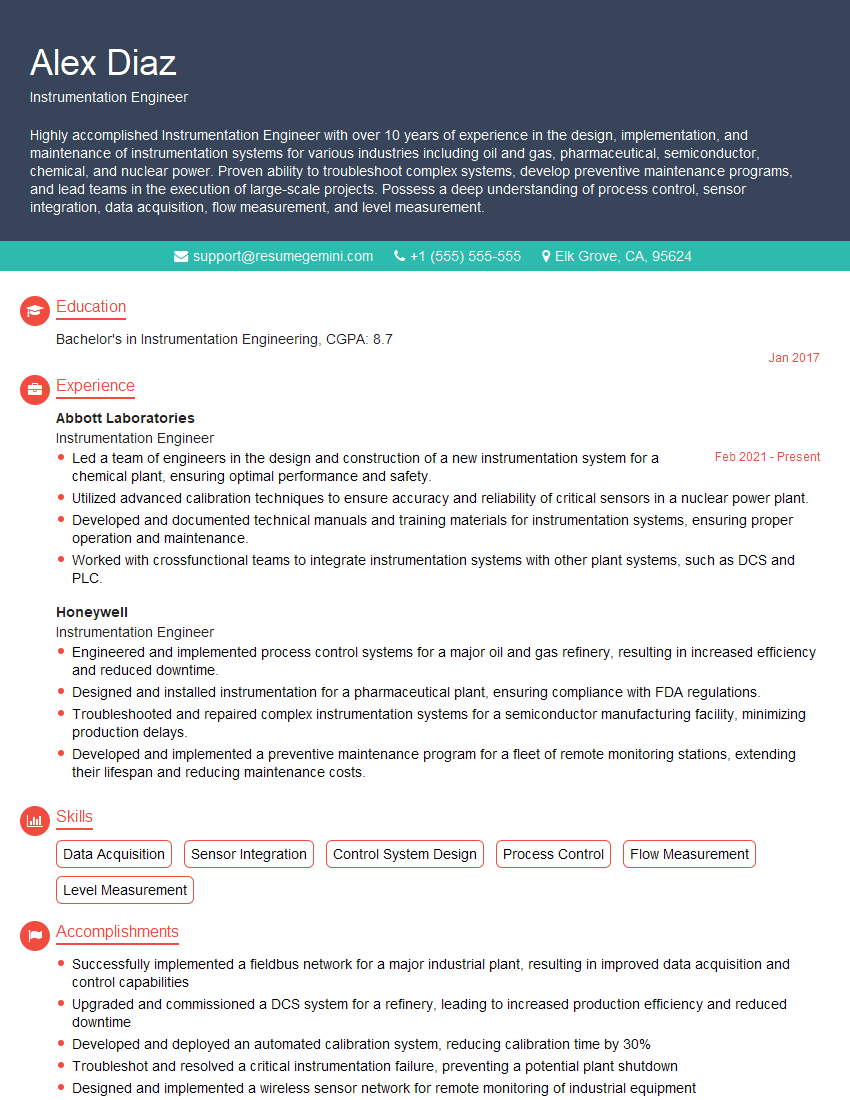
Instrumentation Engineer Resume Sample
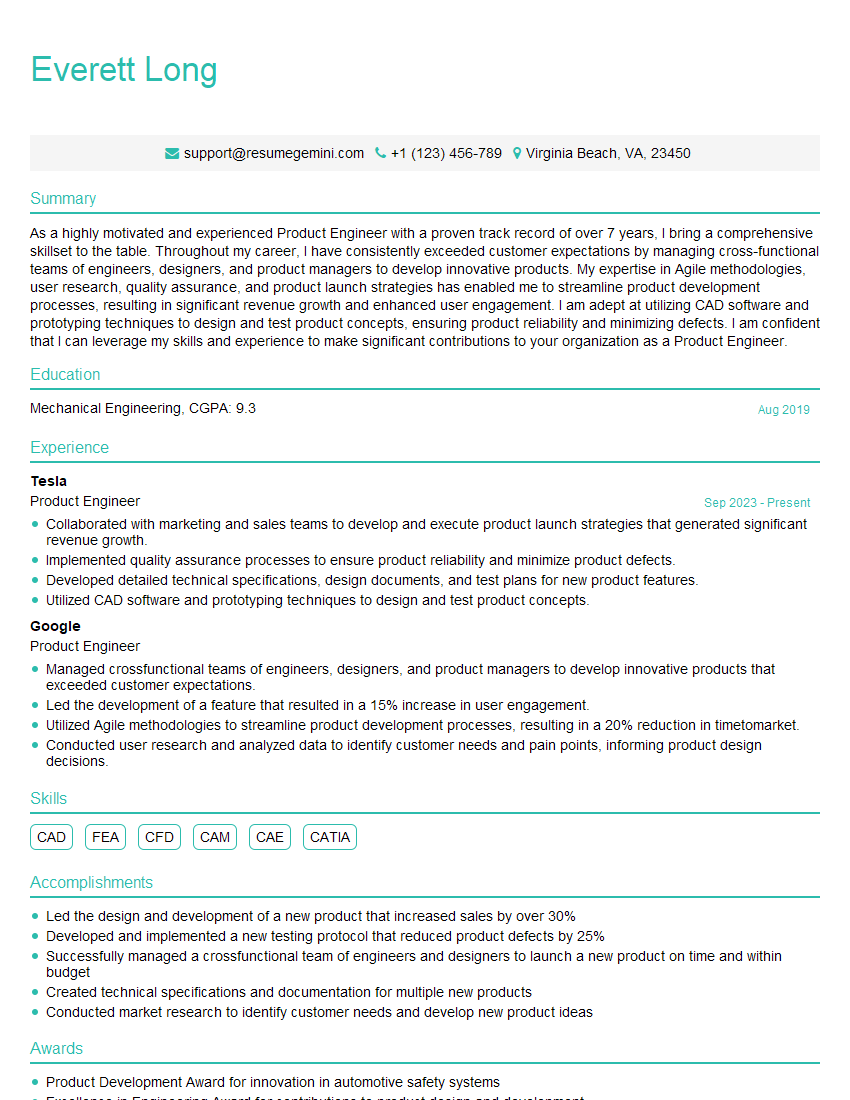
Product Engineer Resume Sample
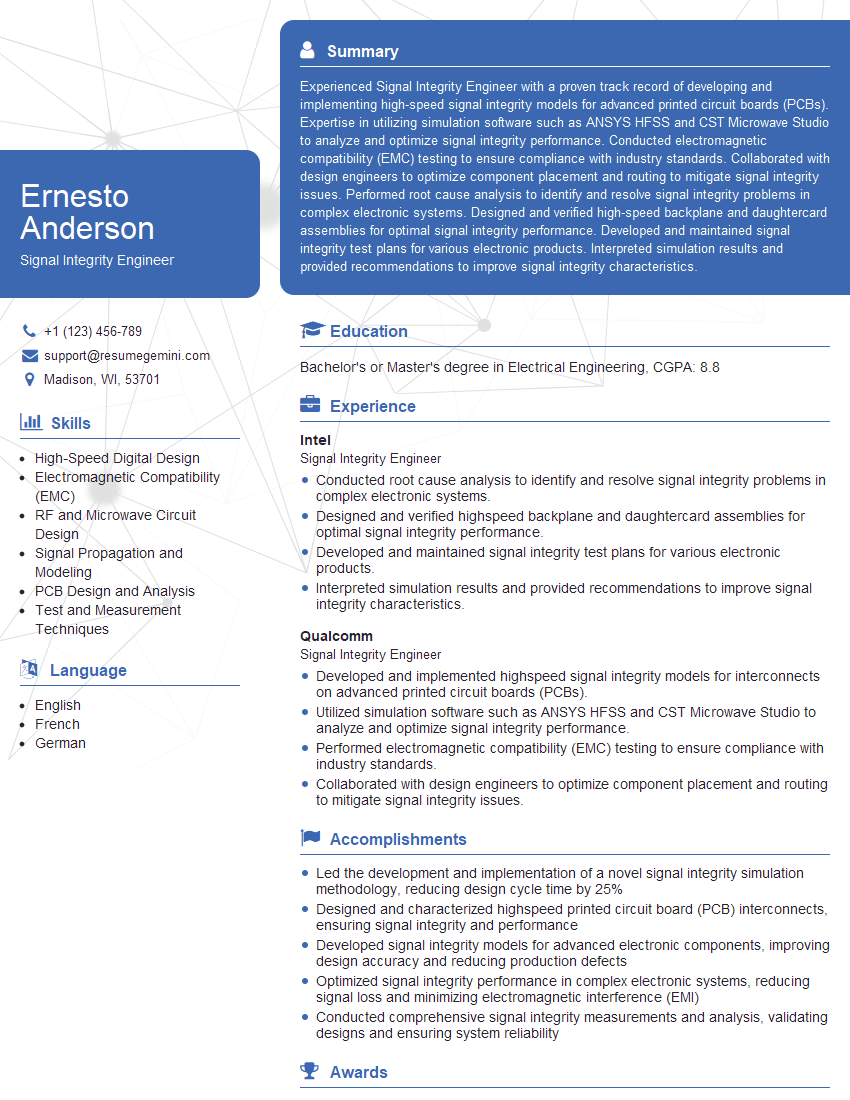
Signal Integrity Engineer Resume Sample

Validation Engineer Resume Sample
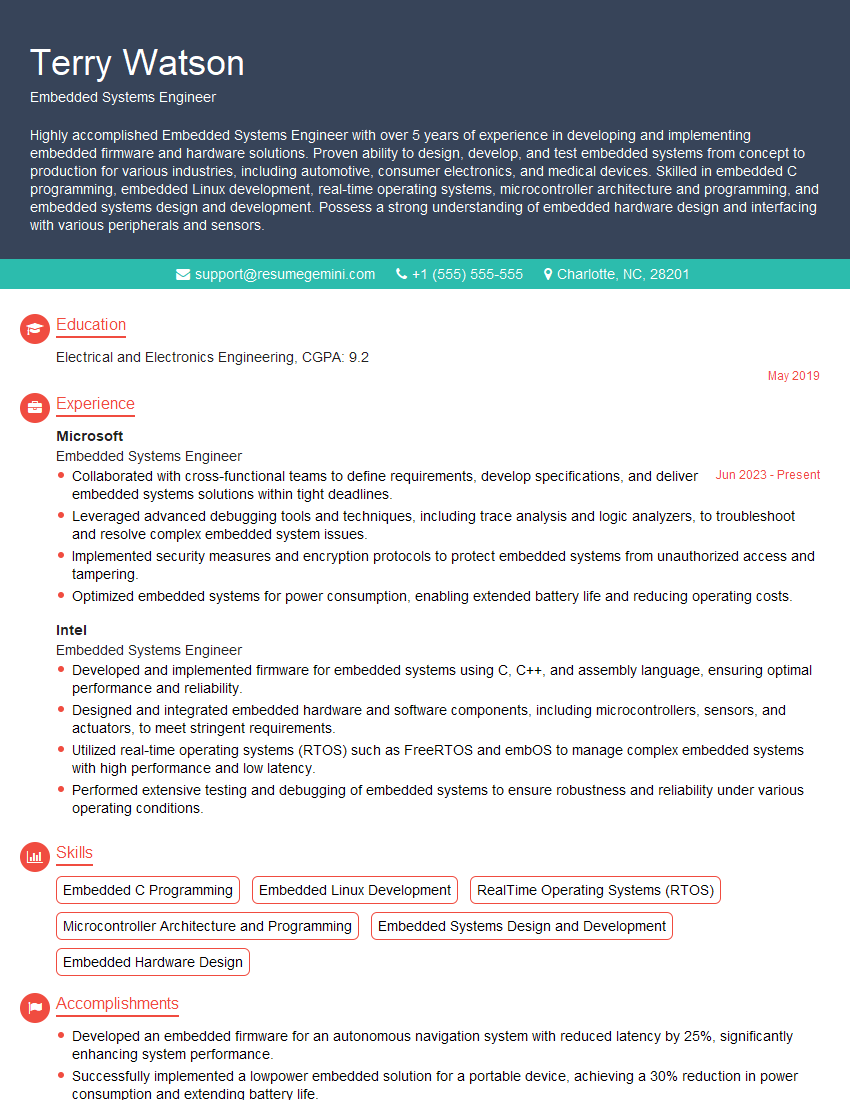
Embedded Systems Engineer Resume Sample
Explore more articles
Users Rating of Our Blogs
Share Your Experience
We value your feedback! Please rate our content and share your thoughts (optional).
What Readers Say About Our Blog
Very informative content, great job.
good