Interviews are more than just a Q&A session—they’re a chance to prove your worth. This blog dives into essential Knowledge of fashion industry trends interview questions and expert tips to help you align your answers with what hiring managers are looking for. Start preparing to shine!
Questions Asked in Knowledge of fashion industry trends Interview
Q 1. What are the three most significant fashion trends currently impacting the market?
The fashion industry is a constantly evolving landscape. Three significant trends currently impacting the market are:
- Sustainability and Ethical Production: Consumers are increasingly demanding transparency and ethical practices from brands. This includes using sustainable materials like organic cotton and recycled fabrics, reducing water and energy consumption during production, and ensuring fair labor practices throughout the supply chain. For example, many brands are now highlighting their use of recycled polyester or showcasing their commitment to carbon-neutral manufacturing.
- Personalization and Inclusivity: The one-size-fits-all approach is fading. Brands are focusing on offering a wider range of sizes, styles, and designs to cater to diverse body types, ethnicities, and personal preferences. This includes personalized recommendations based on individual style profiles, custom-made garments, and inclusive marketing campaigns that represent a broader spectrum of beauty.
- Digital Transformation and Metaverse Integration: The rise of e-commerce, social media marketing, and virtual try-on technologies is reshaping how consumers interact with fashion. Brands are investing heavily in digital experiences, including virtual showrooms, augmented reality (AR) filters, and collaborations with influencers on social media platforms like Instagram and TikTok. The burgeoning metaverse is also providing new avenues for virtual fashion and brand experiences.
Q 2. Describe the lifecycle of a fashion trend. Provide specific examples.
The lifecycle of a fashion trend can be visualized as a bell curve. It typically starts with the introduction phase, where a novel style or design emerges, often from niche subcultures or designers. Think of the initial rise of skinny jeans or oversized blazers. This is followed by the growth phase, characterized by increasing popularity and widespread adoption by the mainstream market. This is where brands start mass-producing the trend, and you see it everywhere from high street shops to department stores. The peak signifies the trend’s highest point of popularity, often saturated with similar offerings across various brands. Think of the peak popularity of leggings a few years back. Then comes the decline phase, where the trend starts to lose its appeal, becoming outdated or replaced by newer styles. The final stage is obsolescence, where the trend fades from mainstream consciousness, potentially becoming a nostalgic reminder of a bygone era. For example, bell-bottom jeans, after a period of decline, now often reappear as a retro trend in cyclical fashion.
Q 3. How do you identify emerging fashion trends using social media analytics?
Social media analytics are crucial for identifying emerging fashion trends. By analyzing data from platforms like Instagram, TikTok, and Pinterest, we can gain insights into consumer preferences and emerging styles. Here’s a step-by-step approach:
- Keyword Tracking: Monitor trending hashtags, keywords, and mentions related to fashion. Tools like Brand24 or Talkwalker can track these mentions in real-time.
- Image Recognition: Use image recognition technology to identify recurring visual elements in posts, such as specific clothing items, colors, and styles. This helps quantify the visual popularity of trends.
- Sentiment Analysis: Determine the overall sentiment (positive, negative, or neutral) associated with specific trends. Positive sentiment often indicates strong potential for future growth.
- Influencer Analysis: Identify key influencers who are shaping trends and analyze their audience demographics and engagement levels. This provides context about the potential reach and target audience for an emerging trend.
- Data Visualization: Use dashboards and data visualization tools to represent findings in an easily understandable format. This helps identify patterns and significant trends more effectively.
For instance, a surge in posts using the hashtag #cottagecore, coupled with positive sentiment and high engagement from a specific demographic, indicates a promising emerging trend.
Q 4. Explain your understanding of ‘fast fashion’ and its impact on the industry.
Fast fashion refers to the rapid production and distribution of inexpensive clothing, often replicating high-fashion designs at a much lower price point. It relies on low production costs, often achieved through unethical labor practices and unsustainable manufacturing methods. The impact on the industry is multifaceted:
- Negative Environmental Impact: Fast fashion contributes significantly to textile waste, water pollution, and carbon emissions due to its unsustainable production processes and high consumption rates.
- Ethical Concerns: Many fast-fashion brands have been criticized for employing sweatshop labor, using unsafe materials, and failing to adhere to fair labor standards.
- Impact on Traditional Retail: Fast fashion has put pressure on traditional retailers, who struggle to compete with its low prices and rapid turnover of styles.
- Shifting Consumer Behavior: Fast fashion has fostered a culture of disposable clothing, where consumers buy frequently and discard items quickly, leading to increased waste.
However, some fast-fashion retailers are now attempting to incorporate more sustainable practices, showcasing the beginnings of a potential shift towards greater responsibility within the industry.
Q 5. How do macroeconomic factors influence fashion trends?
Macroeconomic factors significantly influence fashion trends. Economic conditions, such as recessions or periods of economic growth, directly impact consumer spending and preferences:
- Economic Growth: During periods of economic prosperity, consumers tend to spend more on luxury goods and fashion, driving demand for high-end brands and premium materials.
- Recessions: Recessions often lead to a shift towards more affordable clothing options, driving growth in the fast-fashion sector and a decline in sales of luxury goods. Consumers may also become more price-sensitive and prioritize practicality over trendiness.
- Inflation and Interest Rates: High inflation and interest rates can increase the cost of production and reduce consumer purchasing power, leading to adjustments in pricing and demand across the fashion industry.
- Global Events: Major global events like pandemics or political instability can also have a ripple effect on fashion trends. For instance, the COVID-19 pandemic led to increased demand for comfortable loungewear and a decline in formal wear.
Understanding these macroeconomic indicators allows brands to adapt their strategies to changing market conditions and consumer behavior.
Q 6. What are the key differences between ‘high fashion’ and ‘streetwear’ trends?
High fashion and streetwear represent distinct segments within the fashion industry, differing primarily in their design philosophy, production methods, price points, and target audiences:
| Feature | High Fashion | Streetwear |
|---|---|---|
| Design Philosophy | Avant-garde, artistic, often experimental; focuses on innovation and luxury | Casual, functional, often influenced by youth culture and subcultures; emphasizes comfort and personal expression |
| Production | Limited production runs, often handcrafted; high-quality materials | Mass-produced, often with a focus on affordability and accessibility |
| Price Point | High, reflecting the cost of materials, craftsmanship, and exclusivity | Relatively affordable, making it accessible to a wider audience |
| Target Audience | Affluent consumers seeking exclusivity and high-quality garments | Younger demographics and individuals who value comfort, style, and self-expression |
| Distribution | Exclusive boutiques, runway shows, high-end department stores | Online retailers, streetwear boutiques, collaborations with mainstream brands |
However, the lines between high fashion and streetwear are increasingly blurring, with many high-fashion brands incorporating streetwear elements into their collections, and streetwear brands gaining recognition and collaborations within the luxury sector.
Q 7. How do you analyze consumer data to predict future fashion trends?
Analyzing consumer data is essential for predicting future fashion trends. A multi-faceted approach is required, combining quantitative and qualitative data sources:
- Sales Data Analysis: Examining past sales figures can reveal popular styles and colors, helping identify trending patterns and predict future demand.
- Social Media Listening: Monitoring social media conversations can identify emerging styles, color palettes, and design elements gaining popularity among consumers.
- Website Analytics: Analyzing website traffic data, such as product views, searches, and add-to-cart rates, can provide insights into consumer preferences and purchasing behavior.
- Market Research: Conducting surveys, focus groups, and interviews can offer direct feedback from consumers about their preferences, desires, and future purchase intentions.
- Competitor Analysis: Observing competitors’ collections and marketing campaigns can help understand upcoming styles and predict emerging trends.
By combining these data points, we can create predictive models that estimate the likelihood of various styles gaining popularity in the future. This requires utilizing statistical methods, machine learning algorithms, and data visualization tools for effective analysis and interpretation. For example, a spike in searches for ‘sustainable activewear’ combined with increased social media engagement around eco-friendly brands could predict a significant trend in sustainable athletic clothing.
Q 8. Describe a time you successfully predicted a fashion trend. What was your methodology?
One successful trend prediction I made was the resurgence of ’90s minimalism. My methodology involved a multi-pronged approach. First, I analyzed runway shows from major fashion weeks, noticing a clear shift away from maximalist trends towards cleaner silhouettes and muted palettes. Second, I delved into social media data, specifically Instagram and Pinterest, tracking hashtag usage and analyzing the popularity of specific styles and aesthetics. I saw a significant increase in searches for terms like “minimalist fashion,” “90s style,” and “slip dresses.” Third, I considered broader cultural shifts – a growing interest in sustainability and capsule wardrobes aligned perfectly with the inherent simplicity of minimalist fashion. By combining quantitative data analysis (social media trends) with qualitative observations (runway shows and cultural shifts), I was able to accurately forecast the return of this aesthetic, allowing my clients to position themselves advantageously in the market.
Q 9. What are some ethical considerations in the fashion industry related to trends?
Ethical considerations in fashion trends are paramount. Fast fashion, driven by rapidly changing trends, often leads to exploitative labor practices in garment factories, with workers facing low wages, unsafe conditions, and long hours. The environmental impact is also significant; the production and disposal of cheap, trend-driven clothing contribute heavily to textile waste and pollution. Another ethical concern is cultural appropriation, where trends are adopted from other cultures without proper acknowledgment or respect, often resulting in commodification and misrepresentation. Finally, the psychological impact of constant pressure to keep up with trends can lead to feelings of inadequacy and consumerism, creating a negative cycle of consumption and disposal.
Q 10. How do you incorporate sustainability into trend forecasting?
Incorporating sustainability into trend forecasting involves a fundamental shift in perspective. Instead of solely focusing on novelty and fleeting trends, we must prioritize longevity and ethical production. This means incorporating research on eco-friendly materials (like organic cotton, recycled fabrics, and innovative bio-based alternatives) and production methods (e.g., zero-waste pattern cutting). We must also consider the lifecycle of garments – promoting durability, repairability, and recyclability. Trend forecasting in a sustainable framework analyzes the potential for a trend to align with ethical and environmental standards. For instance, we might assess whether a trend is compatible with circular fashion models, promoting the reuse and recycling of clothes, minimizing environmental impact.
Q 11. Explain the impact of technology (e.g., AI, 3D printing) on fashion trends.
Technology is revolutionizing fashion trends in numerous ways. AI algorithms can analyze massive datasets of images, social media posts, and sales data to identify emerging patterns and predict future trends with greater accuracy. 3D printing allows for rapid prototyping and customization, enabling designers to create unique, on-demand garments and experiment with complex designs previously impossible to manufacture. Virtual fashion, using digital avatars and virtual try-ons, is gaining traction, allowing consumers to experience clothing digitally before purchasing, thereby reducing returns and waste. Moreover, AI-powered tools can personalize shopping experiences by recommending items tailored to individual styles and preferences, potentially shaping consumer preferences and impacting overall trends.
Q 12. What are some emerging materials impacting current and future fashion trends?
Several emerging materials are shaping current and future fashion trends. Mycelium leather, derived from mushroom roots, offers a sustainable and biodegradable alternative to traditional leather. Piñatex, a fabric made from pineapple leaf fibers, is another eco-friendly option with a unique texture. Recycled fabrics, including polyester and nylon made from plastic bottles, are gaining popularity as consumers become increasingly aware of environmental concerns. Furthermore, innovative materials like seaweed-based textiles and bacterial cellulose are being explored for their potential sustainability and unique properties. These materials not only offer ecological advantages but also open up creative possibilities for designers, influencing texture, drape, and overall aesthetic of garments.
Q 13. How do you stay updated on current fashion trends?
Staying updated on fashion trends is a continuous process. I utilize a multifaceted approach. Firstly, I closely monitor fashion week shows globally, paying attention to both established designers and emerging talent. Secondly, I leverage social media platforms like Instagram, TikTok, and Pinterest to gauge consumer preferences and identify viral trends. Thirdly, I subscribe to industry publications and newsletters, attend trade shows, and network with designers and other industry professionals. Finally, I analyze retail sales data and market research reports to understand consumer behavior and purchasing patterns. This combination of observation, data analysis and networking ensures a comprehensive understanding of current and upcoming trends.
Q 14. Name three key fashion capitals and explain their unique trend contributions.
Three key fashion capitals – each contributing uniquely to global trends – are Paris, Milan, and New York.
- Paris is renowned for its haute couture and luxurious designs, setting the standard for elegance and sophistication. It often dictates high-end trends that trickle down to the mass market.
- Milan is known for its sophisticated tailoring and strong focus on Italian craftsmanship, often leading in trends relating to structured silhouettes, premium materials, and timeless designs.
- New York is a melting pot of diverse styles, reflecting the city’s multicultural character. Its trend contributions are often more commercial and street style-focused, encompassing a broad range of aesthetics and reflecting current socio-cultural movements.
Q 15. How do different age demographics influence fashion trends?
Age demographics significantly influence fashion trends because different age groups have distinct lifestyles, values, and purchasing power. Think of it like this: a teenager’s fashion choices are vastly different from a senior citizen’s.
- Millennials (25-40): Often trendsetters, embracing conscious consumerism and athleisure, favoring brands with strong ethical and sustainable practices.
- Gen Z (10-24): Highly digitally native, influencers play a major role in their choices. They are known for embracing individuality, inclusivity, and vintage/second-hand styles.
- Baby Boomers (57-75): Prioritize comfort and practicality, often favoring classic styles and established brands with a reputation for quality.
Understanding these nuances is crucial for tailoring marketing campaigns and product lines. For instance, a brand targeting Gen Z might leverage TikTok influencers, while a brand targeting Baby Boomers might focus on print advertising and highlighting durability and ease of wear.
Career Expert Tips:
- Ace those interviews! Prepare effectively by reviewing the Top 50 Most Common Interview Questions on ResumeGemini.
- Navigate your job search with confidence! Explore a wide range of Career Tips on ResumeGemini. Learn about common challenges and recommendations to overcome them.
- Craft the perfect resume! Master the Art of Resume Writing with ResumeGemini’s guide. Showcase your unique qualifications and achievements effectively.
- Don’t miss out on holiday savings! Build your dream resume with ResumeGemini’s ATS optimized templates.
Q 16. How do cultural influences shape fashion trends?
Cultural influences are the lifeblood of fashion. They dictate everything from silhouettes and colors to fabrics and embellishments. Think of the vibrant colors and intricate embroidery found in traditional Indian clothing or the minimalist aesthetic often associated with Scandinavian design. These cultural elements are constantly being reinterpreted and reimagined by designers, creating a dynamic and ever-evolving fashion landscape.
- Globalisation: Increased access to global cultures leads to fusion styles, with elements from different traditions blending together.
- Social Movements: Fashion often reflects social and political movements, with styles emerging as expressions of identity and rebellion.
- Regional Variations: Even within a single country, significant regional differences in style preferences can exist, driven by local traditions and climate.
A designer might draw inspiration from traditional Japanese kimono silhouettes for a modern collection, or a brand might incorporate indigenous patterns from a particular region to create unique and culturally relevant designs.
Q 17. Discuss the role of celebrity endorsements in driving fashion trends.
Celebrity endorsements wield immense power in shaping fashion trends. When a high-profile celebrity is seen wearing a particular item, it generates significant media attention and drives consumer demand. This ‘halo effect’ boosts brand visibility and sales substantially.
- Increased Brand Awareness: A single celebrity sighting can instantly introduce a brand to a massive audience.
- Aspirational Value: Consumers are often motivated to emulate their idols, driving purchases of clothing and accessories worn by celebrities.
- Trendsetting Influence: Celebrities are often seen as style icons, shaping the perception of what is fashionable and desirable.
For example, the ‘Meghan Markle effect’ saw a surge in sales of clothing and accessories she wore, demonstrating the power of celebrity endorsements. Brands carefully select celebrities that align with their brand image and target audience to maximize the impact of these collaborations.
Q 18. How do you determine the commercial viability of a fashion trend?
Determining the commercial viability of a fashion trend involves a multifaceted approach, combining qualitative and quantitative data. Simply put, it’s about assessing whether a trend will be profitable.
- Market Research: Analyze consumer preferences, purchasing habits, and competitor offerings using surveys, focus groups, and sales data.
- Trend Forecasting: Use trend forecasting tools to predict the longevity and potential market penetration of a trend.
- Cost Analysis: Calculate production costs, marketing expenses, and potential profit margins to evaluate financial feasibility.
- Target Audience: Identify the specific demographic most likely to adopt the trend and assess their purchasing power.
A trend might appear stylish but lack commercial viability if production costs are too high, the target market is too small, or the trend is likely to be short-lived. Thorough market research and financial projections are essential to minimize risks and maximize return on investment.
Q 19. Describe a time you had to adapt your trend analysis due to unexpected market changes.
During the initial stages of the pandemic, I was analyzing a trend toward bold, vibrant colors in spring/summer collections. My initial forecasts indicated strong demand. However, the lockdown measures significantly impacted consumer behavior. People shifted their priorities, favoring comfortable loungewear over vibrant, trend-driven pieces.
I had to swiftly adapt my analysis. This involved:
- Gathering real-time data: Monitoring sales data from online retailers and analyzing social media trends to understand the shift in consumer demand.
- Revising forecasts: Reducing projections for bold colors and increasing the emphasis on comfortable, versatile clothing.
- Recommending adjustments to product lines: Advising the design team to incorporate elements of comfort and practicality into their collections.
The lesson learned? Remaining flexible and agile in the face of unexpected market changes is paramount. Continuous monitoring of consumer behavior and adaptability in forecasting are key to success in the ever-evolving fashion industry.
Q 20. How do you present your trend analysis findings to stakeholders?
Presenting trend analysis findings requires clarity, visual appeal, and a strategic approach. The goal is to make the complex data understandable and actionable for stakeholders.
- Visualizations: Using charts, graphs, and mood boards to present key findings in a visually appealing way. Data storytelling is crucial here.
- Concise Summaries: Providing clear and concise summaries of key trends, avoiding jargon and technical details that might confuse non-experts.
- Strategic Recommendations: Offering actionable recommendations based on the analysis, highlighting opportunities and potential risks.
- Interactive Presentations: Engaging stakeholders through interactive presentations and Q&A sessions to facilitate discussion and feedback.
I usually start with a high-level overview, then delve into specific trends, providing context, supporting evidence, and clear recommendations for product development, marketing, and overall business strategy. The presentation is tailored to the audience’s understanding and needs.
Q 21. What are some popular forecasting tools used in the fashion industry?
Several tools assist in fashion trend forecasting. These range from sophisticated software to more manual methods.
- WGSN: A leading trend forecasting agency providing comprehensive reports and analyses on global trends.
- StyleSight: Another reputable agency offering detailed trend reports and imagery.
- Social Media Monitoring Tools: Tools like Brandwatch and Talkwalker allow for tracking mentions of specific brands, hashtags, and keywords related to fashion.
- Google Trends: Provides insights into search queries related to fashion, indicating consumer interest in particular styles and products.
- Retail Data Analytics: Analyzing sales data from online and brick-and-mortar stores can identify popular items and predict future demand.
The choice of tool depends on the specific needs and resources of the organization. A combination of tools is often used to gain a comprehensive understanding of the market.
Q 22. What are some limitations of fashion trend forecasting?
Fashion trend forecasting, while invaluable, isn’t a perfect science. Its limitations stem from the inherent unpredictability of consumer behavior and the ever-evolving nature of cultural influences.
- Unpredictable Consumer Behavior: Trends can be influenced by unexpected events – a viral social media moment, a celebrity endorsement, or even a global crisis. These are nearly impossible to accurately predict.
- Cultural Nuances: What’s trendy in one region might be completely ignored in another. Forecasting needs to account for these geographic and cultural differences, which can be complex.
- Data Limitations: Trend forecasting relies heavily on data, but available data might not always be comprehensive or representative. For instance, relying solely on sales data might miss emerging trends in niche markets.
- Lead Time: The time it takes for a trend to emerge, peak, and decline means forecasts made too far in advance might be inaccurate due to shifting tastes.
- Subjectivity: Trend forecasting involves interpretation. Different analysts might draw different conclusions from the same data, leading to varying forecasts.
For example, the sudden rise of athleisure wear was difficult to predict based on traditional forecasting methods. It emerged from a confluence of factors – the rise of fitness culture, increased comfort preferences, and a blurring of lines between sportswear and everyday clothing.
Q 23. How do you differentiate between a trend and a fad?
Trends and fads are both temporary shifts in popular style, but they differ significantly in longevity and societal impact.
- Trend: A trend represents a longer-lasting shift in preferences, often reflecting broader societal changes or evolving aesthetics. Trends tend to evolve gradually and have a more lasting impact on the market.
- Fad: A fad is a short-lived, intense craze for a specific item or style. It rises quickly, reaches its peak, and then disappears equally fast. Often driven by novelty rather than any deeper cultural connection.
Think of wide-leg jeans as a trend – they’ve cycled through popularity over decades, adapting to each era’s aesthetic. On the other hand, Crocs’ initial surge in popularity was more of a fad, driven by novelty and quirky appeal, though it has since evolved into a more permanent position in the footwear market. The key difference is sustainability; a trend shows staying power, while a fad burns brightly but briefly.
Q 24. How can you use trend analysis to inform a brand’s marketing strategy?
Trend analysis is crucial for informing a brand’s marketing strategy. By understanding upcoming trends, brands can proactively adapt their product lines, messaging, and marketing campaigns to resonate with their target audience.
- Product Development: Analyzing trends can help brands develop new products or adapt existing ones to align with current and future consumer preferences. For instance, a brand noticing a growing preference for sustainable materials can incorporate eco-friendly fabrics into their collections.
- Targeted Marketing Campaigns: Trend analysis helps tailor marketing messages to specific audience segments interested in those trends. A brand noticing increased interest in vintage styles could design a campaign emphasizing the retro aspects of its products.
- Content Strategy: Understanding current trends can help create engaging content that resonates with the target audience. A brand focused on activewear can create social media campaigns showcasing its products in contexts that resonate with fitness trends.
- Competitive Advantage: Being ahead of the curve through trend analysis can offer brands a significant competitive advantage by allowing them to capture market share early.
For example, a brand anticipating a resurgence of 90s fashion might launch a collection featuring updated takes on iconic 90s styles, create marketing campaigns using 90s-inspired visuals, and tailor its social media presence to appeal to those interested in that era’s style.
Q 25. Discuss the impact of social media influencers on fashion trends.
Social media influencers have dramatically reshaped the fashion trend cycle, accelerating the dissemination of trends and amplifying their reach.
- Trend Acceleration: Influencers can rapidly popularize new styles or products through their posts and stories. A single Instagram post featuring a new item can quickly turn it into a ‘must-have’.
- Democratization of Trends: Influencers, particularly micro-influencers with niche followings, allow brands to target trends to specific communities more effectively.
- Increased Transparency: While some influencer marketing can be seen as disingenuous, some have a reputation for authenticity, allowing them to act as gatekeepers for trends, building trust within their communities.
- Trend Forecasting: Analyzing the trends promoted by influencers and the engagement they receive can offer valuable insights into upcoming trends and consumer preferences.
- Challenges: The authenticity of influencer marketing is a concern. Brands must carefully select influencers who align with their brand values and audience to avoid negative repercussions.
For example, the rise of certain streetwear brands has been significantly propelled by influencer collaborations and endorsements, showcasing their products to a vast audience of fashion-conscious individuals.
Q 26. How do you incorporate color theory into your trend analysis?
Color theory is an essential component of trend analysis. By understanding color palettes and their psychological impact, analysts can better predict consumer preferences and interpret the overall message conveyed by a trend.
- Color Palettes: Analyzing the dominant colors in a season’s collections helps identify overarching color stories, revealing broader aesthetic preferences.
- Color Psychology: Certain colors evoke specific emotions and associations. Understanding this can help predict the potential success of a color palette. For example, calming neutrals might be popular during times of uncertainty, whereas vibrant colors might signify a more optimistic outlook.
- Color Trends: Tracking the emergence and popularity of specific colors allows for predictions about future color choices. For instance, a growing preference for earthy tones might signal a shift toward more natural and sustainable aesthetics.
- Color Combinations: Analyzing how colors are combined and contrasted within collections provides a deeper understanding of the overall aesthetic direction.
For example, the increasing popularity of muted greens and earthy browns signifies a growing preference for natural aesthetics. This informs brands to incorporate such shades into their collections and marketing materials.
Q 27. Explain the importance of understanding different fashion segments (e.g., menswear, womenswear, childrenswear).
Understanding different fashion segments – menswear, womenswear, and childrenswear – is crucial because each has its unique trends, target audience, and design considerations.
- Target Audience: Each segment caters to different needs, preferences, and purchasing behaviors. For example, menswear often focuses on functionality and tailoring, while childrenswear prioritizes comfort and playfulness.
- Design Considerations: Design elements, fabric choices, and fit vary significantly across segments. For instance, womenswear often explores a wider range of silhouettes and embellishments compared to menswear.
- Trend Divergence: Trends evolve differently within each segment. A trend in womenswear might not translate directly to menswear or childrenswear.
- Marketing Strategies: Marketing campaigns must be tailored to the specific segment. The messaging, visuals, and channels used to promote womenswear will differ from those used for menswear.
For instance, the rise of sustainable materials might be embraced differently in each segment. While eco-conscious materials are increasingly important in womenswear, functionality might remain a priority in menswear, leading to a slower adoption of sustainable alternatives.
Q 28. How does globalization influence the fashion trend cycle?
Globalization has significantly altered the fashion trend cycle, accelerating its pace and creating a more interconnected and fluid landscape.
- Faster Trend Diffusion: Information travels rapidly across borders, allowing trends to spread globally in a much shorter time than before.
- Increased Competition: Globalization exposes brands to increased competition from global players, pushing them to constantly innovate and adapt to stay relevant.
- Cultural Fusion: Trends are influenced by a blend of cultural aesthetics. Globalization fosters the fusion of different styles and subcultures, creating a more diverse range of trends.
- Supply Chain Complexity: The globalized supply chain impacts the speed and cost of producing and distributing fashion goods. This needs to be considered when forecasting trends and designing collections.
- Ethical Considerations: Globalization brings ethical concerns regarding labor practices and environmental sustainability to the forefront. These issues increasingly influence consumer preferences and impact trend forecasting.
For example, the popularity of certain Asian fashion trends rapidly spreads globally through social media, influencing designs and collections in western markets.
Key Topics to Learn for Knowledge of Fashion Industry Trends Interview
- Current Trends & Forecasting: Understanding current fashion trends across various segments (e.g., streetwear, haute couture, sustainable fashion) and methodologies for predicting future trends. Practical application: Analyzing sales data to identify emerging trends and their potential impact on design and marketing strategies.
- Market Analysis & Consumer Behavior: Identifying key market segments, understanding consumer preferences and purchasing behaviors, and analyzing market research data to inform design and business decisions. Practical application: Developing targeted marketing campaigns based on consumer insights and trend analysis.
- Sustainability & Ethical Practices: Knowledge of sustainable materials, ethical manufacturing practices, and the growing consumer demand for environmentally and socially responsible fashion. Practical application: Proposing sustainable sourcing strategies for a new product line.
- Technology & Innovation: Understanding the impact of technology on the fashion industry, including e-commerce, digital marketing, 3D design, and virtual fashion. Practical application: Evaluating the effectiveness of different digital marketing strategies for a brand.
- Global Fashion Landscape: Awareness of key fashion capitals, international style influences, and global supply chains. Practical application: Analyzing the competitive landscape of a particular market and identifying opportunities for growth.
- Brand Identity & Positioning: Understanding how brands build their identity, target specific audiences, and communicate their message effectively. Practical application: Developing a brand strategy for a new fashion label.
Next Steps
Mastering knowledge of fashion industry trends is crucial for career advancement in this dynamic field. A strong understanding of these trends allows you to make informed decisions, anticipate market shifts, and contribute significantly to a company’s success. To maximize your job prospects, focus on creating an ATS-friendly resume that highlights your relevant skills and experience. ResumeGemini is a trusted resource that can help you build a professional and impactful resume, ensuring your qualifications shine. Examples of resumes tailored to showcasing expertise in fashion industry trends are available through ResumeGemini to help guide your preparation.

Creative Director Resume Sample
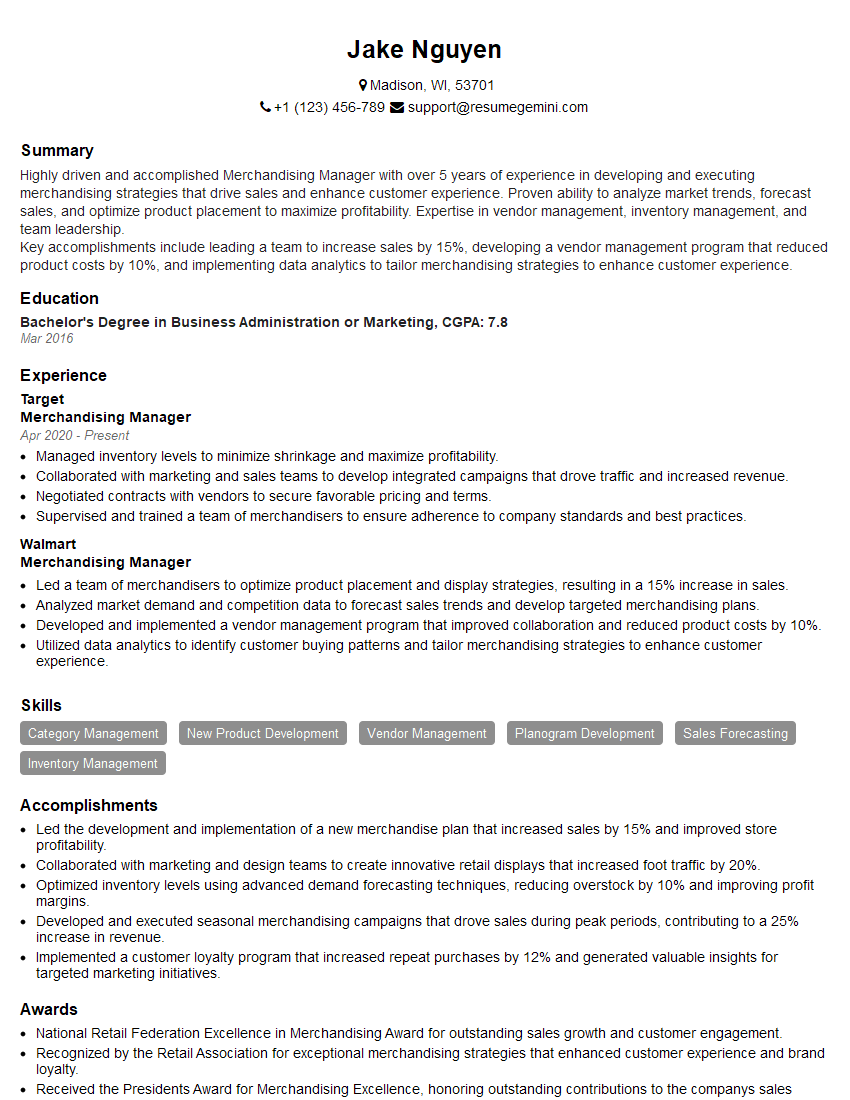
Merchandising Manager Resume Sample
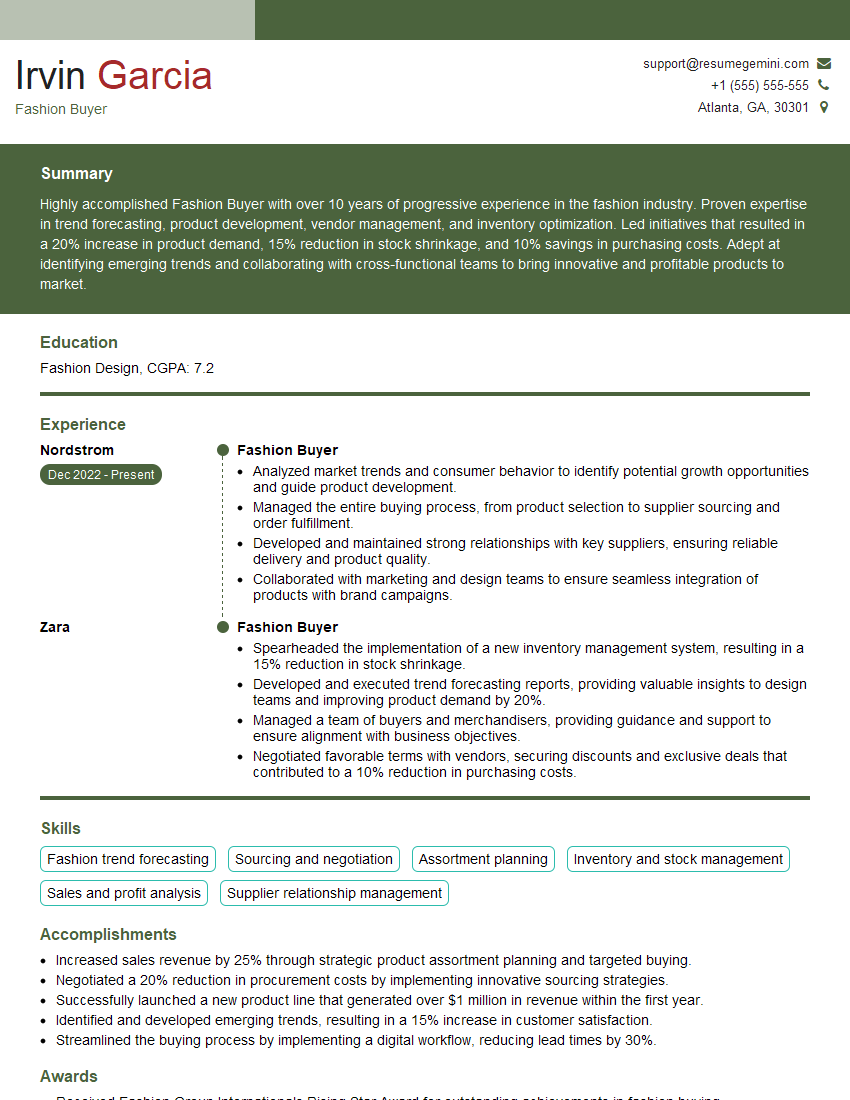
Fashion Buyer Resume Sample
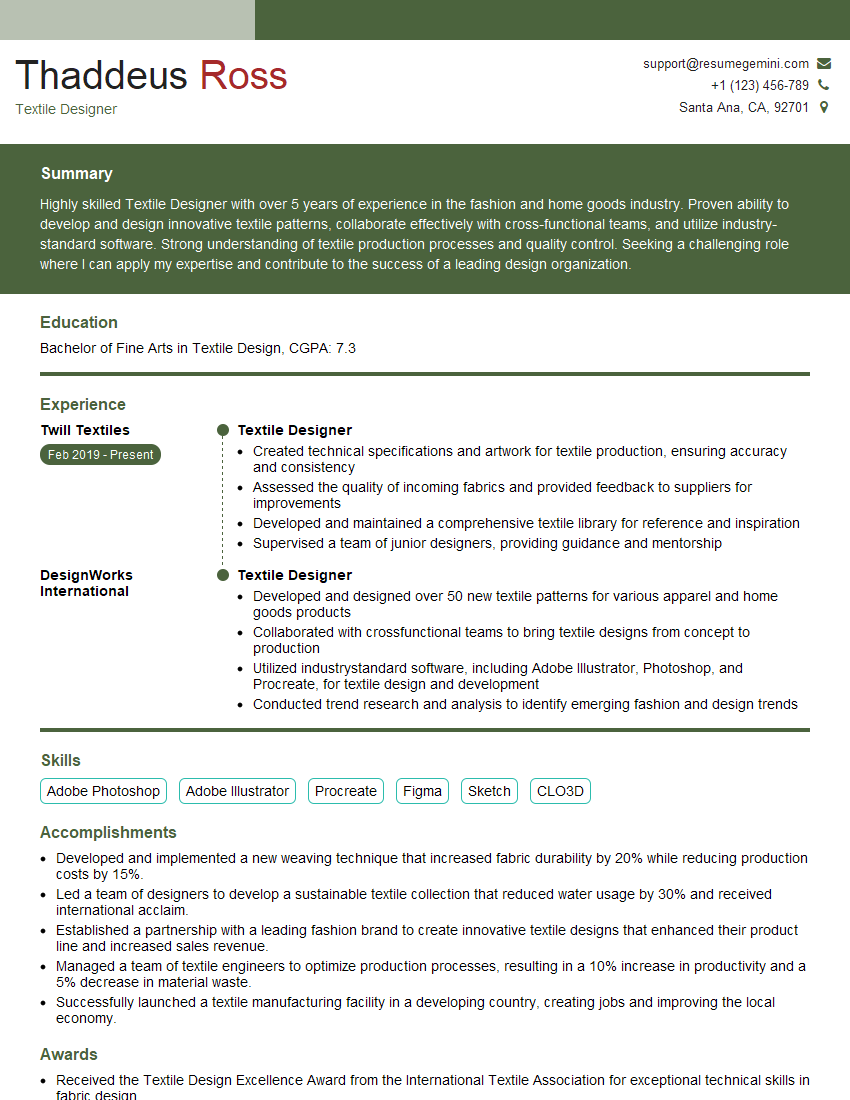
Textile Designer Resume Sample
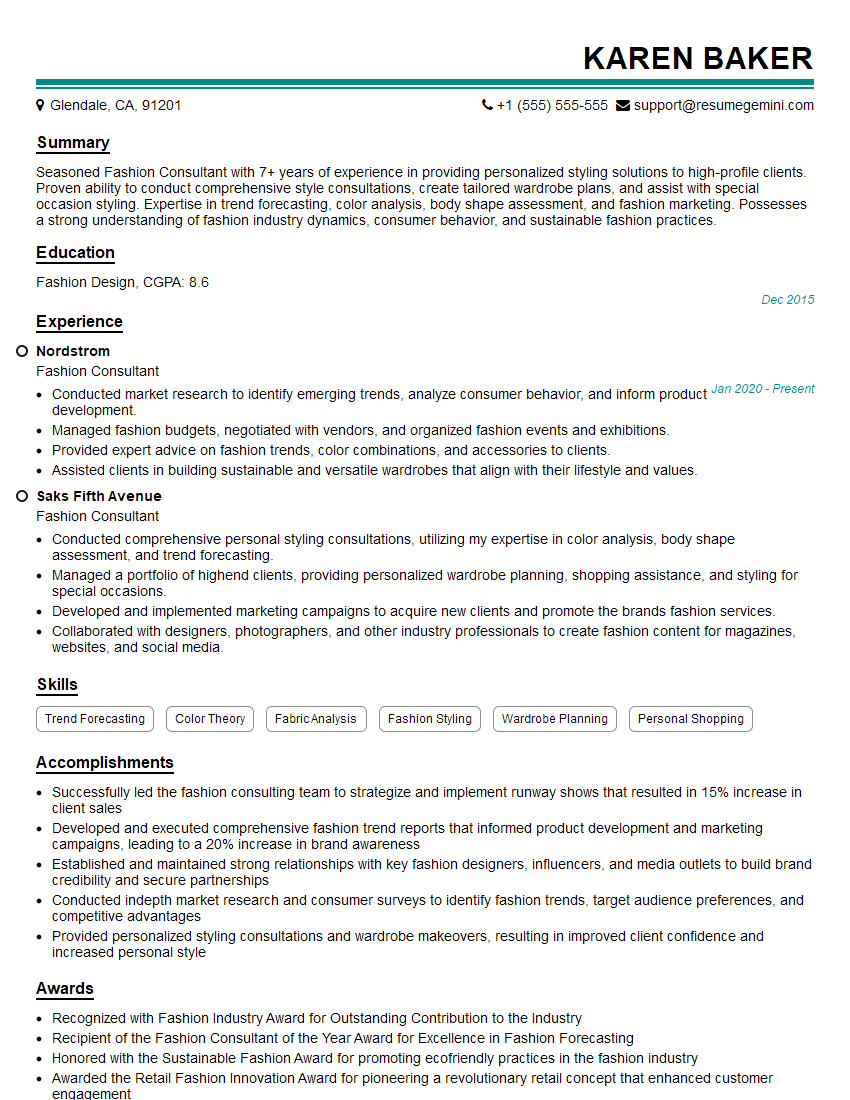
Fashion Consultant Resume Sample
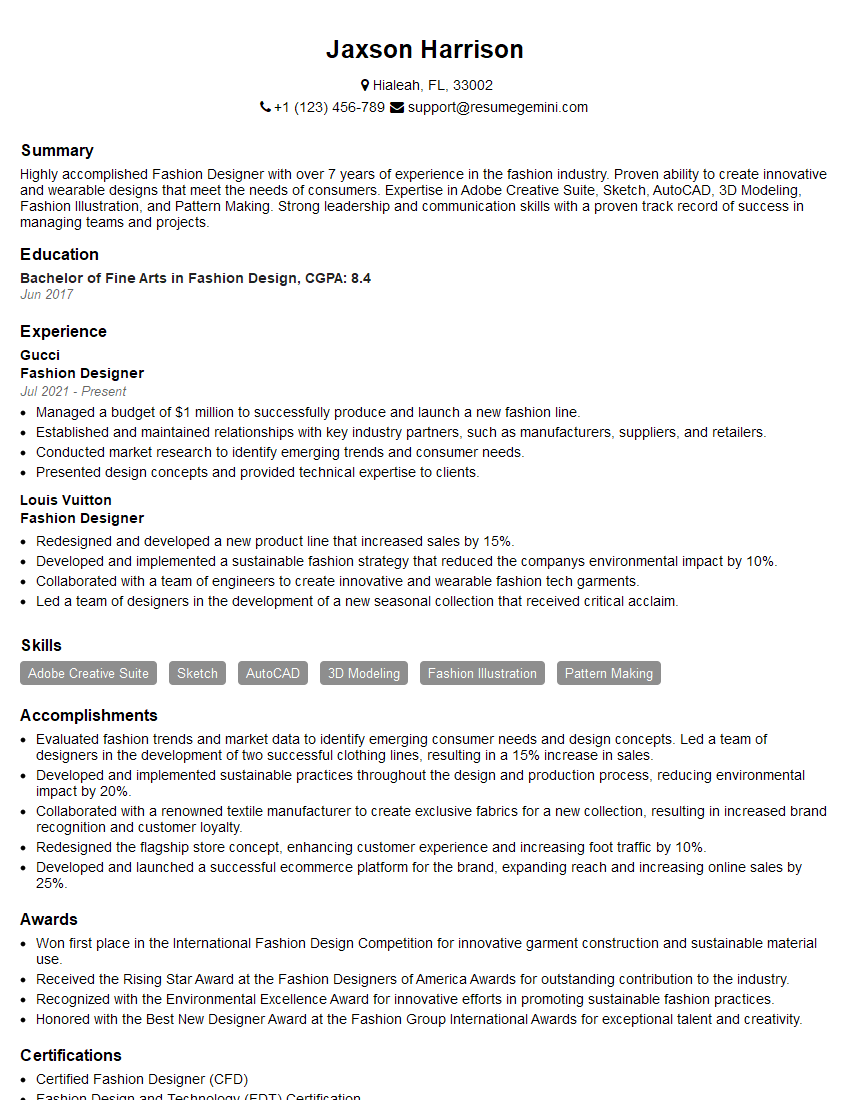
Fashion Designer Resume Sample
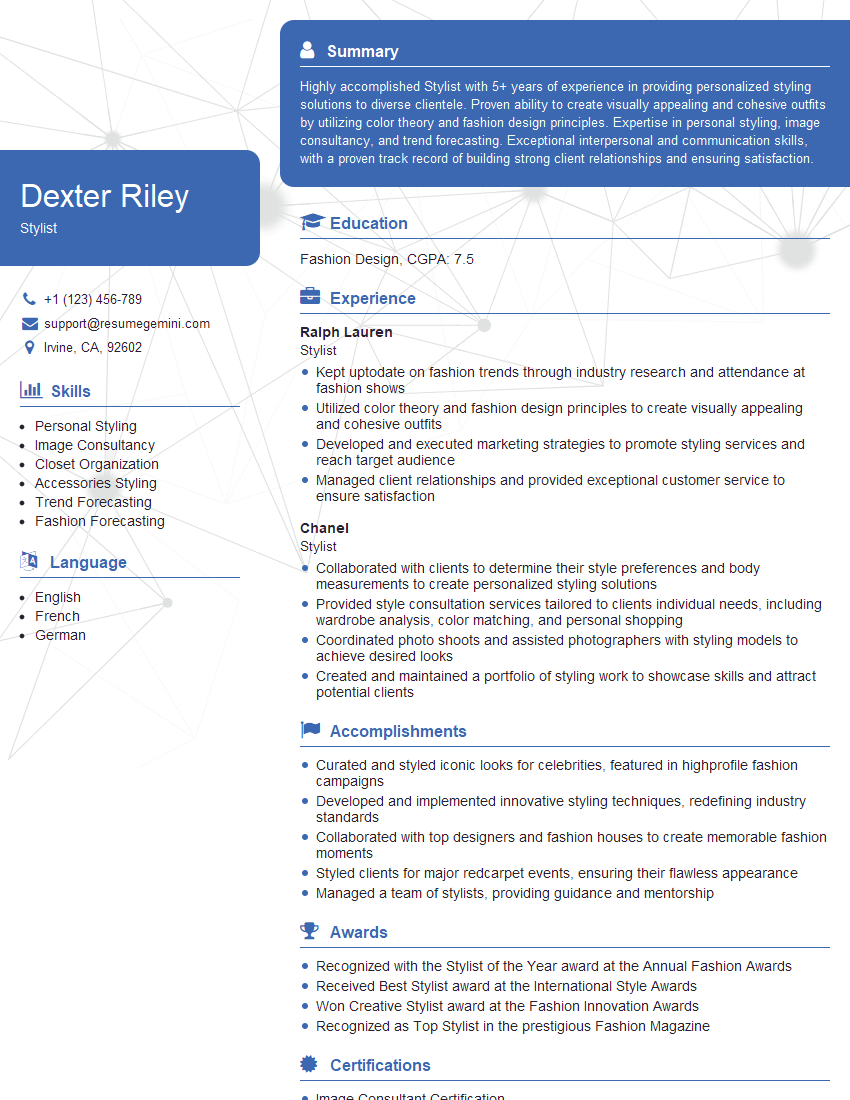
Stylist Resume Sample
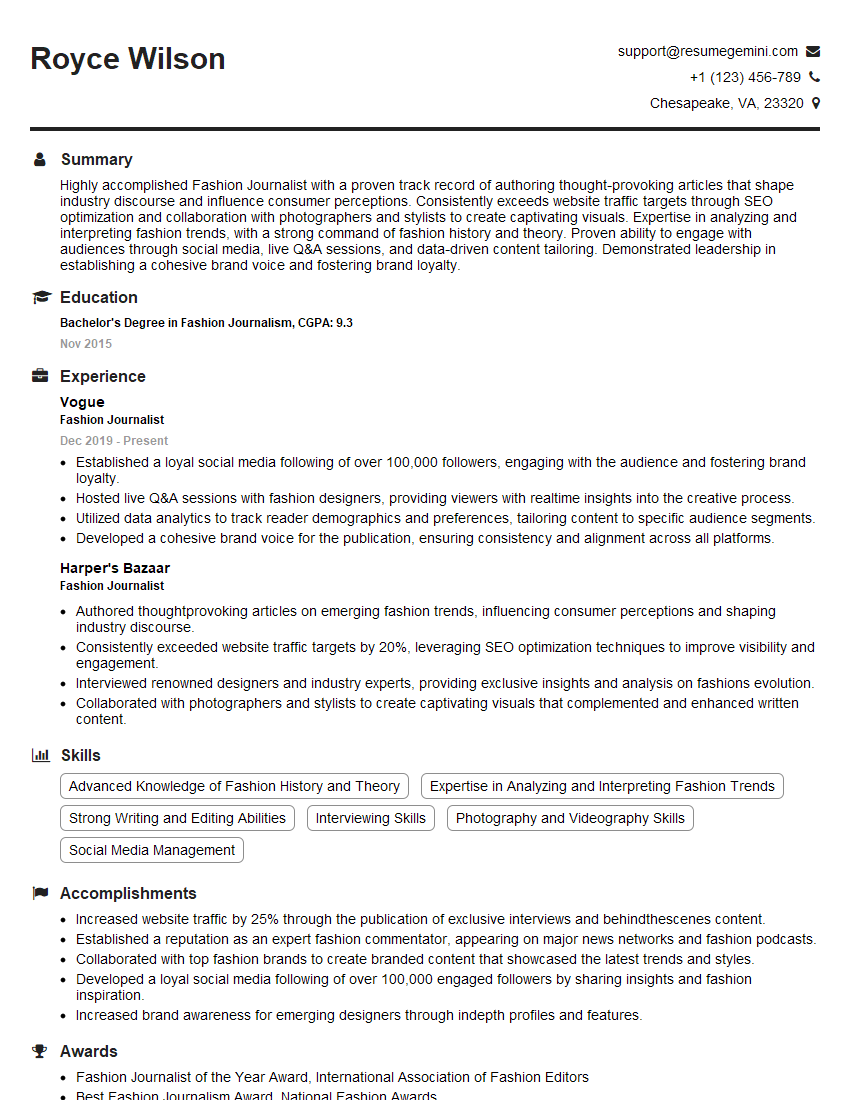
Fashion Journalist Resume Sample
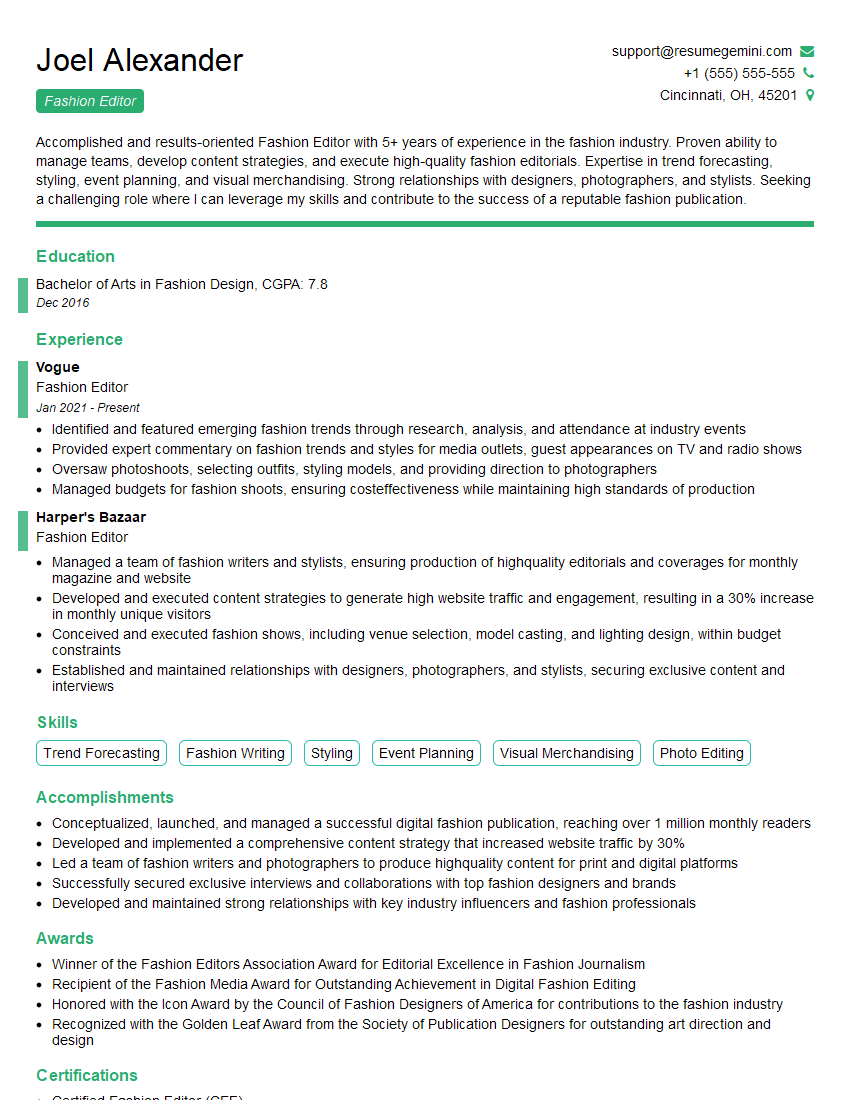
Fashion Editor Resume Sample
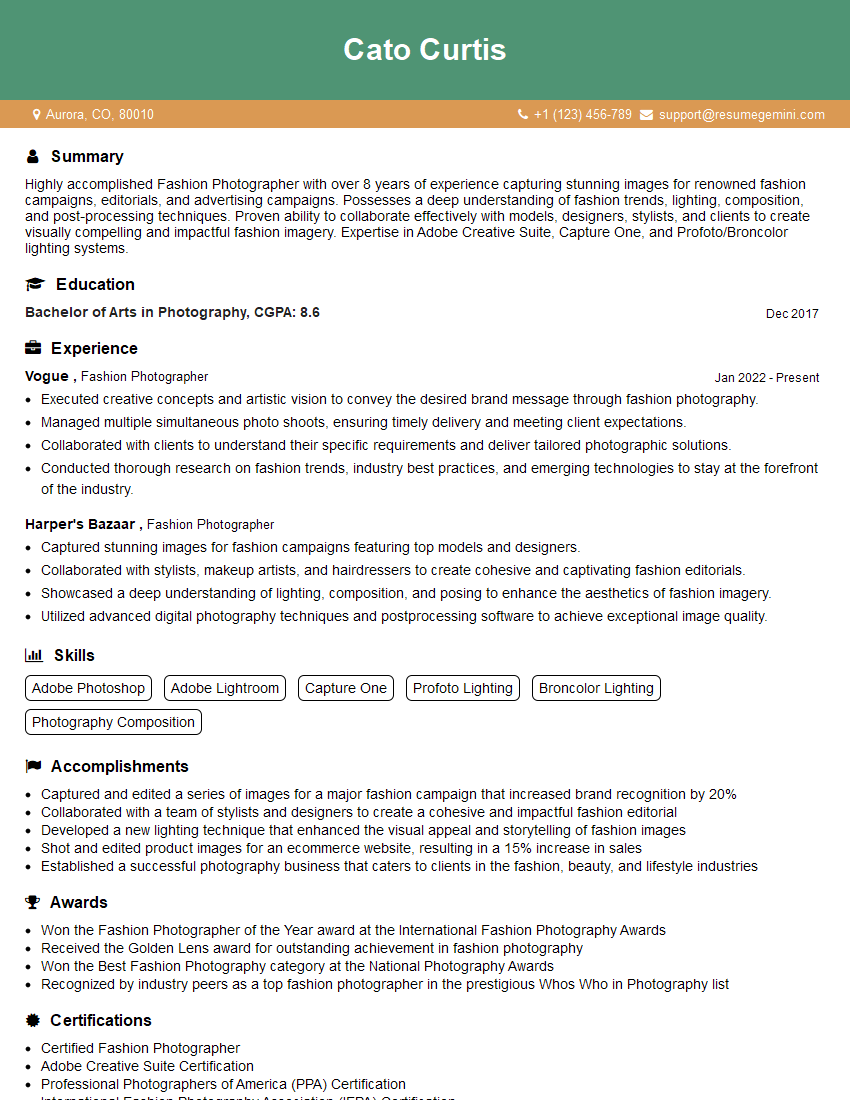
Fashion Photographer Resume Sample
Explore more articles
Users Rating of Our Blogs
Share Your Experience
We value your feedback! Please rate our content and share your thoughts (optional).
What Readers Say About Our Blog
Very informative content, great job.
good