Interviews are opportunities to demonstrate your expertise, and this guide is here to help you shine. Explore the essential Quality Control Methods interview questions that employers frequently ask, paired with strategies for crafting responses that set you apart from the competition.
Questions Asked in Quality Control Methods Interview
Q 1. Explain the difference between Quality Control and Quality Assurance.
Quality Control (QC) and Quality Assurance (QA) are often confused, but they represent distinct yet complementary approaches to ensuring product quality. Think of QA as the prevention strategy and QC as the detection strategy.
Quality Assurance is a proactive process focused on preventing defects. It involves establishing and maintaining a system to ensure that products consistently meet predefined quality standards. This includes defining processes, training personnel, and implementing quality management systems (like ISO 9001). It’s about building quality into the product from the design phase onward.
Quality Control, on the other hand, is a reactive process aimed at detecting defects in already produced goods or services. It involves inspecting finished products, conducting tests, and identifying non-conforming items. QC focuses on ensuring that the output meets the specified requirements. It’s about verifying the quality of the product after it’s been produced.
Analogy: Imagine building a house. QA would be like ensuring the architect’s plans are sound, the right materials are sourced, and the construction crew is properly trained. QC would be like inspecting the foundation, walls, and wiring to ensure they meet the building codes before the homeowner moves in.
Q 2. Describe your experience with statistical process control (SPC).
I have extensive experience using Statistical Process Control (SPC) in various manufacturing and service environments. My experience encompasses designing and implementing control charts, analyzing process capability, and interpreting control chart data to identify and address process variations.
For instance, in a previous role, I implemented X-bar and R charts to monitor the diameter of a precision-machined part. By analyzing the data, we identified a trend indicating increasing variation, allowing us to proactively adjust the machine settings before significant defects were produced, saving the company considerable resources. Another project involved using control charts to monitor customer satisfaction scores, identifying areas where improvements were needed in our customer service process. This led to targeted training programs and improved customer satisfaction rates.
My proficiency extends to various SPC techniques, including process capability analysis (Cpk, Ppk), and the use of software tools like Minitab and JMP for data analysis and chart creation.
Q 3. What are Control Charts and how are they used?
Control charts are graphical tools used in SPC to monitor process variation over time. They visually display data points collected during the process, along with control limits that indicate the expected range of variation. Control charts help to distinguish between common cause variation (inherent to the process) and special cause variation (indicating assignable causes that need investigation).
There are several types of control charts, each suited for different types of data. X-bar and R charts are commonly used for monitoring the average (X-bar) and range (R) of continuous data, while p-charts and c-charts are used for monitoring proportions and counts of defects, respectively.
How they are used: Data points are plotted on the chart. If a point falls outside the control limits, it signals a special cause of variation. This triggers an investigation to identify and correct the root cause of the variation. Points within the limits but showing trends or patterns may also indicate process instability and require attention.
Example: In a bottling plant, a control chart could track the fill level of bottles. If a point falls outside the control limits, it might indicate a problem with the filling machine, requiring maintenance or adjustment.
Q 4. Explain the concept of Six Sigma and its methodologies.
Six Sigma is a data-driven methodology aimed at improving process quality by reducing variation and defects. The goal is to achieve a level of quality where only 3.4 defects per million opportunities (DPMO) occur. It’s a structured approach that involves defined phases and tools.
Key Methodologies:
- DMAIC (Define, Measure, Analyze, Improve, Control): This is the most common Six Sigma methodology used for improving existing processes. It follows a cyclical approach, where each phase involves specific tools and techniques.
- DMADV (Define, Measure, Analyze, Design, Verify): This methodology is used for designing new processes or products. It emphasizes designing quality into the process from the outset.
Tools and Techniques: Six Sigma employs various statistical and problem-solving tools, including control charts, Pareto charts, fishbone diagrams, and Failure Mode and Effects Analysis (FMEA).
Real-world Application: A company might use Six Sigma to reduce customer complaints about a particular product by identifying and eliminating the root causes of the defects through the DMAIC cycle. This might involve analyzing customer feedback, conducting process capability studies, implementing process improvements, and monitoring the results using control charts.
Q 5. What is a Pareto chart and how is it used in quality control?
A Pareto chart is a bar graph that ranks causes of problems or defects in descending order of frequency. It combines a bar graph with a line graph representing cumulative frequency. The chart is named after Vilfredo Pareto, who observed that 80% of the effects come from 20% of the causes (the Pareto principle). This principle is often applied in quality control.
How it’s used in Quality Control: Pareto charts help to prioritize problem-solving efforts by focusing on the most significant causes of defects. By identifying the ‘vital few’ problems, rather than the ‘trivial many’, resources can be allocated effectively to achieve maximum impact.
Example: In a manufacturing process, a Pareto chart might reveal that 80% of product defects are caused by only three factors: improper material handling, machine malfunction, and inadequate operator training. This allows the company to prioritize efforts on these three factors to significantly reduce overall defects.
Q 6. Describe your experience with root cause analysis techniques.
I have extensive experience using various root cause analysis techniques to identify the underlying reasons for quality problems. My experience includes using techniques such as the 5 Whys, fishbone diagrams (Ishikawa diagrams), and Fault Tree Analysis (FTA).
5 Whys: This is a simple yet effective technique involving repeatedly asking ‘Why?’ to drill down to the root cause. It’s particularly useful for simple problems.
Fishbone diagrams: These diagrams visually represent potential causes of a problem, categorized by factors such as materials, methods, manpower, machinery, and measurement. They are beneficial for brainstorming and identifying a wide range of potential causes.
Fault Tree Analysis: This is a more formal technique used for complex systems, where it helps to systematically identify potential causes of a failure event through a logical, top-down approach.
Example: Let’s say a customer complaint indicates that a product is malfunctioning. Using the 5 Whys, we might find: 1. Why did the product malfunction? – Because the motor burned out. 2. Why did the motor burn out? – Because it overheated. 3. Why did it overheat? – Because the cooling fan failed. 4. Why did the cooling fan fail? – Because it wasn’t properly lubricated. 5. Why wasn’t it properly lubricated? – Because of inadequate maintenance procedures. The root cause is thus identified as inadequate maintenance procedures.
Q 7. How would you handle a situation where a product fails to meet quality standards?
My approach to handling a situation where a product fails to meet quality standards involves a structured process:
- Immediate Containment: The first step is to immediately stop production of the non-conforming product to prevent further defects from reaching the customer.
- Investigation and Root Cause Analysis: I would conduct a thorough investigation using appropriate root cause analysis techniques (as described previously) to identify the underlying cause(s) of the problem.
- Corrective Actions: Based on the root cause analysis, I would develop and implement corrective actions to prevent recurrence of the problem. This might involve process adjustments, equipment repair, employee retraining, or material changes.
- Verification: After implementing corrective actions, I would verify their effectiveness by monitoring the process and ensuring that the problem has been resolved.
- Disposition of Non-Conforming Products: The defective products would be handled according to established procedures, which might involve repair, rework, scrap, or other appropriate disposition methods. Customer notification might also be necessary depending on the severity of the defect.
- Preventive Actions: Finally, I would implement preventive actions to prevent similar problems from occurring in the future. This could include process improvements, updated training materials, or changes to quality control procedures.
Throughout this process, documentation is crucial for tracking progress, identifying lessons learned, and improving the overall quality management system.
Q 8. What are some common quality control tools and techniques you are familiar with?
My experience encompasses a wide range of quality control tools and techniques. These can be broadly categorized into statistical process control (SPC) methods and problem-solving tools. SPC tools help monitor and control processes to prevent defects, while problem-solving tools help identify and resolve the root causes of quality issues.
Statistical Process Control (SPC): This includes tools like control charts (e.g., X-bar and R charts, p-charts, c-charts) to monitor process variability and identify trends. I’ve used these extensively to track key process parameters in manufacturing environments, flagging potential issues before they escalate into major problems. For example, in a bottling plant, we used X-bar and R charts to monitor fill volume, ensuring consistency and preventing underfilling or overfilling.
Problem-Solving Tools: These are crucial for identifying and resolving root causes of quality problems. Familiar examples include Pareto charts (to identify the vital few contributing factors), fishbone diagrams (Ishikawa diagrams) for brainstorming potential causes, and 5 Whys analysis for drilling down to root causes. In one project, a Pareto chart revealed that 80% of product returns were due to a single assembly process, which then allowed us to focus our improvement efforts effectively.
Other Tools: I also have experience with other techniques like Failure Mode and Effects Analysis (FMEA) to proactively identify potential failures and their impact, and Design of Experiments (DOE) to optimize process parameters for improved quality.
Q 9. Explain your understanding of ISO 9001 standards.
ISO 9001 is an internationally recognized standard that outlines requirements for a quality management system (QMS). It’s a framework that helps organizations consistently meet customer and regulatory requirements, improve efficiency, and enhance customer satisfaction. My understanding extends beyond simply knowing the clauses; I’ve been actively involved in implementing and maintaining ISO 9001-compliant QMS in various settings.
The standard focuses on several key areas, including:
- Leadership commitment: Top management’s active involvement in establishing and maintaining the QMS.
- Customer focus: Understanding and meeting customer requirements.
- Process approach: Managing processes effectively to achieve desired outcomes.
- Continual improvement: Continuously striving to improve the effectiveness of the QMS.
- Evidence-based decision-making: Using data and analysis to make informed decisions.
- Relationship management: Managing relationships with suppliers and other stakeholders.
Compliance with ISO 9001 isn’t just about ticking boxes; it’s about fostering a culture of quality throughout the organization. It involves documented processes, internal audits, management reviews, and corrective and preventive actions to continuously improve processes and prevent recurring issues.
Q 10. Describe your experience with different types of inspection methods (e.g., visual, dimensional, functional).
My inspection experience encompasses a variety of methods, tailored to the specific product and its requirements.
Visual Inspection: This is often the first step, involving a visual examination of the product for any obvious defects like scratches, dents, or discoloration. I’ve conducted visual inspections on everything from small electronic components to large machinery, using appropriate magnification tools when necessary. The key is thoroughness and standardized checklists to ensure consistency.
Dimensional Inspection: This involves measuring the physical dimensions of the product using tools like calipers, micrometers, and coordinate measuring machines (CMMs). Precision and accuracy are paramount here, and I’ve developed expertise in using various measurement instruments and interpreting tolerances defined in engineering drawings. In one instance, we used CMMs to ensure the precise dimensions of automotive parts to meet stringent quality standards.
Functional Inspection: This checks whether the product performs its intended function. This could involve testing electrical circuits, mechanical movements, or software functionality. For example, in the electronics industry, I’ve performed functional tests on circuit boards, using automated test equipment to ensure all components are working as designed. Proper test procedures and documentation are vital for this.
Q 11. How do you ensure the accuracy and reliability of your quality control measurements?
Ensuring accurate and reliable quality control measurements is crucial. This is achieved through a multi-pronged approach:
Calibration: All measuring equipment must be regularly calibrated against traceable standards to ensure accuracy. I maintain a strict calibration schedule and meticulously document all calibration results.
Measurement System Analysis (MSA): This statistical technique helps assess the capability of the measurement system itself, identifying sources of variability and ensuring the measurements are reliable. I’ve used MSA to improve the accuracy of various measurement processes, identifying and mitigating sources of error.
Proper Measurement Techniques: Training personnel on correct measurement techniques and using standardized procedures is critical. Consistent application of measurement procedures minimizes human error.
Control Charts: Using control charts to monitor measurement data over time helps to detect any shifts in measurement accuracy, allowing for timely corrective actions.
Gauge R&R Studies: These studies help assess the variability of measurements due to different operators and gauges. Reducing this variability increases measurement reliability.
Q 12. What is your experience with calibration procedures and equipment?
Calibration procedures and equipment are fundamental to maintaining accurate measurements. My experience includes:
Developing and implementing calibration schedules: Establishing schedules for regular calibration of all measuring equipment, based on frequency recommendations from manufacturers and industry best practices.
Selecting and managing calibration labs: Choosing accredited calibration laboratories to ensure the traceability of calibration standards.
Maintaining calibration records: Meticulously documenting all calibration results and storing them securely. This documentation is essential for audits and traceability.
Troubleshooting calibration issues: Identifying and resolving issues related to calibration equipment or processes. For instance, if a measuring device consistently shows inaccurate readings, I would investigate the root cause (worn parts, incorrect calibration, operator error) and rectify it.
I’m familiar with various types of calibration equipment, including digital multimeters, pressure gauges, temperature sensors, and more, depending on the application.
Q 13. How do you manage and analyze quality control data?
Managing and analyzing quality control data is a crucial aspect of my work. This involves:
Data Collection: Implementing systematic data collection methods to ensure consistent and reliable data. This often includes using spreadsheets, databases, or specialized quality management software.
Data Analysis: Employing statistical techniques like descriptive statistics, hypothesis testing, and regression analysis to identify trends, patterns, and potential areas for improvement. For example, I’ve used control charts to monitor defect rates and identify process shifts, and regression analysis to understand the relationship between process parameters and product quality.
Data Visualization: Creating charts and graphs to effectively communicate findings and identify areas needing immediate attention. Tools like Pareto charts, histograms, and scatter plots are frequently used.
Reporting: Preparing regular reports summarizing quality control data, highlighting key trends and providing recommendations for improvement. These reports are essential for communicating quality performance to management and other stakeholders.
The choice of analytical tools depends on the nature of the data and the questions being asked. I am comfortable using statistical software packages and excel for this.
Q 14. Describe your experience with implementing quality improvement initiatives.
I have extensive experience implementing quality improvement initiatives, utilizing methodologies like Six Sigma and Lean Manufacturing.
Six Sigma: I’ve led projects using the DMAIC (Define, Measure, Analyze, Improve, Control) methodology to systematically reduce variation and improve process capability. For example, in one project, we reduced the defect rate in a manufacturing process by 80% using DMAIC, resulting in significant cost savings and improved customer satisfaction.
Lean Manufacturing: I’ve implemented Lean principles to eliminate waste and improve efficiency in various processes. This includes identifying and eliminating non-value-added activities, optimizing workflows, and improving the flow of materials. In one project, we successfully implemented 5S (Sort, Set in Order, Shine, Standardize, Sustain) methodology to improve workplace organization and efficiency.
Root Cause Analysis: A key component of my improvement initiatives involves thorough root cause analysis to identify and eliminate the underlying causes of defects and inefficiencies. This might involve techniques such as 5 Whys, fishbone diagrams, or fault tree analysis.
Successful implementation involves strong teamwork, clear communication, and a commitment to continuous improvement. Data-driven decision-making is paramount throughout the process.
Q 15. How do you prioritize quality control tasks in a fast-paced environment?
Prioritizing quality control tasks in a fast-paced environment requires a strategic approach that balances urgency with impact. I utilize a risk-based prioritization framework. This involves identifying potential risks associated with each task, assessing their likelihood and severity, and then prioritizing those with the highest risk profile. For example, a task with a high likelihood of causing significant customer dissatisfaction or regulatory non-compliance would take precedence over a task with a lower risk impact.
I also use a combination of tools like Kanban boards or Agile methodologies to visualize the workflow and ensure transparency. This allows the team to see what’s in progress, what’s next, and how long each task takes. This helps us constantly assess and adjust priorities based on real-time changes and emerging needs. This visual representation also supports efficient communication and collaboration within the team and with other departments, which is essential in fast-paced environments.
Finally, I always factor in the impact on our key performance indicators (KPIs). Tasks directly affecting critical metrics such as customer satisfaction or defect rates will naturally get prioritized higher.
Career Expert Tips:
- Ace those interviews! Prepare effectively by reviewing the Top 50 Most Common Interview Questions on ResumeGemini.
- Navigate your job search with confidence! Explore a wide range of Career Tips on ResumeGemini. Learn about common challenges and recommendations to overcome them.
- Craft the perfect resume! Master the Art of Resume Writing with ResumeGemini’s guide. Showcase your unique qualifications and achievements effectively.
- Don’t miss out on holiday savings! Build your dream resume with ResumeGemini’s ATS optimized templates.
Q 16. Explain your understanding of the different types of sampling methods.
Sampling methods are crucial for efficient quality control, especially when inspecting large batches of products or data. The choice of method depends on the specific context and goals. Several common types include:
- Simple Random Sampling: Every item in the population has an equal chance of being selected. This is good for homogenous populations. Think of drawing names out of a hat.
- Stratified Random Sampling: The population is divided into subgroups (strata), and random samples are drawn from each stratum. This is useful when dealing with a population that has inherent variations, like different production shifts.
- Systematic Sampling: Items are selected at a fixed interval, for example, every tenth item. It’s easy to implement but could miss patterns if the population has a periodic structure.
- Cluster Sampling: The population is divided into clusters, and then entire clusters are randomly selected. This is efficient when dealing with geographically dispersed populations.
- Acceptance Sampling: This is used to determine whether to accept or reject a batch of products based on a sample inspection. It relies on statistical concepts like acceptance quality levels (AQL) and uses plans like single, double, or multiple sampling plans.
In practice, I often combine these methods for optimal results. For example, I might use stratified sampling to ensure representation from different production lines and then employ systematic sampling within each stratum to maintain efficiency.
Q 17. How do you handle conflicts with other departments regarding quality issues?
Conflicts regarding quality issues often arise due to differing priorities or perspectives. My approach focuses on collaborative problem-solving and clear communication. First, I ensure everyone understands the issue completely. I would gather data and present it in a clear, factual manner. This might involve reports, metrics, and even visual aids to clearly illustrate the problem and its impact.
Then, I facilitate a discussion to understand each department’s perspective and concerns. I act as a mediator to find common ground and work towards a mutually agreeable solution. It’s crucial to emphasize that the goal is to improve quality, not to assign blame. A collaborative approach builds trust and facilitates long-term solutions. For instance, I might suggest a cross-functional team to investigate the root cause of a recurring problem and develop a preventative strategy.
Documentation is key. I ensure all decisions, agreed-upon actions, and timelines are clearly documented and distributed to all stakeholders.
Q 18. What is your experience with using quality management software?
I have extensive experience using various quality management software (QMS) solutions, including [mention specific software names e.g., SAP QM, Minitab, etc.]. My expertise covers not only data entry and reporting, but also the configuration and customization of these systems to meet specific needs. For instance, I have configured a QMS system to automate the generation of quality reports, which significantly reduced the manual effort and ensured data consistency.
Furthermore, my experience extends to integrating QMS with other enterprise systems to streamline workflows. For instance, I’ve linked a QMS to our ERP system to automate data transfer regarding product specifications, tracking production issues, and linking quality metrics to financial performance. This enhanced data integrity, decision-making, and reporting capabilities.
I’m proficient in utilizing the analytical features of QMS to identify trends, patterns, and root causes of quality problems. This data-driven approach allows for proactive interventions and continuous improvement.
Q 19. Describe your experience with auditing quality systems.
I have conducted numerous audits of quality systems, both internal and external, adhering to standards such as ISO 9001. My experience includes planning the audit scope, developing audit checklists, conducting on-site inspections, reviewing documentation, and interviewing personnel. I’m adept at identifying non-conformances, assessing their severity, and facilitating corrective action.
I follow a systematic approach that includes pre-audit planning, conducting the audit according to a defined methodology, documenting findings, and delivering a comprehensive audit report with recommendations for improvement. I strive to build rapport with auditees to foster open communication and encourage a culture of continuous improvement. For instance, during an audit, I discovered a gap in the training process leading to inconsistent product quality. The findings of this audit prompted management to restructure the training program, resulting in a significant reduction in defects.
My reports include not only the findings, but also an assessment of the overall effectiveness of the quality management system and recommendations for improvement.
Q 20. How do you communicate quality control findings to different stakeholders?
Communicating quality control findings effectively is crucial. My approach tailors the message to the audience. For executive leadership, I focus on high-level summaries and the impact on key business objectives. For technical teams, I provide detailed analyses with specific recommendations and data visualization. For customers, I communicate in a clear, concise and non-technical manner, focusing on the impact on product quality and their experience.
I use various communication channels, including formal reports, presentations, email updates, and even informal meetings. I choose the most effective channel depending on the urgency, complexity, and audience. For example, I might use a quick email for routine updates and a formal presentation for significant findings. I also leverage data visualization tools like charts and graphs to make complex information easier to understand.
Feedback is crucial, so I encourage questions and follow up to ensure clear understanding and commitment to corrective actions.
Q 21. What are the key performance indicators (KPIs) you use to measure quality?
The key performance indicators (KPIs) I use to measure quality vary depending on the context, but generally include:
- Defect Rate: The percentage of defective units produced. Lower is better.
- Customer Returns: The number of products returned due to quality issues. Lower is better.
- Customer Satisfaction: Measured through surveys or feedback mechanisms. Higher is better.
- Yield Rate: The percentage of good units produced compared to the total number produced. Higher is better.
- Process Capability Indices (Cp, Cpk): These statistical measures assess how well a process is capable of meeting specifications.
- Compliance Rate: The percentage of processes and products that meet regulatory and internal standards. Higher is better.
- Time to Resolution: How long it takes to fix quality problems. Lower is better.
I regularly monitor these KPIs and use them to identify trends, highlight areas for improvement, and track the effectiveness of quality improvement initiatives. I present these KPIs to management using clear dashboards and reports.
Q 22. How do you stay current with the latest quality control best practices?
Staying current in quality control demands continuous learning. I utilize several strategies: I subscribe to and actively read industry publications like Quality Progress and Quality Engineering. I also regularly attend webinars and conferences hosted by organizations such as ASQ (American Society for Quality). Furthermore, I actively participate in online professional communities and forums, engaging in discussions and learning from the experiences of other quality control professionals. Finally, I dedicate time to exploring new methodologies and technologies through online courses and self-directed learning, focusing on areas like Six Sigma, Lean methodologies, and advanced statistical analysis techniques. This multi-faceted approach ensures I remain at the forefront of best practices.
Q 23. What are some of the challenges you’ve faced in quality control and how did you overcome them?
One significant challenge I faced involved implementing a new quality management system (QMS) in a manufacturing environment with resistant personnel. The existing system was outdated and inefficient. To overcome this, I started by involving team members in the design and implementation process. This fostered buy-in and ownership. I held regular training sessions, demonstrating the benefits of the new system and providing hands-on support. I also focused on clear communication, emphasizing how the new QMS would improve efficiency and reduce errors. Furthermore, I presented data demonstrating the improvements in key metrics, highlighting the success of the implemented system. This data-driven approach convinced skeptics and ensured the long-term adoption of the new QMS.
Q 24. Describe your experience with different types of quality control testing.
My experience encompasses a wide range of quality control testing methods. I’m proficient in destructive testing, such as tensile strength and impact testing, used to assess material properties. I’ve also extensively utilized non-destructive testing (NDT) methods including ultrasonic testing (UT) and radiographic testing (RT) to detect internal flaws without damaging the product. Statistical process control (SPC) is a core component of my skillset, using control charts (like X-bar and R charts) to monitor process stability and identify potential issues. Furthermore, I have experience in dimensional inspection using coordinate measuring machines (CMMs) and other precision instruments. In software development, I’ve applied testing methodologies such as unit testing, integration testing, and system testing to ensure software quality.
Q 25. Explain your experience with process capability analysis.
Process capability analysis is crucial for determining if a process can consistently produce outputs that meet specifications. My experience involves conducting capability studies using tools like Cp and Cpk indices. For example, in a previous role, we were experiencing high defect rates in a packaging process. Using process capability analysis, we identified that the process was not capable of meeting the required specifications. This analysis helped us understand the variation within the process. Based on this data, we implemented several improvements, such as upgrading equipment and retraining operators. This resulted in a significant reduction in defect rates and improved process capability. I’m also proficient in interpreting capability histograms and utilizing this data to make data-driven decisions for process improvement.
Q 26. How do you ensure effective communication and collaboration within a quality control team?
Effective communication and collaboration are essential in quality control. I utilize several strategies to ensure these: Regular team meetings are held to discuss progress, challenges, and potential solutions. I use collaborative tools like shared databases and project management software to facilitate easy access to information and streamline workflows. I encourage open communication and active listening among team members. I also utilize visual management tools such as dashboards and progress reports to provide clear and concise updates. For example, to resolve a critical issue on a production line, I orchestrated a rapid-response team meeting and used real-time data visualization to pinpoint the root cause, allowing us to implement corrective actions efficiently.
Q 27. Describe your experience with implementing corrective and preventive actions (CAPA).
Implementing Corrective and Preventive Actions (CAPA) is a critical part of my quality control approach. My experience includes leading CAPA investigations using structured methodologies such as the 5 Whys and Fishbone diagrams to identify root causes. For instance, when we experienced a recurring issue with product contamination, I led a thorough CAPA investigation. We used the 5 Whys to drill down to the root cause—inadequate cleaning procedures. We then developed and implemented a new, more rigorous cleaning protocol, documented the changes, and retrained the staff. This resulted in a significant reduction in contamination incidents, and we also proactively implemented preventive measures to address potential future issues. This systematic approach ensures both immediate problem resolution and the prevention of future occurrences.
Q 28. What are your salary expectations for this role?
My salary expectations for this role are in the range of $X to $Y annually. This is based on my experience, skills, and the requirements of the position. I am open to discussing this further based on the specifics of the compensation package.
Key Topics to Learn for Quality Control Methods Interview
- Statistical Process Control (SPC): Understanding control charts (e.g., X-bar and R charts, p-charts, c-charts), process capability analysis (Cp, Cpk), and their application in identifying and addressing process variations. Practical application: Analyzing production data to identify sources of defects and implement corrective actions.
- Quality Management Systems (QMS): Familiarity with ISO 9001 or other relevant standards, including documentation control, internal audits, and continuous improvement methodologies. Practical application: Designing and implementing a QMS for a specific manufacturing process.
- Root Cause Analysis (RCA): Mastering techniques like the 5 Whys, Fishbone diagrams, and Pareto analysis to effectively pinpoint the underlying causes of quality issues. Practical application: Investigating customer complaints and implementing solutions to prevent recurrence.
- Inspection and Testing Methods: Knowledge of various inspection techniques (visual, dimensional, functional), destructive and non-destructive testing methods, and their appropriate applications. Practical application: Developing inspection plans and procedures for a new product launch.
- Quality Metrics and Reporting: Understanding key performance indicators (KPIs) relevant to quality control, such as defect rates, yield, and customer satisfaction. Practical application: Creating dashboards and reports to monitor quality performance and identify areas for improvement.
- Six Sigma Methodology: Familiarity with DMAIC (Define, Measure, Analyze, Improve, Control) and its application in process improvement projects. Practical application: Leading a Six Sigma project to reduce defects in a specific manufacturing process.
Next Steps
Mastering Quality Control Methods is crucial for career advancement in many industries. A strong understanding of these principles demonstrates your commitment to excellence and problem-solving abilities, opening doors to higher-level roles and increased earning potential. To maximize your job prospects, it’s essential to create an ATS-friendly resume that effectively highlights your skills and experience. We highly recommend using ResumeGemini, a trusted resource for building professional resumes. ResumeGemini provides examples of resumes tailored to Quality Control Methods, helping you showcase your qualifications effectively. Invest time in crafting a compelling resume – it’s your first impression and a key factor in landing your dream job.
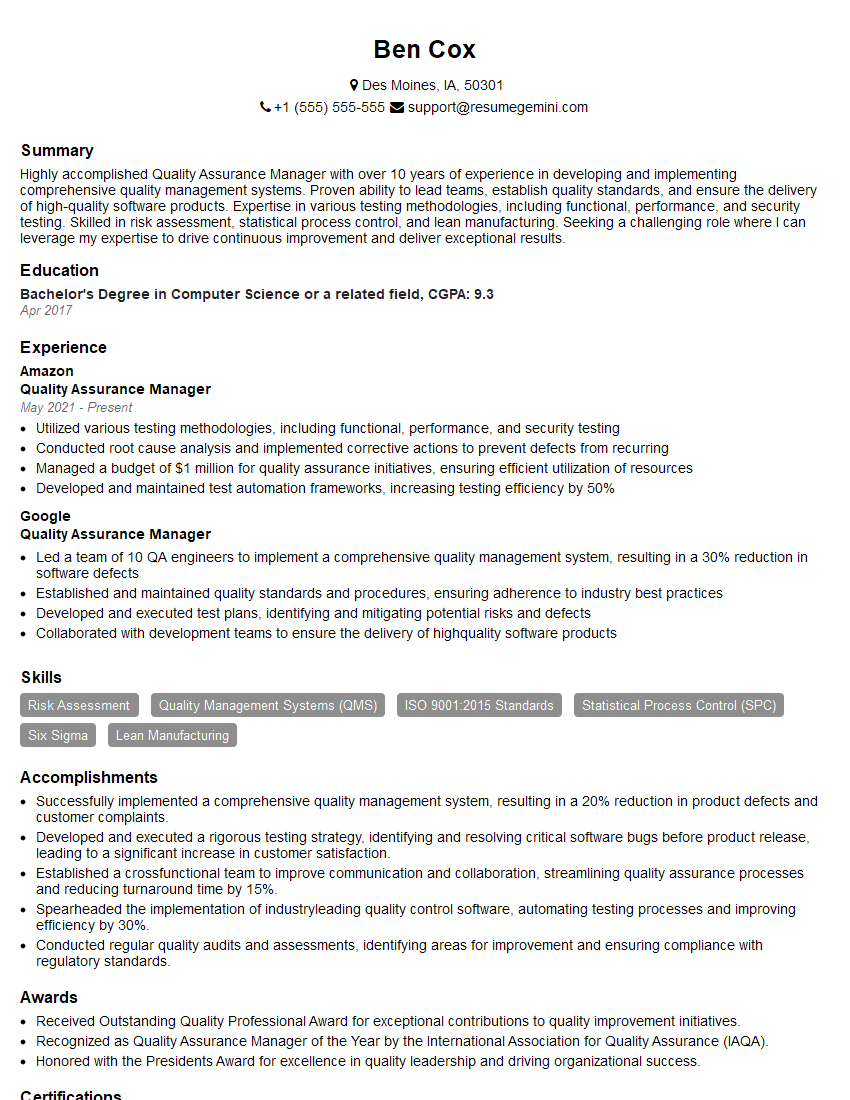
Quality Assurance Manager Resume Sample
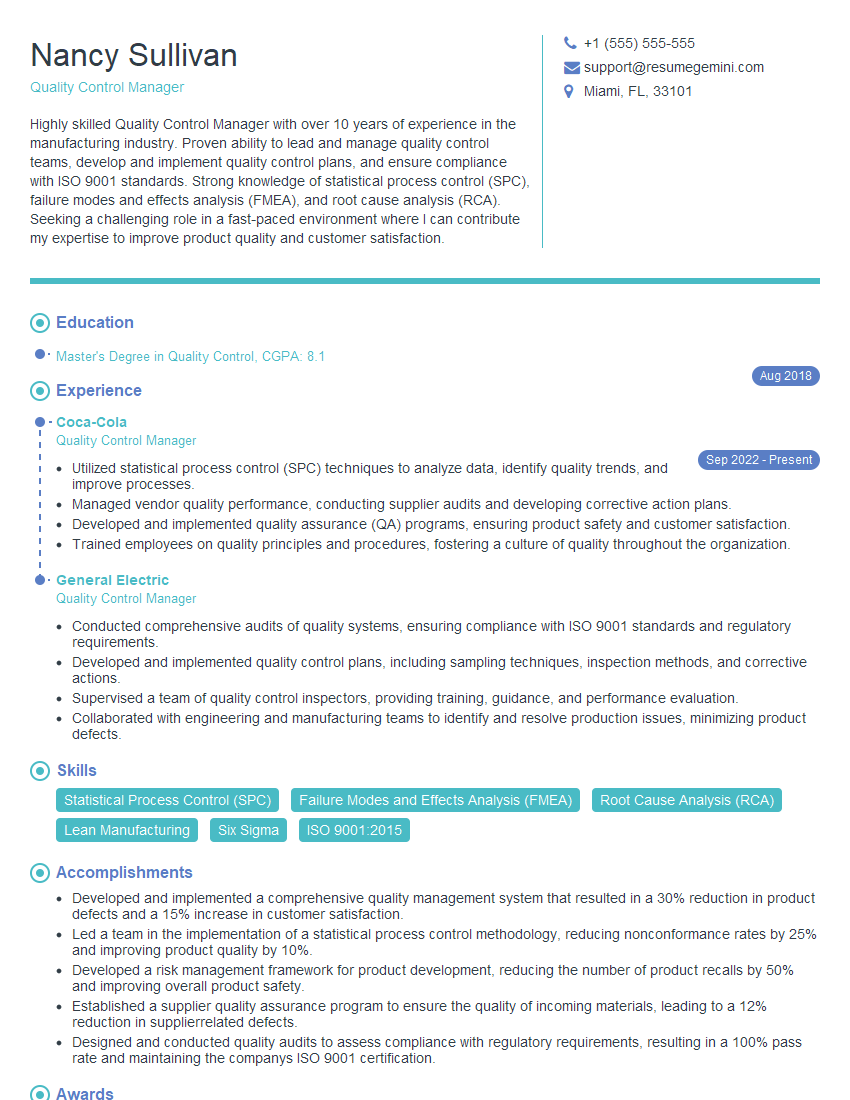
Quality Control Manager Resume Sample
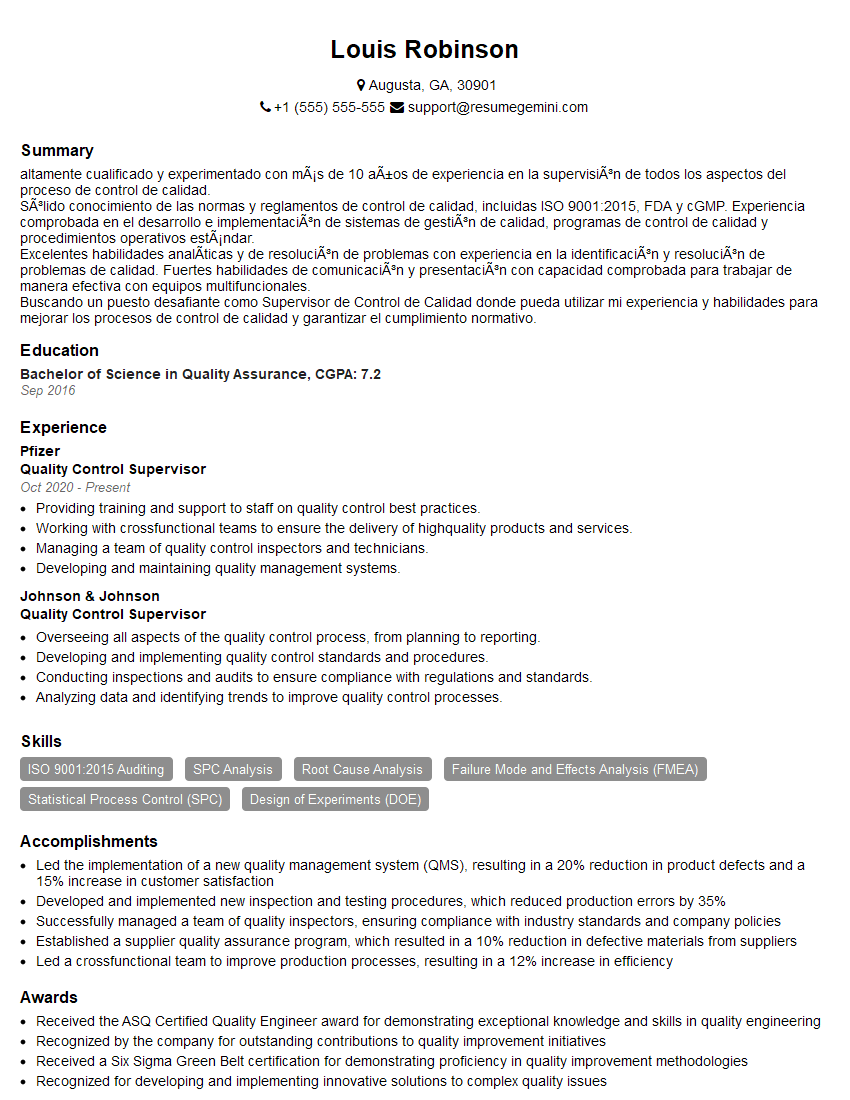
Quality Control Supervisor Resume Sample
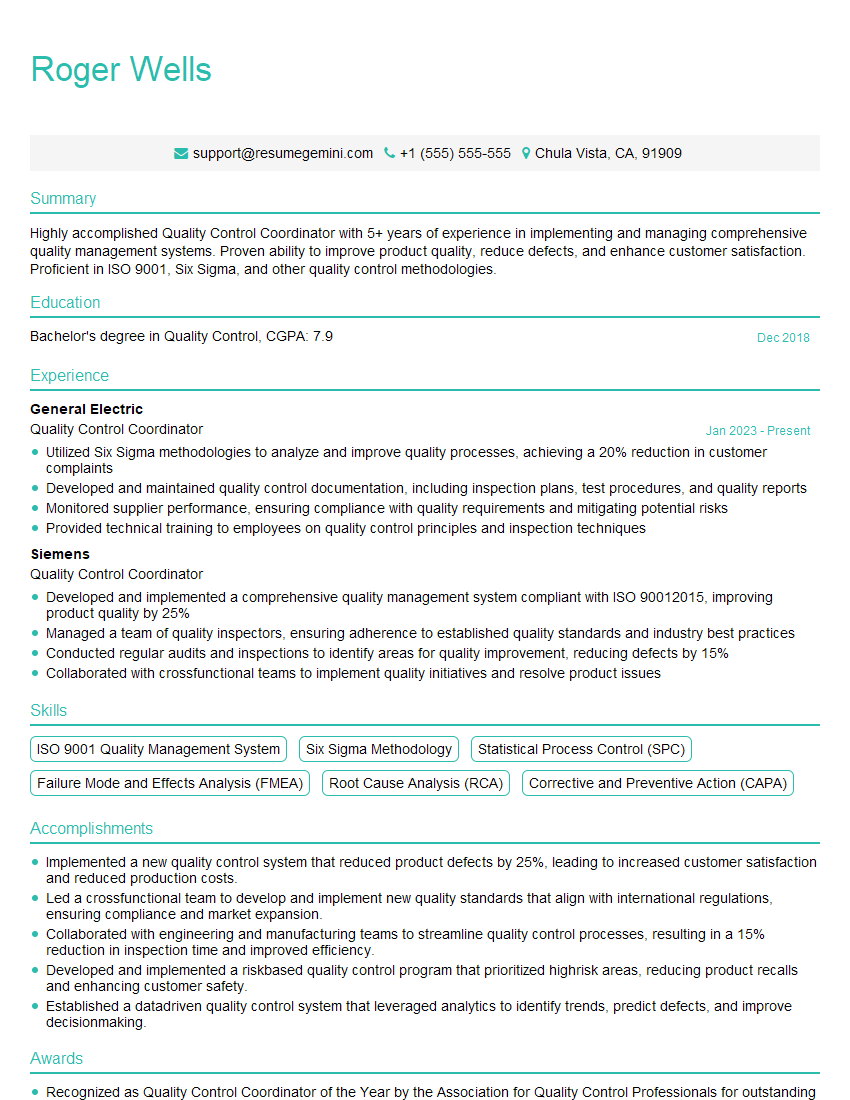
Quality Control Coordinator Resume Sample
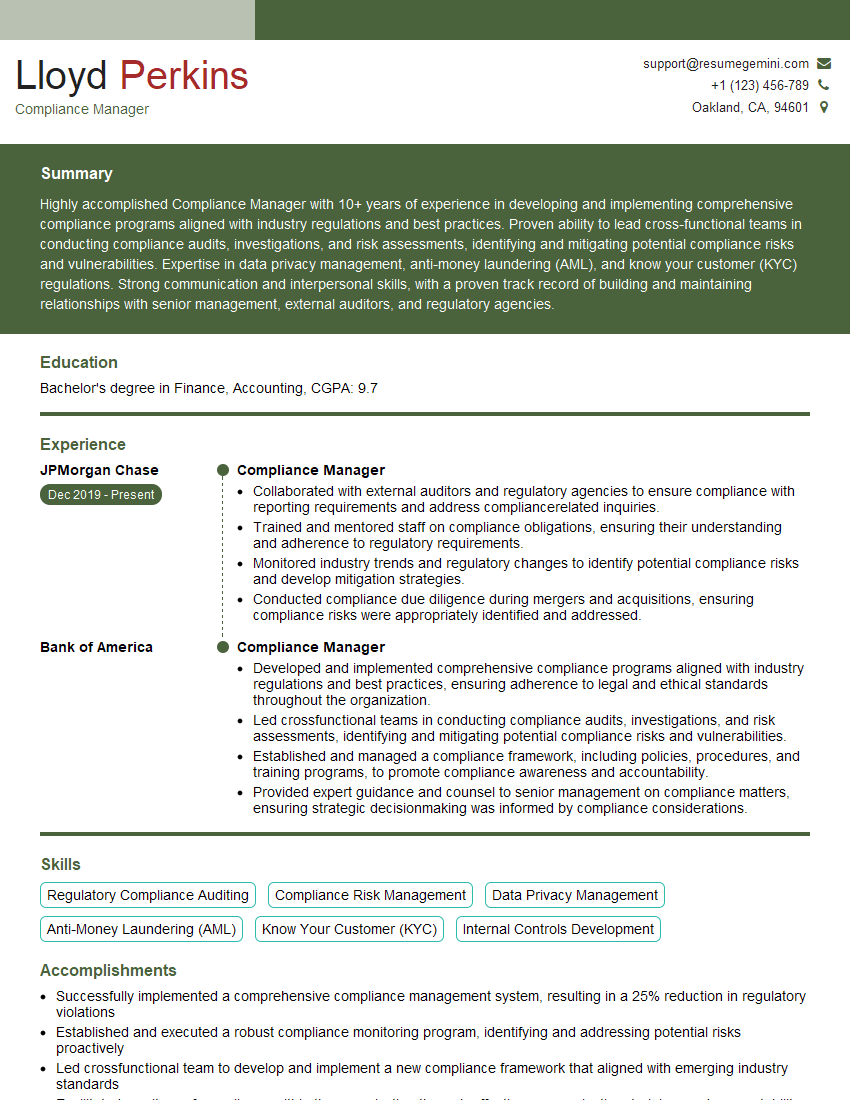
Compliance Manager Resume Sample
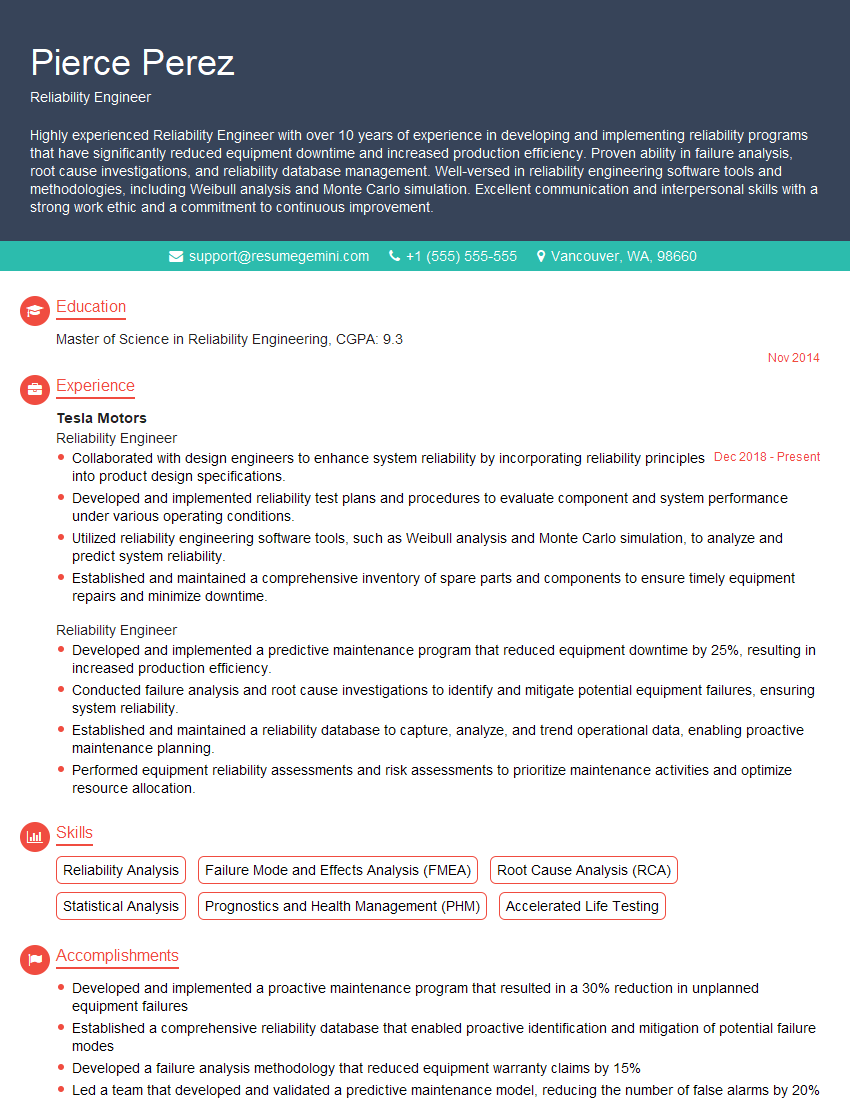
Reliability Engineer Resume Sample
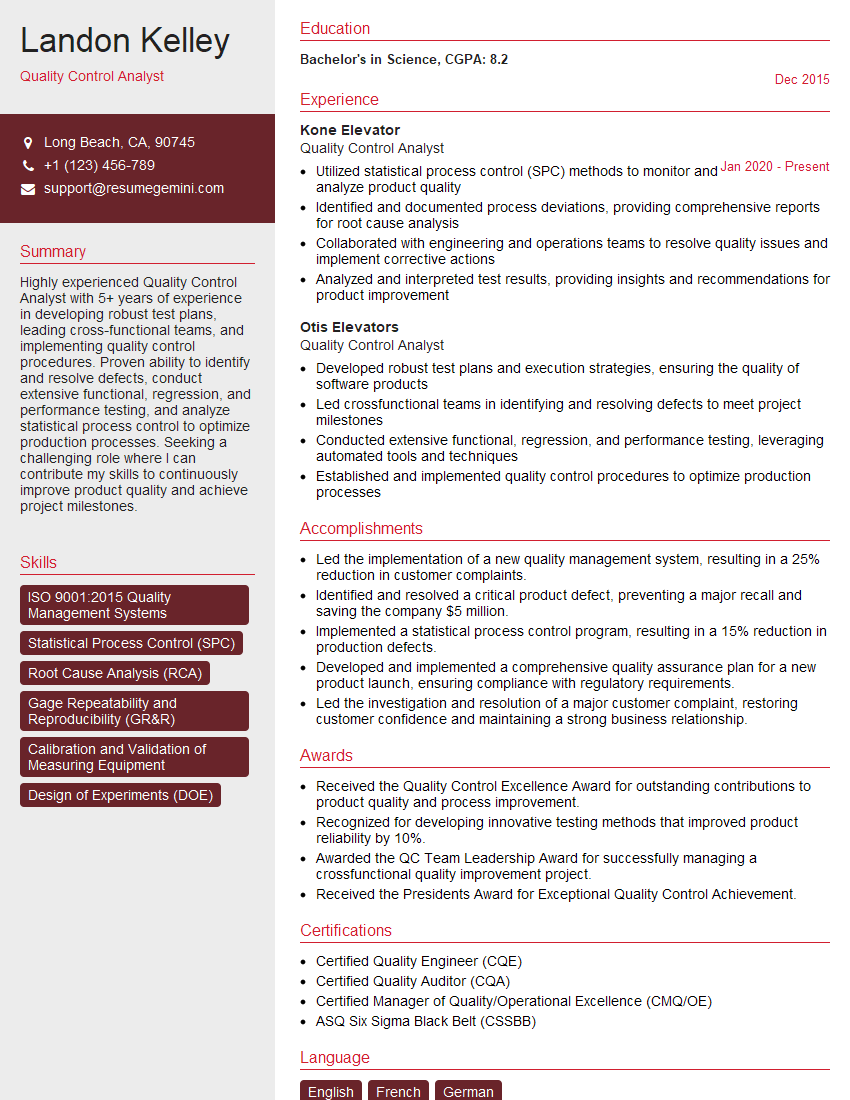
Quality Control Analyst Resume Sample
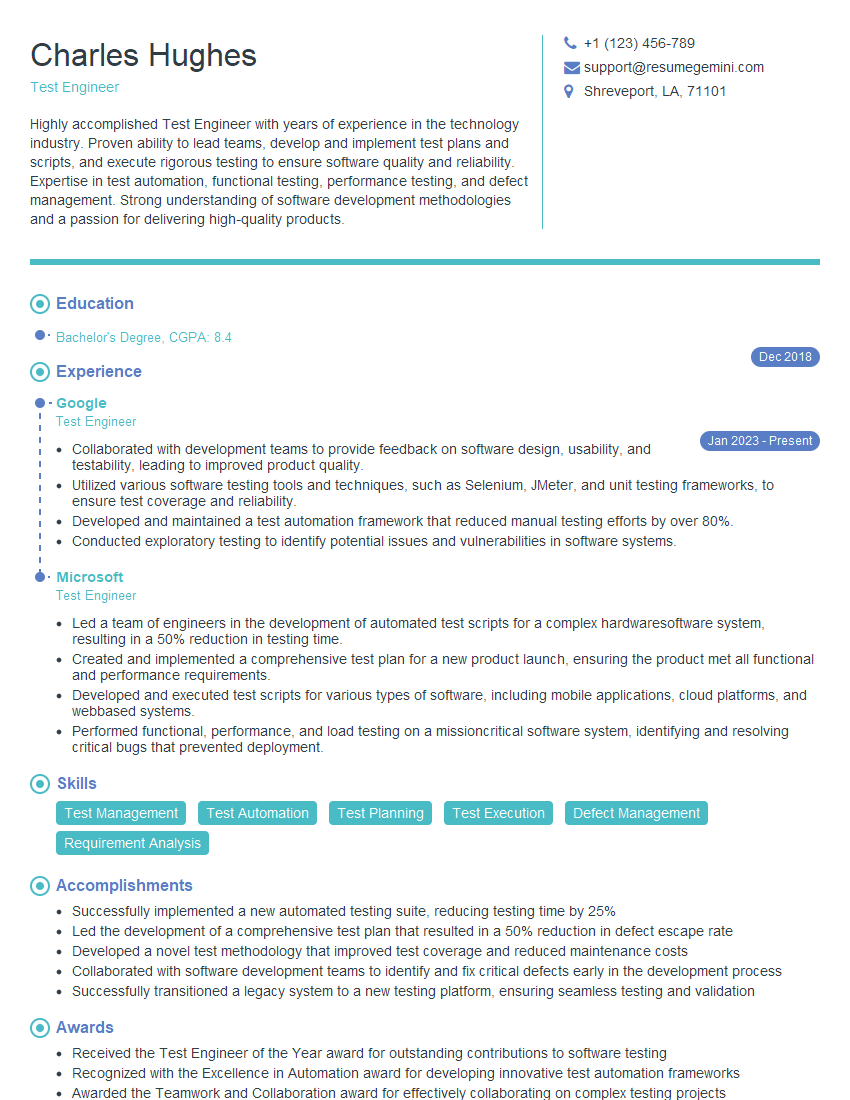
Test Engineer Resume Sample
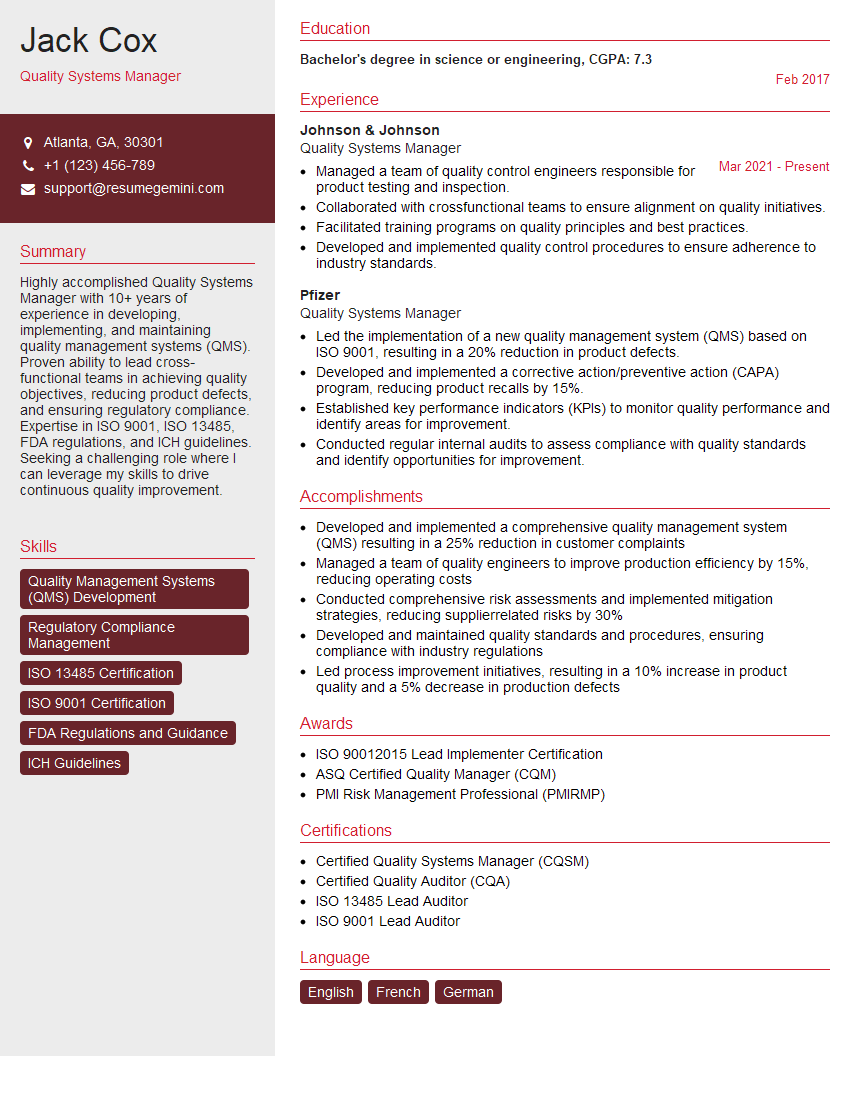
Quality Systems Manager Resume Sample
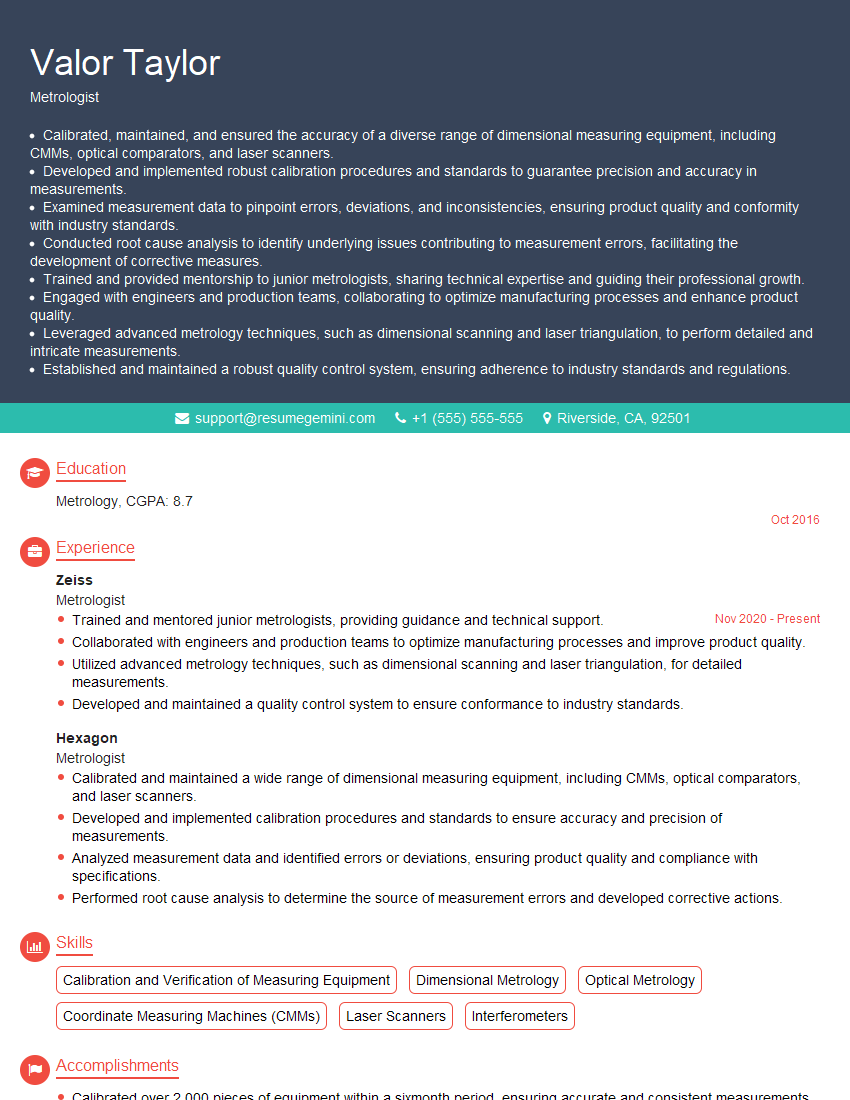
Metrologist Resume Sample
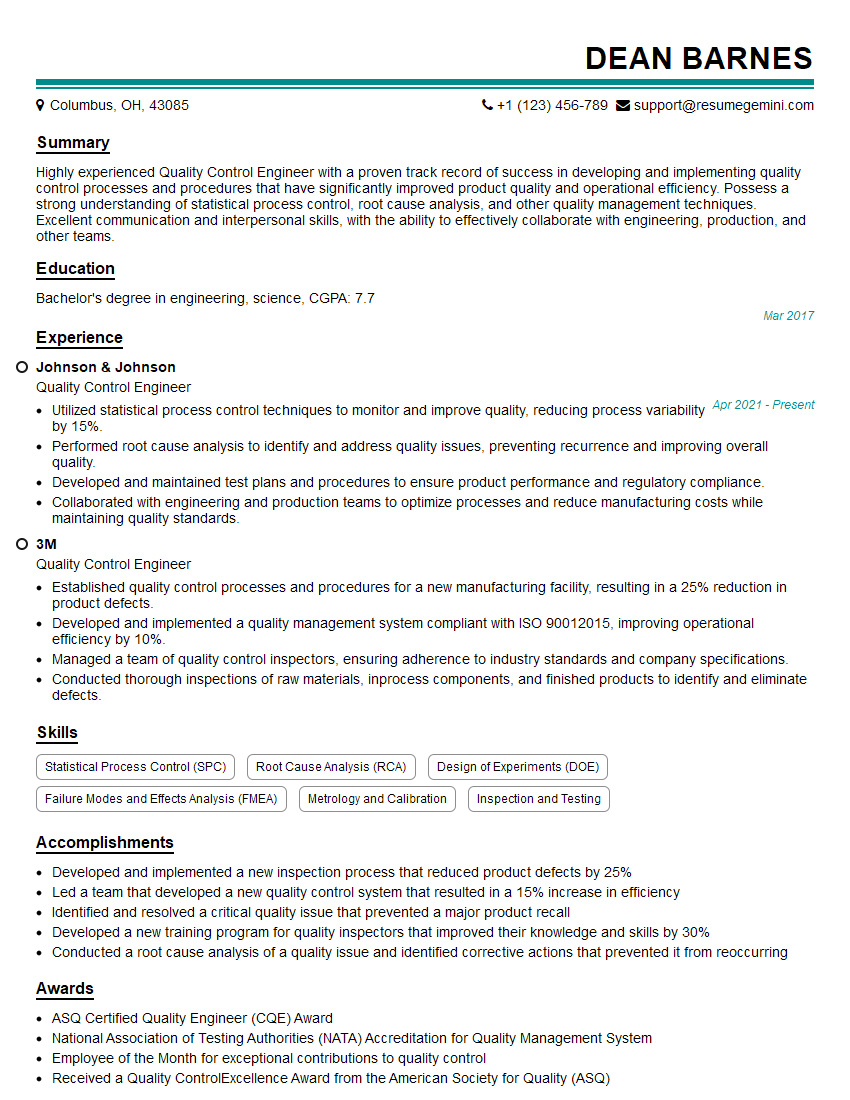
Quality Control Engineer Resume Sample
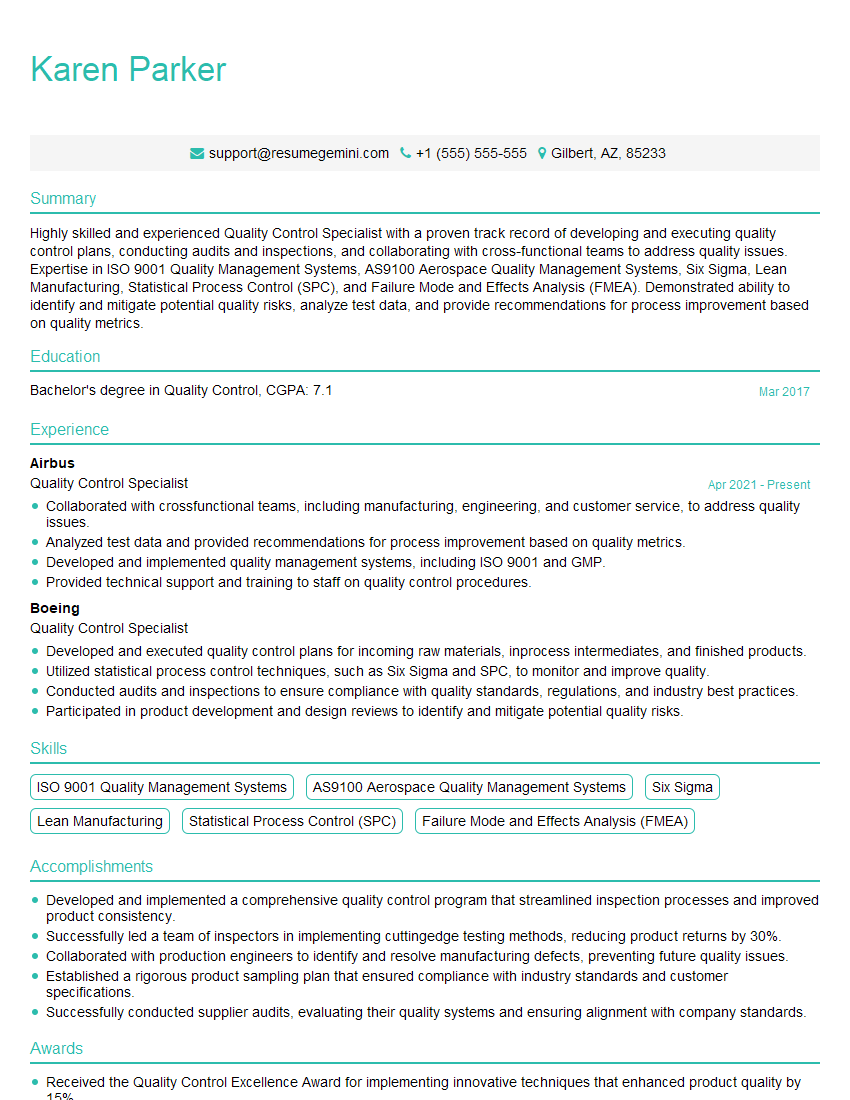
Quality Control Specialist Resume Sample
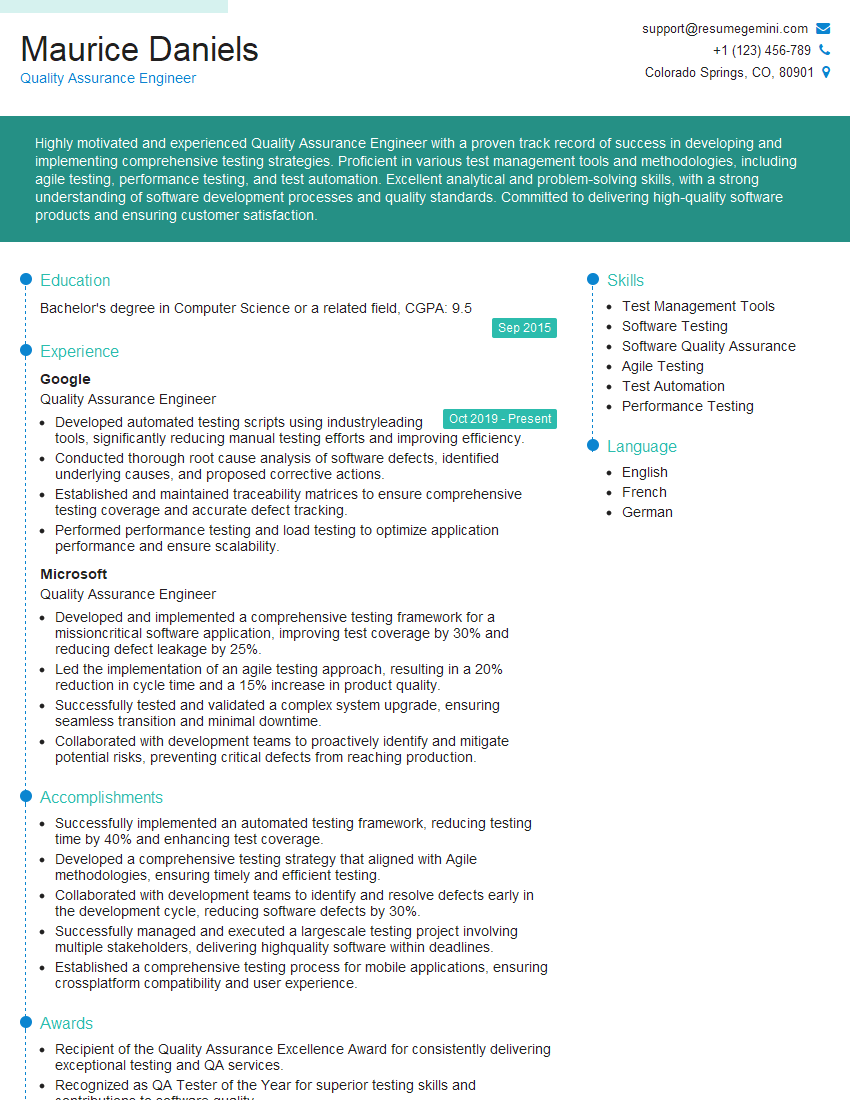
Quality Assurance Engineer Resume Sample
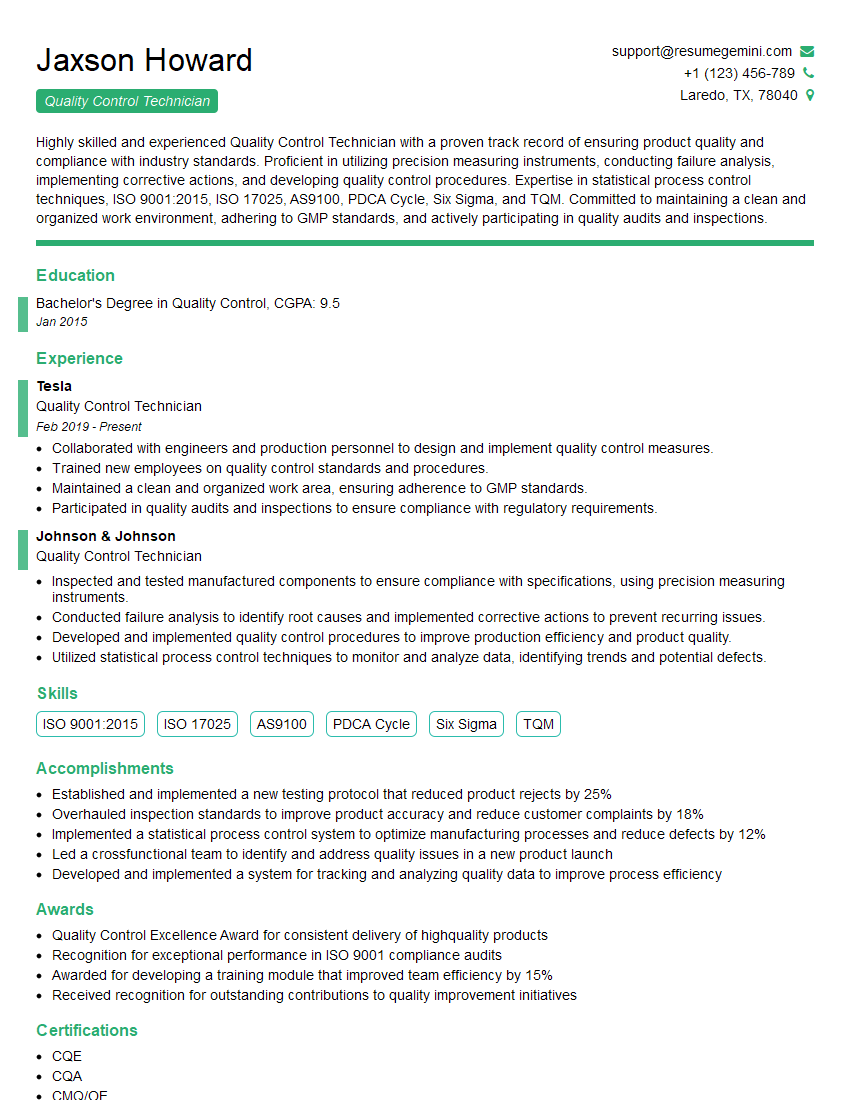
Quality Control Technician Resume Sample
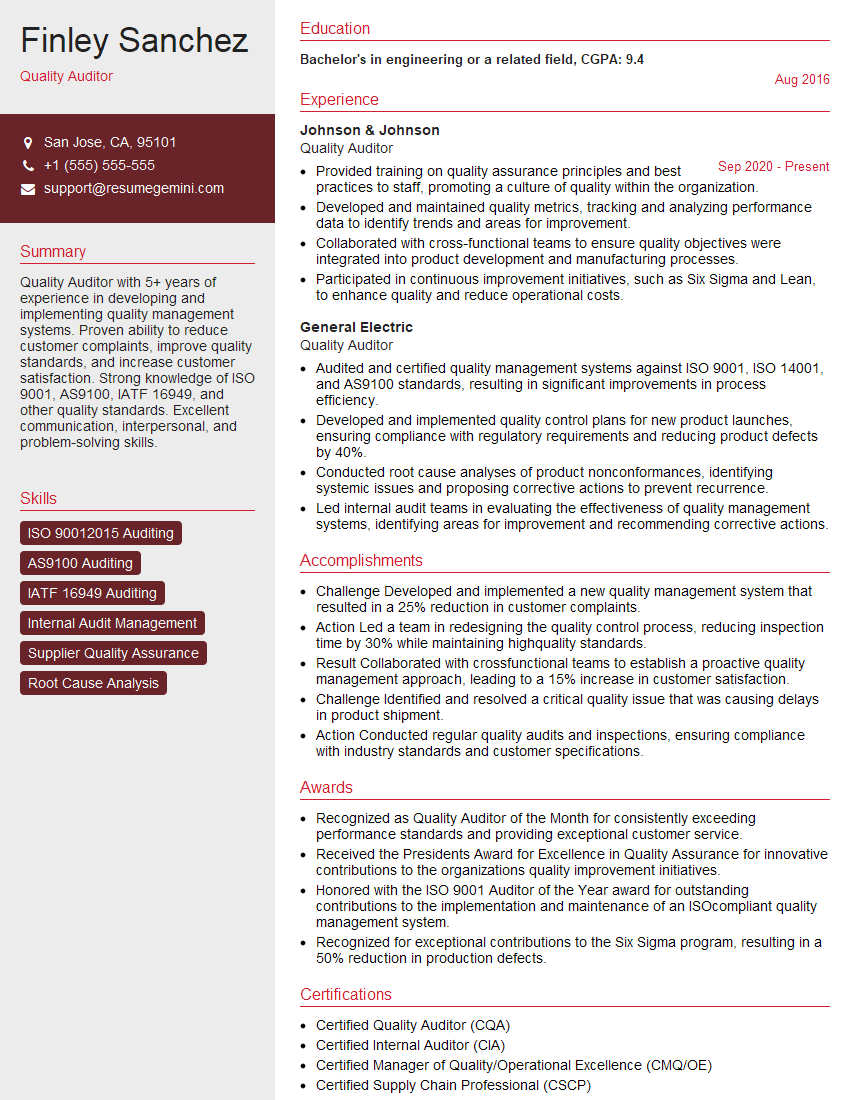
Quality Auditor Resume Sample
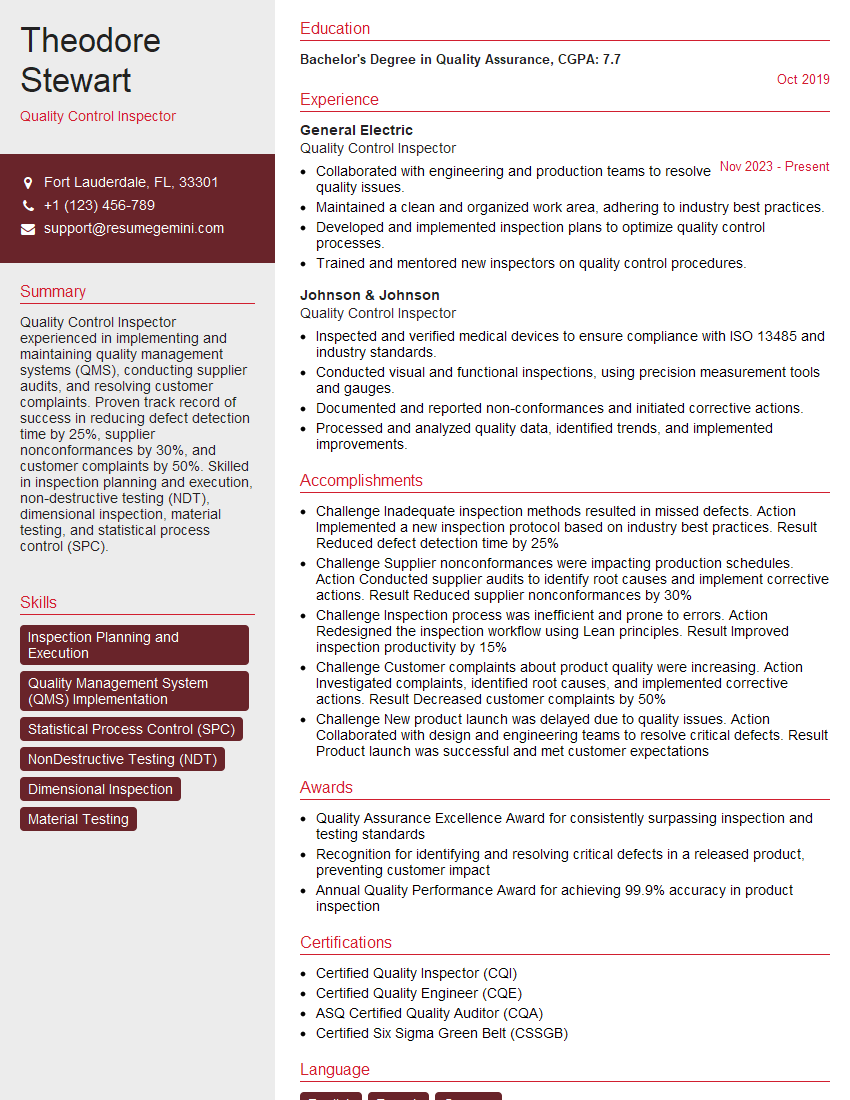
Quality Control Inspector Resume Sample
- Quality Assurance Manager
- Quality Control Manager
- Quality Control Supervisor
- Quality Control Coordinator
- Compliance Manager
- Reliability Engineer
- Quality Control Analyst
- Test Engineer
- Quality Systems Manager
- Metrologist
- Quality Control Engineer
- Quality Control Specialist
- Quality Assurance Engineer
- Quality Control Technician
- Quality Auditor
- Quality Control Inspector
Explore more articles
Users Rating of Our Blogs
Share Your Experience
We value your feedback! Please rate our content and share your thoughts (optional).
What Readers Say About Our Blog
Very informative content, great job.
good