Unlock your full potential by mastering the most common Commissioning and Testing of Wind Turbines interview questions. This blog offers a deep dive into the critical topics, ensuring you’re not only prepared to answer but to excel. With these insights, you’ll approach your interview with clarity and confidence.
Questions Asked in Commissioning and Testing of Wind Turbines Interview
Q 1. Describe the process of commissioning a wind turbine.
Commissioning a wind turbine is a meticulous process ensuring the turbine operates safely and efficiently as designed. It’s like assembling a complex machine, then rigorously testing each part before full operation. The process typically involves several stages:
- Pre-commissioning: This involves inspections, checks of all components (gearbox, generator, blades, etc.), and verifying that the turbine is correctly assembled and connected to the grid. We meticulously review all documentation, including the as-built drawings and manufacturer’s instructions.
- Component testing: Individual components are tested to ensure they function correctly before integrating them into the whole system. For example, we might perform insulation resistance tests on the generator windings or check the blade pitch mechanisms for smooth operation. Think of this as testing the engine, transmission, and brakes of a car separately.
- System integration testing: After the individual components pass their tests, we integrate them and conduct system-level testing. This includes checking the communication between different parts of the turbine (like the control system and the generator), verifying the safety systems are functional, and checking for smooth start-up and shut-down sequences.
- Performance testing: This involves measuring the turbine’s output power, efficiency, and other key performance indicators (KPIs) under various wind conditions. This stage often involves sophisticated data acquisition and analysis using SCADA systems.
- Final acceptance testing: This is the culmination, confirming the turbine meets all the specified requirements. Only after successful completion can the turbine be handed over to the owner for operational use. We create a comprehensive report detailing the entire commissioning process and the results of all tests.
Q 2. What are the key safety procedures during wind turbine commissioning?
Safety is paramount throughout wind turbine commissioning. We adhere to strict safety procedures including:
- Lockout/Tagout (LOTO): Before any work is performed on the turbine, we use LOTO procedures to isolate the electrical systems, preventing accidental energization. This is absolutely crucial to prevent electrical shocks and injuries.
- Permit-to-work system: All work requires a permit outlining the tasks, hazards involved, and safety precautions. This system ensures everyone involved understands and acknowledges the risks.
- Personal Protective Equipment (PPE): Appropriate PPE, including hard hats, safety glasses, high-visibility clothing, and fall protection equipment, is mandatory for all personnel on site.
- Emergency response plan: We have a clear emergency response plan in place, outlining procedures for dealing with incidents such as falls, electrical shocks, or fires. This plan is thoroughly communicated to all involved and regularly practiced through drills.
- Wind speed restrictions: Commissioning activities are suspended when wind speeds exceed predefined limits to minimize risks related to high winds and potential damage to the equipment or personnel.
- Regular safety briefings: We conduct regular safety briefings to remind everyone of safety procedures and discuss any potential hazards.
For instance, I recall an incident where a loose bolt was discovered during pre-commissioning. Immediately, LOTO procedures were implemented, the area was secured, and the issue was resolved safely before any further work was initiated.
Q 3. Explain the difference between functional testing and performance testing of a wind turbine.
Functional testing verifies that each component and system works as intended, while performance testing measures how well the turbine performs under real-world conditions. Think of it like this:
Functional Testing: This is like checking if all the parts of a car are working – the engine starts, the lights turn on, the brakes work. We’re verifying functionality according to the design specifications. Examples include:
- Verifying the correct operation of the pitch system.
- Testing the yaw system response to wind direction changes.
- Checking the control system’s ability to respond to different operational modes.
Performance Testing: This is like taking the car for a test drive to see how fast it goes, how much fuel it consumes, and how well it handles. Examples include:
- Measuring the actual power output of the turbine under varying wind speeds.
- Analyzing the energy yield over a period of time.
- Assessing the efficiency of energy conversion.
Both types of testing are crucial for ensuring the turbine meets the specified requirements and performs as expected throughout its operational life.
Q 4. How do you troubleshoot issues during the commissioning phase?
Troubleshooting during commissioning involves a systematic approach:
- Identify the problem: Carefully analyze the symptoms and gather data from the SCADA system, logs, and other sources. This might involve reviewing error messages, checking sensor readings, or observing the turbine’s behaviour.
- Isolate the cause: Systematically check different components and systems to determine the root cause. This may involve using diagnostic tools, conducting detailed inspections, and consulting the manufacturer’s documentation.
- Implement the solution: Once the cause is identified, implement the necessary repairs or adjustments. This could involve replacing faulty components, reconfiguring the control system, or making mechanical adjustments.
- Verify the fix: After making repairs, rigorously retest the system to verify that the problem has been resolved. This is crucial to prevent recurrence.
- Document everything: Keep a detailed record of all troubleshooting steps, findings, and solutions. This documentation is crucial for future reference and for maintaining a comprehensive commissioning report.
For example, if we observe low power output, we might check the wind speed, generator output, blade pitch, and grid connection. Through systematic investigation, we might discover a faulty sensor, a loose connection, or a problem with the generator itself.
Q 5. What are the common challenges encountered during wind turbine commissioning?
Common challenges during wind turbine commissioning include:
- Grid connection issues: Difficulties connecting to the electrical grid, including voltage fluctuations or synchronization problems.
- Weather-related delays: Extreme weather conditions can delay or interrupt commissioning activities.
- Component failures: Failures of individual components during testing requiring replacements and repairs.
- Software and communication problems: Issues with the SCADA system or communication between different parts of the turbine.
- Unforeseen site-specific issues: Unexpected site conditions that affect the turbine’s operation or installation. For instance, soil conditions might be different from what was anticipated.
- Coordination challenges: Managing multiple contractors and stakeholders involved in the commissioning process.
I remember one project where unexpected ground instability caused delays. We needed to implement soil stabilization measures before we could proceed with the foundation work and turbine erection. Successfully navigating such challenges requires adaptability and strong teamwork.
Q 6. Describe your experience with SCADA systems in wind turbine commissioning.
SCADA (Supervisory Control and Data Acquisition) systems are integral to wind turbine commissioning. They provide real-time monitoring and control of the turbine’s operation. We use SCADA systems extensively for:
- Data acquisition: Collecting data on turbine performance parameters like power output, wind speed, blade pitch angles, and generator temperatures. This data is crucial for performance testing and troubleshooting.
- Monitoring and diagnostics: Monitoring the turbine’s health and identifying potential problems. SCADA systems often provide alarm notifications for critical events.
- Remote control: Remotely controlling certain aspects of turbine operation, such as start-up, shut-down, and yaw control. This is particularly useful during testing and troubleshooting.
- Data analysis: Analyzing the collected data to assess the turbine’s performance and identify areas for improvement. This might involve creating reports and visualizations of key performance indicators (KPIs).
In a recent project, we utilized SCADA data to identify a subtle vibration in the gearbox during performance testing. This early detection allowed us to address the issue before it escalated into a major problem. SCADA systems are a powerful tool for ensuring the turbine’s smooth and efficient operation.
Q 7. How do you ensure compliance with safety regulations during commissioning?
Ensuring compliance with safety regulations throughout commissioning involves a multi-faceted approach:
- Adhering to relevant standards and codes: We meticulously follow international and local safety standards, such as IEC 61400 series for wind turbines. This ensures the turbine meets all the necessary safety requirements.
- Regular safety audits and inspections: Regular audits are performed to verify compliance with safety procedures and identify any potential risks.
- Proper documentation: Maintaining comprehensive documentation of all safety-related activities, including risk assessments, permits-to-work, and incident reports.
- Training and competency: All personnel involved in the commissioning process receive adequate safety training and possess the necessary competence to perform their tasks safely.
- Collaboration with regulatory bodies: We work closely with relevant regulatory bodies throughout the commissioning process to ensure compliance and obtain necessary approvals.
For instance, we always make sure that our work permits are detailed, signed off by the appropriate personnel, and kept on file. This ensures accountability and helps in tracing any incidents or near misses back to their root cause. Safety is not just a checklist; it’s a culture we foster on every project.
Q 8. Explain your understanding of grid connection procedures for wind turbines.
Grid connection procedures for wind turbines are crucial for ensuring safe and reliable integration into the electricity grid. It’s a multi-step process involving rigorous testing and verification to meet grid code requirements. This typically begins with initial electrical connection checks, verifying correct phasing, voltage levels, and grounding. Then, we proceed to functional testing under various operating conditions, including synchronization with the grid, verifying reactive power control, and demonstrating compliance with frequency and voltage stability standards.
For example, during synchronization, we carefully monitor the turbine’s voltage and frequency to ensure seamless transition. Discrepancies can be addressed by adjusting turbine settings or identifying and rectifying issues within the electrical system. This process frequently involves SCADA (Supervisory Control and Data Acquisition) systems to monitor and control the turbine and gather data for analysis. Finally, a final inspection and approval from the grid operator are required before the wind turbine is fully commissioned and allowed to feed power to the grid.
Consider a scenario where the turbine’s frequency deviates significantly from the grid’s. This indicates a problem with either the turbine’s control system or the grid itself. Investigating the root cause, which could be a faulty frequency sensor or a grid disturbance, is crucial before allowing the turbine to connect and potentially destabilize the grid. The entire process is meticulously documented to meet regulatory compliance requirements and ensure traceability.
Q 9. How do you verify the proper functioning of the wind turbine’s protection systems?
Verifying the proper functioning of a wind turbine’s protection systems is paramount for ensuring the safety of personnel, equipment, and the grid. These systems are designed to protect against various faults such as overspeed, overcurrent, and ground faults. We use a combination of testing methods, including simulations and real-world fault injections (under strict safety protocols, of course!). Simulations involve using the turbine’s control system to trigger protection scenarios, monitoring the response time and verifying correct tripping actions. Real-world fault injections, where applicable and permitted, inject controlled faults to validate the protection system’s response in actual operating conditions.
For instance, we might simulate an overspeed condition by introducing a simulated wind gust in the control system. This would trigger the protection system, which should shut down the turbine within a specified timeframe. We then thoroughly analyze the protection system’s logs to verify correct operation. For ground faults, specialized test equipment is often used to inject controlled ground faults, triggering the protection system’s ground fault detection and isolating the affected components. We document all testing procedures, results, and any corrective actions taken.
A real-world example involved a turbine experiencing false trips due to a faulty sensor. Through systematic testing and data analysis, we were able to pinpoint the malfunctioning sensor and prevent further unnecessary shutdowns, which helped maximize uptime and energy production.
Q 10. Describe your experience with different types of wind turbine technologies.
My experience spans across various wind turbine technologies, including geared and gearless (direct-drive) systems, and different generator types such as permanent magnet synchronous generators (PMSGs) and doubly-fed induction generators (DFIGs). Geared turbines are more common and generally have a higher power output. However, gearless turbines offer higher reliability due to fewer moving parts. I have worked on both onshore and offshore wind farms, understanding the unique challenges each presents in terms of commissioning and maintenance. Offshore wind turbines, for instance, pose logistical complexities and necessitate stringent safety protocols due to the remote location and harsh marine environment.
Specifically, my work with DFIGs has involved detailed analysis of their grid-side converters and their impact on grid stability. The complexity of the control systems necessitates a thorough understanding of the various algorithms and parameters. My experience with PMSGs included tasks such as verifying the correct alignment of the magnets and ensuring optimal performance of the generator’s cooling system. Understanding the mechanical and electrical aspects of each technology is fundamental to successfully commissioning the turbine.
Each turbine type presents unique challenges and benefits. The experience with both geared and gearless turbines allowed me to effectively troubleshoot problems and optimize the system’s performance based on the specific technology in use.
Q 11. What is your experience with performance testing and data analysis?
Performance testing and data analysis are integral parts of wind turbine commissioning. We use sophisticated software and tools to collect, process, and analyze data from various sensors throughout the turbine. This data provides insights into the turbine’s efficiency, power output, and overall performance. Typical parameters include power curves, efficiency curves, and gearbox temperatures. These analyses are often compared against manufacturer specifications and expected performance models.
For example, we might use SCADA systems to acquire real-time data on power output under varying wind speeds. This data is then used to generate a power curve, which is compared to the manufacturer’s specified power curve. Any discrepancies require thorough investigation to identify the root cause. Advanced data analytics techniques, like statistical process control (SPC), are also used to detect anomalies and predict potential failures. Specialized software packages such as those offered by various turbine manufacturers and independent testing firms, allow detailed analyses of turbine performance. These tools allow for detailed analysis of data collected from various sensors, including wind speed, power output, yaw angle, and pitch angle.
In one instance, we identified a performance degradation in a turbine by analyzing the power curve data over several weeks. This led to the discovery of a fault in the blade pitch system, preventing it from optimally adjusting to changing wind conditions.
Q 12. How do you handle unexpected problems during commissioning?
Handling unexpected problems during commissioning requires a systematic and methodical approach. The first step involves clearly defining the problem, gathering all available data, and establishing a clear communication channel amongst the commissioning team. A detailed investigation then follows, often requiring in-depth analysis of the data logs and the turbine’s control system. We leverage troubleshooting strategies and diagnostic tools, utilizing flowcharts and decision trees to guide the problem-solving process. Collaborating with the turbine manufacturer’s technical support is frequently necessary. If immediate solutions aren’t available, we might implement temporary workarounds to minimize disruption and ensure safety while a permanent solution is being developed. The entire process is well-documented, and post-incident reviews are held to learn from the experience and prevent similar incidents in the future.
For example, I once encountered a situation where a turbine failed to start up due to an unexpected communication error between the control system and the generator. Through systematic checks of the communication network, we found a faulty cable that was preventing the proper transmission of control signals. The faulty cable was replaced, restoring normal operation. This instance highlighted the importance of thorough cable and connection checks during commissioning.
Effective problem-solving demands a proactive approach, thorough documentation, and collaborative communication between all stakeholders to ensure prompt resolution and minimize downtime.
Q 13. What software and tools are you familiar with for wind turbine commissioning?
My experience encompasses a wide range of software and tools used in wind turbine commissioning. This includes SCADA systems such as those from GE, Siemens, and others for monitoring and controlling the turbine operations. Data acquisition systems from various manufacturers are used to collect detailed performance data. Software packages for advanced data analysis, including statistical analysis software and specialized turbine diagnostic tools, are also regularly employed. Furthermore, I’m proficient in using various communication protocols such as Modbus, Profibus, and Ethernet/IP for communicating with the turbine’s various components. We also utilize specialized software for evaluating the turbine’s power curve and other performance characteristics.
Example: Using a SCADA system to monitor the real-time power output and identify deviations from expected performance.
Example: Employing a data analysis software to perform statistical analysis on collected data to detect anomalies and identify potential problems.
Familiarity with these tools is crucial for efficient data collection, analysis, and effective troubleshooting.
Q 14. What is your experience with commissioning different components (e.g., generator, gearbox, blades)?
Commissioning different components requires a deep understanding of their individual functions and interdependencies within the overall system. The generator’s commissioning involves verifying its electrical characteristics, including voltage, current, and power output, under various operating conditions. We also carefully inspect the generator’s cooling system and its insulation resistance. The gearbox commissioning focuses on verifying its mechanical integrity, including checking for noise, vibrations, and oil leaks. This often involves specialized analysis of vibration data to detect any early signs of wear or damage. Blade commissioning involves visual inspections for any damage or defects during manufacturing and transportation, as well as balancing tests to ensure proper aerodynamic performance and prevent vibration issues. This process may involve dynamic balancing techniques to ensure uniform weight distribution across each blade. Each step is meticulously documented, and the results are compared against manufacturer specifications.
For example, during gearbox commissioning, I’ve used vibration analysis tools to identify minor imbalances in the gearbox which were subsequently corrected before the turbine was connected to the grid. This prevented potential failures that could have resulted in extensive repair costs and extended downtime. Similarly, careful visual inspection of blades before installation identified a small crack in one blade that needed to be addressed prior to operation.
The experience covers not only the individual component testing, but also the integration and interaction of these components within the entire wind turbine system. Thorough testing of each component is critical to the successful operation of the turbine as a whole.
Q 15. How do you ensure the accuracy and reliability of commissioning data?
Ensuring the accuracy and reliability of commissioning data is paramount for the safe and efficient operation of a wind turbine. It involves a multi-layered approach encompassing meticulous planning, precise measurement techniques, and robust data validation processes.
Firstly, we utilize calibrated and regularly maintained measurement equipment. This includes anemometers for wind speed measurement, power quality analyzers to assess grid compatibility, and specialized tools for assessing mechanical components. Regular calibration checks against traceable standards are crucial. Secondly, we implement rigorous data logging procedures. This involves using industry-standard software to record data at high sampling rates, timestamping each measurement for traceability, and maintaining a clear chain of custody for all data collected. Thirdly, data validation is critical. We perform plausibility checks, comparing measured data against expected values based on turbine specifications and operational conditions. We also look for inconsistencies or anomalies that might indicate errors in measurement or data transmission. Outliers are investigated thoroughly before final acceptance of the data. For example, if wind speed readings show abnormally high values during periods of reported calm weather, we would investigate the anemometer positioning, calibration or any possible interference. Finally, comprehensive documentation of the entire process, including equipment calibration certificates, data logging procedures and validation steps, ensures traceability and allows for future audits or troubleshooting.
Career Expert Tips:
- Ace those interviews! Prepare effectively by reviewing the Top 50 Most Common Interview Questions on ResumeGemini.
- Navigate your job search with confidence! Explore a wide range of Career Tips on ResumeGemini. Learn about common challenges and recommendations to overcome them.
- Craft the perfect resume! Master the Art of Resume Writing with ResumeGemini’s guide. Showcase your unique qualifications and achievements effectively.
- Don’t miss out on holiday savings! Build your dream resume with ResumeGemini’s ATS optimized templates.
Q 16. Explain your understanding of IEC standards related to wind turbine commissioning.
My understanding of IEC standards related to wind turbine commissioning is extensive. The primary standard is IEC 61400-12, which provides a comprehensive framework for the testing and commissioning of wind turbines. This standard covers a wide range of aspects including:
- Pre-commissioning activities: This includes inspection of components, verifying installation according to manufacturer’s specifications, and checking for any damage.
- Commissioning tests: These involve functional tests of individual components (e.g., gearbox, generator, yaw system), as well as integrated system tests to assess overall performance under various operating conditions.
- Performance testing: This is conducted to verify that the turbine meets its guaranteed performance parameters, such as rated power and energy yield. This often involves prolonged data collection and analysis.
- Safety assessments: IEC standards prioritize safety. Commissioning includes thorough testing of safety systems such as emergency shutdown systems, protection relays and fire suppression systems.
Other relevant standards include IEC 61400-21 (Measurement techniques), IEC 61400-22 (Environmental testing) and IEC 61400-27 (Grid Connection). Adherence to these standards is crucial for ensuring the safety, reliability and grid compliance of wind turbines. We always strive to meet or exceed the requirements of the applicable IEC standards in all our commissioning projects.
Q 17. What is your experience with commissioning documentation and reporting?
Commissioning documentation and reporting are integral to the success of any project. I have extensive experience in creating and managing comprehensive documentation packages, ensuring full traceability of the entire commissioning process. This involves:
- Detailed test plans: Outlining all tests to be performed, the methods to be used, and acceptance criteria.
- Test procedures: Providing step-by-step instructions for conducting each test.
- Data sheets: Recording all test data, including timestamps and any relevant observations.
- Non-conformances and corrective actions: Documenting any issues identified during commissioning and the steps taken to resolve them.
- Final commissioning report: Summarizing the entire commissioning process, including test results, any deviations from the plan and final conclusions on the turbine’s readiness for operation. This report serves as an essential handover document to the owner/operator.
I am proficient in using various software tools for data management, report generation, and documentation control, ensuring compliance with industry best practices and client-specific requirements. For example, I’ve used dedicated commissioning software to track and manage various tests and associated documents using a centralized database.
Q 18. Describe a time you had to troubleshoot a complex issue during commissioning.
During the commissioning of an offshore wind turbine, we experienced an intermittent fault in the yaw system, causing the turbine to fail to orient itself optimally to the wind. This resulted in suboptimal power generation and raised safety concerns. Initial troubleshooting focused on checking the yaw drive motor, sensors, and control system components. After thorough inspection, we couldn’t pinpoint a single point of failure. The problem was intermittent and difficult to reproduce consistently.
Our approach involved systematically isolating different parts of the yaw system using advanced diagnostic tools. We utilized data loggers to capture detailed information about the yaw system’s behavior during the fault events. We found that the fault primarily occurred during high wind conditions and specifically when changes in wind direction occurred rapidly. The issue was eventually traced to a combination of two factors: a loose connection in a critical sensor cabling which was exacerbated by high wind induced vibrations. After securing the connection and also incorporating vibration damping materials to the cabling, the fault was fully rectified, the yaw system functioned correctly and the turbine achieved full operational performance. This experience highlighted the importance of thorough diagnostics and systematic troubleshooting when dealing with complex electrical and mechanical systems.
Q 19. How do you coordinate with different teams during a wind turbine commissioning project?
Coordinating different teams during wind turbine commissioning requires effective communication and collaborative planning. These teams typically include the turbine manufacturer’s engineers, the installation crew, grid connection specialists, and the client’s representatives.
I leverage several strategies to ensure smooth coordination. First, regular meetings are scheduled to keep all parties informed of progress, address potential issues and make necessary adjustments to the schedule. This involves clear, concise communication and actively fostering a collaborative environment. Secondly, a comprehensive commissioning plan is developed early in the project to outline individual team responsibilities, milestones and timelines. This includes clearly defined interfaces between teams which are regularly reviewed. Thirdly, we utilize project management software to track progress, manage tasks and share documents across teams. Finally, open communication channels are maintained throughout the process, ensuring timely resolution of any conflicts or disagreements which might arise. For example, effective coordination between the installation crew and the commissioning team is crucial to avoid issues such as incomplete or improper installation that might hinder the progress of the commissioning.
Q 20. What are your strategies for managing time and resources during commissioning?
Managing time and resources effectively during commissioning is crucial for staying on schedule and within budget. My approach involves a combination of proactive planning and adaptive management.
Initially, a detailed commissioning schedule is created, considering potential delays and allocating sufficient time for each task. This schedule is broken down into smaller, manageable tasks to allow for more precise tracking of progress. Resource allocation is carefully planned, considering the skills and availability of personnel, the equipment required and any potential logistic limitations. This involves a clear understanding of the project constraints and allocating resources efficiently to ensure that the critical path tasks are not hindered. Regular monitoring of progress against the schedule is crucial, and appropriate corrective actions are taken promptly if any issues or delays occur. For instance, if a critical piece of testing equipment malfunctions, a contingency plan should be in place to procure a replacement or find an alternative method to perform the test without significantly impacting the overall project timeline. Flexible scheduling and clear communication are key to managing unexpected challenges and maintaining project momentum.
Q 21. Describe your experience with commissioning in different weather conditions.
Commissioning wind turbines often involves working in diverse weather conditions, which can significantly impact the schedule and safety of personnel. I have considerable experience commissioning turbines in various weather situations.
Safety is the utmost priority. All activities are carefully planned and conducted to maintain safety. Appropriate safety protocols are implemented and regularly reviewed to ensure personnel safety. We use weather forecasts to plan work around unfavorable conditions, such as high winds, rain, or extreme temperatures. This may involve prioritizing specific tasks or rescheduling work based on forecast predictions. For instance, certain tasks that involve working at heights, like the nacelle access for inspection, might be postponed during high winds. Specialized equipment designed to withstand harsh weather conditions is used and regularly inspected for proper function. Furthermore, adequate training is provided to all personnel on safe work practices in various weather conditions. For example, personnel working at heights should have extensive training and experience and the appropriate safety harnesses and fall arrest systems should be in place. The experience acquired from many projects across diverse geographical locations and weather patterns has enhanced our ability to mitigate potential risks and ensure a safe working environment.
Q 22. How do you ensure the quality of the commissioned wind turbine?
Ensuring the quality of a commissioned wind turbine is a multifaceted process that begins long before the turbine even spins. It relies on a rigorous approach encompassing meticulous planning, precise execution, and comprehensive verification at every stage. Think of it like building a high-performance car – you wouldn’t just assemble the parts and hope it runs; you’d thoroughly test each component and the entire system before unleashing it on the road.
- Pre-Commissioning Checks: Before any physical work, we thoroughly review the design specifications, ensuring they align with site conditions and regulatory requirements. This includes verifying the structural integrity of the foundation, the accuracy of the electrical connections, and the proper installation of all mechanical components. A detailed checklist is followed meticulously.
- Functional Testing: This phase involves systematically testing each turbine subsystem—the nacelle, gearbox, generator, yaw system, pitch system, and the control system—to verify they operate within their specified parameters. We use specialized equipment to measure things like blade pitch accuracy, generator efficiency, and oil temperature. We’re looking for any deviations from the manufacturer’s specifications.
- Performance Testing: Once all subsystems are functional, we conduct comprehensive performance testing under varying wind conditions. This includes measuring power output, energy efficiency, and overall system reliability. We compare the actual performance against the predicted performance using sophisticated software and data analysis. This is where we identify any discrepancies that need further investigation.
- Documentation and Reporting: Thorough documentation is crucial. We maintain detailed records of every test performed, including test results, deviations, and corrective actions. A comprehensive commissioning report is prepared and submitted, which serves as a testament to the turbine’s quality and readiness for operation.
For instance, during a recent project, we discovered a slight misalignment in the gearbox during the functional testing phase. By identifying and rectifying this early, we prevented potential catastrophic failure later. This highlights the importance of detailed testing and thorough documentation.
Q 23. What are the key performance indicators (KPIs) you monitor during commissioning?
Key Performance Indicators (KPIs) during wind turbine commissioning are crucial for assessing the turbine’s performance and ensuring it meets the required standards. These KPIs are meticulously tracked and analyzed to provide a clear picture of the turbine’s health and efficiency. We are essentially grading the turbine on its operational capabilities.
- Power Curve: This measures the turbine’s power output at different wind speeds. Deviations from the manufacturer’s specified power curve can indicate issues with the generator, blades, or control system.
- Energy Yield: This is the total amount of energy generated over a specific period. We compare this to the predicted energy yield based on wind resource assessments. Lower than expected yields point to performance issues.
- Gearbox and Generator Efficiency: We monitor these critical components for any signs of inefficiency, which could indicate wear or damage. We use sophisticated monitoring systems to track parameters like temperature and vibration.
- Availability: This KPI reflects the turbine’s operational uptime. High downtime suggests issues with reliability and needs immediate attention.
- Environmental Compliance: We monitor noise levels and shadow flicker to ensure the turbine meets all environmental regulations.
- Component Temperatures: Tracking the temperatures of key components like the generator and gearbox helps identify potential overheating issues, which can be early warning signs of problems.
For example, a significant deviation in the power curve might necessitate further investigation, potentially involving blade inspections or adjustments to the control system. Continuously monitoring these KPIs is essential for proactive maintenance and ensuring optimal turbine performance.
Q 24. Explain your experience with preventative maintenance during and after commissioning.
Preventative maintenance is an integral part of wind turbine commissioning and its long-term success. It’s akin to regular servicing for a car – it prevents major problems later. We incorporate preventative maintenance strategies throughout the commissioning process and beyond.
- During Commissioning: We perform lubrication checks on bearings and gearboxes, visual inspections of all components for signs of damage or wear, and checks on the electrical systems for loose connections or corrosion. We ensure all safety systems are functioning correctly, including the emergency shutdown systems.
- Post-Commissioning: A detailed preventative maintenance plan is developed and implemented, outlining regular inspections, lubrication schedules, and component replacements. This plan is crucial for extending the operational life of the turbine and maximizing energy production. We use sophisticated predictive maintenance techniques, analyzing vibration data and other parameters to anticipate potential issues before they occur.
- Software Updates: We routinely apply software updates provided by the manufacturer to optimize turbine performance, address known bugs, and enhance the control system’s capabilities. This is similar to updating the software on your smartphone to enhance functionality and security.
A recent project involved implementing a remote monitoring system that provided real-time data on the turbine’s performance. This allows for proactive identification of potential issues, minimizing downtime and maximizing energy production. The system alerts our team of any anomalies, allowing for prompt intervention and preventative actions.
Q 25. How do you handle conflicts or disagreements with other stakeholders during commissioning?
Conflicts among stakeholders are common during complex projects like wind turbine commissioning, involving developers, manufacturers, contractors, and regulatory bodies. Effective conflict resolution is key to a successful project. My approach is based on open communication, collaboration, and adherence to established protocols.
- Open Communication: I foster open communication channels among all stakeholders, ensuring transparency in decision-making. Regular meetings are held to address concerns and update everyone on project progress.
- Collaborative Problem Solving: When conflicts arise, I facilitate collaborative problem-solving sessions, focusing on finding mutually acceptable solutions. This often involves brainstorming sessions, compromise, and a focus on the overall project goals.
- Documentation and Protocols: All agreements and decisions are documented to avoid misunderstandings. We adhere to established procedures and protocols to ensure fair and consistent decision-making.
- Escalation Procedures: In cases where conflicts cannot be resolved at the project level, I utilize established escalation procedures, involving higher management or relevant regulatory authorities, to ensure a timely and equitable resolution.
For instance, on one project, there was a disagreement between the contractor and the manufacturer regarding the responsibility for a specific repair. By facilitating open communication and referring to the project contract, we were able to reach a mutually agreeable solution, preventing delays and preserving a positive working relationship between the stakeholders.
Q 26. What are your salary expectations for this role?
My salary expectations are in line with the market rate for a senior commissioning engineer with my experience and qualifications in this specific region. I’m happy to discuss this further after learning more about the comprehensive compensation and benefits package offered.
Q 27. What are your career goals regarding wind turbine commissioning?
My career goals involve becoming a leading expert in wind turbine commissioning, specializing in advanced diagnostic techniques and predictive maintenance strategies. I aim to leverage my expertise to contribute to the growth of the renewable energy sector and advance the technological capabilities of the industry. Specifically, I am interested in contributing to research and development in areas such as AI-powered diagnostics and the implementation of digital twins for wind turbines.
Q 28. Why are you interested in this particular role?
I’m particularly interested in this role because of [Company Name]’s commitment to innovation in renewable energy, its reputation for excellence, and the opportunity to work on cutting-edge projects. The chance to contribute to a company with such a strong environmental focus and use my skills to make a real impact aligns perfectly with my professional aspirations. The description of the role also highlights opportunities for professional development and leadership, which I find very appealing.
Key Topics to Learn for Commissioning and Testing of Wind Turbines Interview
- Safety Procedures and Regulations: Understanding and adhering to all relevant safety protocols during commissioning and testing, including lockout/tagout procedures and personal protective equipment (PPE) requirements.
- Pre-Commissioning Activities: Thorough inspection of turbine components, verification of installation quality, and preparation of necessary tools and equipment. Practical application includes detailed checklists and documentation.
- Mechanical Commissioning: Testing of the gearbox, yaw system, and other mechanical components. This involves understanding torque values, lubrication systems, and vibration analysis techniques.
- Electrical Commissioning: Verification of wiring, testing of electrical systems (including generators, transformers, and SCADA systems), and ensuring compliance with electrical safety standards. Practical application includes using specialized testing equipment like multimeters and insulation testers.
- Control System Commissioning: Testing and configuring the turbine’s control system, including the supervisory control and data acquisition (SCADA) system and ensuring proper communication between components. Practical application includes understanding PLC programming and troubleshooting.
- Performance Testing: Measuring and analyzing the turbine’s power output, efficiency, and other key performance indicators (KPIs). This includes understanding power curves and analyzing data to identify potential issues.
- Troubleshooting and Problem-Solving: Developing strategies for diagnosing and resolving technical issues that may arise during commissioning and testing. This requires a strong understanding of the turbine’s components and systems.
- Documentation and Reporting: Maintaining accurate and complete records of all commissioning and testing activities, including test results, observations, and corrective actions taken. This is crucial for compliance and future maintenance.
- Understanding of Grid Connection Procedures: Familiarizing yourself with the processes and requirements for connecting the wind turbine to the electrical grid. This includes grid codes and safety protocols.
Next Steps
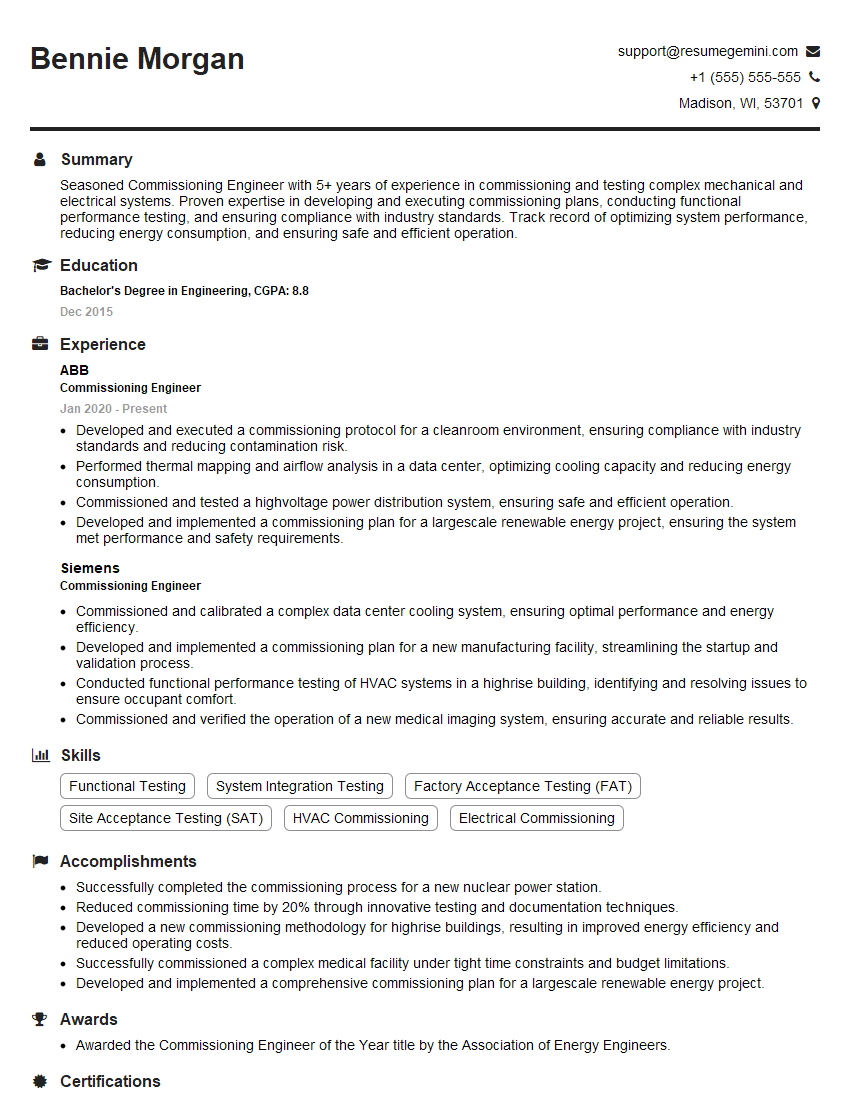
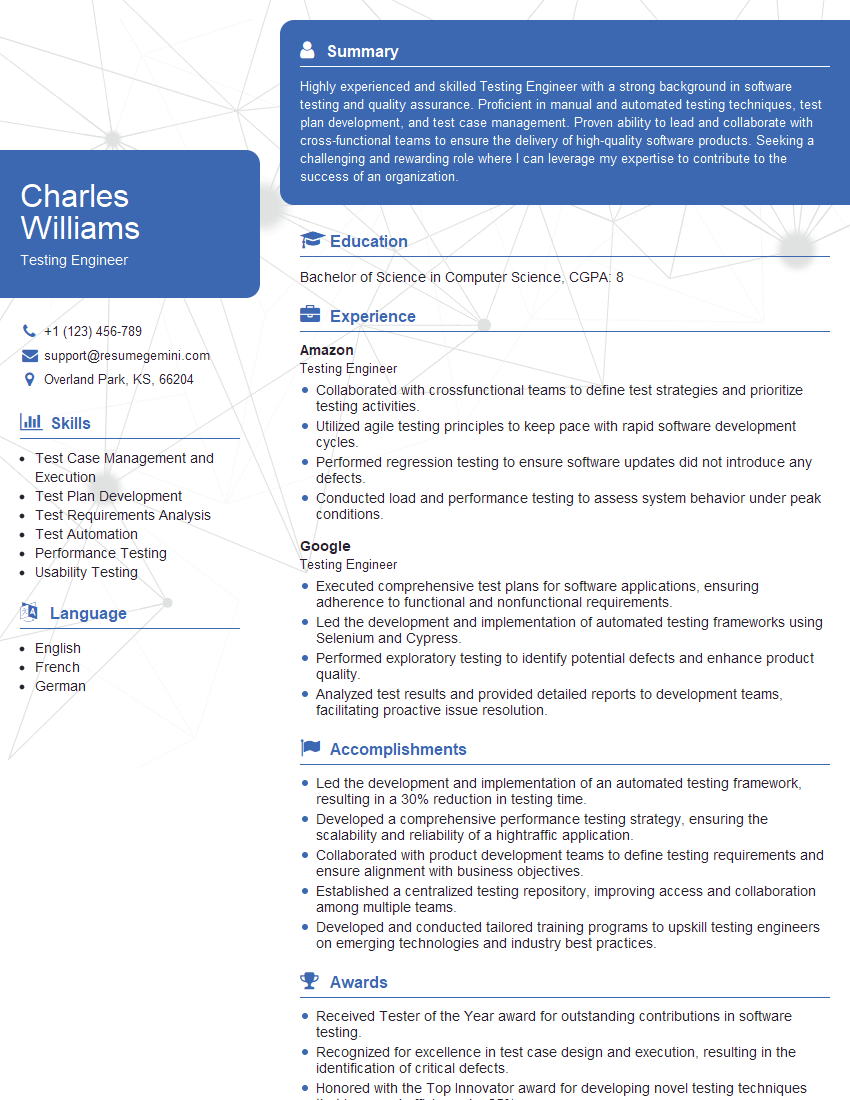
Mastering Commissioning and Testing of Wind Turbines significantly enhances your career prospects in the renewable energy sector, opening doors to specialized roles and higher earning potential. An ATS-friendly resume is critical for getting your application noticed by recruiters. To build a powerful and effective resume that highlights your skills and experience, leverage the resources available at ResumeGemini. ResumeGemini provides a user-friendly platform for crafting professional resumes, and offers examples of resumes tailored to Commissioning and Testing of Wind Turbines to help guide you. Invest the time to build a compelling resume – it’s an investment in your future.
Explore more articles
Users Rating of Our Blogs
Share Your Experience
We value your feedback! Please rate our content and share your thoughts (optional).
What Readers Say About Our Blog
Very informative content, great job.
good