Unlock your full potential by mastering the most common Knowledge of Sewing Principles interview questions. This blog offers a deep dive into the critical topics, ensuring you’re not only prepared to answer but to excel. With these insights, you’ll approach your interview with clarity and confidence.
Questions Asked in Knowledge of Sewing Principles Interview
Q 1. Explain the different types of sewing machine needles and their uses.
Sewing machine needles are categorized by size, type, and material. Choosing the right needle is crucial for achieving clean stitches and preventing fabric damage. Needle size is represented by a number; larger numbers indicate thicker needles. The type of needle depends on the fabric.
- Universal Needles: These are the workhorses, suitable for a wide range of fabrics like cotton, linen, and light-weight wools. Think of them as your all-purpose tool.
- Ballpoint Needles: Designed for knits and stretch fabrics, their rounded tip prevents snagging and damaging delicate yarns. Imagine gently pushing a ball through the loops of knitted fabric – that’s the ballpoint in action.
- Sharp Needles: These needles feature a sharp point ideal for woven fabrics like denim, canvas, and silk. They pierce the fibers cleanly, creating strong, precise stitches.
- Jeans Needles: Stronger than universal needles, these are built to handle the heavy weight and multiple layers of denim.
- Embroidery Needles: These have a larger eye to accommodate thicker embroidery threads. They’re indispensable for creating intricate designs.
- Leather Needles: These have a sharp, thick point designed for piercing thick materials like leather and other heavy upholstery fabrics. They’re crucial when handling hides.
For example, attempting to sew denim with a ballpoint needle would lead to skipped stitches and potentially a broken needle. Conversely, using a sharp needle on a delicate knit will cause runs in the fabric.
Q 2. Describe the various stitch types and their applications.
Stitch types are incredibly diverse, each serving a specific purpose. Selecting the right stitch is essential for both functionality and aesthetics.
- Straight Stitch: The most basic stitch, used for seams, topstitching, and many other applications. It’s the foundation of most sewing projects.
- Zigzag Stitch: Versatile stitch used for overcasting seams, preventing fraying, and sewing stretch fabrics. It creates a flexible seam allowing for movement.
- Overlock Stitch (Serger Stitch): This stitch finishes and seams simultaneously, creating a professional-looking edge that prevents fraying. It often requires a specialized serger machine.
- Blind Hem Stitch: Almost invisible stitch used for hemming garments, creating a professional, clean look. It’s a great choice for trousers or skirts.
- Buttonhole Stitch: Automatic or manual stitches used to create buttonholes of varying sizes and shapes. These can be very precise and tailored to the button.
- Decorative Stitches: A wide variety of decorative stitches add flair and personality to projects. Examples include satin stitches, cross-stitches, and many more.
For instance, a straight stitch would be ideal for constructing a simple tote bag, while a zigzag stitch is crucial for finishing the raw edges to prevent fraying. A blind hem stitch is essential for creating an invisible hem on a dress, while an overlock stitch speeds up production on projects that need a finished edge and sealed seam.
Q 3. How do you select the appropriate fabric for a given project?
Fabric selection is paramount to a successful project. The right fabric dictates the design, construction techniques, and even the sewing machine needle.
Consider these factors:
- Project Type: A flowing dress requires a different fabric than a sturdy pair of work pants.
- Fabric Weight: Lightweight fabrics like chiffon are suitable for flowing garments; heavyweight fabrics like denim are better suited for durable items.
- Fabric Fiber Content: Natural fibers (cotton, linen, silk) have different drape and care instructions than synthetics (polyester, nylon).
- Fabric Weave: Different weaves affect drape and durability; tight weaves are more durable than loose ones.
- Project Aesthetics: Fabric color, pattern, and texture should align with the overall design.
For example, choosing a delicate silk for a heavy-duty backpack would be unsuitable. Conversely, using a heavy canvas for a flowing summer dress would result in a rigid, uncomfortable garment.
Q 4. What are the steps involved in creating a professional-looking seam finish?
Professional-looking seam finishes are crucial for garment durability and aesthetics. They prevent fraying and create a clean, polished look.
- Serging/Overlocking: Using a serger or overlock stitch on the raw edge of a seam creates a professional and durable finish that prevents fraying.
- Zigzag Stitch: A zigzag stitch along the raw edge achieves a similar result to serging, though it is slightly less durable.
- Pinking Shears: These shears cut a zigzag edge into the fabric, helping to reduce fraying, but this is mostly used for less durable seams.
- French Seams: These encase the raw edges completely, creating a clean, professional look ideal for fine fabrics.
- Hong Kong Finish: This involves binding the raw edge with bias binding, resulting in a beautifully finished and durable seam.
The choice of finish depends on the fabric type, garment style, and desired aesthetic. For example, a French seam would be perfect for a fine silk blouse, while serging is great for a pair of jeans.
Q 5. Explain the importance of proper pattern layout and cutting techniques.
Proper pattern layout and cutting are fundamental for accurate garment construction. Mistakes at this stage are difficult to correct later.
- Pattern Placement: Always follow the pattern instructions carefully for grainlines (parallel to the selvage) and notches.
- Fabric Selection and Preparation: Choose the fabric suited to your project; pre-wash to account for shrinkage before cutting.
- Layering and Pinning: Accurately layer fabric pieces and secure them with pins to prevent shifting during cutting.
- Cutting Techniques: Use sharp shears or a rotary cutter to create clean, accurate cuts.
- Marking Techniques: Precisely mark notches, darts, and other pattern markings using tailor’s chalk or a fabric marker.
Incorrect placement can lead to a garment that is asymmetrical or ill-fitting. A dull blade can result in jagged edges that are difficult to sew cleanly. Paying attention to detail here ensures a beautifully finished garment.
Q 6. How do you adjust stitch tension on a sewing machine?
Stitch tension refers to how tightly the upper and lower threads are pulled together. Correct tension results in even stitches; incorrect tension leads to puckering, skipped stitches, or loose stitches.
Adjustment varies depending on the machine, but generally:
- Higher Tension: The upper thread is pulled tighter, creating tighter stitches (useful for stretchy fabrics or preventing skipped stitches).
- Lower Tension: The upper thread is pulled looser, making looser stitches (useful for thick fabrics or preventing puckering).
Begin by adjusting the tension dial in small increments while testing on scrap fabric. Observe the stitch appearance; adjust accordingly until you achieve perfectly balanced stitches. Factors affecting tension include fabric type, needle size, and thread type.
For example, if your stitches are puckering, you may need to lower the tension. If your stitches are loose and uneven, you should likely increase the tension.
Q 7. Describe your experience with different sewing machine attachments.
I have extensive experience with various sewing machine attachments, including:
- Walking Foot: This foot prevents slippage when working with multiple layers of fabric, especially helpful with quilting or sewing difficult materials.
- Zipper Foot: Designed for sewing zippers; its narrow profile allows precise stitching close to the zipper teeth.
- Buttonhole Foot: Facilitates creating various buttonhole styles easily and accurately.
- Overcasting Foot: This attachment creates a professional overlock stitch.
- Rolled Hem Foot: Used to create a narrow, rolled hem on delicate fabrics.
- Blind Hem Foot: Aids in creating invisible hems on skirts, trousers, and other garments.
Each attachment provides specialized functionality, greatly improving efficiency and the quality of the finished product. For example, the walking foot is essential for creating even and consistent seams while sewing multiple layers of fabrics in quilting projects. The zipper foot ensures even and neat stitching while inserting a zipper. It’s important to understand the function of each attachment to maximize their utility and increase efficiency.
Q 8. What are your methods for troubleshooting common sewing machine problems?
Troubleshooting sewing machine problems requires a systematic approach. I begin by identifying the issue – is the machine not powering on? Is the stitching uneven or skipping? Is there noise coming from the machine? Once the problem is identified, I follow these steps:
- Check the basics: Power cord, foot pedal connection, bobbin winding, needle insertion (correct type and insertion), thread tension (both top and bobbin), and proper threading path.
- Clean and lubricate: Dust and lint build-up can cause significant issues. I regularly clean the bobbin case, hook area, and feed dogs using a brush and compressed air. Lubrication, usually with sewing machine oil, can resolve issues with moving parts.
- Inspect the needle and bobbin: Bent or damaged needles and improperly wound bobbins are common culprits for skipped stitches. I always check for damage and replace as necessary.
- Adjust tension: Improper thread tension causes many sewing problems. I systematically adjust the upper and lower tension dials, testing after each adjustment until the perfect balance is achieved.
- Examine the timing: If the stitch formation is entirely off, it may indicate a timing issue – this is something a professional repair person should handle.
For example, recently, a client’s machine was producing skipped stitches. After checking the basic elements, I discovered a slightly bent needle. Replacing the needle immediately resolved the problem.
Q 9. How do you measure and mark fabric accurately?
Accurate fabric measurement and marking is crucial for achieving professional results. I use a combination of tools and techniques to ensure precision:
- Use a flexible measuring tape: This allows for accurate measurements around curves.
- Use a ruler and marking tools: I use clear rulers or specialized quilting rulers for straight lines, along with tailor’s chalk, fabric pens, or pins to mark.
- Pre-wash fabric: Fabric shrinks after washing; pre-washing avoids unpleasant surprises after garment construction.
- Employ proper techniques: For example, when measuring for a sleeve, measure along the armhole curve rather than straight across, ensuring the sleeve fits snugly.
- Double-check measurements: Always re-measure before cutting to minimize errors.
- Use notches and markings on patterns: These are crucial for aligning pattern pieces correctly.
I always teach clients to consider the grain of fabric – the direction the threads run, crucial for good hang and drape.
Q 10. Explain your experience with different sewing machine types (e.g., industrial, domestic).
My experience encompasses both domestic and industrial sewing machines. Domestic machines are versatile and suitable for various projects, but they lack the power and speed of industrial machines. I’ve used many brands including Singer, Brother, and Janome, learning their nuances.
Industrial machines are specialized for high-volume production. I have experience with industrial machines like the Juki, and Dürkopp Adler for heavier-duty projects like denim or leather. They are designed for specific tasks – for example, a straight stitch machine for topstitching or a coverstitch machine for finishing hems.
The differences extend beyond just speed and power; the needle plates, feed dogs, and presser feet are often designed differently to handle different fabric types and sewing requirements.
Q 11. Describe your experience with various sewing techniques (e.g., topstitching, blind hemming).
I am proficient in a wide range of sewing techniques, including but not limited to:
- Topstitching: This involves stitching along the seamline for both decorative and functional purposes. I adjust my stitch length and tension to achieve clean, consistent lines. I understand the importance of using the appropriate needle and thread weight for the fabric.
- Blind hemming: This technique creates an invisible hem. The stitch is designed to catch only a few threads from the fabric edge, leaving a barely visible line. Mastering this technique requires precision and an understanding of stitch length and tension.
- French seams: This technique encases all raw edges, resulting in a durable and professional finish. It is especially suitable for delicate or lightweight fabrics.
- Zipper insertion: I have experience inserting various zipper types, including invisible zippers, which requires precision and attention to detail.
- Buttonholes: I can create various types of buttonholes using both automatic settings and manual techniques, adapting to the garment and button.
For example, I recently used blind hemming for a sheer silk garment, where the stitch was practically invisible, enhancing the garment’s elegance.
Q 12. How do you handle different fabric weights and textures?
Working with various fabric weights and textures requires adjusting sewing machine settings and techniques. Heavy fabrics like denim require stronger needles, a slower stitch speed, and possibly a walking foot to prevent slippage. Delicate fabrics like silk or chiffon need finer needles, a shorter stitch length, and potentially a reduced presser foot pressure to avoid damaging the material. I also choose the correct thread weight to match the fabric.
For example, when sewing leather, I use a leather needle and adjust the machine for slower speeds to prevent breaking the needle and damaging the leather.
Q 13. What are your methods for pressing and finishing garments?
Pressing and finishing are essential for creating professional-looking garments. I use a variety of tools including an iron, ironing board, and pressing ham (a curved form for shaping curved seams).
- Proper temperature settings: I adjust my iron’s temperature according to the fabric type.
- Pressing techniques: I understand the importance of pressing seams open, to the side, or closed depending on the garment and design.
- Use of pressing cloths: This protects delicate fabrics from scorching.
- Finishing techniques: Includes overlocking or serging seams to prevent fraying; trimming excess seam allowances for a clean finish; and using techniques like edge stitching or bias binding for a polished look.
Careful pressing throughout the sewing process minimizes wrinkles and ensures the garment hangs correctly.
Q 14. Explain your understanding of pattern grading and its importance.
Pattern grading is the process of scaling a pattern to different sizes. It is crucial for mass production and creating garments in multiple sizes. I’m experienced in this, using specialized software and manual techniques.
The importance of pattern grading cannot be overstated: It saves time and effort compared to creating separate patterns for each size. It ensures consistent sizing across various sizes, maintaining the design’s integrity.
I also understand the nuances of grading, such as how to adjust seam allowances and ease to accommodate different body shapes and sizes.
Q 15. Describe your experience with industrial sewing equipment.
My experience with industrial sewing equipment spans over ten years, encompassing a wide range of machines including high-speed lockstitch machines, overlock machines, coverstitch machines, and specialized industrial embroidery machines. I’m proficient in operating and maintaining these machines, understanding their specific functionalities and limitations. For instance, I’ve worked extensively with Juki, Singer, and Durkopp Adler brands, mastering their unique needle threading systems and tension adjustments. I’m comfortable troubleshooting common malfunctions and performing basic maintenance like replacing needles, bobbins, and timing adjustments. My experience extends beyond basic operation; I’ve also worked with automated sewing systems, understanding the programming and setup required for efficient production.
In a recent project, I utilized a high-speed lockstitch machine to produce thousands of identical garment pieces for a large-scale order. My familiarity with the machine’s capabilities allowed me to optimize production speed while maintaining consistent stitch quality. This experience honed my skills in handling large-scale projects and optimizing efficiency.
Career Expert Tips:
- Ace those interviews! Prepare effectively by reviewing the Top 50 Most Common Interview Questions on ResumeGemini.
- Navigate your job search with confidence! Explore a wide range of Career Tips on ResumeGemini. Learn about common challenges and recommendations to overcome them.
- Craft the perfect resume! Master the Art of Resume Writing with ResumeGemini’s guide. Showcase your unique qualifications and achievements effectively.
- Don’t miss out on holiday savings! Build your dream resume with ResumeGemini’s ATS optimized templates.
Q 16. How do you maintain the cleanliness and functionality of sewing machines?
Maintaining the cleanliness and functionality of sewing machines is crucial for both safety and consistent stitch quality. My cleaning routine begins with regularly removing lint and thread debris from the bobbin area, feed dogs, and presser foot. I use a soft brush and compressed air to reach hard-to-access areas. Regular oiling is critical, using the appropriate sewing machine oil at the specified lubrication points. I follow the manufacturer’s instructions meticulously to avoid damaging the machine. After each use, I run a cleaning cycle (if available on the machine) and wipe down the exterior with a damp cloth. For more thorough cleaning, I might disassemble certain parts – after carefully consulting the machine’s manual – to remove built-up debris.
Think of it like caring for a finely tuned engine: regular maintenance ensures optimal performance and prevents costly repairs. Neglecting this can lead to broken needles, skipped stitches, or even serious machine damage.
Q 17. What safety precautions do you follow when using sewing equipment?
Safety is paramount when operating sewing equipment. I always ensure the machine is properly grounded and unplugged before performing any maintenance or cleaning. I never reach into the needle area while the machine is running. I use appropriate safety measures when handling needles and pins, storing them in designated containers to avoid accidental pricks. I always wear appropriate attire, avoiding loose clothing or jewelry that could get caught in the machinery. Furthermore, I’m fully aware of the potential hazards associated with high-speed rotating parts and maintain a safe working distance. When working with industrial machinery, I ensure that safety guards are in place and functioning correctly. I regularly inspect my workspace to ensure it’s free from hazards and adequately lit.
A memorable instance involved a near miss with a loose thread; the quick thinking to immediately stop the machine prevented a potentially serious incident. This reinforced the importance of constant vigilance and adhering to safety protocols.
Q 18. Explain your understanding of different seam allowances.
Seam allowances are the extra fabric left beyond the seam line for construction and finishing. The choice of seam allowance depends on the fabric type, garment style, and construction technique. Common seam allowances include 1/4 inch (6mm), 5/8 inch (1.5cm), and 1 inch (2.5cm). A 1/4 inch seam allowance is often used for precise seams and delicate fabrics, minimizing bulk. A 5/8 inch allowance is a standard for many garments, providing adequate strength and ease of finishing. A 1-inch allowance is useful for heavier fabrics or when extra strength is needed.
- 1/4 inch: Ideal for fine fabrics like silk or lingerie.
- 5/8 inch: A versatile standard for most garments.
- 1 inch: Suitable for heavy fabrics like denim or outerwear.
Understanding seam allowances is crucial for accurate pattern making and garment construction. Incorrect seam allowances can lead to ill-fitting garments or weak seams.
Q 19. Describe your experience with creating patterns from scratch.
Creating patterns from scratch involves a blend of draping, sketching, and technical drawing. I begin by understanding the desired garment’s style and fit. Draping involves manipulating fabric on a dress form to achieve the desired silhouette. This allows for a 3D understanding of how the fabric will fall and drape. Following the draping process, I then create a 2D pattern by transferring the draped form onto pattern paper. This includes taking precise measurements and marking key points such as darts, seams, and notches. I use various tools such as rulers, French curves, and pattern weights to ensure accuracy. I then refine the pattern through multiple iterations, making adjustments as needed, until I achieve the desired fit and style. My expertise in drafting allows me to create both basic and complex pattern pieces, accommodating various design elements such as pockets, collars, and sleeves.
For example, I recently designed a custom wedding dress pattern from scratch. The design included intricate draping and a unique sleeve detail. Creating the pattern from scratch allowed complete control over the design and fit.
Q 20. How do you adapt patterns to fit different body types?
Adapting patterns to different body types requires a deep understanding of body measurements and pattern adjustments. I start by taking precise measurements of the individual, comparing them to the standard pattern measurements. Adjustments can be made to the pattern using various techniques such as full-bust adjustments, swayback adjustments, or shoulder adjustments. These adjustments may involve adding or removing fabric in specific areas to accommodate individual differences in body shape and size. Grading is another important technique, used to scale a pattern to different sizes. I use a combination of mathematical calculations and visual assessment to ensure accurate adjustments are made to create a well-fitting garment.
Consider a standard blouse pattern. For a person with a fuller bust, I’d add a full-bust adjustment by widening the bust area of the pattern. This ensures the blouse fits comfortably without pulling or gaps.
Q 21. How do you ensure the accuracy of your sewing work?
Ensuring accuracy in my sewing work involves meticulous attention to detail at every stage of the process. Precise cutting and marking are crucial; I use sharp shears and accurate measuring tools. I pay close attention to seam alignment, ensuring consistent stitching throughout. Regularly checking the accuracy of my work against the pattern ensures early detection of any errors. Pressing is also essential for maintaining accuracy and creating sharp, clean seams. Using a variety of techniques such as stay-stitching and understitching prevents distortions and ensures a clean, professional finish. Finally, a final fitting before completing the garment is essential to identify and correct any fit issues.
Think of it like building a house; each step must be precise and accurate to achieve a strong, well-built structure. Similarly, every stitch and seam in a garment contributes to the overall fit and quality.
Q 22. What are your strategies for time management and meeting deadlines in sewing projects?
Effective time management is crucial in sewing, where projects can be complex and time-consuming. My strategy relies on a three-pronged approach: meticulous planning, efficient execution, and proactive monitoring.
Planning: Before starting any project, I break it down into smaller, manageable tasks. This involves creating a detailed checklist, estimating the time needed for each step, and scheduling them accordingly. For instance, if I’m making a dress, I’d list tasks like cutting the fabric, constructing the bodice, attaching the sleeves, and hemming, allotting specific time slots for each.
Efficient Execution: I prioritize tasks based on their urgency and dependency. This means tackling the most critical components first and avoiding multitasking, as it often leads to errors and delays. I maintain a clean and organized workspace to minimize time wasted searching for tools or materials. Think of it like an assembly line – streamlined workflow for maximum efficiency.
Proactive Monitoring: I regularly review my progress against the schedule, identifying any potential delays early on. If I encounter unexpected problems, I adjust the schedule accordingly and seek help if necessary. This prevents last-minute rushes and ensures consistent quality. Using a project management app can be extremely helpful here.
Q 23. Explain your experience with working with different types of zippers and buttons.
My experience encompasses a wide range of zipper and button types, from the simplest to the most intricate. I’m proficient in installing various zipper styles, including invisible, center-front, separating, and coil zippers. I understand the nuances of each type, considering factors like fabric weight and garment design when selecting the appropriate zipper. For example, an invisible zipper is best suited for dresses where a clean, seamless finish is desired, while a separating zipper is ideal for jackets requiring a front opening.
Similarly, my button expertise extends to numerous styles – shank buttons, self-covered buttons, decorative buttons – and various attachment methods. I can use different techniques, such as hand-sewing, machine sewing, or using button-shank tools depending on the button type and garment. For example, I’d use hand-sewing for delicate, heirloom-quality buttons, while machine sewing is more efficient for standard shirt buttons.
Q 24. Describe your experience with alterations and garment repair.
Alterations and garment repair are a significant part of my skillset. I’ve successfully addressed a variety of alterations, including taking in or letting out seams, shortening or lengthening hems, adjusting sleeve lengths, and resizing garments. My approach is methodical and involves carefully assessing the garment’s construction before making any changes. For instance, when altering a tailored suit jacket, I’d consider the existing stitching, interfacing, and padding to ensure the alteration blends seamlessly with the original design.
Garment repair includes fixing rips, tears, and broken seams; replacing buttons and zippers; and patching worn areas. I understand various repair techniques, from simple hand-stitching to more complex methods involving patching and reinforcement. For example, darning a small hole in a knit fabric requires a different technique than patching a large tear in denim.
Q 25. What software or technology are you familiar with in the sewing industry?
While sewing is primarily a hands-on craft, technology plays an increasing role. I’m familiar with several software applications relevant to the sewing industry. This includes pattern-making software like Pattern Design Software (various options exist – this is a placeholder name) which allows for digital pattern creation and manipulation. I also use design software such as Adobe Illustrator or similar programs for creating design sketches and technical drawings. Moreover, I’m adept at using online resources and tutorials to learn new techniques and stay updated on industry trends.
Q 26. Describe a time you had to solve a challenging sewing problem.
One challenging project involved creating a wedding dress with intricate beading and embroidery. The client had a specific vision for the design, which included a complex pattern and delicate fabric. The challenge was achieving the desired look while ensuring the dress was comfortable and durable. I approached the problem by first creating a muslin mock-up to test the pattern and fit. This allowed me to address any issues early on, preventing significant rework later. I also meticulously planned the beading and embroidery placement, creating detailed diagrams to ensure precision and consistency. By carefully managing each step and proactively addressing potential problems, I successfully completed the dress to the client’s complete satisfaction, receiving overwhelmingly positive feedback.
Q 27. How do you stay updated on the latest trends and techniques in sewing?
Staying current in the dynamic world of sewing requires a multi-faceted approach. I regularly subscribe to sewing magazines, both print and digital, and follow industry blogs and influencers on social media platforms such as Instagram and Pinterest. I also attend workshops and seminars whenever possible, learning from renowned sewists and exploring new techniques firsthand. Additionally, I actively participate in online sewing communities, engaging in discussions and exchanging ideas with fellow enthusiasts and professionals. This continuous learning keeps my skills sharp and my creativity ignited.
Q 28. What are your salary expectations for this role?
My salary expectations for this role are in the range of [Insert Salary Range], depending on the specific responsibilities, benefits package, and overall compensation structure. I’m confident that my skills and experience align well with the requirements of this position and am open to discussing this further.
Key Topics to Learn for Knowledge of Sewing Principles Interview
- Fabric Selection and Properties: Understanding different fabric types (natural vs. synthetic, weaves, knits), their drape, suitability for various projects, and appropriate needle/thread choices.
- Sewing Machine Operation and Maintenance: Competence in operating various sewing machines, including troubleshooting common malfunctions, and performing basic maintenance tasks.
- Pattern Making and Alterations: Knowledge of drafting basic patterns, understanding pattern markings, making alterations for fit and style, and adapting patterns for different sizes and body types.
- Seam Construction Techniques: Mastery of various seam finishes (e.g., French seams, serged seams, zigzag seams), understanding their applications and impact on garment durability and aesthetics.
- Garment Construction Methods: Familiarity with different construction methods for various garments (e.g., tops, dresses, trousers), understanding the sequence of steps and techniques involved.
- Finishing Techniques: Knowledge of professional finishing techniques, including hems, facings, closures (zippers, buttons, hooks and eyes), and other details that enhance garment quality.
- Design Principles and Aesthetics: Understanding basic design principles (e.g., balance, proportion, color theory) and applying them to garment construction and design.
- Problem-Solving and Troubleshooting: Ability to identify and solve common sewing problems, such as fabric puckering, uneven seams, and machine malfunctions.
- Industry Standards and Best Practices: Familiarity with industry standards related to garment construction, quality control, and safety.
Next Steps
Mastering Knowledge of Sewing Principles is crucial for career advancement in the fashion and apparel industry. A strong understanding of these principles demonstrates your technical skills and ability to produce high-quality garments. To significantly boost your job prospects, crafting an ATS-friendly resume is essential. This ensures your application gets noticed by recruiters and hiring managers. We recommend using ResumeGemini, a trusted resource, to build a professional and impactful resume. ResumeGemini provides examples of resumes tailored to Knowledge of Sewing Principles to help you get started. Invest in your future—create a resume that showcases your expertise.

Quilter Resume Sample

Textile Designer Resume Sample
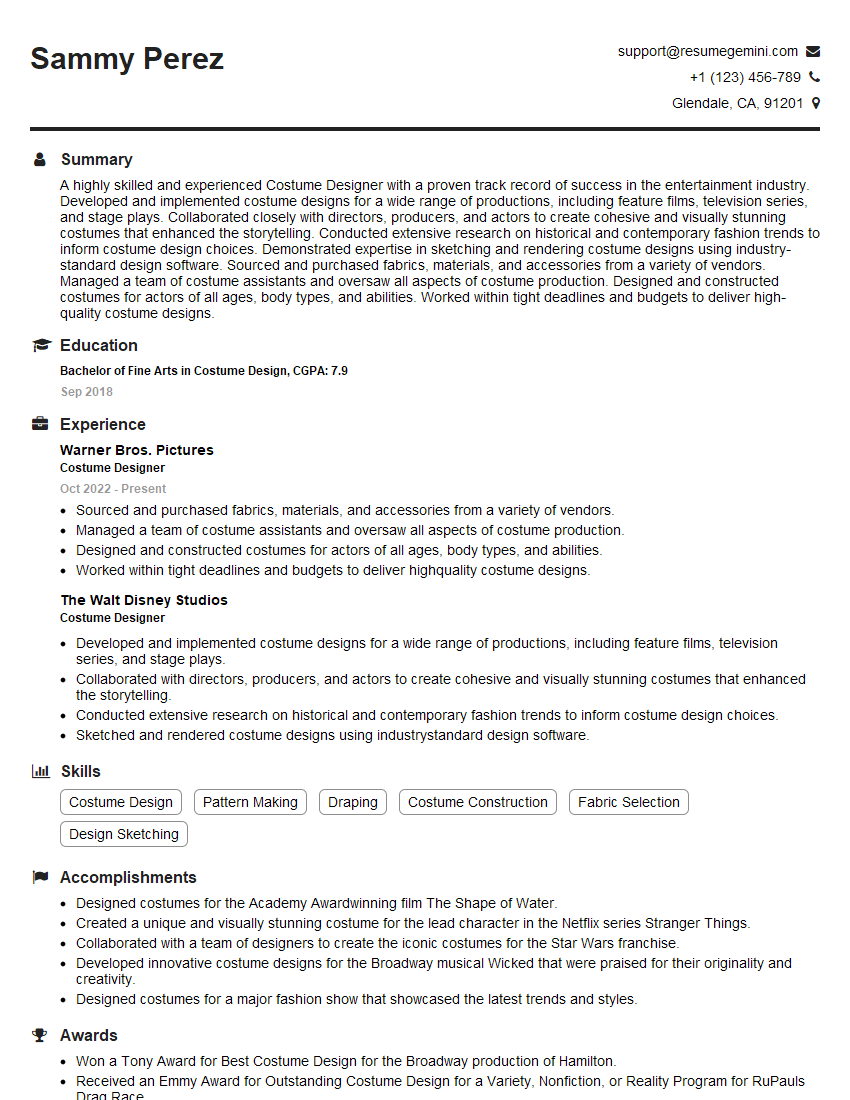
Costume Designer Resume Sample
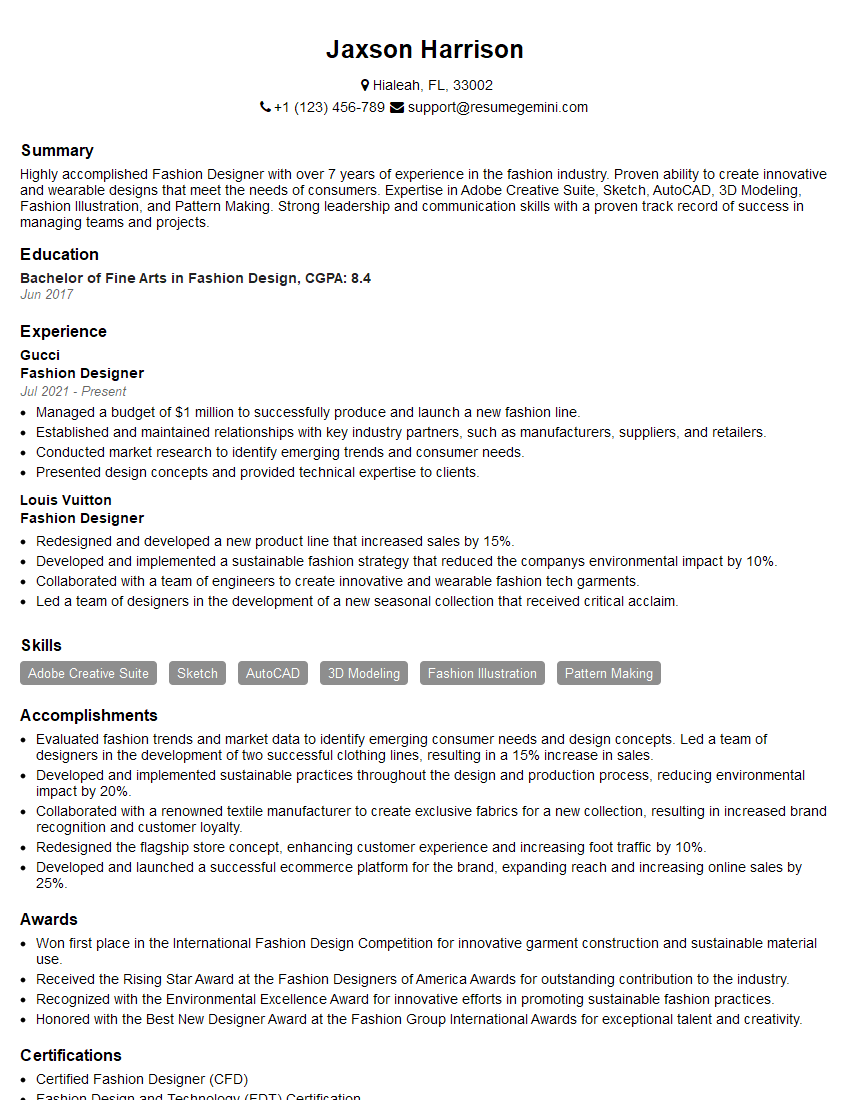
Fashion Designer Resume Sample

Draper Resume Sample

Seamstress Resume Sample
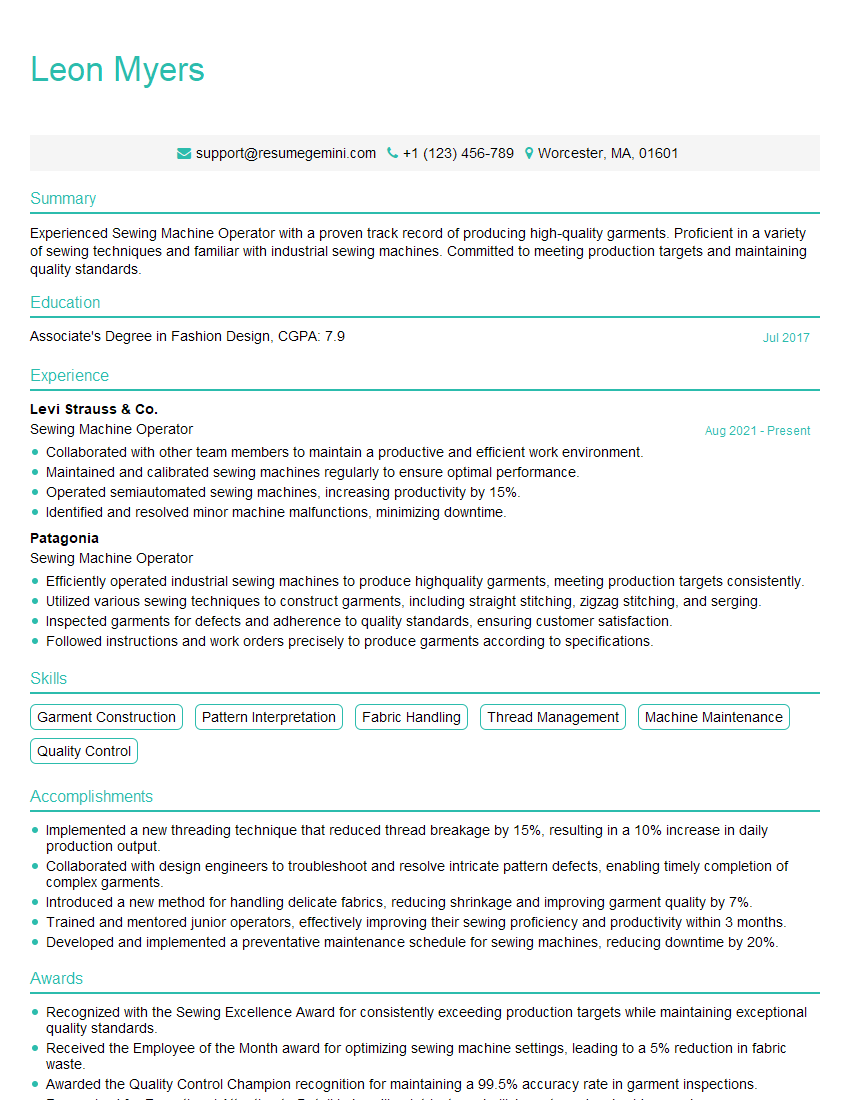
Sewing Machine Operator Resume Sample
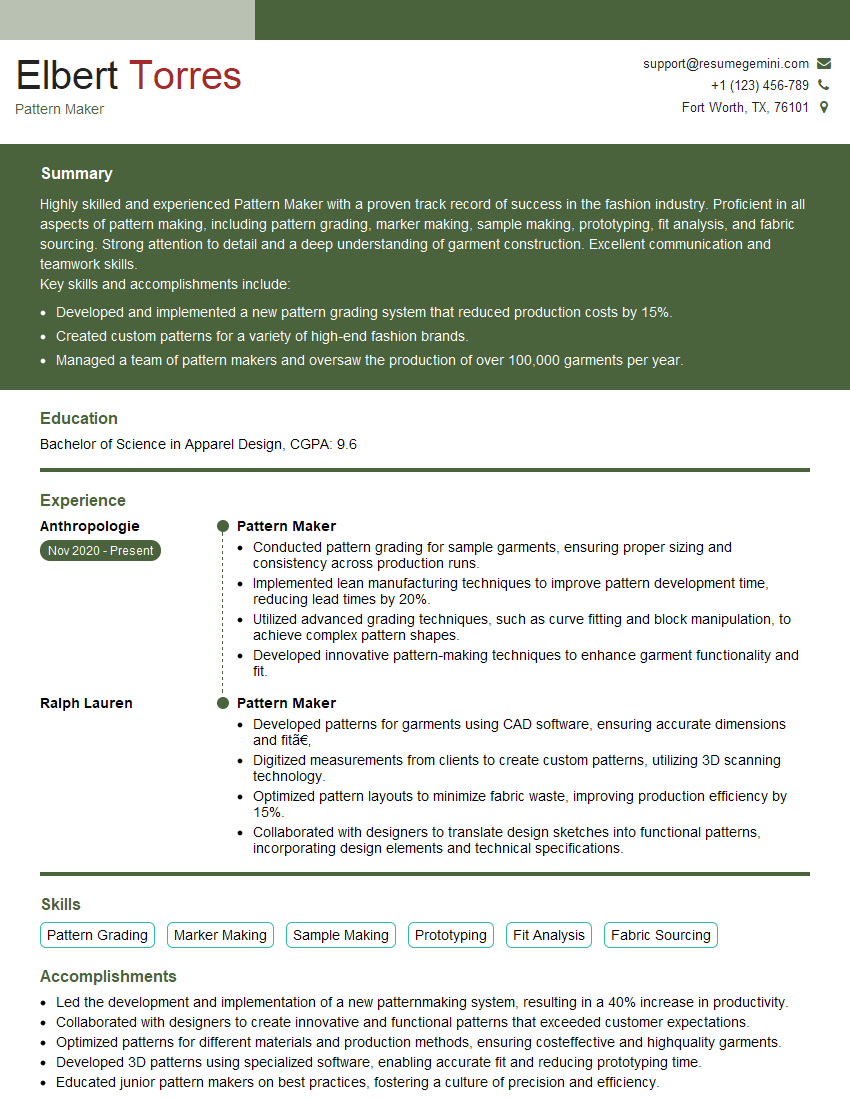
Pattern Maker Resume Sample

Embroiderer Resume Sample
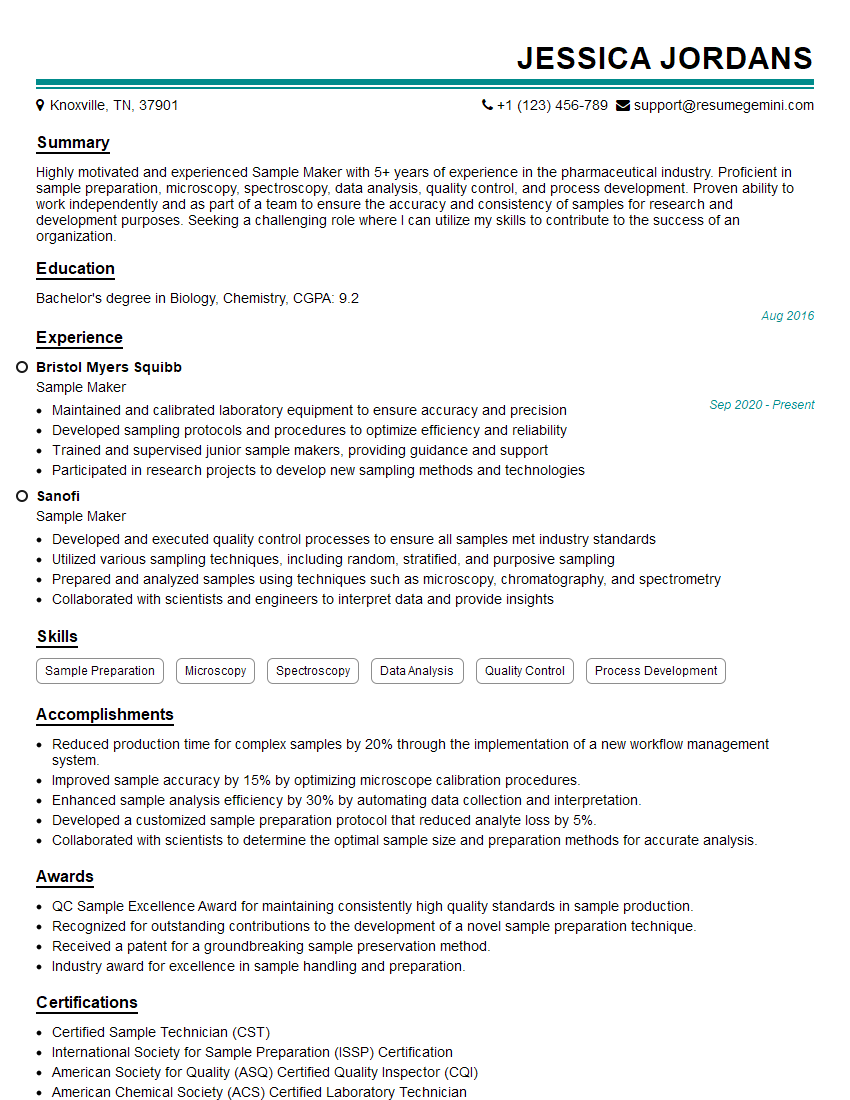
Sample Maker Resume Sample
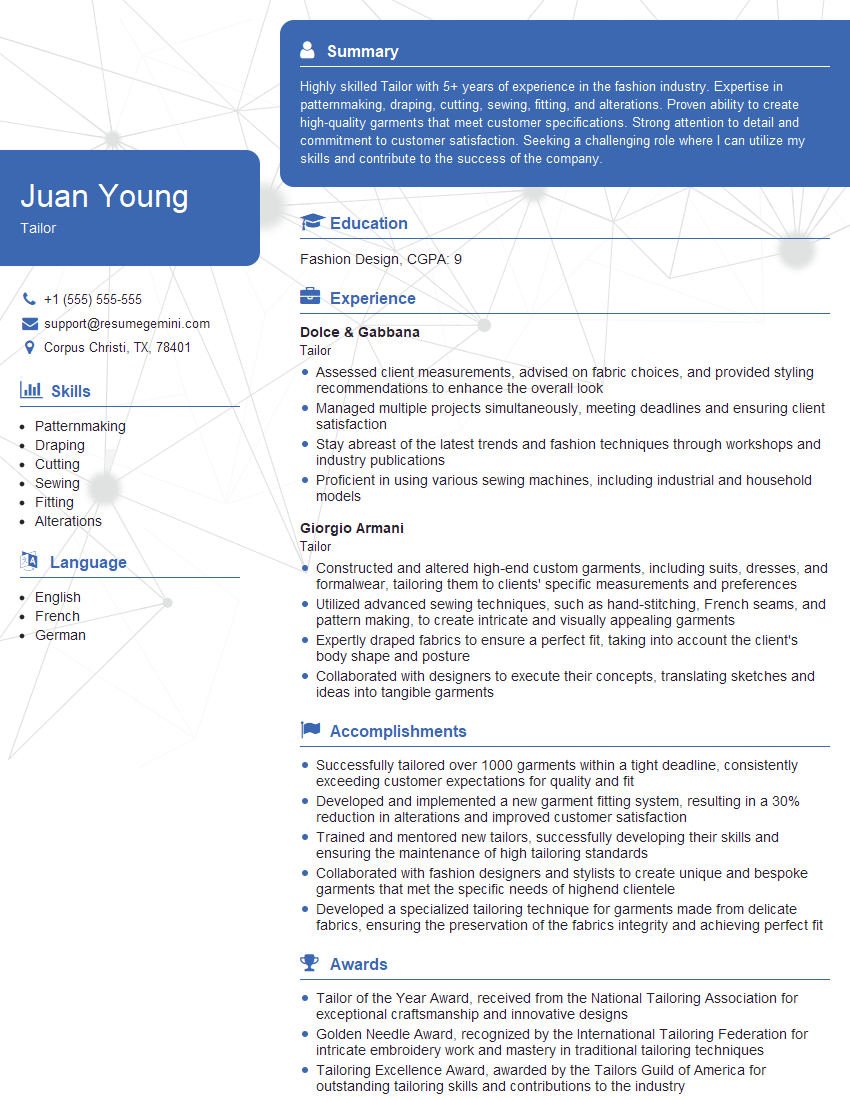
Tailor Resume Sample
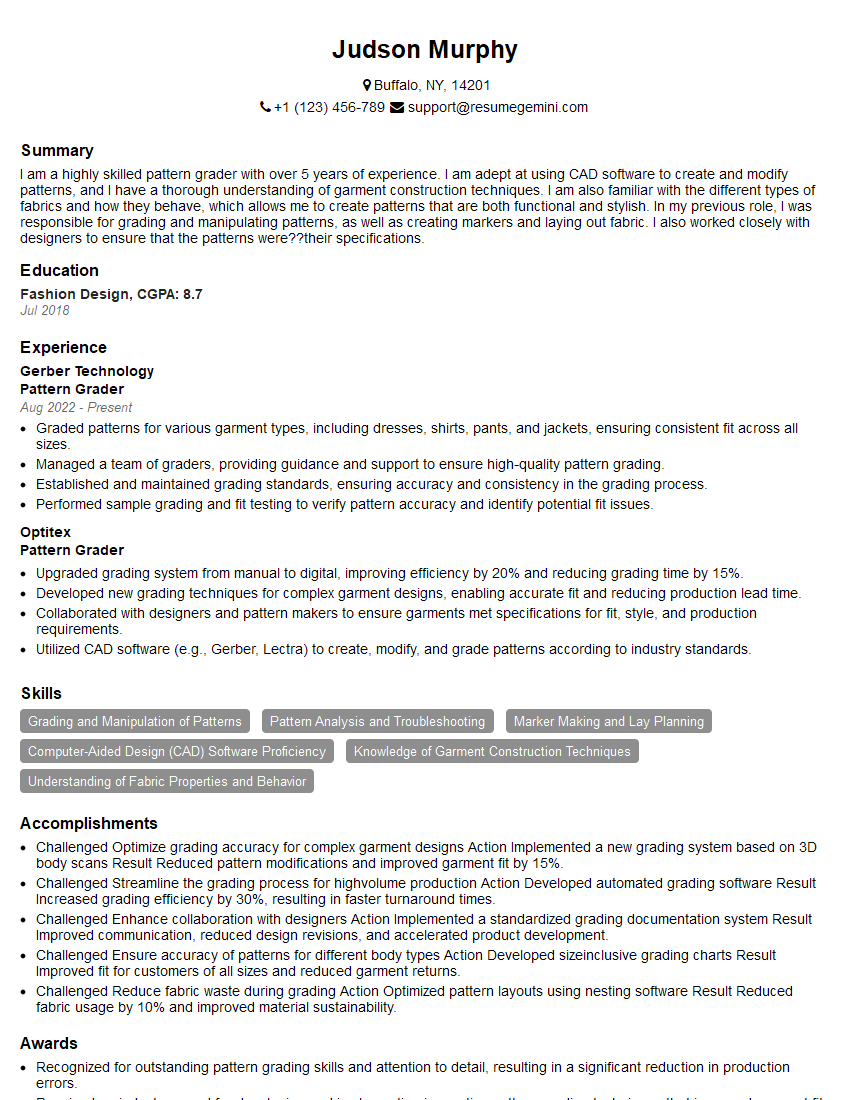
Pattern Grader Resume Sample

Upholsterer Resume Sample
Explore more articles
Users Rating of Our Blogs
Share Your Experience
We value your feedback! Please rate our content and share your thoughts (optional).
What Readers Say About Our Blog
Very informative content, great job.
good