The right preparation can turn an interview into an opportunity to showcase your expertise. This guide to ASME B30.5 Mobile and Locomotive Cranes interview questions is your ultimate resource, providing key insights and tips to help you ace your responses and stand out as a top candidate.
Questions Asked in ASME B30.5 Mobile and Locomotive Cranes Interview
Q 1. What are the key differences between ASME B30.5 and other crane standards?
ASME B30.5, specifically addressing mobile and locomotive cranes, differs from other crane standards like ASME B30.2 (overhead and gantry cranes) or B30.16 (forklifts) in its focus on the unique challenges posed by mobile equipment. Other standards address the structural aspects and operational parameters of stationary or semi-stationary crane systems. ASME B30.5 delves into the complexities of crane mobility, including aspects such as outrigger setup, ground conditions, and load stability during travel. It also considers the dynamic loads imposed on the crane structure during operation in the field, such as boom swing and travel. For example, ASME B30.2 primarily covers the inspection and maintenance of stationary cranes, whereas ASME B30.5 would incorporate detailed procedures for inspecting outriggers and determining suitable ground bearing capacities before lifting a load.
In essence, while all B30 standards prioritize safety, ASME B30.5 provides specific guidelines crucial for the safe operation of mobile cranes where stability is constantly challenged by movement and varying ground conditions.
Q 2. Explain the importance of pre-operational inspections as per ASME B30.5.
Pre-operational inspections, as mandated by ASME B30.5, are paramount for preventing accidents. They’re a critical first step before any lift, akin to a pilot’s pre-flight checklist. These inspections ensure all components are in optimal working order, identifying potential hazards before they cause harm. A thorough inspection covers everything from the crane’s structural integrity – checking for signs of damage, cracks, or corrosion in the boom, jib, and undercarriage – to the proper functioning of mechanical and electrical systems like brakes, steering, hydraulics, and load indicators. A visual examination alone isn’t enough. It’s vital to check hydraulic fluid levels, inspect wire ropes for wear and damage, and verify the proper operation of safety devices like limit switches and overload protection systems. Failure to conduct a comprehensive pre-operational inspection can lead to catastrophic equipment failure, resulting in injuries, property damage, and significant downtime.
Imagine a scenario where a seemingly insignificant crack in a boom section isn’t detected during pre-operation. This could result in boom failure during a lift, leading to a dangerous situation. These inspections are not merely regulatory requirements; they are fundamental safety measures that can save lives and prevent costly accidents.
Q 3. Describe the different types of crane hooks and their applications.
ASME B30.5 doesn’t specify hook types directly, but it emphasizes that the hook must be suitable for the load and application. Several hook types are commonly used with mobile cranes, each designed for specific purposes.
- Standard Hook: The most common type, used for general lifting purposes. They’re relatively simple and easy to use but might not be suitable for all load types.
- Clevis Hook: This hook has a clevis (a U-shaped metal fitting) which allows for easy attachment of chains or other lifting devices. This is often useful in various rigging scenarios where quick disconnects are needed.
- Grab Hooks: Used for lifting specific items, like large concrete blocks. They have multiple prongs designed to secure the load safely.
- Alloy Steel Hooks: Designed for high-strength applications and demanding lifting needs. Their superior strength compared to standard hooks makes them appropriate for heavier loads.
The selection of the appropriate hook is critical and should be based on factors such as load weight, load geometry, material properties, and the intended lifting operation. Incorrect hook selection can compromise safety.
Q 4. How do you identify and report damaged crane components?
Identifying and reporting damaged components is a crucial safety procedure. The process starts with a thorough visual inspection during pre-operational checks and periodic inspections. Any visible damage, including cracks, deformation, corrosion, or wear exceeding permissible limits detailed in ASME B30.5 and manufacturer’s specifications, must be noted. For instance, a visibly frayed wire rope needs immediate attention. This should be documented systematically, often using a standardized inspection checklist. This checklist should provide a detailed description of the damage (location, size, type), the affected component, and the date of discovery. Photographs or video recordings can significantly enhance the documentation process.
Reporting requires notifying the responsible supervisor immediately. The damaged component should be removed from service and tagged clearly to prevent its further use. A formal report should be filed and may include recommendations for repair or replacement of the damaged part. This documentation serves as an important record for maintenance planning, accident prevention, and ensuring compliance.
Q 5. What are the critical load-rating factors to consider when using a mobile crane?
Load rating factors are crucial for safe crane operation and are essential components of every lift plan. Several factors influence the maximum allowable load, going beyond the crane’s rated capacity:
- Crane’s rated capacity: This is the maximum load the crane can safely lift under ideal conditions as specified by the manufacturer.
- Boom length and angle: Lifting capacity decreases as the boom is extended or angled away from the vertical. The further out and higher the lift, the less you can lift. Think of it like a see-saw – the farther out the weight, the harder it is to lift.
- Ground conditions: Soft ground can significantly reduce the crane’s stability and thus its lifting capacity. Outriggers are essential in this case, but even with them, stability needs to be carefully assessed.
- Wind speed: High winds can make the crane unstable, reducing its safe working load limit. Many lifting operations are suspended during high winds.
- Radius of operation (reach): The capacity changes based on the horizontal distance of the load from the crane’s center of rotation. The farther the reach, the lower the safe load capacity.
All these factors must be considered together to determine the actual safe working load for a specific lift. Incorrect calculation can lead to overloading and catastrophic failure.
Q 6. Explain the concept of crane stability and its influencing factors.
Crane stability refers to the crane’s ability to remain upright and resist tipping over during operation. It’s a critical factor in preventing accidents. Several factors influence crane stability:
- Ground conditions: Solid, level ground is essential. Soft or uneven terrain significantly reduces stability. Think about how easily you could tip a chair on uneven ground.
- Outrigger setup: Outriggers greatly improve stability, especially on soft ground. They distribute the weight over a larger area.
- Load radius: The horizontal distance between the load and the crane’s center of rotation influences stability. A longer radius decreases stability.
- Boom angle: A more steeply angled boom may reduce stability, particularly when lifting heavy loads at maximum reach.
- Wind speed and direction: High winds can destabilize the crane, especially when the boom is extended.
- Crane type and design: Different crane designs have different stability characteristics.
Before every lift, a thorough stability assessment is needed. This often involves consulting load charts, considering ground conditions, and taking wind speed into account. The goal is to ensure that the crane’s center of gravity remains within its base of support.
Q 7. Describe the procedures for safe crane rigging and load attachment.
Safe crane rigging and load attachment are vital to prevent accidents. The process involves careful planning and adherence to best practices:
- Proper sling selection: The sling type (chain, wire rope, synthetic) and its capacity must be appropriate for the load weight, shape, and material. The sling’s condition must also be checked. A frayed or damaged sling is a serious hazard.
- Correct sling angle: The angle at which slings attach to the load and the crane hook directly affects the load on each sling leg. Sharply angled slings put excessive stress on the sling and the load, potentially causing failure.
- Secure attachment: Slings should be securely attached to both the load and the hook, using the appropriate fittings and securing mechanisms (shackles, hooks). Ensuring proper placement is critical.
- Load balancing: Distribute the load evenly among all slings to minimize stress on individual slings and prevent accidental tipping of the load. Improper load distribution is a very common cause of incidents.
- Inspection before lifting: Conduct a final inspection of the rigging setup before the lift commences. This includes checking sling angles, securing points, and proper communication between the crane operator and the rigger.
Always follow the manufacturer’s recommendations for load handling and rigging practices. The importance of proper training for both crane operators and riggers cannot be overstated. A small oversight can lead to disastrous results.
Q 8. How do you calculate the safe working load (SWL) of a crane?
Calculating the Safe Working Load (SWL) of a crane isn’t a simple formula; it’s a complex process guided by ASME B30.5 and the crane’s manufacturer’s specifications. The SWL represents the maximum load a crane can safely lift under ideal conditions. It’s not a single number but varies based on several factors.
- Crane Type and Model: Different cranes have different design capacities. The manufacturer’s data plate is the primary source for the basic SWL.
- Boom Length and Angle: The longer the boom and the greater the angle, the lower the SWL. Think of it like a lever – the further out the load is, the greater the stress on the crane.
- Radius: The horizontal distance from the crane’s center of rotation to the load. This is crucial; the further the load, the lower the SWL.
- Load Configuration: The way the load is attached affects SWL. A well-balanced load is safer and allows for higher capacity than an unbalanced one. Consider the center of gravity of the load.
- Wind Speed: High winds significantly reduce the SWL. ASME B30.5 provides charts and guidelines to determine appropriate deratings based on wind speed.
- Ground Conditions: Uneven or soft ground can impact the crane’s stability, thereby affecting its SWL.
To determine the SWL for a specific lift, you consult the crane’s load chart. This chart, provided by the manufacturer, graphically represents the SWL for different boom lengths, radii, and angles. It’s vital to use the correct chart for the specific crane model and configuration.
Example: A crane’s data plate might show a maximum SWL of 100 tons, but its load chart might show only 40 tons for a certain boom length and radius due to the geometric limitations of the crane at those configurations. Ignoring the load chart and lifting more than 40 tons under those conditions could lead to catastrophic failure.
Q 9. What are the responsibilities of a crane operator regarding safety?
The crane operator holds a critical role in ensuring safe crane operations. Their responsibilities extend beyond simply operating the controls; they are responsible for the overall safety of the lift and the surrounding area. This includes:
- Pre-operation Inspection: Thoroughly inspecting the crane before each use, checking for any visible damage, wear, or leaks.
- Understanding Load Charts: Accurately interpreting the crane’s load chart and ensuring the lift is within the safe working limits for the given configuration.
- Proper Load Handling: Correctly rigging the load, ensuring it’s balanced and securely attached, and smoothly lifting and lowering the load.
- Communication: Maintaining clear communication with the riggers, signal persons, and other personnel involved in the lift.
- Awareness of Surroundings: Being aware of the environment, including overhead obstructions, power lines, and personnel. Maintaining a safe distance from other equipment and personnel
- Weather Conditions: Assessing weather conditions and adhering to safety guidelines related to wind speed and precipitation.
- Following Procedures: Strictly adhering to all established safety procedures and regulations.
- Reporting Defects: Promptly reporting any defects or malfunctions to the supervisor.
Think of it this way: the crane operator is the gatekeeper of safety for every lift. Their diligence and attention to detail directly impact the safety of everyone on the job site.
Q 10. Explain the significance of regular crane maintenance and lubrication.
Regular maintenance and lubrication are paramount to ensuring the safe and efficient operation of a crane. Neglecting these aspects can lead to premature wear, component failure, and ultimately, accidents.
- Preventing Component Failure: Lubrication reduces friction between moving parts, preventing wear and tear. Regular lubrication extends the lifespan of components and reduces the risk of unexpected failures.
- Ensuring Smooth Operation: Proper lubrication ensures smooth and efficient operation of the crane’s mechanical systems, preventing binding and jerky movements that could lead to accidents.
- Detecting Early Problems: Regular inspections, a crucial part of maintenance, allow for the early detection of potential problems, such as cracks, corrosion, or loose connections, allowing for timely repairs before they become major issues.
- Compliance with Regulations: Regular maintenance is a legal requirement, helping to ensure compliance with regulations like ASME B30.5.
- Extending Crane Lifespan: Proper maintenance significantly increases the lifespan of the crane, saving costs in the long run.
Example: A poorly lubricated hoist mechanism could lead to overheating, seizing, and ultimately the failure of the hoist, resulting in a dropped load. Regular lubrication prevents this.
Q 11. What are the common causes of crane accidents and how to prevent them?
Crane accidents are often preventable through adherence to safety regulations and best practices. Common causes include:
- Operator Error: This is the most frequent cause, encompassing issues like exceeding the SWL, improper rigging, failure to inspect, and poor communication.
- Mechanical Failure: Malfunctioning components, insufficient maintenance, and lack of lubrication contribute to mechanical failures, leading to accidents.
- Environmental Factors: High winds, rain, or extreme temperatures can compromise crane stability and reduce the SWL. Operating in adverse weather without appropriate precautions is dangerous.
- Improper Rigging: Incorrectly attaching loads, using inadequate slings or chains, or improperly balancing loads increases the risk of accidents.
- Lack of Training: Inadequate training for operators and riggers can lead to improper procedures and safety violations.
Prevention Strategies:
- Comprehensive Training Programs: Providing thorough training to operators and riggers on safe operating procedures, load chart interpretation, and emergency response.
- Regular Inspections and Maintenance: Implementing a strict schedule for regular inspections and maintenance of all crane components.
- Strict Adherence to SWL: Ensuring that operators never exceed the safe working load as indicated by the load chart for any given configuration.
- Effective Communication: Establishing clear communication protocols between the operator, riggers, and signal persons.
- Weather Monitoring: Monitoring weather conditions and suspending operations when necessary.
A proactive approach to safety, including preventative maintenance and thorough training, is crucial for minimizing crane accidents. Remember, a safe workplace is a productive workplace.
Q 12. How do you interpret a crane’s load chart and capacity indicators?
A crane’s load chart is a critical document that depicts the safe working load (SWL) for various boom lengths, radii, and angles. Capacity indicators are often displayed directly on the crane itself, providing a quick visual reference of the current SWL.
Interpreting the Load Chart: The chart usually has a matrix format. Locate the intersection of your specific boom length and radius. The corresponding SWL will be given, often in metric tonnes or US tons. Remember to factor in any necessary derating factors (e.g., wind speed, ground conditions).
Understanding Capacity Indicators: These are often in the form of a display or gauge on the crane that shows the load being lifted. It might also have visual markers on the crane itself that correspond to the SWL. This helps the operator get a quick indication of how close they are to the safe limits.
Example: The load chart might indicate a 20-ton SWL for a 50-foot boom at a 30-foot radius. The capacity indicator would show the current weight being lifted so the operator can quickly determine if they are below the 20-ton limit. If the load weighs 18 tons, the operator is well within the safe working limit. If it reaches 20 tons, they must begin to lower it.
Always double-check the load chart with the capacity indicator to ensure accurate and safe operations.
Q 13. Describe the emergency shutdown procedures for a mobile crane.
Emergency shutdown procedures for a mobile crane vary somewhat depending on the specific crane model and manufacturer, but they generally involve these steps:
- Immediately stop all crane movements. This is the primary action. Most cranes have an emergency stop button readily accessible to the operator.
- Lower the load slowly and carefully to the ground. Avoid jerky movements that could cause the load to swing or topple.
- Secure the load. Once the load is on the ground, make sure it is stable and will not shift or roll.
- Turn off the crane’s power. This prevents any further accidental operation.
- Evacuate the area. Once the crane is secured, clear the area around it and keep personnel at a safe distance to prevent injury.
- Report the incident. Notify your supervisor or designated personnel about the emergency shutdown, noting any potential mechanical issues or environmental conditions that contributed to the event.
- Conduct a thorough inspection. Before resuming operation, thoroughly inspect the crane and the load for any damage or safety concerns. A competent person should carry out this inspection.
Example: If the crane starts malfunctioning, the operator should immediately hit the emergency stop, slowly lower the load, and follow the subsequent steps. This ensures that the situation is dealt with safely, preventing possible accidents.
Regular training and practice of emergency shutdown procedures are critical for the operator’s preparedness and the safety of the workplace.
Q 14. What are the legal requirements and regulatory compliance aspects related to crane operation?
Legal requirements and regulatory compliance for crane operations are stringent and vary by location. Generally, they focus on ensuring safe practices and preventing accidents. Key aspects include:
- Licensing and Certification: Crane operators typically require licenses or certifications demonstrating competence and training in safe operation, maintenance, and emergency procedures.
- Regular Inspections and Maintenance: Regular inspections and maintenance of the crane are legally mandated, often with specific frequency requirements. Detailed records must be kept.
- Pre-Start Inspections: A pre-start inspection must be performed by a qualified person before each use of the crane to check for any defects or hazards.
- Safe Operating Procedures: Established and followed safe operating procedures must be in place, covering aspects like load handling, communication, and emergency response.
- Load Chart Compliance: Operators must adhere to the crane’s load chart and never exceed the safe working load for any given configuration.
- Compliance with Standards: Operation must meet relevant safety standards, such as ASME B30.5 in the US, and local regulations.
- Record Keeping: Detailed records of inspections, maintenance, training, and incidents must be maintained.
Non-compliance can result in significant penalties, including fines and suspension or revocation of licenses. Prioritizing regulatory compliance is vital for a safe and productive work environment and is a responsibility shared by the employer and the operator.
Q 15. Explain the significance of using proper signaling and communication during crane operations.
Proper signaling and communication are paramount in crane operations to prevent accidents and ensure efficiency. Think of it like an orchestra – every instrument (crane operator, rigger, signal person, etc.) needs to be in perfect harmony. Miscommunication can lead to catastrophic consequences, like dropped loads or collisions.
ASME B30.5 emphasizes the use of clear and standardized signals, often hand signals, but also radio communication. A designated signal person is crucial, especially in complex lifts. They provide the operator with precise instructions on the load’s movement, ensuring it’s placed exactly where it needs to be. The signal person must be trained and understand the universal hand signals, or the specific signals agreed upon for the job site. Radio communication provides a backup and allows for rapid responses to unexpected events.
For example, imagine a scenario where a crane is lifting a heavy piece of equipment. If the signal person misinterprets the operator’s instructions or vice-versa, the load could swing uncontrollably, potentially causing injury or damage. A well-trained signal person, combined with clear radio communication, minimizes this risk dramatically.
Career Expert Tips:
- Ace those interviews! Prepare effectively by reviewing the Top 50 Most Common Interview Questions on ResumeGemini.
- Navigate your job search with confidence! Explore a wide range of Career Tips on ResumeGemini. Learn about common challenges and recommendations to overcome them.
- Craft the perfect resume! Master the Art of Resume Writing with ResumeGemini’s guide. Showcase your unique qualifications and achievements effectively.
- Don’t miss out on holiday savings! Build your dream resume with ResumeGemini’s ATS optimized templates.
Q 16. How do you handle a situation where a crane malfunctions during operation?
If a crane malfunctions during operation, immediate action is crucial. Safety is the top priority – the first step is to shut down the crane completely and secure the load. This often involves engaging emergency brakes and lowering the load as safely as possible. Never attempt to continue operating a malfunctioning crane.
Next, evacuate the area surrounding the crane. Establish a safety perimeter to keep unauthorized personnel away from the equipment. Then, report the malfunction to the appropriate supervisor and initiate the established emergency procedures for the workplace. This may involve contacting maintenance personnel and potentially emergency services if the situation warrants it.
Once the situation is safe, a thorough investigation into the cause of the malfunction must be carried out. This often involves inspecting the crane’s components, reviewing maintenance records, and potentially involving a qualified crane inspector to determine the extent of the damage and whether repairs are sufficient or if replacement parts are necessary. All relevant details must be documented thoroughly.
Q 17. What are the different types of crane failures and their potential causes?
Crane failures can be categorized in several ways, often overlapping. Some common types include structural failures (e.g., cracked boom, broken hoisting cables), mechanical failures (e.g., brake system failure, hydraulic leaks), and electrical failures (e.g., short circuits, malfunctioning controllers).
- Structural Failures: These can stem from metal fatigue, overloading, improper maintenance, or damage from collisions. Regular inspections and load testing are vital in preventing these failures.
- Mechanical Failures: Wear and tear, improper lubrication, lack of maintenance, and overloading can lead to these failures. Brake system failures are especially dangerous and can result in runaway loads.
- Electrical Failures: These can arise from exposure to the elements, improper wiring, overloading circuits, and lack of regular testing. Short circuits can lead to fires or complete system shutdowns.
The potential causes are often linked to inadequate maintenance, overloading, environmental factors (e.g., corrosion), and improper operation. A robust preventative maintenance program is key to mitigating these risks.
Q 18. Describe your experience with conducting thorough crane inspections.
My experience with crane inspections is extensive, encompassing both pre-operational and periodic inspections. I follow the guidelines in ASME B30.5 closely. Pre-operational inspections are a quick visual check of critical components before each use – ensuring brakes are functional, cables are not frayed, and there are no obvious signs of damage. This is akin to a pilot doing a pre-flight check of an aircraft.
Periodic inspections are far more detailed and involve a thorough examination of all components, including a visual inspection, functional testing (e.g., testing brake effectiveness), and potentially non-destructive testing (NDT) depending on the crane’s age and usage. I meticulously document any defects or irregularities found during these inspections, following a standardized checklist to maintain consistency. It’s crucial to identify potential issues before they become critical safety hazards. For example, detecting a small crack in a boom early on prevents a catastrophic failure later.
Q 19. Explain the process of documenting crane inspections and maintenance activities.
Documentation of crane inspections and maintenance is critical for compliance and tracking the crane’s operational history. A well-maintained logbook or digital database is essential. Each inspection should be thoroughly documented, including the date, time, inspector’s name, a detailed description of the inspection performed, and a clear record of any defects or required maintenance. Photographs and videos of defects are invaluable.
Maintenance activities should also be meticulously recorded. This includes the date, type of maintenance performed, parts replaced, and the signature of the maintenance technician. This comprehensive documentation serves as proof of compliance, allows for trend analysis to predict potential issues, and helps in accident investigations if necessary. Without good records, you’re flying blind.
Q 20. How do you ensure compliance with ASME B30.5 during crane operations?
Ensuring compliance with ASME B30.5 requires a multi-pronged approach. First, all personnel involved in crane operations must be properly trained and certified, adhering to the standard’s requirements for qualification. Second, the crane itself must be regularly inspected and maintained according to the standard’s guidelines. This includes both pre-operational and periodic inspections. Third, proper load charts and safe operating procedures must be used for each lift.
Furthermore, operators should understand and utilize the crane’s load charts and be aware of load limitations. Environmental factors, such as wind speed and ground conditions, must also be considered. Regularly reviewing and updating the crane’s inspection and maintenance programs ensures continuous compliance with ASME B30.5. Compliance is not just a checklist but a culture of safety.
Q 21. What is your understanding of the various types of crane brakes and their functions?
Mobile and locomotive cranes typically utilize several types of brakes, each with a specific function. These include:
- Drum Brakes: These are common on hoisting mechanisms and are often friction-based, using brake shoes to create friction against a rotating drum. They are reliable but require regular maintenance.
- Disc Brakes: These brakes, using pads clamping on discs, are increasingly prevalent due to their improved heat dissipation and responsiveness. They are found in various crane systems, offering better braking performance.
- Hydraulic Brakes: Utilizing hydraulic pressure to engage braking mechanisms, these are often used as secondary braking systems in conjunction with other types. Hydraulic failures necessitate immediate action.
- Swing Brakes: These brakes are specifically designed to control the rotation of the crane’s superstructure, preventing uncontrolled swinging movements of the boom and load.
- Emergency Brakes: These brakes are designed for immediate, complete stopping of the crane’s operations in an emergency situation. They are usually spring-applied and require a separate power source to release them.
Each type plays a vital role in ensuring safe crane operation. Regular inspection and maintenance of all brake systems are crucial to prevent accidents. Malfunctioning brakes can lead to catastrophic consequences.
Q 22. Explain the importance of operator training and certification in crane safety.
Operator training and certification are paramount to crane safety. Think of it like piloting an airplane – you wouldn’t let just anyone fly a plane, right? Similarly, operating a crane requires extensive knowledge and skill to prevent accidents. ASME B30.5 emphasizes this, outlining the necessary training requirements to ensure operators understand the machine’s capabilities, limitations, and safe operating procedures. This includes understanding load charts, proper rigging techniques, pre-operational inspections, and recognizing potential hazards. A certified operator is less likely to make critical errors that could lead to accidents, injuries, or property damage. For instance, proper training ensures operators understand the impact of wind speed on crane stability and how to react accordingly. Certification provides a standardized level of competency, verifying the operator possesses the knowledge and skills to operate the crane safely and efficiently.
Q 23. Describe your experience with different types of crane attachments and their safe usage.
My experience encompasses a wide range of crane attachments, including but not limited to: hooks, magnets, buckets, and specialized lifting beams. Each attachment has specific requirements regarding its safe usage. For example, using a hook requires careful attention to the load’s weight distribution to avoid undue stress on the hook itself. Magnets demand understanding of the material being lifted to ensure a secure grip and to prevent slippage. Buckets, commonly used for bulk materials, require attention to proper loading and stability to prevent spillage and overloading. Specialized lifting beams are often designed for specific loads, and their use requires a thorough understanding of their load capacities and limitations. Throughout my career, I’ve always emphasized careful pre-operational checks of attachments, ensuring proper attachment to the crane hook, and confirming their compatibility with the load and the crane’s capacity. Failing to do so can lead to serious incidents. For instance, a poorly secured bucket could result in a load dropping, leading to potential injuries and damage. I always meticulously follow the manufacturer’s instructions and relevant sections of ASME B30.5 for each attachment type.
Q 24. How do you determine the appropriate type of crane for a specific lifting task?
Selecting the appropriate crane for a specific lifting task is critical and involves several factors. First, I assess the weight of the load, ensuring the crane’s capacity is sufficient. Next, I consider the load’s dimensions and center of gravity to determine the necessary reach and stability. Environmental factors like wind speed and ground conditions also influence crane selection. A tall, slender object might require a crane with a long boom and precise controls to prevent swaying, whereas a heavy, compact object might need a crane with a high lifting capacity but potentially shorter reach. For example, lifting a heavy piece of equipment in a confined space would require a different crane than lifting a large but lighter structural component outdoors. I always reference the crane’s capacity chart, which provides detailed information on safe operating limits under various conditions. Using a crane with inadequate capacity can lead to catastrophic failure, so this is never a step to be taken lightly. I often use lifting plans that outline the entire process, including the chosen crane, its configuration, and the necessary safety measures.
Q 25. What are the limitations and restrictions imposed by ASME B30.5 on crane operations?
ASME B30.5 imposes numerous limitations and restrictions to ensure safe crane operation. These include limitations on the crane’s lifting capacity, which varies depending on the boom length, radius, and load configuration. It defines maximum allowable wind speeds, restricting operation in high-wind conditions to avoid instability. The standard also specifies restrictions on crane operation near power lines, requiring appropriate clearances to prevent electrical hazards. Furthermore, it outlines requirements for regular inspections, maintenance, and operator qualifications. Ignoring these limitations can lead to accidents. For instance, exceeding the rated capacity can cause structural failure and equipment collapse. Operating in high winds risks tipping over, and operating near power lines could result in electrocution. Regular adherence to the standard’s guidelines is paramount for preventing serious incidents and ensuring the safety of personnel and equipment.
Q 26. Explain your understanding of the different types of crane outriggers and their functions.
Crane outriggers are crucial for stability, particularly in mobile cranes. There are different types, including manual, hydraulic, and pneumatic. Manual outriggers are extended and retracted manually using hand cranks or similar mechanisms. Hydraulic outriggers utilize hydraulic cylinders for precise and efficient extension and retraction, offering improved stability and ease of operation. Pneumatic outriggers use compressed air for extension and retraction. The choice of outrigger type depends on the crane’s size and the demands of the job. Proper placement and extension of outriggers are crucial for load stability and preventing tip-over. For example, on uneven ground, careful adjustments are needed to level the crane before lifting. ASME B30.5 provides specific guidelines for outrigger deployment, ensuring adequate support and sufficient contact area with the ground. Ignoring these guidelines can dramatically reduce the crane’s stability and lead to catastrophic accidents.
Q 27. How do you ensure the proper use and maintenance of crane load indicators and limit switches?
Load indicators and limit switches are essential safety devices. Load indicators display the weight of the lifted load, helping operators avoid overloading the crane. Limit switches prevent the crane from exceeding its operational limits, such as maximum boom angle or lifting height. Proper use involves regularly checking the load indicator for accuracy and ensuring it’s calibrated according to manufacturer instructions. Limit switches should be visually inspected for proper function and damage, ensuring they are functioning correctly. Regular maintenance includes cleaning, lubrication (if required), and testing of both load indicators and limit switches. Neglecting this can lead to inaccurate load readings and failure to prevent overload or exceed operational limits, jeopardizing safety. The importance of regular, thorough inspection can’t be overstated as a preventive measure.
Q 28. Describe your experience with working with different types of crane booms and their configurations.
I have extensive experience with various crane booms, including lattice booms, telescopic booms, and knuckle booms. Lattice booms are strong and offer a large lifting capacity, but they are often heavier and require more setup time. Telescopic booms allow for variable reach, but they can be prone to bending and require careful monitoring. Knuckle booms are particularly versatile for lifting over obstacles and in tight spaces, but have a lower lifting capacity compared to other types. Each boom type has its own load chart and operational guidelines to be followed diligently. For example, when using a telescopic boom, it’s vital to ensure proper extension and retraction procedures to prevent damage. A poorly extended boom could lead to instability or even failure, leading to severe accidents. The selection of the right boom type and configuration depends on the specific lifting task and must comply with ASME B30.5 guidelines to ensure safe and efficient operation.
Key Topics to Learn for ASME B30.5 Mobile and Locomotive Cranes Interview
- Crane Types and Classifications: Understanding the different types of mobile and locomotive cranes (e.g., crawler cranes, tower cranes, etc.) and their respective applications and limitations as defined by ASME B30.5.
- Safe Operating Procedures: Mastering the practical application of safe operating procedures, including pre-operational inspections, load calculations, and emergency response protocols. This includes understanding the roles and responsibilities of crane operators and signal persons.
- Load Charts and Capacity Calculations: Proficiently interpreting load charts and performing accurate capacity calculations considering factors like crane configuration, wind speed, and terrain conditions.
- Stability and Safe Working Loads (SWL): Deep understanding of crane stability principles and determining safe working loads based on various factors, ensuring compliance with ASME B30.5 standards.
- Inspections and Maintenance: Knowledge of routine inspection procedures, preventative maintenance practices, and the importance of thorough documentation to ensure crane safety and longevity.
- Regulations and Compliance: Familiarity with relevant regulations and standards beyond ASME B30.5, including local and national safety codes that may impact crane operations.
- Troubleshooting and Problem-Solving: Developing skills in identifying potential hazards, analyzing issues, and implementing effective solutions to maintain safe and efficient crane operations.
- Emergency Procedures and Response: Understanding emergency protocols, including shut-down procedures, load release techniques, and actions to take in various hazardous situations.
Next Steps
Mastering ASME B30.5 Mobile and Locomotive Cranes opens doors to exciting career opportunities in construction, manufacturing, and logistics, offering higher earning potential and increased job security. To maximize your chances of landing your dream role, create an ATS-friendly resume that highlights your skills and experience effectively. ResumeGemini is a trusted resource to help you build a professional and impactful resume that gets noticed by recruiters. We provide examples of resumes tailored to ASME B30.5 Mobile and Locomotive Cranes to guide you through the process. Invest in your future – build a standout resume today.

Operations Manager Resume Sample

Site Manager Resume Sample

Maintenance Supervisor Resume Sample

Logistics Manager Resume Sample

Training Manager Resume Sample

Construction Superintendent Resume Sample

Project Manager Resume Sample

Engineering Manager Resume Sample

Compliance Officer Resume Sample

Field Engineer Resume Sample

Health and Safety Manager Resume Sample

Safety Engineer Resume Sample

Safety Officer Resume Sample

Crane Operator Resume Sample

Equipment Manager Resume Sample

Rigger Resume Sample
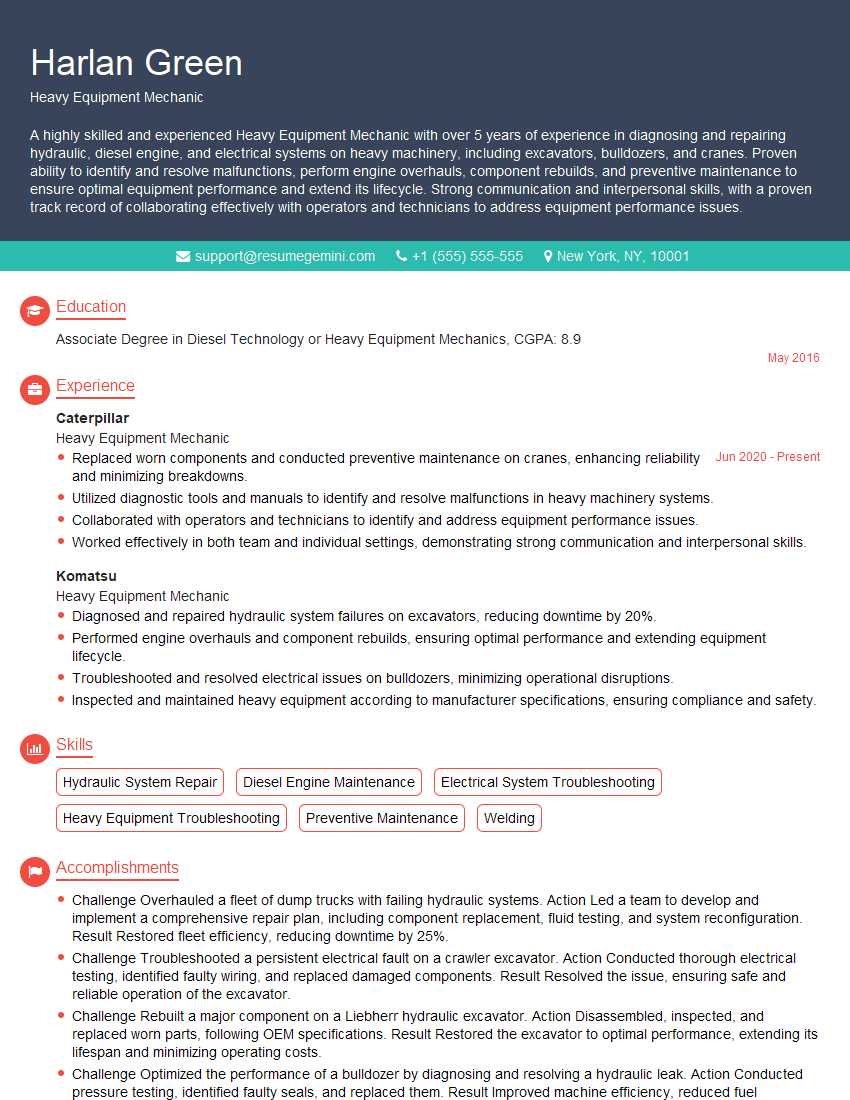
Heavy Equipment Mechanic Resume Sample
- Operations Manager
- Site Manager
- Maintenance Supervisor
- Logistics Manager
- Training Manager
- Construction Superintendent
- Project Manager
- Engineering Manager
- Compliance Officer
- Field Engineer
- Health and Safety Manager
- Safety Engineer
- Safety Officer
- Crane Operator
- Equipment Manager
- Rigger
- Heavy Equipment Mechanic
Explore more articles
Users Rating of Our Blogs
Share Your Experience
We value your feedback! Please rate our content and share your thoughts (optional).
What Readers Say About Our Blog
Very informative content, great job.
good