Cracking a skill-specific interview, like one for Carbon Management, requires understanding the nuances of the role. In this blog, we present the questions you’re most likely to encounter, along with insights into how to answer them effectively. Let’s ensure you’re ready to make a strong impression.
Questions Asked in Carbon Management Interview
Q 1. Explain the concept of a carbon footprint.
A carbon footprint represents the total amount of greenhouse gases (GHGs) generated by our actions. Think of it like a ‘footprint’ we leave on the environment, indicating our contribution to climate change. This includes emissions from everything we do, from driving a car and heating our homes to producing and consuming goods and services. A smaller footprint means less impact on the planet.
For example, a company’s carbon footprint encompasses its operational emissions (energy use, transportation, waste) as well as emissions embedded in its supply chain (raw materials, manufacturing, distribution). An individual’s footprint might include their travel, diet, energy consumption, and consumer purchases.
Q 2. Describe different methodologies for calculating a carbon footprint.
Calculating a carbon footprint involves various methodologies, generally categorized as either Life Cycle Assessment (LCA) or Carbon Footprint Assessment (CFA). LCA is a more comprehensive approach evaluating the environmental impacts of a product or service throughout its entire life cycle (from raw material extraction to disposal). CFA focuses specifically on GHG emissions.
Methodologies differ in the level of detail and data required. Simple methods rely on established emission factors and readily available data. More complex methods involve detailed data collection, process modeling, and potentially sophisticated software. For example, a simple calculation for a company’s transportation footprint might use average fuel consumption rates and emission factors. A more detailed LCA would consider vehicle types, distances, fuel types, and even the emissions from vehicle manufacturing.
Q 3. What are the key greenhouse gases contributing to climate change?
Several greenhouse gases (GHGs) contribute to climate change, with varying global warming potentials (GWPs). GWP reflects a gas’s ability to trap heat compared to carbon dioxide (CO2). CO2 is the most prominent, followed by methane (CH4), nitrous oxide (N2O), and fluorinated gases (like hydrofluorocarbons, HFCs).
- Carbon Dioxide (CO2): Primarily from fossil fuel combustion, deforestation, and industrial processes.
- Methane (CH4): Released from agriculture (livestock, rice paddies), landfills, and natural gas leaks. It has a much higher GWP than CO2.
- Nitrous Oxide (N2O): Emitted from agricultural activities, industrial processes, and the burning of fossil fuels. Also possesses a significantly higher GWP than CO2.
- Fluorinated Gases: Synthetic gases used in various applications (refrigeration, air conditioning, aerosols). They have extremely high GWPs.
Understanding the relative contributions of these gases is crucial for effective mitigation strategies. For instance, reducing methane emissions can have a relatively quick impact on slowing global warming due to its higher GWP.
Q 4. What are some common carbon accounting standards (e.g., GHG Protocol)?
Several widely recognized carbon accounting standards guide the calculation and reporting of GHG emissions. The Greenhouse Gas Protocol (GHG Protocol) is the most globally accepted standard, offering comprehensive guidance for corporate accounting and reporting. It defines the scope of emissions and provides methodologies for quantification. Other standards exist, often industry-specific, but the GHG Protocol serves as a fundamental framework.
These standards ensure consistency and comparability across organizations. They also provide a structured approach to identification, quantification, and reporting, increasing transparency and allowing for credible comparisons of carbon performance.
Q 5. Explain the difference between Scope 1, Scope 2, and Scope 3 emissions.
The GHG Protocol categorizes emissions into three scopes:
- Scope 1: Direct emissions from sources owned or controlled by the company. Examples include emissions from company-owned vehicles, boilers, and on-site fugitive emissions (e.g., leaks from refrigerants).
- Scope 2: Indirect emissions from the generation of purchased energy consumed by the company. This covers emissions from electricity purchased from the grid or generated on-site by sources they do not own or control.
- Scope 3: All other indirect emissions not included in Scope 2. This is the most complex and often largest category, encompassing emissions from the value chain, including upstream activities (e.g., purchased goods and services, transportation and distribution of those goods) and downstream activities (e.g., product use, waste disposal).
Understanding these scopes is essential for a holistic view of a company’s environmental impact. For example, a clothing company’s Scope 3 emissions might be significant due to the emissions from the manufacturing and transportation of its products.
Q 6. How can businesses reduce their Scope 1 emissions?
Reducing Scope 1 emissions requires focusing on direct operational activities. Strategies include:
- Energy Efficiency Improvements: Optimizing energy consumption in buildings and processes through better insulation, efficient equipment, and renewable energy sources.
- Switching to Low-Carbon Fuels: Transitioning from fossil fuels to renewable alternatives (e.g., biogas, biofuels) for heating and transportation.
- Waste Management: Reducing waste generation and improving waste treatment processes (e.g., reducing landfill methane emissions through composting or anaerobic digestion).
- Leak Detection and Repair: Implementing regular leak detection and repair programs for equipment that uses refrigerants or other potent GHGs.
For example, a manufacturing plant could switch to renewable electricity, improve its boiler efficiency, and implement a robust leak detection program for refrigerant systems.
Q 7. How can businesses reduce their Scope 2 emissions?
Reducing Scope 2 emissions necessitates a focus on the energy sources used by the business. Key strategies include:
- Renewable Energy Procurement: Purchasing renewable energy (e.g., solar, wind) from the grid or investing in on-site renewable energy generation.
- Energy Efficiency Improvements: Optimizing energy consumption, as this reduces the overall energy demand and the associated emissions.
- Energy Management Systems: Implementing energy management systems to monitor and control energy usage, identify areas for improvement, and track progress towards emission reduction targets.
- Energy Audits: Conducting regular energy audits to assess energy efficiency and identify opportunities for improvement.
For instance, an office building could switch to a green energy provider, install energy-efficient lighting and HVAC systems, and implement a smart building management system to optimize energy consumption.
Q 8. What strategies can be used to reduce Scope 3 emissions?
Scope 3 emissions, the most challenging to manage, represent indirect emissions throughout a company’s value chain. Reducing them requires a multi-pronged approach focusing on influencing the activities of suppliers, customers, and other stakeholders.
Engaging Suppliers: Collaborate with suppliers to improve their environmental performance through initiatives like joint sustainability programs, setting emissions reduction targets, and incentivizing the adoption of cleaner technologies. For example, a clothing company could work with its cotton suppliers to implement more water-efficient irrigation techniques, reducing water consumption and associated emissions.
Product Lifecycle Management: Design products for efficiency and recyclability. This involves using recycled materials, extending product lifespans, and designing for easy disassembly and component reuse. A car manufacturer, for example, can design vehicles with more recyclable parts and longer-lasting batteries.
Transportation Optimization: Analyze and optimize transportation logistics to reduce emissions from the movement of goods. This includes using more fuel-efficient vehicles, consolidating shipments, and exploring alternative transportation modes like rail or water transport. A food retailer could optimize delivery routes to reduce the number of trucks on the road.
Waste Management: Implement robust waste management programs to minimize waste generation and maximize recycling and recovery. A technology company could partner with e-waste recycling facilities to ensure responsible disposal of its products at the end of their life cycle.
Investing in Sustainable Alternatives: Support the development and adoption of renewable energy and other sustainable solutions throughout the supply chain. For instance, a manufacturing company could invest in renewable energy projects to power its operations and offset its emissions.
Q 9. Describe various carbon offsetting mechanisms.
Carbon offsetting involves compensating for greenhouse gas emissions by investing in projects that remove or reduce equivalent amounts of CO2 from the atmosphere. Several mechanisms exist:
Renewable Energy Projects: Investing in wind, solar, or hydropower projects prevents the emission of CO2 that would have resulted from fossil fuel-based electricity generation.
Forest Conservation and Reforestation: Protecting existing forests and planting new trees increases carbon sequestration in biomass and soil.
Methane Capture and Destruction: Preventing methane leakage from landfills, livestock, or oil and gas operations reduces a potent greenhouse gas.
Carbon Capture and Storage (CCS): Capturing CO2 from industrial sources and storing it underground, though it’s currently a nascent technology with high cost and deployment challenges.
Offset projects are typically verified by third-party organizations to ensure their environmental integrity and impact. The credits generated are then traded in carbon markets, allowing companies to purchase offsets to neutralize their emissions.
Q 10. What are the limitations and criticisms of carbon offsetting?
Despite their potential, carbon offsets face limitations and criticisms:
Additionality: Ensuring that an offset project wouldn’t have happened without the carbon finance is crucial but difficult to verify. Some projects might have proceeded regardless of offset funding, leading to inflated claims of emission reductions.
Permanence: Offsets are only effective if the carbon reduction or removal is permanent. Forest fires, for instance, can undo the positive impact of reforestation efforts.
Leakage: Offsetting emissions in one location might lead to increased emissions in another. For example, reforestation in one area could lead to deforestation in another.
Measurement and Monitoring Challenges: Accurately measuring and monitoring the environmental impact of offset projects is challenging, especially in remote locations. This makes it difficult to ensure the integrity of offset credits.
Transparency and Accountability: Lack of transparency and accountability in the offset market can lead to questionable practices and inflated claims of emission reductions.
Therefore, relying solely on carbon offsets without addressing the root cause of emissions—reducing them at the source—is not a sustainable solution. Offsets should be considered as a supplementary measure, not a primary one.
Q 11. Explain the concept of carbon pricing (e.g., carbon tax, cap-and-trade).
Carbon pricing mechanisms put a cost on carbon emissions, incentivizing emission reductions. Two main approaches exist:
Carbon Tax: A direct tax levied on each unit of carbon dioxide emitted. The tax revenue can be used to fund clean energy initiatives or returned to taxpayers.
Cap-and-Trade: A market-based approach where a cap (limit) is set on total emissions. Companies are issued permits (allowances) to emit, and they can buy and sell these permits in a market. This creates a price for carbon based on supply and demand.
Both approaches create economic incentives to reduce emissions. A carbon tax directly raises the cost of emitting, making cleaner alternatives more attractive. Cap-and-trade creates a market where emission reductions become a tradable commodity, encouraging innovation and investment in clean technologies. Many countries and regions have implemented carbon pricing schemes, showcasing their effectiveness in driving emission reductions.
Q 12. What are some examples of carbon capture and storage technologies?
Carbon capture and storage (CCS) technologies capture CO2 emissions from large stationary sources like power plants and industrial facilities and store them underground to prevent their release into the atmosphere.
Post-combustion capture: CO2 is captured from the flue gases after combustion.
Pre-combustion capture: Fossil fuels are processed to produce hydrogen and CO2, which is then captured.
Oxy-fuel combustion: Combustion occurs in pure oxygen, producing a flue gas stream concentrated in CO2, making capture easier.
Direct air capture (DAC): CO2 is captured directly from the ambient air using specialized chemical processes. This is a more nascent technology but holds potential for removing CO2 already in the atmosphere.
Once captured, the CO2 is compressed and transported to suitable geological formations for long-term storage (e.g., depleted oil and gas reservoirs, saline aquifers).
Q 13. Discuss the challenges associated with carbon capture and storage.
CCS faces significant challenges:
High Costs: The capital and operational costs of CCS technologies are substantial, hindering widespread deployment.
Energy Intensity: The process of capturing, compressing, and transporting CO2 is energy-intensive, reducing the net energy benefit of the power plant or industrial facility.
Storage Security: Ensuring the long-term security of CO2 storage sites is crucial to prevent leakage. This requires careful geological characterization and monitoring.
Public Acceptance: Concerns about potential environmental impacts (e.g., induced seismicity) and the long-term safety of CO2 storage can create public resistance.
Scalability: Scaling up CCS technologies to the level needed to significantly impact global emissions will require substantial investment and technological advancements.
Despite these challenges, CCS remains a vital technology in the fight against climate change, especially for hard-to-abate sectors where emission reduction through other means is difficult or economically infeasible.
Q 14. What is the role of renewable energy in carbon management?
Renewable energy sources, such as solar, wind, hydro, and geothermal, play a pivotal role in carbon management by providing clean, low-carbon alternatives to fossil fuels. Replacing fossil fuel-based electricity generation with renewables directly reduces CO2 emissions.
Decarbonizing Electricity: The power sector is a major emitter of greenhouse gases. Transitioning to renewable energy sources significantly reduces emissions from electricity generation.
Electrification of Transportation: Electric vehicles (EVs) powered by renewable energy reduce emissions from the transportation sector.
Decarbonizing Industry: Renewable energy can power industrial processes, reducing emissions from manufacturing and other industrial activities.
Reducing Reliance on Fossil Fuels: Increased renewable energy capacity reduces our overall dependence on fossil fuels, diminishing the environmental footprint of energy production and consumption.
Policy support, technological advancements, and decreasing costs are driving the rapid growth of renewable energy, making it an indispensable component of effective carbon management strategies.
Q 15. Describe different types of renewable energy sources.
Renewable energy sources are naturally replenishing, unlike fossil fuels. They offer a sustainable alternative for power generation and various other applications. Key types include:
- Solar Power: Harnessing sunlight using photovoltaic (PV) cells or concentrated solar power (CSP) systems. PV cells directly convert sunlight into electricity, while CSP systems use mirrors to focus sunlight to heat a fluid, driving a turbine to generate electricity. Think of solar panels on rooftops or large-scale solar farms.
- Wind Power: Utilizing wind turbines to convert wind energy into electricity. These turbines are strategically placed in areas with consistent, strong winds, like offshore wind farms or upland areas. The spinning blades drive a generator producing electricity.
- Hydropower: Generating electricity from the movement of water. This includes hydroelectric dams, which use the potential energy of stored water to drive turbines, and run-of-river hydro, which utilizes the natural flow of a river.
- Geothermal Energy: Tapping into the Earth’s internal heat. Geothermal power plants utilize steam or hot water from underground reservoirs to generate electricity. Think of Iceland, known for its extensive geothermal energy utilization.
- Biomass Energy: Utilizing organic matter (wood, crops, waste) to produce energy through combustion, gasification, or anaerobic digestion. Biomass can be used for heating, electricity generation, or biofuels.
Each renewable source has its own environmental impact and limitations regarding feasibility and scalability, requiring careful site selection and resource assessment for optimal implementation.
Career Expert Tips:
- Ace those interviews! Prepare effectively by reviewing the Top 50 Most Common Interview Questions on ResumeGemini.
- Navigate your job search with confidence! Explore a wide range of Career Tips on ResumeGemini. Learn about common challenges and recommendations to overcome them.
- Craft the perfect resume! Master the Art of Resume Writing with ResumeGemini’s guide. Showcase your unique qualifications and achievements effectively.
- Don’t miss out on holiday savings! Build your dream resume with ResumeGemini’s ATS optimized templates.
Q 16. What are the benefits and drawbacks of investing in renewable energy?
Investing in renewable energy offers significant benefits but also presents challenges.
Benefits:
- Environmental Sustainability: Reduced greenhouse gas emissions, combating climate change, and improving air quality.
- Energy Security: Diversification of energy sources, reducing reliance on volatile fossil fuel markets.
- Economic Growth: Creation of new jobs in manufacturing, installation, maintenance, and research.
- Technological Advancement: Continuous innovation and improvement in renewable energy technologies, driving down costs.
Drawbacks:
- Intermittency: Solar and wind power are intermittent, requiring energy storage solutions or backup power sources.
- High Upfront Costs: Initial investment in renewable energy infrastructure can be substantial.
- Land Use: Large-scale renewable energy projects can require significant land areas.
- Environmental Impacts: While generally cleaner, renewable energy projects can have localized environmental impacts, such as habitat disruption from hydropower dams or bird mortality from wind turbines. Careful planning and mitigation strategies are essential.
The balance between benefits and drawbacks needs careful consideration, weighing long-term environmental and economic advantages against initial costs and potential localized impacts.
Q 17. How can businesses integrate sustainability into their overall business strategy?
Integrating sustainability into a business strategy requires a holistic approach, moving beyond mere compliance to a proactive strategy that enhances competitiveness and long-term value. This involves:
- Setting clear sustainability goals: Defining measurable targets for emissions reduction, resource efficiency, and waste management, aligned with scientific targets like limiting global warming to 1.5°C.
- Integrating sustainability across all departments: From procurement and operations to marketing and product development, sustainability considerations should be embedded in every aspect of the business.
- Supply chain engagement: Collaborating with suppliers to promote sustainable practices throughout the value chain, fostering transparency and traceability.
- Innovation and technology adoption: Investing in renewable energy, energy-efficient technologies, and waste reduction strategies.
- Measuring and reporting progress: Regularly tracking sustainability performance and reporting results to stakeholders, using relevant frameworks like GRI or SASB (discussed later).
- Stakeholder engagement: Actively engaging with employees, customers, investors, and communities to build support for sustainability initiatives.
For example, a clothing company could integrate sustainability by using organic cotton, reducing water consumption in manufacturing, and implementing a take-back program for used clothing. This not only reduces environmental impact but also enhances brand reputation and attracts environmentally conscious customers.
Q 18. What is ESG (Environmental, Social, and Governance) investing?
ESG (Environmental, Social, and Governance) investing considers environmental, social, and governance factors alongside financial returns when making investment decisions. It’s a broader approach than simply focusing on financial metrics alone.
- Environmental factors include a company’s impact on climate change, resource management, pollution, and biodiversity.
- Social factors consider labor standards, human rights, community relations, and product safety.
- Governance factors assess corporate leadership, executive compensation, audits, internal controls, and shareholder rights.
Investors increasingly recognize the materiality of ESG factors on a company’s long-term financial performance and incorporate ESG assessments into their investment strategies. Poor ESG performance can lead to reputational risks, regulatory fines, and decreased investor confidence, while strong ESG performance can attract investors seeking responsible and sustainable investments.
Q 19. How can businesses report on their sustainability performance?
Businesses can report on their sustainability performance using a variety of methods, ranging from simple internal tracking to comprehensive external reporting aligned with established frameworks. This involves:
- Data collection and analysis: Gathering data on relevant metrics, such as energy consumption, greenhouse gas emissions, waste generation, and water usage. This data should be accurate, reliable, and consistent over time.
- Materiality assessment: Identifying the sustainability issues most relevant to the business and its stakeholders. This helps prioritize reporting efforts and ensure focus on the most impactful aspects.
- Reporting framework selection: Choosing a suitable sustainability reporting framework (GRI, SASB, TCFD are examples) to guide the structure and content of the report. This provides transparency and comparability.
- Report development: Creating a comprehensive report that clearly communicates the business’s sustainability performance, goals, and strategies. The report should be accessible and understandable to a wide audience.
- External assurance: Consider obtaining independent assurance on the reported data to enhance credibility and build trust with stakeholders.
Many businesses are now embedding sustainability reporting into their annual financial reports, demonstrating the increasing importance of transparent and accountable reporting.
Q 20. What are some key sustainability reporting frameworks (e.g., GRI, SASB)?
Several key sustainability reporting frameworks provide standardized guidelines for businesses to report their environmental, social, and governance performance. These frameworks promote consistency and comparability, allowing stakeholders to better assess a company’s sustainability efforts.
- Global Reporting Initiative (GRI): A widely used framework providing comprehensive guidelines for reporting on a broad range of economic, environmental, and social performance indicators.
- Sustainability Accounting Standards Board (SASB): Focuses on financially material ESG issues specific to different industries, aiming to connect sustainability performance to financial performance.
- Task Force on Climate-related Financial Disclosures (TCFD): Recommends a set of consistent climate-related financial disclosures for organizations to help investors and other stakeholders understand and assess climate-related risks and opportunities.
The choice of framework depends on the specific needs and priorities of the business, but using a recognized framework improves transparency and credibility.
Q 21. What is materiality in the context of sustainability reporting?
In sustainability reporting, materiality refers to the significance of a particular sustainability issue to a company’s business operations and its impact on stakeholders. It’s about identifying the ESG issues that are most relevant to the company’s long-term success and its ability to create value.
A material issue is one that could significantly affect a company’s financial performance, operational efficiency, reputation, or ability to meet its strategic objectives. For example, for a water-intensive manufacturing company, water scarcity might be a material issue, while for a tech company, data security could be more material.
A materiality assessment involves identifying and prioritizing those issues that are both significant and relevant to stakeholders. This assessment usually involves engaging with stakeholders to gain diverse perspectives and understanding their concerns. The result informs what aspects of sustainability performance should be emphasized in reporting, ensuring focus on the most critical areas of impact.
Q 22. Explain the concept of circular economy and its relevance to carbon management.
The circular economy is a model of production and consumption that aims to minimize waste and maximize the use of resources. Instead of a linear ‘take-make-dispose’ system, it focuses on keeping materials in use for as long as possible, extracting maximum value from them, and then recovering and regenerating products and materials at the end of each service life. Its relevance to carbon management is paramount because reducing waste and maximizing resource utilization directly contributes to lower greenhouse gas emissions.
For example, instead of manufacturing new plastic products from virgin materials which are often carbon-intensive, a circular economy approach would prioritize recycling and upcycling existing plastics. This reduces the demand for new plastic production, lowering the associated carbon footprint. Similarly, designing products for durability and repairability extends their lifespan, delaying the need for replacements and reducing overall resource consumption and carbon emissions.
- Reduced resource extraction: Less reliance on virgin materials means less mining, drilling, and logging, all of which have substantial carbon impacts.
- Lower energy consumption: Recycling and reusing materials often requires less energy than producing new ones.
- Waste reduction: Minimizing waste reduces landfill emissions, and decreases the need for waste management infrastructure.
Q 23. Describe different lifecycle assessment (LCA) methodologies.
Lifecycle Assessment (LCA) methodologies are standardized frameworks for evaluating the environmental impacts associated with a product, process, or service throughout its entire life cycle. Different methodologies exist, focusing on various aspects and levels of detail. Some prominent approaches include:
- Cradle-to-Grave: This traditional method assesses impacts from resource extraction (cradle) to final disposal (grave).
- Cradle-to-Gate: This focuses only on the impacts up to the factory gate, excluding transportation and end-of-life stages.
- Cradle-to-Use: Considers impacts from resource extraction to consumer use.
- Well-to-Wheel: Specifically used for fuels, assessing the impacts from resource extraction to vehicle use.
These methodologies use various impact categories, such as global warming potential, acidification, and eutrophication, to quantify environmental burdens. Software tools like SimaPro and Gabi are commonly used for LCA studies, allowing for data input, calculations, and impact assessment reporting. The choice of methodology depends on the specific goals of the assessment and the available data.
Q 24. How can technology be used to improve carbon management practices?
Technology plays a vital role in improving carbon management practices across various sectors. Examples include:
- Carbon Capture, Utilization, and Storage (CCUS): Technologies capturing CO2 emissions from industrial sources and either storing them underground or utilizing them in other products.
- Renewable Energy Technologies: Solar, wind, hydro, and geothermal energy sources significantly reduce reliance on fossil fuels.
- Precision Agriculture: Utilizing sensors, drones, and data analytics to optimize fertilizer and water use, minimizing emissions from agricultural practices.
- Smart Grids: Improved energy distribution networks that enhance efficiency and integration of renewable sources.
- Blockchain Technology: Tracking carbon credits and ensuring transparency and accountability in carbon offsetting programs.
- Artificial Intelligence (AI): Optimizing energy consumption in buildings and industrial processes through predictive modeling and real-time adjustments.
These technologies, when implemented effectively, can significantly reduce a company’s or nation’s carbon footprint.
Q 25. What are some emerging trends in carbon management?
Several emerging trends are shaping the carbon management landscape:
- Increased focus on Scope 3 emissions: Companies are increasingly recognizing the need to manage their indirect emissions throughout their value chain.
- Growing importance of nature-based solutions: Afforestation, reforestation, and wetland restoration are gaining traction as effective carbon sequestration methods.
- Development of innovative carbon removal technologies: Direct air capture (DAC) and enhanced weathering are showing promise but are still in their early stages of development.
- Rise of carbon pricing mechanisms: Carbon taxes and emissions trading systems are becoming more prevalent, incentivizing emissions reductions.
- Growing demand for carbon accounting and reporting: With increasing regulatory pressure and stakeholder expectations, accurate carbon accounting is becoming crucial.
These trends reflect a growing understanding of the urgency and complexity of climate change and the need for comprehensive and innovative solutions.
Q 26. Describe your experience with carbon management software or tools.
In my previous role at [Previous Company Name], I extensively used [Software Name], a leading carbon management platform. This software allowed us to track emissions across different scopes, conduct LCA studies, and generate comprehensive sustainability reports. I was responsible for data input, analysis, and report generation, and I developed expertise in utilizing its features for various projects, including developing a corporate sustainability strategy and identifying emission reduction opportunities in our supply chain. The platform’s ability to integrate with our existing ERP systems was invaluable for data accuracy and efficiency. I also have experience with [mention other relevant software/tools].
Q 27. How do you stay up-to-date on the latest developments in carbon management?
To stay updated, I actively engage in several strategies:
- Following industry publications and journals: I regularly read publications like [mention relevant publications] to stay abreast of the latest research and advancements.
- Attending conferences and webinars: Participating in industry events provides valuable insights and networking opportunities.
- Networking with peers and experts: Discussions with colleagues and experts in the field help to understand diverse perspectives and challenges.
- Monitoring regulatory developments: Keeping track of evolving carbon regulations and standards is essential for effective carbon management strategies.
This multifaceted approach allows me to maintain a comprehensive understanding of the ever-evolving field of carbon management.
Q 28. What are your salary expectations for this role?
Based on my experience and the requirements of this role, my salary expectations are in the range of $[Lower Bound] to $[Upper Bound] annually. This is a competitive range reflective of my expertise and contributions in this field. I am, however, open to discussion and willing to consider other compensation structures that align with the overall compensation package.
Key Topics to Learn for Carbon Management Interview
- Carbon Accounting and Reporting: Understanding methodologies like GHG Protocol, carbon footprints, and life cycle assessments. Practical application: Analyzing a company’s emissions inventory and identifying reduction opportunities.
- Carbon Capture, Utilization, and Storage (CCUS): Exploring various CCUS technologies, their feasibility, and associated challenges. Practical application: Evaluating the economic and environmental viability of a specific CCUS project.
- Climate Policy and Regulation: Familiarizing yourself with international agreements (Paris Agreement), national policies, and carbon pricing mechanisms. Practical application: Assessing the impact of a new carbon tax on a company’s operations.
- Renewable Energy and Energy Efficiency: Understanding the role of renewables in decarbonization and best practices for energy efficiency improvements. Practical application: Designing an energy-efficient building or optimizing an industrial process for reduced energy consumption.
- Sustainable Supply Chains: Analyzing and managing the environmental impact throughout the entire supply chain. Practical application: Implementing sustainable sourcing strategies and reducing emissions from transportation.
- Carbon Offset and Mitigation Strategies: Exploring different offsetting methodologies and their effectiveness, along with various emission reduction techniques. Practical application: Developing a comprehensive carbon reduction plan for an organization.
- Data Analysis and Modeling: Utilizing data analysis tools and techniques to track progress, forecast emissions, and optimize strategies. Practical application: Building a carbon emissions prediction model using historical data.
Next Steps
Mastering Carbon Management is crucial for a thriving career in a rapidly evolving industry. The demand for professionals skilled in this area is high and continues to grow. To maximize your job prospects, it’s essential to have a resume that effectively showcases your skills and experience to Applicant Tracking Systems (ATS). Crafting an ATS-friendly resume is key to getting your application noticed. We highly recommend using ResumeGemini to build a professional and impactful resume that highlights your expertise in Carbon Management. ResumeGemini provides examples of resumes tailored to this field, helping you present your qualifications compellingly.
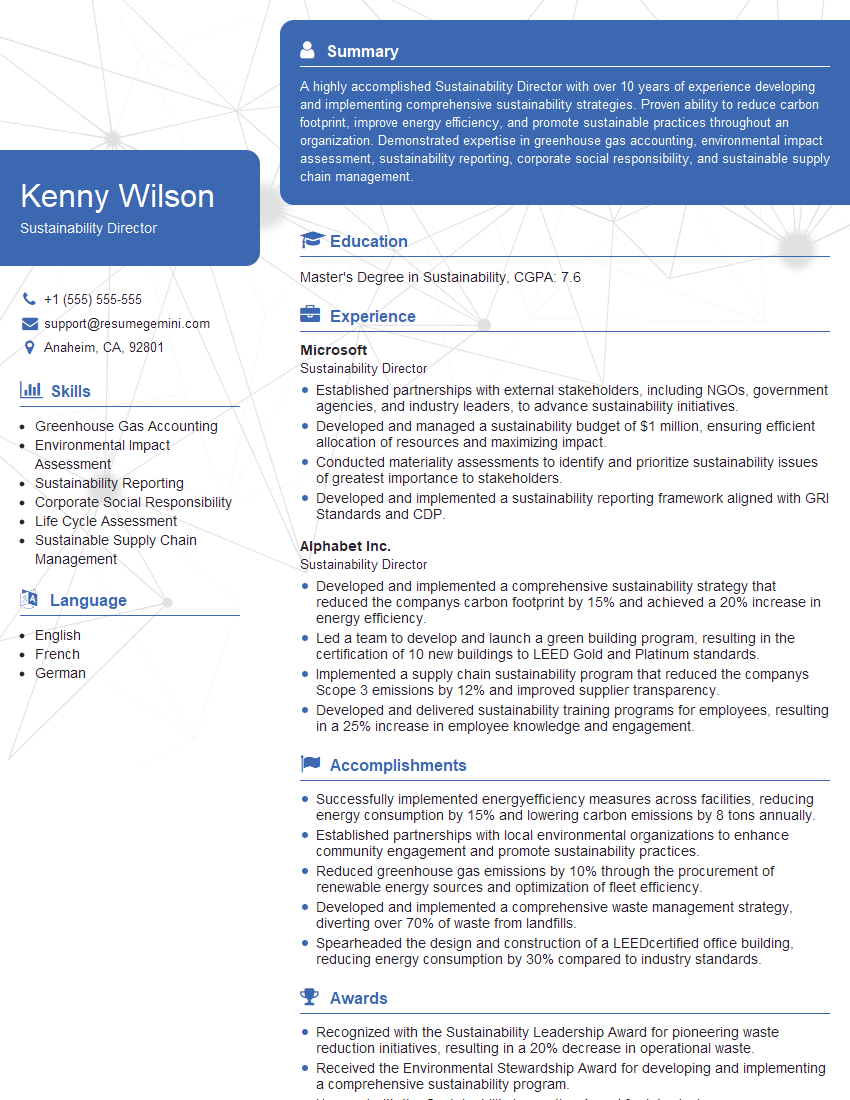
Sustainability Director Resume Sample
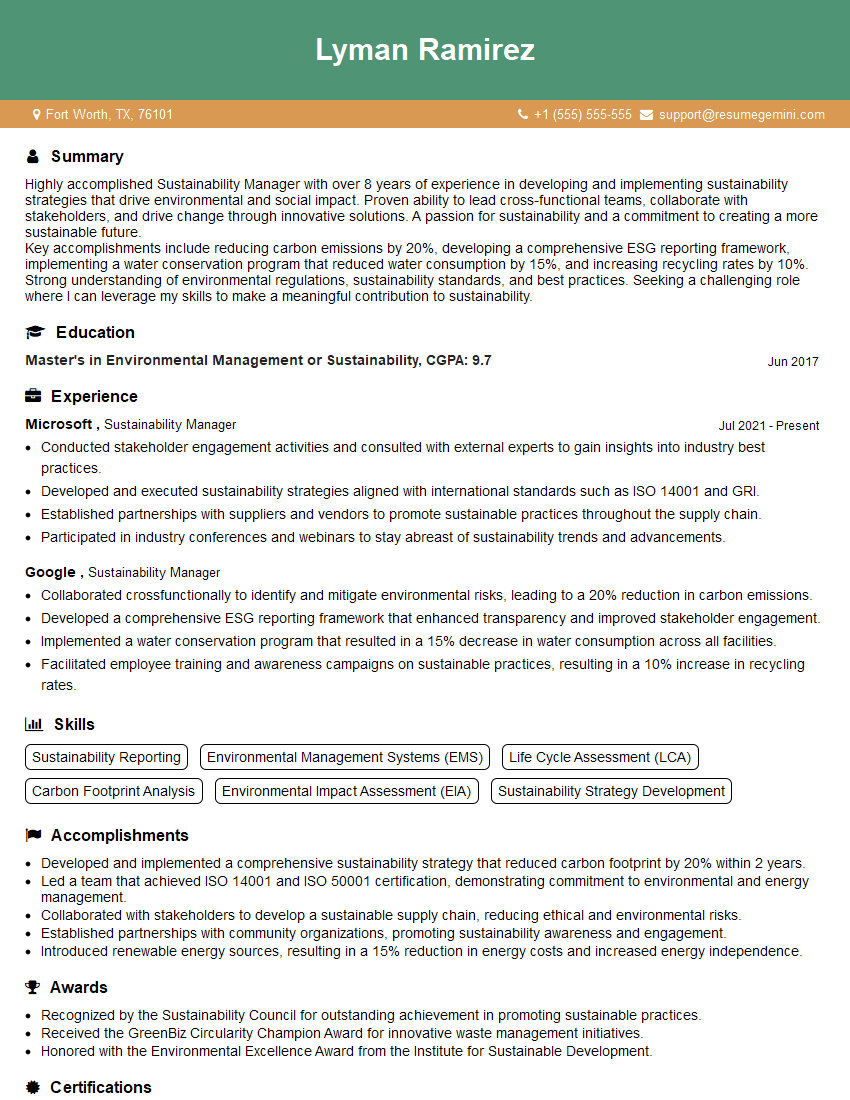
Sustainability Manager Resume Sample
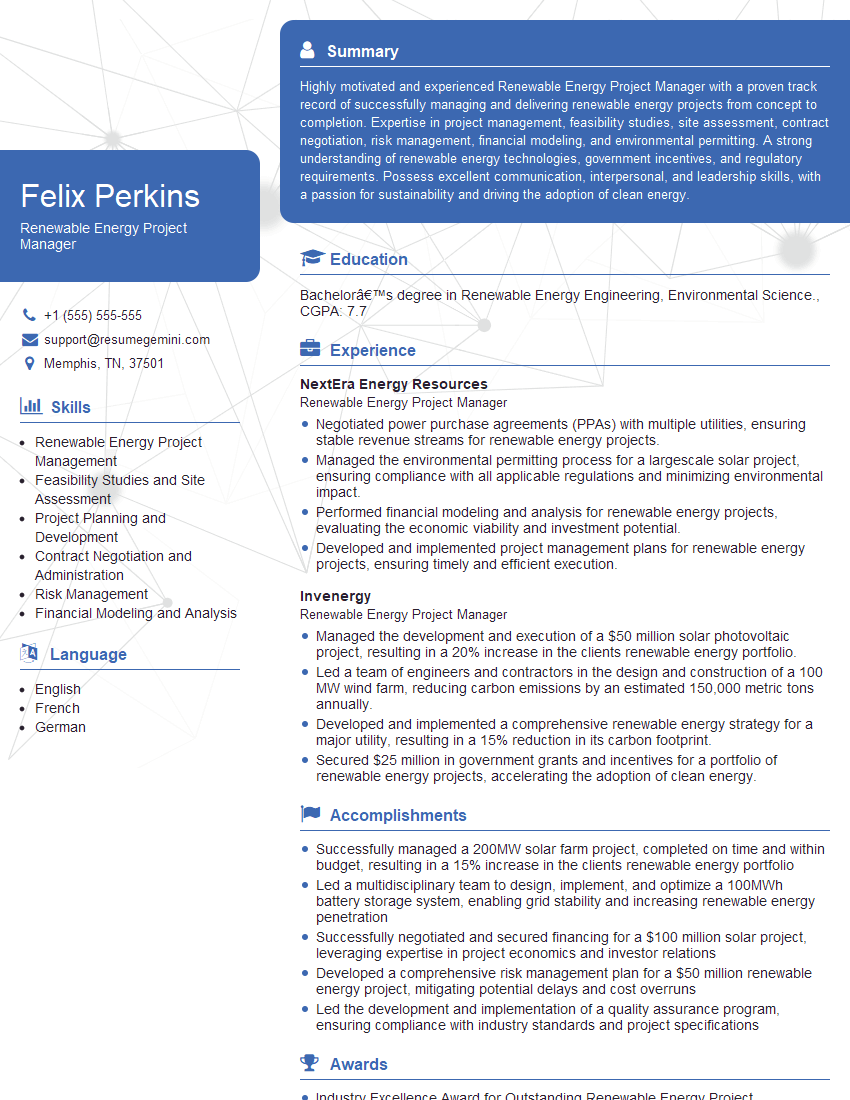
Renewable Energy Project Manager Resume Sample
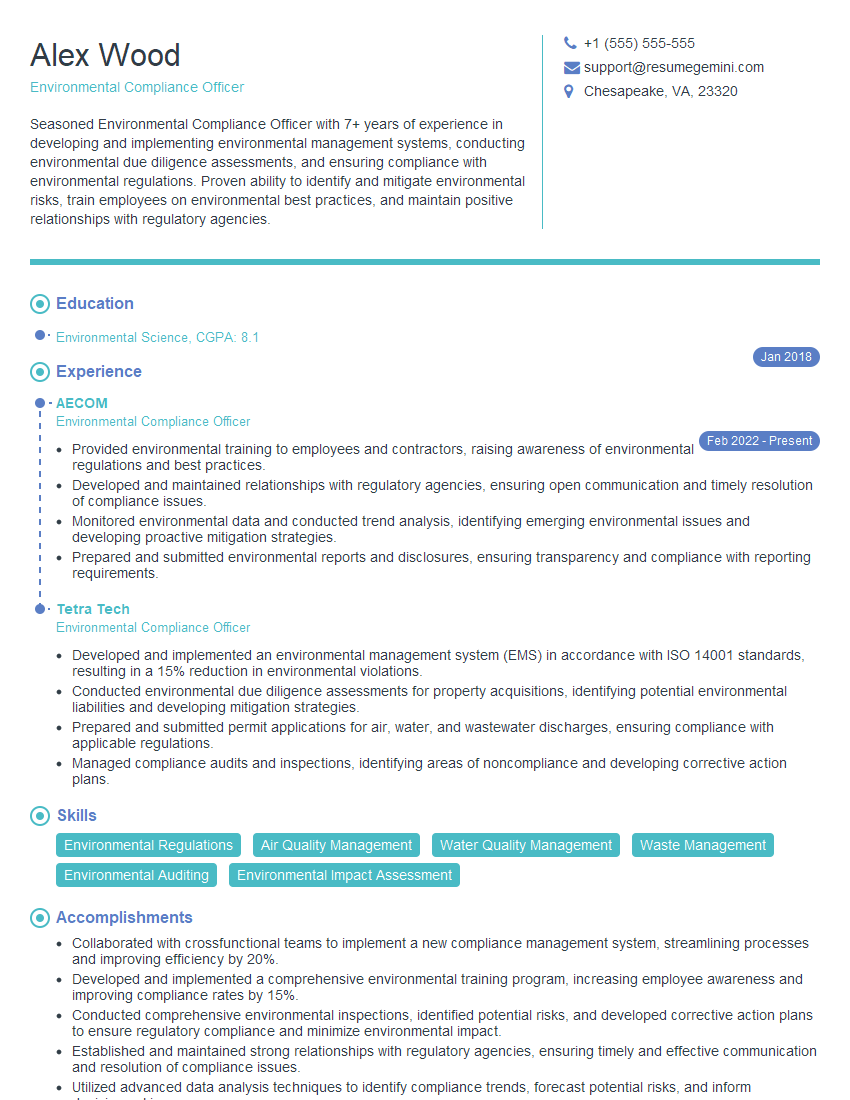
Environmental Compliance Officer Resume Sample
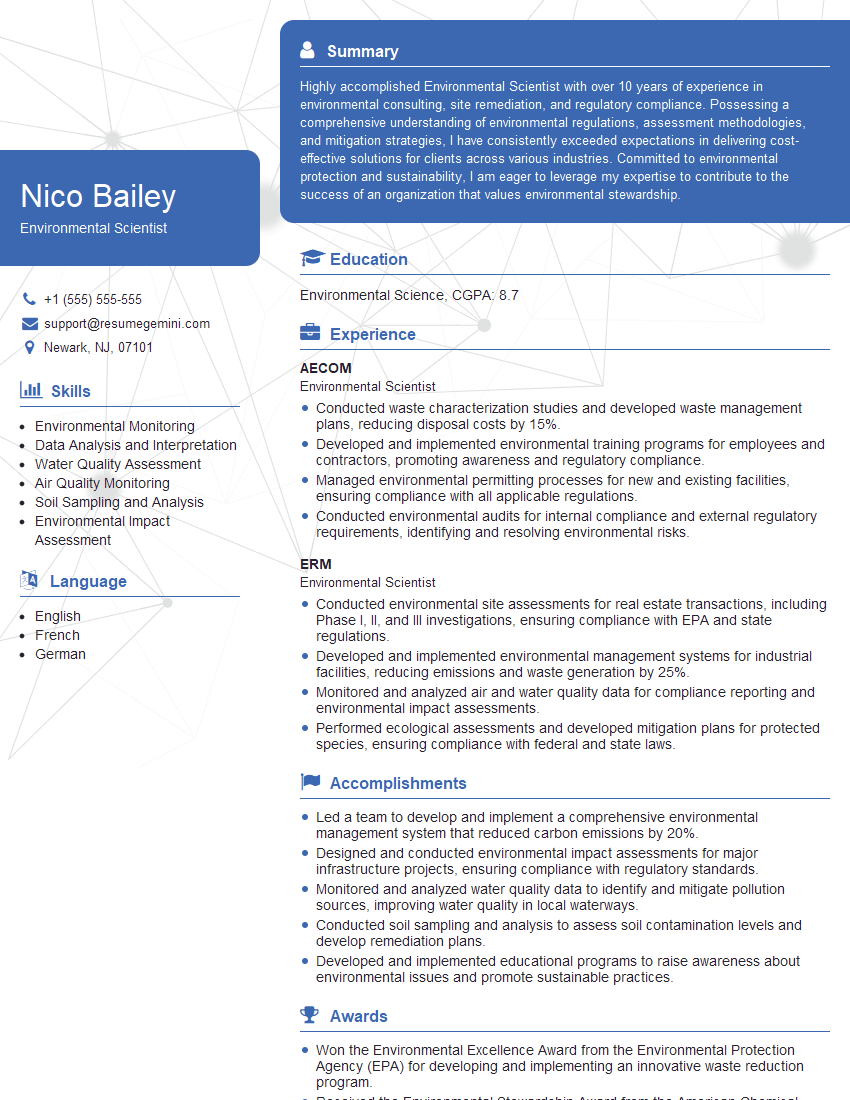
Environmental Scientist Resume Sample
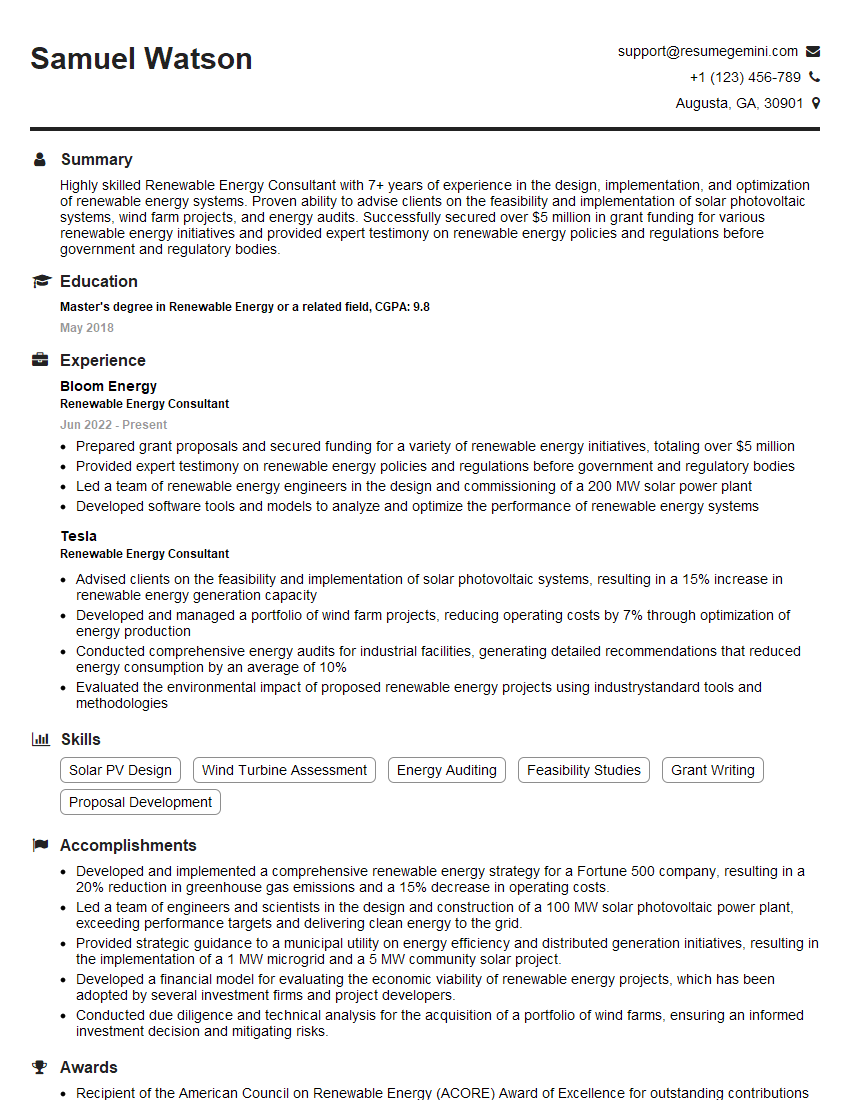
Renewable Energy Consultant Resume Sample

Sustainability Consultant Resume Sample
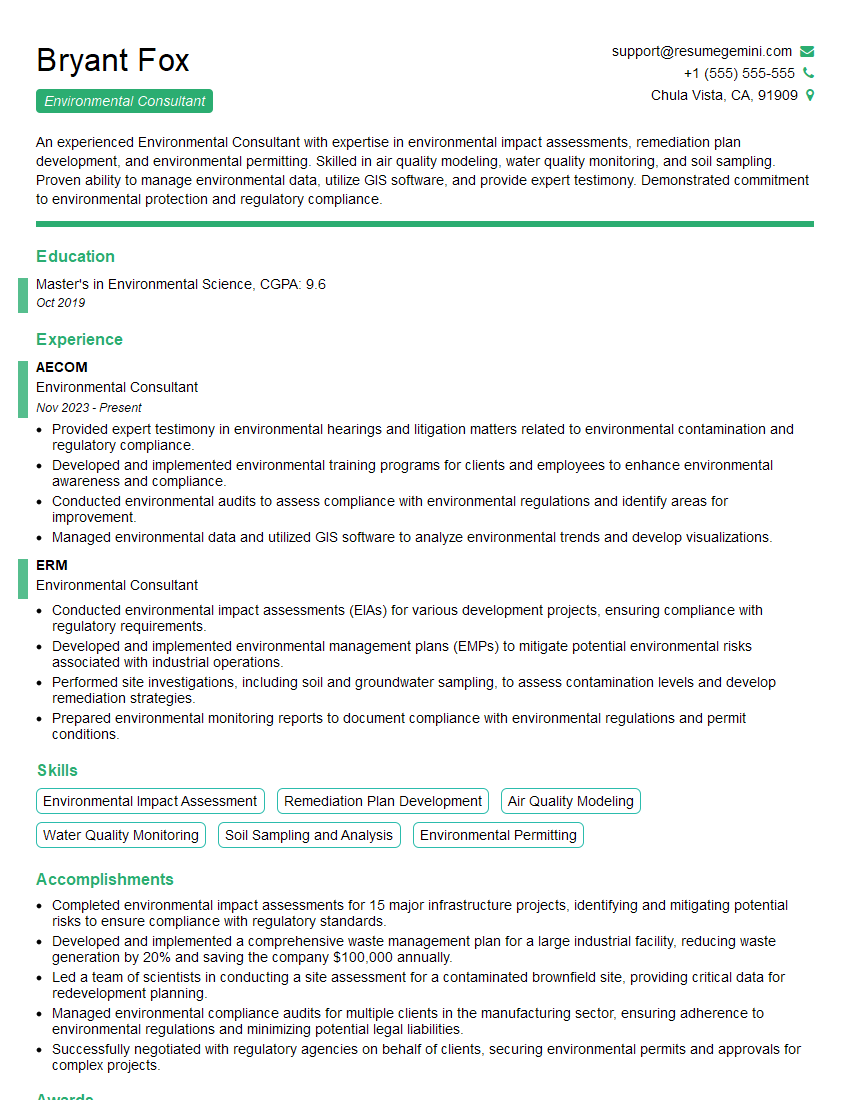
Environmental Consultant Resume Sample
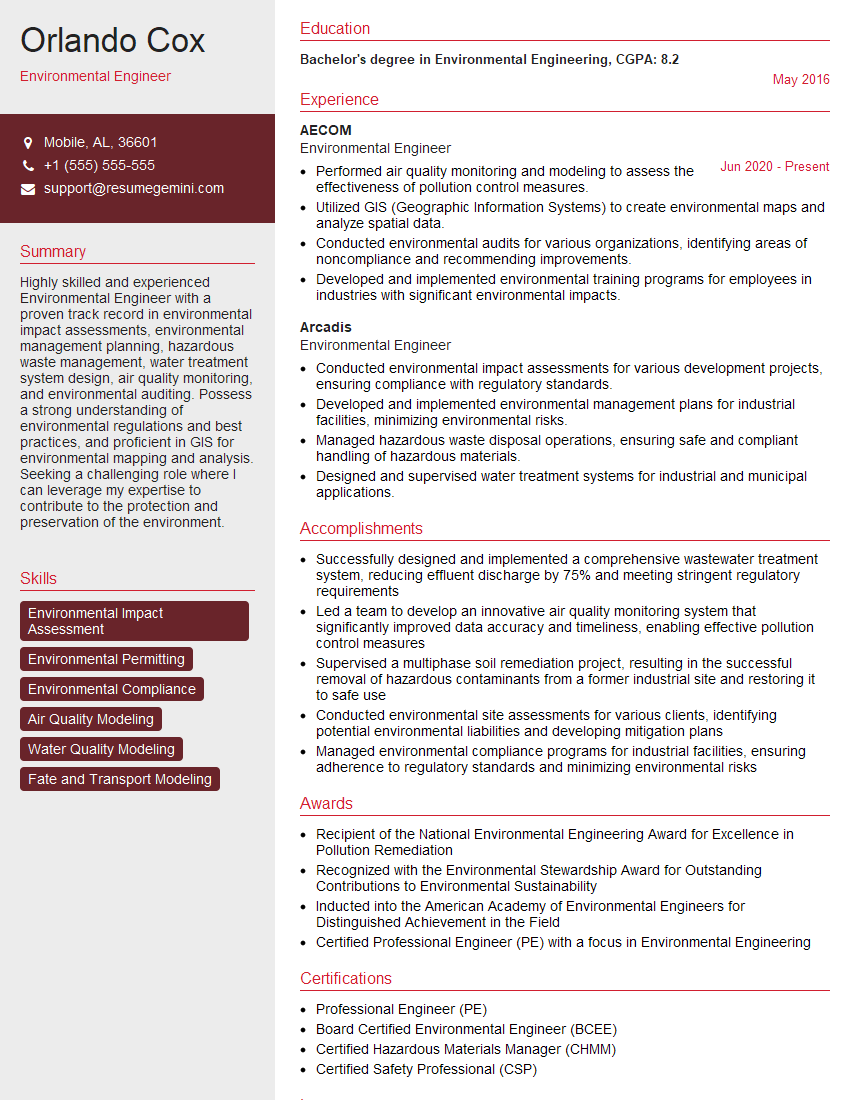
Environmental Engineer Resume Sample
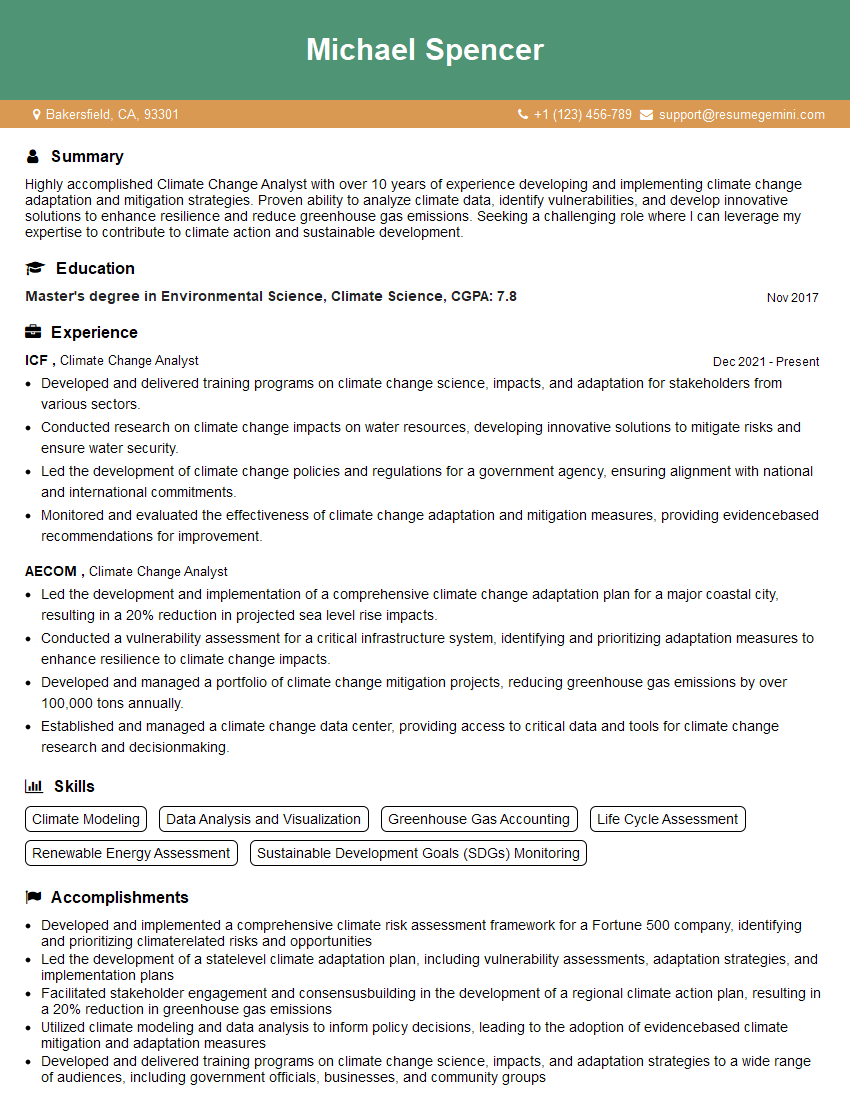
Climate Change Analyst Resume Sample
Explore more articles
Users Rating of Our Blogs
Share Your Experience
We value your feedback! Please rate our content and share your thoughts (optional).
What Readers Say About Our Blog
Very informative content, great job.
good