Every successful interview starts with knowing what to expect. In this blog, we’ll take you through the top Sight-Reading Ability interview questions, breaking them down with expert tips to help you deliver impactful answers. Step into your next interview fully prepared and ready to succeed.
Questions Asked in Sight-Reading Ability Interview
Q 1. Explain your approach to sight-reading unfamiliar musical passages.
My approach to sight-reading is systematic and multifaceted. It begins with a quick overview of the piece to assess its overall structure and character – key signature, time signature, general tempo indications, and the presence of any immediately obvious challenges. Then, I proceed phrase by phrase, focusing on understanding the harmonic and melodic contours before attempting to play. I don’t aim for perfection on the first try; instead, I prioritize accurate note reading and rhythm before refining the interpretation.
For instance, if I encounter a passage with a complex modulation, I’ll carefully analyze the chord changes before playing, ensuring I understand the harmonic progression. I might even lightly hum or tap the rhythm to internalize it before engaging my instrument. This allows me to maintain a fluid reading experience without getting bogged down in individual note errors.
Q 2. Describe your strategies for managing tempo and rhythm while sight-reading.
Managing tempo and rhythm in sight-reading requires a delicate balance between adherence to the written notation and musical expressiveness. I start by establishing a steady pulse, often by lightly tapping my foot or counting silently. I pay close attention to the time signature and any tempo markings (Allegro, Adagio, etc.).
However, I don’t rigidly adhere to the tempo if the musical phrasing demands a slight rubato (flexible tempo). For example, during a lyrical melody, I might slightly slow down at emotionally significant moments and accelerate during passages requiring more energy. The key is to maintain a sense of forward momentum while articulating the music’s inherent expressiveness.
Q 3. How do you handle complex rhythmic patterns during sight-reading?
Complex rhythmic patterns often require a pre-emptive strategy. Before playing, I meticulously dissect the rhythmic notation, often subdividing complex rhythms into smaller, more manageable units. For example, a triplet feel might be broken down into three eighth notes. I also use rhythmic analysis techniques, such as identifying the main pulse and then figuring out how the other rhythms relate to it.
Let’s say I encounter a passage with sixteenth note patterns against dotted eighth notes. I would first identify the main beat, then subdivide it to accurately play the sixteenth notes against the longer dotted eighth note durations, using a combination of counting and internal pulse.
Q 4. What techniques do you employ to interpret phrasing and dynamics in a new piece?
Interpreting phrasing and dynamics in sight-reading demands a holistic approach. I look for cues like articulation markings (legato, staccato), breath marks, and dynamic indications (crescendo, diminuendo). Beyond the written notations, I try to understand the emotional arc of the music. This helps me determine where to build intensity, create contrast, and emphasize specific musical ideas.
For instance, a phrase marked piano might require a more delicate touch and a subtle shaping of the line, while a forte passage might necessitate a fuller tone and bolder articulation. Understanding the context – the musical style, the overall mood of the piece, etc. – is crucial in making informed interpretive choices.
Q 5. How do you identify key signatures and time signatures quickly and accurately?
Identifying key and time signatures is a fundamental skill, done almost instantaneously. I am trained to recognize the key signature (sharps or flats at the beginning of a staff) immediately and determine the corresponding key. Time signatures (e.g., 4/4, 3/4, 6/8) are also rapidly processed, setting the rhythmic framework for the piece. This is mostly a matter of trained visual recognition and pattern recognition – it’s like recognizing letters of the alphabet; initially requiring conscious effort but over time becoming nearly automatic.
Through years of practice, I’ve developed a very rapid and accurate recognition of these crucial elements. It allows me to focus my attention directly on the melodic and harmonic content rather than getting held up deciphering notation.
Q 6. Describe your process for deciphering unfamiliar chord progressions.
Deciphering unfamiliar chord progressions is a skill that heavily relies on harmonic understanding. I begin by recognizing the individual chords (major, minor, dominant, etc.) and then analyze their function within the progression. I look for patterns and common chord progressions (e.g., I-IV-V-I in a major key). I might also analyze the bass line for further clues about the harmonic movement.
For example, if I see a sequence of chords that suggests a modulation, I’ll focus my attention on identifying the new key and analyzing the transitional chords leading to it. A deep understanding of music theory is instrumental in navigating complex chord progressions accurately and efficiently.
Q 7. How do you adapt your sight-reading approach to different musical styles?
Adapting my approach to different musical styles is essential. The rhythmic feel, the approach to articulation, and the interpretive nuances vary significantly between styles (e.g., Baroque, Classical, Romantic, Jazz). I adjust my tempo expectations, my approach to articulation (e.g., using more legato in a Romantic piece compared to a more staccato approach in a Baroque piece), and my dynamic shaping accordingly.
For example, sight-reading a Bach prelude requires a different approach than sight-reading a Chopin nocturne. I would adopt a more precise, mathematically accurate approach for Bach, whereas the Chopin piece would allow for more freedom and rubato in the interpretation. This adaptability is acquired through extensive practice across various musical styles and periods.
Q 8. What are some common challenges you encounter during sight-reading, and how do you overcome them?
Sight-reading, the ability to perform music at first sight, presents several challenges. One common hurdle is encountering unfamiliar rhythmic patterns or complex meter changes. For instance, a sudden shift from 4/4 to 7/8 can disrupt the flow. To overcome this, I focus on meticulously analyzing the rhythmic notation before attempting to play, often tapping out the rhythm separately to internalize it. Another major challenge is navigating complex harmonies and chord progressions. Unexpected modulations or chromaticism can be difficult to process instantly. My approach here involves pre-scanning the music to identify potential harmonic shifts, mentally preparing myself for the changes. Finally, unfamiliar melodic contours can also pose a problem; a wide interval jump or a densely packed passage might require additional attention. I address this by actively visualizing the melodic line before playing, ensuring I understand the overall shape and direction of the music.
Q 9. How do you maintain accuracy and musicality under pressure while sight-reading?
Maintaining accuracy and musicality under pressure during sight-reading requires a combination of preparation, technique, and mental resilience. Firstly, thorough preparation is key. I familiarize myself with the style and period of the piece beforehand, even if only briefly. This gives me a context for interpreting the musical language. Technically, maintaining a steady tempo and a clear articulation is crucial. I focus on playing accurately rather than quickly, ensuring a solid foundation for musical expression. Mentally, I cultivate a mindset of calm focus. Deep breathing exercises and positive self-talk help to manage anxiety and maintain composure. If a mistake occurs, I acknowledge it briefly and move on, avoiding dwelling on errors.
Q 10. Describe your experience sight-reading in ensemble settings.
Sight-reading in ensemble settings adds another layer of complexity. It demands not only individual proficiency but also attentive listening and responsiveness to other musicians. I find that clear communication and a shared understanding of the musical goals within the group are paramount. For example, during a recent performance of a Baroque concerto, we spent time beforehand discussing phrasing, articulation, and dynamic balance, ensuring a cohesive interpretation. Effective communication involves non-verbal cues like eye contact and subtle gestures. Active listening also plays a vital role; I constantly monitor my fellow musicians, adjusting my tempo and dynamics as needed to maintain the ensemble’s unity. It’s akin to a carefully choreographed dance where every participant is aware of and responds to the others’ movements.
Q 11. How do you handle unfamiliar clefs or unusual notations?
Unfamiliar clefs, such as the alto or tenor clef, or unusual notations can initially seem daunting. However, a systematic approach greatly reduces the difficulty. When encountering unfamiliar clefs, I take a moment to mentally map the clef’s position to the familiar bass or treble clef. For example, I visualize how notes relate to middle C to ensure correct pitch. Unusual notations, like accidentals written outside the staff or unusual time signatures, require careful examination. I meticulously analyze the notation to decipher the composer’s intentions and carefully interpret it. I often use a pencil to lightly mark significant notes or accidentals on the score for a better understanding and easier reading. The key is patience, precise analysis, and a willingness to spend a few extra moments clarifying the score.
Q 12. What strategies do you use to improve your sight-reading skills?
Improving sight-reading is an ongoing process, much like mastering any other musical skill. My strategies involve consistent practice, focusing on different aspects at various times. I begin with simple pieces, gradually increasing the complexity of the material, thereby building confidence and technical proficiency. Regular practice with unfamiliar styles and periods expands my musical vocabulary and adaptability. Using various sight-reading resources, such as dedicated method books and online platforms, provides structured exercises and varied challenges. I also regularly analyze my performance, noting areas for improvement and focusing on those aspects in subsequent practice sessions. Finally, seeking feedback from teachers and colleagues is crucial for receiving external perspectives and identifying blind spots in my approach.
Q 13. How do you balance speed and accuracy while sight-reading?
Balancing speed and accuracy in sight-reading is a delicate act. Prioritizing accuracy over speed, especially during initial encounters with a piece, is essential. Rushing leads to more mistakes, which negatively impacts musicality. I start by playing at a tempo that allows me to accurately interpret the notation. As familiarity with the piece grows, gradually increasing the tempo becomes more manageable. Consistent practice with a metronome helps to internalize rhythmic accuracy and control tempo. It’s a gradual process of building precision and fluidity. Thinking of it as building a sturdy foundation first before adding speed and embellishments is helpful. Imagine building a house; you wouldn’t want to rush the foundation just to get the roof on faster. The end result would be unstable.
Q 14. Discuss your experience with sight-reading different instrumental/vocal parts.
My experience sight-reading different instrumental and vocal parts has broadened my musical understanding and enhanced my versatility. Sight-reading a piano score, for instance, requires a grasp of both hands’ independent yet coordinated movements, whereas reading a string part demands an understanding of bowing techniques and fingering patterns specific to the instrument. Vocal parts necessitate attention to vocal ranges, phrasing, and breath control. This exposure has sharpened my ability to interpret the music from various perspectives. For example, sight-reading the cello part in a string quartet helped me appreciate the harmonic underpinnings of the composition, enriching my overall musical experience. It’s similar to looking at a painting from different angles, each view revealing a new aspect of the overall composition.
Q 15. How do you prepare for a sight-reading audition or assessment?
Preparing for a sight-reading audition requires a multifaceted approach. It’s not just about playing; it’s about strategic practice and mental preparation. My preparation always begins with a warm-up focusing on technical exercises like scales and arpeggios in various keys and rhythms to ensure my fingers are agile and my mind is focused. Then I dive into sight-reading material, starting with easier pieces to build confidence and gradually increasing the difficulty level. I pay close attention to different stylistic periods, focusing on understanding characteristic rhythmic patterns and harmonic progressions of each. I also work on identifying key signatures and time signatures quickly. Finally, I incorporate pieces similar in style to what I expect in the audition, focusing on specific challenges like unusual rhythmic patterns or complex harmonies. This targeted practice helps me build both technical proficiency and the mental resilience to handle unfamiliar music under pressure.
Career Expert Tips:
- Ace those interviews! Prepare effectively by reviewing the Top 50 Most Common Interview Questions on ResumeGemini.
- Navigate your job search with confidence! Explore a wide range of Career Tips on ResumeGemini. Learn about common challenges and recommendations to overcome them.
- Craft the perfect resume! Master the Art of Resume Writing with ResumeGemini’s guide. Showcase your unique qualifications and achievements effectively.
- Don’t miss out on holiday savings! Build your dream resume with ResumeGemini’s ATS optimized templates.
Q 16. Describe a time you had difficulty sight-reading a piece; how did you resolve the issue?
During a masterclass, I encountered a Baroque sonata with extremely complex counterpoint and frequent tempo changes. Initially, I struggled to navigate the interwoven melodic lines, resulting in a muddled and inaccurate performance. To resolve this, I slowed down considerably, focusing on one voice at a time to understand the melodic and harmonic relationships. I meticulously analyzed the score, breaking down each section into smaller, manageable units. I practiced each section repeatedly until I could play it smoothly and accurately. Then, I gradually increased the tempo, connecting the sections until I achieved a performance that reflected the intended phrasing and emotional expression, despite the challenges. This experience highlighted the importance of careful analysis and systematic practice in overcoming sight-reading difficulties.
Q 17. What is your approach to sight-reading unfamiliar melodic contours?
My approach to unfamiliar melodic contours involves a combination of visual analysis and kinesthetic awareness. First, I visually scan the entire melodic line to identify the overall shape – is it ascending, descending, stepwise, or leaps? Then, I mentally translate those shapes into finger movements. For example, if I see a large leap, I anticipate the necessary hand position changes beforehand. This proactive approach minimizes the chance of errors due to sudden, unexpected jumps. I also focus on the relationship between the melody and the harmony, interpreting the melodic contours in context of the underlying chord progression. This contextual awareness helps me understand the musical intentions and make musically informed choices.
Q 18. How do you handle sudden changes in tempo or meter while sight-reading?
Sudden changes in tempo and meter require adaptability and a keen sense of rhythmic flexibility. My strategy involves pre-empting these changes by identifying cues in the score. For example, a change in time signature is usually visually obvious. I mentally prepare for this change beforehand, adjusting my tempo and rhythmic approach in anticipation. A metronome is helpful during practice to build precision in maintaining the correct tempo after the change. For subtle tempo shifts, I rely on my internal rhythmic sense and focus on maintaining a consistent pulse. This requires regular practice in maintaining rhythmic stability and adaptability to fluctuating tempi, which helps to manage transitions smoothly.
Q 19. How do you use context to aid in your sight-reading interpretation?
Context is crucial for insightful sight-reading. I leverage harmonic analysis, understanding how chords function within a key and the relationships between them. This informs phrasing, dynamics, and articulation choices. For example, a cadence often requires a particular approach to dynamics and articulation, bringing a phrase to a satisfying conclusion. Recognizing melodic motifs and their repetitions or variations provides a framework for understanding the structure of the piece and anticipating upcoming sections. By understanding the overall structure and style of the piece, I can make informed choices about tempo, phrasing, and dynamics, making my sight-reading performance more musically coherent and expressive.
Q 20. What are your strengths and weaknesses when it comes to sight-reading?
My strengths in sight-reading include a strong understanding of music theory and a quick ability to identify key signatures, time signatures, and rhythmic patterns. My ability to adapt to different styles and quickly grasp melodic contours is also a strength. However, my weakness is sometimes encountering challenges with dense textures or complex polyphony, especially in unfamiliar styles. I’m actively working on strengthening this area by incorporating progressively challenging repertoire into my practice routine and focusing on careful score analysis of complex pieces. I also benefit from collaborative practice with colleagues, gaining insights from their approach to challenging scores.
Q 21. How do you manage stage fright or performance anxiety that might affect sight-reading?
Performance anxiety can significantly impact sight-reading. To manage this, I employ several techniques. Thorough preparation is paramount. The more familiar I am with the type of music I’ll be encountering, the less anxious I become. Deep breathing exercises help to calm my nerves before a performance. Mental rehearsal, where I visualize myself successfully playing the piece, helps to build confidence. Furthermore, I focus on positive self-talk, reminding myself of my skills and abilities. Finally, remembering to enjoy the process of playing music helps to replace anxiety with enthusiasm and focus.
Q 22. Explain the importance of rhythmic accuracy in sight-reading.
Rhythmic accuracy is the cornerstone of successful sight-reading. Without it, even a perfectly played melody sounds clumsy and unprofessional. Think of it like building a house: you can have beautiful bricks (the notes), but if the foundation (the rhythm) is shaky, the whole structure collapses. In sight-reading, rhythmic accuracy ensures the musical phrasing is clear, the tempo is consistent, and the overall performance is engaging. A missed beat or a slightly off-time note can throw off the entire piece, disrupting the flow and affecting the listener’s experience.
To achieve rhythmic precision, I focus on carefully analyzing the rhythmic notation before I begin playing. I might even tap my foot or count out loud to internalize the rhythmic patterns. This pre-reading step allows me to anticipate challenges and build a strong rhythmic framework before I tackle the melodic and harmonic complexities.
Q 23. How do you determine the appropriate articulation for a sight-read passage?
Determining appropriate articulation in sight-reading requires a holistic understanding of the musical context. It’s not simply about whether to play a note legato or staccato; it’s about conveying the composer’s intended expression. I look for several cues: the style of the piece (e.g., Baroque, Classical, Romantic, etc.), the dynamics, the surrounding melodic contour, and any composer’s markings (slurs, accents, etc.).
For instance, a fast passage in a Classical sonata might call for detached articulation (staccato or semi-staccato) to create clarity and precision, while a lyrical melody in a Romantic piece might benefit from smoother, connected articulation (legato). I also pay attention to phrasing, often using slight variations in articulation to shape the musical lines and create a sense of flow and direction. Ultimately, the goal is to articulate the music in a way that is both technically accurate and musically expressive.
Q 24. Describe your experience using different sight-reading materials.
My experience with sight-reading materials is extensive and spans a wide range of styles and complexities. I’ve worked with traditional method books like those by Alfred or Bastien, which offer a structured progression of exercises focusing on specific technical challenges. These have been invaluable for honing fundamental skills. Beyond method books, I’ve regularly sight-read from orchestral excerpts, solo repertoire, chamber music, and even contemporary compositions. This diverse experience has equipped me to adapt quickly to various musical styles and notations.
Each material presents unique challenges. Orchestral excerpts, for example, often require rapid comprehension of complex textures and intricate harmonies within a limited timeframe. Solo repertoire demands a deeper understanding of musical expression and interpretation. The key is flexibility and the ability to quickly adjust my approach based on the specific demands of the material.
Q 25. How do you manage complex polyphonic textures when sight-reading?
Managing complex polyphonic textures in sight-reading requires a strategic approach. It’s not about trying to play every voice simultaneously from the start; instead, I prioritize clear voice separation and hierarchical understanding. I first identify the main melodic lines and harmonic foundation, treating them as a framework upon which the other voices are built. I then gradually add the inner voices, focusing on their rhythmic and melodic relationships to the primary voices.
I often use techniques like ‘chunking’ (breaking down the music into manageable sections) and mental rehearsal (imagining the texture in my mind before playing) to organize the complex layers. Transposing parts mentally, if possible, to a more familiar key can also help in simplifying the texture. This layered approach ensures clarity and avoids muddled sound, allowing me to present a cohesive and well-balanced performance.
Q 26. What is your understanding of the relationship between sight-reading and musicality?
Sight-reading and musicality are intrinsically linked. While sight-reading focuses on the technical aspect of reading and playing music at first sight, musicality is the breath of life that transforms mere notes into a compelling performance. Sight-reading is the tool, musicality is the artistry. A proficient sight-reader might accurately play all the notes, but without musicality, the performance lacks emotional depth and connection.
I believe that successful sight-reading should always strive for musicality. This involves careful attention to dynamics, phrasing, articulation, and tempo. Even when sight-reading, I try to anticipate the emotional arc of the piece and shape my performance accordingly. It’s about finding a balance between technical proficiency and artistic expression, creating a performance that is both accurate and engaging.
Q 27. How do you prepare for sight-reading pieces in different languages?
Preparing for sight-reading pieces in different languages primarily involves familiarizing myself with the nuances of the specific language’s musical notation. While the basic principles remain the same, there are subtle differences in notation style and common practices across various musical traditions. For example, the use of accidentals might vary, or specific rhythmic notations could be presented differently.
My approach involves researching the composer’s stylistic preferences, and if possible, listening to recordings of similar pieces in that language. This helps me anticipate potential challenges and understand the overall stylistic context. A key element is also practice: the more I encounter diverse notational practices, the more easily I can adapt and quickly interpret the score in front of me. Online resources and reference books are invaluable in this aspect.
Q 28. How can sight-reading skills contribute to your overall musical performance?
Sight-reading skills are fundamental to my overall musical performance. They contribute significantly to my versatility, adaptability, and efficiency. Strong sight-reading allows me to learn new repertoire quickly, participate in ensemble performances with confidence, and readily adapt to unexpected musical situations. It allows for quick preparation for auditions or rehearsals and enhances spontaneity in collaborations.
Furthermore, consistently practicing sight-reading sharpens my musical intuition, improves my rhythmic accuracy, and enhances my overall musical comprehension. It fosters a deeper understanding of musical structures and expands my harmonic vocabulary. In essence, it’s a continuous learning process that strengthens my musical abilities and broadens my expressive capabilities.
Key Topics to Learn for Sight-Reading Ability Interview
- Rhythmic Accuracy: Understanding and applying rhythmic notation, including complex time signatures and rhythmic patterns. Practical application: Accurately performing rhythmic passages at various tempos.
- Melodic Interpretation: Identifying and expressing melodic contours, phrasing, and articulation. Practical application: Communicating the emotional intent of a piece through nuanced melodic phrasing.
- Harmonic Understanding: Recognizing chord progressions, key signatures, and harmonic function. Practical application: Playing with a clear understanding of harmonic structure and voicing.
- Interval Recognition: Quickly and accurately identifying intervals between notes. Practical application: Efficiently navigating melodic leaps and harmonic changes.
- Key and Scale Recognition: Identifying major, minor, and other scales and their corresponding keys. Practical application: Determining the appropriate fingering and approach to unfamiliar passages.
- Improvisation and Application: Demonstrating the ability to apply sight-reading skills in various musical contexts. Practical application: Adapting to different styles and improvising simple melodies based on the given material.
- Technical Proficiency: Demonstrating a strong command of instrument-specific techniques related to sight-reading. Practical application: Efficient and accurate fingering, articulation, and bowing techniques (if applicable).
Next Steps
Mastering sight-reading is crucial for career advancement in music, significantly enhancing your performance capabilities and opening doors to diverse opportunities. A strong resume is your first impression – make it count! Building an ATS-friendly resume is essential for maximizing your job prospects. ResumeGemini is a trusted resource to help you craft a compelling and effective resume tailored to your specific skills and experience. We provide examples of resumes specifically tailored for candidates with strong Sight-Reading Ability to help you get started. Invest time in crafting a professional document that truly showcases your talent and potential.
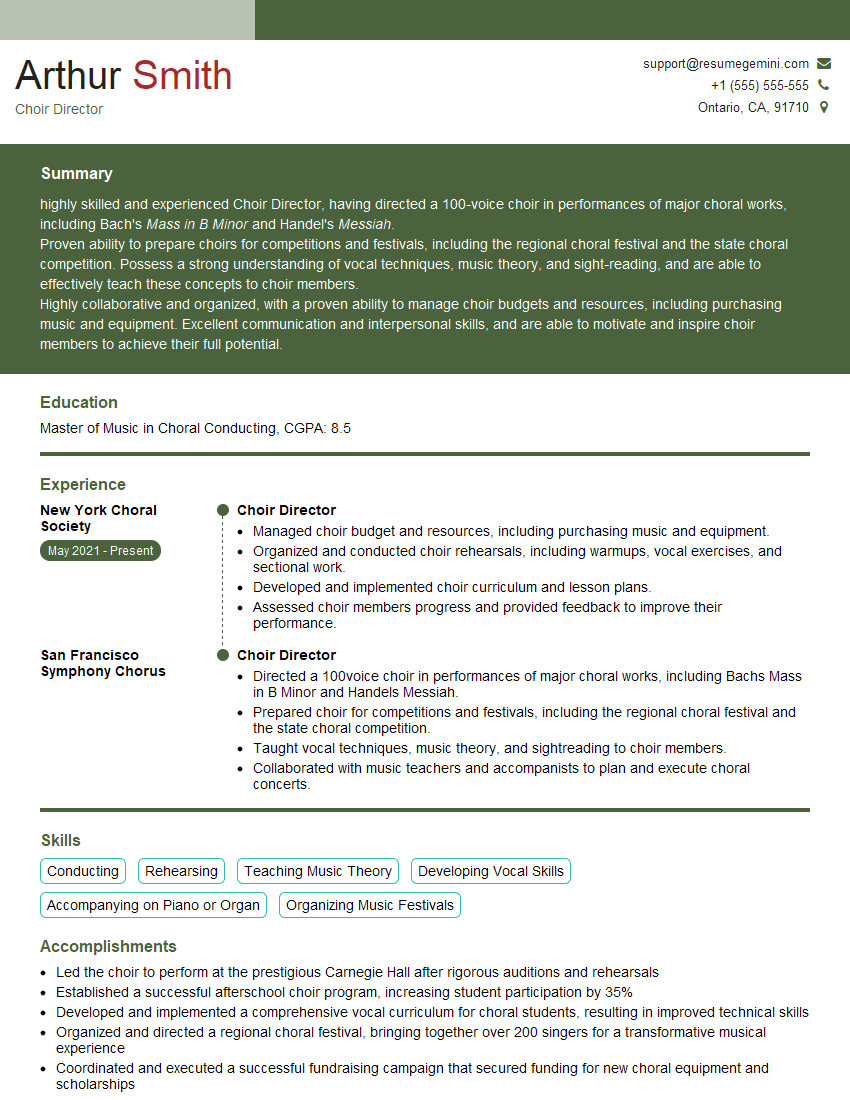
Choir Director Resume Sample
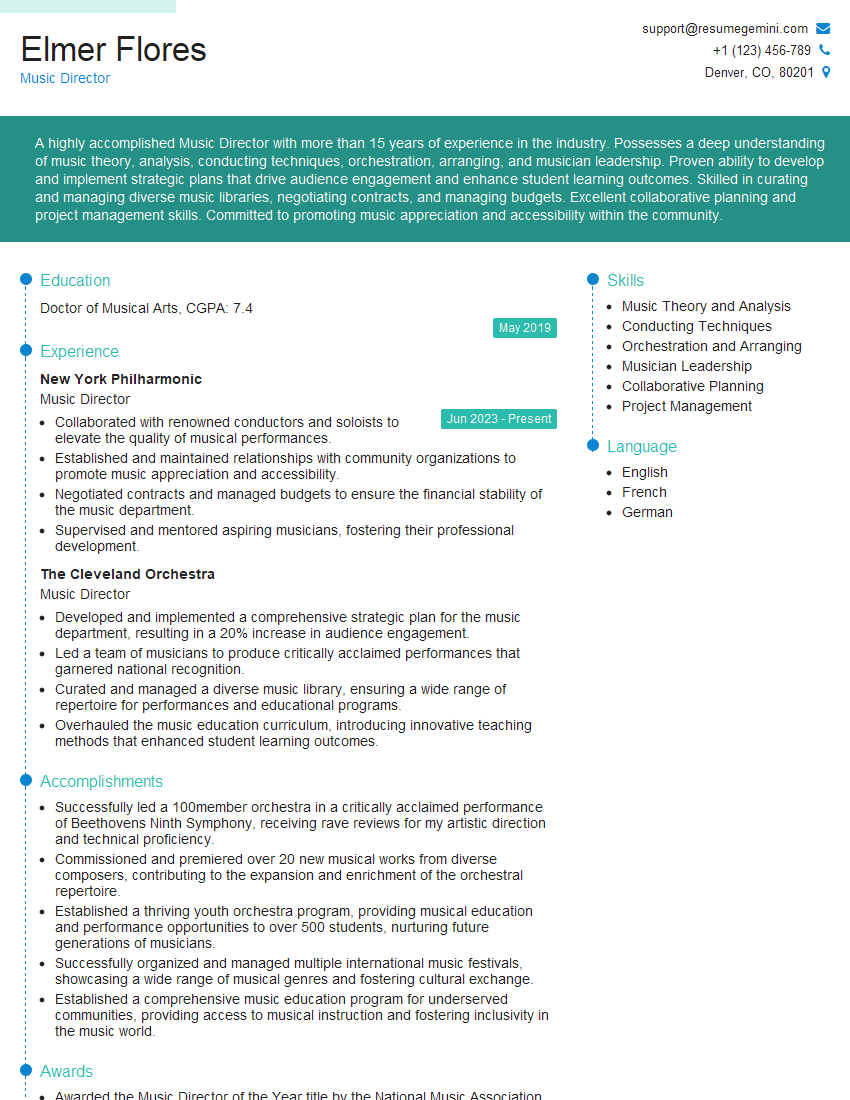
Music Director Resume Sample
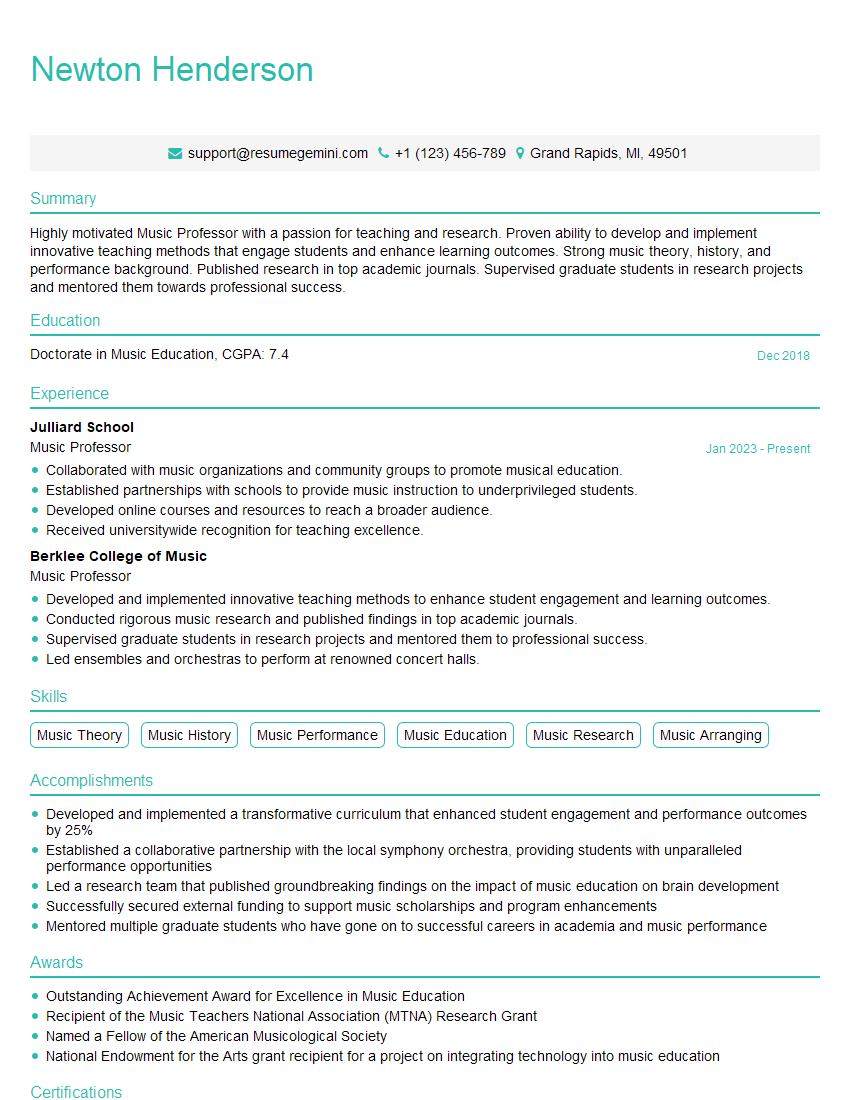
Music Professor Resume Sample

Music Teacher Resume Sample
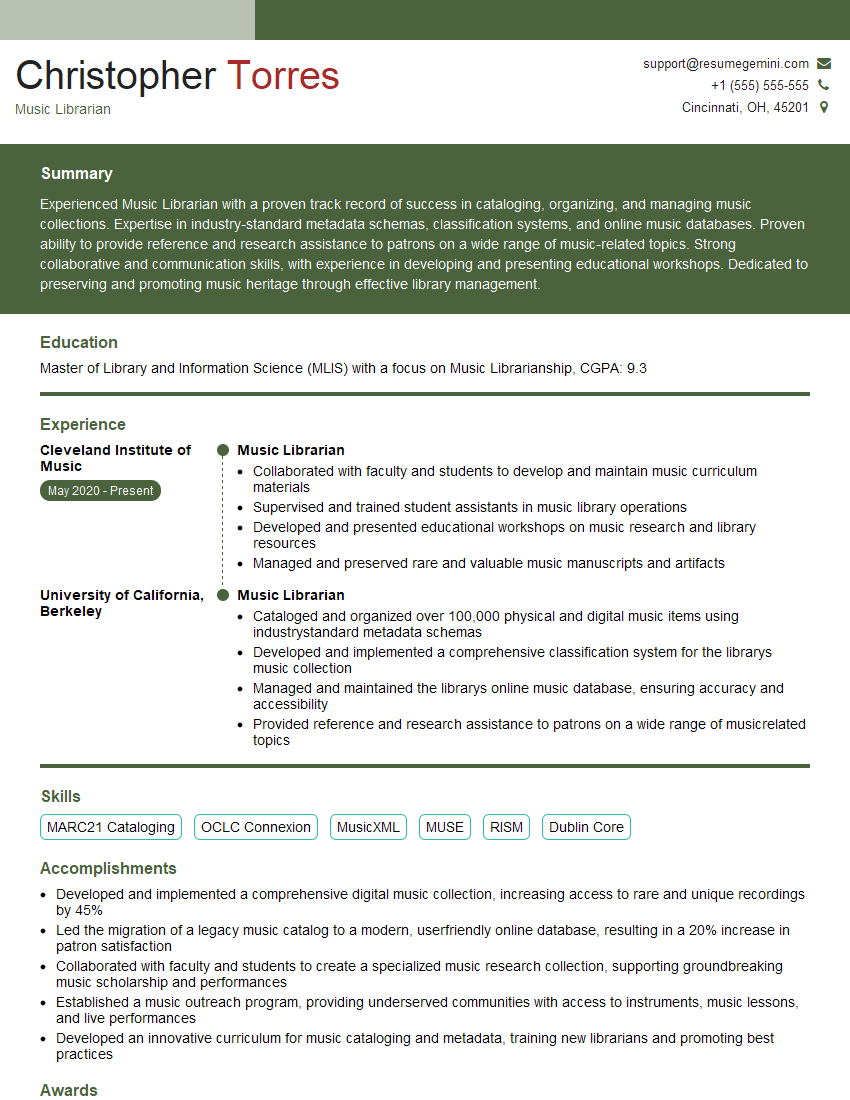
Music Librarian Resume Sample
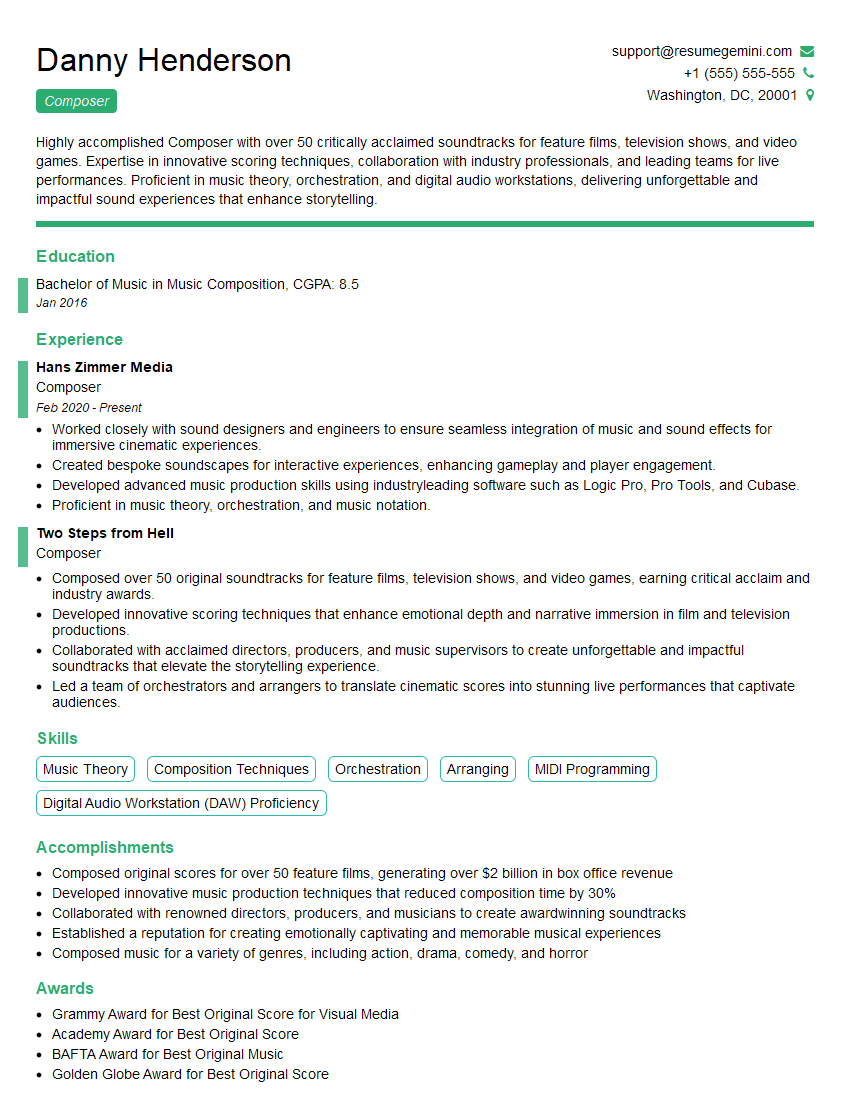
Composer Resume Sample
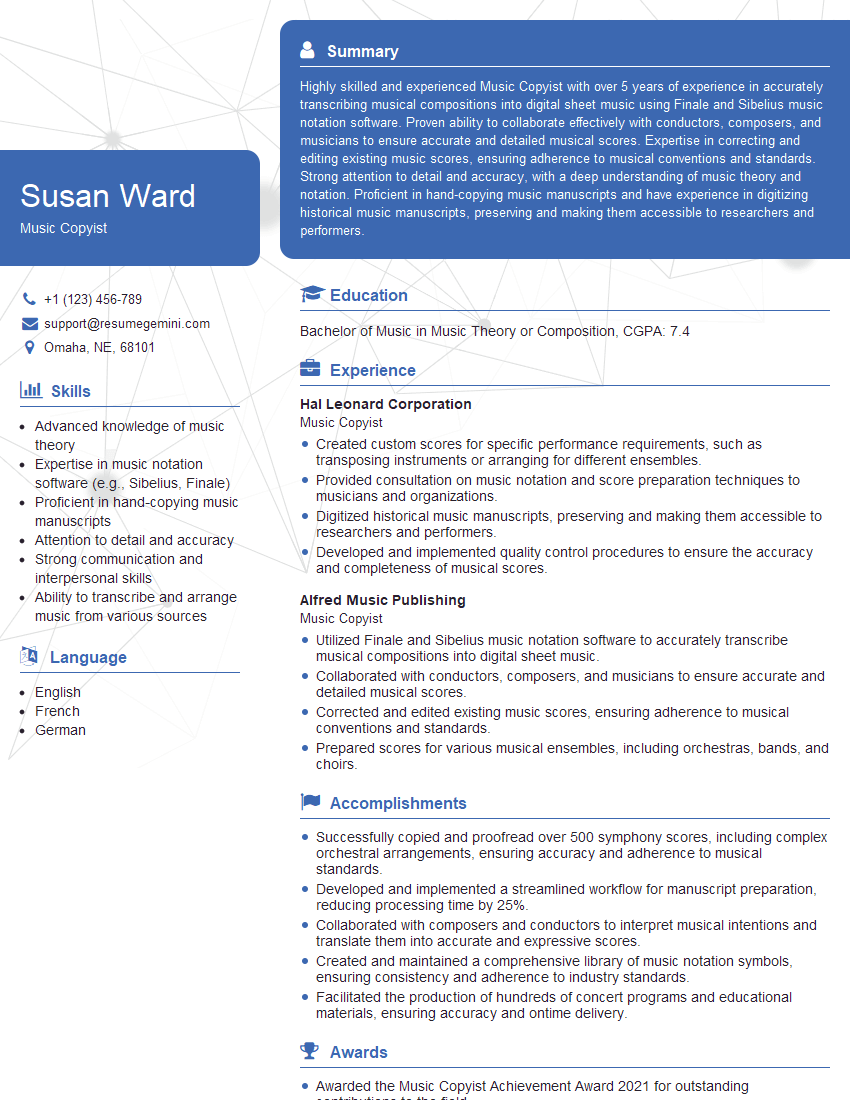
Music Copyist Resume Sample
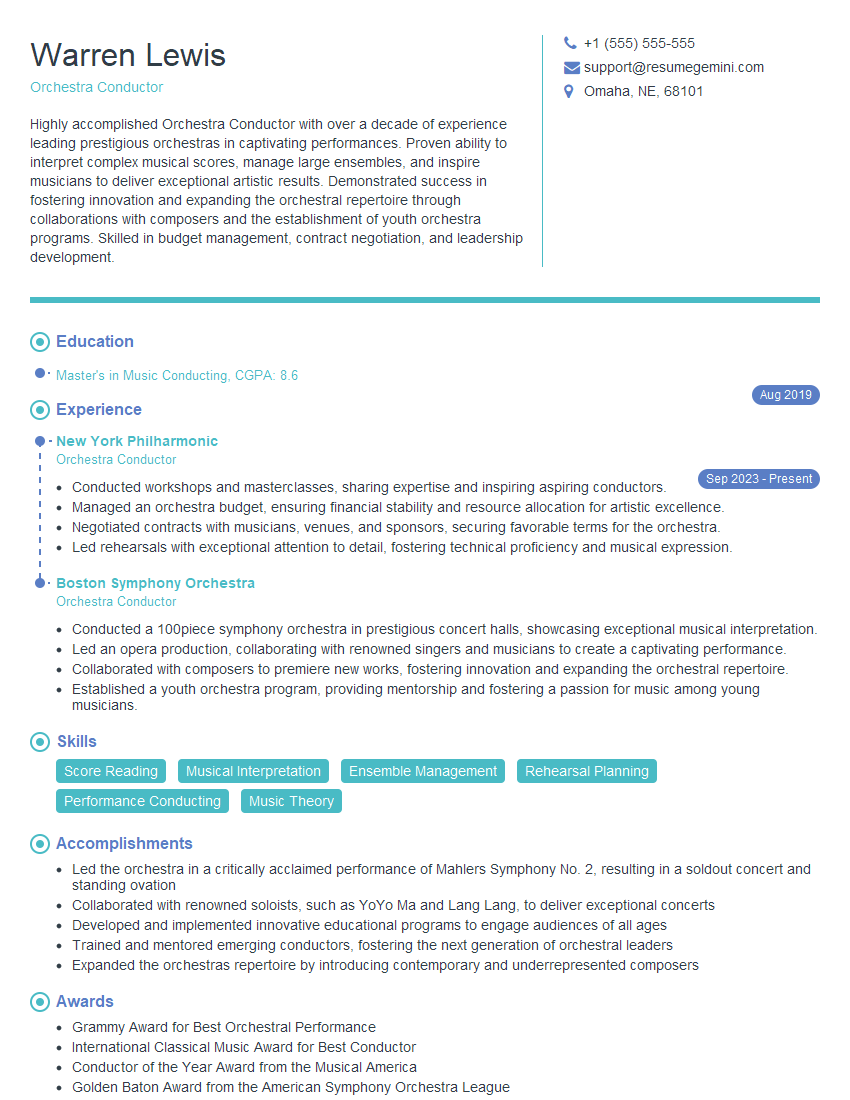
Orchestra Conductor Resume Sample
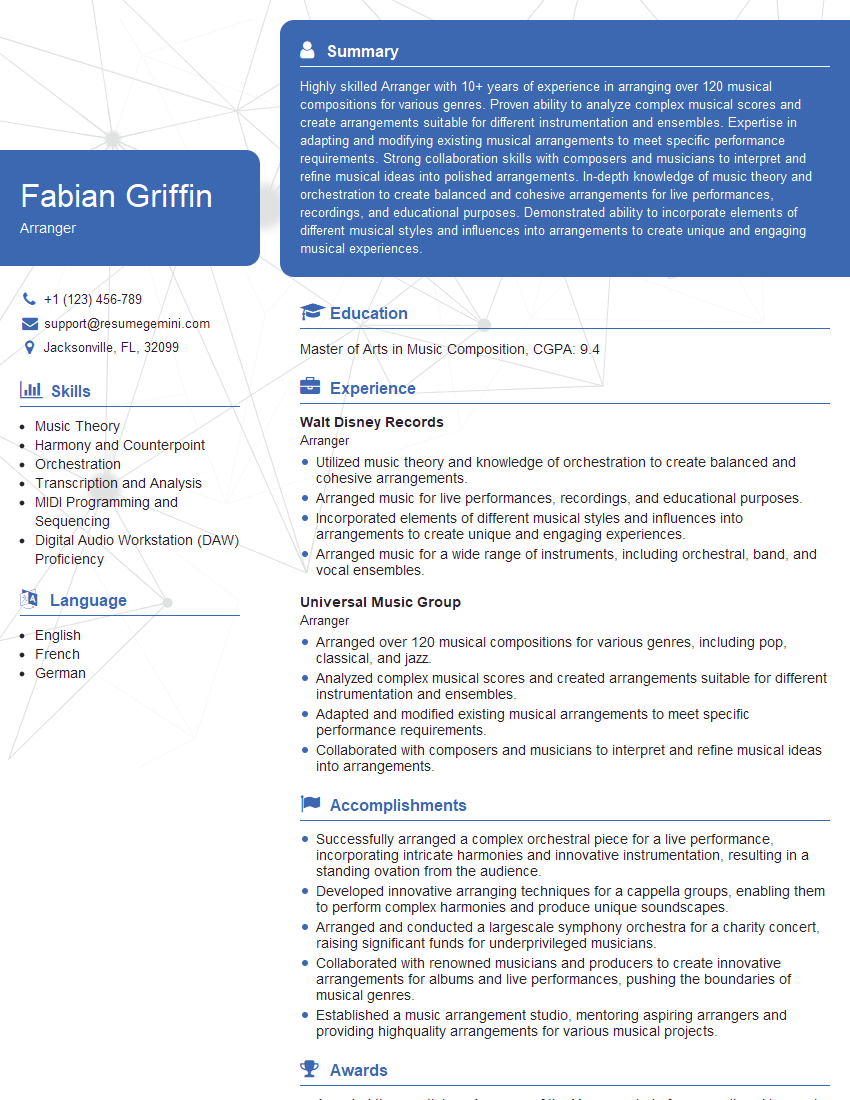
Arranger Resume Sample
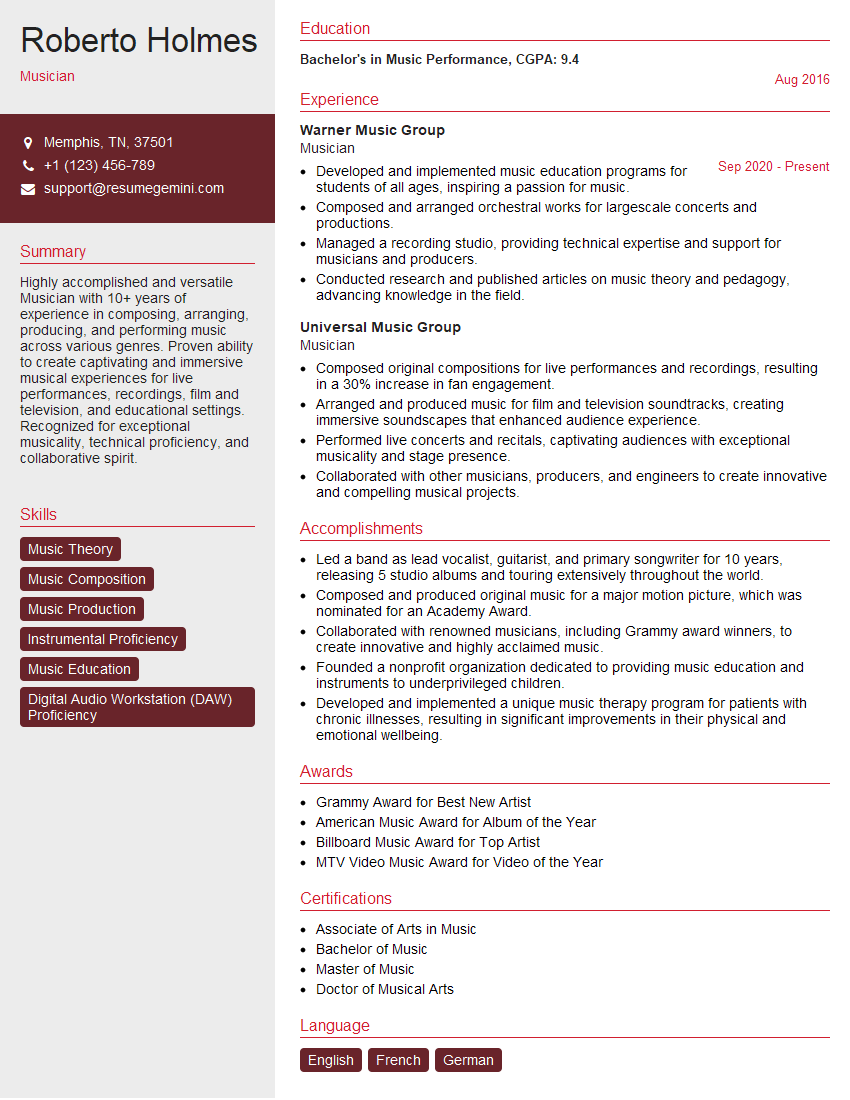
Musician Resume Sample
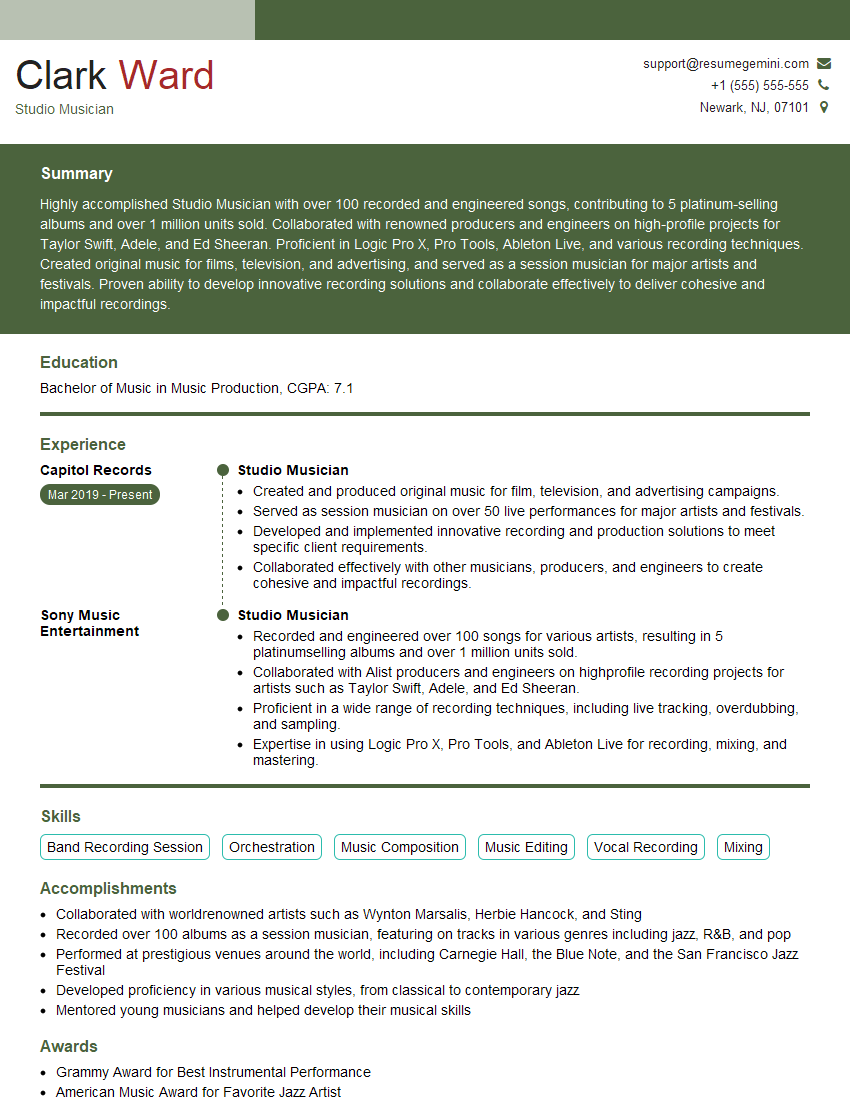
Studio Musician Resume Sample
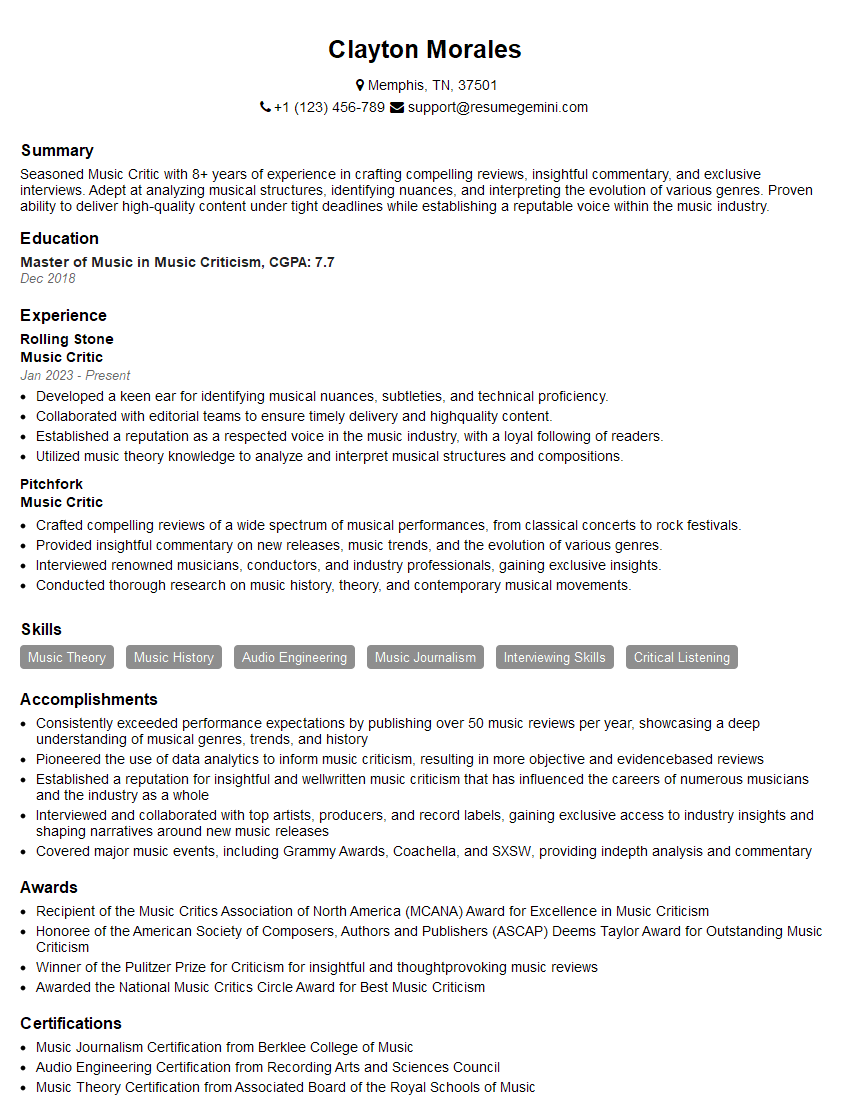
Music Critic Resume Sample
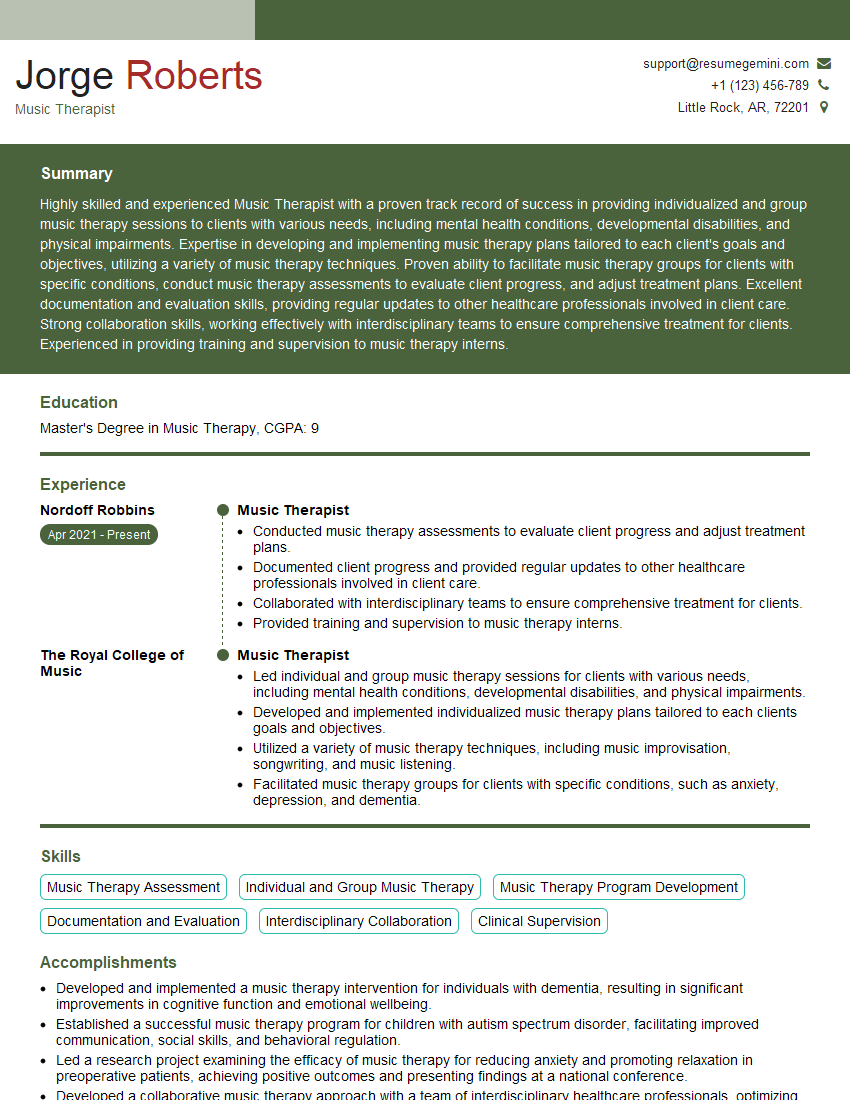
Music Therapist Resume Sample
Explore more articles
Users Rating of Our Blogs
Share Your Experience
We value your feedback! Please rate our content and share your thoughts (optional).
What Readers Say About Our Blog
Very informative content, great job.
good