Every successful interview starts with knowing what to expect. In this blog, we’ll take you through the top Operate and maintain electric forklifts, reach trucks and order pickers interview questions, breaking them down with expert tips to help you deliver impactful answers. Step into your next interview fully prepared and ready to succeed.
Questions Asked in Operate and maintain electric forklifts, reach trucks and order pickers Interview
Q 1. Describe your experience operating electric forklifts.
My experience with electric forklifts spans over eight years, encompassing various warehouse environments and operational demands. I’ve operated a wide range of models, from smaller counterbalance forklifts used for loading and unloading trucks to larger models for stacking pallets in high-bay warehouses. I’m proficient in navigating tight spaces, loading and unloading goods efficiently and safely, and adhering to strict warehouse regulations and safety protocols. For example, I once had to maneuver a loaded forklift through a particularly narrow aisle during a peak shipping period; precise control and situational awareness were crucial to preventing accidents.
I’m comfortable with all aspects of electric forklift operation, from pre-operational checks to regular maintenance procedures, and I’ve consistently demonstrated a strong ability to maintain high productivity while upholding the highest safety standards. My experience includes working with various load types and weights, always prioritizing safe and efficient handling. I’ve also undergone and successfully completed extensive safety training and refresher courses throughout my career.
Q 2. What are the different types of electric forklifts you are familiar with?
I’m familiar with several types of electric forklifts, including:
- Counterbalance forklifts: These are the most common type, ideal for general warehouse operations, characterized by their counterweight for stability.
- Sit-down rider forklifts: These offer more comfort and control for longer operating periods.
- Stand-up rider forklifts: These are more compact and maneuverable, suitable for tighter spaces.
- Narrow aisle forklifts: Designed for very narrow aisles, maximizing storage space. These often incorporate features like reach capabilities.
- Three-wheeled forklifts: These are particularly agile and suitable for turning in restricted spaces.
My experience covers various load capacities and mast heights within these categories, allowing me to adapt my operation to specific warehouse layouts and material handling requirements.
Q 3. Explain the pre-operational checks you perform on an electric forklift.
Pre-operational checks are non-negotiable for safe operation. My routine includes:
- Visual Inspection: Checking for any damage to the forklift, including the tires, mast, forks, lights, and safety features. I look for leaks, loose parts, or any signs of wear and tear.
- Battery Check: Assessing the battery level and ensuring it’s sufficiently charged to handle the day’s tasks. I’ll also inspect the battery connections for corrosion or damage.
- Fluid Levels: Checking hydraulic fluid levels and condition (if applicable, as some electric models use hydraulics).
- Horn and Lights Test: Ensuring all lights and the horn are functioning correctly. These are crucial for safe maneuvering and communication.
- Brake Test: Checking the responsiveness of the brakes to ensure they function efficiently.
- Steering and Controls: Testing the smooth operation of all steering and control mechanisms.
- Safety Features: Verifying that all safety features, such as seatbelts, emergency stops, and warning lights, are in proper working order.
If any issues are found, I immediately report them to my supervisor before operating the forklift. Skipping these checks could result in accidents and equipment damage.
Q 4. How do you ensure the safety of yourself and others while operating a forklift?
Safety is paramount. My approach incorporates several key elements:
- Following all safety regulations: Strict adherence to company policies, including speed limits, load capacity restrictions, and designated traffic routes.
- Maintaining awareness of surroundings: Constantly scanning my surroundings for pedestrians, other equipment, and obstacles. I utilize mirrors and back-up alarms whenever necessary.
- Proper Load Handling: Ensuring loads are secured and properly balanced to prevent tipping. I always center the load appropriately.
- Wearing appropriate PPE: Consistently wearing safety footwear, high-visibility clothing, and a seatbelt while operating the forklift.
- Communication: Using hand signals and warning devices to alert others of my movements, particularly in busy areas.
- Avoiding distractions: Focusing solely on the task at hand, avoiding mobile phones or any other activities that could impair concentration.
For instance, I’ve often had to stop work and wait for pedestrians to clear a path before proceeding, prioritizing their safety over meeting deadlines. This proactive approach to safety has contributed to a strong safety record throughout my career.
Q 5. Describe your experience operating reach trucks.
My experience with reach trucks includes extensive use in high-bay warehouses for order picking and pallet stacking. I am proficient in operating various models with different load capacities and mast heights. I’m skilled at navigating narrow aisles, accurately placing and retrieving loads at high levels, and maintaining efficient operation within fast-paced warehouse environments. A memorable experience involved quickly adapting to a new reach truck model and mastering its advanced features within a few hours to meet a tight deadline during a period of peak demand, a testament to my adaptability and learning agility.
Beyond basic operation, I’m experienced in using reach trucks with various attachments, improving efficiency for specific tasks. This includes using clamps for handling specific items that may not be standardized pallets.
Q 6. What are the key differences between operating a forklift and a reach truck?
While both forklifts and reach trucks are used for material handling, key differences exist:
- Reach Mechanism: Reach trucks extend their forks horizontally to reach pallets deeper within racking systems, unlike standard forklifts which primarily rely on vertical lifting.
- Maneuverability: Reach trucks are generally designed for narrower aisles, boasting improved maneuverability within confined spaces compared to standard counterbalance forklifts.
- Load Handling: Reach trucks often handle higher stacking heights and have greater reach capabilities, enabling more efficient space utilization in high-bay warehouses.
- Operational Skills: Operating a reach truck requires mastering different skills, particularly in the precise control of the reach and the awareness of the extended reach’s impact on stability.
The difference can be likened to driving a small car versus driving a large truck. Both vehicles serve the purpose of transportation, but require distinct driving skills and considerations.
Q 7. How do you handle load stability and center of gravity issues when using a reach truck?
Load stability and center of gravity are critical when using a reach truck. Neglecting these can lead to tipping accidents. My approach involves:
- Proper Load Placement: Always centering the load on the forks and ensuring it’s evenly distributed to maintain a low center of gravity.
- Load Capacity Awareness: Never exceeding the truck’s rated load capacity, and always verifying the weight of the load before lifting.
- Smooth Operation: Avoiding jerky movements and sudden stops to minimize destabilizing forces.
- Tilting Considerations: Understanding how mast tilting affects the center of gravity and using it cautiously to avoid imbalance.
- Safe Operating Speeds: Maintaining appropriate speeds, especially during turns and when operating at height, to prevent accidents.
- Ground Conditions: Paying close attention to the ground surface – uneven surfaces can compromise stability.
For example, when stacking high, I always make sure the load is balanced and centered, and I proceed slowly and cautiously, constantly monitoring the truck’s stability. Ignoring these precautions could lead to serious consequences.
Q 8. Explain the safety procedures you follow when operating a reach truck in a warehouse.
Safety is paramount when operating a reach truck. Before even starting, I always conduct a pre-operational inspection, checking tire pressure, mast stability, hydraulic fluid levels, and the overall condition of the truck. I ensure all safety devices, such as the horn, lights, and seatbelt, are functioning correctly. I’ll also check the surrounding area for any obstructions, pedestrians, or other equipment.
During operation, I maintain a safe speed, especially in areas with limited visibility or high pedestrian traffic. I never exceed the truck’s rated load capacity. I use the mirrors constantly and always look over my shoulder to check my blind spots before maneuvering. If I need to move through narrow aisles, I proceed slowly and cautiously, using extra caution around corners. I always prioritize pedestrian safety, and if needed I will stop and yield to them. Additionally, I never operate the truck if I’m feeling fatigued or unwell.
After completing my work, I park the reach truck in a designated area, ensuring the mast is lowered and the forks are resting on the ground. I switch off the power, engage the parking brake, and then conduct a post-operational check to identify any potential issues that need attention.
Q 9. Describe your experience operating order pickers.
I have extensive experience operating various types of order pickers, from low-level to high-reach models. My experience spans various warehouse environments, including those with narrow aisles, high-density racking, and fast-paced order fulfillment operations. I’m comfortable working with different picking methods, including batch picking and zone picking, adapting my approach to the specific requirements of each task. I’m proficient in using both manual and electric order pickers, and I’m equally adept at using pick-to-light systems to improve speed and accuracy. In my previous role, I was responsible for picking and packing over 500 orders daily with a 99.8% accuracy rate. This involved handling diverse products, including fragile items and heavy packages, and working within tight deadlines.
Q 10. What are the different types of order pickers you’re familiar with?
I’m familiar with a range of order pickers, including:
- Low-level order pickers: These are primarily used for picking items from lower shelves or pallets.
- High-reach order pickers: These are designed for accessing higher racking systems. They can be either man-up or man-down, meaning the operator either rises with the picking platform or remains on the ground, operating the lift from a stationary position.
- Walkie stackers: This type of order picker is primarily used for transporting pallets within the warehouse. While they do have lift capabilities for loading and unloading, they are not typically used for picking orders directly from high shelves.
- Reach trucks: While often categorized separately, reach trucks can also perform order picking tasks, particularly in high-bay warehouses due to their ability to access deep racking systems.
The choice of order picker depends heavily on the warehouse layout, the height of the shelving, and the nature of the products being handled. Each type has its own strengths and weaknesses that must be considered.
Q 11. How do you ensure accuracy and efficiency while operating an order picker?
Accuracy and efficiency are crucial when operating an order picker. To ensure accuracy, I always carefully verify the order details against the product location and quantity before picking. I use barcode scanners or other technologies to confirm every item picked, minimizing the risk of errors. I also meticulously organize the picked items to avoid mixing or damaging them during transport. For efficiency, I plan my routes and picking sequences strategically, minimizing travel time. This includes optimizing my movements to reduce wasted motion and focusing on efficient picking techniques. In addition, keeping the order picker in excellent working condition through proper maintenance minimizes downtime and ensures smooth operation. I utilize the correct picking technique for different products and adapt my approach according to the demands of different picking methods.
Q 12. How do you handle high-reach situations with an order picker?
Handling high-reach situations requires extra caution and attention to detail. Before operating in high-reach environments, I always check the functionality of the lift mechanism and the safety restraints. I operate smoothly and avoid jerky movements, which could destabilize the order picker or cause items to fall. When reaching maximum height, I take extra care to ensure the order picker is stable and positioned correctly before starting to pick items. I never overload the picker’s capacity and always ensure I maintain a stable center of gravity. If there’s any instability, I will immediately lower the platform to a safer position. Regular safety inspections of high-reach order pickers are also critical to prevent accidents.
Q 13. What are the common maintenance tasks for an electric forklift?
Regular maintenance is essential for ensuring the safety and longevity of an electric forklift. Key tasks include:
- Battery inspection and charging: This involves checking battery water levels (if applicable), ensuring proper charging procedures, and inspecting for any signs of damage or corrosion.
- Hydraulic system check: Inspecting fluid levels, checking for leaks, and ensuring the smooth operation of hydraulic components are crucial.
- Tire inspection: Regularly checking tire pressure and looking for any signs of wear or damage is important for safety and stability.
- Mast and forks inspection: Checking for any signs of bending, wear, or damage, and ensuring smooth operation of the lift mechanism.
- Brakes and steering inspection: This ensures the forklift responds appropriately and maintains a safe stopping distance.
- Electrical system inspection: Inspecting wiring, connections, and control components for any damage or faults.
These maintenance checks, ideally conducted daily or weekly, help prevent serious operational issues and ensure peak performance.
Q 14. How do you troubleshoot common issues with an electric forklift?
Troubleshooting electric forklift issues often involves a systematic approach. For instance, if the forklift fails to start, I’d first check the battery charge and connections. If the problem persists, I may inspect the main power switch, fuses, and wiring for any faults. A weak lift performance might indicate low hydraulic fluid, a leak in the hydraulic system, or problems with the hydraulic pump. A malfunctioning braking system could point towards problems with the brake pads, hydraulic lines, or the braking control system. I use diagnostic tools as needed to pinpoint issues and make necessary repairs or replacements. For complex problems, I’d consult the forklift’s maintenance manual and, if needed, seek assistance from a qualified technician.
Documenting all maintenance and troubleshooting activities is also critical. This record-keeping helps identify recurring problems, track repair history, and ensure compliance with safety regulations.
Q 15. What are the signs of a malfunctioning forklift battery?
A malfunctioning forklift battery often shows several telltale signs. One of the most obvious is a significant reduction in operating time. If your forklift is consistently running out of power much sooner than usual, it’s a strong indicator of battery issues. Another key sign is unusual behavior during operation. This could manifest as reduced power, slow lifting speeds, or difficulty moving loads. You might also notice the battery overheating excessively, which can be identified by unusually high temperatures or even burning smells. Finally, visual inspection can reveal problems such as cracked or damaged battery casings, bulging cells (a very serious safety hazard!), leaking electrolyte, or excessive corrosion on the terminals. All these signs point towards the need for immediate professional inspection and potentially battery replacement or repair.
Career Expert Tips:
- Ace those interviews! Prepare effectively by reviewing the Top 50 Most Common Interview Questions on ResumeGemini.
- Navigate your job search with confidence! Explore a wide range of Career Tips on ResumeGemini. Learn about common challenges and recommendations to overcome them.
- Craft the perfect resume! Master the Art of Resume Writing with ResumeGemini’s guide. Showcase your unique qualifications and achievements effectively.
- Don’t miss out on holiday savings! Build your dream resume with ResumeGemini’s ATS optimized templates.
Q 16. How often should forklift batteries be checked and maintained?
The frequency of forklift battery checks and maintenance depends heavily on usage intensity and the type of battery (e.g., lead-acid, lithium-ion). However, a good rule of thumb is to perform a visual inspection daily, checking for leaks, corrosion, and damage. This quick check helps catch problems early. More thorough maintenance, which includes checking water levels (for flooded lead-acid batteries), electrolyte density, and terminal connections, should be conducted at least weekly. Monthly, a more comprehensive service should be done, possibly by a qualified technician, involving things like load testing the battery to assess its capacity and charging efficiency. A battery’s lifespan can be significantly extended with proper preventative maintenance, minimizing costly downtime and replacements.
Q 17. What are the safety regulations related to forklift operation?
Forklift safety regulations are crucial for preventing accidents. They vary somewhat by location and jurisdiction, but some common elements include mandatory operator training and certification, regular vehicle inspections, speed limits within the warehouse, designated pedestrian walkways clearly marked and separated from forklift traffic areas, and strict load capacity limits. Operators should always wear appropriate personal protective equipment (PPE), including safety glasses, high-visibility vests, and steel-toed boots. Before operating a forklift, a pre-operation inspection is essential; it’s like giving your car a quick once-over before hitting the road. This includes checking tire pressure, hydraulic fluid levels, and the overall condition of the forklift. Furthermore, load securing is paramount to prevent dangerous shifting of materials during transport. Failing to adhere to these regulations can lead to serious injury or even fatalities.
Q 18. How do you handle emergency situations while operating warehouse equipment?
Emergency situations require swift and decisive action. If a forklift malfunctions, the first step is to immediately turn off the power and disengage the lift mechanism. If a load starts to shift dangerously, carefully and slowly lower it to a stable position, prioritizing safety. In case of a collision, assess the damage and injuries involved. Report the incident to the supervisor immediately, ensuring all involved parties are accounted for. If a fire breaks out, evacuate the area immediately and activate the nearest fire alarm. Never attempt to fight a forklift fire without proper training and equipment. It’s also critical to know the location of emergency exits and have a clear understanding of the warehouse’s emergency procedures.
Q 19. What is your experience with different types of forklift attachments?
My experience encompasses a wide range of forklift attachments, each designed for specific tasks. I’m proficient with common attachments like forks for pallets, clamps for handling large objects, side-shifters for precise load placement, and rotators for manipulating loads. I’ve also worked with specialized attachments such as paper roll clamps, drum handlers, and carton clamps, adapted to the particular needs of different warehouses. Proper attachment selection is key to efficiency and safety; using the incorrect attachment could lead to damage or accidents. I always make sure the attachment is securely fastened and compatible with the specific forklift model before operation. Understanding the limitations of each attachment is critical for safe and effective use.
Q 20. Describe your experience with load securing and strapping techniques.
Load securing is paramount; a poorly secured load can lead to serious accidents. My experience includes using various strapping techniques, ensuring loads are properly restrained and won’t shift during transport. I’m familiar with different types of straps – including nylon, polyester, and steel – and know when to apply tension appropriately based on the load weight and characteristics. I understand the importance of using proper tie-down points on both the load and the forklift to prevent damage. I follow established procedures for creating a stable and secure load, ensuring that the straps are not over-tensioned and that all sharp edges are protected to prevent strap damage. Secure strapping is not just about safety, it also contributes to maintaining inventory accuracy and minimizing damage during transit.
Q 21. How do you manage inventory accurately using a forklift or order picker?
Accurate inventory management using forklifts and order pickers is crucial for efficient warehouse operations. I’m experienced in using various inventory management systems, from simple barcode scanners to more sophisticated warehouse management systems (WMS). My approach involves carefully verifying order details against the physical inventory, using the forklift or order picker to precisely locate and retrieve the required items. I meticulously record any discrepancies between the system inventory and the physical stock and promptly report these issues to the supervisor. This helps maintain data integrity and prevents inaccuracies that can impact order fulfillment. Proper documentation and communication are keys to ensuring seamless inventory management and preventing stock discrepancies.
Q 22. What is your experience with warehouse management systems (WMS)?
My experience with Warehouse Management Systems (WMS) is extensive. I’ve worked with several different systems, including WMS X and WMS Y, throughout my career. These systems are crucial for efficient warehouse operation, and my familiarity extends beyond simply using them to include understanding their data outputs. I’ve used WMS data to track equipment performance, analyze workflow bottlenecks, and optimize picking routes for increased efficiency. For example, in my previous role, I used the WMS’s reporting features to identify a recurring delay in the loading dock area. By analyzing the data, we found that certain order types consistently caused congestion. We implemented a simple change to the order sequencing within the WMS, and saw a significant improvement in loading dock throughput – a 15% increase in daily shipments.
Q 23. How do you maintain a clean and organized workspace?
Maintaining a clean and organized workspace isn’t just about aesthetics; it’s a crucial safety and efficiency measure. Think of it like this: a cluttered workspace is like a cluttered mind – it makes it harder to focus and increases the risk of accidents. My approach is multi-faceted. First, I adhere to the ‘5S’ methodology:
- Seiri (Sort): Regularly removing unnecessary items and tools.
- Seiton (Set in Order): Organizing remaining items logically and easily accessible.
- Seiso (Shine): Keeping the area clean and free of debris.
- Seiketsu (Standardize): Establishing consistent procedures for maintaining cleanliness and organization.
- Shitsuke (Sustain): Maintaining the established standards over time.
Second, I proactively report any hazards or potential safety issues to my supervisor immediately. This preventative approach minimizes downtime and ensures a safe working environment for everyone.
Q 24. Explain your experience with preventative maintenance schedules for material handling equipment.
Preventative maintenance is the cornerstone of reliable material handling equipment operation. My experience encompasses developing and implementing PM schedules for various types of equipment, including electric forklifts, reach trucks, and order pickers. This typically involves:
- Regular Inspections: Conducting daily pre-operational checks, including battery levels, fluid checks, tire pressure, and visual inspections for any damage.
- Scheduled Maintenance: Following manufacturer-recommended service intervals for tasks such as hydraulic system checks, electrical component testing, and component replacements.
- Record Keeping: Meticulously documenting all maintenance activities, including dates, performed tasks, and any identified issues. This is critical for tracking equipment history and ensuring compliance with safety regulations.
In my previous role, we implemented a computerized maintenance management system (CMMS) that automated schedule generation, service reminders, and part ordering, resulting in a 20% reduction in equipment downtime.
Q 25. Describe a time you had to resolve a mechanical issue with a forklift or reach truck.
During a busy peak season, a reach truck experienced a sudden hydraulic failure, leaving it immobile and causing a significant backlog in order fulfillment. Instead of panicking, I followed a systematic troubleshooting approach:
- Safety First: Secured the area and ensured no one approached the malfunctioning equipment.
- Visual Inspection: Checked for any obvious leaks or damage to hydraulic lines and components.
- System Diagnostics: I listened for unusual sounds and carefully examined hydraulic fluid levels and condition, noting that the fluid was unusually low.
- Locate the Leak: After further investigation, I discovered a small but significant leak in a hydraulic hose close to the truck’s mast.
- Temporary Fix: I reported the issue to management, and while awaiting a replacement hose, I used a temporary clamping mechanism to reduce the leak and make the machine temporarily operational until a full repair could be carried out the following day, minimizing production disruption.
The methodical approach prevented further damage and quickly addressed the problem, minimizing operational disruption during a critical period.
Q 26. How do you prioritize tasks when multiple requests are received?
Prioritizing tasks is crucial for maximizing efficiency in a warehouse environment. My approach involves:
- Urgency and Importance: Categorizing requests based on urgency (immediate vs. scheduled) and importance (impact on operations). High urgency and high importance tasks are tackled first.
- Workflow Optimization: Grouping similar tasks to streamline processes and minimize travel time. For instance, if several orders require materials from the same location, I’ll prioritize them together.
- Communication: Proactive communication with supervisors and colleagues to confirm priorities and manage expectations. This avoids any misunderstandings and ensures that critical tasks aren’t overlooked.
Imagine a scenario where I receive requests for a rush order, routine maintenance, and a minor repair. I would prioritize the rush order first due to its immediate impact, then the maintenance (as preventative measures are crucial), and finally the repair, prioritizing based on the potential disruption the repair would create if delayed.
Q 27. What are your strengths and weaknesses as a material handling equipment operator?
My strengths include my strong mechanical aptitude, problem-solving skills, and commitment to safety. I’m adept at diagnosing mechanical issues, and I’m also very safety-conscious, always prioritizing the safety of myself and others.
As for weaknesses, I would say that sometimes I focus too much on detail, potentially slowing down my work speed slightly. However, I’m actively working on improving my time management skills and balancing thoroughness with efficiency. I utilize checklists and time tracking to monitor my performance and identify areas for improvement.
Q 28. Why are you interested in this position?
I’m highly interested in this position because it offers the perfect combination of my skills and experience with the opportunity to contribute to a dynamic and growing company. I’m eager to leverage my expertise in operating and maintaining material handling equipment to increase efficiency and ensure a safe working environment. The opportunity to work with advanced warehouse technology and contribute to a positive team is especially appealing.
Key Topics to Learn for Operate and maintain electric forklifts, reach trucks and order pickers Interview
- Pre-Operational Checks and Safety Procedures: Understanding daily inspection checklists, identifying potential hazards, and applying safe operating procedures for each equipment type.
- Operation Techniques: Mastering the controls and maneuvering techniques for forklifts, reach trucks, and order pickers; understanding load capacity limits and safe load handling practices.
- Maintenance and Troubleshooting: Recognizing common mechanical issues, performing basic maintenance tasks (e.g., battery checks, fluid levels), and understanding the process for reporting malfunctions.
- Warehouse Safety Regulations and Best Practices: Knowledge of relevant safety regulations, including pedestrian safety, proper stacking techniques, and emergency procedures.
- Load Stability and Weight Distribution: Understanding the principles of load stability, proper weight distribution techniques to prevent tipping, and the importance of secure load placement.
- Working with Warehouse Management Systems (WMS): Familiarity with using WMS software for order picking and inventory management; understanding the importance of accuracy and efficiency.
- Refueling and Battery Charging Procedures: Safe handling and correct procedures for refueling or charging equipment, including understanding potential hazards.
- Emergency Procedures: Knowledge of emergency shutdown procedures, reporting accidents and near misses, and responding to equipment malfunctions safely.
- Types of Forklifts, Reach Trucks and Order Pickers: Understanding the various types and their specific applications, capabilities, and limitations.
- Understanding of Load Capacity and Weight Limits: Knowing how to safely determine the weight of loads and to ensure they are within the safe operating limits of the equipment.
Next Steps
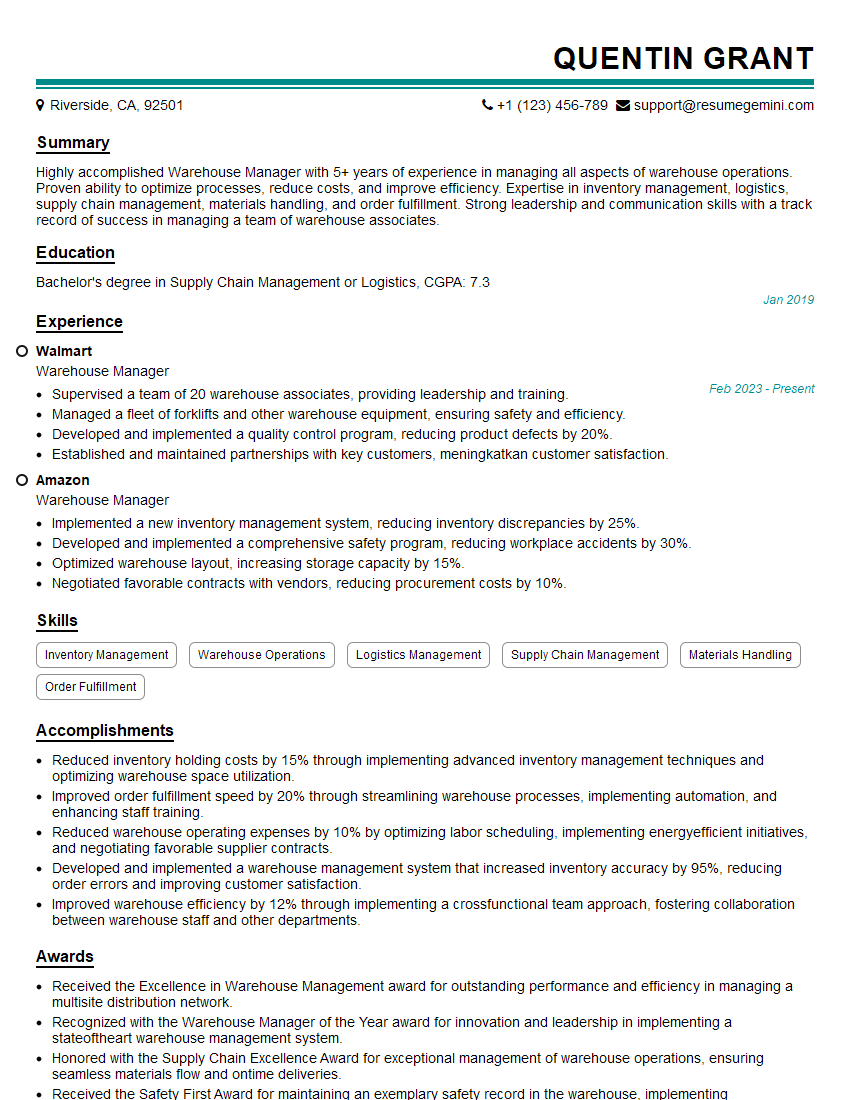
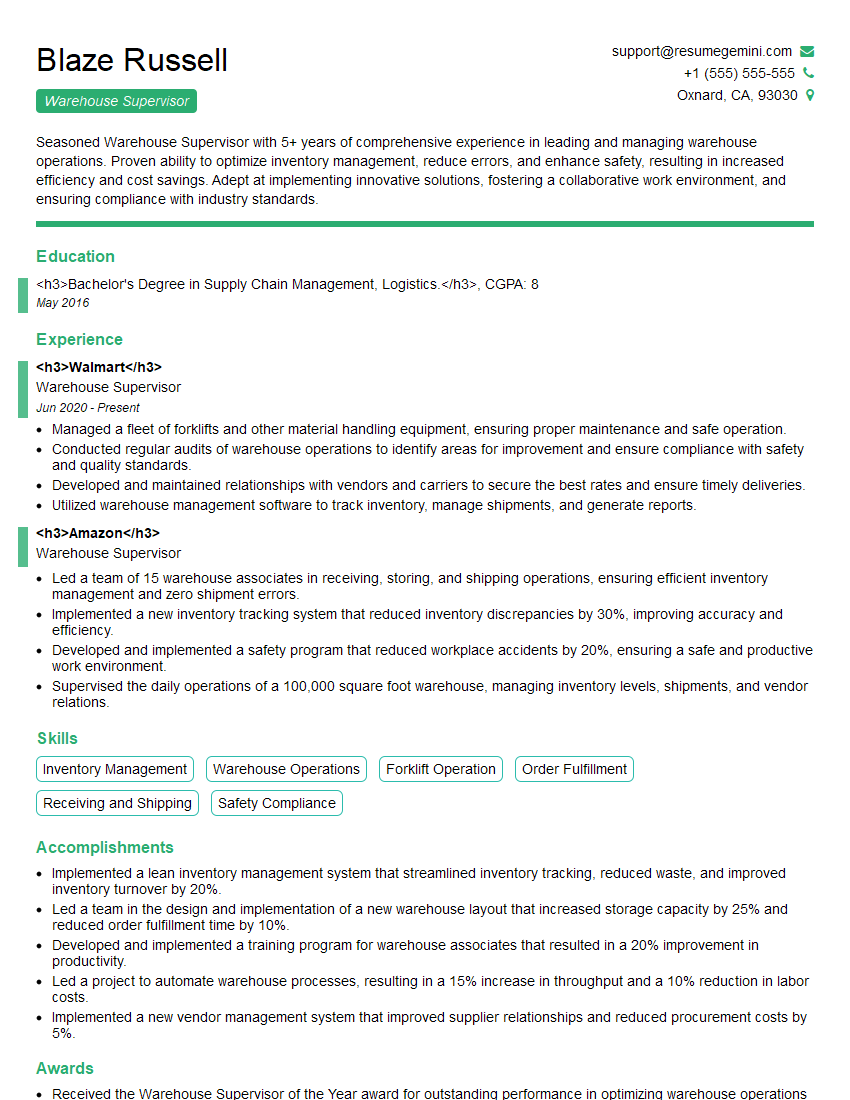
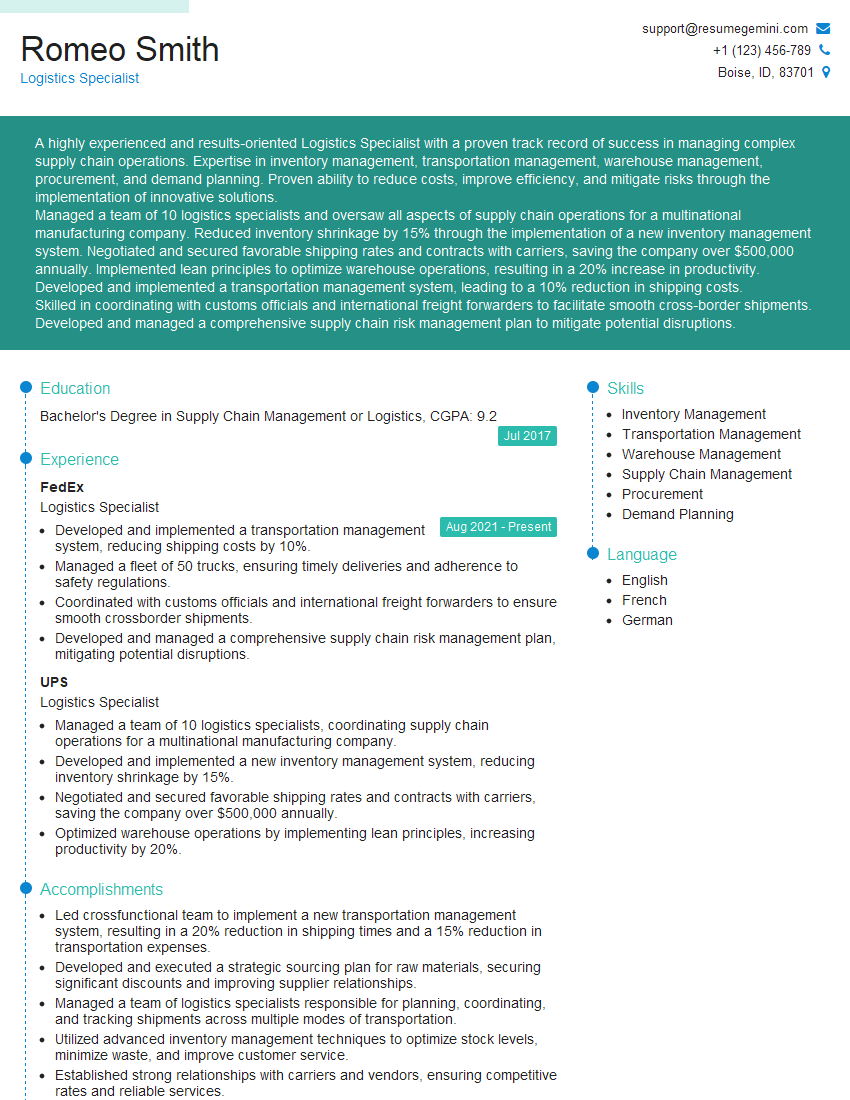
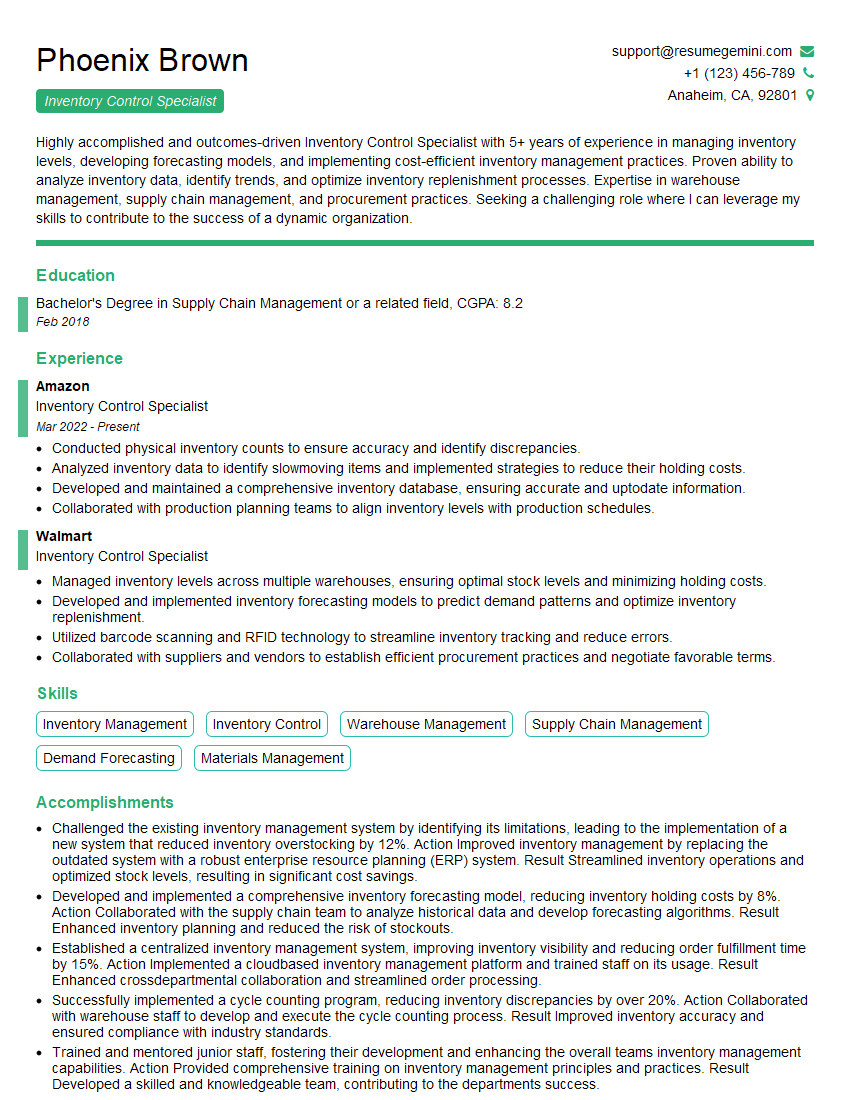
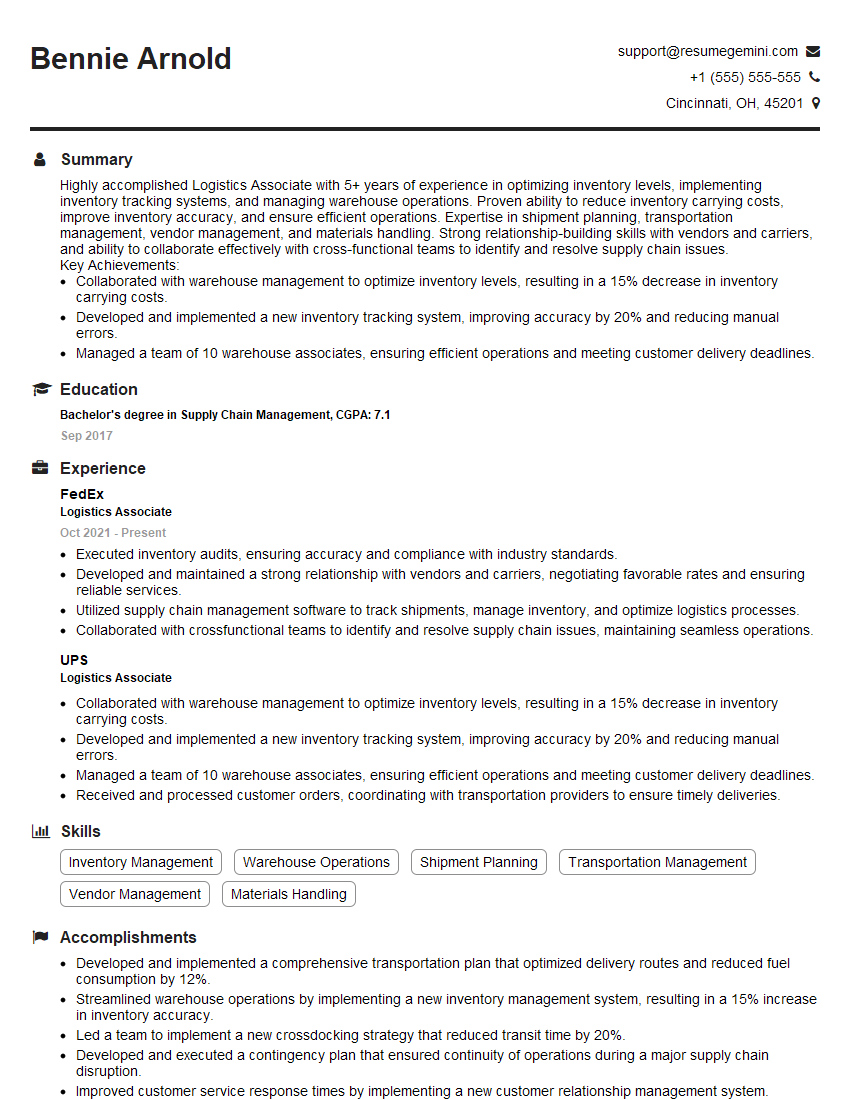
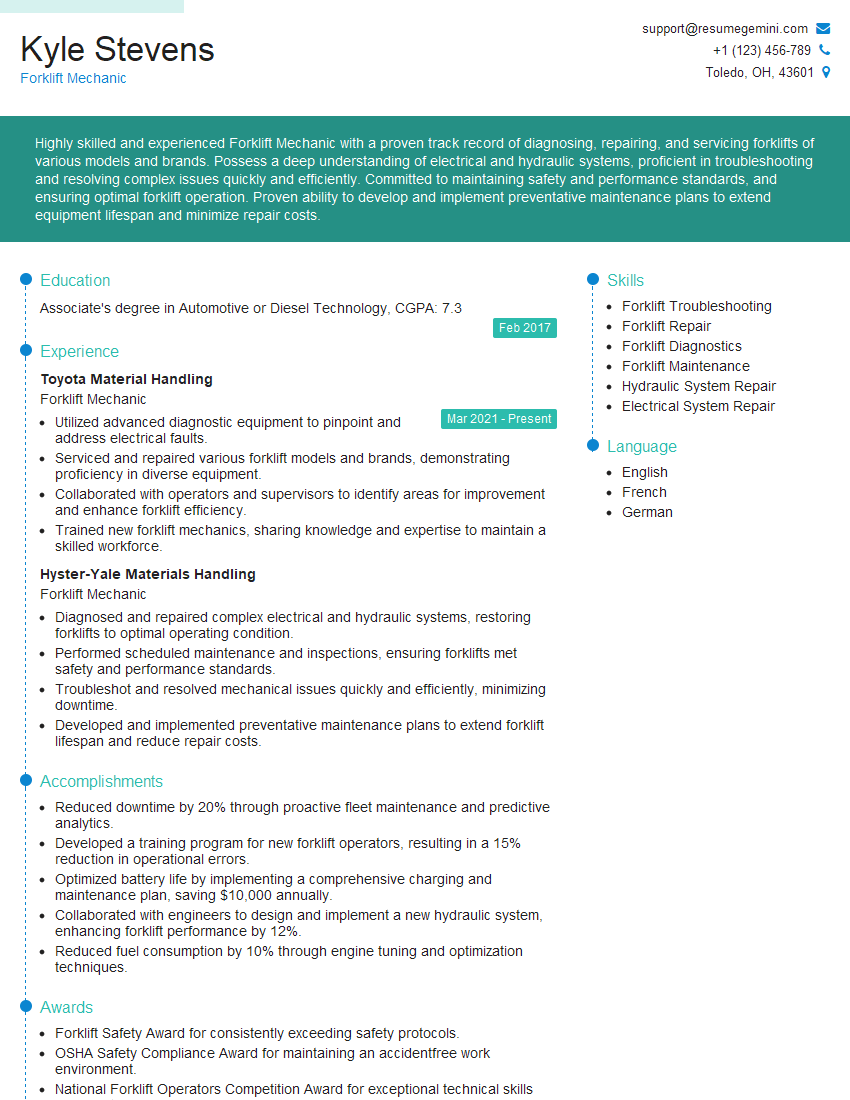
Mastering the operation and maintenance of electric forklifts, reach trucks, and order pickers is crucial for a successful career in warehousing and logistics. It demonstrates a commitment to safety, efficiency, and technical proficiency – skills highly valued by employers. To significantly improve your job prospects, creating an ATS-friendly resume is essential. ResumeGemini is a trusted resource that can help you build a professional and impactful resume that showcases your skills and experience effectively. Examples of resumes tailored to this specific field are available, designed to help you present yourself in the best possible light to potential employers.
Explore more articles
Users Rating of Our Blogs
Share Your Experience
We value your feedback! Please rate our content and share your thoughts (optional).
What Readers Say About Our Blog
Very informative content, great job.
good