Are you ready to stand out in your next interview? Understanding and preparing for Lyricist interview questions is a game-changer. In this blog, we’ve compiled key questions and expert advice to help you showcase your skills with confidence and precision. Let’s get started on your journey to acing the interview.
Questions Asked in Lyricist Interview
Q 1. Explain your lyrical writing process.
My lyrical writing process is iterative and deeply personal. It begins with an idea – a feeling, an image, a story, or even a single word that sparks my imagination. I often start by freewriting, letting my thoughts flow onto the page without judgment. This initial phase helps me uncover the core emotion or message I want to convey.
Next, I meticulously craft the structure, considering the song’s intended mood and genre. I experiment with different rhyme schemes and meters to find what best complements the music. I might start with a simple verse-chorus structure, but often deviate into more complex arrangements as the song develops. This is a crucial stage where I play with words, searching for the perfect combination of sounds and meaning.
Following this, I refine and polish the lyrics. This involves reviewing the flow, rhythm, and imagery, ensuring the words paint a vivid picture for the listener. I then revise, sometimes multiple times, until I’m satisfied with the clarity, emotional impact, and overall artistic coherence of my work. I always keep in mind the needs of the music, making sure the lyrics are both poetically compelling and musically effective.
Q 2. How do you develop a unique lyrical style?
Developing a unique lyrical style is a journey of self-discovery and experimentation. It’s about finding your authentic voice and using language in a way that is both innovative and personally expressive. This involves understanding your strengths and weaknesses as a writer, while simultaneously exploring various poetic devices and techniques.
I focus on creating imagery and metaphors that resonate deeply with my own experience and perspective. I experiment with rhythm, rhyme, and structure to develop a distinctive sound. For example, I might incorporate elements of spoken word or free verse into my songwriting to add texture and depth to my work. I believe in constantly pushing my creative boundaries, trying new things, and letting my personal journey influence my writing, resulting in a signature style that is continually evolving.
Another key element is to read widely and listen to a broad range of music. Immersing myself in different styles and approaches helps me expand my vocabulary and deepen my understanding of poetic craft. By drawing inspiration from diverse sources and finding ways to synthesize them into my own work, I’ve cultivated a unique style that is both recognizable and continuously evolving.
Q 3. Describe your experience collaborating with composers or musicians.
Collaborating with composers and musicians is a transformative experience that elevates my lyrical work to a new level. It’s a dynamic interplay of creativity, where the music and lyrics inform and inspire each other. My collaborations often begin with a discussion about the song’s concept and mood. We explore the emotional arc and the overall story we aim to tell. The composer often provides me with a musical framework, and I work to craft lyrics that seamlessly complement the melody, rhythm, and harmony.
For example, I collaborated with a composer who had written a powerful melody with a melancholic undertone. This immediately suggested themes of loss and longing, which profoundly influenced my lyrical direction. This back-and-forth process, where we shape the song together, is invaluable. The composer’s musical insights help me refine the rhythm and flow of my lyrics, while my words guide the emotional direction of the music. It’s a symbiotic relationship that enhances both the lyrical and musical components, resulting in a final product that is far superior than what either of us could have achieved independently.
Q 4. How do you adapt your lyrics to different musical genres?
Adapting lyrics to different musical genres involves understanding the inherent characteristics of each genre and tailoring my writing style accordingly. For instance, a country song will likely feature simpler language, straightforward storytelling, and perhaps a focus on themes of nature or love, while a hip-hop track might require a more rhythmic, punchier delivery and more intricate rhyme schemes.
The key is to respect the conventions of each genre while maintaining my own unique voice. I might adjust my vocabulary, sentence structure, and thematic focus to fit the music. If writing for a fast-paced pop song, I’ll focus on concise phrases and punchy lines to keep the energy high. Conversely, a ballad might call for more elaborate imagery and a slower, more reflective tone. This adaptability is crucial for crafting lyrics that resonate authentically within the framework of a specific genre.
For example, when working on a blues song, I might incorporate idiomatic expressions and a more conversational tone to reflect the genre’s roots in storytelling and emotional vulnerability. Conversely, crafting lyrics for an electronic dance track requires a focus on creating an atmosphere and energy through concise, evocative phrases.
Q 5. What strategies do you employ to overcome writer’s block?
Writer’s block is a common challenge for lyricists. My approach to overcoming it is multi-faceted. Firstly, I try to step away from the pressure of producing perfect lyrics immediately. I might take a walk, listen to music, read a book, or engage in a completely unrelated activity to clear my mind and refresh my creative energy.
Secondly, I utilize various creative prompts or exercises. This might include brainstorming around a specific theme, experimenting with different rhyme schemes, or trying to write from a different perspective. I sometimes revisit old notebooks or half-finished ideas, looking for inspiration to spark new possibilities. Another effective technique is to collaborate with someone else – a musician, another lyricist, or even a friend – to get new perspectives and unlock fresh ideas.
Finally, I remind myself that writing is a process. It’s okay to have days when words don’t flow easily. Persisting, experimenting, and embracing the imperfection of the creative process are key to overcoming writer’s block. It’s about finding what works for you and understanding that setbacks are a normal part of the creative journey.
Q 6. How do you ensure your lyrics resonate with the target audience?
Ensuring lyrics resonate with the target audience requires careful consideration of their values, interests, and experiences. Understanding the demographics and psychographics of the intended listeners is crucial. I often research relevant topics and engage in conversations to gain insights into their worldviews and perspectives.
I strive to create relatable narratives and characters, using language and imagery that connect with their emotions and experiences. This might involve incorporating slang or references specific to the target audience, while ensuring the core message is universally appealing. Empathy is crucial; I try to see the world through their eyes and find common ground that transcends cultural or generational differences.
For example, when writing for a younger audience, I might use more contemporary language and explore themes relevant to their lives, like social media, environmental concerns or peer pressure. Conversely, when targeting an older demographic, I might focus on themes of legacy, reflection or familial relationships. The key is to be authentic and avoid making assumptions, always striving to craft lyrics that reflect the realities and emotions of the target group.
Q 7. Explain your understanding of rhyme schemes and meter.
Rhyme schemes and meter are fundamental aspects of lyrical writing, shaping the rhythm, flow, and overall musicality of a song. A rhyme scheme refers to the pattern of rhymes in a poem or song. It’s often represented using letters to denote rhyming lines (e.g., AABB, ABAB, ABCB). Meter, on the other hand, refers to the rhythm established by the pattern of stressed and unstressed syllables in a line of poetry or song lyrics. It is usually described in terms of feet (units of stressed and unstressed syllables).
Understanding and effectively employing these elements is essential for creating songs that are both pleasing to the ear and emotionally resonant. A well-chosen rhyme scheme can enhance the memorability and impact of the lyrics, while the meter can establish the song’s mood and rhythm. For example, a song with a strong iambic pentameter (five pairs of unstressed and stressed syllables per line) might convey a sense of formality or gravitas, while a song with a more irregular meter might create a feeling of spontaneity or freedom.
In practice, I experiment with different rhyme schemes and meters to find what best fits the song’s mood and musical arrangement. I might use a simple AABB rhyme scheme for a catchy pop song, while a more complex scheme might suit a ballad or a more literary approach. The goal is to create a harmonious balance between the lyrical content, the rhyme scheme, and the meter, so that the song feels both natural and artistically cohesive.
Q 8. How do you incorporate imagery and metaphors into your lyrics?
Incorporating imagery and metaphors is crucial for creating evocative lyrics. It’s about painting a picture with words, allowing the listener to experience the emotion and meaning on a visceral level. I approach this by first identifying the core feeling or message I want to convey. Then, I brainstorm concrete images and sensory details that resonate with that feeling. For instance, if I’m writing about heartbreak, instead of simply saying ‘I’m sad,’ I might use metaphors like ‘my heart is a shattered mirror,’ or ‘my world is a monochrome painting.’ The key is to choose images that are both evocative and surprising, creating unexpected connections that add depth and intrigue.
I also consider the overall tone and style of the song. A gritty, rock song might benefit from harsher imagery, while a ballad might call for more delicate and nuanced metaphors. For example, in a fast-paced punk song, I might describe anger as a ‘raging inferno,’ whereas in a soft acoustic piece, I might use a more subtle metaphor like ‘a simmering ember.’ This careful selection ensures the imagery complements the overall artistic vision.
Q 9. Describe your approach to creating a compelling narrative through lyrics.
Crafting a compelling narrative in lyrics involves more than just telling a story; it’s about creating an emotional journey for the listener. I begin by outlining the key plot points, focusing on the emotional arc of the protagonist. This arc might involve a transformation, a conflict, or a simple observation, but it needs a clear beginning, middle, and end, even within the confines of a short song. I then weave in descriptive details and sensory imagery to bring the narrative to life. Think of it like writing a short story, but with the added constraint of rhythm and rhyme.
For example, instead of stating ‘she left me,’ I might describe the scene: ‘The slam of the door echoed the shattering of my heart, the silence left behind heavier than any goodbye.’ This approach makes the narrative richer and more impactful. I also use subtle hints and foreshadowing to keep the listener engaged, creating anticipation and suspense. The narrative should always serve the song’s overall theme and emotional core, enhancing the impact of the lyrics.
Q 10. How familiar are you with different lyrical forms (e.g., sonnets, free verse)?
I’m quite familiar with various lyrical forms. While I don’t strictly adhere to traditional structures like sonnets (with their 14 lines and rhyme scheme) in most song contexts, understanding these forms enriches my writing. The discipline of a sonnet, for example, forces a precision of language and economy of expression that informs my approach even when writing free verse lyrics. Free verse, which lacks a regular meter or rhyme scheme, allows for greater flexibility and often suits contemporary music well. I might use elements of villanelles or rondeaus to create cyclical structures within a song, playing with repetition and variation in a deliberate way.
My approach is to choose the form that best serves the song’s content and mood. Sometimes a structured form enhances the song’s impact, providing a framework for the emotional progression; other times, the fluidity of free verse allows for a more natural and conversational feel. Ultimately, the form should complement the overall artistic vision.
Q 11. How do you handle feedback on your lyrics?
I value feedback as a critical component of the songwriting process. I actively seek it from trusted sources – fellow musicians, producers, and sometimes even close friends outside the music industry who can offer an unbiased perspective. I approach feedback with an open mind, understanding that constructive criticism is essential for growth. I don’t take criticism personally; instead, I analyze each comment to see if it helps strengthen the lyrics’ meaning, clarity, or emotional impact.
My process involves careful consideration of each piece of feedback. Sometimes, I’ll completely revise a section based on a suggestion, while other times, I’ll tweak a word or phrase to better reflect the feedback. Ultimately, the decision to incorporate feedback rests on whether it enhances the overall quality and impact of the lyrics. It’s about refining the work, not necessarily conforming to every suggestion.
Q 12. What software or tools do you use for lyric writing?
While I sometimes use a simple text editor for initial drafts, my primary tool is a Digital Audio Workstation (DAW) like Ableton Live or Logic Pro X. These DAWs often include built-in lyric writing features or integrate seamlessly with lyric writing software. Beyond that, I rely on various organizational tools to manage my ideas and track revisions. I use a combination of digital note-taking apps and cloud-based storage systems to keep everything neatly organized and easily accessible from any device.
For example, I might brainstorm ideas in a note-taking app, then transfer them to the DAW for integration with the music. This workflow allows for seamless transitions between lyric writing and the musical arrangement process. The key is to find a system that fits my individual workflow and helps me stay organized and productive.
Q 13. Describe your experience with copyright and intellectual property related to lyrics.
Copyright and intellectual property are paramount in the music industry. I understand the importance of registering my copyrights with the appropriate organizations, such as the US Copyright Office or equivalent agencies internationally, as soon as a work is completed. This establishes a legal record of ownership and protects me from potential infringement. I’m also aware of the nuances of co-writing credits and ensuring proper attribution to all involved parties in the creative process. This includes understanding work-for-hire agreements and ensuring all contractual agreements clearly outline ownership and usage rights.
My experience includes navigating complex situations involving publishing rights, mechanical licenses, and performance royalties. I understand that the legal landscape is constantly evolving and continuously educate myself on current best practices and relevant legislation. Having a clear understanding of these processes is critical in protecting my work and ensuring fair compensation.
Q 14. How do you ensure your lyrics are legally sound and avoid plagiarism?
Avoiding plagiarism is a fundamental aspect of ethical songwriting. My process involves rigorously checking my work against existing material, utilizing plagiarism detection software as a safeguard. However, relying solely on software isn’t sufficient. I also actively avoid directly copying phrases or song structures from other works, striving for originality in both my wording and overall artistic expression. This includes ensuring I understand and properly attribute any inspirational influences, avoiding any accidental mimicry that could be construed as plagiarism.
If I am referencing or sampling another work, I obtain the necessary permissions and clearances well in advance. This includes not only securing the rights but also understanding and adhering to any contractual obligations or restrictions associated with using that material. This proactive approach ensures that my work is legally sound and upholds the highest standards of ethical practice.
Q 15. How do you balance artistic expression with commercial viability in your lyrics?
Balancing artistic expression with commercial viability in songwriting is a constant tightrope walk. It’s about finding the sweet spot where your unique voice shines through while still appealing to a broad enough audience to achieve success. I approach this by understanding my target audience. Who am I writing for? What are their musical tastes? What kind of stories resonate with them?
For example, if I’m writing for a pop artist, I might focus on relatable themes of love, loss, or everyday struggles, using catchy melodies and simple language. However, if I’m working on a more niche project, like a folk album, I can be more experimental with language and imagery, knowing that a more dedicated audience appreciates that depth. It’s not about compromising artistic integrity, but rather about strategically choosing the right words and delivery to maximize impact.
Ultimately, it’s an iterative process. I might initially write something very personal and artistic, then refine it based on feedback from collaborators and A&R (Artists and Repertoire) representatives, ensuring the song remains compelling while retaining its artistic essence.
Career Expert Tips:
- Ace those interviews! Prepare effectively by reviewing the Top 50 Most Common Interview Questions on ResumeGemini.
- Navigate your job search with confidence! Explore a wide range of Career Tips on ResumeGemini. Learn about common challenges and recommendations to overcome them.
- Craft the perfect resume! Master the Art of Resume Writing with ResumeGemini’s guide. Showcase your unique qualifications and achievements effectively.
- Don’t miss out on holiday savings! Build your dream resume with ResumeGemini’s ATS optimized templates.
Q 16. Explain your experience with different lyric writing styles (e.g., narrative, descriptive, evocative).
My experience spans a variety of lyric writing styles. Narrative lyrics tell a story, much like a short film. For instance, I wrote a song about a couple’s journey across the country, using vivid descriptions of their surroundings and emotional states to weave a compelling tale. Descriptive lyrics paint a picture with words, focusing on sensory detail. Think of a song describing a sun-drenched beach, emphasizing the sound of the waves, the warmth of the sand, and the smell of the salt air.
Evocative lyrics aim to trigger emotions and feelings rather than explicitly describing events. I once worked on a song where the lyrics focused on the feeling of loneliness, utilizing metaphors and imagery to convey the feeling rather than directly stating ‘I feel lonely’. This requires crafting carefully selected words to resonate deeply with the listener’s emotions. I’m comfortable switching between these styles, often blending them within a single song to achieve a richer, more layered effect.
Q 17. Can you describe a time when you had to revise your lyrics significantly?
I remember a song where I initially wrote a very cynical and pessimistic verse about heartbreak. It was artistically satisfying, but feedback from the artist and producer suggested it felt too harsh and wouldn’t connect with a wider audience. This was a crucial moment for me to understand the importance of balance.
The revision process involved softening the tone without sacrificing the emotional depth. I replaced some of the harsher imagery with more relatable and universally understood emotions. For example, instead of focusing on bitterness, I emphasized feelings of sadness and longing, using gentler metaphors and imagery. This subtle shift allowed the song to retain its emotional core while significantly improving its accessibility and appeal. The result was a much stronger and more impactful song.
Q 18. How do you handle criticism of your lyrics?
Handling criticism is a crucial part of being a lyricist. I approach criticism constructively, viewing it as an opportunity for growth. I try to separate personal feelings from professional feedback. Instead of taking criticism personally, I analyze it objectively. Is the feedback valid? Does it point towards areas where I can improve? If the criticism is specific and well-reasoned, I take it into serious consideration.
If the criticism is vague or simply based on personal preference, I consider it less impactful. The goal isn’t to please everyone, but to create lyrics that are strong, meaningful, and effective. However, I always keep an open mind. I have learned to use constructive criticism from trusted peers to refine my work and elevate my skills.
Q 19. What are your strengths and weaknesses as a lyricist?
My strengths lie in my ability to craft evocative imagery and create narratives that resonate emotionally with listeners. I’m also adept at finding the perfect word to convey a specific feeling or idea. I’m also fairly quick and efficient when it comes to writing lyrics within given constraints.
One of my weaknesses is sometimes overthinking a specific line or phrase. I’m working on trusting my instincts more, knowing that perfection can sometimes be the enemy of good. I am also continually refining my skill in adapting my style to different musical genres and artist preferences. It’s a constant learning process.
Q 20. How do you stay up-to-date with current trends in music and lyrics?
Staying current in the music industry involves actively listening to a wide range of artists and genres, attending industry events and conferences when possible, and following relevant blogs, podcasts, and social media accounts. I also make a point of analyzing successful songs, paying attention to lyrical techniques, thematic elements, and structural choices. This helps me learn from others and gain new inspiration.
Additionally, I regularly engage with other songwriters and industry professionals, exchanging ideas and receiving feedback on my own work. This exchange of information is invaluable for staying informed about current trends and best practices in lyric writing.
Q 21. Describe your experience working under deadlines.
Working under deadlines is a common aspect of the music industry. I’ve developed strategies to manage my time effectively. This involves careful planning, prioritizing tasks, and setting realistic goals. I break down large projects into smaller, manageable chunks, focusing on one aspect at a time. It also helps to have a clear understanding of the project’s scope and requirements from the outset.
Procrastination is my biggest enemy, so I maintain a disciplined approach. Sometimes, this means setting aside dedicated blocks of time solely for lyric writing, free from distractions, to achieve a state of focused creativity. Effective time management ensures consistent progress and helps deliver high-quality work, even under pressure.
Q 22. How do you maintain a consistent output of high-quality lyrics?
Maintaining a consistent output of high-quality lyrics requires a disciplined approach blending creative inspiration with meticulous craft. It’s not just about writing a lot; it’s about writing well consistently.
- Establish a Routine: I dedicate specific time slots each day, even if it’s just for brainstorming. Consistency breeds habit, and habit fosters productivity. Some days yield more than others, but the regular engagement keeps the creative muscles flexing.
- Develop a Lyrical Process: My process typically involves freewriting, theme development, structure planning (verse-chorus, etc.), refinement through multiple revisions, and finally, a thorough self-edit. I treat each step as crucial, not rushing to completion.
- Seek Feedback: I actively seek constructive criticism from trusted peers or mentors. Fresh eyes can spot flaws or areas needing improvement that I might miss. This external perspective is invaluable.
- Continuous Learning: I regularly read poetry, song lyrics, and literature. I analyze the work of successful songwriters, learning their techniques and broadening my vocabulary. This constant exposure to different styles keeps my writing fresh and innovative.
- Embrace Rejection: Not every lyric is a winner. Learning to accept rejection constructively is key. I view each rejection as a learning opportunity, analyzing what didn’t work and applying that knowledge to the next project.
For example, one of my most successful songs came after several failed attempts at capturing the intended mood. The final version was a synthesis of many ideas, refined through self-critique and feedback from a musician friend.
Q 23. How do you ensure your lyrics complement the overall musical composition?
Ensuring my lyrics complement the music is paramount. The lyrics and music should be symbiotic, enhancing each other rather than competing for attention. This involves close collaboration with the composer or producer.
- Early Collaboration: Ideally, I engage with the music early in the composition process. Hearing the melodies and instrumental arrangements informs my lyrical direction, shaping the rhythm, rhyme scheme, and overall tone of my work.
- Understanding the Genre: Genre plays a critical role. The lyrical style appropriate for a country ballad will differ significantly from that of a hip-hop track. I adapt my approach based on the music’s genre and feel.
- Matching Tempo and Mood: The rhythm of the lyrics should match the tempo of the music. A fast-paced song requires short, punchy lines, while a slow ballad allows for more lyrical complexity and introspection. The overall emotional tone of the lyrics should also complement the music.
- Structural Alignment: The lyrical structure should mirror the musical structure. Verses usually correspond to musical verses, and choruses align with the musical choruses. This provides a sense of cohesion and continuity.
For instance, if a track features a strong, driving beat, I’ll create lyrics with short, powerful lines to match the energy. Conversely, a slower, more melancholic melody calls for longer, more descriptive phrases to amplify the emotional depth.
Q 24. Describe your experience working independently and as part of a team.
I’m comfortable working both independently and collaboratively. Each approach offers unique benefits.
- Independent Work: When working independently, I value the ability to focus intensely on a project without interruptions. This allows me to delve into my creative process and explore different ideas freely. Self-discipline and organization are key for solo work.
- Teamwork: Collaborative settings foster a rich exchange of ideas. Working with musicians, producers, or other songwriters often leads to unexpected breakthroughs and improvements. Open communication and active listening are essential for successful teamwork.
I’ve had successful experiences writing independently for personal projects and also contributing to team projects where I received feedback and worked with other writers to enhance the final product. My adaptability to both settings is a strength.
Q 25. How do you prioritize different tasks in a busy work environment?
Prioritizing tasks in a busy environment requires a structured approach. I use a combination of techniques.
- Project Management Tools: I utilize tools like Trello or Asana to track projects and deadlines effectively. Breaking down large projects into smaller, manageable tasks helps make the overall goal less daunting.
- Time Blocking: I allocate specific time slots for specific tasks, ensuring that time is used efficiently. This helps prevent multitasking and maintains focus.
- Urgent vs. Important: I prioritize tasks based on urgency and importance, applying the Eisenhower Matrix (Urgent/Important). This allows me to focus on crucial tasks and delegate or postpone less critical ones.
- Regular Review: I schedule regular reviews to assess progress, adjust priorities as needed, and ensure deadlines are met.
For example, if I have several projects with looming deadlines, I use a project management tool to visualize all tasks, break down large projects, and prioritize tasks according to their urgency and importance, thus ensuring effective time management.
Q 26. What is your understanding of the music publishing process?
Music publishing is the legal process of protecting and profiting from musical compositions. It involves registering copyrights, licensing the use of songs, and collecting royalties.
- Copyright Registration: The first step is securing copyright protection for the song lyrics through a national copyright office (like the US Copyright Office). This grants exclusive rights to the songwriter(s).
- Licensing and Agreements: Once registered, the songwriter can license the song for various uses, such as recording, broadcasting, film, or advertising, often through a music publisher. These licenses generate royalties for the songwriter.
- Royalties Collection: Performing rights organizations (PROs) like ASCAP, BMI, and SESAC collect and distribute royalties to songwriters whenever their songs are performed publicly. Mechanical royalties are collected when songs are reproduced on physical media or digitally distributed.
- Publisher’s Role: A music publisher often manages the copyright, licenses the song, and negotiates contracts on behalf of the songwriter. They handle the administrative aspects and promote the songwriter’s work to potential users.
Understanding this process is crucial for maximizing the financial and creative benefits of songwriting. A good working relationship with a reputable publisher is vital for navigating the complexities of music publishing.
Q 27. Describe your experience pitching lyrics to artists or record labels.
Pitching lyrics involves effectively showcasing your work and convincing artists or labels that your lyrics are a good fit for their projects. It’s a blend of marketing and creative presentation.
- Targeted Approach: I research artists and labels whose styles align with my work, making my pitch relevant and persuasive. A generic pitch is less effective than a customized one.
- Compelling Portfolio: I maintain a strong portfolio showcasing my best work, including song samples, demonstrating versatility in different styles and genres.
- Professional Communication: Clear, concise communication is key. My pitches are professional and respectful, highlighting the unique strengths of my lyrics and explaining how they add value to the artist’s project.
- Networking: Attending industry events, connecting with industry professionals, and building relationships significantly increase the chances of successful pitches.
I once successfully pitched a set of lyrics to an up-and-coming singer-songwriter after carefully researching their previous work and tailoring my pitch to resonate with their specific musical style. This focused approach resulted in a positive response and a subsequent collaboration.
Q 28. How would you handle a situation where a deadline is approaching and lyrics are not yet finalized?
Facing a tight deadline with unfinished lyrics requires a strategic and decisive approach. Panic won’t solve the problem.
- Assess the Situation: I determine how much work remains and how much time is available. Realistic self-assessment prevents overpromising and ensures a manageable workflow.
- Prioritize Key Elements: I focus on the most critical elements of the song, ensuring the core message and structure are finalized. I might leave minor refinements for later if absolutely necessary.
- Seek Collaboration (If Possible): If time allows, I might engage a trusted colleague for assistance with editing, refining specific sections, or brainstorming solutions.
- Embrace Imperfection: It’s better to deliver a slightly imperfect song on time than a perfect song late. Prioritizing timely delivery ensures the project maintains its momentum.
- Communicate Proactively: I communicate transparently with stakeholders about the situation, explaining the progress and any potential delays, demonstrating responsibility and managing expectations.
I once faced a similar situation, and by focusing on the core lyrical message and collaborating with the composer on adjustments, we were able to deliver a suitable version within the deadline. Open communication was key to managing expectations.
Key Topics to Learn for Lyricist Interview
- Meter and Rhythm: Understanding the foundational elements of lyrical structure, including different metrical patterns and rhythmic variations. Explore how these impact the overall feel and impact of the lyrics.
- Rhyme and Meter Schemes: Mastering various rhyme schemes (AABB, ABAB, etc.) and understanding how they contribute to the musicality and memorability of lyrics. Practice analyzing existing songs to identify these schemes.
- Lyric Writing Techniques: Explore techniques like metaphor, simile, imagery, and personification to create vivid and evocative lyrics. Practice applying these techniques to different themes and styles.
- Song Structure and Form: Understand common song structures (verse-chorus, bridge, etc.) and how they contribute to the narrative arc and overall impact of a song. Analyze how different structures affect the listener’s experience.
- Storytelling through Lyrics: Develop your skills in crafting compelling narratives through lyrics, exploring character development, conflict, and resolution. Consider how to convey emotion and meaning effectively.
- Collaboration and Feedback: Discuss the importance of collaboration in the songwriting process and how to effectively incorporate feedback to improve your lyrics. Practice giving and receiving constructive criticism.
- Lyrical Style and Genre: Explore how lyrical style varies across different genres of music and understand how to tailor your writing to specific genres. Practice writing lyrics in various styles.
- Word Choice and Diction: Develop a keen awareness of word choice and its impact on the overall meaning and tone of your lyrics. Pay attention to the connotations and denotations of words.
Next Steps
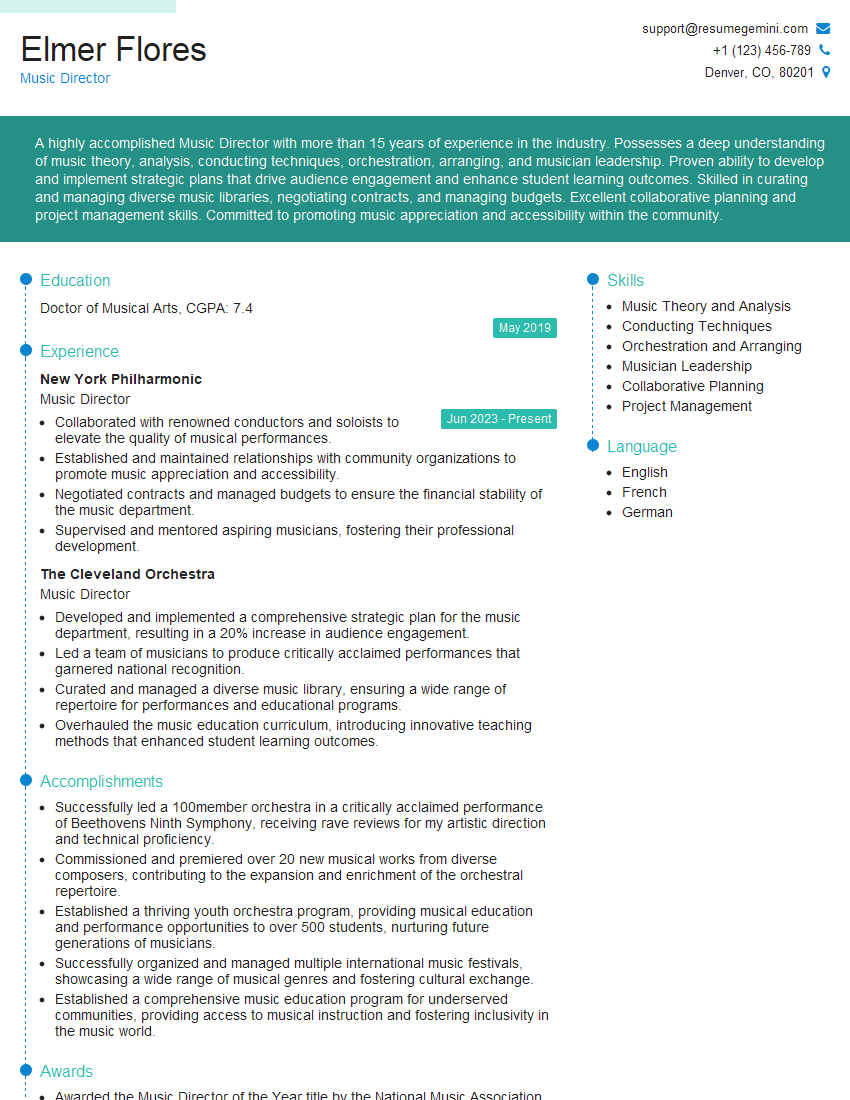
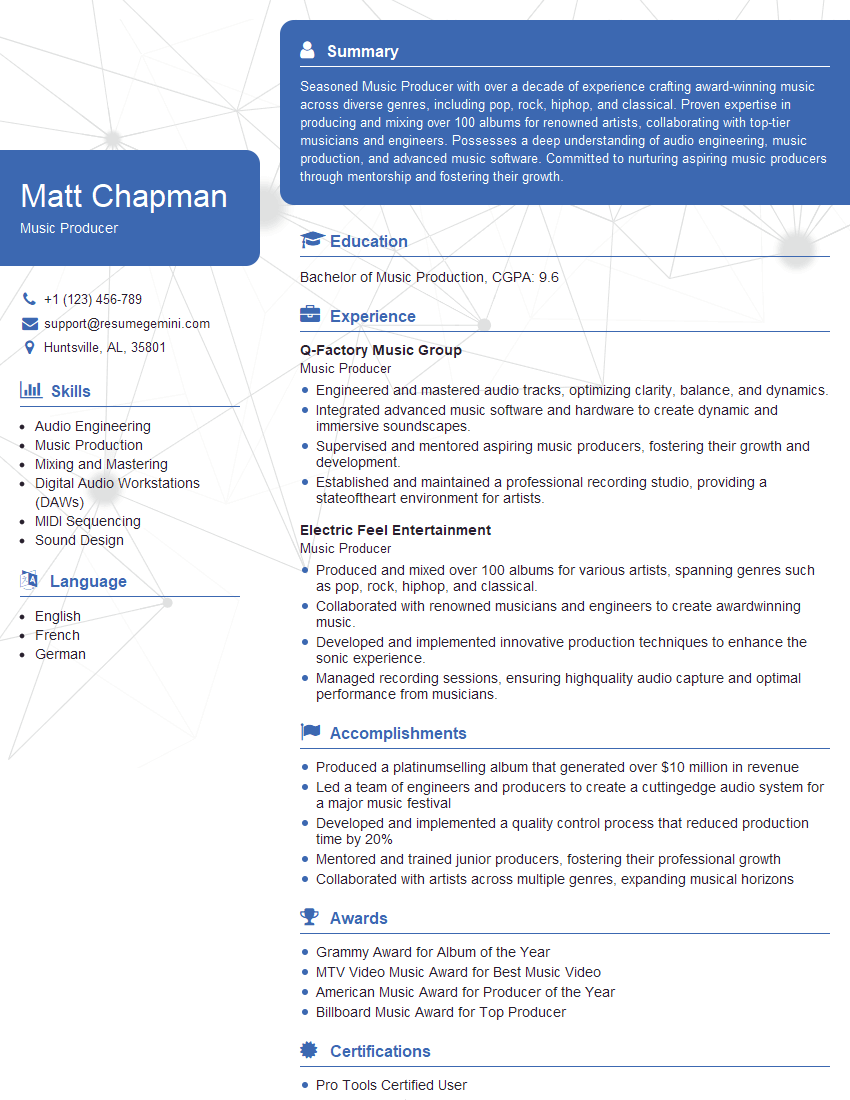
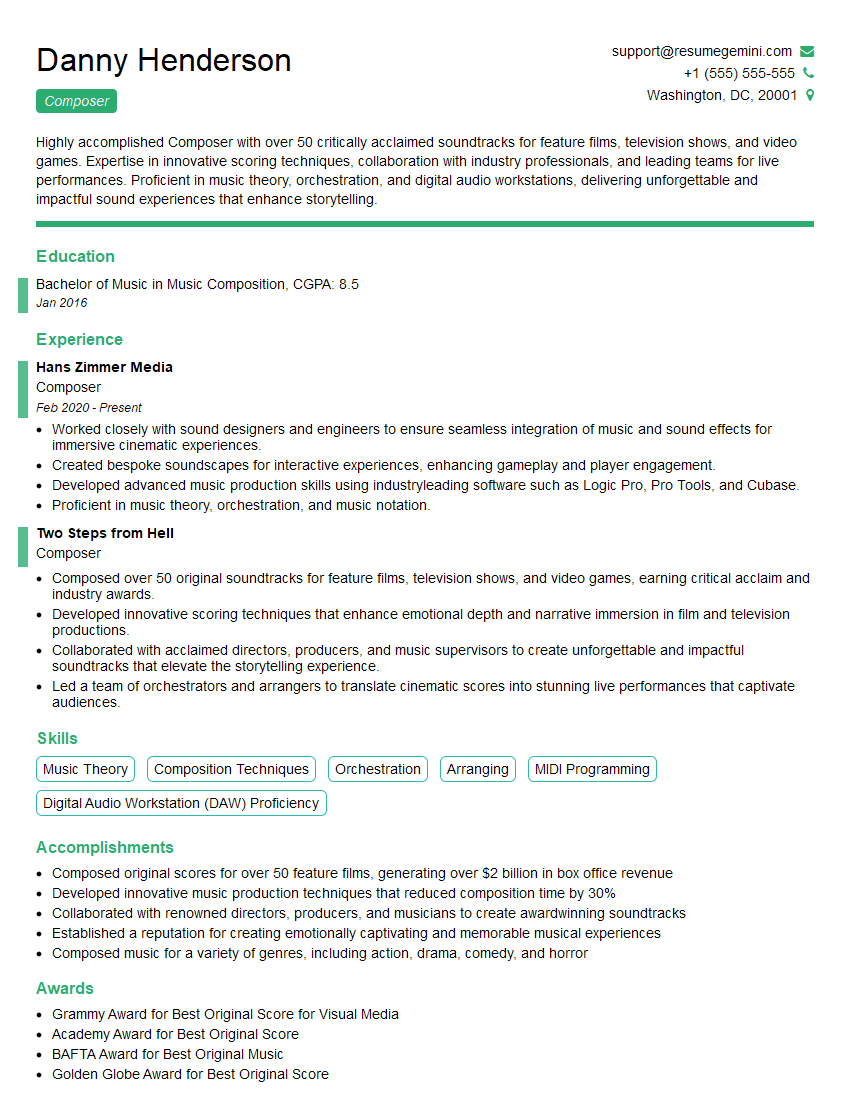
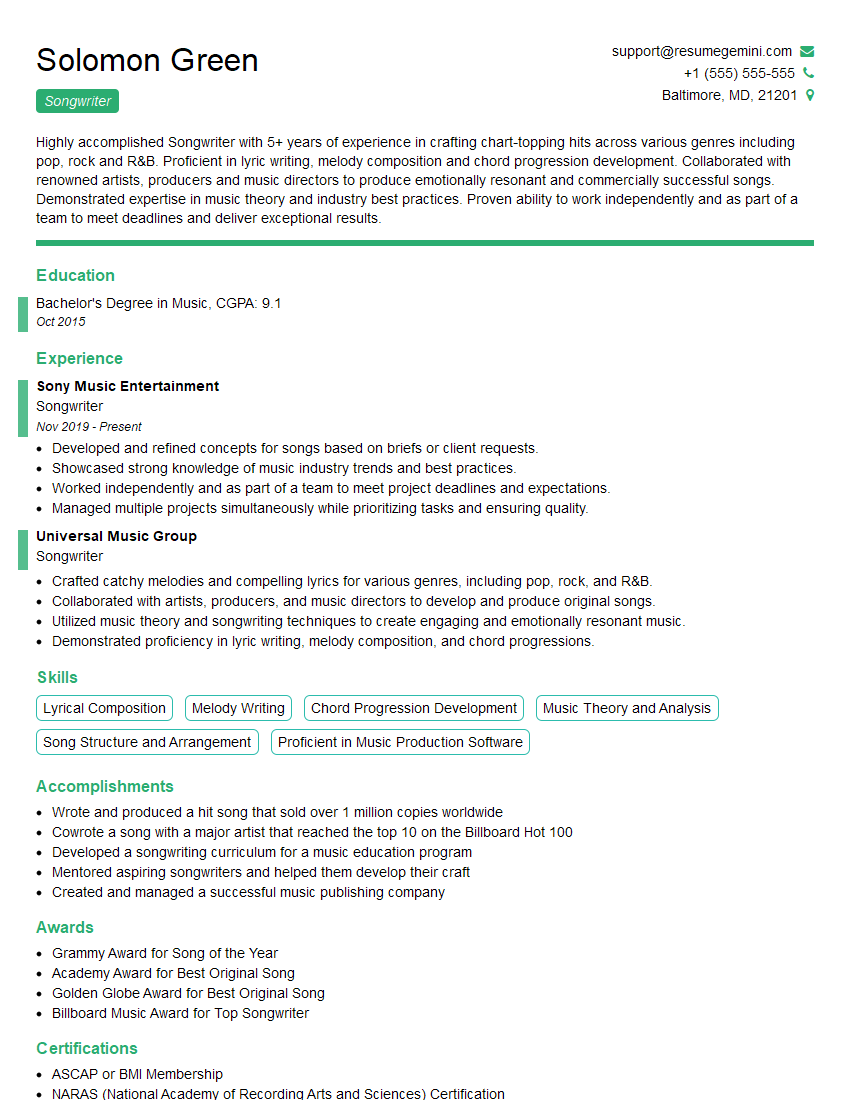
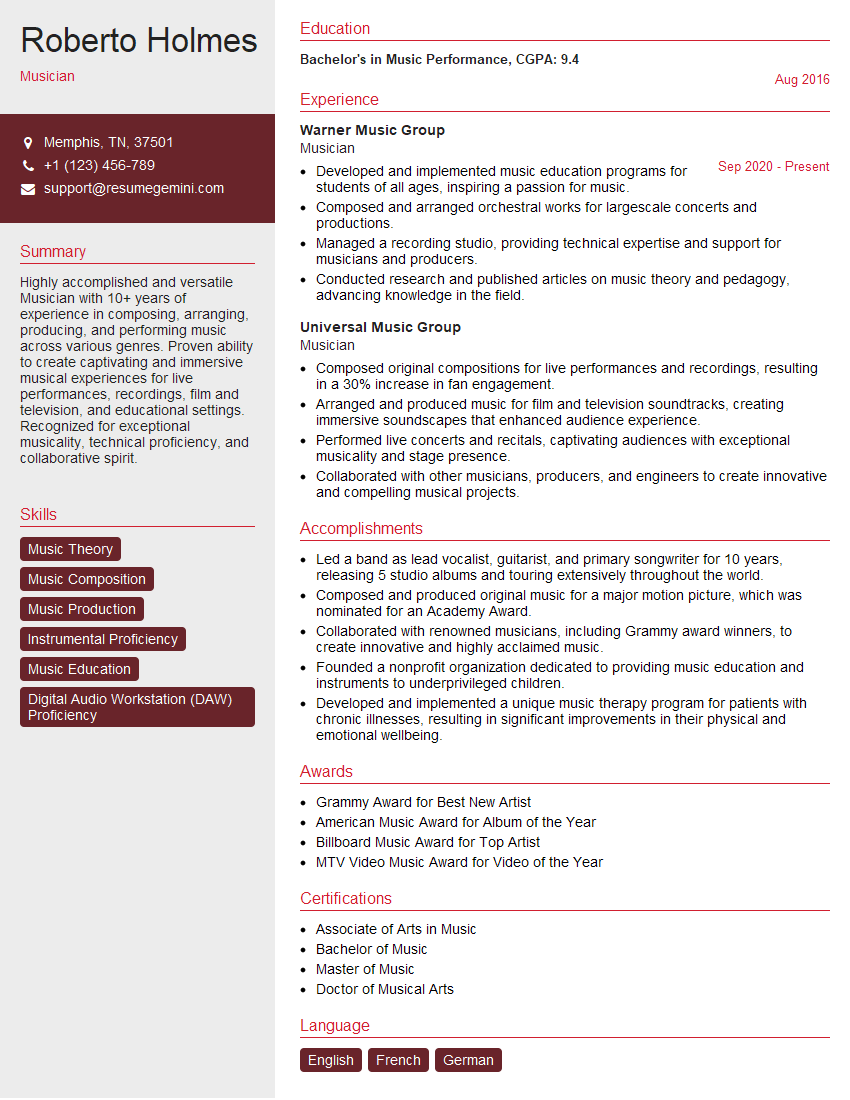
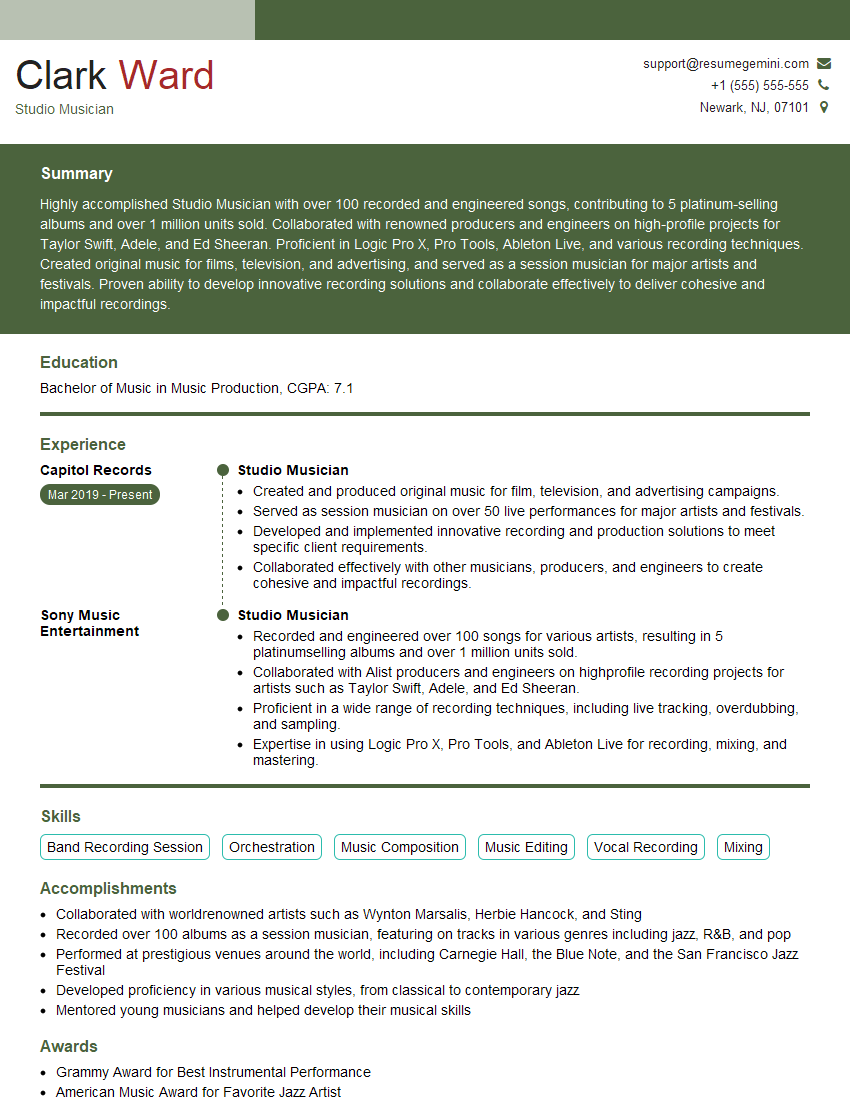
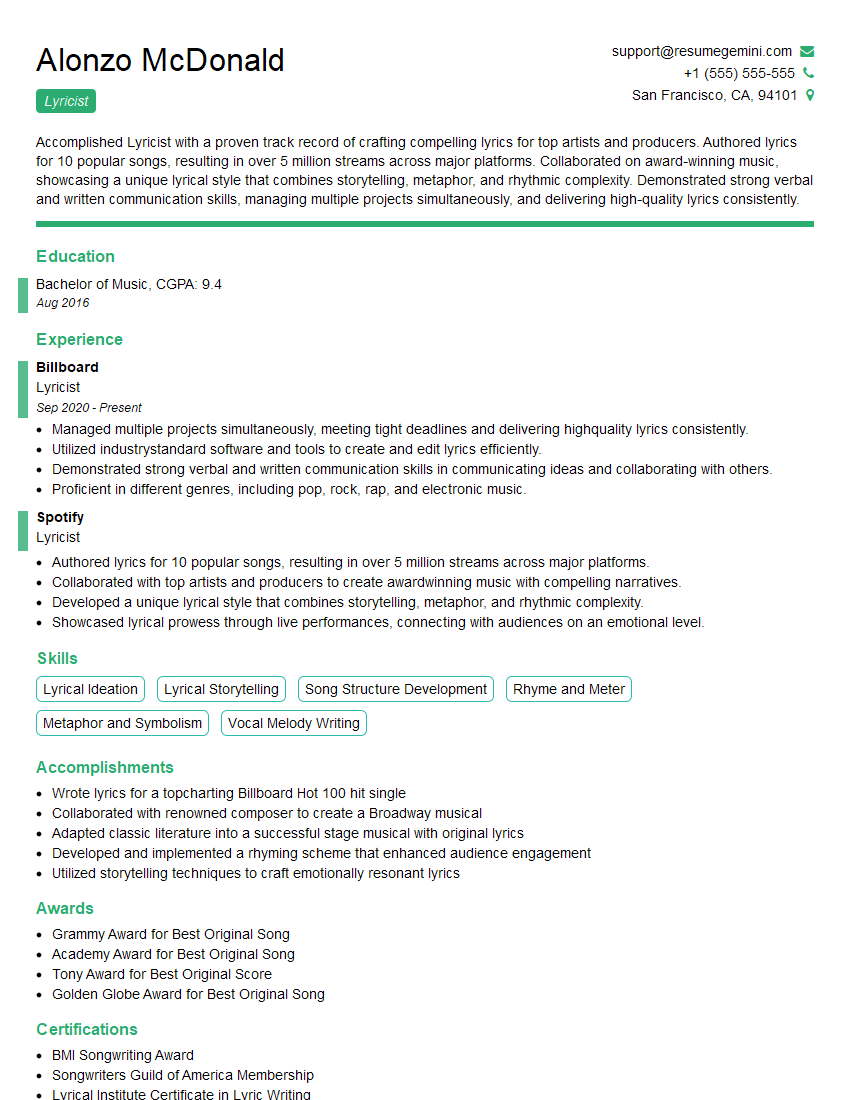
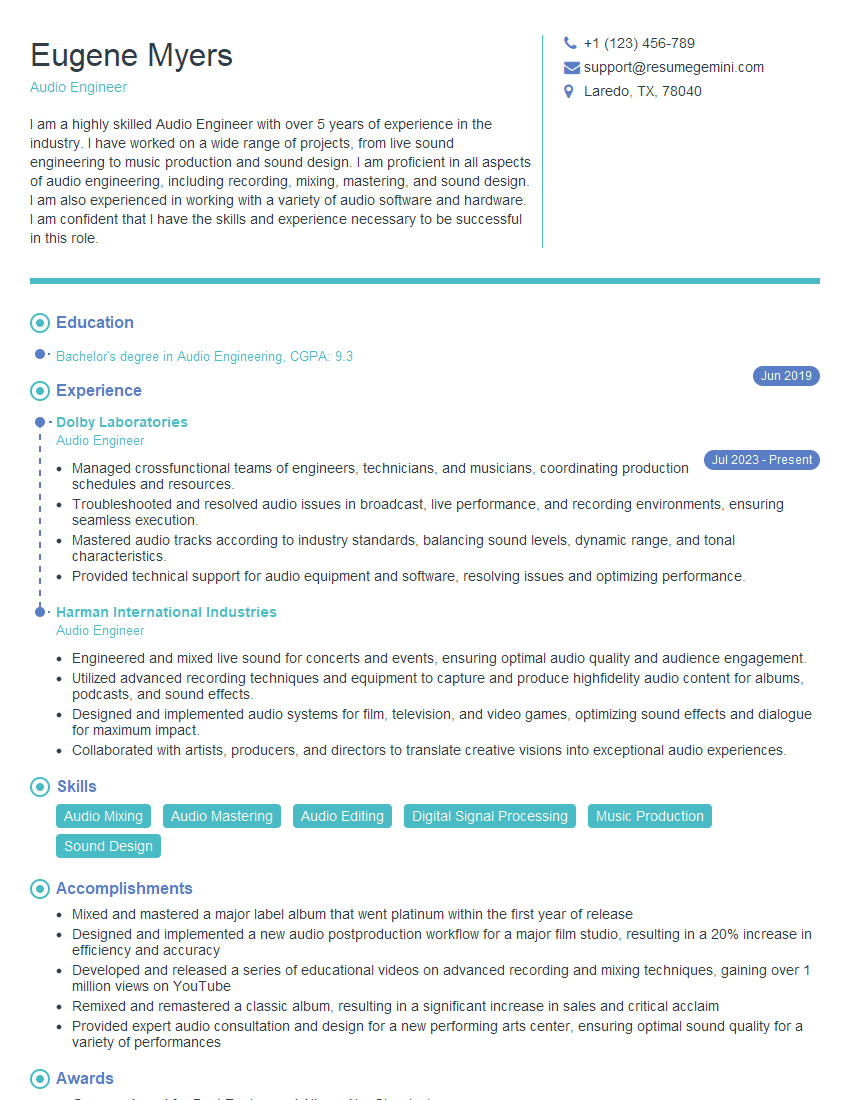
Mastering the art of lyricism opens doors to exciting career opportunities in the music industry and beyond. A strong understanding of lyrical techniques and principles is highly valued by employers. To significantly boost your job prospects, focus on creating an ATS-friendly resume that showcases your skills and experience effectively. Leverage the power of ResumeGemini, a trusted resource, to build a professional and impactful resume that highlights your abilities in a compelling way. Examples of resumes tailored to Lyricist roles are available to help guide you in this process.
Explore more articles
Users Rating of Our Blogs
Share Your Experience
We value your feedback! Please rate our content and share your thoughts (optional).
What Readers Say About Our Blog
Very informative content, great job.
good