Preparation is the key to success in any interview. In this post, we’ll explore crucial Understanding of Color Theory and Thread Selection interview questions and equip you with strategies to craft impactful answers. Whether you’re a beginner or a pro, these tips will elevate your preparation.
Questions Asked in Understanding of Color Theory and Thread Selection Interview
Q 1. Explain the difference between additive and subtractive color mixing.
Additive and subtractive color mixing are two fundamental concepts in color theory with opposing approaches. Imagine shining a flashlight (additive) versus painting with pigments (subtractive).
Additive color mixing is the process of combining different colored lights. The primary colors are red, green, and blue (RGB). When you combine them, you get different colors: red + green = yellow, red + blue = magenta, green + blue = cyan, and red + green + blue = white. This is how computer and television screens create colors – they add light of different wavelengths.
Subtractive color mixing, on the other hand, involves mixing pigments or dyes, such as paints or inks. The primary colors here are cyan, magenta, and yellow (CMY). When you mix them, you subtract wavelengths of light, resulting in different colors. Cyan + magenta = blue, cyan + yellow = green, magenta + yellow = red, and cyan + magenta + yellow = black (theoretically; often a black pigment is added for practical purposes). This is how printers and most textile dyeing works – the pigment absorbs some light wavelengths, reflecting the color we see.
The key difference is the source of color: light for additive, and reflected light for subtractive. Understanding this distinction is crucial for accurate color representation in various applications, including textile design.
Q 2. Describe the color wheel and its practical application in textile design.
The color wheel is a visual representation of color relationships. It’s typically arranged with primary colors (red, yellow, blue in subtractive mixing; red, green, blue in additive), secondary colors (created by mixing primaries), and tertiary colors (created by mixing primary and secondary). Its arrangement helps designers understand color harmonies and contrasts.
In textile design, the color wheel is invaluable for:
- Creating color palettes: Designers use it to select harmonious color combinations for fabrics, patterns, and garments. For instance, analogous colors (next to each other on the wheel) create a calm and cohesive feel, while complementary colors (opposite each other) create high contrast and visual interest.
- Understanding color interactions: The wheel illustrates how colors affect each other. For example, a certain color might appear brighter or duller depending on its neighboring colors.
- Developing color gradients: Smooth transitions between colors can be planned using the wheel, creating sophisticated color effects.
- Predicting the outcome of color mixing: Although the results can vary depending on the pigment and dyeing method, the color wheel provides a good starting point for predicting how colors will mix.
For example, a designer might use analogous colors like blues and greens to create a soothing effect for a bedding collection, or complementary colors like orange and blue to design a vibrant and striking scarf.
Q 3. How would you select threads for a project requiring high durability?
Selecting threads for high durability requires careful consideration of fiber type, thread construction, and intended use. Think about the stress the thread will endure – seams on a work jacket will need a far stronger thread than on a delicate blouse.
Here’s a step-by-step approach:
- Fiber Type: Polyester threads are generally the most durable, offering excellent strength and resistance to abrasion and fading. Nylon is another strong option. Cotton threads are softer but less durable, prone to breaking under significant strain.
- Thread Construction: Choose tightly twisted threads for better strength. A higher twist count increases the thread’s resilience. Look for descriptions like ‘high-tenacity’ or ‘mercerized’ which indicate superior strength and luster.
- Thread Weight (Tex): Heavier threads (higher Tex) are generally stronger, offering more durability, but might not be suitable for all fabrics.
- Intended Use: The application directly influences your thread selection. For heavy-duty items like sails, upholstery, or outdoor gear, use high-tenacity polyester or nylon. For delicate items, use a finer and softer thread appropriate for the fabric’s weight and structure.
- Testing: Before committing to a large project, test the thread’s strength by sewing a sample seam and then pulling on it. Look for signs of breaking or fraying.
Always prioritize quality threads from reputable suppliers. Don’t hesitate to check specifications and user reviews.
Q 4. What are the key considerations when choosing thread color for a specific fabric?
Choosing the right thread color for a specific fabric involves understanding both the fabric’s color and its composition. The goal is to create a seamless and visually appealing finish.
Here are key considerations:
- Fabric Color: Match the thread color to the fabric color as closely as possible for an inconspicuous finish, especially for seams. For decorative stitching, you can contrast the thread color to make the stitching stand out and emphasize the design.
- Fabric Texture: Consider the texture of the fabric when choosing thread color and weight. A coarse fabric might better handle a heavier thread while finer threads work well with delicate fabrics.
- Fabric Composition: Different fabrics react differently to dyes. The color of the thread might appear slightly different on different fabrics. Test the thread on a scrap piece of fabric before starting the project to avoid unexpected color shifts.
- Lighting Conditions: The appearance of colors can vary depending on the lighting. Assess the color under various lighting conditions to avoid issues with color accuracy.
- Overall Design Aesthetic: Consider the design of the garment. The thread color should contribute to the overall design goal, whether that’s a subtle or bold effect.
For example, using a neutral-colored thread on a patterned fabric will help the pattern stand out, while using a contrasting thread can draw attention to seams and details.
Q 5. Explain the concept of color harmony and provide examples in textile design.
Color harmony refers to the pleasing arrangement of colors that create a visually appealing effect. In textile design, it’s about creating a cohesive and aesthetically satisfying combination of colors in a garment, fabric pattern, or other textile product. Think of it like composing a song; you need harmony between different notes for it to sound good.
Examples of color harmonies frequently used in textile design:
- Analogous Harmony: Uses colors that are adjacent to each other on the color wheel, like blues, greens, and teal. This creates a sense of calm and unity. Think of a peaceful ocean scene in a fabric print.
- Complementary Harmony: Employs colors that are opposite each other on the color wheel, like red and green, or orange and blue. This creates high contrast and visual interest. A bold striped pattern with complementary colors is an example.
- Triadic Harmony: Utilizes three colors that are equally spaced on the color wheel, like red, yellow, and blue. This arrangement is vibrant and energetic. A playful design with these colors would stand out.
- Tetradic Harmony (Double Complementary): Uses four colors, two complementary pairs. It offers rich depth and balance. This harmony could be used in a tapestry to create a sophisticated design.
- Monochromatic Harmony: Uses different shades, tints, and tones of a single color, creating a sophisticated and elegant look. Think of a gradient of blues in a dress.
Understanding color harmony is essential to creating visually compelling and cohesive textile designs.
Q 6. How does thread count affect the drape and texture of a fabric?
Thread count, referring to the number of threads per inch (TPI) in both the warp (lengthwise) and weft (widthwise) directions of a woven fabric, significantly influences its drape and texture. A higher thread count generally means more threads are packed into a given area.
Drape: Fabrics with higher thread counts tend to have a better drape because the tighter weave results in a smoother, more flexible fabric. They often feel less stiff and hang more gracefully. Lower thread counts might create a stiffer, more structured fabric with less drape. Think of the difference between a crisp cotton shirt (lower thread count) and a flowing silk scarf (higher thread count).
Texture: Thread count also affects the texture of the fabric. Higher thread counts usually lead to smoother, finer textures. Low thread counts might result in a rougher, more coarse texture. The hand feel (how the fabric feels to the touch) is heavily influenced by the thread count.
It’s important to note that fiber type also plays a significant role. A high thread count cotton fabric will drape and feel different than a high thread count linen fabric, showcasing the interrelation of thread count and fiber characteristics.
Q 7. Describe different types of thread (e.g., cotton, polyester, silk) and their properties.
Various thread types offer different properties impacting their suitability for specific applications. Here are some common types:
- Cotton: A natural fiber known for its softness, breathability, and absorbency. It’s relatively easy to work with, but it’s less durable than synthetics and can be prone to shrinking. Mercerized cotton is a stronger and more lustrous variety.
- Polyester: A synthetic fiber that’s incredibly strong, durable, and resistant to stretching, shrinking, and fading. It’s a popular choice for high-stress applications and outdoor gear. It’s also more resistant to water and stains. However, it might not be as soft or breathable as natural fibers.
- Silk: A luxurious natural fiber renowned for its smoothness, sheen, and drape. It’s delicate and requires careful handling. Its strength is moderate, and it’s less durable than polyester or nylon.
- Nylon: A strong and resilient synthetic fiber offering excellent abrasion resistance and elasticity. It’s frequently used in sportswear and items demanding high durability. It tends to be less absorbent than cotton.
- Rayon: A semi-synthetic fiber with a luxurious drape, but it’s not as durable as polyester or nylon and can be susceptible to stretching. It drapes similarly to silk, often used as a less expensive substitute.
The choice of thread type depends on the project’s requirements. If durability is key, polyester or nylon are preferred. For softer, more luxurious items, silk or cotton might be appropriate. Understanding these properties is key to successful textile projects.
Q 8. How do you identify and address color inconsistencies in a fabric sample?
Identifying color inconsistencies in fabric samples requires a keen eye and understanding of color theory. We start by viewing the sample under standardized lighting conditions – natural daylight is ideal, but a calibrated lightbox is a close second. This eliminates variations caused by different light sources. I then use a colorimeter or spectrophotometer for precise measurements. These instruments quantify the color, giving objective numerical values (like L*a*b* coordinates) to compare against the target specification. Any deviation indicates inconsistency.
Addressing inconsistencies depends on the cause and the scale of the problem. Small variations might be acceptable within a tolerance range. Larger discrepancies may require re-dyeing the fabric, adjusting the dyeing process, or even rejecting the batch. For example, if a batch of fabric shows a noticeable difference in shade across different rolls, it might need to be blended to achieve uniformity.
Sometimes, even with instruments, subtle metamerism (where colors appear to match under one light source but differ under another) can be tricky. To account for this, I assess the sample under various lighting conditions (incandescent, fluorescent, daylight) to ensure consistent appearance.
Q 9. Explain the importance of understanding colorfastness in thread selection.
Understanding colorfastness is paramount in thread selection because it dictates how well the thread’s color resists fading, bleeding, or changing due to washing, light exposure, or other environmental factors. Using a thread with poor colorfastness can lead to a finished product where the thread color dramatically differs from the fabric, creating an unprofessional and potentially disappointing result. For instance, imagine embroidering a delicate white dress with a thread that bleeds – the resulting stain would be irreparable.
Choosing colorfast threads ensures the project’s longevity and maintains its aesthetic appeal. Always check the thread manufacturer’s specifications for colorfastness ratings. These ratings typically use scales to indicate the level of resistance to various factors, like washing, sunlight, and rubbing.
Q 10. How would you select thread for embroidery on delicate fabrics?
Embroidering delicate fabrics requires careful thread selection to avoid damaging the material. I would prioritize threads with these characteristics:
- Fine gauge: A thinner thread minimizes the risk of puncturing the fabric.
- High-quality fiber: Natural fibers like 100% cotton or silk are often gentler on delicate materials than synthetics. However, a high-quality polyester thread can offer durability if the project requires it.
- Low twist: A loosely twisted thread is less likely to snag or break, ensuring smoother stitching and reducing fabric damage.
- Colorfastness: A colorfast thread prevents fading and bleeding, protecting the integrity of the finished product.
For example, when embroidering on silk or lace, I might use a fine-gauge silk or cotton thread. For delicate linen, a lightweight cotton or rayon thread would be suitable. Always test the thread on a scrap of the fabric before starting the main project to ensure compatibility.
Q 11. What are the implications of using the wrong type of thread for a specific sewing machine?
Using the wrong type of thread in a sewing machine can cause a variety of problems. The most common is thread breakage, leading to frustration and potentially damaging the fabric. For instance, using a very heavy-duty thread in a machine designed for fine fabrics can overload the machine, causing the needle to bend or break. Conversely, using a too-fine thread in a machine meant for heavy fabrics might lead to frequent thread breakage due to insufficient strength.
Different thread types are suited to different needle sizes. The thread should be compatible with the needle and the machine’s tension system. Incorrect pairings can lead to skipped stitches, uneven stitching, or the needle getting jammed. Using the correct thread type for the machine and fabric prevents these issues and ensures a smooth sewing process.
Q 12. Explain how color can influence the perceived texture of a fabric.
Color significantly influences our perception of fabric texture. Darker colors tend to make fabrics appear heavier and more substantial, even if the fabric weight is the same as a lighter colored version of the same material. Conversely, lighter colors make fabrics appear lighter, softer, and more delicate. This is because darker colors absorb more light, reducing the reflection that would reveal the fabric’s surface details.
For example, a heavy cotton canvas in a deep navy blue will seem thicker and more rigid than the same fabric in a pale yellow. Similarly, a sheer silk in a light pastel will look airier and more delicate compared to the same silk in a dark jewel tone. This effect is crucial for designers who use color to manipulate the perception of texture, creating visual depth and interest.
Q 13. Discuss the challenges of matching colors across different fabric types.
Matching colors across different fabric types is challenging because each fabric’s surface interacts with light differently. Dye uptake, fiber type, weave structure, and even the finishing treatments all affect the final color appearance. A color that appears identical on a cotton swatch might look significantly different on silk or linen, even if the same dye is used. This is due to factors such as light scattering and absorption variations between different fiber types.
To overcome these challenges, I use a combination of techniques: color matching software (which uses spectral data for more accurate comparisons), physical color samples of all fabrics dyed with the target color, and lighting control for consistency. I might also require additional dye applications to correct for differences, making the color matching process iterative and requiring skill and attention to detail.
Q 14. How do you create a mood board to visualize color palettes for a textile project?
Creating a mood board for textile projects is a crucial step for visualization and communication. It’s a visual representation of the color palette and overall aesthetic direction. I start by gathering inspiration: images of textiles, nature, artwork, and even everyday objects that embody the desired mood or theme. Then, I arrange fabric swatches, paint chips, yarn samples, and images on a large board or digital platform.
I group similar colors and textures together to explore color harmonies and contrasts. The mood board should illustrate the project’s overall atmosphere—whether it’s rustic, modern, elegant, playful, etc. Incorporating texture samples (alongside color) also helps visualize the final product’s tactile feel. Ultimately, a well-constructed mood board serves as a visual guide for all collaborators involved, enabling clear and effective communication throughout the design process.
Q 15. What software or tools do you use to select and manage colors in your designs?
Color selection and management are crucial in textile design. I utilize a combination of software and tools to achieve accurate and consistent color representation throughout the design and production process. My primary tools include Adobe Illustrator and Photoshop for initial design and color exploration. These allow me to create color palettes, experiment with different color harmonies (like analogous or complementary), and visualize how colors will interact in a textile design. I also use Pantone Connect, which provides a digital library of Pantone colors, ensuring accurate color communication with manufacturers and clients. This is essential because the Pantone Matching System (PMS) allows for consistent color reproduction across various mediums and printing processes. For more advanced color management, I’ll use color management software like X-Rite Color i1Studio to calibrate my monitors and ensure accurate color profiles are used throughout the workflow, reducing the risk of color discrepancies during printing and dyeing.
Career Expert Tips:
- Ace those interviews! Prepare effectively by reviewing the Top 50 Most Common Interview Questions on ResumeGemini.
- Navigate your job search with confidence! Explore a wide range of Career Tips on ResumeGemini. Learn about common challenges and recommendations to overcome them.
- Craft the perfect resume! Master the Art of Resume Writing with ResumeGemini’s guide. Showcase your unique qualifications and achievements effectively.
- Don’t miss out on holiday savings! Build your dream resume with ResumeGemini’s ATS optimized templates.
Q 16. How do you incorporate color trends into your textile designs?
Incorporating color trends is vital for creating commercially successful textile designs. I stay informed about current trends through various channels: attending industry trade shows like Premiere Vision, subscribing to trend forecasting services such as WGSN, and actively researching fashion magazines and runway shows. I analyze these resources to identify key color palettes and themes, focusing on the dominant hues, saturation levels, and overall mood. For example, if a trend predicts earthy tones coupled with vibrant accents, I might incorporate muted greens and browns as a base, complemented by pops of coral or mustard yellow in a textile design. I then adapt these trends to suit my personal style and the specific client’s needs, making sure the final selection aligns with the brand’s identity and target market. This ensures the design resonates with current aesthetics while maintaining a unique character.
Q 17. Describe your experience with different types of dyeing techniques and their effect on color.
My experience encompasses a range of dyeing techniques, each impacting color differently. I’m proficient in reactive dyeing, which produces vibrant and wash-fast colors on cellulosic fibers like cotton. Reactive dyes chemically bond with the fiber, resulting in exceptional colorfastness. I also have experience with acid dyeing, suitable for animal fibers like wool and silk, providing a wide array of color options with excellent depth and brilliance. However, acid dyes require precise pH control for optimal results. Additionally, I’m familiar with pigment dyeing, which uses insoluble pigments dispersed in a binder. This method is versatile and works on various fibers but can sometimes lack the color depth and wash fastness achieved with reactive or acid dyes. Each technique presents unique challenges; for instance, achieving consistent color using reactive dyes requires careful control of temperature and dye concentration. I’ve developed a deep understanding of how different fiber types react to various dyes and the necessary adjustments required for optimal results. I’ve learned to mitigate color variations through careful pre-treatment of fibers and precise dye recipes, adjusting the process based on each dye and fiber.
Q 18. How do you ensure color accuracy throughout the textile production process?
Maintaining color accuracy is paramount. This starts with selecting accurate color standards – usually Pantone references – at the design stage. I meticulously document these specifications and share them with the production team, ensuring clear communication. During the sampling process, I carefully compare dyed samples against the color standards using a spectrophotometer to quantify color differences. This instrument measures the spectral reflectance of the dyed fabric, providing objective data to assess color accuracy. Small discrepancies can be addressed through adjustments to dye recipes and dyeing processes. I’ll also utilize color management software to create and maintain consistent color profiles throughout the production process. Furthermore, regular quality checks throughout the production run, including inspecting dyed lots against the approved sample, are vital to catching and correcting any deviations early on. It’s a multi-step approach requiring thorough documentation, precise measurement, and vigilant quality control.
Q 19. What are some common color-related problems encountered in textile production, and how do you solve them?
Common color-related problems in textile production include metamerism (colors appearing different under different light sources), crocking (color transfer to other surfaces), and uneven dyeing (lack of uniform color distribution). Solving these problems requires a systematic approach. Metamerism can be addressed by specifying the light source under which the color should be evaluated and using spectrophotometers that measure color under different light conditions. Crocking is usually tackled by using appropriate pre-treatments and selecting dyes with superior wash and rub fastness. Uneven dyeing can stem from various issues, including inconsistent fiber preparation, incorrect dyeing temperatures or dye concentrations, or faulty dyeing machinery. Solving this often involves analyzing the dyeing process, identifying the root cause (e.g., through lab tests and dye bath analysis), and making adjustments to the dyeing procedure. Troubleshooting often involves working closely with the production team, meticulously analyzing data, and conducting experimental dye runs to fine-tune the process until the desired results are consistently achieved.
Q 20. How would you determine the appropriate thread weight for a specific application?
Selecting the right thread weight depends entirely on the application. For delicate fabrics like chiffon or silk, a fine thread weight (e.g., 30/2 or 40/2) provides a subtle stitch and avoids distorting the fabric. Conversely, heavier fabrics like denim or canvas require a stronger, thicker thread (e.g., 10/2 or 8/4) to ensure durability and prevent seam breakage. Factors to consider include the fabric weight, weave structure, intended garment construction (e.g., stitching strength required for seams and topstitching), and the desired aesthetic. I use a combination of experience and reference charts provided by thread manufacturers to select the optimal thread weight. These charts typically relate thread weight to needle size and fabric type, aiding in making informed decisions. Testing different thread weights on sample swatches is a crucial step in verifying the suitability of the choice for the specific application, ensuring both functional strength and aesthetic appeal.
Q 21. Explain the difference between different types of thread finishes (e.g., mercerized, twisted).
Thread finishes significantly impact the thread’s properties and performance. Mercerized thread undergoes a process that increases its luster, strength, and dye uptake, making it a popular choice for high-quality apparel. The mercerization process, involving a treatment with caustic soda, makes the cotton fibers smoother, more uniform, and with a brighter appearance. Twisted thread, as the name suggests, involves twisting multiple fibers together. This process influences strength, texture, and the final aesthetic. The number of twists per inch impacts the thread’s stiffness and strength; a higher twist count typically results in a stronger but potentially stiffer thread. Other finishes include, but are not limited to, waxing (to increase smoothness and reduce friction), coating (to add stiffness or lubricity), and flame-retardant treatments (to meet safety standards). The choice of finish depends on the desired properties of the final product. For example, a mercerized thread might be used for a garment requiring a smooth, lustrous finish, while a heavily twisted thread would be suitable for a fabric requiring high tensile strength.
Q 22. Describe your experience with color management systems (CMS).
Color management systems (CMS) are crucial for ensuring color accuracy across different devices and workflows. My experience encompasses using both hardware and software-based CMS solutions. I’m proficient with profiles like ICC profiles, which translate color information between devices. For example, I’ve used X-Rite i1 devices for precise color measurements and profile creation, ensuring consistent color from the initial design concept to the final sewn product. I also have experience using software-based CMS within Adobe Creative Suite, ensuring colors in designs translate accurately to the chosen threads and fabrics.
My workflow typically involves creating a color profile for each thread, fabric, and printing device. This ensures that the color I see on my monitor closely matches the actual thread color. This minimizes discrepancies between the design and the finished product. I’m also adept at adjusting settings within the CMS to account for variations in ambient light, ensuring the final product looks consistent in different environments.
Q 23. How do you account for color variations due to lighting conditions?
Lighting conditions significantly impact color perception. To account for this, I use standardized lighting conditions when evaluating colors. This often involves working under a light booth that simulates various lighting scenarios, like daylight or incandescent lighting. This allows me to assess how the color will appear under different conditions, preventing unpleasant surprises for the client. I also educate clients about the impact of lighting, explaining that the same color might appear slightly different in various environments. For instance, a vibrant red might appear slightly duller under fluorescent lighting compared to natural daylight. Accurate color reproduction should always be coupled with realistic expectations about how lighting impacts the perceived color.
Q 24. How do you handle client requests for specific color matches?
Matching specific colors is a collaborative process. When a client requests a precise color match, I start by obtaining a physical sample or a digital color code (Pantone, for example). I then utilize spectrophotometers for precise color measurement of the existing thread or sample. This allows me to find the closest match from available thread options. Sometimes, an exact match isn’t feasible, so I’ll present the client with several closely related options along with their color measurements, to ensure transparency and facilitate decision making. This iterative process allows us to arrive at an acceptable compromise if a perfect match isn’t achievable. We usually document everything through color readings and photos to avoid future misunderstandings.
Q 25. What is your experience with sustainable or eco-friendly thread options?
Sustainability is a growing concern in the textile industry, and I have significant experience with eco-friendly thread options. I’m familiar with threads made from recycled materials like recycled polyester or organic cotton. I’m also well-versed in the certifications associated with these threads, such as GOTS (Global Organic Textile Standard) or OEKO-TEX Standard 100, ensuring they meet stringent environmental and social criteria. Choosing sustainable threads allows us to reduce our environmental impact without compromising the quality or aesthetic of the final product. I regularly research and stay up to date with the latest advancements in sustainable thread manufacturing to offer the most environmentally conscious choices to my clients.
Q 26. Explain how you would troubleshoot a problem with thread breakage during sewing.
Thread breakage during sewing is a common problem with multiple potential causes. My troubleshooting approach is systematic. I first inspect the sewing machine itself, checking for proper tension, needle condition (bent or damaged needles are a common culprit), and the bobbin for proper winding and placement. I then examine the thread itself; checking for any flaws, knots, or weak spots. Next, I evaluate the fabric and its interaction with the thread. A rough fabric texture can cause additional friction and breakage. If the problem persists, I might adjust the stitch length or type to reduce stress on the thread. Finally, if the issue remains, I’ll consider the possibility of using a different type of thread, perhaps one with a higher tensile strength, tailored to the specific fabric. Documentation is key to pinpointing the problem so solutions can be implemented.
Q 27. How do you evaluate the quality of different threads?
Evaluating thread quality involves considering several factors:
- Tensile Strength: This measures how much force the thread can withstand before breaking. Higher tensile strength is crucial for durability.
- Fiber Content: The type of fiber (e.g., polyester, cotton, silk) significantly affects its properties like strength, drape, and sheen.
- Colorfastness: This assesses the thread’s resistance to fading or discoloration due to washing, light exposure, or other environmental factors.
- Uniformity: Consistent thickness throughout the thread is essential for even stitching.
- Twist: The amount of twist in the thread affects its strength and smoothness.
Q 28. Describe a situation where you had to make a crucial color decision; what was the process, and what was the outcome?
In one project, we were creating a historical costume requiring a very specific shade of burgundy. The client provided a faded swatch, making precise color matching extremely challenging. My process involved meticulously examining the swatch under various lighting conditions using a spectrophotometer. I then created several color profiles using various thread samples and compared them to the original sample, meticulously documenting each test. I ultimately presented the client with three options, each with its color profile, explaining the nuances of each shade and its potential variation under different lighting. Through open communication and a shared understanding of the color matching limitations, we selected the closest possible match, which resulted in the client being very happy with the final product. The success highlighted the importance of transparency, detailed documentation, and collaborative decision-making in color-critical projects.
Key Topics to Learn for Understanding of Color Theory and Thread Selection Interview
- Color Harmonies: Understanding analogous, complementary, triadic, and split-complementary color schemes and their practical application in textile design and selection.
- Color Psychology: Knowing how colors evoke emotions and how this knowledge impacts thread choice for different projects and target audiences.
- Thread Types and Properties: Familiarity with various thread materials (e.g., cotton, silk, polyester), their strengths, weaknesses, and suitability for different fabrics and projects. This includes understanding thread weight (denier or tex) and its implications.
- Colorfastness and Lightfastness: Knowledge of testing methods and the importance of selecting colorfast threads to ensure longevity and prevent color bleeding or fading.
- Practical Application: Demonstrating your ability to select appropriate threads for specific projects based on fabric type, desired color effect, and intended use (e.g., apparel, upholstery, embroidery).
- Troubleshooting Color Issues: Explaining how to identify and resolve common problems related to color matching, inconsistencies, and thread breakage.
- Advanced Concepts (Optional): Exploring concepts like color mixing, metamerism, and the impact of different dyeing techniques on thread color.
Next Steps
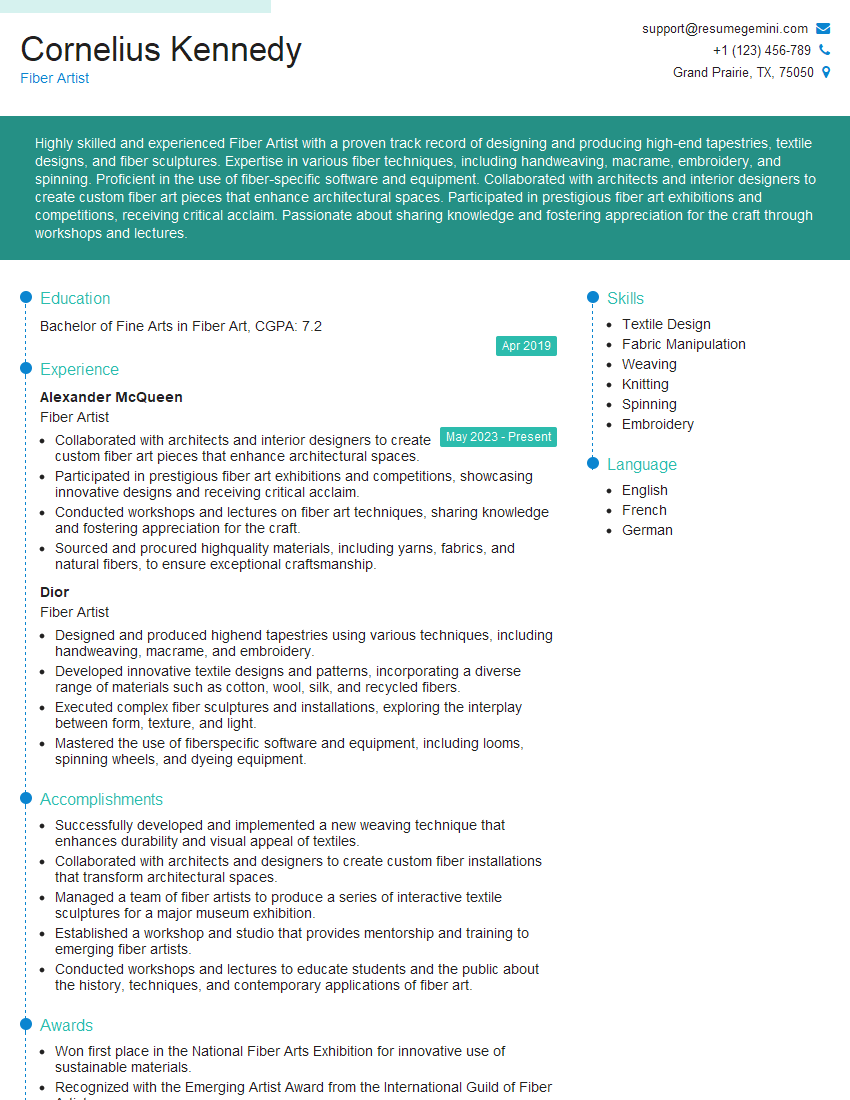
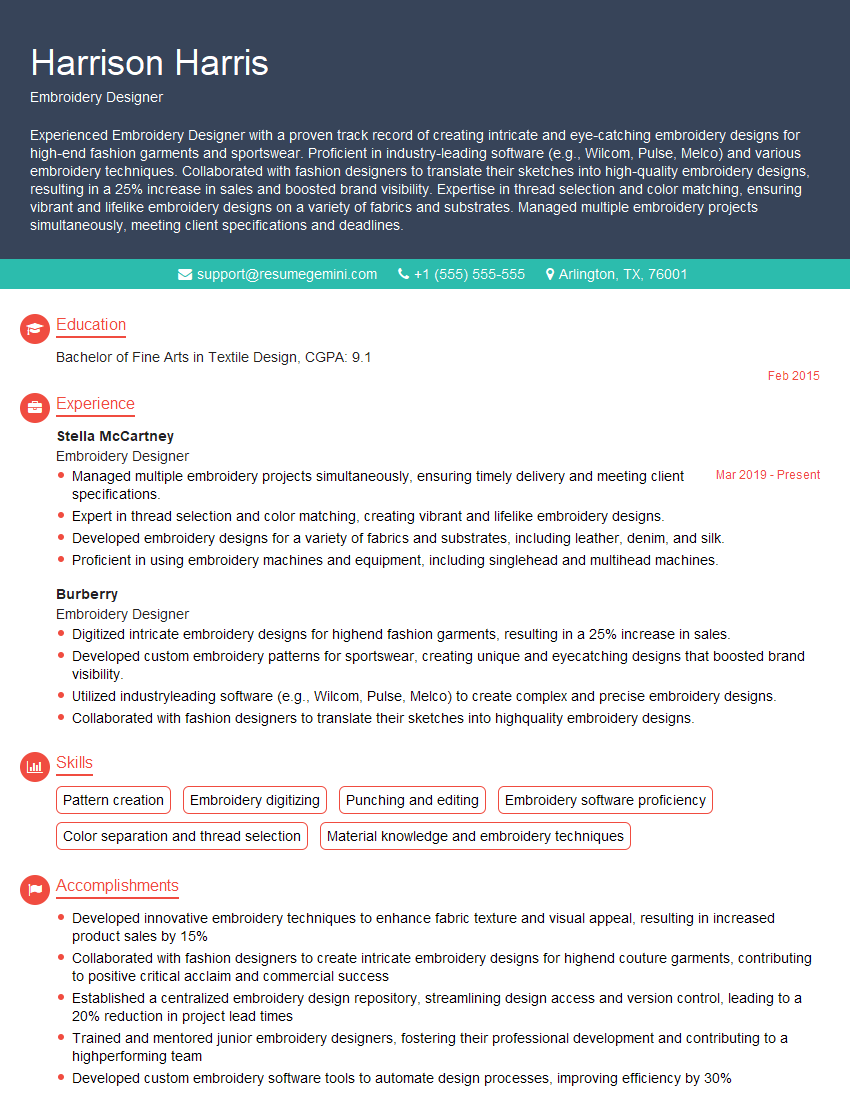
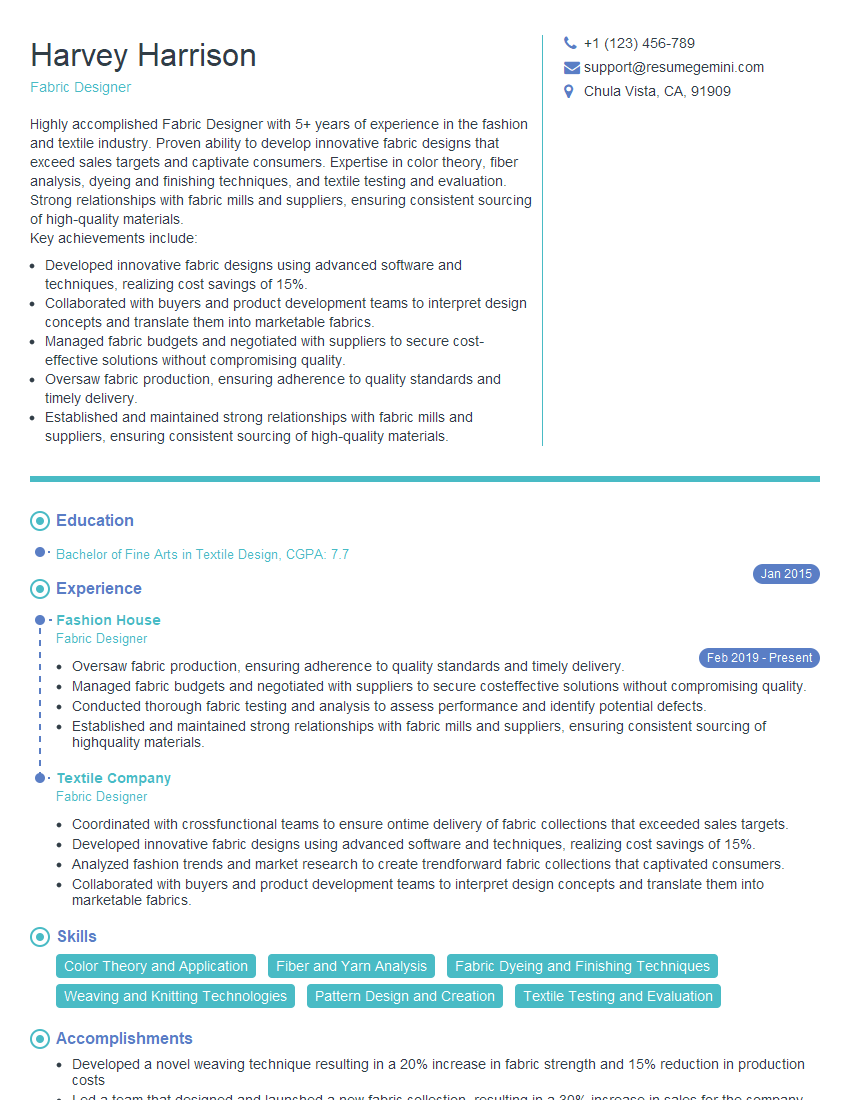
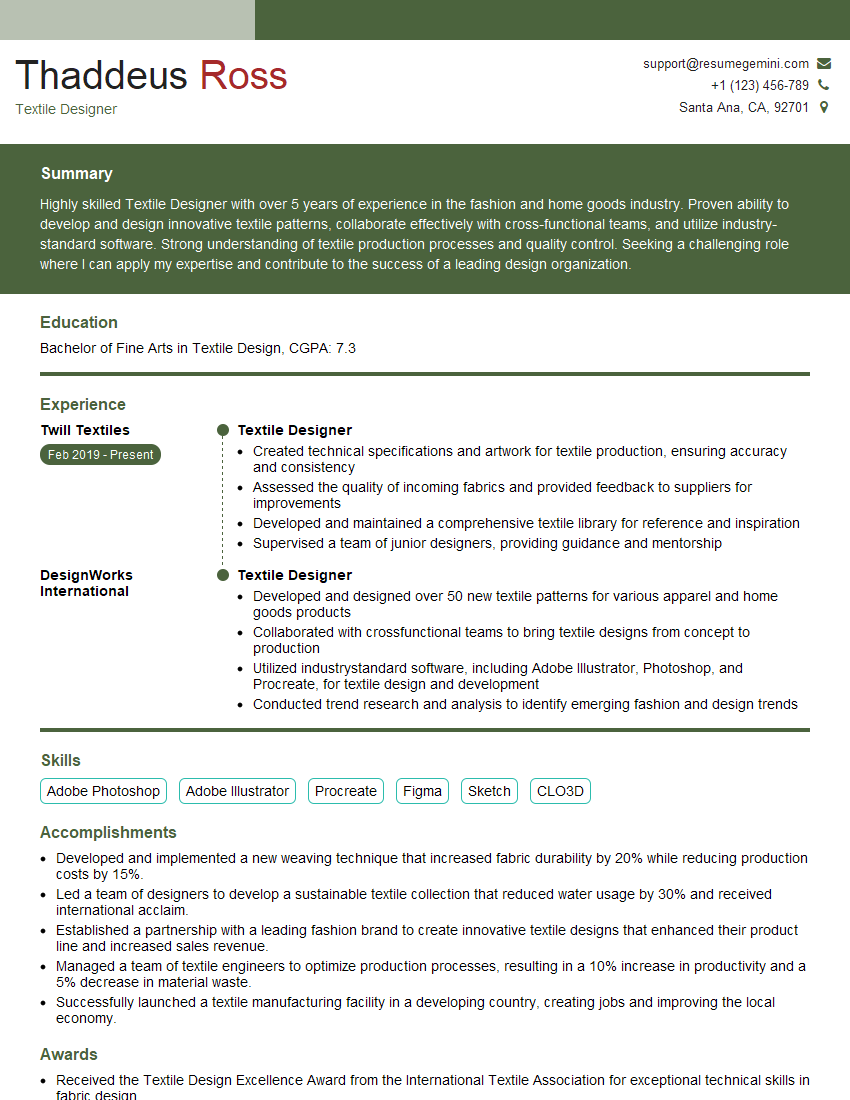
Mastering color theory and thread selection is crucial for career advancement in textile design, fashion, and related fields. A strong understanding of these concepts demonstrates your technical skills and attention to detail, making you a highly valuable asset to any team. To significantly boost your job prospects, focus on crafting an ATS-friendly resume that highlights your expertise. ResumeGemini is a trusted resource to help you build a professional and impactful resume. We provide examples of resumes tailored to Understanding of Color Theory and Thread Selection to guide you through the process. Take the next step towards your dream career today!

Explore more articles
Users Rating of Our Blogs
Share Your Experience
We value your feedback! Please rate our content and share your thoughts (optional).
What Readers Say About Our Blog
Very informative content, great job.
good