Feeling uncertain about what to expect in your upcoming interview? We’ve got you covered! This blog highlights the most important Grid Modernization and Smart Grid interview questions and provides actionable advice to help you stand out as the ideal candidate. Let’s pave the way for your success.
Questions Asked in Grid Modernization and Smart Grid Interview
Q 1. Explain the key drivers behind grid modernization.
Grid modernization is driven by a confluence of factors aiming to improve the efficiency, reliability, and sustainability of our electricity infrastructure. Think of it like renovating an old house – the existing system is outdated and needs upgrades to meet modern demands.
Increased Renewable Energy Integration: The growth of solar and wind power necessitates a more flexible and intelligent grid capable of handling intermittent energy sources. This requires upgrades to accommodate fluctuating power flows.
Aging Infrastructure: Many grid components are aging and nearing the end of their lifespan, leading to increased maintenance costs and potential outages. Modernization replaces this aging equipment with more efficient and resilient technologies.
Improved Reliability and Resilience: Modernization aims to reduce the frequency and duration of power outages, making the grid more robust against extreme weather events and cyberattacks. This means building in redundancies and advanced protection systems.
Enhanced Energy Efficiency: Smart grid technologies enable better monitoring and control of energy consumption, leading to reduced waste and lower energy bills for consumers. This is achieved through smart meters and demand-side management programs.
Data-Driven Operations: The incorporation of advanced sensors and data analytics allows for more proactive grid management and improved decision-making. This enables utilities to anticipate problems and respond more efficiently.
Q 2. Describe the different types of smart meters and their functionalities.
Smart meters are the eyes and ears of the smart grid, providing real-time data on energy consumption. They come in various types, each with unique capabilities.
Electromechanical Meters: These are the traditional meters, using a physical spinning disc to measure energy usage. They’re simple but lack advanced functionalities.
Electronic Meters: These use electronics to measure and record energy usage. They offer improved accuracy and can record data at various intervals. Think of them as a digital upgrade to the old electromechanical meters.
Advanced Metering Infrastructure (AMI) Meters: These are the most sophisticated type, incorporating two-way communication capabilities. They can send consumption data to the utility, receive commands (like remote disconnections), and even allow for time-of-use pricing.
Functionalities include: measuring energy consumption, recording usage data, enabling remote disconnections, supporting time-of-use pricing, detecting power outages, and facilitating demand response programs.
Q 3. What are the benefits and challenges of integrating renewable energy sources into the grid?
Integrating renewable energy sources like solar and wind into the grid offers significant benefits but also presents challenges.
Benefits: Reduced carbon emissions, improved energy independence, increased energy security, potential for cost savings in the long run, and job creation in the renewable energy sector.
Challenges: Intermittency (solar and wind power are dependent on weather conditions), grid stability issues (due to fluctuating power generation), capacity limitations (existing grid infrastructure may not be able to handle large amounts of renewable energy), and integration costs (upgrades to the grid are necessary to accommodate renewable sources).
For example, a sudden decrease in solar power generation due to cloud cover could cause voltage fluctuations on the grid. Therefore, effective grid modernization strategies must incorporate energy storage solutions and advanced control systems to address these intermittency issues.
Q 4. Explain the role of Advanced Metering Infrastructure (AMI) in smart grid operations.
Advanced Metering Infrastructure (AMI) is the backbone of smart grid operations. It’s a system of smart meters, communication networks, and data management systems that provides real-time visibility into energy consumption patterns. Think of it as the nervous system of the smart grid, providing essential data for efficient management.
AMI’s role includes:
Real-time data acquisition: AMI collects energy consumption data from smart meters and transmits it to the utility.
Improved outage management: AMI enables utilities to quickly identify and respond to power outages.
Enhanced demand-side management: AMI provides data for implementing time-of-use pricing and demand response programs.
Advanced analytics: AMI data allows for the development of sophisticated analytics to optimize grid operations and improve customer service.
Q 5. How does distribution automation improve grid reliability and efficiency?
Distribution automation uses advanced technologies like sensors, smart switches, and communication networks to automate the operation of the distribution grid. This improves reliability and efficiency by enabling faster fault detection and isolation, optimized voltage regulation, and improved load balancing.
For instance, if a fault occurs on a section of the grid, distribution automation systems can automatically isolate the faulty section, minimizing the impact on other customers. This reduces outage duration and improves overall system reliability. Similarly, intelligent load balancing can distribute the electricity demand more evenly across the grid, preventing overloads and enhancing efficiency.
Q 6. Describe different strategies for demand-side management.
Demand-side management (DSM) focuses on modifying energy consumption patterns to reduce peak demand and improve grid efficiency. Think of it as managing the demand side of the electricity equation.
Time-of-Use Pricing: Charging customers different rates at different times of day encourages energy consumption during off-peak hours.
Demand Response Programs: Incentives are offered to consumers to reduce their energy usage during peak demand periods. This can be achieved through automated load control or voluntary participation.
Energy Efficiency Programs: Initiatives aimed at promoting energy efficiency through better appliances, building design, and consumer education.
Load Shifting: Encouraging customers to shift their energy consumption from peak to off-peak hours, such as running appliances at night.
For example, a utility might offer a discount to customers who reduce their energy consumption during the hottest part of the day, alleviating stress on the grid.
Q 7. What are the cybersecurity threats to smart grids and how can they be mitigated?
Smart grids are vulnerable to various cybersecurity threats due to their interconnected nature and reliance on digital technologies. These threats can range from data breaches to large-scale outages.
Data breaches: Unauthorized access to sensitive customer data or grid operational data.
Denial-of-service attacks: Overwhelming the grid’s communication systems, leading to disruptions in service.
Malware attacks: Infecting grid control systems to manipulate their operations, potentially causing blackouts.
Phishing attacks: Targeting employees to gain access to grid systems.
Mitigation strategies include: robust authentication and access control, network segmentation to isolate critical systems, intrusion detection and prevention systems, regular security audits and penetration testing, employee security awareness training, and the implementation of encryption protocols to protect sensitive data. A layered approach to security, incorporating multiple measures, is essential for ensuring the resilience of the smart grid against cyber threats.
Q 8. Explain the concept of microgrids and their applications.
A microgrid is a localized grid that can operate independently or be connected to the larger power grid. Think of it as a mini power system, often encompassing a community, building, or campus. It typically includes distributed generation sources like solar panels or wind turbines, energy storage systems (batteries), and local loads.
Applications of microgrids are diverse:
- Islanding during outages: Microgrids can disconnect from the main grid during blackouts, providing power to essential services like hospitals or data centers.
- Enhanced grid resilience: By distributing generation and consumption, microgrids reduce the impact of large-scale grid failures.
- Integration of renewable energy: Microgrids facilitate the seamless incorporation of renewable sources, improving sustainability.
- Improved power quality: They can provide cleaner, more reliable power than the main grid in some cases.
- Reduced reliance on fossil fuels: Microgrids can minimize reliance on carbon-intensive generation sources.
For example, a university campus might have a microgrid consisting of solar panels on rooftops, a battery storage system, and local buildings as loads. During a grid outage, the microgrid can continue powering essential facilities.
Q 9. What are the key components of a Supervisory Control and Data Acquisition (SCADA) system?
A Supervisory Control and Data Acquisition (SCADA) system is the nervous system of a power grid, responsible for monitoring and controlling the entire network. It’s a sophisticated system with several key components:
- Remote Terminal Units (RTUs): These are placed at various points in the grid, collecting data (voltage, current, frequency, etc.) from sensors and sending it to the master station.
- Programmable Logic Controllers (PLCs): These intelligent devices automate control functions based on pre-programmed logic or real-time data analysis.
- Human-Machine Interface (HMI): This is the control room interface where operators monitor the grid’s status, receive alerts, and take corrective actions.
- Communication Network: This connects all components, typically employing various protocols (discussed in a later question).
- Database: Stores historical and real-time data for analysis and reporting.
Imagine a traffic control system for electricity. RTUs are like traffic cameras, PLCs like traffic lights, the HMI is the control center, and the network is the communication system. The database stores traffic patterns over time.
Q 10. Discuss the role of energy storage systems in grid modernization.
Energy storage systems (ESS) are crucial for grid modernization. They act as buffers, smoothing out the variability of renewable energy sources and enhancing grid stability and resilience.
- Frequency regulation: ESS can quickly respond to changes in grid frequency, ensuring stable operation. Think of it like a shock absorber for the grid’s frequency.
- Voltage support: They can help maintain voltage levels within acceptable limits, preventing voltage sags or surges.
- Peak shaving: ESS can store excess energy during off-peak hours and release it during peak demand, reducing strain on the grid.
- Renewable energy integration: By storing excess energy from solar or wind, ESS enables greater penetration of intermittent renewables.
- Black start capability: In some cases, ESS can help restart parts of the grid after a major outage.
For instance, a large-scale battery storage system connected to a wind farm can store excess energy generated during periods of high wind and release it when demand is high or wind speeds are low.
Q 11. How does phasor measurement unit (PMU) technology enhance grid monitoring and control?
Phasor Measurement Units (PMUs) are sophisticated sensors that provide synchronized measurements of voltage and current phasors across the grid. Unlike traditional measurements, PMUs use GPS for precise timing, allowing for real-time monitoring of dynamic events.
Enhancements to grid monitoring and control:
- Improved situational awareness: PMUs provide a clearer picture of the grid’s state, allowing for faster detection of faults and anomalies.
- Faster fault location and isolation: This reduces outage duration and improves grid resilience.
- Advanced state estimation: PMU data enables more accurate models of the grid, leading to better control strategies.
- Wide-area monitoring and control: PMUs facilitate the coordination of control actions across vast geographical areas.
- Enhanced grid stability analysis: PMU data helps assess grid stability and identify potential vulnerabilities.
Imagine having high-speed cameras everywhere on a highway. PMUs are like those cameras, allowing operators to see exactly what’s happening and react instantly to accidents or traffic jams.
Q 12. Explain the concept of grid flexibility and its importance in accommodating renewable energy.
Grid flexibility refers to the ability of the grid to adapt to changing conditions, particularly the intermittent nature of renewable energy sources. It’s crucial for successful renewable energy integration.
Importance in accommodating renewable energy:
- Balancing supply and demand: Flexibility allows the grid to manage fluctuations in renewable energy generation, preventing imbalances and ensuring reliable power supply.
- Improved grid stability: Flexible grid operations help maintain frequency and voltage stability even with significant renewable energy penetration.
- Reduced reliance on fossil fuel peaker plants: Flexibility allows for better utilization of existing generation resources, reducing the need for polluting peaker plants that are only used during peak demand.
- Increased efficiency: Flexible operations optimize energy flow, reducing losses and improving overall efficiency.
- Cost savings: Flexibility reduces the need for expensive grid upgrades and can lead to lower overall energy costs.
Think of a flexible hose that can adapt to different shapes and pressures. A flexible grid can adapt to the changing supply of renewable energy, ensuring a consistent flow of electricity to consumers.
Q 13. What are the different communication protocols used in smart grids?
Smart grids utilize a variety of communication protocols depending on the application and needs. Some common protocols include:
- IEC 61850: A widely used standard for substation automation, enabling seamless interoperability between devices.
- DNP3: A popular protocol for distributed network protocols, commonly used in RTUs and SCADA systems.
- Modbus: A simpler, widely adopted protocol for industrial automation, often used in smaller-scale smart grid applications.
- IEEE 802.11 (Wi-Fi): Used for local area network communication and data exchange.
- Cellular (3G/4G/5G): Used for wide-area communication and data transmission between remote devices and the control center.
- Power Line Carrier (PLC): Transmits data over existing power lines, eliminating the need for separate communication infrastructure.
Each protocol has its strengths and weaknesses regarding bandwidth, security, and range. The choice of protocol depends on factors like the distance between devices, data rate requirements, and cost considerations.
Q 14. Describe the process of integrating a new generation source into the grid.
Integrating a new generation source, like a solar farm or wind turbine, into the grid is a multi-step process requiring careful planning and coordination.
- Feasibility Study: This assesses the technical and economic viability of the project, including grid capacity, environmental impact, and regulatory compliance.
- Grid interconnection study: This determines the technical requirements for connecting the new generation source to the grid, including voltage levels, protection schemes, and interconnection points.
- Permitting and approvals: Obtaining the necessary permits and approvals from regulatory bodies is crucial.
- Design and engineering: This phase involves the detailed design of the generation facility and the interconnection infrastructure.
- Construction: Building the generation facility and the interconnection infrastructure.
- Testing and commissioning: Thorough testing ensures the new generation source operates safely and reliably within grid standards.
- Synchronization: Carefully synchronizing the new source with the grid before energizing it is critical to ensure grid stability.
- Operations and maintenance: Ongoing monitoring and maintenance are necessary for reliable and safe operation.
Throughout the process, close collaboration between the generator owner, grid operator, and regulatory bodies is vital for successful integration.
Q 15. How do you ensure grid stability during peak demand periods?
Ensuring grid stability during peak demand periods requires a multi-faceted approach leveraging both traditional and smart grid technologies. Think of it like managing a large city’s traffic flow during rush hour – you need to anticipate congestion and proactively manage resources.
Demand-Side Management (DSM): Implementing programs like time-of-use pricing incentivizes consumers to shift their energy consumption to off-peak hours, reducing the strain on the grid during peak times. For example, encouraging the use of electric vehicle charging during the night instead of the afternoon.
Strategic Load Shedding: As a last resort, carefully planned and controlled load shedding can be implemented to prevent widespread blackouts. This involves temporarily disconnecting non-critical loads. Advanced algorithms determine which areas to shed to minimize disruption.
Fast-Acting Reserve Generation: Having sufficient fast-responding generation resources like pumped hydro storage or responsive gas turbines ready to quickly increase output when demand spikes is crucial. It’s like having extra lanes open on the highway during rush hour.
Advanced Grid Monitoring and Control: Real-time monitoring of grid conditions using SCADA (Supervisory Control and Data Acquisition) systems allows for proactive adjustments to voltage and frequency, ensuring stability. Think of this as traffic cameras and control systems directing traffic flow.
Advanced Forecasting: Accurate load forecasting allows utilities to anticipate peak demand and preemptively adjust generation and distribution resources. This is analogous to predicting rush hour traffic based on historical data and current events.
Career Expert Tips:
- Ace those interviews! Prepare effectively by reviewing the Top 50 Most Common Interview Questions on ResumeGemini.
- Navigate your job search with confidence! Explore a wide range of Career Tips on ResumeGemini. Learn about common challenges and recommendations to overcome them.
- Craft the perfect resume! Master the Art of Resume Writing with ResumeGemini’s guide. Showcase your unique qualifications and achievements effectively.
- Don’t miss out on holiday savings! Build your dream resume with ResumeGemini’s ATS optimized templates.
Q 16. Explain the impact of distributed generation on the distribution grid.
Distributed generation (DG), such as rooftop solar panels and small-scale wind turbines, significantly impacts the distribution grid. While offering benefits like improved reliability and reduced emissions, it also presents new challenges.
Increased Reliability and Resilience: DG sources can provide backup power during outages, improving the grid’s resilience. Imagine having backup power generators for your home during a storm.
Reduced Transmission Losses: Generating electricity closer to consumption points reduces transmission losses, increasing overall efficiency.
Voltage Regulation Challenges: The intermittent nature of renewable DG sources, like solar, can cause voltage fluctuations in the distribution grid requiring advanced voltage control technologies.
Power Quality Issues: The integration of numerous DG units can introduce harmonics and other power quality issues, demanding sophisticated power electronic solutions.
Protection and Control Complexity: The bidirectional power flow introduced by DG requires advanced protection and control schemes to ensure safe and reliable operation. The grid must be able to manage power flowing both to and from the distributed generators.
Grid Modernization Needs: Effectively integrating DG often requires upgrading the distribution infrastructure to accommodate the changes in power flow and generation patterns.
Q 17. Describe the various grid modernization technologies and their applications.
Grid modernization employs a suite of technologies to enhance the grid’s efficiency, reliability, and resilience. Think of it as a complete overhaul of an aging infrastructure.
Advanced Metering Infrastructure (AMI): Smart meters provide real-time energy consumption data, enabling better load management and demand response programs. This is like having a detailed dashboard of your energy usage.
Wide Area Monitoring Systems (WAMS): WAMS provide real-time monitoring and analysis of the entire grid, allowing for rapid response to disturbances and improved grid stability. Imagine having a bird’s-eye view of the entire traffic system.
Phasor Measurement Units (PMUs): PMUs provide high-precision measurements of voltage and current phasors, enabling more accurate state estimation and faster fault detection. These are like high-resolution cameras monitoring the grid’s health.
Distribution Automation Systems: These systems automate the control of distribution assets, enabling faster restoration after outages and improved grid flexibility. This is similar to automated traffic light systems adjusting to traffic flow.
Energy Storage Systems (ESS): Batteries and other ESS can provide grid services like frequency regulation and peak shaving, enhancing grid reliability and stability. This is like having reservoirs to store and release water during periods of high demand.
Power Electronics: Advanced power electronics enables the efficient integration of renewable energy sources and improves power quality.
Q 18. What are the key performance indicators (KPIs) for evaluating smart grid performance?
Key Performance Indicators (KPIs) for evaluating smart grid performance are crucial for measuring success and identifying areas for improvement. These KPIs must be carefully chosen to align with the specific goals of the smart grid initiative.
System Reliability (SAIDI, SAIDI): Measures the average duration and frequency of customer interruptions. Lower values indicate improved reliability.
Power Quality Indices: Metrics like voltage sags, swells, and harmonic distortion measure the quality of the electricity delivered to customers.
Renewable Energy Integration: Percentage of renewable energy integrated into the grid, measuring the success of the transition to clean energy.
Grid Efficiency: Measures the reduction in transmission and distribution losses, indicating better energy management.
Customer Satisfaction: Surveys and feedback mechanisms measure customer satisfaction with grid reliability and services.
Cybersecurity Incidents: Tracking and reporting on cybersecurity threats and incidents to measure the effectiveness of security measures.
Cost-Effectiveness: Comparing the costs of implementing smart grid technologies with the benefits achieved (e.g., reduced operating costs, improved reliability).
Q 19. Discuss the role of artificial intelligence (AI) and machine learning (ML) in smart grid operations.
Artificial Intelligence (AI) and Machine Learning (ML) are transforming smart grid operations. Think of them as the brain of the smart grid, allowing for autonomous and optimized operations.
Predictive Maintenance: AI algorithms can analyze sensor data to predict equipment failures, allowing for proactive maintenance and minimizing outages. This is like a doctor diagnosing an illness before it becomes serious.
Load Forecasting: ML models can accurately forecast energy demand, allowing for better resource allocation and grid management. This is like predicting the number of cars on the road during rush hour.
Anomaly Detection: AI can identify unusual patterns in grid data, enabling quick detection of faults and security breaches. This is like a security guard noticing suspicious activity.
Optimal Power Flow: AI-based optimization algorithms can determine the most efficient way to operate the grid, minimizing losses and maximizing efficiency. This is akin to the best route planning application finding the fastest way to a destination.
Demand Response Optimization: AI can optimize demand response programs, incentivizing customers to shift energy consumption to off-peak hours.
Q 20. How do you address the challenges of data management and analytics in a smart grid?
Data management and analytics are paramount in a smart grid. The sheer volume, velocity, and variety of data generated require sophisticated solutions. It’s like managing a massive library of information needing organization and insightful analysis.
Data Acquisition and Integration: Integrating data from diverse sources (smart meters, sensors, etc.) into a unified platform is crucial. This requires robust data integration technologies and standardized data formats.
Data Storage and Processing: Storing and processing massive amounts of data efficiently requires scalable databases and cloud-based solutions. Think of using cloud storage like Google Drive or Dropbox.
Data Analytics and Visualization: Applying advanced analytics techniques to extract actionable insights from the data, using dashboards and reporting tools for effective visualization.
Data Security and Privacy: Protecting sensitive customer data from cyber threats and ensuring compliance with privacy regulations is paramount. This is akin to implementing strong security measures for any digital system.
Data Governance: Establishing clear guidelines for data quality, access control, and data lifecycle management ensures data integrity and compliance.
Q 21. Explain the different types of grid faults and their impact on system reliability.
Grid faults can significantly impact system reliability, ranging from minor disruptions to widespread blackouts. Think of it like different types of traffic accidents, each with varying levels of impact.
Short Circuits: These are caused by unintended contact between conductors, resulting in a large current flow. This is like a major car crash blocking the entire highway.
Open Circuits: These occur when a conductor breaks, interrupting the flow of electricity. This is like a minor road closure affecting only a small part of the highway.
Overloads: Exceeding the capacity of a circuit or equipment can lead to overheating and damage. This is like exceeding the capacity of a highway and causing major traffic congestion.
Ground Faults: These occur when a conductor comes into contact with the earth, creating a path for current to flow to ground. This is like an electrical hazard causing a short circuit.
Insulation Failures: Deterioration of insulation can lead to short circuits and other faults. This is like wear and tear on a highway causing potential road hazards.
The impact of these faults depends on their location, magnitude, and the effectiveness of protective devices. Rapid detection and isolation of faults are crucial to minimizing their impact and maintaining grid reliability.
Q 22. Describe the methods for predicting and preventing grid outages.
Predicting and preventing grid outages involves a multi-pronged approach leveraging advanced technologies and sophisticated analytical techniques. We aim to identify vulnerabilities before they cause widespread disruption. This involves a combination of predictive modeling, real-time monitoring, and proactive maintenance.
Predictive Modeling: This uses historical data on outages, weather patterns, equipment performance, and load forecasts to predict the likelihood of future outages. Advanced algorithms, including machine learning, are employed to analyze this data and pinpoint potential weak points in the grid. For example, a model might predict increased stress on a particular transformer during peak summer demand based on past performance and weather forecasts.
Real-time Monitoring: Smart sensors and meters throughout the grid constantly monitor voltage, current, and other parameters. This real-time data is transmitted to a central control system, allowing operators to identify anomalies and potential problems instantly. An example would be detecting a sudden drop in voltage indicative of a fault on a transmission line.
Proactive Maintenance: Predictive modeling and real-time monitoring enable proactive maintenance, focusing resources on components most likely to fail. Instead of relying solely on reactive repairs after an outage, we schedule maintenance based on predicted risk, minimizing downtime. For instance, a transformer flagged as high-risk by a predictive model would receive prioritized maintenance to prevent a potential outage.
Advanced Grid Automation: Smart grid technologies enable automated responses to disturbances. For example, a self-healing grid can automatically reroute power around a fault, isolating the affected area and limiting the impact of an outage. This is akin to a network having multiple redundant pathways for data transmission.
Q 23. What are the economic benefits of grid modernization?
Grid modernization offers substantial economic benefits across various sectors. The improved reliability and efficiency translate into direct cost savings for consumers and utilities alike.
Reduced Outage Costs: Fewer outages mean reduced costs associated with lost productivity, damaged equipment, and emergency repairs for businesses and households. This also minimizes costs for utilities associated with restoring power.
Increased Efficiency: Smart grid technologies optimize power flow, reducing energy losses during transmission and distribution. This translates to lower operating costs for utilities and potentially lower electricity prices for consumers.
Improved Grid Management: Advanced analytics and automation capabilities streamline grid management, leading to reduced operational expenses and improved workforce productivity. This allows utilities to focus resources on improving the grid, rather than solely reacting to issues.
Enhanced Asset Management: Predictive maintenance reduces repair costs and extends the lifespan of grid assets, preventing costly replacements. By focusing on preventative measures, utilities can optimize their capital expenditure.
Economic Development: Grid modernization stimulates economic growth through job creation in the energy sector and related industries, supporting innovation in renewable energy integration and smart grid technologies. This further attracts investments in the sector.
Q 24. Discuss the regulatory landscape surrounding grid modernization.
The regulatory landscape surrounding grid modernization is complex and varies significantly across different jurisdictions. However, common themes include promoting competition, ensuring reliability, and facilitating the integration of renewable energy sources. Key regulatory aspects include:
Incentive Programs: Many regulatory bodies offer financial incentives to utilities for undertaking grid modernization projects. These incentives encourage faster adoption of advanced technologies.
Performance-Based Regulation: Performance-based regulations are increasingly common, shifting the focus from cost control to achieving specific performance targets related to grid reliability, efficiency, and environmental sustainability. Utilities are rewarded for surpassing these targets and penalized for failing to meet them.
Ratemaking Structures: Regulatory commissions play a significant role in approving rate structures for electricity services. This process often involves balancing the costs of grid modernization with the affordability of electricity for consumers.
Interconnection Standards: Regulations are essential for establishing interoperability and safety standards for connecting distributed generation sources (like solar panels) to the grid. This ensures seamless and secure integration of renewables.
Data Privacy and Cybersecurity: As smart grids rely heavily on data, regulations are necessary to protect consumer privacy and grid security from cyber threats. Robust cybersecurity measures are essential for the reliable functioning of smart grid infrastructure.
Q 25. How do smart grids contribute to environmental sustainability?
Smart grids play a crucial role in promoting environmental sustainability by facilitating the integration of renewable energy sources and improving energy efficiency.
Renewable Energy Integration: Smart grids can handle the intermittent nature of renewable energy sources (like solar and wind) more effectively than traditional grids. Advanced control systems can balance supply and demand, ensuring grid stability even with fluctuating renewable energy inputs.
Demand-Side Management: Smart grids empower consumers to manage their energy consumption, reducing peak demand and minimizing the need for fossil fuel-based power plants. Time-of-use pricing and other demand-response programs incentivize energy conservation during peak periods.
Reduced Transmission Losses: Optimizing power flow through smart grid technologies reduces transmission and distribution losses, leading to less wasted energy and a smaller carbon footprint.
Improved Grid Efficiency: Smart grid technologies improve overall grid efficiency, reducing the amount of energy needed to deliver electricity to consumers, which translates to fewer emissions.
Electric Vehicle Integration: Smart grids facilitate the integration of electric vehicles (EVs) by enabling intelligent charging management, minimizing stress on the grid and using renewable sources for charging whenever possible.
Q 26. Explain the concept of time-of-use pricing and its role in demand response.
Time-of-use (TOU) pricing is a rate structure where the cost of electricity varies depending on the time of day. It’s a key component of demand response programs, aiming to shift energy consumption away from peak demand periods.
During peak demand (typically late afternoons and evenings), electricity is more expensive, encouraging consumers to reduce their energy usage. Off-peak periods (typically overnight or early mornings) offer lower prices, incentivizing energy consumption during these less-stressed times. This shifting of demand helps to flatten the load curve, reducing strain on the power grid and minimizing the need for costly peaking power plants.
For example, a consumer might choose to pre-program their electric vehicle to charge overnight at a lower rate, or delay running energy-intensive appliances like washing machines to off-peak hours. This behavior, encouraged by TOU pricing, contributes directly to a more sustainable and cost-effective power system.
Q 27. Discuss the challenges of integrating electric vehicles into the grid.
Integrating electric vehicles (EVs) into the power grid presents several challenges, primarily due to the significant increase in electricity demand they represent.
Increased Load on the Grid: Widespread EV adoption will significantly increase electricity demand, potentially overloading existing grid infrastructure, especially during peak charging periods.
Grid Stability: The intermittent nature of EV charging can impact grid stability. Thousands of EVs charging simultaneously could create voltage fluctuations and destabilize the grid.
Infrastructure Upgrading: Significant investments in grid infrastructure are needed to accommodate the increased load from EV charging, including upgrading transformers, substations, and transmission lines.
Charging Infrastructure: A widespread network of charging stations is needed to support EV adoption, posing a challenge in terms of deployment and accessibility.
Renewable Energy Integration: Leveraging renewable energy sources for EV charging is crucial to minimize the environmental impact. However, integrating renewable energy into the charging infrastructure effectively requires grid modernization to handle the variability of these sources.
Addressing these challenges requires a multifaceted approach involving smart charging technologies, grid modernization, renewable energy integration, and policy incentives to encourage responsible charging practices.
Q 28. Describe the future trends in grid modernization and smart grid technologies.
The future of grid modernization and smart grid technologies is dynamic and promising, driven by advancements in artificial intelligence, distributed ledger technology, and improved communication networks.
Artificial Intelligence (AI) and Machine Learning: AI and machine learning will play an increasingly important role in grid operation, optimization, and predictive maintenance. These technologies enable more accurate forecasting, real-time anomaly detection, and autonomous grid management.
Advanced Sensors and IoT: The proliferation of smart sensors and Internet of Things (IoT) devices will provide unprecedented levels of data on grid performance, enabling more granular control and proactive maintenance.
Blockchain Technology: Blockchain technology has the potential to enhance grid security, transparency, and efficiency by enabling secure peer-to-peer energy transactions and streamlining grid operations.
Microgrids and Distributed Generation: Microgrids, small-scale power systems that can operate independently or connect to the larger grid, will become increasingly common, improving grid resilience and enabling greater integration of renewable energy sources.
Edge Computing: Edge computing will enable faster data processing and decision-making closer to the grid edge, improving responsiveness and reducing latency in grid operations.
Cybersecurity Enhancements: As grid reliance on digital technologies grows, robust cybersecurity measures will be crucial to protect the grid from cyberattacks and ensure its reliability.
These technological advancements, combined with supportive regulatory frameworks and policy initiatives, will shape the future of electricity grids, making them cleaner, more efficient, and resilient to meet the demands of a rapidly changing energy landscape.
Key Topics to Learn for Grid Modernization and Smart Grid Interviews
- Advanced Metering Infrastructure (AMI): Understanding the functionalities, benefits, and challenges of AMI deployment, including data management and cybersecurity aspects.
- Distribution Automation: Explore the principles and applications of automated switching, voltage regulation, and fault detection in modernizing distribution grids. Consider practical examples of how these improve grid reliability and efficiency.
- Renewable Energy Integration: Discuss the challenges and solutions related to integrating renewable sources (solar, wind) into the grid, focusing on grid stability and power quality.
- Smart Grid Communication Networks: Become familiar with various communication protocols (e.g., PLC, cellular, fiber optics) used in smart grids and their respective strengths and weaknesses. Analyze their impact on data transmission and system performance.
- Grid Modeling and Simulation: Understand the importance of simulating grid behavior using software tools to predict and analyze the impact of modernization initiatives. Consider the various modelling techniques employed.
- Cybersecurity in Smart Grids: Discuss the vulnerabilities and threats facing smart grids and the security measures needed to protect critical infrastructure. This includes the design and implementation of robust cybersecurity protocols.
- Demand Response and Load Management: Learn about strategies to manage electricity demand and optimize grid operation through demand-side management programs and smart appliances.
- Data Analytics and Machine Learning in Smart Grids: Explore how big data analytics and machine learning are used for predictive maintenance, fault detection, and optimization of grid operations. Consider specific algorithms and applications.
- Microgrids and Distributed Generation: Understand the concept of microgrids, their benefits, and their role in enhancing grid resilience and reliability.
Next Steps
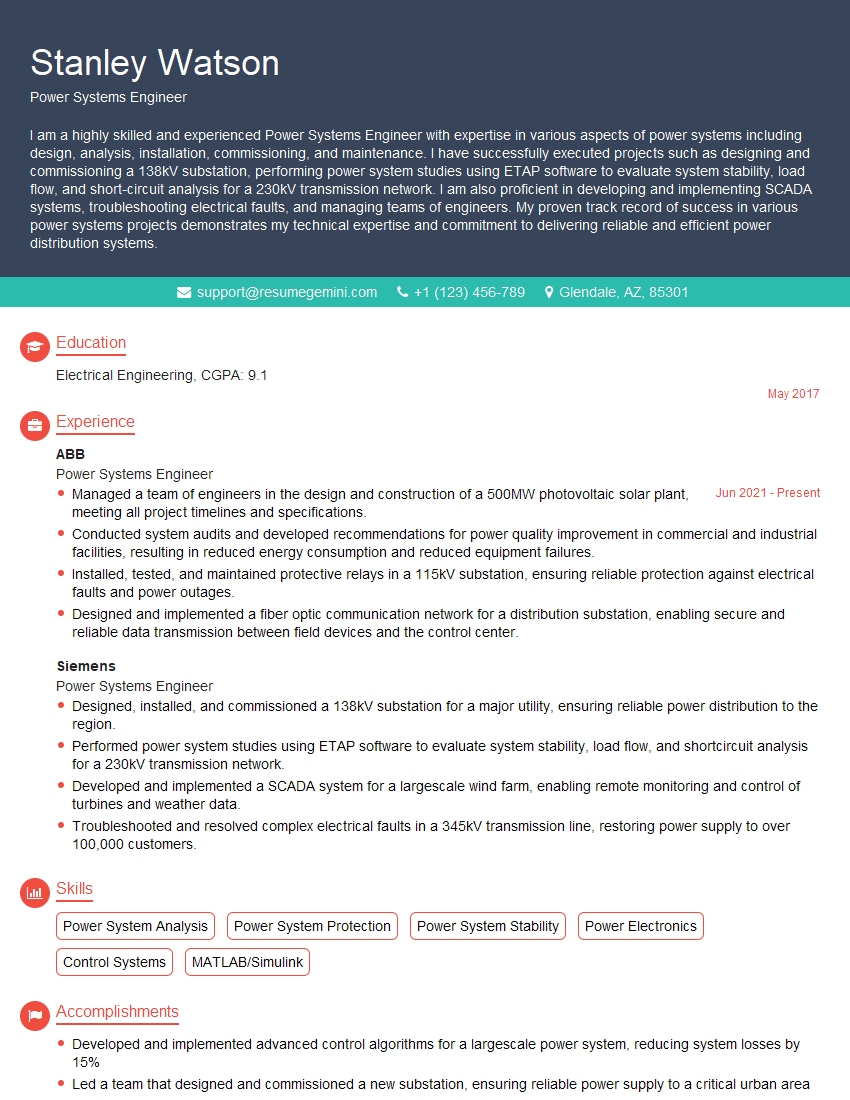
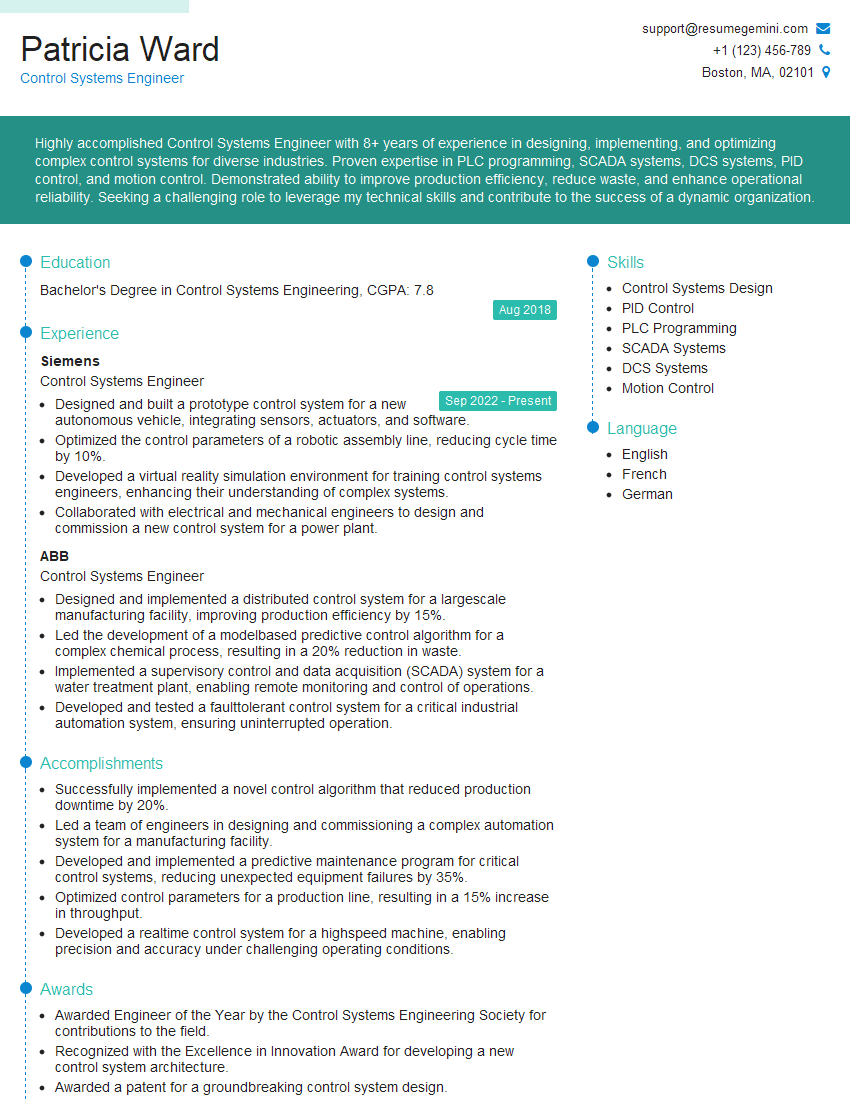
Mastering Grid Modernization and Smart Grid technologies is crucial for a successful and rewarding career in the energy sector. This rapidly evolving field offers exciting opportunities for innovation and impactful contributions. To stand out from the competition, a strong and ATS-friendly resume is essential. ResumeGemini is a trusted resource that can help you craft a compelling resume tailored to highlight your skills and experience in this dynamic area. Examples of resumes specifically designed for Grid Modernization and Smart Grid roles are available, providing you with practical guidance to build your own.
Explore more articles
Users Rating of Our Blogs
Share Your Experience
We value your feedback! Please rate our content and share your thoughts (optional).
What Readers Say About Our Blog
Very informative content, great job.
good