Unlock your full potential by mastering the most common Timber Inventory interview questions. This blog offers a deep dive into the critical topics, ensuring you’re not only prepared to answer but to excel. With these insights, you’ll approach your interview with clarity and confidence.
Questions Asked in Timber Inventory Interview
Q 1. Describe the different methods used for timber cruising.
Timber cruising, or forest inventory, employs various methods to estimate the volume and value of timber in a stand. The choice of method depends on factors like the stand’s size, accessibility, and the level of detail required. Common methods include:
- Fixed-radius plots: Circular plots of a predetermined size (e.g., 1/10th of an acre) are established, and all trees within the plot are measured for diameter at breast height (DBH) and height. This is straightforward but can be inefficient in dense stands or areas with uneven tree distribution.
- Variable-radius plots (prism or angle gauge cruising): These utilize an instrument (prism or angle gauge) to select trees based on their size. Larger trees are included in the sample with a smaller probability, making it more efficient than fixed-radius plots in heterogeneous stands. For example, a prism with a basal area factor (BAF) of 10 would include any tree that appears larger than the prism’s angle from a specified distance.
- Line-plot cruising: A line is established across the stand, and measurements are taken along transects running perpendicular to the line. This method is useful for large, relatively uniform stands.
- Point sampling: Similar to variable radius plots, but sampling is done from individual points, assessing trees within a defined angle. It is efficient and effective for assessing stands with varying density.
- Remote sensing techniques: These include aerial photography, LiDAR (Light Detection and Ranging), and satellite imagery. These techniques provide a large-scale overview and can be combined with ground-based measurements for more accurate estimates. LiDAR, for example, can provide highly accurate measurements of tree height and crown dimensions, crucial for volume estimation.
In practice, I often use a combination of methods to optimize accuracy and efficiency, adapting my approach to the specific characteristics of each forest.
Q 2. Explain the concept of volume estimation in timber inventory.
Volume estimation is a crucial step in timber inventory, aiming to determine the total volume of merchantable timber in a stand. This involves several steps:
- Measuring tree dimensions: DBH and tree height are typically measured using instruments like diameter tapes and hypsometers. Advanced methods may use laser-based tools for more precise measurements.
- Using volume equations: These are mathematical models that relate tree dimensions (DBH and height) to volume. Many different equations exist, some species-specific and others applicable across broader tree groups. The choice of equation depends on the species, region, and measurement data available. An example of a simple equation is a Smalian’s formula, but more complex equations that consider stem taper are generally preferred for higher accuracy.
- Calculating individual tree volumes: Using the selected volume equation and the measured dimensions, the volume of each sampled tree is calculated.
- Extrapolating to the whole stand: The individual tree volumes are then expanded to estimate the total volume of the stand using appropriate expansion factors based on the sampling method used. For example, if you measured trees in a 1/10 acre plot and the stand is 100 acres, the total volume would be 1000 times the measured volume in the plot.
Accuracy in volume estimation hinges on precise measurements and the selection of an appropriate volume equation. Advanced techniques, like 3D modeling based on LiDAR data, are becoming increasingly common and can substantially improve the accuracy of volume estimations.
Q 3. What are the advantages and disadvantages of using fixed-radius plots versus variable-radius plots?
Fixed-radius and variable-radius plots offer distinct advantages and disadvantages:
- Fixed-radius plots:
- Advantages: Simple to understand and implement; data collection is straightforward.
- Disadvantages: Inefficient in uneven-aged stands or stands with varying densities. Small trees may dominate the sample if density is high, disproportionately affecting the final estimate.
- Variable-radius plots:
- Advantages: More efficient in heterogeneous stands; larger trees are proportionally more represented, providing a more accurate assessment of merchantable volume.
- Disadvantages: Requires specialized equipment (prism or angle gauge); data collection and calculations are more complex.
The choice between fixed and variable radius plots depends on the specific characteristics of the stand and the objectives of the inventory. In dense stands with a wide range of tree sizes, variable-radius plots are generally preferred. However, in simpler stands, fixed-radius plots may suffice.
Q 4. How do you account for tree mortality in timber inventory?
Accounting for tree mortality is crucial for accurate timber inventory. Several methods can be used:
- Direct Measurement: Identify and measure dead trees during the inventory process, noting the cause of mortality (disease, insect infestation, etc.). Include the volume of dead trees in the calculations, potentially using separate volume equations for dead wood, if necessary.
- Mortality Rate Estimation: If complete enumeration of dead trees is impractical, estimate the mortality rate based on historical data or visual assessments. This could involve using remote sensing data to identify areas with higher mortality rates. Applying the estimated rate to the live tree volume provides a more complete estimation.
- Age Class Analysis: By analyzing the age structure of the stand, one can estimate the potential for mortality and incorporate this into the projection of future inventory.
Accurate accounting for mortality is vital, as ignoring it can lead to significant overestimation of the available timber resource. In my experience, incorporating a mortality assessment into the inventory process, regardless of the method, significantly improves the accuracy and reliability of the results.
Q 5. Describe your experience with different sampling techniques (e.g., systematic, stratified random).
My experience encompasses a range of sampling techniques crucial for efficient and accurate timber inventory:
- Systematic Sampling: This involves establishing a grid pattern across the stand and sampling at regular intervals. It is simple and ensures even coverage of the area, but may miss variations within the stand if the pattern coincides with an underlying environmental gradient.
- Stratified Random Sampling: This technique divides the stand into strata based on characteristics like age, species composition, or topography. Then, a random sample is taken from each stratum, ensuring representation from all sub-populations within the stand. It is particularly useful for heterogeneous stands. For instance, if a stand has distinct sections with different tree densities, stratified random sampling would ensure adequate sampling from each section, increasing the accuracy and representativeness of the estimate.
- Cluster Sampling: This involves randomly selecting clusters of plots and conducting a complete inventory within each cluster. It’s cost-effective for large areas but may not be as statistically accurate as other methods, especially in heterogeneous areas.
The selection of the most appropriate sampling technique is a critical decision that I carefully consider based on the specific characteristics of the stand being inventoried and the resources available. Frequently, I utilize a combination of techniques to maximize accuracy and efficiency.
Q 6. How do you handle inaccessible areas during timber inventory?
Inaccessible areas present a significant challenge in timber inventory. Several strategies can be employed:
- Alternative Sampling Methods: In areas inaccessible by foot, I might utilize remote sensing techniques like aerial photography or LiDAR, combined with strategically placed ground plots in accessible areas, to extrapolate data across the entire area.
- Interpolation Techniques: If data is available from nearby accessible areas, interpolation methods can be used to estimate values in inaccessible regions. However, this approach introduces uncertainty and its accuracy depends heavily on the spatial correlation between accessible and inaccessible areas.
- Stratification: In some cases, inaccessible areas may be classified as a separate stratum, acknowledging the lack of direct measurements and adjusting the analysis to account for the uncertainty introduced by this missing data.
The best approach depends on the extent of inaccessibility, the value of the timber in the inaccessible area, and the resources available. Often, a combination of these approaches will be employed to provide the best estimate possible while acknowledging the inherent limitations.
Q 7. Explain the role of Geographic Information Systems (GIS) in timber inventory.
Geographic Information Systems (GIS) play a transformative role in modern timber inventory, providing powerful tools for data management, analysis, and visualization. GIS capabilities include:
- Spatial Data Management: GIS software allows efficient storage and management of spatial data such as plot locations, tree measurements, and boundary lines. This improves data organization and facilitates access.
- Data Integration: GIS integrates diverse data sources, such as remotely sensed imagery (aerial photos, LiDAR), topographic maps, and ground-based measurements, creating a comprehensive view of the forest.
- Spatial Analysis: GIS allows for spatial analysis such as calculating stand areas, assessing accessibility, identifying areas of high mortality, and modeling forest growth and yield.
- Visualization and Mapping: GIS provides tools to create maps showcasing various aspects of the forest inventory, improving communication and decision-making.
- Integration with other Software: GIS can be integrated with other software used in forest management, like forest growth simulation models, allowing for more comprehensive planning and forecasting.
In my professional experience, GIS has been indispensable for improving efficiency, accuracy, and decision-making within the context of timber inventory. It allows for a more holistic approach to forest management and provides crucial information to support sustainable timber harvesting practices.
Q 8. What software packages are you familiar with for timber inventory and analysis?
I’m proficient in several software packages commonly used for timber inventory and analysis. These include:
- Forestry Pro: A comprehensive software suite offering tools for stand-level inventory, growth and yield modeling, and timber valuation. I’ve used it extensively for creating detailed forest maps and analyzing stand characteristics.
- Heureka: Known for its capabilities in handling large datasets and complex spatial analyses, it’s invaluable for projects involving aerial imagery or LiDAR data. I’ve employed Heureka for analyzing high-resolution imagery to accurately assess timber volumes across vast tracts of land.
- ArcGIS: While not exclusively forestry-focused, ArcGIS is essential for geographic information system (GIS) analysis, enabling me to integrate inventory data with other spatial information, like topography and roads, for efficient planning and management. I regularly leverage ArcGIS to create maps displaying timber volume, species composition, and other critical attributes.
- R with forestry-specific packages: I leverage the statistical power of R and packages like ‘FME’ to perform advanced statistical analyses of timber data, conduct custom growth and yield simulations, and create predictive models. This is useful for exploring complex relationships between stand variables and timber growth.
My familiarity with these programs allows me to choose the optimal tools based on the project’s specific needs and scale.
Q 9. How do you ensure accuracy and precision in timber volume calculations?
Accuracy and precision in timber volume calculations are paramount. I achieve this through a multi-pronged approach:
- Careful Field Measurements: I use precise instruments like diameter tapes, hypsometers (to measure tree height), and BAF (Basal Area Factor) angle gauges to collect accurate field data. Multiple measurements are taken for each tree to minimize error.
- Appropriate Volume Equations: The choice of volume equation is crucial and depends on the tree species and region. I select equations validated for the specific forest type and ensure they account for tree form and taper. Using the wrong equation can lead to significant inaccuracies.
- Quality Control and Data Validation: Regular checks and cross-referencing of data are vital. I review field data for inconsistencies and compare results against independent measurements whenever possible. Data cleaning and outlier identification are important steps in ensuring data integrity.
- Statistical Analysis: Employing statistical methods to assess the uncertainty associated with the volume estimates is crucial. Confidence intervals and error propagation allow for a more realistic representation of the uncertainty inherent in timber volume estimations.
For example, if I’m working with a predominantly even-aged stand of Douglas fir, I would use a volume equation specifically calibrated for that species and region, coupled with careful measurements of diameter at breast height (DBH) and total height, to ensure maximum accuracy in my volume estimates. Statistical techniques would be applied to quantify the accuracy of these estimates.
Q 10. Describe your experience with using aerial photography or LiDAR data for timber inventory.
I have extensive experience using both aerial photography and LiDAR data for timber inventory. Both technologies offer valuable perspectives but with different strengths:
- Aerial Photography: I’ve used high-resolution aerial photographs to delineate forest boundaries, assess stand density visually, and even estimate tree heights using photogrammetric techniques. This is particularly helpful for initial assessments and planning purposes, particularly in areas with limited access.
- LiDAR (Light Detection and Ranging): LiDAR provides a far more precise point cloud representing the forest canopy and ground surface. This allows for detailed 3D modeling of the forest, accurate estimations of individual tree heights and diameters, and precise calculations of timber volume. I’ve used LiDAR data to create detailed inventory maps and quantify biomass in large, complex forest stands, reducing the need for extensive fieldwork.
For instance, in a recent project, we used LiDAR data to create a highly detailed 3D model of a large pine plantation, allowing for the precise estimation of timber volume without the need for extensive ground-truthing. This resulted in significant time and cost savings compared to traditional methods.
Q 11. How do you interpret and analyze timber inventory data?
Interpreting and analyzing timber inventory data involves a systematic approach:
- Data Summarization and Descriptive Statistics: I begin by calculating summary statistics like mean, median, and standard deviation for key variables such as DBH, height, volume, and basal area to get an overview of the forest stand.
- Spatial Analysis: Using GIS software, I analyze the spatial distribution of trees and stands. This helps in identifying areas with high timber volume, areas with specific species dominance, and potential harvesting areas.
- Growth and Yield Modeling: I incorporate growth and yield models to predict future timber volume and assess the impacts of different management scenarios. This is essential for long-term forest planning.
- Volume Estimation: Calculations of total volume, volume by species, and volume by diameter class provide critical information for planning timber harvesting and estimating potential revenue.
- Data Visualization: Creating maps, graphs, and charts is crucial for communicating findings effectively to stakeholders and making informed management decisions. Using easily interpretable visuals helps stakeholders understand the results and their implications.
For example, by analyzing data on tree diameter distribution, I can predict future growth and determine when the stand will reach its optimal harvesting age, ensuring maximized returns.
Q 12. Explain the concept of growth and yield modeling in forestry.
Growth and yield modeling predicts the future growth of a forest stand based on current conditions and projected environmental factors. It’s a powerful tool for forest management:
- Predictive Power: Models simulate tree growth, mortality, and recruitment, forecasting the future volume, biomass, and species composition of a forest stand.
- Management Scenarios: They allow foresters to evaluate different management strategies, such as thinning regimes or fertilization, and their impact on future timber yield.
- Sustainability: Models help determine sustainable harvesting levels, preventing overexploitation and ensuring the long-term health and productivity of the forest.
- Types of Models: Various models exist, ranging from simple stand-level models to complex individual-tree models. The choice depends on data availability, computational resources, and the level of detail required.
Imagine a scenario where a forest manager wants to determine the optimal thinning schedule for a particular stand. Growth and yield models can simulate different thinning intensities and predict the resulting timber volume at different points in time, allowing for a data-driven decision that optimizes both timber production and forest health.
Q 13. How do you estimate timber value based on inventory data?
Estimating timber value uses inventory data combined with market information:
- Volume Data: Inventory data provides the quantity of timber available, broken down by species and quality classes.
- Market Prices: Current market prices for different timber species, grades, and product forms (logs, lumber, pulpwood) are obtained from industry sources.
- Quality Assessment: The quality of the timber, considering factors like defects, disease, and form, significantly impacts its value. Quality assessments are integrated into the valuation process.
- Transportation Costs: The distance to mills and transportation costs are factored in, as these affect the net value received by the landowner.
- Stumpage Price: The final value is typically expressed as a stumpage price (price per unit volume at the stump).
For example, a high-quality stand of red oak with large-diameter trees will fetch a significantly higher stumpage price compared to a low-quality stand of aspen with smaller trees. The value calculation would take into account the volume of each species and quality class, the respective market prices, and transportation costs.
Q 14. What are the key factors affecting timber growth and yield?
Numerous factors influence timber growth and yield:
- Site Quality: Factors like soil type, fertility, moisture availability, and topography significantly influence tree growth. Better sites generally support faster growth.
- Climate: Temperature, precipitation, and sunlight directly affect tree growth and survival. Extreme weather events can also have a detrimental impact.
- Species: Different tree species have different growth rates and responses to environmental factors. Fast-growing species will naturally yield more timber over a given period.
- Competition: The density of trees in a stand influences individual tree growth. High competition can suppress growth, while appropriate thinning can enhance it.
- Genetics: Tree genetics play a critical role. Superior genotypes selected for planting can dramatically enhance growth rates and timber quality.
- Pest and Disease: Insect infestations and diseases can severely reduce timber growth and yield, leading to significant economic losses.
- Management Practices: Forest management practices, such as thinning, fertilization, and prescribed burns, significantly influence growth and yield.
For example, a poorly drained site will limit growth compared to a well-drained site, and a stand densely stocked with trees will experience slower individual tree growth compared to a thinned stand. Understanding these factors is essential for effective forest management and maximizing timber yield.
Q 15. Describe your experience with forest stand delineation and classification.
Forest stand delineation and classification are fundamental to accurate timber inventory. Delineation involves dividing a forest into homogenous stands based on factors like tree species, age, size, density, and site characteristics. This creates manageable units for inventory. Classification then assigns each stand to a specific category based on these characteristics. Think of it like sorting a box of LEGOs – you first separate the pieces into groups (delineation) based on color and size, and then you categorize them further (classification) into specific types of LEGOs, like bricks, plates, or special pieces.
In my experience, I use a combination of remote sensing data (aerial photos, LiDAR) and field observations. Remote sensing allows for efficient large-scale delineation, while fieldwork provides the ground truth needed for accurate classification. For example, I might use satellite imagery to identify potential stand boundaries, then conduct field visits to verify the species composition and measure key characteristics like diameter at breast height (DBH) and tree height. This ensures the accuracy of our inventory data. Different classification systems exist, such as the Society of American Foresters (SAF) system, which I am proficient in using and adapting based on client needs and specific forest characteristics.
Career Expert Tips:
- Ace those interviews! Prepare effectively by reviewing the Top 50 Most Common Interview Questions on ResumeGemini.
- Navigate your job search with confidence! Explore a wide range of Career Tips on ResumeGemini. Learn about common challenges and recommendations to overcome them.
- Craft the perfect resume! Master the Art of Resume Writing with ResumeGemini’s guide. Showcase your unique qualifications and achievements effectively.
- Don’t miss out on holiday savings! Build your dream resume with ResumeGemini’s ATS optimized templates.
Q 16. How do you present timber inventory results to clients or stakeholders?
Presenting timber inventory results requires clear and concise communication tailored to the audience. I typically start with a summary of key findings, highlighting total volume, species composition, and stand characteristics. I use visual aids extensively – maps, charts, and graphs – to illustrate the data effectively. For example, a map might display the spatial distribution of different species or volume classes, while a chart might show the distribution of tree diameters. This makes complex data more accessible and understandable.
Beyond the visuals, I provide detailed reports that include methodologies used, data tables, and uncertainty analysis. The level of detail varies depending on the client’s needs. For instance, a logging company might focus on harvestable volume, while a conservation organization might prioritize information on biodiversity and carbon sequestration. I always ensure the report is easily understood and addresses the client’s specific questions and concerns. Interactive presentations and site visits allow for deeper engagement and address any clarifications.
Q 17. What are the common sources of error in timber inventory, and how do you mitigate them?
Timber inventory is subject to several sources of error. These errors can be broadly classified into sampling errors, measurement errors, and processing errors. Sampling errors arise from the fact that we don’t measure every tree; instead, we take a sample. This introduces variability and uncertainty. We mitigate this by using appropriate sampling designs (e.g., stratified random sampling), increasing sample size, and employing statistical methods to estimate the overall error.
Measurement errors result from inaccuracies in measuring tree characteristics like DBH and height. These errors can be minimized by using calibrated instruments, employing proper measurement techniques, and having well-trained personnel. Processing errors occur during data entry, analysis, and reporting. Careful data validation, quality control checks, and using software designed specifically for forest inventory helps mitigate these errors. For example, I routinely perform data audits to identify and correct inconsistencies. Regular calibration of equipment, use of standardized protocols and a robust data management system are integral to minimizing all types of errors.
Q 18. How do you incorporate sustainability principles into timber inventory practices?
Sustainability is paramount in modern forestry. I integrate sustainability principles into timber inventory practices in several ways. First, I ensure that inventory data informs sustainable harvesting practices. By accurately assessing the volume and growth rate of trees, we can determine sustainable yield levels that prevent over-exploitation. Second, I incorporate biodiversity considerations into the inventory process. For example, I will identify and map areas of high biodiversity value to ensure their protection during harvesting operations. Finally, I contribute to carbon accounting by measuring forest carbon stocks, enabling a comprehensive view of the forest’s carbon sequestration potential. Accurate data allows for informed decision-making regarding carbon management and offsets. I incorporate the consideration of long-term forest health and resilience into my assessments.
Q 19. Explain your understanding of forest certification schemes and their impact on timber inventory.
Forest certification schemes, such as the Forest Stewardship Council (FSC) and the Programme for the Endorsement of Forest Certification (PEFC), set standards for sustainable forest management. These schemes have a direct impact on timber inventory, as they require comprehensive data collection and reporting on a range of forest attributes. For example, certified forests require detailed inventory data on species composition, tree size distribution, forest structure, and regeneration status. This information is used to demonstrate compliance with the certification standards. My understanding and application of these standards, including specific requirements regarding data collection methods and reporting, help ensure that the inventory work complies with all requirements. This detailed data contributes to transparency and accountability within the timber industry.
Q 20. Describe your experience with data management and analysis in forestry.
Data management and analysis are critical components of timber inventory. I utilize a variety of software packages (e.g., specialized forest inventory software, GIS, statistical packages) to manage and analyze data efficiently. This includes organizing data into structured databases, performing statistical analyses to estimate population parameters (e.g., mean volume, variance), and creating maps and charts to visualize the results. My experience includes working with large datasets, including both field-collected data and remotely sensed data. For example, I regularly use GIS software to integrate various data layers (e.g., topography, soil type, stand attributes) to generate comprehensive forest maps and conduct spatial analyses.
Data quality control is a key aspect of my workflow. Regular data validation, error checks and using version control systems ensure data integrity and accuracy. I develop customized databases and reporting systems to meet unique client needs. Using a system of checks and balances, as well as appropriate backup systems, ensures that the data collected remains secure and readily accessible when needed.
Q 21. How do you maintain the accuracy of timber inventory data over time?
Maintaining the accuracy of timber inventory data over time requires a combination of approaches. Regular re-measurement of permanent sample plots is crucial. These plots allow for monitoring growth and mortality rates over time, providing valuable information on forest dynamics. Remote sensing data can be integrated to monitor changes at a larger scale between inventory periods. Comparing data from different time points highlights changes and allows adjustments to future projections. Using a database system that is continually updated and validated reduces discrepancies between inventories.
Additionally, careful documentation of methodology, including sampling design and measurement techniques, is essential for ensuring consistency and comparability over time. By clearly outlining the data collection procedures, any future reassessments can be conducted reliably and the previous findings can be referenced for analysis of trends and changes within the forest.
Q 22. Explain the different types of timber sales methods and their relevance to inventory data.
Timber sales methods dictate how standing timber is offered and sold. The chosen method significantly impacts the inventory data required and how that data is used for valuation and planning. Here are some common methods:
- Cruising Sale: The timber is inventoried using field measurements (cruising) before the sale. This allows for accurate volume estimates and enables competitive bidding based on precise data. Inventory data here is crucial for determining the sale price per unit volume, ensuring fair market value.
- Lump Sum Sale: The entire stand of timber is sold for a fixed price, regardless of the precise volume. Inventory data plays a less direct role here; a general estimate might suffice, focusing more on overall stand characteristics like species composition and estimated volume range.
- Scaled Sale: The volume of timber is precisely measured after harvesting (scaling) to determine the final payment. Inventory data may be used initially as a rough estimate but becomes less critical as the final volume dictates payment. This method mitigates risk for the buyer but requires thorough post-harvest scaling.
- Appraised Sale: A professional appraiser evaluates the timber value based on extensive inventory data including volume, species, quality, and market conditions. This is the most data-intensive method, ensuring fair value for both buyer and seller. Detailed inventory reports are essential.
The relevance of inventory data varies depending on the sales method. Cruising and appraised sales necessitate comprehensive inventory, while lump sum sales rely on less detailed information. Scaled sales rely on post-harvest data rather than pre-sale inventory, although initial estimates are still often employed.
Q 23. Describe the use of statistical methods in analyzing timber inventory data.
Statistical methods are indispensable for analyzing the vast amounts of data collected during timber inventories. They enable efficient data summarization, accurate volume estimation, and reliable predictions of future growth.
- Descriptive Statistics: We use measures like mean, median, and standard deviation to summarize data on tree diameter, height, and volume. This helps understand the overall characteristics of a forest stand.
- Sampling Techniques: Complete enumeration is often impractical, so we use statistical sampling (e.g., stratified random sampling, cluster sampling) to obtain representative samples of the population of trees. This ensures efficient data collection without sacrificing accuracy. We then use statistical inference to extrapolate findings from the sample to the entire stand.
- Regression Analysis: We create models relating tree characteristics (e.g., diameter at breast height (DBH), height) to volume. This allows us to predict the volume of unmeasured trees, saving time and resources during inventory.
- Growth and Yield Modeling: These statistical models predict future timber volume based on past growth data, site characteristics, and management practices. This is crucial for long-term forest planning and sustainable harvesting.
For example, we might use a linear regression model (volume = b0 + b1*DBH + b2*Height) to estimate the volume of individual trees, and then apply that model across the entire inventory area. The accuracy of the model is vital for generating reliable estimates of total timber volume.
Q 24. How do you ensure compliance with relevant regulations and standards during timber inventory?
Compliance with regulations and standards is paramount in timber inventory. Failure to comply can lead to legal repercussions and reputational damage. My approach involves:
- Knowing the applicable laws and standards: This includes national and regional regulations on forest management, sustainable forestry practices, endangered species protection, and accurate measurement standards.
- Using standardized measurement techniques: We employ techniques like the Smalian formula (
Volume = (0.25*π)*(D1²+D2²)*H, where D1 and D2 are top and bottom diameters and H is height) to calculate tree volume, ensuring consistent and comparable results across inventories. - Accurate data recording and reporting: We maintain meticulous records, following a standardized format. This ensures transparency and traceability of inventory data. Digital data management systems help minimize errors and ensure consistency.
- Regular audits and quality control: We conduct regular internal quality checks and welcome external audits to confirm our adherence to the highest professional standards and legal requirements.
- Collaboration with regulatory agencies: We work closely with regulatory bodies, ensuring our methods and results are transparent and compliant. This may include submitting inventory reports and participating in compliance reviews.
For instance, in areas with endangered species, we must adapt our field procedures to avoid habitat disturbance and ensure adherence to environmental regulations. This might involve careful route planning and utilizing specialized survey techniques.
Q 25. What are the challenges associated with conducting timber inventory in diverse forest types?
Conducting timber inventories in diverse forest types presents unique challenges:
- Varied Vegetation Structure: Dense undergrowth, uneven-aged stands, and complex canopy layers in some forests can hinder accurate measurements. Techniques like LiDAR or specialized cruising methods are crucial for overcoming these difficulties.
- Accessibility Issues: Steep slopes, dense vegetation, and remote locations can make accessing some areas difficult and time-consuming. This might require using aerial survey techniques (e.g., drone imagery) or specialized equipment like all-terrain vehicles.
- Species Variation: Differences in tree species, their growth forms, and their susceptibility to diseases and pests can complicate inventory procedures. Specialized knowledge of local species is crucial for accurate identification and volume estimation.
- Data Management Complexity: Integrating data from multiple sources (e.g., field measurements, aerial imagery, remote sensing data) demands sophisticated data management and analysis techniques.
For example, in a rainforest, dealing with dense canopy and challenging terrain may require a combination of satellite imagery to delineate forest types, ground-truthing to assess tree species, and drone imagery to measure tree heights. Careful planning and the use of diverse technologies are crucial to successful inventory.
Q 26. Explain the impact of climate change on timber inventory and forest management.
Climate change significantly impacts timber inventories and forest management. Its effects include:
- Increased frequency and intensity of disturbances: Wildfires, insect outbreaks, and storms can cause substantial timber losses and alter forest structure, requiring adjustments to inventory methods and more frequent assessments.
- Altered growth rates: Changes in temperature and precipitation patterns affect tree growth rates, requiring updated growth models and adjustments to timber yield predictions.
- Shifting species distribution: Climate change alters the suitability of habitats for different tree species. This leads to changes in species composition, requiring inventories to reflect these shifts and adapt management strategies.
- Increased risk of pests and diseases: Changes in climate can favor the spread of pests and diseases, affecting tree health and survival. These factors need to be considered in predicting future timber availability.
For example, increased wildfire frequency might necessitate the use of remote sensing data to assess burn severity and quickly estimate timber losses. We would also need to account for altered growth rates when forecasting future timber supplies, potentially necessitating a transition to more climate-resilient species in forest management plans.
Q 27. How do you adapt your timber inventory methods to different terrain and accessibility conditions?
Adapting inventory methods to diverse terrain and accessibility involves a flexible approach, often requiring a combination of techniques:
- Ground-based measurements: Traditional cruising methods remain essential, but the specific approach is adjusted based on terrain. In challenging terrain, we may use smaller plots or more focused sampling strategies.
- Aerial surveys: LiDAR, aerial photography, and drone imagery provide efficient data acquisition for large areas, especially in inaccessible regions. This allows us to map forest structure, measure tree heights, and identify areas requiring ground-truthing.
- Remote sensing data: Satellite imagery provides large-scale data on forest cover and health. This aids in stratification, planning field surveys, and monitoring changes over time.
- Specialized equipment: All-terrain vehicles, GPS devices, and other specialized equipment facilitate access to remote or challenging terrains.
For instance, in steep mountainous areas, we might use a combination of LiDAR for initial volume estimates and then conduct ground-based measurements only in selected areas to validate the LiDAR data and measure tree characteristics in detail. This combined approach maximizes efficiency and accuracy.
Q 28. Describe your experience working with various stakeholders in a timber inventory project.
Effective timber inventory projects rely on collaboration with diverse stakeholders. My experience includes working with:
- Landowners/Forest Managers: Understanding their objectives, budget constraints, and management goals is crucial for designing a suitable inventory plan. Clear communication and transparency are paramount.
- Forestry Professionals: Collaboration with other foresters, ecologists, and GIS specialists provides valuable expertise and supports efficient data collection and analysis.
- Government Agencies: Working with regulatory bodies to ensure compliance with laws and standards is essential. This often includes sharing inventory data and participating in compliance reviews.
- Logging Companies: Coordinating with logging companies ensures that inventory data is used effectively for planning sustainable harvests and accurately assessing timber value.
- Local Communities: Engaging with local communities helps understand potential impacts of the inventory and forest management practices, promoting transparency and fostering cooperation.
In one project, I collaborated extensively with local indigenous communities to integrate their traditional ecological knowledge into the inventory process, leading to a more accurate and culturally sensitive approach. This strengthened community relations and fostered a better understanding of sustainable forest management.
Key Topics to Learn for Timber Inventory Interview
- Inventory Methods: Understanding different inventory methods like cruising, remote sensing (LiDAR, satellite imagery), and volume estimation techniques. Practical application includes choosing the appropriate method based on project scale, budget, and accuracy requirements.
- Data Collection and Analysis: Mastering data acquisition techniques, including field measurements, data entry, and using software for data analysis and reporting. Practical application involves interpreting data to assess timber volume, species composition, and growth rates.
- Growth and Yield Modeling: Familiarity with growth and yield models used to predict future timber volume and value. Practical application includes using models to inform sustainable harvesting practices and long-term forest management plans.
- Software Proficiency: Demonstrate knowledge of relevant software used in timber inventory, such as GIS software (ArcGIS, QGIS), forest inventory software packages, and data analysis tools (Excel, R).
- Sustainable Forestry Practices: Understanding the principles of sustainable forest management and their relationship to accurate timber inventory. This includes considerations for biodiversity, carbon sequestration, and long-term forest health.
- Economic Considerations: Appreciation of the economic aspects of timber inventory, including cost-benefit analysis, valuation of timber resources, and understanding market dynamics.
- Problem-Solving and Critical Thinking: Be prepared to discuss how you approach challenges in data analysis, inventory design, and interpreting results in the context of forest management objectives. This involves identifying and resolving inconsistencies, uncertainties, and limitations in data.
Next Steps
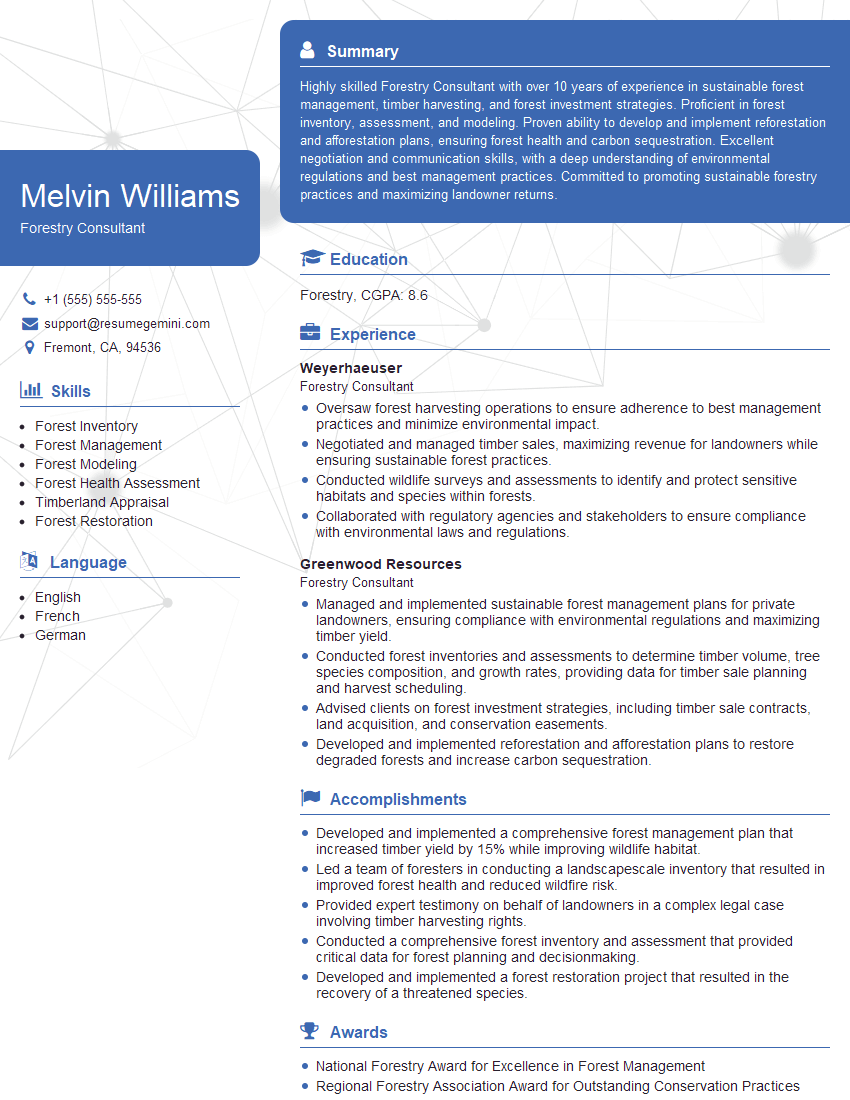
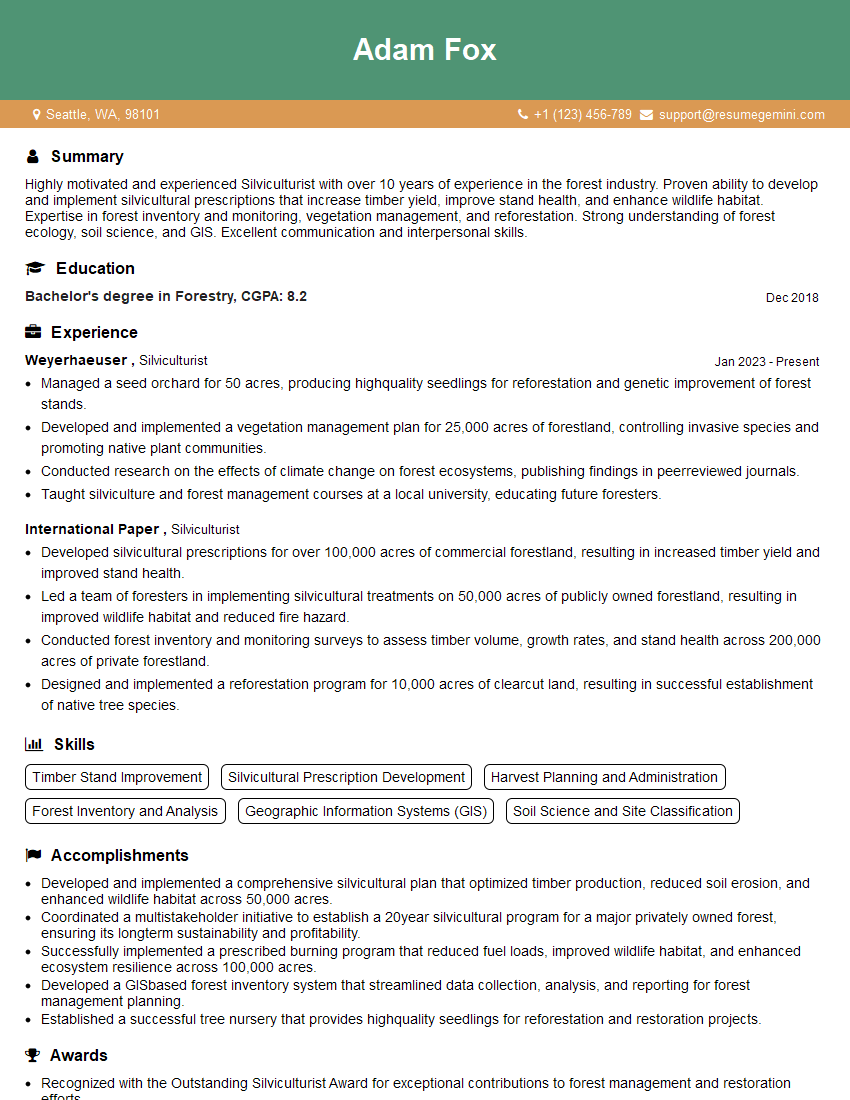
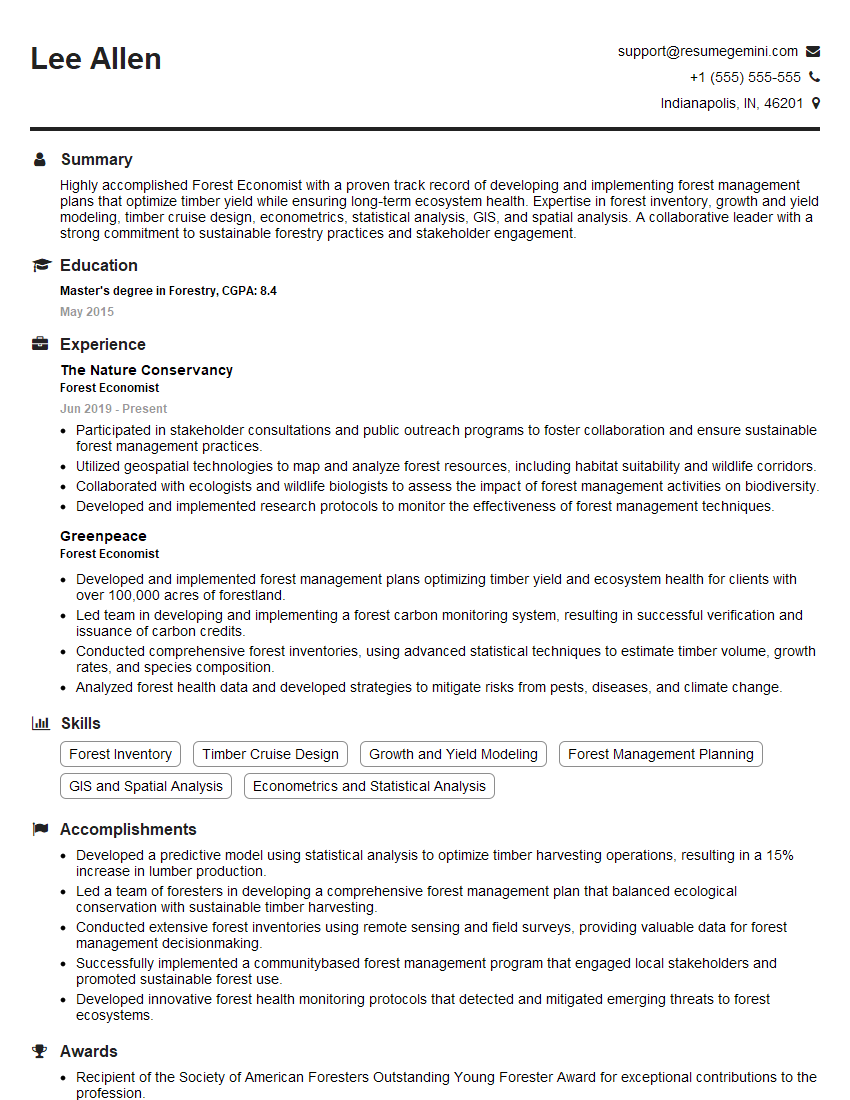
Mastering timber inventory is crucial for career advancement in forestry, opening doors to roles with increased responsibility and earning potential. A strong understanding of these principles demonstrates valuable skills to potential employers. To maximize your job prospects, it’s essential to present your skills effectively through an ATS-friendly resume. ResumeGemini is a trusted resource to help you build a professional and impactful resume that highlights your expertise in timber inventory. Examples of resumes tailored to the Timber Inventory field are available to help guide your resume creation.
Explore more articles
Users Rating of Our Blogs
Share Your Experience
We value your feedback! Please rate our content and share your thoughts (optional).
What Readers Say About Our Blog
Very informative content, great job.
good