The thought of an interview can be nerve-wracking, but the right preparation can make all the difference. Explore this comprehensive guide to Musician Management interview questions and gain the confidence you need to showcase your abilities and secure the role.
Questions Asked in Musician Management Interview
Q 1. Describe your experience in artist development and career planning.
Artist development is the cornerstone of a successful music career. It’s about nurturing an artist’s unique talent, crafting their brand identity, and strategically guiding their journey to achieve their artistic and commercial goals. Career planning involves a long-term vision, mapping out steps to reach milestones, and constantly adapting to the dynamic music industry.
My experience encompasses working with artists across various genres, from initial songwriting and demo creation to securing record deals, building a loyal fanbase, and managing their public image. For example, I worked with a young singer-songwriter, helping her refine her songwriting, develop a distinctive vocal style, and craft a compelling narrative around her music. This included collaborating with producers, securing showcases, and developing a social media presence that resonated with her target audience. We mapped out a five-year plan, targeting specific milestones like releasing an EP, securing a record deal, and touring nationally.
Another example involved guiding an established band through a rebranding effort after a change in lineup. This required carefully managing their public image, reassessing their target audience, and adjusting their marketing strategies accordingly. We successfully repositioned them in the market and expanded their reach.
Q 2. How do you build and maintain relationships with key industry stakeholders?
Building and maintaining strong relationships with industry stakeholders is paramount. This includes record labels, publishers, booking agents, publicists, radio programmers, and other influential figures. It’s about building trust, demonstrating professionalism, and providing consistent value.
My approach centers around open communication, mutual respect, and a collaborative mindset. I regularly network at industry events, attend conferences, and maintain consistent contact with key individuals through emails, phone calls, and in-person meetings. I always follow up after meetings, ensuring that I stay top-of-mind. For example, after securing a great placement for an artist’s song on a popular playlist, I always send a thank-you note to the playlist curator, strengthening that relationship.
Transparency and honesty are essential. I ensure that all communication is clear and concise, keeping stakeholders informed of developments and actively seeking feedback. By consistently delivering on my promises and building genuine connections, I cultivate long-term, mutually beneficial relationships.
Q 3. Explain your approach to negotiating contracts and securing favorable terms for artists.
Contract negotiation is a critical aspect of artist management. It requires a deep understanding of the music industry’s legal landscape, strong negotiation skills, and a focus on protecting the artist’s interests.
My approach involves thorough due diligence. Before entering any negotiation, I thoroughly review the contract, identifying potential issues and areas for improvement. I then develop a clear negotiation strategy, outlining my desired outcomes and potential concessions. I strive to build a collaborative relationship with the other party, focusing on finding mutually agreeable terms, rather than engaging in adversarial tactics.
For instance, I successfully negotiated a record deal that secured favorable royalty rates, creative control for the artist, and a clear exit strategy. This involved meticulous research, insightful counter-proposals, and a well-defined understanding of the artist’s market value. The key was understanding the other party’s motivations and needs, and finding common ground that served both sides.
Q 4. Detail your experience in budget management and financial reporting for musical acts.
Budget management and financial reporting are vital for the financial health and sustainability of a musical act. This includes creating detailed budgets, tracking expenses, managing income streams, and providing regular financial reports to the artist and stakeholders.
My experience includes creating comprehensive budgets encompassing all aspects of an artist’s operations, including recording costs, marketing expenses, touring logistics, and personnel salaries. I utilize accounting software to track income and expenses meticulously, generating regular financial reports that are easily understandable. This ensures transparency and enables informed decision-making.
For instance, I created a detailed budget for a band’s upcoming tour, factoring in costs such as venue rentals, travel, accommodation, equipment rentals, and marketing materials. I also projected income based on ticket sales and merchandise, ensuring that the tour was financially viable. Regular budget updates and financial reports kept the band informed of their financial standing and ensured effective resource allocation.
Q 5. How would you handle a conflict between an artist and a venue?
Conflicts between artists and venues can arise from various issues, such as technical problems, payment disputes, or breaches of contract. Handling these conflicts effectively requires diplomacy, strong communication skills, and a problem-solving approach.
My approach involves acting as a mediator, fostering open communication between all parties involved. I encourage the parties to express their concerns and actively work towards a mutually agreeable solution. If necessary, I will utilize legal counsel to ensure that the artist’s rights are protected.
For example, I once mediated a conflict between a band and a venue concerning payment issues. I reviewed the contract, clarified the terms, and facilitated open dialogue between the band and the venue manager. We eventually reached an agreement that satisfied both parties, avoiding further escalation of the situation.
Q 6. Outline your strategy for marketing and promoting an artist’s music.
Marketing and promoting an artist’s music requires a multi-faceted approach utilizing various digital and traditional channels. The strategy must be tailored to the artist’s genre, target audience, and overall career goals.
My strategy typically involves a combination of digital marketing (social media, streaming platforms, email marketing), public relations (press releases, media outreach, interviews), and traditional marketing (radio promotion, print advertising, live performances). I create a detailed marketing plan that includes specific objectives, target audiences, key performance indicators (KPIs), and a budget allocation. We continuously monitor the effectiveness of our strategies, making adjustments based on the data.
For example, I developed a comprehensive marketing campaign for an emerging indie artist. This included building a strong social media presence, engaging with fans online, pitching to relevant blogs and publications, securing radio play, and planning a series of live performances. By leveraging multiple channels and tracking performance data, we successfully grew their fanbase and secured media coverage.
Q 7. Describe your experience in tour planning and logistics.
Tour planning and logistics are crucial for successful live performances. It requires meticulous organization, attention to detail, and the ability to handle unforeseen circumstances. This encompasses every aspect of the tour, from securing venues and transportation to managing riders and accommodating the artist’s needs.
My experience involves coordinating all aspects of touring, from securing performance venues and negotiating contracts to arranging transportation, accommodation, and managing the artist’s travel itinerary and rider requirements. I also handle the logistics of equipment transportation, stage setup, and marketing the tour. I work closely with promoters, venue managers, and other stakeholders to ensure seamless execution.
For example, I planned a national tour for a rising pop artist, securing a series of venues across major cities, booking transportation and accommodation, and managing the artist’s schedule. This involved thorough research, careful coordination, and proactive problem-solving to ensure the smooth execution of each show.
Q 8. How do you assess an artist’s potential for success?
Assessing an artist’s potential for success is a multifaceted process that goes beyond just talent. It requires a holistic evaluation of several key factors. Think of it like building a house – you need a strong foundation (talent), sturdy walls (business acumen), and a beautiful exterior (brand).
- Musical Talent & Uniqueness: Does the artist possess a unique sound, exceptional vocal ability, songwriting skill, or instrumental prowess that sets them apart? We look for originality and something that resonates with a specific audience.
- Market Viability: This involves researching the current music landscape. What genres are trending? Who is the artist’s target audience? Is there a demand for their type of music? A fantastic artist with no audience is unfortunately still just a fantastic artist.
- Business Acumen & Work Ethic: Passion is crucial, but so is professionalism. Can the artist work collaboratively, manage their time effectively, and be receptive to constructive criticism? The most talented individual might struggle without a strong work ethic.
- Stage Presence & Charisma: For many artists, live performance is vital. We assess their stage presence, their ability to connect with an audience, and their overall charisma. It’s about the ‘X’ factor that keeps people coming back for more.
- Branding & Marketing Potential: How easily can we craft a compelling narrative around the artist? Does their image align with a specific aesthetic or genre? Can their brand resonate with a broad audience? This is about creating a marketable identity.
For example, I once worked with an artist who had incredible vocal talent but lacked stage presence. We focused on developing their confidence and performance skills, ultimately leading to a successful tour.
Q 9. What is your experience with social media marketing in the music industry?
Social media marketing is absolutely essential in today’s music industry. It’s not just about posting occasional updates; it’s about building a loyal community and engaging directly with fans. My experience includes developing and executing comprehensive social media strategies across various platforms.
- Platform-Specific Strategies: We tailor our approach to each platform. For example, Instagram emphasizes visuals, TikTok focuses on short-form video, and Twitter facilitates real-time engagement.
- Content Creation & Scheduling: We plan engaging content calendars, including behind-the-scenes glimpses, music snippets, live streams, and interactive Q&As. Consistency is key to maintaining audience engagement.
- Paid Advertising: Targeted advertising campaigns on platforms like Facebook and Instagram are used to reach new audiences based on demographics, interests, and listening habits. We meticulously track campaign performance and optimize accordingly.
- Influencer Marketing: Collaborations with relevant influencers can significantly increase an artist’s reach and credibility, providing access to a wider fan base.
- Analytics & Reporting: We carefully monitor key metrics – reach, engagement, website traffic – to assess campaign effectiveness and refine strategies over time.
For instance, I implemented a TikTok campaign for a relatively unknown artist that resulted in a significant increase in followers and streams within just three months, leading to a record deal.
Q 10. Explain your familiarity with different types of music publishing deals.
Music publishing deals are contracts that grant the rights to use and distribute a musical work. There are several types, each with its own implications for the songwriter and the publisher.
- Traditional Publishing Deal: This is the most common type, where the publisher administers the songwriter’s copyrights, collecting royalties from various sources (mechanical, performance, synchronization).
- Administered Publishing Deal: The songwriter retains ownership of the copyrights, but the publisher handles the administration tasks, such as licensing and collecting royalties. This offers more control to the songwriter.
- Co-Publishing Deal: The songwriter and publisher share ownership of the copyrights, usually on a percentage basis (e.g., 50/50). This can be beneficial for both parties.
- Self-Publishing: The songwriter retains full control of their copyrights and handles all administrative tasks independently. This requires significant time and effort but allows the songwriter to keep all the royalties.
Understanding these differences is crucial for ensuring the artist receives fair compensation and retains appropriate control over their work. We always advise artists to seek legal counsel before signing any publishing deal.
Q 11. How do you handle crisis management in the context of an artist’s career?
Crisis management in the music industry is about swift, decisive action to mitigate reputational damage. It’s about being proactive, having a plan, and reacting quickly and strategically.
- Immediate Response: Our first step is to assess the situation, determine the severity, and identify the key stakeholders (fans, media, labels, etc.).
- Damage Control: Depending on the nature of the crisis, we may issue a public statement, retract problematic content, or remove inflammatory posts. Transparency and honesty are paramount.
- Proactive Communication: We maintain open communication with key stakeholders, addressing concerns and providing updates. This fosters trust and prevents rumors from spreading.
- Legal Counsel: We engage legal counsel when necessary, particularly if the crisis involves legal ramifications.
- Reputation Repair: Once the immediate crisis is handled, we may undertake activities to repair the artist’s image, possibly through community service or a sincere apology, depending on the nature of the problem.
For example, if an artist is involved in a public scandal, we would immediately assess the situation, prepare a carefully worded statement, and work to control the narrative. A rapid and well-considered response can greatly reduce long-term damage.
Q 12. Describe your understanding of royalty structures and payments in the music industry.
Royalty structures and payments in the music industry are complex, involving multiple parties and various revenue streams. Think of it as a carefully orchestrated distribution of money earned from the artist’s music.
- Mechanical Royalties: Paid to songwriters when their songs are reproduced in physical or digital formats (CDs, downloads, streaming). Streaming services calculate these differently.
- Performance Royalties: Paid to songwriters and publishers when their songs are publicly performed (radio, live performances, television). These are collected by organizations like ASCAP and BMI.
- Synchronization Royalties: Paid to songwriters and publishers when their songs are used in visual media (movies, commercials, television shows).
- Publishing Royalties: These are the share of income collected by the music publisher.
- Artist Royalties: These are the artist’s share of the money earned from the sale or streaming of recordings.
Understanding these different streams and the percentages involved is crucial for negotiating fair deals and ensuring the artist receives proper compensation. We meticulously track all royalty payments and address any discrepancies promptly.
Q 13. How do you effectively manage an artist’s public image and reputation?
Managing an artist’s public image is like carefully crafting a brand. It’s about consistency, authenticity, and controlling the narrative. It’s crucial to present a positive and consistent image that resonates with the target audience.
- Brand Development: We work to define the artist’s core values, personality, and aesthetic. This informs all aspects of their public presentation.
- Public Relations: We build relationships with media outlets, ensuring positive press coverage and managing negative publicity effectively.
- Social Media Management: A strong social media presence helps build a connection with fans and control the information disseminated about the artist.
- Crisis Management (as discussed previously): Having a plan in place is essential for handling negative situations and protecting the artist’s reputation.
- Consistent Messaging: We ensure all communications align with the artist’s brand identity, reinforcing their message across all platforms.
For example, we might strategically use carefully chosen interviews and collaborations to showcase the artist’s talent and personality, creating a positive and engaging public persona.
Q 14. What strategies do you employ for building an artist’s fanbase?
Building a strong fanbase requires a multi-pronged approach that goes beyond just releasing music. Think of it as cultivating a garden – you need to nurture the plants and provide the right conditions for growth.
- High-Quality Music Releases: This forms the core of your strategy. Great music is the foundation upon which everything else is built.
- Engaging Social Media Presence (as discussed previously): Building a community online is paramount.
- Live Performances: Connecting with fans in person creates a strong bond.
- Email Marketing: This is a direct and effective way to communicate with fans.
- Merchandise & Fan Experiences: Offering exclusive merchandise and unique fan experiences create a sense of loyalty and community.
- Collaborations: Collaborations with other artists can expand your reach to new audiences.
- Targeted Advertising: Reach new fans effectively through paid advertising campaigns.
For instance, one artist I managed saw a significant increase in their fanbase by offering exclusive content to email subscribers, creating a feeling of exclusivity and value for their most devoted followers. That approach built a deeply engaged community.
Q 15. How familiar are you with music licensing and synchronization rights?
Music licensing and synchronization rights are crucial aspects of music business. Licensing involves granting permission to use a musical composition (the underlying song) in various contexts, such as in a film, TV show, advertisement, or video game. Synchronization rights, a subset of licensing, specifically grant permission to use a musical recording (the actual performance of the song) in conjunction with visual media. They’re often negotiated separately from the underlying composition’s license. Understanding the nuances is critical; for example, using a song in a commercial requires securing both composition and synchronization licenses. Misunderstanding these rights can lead to costly copyright infringement lawsuits.
My experience spans negotiating both composition and synchronization licenses for artists across various media platforms. I’ve secured lucrative deals for clients, ranging from small independent film productions to major international advertising campaigns. For instance, I successfully negotiated a significant synchronization license for one of my artists’ songs in a national television commercial, resulting in increased exposure and streaming numbers. This required careful evaluation of the campaign’s reach and impact, along with crafting a licensing agreement that protected the artist’s interests while fairly compensating them.
Career Expert Tips:
- Ace those interviews! Prepare effectively by reviewing the Top 50 Most Common Interview Questions on ResumeGemini.
- Navigate your job search with confidence! Explore a wide range of Career Tips on ResumeGemini. Learn about common challenges and recommendations to overcome them.
- Craft the perfect resume! Master the Art of Resume Writing with ResumeGemini’s guide. Showcase your unique qualifications and achievements effectively.
- Don’t miss out on holiday savings! Build your dream resume with ResumeGemini’s ATS optimized templates.
Q 16. Explain your experience with digital music distribution platforms.
Digital music distribution is the backbone of modern music dissemination. I’m highly proficient in utilizing platforms like Spotify, Apple Music, Amazon Music, YouTube Music, and Bandcamp. My experience goes beyond simply uploading tracks; I understand the intricacies of metadata optimization (ensuring accurate and consistent information about the artist and their music across all platforms), royalty tracking, and maximizing the visibility and discoverability of an artist’s music. This includes understanding the nuances of each platform’s algorithms and audience demographics to optimize campaign strategy.
For example, with one artist, we developed a strategic release plan incorporating pre-save campaigns, targeted playlist pitching, and social media promotion to maximize impact across various platforms. We meticulously track streaming data to monitor performance and adjust our strategy accordingly. I believe the key to successful distribution is a data-driven approach combined with creative promotional strategies that cater to the unique characteristics of each platform.
Q 17. What is your approach to managing an artist’s personal brand?
Building and managing an artist’s personal brand is as crucial as their musical talent. It’s about crafting a cohesive narrative that encompasses their music, their personality, their values, and their visual aesthetic. This involves creating a strong online presence through curated social media content, engaging website design, and consistent branding across all platforms. A well-defined brand helps an artist connect with their audience on a deeper level, fostering loyalty and creating opportunities for long-term growth.
My approach involves collaborative brainstorming sessions with the artist to define their unique brand identity. We develop a comprehensive marketing strategy, encompassing social media campaigns, media outreach, and public relations, tailored to their artistic vision and target audience. I have guided several artists in building consistent brand aesthetics and social media voice, resulting in increased engagement and fan loyalty, thereby enhancing their market appeal and generating more opportunities.
Q 18. How do you identify and secure sponsorship opportunities for an artist?
Securing sponsorships requires a deep understanding of an artist’s brand and target audience, as well as the potential sponsor’s values and goals. I begin by identifying brands whose values align with the artist’s image and whose target demographic overlaps significantly with the artist’s fanbase. This is often a research intensive process that includes analysing market trends and competitor analysis. Then, I craft compelling sponsorship proposals that highlight the mutual benefits, demonstrating how the partnership will enhance both the artist’s reach and the sponsor’s brand visibility.
For instance, I secured a successful sponsorship for an emerging pop artist with a sustainable clothing brand that shared the artist’s commitment to environmental causes. This created a natural synergy, attracting a larger fan base and generating significant positive media coverage. The key is creating authentic partnerships rather than forced collaborations, ensuring that both parties benefit from the relationship.
Q 19. Describe your experience with artist performance evaluations.
Artist performance evaluations are crucial for identifying areas of strength and weakness, informing future strategic decisions. My approach is data-driven, incorporating multiple metrics including streaming numbers, social media engagement, live show attendance, merchandise sales, and media coverage. I also conduct qualitative assessments, such as reviewing audience feedback and analyzing critical reviews, to gain a holistic understanding of an artist’s progress. The evaluation process is always collaborative, with regular feedback sessions to discuss goals, challenges, and the overall trajectory of the artist’s career.
For example, if a live performance evaluation indicates low audience engagement, we might reassess the setlist, stage production, or marketing strategy to improve the overall experience. Similarly, if streaming data reveals a lack of performance on a particular platform, we’d strategize accordingly; perhaps by focusing on targeted playlist pitching or adjusting the marketing efforts on that platform.
Q 20. How do you ensure the financial stability and long-term career prospects of an artist?
Ensuring financial stability and long-term career prospects requires a multifaceted approach. This includes negotiating favorable contracts, diligently tracking income and expenses, developing a comprehensive budgeting system, and exploring diverse revenue streams beyond album sales. This could involve licensing deals, merchandise sales, endorsements, live performances, and exploring opportunities in songwriting or producing for other artists. Financial planning should be a continuous, proactive process, with regular reviews and adjustments as the artist’s career evolves. I guide my artists to invest strategically, diversify income streams and plan for long-term growth.
For example, I work with artists to create a detailed budget that accounts for all expenses, including recording costs, marketing and promotion, travel and accommodation, and management fees. We regularly review the budget to ensure we are operating efficiently and meeting our financial goals. We may also explore options like setting up a small business entity (LLC or sole proprietorship) for tax and liability management.
Q 21. Explain your familiarity with legal considerations relevant to artist management.
Legal considerations are paramount in artist management. I have a solid understanding of copyright law, contract negotiation, intellectual property rights, and the legal framework governing the music industry. This includes knowledge of publishing agreements, recording contracts, licensing agreements, and artist management agreements. I collaborate closely with legal counsel to ensure that all agreements protect the artist’s rights and interests and that all operations are compliant with relevant regulations. Proactive legal guidance is vital in preventing potential disputes and protecting the artist’s long-term career.
For example, before signing any contract, I ensure that it’s thoroughly reviewed by legal counsel to identify potential risks and negotiate favorable terms for the artist. I also stay abreast of changes in music industry legislation and ensure that my practices align with all current regulations. Prevention is always better than cure, and proactive legal guidance can safeguard an artist’s career and future from potential pitfalls.
Q 22. What is your experience with managing multiple artists simultaneously?
Managing multiple artists simultaneously requires a highly organized and adaptable approach. It’s akin to being a conductor of an orchestra, where each musician (artist) needs individual attention while contributing to the overall harmony (the management company’s success).
My strategy centers around prioritizing tasks based on urgency and artist needs. I utilize project management software to track deadlines, schedules, and communication for each artist. This allows me to efficiently allocate my time and resources. For example, one artist might be in the midst of a major album release, requiring intensive marketing and promotion, while another might be focusing on songwriting and requires more creative support. I establish clear communication channels and regular check-ins to stay abreast of each artist’s progress and challenges.
Furthermore, I assemble a strong team of dedicated professionals—managers, publicists, marketing specialists—each with specific roles and responsibilities for particular artists or aspects of artist management. This division of labor minimizes potential conflicts and maximizes efficiency, ensuring each artist receives the attention they deserve.
Q 23. How do you track and analyze key performance indicators (KPIs) for artist success?
Tracking and analyzing KPIs is crucial for evaluating artist success and refining strategies. I use a combination of quantitative and qualitative data to paint a comprehensive picture. Key quantitative KPIs include:
- Streaming numbers (Spotify, Apple Music, etc.): These metrics reveal audience reach and engagement.
- Social media engagement (likes, comments, shares): This provides insights into fan interaction and brand loyalty.
- Ticket sales and attendance at shows: This directly measures live performance success.
- Merchandise sales: Indicates the strength of the artist’s fan base and brand recognition.
- Website traffic and email list growth: Shows the effectiveness of online marketing efforts.
Qualitative data, such as fan feedback, media reviews, and industry perception, provides a more nuanced understanding of the artist’s overall impact. I use data analytics tools to visualize this data, identify trends, and make informed decisions on future strategies. For example, a sudden drop in streaming numbers might prompt a review of the artist’s marketing campaign or content release strategy.
Q 24. Describe your experience with developing and implementing marketing campaigns for musical acts.
Developing and implementing marketing campaigns requires a deep understanding of the target audience and the artist’s brand identity. I approach each campaign with a strategic framework, encompassing research, planning, execution, and analysis.
I start by defining clear objectives – is the goal to increase album sales, build social media following, or generate buzz around a new single? Then, I segment the target audience, crafting tailored messaging for different demographics. This could involve utilizing different social media platforms, partnering with relevant influencers, and employing various advertising methods.
For example, for a rising indie artist, a grassroots approach using social media and targeted advertising might be most effective. For an established artist, a broader campaign incorporating radio promotion, print advertising, and potentially television appearances might be more appropriate. I consistently monitor campaign performance, using KPIs to track progress and make adjustments as needed. A/B testing different ad creatives or social media posts allows for continuous optimization.
Q 25. How do you manage artist expectations and maintain a positive working relationship?
Managing artist expectations and fostering positive working relationships is paramount. Transparency and open communication are key. I strive to create a collaborative environment where artists feel heard and valued.
Regular meetings are crucial – not just to discuss business matters but also to address concerns and celebrate successes. I set realistic expectations, explaining the complexities of the music industry and the time it often takes to achieve significant results. I provide regular progress updates, highlighting both achievements and challenges, and am proactive in addressing any potential issues before they escalate.
I also emphasize the importance of the artist’s creative vision. My role is to support their artistic journey, not to dictate it. This requires a delicate balance between offering constructive feedback and respecting their artistic autonomy. Building trust and mutual respect is the foundation of a successful long-term relationship.
Q 26. What is your experience with securing media coverage and public relations for artists?
Securing media coverage and public relations involves a multi-pronged approach. I build relationships with journalists, bloggers, and influencers in the music industry. This involves pitching stories, providing press kits, and arranging interviews.
A strong press release announcing significant milestones (e.g., album release, tour announcement) is essential. I also leverage social media platforms to generate buzz and interact with fans and media personalities. I track media coverage, monitoring the tone and reach of published articles and reviews. This allows me to assess the effectiveness of PR efforts and adjust strategies as needed. Positive media coverage builds credibility, expands the artist’s reach, and contributes significantly to their overall success.
I might also arrange exclusive interviews with key publications, secure features on popular music blogs, or participate in relevant industry events to increase exposure. This includes proactively sending personalized pitches to journalists that highlight unique angles and stories relevant to a given artist’s career trajectory.
Q 27. How do you identify and cultivate talent within the music industry?
Identifying and cultivating talent requires a keen ear, an understanding of current trends, and a strong network within the music industry. I attend live music events, actively engage with online music platforms, and utilize my network to discover promising artists. I actively search for artists with unique sounds and compelling stories. It’s about spotting not just talent but also potential – the raw materials and potential for growth and lasting career success.
Once I identify a promising artist, I provide mentorship, guidance on career development, and support in areas such as songwriting, performance, and marketing. This might involve connecting them with experienced industry professionals such as producers, engineers, and publicists. The process is nurturing, fostering their growth and helping them refine their skills to reach their full potential.
I also pay close attention to their online presence, listening to fan feedback and gauging audience reaction to their music. This provides valuable insights for refining their artistic direction and expanding their reach.
Q 28. Describe your understanding of revenue streams for artists and how to maximize them.
Understanding and maximizing revenue streams for artists is crucial for their financial stability and long-term success. Revenue sources extend beyond album sales and can include:
- Streaming royalties (Spotify, Apple Music, etc.): These provide a consistent, albeit often modest, income stream.
- Live performance income (ticket sales, merchandise): Live shows are often the most significant revenue source for many artists.
- Publishing royalties (songwriting): This applies when an artist’s songs are used by others.
- Merchandise sales (t-shirts, albums, posters): This builds brand loyalty and generates additional income.
- Brand endorsements and sponsorships: Opportunities for collaborations with brands aligned with the artist’s image.
- Sync licensing (film, television, advertising): Licensing songs for use in media productions.
Maximizing revenue streams requires a holistic approach. This involves negotiating favorable contracts, actively promoting merchandise and live shows, and exploring diverse licensing opportunities. Diversification is essential—relying on a single revenue stream can be risky. A strong understanding of the financial aspects of the music industry and the ability to negotiate effectively are critical skills for a successful artist manager.
Key Topics to Learn for Your Musician Management Interview
- Artist Development & Branding: Understanding the process of building an artist’s image, online presence, and unique selling proposition. Practical application: Developing a marketing strategy for a new artist.
- Contract Negotiation & Legal Aspects: Knowledge of standard music industry contracts, royalty structures, and intellectual property rights. Practical application: Identifying potential pitfalls in a recording contract.
- Financial Management & Budgeting: Experience with artist accounting, budgeting, expense tracking, and revenue projections. Practical application: Creating a realistic touring budget.
- Touring & Live Performance Management: Understanding the logistics of touring, including venue negotiations, rider management, and travel arrangements. Practical application: Planning a regional tour for an emerging artist.
- Marketing & Promotion: Developing and implementing effective marketing strategies for different platforms (social media, streaming services, etc.). Practical application: Designing a social media campaign to promote a new single.
- Relationship Building & Networking: Cultivating strong relationships with artists, industry professionals, and potential collaborators. Practical application: Strategizing networking opportunities at industry events.
- Digital Music Distribution & Streaming: Understanding the complexities of digital music distribution and royalty collection from streaming platforms. Practical application: Choosing the optimal distribution strategy for a new release.
- Project Management & Time Management: Effectively managing multiple projects and deadlines simultaneously. Practical application: Prioritizing tasks to ensure efficient workflow.
Next Steps
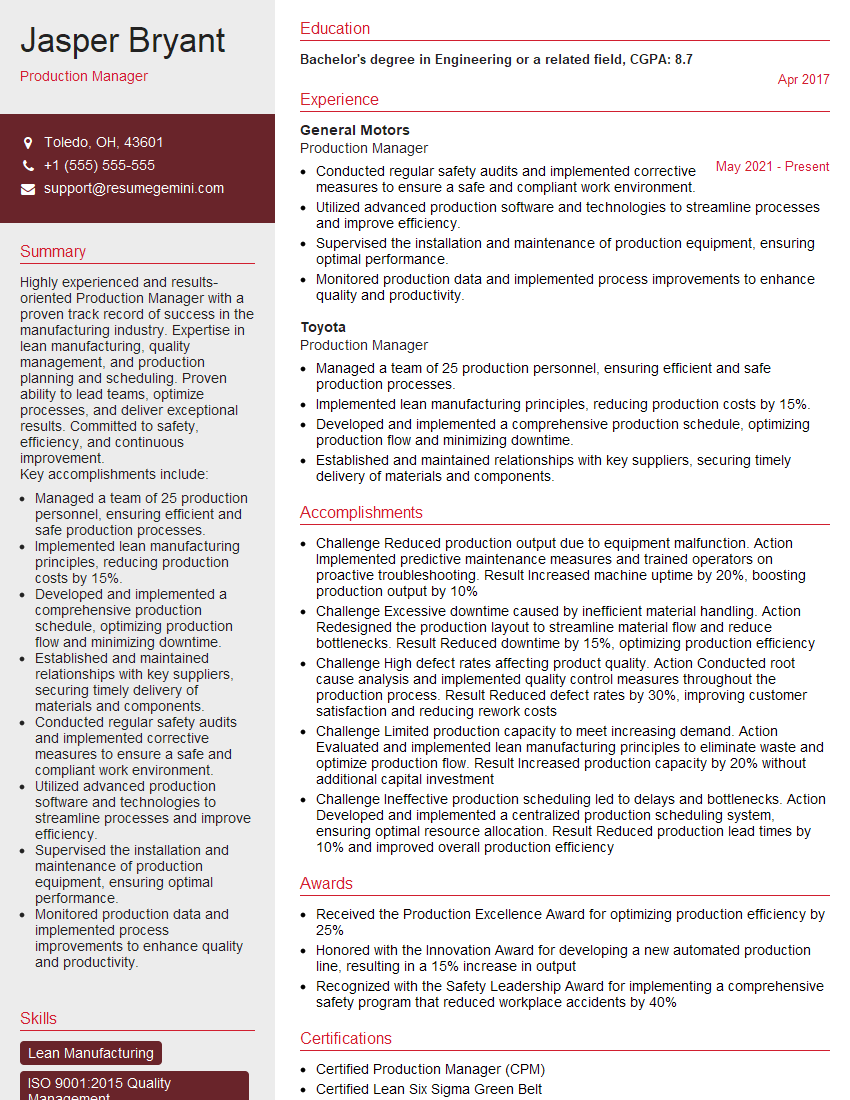
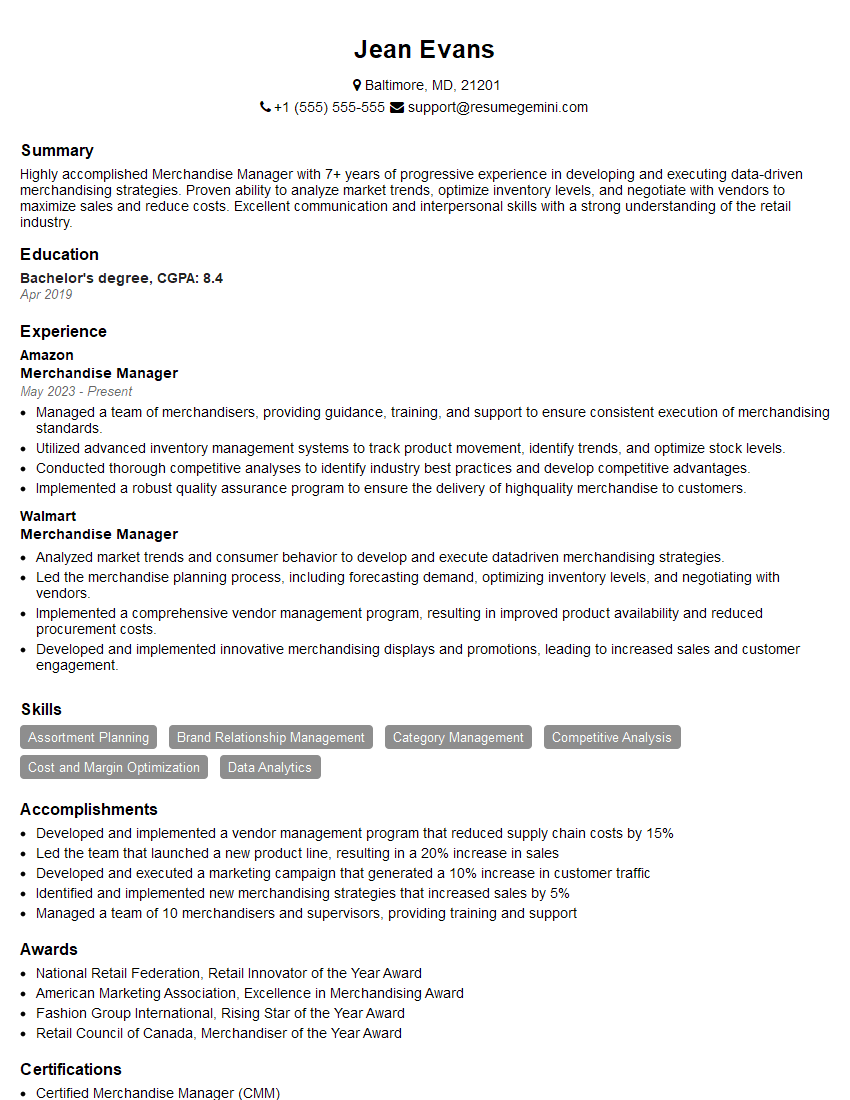
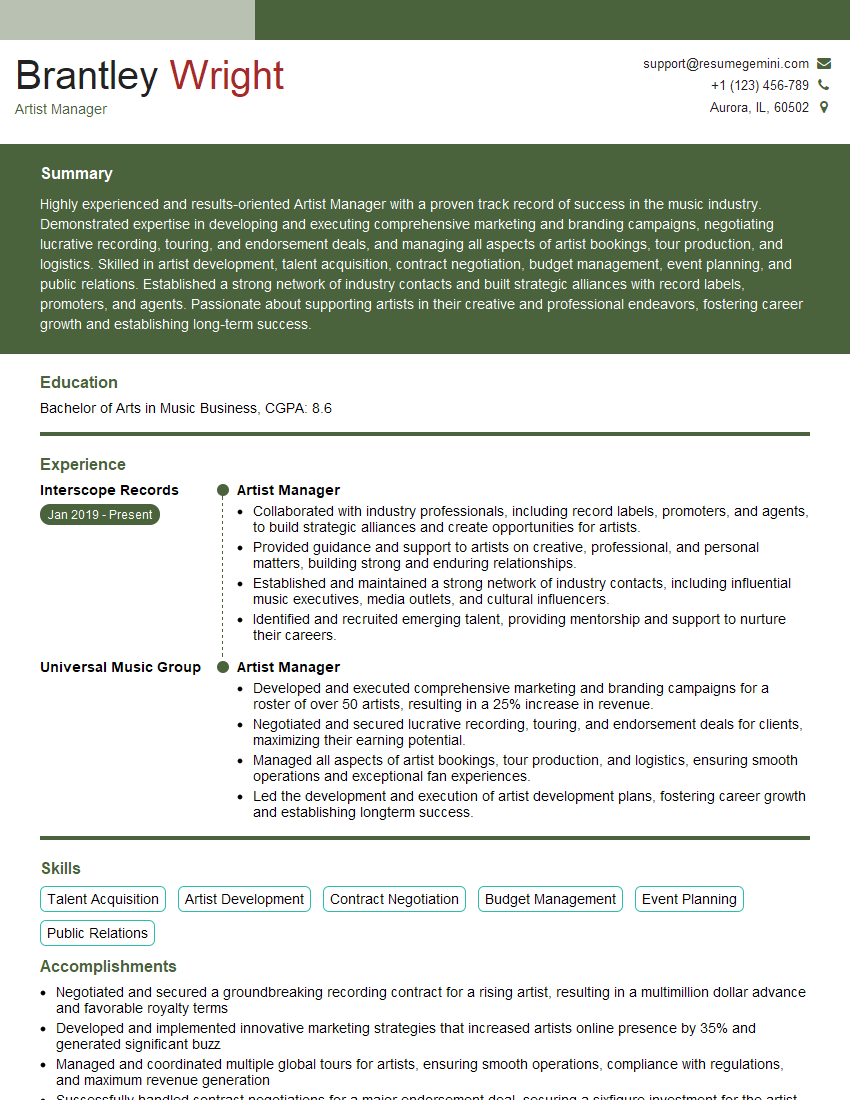
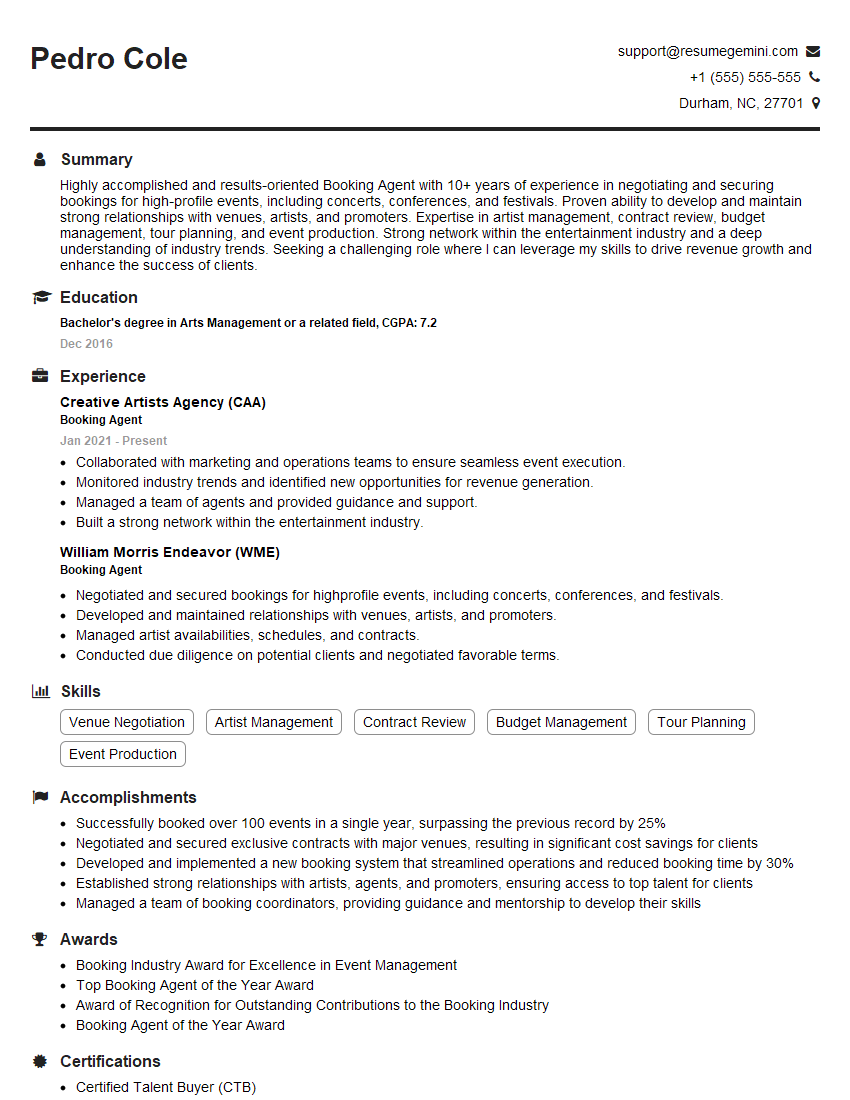
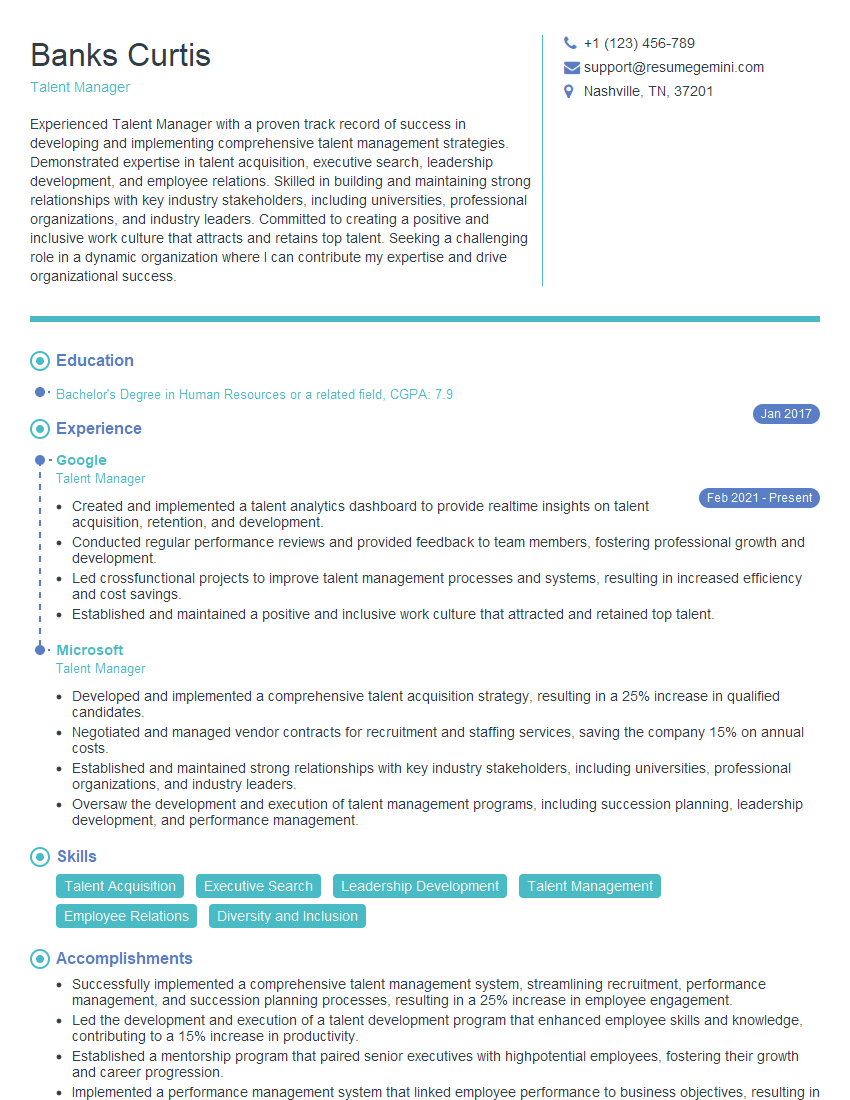
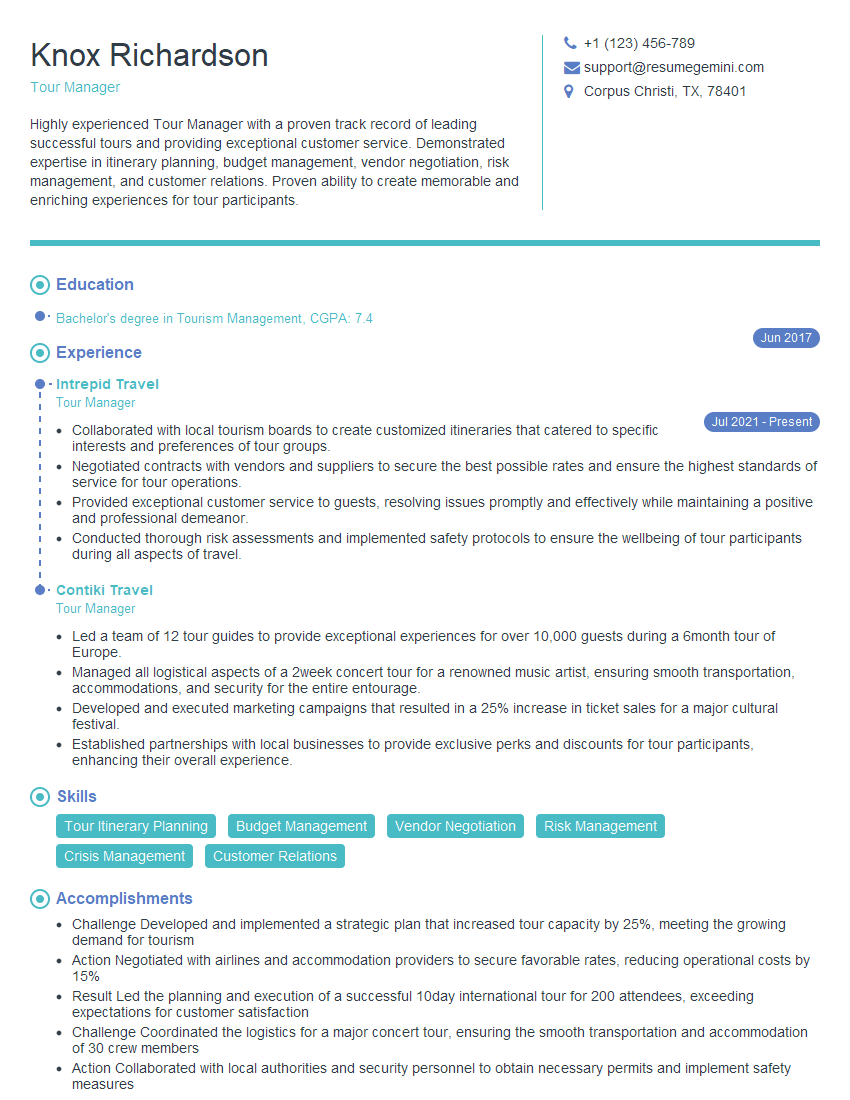
Mastering musician management opens doors to a dynamic and rewarding career, allowing you to shape the future of talented artists. To significantly increase your chances of landing your dream role, a well-crafted, ATS-friendly resume is crucial. This is where ResumeGemini can help. ResumeGemini provides a powerful platform to build a professional, impactful resume that highlights your skills and experience effectively. Take advantage of their tools and resources – examples of resumes tailored specifically to Musician Management are available to guide you.
Explore more articles
Users Rating of Our Blogs
Share Your Experience
We value your feedback! Please rate our content and share your thoughts (optional).
What Readers Say About Our Blog
Very informative content, great job.
good