Interviews are more than just a Q&A session—they’re a chance to prove your worth. This blog dives into essential Acoustic Guitar Strumming Patterns interview questions and expert tips to help you align your answers with what hiring managers are looking for. Start preparing to shine!
Questions Asked in Acoustic Guitar Strumming Patterns Interview
Q 1. Explain the difference between a downstroke and an upstroke.
The fundamental difference between a downstroke and an upstroke lies in the direction of your strumming hand across the strings. A downstroke moves your pick or fingers downwards, from the thicker bass strings towards the thinner treble strings. An upstroke is the opposite; it moves upwards, from the treble strings to the bass strings. Think of it like writing – a downstroke is like drawing a line downwards, and an upstroke is drawing a line upwards. This seemingly simple difference is crucial for creating rhythm and texture in your playing.
Q 2. Describe the common strumming patterns used in folk music.
Folk music often features straightforward yet effective strumming patterns. Common patterns frequently include variations on the basic down-down-up-up-down sequence, often referred to as a ‘four-stroke pattern’. You’ll also see patterns that emphasize downstrokes, such as down-down-down-up or even just repeating downstrokes for a driving rhythm. The choice of pattern often reflects the mood and tempo of the song. Slower ballads may employ more relaxed, less frequent strumming patterns, while upbeat folk songs might use faster, more rhythmic patterns like a continuous down-down-up-up sequence. Many folk patterns also incorporate rests—silences—between strums, allowing the melody to breathe and preventing a monotonous sound.
Q 3. How would you teach a beginner the basic four-stroke pattern?
Teaching a beginner the four-stroke pattern involves a step-by-step approach focusing on consistency and timing. First, I’d explain the difference between downstrokes and upstrokes (as described above). Then, I’d demonstrate the pattern slowly and clearly: D-D-U-U, where ‘D’ represents a downstroke and ‘U’ represents an upstroke. I’d then have the beginner practice the pattern slowly using a metronome, focusing on even spacing between each stroke. We’d progressively increase the speed as they gain confidence and accuracy. It’s crucial to emphasize a relaxed wrist and forearm motion to avoid tension, and to ensure they are strumming across all strings for a full sound. Once comfortable, we can add a simple chord progression (like G, C, and D) to make it more musical. Finally, practice is key, encouraging regular and patient practice sessions for mastering the timing and rhythm.
Q 4. What are the advantages and disadvantages of using a pick vs. fingerpicking?
The choice between using a pick or fingerpicking significantly impacts the sound and playing style. A pick offers a bright, crisp sound and allows for faster, more precise strumming. It’s ideal for fast-paced music and complex patterns where accuracy is paramount. However, picks can be less versatile for creating nuanced dynamics and textures. Fingerpicking, on the other hand, provides a warmer, more intimate sound, and greater control over individual strings. This allows for intricate melodies and rhythmic variations. It’s excellent for softer songs where a delicate touch is required, but may be less suitable for fast, percussive strumming styles. The best method depends entirely on the song, the desired tone, and personal preference.
Q 5. Explain how to create rhythmic variation within a basic strumming pattern.
Creating rhythmic variation within a basic strumming pattern can drastically change a song’s feel. One simple method is to accentuate certain strums by playing them louder or with a stronger attack. Another is to introduce rests: instead of continuously strumming, you can pause strategically between strums, creating space and emphasis. You can also vary the down-up ratio. For instance, starting with a basic down-down-up-up pattern, you could try down-down-up-rest or down-rest-up-up for a more syncopated feel. Experimentation is key. Try different combinations of accented strums and rests to see what works best for the particular song and its emotion.
Q 6. How do you incorporate syncopation into your strumming?
Syncopation, the deliberate off-beat emphasis, is a powerful tool for adding interest and groove to strumming. It’s about deliberately disrupting the expected rhythm. To incorporate syncopation, I’d begin by playing a basic pattern (e.g., down-down-up-up), and then experiment with placing rests or accents on unexpected beats. For example, instead of strumming on every beat, I might strum on the ‘and’ of a beat, or pause briefly on a normally strong beat. Another approach is to vary the intensity of strums; a light strum followed by a strong strum on an offbeat creates a nice syncopated effect. Listening to music with strong syncopation (think reggae or funk) can inspire and help develop a feel for it.
Q 7. Describe how strumming patterns contribute to the dynamics of a song.
Strumming patterns are integral to a song’s dynamics, directly impacting its overall feel and energy. A slow, sparse strumming pattern can create a sense of calmness and intimacy, suitable for a ballad. Conversely, a fast, driving pattern with strong accents can build excitement and energy, perfect for an upbeat tune. Changes in the strumming pattern within a song can also reflect shifts in mood or intensity. For example, a song might begin with a gentle, understated pattern and gradually build to a more intense, rhythmic pattern during the chorus. Careful consideration of strumming dynamics—volume, intensity, and rhythmic variation—can significantly elevate a performance.
Q 8. How do you adapt strumming patterns to different genres of music (e.g., pop, blues, rock)?
Adapting strumming patterns to different genres hinges on understanding the genre’s rhythmic and harmonic characteristics. Pop music often features simpler, more repetitive patterns with a strong emphasis on the downbeat. Think of the straightforward strumming in many pop songs – a consistent down-down-up-down-up pattern. Blues, on the other hand, typically employs a more relaxed, syncopated feel. You might use a pattern with a heavier emphasis on the offbeats, creating a shuffly groove. Rock music is more versatile, encompassing everything from hard-driving, powerful strums to more delicate, melodic approaches, often incorporating palm muting for a heavier tone.
- Pop:
D-D-U-D-U(Down-Down-Up-Down-Up) or variations emphasizing the downbeat. - Blues:
D-u-D-u-D(Down-up-Down-up-Down), often with a slight delay on the offbeats to create the characteristic shuffle feel. - Rock: Patterns can be more complex and varied, incorporating rests, accents, and palm muting.
D-D-D-Rest-Ufor a powerful, driving feel.
Ultimately, it’s about understanding the rhythmic pulse and the feel of the music. Experimentation and listening to the music are key.
Q 9. Explain the importance of muting strings in strumming patterns.
String muting is crucial for shaping the tone and texture of your strumming. It controls unwanted resonance and allows you to create a cleaner, more defined sound. Without muting, individual strings might ring out unexpectedly, creating a muddy or unclear tone. There are two main methods: palm muting (lightly resting the fleshy part of your palm on the strings near the bridge) and finger muting (using your fretting hand fingers to mute individual strings before or after they are strummed).
Palm muting is excellent for creating a percussive, rhythmic feel, often used in rock and blues. Finger muting gives you more control over individual string sounds and is useful for creating intricate textures.
Imagine strumming a chord without muting; it can sound like a jumbled mess. With proper muting, you achieve a crisp, clean sound that fits the song’s dynamics and style.
Q 10. How do you teach students to maintain a consistent tempo while strumming?
Maintaining consistent tempo is foundational to good strumming. It’s like building a house; if the foundation is weak, the whole structure suffers. I teach using a metronome from day one. Start slowly, gradually increasing the tempo as accuracy improves. It helps to internalize the beat by tapping your foot, counting out loud, or using a visual aid.
Focusing on the feel and pulse of the music is just as important as the metronome. Students need to internalize the rhythm, understanding the relationship between the strumming pattern and the song’s overall feel. Practicing with a recording of the song can help to match the tempo and groove.
I often use exercises that isolate specific rhythmic elements – like practicing a single strumming pattern at different tempos before applying it to a song.
Q 11. Describe how to use strumming to emphasize different parts of a chord progression.
Strumming can significantly highlight specific chord progressions by altering the rhythm and dynamics of each chord. You can emphasize the root or bass notes of a chord with a strong downstroke, or use lighter upstrokes on less important chords to create contrast.
For example, in a verse-chorus structure, you might use a more rhythmic, driving strum for the chorus to make it stand out. Conversely, using a lighter, more delicate strum on the verse creates a sense of contrast and builds anticipation for the chorus. Accenting specific beats within a strumming pattern can also highlight certain chords. A strong downstroke on the first beat of a measure can create a powerful rhythmic emphasis on the chord played on that beat.
This is about listening to the song and paying attention to its dynamics and emotional arc.
Q 12. What are some common mistakes beginners make with strumming, and how do you correct them?
Beginners often struggle with several aspects of strumming.
- Inconsistent tempo: As mentioned, using a metronome and focusing on the beat are vital to solve this.
- Uneven strumming: This often stems from a lack of coordination between the strumming hand and the fretting hand. Slow, deliberate practice, focusing on smooth, consistent strokes, is crucial.
- Too much force: Learning to control the dynamics—playing softer or louder—is essential. They should practice with a light touch and gradually increase the force as needed.
- Ignoring dynamics: Strumming needs variation. Students need to understand the concept of dynamics (loud and soft) and how to vary them to create musicality.
Corrections involve breaking down strumming into smaller, manageable parts, providing plenty of positive reinforcement, and lots of patient practice. I demonstrate and guide them to improve their technique and create a good foundation for their skills.
Q 13. How do you teach students to listen and react to the rhythm of the music?
Teaching students to listen and react to music’s rhythm is about developing their musicality and internalizing the beat. This involves active listening and developing their sense of rhythm. I often start with simple exercises like clapping along to a song, then gradually introduce more complex rhythmic patterns. This cultivates an innate feel for rhythm. We might use simple call-and-response exercises to develop timing and coordination.
I encourage students to listen to diverse genres, emphasizing how rhythmic elements vary across different styles. Listening to specific drum parts can significantly enhance their understanding of rhythm and timing. Eventually, they’ll start anticipating musical phrases and adapt their strumming patterns accordingly, creating a natural interaction between their playing and the song’s flow.
Q 14. Explain how to create a walking bass line with strumming.
Creating a walking bass line with strumming involves selectively emphasizing the bass notes of your chords during the strumming pattern. This usually involves using a combination of downstrokes and upstrokes, focusing the sound on the lower strings and making sure that notes in the bass range are heard distinctly.
For example, in a G major chord (G-B-D), you might focus your downstrokes on the G string (lowest string in standard tuning), creating a bass line that follows the chord progression’s bass notes. You might use a pattern like D-u-D-u, emphasizing the G string on the downstrokes. You would then need to use your left hand carefully to switch between chords and mute the unwanted higher notes. It’s crucial to control the volume and tone to prevent muddiness. It’s more challenging than a typical strumming pattern, but it adds depth and interest to your playing.
Practice is key to developing the finger dexterity and timing required for a clean-sounding walking bass line.
Q 15. How can you incorporate rest and space into a strumming pattern?
Incorporating rest and space in strumming patterns is crucial for creating dynamics and interest. Think of it like breathing in a song – you need pauses to emphasize the notes that follow. Instead of continuously strumming, you strategically omit strums, creating silences that highlight certain chords or phrases. This can be done in various ways.
- Partial Strums: Instead of a full downstroke or upstroke, only strum a portion of the strings, creating a softer, more delicate sound.
- Rests between Chords: Leaving a noticeable gap between chord changes allows the listener to fully appreciate each chord before moving on to the next. This is especially effective in slower tempos.
- Rhythmic Variation: Vary the length of your rests. A short rest might be a single beat, while a longer rest could be two or more beats. This adds rhythmic complexity.
- Using the Pattern as a Guide: Often the strumming pattern itself will indicate rests using notation such as ‘x’ to mean no strum or by simply writing out the rhythm notes with rests indicated.
For example, a simple pattern like D-D-U-D-U- could become more interesting with rests: D-D-U-x-U-x-. Experiment with different combinations to find what works best for the song’s mood and feel.
Career Expert Tips:
- Ace those interviews! Prepare effectively by reviewing the Top 50 Most Common Interview Questions on ResumeGemini.
- Navigate your job search with confidence! Explore a wide range of Career Tips on ResumeGemini. Learn about common challenges and recommendations to overcome them.
- Craft the perfect resume! Master the Art of Resume Writing with ResumeGemini’s guide. Showcase your unique qualifications and achievements effectively.
- Don’t miss out on holiday savings! Build your dream resume with ResumeGemini’s ATS optimized templates.
Q 16. Describe different techniques for strumming arpeggios.
Arpeggiated strumming involves playing individual notes of a chord one after another, rather than strumming all strings simultaneously. This creates a brighter, more delicate sound. There are several techniques for strumming arpeggios:
- Downward Arpeggios: Strumming individual notes from the lowest to the highest string, typically using downstrokes only. This is clean and precise.
- Upward Arpeggios: The opposite of downward arpeggios, beginning on the highest string and moving towards the lowest, using upstrokes. This provides a slightly different feel.
- Alternating Arpeggios: Combining both downstrokes and upstrokes to create a flowing, continuous arpeggio. This is often faster and more rhythmic.
- Fingerpicking Arpeggios: Although not strictly ‘strumming’, fingerpicking is a related technique for playing arpeggios. It allows for greater control over dynamics and tone, suitable for more complex arrangements.
The choice of technique depends on the song’s style and the desired effect. For a classic folk feel, a slow downward arpeggio works well. For a more upbeat feel, an alternating arpeggio might be better. Practice each technique slowly and gradually increase the speed as your accuracy improves.
Q 17. How do you create a driving rhythm using strumming?
Creating a driving rhythm with strumming involves maintaining a steady beat and using techniques that emphasize the rhythmic pulse. Here’s how you can do it:
- Strong Downstrokes: Emphasize the downstrokes by using a forceful, rhythmic movement. This creates a strong, consistent feel.
- Consistent Timing: This is paramount. Use a metronome to help maintain a consistent tempo. The driving feeling is strongly dependent on being on time.
- Rhythmic Variation: While maintaining a steady beat, you can introduce variations in the rhythm by adding rests, using different strumming patterns, or accenting certain beats.
- Choosing the Right Pattern: Certain strumming patterns naturally lend themselves to a driving feel; for example, patterns with repeated downstrokes or strong accents on specific beats.
- Dynamics: Varying dynamics, subtly increasing volume and intensity on certain beats, can make the rhythm feel more propulsive.
Imagine driving a car; a smooth, constant speed creates a sense of motion, similar to how a consistently strummed driving rhythm makes a song feel more energetic.
Q 18. What is the relationship between strumming patterns and the overall arrangement of a song?
Strumming patterns are intrinsically linked to the overall arrangement of a song. They provide the rhythmic foundation upon which the melody, harmony, and other instrumental parts are built. The choice of strumming pattern can significantly impact the song’s mood, energy, and overall feel.
- Matching the Tempo: Faster tempos often use faster strumming patterns, while slower tempos benefit from more relaxed patterns.
- Complementing the Melody: The strumming pattern should complement the melody, providing rhythmic support and emphasizing key melodic phrases. They shouldn’t clash.
- Supporting the Harmony: The pattern should also highlight the chord changes, helping to create a clear harmonic structure. Sometimes simple patterns are best for allowing the chords to ‘speak’.
- Creating Dynamics: Different strumming patterns can be used to create dynamics, building intensity or creating a sense of anticipation.
Think of the strumming pattern as the heartbeat of the song – it needs to be strong and consistent, but also adaptable enough to respond to the other musical elements. A poorly chosen pattern can disrupt the song’s flow or make it feel unbalanced.
Q 19. How do you teach students to develop their own unique strumming style?
Teaching students to develop their own unique strumming style is about fostering creativity and self-expression within a technical framework. It’s a gradual process.
- Solid Foundation: First, they need to master basic strumming techniques and patterns. Accurate timing and consistent strumming are essential.
- Experimentation: Encourage experimentation with different patterns, rhythms, and dynamics. Let them find what feels natural and expressive to them.
- Improvisation: Encourage improvising with strumming. They can start by varying the intensity or rhythm of existing patterns and then progress to creating entirely new ones.
- Listening to Different Styles: Encourage students to listen to diverse musical styles and analyze how different artists use strumming. This broadens their understanding and inspires creativity.
- Recording and Feedback: Recording themselves playing allows students to hear their strumming objectively, leading to self-correction and refinement. Constructive feedback is also essential.
Developing a unique strumming style is a journey of self-discovery and experimentation. It’s about finding what works best for the individual and their musical expression.
Q 20. Explain how to effectively use a metronome to practice strumming patterns.
Using a metronome is crucial for developing accurate and consistent strumming. It’s your rhythmic guide.
- Start Slowly: Begin practicing at a tempo that’s comfortably slow, ensuring accuracy before gradually increasing the speed.
- Focus on Accuracy: Prioritize accuracy over speed. If you’re rushing and making mistakes, slow down.
- Subdivide Rhythms: Practice subdividing beats into smaller units (e.g., eighth notes, sixteenth notes). This improves precision and rhythmic feel.
- Play Along with Tracks: Once comfortable with a pattern on the metronome, try playing along with a backing track to get a feel for how it integrates into a musical context.
- Listen to the Click: Actively listen to the click of the metronome, feeling its pulse and syncing your strumming to it.
- Gradually Increase Tempo: Once you can play a pattern accurately at a given tempo, increase the speed gradually, consistently maintaining accuracy. Small increments are key.
The metronome is a tool for discipline and precision. Don’t be afraid to use it at all stages of learning and even beyond.
Q 21. Describe some exercises for improving strumming accuracy and speed.
Improving strumming accuracy and speed involves targeted practice.
- Metronome Work: Consistent use of the metronome is essential. Practice simple patterns at slow tempos, gradually increasing speed.
- Alternating Strumming: Practice alternating between downstrokes and upstrokes with consistent rhythm. This builds coordination and stamina.
- Pattern Variations: Work on various patterns, increasing complexity gradually. This improves rhythmic flexibility and coordination.
- Wrist Exercises: Gentle wrist exercises to improve flexibility and strength. This reduces strain and improves control.
- Finger Exercises: Exercises that isolate individual fingers to improve coordination and speed. Practice finger dexterity separately, then integrate it into strumming patterns.
- Accuracy Drills: Focus on playing patterns accurately at slow tempos before increasing speed. Repeated practice with a focus on precision enhances muscle memory.
Think of it like practicing any skill – deliberate, focused practice is key to improvement. Be patient and persistent!
Q 22. How do you teach students to strum accurately with different types of guitars?
Teaching accurate strumming across different guitar types begins with understanding the instrument’s unique characteristics. A classical guitar, with its wider neck and nylon strings, requires a gentler touch than a steel-string acoustic. I start by demonstrating proper posture and hand position, emphasizing relaxation to avoid tension. For beginners, I focus on a basic downstroke pattern, gradually introducing upstrokes and variations. With classical guitars, I highlight the importance of fingernail technique for a clean sound. Steel-string acoustics often require more wrist and forearm movement for stronger projection. I use a combination of visual demonstration, hands-on guidance, and metronome practice to ensure students develop consistent timing and rhythm.
- Classical Guitar: Emphasis on fingernail length and angle, softer strumming.
- Steel-String Acoustic: Focus on wrist rotation and stronger strokes, mindful of string tension.
- Smaller-bodied acoustics: Lighter touch to avoid overpowering the instrument’s softer volume.
I progressively introduce more complex patterns, always ensuring the student masters the fundamental technique before moving on. Regular practice, using a metronome to maintain consistent tempo, is key to accuracy.
Q 23. Explain the role of dynamics in strumming and how to achieve different dynamic levels.
Dynamics are crucial for expressive strumming. They refer to the variations in volume and intensity, bringing life to the music. Think of it like storytelling – a whisper builds suspense, a shout conveys excitement. To achieve different dynamic levels, I teach students to control their strumming motion. A soft strum uses a smaller, lighter motion of the pick or fingers, barely touching the strings. A loud strum involves a larger, more forceful motion, engaging the entire arm for greater power.
We practice graduating dynamics, going from pianissimo (very soft) to fortissimo (very loud) and back again, paying attention to the smooth transitions. I also encourage students to experiment with varying their attack, hitting the strings softly for a mellow tone or more forcefully for a punchier sound. Understanding the dynamics is essential for conveying emotion and creating a compelling musical narrative. We often use simple exercises like repeating a single chord progression with varied dynamics to establish control.
Q 24. How do you assess a student’s progress in strumming technique?
Assessing a student’s progress involves a multi-faceted approach. I observe their:
- Accuracy: How precisely are they executing the strumming patterns at the desired tempo?
- Consistency: Can they maintain the rhythm and dynamic levels consistently throughout a piece?
- Timing: Are their strums in time with the beat, showing good rhythmic control?
- Tone: Are they producing a clean, clear sound, or is there excessive strumming noise?
- Muscle Memory: Are they performing the patterns without hesitation, indicating muscle memory development?
I use a combination of observation, listening to their playing, and having them perform various exercises at different tempos and dynamic levels. Regular recordings allow us to track progress and identify areas needing improvement.
Q 25. What methods do you use to provide constructive feedback on strumming performance?
Constructive feedback is essential for growth. Instead of simply stating what’s wrong, I focus on providing specific, actionable suggestions. For example, instead of saying ‘your strumming is sloppy,’ I might say, ‘Let’s work on keeping your wrist more relaxed and your strokes more consistent. Try focusing on a smoother transition between upstrokes and downstrokes.’
I use demonstrations, slow-motion replays (if recordings are available), and targeted exercises to address specific issues. We might break down a complex pattern into smaller, more manageable sections. I also encourage self-assessment, asking students to identify areas they find challenging and how they might address these themselves. A supportive and encouraging environment is vital; students learn best when they feel comfortable experimenting and making mistakes.
Q 26. Explain how to apply strumming patterns to accompaniment in a group setting.
Applying strumming patterns in a group setting requires listening skills and coordination. Students need to listen attentively to the other instruments, adjusting their strumming to complement the overall sound. I teach them to anticipate rhythmic changes and adjust their dynamics to create balance and avoid overwhelming other musicians. We start with simple arrangements, practicing rhythmic cohesion through exercises focusing on unison strums, and then moving to more independent parts. Discussions about the song’s structure and dynamics are crucial. We focus on playing in time, clearly articulating rhythmic patterns and understanding the role of accompaniment.
For instance, if the bass player plays a walking bass line, the strumming could focus on creating a steady rhythmic pulse to support it. If a melodic instrument plays a solo, the strumming might become softer and more supportive. Collaborative practice helps students develop adaptability and sensitivity to the context of group performance.
Q 27. How do you incorporate strumming patterns into improvisation?
Incorporating strumming patterns into improvisation involves breaking free from rigid patterns and experimenting with rhythm and dynamics. I encourage students to think of strumming not just as a repetitive pattern, but as a rhythmic conversation between the guitar and other instruments or the song itself. This means experimenting with varying the intensity and rhythm of the strums in response to the music’s flow. They can add syncopation (offbeat accents), rhythmic displacement, and variations in dynamics to create a more expressive and nuanced performance.
We begin by practicing improvising with a simple chord progression, experimenting with different rhythmic ideas and dynamic shifts over the same chords. Gradually, we introduce more complex rhythmic elements and challenge students to create their own unique strumming patterns, paying attention to the musical context and overall feel of the improvisation.
Q 28. Describe your approach to teaching complex or unconventional strumming patterns.
Teaching complex or unconventional strumming patterns requires a structured, step-by-step approach. I break down intricate patterns into smaller, more manageable chunks, teaching each element individually before combining them. Visual aids, such as tablature or diagrams, are useful in visualizing these complex patterns. I encourage students to practice slowly and methodically, focusing on accuracy before speed. Metronome practice is crucial to develop consistency and timing. We often use a combination of rhythmic subdivision exercises and repetitive practice to develop muscle memory.
For example, a complex pattern might be broken down into its constituent rhythmic elements, with each element practiced separately before reassembling. We might also use rhythmic substitutions, replacing complex rhythms with simpler counterparts before gradually increasing the difficulty. Consistent practice, patience, and a positive learning environment are essential in mastering challenging strumming patterns.
Key Topics to Learn for Acoustic Guitar Strumming Patterns Interview
- Basic Strumming Patterns: Understanding downstrokes, upstrokes, and their combinations (e.g., D-D-U-D-U-D, D-D-U-U-D-D). Practice transitioning smoothly between patterns.
- Rhythm and Timing: Mastering consistent rhythm and accurate timing is crucial. Practice with a metronome to develop precision and internal rhythm.
- Syncopation and Variation: Explore variations within basic patterns, incorporating syncopation (off-beat accents) to add expressiveness and complexity.
- Applying Strumming to Different Genres: Learn how strumming patterns adapt to different musical styles (folk, blues, pop, rock, etc.). Analyze how strumming contributes to the genre’s feel.
- Chord Changes and Transitions: Practice seamless transitions between chords while maintaining consistent strumming patterns. This requires coordination and practice.
- Dynamic Control: Learn to vary the intensity and volume of your strumming to create dynamic range and musical expression. Experiment with soft and loud strumming.
- Advanced Techniques: Explore more advanced techniques such as rest strokes, muted strums, and arpeggios to expand your expressive capabilities.
- Improvisation and Creativity: Develop the ability to improvise strumming patterns based on the musical context. Practice creating your own variations.
- Troubleshooting Common Issues: Identify and address common strumming problems such as inconsistent rhythm, inaccurate timing, or difficulty transitioning between chords.
- Understanding Musical Theory (basics): A fundamental grasp of time signatures, rhythm notation, and chord progressions will significantly enhance your understanding and application of strumming patterns.
Next Steps
Mastering acoustic guitar strumming patterns is vital for showcasing your musical proficiency and adaptability in various performance settings. This skill directly translates to a wider range of musical opportunities and career advancement. To increase your chances of landing your dream job, create an ATS-friendly resume that highlights your skills and experience effectively. ResumeGemini is a trusted resource to help you build a professional and impactful resume. Examples of resumes tailored to showcasing expertise in acoustic guitar strumming patterns are available to guide you. Invest time in crafting a strong resume – it’s your first impression!

Guitar Teacher Resume Sample

Music Educator Resume Sample

Music Teacher Resume Sample

Music Librarian Resume Sample

Music Producer Resume Sample

Composer Resume Sample

Songwriter Resume Sample

Arranger Resume Sample
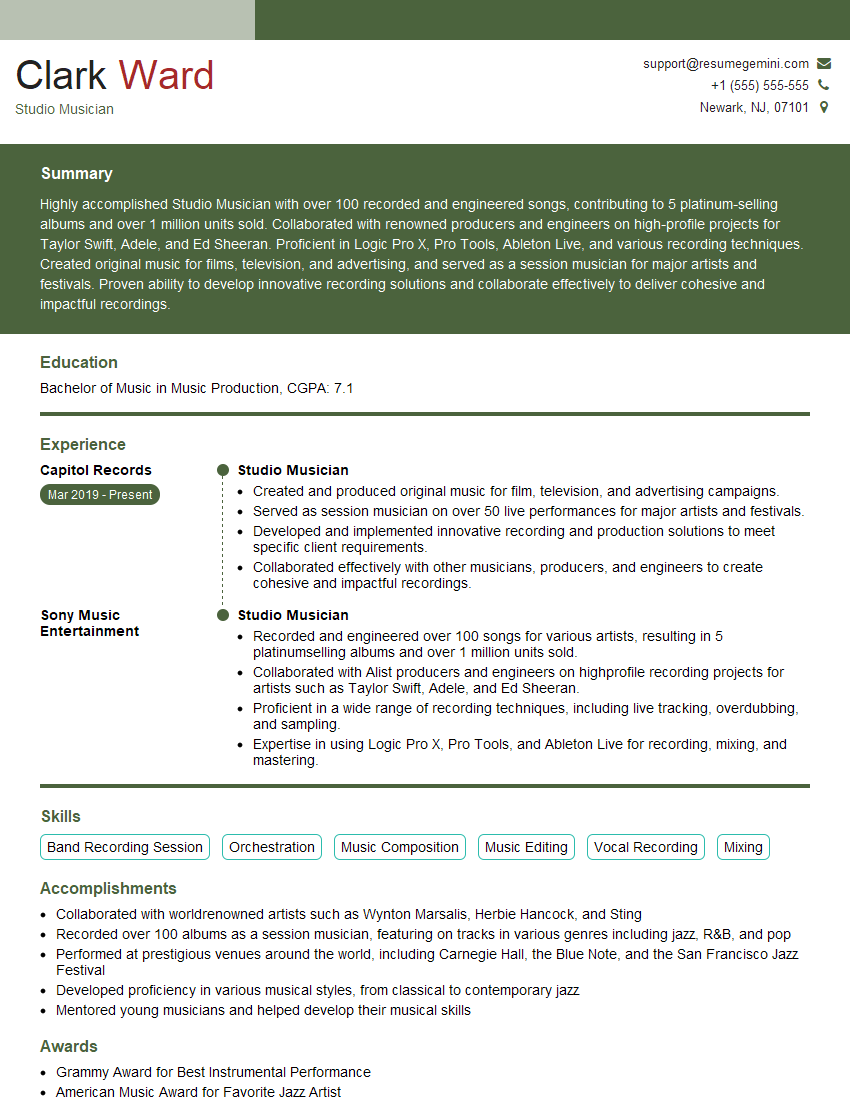
Studio Musician Resume Sample
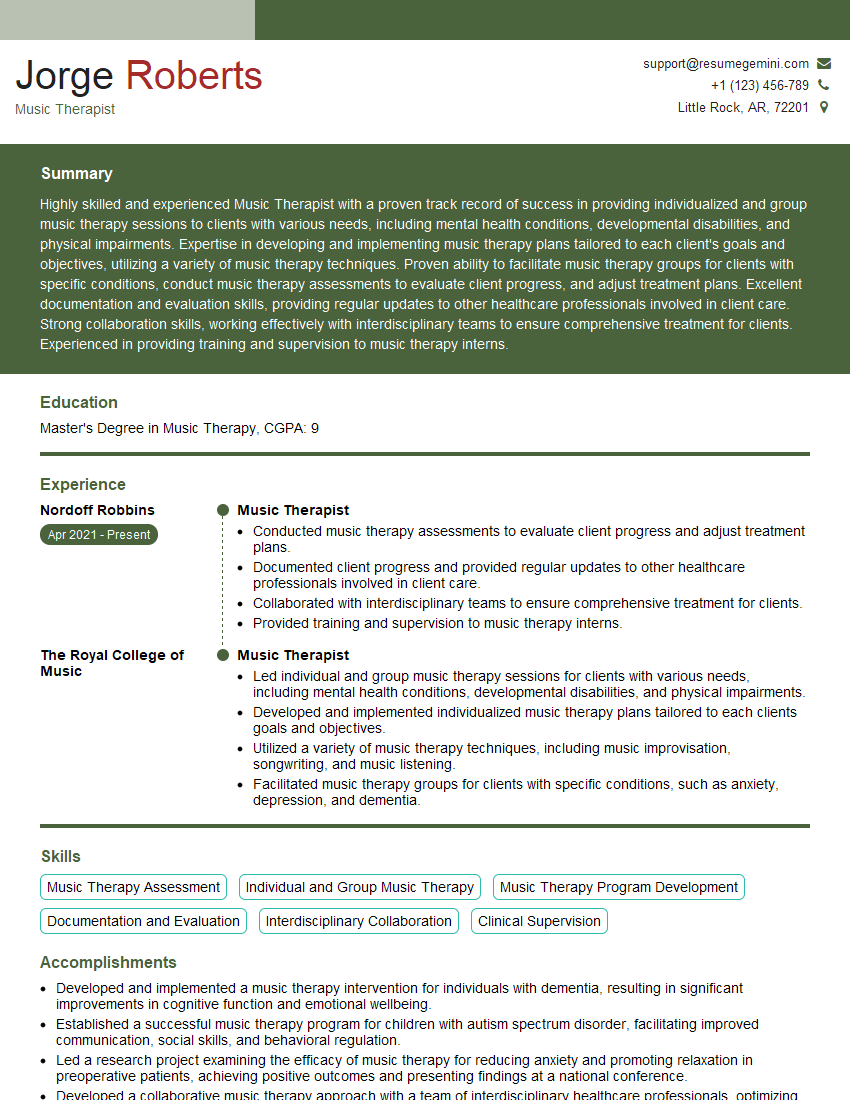
Music Therapist Resume Sample

Guitar Technician Resume Sample
Explore more articles
Users Rating of Our Blogs
Share Your Experience
We value your feedback! Please rate our content and share your thoughts (optional).
What Readers Say About Our Blog
Very informative content, great job.
good