Cracking a skill-specific interview, like one for Networking and building relationships within the music industry, requires understanding the nuances of the role. In this blog, we present the questions you’re most likely to encounter, along with insights into how to answer them effectively. Let’s ensure you’re ready to make a strong impression.
Questions Asked in Networking and building relationships within the music industry Interview
Q 1. Describe your experience building and maintaining professional relationships in the music industry.
Building and maintaining relationships in the music industry is akin to cultivating a garden; it requires consistent nurturing, attention to detail, and a genuine interest in the growth of each plant (individual).
My approach involves a multi-faceted strategy. Firstly, I prioritize active listening. I genuinely try to understand the needs, aspirations, and challenges of the individuals I connect with. This builds trust and fosters stronger bonds than superficial networking. Secondly, I strive to be reliable and responsive. If I say I’ll do something, I do it promptly and efficiently. This builds credibility and reputation. Thirdly, I focus on value exchange. I’m always looking for ways to help others, whether that’s introducing them to valuable contacts, providing insightful feedback, or offering assistance with a specific project. This reciprocal approach strengthens relationships organically. Finally, I believe in authenticity. I avoid disingenuous approaches and always strive to be myself. People connect with genuine individuals.
For example, I helped a young producer connect with a seasoned A&R representative by leveraging my network. I knew the A&R was looking for fresh talent and the producer’s work perfectly aligned with their interests. After an introduction and a follow-up, the producer signed a deal. This successful outcome demonstrated the power of genuine networking and relationship building.
Q 2. How have you leveraged networking to secure opportunities for artists or projects?
Leveraging my network to secure opportunities involves a strategic combination of relationship building and targeted outreach. I act as a bridge, connecting artists and projects with the right individuals at the right time. This requires deep understanding of the industry landscape, keen observation of emerging trends, and a proactive approach.
For example, I identified a gap in the market for a specific genre of music. Through my network, I connected an emerging artist in that genre with a relevant label that was seeking artists in this specific niche. My understanding of the label’s interests and the artist’s talent allowed for a seamless match. It was more than just an introduction; it was a strategic alignment of needs and capabilities.
- Understanding needs: I carefully assess both the artist’s strengths and weaknesses, and the label’s roster and requirements.
- Targeted outreach: I personalize my communication to highlight specific points of synergy and minimize wasted effort.
- Relationship capital: I utilize my established relationships to gain access to decision-makers and facilitate smoother connections.
Q 3. Explain your strategy for identifying and connecting with key players in the music industry.
Identifying and connecting with key players involves a multifaceted approach. It’s not about randomly collecting contacts but rather strategically identifying individuals who can contribute to my goals and the goals of the artists I work with.
- Industry events: Conferences, showcases, and festivals are invaluable for meeting and connecting with people in the industry.
- Online research: LinkedIn, industry publications, and artist websites are great resources to identify relevant individuals.
- Mutual connections: Leveraging existing relationships to secure introductions is an effective and efficient strategy.
- Information gathering: I always try to understand the roles, responsibilities, and interests of the people I connect with.
For instance, I researched a specific A&R representative known for their work with a particular style of music and, using a mutual connection, arranged an informational interview. This resulted in a successful partnership later on.
Q 4. How do you maintain relationships with industry contacts over time?
Maintaining relationships is an ongoing process. It’s not a one-time event but rather a continuous cycle of engagement and value exchange. I use several techniques to maintain these connections:
- Regular communication: I send occasional emails, make calls, or connect on social media to keep in touch without being overly intrusive.
- Sharing relevant information: I share articles, industry news, or opportunities that might be of interest to my contacts.
- Providing support: I offer assistance or advice when needed, demonstrating my ongoing commitment to the relationship.
- Personalized interactions: I make an effort to remember details about their work and lives to demonstrate genuine interest.
For example, I regularly share relevant articles with a publicist I worked with on a previous project. This maintains the connection and creates opportunities for future collaborations.
Q 5. Describe a time you successfully navigated a conflict within a professional music industry relationship.
In one instance, a disagreement arose between an artist and their manager regarding creative direction. I was mediating the situation, acting as a neutral party. My approach focused on open communication, active listening, and finding common ground.
First, I scheduled individual meetings with both parties to understand their perspectives and concerns without judgment. Then, I facilitated a joint meeting where each person could express their feelings respectfully. Finally, I helped them redefine their roles and responsibilities, clarifying expectations and responsibilities to prevent future conflicts. This resulted in a renewed collaboration and a stronger working relationship.
The key was to remain impartial, to prioritize active listening, and to focus on finding mutually beneficial solutions. It wasn’t about winning an argument but about preserving a valuable professional relationship.
Q 6. How do you prioritize networking efforts to maximize your impact?
Prioritizing networking efforts means focusing on relationships and opportunities that align with my long-term goals. This involves a combination of strategic planning and thoughtful execution.
- Goal setting: Clearly defining my objectives helps me prioritize networking efforts and ensure my actions contribute to the achievement of these goals.
- Target audience identification: I focus on building relationships with individuals who can directly support my aims.
- Value proposition development: Understanding what I offer and how it benefits others is critical for effective networking.
- Time management: Balancing networking efforts with other responsibilities requires a robust time-management strategy.
For example, If my goal is to place artists with major labels, I’ll prioritize attending industry conferences, networking with A&R representatives, and focusing on building relationships within major record labels.
Q 7. What tools or platforms do you use for effective networking within the music industry?
Effective networking requires utilizing a blend of online and offline tools. My toolkit includes:
- LinkedIn: For professional networking and staying updated on industry news.
- Industry-specific platforms: Sites and apps tailored to the music industry facilitate connections and opportunities.
- Email: For professional communication and maintaining contact.
- CRM (Customer Relationship Management) software: Helps me organize and track contacts and interactions efficiently.
- In-person networking: Industry events and conferences remain crucial for building genuine relationships.
Choosing the right tool depends on the specific context and goal. A well-integrated approach using multiple platforms is generally most effective.
Q 8. How do you adapt your networking approach based on the specific context or individual?
My networking approach is highly adaptable. It’s not a one-size-fits-all strategy. I tailor my communication style, topics of conversation, and even the platform I use (e.g., LinkedIn, in-person event, email) based on the individual and the context. For instance, connecting with a seasoned record executive requires a more formal and professional approach than connecting with an up-and-coming artist. With executives, I focus on demonstrating my understanding of the industry’s landscape and the value I can bring. With artists, I prioritize building a genuine connection and understanding their creative vision.
- Formal Context (e.g., industry conference): I’d focus on concise introductions, highlighting relevant achievements and seeking advice on specific industry trends.
- Informal Context (e.g., after-show party): I’d adopt a more relaxed approach, focusing on shared interests and building rapport before transitioning to professional topics.
- Online Networking (e.g., LinkedIn): I’d craft a personalized connection request, highlighting shared connections or common interests, followed by a thoughtful message showcasing my knowledge and respect for their work.
Q 9. Share a successful networking strategy that resulted in a significant career opportunity.
A successful networking strategy led to my involvement in a major music festival. I attended a smaller, independent music conference and actively engaged with attendees, not just focusing on big names. I struck up a conversation with a sound engineer working for a smaller production company. We bonded over our shared passion for vintage synths. This casual conversation evolved into a deeper discussion about their company’s work and upcoming projects. Weeks later, they contacted me about an opportunity to assist with their sound engineering at a large music festival, which gave me invaluable experience and broadened my network significantly. This highlights the importance of genuine connection, even in seemingly minor interactions.
Q 10. How do you measure the effectiveness of your networking efforts?
Measuring networking effectiveness involves a multi-faceted approach. It’s not solely about the number of connections. I track the following:
- Quality of Connections: Do these contacts lead to meaningful conversations and potential collaborations? I assess the depth of the relationship, not just its existence.
- Opportunities Generated: Did my networking efforts lead to new projects, collaborations, informational interviews, or job offers?
- Referral Rate: Am I being recommended by people in my network to others? This indicates trust and a positive reputation.
- Knowledge Gained: Have I learned valuable insights about the industry or gained new perspectives from my networking efforts?
I use a simple spreadsheet to log my networking activities, noting the person, context, outcome, and any future actions. This allows me to see patterns and refine my approach over time.
Q 11. How do you handle situations where networking attempts are unsuccessful?
Unsuccessful networking attempts are inevitable. Instead of viewing them as failures, I see them as learning opportunities. I analyze what might have gone wrong – was my approach inappropriate? Was the timing off? Did I fail to offer value? I also consider if the individual was simply unavailable or uninterested. It’s crucial to maintain professionalism and respect their time. I don’t push for connections that aren’t reciprocated.
For instance, if an email goes unanswered, I might try a different approach, perhaps connecting through a mutual contact. Persistence is key, but respecting boundaries is equally important.
Q 12. Explain your understanding of different networking etiquette within the music industry.
Music industry networking etiquette demands a blend of professionalism and authenticity. It’s a highly competitive and often fast-paced environment. Key aspects include:
- Prompt Communication: Respond to emails and messages promptly. Punctuality is highly valued.
- Respectful Interactions: Avoid interrupting others, listen actively, and show genuine interest in what they have to say.
- Professionalism: Maintain a professional demeanor, even in informal settings. Avoid excessive self-promotion.
- Giving Back: Offer support and assistance to others in the network when possible. This fosters reciprocity and mutual respect.
- Privacy: Respect confidentiality; not all information is meant to be shared publicly.
Q 13. Describe your approach to building rapport with individuals from diverse backgrounds in the music industry.
Building rapport with diverse individuals requires active listening and cultural sensitivity. I prioritize understanding their unique perspectives and experiences within the music industry. This involves acknowledging and respecting differences in background, approach, and communication styles. I actively avoid making assumptions and approach each interaction with an open mind, demonstrating genuine curiosity about their musical journey and experiences.
For example, when networking with an artist from a different cultural background, I research their music and background to find common ground and show respect for their artistic expression. This shows that I’m invested in understanding them as an individual, not just as a potential connection.
Q 14. How do you identify and pursue mutually beneficial collaborations?
Identifying and pursuing mutually beneficial collaborations involves a proactive approach. I start by clearly defining my goals and strengths. Then, I look for individuals or organizations whose goals and expertise complement mine. This could involve identifying artists needing promotion, producers looking for collaborators, or venues seeking unique acts. I assess the potential for synergy – where can we both mutually benefit?
I initiate contact by highlighting the value proposition for both sides. Instead of simply asking for something, I propose a collaboration that benefits everyone involved. For example, offering to promote an artist’s music in exchange for a guest appearance on my podcast is a mutually beneficial agreement.
Q 15. How do you balance networking with other essential tasks?
Balancing networking with other crucial tasks requires strategic time management and prioritization. Think of it like composing a song – you need to allocate time for different sections (writing melodies, arranging harmonies, producing, etc.). Similarly, I allocate specific time blocks for networking, ensuring it doesn’t overshadow my core responsibilities.
My approach involves using tools like calendar apps to schedule networking activities (conferences, meetings, online interactions) alongside project deadlines and other commitments. I also incorporate networking into existing tasks whenever possible – for instance, connecting with fellow attendees during industry events or engaging with relevant individuals on social media during breaks.
For example, I might dedicate Tuesday afternoons to responding to emails and connecting with contacts, and Thursday mornings to attending online industry webinars. This structured approach allows me to stay focused while still building valuable relationships.
Career Expert Tips:
- Ace those interviews! Prepare effectively by reviewing the Top 50 Most Common Interview Questions on ResumeGemini.
- Navigate your job search with confidence! Explore a wide range of Career Tips on ResumeGemini. Learn about common challenges and recommendations to overcome them.
- Craft the perfect resume! Master the Art of Resume Writing with ResumeGemini’s guide. Showcase your unique qualifications and achievements effectively.
- Don’t miss out on holiday savings! Build your dream resume with ResumeGemini’s ATS optimized templates.
Q 16. How do you stay up-to-date on industry trends and news that inform your networking strategies?
Staying current in the music industry is paramount for effective networking. It’s like a musician constantly practicing to refine their skills. My strategy is multifaceted.
- Targeted News Consumption: I subscribe to industry newsletters (e.g., Billboard, Music Business Worldwide), follow key influencers and publications on social media, and listen to podcasts covering music tech, marketing, and distribution.
- Industry Events & Conferences: Attending conferences like SXSW, MIDEM, or smaller regional events provides first-hand insights and networking opportunities. It’s where you hear the latest buzz, see demos, and meet the people shaping the future.
- Data Analysis: I use tools that track music chart performance, streaming data, and social media engagement to understand audience behaviour and emerging trends. This data informs my approach to networking, helping me target the most relevant individuals and opportunities.
For instance, a recent trend I noticed was the growing importance of Web3 and NFTs in music distribution. This led me to actively engage with professionals in that space, attending relevant workshops and joining online communities to expand my network and expertise.
Q 17. Describe your understanding of the ethical considerations related to networking in the music industry.
Ethical networking in the music industry is built on trust, transparency, and mutual respect. It’s about creating win-win situations, not exploiting connections for personal gain. Think of it as playing fair in a game – everyone benefits from ethical behaviour.
- Transparency & Honesty: Always be upfront about your intentions and goals. Avoid making false promises or misleading representations of your abilities or connections.
- Respecting Boundaries: Understand that everyone’s time is valuable. Be mindful of how you reach out to individuals and respect their decisions if they choose not to engage.
- Confidentiality: Protect the confidential information shared with you by others. Building trust requires demonstrating integrity and discretion.
- Avoiding Conflicts of Interest: Be aware of potential conflicts of interest and proactively address them to maintain professional integrity.
For example, if someone shares a confidential project detail with me, I won’t discuss it with anyone else without their permission. This kind of respectful behaviour builds strong, lasting relationships based on mutual trust.
Q 18. How do you use social media for professional networking in the music industry?
Social media is a powerful tool for professional networking in the music industry, but it requires a thoughtful strategy. It’s like having a virtual instrument – you need to know how to play it effectively.
- Platform Selection: I focus on platforms relevant to my target audience and goals. LinkedIn is great for professional connections, Twitter for news and quick interactions, and Instagram for visual engagement. I tailor my content to each platform’s unique characteristics.
- Content Strategy: I share insightful content related to my area of expertise (e.g., networking in the music industry, music technology) to establish myself as a thought leader. I also engage with relevant posts and conversations to build connections organically.
- Targeted Engagement: I don’t just broadcast; I actively participate in conversations and engage with people whose work I admire or find relevant. This is how you build meaningful relationships, not just follower counts.
- Community Building: I participate in relevant online groups and communities, sharing knowledge and asking questions to foster collaboration and build relationships.
For example, I might share a blog post on LinkedIn about a successful networking strategy and engage with comments to build connections. On Twitter, I might share industry news and engage in discussions related to new technologies in music distribution.
Q 19. What are some common pitfalls to avoid when networking in the music industry?
Several common pitfalls can hinder effective networking. Avoiding these requires self-awareness and a thoughtful approach.
- Self-Promotion Overload: Don’t just talk about yourself; show genuine interest in others. People are more likely to connect with you if you’re a good listener and show you value their time and experience.
- Lack of Follow-up: Networking is a two-way street. After meeting someone, follow up with a thank-you note or email to keep the connection alive. Failing to do so can leave a negative impression.
- Ignoring Weak Ties: Don’t underestimate the power of weak ties (acquaintances). These connections can often lead to unexpected opportunities.
- Being Unprepared: Always have a clear idea of your goals and what you hope to achieve from networking events or meetings.
- Only Networking for Personal Gain: People can spot insincerity. Build relationships based on mutual benefit and genuine interest, not just self-serving motives.
For instance, I’ve seen people approach networking events solely focused on collecting business cards without genuinely engaging with anyone. This is ineffective and can damage your reputation.
Q 20. Describe your understanding of the importance of reciprocity in professional music relationships.
Reciprocity is the cornerstone of successful professional relationships in the music industry. It’s about creating a balance of give-and-take; it’s a fundamental principle of building trust and long-term partnerships. Think of it as a musical duet – both partners contribute to create a harmonious whole.
Reciprocity involves sharing knowledge, offering support, providing introductions, and collaborating on projects. It’s not necessarily about immediate returns but building a network where everyone benefits over time. For example, I might introduce a talented musician to a producer I know, knowing that in the future, someone else might return the favor by connecting me with a valuable opportunity.
Building this kind of reciprocal network requires patience and a long-term perspective. The focus shouldn’t be on what you can get, but what you can contribute to the collective success of the network.
Q 21. How have you used networking to overcome challenges or obstacles in the music industry?
Networking has been instrumental in overcoming challenges throughout my career. For example, when I was struggling to secure distribution for an independent artist’s album, my network came to the rescue. I leveraged my connections with individuals in the distribution sector, which led to meetings and ultimately a distribution deal. This wouldn’t have been possible without the network I had diligently built.
Another instance was when I needed specialized technical skills for a project. Through my network, I was able to connect with a skilled engineer, overcoming a significant technical obstacle. This highlights the power of networking in accessing resources and expertise beyond your immediate reach.
Essentially, networking acts as a safety net and a catalyst for innovation in overcoming obstacles. The relationships you cultivate can be invaluable when facing unexpected challenges in the dynamic music industry.
Q 22. How do you differentiate between professional and personal relationships within the music industry?
The line between professional and personal relationships in the music industry can be blurry, but the key differentiator lies in the primary purpose of the interaction. Professional relationships are primarily focused on business objectives – collaborations, deals, career advancement. Personal relationships, while often blossoming from professional connections, prioritize mutual support, friendship, and shared interests outside of immediate work goals. Think of it like this: a professional relationship is about securing a gig, while a personal relationship might be about grabbing coffee and sharing industry insights.
- Professional: Meeting a label A&R at a conference to pitch your music. The focus is on securing a contract.
- Personal: Maintaining a friendship with a fellow musician, exchanging advice and support, even if it doesn’t directly translate to immediate professional gain.
While the lines can blur – strong professional relationships often become personal – maintaining awareness of the primary purpose of the interaction is vital for managing expectations and avoiding misunderstandings.
Q 23. Describe a time you leveraged your network to solve a problem or secure resources.
I once needed a skilled mastering engineer for a crucial project with a tight deadline. My usual engineer was booked solid. I leveraged my network by reaching out to a producer friend who, while not a mastering engineer himself, knew several highly regarded ones. He connected me with an engineer who not only had the necessary skillset but also understood the urgency of the situation. This referral ensured a much smoother and faster process than trying to find someone suitable through general online searches. The personal recommendation significantly impacted the quality of the final product and project timeline.
Q 24. How do you handle competing priorities within your music industry network?
Prioritization in networking is crucial. I employ a system based on urgency and long-term value. I use a project management tool (like Asana or Trello) to track all my network engagements and commitments. I prioritize requests and meetings based on deadlines, the potential impact on my long-term goals, and the strength of the relationship. Sometimes, I need to politely decline requests, explaining my current commitments, and suggesting alternative solutions or timelines where possible. Transparency and clear communication are key to navigating competing priorities without damaging relationships.
Q 25. What metrics do you use to evaluate the success of a networking event or strategy?
I evaluate networking events and strategies using a multi-faceted approach. Simple metrics like the number of contacts made are insufficient. Instead, I focus on:
- Quality over Quantity: Did I connect with individuals relevant to my goals? Were those connections meaningful and substantive?
- Follow-up Rate: How many contacts did I successfully follow up with after the event, and how many responded positively?
- Lead Generation: Did the event lead to concrete opportunities (e.g., collaborations, gigs, meetings)?
- Long-Term Impact: Did the event contribute to the development of lasting professional relationships that continue to yield benefits?
I track these metrics using spreadsheets and CRM software, allowing me to refine my networking strategies based on data-driven insights.
Q 26. Explain your process for following up with industry contacts after networking events.
My follow-up process is crucial. Within 24-48 hours of a networking event, I send personalized emails to contacts I connected with. These emails aren’t generic blasts; they reiterate something specific we discussed, reaffirm my interest in their work, and propose a next step (e.g., a coffee chat, sharing relevant articles, connecting on LinkedIn). I also make note of any deadlines or action items we discussed, ensuring timely follow-through. I use a CRM to track these interactions and follow up at appropriate intervals to maintain consistent engagement.
Q 27. How do you cultivate long-term relationships with key players in the music industry?
Cultivating long-term relationships is about reciprocity and genuine interest. It’s not just about what you can get from others, but what you can offer in return. This involves:
- Consistent Communication: Regular check-ins, even if it’s just a brief email or message, demonstrate you value the relationship.
- Mutual Support: Offering assistance, advice, or connections when possible. Being a resource for others strengthens bonds.
- Meaningful Interactions: Focusing on quality conversations rather than superficial exchanges.
- Celebrating Successes: Acknowledging and celebrating each other’s achievements builds camaraderie and strengthens the bond.
Remember, these relationships are valuable assets. Investing time and effort is essential for nurturing them.
Q 28. How do you effectively manage your professional network using technology and organizational tools?
Technology and organizational tools are paramount for effective network management. I use a combination of:
- CRM Software (e.g., HubSpot, Zoho CRM): To store contact information, track interactions, and manage follow-ups.
- Project Management Tools (e.g., Asana, Trello): To organize collaborations and track project timelines.
- LinkedIn: For professional networking, staying updated on industry trends, and discovering new connections.
- Calendar Apps (e.g., Google Calendar): To schedule meetings and manage my time efficiently.
- Note-Taking Apps (e.g., Evernote, OneNote): To record important details from conversations and maintain a comprehensive record of interactions.
By using these tools, I can centralize my network information, track my progress, and manage multiple relationships efficiently.
Key Topics to Learn for Networking and Building Relationships in the Music Industry Interview
- Understanding the Music Industry Landscape: Gain a comprehensive understanding of different sectors (recording, publishing, live events, management, etc.) and their interconnectedness. Practical application: Research specific companies and roles you’re targeting to demonstrate your knowledge.
- Strategic Networking: Learn how to identify key players, cultivate meaningful connections, and leverage professional networks (online and offline). Practical application: Practice your elevator pitch and prepare insightful questions to engage in conversations.
- Building Rapport and Trust: Develop effective communication skills to build genuine relationships based on mutual respect and shared goals. Practical application: Reflect on past experiences where you successfully built relationships and highlight transferable skills.
- Leveraging Social Media for Professional Networking: Understand the nuances of using LinkedIn, Twitter, and other platforms to connect with industry professionals and showcase your expertise. Practical application: Optimize your online presence to reflect your brand and career aspirations.
- Handling Rejection and Setbacks: Develop resilience and strategies for navigating the inevitable challenges of networking and relationship building. Practical application: Prepare examples of how you’ve overcome obstacles in the past.
- Professional Etiquette and Communication: Master the art of professional email correspondence, phone etiquette, and in-person interactions. Practical application: Practice your communication skills and seek feedback from peers or mentors.
- Negotiation and Collaboration: Develop skills in negotiation and collaboration, crucial for navigating complex industry dynamics. Practical application: Consider scenarios where you might need to negotiate terms or collaborate with different stakeholders.
Next Steps
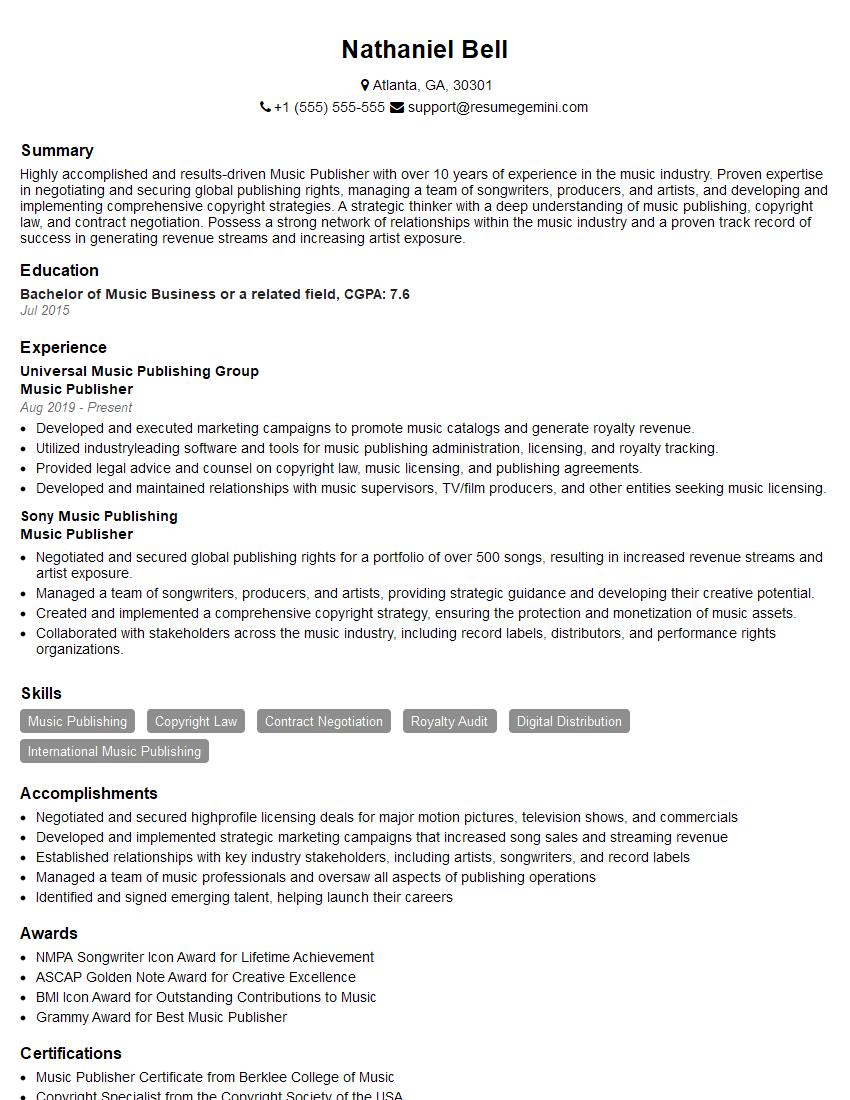
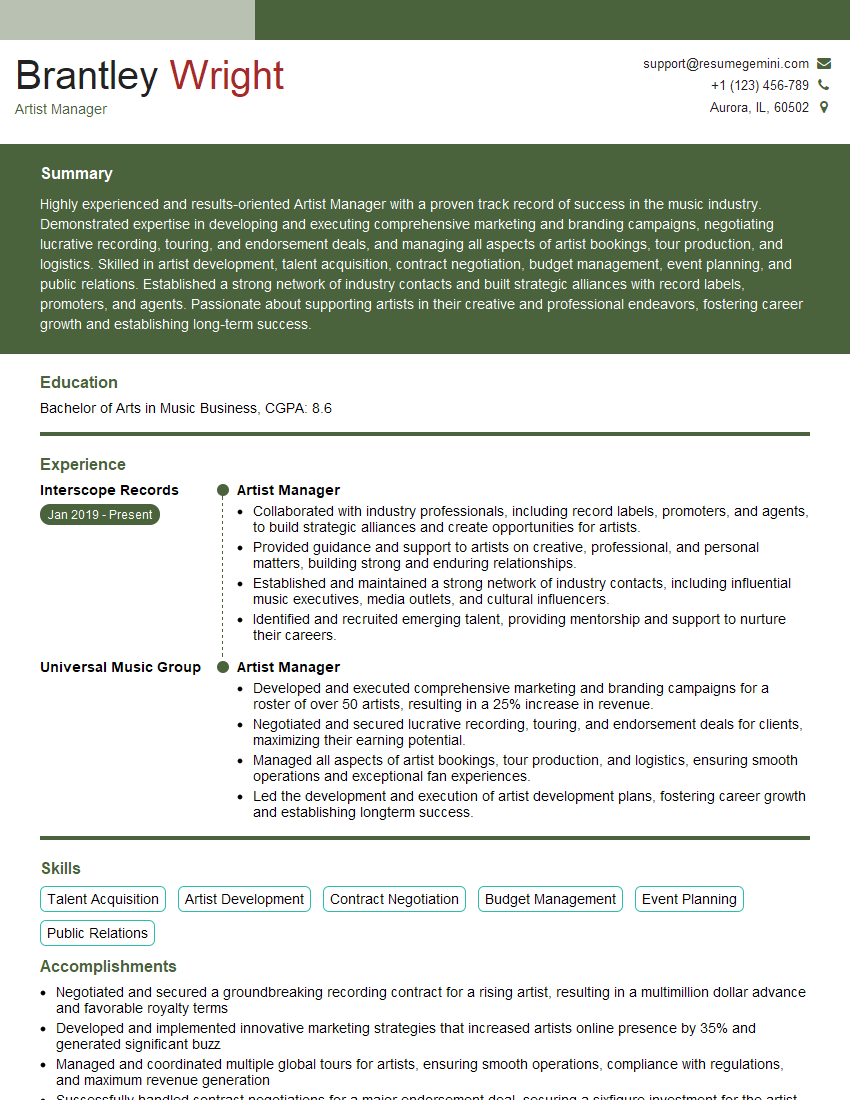
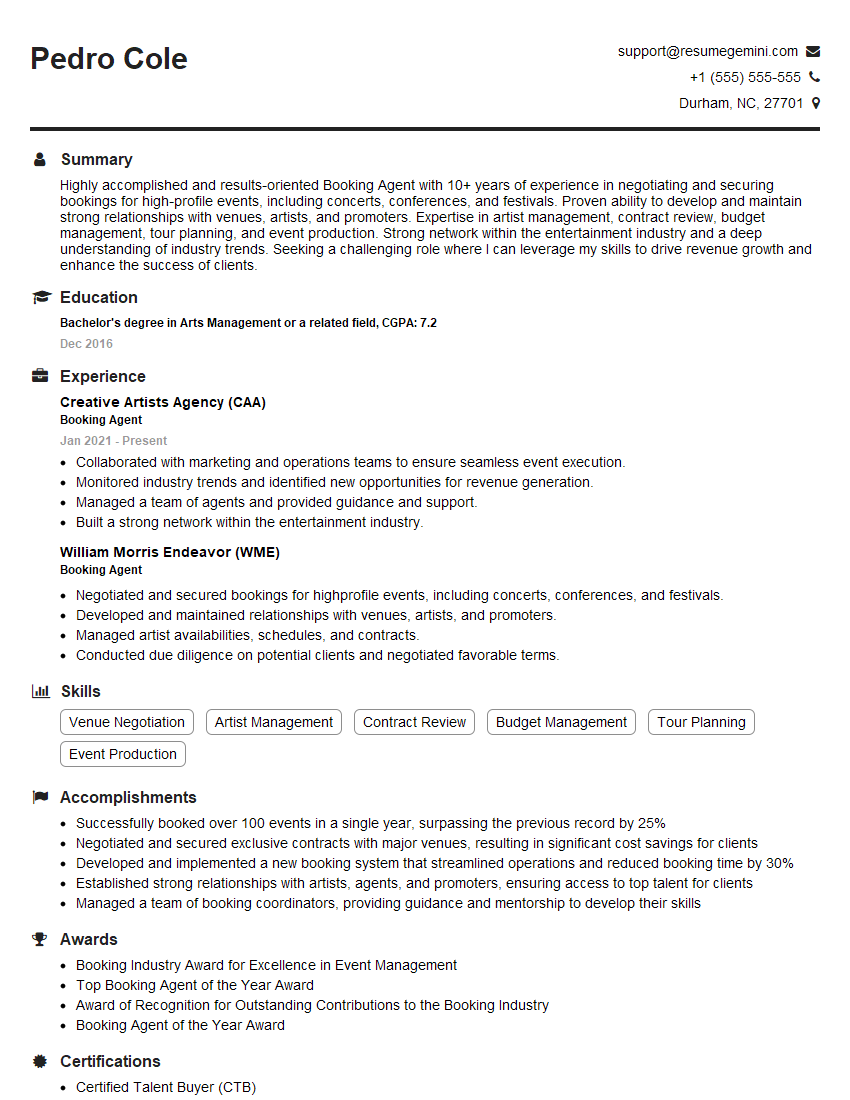
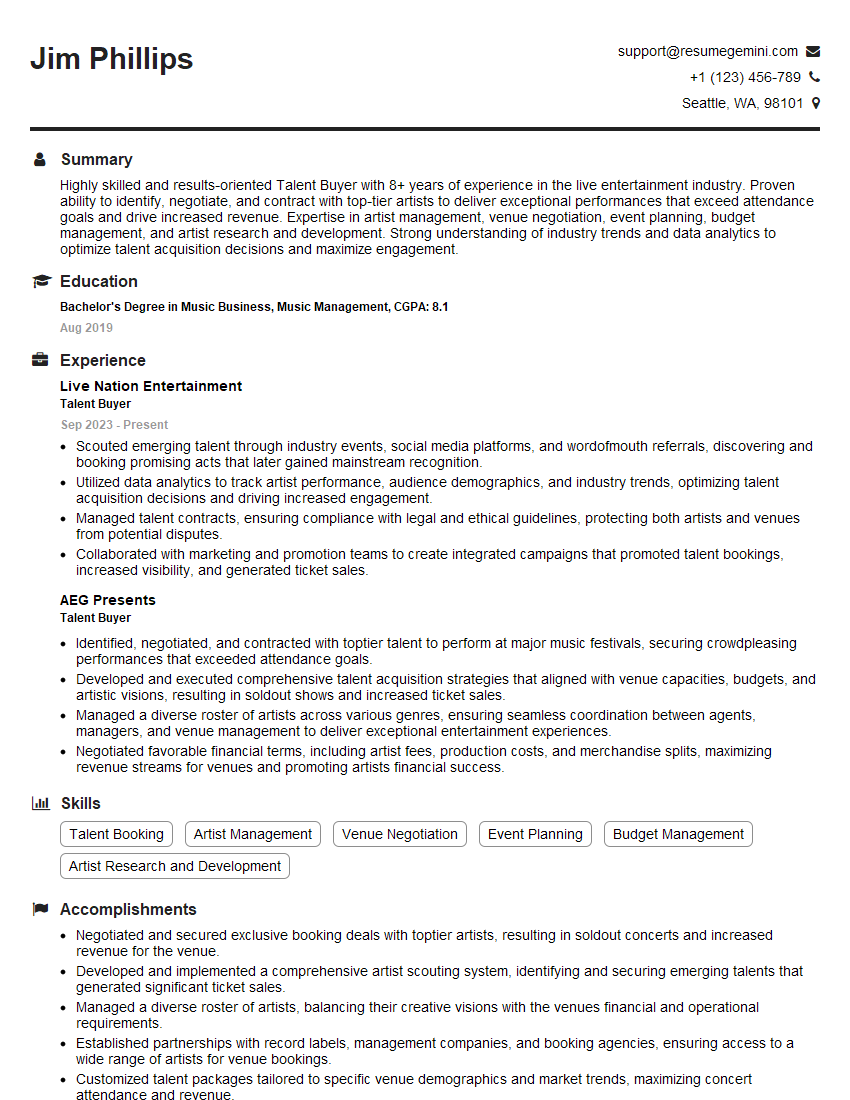
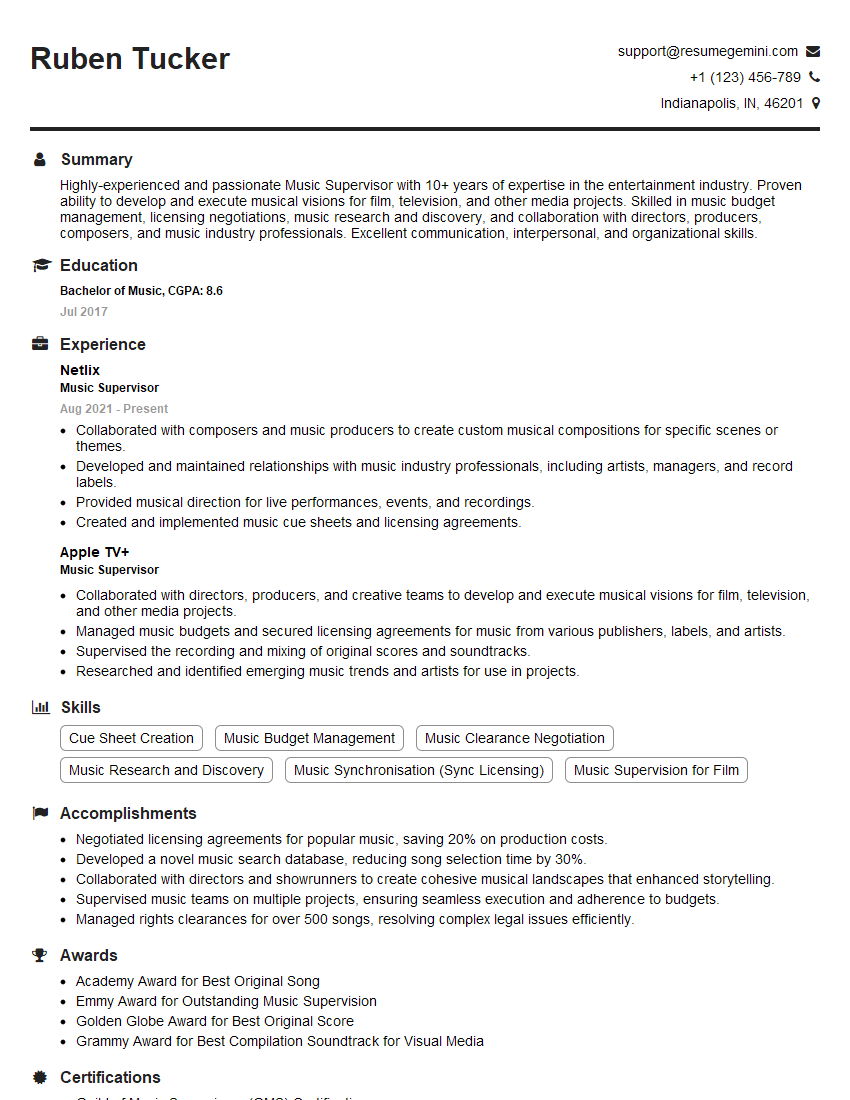
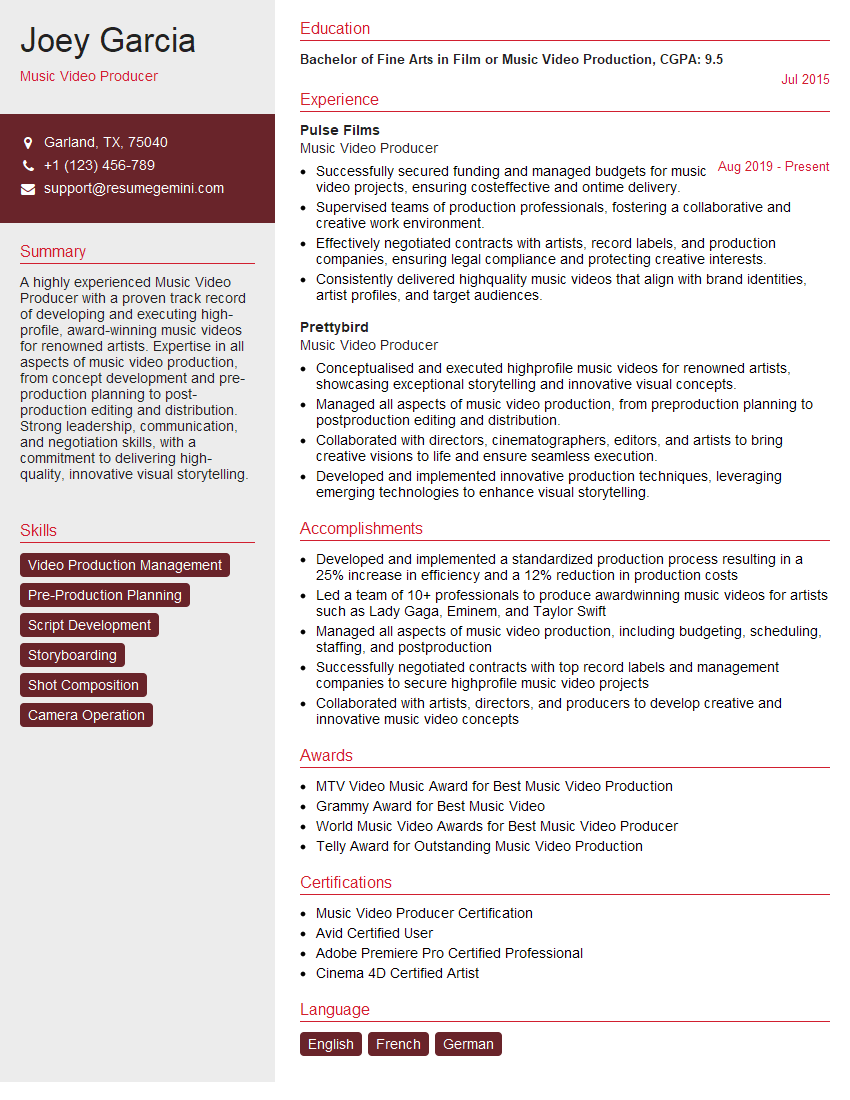
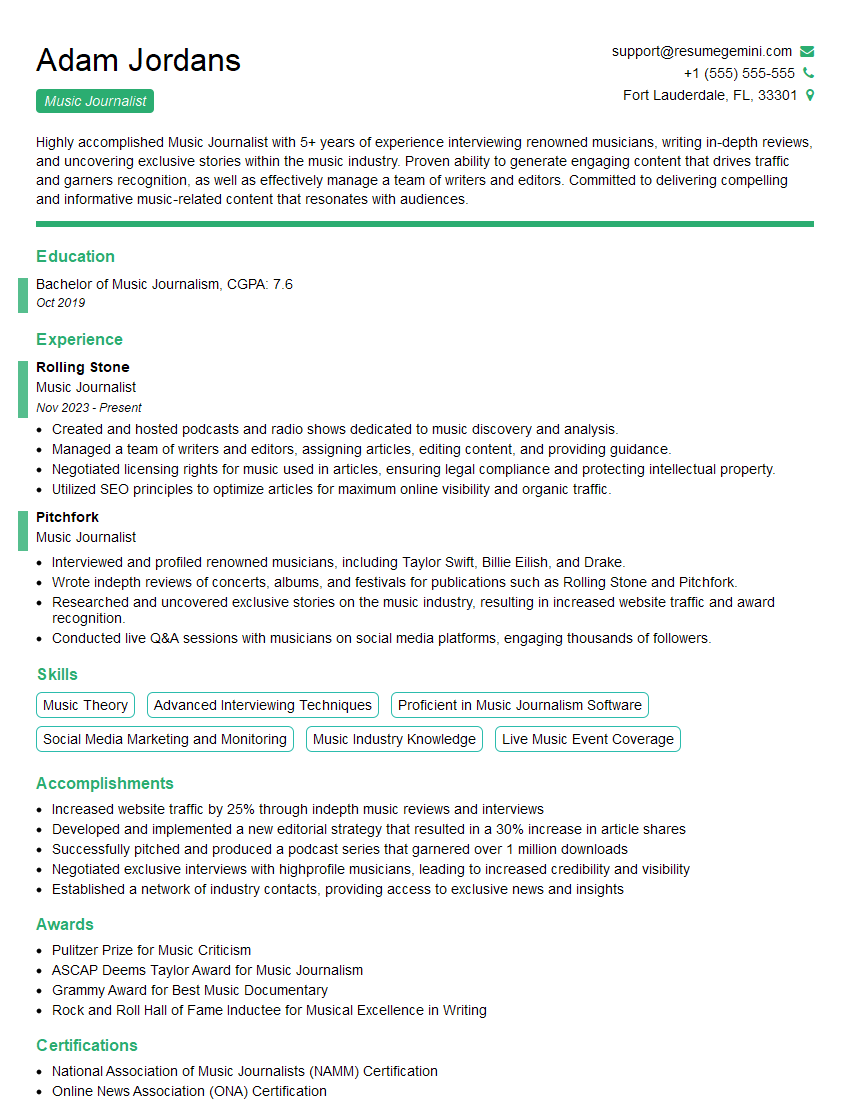
Mastering networking and relationship building is paramount for a thriving career in the music industry. It opens doors to incredible opportunities, fosters collaboration, and ultimately accelerates your professional growth. To significantly increase your job prospects, create a strong, ATS-friendly resume that showcases your skills and experience effectively. ResumeGemini is a trusted resource to help you craft a compelling and professional resume tailored to your specific goals. We provide examples of resumes tailored to highlighting Networking and building relationships within the music industry to help you get started.
Explore more articles
Users Rating of Our Blogs
Share Your Experience
We value your feedback! Please rate our content and share your thoughts (optional).
What Readers Say About Our Blog
Very informative content, great job.
good