Interviews are opportunities to demonstrate your expertise, and this guide is here to help you shine. Explore the essential Project Management Institute (PMI) Certified Associate in Project Management (CAPM) interview questions that employers frequently ask, paired with strategies for crafting responses that set you apart from the competition.
Questions Asked in Project Management Institute (PMI) Certified Associate in Project Management (CAPM) Interview
Q 1. Explain the five project management process groups.
The five Project Management Process Groups, as defined by the PMI, represent a high-level framework for managing projects. They are sequential but iterative, meaning you might revisit earlier stages as the project progresses. Think of them as the five phases of a project’s lifecycle.
- Initiating: This is where the project begins. It involves defining the project’s high-level goals, securing initial approval and funding, and identifying key stakeholders. Imagine this as laying the foundation for a house – you need the blueprints and the land secured before you start building.
- Planning: This crucial phase involves detailed planning and defining the project scope, creating a work breakdown structure (WBS), developing the project schedule, and budgeting resources. This is like creating the detailed construction plans for our house, figuring out materials, timelines and costs.
- Executing: This is the ‘doing’ stage. The project team carries out the planned work, manages resources, and monitors progress. This is the actual construction of the house – laying bricks, installing plumbing, etc.
- Monitoring and Controlling: This involves tracking progress against the plan, managing risks and issues, making adjustments as needed, and reporting progress to stakeholders. Think of this as regular inspections during the construction process, ensuring the house is being built according to plan and addressing any problems that arise.
- Closing: This is the final phase, where the project deliverables are formally accepted, the project is documented, and the team is disbanded. It’s the housewarming party – celebrating the completion and documenting all the work that went into it.
Q 2. Describe the three constraints of project management (time, cost, scope).
The ‘Project Management Triangle’ or ‘Triple Constraint’ illustrates the three primary factors that influence every project: Time, Cost, and Scope. These constraints are interconnected; changes in one directly affect the others.
- Time: This refers to the project schedule and deadlines. It’s the amount of time allocated to complete the project.
- Cost: This encompasses all the expenses associated with the project, including materials, labor, and overhead.
- Scope: This defines what the project will deliver. It’s the features, functions, and deliverables outlined in the project requirements.
Imagine building a house (our favourite example!). If you reduce the time constraint (faster completion), you might need to increase the cost (overtime pay for workers) or reduce the scope (simpler design). Similarly, increasing the scope (adding a pool) will likely increase both the time and cost.
Q 3. What are the key differences between Agile and Waterfall methodologies?
Agile and Waterfall are two contrasting project management methodologies. The key differences lie in their approach to planning and flexibility.
- Waterfall: This is a linear, sequential approach. Each phase (requirements, design, implementation, testing, deployment) must be completed before moving to the next. Changes are difficult and expensive to implement later in the process. Think of it like a waterfall – once the water flows over the edge, it can’t go back up.
- Agile: This is an iterative and incremental approach, emphasizing flexibility and collaboration. Projects are broken into smaller sprints (typically 2-4 weeks), with regular feedback loops and adaptation based on changing requirements. It’s more like building with LEGOs – you can easily adjust and rebuild as you go.
For instance, developing a software application using Waterfall would involve completely defining all requirements upfront, then designing, coding, and testing the entire application before release. An Agile approach would involve building a minimum viable product (MVP) first, gathering user feedback, and iteratively improving the product over several sprints.
Q 4. How do you create a Work Breakdown Structure (WBS)?
A Work Breakdown Structure (WBS) is a hierarchical decomposition of all the work required to complete a project. It visually breaks down the project into smaller, more manageable components. Think of it as a detailed outline or a roadmap for your project.
Creating a WBS involves a top-down approach:
- Identify the project deliverables: What is the final outcome of the project?
- Break down the deliverables into smaller components: Subdivide the main deliverables into increasingly smaller tasks.
- Continue decomposing until you reach manageable work packages: These are the smallest units of work that can be assigned to a team member or group.
- Use a visual representation: A WBS is typically displayed as a hierarchical chart or outline, showing the relationships between tasks.
For example, building a house (yes, again!) would start with the main deliverable ‘Complete House.’ This could be broken down into ‘Foundation,’ ‘Framing,’ ‘Roofing,’ ‘Electrical,’ etc. Each of these could be further subdivided, like ‘Foundation’ into ‘Excavation,’ ‘Pouring Concrete,’ etc., until you reach individual tasks small enough to assign.
Q 5. What is a Gantt chart and how is it used in project management?
A Gantt chart is a visual representation of a project schedule. It displays the tasks, their durations, and their dependencies over time. It’s a valuable tool for monitoring progress, identifying potential delays, and communicating the project schedule to stakeholders.
A Gantt chart uses horizontal bars to represent tasks. The length of the bar indicates the task duration. The bars are placed on a timeline, showing when each task is scheduled to begin and end. Dependencies between tasks are shown by linking bars or using other visual cues. For instance, ‘Framing’ can’t begin before ‘Foundation’ is complete.
In project management, Gantt charts are used for planning, scheduling, monitoring, and controlling projects. They provide a clear and concise overview of the project timeline, making it easy to identify potential delays or conflicts.
Q 6. Explain the concept of critical path analysis.
Critical Path Analysis (CPA) is a technique used to identify the longest sequence of tasks in a project network, known as the critical path. Tasks on the critical path have zero float (or slack) – meaning any delay on these tasks will directly delay the project completion date. Identifying the critical path is crucial for effective project management.
CPA involves:
- Defining the project network: This involves identifying all the tasks, their dependencies, and their durations.
- Calculating the earliest start and finish times for each task: This is done by working forward through the network.
- Calculating the latest start and finish times for each task: This is done by working backward from the project completion date.
- Calculating the float (slack) for each task: This is the difference between the latest and earliest finish times. Tasks with zero float are on the critical path.
By focusing on tasks on the critical path, project managers can prioritize resources and proactively manage potential delays. Ignoring the critical path could lead to missed deadlines.
Q 7. How do you manage project risks and issues?
Managing project risks and issues is crucial for successful project completion. It involves proactively identifying potential problems and developing strategies to mitigate them, as well as addressing issues that arise during the project.
Risk Management:
- Risk Identification: Brainstorming potential risks – using techniques like SWOT analysis.
- Risk Analysis: Assessing the likelihood and impact of each risk.
- Risk Response Planning: Developing strategies to avoid, mitigate, transfer, or accept risks (e.g., purchasing insurance to transfer financial risk).
- Risk Monitoring and Control: Regularly monitoring risks and taking corrective action if necessary.
Issue Management:
- Issue Identification: Recognizing problems or deviations from the plan.
- Issue Analysis: Understanding the root cause of the issue.
- Issue Resolution: Developing and implementing solutions to address the issue.
- Issue Tracking and Reporting: Monitoring the status of issues and reporting progress to stakeholders.
Using a risk register (a centralized repository of identified risks) and an issue log (for tracking issues) is a good practice for efficient management.
Q 8. Describe your experience with project stakeholder management.
Stakeholder management is crucial for project success. It involves identifying, analyzing, and managing the expectations of everyone who’s invested in or affected by the project. This includes clients, team members, management, and even external parties like regulatory bodies. My approach is proactive and iterative, beginning with a thorough stakeholder register. This register documents each stakeholder, their interest in the project, their influence, their communication preferences, and any potential risks or opportunities they present.
For example, on a recent software development project, I identified a key stakeholder – a senior executive with limited technical expertise but high influence. To effectively manage their expectations, I created regular, concise progress reports focusing on high-level achievements and business value, rather than technical details. I also established a dedicated communication channel for their questions and concerns, ensuring prompt and clear responses. This approach fostered trust and prevented misunderstandings that could have stalled the project.
Effective stakeholder management also involves actively engaging stakeholders throughout the project lifecycle, soliciting feedback, and addressing concerns in a timely manner. I leverage tools like stakeholder analysis matrices and communication plans to ensure consistent and efficient communication. The goal is to keep everyone informed, engaged, and aligned with the project’s objectives.
Q 9. How do you handle project scope creep?
Scope creep, the uncontrolled expansion of project requirements, is a common threat. My approach focuses on prevention and mitigation. Prevention starts with a well-defined and approved project scope statement, which is meticulously documented using techniques like Work Breakdown Structures (WBS). This WBS visually breaks down the project into smaller, manageable tasks, preventing ambiguity.
During project execution, I establish a formal change management process. Any proposed changes to the scope must be documented, assessed for impact (cost, time, resources), and approved by relevant stakeholders before being incorporated. This includes assessing the risks and benefits of each proposed change. Using a Change Request Form and carefully documenting the decision-making process helps maintain transparency and control. For example, on a website redesign project, a client requested a new feature halfway through. We documented the request, estimated the extra cost and timeline, and presented it to the client. While the client was enthusiastic, they ultimately agreed that the added expense and delay weren’t feasible for their current budget and timeline. The scope change was therefore deemed not feasible.
Regular monitoring and communication are key. The team and stakeholders should always know the current project scope and any deviations. This allows for early detection and resolution of potential scope creep issues.
Q 10. What are some common project management tools you’ve used?
Throughout my projects, I’ve utilized several project management tools, adapting my choice to the specific project’s needs and team preferences. Microsoft Project is a mainstay for scheduling and resource allocation, enabling me to create Gantt charts and track progress effectively. I also have experience with project management software like Jira and Asana, which are particularly beneficial for agile projects, facilitating task management, collaboration, and issue tracking. For visual representations of project status and risks, I utilize Microsoft Excel and PowerPoint for data analysis and presentation.
Beyond software, I find communication platforms like Slack and Microsoft Teams invaluable for team communication and quick updates. These help streamline interactions, which increases team efficiency. The choice of tools is always strategic; I select those that best support the team’s workflow and project goals.
Q 11. How do you measure project success?
Project success is multi-faceted and goes beyond simply completing the project on time and within budget. My approach to measuring success involves assessing the project against pre-defined criteria that encompass scope, schedule, budget, quality, and stakeholder satisfaction. These criteria are established in the project charter and refined throughout the project lifecycle.
For instance, consider a project aimed at improving customer satisfaction. While meeting the budget and schedule is important, the ultimate measure of success is the observed increase in customer satisfaction ratings or a demonstrable reduction in customer complaints. We would track key performance indicators (KPIs) to quantify these successes.
I leverage post-project reviews and retrospective meetings to gather feedback from stakeholders, identify areas for improvement in future projects, and celebrate accomplishments. These reviews contribute to lessons learned and continuous improvement, fostering long-term project success and organizational learning.
Q 12. Describe your experience with project budgeting and cost control.
Project budgeting and cost control are vital for ensuring projects remain financially viable. My approach involves a detailed budget breakdown, starting with a comprehensive cost estimate that accounts for all anticipated expenses, including labor, materials, and other resources. This is often done using Earned Value Management (EVM) techniques.
During project execution, I actively monitor actual costs against the budget, employing regular cost variance analysis. Any discrepancies are investigated promptly to understand the root cause and implement corrective actions. For example, if labor costs exceed the budget, I might explore options such as re-allocating resources, negotiating better rates with vendors, or optimizing team workflow. These techniques help maintain cost control while ensuring adherence to the planned scope and schedule. Regular reporting to stakeholders provides transparency and facilitates decision-making to prevent cost overruns.
Q 13. Explain your process for monitoring and controlling project schedules.
Monitoring and controlling project schedules is an ongoing process that demands consistent attention. My process starts with a well-defined project schedule developed using tools like critical path method (CPM) or program evaluation and review technique (PERT) that identifies dependencies and critical tasks.
During project execution, I regularly monitor progress against the schedule using tools like Gantt charts and progress reports. Any schedule deviations are immediately investigated, and corrective actions are planned and implemented. This might involve adjusting resource allocation, re-sequencing tasks, or identifying and mitigating risks that are delaying progress. For example, if a critical task is behind schedule due to unforeseen delays, I will assess the impact on the overall project and adjust the timeline accordingly, potentially adding resources to expedite the task or negotiating with stakeholders for a revised deadline.
Regular communication and reporting are vital in keeping all stakeholders abreast of the project’s status and any necessary adjustments to the schedule. This transparency helps to maintain buy-in and manage expectations.
Q 14. How do you facilitate project team communication?
Effective project team communication is paramount. My approach is multi-pronged, leveraging various communication channels and techniques to ensure clear, consistent, and timely information flow. I tailor my communication style to the audience and the information being shared. This includes holding regular team meetings, using collaborative tools like project management software and instant messaging platforms, and delivering regular progress reports.
I also encourage open dialogue and feedback within the team. This fosters a collaborative and supportive environment. I establish clear communication protocols, outlining preferred methods of communication for different types of information (e.g., urgent issues, routine updates). For instance, I might use email for formal documentation and instant messaging for quick questions. I also make a point to actively listen and address team members’ concerns to build trust and improve morale. Regular status meetings help maintain transparency and allow for early identification and resolution of potential communication breakdowns.
Q 15. Describe a situation where you had to make a difficult decision on a project.
During a website redesign project, we faced a critical juncture. The initial design, while aesthetically pleasing, was significantly behind schedule and lacked key functionalities identified in stakeholder interviews. The difficult decision was whether to compromise on the design’s visual appeal to meet the deadline or risk further delays by implementing the missing features. I opted to prioritize functionality, explaining to stakeholders that a functional, albeit less visually polished, website was more valuable initially than a beautiful but unusable one. We prioritized essential features and delivered the website on a revised, more realistic timeline. We then rolled out visual improvements in a phased approach after the launch, minimizing disruption to users. This decision, while challenging at the time, proved successful as the launch went smoothly, and positive user feedback quickly followed.
Career Expert Tips:
- Ace those interviews! Prepare effectively by reviewing the Top 50 Most Common Interview Questions on ResumeGemini.
- Navigate your job search with confidence! Explore a wide range of Career Tips on ResumeGemini. Learn about common challenges and recommendations to overcome them.
- Craft the perfect resume! Master the Art of Resume Writing with ResumeGemini’s guide. Showcase your unique qualifications and achievements effectively.
- Don’t miss out on holiday savings! Build your dream resume with ResumeGemini’s ATS optimized templates.
Q 16. What is your experience with project communication plans?
Project communication plans are essential for successful project delivery. My experience includes developing and implementing plans that define the communication methods, frequency, audience, and responsible parties. This involves identifying stakeholders and their information needs, selecting appropriate communication channels (e.g., email, meetings, project management software), establishing a clear communication schedule, and documenting the plan. For instance, in a recent software development project, our communication plan included daily stand-up meetings for the team, weekly status reports to management, and monthly stakeholder updates delivered through presentations and email summaries. Regular review and adaptation of the plan, based on project progress and stakeholder feedback, were key to maintaining effective communication throughout the project lifecycle.
Q 17. How do you ensure project quality?
Ensuring project quality involves a multi-pronged approach. It starts with clearly defining quality standards at the outset, often through a Quality Management Plan, which outlines quality objectives and processes. This plan would then include strategies for quality control and quality assurance. I actively participate in quality control activities, performing regular checks against defined standards, conducting reviews, and identifying defects early. Quality assurance is addressed through processes like risk management, preventative measures, and continuous improvement. For example, I might utilize checklists for testing software features, conduct peer reviews of documentation, and establish regular feedback loops with the team and stakeholders to identify and address potential quality issues proactively.
Q 18. Explain your understanding of Earned Value Management (EVM).
Earned Value Management (EVM) is a project management technique that integrates scope, schedule, and cost to provide a comprehensive picture of project performance. It uses three key metrics: Planned Value (PV), Earned Value (EV), and Actual Cost (AC). PV represents the planned budget for completed work at a given point in time. EV is the value of the work actually completed, and AC is the actual cost incurred to date. Key EVM indicators include the Schedule Variance (SV = EV – PV) and Cost Variance (CV = EV – AC). A positive SV indicates the project is ahead of schedule, while a positive CV shows it is under budget. By regularly monitoring and analyzing these metrics, project managers can identify potential problems early and take corrective action. For example, a negative SV and CV could signal a need to reassess the project schedule and budget.
Q 19. How do you handle conflicting priorities on a project?
Conflicting priorities are inevitable in project management. My approach involves a structured process to resolve these conflicts. First, I clearly document all competing priorities. Then, I prioritize them using a framework like MoSCoW (Must have, Should have, Could have, Won’t have), or a weighted scoring system based on factors such as business value, risk, and dependencies. This process involves engaging stakeholders to reach a consensus on the prioritization. Once the priorities are established, clear communication is paramount, ensuring everyone understands the rationale behind the chosen approach. I document these decisions and their impact on the project schedule and budget, maintaining transparency throughout the process.
Q 20. What is your approach to conflict resolution within a project team?
My approach to conflict resolution focuses on collaboration and open communication. I believe that addressing conflict directly and constructively is crucial for maintaining a healthy team environment and project success. I start by actively listening to all parties involved, trying to understand their perspectives and concerns. Depending on the nature and severity of the conflict, I might facilitate a team meeting where we can openly discuss the issue, identify the root cause, and work together to find a mutually agreeable solution. If the conflict involves significant personalities or escalates beyond my ability to resolve, I would seek guidance from upper management or a designated conflict resolution resource. The goal is always a fair and equitable outcome that preserves teamwork and project goals.
Q 21. Describe your experience with project closure processes.
Project closure is a critical, often overlooked, phase. My experience involves meticulously documenting all project deliverables, including final reports, documentation, and lessons learned. We also conduct a thorough review of the project, assessing whether objectives were met, the project budget was managed effectively, and what we can improve in future endeavors. This often involves post-project reviews and surveys. Stakeholder sign-off is obtained to officially close the project. The lessons learned are documented and shared with the organization, ensuring that future projects benefit from our past experiences. Proper project closure avoids future disputes and ensures a complete transition to the next phase of the product or service’s lifecycle.
Q 22. How do you manage project documentation?
Effective project documentation is crucial for success. It ensures everyone is on the same page, facilitates communication, and provides a historical record for future projects. My approach involves a multi-faceted strategy focusing on organization, accessibility, and version control.
- Centralized Repository: I utilize a centralized system, like SharePoint or a cloud-based platform like Google Drive, to store all project documents. This ensures easy access for all stakeholders.
- Version Control: To prevent confusion and maintain clarity, I use version control. This could be as simple as numbering document revisions or using a more sophisticated system like Git for larger projects. This allows us to track changes and revert to previous versions if needed.
- Clear Naming Conventions: Consistent and descriptive file names are essential. I implement a standardized naming system (e.g., Project Name_Document Type_Version Number) to quickly locate documents.
- Regular Updates: Documents need to be regularly reviewed and updated to reflect current project status. I establish a schedule for updates and assign responsibility to specific team members.
- Document Control Process: A formal document control process is critical for larger projects. This involves defining roles and responsibilities for document creation, review, approval, and distribution.
For example, in a recent software development project, our centralized repository, coupled with a strict version control system, allowed us to seamlessly manage over 500 documents, ensuring every team member had access to the most current information.
Q 23. What is your experience with project reporting?
Project reporting is a vital component of effective project management. It provides stakeholders with a clear understanding of project progress, potential risks, and overall performance. My experience includes creating various reports, tailored to the specific needs of the audience. These reports range from simple status updates to complex financial reports.
- Status Reports: I create regular status reports outlining key milestones, progress against the schedule, and any identified risks or issues. These are typically concise and highlight key performance indicators (KPIs).
- Progress Reports: These reports provide a more detailed overview of completed tasks, upcoming tasks, and any resource allocation adjustments. They often include visual representations like Gantt charts or burn-down charts.
- Risk Management Reports: These focus on identified risks, their potential impact, and mitigation strategies. This ensures proactive issue management and prevents potential problems from escalating.
- Financial Reports: For budget-conscious projects, I create financial reports that track actual costs versus planned costs, highlighting any variances and recommending corrective action.
In a previous project, my detailed progress reports, incorporating visual representations of progress, effectively communicated the project status to senior management, enabling them to make informed decisions and prevent potential delays.
Q 24. Explain your understanding of project procurement management.
Project Procurement Management involves acquiring goods and services needed to complete the project successfully. It’s a critical process that requires careful planning, execution, and control. My understanding encompasses the entire procurement process, from planning and selecting vendors to managing contracts and closing the procurement process.
- Planning: This initial phase involves identifying what needs to be procured, determining the procurement strategy (e.g., competitive bidding, sole sourcing), and creating a procurement management plan.
- Soliciting Seller Responses: This stage involves preparing and distributing requests for proposals (RFPs) or requests for information (RFIs) to potential vendors.
- Selecting Sellers: Once responses are received, they are evaluated based on predefined criteria, and a vendor is selected based on factors like price, quality, and experience.
- Contract Administration: This involves managing the contract with the selected vendor, monitoring performance, and resolving any issues or disputes.
- Contract Closure: This final phase involves completing the procurement process, ensuring all deliverables are accepted, and formally closing the contract.
For example, in a construction project, I managed the procurement of materials and subcontractor services by using a competitive bidding process to ensure we received the best value. Effective contract administration was key to maintaining the project schedule and budget.
Q 25. How do you utilize project management software?
I’m proficient in using various project management software applications, including Microsoft Project, Asana, and Jira. My experience involves leveraging these tools to enhance efficiency and improve project outcomes.
- Task Management: I use these tools to create and assign tasks, track progress, and manage dependencies between tasks. This improves team collaboration and ensures everyone is aware of their responsibilities.
- Schedule Management: I leverage the scheduling capabilities of these tools to create and manage project schedules, identify critical paths, and monitor progress against the baseline schedule.
- Resource Management: I use the resource management features to assign resources to tasks, track resource utilization, and optimize resource allocation to avoid over-allocation or under-utilization.
- Risk Management: Many tools provide functionalities for risk management, allowing for the identification, assessment, and tracking of project risks.
- Reporting and Communication: These tools provide various reporting capabilities, making it easy to generate status reports, progress reports, and other relevant project information.
In a recent project, using Asana enabled us to streamline task management, fostering greater transparency and accountability among team members. Real-time updates and progress tracking significantly reduced the need for lengthy email chains, thereby saving both time and improving communication.
Q 26. Describe a project you managed and the challenges you faced.
In a previous role, I managed the launch of a new e-commerce website. The project involved a cross-functional team and numerous dependencies. One major challenge was integrating the new website with existing systems, which proved more complex than initially anticipated.
We faced several challenges:
- Integration Issues: The integration of the new website with the legacy systems presented unforeseen technical hurdles. This resulted in delays and required additional development time.
- Testing Bottlenecks: The extensive testing required to ensure seamless functionality and data integrity created a bottleneck, jeopardizing the launch date.
- Communication Gaps: Maintaining effective communication across the various teams involved was initially difficult.
To overcome these challenges, I implemented several solutions:
- Agile Methodology: We switched to an agile methodology, allowing for iterative development and testing, enabling us to quickly adapt to the integration challenges.
- Improved Communication: We implemented daily stand-up meetings and a central communication platform to enhance transparency and collaboration across teams.
- Risk Mitigation: We proactively identified potential risks and developed mitigation plans to address them effectively.
Despite the challenges, the project was successfully completed, albeit with a slight delay, and the new e-commerce website was launched to positive customer reviews.
Q 27. What are your strengths and weaknesses as a project manager?
My strengths as a project manager include my strong organizational skills, proactive problem-solving abilities, and excellent communication skills. I’m adept at managing multiple priorities, staying calm under pressure, and fostering strong teamwork.
One of my weaknesses is a tendency to take on too much responsibility. I am learning to better delegate tasks and trust my team members to handle their responsibilities effectively. I actively participate in professional development activities to continuously improve my skills and address this weakness.
Q 28. Where do you see yourself in 5 years?
In five years, I see myself in a senior project management role, leading complex projects and mentoring junior team members. I aim to broaden my expertise in specific areas like risk management and project portfolio management. My goal is to consistently deliver successful projects and contribute to the overall success of the organization.
Key Topics to Learn for Project Management Institute (PMI) Certified Associate in Project Management (CAPM) Interview
- Project Management Frameworks: Understand the Agile and Waterfall methodologies, their strengths, weaknesses, and when to apply each. Consider practical scenarios where you’d choose one over the other.
- Project Life Cycle: Master the phases of a project lifecycle (initiation, planning, execution, monitoring & controlling, closure) and how tasks and responsibilities evolve across each phase. Be prepared to discuss real-world examples of projects you’ve managed (even small ones) and how you applied these phases.
- Stakeholder Management: Discuss techniques for identifying, analyzing, and managing stakeholder expectations and conflicts. Think about how you’d handle a situation where stakeholders have differing priorities.
- Risk Management: Explain the process of identifying, analyzing, responding to, and monitoring project risks. Practice articulating how you’d proactively mitigate potential problems.
- Scope Management: Discuss techniques for defining, managing, and controlling the project scope to prevent scope creep. Be ready to explain how you’d handle unexpected requests or changes during a project.
- Communication Management: Explain different communication methods and their effectiveness in different project scenarios. Consider how you’d tailor communication to different stakeholders.
- Time Management & Scheduling: Discuss techniques for creating project schedules, monitoring progress, and addressing delays. Be ready to discuss different scheduling methods (e.g., critical path method).
- Cost Management: Explain the process of planning, estimating, budgeting, and controlling project costs. Be prepared to discuss different budgeting techniques.
- Quality Management: Explain the importance of quality management and techniques for ensuring project quality throughout the project lifecycle.
- Procurement Management: Understand the processes involved in acquiring goods and services for a project. Think about scenarios where you might need to manage vendor contracts.
Next Steps
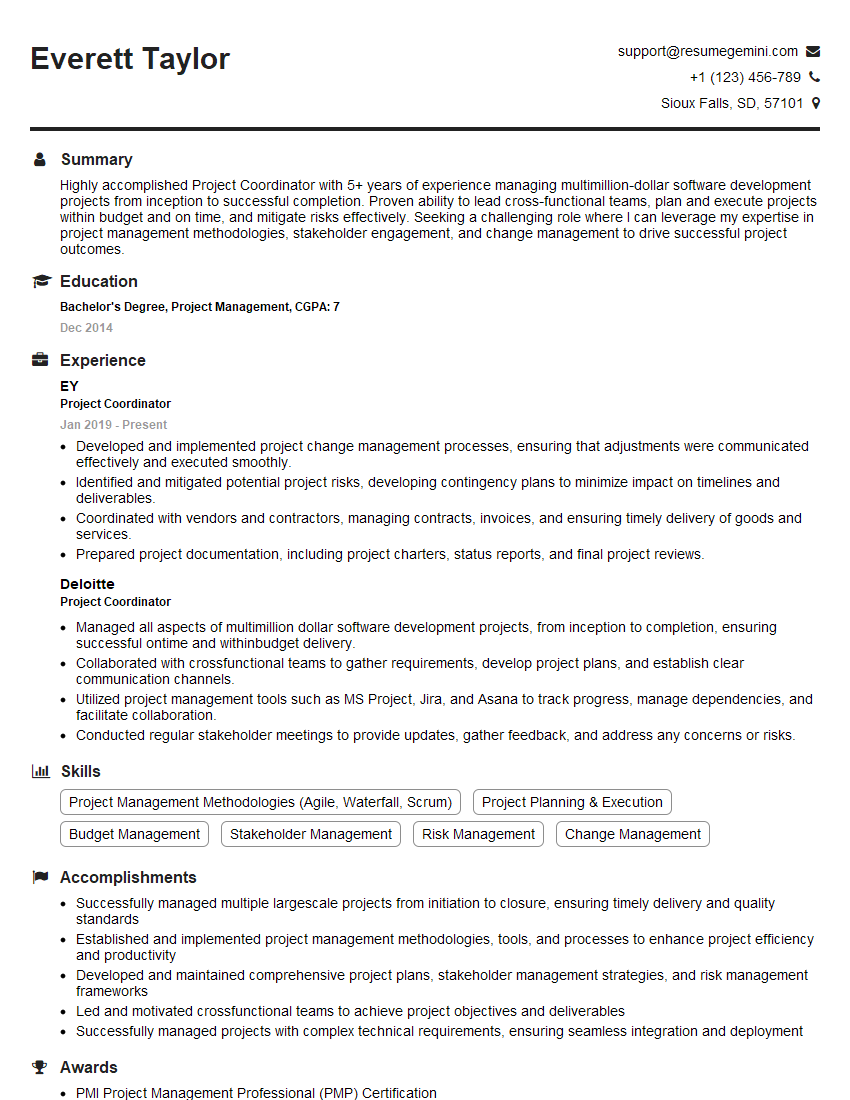
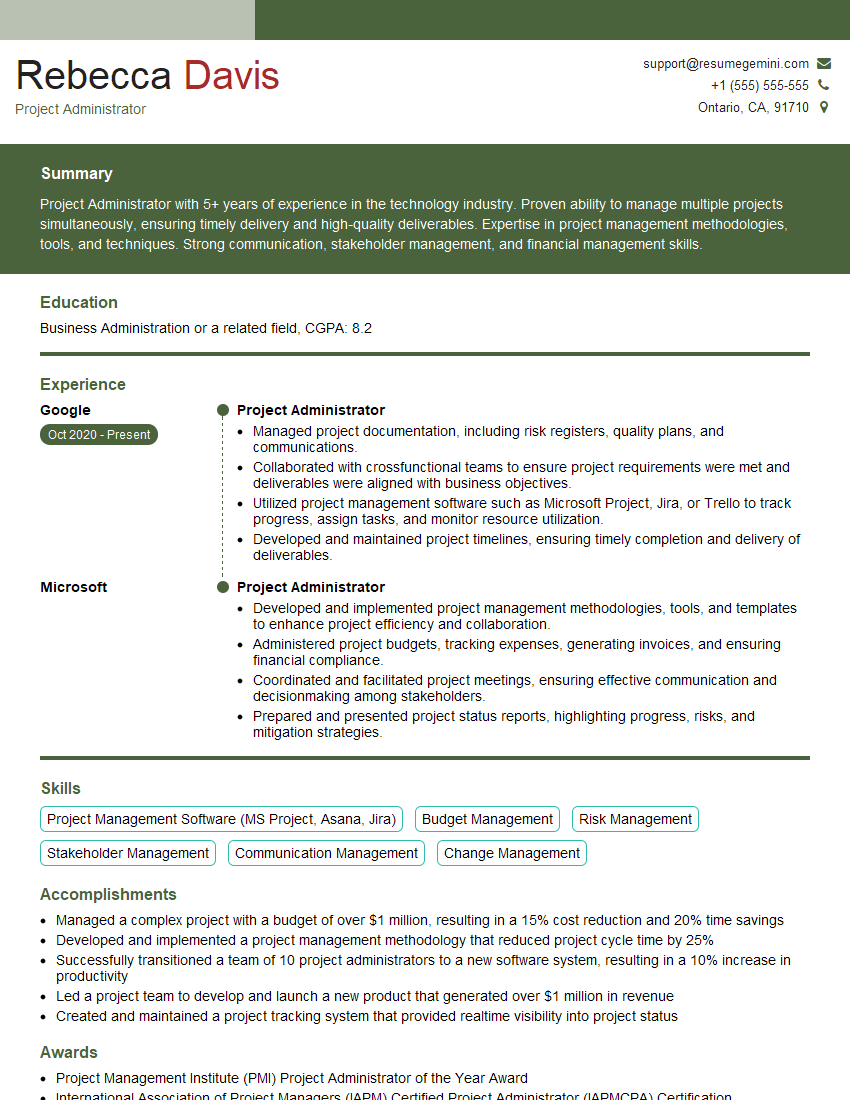
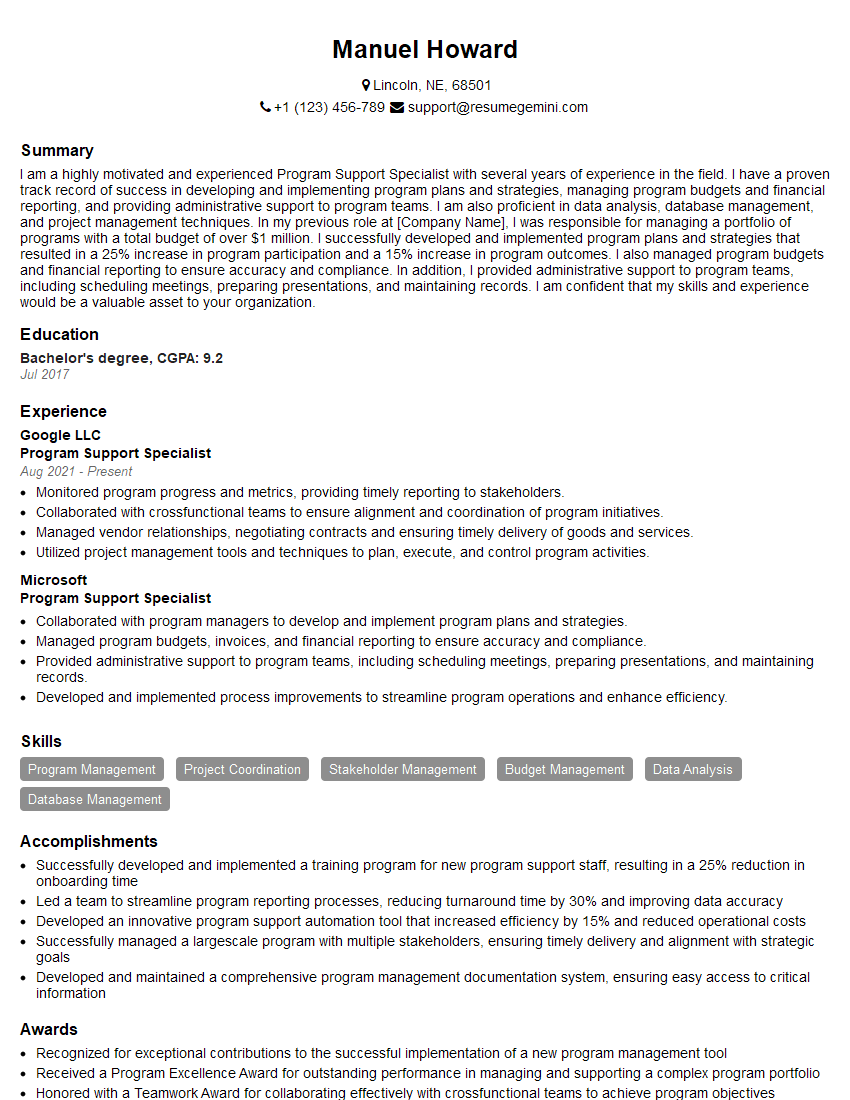
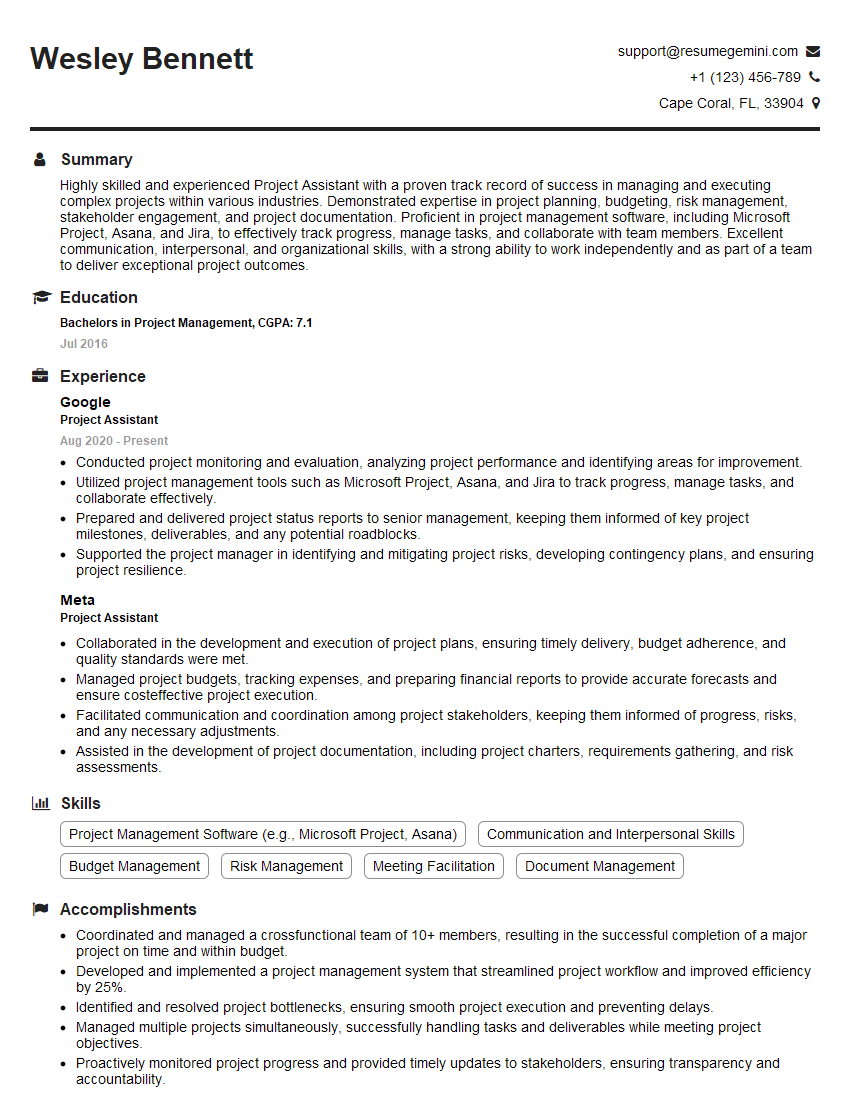
Earning your PMI Certified Associate in Project Management (CAPM) credential significantly boosts your career prospects, opening doors to exciting project management roles and demonstrating your commitment to professional excellence. To maximize your job search success, crafting a strong, ATS-friendly resume is crucial. ResumeGemini is a trusted resource to help you build a professional resume that highlights your CAPM certification and relevant experience. Examples of resumes tailored specifically for CAPM-certified candidates are available to guide you. Invest time in crafting a compelling resume—it’s your first impression on potential employers.
Explore more articles
Users Rating of Our Blogs
Share Your Experience
We value your feedback! Please rate our content and share your thoughts (optional).
What Readers Say About Our Blog
Attention music lovers!
Wow, All the best Sax Summer music !!!
Spotify: https://open.spotify.com/artist/6ShcdIT7rPVVaFEpgZQbUk
Apple Music: https://music.apple.com/fr/artist/jimmy-sax-black/1530501936
YouTube: https://music.youtube.com/browse/VLOLAK5uy_noClmC7abM6YpZsnySxRqt3LoalPf88No
Other Platforms and Free Downloads : https://fanlink.tv/jimmysaxblack
on google : https://www.google.com/search?q=22+AND+22+AND+22
on ChatGPT : https://chat.openai.com?q=who20jlJimmy20Black20Sax20Producer
Get back into the groove with Jimmy sax Black
Best regards,
Jimmy sax Black
www.jimmysaxblack.com
Hi I am a troller at The aquatic interview center and I suddenly went so fast in Roblox and it was gone when I reset.
Hi,
Business owners spend hours every week worrying about their website—or avoiding it because it feels overwhelming.
We’d like to take that off your plate:
$69/month. Everything handled.
Our team will:
Design a custom website—or completely overhaul your current one
Take care of hosting as an option
Handle edits and improvements—up to 60 minutes of work included every month
No setup fees, no annual commitments. Just a site that makes a strong first impression.
Find out if it’s right for you:
https://websolutionsgenius.com/awardwinningwebsites
Hello,
we currently offer a complimentary backlink and URL indexing test for search engine optimization professionals.
You can get complimentary indexing credits to test how link discovery works in practice.
No credit card is required and there is no recurring fee.
You can find details here:
https://wikipedia-backlinks.com/indexing/
Regards
NICE RESPONSE TO Q & A
hi
The aim of this message is regarding an unclaimed deposit of a deceased nationale that bears the same name as you. You are not relate to him as there are millions of people answering the names across around the world. But i will use my position to influence the release of the deposit to you for our mutual benefit.
Respond for full details and how to claim the deposit. This is 100% risk free. Send hello to my email id: lukachachibaialuka@gmail.com
Luka Chachibaialuka
Hey interviewgemini.com, just wanted to follow up on my last email.
We just launched Call the Monster, an parenting app that lets you summon friendly ‘monsters’ kids actually listen to.
We’re also running a giveaway for everyone who downloads the app. Since it’s brand new, there aren’t many users yet, which means you’ve got a much better chance of winning some great prizes.
You can check it out here: https://bit.ly/callamonsterapp
Or follow us on Instagram: https://www.instagram.com/callamonsterapp
Thanks,
Ryan
CEO – Call the Monster App
Hey interviewgemini.com, I saw your website and love your approach.
I just want this to look like spam email, but want to share something important to you. We just launched Call the Monster, a parenting app that lets you summon friendly ‘monsters’ kids actually listen to.
Parents are loving it for calming chaos before bedtime. Thought you might want to try it: https://bit.ly/callamonsterapp or just follow our fun monster lore on Instagram: https://www.instagram.com/callamonsterapp
Thanks,
Ryan
CEO – Call A Monster APP
To the interviewgemini.com Owner.
Dear interviewgemini.com Webmaster!
Hi interviewgemini.com Webmaster!
Dear interviewgemini.com Webmaster!
excellent
Hello,
We found issues with your domain’s email setup that may be sending your messages to spam or blocking them completely. InboxShield Mini shows you how to fix it in minutes — no tech skills required.
Scan your domain now for details: https://inboxshield-mini.com/
— Adam @ InboxShield Mini
support@inboxshield-mini.com
Reply STOP to unsubscribe
Hi, are you owner of interviewgemini.com? What if I told you I could help you find extra time in your schedule, reconnect with leads you didn’t even realize you missed, and bring in more “I want to work with you” conversations, without increasing your ad spend or hiring a full-time employee?
All with a flexible, budget-friendly service that could easily pay for itself. Sounds good?
Would it be nice to jump on a quick 10-minute call so I can show you exactly how we make this work?
Best,
Hapei
Marketing Director
Hey, I know you’re the owner of interviewgemini.com. I’ll be quick.
Fundraising for your business is tough and time-consuming. We make it easier by guaranteeing two private investor meetings each month, for six months. No demos, no pitch events – just direct introductions to active investors matched to your startup.
If youR17;re raising, this could help you build real momentum. Want me to send more info?
Hi, I represent an SEO company that specialises in getting you AI citations and higher rankings on Google. I’d like to offer you a 100% free SEO audit for your website. Would you be interested?
Hi, I represent an SEO company that specialises in getting you AI citations and higher rankings on Google. I’d like to offer you a 100% free SEO audit for your website. Would you be interested?