Preparation is the key to success in any interview. In this post, we’ll explore crucial Mining Exploration interview questions and equip you with strategies to craft impactful answers. Whether you’re a beginner or a pro, these tips will elevate your preparation.
Questions Asked in Mining Exploration Interview
Q 1. Explain the difference between grassroots and brownfields exploration.
Grassroots and brownfields exploration represent different stages and approaches in the search for mineral deposits. Think of it like searching for a lost item: grassroots is like starting from scratch in a vast, unexplored area, while brownfields is like focusing on a previously known location with some indication of potential.
- Grassroots Exploration: This involves exploring entirely new areas with little to no prior geological information. It’s a high-risk, high-reward endeavor, relying heavily on regional geological understanding, remote sensing, and initial geochemical surveys to identify promising targets. Imagine searching for gold in a completely uncharted jungle – you’d start by looking at the landscape, vegetation patterns, and possibly even using aerial imagery to identify potential areas for further investigation.
- Brownfields Exploration: This targets areas with existing geological information, previous mining activity, or known mineral occurrences. This could be a historically mined area where new techniques or discoveries could lead to further exploitation, or a region where previous exploration yielded promising but ultimately uneconomical results. It’s generally lower risk than grassroots because you are building upon existing data, but the potential for significant new discoveries might be smaller. This is like going back to your old house to look for a lost ring – you know where to look, and you have some idea of the layout.
The key difference lies in the level of pre-existing data and the exploration strategy employed. Grassroots exploration necessitates a systematic approach to generate new data, while brownfields exploration focuses on integrating and reinterpreting existing data to refine targets and potentially discover previously overlooked resources. For example, a brownfields project might involve detailed geophysical surveys and drilling to test a known mineralized zone, while a grassroots project could start with regional geochemical sampling and remote sensing to identify areas warranting more detailed investigation.
Q 2. Describe your experience with various exploration techniques (e.g., geophysics, geochemistry, remote sensing).
My experience spans a broad range of exploration techniques, each playing a crucial role in different stages of a project. I’ve extensively utilized:
- Geophysics: I’ve worked with various geophysical methods including magnetics, gravity, induced polarization (IP), and ground-penetrating radar (GPR). For instance, I used magnetic surveys to identify potential iron ore deposits based on their magnetic signature, and IP surveys to delineate sulfide mineralization zones. The choice of geophysical method depends heavily on the geological setting and the type of deposit being sought.
- Geochemistry: I have extensive experience in soil, rock, and stream sediment geochemical surveys, employing both traditional and advanced techniques like portable XRF (X-ray fluorescence) analysis. For example, I used stream sediment sampling to identify areas with anomalous concentrations of gold, which indicated the potential presence of a gold deposit upstream. This data informs follow up drilling programs.
- Remote Sensing: I’ve utilized satellite imagery (e.g., Landsat, ASTER) and aerial photography to identify structural features, alteration zones, and other geological indicators. Analyzing multispectral data, I successfully mapped alteration zones associated with a porphyry copper deposit which allowed us to prioritize targets for detailed exploration.
Integrating data from these different techniques is critical to building a comprehensive understanding of the subsurface geology. For example, a magnetic anomaly identified geophysically could be corroborated by anomalous geochemical values in soil samples, pointing to a potentially significant mineralized zone. This integrated approach significantly reduces exploration risk and optimizes resource allocation.
Q 3. How do you interpret geological maps and cross-sections?
Interpreting geological maps and cross-sections is fundamental to exploration. It’s like reading a story about the Earth’s history. These tools allow us to visualize subsurface geology, identify structural features, and understand the relationships between different rock units and mineralizations.
- Geological Maps: These depict the distribution of different rock types, structural features (faults, folds), and mineral occurrences at the surface. I analyze these maps to identify potential areas of interest, looking for patterns, anomalies, and correlations between different geological units and mineralization. For example, a linear trend of altered rocks could indicate a major fault system potentially hosting economic mineralization.
- Cross-Sections: These are vertical slices through the Earth, showing the subsurface geology based on drilling data and geological interpretations. By studying the geometry of different rock units, faults, and mineralization zones in multiple cross-sections, I can build a 3D model of the geological setting, understand the spatial relationships between different geological features, and evaluate the potential size and geometry of ore bodies. I look at factors like the dip and strike of geological formations, as well as structural features which control mineral deposition.
Effective interpretation requires a strong understanding of geological principles, structural geology, and the specific geological context of the area being studied. It often involves integrating data from multiple sources, including surface mapping, drilling, and geophysical surveys, to build a consistent and robust geological model.
Q 4. Explain your understanding of different ore deposit models.
Ore deposit models are frameworks that classify and explain the formation of different types of mineral deposits. Understanding these models is crucial for targeting exploration efforts effectively. Essentially, they provide a ‘recipe’ for where and how specific types of ore deposits form. Each model considers factors like the geological setting, mineralization processes, and the characteristics of the resulting ore deposit.
Examples include:
- Porphyry copper deposits: These form through hydrothermal alteration associated with intrusive igneous rocks. Understanding the relationship between the intrusive rock, alteration zones, and mineralization is key to exploration.
- Epithermal gold deposits: These are formed by hydrothermal activity at relatively shallow depths, often associated with volcanic activity. Exploration focuses on identifying volcanic features, alteration zones, and structural controls on mineralization.
- Sedimentary exhalative (SEDEX) deposits: These are formed by hydrothermal fluids venting onto the seafloor, leading to the deposition of metals in sedimentary rocks. The exploration strategy is quite different from porphyry copper deposits, focusing on identifying suitable sedimentary basins and favorable geological settings.
Knowing the specific characteristics of each ore deposit model allows us to tailor exploration strategies and techniques accordingly. For example, the exploration for a porphyry copper deposit would involve different geophysical techniques compared to the exploration for a placer gold deposit. This targeted approach significantly improves the efficiency and effectiveness of the exploration program.
Q 5. Describe your experience with data analysis and interpretation in exploration.
Data analysis and interpretation are core to my role. Modern exploration relies heavily on vast datasets from various sources. My experience involves:
- Data Management: Efficiently organizing, storing, and managing large geological, geophysical, geochemical, and drilling datasets, often using dedicated geological databases and software (e.g., Leapfrog Geo, ArcGIS).
- Statistical Analysis: Applying statistical methods (e.g., geostatistics) to analyze geochemical data, identify anomalies, and estimate resource volumes. This includes using techniques such as kriging and trend surface analysis to create resource models.
- Data Visualization: Creating maps, cross-sections, 3D models, and other visualizations to effectively communicate geological and geochemical information. This includes building 3D models using Leapfrog to visually represent mineralisation and assist with targeting.
- Integration of Multiple Data Types: This is crucial. Combining data from different sources (geochemistry, geophysics, remote sensing, drilling) to build integrated geological models and identify exploration targets. For example, I might overlay a geochemical anomaly map with a structural map to see how mineralisation is controlled by geological structures.
Data analysis often involves iterative processes; initial interpretations lead to further data acquisition and refinement of models, ultimately leading to well-supported exploration decisions. For instance, an initial interpretation of geochemical data might lead to targeted drilling, which in turn yields further data to refine the model and improve resource estimations.
Q 6. How do you evaluate the economic viability of an exploration target?
Evaluating the economic viability of an exploration target involves a multi-faceted approach, combining geological understanding with economic and financial analysis. It’s like assessing the profitability of any business venture but with a geological twist.
Key factors include:
- Grade and Tonnage: Determining the average grade (concentration of valuable minerals) and tonnage (volume) of the ore body is crucial. Higher grades and larger tonnages generally translate to greater economic potential.
- Mining Costs: Estimating the costs associated with mining, processing, and transportation of the ore. Factors like orebody geometry, depth, and accessibility significantly impact these costs.
- Metallurgical Recoveries: Assessing the percentage of valuable metals that can be economically recovered during processing. This depends on the ore mineralogy and the chosen processing techniques.
- Commodity Prices: Predicting future commodity prices is essential as they directly influence the profitability of the project. Price volatility needs careful consideration.
- Capital Expenditures (CAPEX) and Operating Expenditures (OPEX): Estimating initial investment (CAPEX) for infrastructure, equipment, and exploration and ongoing costs (OPEX) for operation and maintenance. This includes estimating feasibility studies and preliminary economic assessments.
Economic viability is often assessed using financial modelling techniques, including Net Present Value (NPV) and Internal Rate of Return (IRR) calculations. These models incorporate estimates of all costs and revenues over the life of the mine to determine the overall profitability of the project. A positive NPV and a high IRR generally indicate a financially viable project.
Q 7. What are the key factors to consider when designing an exploration program?
Designing an effective exploration program requires careful planning and consideration of various factors. It’s like creating a roadmap for a journey into the unknown.
- Geological Setting and Target Type: A thorough understanding of the geological setting and the type of mineral deposit being targeted is paramount. The exploration strategy should be tailored to the specific geological context.
- Exploration Objectives and Budget: Clearly defining the exploration objectives (e.g., discovering a new deposit, expanding a known deposit) and allocating a realistic budget are essential.
- Exploration Techniques: Selecting appropriate exploration techniques based on the geological setting, target type, and budget. This involves considering the cost-effectiveness and suitability of different methods.
- Data Acquisition and Management: Developing a plan for systematic data acquisition, storage, and management to ensure data quality and integrity. This can include the use of geological databases and GIS software.
- Environmental Considerations: Addressing environmental issues and ensuring compliance with environmental regulations is crucial in all phases of exploration. It should be integrated into all aspects of project design and execution.
- Risk Assessment and Mitigation: Identifying potential risks (e.g., geological, financial, environmental) and developing strategies to mitigate these risks. This ensures that the exploration program is robust and sustainable.
Effective program design is an iterative process. Early results inform subsequent decisions, allowing for adjustments and refinements throughout the exploration process. For example, initial geochemical surveys might guide the location of geophysical surveys, leading to more targeted drilling programs.
Q 8. How do you manage exploration risks and uncertainties?
Managing exploration risks and uncertainties is paramount in mining. It’s akin to navigating a fog – you have some visibility, but much remains hidden. We employ a multi-pronged approach, starting with a thorough risk assessment. This involves identifying potential hazards, such as geological complexities, permitting delays, cost overruns, and environmental impacts. Each risk is then evaluated for its likelihood and potential severity.
We mitigate these risks through diversification – exploring multiple targets, not putting all our eggs in one basket. Phased exploration is also crucial; we start with low-cost, high-impact techniques like geological mapping and geochemical surveys before progressing to more expensive methods such as drilling. Robust data management, including regular audits and quality control checks, helps ensure the reliability of our decisions. Finally, contingency planning addresses potential setbacks, allowing for adaptable strategies when encountering unexpected challenges. For example, if initial drilling results are disappointing at one target, we can quickly redirect resources to a more promising area.
Consider a project where we are exploring for a porphyry copper deposit. We might identify the risk of encountering a fault zone that could disrupt mineralization. Our mitigation strategy would involve detailed geophysical surveys to map the fault’s extent before committing to expensive drilling programs. If the fault is significant, we could adjust our exploration targets to areas less affected.
Q 9. Describe your experience with different drilling methods and their applications.
My experience spans various drilling methods, each suited for specific geological conditions and exploration objectives. Reverse circulation (RC) drilling is widely used for its speed and efficiency in covering large areas, particularly in arid regions. It’s ideal for geochemical sampling and assessing broader mineralization patterns. However, it’s not suitable for detailed core logging. Diamond core drilling, on the other hand, provides intact rock samples that are essential for detailed geological logging, geotechnical studies, and resource estimation. It’s more expensive and slower than RC drilling but invaluable for higher-confidence resource definition.
Air core (AC) drilling is another cost-effective method used for shallow exploration, especially in regolith cover. Downhole surveys like gamma-ray logging are crucial for lithological correlation and interpretation, regardless of the primary drilling technique.
For instance, in a greenfields exploration project, we might use RC drilling to initially define the mineralized zone. Then, we’d switch to diamond core drilling in targeted areas to obtain high-quality samples for detailed analysis and resource modeling before moving to production.
Q 10. How do you ensure the quality and integrity of exploration data?
Ensuring data quality and integrity is fundamental. We implement a rigorous quality assurance/quality control (QA/QC) program at every stage. This includes chain of custody procedures to track samples from collection to analysis, duplicate samples and certified reference materials (CRMs) to monitor laboratory accuracy, and blind samples to assess laboratory precision. We use database management systems to ensure efficient data storage, retrieval, and validation. Data validation involves checking for outliers, inconsistencies, and errors, and employing appropriate statistical techniques to identify and address them.
Imagine a geochemical soil sampling program. We would insert CRMs and duplicate samples at regular intervals throughout the sampling grid. If the lab results for these samples are significantly different from their known values, it signals a potential problem with the laboratory’s analytical procedures, allowing for corrective action. Similarly, outliers in the geochemical data can be investigated to ensure they are not analytical errors or data entry mistakes. Data is reviewed continuously by geochemists, geologists, and database specialists for quality.
Q 11. How do you interpret geochemical data (e.g., soil samples, rock chips)?
Interpreting geochemical data requires a multi-step process. We begin by visualizing the data using various techniques like contour maps and histograms to identify anomalies. An anomaly is a zone or area of significantly higher or lower concentrations of specific elements compared to background values. These anomalies often indicate areas of potential mineralization.
Next, we analyze the spatial distribution of the elements. Are they clustered together? Do they show a particular pattern? This helps us understand the geological processes responsible for the element distribution. We also consider geological and lithological settings, integrating the geochemical data with other geological information. Statistical analysis, such as factor analysis or cluster analysis, can identify element associations and aid in delineating different geochemical domains. Lastly, we use geochemical modeling techniques to better understand element mobility and the processes that formed the deposit.
For example, a high concentration of copper and molybdenum in soil samples could indicate a potential porphyry copper deposit. The spatial distribution of these elements, coupled with other geological evidence, can help to refine our exploration targeting.
Q 12. Explain your understanding of geophysical techniques (e.g., magnetics, gravity, induced polarization).
Geophysical techniques provide subsurface information complementary to surface geological mapping and geochemistry. Magnetic surveys measure variations in the Earth’s magnetic field, which can be caused by magnetic minerals such as magnetite associated with certain ore deposits. Gravity surveys measure variations in the Earth’s gravitational field, often related to density contrasts between different rock types; dense ore bodies can produce a gravity high. Induced polarization (IP) surveys measure the polarization response of rocks to an applied electric field; this technique is particularly useful for detecting disseminated sulfide mineralization.
The choice of geophysical method depends on the target and geological setting. Magnetic surveys are cost-effective and useful for mapping large areas, while IP surveys are more targeted and require denser survey lines. The interpretation of geophysical data involves analyzing the survey data, creating 2D or 3D models, and integrating the models with other geological and geochemical data to develop a comprehensive understanding of the subsurface geology.
In exploring for a volcanogenic massive sulfide (VMS) deposit, for example, we might use magnetic surveys to delineate the structural setting and IP surveys to identify the location of sulfide mineralization.
Q 13. How do you integrate different data sets (e.g., geological, geophysical, geochemical) to build a geological model?
Integrating diverse datasets is crucial for building accurate geological models. This involves a collaborative process combining geological interpretation, geochemical analysis, and geophysical modeling. We start by compiling all available data – geological maps, geochemical assays, geophysical survey results, drill hole logs, and any other relevant information.
We then use geological interpretation to develop a conceptual model based on the understanding of the regional geological setting and the specific geological features related to the target deposit. Geochemical data is then integrated to refine the model by identifying the spatial distribution of mineralizing elements and inferring the processes that led to ore formation. Geophysical data assists in mapping the subsurface geology, including structures that control mineralization.
The integration of these datasets can be achieved through various techniques, including cross-plotting of data, 3D visualization, and geostatistical modeling. The iterative nature of this process is essential; as we learn more from one dataset, we update our interpretation of other datasets.
For instance, in exploring for a gold deposit hosted in a shear zone, we might use geological mapping to identify the location of the shear zone, geochemical data to pinpoint gold anomalies, and geophysical data to delineate the geometry and extent of the shear zone at depth.
Q 14. Describe your experience with 3D geological modeling software.
I have extensive experience with 3D geological modeling software, including Leapfrog Geo, GOCAD, and ArcGIS Pro. These tools allow for the creation of realistic 3D models of the subsurface geology, integrating geological interpretations, drill hole data, and geophysical information. These models are essential for resource estimation, mine planning, and risk assessment.
The process involves importing data into the software, creating geological surfaces and solids to represent different lithological units and geological structures, and calibrating the model using drill hole data. The models can then be used to visualize the geometry and distribution of mineral resources, enabling the estimation of ore reserves and the planning of mining operations.
For example, I used Leapfrog Geo to build a 3D model of a porphyry copper deposit based on drill hole data and geophysical surveys. The model provided insights into the geometry and grade distribution of the ore body, which was crucial for resource estimation and mine planning. The ability to quickly iterate and update the model with new data is a significant advantage.
Q 15. How do you assess the environmental impact of exploration activities?
Assessing the environmental impact of exploration activities is crucial for responsible mining. It’s a multi-stage process that begins even before fieldwork commences. We use a tiered approach, starting with a Preliminary Environmental Assessment (PEA) that identifies potential impacts. This involves desktop studies analyzing existing environmental data, including geology, hydrology, ecology, and socio-economic factors of the region. Next comes the more detailed Environmental Impact Assessment (EIA) which involves field surveys, baseline data collection (e.g., water quality testing, biodiversity surveys), and predictive modeling to forecast the potential impact of various exploration activities. These can include things like habitat disturbance from access roads and drill pads, potential water contamination from drilling fluids, and noise and air pollution from machinery. The EIA results are then used to design a robust Environmental Management Plan (EMP) that outlines mitigation and monitoring strategies to minimize or avoid negative impacts. This plan includes specific measures like selecting environmentally sensitive drill sites, implementing waste management protocols (including proper disposal of drilling fluids), conducting regular water and air quality monitoring, and implementing reclamation plans for disturbed areas. Throughout the project, we monitor the effectiveness of the EMP and make adjustments as needed. For example, during a recent project in a sensitive wetland area, we employed specialized drilling techniques and implemented stringent water management protocols to minimize disturbance to the delicate ecosystem, and the subsequent monitoring confirmed success in achieving our environmental goals.
Career Expert Tips:
- Ace those interviews! Prepare effectively by reviewing the Top 50 Most Common Interview Questions on ResumeGemini.
- Navigate your job search with confidence! Explore a wide range of Career Tips on ResumeGemini. Learn about common challenges and recommendations to overcome them.
- Craft the perfect resume! Master the Art of Resume Writing with ResumeGemini’s guide. Showcase your unique qualifications and achievements effectively.
- Don’t miss out on holiday savings! Build your dream resume with ResumeGemini’s ATS optimized templates.
Q 16. What are the key regulatory requirements for exploration in your region of expertise?
Regulatory requirements for exploration vary significantly depending on the specific region. My expertise lies in [mention your region, e.g., Australia], where the regulatory framework is quite stringent and focuses on environmental protection and social responsibility. Key legislation includes the Environmental Protection and Biodiversity Conservation Act 1999 (EPBC Act) at the federal level, and state-specific legislation covering aspects like land access, water usage, and mine rehabilitation. These regulations dictate various requirements, including obtaining exploration licenses and permits, conducting comprehensive environmental assessments, adhering to stringent safety protocols, and providing regular reporting on exploration activities and their environmental impact. Companies must also consult with relevant government agencies and Indigenous communities throughout the exploration process. For instance, obtaining a mining lease requires rigorous environmental impact studies, demonstrating that all reasonable measures have been undertaken to minimize and mitigate environmental damage. Compliance with these regulations is crucial to avoid penalties, project delays, and damage to reputation.
Q 17. How do you communicate complex geological information to non-technical audiences?
Communicating complex geological information to non-technical audiences requires a clear, concise, and engaging approach. I avoid technical jargon and instead use relatable analogies and visuals. For example, when explaining geological structures like faults, I might compare them to cracks in a broken plate. Similarly, when discussing rock types, I’d use everyday materials as comparison points. I also rely heavily on visual aids such as maps, cross-sections, and 3D models to make the data easier to understand. In presentations, I use simple language and incorporate storytelling to make the information memorable and engaging. I always tailor my communication style to the specific audience; a presentation to a community group would differ significantly from a presentation to a board of directors. For example, when presenting to local communities, I focus on explaining potential benefits and risks to their local environment and way of life, using simple language and visuals, and encouraging them to ask questions.
Q 18. Describe your experience with resource estimation techniques.
My experience encompasses a wide range of resource estimation techniques, from simple geostatistical methods to more advanced techniques such as kriging and conditional simulation. I’m proficient in using industry-standard software packages like Leapfrog Geo and Minescape for data processing, modeling, and resource estimation. My approach always involves rigorous data validation and quality control. The specific techniques employed depend on the type and quality of data available, and the geological complexity of the deposit. For example, for a disseminated gold deposit, I might use indicator kriging to model the spatial distribution of gold mineralization. For a massive sulfide deposit, I might use inverse distance weighting or ordinary kriging. In each project, I ensure that all estimations adhere to the Joint Ore Reserves Committee (JORC) Code, or equivalent international standards, to ensure transparency and reliability. I also conduct sensitivity analyses to evaluate the uncertainty inherent in resource estimations and communicate these uncertainties clearly in reports. For example, I regularly present multiple scenarios and probabilities of the resource estimation, allowing for better risk assessment and decision-making.
Q 19. How do you manage exploration budgets and timelines?
Managing exploration budgets and timelines effectively requires careful planning and execution. I begin by developing a detailed work plan that outlines all exploration activities, including their associated costs and timeframes. This plan is broken down into smaller, manageable tasks, each with a designated budget and deadline. Regular monitoring and reporting are crucial to track progress against the plan and identify any potential deviations. I utilize project management software and tools to track expenses, deadlines and allocate resources. Contingency planning is also essential; unforeseen issues like equipment failure or adverse weather can significantly impact timelines and budgets. Therefore, we always include a contingency buffer in our budget and timelines. For example, in one project, an unexpected geological challenge required a change in drilling strategy. By having a flexible budget and schedule, we were able to adapt quickly without compromising the overall project goals. Through effective communication and collaboration among the team, we were able to manage the unexpected efficiently.
Q 20. How do you prioritize exploration targets based on risk and potential reward?
Prioritizing exploration targets is a critical decision-making process that balances risk and reward. We use a multi-criteria decision analysis (MCDA) framework, considering factors such as geological prospectivity, resource potential, environmental constraints, regulatory approvals, and accessibility. Each factor is weighted according to its importance, and a scoring system is used to rank potential targets. For instance, a target with high geological potential but significant environmental risks might be given a lower priority than a target with moderate potential but minimal environmental impact and easy access. We also utilize advanced geospatial analysis techniques to integrate geological, geophysical, and geochemical data to identify promising zones. Furthermore, risk assessment plays a significant role; some targets might have higher potential rewards but also higher risks (e.g., challenging terrain, remote locations, complex geology), and we use Monte Carlo simulations or similar techniques to model the uncertainty involved. This allows for a data-driven, objective approach to target prioritization. Transparent communication between geologists, geophysicists, and management is critical to achieve a consensus on the final prioritized list.
Q 21. Describe your experience with working in remote or challenging environments.
I have extensive experience working in remote and challenging environments, including [mention specific examples, e.g., the Australian Outback, the Arctic]. These experiences have equipped me with the skills and knowledge necessary to overcome logistical challenges, manage safety risks, and ensure efficient operations in demanding conditions. This includes managing remote camps, coordinating logistics for equipment and personnel, and implementing stringent safety protocols to minimize risks associated with working in isolated or hazardous locations. I’m proficient in utilizing satellite communication, GPS technology, and other remote sensing tools for navigation and data collection in areas with limited infrastructure. For example, during a project in a remote area of [mention location], we had to establish a self-sufficient camp with its own power generation, water purification, and waste management systems. Effective planning, risk assessment, and attention to detail were crucial for the safe and efficient execution of that project. Effective teamwork and resilience are also key in overcoming the challenges posed by remote and challenging environments.
Q 22. How do you ensure safety in exploration activities?
Safety is paramount in mining exploration. It’s not just a matter of compliance; it’s a fundamental principle ingrained in every aspect of our operations. Our safety protocols are multifaceted and proactive, encompassing risk assessment, hazard mitigation, and emergency preparedness.
- Risk Assessments: Before any activity, we conduct thorough risk assessments, identifying potential hazards – from geological instability and equipment malfunctions to environmental factors and human error. These assessments inform the development of site-specific safety plans.
- Hazard Mitigation: This involves implementing control measures such as providing appropriate personal protective equipment (PPE), enforcing strict safety procedures, and implementing engineering controls to minimize risks. For example, we might use rock bolting and ground support systems in unstable areas.
- Emergency Preparedness: We establish clear emergency response plans, including evacuation procedures, communication protocols, and first aid/medical response systems. Regular drills ensure personnel are prepared to handle emergencies effectively. We maintain close communication with local emergency services.
- Training and Communication: Ongoing safety training is crucial. We provide comprehensive training programs covering hazard awareness, safe work practices, and emergency procedures. Open communication channels ensure that safety concerns are addressed promptly and effectively.
For example, during a recent exploration project in a remote area, a detailed risk assessment identified the potential for flash floods. Our mitigation strategy included establishing a weather monitoring system and developing an evacuation plan, ensuring the safety of our team even under unexpected conditions.
Q 23. Describe your experience with project management in exploration.
My experience in exploration project management spans over 10 years, encompassing all stages from initial concept and budgeting to data analysis and reporting. I’ve managed projects ranging in scale from small-scale reconnaissance surveys to large, multi-year exploration programs involving multiple teams and stakeholders.
- Project Planning and Budgeting: I’m adept at developing detailed project plans, including timelines, resource allocation (personnel, equipment, budget), and risk management strategies. I utilize project management software (e.g., MS Project) to track progress and ensure projects stay on track and within budget.
- Team Management and Communication: Effective communication and collaboration are vital. I foster a positive team environment, encouraging open communication and efficient coordination among geologists, geophysicists, drillers, and other specialists. Regular team meetings and progress reports are integral to our workflow.
- Data Management and Analysis: I’m experienced in managing large geological datasets, utilizing database management systems and specialized software (as detailed in the next question) to process and interpret data. Rigorous quality control procedures are implemented to maintain data integrity.
- Reporting and Stakeholder Management: I prepare regular progress reports for stakeholders, including management, investors, and regulatory bodies. I’m skilled at presenting complex technical information in a clear and concise manner, tailored to the audience’s level of understanding.
In one project, we faced unexpected geological complexities that threatened to derail the timeline and budget. By quickly adapting the project plan, re-allocating resources, and implementing innovative solutions, I successfully navigated the challenges and delivered the project on time and within budget, exceeding expectations.
Q 24. What software and tools are you proficient in (e.g., ArcGIS, Leapfrog Geo, etc.)?
I’m proficient in a range of software and tools essential for modern exploration geophysics and geology. My expertise includes:
- ArcGIS: For GIS data management, spatial analysis, map creation, and visualization of geological and geophysical data.
- Leapfrog Geo: A powerful 3D geological modeling software crucial for visualizing and interpreting complex geological structures and resource estimations.
- Surpac: For mine planning and design, resource estimation, and grade control.
- Petrel: Used for reservoir modeling and simulation in petroleum exploration, though transferable skills are applicable to mineral exploration.
- Various geostatistical software packages: Including Isatis, GSLIB, and MineSight, for spatial data analysis and resource estimation.
- Database management systems (DBMS): Such as SQL Server and Access, for managing large geological datasets.
I’m also skilled in using various data processing and interpretation software specific to geophysical techniques (e.g., processing seismic, gravity, magnetic data).
Q 25. Explain your understanding of different sampling techniques.
Sampling techniques are critical for obtaining representative data from the geological environment. The choice of technique depends heavily on the geological setting, the type of deposit being explored, and the objectives of the sampling program. Common techniques include:
- Channel sampling: A continuous sample taken along a channel or trench, usually for exposed bedrock. This provides a good representation of the average grade along a specific exposure.
- Chip sampling: Collecting small, discontinuous chips of rock from a larger surface area. Useful for mapping variations in mineralization and lithology.
- Grab sampling: Collecting individual samples from easily accessible locations. Less representative but quick and useful for reconnaissance studies.
- Bulk sampling: Collecting large quantities of material for detailed analysis and metallurgical testing. Essential for ore characterization and feasibility studies.
- Drilling and core sampling: Utilizing various drilling methods (e.g., diamond drilling, reverse circulation drilling) to collect core samples from depth. This is the most common method for exploration and provides continuous samples.
The success of any sampling program relies on a careful planning and execution. This includes proper sample tagging, chain of custody procedures, rigorous quality control/quality assurance (QA/QC) protocols (e.g., insertion of standards and blanks), and appropriate sample preparation techniques.
Q 26. How do you handle conflicting data or interpretations?
Conflicting data or interpretations are common in exploration. Addressing them requires a systematic and objective approach.
- Data Review and Validation: The first step is to carefully review all the data, checking for inconsistencies, errors, or anomalies. This might involve reviewing field notes, lab reports, and geophysical data for any potential problems.
- Alternative Interpretations: Explore alternative geological interpretations to explain the discrepancies. This might involve considering different geological models or revisiting the initial assumptions.
- Further Data Acquisition: If the conflicting data cannot be resolved through review and re-interpretation, additional data acquisition might be necessary. This might involve more sampling, more detailed geophysical surveys, or advanced analytical techniques.
- Independent Verification: Seek a second opinion from an independent expert to provide an unbiased assessment of the data and interpretations. A fresh perspective can often uncover overlooked issues.
- Weight of Evidence: Once all data are available and interpreted, evaluate the weight of evidence supporting each interpretation. The most likely interpretation is usually supported by the most comprehensive and reliable data.
For example, during a project, conflicting geochemical and geophysical data initially suggested two separate mineralized zones. By implementing additional drilling and re-evaluating all data, we discovered that the apparent discrepancy was caused by an unexpected geological fault that offset the mineralization. This highlights the importance of thorough data analysis and integrated interpretation.
Q 27. Describe a time you had to solve a complex geological problem.
In a project targeting porphyry copper mineralization, we encountered unexpected high-grade gold mineralization within a seemingly barren alteration zone. The initial geophysical surveys and geochemical sampling suggested copper potential, but the drill results showed significant gold enrichment.
Solving this required:
- Detailed Petrographic Analysis: We conducted detailed petrographic analysis of the drill core to understand the mineralogical controls on gold deposition.
- Advanced Geochemical Techniques: We employed more advanced geochemical techniques, including trace element analysis and isotopic studies, to determine the source and timing of the gold mineralization.
- Re-interpretation of Geophysical Data: We re-evaluated the geophysical data in light of the new geological information, resulting in a revised geological model that incorporated the gold mineralization.
- 3D Geological Modeling: Leapfrog Geo was instrumental in building a 3D model to visualize the spatial relationship between copper and gold mineralization, allowing for better resource estimation.
The outcome was a revised exploration strategy that targeted both copper and gold, significantly increasing the potential economic value of the project. This demonstrated the value of thorough investigation and open-mindedness when faced with unexpected results.
Q 28. How do you stay up-to-date with the latest advancements in Mining Exploration?
Staying current in the rapidly evolving field of mining exploration is essential. I utilize a multi-pronged approach:
- Professional Conferences and Workshops: Attending industry conferences and workshops provides opportunities to network with other professionals, learn about new technologies and techniques, and stay abreast of the latest research.
- Peer-Reviewed Journals and Publications: I regularly read peer-reviewed journals (e.g., Economic Geology, Journal of Geochemical Exploration) and industry publications to stay informed about new discoveries, methodologies, and technological advancements.
- Online Resources and Webinars: I utilize online resources, including professional organizations’ websites (e.g., SEG, SME) and reputable online journals, as well as webinars, to access updated information and training.
- Continuing Education: I actively pursue continuing education opportunities, including short courses and workshops, to enhance my skills and knowledge in specific areas of interest.
- Networking and Collaboration: Engaging in professional networks, attending seminars and workshops, and collaborating with colleagues from diverse backgrounds helps expand my understanding and access different viewpoints.
For instance, I recently completed a specialized course on using advanced AI techniques in geophysical interpretation, significantly enhancing my ability to analyze complex datasets.
Key Topics to Learn for Mining Exploration Interview
- Geological Mapping & Interpretation: Understanding geological maps, structural geology, and applying this knowledge to identify prospective mineralized zones. Practical application includes analyzing geological data to define exploration targets.
- Exploration Geochemistry: Familiarize yourself with various geochemical sampling techniques (e.g., soil, rock, stream sediment) and data interpretation to identify geochemical anomalies indicative of mineralization. Practical application involves designing and implementing geochemical surveys.
- Geophysical Exploration Methods: Understand the principles and applications of various geophysical techniques (e.g., magnetics, gravity, electromagnetics) in mineral exploration. Practical application includes interpreting geophysical data to identify subsurface geological structures.
- Drilling & Sampling Procedures: Knowledge of different drilling methods (e.g., diamond drilling, reverse circulation) and best practices for sample collection, handling, and preparation for assaying. Practical application includes planning and supervising drilling programs.
- Data Analysis & Interpretation: Proficiency in using geological software and statistical methods to analyze exploration data, integrating multiple datasets to build geological models and assess resource potential. Practical application includes creating 3D geological models and resource estimations.
- Mineral Deposit Models: Understanding the geological processes that form various types of mineral deposits and applying this knowledge to exploration targeting. Practical application includes identifying potential deposit types based on geological setting and exploration data.
- Health, Safety, and Environment (HSE) in Exploration: Demonstrate awareness of HSE regulations and best practices in the mining exploration industry. Practical application includes implementing safe exploration procedures and minimizing environmental impact.
- Economic Evaluation of Exploration Projects: Basic understanding of the economic aspects of exploration projects, including cost estimation and resource valuation. Practical application includes assessing the economic viability of exploration targets.
Next Steps
Mastering Mining Exploration principles is crucial for career advancement, opening doors to exciting opportunities and leadership roles within the industry. A well-crafted, ATS-friendly resume is essential for maximizing your job prospects. ResumeGemini is a trusted resource to help you build a professional and impactful resume that highlights your skills and experience effectively. Examples of resumes tailored to Mining Exploration are available to guide you. Invest time in creating a compelling resume to showcase your expertise and land your dream job.
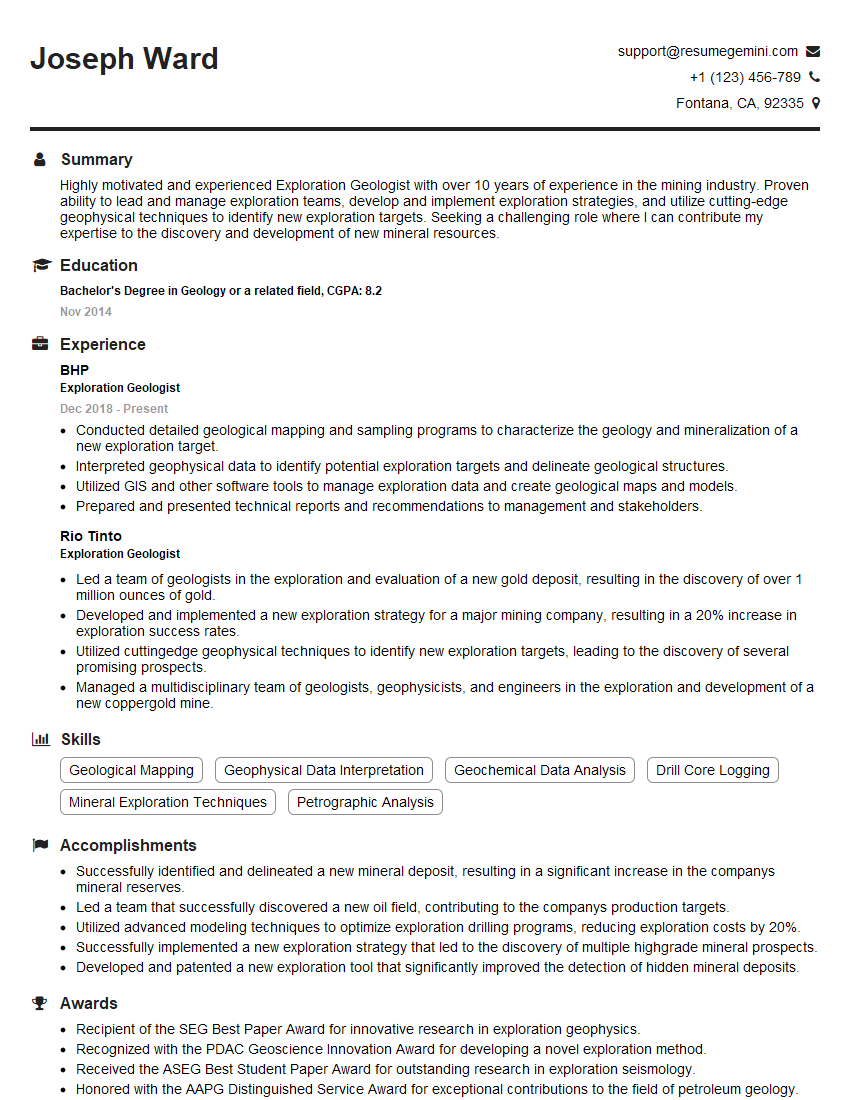
Exploration Geologist Resume Sample
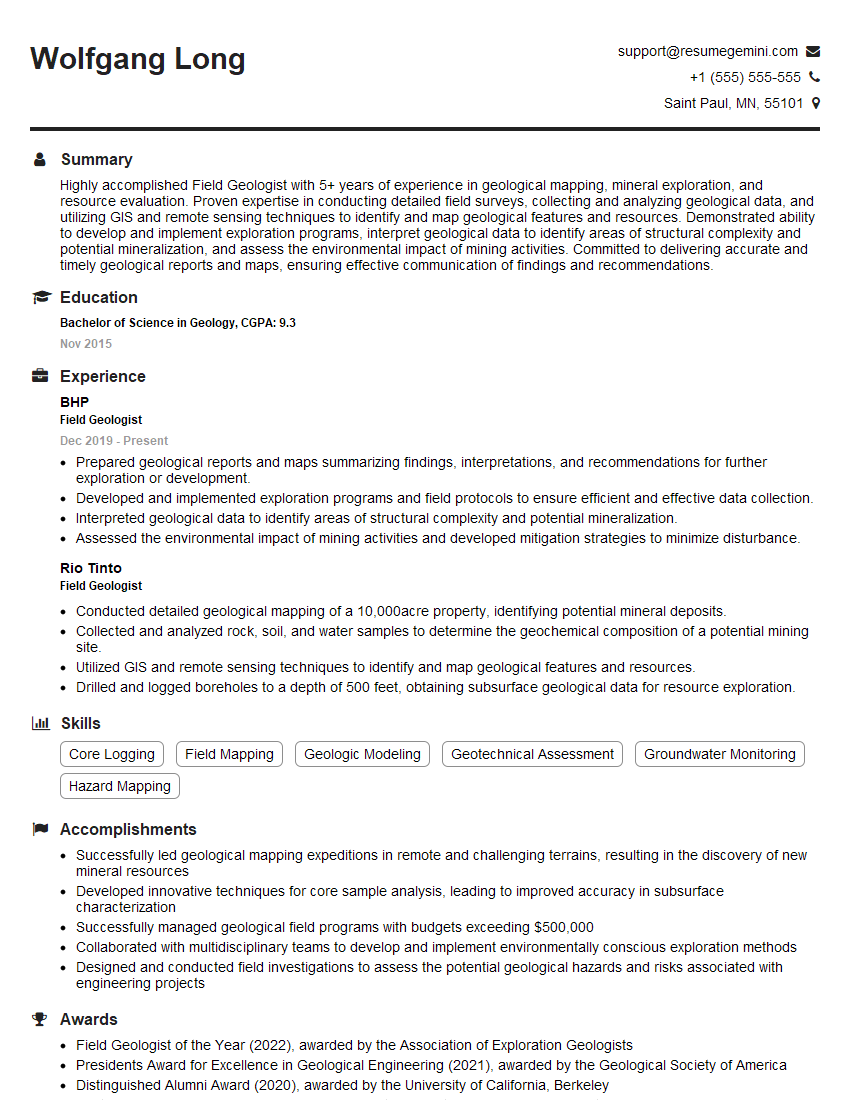
Field Geologist Resume Sample
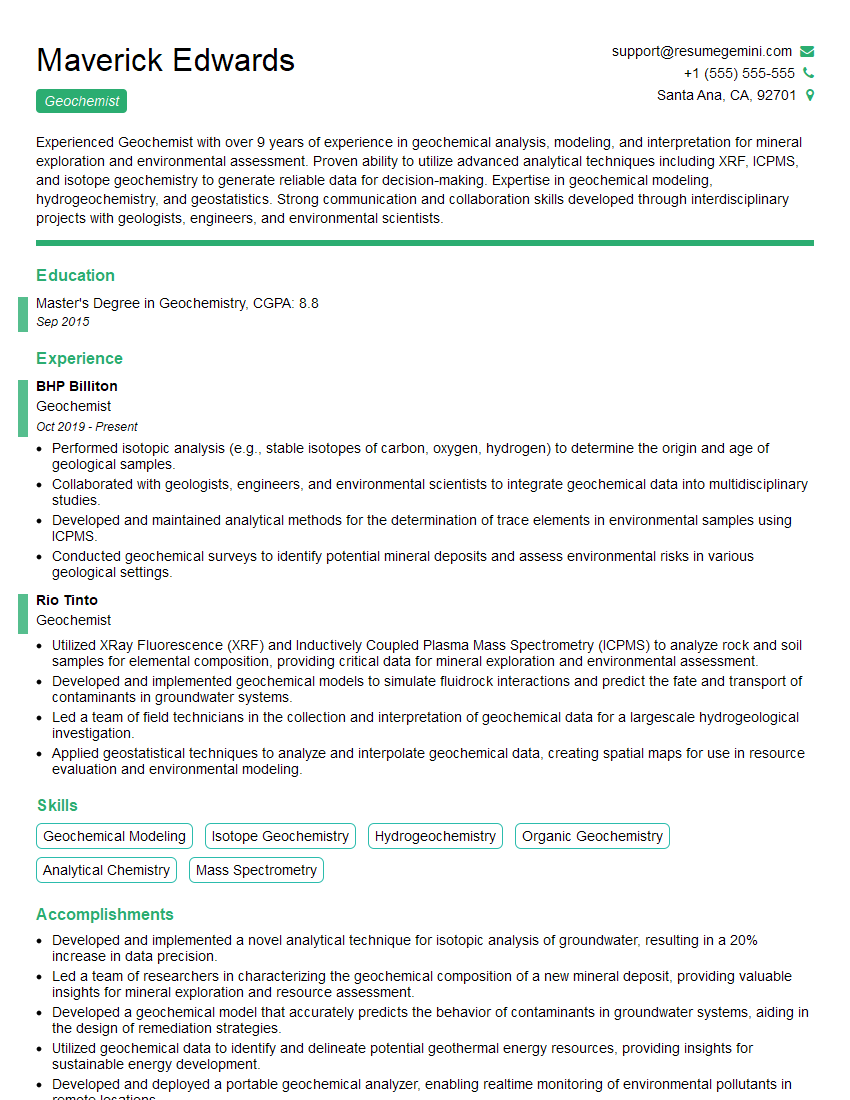
Geochemist Resume Sample
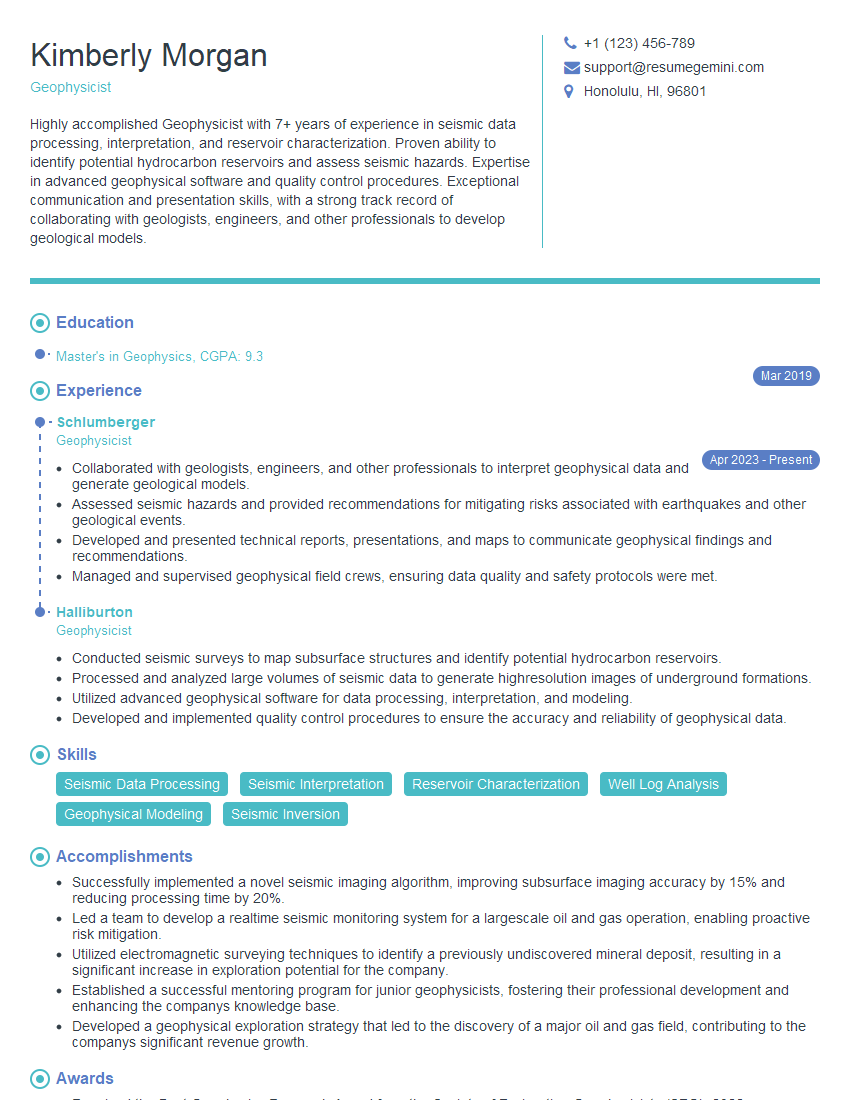
Geophysicist Resume Sample
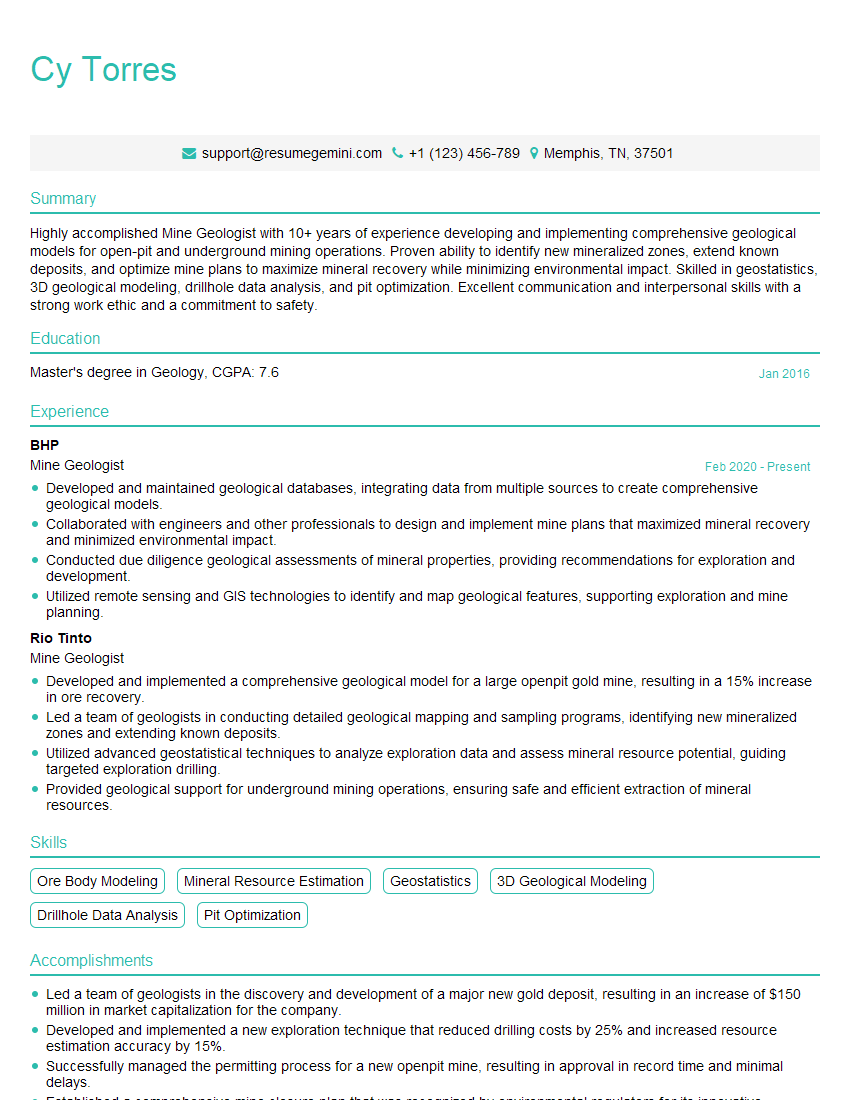
Mine Geologist Resume Sample
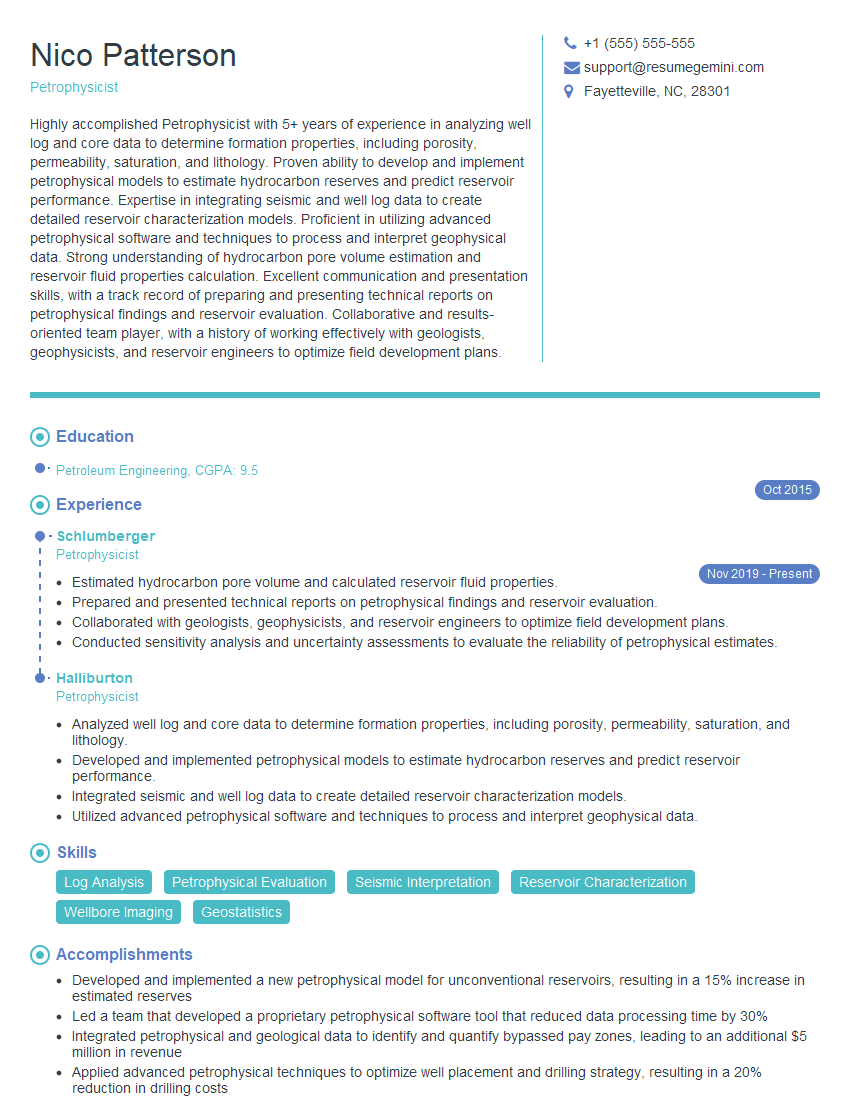
Petrophysicist Resume Sample
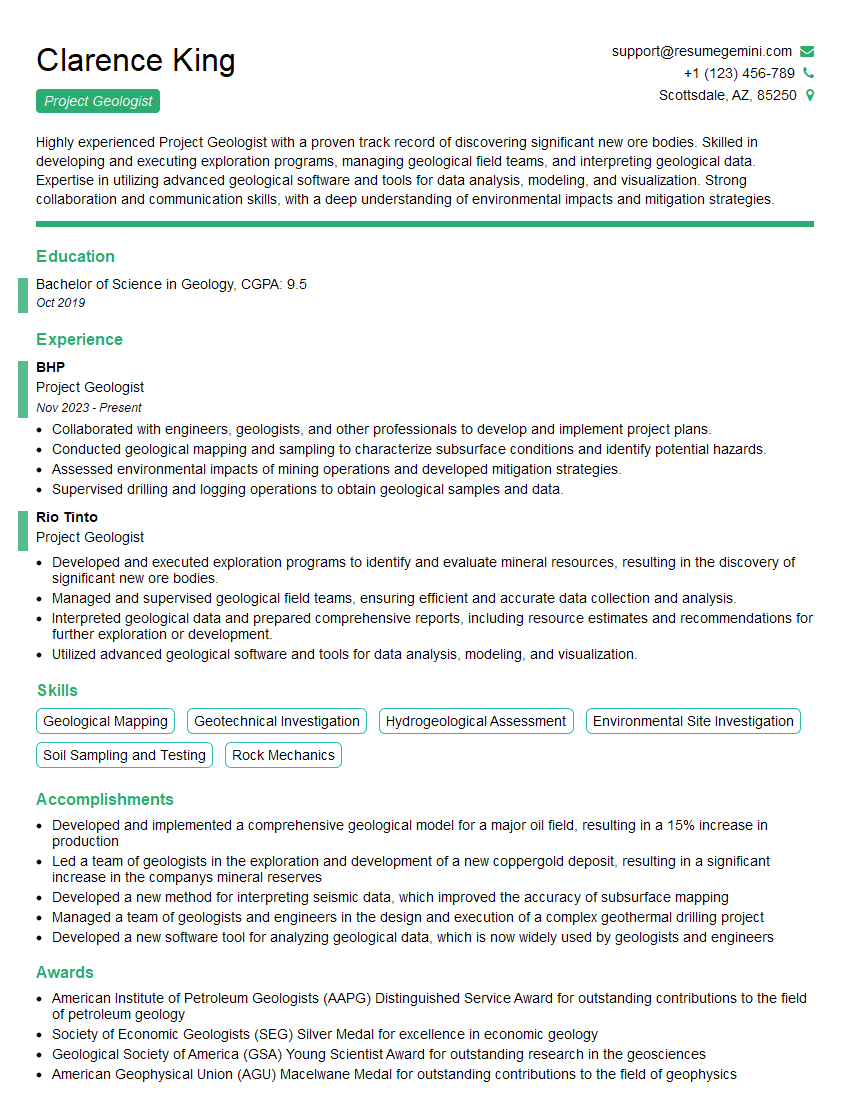
Project Geologist Resume Sample
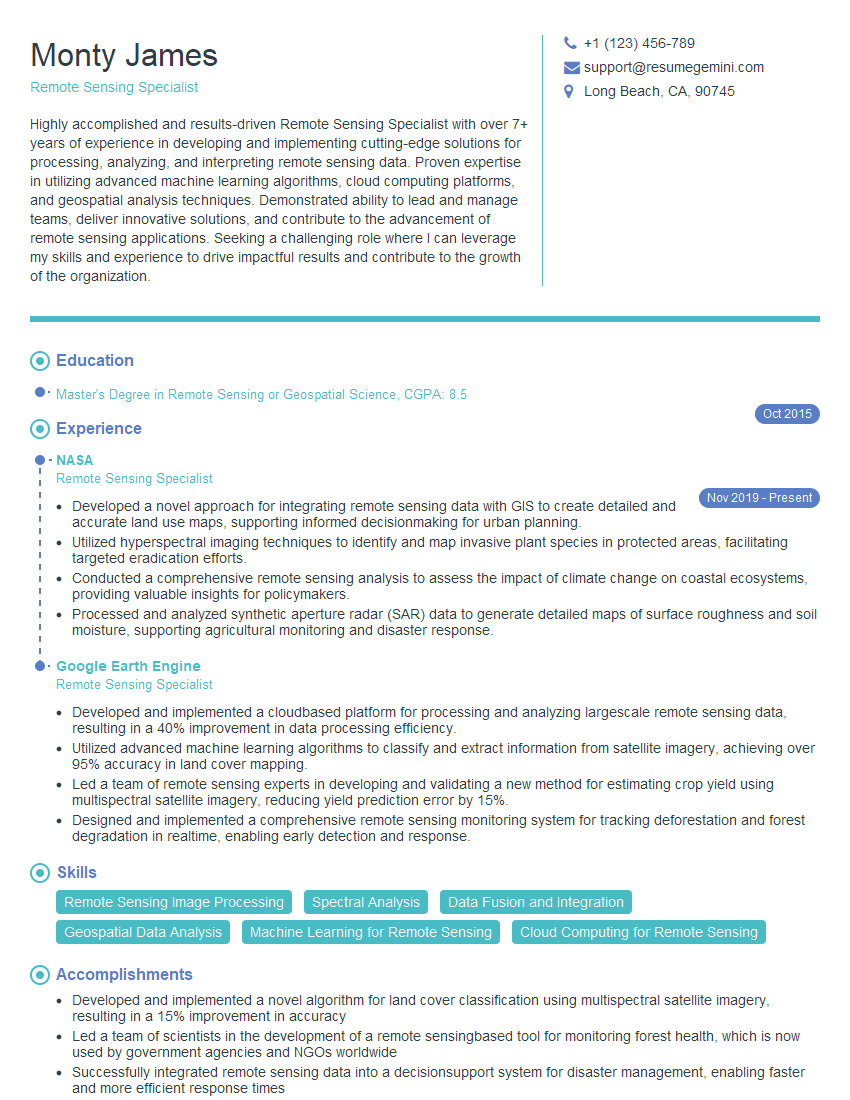
Remote Sensing Specialist Resume Sample
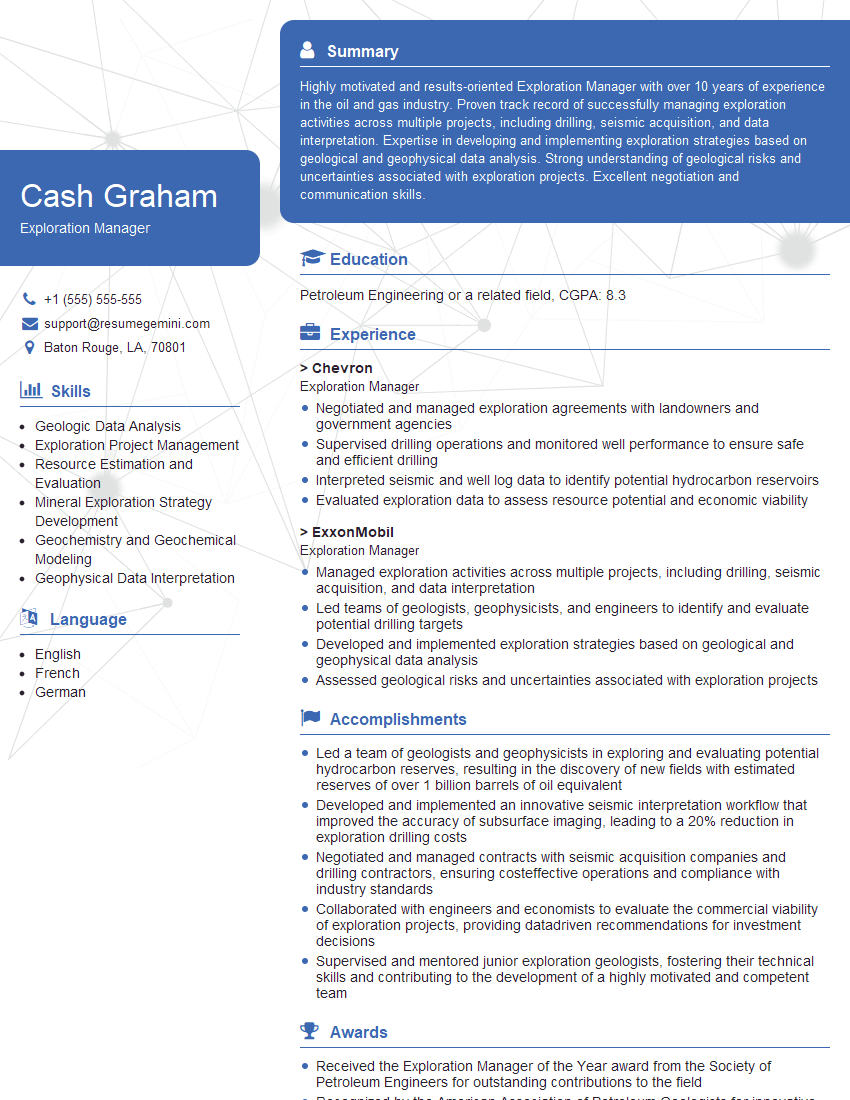
Exploration Manager Resume Sample
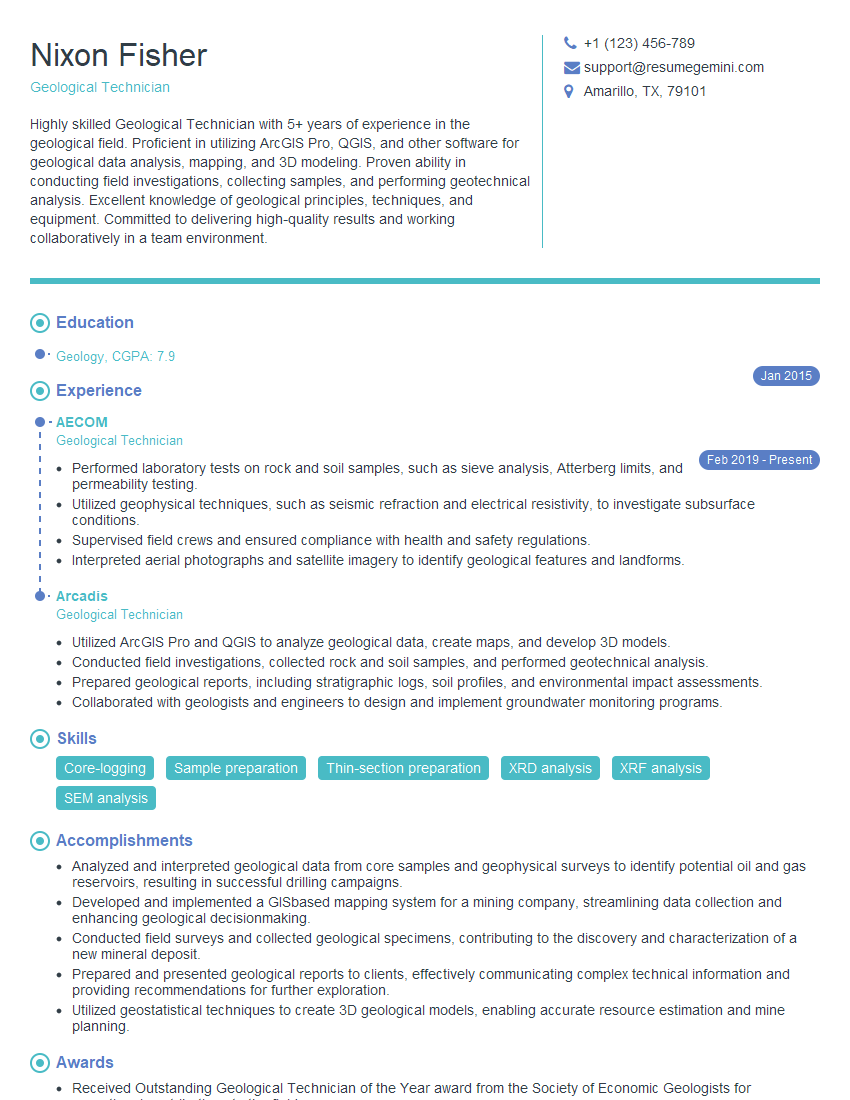
Geological Technician Resume Sample
Explore more articles
Users Rating of Our Blogs
Share Your Experience
We value your feedback! Please rate our content and share your thoughts (optional).
What Readers Say About Our Blog
Very informative content, great job.
good