Every successful interview starts with knowing what to expect. In this blog, we’ll take you through the top Derrick Lifting Operations interview questions, breaking them down with expert tips to help you deliver impactful answers. Step into your next interview fully prepared and ready to succeed.
Questions Asked in Derrick Lifting Operations Interview
Q 1. Describe the different types of derricks used in lifting operations.
Derricks are classified based on their structure and operating mechanism. The most common types include:
- Gins: These are simple derricks consisting of a mast, a gin pole (a long vertical member), and a tackle (a system of ropes and pulleys). They’re often used for lighter lifts in less accessible areas.
- Stiff-leg derricks: These feature a mast supported by stiff legs or guys (cables) anchored to the ground. They offer greater stability and lifting capacity than gins. They are commonly seen in construction and oil & gas settings.
- Full-circle derricks: These allow for 360-degree rotation of the load, enhancing versatility. They usually have a rotating base and are frequently used in larger construction projects and industrial settings.
- Guy derricks: These rely on guy wires (cables) for support, offering significant height and reach but requiring careful placement of anchors. They are adaptable and can be setup in diverse locations.
- A-frame derricks: These have two legs forming an ‘A’ shape, supporting the mast and offering good stability for moderate loads. They are a simple, relatively portable option.
The choice of derrick depends on factors such as the weight and dimensions of the load, the available space, and the ground conditions.
Q 2. Explain the process of rigging a load for a derrick lift.
Rigging a load for a derrick lift is a crucial step requiring meticulous planning and execution. Here’s a step-by-step process:
- Assess the load: Determine the load’s weight, center of gravity, and any potential hazards (sharp edges, fragility). This informs the choice of rigging hardware.
- Select the appropriate rigging hardware: Choose strong enough slings, shackles, hooks, and other components with a safety factor well above the load weight. Consider the load’s shape and material for compatibility.
- Attach the slings: Securely attach the slings to the load, ensuring even distribution of weight. Use proper hitching techniques to prevent slippage. The load should be balanced to minimize stress on the derrick.
- Connect to the hook: Carefully connect the slings to the derrick hook, making sure everything is properly secured. Always double-check connections before initiating the lift.
- Conduct a pre-lift inspection: Thoroughly inspect all rigging components, the derrick itself, and the surrounding area to identify any potential problems before the lift commences.
- Signal person: Employ a qualified signal person to guide the crane operator, ensuring clear communication and coordination throughout the lifting process.
Remember, proper rigging is paramount for a safe and successful lift. Improper rigging can lead to serious accidents.
Q 3. What are the critical safety procedures for derrick operations?
Safety is paramount in derrick operations. Critical procedures include:
- Pre-lift inspections: Rigorous inspections of the derrick, rigging equipment, and the work area are mandatory before every lift. This includes checking for any damage, wear, or defects.
- Load calculations: Accurate calculations of the load weight and the derrick’s lifting capacity are essential to avoid overloading. A safety factor should always be incorporated.
- Competent personnel: Only trained and certified personnel should operate derricks and handle rigging. Clear communication and designated roles are critical.
- Emergency procedures: Emergency procedures, including shutdown protocols and evacuation plans, must be in place and clearly communicated to everyone involved. Regular drills are beneficial.
- Safe working zones: Establish and maintain clear safe working zones to prevent personnel from being struck by falling objects or equipment. Proper signage and barriers are necessary.
- Weather conditions: Lifting operations should be suspended in adverse weather conditions such as strong winds or heavy rain, which can compromise stability and safety.
- Load charts: Always refer to the derrick’s load chart to ensure that the lift is within the derrick’s safe working limits. This includes considering the radius and boom angle.
Adhering to these procedures significantly reduces the risk of accidents.
Q 4. How do you calculate the lifting capacity of a derrick?
Calculating the lifting capacity of a derrick is complex and depends on several factors. It’s not a simple formula but rather a process involving engineering principles and consideration of several variables. The derrick manufacturer provides load charts that specify the safe lifting capacity at various boom angles and radii.
These charts incorporate calculations considering:
- Derrick structure and materials: The strength of the mast, boom, legs, and other structural components.
- Boom angle: The angle of the boom relative to the horizontal significantly impacts lifting capacity.
- Radius: The horizontal distance from the derrick’s center to the load affects the stress on the structure.
- Wind speed: Wind significantly reduces safe lifting capacity.
- Ground conditions: Soil type and stability impact the derrick’s stability and therefore its capacity.
It is crucial to use the manufacturer’s load charts and to ensure that the lift is always within the safe working limits. Incorrect calculations can lead to catastrophic failure.
Q 5. What are the common causes of derrick malfunctions?
Derrick malfunctions can stem from various causes, including:
- Structural failure: This can result from overloading, fatigue, corrosion, or improper maintenance.
- Mechanical failures: Problems with the hoisting mechanism, winches, or brakes can lead to malfunctions.
- Rigging failures: Improper rigging practices, using damaged or inadequate slings, or incorrect hitching techniques can result in accidents.
- Operator error: Inaccurate load calculations, exceeding the derrick’s capacity, or failure to follow safety procedures can all contribute to malfunctions.
- Environmental factors: Extreme weather conditions, such as high winds or heavy rain, can impact the derrick’s stability and operation.
- Lack of maintenance: Regular inspection and preventative maintenance are essential to prevent malfunctions. Neglect can lead to deterioration of components.
Regular inspections, preventive maintenance, and adherence to safety protocols significantly reduce the likelihood of malfunctions.
Q 6. Describe your experience with derrick maintenance and inspection.
Throughout my career, I’ve been extensively involved in derrick maintenance and inspection, emphasizing proactive measures. My experience includes:
- Daily inspections: Performing thorough daily inspections of derricks to identify any visible signs of damage or wear and tear. This involves a visual check of all components.
- Periodic inspections: Conducting more in-depth periodic inspections, often involving specialized testing and equipment to assess the structural integrity and mechanical functionality of the derricks.
- Preventative maintenance: Implementing a preventative maintenance schedule including lubrication, tightening of bolts, and replacement of worn components to ensure the derrick’s continued safe operation.
- Record keeping: Maintaining accurate and detailed records of all inspections and maintenance activities to ensure compliance with regulations and to track the derrick’s operational history.
- Compliance: Ensuring all maintenance activities comply with relevant safety regulations and industry best practices. Staying updated on safety standards is vital.
I’ve worked on various types of derricks in different environments, always prioritizing safety and efficiency in my maintenance and inspection routines. For instance, I once identified a hairline crack in a stiff-leg derrick during a routine inspection, preventing a potential catastrophic failure.
Q 7. How do you ensure the stability of a derrick during lifting operations?
Ensuring derrick stability during lifting operations is critical. Several strategies are employed:
- Proper footing: The ground must be level, firm, and capable of supporting the derrick’s weight and load. Using mats or cribbing can enhance stability on uneven ground.
- Guy wires/Stiff legs: Properly tensioned guy wires or stiff legs distribute the load and prevent overturning. Their tension should be checked regularly.
- Weight distribution: The load should be evenly distributed to prevent imbalance and tilting. Proper slinging techniques are essential.
- Ground conditions: The ground should be assessed for its ability to support the derrick’s load. If necessary, the ground should be prepared before the lift.
- Wind speed: Wind speed should be monitored. Lifting operations should be halted if the wind speed exceeds the derrick’s rated capacity.
- Outriggers (if applicable): If the derrick has outriggers, they should be fully extended and properly secured to increase stability.
A stable base is fundamental to safe and successful lifting operations. Neglecting these aspects can result in serious accidents.
Q 8. What are the limitations of derrick lifting compared to other lifting methods?
Derrick lifting, while versatile, has limitations compared to other lifting methods like cranes. Its primary constraint is its smaller lifting capacity and reach compared to larger cranes. Derricks are often better suited for confined spaces or where maneuverability is crucial, but this comes at the cost of lifting heavier loads or reaching greater distances. For instance, a derrick might be ideal for placing equipment on an offshore platform with limited space, but unsuitable for lifting a large transformer onto a building. Another limitation is the setup time; derricks often require more time for assembly and rigging compared to the quicker deployment of a mobile crane.
Another key difference lies in the stability. Cranes generally offer more stable lifting operations due to their wider base and more sophisticated counterweight systems. A derrick’s stability is heavily dependent on proper anchoring and ground conditions, making it more vulnerable to tipping in uneven terrain or high winds. This necessitates careful site assessment before deployment.
- Limited Capacity: Lower maximum lifting weights compared to cranes.
- Restricted Reach: Shorter horizontal and vertical reach.
- Setup Time: Longer assembly and dismantling processes.
- Stability Concerns: Increased risk of tipping in unfavorable conditions.
Q 9. Explain the importance of load charts and weight verification in derrick operations.
Load charts and weight verification are paramount in derrick operations for safety and regulatory compliance. Load charts specify the safe working loads (SWL) for a particular derrick under various configurations (boom angle, radius, etc.). Ignoring these limits is a recipe for disaster. Weight verification ensures the actual weight of the lifted object matches the load chart values. Overestimating or underestimating weights can lead to equipment failure or accidents. We always use certified scales to verify weights, and if the load is complex (such as several pieces of equipment bundled together), I’ll conduct a thorough calculation of the center of gravity to make sure the weight is correctly accounted for.
For instance, if the load chart indicates a maximum safe working load of 10 tons at a 30-degree boom angle, attempting to lift 12 tons at that angle would be a grave error. Similarly, an incorrectly estimated load could lead to overloading, causing structural failure of the derrick and resulting in significant injury or property damage. Pre-lift planning, with proper load calculations and verification, is not just good practice; it’s non-negotiable for safe operations.
Q 10. What are your methods for communicating effectively with your crew during a lift?
Clear, concise, and unambiguous communication is crucial for a safe lift. Before initiating any lift, I conduct a pre-lift briefing with my crew, reviewing the lift plan, addressing any concerns, and ensuring everyone understands their roles and responsibilities. During the lift, I use a combination of hand signals, radios, and verbal commands – depending on the noise level and visibility.
Hand signals are essential for communicating directions and movements to the crane operator, spotters, and rigging crew. Our team uses standardized hand signals, as established by OSHA. Radios are used for relaying longer messages or coordinating with other teams, particularly in situations with significant distance or noise. Verbal commands are also used but must be clear, short, and to the point to avoid miscommunication.
I emphasize that any crew member who observes an unsafe condition must immediately halt the lift and report the issue. Our communication protocol prioritizes safety over speed, promoting a culture of open communication and proactive hazard identification.
Q 11. How do you handle unexpected issues or emergencies during a derrick lift?
Handling unexpected issues requires a calm, methodical approach. My first step is to assess the situation to determine the severity of the problem and the potential risks. For instance, if a line snaps, we immediately halt the lift and assess the situation. We make sure the area is clear, then carefully and slowly lower the load to the ground. If we experience equipment malfunction, we’ll initiate our emergency shutdown procedures and begin troubleshooting or calling for repair.
We always have a contingency plan in place. This includes procedures for dealing with equipment failure, unexpected load shifts, or adverse weather conditions. Emergency drills regularly reinforce this plan, ensuring that our team responds efficiently and safely. Furthermore, open communication among the team ensures that everyone is aware of any potential issues and is prepared to respond appropriately. Documentation of the incident, following internal protocols, is crucial for investigation and prevention of similar incidents.
Q 12. Describe your experience with different types of rigging hardware.
My experience encompasses a wide range of rigging hardware, including wire ropes, synthetic slings, shackles, hooks, and various types of load binders. I’m familiar with different rope constructions, their strengths, and limitations. I can distinguish between different sling materials (e.g., nylon, polyester) and their suitability for specific loads and environments. I also have experience inspecting hardware for wear and tear, damage, and ensuring they meet the required safety standards. I understand the importance of using appropriate safety factors and selecting the right hardware for the job. For instance, I wouldn’t use a worn-out shackle for a critical lift or choose a sling with insufficient capacity.
Understanding the limitations of each piece of equipment is crucial. For example, synthetic slings can be damaged by sharp edges and are susceptible to UV degradation; wire ropes need regular inspections for corrosion and breakage. My experience extends to selecting, inspecting, and utilizing a diverse array of rigging hardware to ensure the safe and efficient execution of various lifting tasks.
Q 13. What are the legal and regulatory requirements for derrick operations in your region?
(Note: This answer will vary depending on the specific region. Replace the example below with the relevant regulations for your area.)
In my region, derrick operations are governed by [Name of Regulatory Body], adhering to [Name of Regulations/Standards, e.g., OSHA standards in the US]. These regulations cover aspects like:
- Licensing and Certification: Derrick operators require specific licenses and certifications demonstrating competency and adherence to safety guidelines.
- Pre-Lift Inspections: Thorough inspections are mandated before each lift to check the structural integrity of the derrick and all associated equipment.
- Load Charts and SWL: Strict adherence to load charts and never exceeding the Safe Working Load (SWL) is mandatory.
- Rigging Procedures: Correct rigging techniques and the use of approved hardware are specified.
- Emergency Procedures: Detailed emergency plans for dealing with equipment malfunction or accidents must be developed and implemented.
- Record Keeping: Maintaining accurate records of inspections, lifts performed, and any incidents or accidents.
Non-compliance can lead to significant fines, operational shutdowns, and potentially, criminal charges in the event of serious accidents.
Q 14. How do you perform a pre-lift inspection of a derrick and its components?
A pre-lift inspection is a systematic check of the derrick and its components to identify any potential hazards before initiating a lift. This inspection is crucial for ensuring the safety of personnel and equipment. It follows a checklist, and nothing is overlooked. The inspection begins with a visual examination of the derrick structure, checking for any signs of damage, corrosion, or deformation. This includes the mast, boom, base, and all supporting structures.
Next, we inspect all rigging hardware, including wire ropes, slings, shackles, and hooks, meticulously checking for wear and tear, kinks, deformations, or damage. We examine the connections to the derrick, checking for tightness and security. Then, we verify the condition and proper function of the hoisting mechanisms, brakes, and control systems. We always check the load chart for the planned lift to verify the derrick’s suitability and capacity and check the ground conditions to make sure the base is stable and properly secured. We meticulously document all findings in a pre-lift inspection report, highlighting any issues that require attention before proceeding with the lift. No lift will commence until all issues are fully addressed and the derrick is deemed safe.
Q 15. Explain the significance of load balancing and swing radius in derrick operations.
Load balancing and swing radius are critical for safe and efficient derrick operations. Imagine lifting a heavy object with a crane – you wouldn’t want it to swing wildly, right? That’s where these concepts come in.
Load balancing ensures the weight is evenly distributed across the derrick’s structure, preventing undue stress on any single component. This is achieved through careful planning of the lifting point and the use of multiple rigging points if necessary. Uneven loads can lead to structural failure or instability during the lift.
Swing radius refers to the arc that the load describes during a lift. A larger swing radius increases the risk of the load colliding with obstructions or personnel. Accurate calculation and control of the swing radius are crucial, often requiring careful consideration of wind speed and direction.
For example, lifting a long, slender object requires precise load balancing to prevent it from twisting or bending. Similarly, lifting near structures necessitates minimizing the swing radius to avoid collisions. Experienced operators consider these factors to ensure a safe operation.
Career Expert Tips:
- Ace those interviews! Prepare effectively by reviewing the Top 50 Most Common Interview Questions on ResumeGemini.
- Navigate your job search with confidence! Explore a wide range of Career Tips on ResumeGemini. Learn about common challenges and recommendations to overcome them.
- Craft the perfect resume! Master the Art of Resume Writing with ResumeGemini’s guide. Showcase your unique qualifications and achievements effectively.
- Don’t miss out on holiday savings! Build your dream resume with ResumeGemini’s ATS optimized templates.
Q 16. How do you handle a situation where a load becomes unstable during a lift?
An unstable load during a lift is a serious situation demanding immediate action. My priority is always safety. The first step is to stop the lift immediately. This prevents the situation from worsening. Then, I would:
- Assess the situation: Identify the cause of the instability (e.g., uneven load distribution, wind gusts, equipment malfunction).
- Communicate: Alert all personnel in the vicinity of the problem, ensuring clear and concise communication to prevent further hazards.
- Implement corrective measures: This might involve adjusting the rigging, using additional support equipment, or securing the load temporarily. In extreme cases, a controlled lowering might be necessary.
- Investigate: After the situation is resolved, a thorough investigation is conducted to determine the root cause of the instability and prevent recurrence.
I’ve handled several situations where unexpected wind gusts caused loads to sway unexpectedly. By quickly stopping the lift and communicating with the team, we managed to secure the load safely without any incidents.
Q 17. What are the different types of derrick booms and their applications?
Derrick booms come in various types, each suited for different applications. The most common include:
- Guyed derricks: These utilize guy wires for support, offering a high lift capacity and reach. They are commonly used in heavy construction, oil and gas operations, and mining.
- Stiff-leg derricks: Supported by stiff legs anchored to the ground, these are robust and provide a stable lifting platform. They are often found in industrial settings where stability is paramount.
- Portable derricks: These are smaller, easily transportable derricks suitable for lighter lifts and applications where mobility is required.
- Mast derricks: Employing a single vertical mast, they are typically used for smaller lifting tasks.
The choice of boom type depends heavily on factors such as load capacity, reach requirements, terrain conditions, and the specific application. For instance, a guyed derrick is ideal for lifting heavy loads at a significant distance, whereas a portable derrick might be more appropriate for smaller projects.
Q 18. Describe your experience with different types of derrick foundations.
Derrick foundations are crucial for ensuring stability and preventing catastrophic failures. My experience encompasses several types:
- Fixed base foundations: These provide a permanent, stable base for the derrick, often involving concrete footings or large steel bases. They are suitable for long-term installations.
- Portable bases: These offer mobility and are readily adaptable to different locations. Examples include wheeled bases or modular systems. They are used where the derrick needs to be relocated frequently.
- Pile foundations: Driven into the ground, these are preferred for soft or unstable soils. The depth and number of piles depend on soil conditions and the derrick’s load.
- Mat foundations: These consist of a large, reinforced concrete slab that distributes the derrick’s weight over a wider area, ideal for uneven or weak ground.
Soil analysis is paramount in selecting the right foundation. I’ve worked on projects where we had to use pile foundations due to poor soil conditions, ensuring stability even in challenging environments. The foundation’s design should always meet or exceed the derrick’s specified load requirements, leaving no room for compromise.
Q 19. How do you determine the appropriate lifting speed for a given load?
Determining the appropriate lifting speed involves a multi-faceted approach. The primary factors are:
- Load weight: Heavier loads necessitate slower speeds to prevent excessive stress on the derrick and rigging.
- Load characteristics: The shape and dimensions of the load affect its aerodynamic properties and susceptibility to wind. Long, slender objects need slower lifts.
- Wind conditions: High winds significantly increase the risk of instability and should dictate a slower lifting speed.
- Derrick capacity and limitations: The derrick’s rated lifting capacity and speed limits must always be adhered to.
Lifting speed is not just about speed; it’s about controlled movement. A smooth, steady lift minimizes the risk of oscillations and accidental impacts. I always prioritize a controlled lift over speed. My experience has shown that prioritising safety over speed leads to smoother, more efficient operations in the long run.
Q 20. What are the potential hazards associated with derrick operations?
Derrick operations inherently involve several potential hazards. Rigorous safety protocols are essential. The significant hazards include:
- Load drops: Equipment failure, improper rigging, or operator error can result in load drops, posing serious injury risks.
- Collisions: Loads swinging outside the designated area can collide with structures, personnel, or equipment.
- Structural failure: Overloading the derrick or using faulty equipment can lead to structural failure, resulting in catastrophic consequences.
- Wind hazards: High winds can destabilize loads and compromise the derrick’s structural integrity.
- Electrocution: Contact with overhead power lines is a significant hazard, requiring careful planning and the use of appropriate safety measures.
These hazards necessitate stringent safety procedures, regular equipment inspections, qualified personnel, and the use of appropriate personal protective equipment (PPE). Safety briefings and risk assessments are always part of my pre-operation routine.
Q 21. Explain the use of load monitoring devices in derrick operations.
Load monitoring devices play a crucial role in ensuring safe and efficient derrick operations. These devices provide real-time data on several critical parameters:
- Load weight: Accurately measuring the weight of the lifted object ensures it stays within the derrick’s safe working load limit.
- Tension in rigging: Monitoring the tension in the cables and slings helps identify potential issues such as uneven load distribution or slack.
- Derrick boom angle and position: Tracking these parameters ensures the derrick stays within its operational limits and helps avoid collisions.
- Wind speed and direction: This data provides crucial insights for assessing the risk of wind-induced instability.
Using load monitoring devices allows for proactive interventions. If the load approaches unsafe limits, the system issues warnings, enabling operators to take corrective action before an accident occurs. Data from these devices can also be used for post-operation analysis and continuous improvement of safety practices. In my experience, the use of these devices has considerably improved safety and efficiency on derrick operations.
Q 22. How do you ensure the proper communication and coordination between different crew members?
Effective communication is the bedrock of safe derrick operations. We employ a multi-layered approach, starting with pre-lift meetings where every crew member understands their role, the lifting plan, and potential hazards. This includes detailed discussions about hand signals, radio communication protocols, and emergency procedures. During the lift, clear and concise communication is paramount. We use a designated signal person, ensuring everyone understands the commands and responds appropriately. For instance, a simple hand signal might mean “hoist” or “lower,” while radio communication is used for more complex instructions or reporting potential issues. Post-lift debriefs are also crucial, allowing us to identify areas for improvement and reinforce best practices. We maintain a culture of open communication where any concerns, however small, are addressed immediately. This prevents misunderstandings and ensures everyone is on the same page, fostering a proactive safety environment.
Q 23. Describe your experience with troubleshooting derrick hydraulic systems.
Troubleshooting derrick hydraulic systems requires a systematic and methodical approach. My experience includes diagnosing leaks, identifying faulty components (like pumps, valves, or cylinders), and repairing or replacing them. For example, I once diagnosed a slow lift by systematically checking the hydraulic lines for leaks. I found a hairline fracture in a high-pressure line that was hard to spot initially. The solution involved replacing the faulty section of the line, restoring the derrick’s lifting capacity. Another time, the derrick experienced a complete hydraulic failure. Through careful inspection and pressure testing, we identified a malfunctioning control valve. After replacing the faulty component and bleeding the system, functionality was successfully restored. I am proficient in interpreting hydraulic schematics, using diagnostic tools like pressure gauges and flow meters, and ensuring all repairs comply with safety regulations and manufacturer specifications. I always prioritize safety; before restarting any system after repair, thorough testing is conducted to ensure everything functions correctly.
Q 24. How do you manage and mitigate risks associated with environmental factors during lifting operations?
Environmental factors significantly impact derrick operations. We mitigate risks through careful planning and proactive measures. High winds are a primary concern; we constantly monitor weather forecasts and suspend operations if wind speeds exceed safe limits defined in our risk assessment. This limit is typically determined by the derrick’s capacity and the weight being lifted. Similarly, heavy rain or extreme temperatures can affect the ground conditions, potentially compromising stability. We address this by ensuring the ground is properly prepared, using mats or other stabilization techniques as needed. Visibility is another critical factor, especially in fog or low-light conditions. We either delay operations until visibility improves or employ additional lighting and safety precautions. Finally, we have a comprehensive spill response plan for handling potential leaks of oil or hydraulic fluids, minimizing any environmental impact. This plan includes containment, cleanup, and reporting procedures, adhering to all relevant environmental regulations.
Q 25. Explain the process of decommissioning a derrick after a project.
Decommissioning a derrick is a carefully planned and executed process, prioritizing safety and minimizing environmental impact. It begins with a thorough inspection to ensure the derrick is in a stable and secure condition before any dismantling starts. We then follow a step-by-step procedure, typically outlined in the derrick’s manufacturer’s manual, for safe disassembly. This often involves lowering the derrick mast in a controlled manner, carefully removing individual components, and securing them to prevent damage or accidents. All hydraulic fluids and lubricants are drained and disposed of according to environmental regulations, and any damaged parts are appropriately marked and stored. Once dismantled, the components are cleaned, inspected, and stored, ready for reuse or disposal, and the site is fully cleared and inspected to ensure it’s safe and in compliance with all relevant regulations. We document every stage of the process, ensuring all activities comply with safety and environmental guidelines.
Q 26. What are your strategies for ensuring a safe and efficient derrick operation?
Ensuring safe and efficient derrick operations requires a multifaceted approach. It starts with rigorous pre-lift planning, which includes a thorough risk assessment, reviewing the lifting plan, confirming the derrick’s suitability for the task, and ensuring all personnel are properly trained and certified. During the lift, constant monitoring of the load, derrick stability, and environmental conditions is essential. Strict adherence to safety protocols, including designated signal persons and clear communication channels, is non-negotiable. Regular maintenance and inspections of the derrick and associated equipment are also vital, preventing potential failures and maximizing operational efficiency. We follow a comprehensive preventive maintenance schedule, ensuring all components are in top working order. Finally, a post-lift debriefing allows us to identify any areas for improvement and reinforces safe working practices. By combining thorough planning, strict adherence to safety guidelines, and proactive maintenance, we ensure derrick operations are both safe and efficient.
Q 27. Describe your experience with working at heights and related safety protocols.
Working at heights is an integral part of derrick operations, demanding strict adherence to safety protocols. My experience includes extensive training in fall protection techniques, including the proper use of harnesses, lanyards, and fall arrest systems. We always use appropriate fall protection equipment, and before each task, we carry out a detailed risk assessment to identify potential hazards. We adhere to strict procedures for accessing and working from elevated platforms, regularly inspect equipment for wear and tear, and undergo mandatory refresher training on safe work practices at heights. For instance, working on the derrick’s crown block at height always involves the use of a full body harness, a lifeline, and a safety net, ensuring that any potential fall is mitigated. We also perform regular inspections of all safety equipment, including documentation, to ensure full compliance and worker safety. This combination of rigorous training, careful planning, and consistent adherence to safety protocols is crucial for preventing accidents and ensuring the safety of our team members.
Key Topics to Learn for Derrick Lifting Operations Interview
- Derrick Rig Mechanics and Components: Understand the various components of a derrick rig, their functions, and interdependencies. This includes crown blocks, sheaves, lines, and braking systems.
- Lifting Techniques and Procedures: Master safe lifting practices, weight calculations, load balancing, and the importance of adhering to industry regulations and best practices. Consider different lifting scenarios and challenges.
- Rigging and Load Securement: Familiarize yourself with various rigging techniques, including proper sling selection, hitching methods, and load securement procedures to ensure safety and prevent accidents.
- Troubleshooting and Maintenance: Develop your ability to identify and troubleshoot common problems in derrick operations. Understanding preventative maintenance schedules and procedures is crucial.
- Safety Regulations and Compliance: Demonstrate a strong understanding of relevant safety regulations, permit-to-work systems, and emergency procedures. This showcases your commitment to a safe work environment.
- Communication and Teamwork: Effective communication and teamwork are vital in derrick operations. Be prepared to discuss your experience collaborating with crew members and supervisors in a high-pressure environment.
- Load Charts and Calculations: Understand how to interpret load charts and perform necessary calculations to ensure safe and efficient lifting operations. This includes understanding the factors affecting lifting capacity.
Next Steps
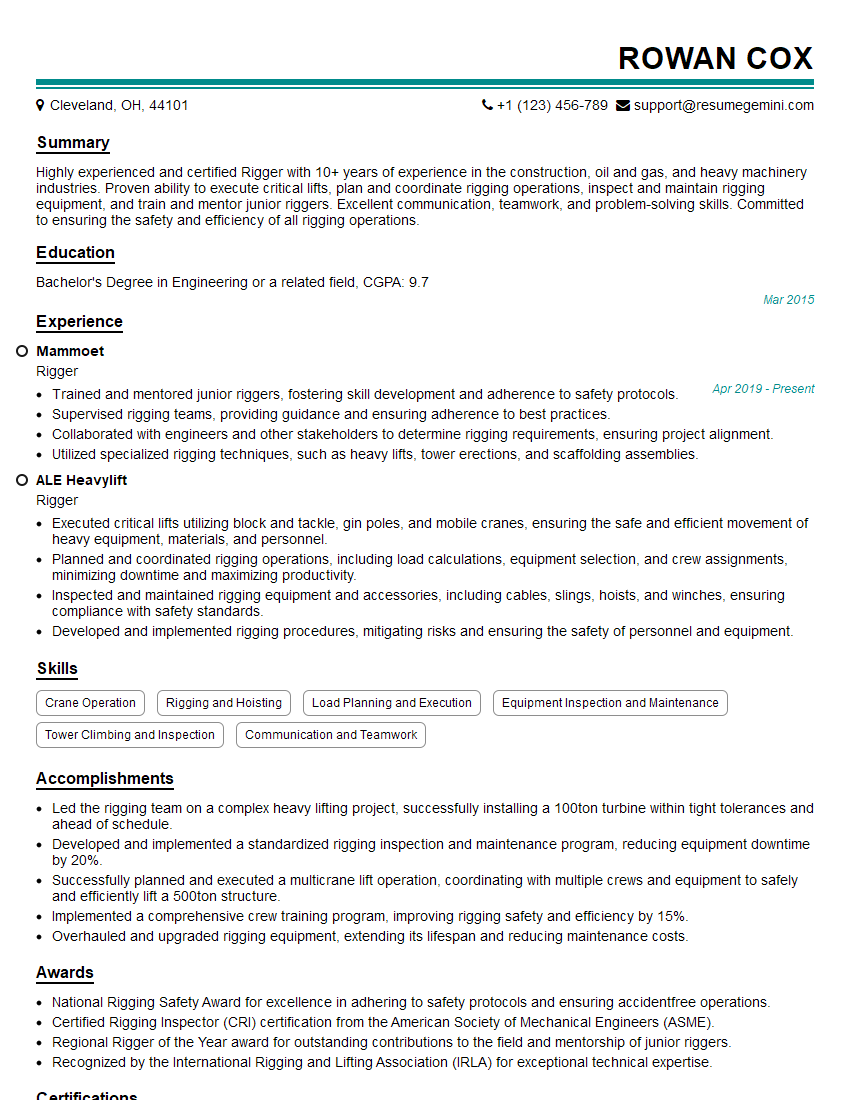
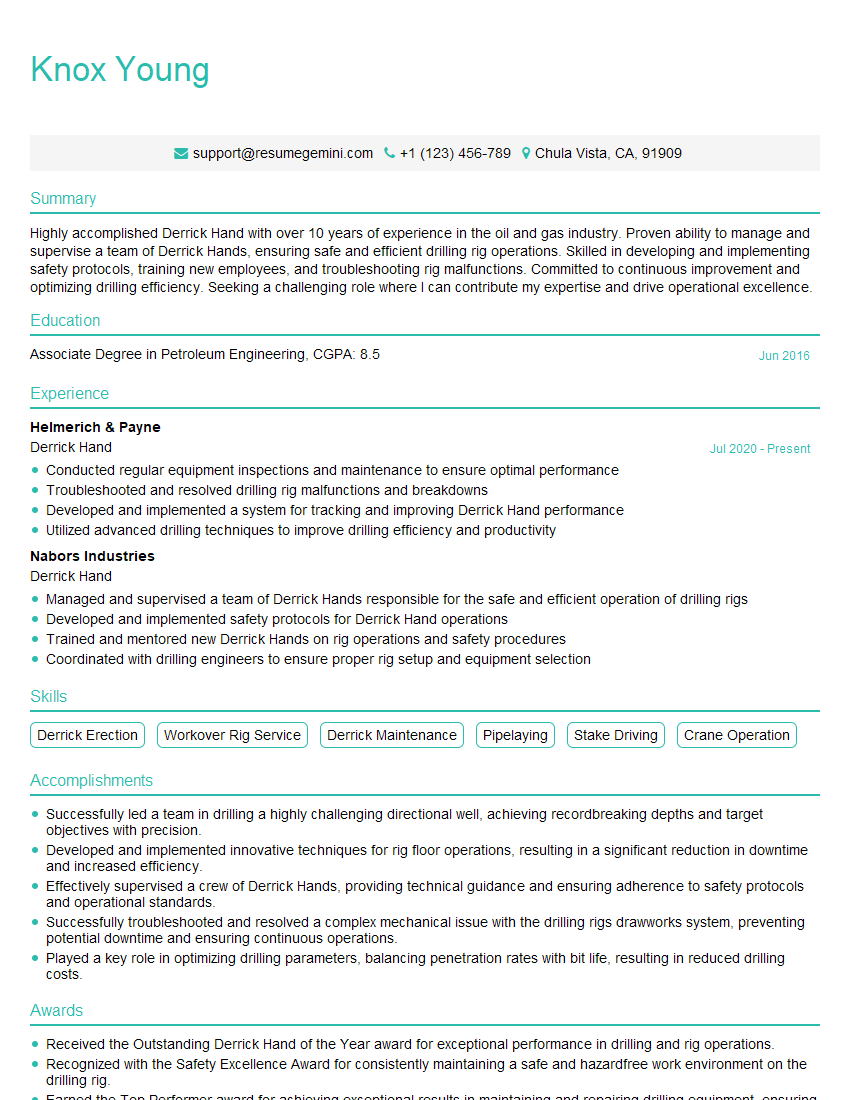
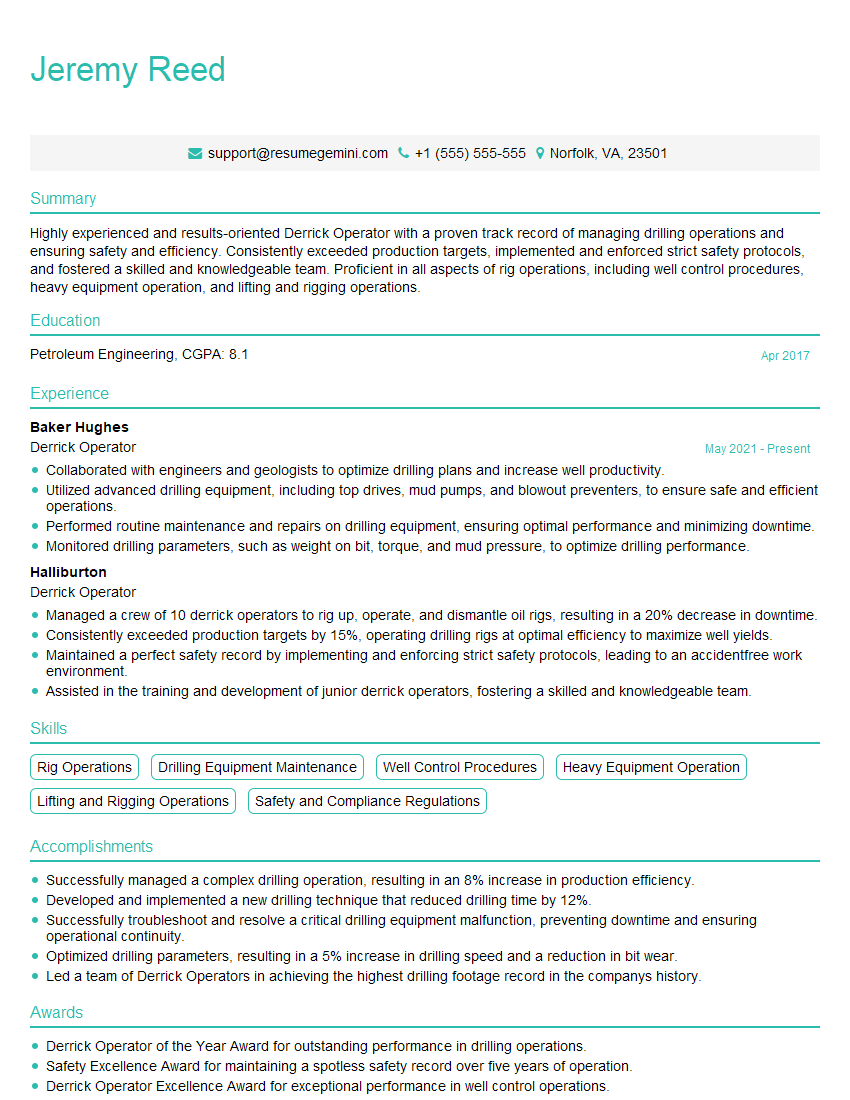
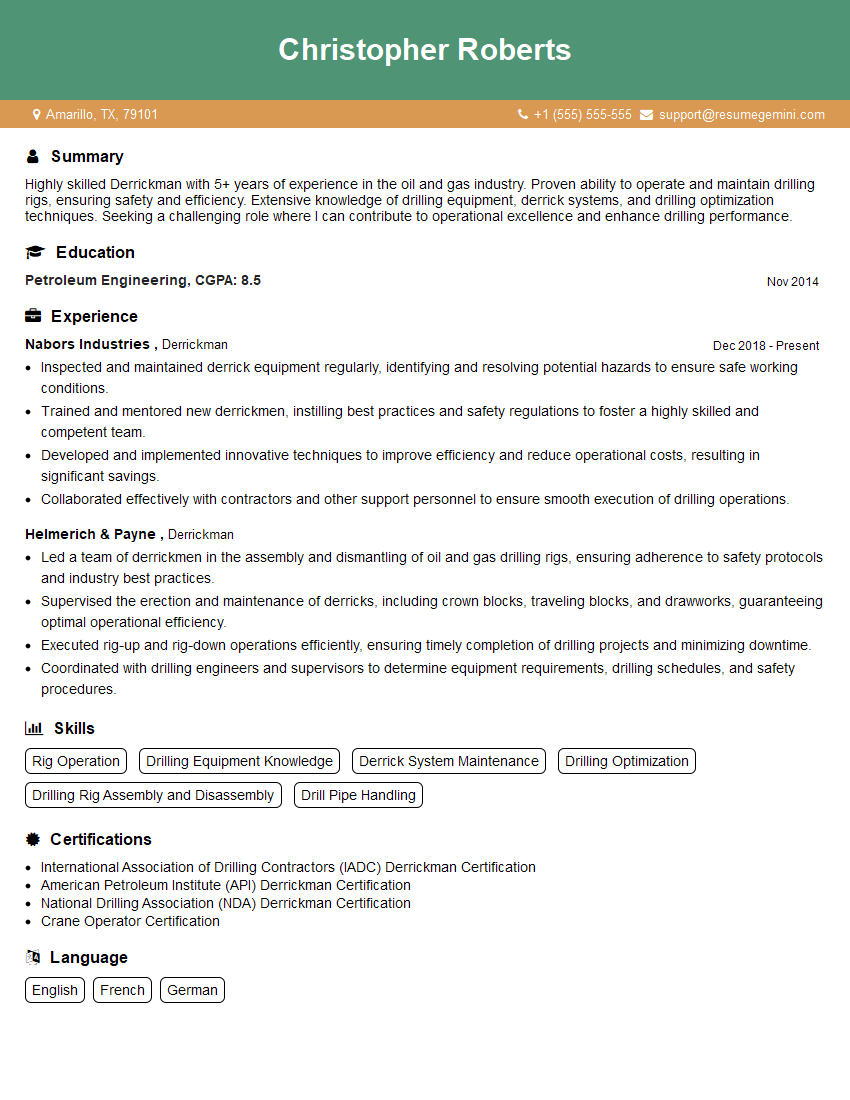
Mastering Derrick Lifting Operations opens doors to exciting career opportunities in the energy, construction, and maritime sectors, offering excellent growth potential and high earning capacity. To maximize your chances of landing your dream role, it’s crucial to present yourself effectively. Creating an ATS-friendly resume is essential for getting your application noticed by recruiters and avoiding automated rejection. We strongly recommend leveraging ResumeGemini to build a compelling and professional resume that highlights your skills and experience in Derrick Lifting Operations. ResumeGemini provides examples of resumes tailored to this specific field to help you craft a winning application.
Explore more articles
Users Rating of Our Blogs
Share Your Experience
We value your feedback! Please rate our content and share your thoughts (optional).
What Readers Say About Our Blog
Very informative content, great job.
good