Every successful interview starts with knowing what to expect. In this blog, we’ll take you through the top Geological Exploration interview questions, breaking them down with expert tips to help you deliver impactful answers. Step into your next interview fully prepared and ready to succeed.
Questions Asked in Geological Exploration Interview
Q 1. Explain the difference between exploration and exploitation in geological contexts.
In geological exploration, exploration and exploitation represent distinct phases in the lifecycle of a resource project. Think of it like finding a treasure chest versus actually opening it and taking the gold.
Exploration focuses on identifying and assessing the potential of a geological area for the presence of valuable resources (minerals, hydrocarbons, groundwater). It involves a range of activities, from initial regional surveys and data analysis to detailed site investigations. This phase involves significant risk as there’s no guarantee of finding anything economically viable. The goal is to define a resource.
Exploitation, on the other hand, is the process of extracting and processing the identified resource. This phase follows a successful exploration campaign and involves engineering, infrastructure development, mining or drilling operations, and environmental management. It focuses on the efficient and profitable recovery of the resource. The risk is reduced, but the focus shifts to operational efficiency and profitability.
For example, a company might spend years exploring a vast area for copper deposits, using geological mapping, geophysical surveys, and drilling programs. Only after discovering a significant copper deposit and completing detailed resource estimations would they move to exploitation, constructing a mine and beginning copper extraction.
Q 2. Describe the various geophysical methods used in geological exploration.
Geophysical methods are invaluable tools in geological exploration, allowing us to ‘see’ beneath the Earth’s surface without direct drilling. They measure variations in physical properties of subsurface materials, revealing structures and properties that influence resource accumulation.
- Seismic surveys: Use sound waves to image subsurface layers. Different rock types reflect sound waves differently, creating images that reveal geological structures like faults and folds, which can trap hydrocarbons or host mineral deposits. Think of it like an ultrasound for the Earth.
- Gravity surveys: Measure variations in the Earth’s gravitational field, which are influenced by density differences in subsurface rocks. Denser rocks, such as ore bodies, cause slight increases in gravity.
- Magnetic surveys: Measure variations in the Earth’s magnetic field, often used to detect magnetic minerals like iron ores. These surveys can reveal the shape and extent of ore bodies.
- Electrical resistivity surveys: Measure the resistance of subsurface materials to the flow of electricity. This method is useful in identifying groundwater resources and mapping geological formations.
- Electromagnetic surveys: Use electromagnetic fields to detect conductive materials, which can be associated with certain mineral deposits or geological structures.
The choice of geophysical method depends on the target resource, the geological setting, and budgetary constraints. Often, a combination of methods is employed to obtain a comprehensive subsurface image.
Q 3. What are the key geological indicators you would look for when prospecting for mineral deposits?
Prospecting for mineral deposits requires a keen eye for geological indicators, which are essentially clues indicating the potential presence of mineralization. These indicators can be direct or indirect.
- Direct indicators: These are the most straightforward clues and include the actual presence of ore minerals (e.g., visible gold, copper sulfides). Outcrops of mineralized rock are ideal. Finding these requires fieldwork and close observation.
- Indirect indicators: These are geological features or processes associated with ore deposits. Examples include:
- Alteration zones: Changes in the rock’s mineralogy caused by hydrothermal fluids associated with ore formation (e.g., clay alteration around a porphyry copper deposit).
- Geochemical anomalies: Unusual concentrations of certain elements in soil, rock, or water samples, indicative of underlying mineralization. Think of it as a ‘chemical fingerprint’.
- Structural features: Faults, folds, and other structural features can act as pathways for mineralizing fluids, concentrating ore minerals in specific locations.
- Gossans: Weathered iron-rich zones at the surface, often associated with sulfide mineral deposits.
Experienced geologists integrate these indicators with geological mapping, geophysical data, and geochemical surveys to build a comprehensive understanding of the mineralizing system.
Q 4. How do you interpret geological maps and cross-sections?
Geological maps and cross-sections are fundamental tools for visualizing and interpreting subsurface geology. They allow geologists to understand the spatial distribution of rock units, structures, and mineral deposits.
Geological maps show the surface distribution of rock units and geological structures. They are like a topographic map, but instead of elevation, they show the distribution of rock types and geological features. Interpreting them involves understanding the symbols, colours, and patterns used to represent different geological units and their contacts.
Cross-sections are vertical slices through the Earth, showing the subsurface geology along a specific line. They provide a three-dimensional perspective by showing the geometry and relationships between subsurface rock units and structures. Interpreting them involves understanding the geological formations, their dips and strikes (the orientation of planar features like bedding planes), and fault geometry.
By integrating information from both maps and cross-sections, geologists can develop 3D geological models that are used for resource estimation, mine planning, and risk assessment. For example, a cross-section might show a folded sedimentary sequence with a mineral deposit trapped within one of the folded layers, while the geological map would show the surface expression of this folded sequence.
Q 5. Explain the concept of geological time and its significance in exploration.
Geological time is the immense timescale over which geological processes have operated. Understanding this timescale is critical in exploration because it helps constrain the timing of geological events relevant to resource formation.
The geological timescale is divided into eons, eras, periods, and epochs, spanning billions of years. Knowing the age of rocks and mineral deposits is essential for understanding their formation and the geological processes that led to their accumulation. For instance, a specific mineral deposit might have formed during a particular geological period due to a specific tectonic event or climate change. Dating rocks and minerals using radiometric methods (e.g., radiocarbon dating, uranium-lead dating) is crucial for this understanding.
This temporal context is essential for exploration. For example, knowing the age of a sedimentary basin can help predict the potential for hydrocarbon accumulation, as certain ages are known for favourable reservoir rock formations and trapping mechanisms.
Q 6. Describe different types of rock formations and their implications for exploration.
Different types of rock formations have significant implications for exploration because they reflect different geological processes and have varying potential for hosting valuable resources.
- Igneous rocks: Formed from the cooling and solidification of molten rock (magma or lava). They can host various mineral deposits, particularly those related to magmatic processes, like porphyry copper deposits or kimberlite diamond pipes. The texture and composition of igneous rocks provide clues about their origin and potential for mineralization.
- Sedimentary rocks: Formed from the accumulation and lithification of sediments (e.g., sand, mud, shells). They are important for hosting hydrocarbons (oil and gas) and certain sedimentary-hosted mineral deposits such as uranium deposits. The porosity and permeability of sedimentary rocks are critical for hydrocarbon reservoir quality.
- Metamorphic rocks: Formed by the transformation of pre-existing rocks under high temperature and pressure conditions. They can host a wide range of mineral deposits, as metamorphism can concentrate or alter existing minerals. The structural features of metamorphic rocks, such as foliation, are important for understanding their evolution and potential for mineralization.
The type of rock formation is just one piece of the puzzle. Understanding the relationships between different rock types and their structural context is crucial for exploration success.
Q 7. What are the challenges of geological exploration in remote or challenging environments?
Geological exploration in remote or challenging environments presents unique logistical and technical challenges.
- Accessibility: Remote locations often lack infrastructure, making access difficult and expensive. Transporting equipment and personnel can be challenging and costly, requiring specialized vehicles and potentially helicopters.
- Harsh climate: Extreme temperatures, heavy rainfall, or snow can hinder operations and pose safety risks to personnel. This can cause delays and increase project costs.
- Infrastructure limitations: The lack of electricity, communication networks, and suitable accommodation can significantly complicate operations. Power generation for exploration equipment may require diesel generators.
- Environmental concerns: Remote and environmentally sensitive areas require careful consideration of environmental impact and adherence to strict regulations. This may involve extensive environmental impact assessments and mitigation strategies.
- Technical challenges: Terrain features such as dense forests, rugged mountains, or unstable ground can make data acquisition difficult and require specialized techniques and equipment. For example, aerial geophysical surveys might be hampered by dense cloud cover.
Overcoming these challenges requires careful planning, specialized equipment, experienced personnel, and a robust health and safety program. The cost of exploration in such environments is significantly higher than in more accessible areas.
Q 8. How do you evaluate the economic viability of a geological prospect?
Evaluating the economic viability of a geological prospect is a crucial step in exploration, requiring a multifaceted approach. It’s essentially a cost-benefit analysis, comparing the potential profits from extracting resources against the expenses incurred during exploration, development, and production.
This process involves several key steps:
- Resource estimation: Determining the quantity and quality of the resource (e.g., tonnage of ore and grade of valuable minerals). Techniques like geostatistics are crucial here. For example, we might use kriging to interpolate data points and create a 3D model of the orebody.
- Economic modelling: This involves creating a financial model that projects future revenue and expenditure. It considers factors such as metal prices, operating costs (mining, processing, transportation), capital expenditure (equipment, infrastructure), and royalties.
- Sensitivity analysis: Assessing the impact of variations in key parameters (e.g., metal prices, production costs) on the project’s profitability. This helps determine the project’s risk profile.
- Discounted cash flow analysis (DCF): This method calculates the net present value (NPV) and internal rate of return (IRR) of the project, accounting for the time value of money. A positive NPV and an IRR exceeding the discount rate (usually the cost of capital) usually indicate economic viability.
- Environmental and social impact assessment: The environmental and social costs associated with the project must also be factored in. These could include mitigation costs for environmental damage and social responsibility initiatives.
For example, I once worked on a copper project where, despite high-grade ore, the remote location and challenging infrastructure resulted in high transportation costs, ultimately making the project uneconomical at the time, despite the initial geological promise.
Q 9. Explain the process of geological sampling and sample preparation.
Geological sampling and sample preparation are critical for accurate geochemical and mineralogical analysis. The process is designed to ensure representative samples are collected, processed, and analyzed to yield reliable data for geological interpretation.
The process typically involves these stages:
- Sampling: This stage focuses on selecting representative samples. The sampling method depends on the geological setting and target. Common methods include channel sampling (cutting a channel across an outcrop), chip sampling (collecting fragments from an outcrop), grab sampling (collecting readily accessible samples), and drill core sampling (obtaining cylindrical samples from boreholes).
- Sample preparation: This stage involves reducing the sample size while maintaining representativeness. This often includes crushing, pulverizing, and splitting using techniques like riffle splitting. The goal is to obtain a homogeneous subsample for analysis.
- Quality control/quality assurance (QC/QA): This is critical to ensure data reliability. It involves inserting blanks (samples without the target material), duplicates (duplicate samples processed separately), and standards (samples with known compositions) throughout the sampling and analytical processes. This allows us to detect and correct for errors.
For instance, in a gold exploration project, a carefully planned drill program with detailed logging and regular QC/QA samples will significantly impact the accuracy of resource estimation. A poorly designed sampling strategy can lead to biased results and inaccurate resource estimations, potentially jeopardizing the project.
Q 10. What are the different types of geological data used in exploration?
Geological exploration leverages diverse data types to build a comprehensive understanding of a prospect. These data types can be broadly categorized as:
- Geochemical data: This includes data on the chemical composition of rocks, soils, and waters. This data helps identify anomalies that may indicate mineralization. Techniques include X-ray fluorescence (XRF), inductively coupled plasma mass spectrometry (ICP-MS), and fire assays.
- Geophysical data: This encompasses physical measurements of the Earth’s subsurface. Methods include seismic surveys (measuring seismic waves), magnetic surveys (measuring variations in the Earth’s magnetic field), gravity surveys (measuring variations in gravity), and electrical resistivity tomography (ERT) (measuring subsurface resistivity). These help map geological structures and identify potential orebodies.
- Geological data: This is observational data collected through geological mapping, structural analysis, and petrographic studies (microscopic examination of rocks). This provides information on rock types, structures, alteration patterns, and mineralization styles.
- Remote sensing data: Satellite and airborne imagery (e.g., Landsat, ASTER) provides a regional perspective and can identify geological features, alteration zones, and vegetation anomalies that could indicate mineralization.
- Drillhole data: Data from drill core, including lithological descriptions, geochemical assays, and geotechnical properties.
Effective integration of these various data types is crucial for a successful exploration program. For example, a magnetic anomaly might suggest the presence of a mafic intrusion, which geochemical data can then confirm as having a particular elemental signature associated with mineralization.
Q 11. Describe your experience with geological modelling software.
I have extensive experience using various geological modelling software packages, including Leapfrog Geo, ArcGIS, and GOCAD. My expertise spans data input, model creation, visualization, and interpretation. I’m proficient in building 3D geological models from various data types (drillhole data, geophysical surveys, geological maps), incorporating uncertainty, and generating visualizations for presentations and reports.
For example, in a recent project, I used Leapfrog Geo to create a 3D model of a porphyry copper deposit. The model incorporated drillhole assay data, geological logging information, and geophysical data to create a realistic representation of the orebody’s geometry, grade distribution, and geological controls. This model was essential for resource estimation and mine planning.
Furthermore, I’m familiar with the use of scripting languages like Python within these software packages, allowing for automation of tasks and more advanced analysis.
Q 12. How do you handle uncertainty and risk in geological exploration?
Uncertainty and risk are inherent in geological exploration. Managing these effectively requires a systematic approach.
My strategies include:
- Probabilistic modelling: This involves using statistical methods to quantify uncertainty in geological parameters (e.g., ore grade, tonnage). Techniques like Monte Carlo simulation can be used to generate a range of possible outcomes.
- Risk assessment: Identifying and evaluating potential risks (e.g., geological uncertainty, regulatory changes, market fluctuations). This involves assigning probabilities and potential impacts to different risks.
- Scenario planning: Developing alternative scenarios based on different geological interpretations and market conditions. This helps explore a range of possible outcomes and prepare for different scenarios.
- Data quality control: Maintaining high data quality through rigorous QC/QA procedures is paramount to minimize uncertainty introduced by data error.
- Phased exploration: Breaking down the exploration program into phases allows for adaptive management based on the results of each phase. This reduces the financial risk associated with high initial investment.
For example, in a gold exploration project, we might use probabilistic modeling to estimate the resource tonnage and grade with associated confidence intervals. This helps decision-makers understand the range of possible outcomes and make informed choices.
Q 13. Explain the concept of geological reserves and resources.
Geological reserves and resources represent the estimated amount of a mineral deposit that can be economically extracted. The key difference lies in the level of geological certainty and economic feasibility.
- Resources: These are quantities of minerals in the earth’s crust that can be economically extracted at some time in the future. They are categorized into inferred, indicated, and measured resources, based on increasing levels of geological confidence. Inferred resources have the lowest level of confidence, while measured resources have the highest.
- Reserves: These are a subset of resources that are economically mineable with current technology and prices. Reserves require a higher level of geological confidence and detailed economic studies. They are categorized into probable and proven reserves, with proven reserves having the highest level of confidence.
Think of it like this: Resources are like the total amount of money in your bank account (including potential future investments), while reserves are the amount you can readily access and spend.
The classification of resources and reserves is governed by internationally recognized standards (e.g., the JORC Code in Australia, NI 43-101 in Canada). This standardized reporting ensures transparency and comparability between different projects.
Q 14. How do you integrate geological, geophysical, and geochemical data?
Integrating geological, geophysical, and geochemical data is essential for a robust exploration strategy. This involves a multi-disciplinary approach and relies on advanced data analysis techniques.
The integration process typically involves:
- Data visualization and interpretation: Creating maps and cross-sections that visualize the spatial relationships between different data sets. This could involve using GIS software to overlay geochemical anomalies on geophysical maps and geological interpretations.
- Geostatistical analysis: Using geostatistical techniques to interpolate and model the spatial distribution of different parameters, creating 3D models of geological structures and resource distributions.
- 3D geological modelling: Constructing 3D geological models that integrate all data sources to create a holistic representation of the geological setting and mineralization. This helps to visualize the geometry, orientation, and potential connectivity of orebodies.
- Data fusion techniques: Employing advanced techniques to combine data from multiple sources, considering the uncertainties and errors in each data type. This might involve methods like weighted averaging or Bayesian inference.
For example, a geophysical survey might identify a structural feature (fault zone) that is later confirmed by geological mapping. Geochemical sampling then shows high concentrations of metals along this fault, suggesting a potential mineralized zone. A 3D model would be constructed incorporating all these datasets allowing exploration to focus on the most promising areas.
Q 15. Describe your experience with different types of drilling techniques.
My experience encompasses a wide range of drilling techniques, chosen based on the specific geological context and project objectives. I’m proficient in both surface and subsurface drilling methods. For example, rotary drilling is a common technique used for deeper exploration, employing a rotating drill bit to create a borehole. This is effective for hard rock formations. I’ve extensively used this method in projects targeting base metal deposits. Conversely, cable-tool percussion drilling is more suitable for softer formations and shallower depths, involving repeatedly lifting and dropping a heavy bit to break up the rock. This proved invaluable in a recent project investigating alluvial gold deposits. Furthermore, I have experience with specialized techniques like directional drilling, vital when accessing targets that are difficult to reach from a conventional vertical borehole. This was crucial in a project where we were exploring a fault zone that dipped steeply.
Beyond these, I’m familiar with core drilling, which provides intact rock samples for detailed analysis, crucial for accurate geological logging and geochemical analysis. In contrast, reverse circulation (RC) drilling is faster and more cost-effective for large-scale exploration programs, although it offers less detailed geological information. The choice between these methods often depends on budget, target depth, geological setting, and the level of detail required.
Career Expert Tips:
- Ace those interviews! Prepare effectively by reviewing the Top 50 Most Common Interview Questions on ResumeGemini.
- Navigate your job search with confidence! Explore a wide range of Career Tips on ResumeGemini. Learn about common challenges and recommendations to overcome them.
- Craft the perfect resume! Master the Art of Resume Writing with ResumeGemini’s guide. Showcase your unique qualifications and achievements effectively.
- Don’t miss out on holiday savings! Build your dream resume with ResumeGemini’s ATS optimized templates.
Q 16. Explain the principles of structural geology and its relevance to exploration.
Structural geology is the study of the three-dimensional distribution of rock units with respect to their deformation history. This is fundamentally important to exploration because it dictates the location and geometry of ore deposits. Understanding folds, faults, fractures, and other structural features is critical to locating mineralized zones. For example, many ore deposits are found along fault zones, where fracturing and permeability enhance fluid flow, leading to the precipitation of minerals. A thorough understanding of the regional structural framework, including the timing and kinematics of deformation, allows for more effective targeting of exploration efforts.
Imagine trying to find a specific room in a very large, complex building. The building’s overall structure—its floors, walls, and hallways—represents the regional geology. The room you’re looking for (the ore deposit) may be located along a specific structural feature, such as a crack in the wall (a fault). Understanding the building’s structure allows you to more efficiently locate the room.
My expertise in structural geology includes detailed geological mapping, structural interpretation using geophysical data, and the application of various structural analysis techniques. This includes stereographic projection for analyzing the orientation of structures and kinematic analysis for understanding their formation.
Q 17. What are the environmental considerations in geological exploration?
Environmental considerations are paramount in geological exploration. Minimizing the impact on the environment is crucial, ethically and legally. This involves meticulous planning, implementation, and monitoring throughout all stages of the project. Key aspects include:
- Water management: Proper handling of drilling fluids, preventing contamination of surface and groundwater. This often involves the use of environmentally friendly drilling fluids and careful disposal of waste water.
- Waste management: Safe and responsible disposal of cuttings, drilling fluids, and other waste materials. This requires adherence to strict regulations and often involves specialized waste treatment facilities.
- Air quality: Minimizing dust and noise pollution generated by drilling and other exploration activities. This can involve dust suppression techniques and noise mitigation measures.
- Rehabilitation: Restoring the affected area to its pre-exploration state or to a state that supports sustainable land use after completion of the project.
- Biodiversity: Assessing and mitigating potential impacts on local flora and fauna.
We always conduct thorough Environmental Impact Assessments (EIAs) to identify potential environmental risks and develop mitigation strategies. Compliance with all relevant environmental regulations is paramount.
Q 18. How do you manage a geological exploration project?
Managing a geological exploration project involves a multi-stage process. It begins with a thorough review of existing geological data, followed by defining clear project objectives and targets, including budget and timelines. Next, I’d develop an exploration strategy based on the available data and geological understanding, encompassing fieldwork, geophysical surveys, and drilling programs. The project team needs to be assembled with diverse skill sets – geologists, geophysicists, engineers, and environmental specialists. Regular progress monitoring and reporting are critical to staying on track and to adapting the plan as new information becomes available. Open communication and collaboration among all team members is essential.
For example, if initial results from geochemical surveys indicate a promising area, I might adjust the drilling program to focus on that area. If budgetary constraints arise, I might need to prioritize specific activities or techniques to optimize resource allocation. Throughout the entire project, risk management and mitigation strategies are incorporated to address potential challenges or unexpected events.
Q 19. Describe your experience with data analysis and interpretation in geological exploration.
Data analysis and interpretation are central to my work. It involves integrating data from various sources, including geological mapping, geophysical surveys (magnetics, gravity, electromagnetics, seismic), geochemical analyses (rock, soil, and water samples), and drilling data (lithological logs, core descriptions, assays). I use statistical methods to analyze geochemical data, identifying anomalies and trends that may indicate the presence of mineralization. Geostatistical techniques are used to estimate the grade and tonnage of ore deposits. I’m skilled in interpreting geophysical data using specialized software, creating 3D models to visualize subsurface structures and to aid in targeting exploration efforts.
For instance, I recently used geostatistical software to model the distribution of gold mineralization in a complex vein system. By combining this with structural geological analysis, we were able to refine our exploration target and optimize drilling locations.
Q 20. What software and tools are you proficient in using for geological exploration?
I’m proficient in a range of software and tools commonly used in geological exploration. My expertise includes:
- Geological modeling software: Leapfrog Geo, ArcGIS, GOCAD
- Geophysical data processing and interpretation software: Oasis Montaj, Petrel
- Geochemical data analysis software: IoGAS, R
- Database management systems: Microsoft Access, SQL
- Geographic Information Systems (GIS): ArcGIS Pro
Furthermore, I’m adept at using various field instruments such as GPS, handheld XRF analyzers, and rock saws. My proficiency extends to data visualization tools such as MATLAB and Python for creating custom scripts for data analysis and report generation.
Q 21. Explain your understanding of different types of mineral deposits.
Mineral deposits are classified into various types based on their geological setting, the processes responsible for their formation, and the mineralogy. These classifications are crucial for targeting exploration efforts. Some common types include:
- Magmatic deposits: Formed by magmatic processes, examples include chromite deposits (formed as early cumulates in mafic-ultramafic intrusions) and nickel-copper-platinum group element deposits (associated with mafic-ultramafic intrusions).
- Hydrothermal deposits: Formed by hydrothermal fluids circulating through the Earth’s crust, including porphyry copper deposits (associated with felsic intrusions), epithermal gold-silver deposits (typically in volcanic settings), and volcanogenic massive sulfide (VMS) deposits (formed by submarine hydrothermal vents).
- Sedimentary deposits: Formed by sedimentary processes, such as placer deposits (concentrations of heavy minerals in riverbeds or beaches, e.g., gold, diamonds, tin), and evaporite deposits (formed by evaporation of saline waters, e.g., salt, potash).
- Metamorphic deposits: Formed by metamorphism, such as skarn deposits (formed by the interaction of metamorphic fluids with carbonate rocks).
Understanding the genetic model of a mineral deposit type is vital in predicting its geometry, size, and grade, and allows for more efficient exploration strategies.
Q 22. How do you assess the quality and reliability of geological data?
Assessing the quality and reliability of geological data is crucial for making sound exploration decisions. It involves a multi-faceted approach that considers the data’s source, acquisition methods, processing techniques, and inherent uncertainties.
- Data Source: Primary data (e.g., from field surveys, drilling, geophysical surveys) is generally considered more reliable than secondary data (e.g., from literature reviews, databases). We need to evaluate the reputation and expertise of the source. For example, data from a reputable geophysical firm using state-of-the-art equipment will hold more weight than data from an unknown source.
- Acquisition Methods: The methods used to acquire the data significantly impact its quality. For instance, high-resolution seismic surveys provide more detailed subsurface images than older, lower-resolution methods. We meticulously check for appropriate methodologies based on the geological context.
- Processing and Interpretation: Data processing techniques can introduce errors or biases. We evaluate the quality control measures implemented during data processing. For example, in geochemical analysis, we assess the accuracy and precision of the analytical methods, including potential contamination or analytical errors.
- Uncertainty Assessment: No geological data is perfect; uncertainty is inherent. We critically analyze the uncertainties associated with each data type. For example, geophysical data interpretation often requires making assumptions about the subsurface properties, which introduces uncertainty. We incorporate these uncertainties into our interpretations using statistical methods.
- Data Validation: Whenever possible, we validate data from multiple sources. If data from different sources show consistent results, confidence increases. Discrepancies require further investigation to identify the source of error.
Ultimately, a thorough quality assessment ensures that the geological model is robust and reliable, minimizing risks and maximizing exploration success.
Q 23. Describe your experience with geological report writing and presentation.
I have extensive experience in preparing geological reports and presentations, tailored to various audiences, from technical experts to non-technical stakeholders. My reports follow a clear and concise structure, ensuring all key findings are effectively communicated.
- Structure: My reports typically include an introduction, geological setting, methodology, results, interpretation, conclusions, and recommendations. Figures, maps, and cross-sections are used to visually represent the data and facilitate understanding.
- Clarity and Conciseness: I prioritize clarity and avoid jargon when possible. Technical terms are defined where necessary. I strive to present complex information in an easily digestible format.
- Data Visualization: Effective data visualization is crucial. I use various tools and techniques, such as GIS software, to create high-quality maps, cross-sections, and 3D models that clearly display the geological information. For example, I’ve used ArcGIS to create detailed maps showing the distribution of mineral deposits.
- Audience Consideration: The style and level of detail in my reports are adjusted based on the audience. A report for a technical audience will be more detailed than one for management or investors. Presentations are delivered with clear, concise visuals and strong narratives.
I’ve consistently received positive feedback on the clarity, accuracy, and completeness of my reports and presentations, which have directly contributed to successful project outcomes.
Q 24. How do you stay up-to-date with the latest advancements in geological exploration?
Staying abreast of the latest advancements in geological exploration is essential. I utilize a multi-pronged approach:
- Professional Societies and Conferences: Active participation in professional organizations like the American Association of Petroleum Geologists (AAPG) or the Society of Economic Geologists (SEG) provides access to publications, conferences, and networking opportunities with leading experts. Attending these conferences allows for direct interaction with the pioneers driving innovation.
- Scientific Publications: I regularly read peer-reviewed journals such as Geology, Economic Geology, and Geophysics to keep informed about new research findings and methodologies.
- Online Resources: I utilize online databases such as GeoScienceWorld and ScienceDirect to access scientific publications and explore the latest advancements.
- Industry News and Reports: Staying up-to-date on industry news and reports from consulting firms and government agencies helps understand current trends and challenges.
- Continuing Education: I actively participate in short courses and workshops to learn new techniques and technologies.
This multi-faceted approach ensures that my skills and knowledge remain current, allowing me to apply the most effective methods in my work. For example, recent advancements in machine learning are rapidly transforming data analysis in geological exploration, something I actively monitor and adapt in my own work.
Q 25. Explain your understanding of health and safety regulations in geological exploration.
Health and safety regulations in geological exploration are paramount. My understanding encompasses various aspects:
- Risk Assessment: Before any exploration activity, a thorough risk assessment is conducted to identify potential hazards, such as falls, equipment malfunctions, exposure to hazardous materials, and environmental risks. This involves evaluating the likelihood and severity of each hazard.
- Permitting and Compliance: Adherence to all relevant permits and regulatory requirements is mandatory. This includes environmental permits, safety permits, and any stipulations mandated by the governing body of the exploration site.
- Emergency Procedures: Clear emergency procedures must be established and communicated to all personnel. This includes emergency contact information, evacuation plans, and procedures for dealing with specific hazards.
- Personal Protective Equipment (PPE): Appropriate PPE must be provided and used consistently. This includes hard hats, safety glasses, safety boots, and any other specialized equipment needed based on the specific hazards present.
- Training and Communication: All personnel must receive adequate training on safety procedures and the use of PPE. Open communication channels allow for reporting and addressing any safety concerns immediately.
- Environmental Protection: Environmental regulations are strictly followed to minimize impact on the surrounding environment. This includes managing waste, preventing soil and water contamination, and adhering to all relevant environmental regulations.
Safety is not just a set of regulations; it’s a core value. A safe working environment is essential for productivity and the well-being of all involved.
Q 26. Describe a situation where you had to overcome a technical challenge in geological exploration.
During a remote exploration project in challenging terrain, we encountered significant difficulties accessing a critical area for sampling. The initial access route was impassable due to heavy rainfall and landslides. This threatened to significantly delay the project timeline.
To overcome this, we employed a multi-pronged approach:
- Alternative Route Assessment: The team conducted a thorough assessment of alternative access routes, using aerial imagery and local knowledge to identify a more suitable path. This involved careful consideration of both the feasibility and safety of the alternative routes.
- Equipment Adaptation: We modified our equipment, using more robust and adaptable vehicles to navigate the difficult terrain. This involved securing specialized tires and employing techniques for navigating unstable ground.
- Collaboration and Communication: Close collaboration with local experts, including guides familiar with the terrain, proved invaluable in safely navigating the challenging route. Effective communication among team members ensured coordinated actions and ensured safety.
This problem required innovative thinking, careful planning, and a strong team effort. Successfully overcoming this challenge not only ensured project completion but also enhanced our skills and problem-solving capabilities in dealing with unexpected setbacks in remote exploration areas.
Q 27. What are your career aspirations in geological exploration?
My career aspirations involve a continuous journey of learning and contributing significantly to the field of geological exploration. I aim to become a recognized expert in my specialization, potentially focusing on sustainable resource exploration.
- Technical Expertise: I want to deepen my expertise in advanced geophysical techniques and data interpretation, utilizing cutting-edge technologies such as machine learning and AI to optimize exploration strategies.
- Leadership Roles: I aspire to take on leadership roles, mentoring junior geologists and guiding teams in complex exploration projects.
- Innovation and Research: I’m passionate about research and development and hope to contribute new knowledge and methods to improve the efficiency and sustainability of geological exploration practices.
- Global Impact: I aim to contribute to projects that address global challenges, such as the sustainable development of mineral resources and mitigating the environmental impact of exploration activities.
Ultimately, I aim to be part of a future where geological exploration is both highly efficient and environmentally responsible, making a lasting contribution to the industry.
Q 28. Describe your experience working in a team environment in geological exploration.
I have extensive experience working in collaborative team environments throughout my career. I believe a strong team is crucial for successful geological exploration projects.
- Communication and Collaboration: I actively encourage open communication, promoting a collaborative atmosphere where everyone feels comfortable sharing ideas and concerns. I strive to be a good listener and value diverse perspectives.
- Shared Goals and Responsibilities: I believe in establishing clear project goals and dividing responsibilities among team members according to their skills and expertise. This leads to optimal task delegation and efficient workflow.
- Conflict Resolution: Inevitably, conflicts arise. My approach focuses on constructive dialogue to identify the root causes of disagreements and find mutually acceptable solutions. I prioritize building strong relationships based on mutual respect and trust.
- Mentorship and Support: I actively mentor junior colleagues, providing guidance and support to facilitate their professional development. I believe in fostering a supportive team environment where everyone has opportunities to learn and grow.
In one project, our team successfully integrated geological, geophysical, and geochemical data, leading to the discovery of a significant mineral deposit. This success was a direct result of the collaborative effort and effective communication among team members.
Key Topics to Learn for Geological Exploration Interview
- Geological Mapping and Interpretation: Understanding geological maps, cross-sections, and their creation; interpreting geological structures and processes from field data.
- Exploration Techniques: Familiarize yourself with various exploration methods such as geophysical surveys (seismic, gravity, magnetic), geochemical surveys, and remote sensing techniques. Be prepared to discuss their applications and limitations in different geological settings.
- Mineral Deposit Models: Study different types of mineral deposits (e.g., porphyry copper, epithermal gold) and their characteristic geological features, alteration patterns, and exploration strategies.
- Data Analysis and Interpretation: Practice interpreting geological data using GIS software and other relevant tools. Understanding statistical methods for data analysis is crucial.
- Resource Estimation: Learn the principles of resource estimation, including different estimation methods and their underlying assumptions. Understand the concepts of geological uncertainty and risk.
- Environmental Considerations: Be prepared to discuss the environmental impact of exploration activities and best practices for minimizing negative effects.
- Economic Geology: Understand the economic aspects of mineral exploration, including resource economics, project evaluation, and financial modeling.
- Problem-Solving and Critical Thinking: Practice applying your geological knowledge to solve complex problems, interpreting ambiguous data, and making informed decisions under uncertainty. Develop your ability to clearly articulate your reasoning and conclusions.
Next Steps
Mastering Geological Exploration opens doors to a rewarding career with diverse opportunities for growth in mining, energy, and environmental sectors. A strong resume is your key to unlocking these opportunities. Creating an ATS-friendly resume is essential for maximizing your job prospects. To help you build a compelling and effective resume, we recommend using ResumeGemini, a trusted resource for crafting professional resumes. ResumeGemini provides examples of resumes tailored specifically to Geological Exploration, giving you a head start in showcasing your skills and experience.
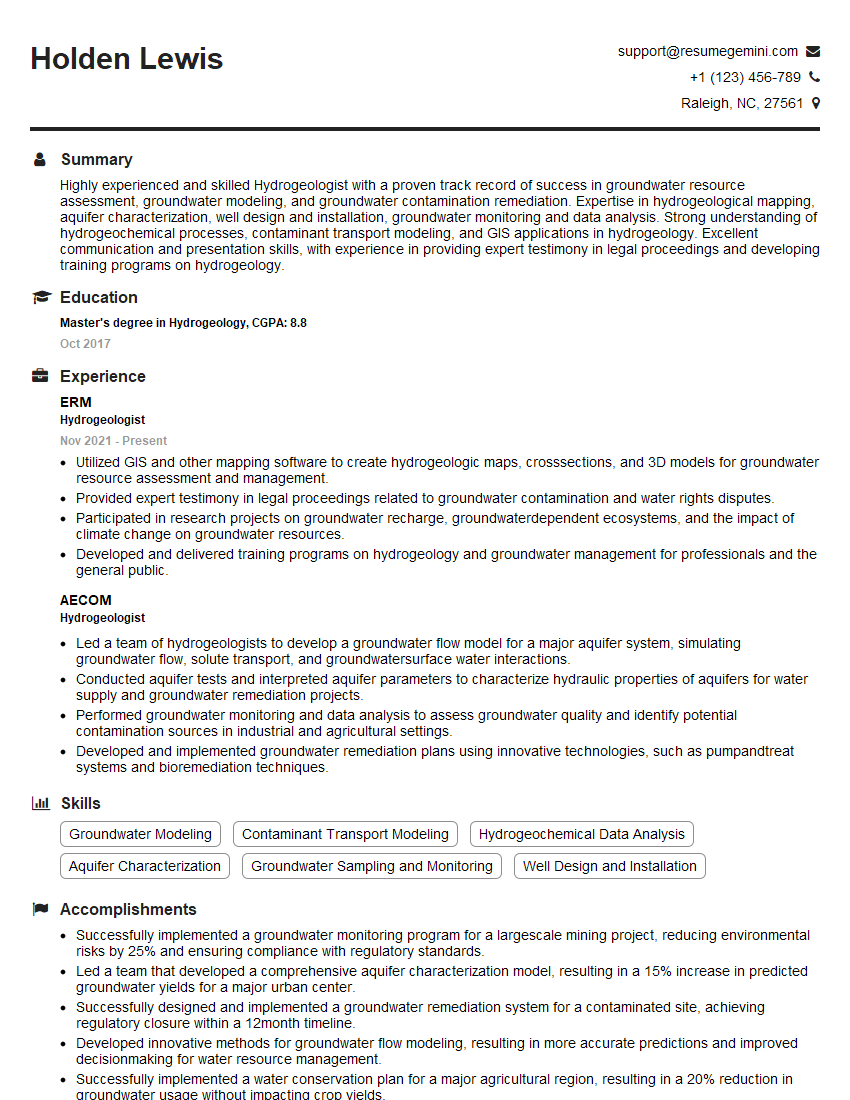
Hydrogeologist Resume Sample
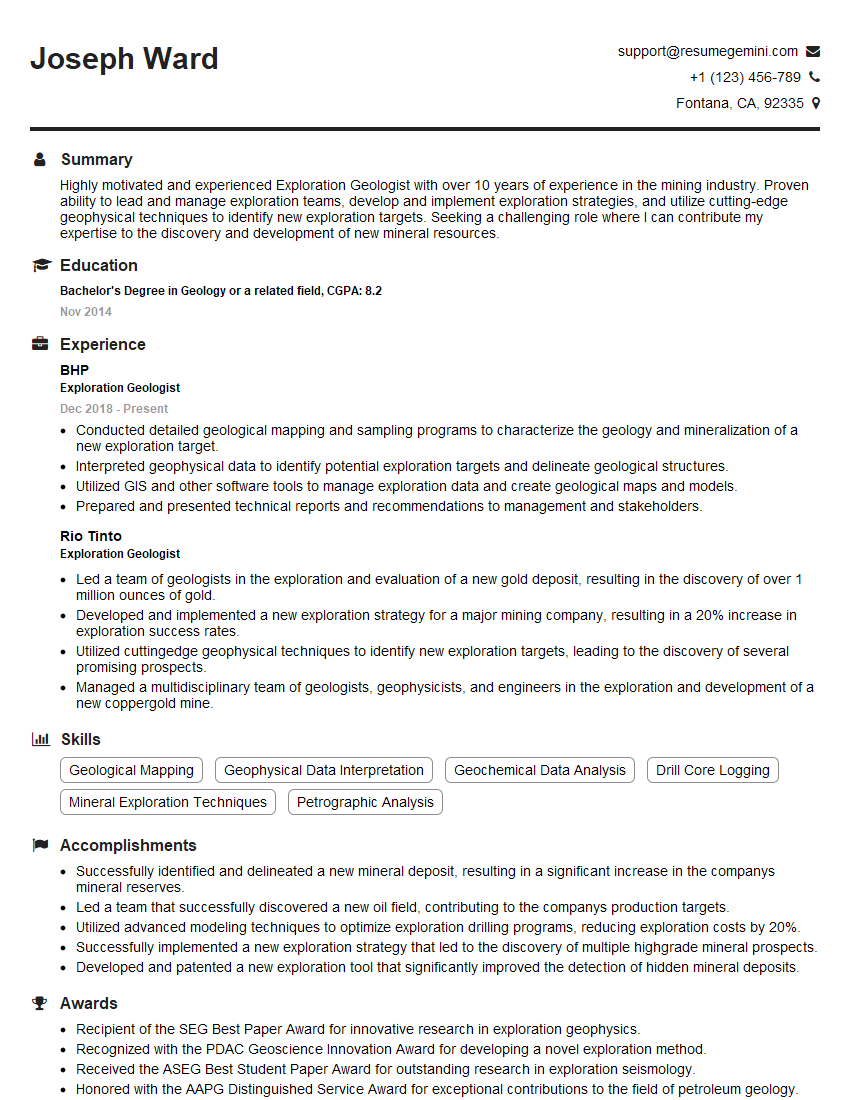
Exploration Geologist Resume Sample
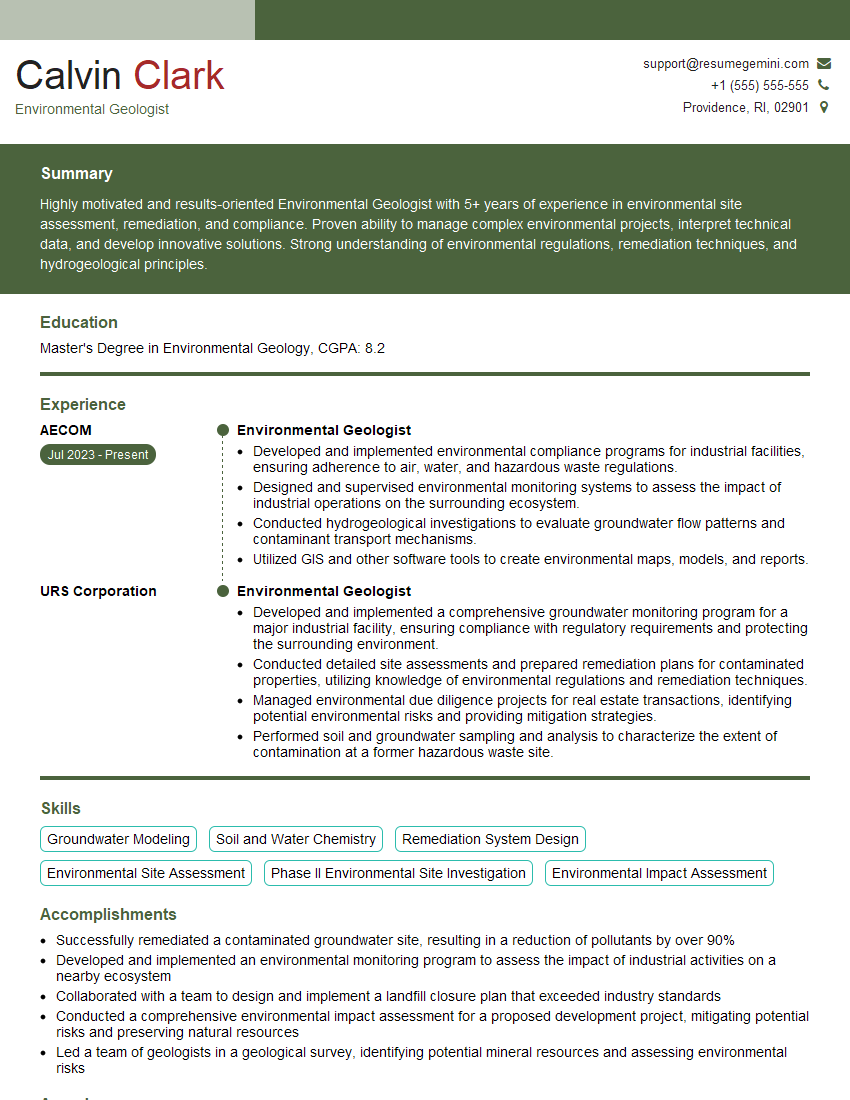
Environmental Geologist Resume Sample
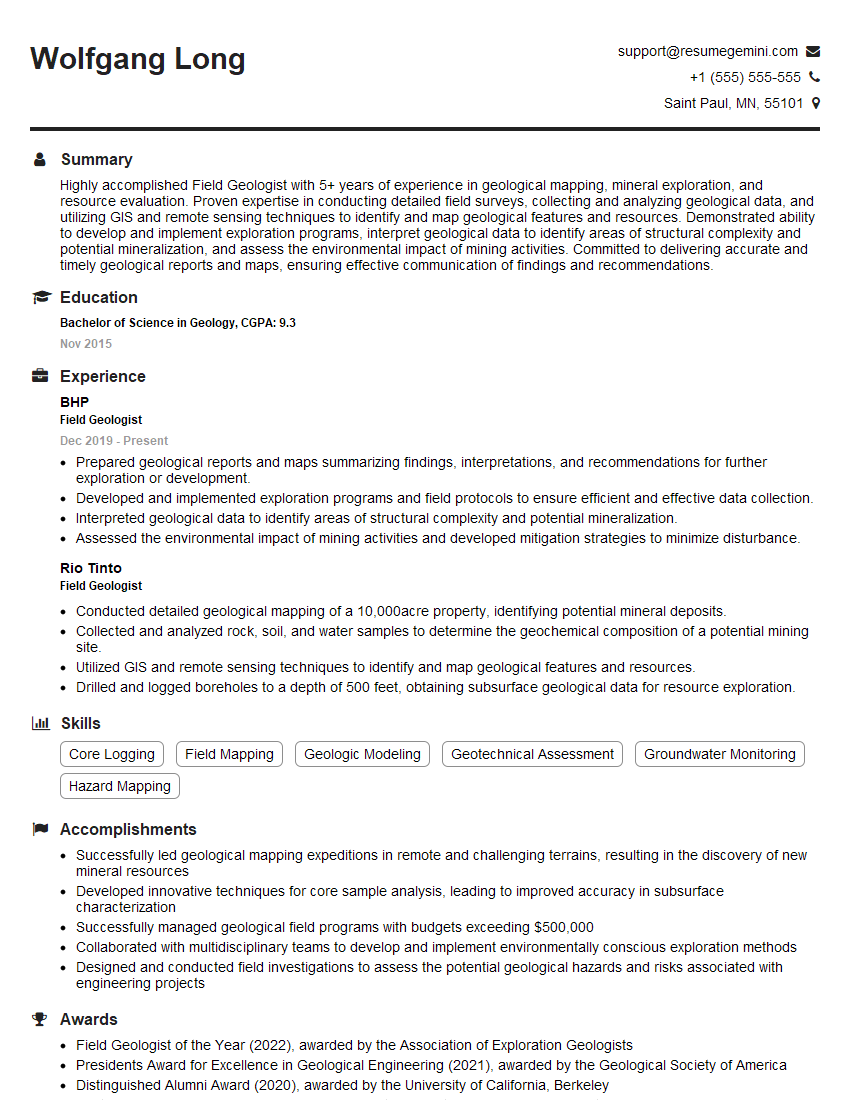
Field Geologist Resume Sample
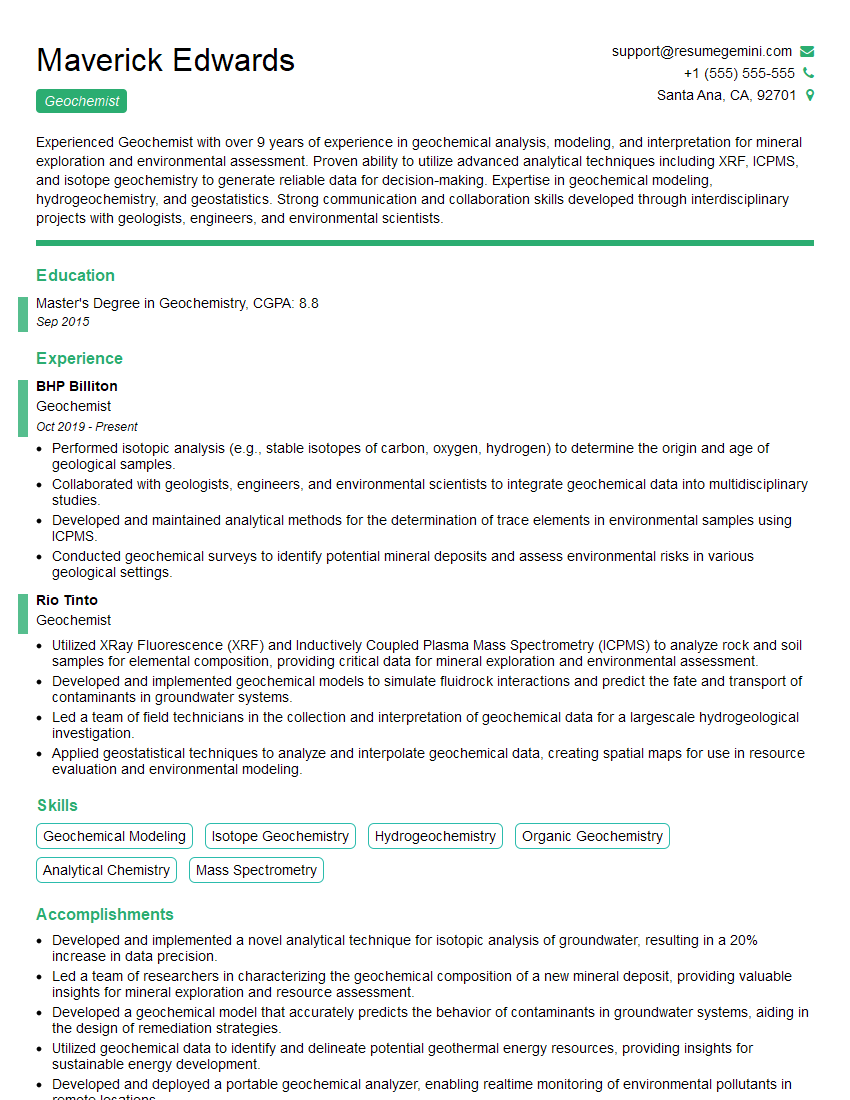
Geochemist Resume Sample
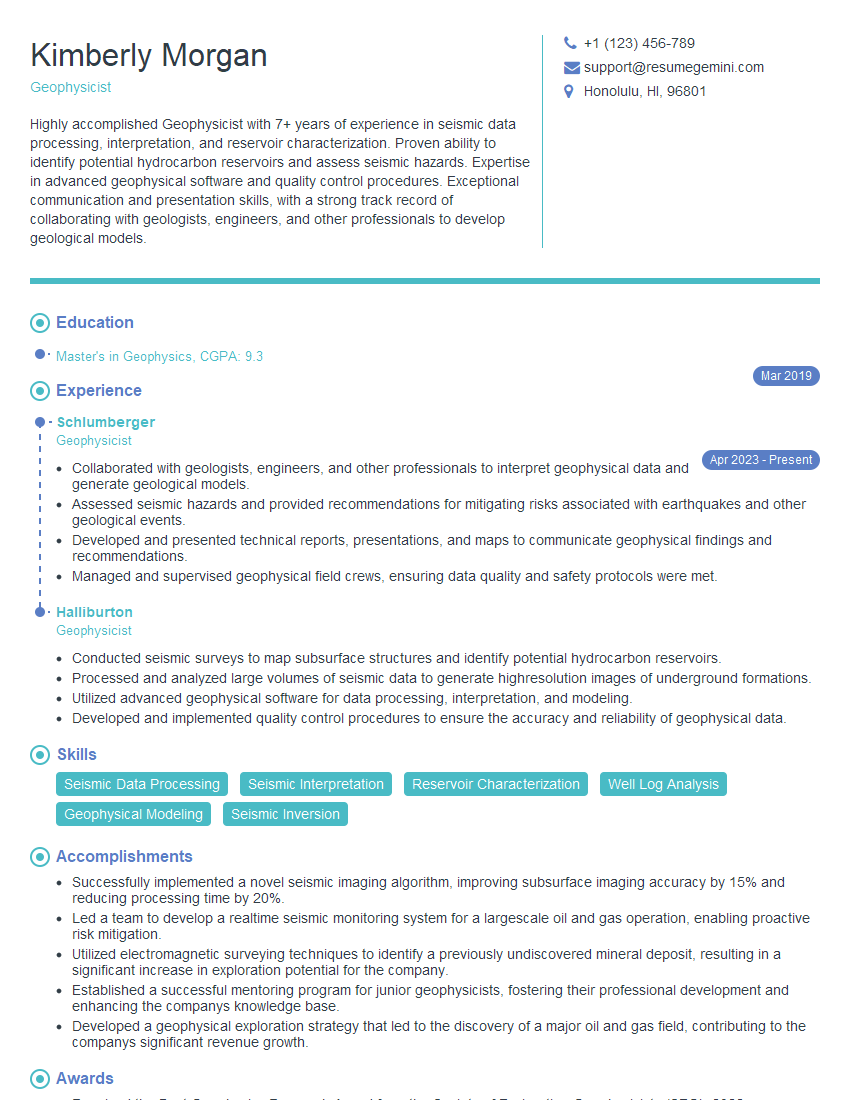
Geophysicist Resume Sample
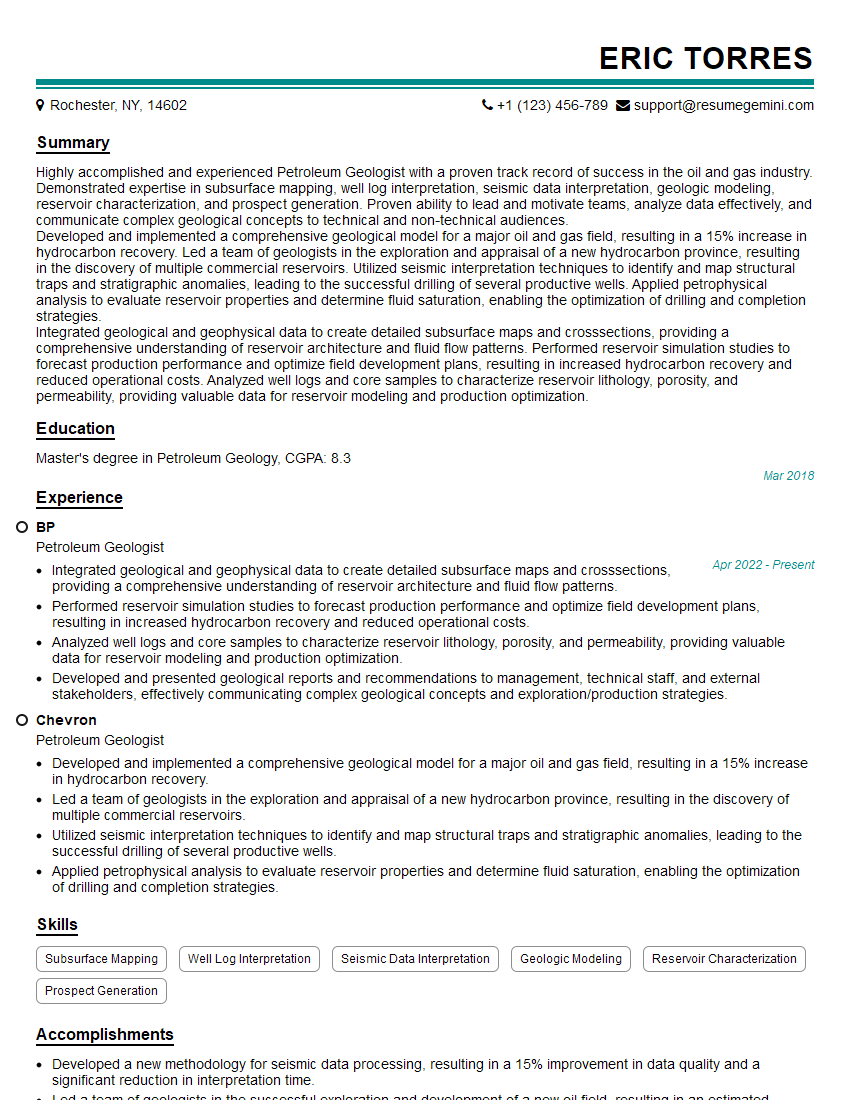
Petroleum Geologist Resume Sample
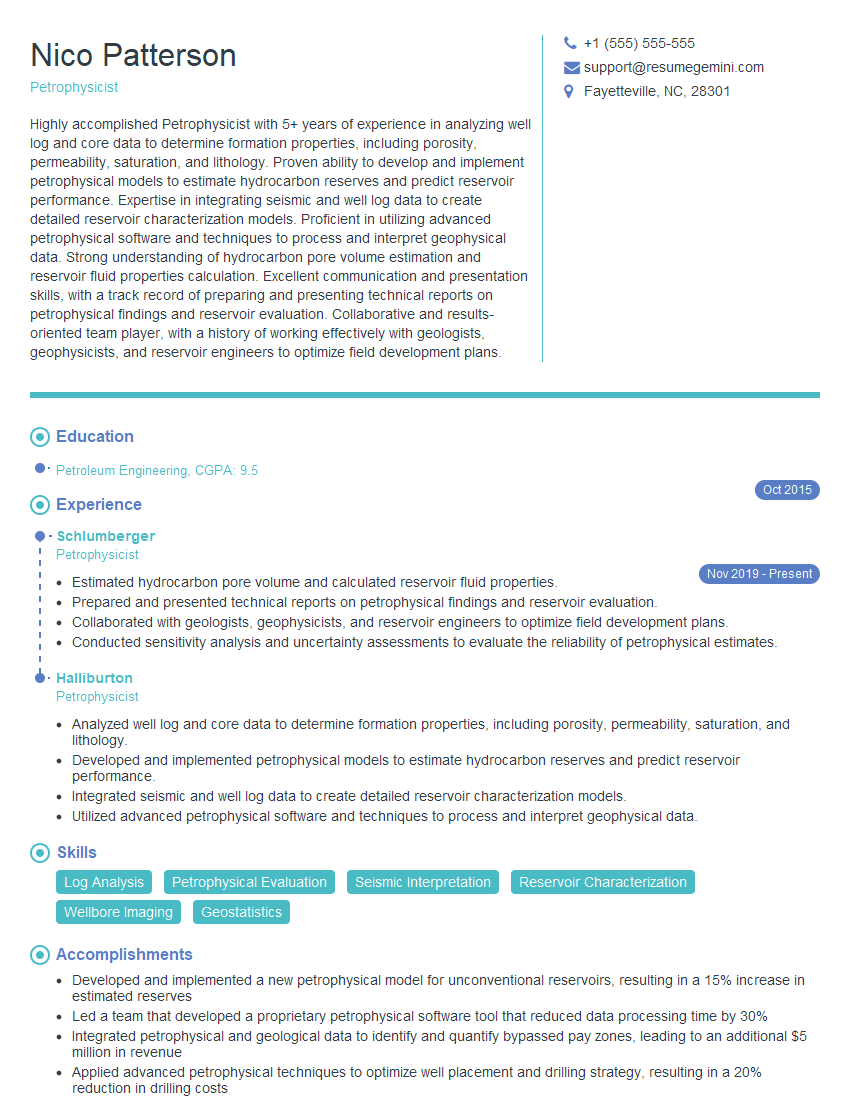
Petrophysicist Resume Sample
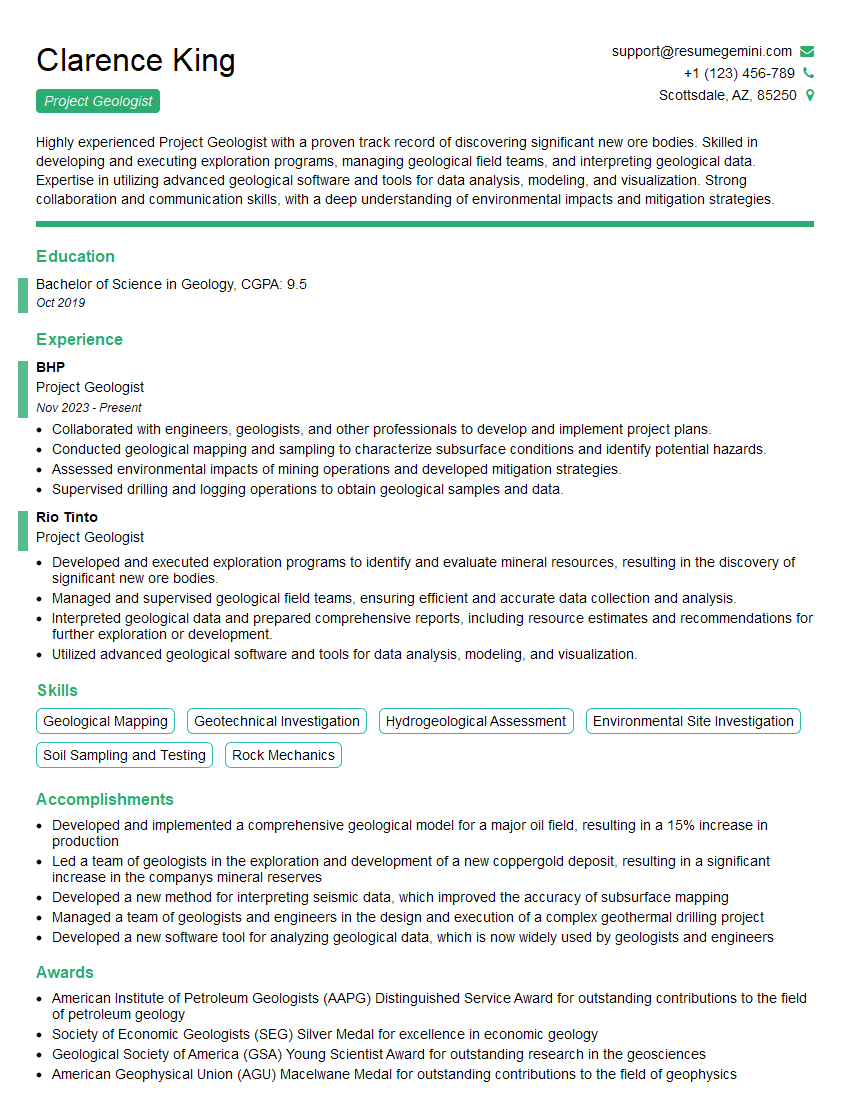
Project Geologist Resume Sample
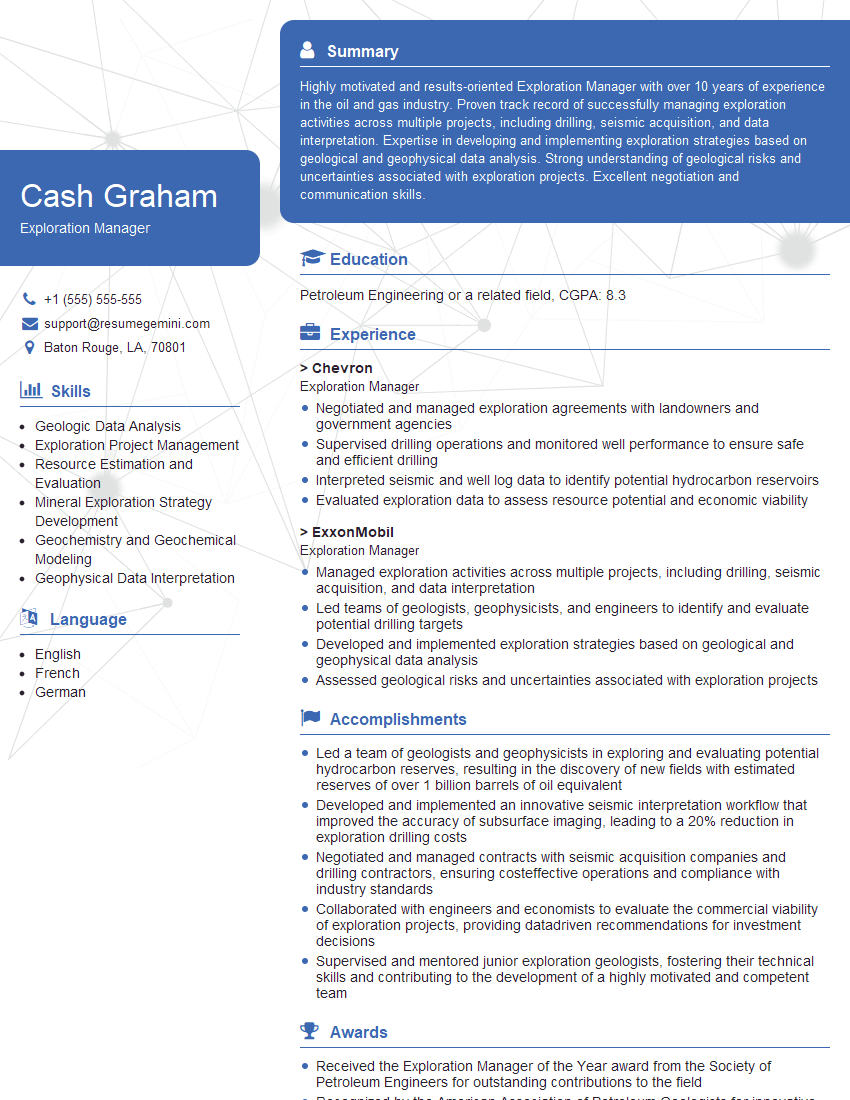
Exploration Manager Resume Sample
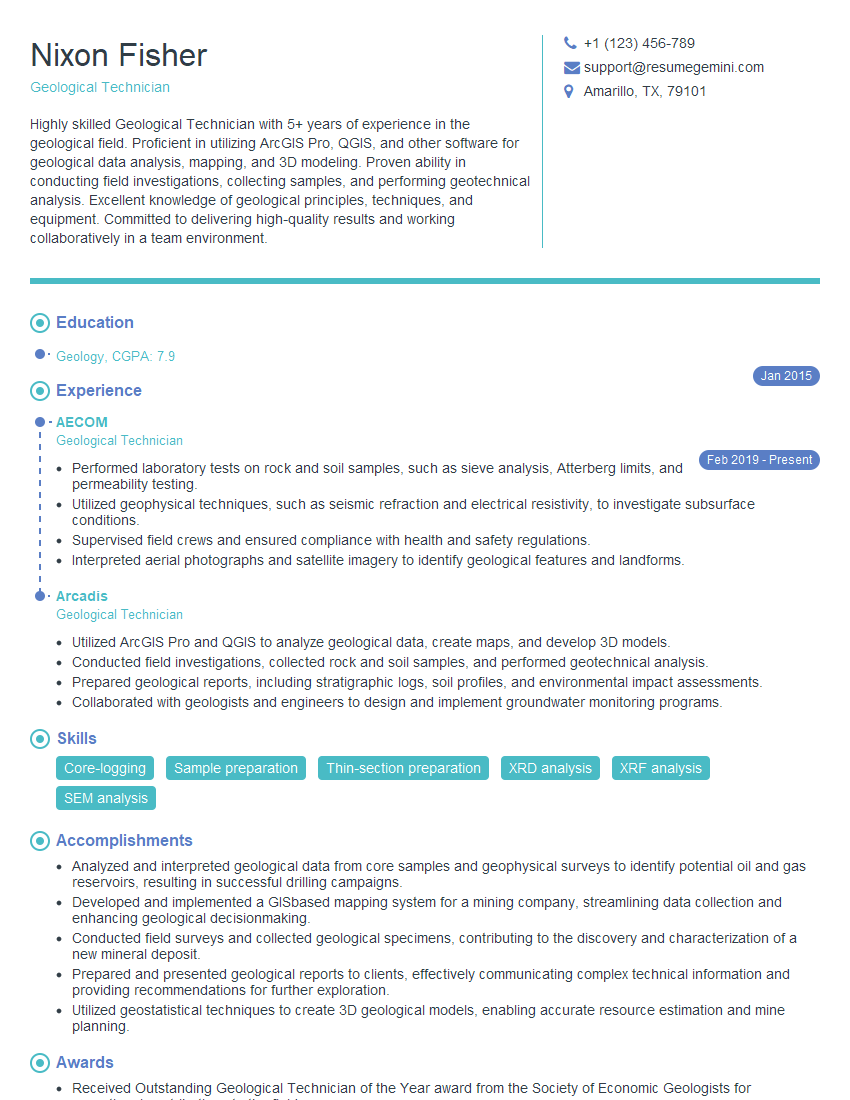
Geological Technician Resume Sample
Explore more articles
Users Rating of Our Blogs
Share Your Experience
We value your feedback! Please rate our content and share your thoughts (optional).
What Readers Say About Our Blog
Very informative content, great job.
good