The right preparation can turn an interview into an opportunity to showcase your expertise. This guide to Clothing Alteration and Repair interview questions is your ultimate resource, providing key insights and tips to help you ace your responses and stand out as a top candidate.
Questions Asked in Clothing Alteration and Repair Interview
Q 1. Describe your experience with various sewing machine types.
My experience with sewing machines spans a wide range, from basic domestic machines to industrial-grade models. I’m proficient with both mechanical and computerized machines, understanding their nuances and capabilities. For example, a basic Singer machine is excellent for straightforward alterations like hemming pants, while an industrial serger is crucial for creating professional-looking seams on delicate fabrics. Computerized machines offer programmable stitch settings, perfect for intricate designs or consistent stitch length, especially useful in pattern matching. My expertise also extends to troubleshooting – I can diagnose and fix minor mechanical issues on most machines.
Knowing the capabilities of different machine types allows me to choose the optimal tool for the job. A project requiring heavy-duty stitching, like working with denim, would necessitate a robust machine, unlike a delicate silk project where a lighter-touch machine would be preferred.
Q 2. How do you handle difficult fabrics like leather or silk?
Leather and silk present unique challenges. Leather, being thick and prone to tearing, requires specialized needles and slow, steady stitching. I use a walking foot attachment on my machine to ensure even feed and prevent slippage. For delicate silks, I choose fine needles, a lightweight thread, and use a slower stitch speed to avoid damaging the fabric. Hand-sewing is often employed for intricate details or when machine sewing is too risky.
Choosing the right needle is crucial; a wrong needle can lead to skipped stitches, broken needles, or holes in the fabric. I also pay close attention to the tension – too tight, and the fabric can be distorted; too loose, and the stitching is weak. For example, using a ballpoint needle specifically designed for knits prevents snagging the threads, thus preserving the integrity of the fabric during the alteration process.
Q 3. What methods do you use to ensure precise alterations?
Precision is paramount in alterations. I employ several methods to ensure accuracy. This includes using a precise measuring tape, marking the fabric with tailor’s chalk or disappearing ink, and using tools like French curves to create smooth, even lines. I carefully check measurements multiple times throughout the process, before and after each step. The use of a seam ripper allows for corrections without causing irreparable damage.
For example, when taking in a seam, I first measure the exact amount to be removed from each side, then carefully mark the lines before cutting. This prevents errors that could result in an uneven or ill-fitting garment. Pressing is another crucial step – using a steam iron to press seams flat ensures a sharp, clean finish.
Q 4. Explain your process for taking accurate body measurements.
Taking accurate body measurements is the foundation of any successful alteration. I use a flexible measuring tape, ensuring it lies flat against the body without pulling or stretching. I measure specific points: bust, waist, hip, shoulder width, sleeve length, and garment length. I always double-check each measurement to avoid errors.
The process involves instructing the client on how to stand correctly and holding the measuring tape properly. Each measurement is recorded, and any discrepancies are noted. I often take multiple measurements from different angles to ensure accuracy. For example, I might measure the client’s waist at several points to find the most accurate measurement.
Q 5. How do you repair common garment issues like rips, tears, and broken zippers?
Repairing common garment issues involves careful assessment and appropriate techniques. For rips and tears, I assess the extent of the damage. Small tears can be mended by hand-sewing, often using an invisible stitch. Larger tears may require patching or reinforcement with fabric that matches the garment. Broken zippers require careful removal of the old zipper and installation of a new one, matching the size and color.
For example, a small tear in a delicate blouse can be repaired with a ladder stitch, which is almost invisible once completed. A larger rip in jeans may require patching with a denim patch, carefully matching the color and weave of the original fabric. The correct zipper installation technique needs precision so the new zipper functions seamlessly.
Q 6. Describe your experience with pattern alteration and adjustment.
Pattern alteration is a complex but rewarding skill, requiring a thorough understanding of garment construction and body measurements. I adjust patterns to accommodate different body shapes and sizes, making necessary alterations to the seams, darts, and other design elements. I use different techniques depending on the type of alteration needed – for example, adding fullness to a sleeve or adjusting the waistline.
I use pattern-making tools such as rulers, curves, and French curves for precise measurements and adjustments. It is a highly technical process that requires experience and accuracy; it’s more than just adding or subtracting inches. A successful alteration involves understanding the pattern’s structure and making the change in a way that maintains the garment’s drape and shape.
Q 7. How do you handle customer requests that are technically challenging?
Technically challenging requests require a collaborative approach. I begin by carefully discussing the request with the customer, assessing the feasibility and potential challenges. If the request is outside my expertise, I’ll be honest and suggest alternative solutions or refer them to someone specializing in that area. If feasible, I’ll break down the project into smaller, manageable steps, documenting each stage for both accuracy and transparency.
For example, a request to completely reconstruct a vintage garment might require multiple consultations and careful planning. I would present a detailed plan, outlining the steps, materials required, and a realistic timeline. Transparency and open communication are key to managing expectations and ensuring customer satisfaction, even with the most challenging projects.
Q 8. What is your experience with different stitching techniques?
My experience encompasses a wide range of stitching techniques, crucial for achieving both durability and aesthetic appeal in garment alterations. I’m proficient in various hand-sewing stitches like running stitch, backstitch, slipstitch, and blind hem stitch, each chosen based on the fabric type and the alteration’s specific needs. For instance, a slipstitch is ideal for invisible mending, while a backstitch provides superior strength for seams under stress. Machine stitching techniques are equally important, and I’m adept at using different stitch lengths and types—straight stitch, zigzag stitch, overlock stitch—to create functional and visually pleasing seams. The selection depends heavily on the fabric’s weight and weave; heavier fabrics like denim benefit from stronger stitches like a reinforced zigzag, while delicate silks require a finer straight stitch.
- Running Stitch: A quick stitch ideal for basting or temporary seams.
- Backstitch: A strong, durable stitch perfect for seams requiring extra strength.
- Slipstitch: An almost invisible stitch used for neat finishing and mending.
- Blind Hem Stitch: Creates an invisible hem, ideal for professional finishes.
I regularly adapt my stitch selection based on the garment’s design and fabric—a subtle detail that significantly impacts the final result.
Q 9. How do you maintain the quality and integrity of the original garment during alterations?
Maintaining the original garment’s quality and integrity is paramount. My approach involves a careful assessment of the fabric’s structure, considering its weave, fiber content, and overall condition. Before any alterations, I thoroughly examine the garment for existing wear, damage, or weak points. I prioritize using the same type of thread as the original garment whenever possible, to ensure color and texture consistency. For delicate fabrics, I might opt for hand-sewing techniques to prevent damage from the machine needle. My work meticulously avoids compromising the garment’s structural integrity; for instance, when shortening sleeves or trousers, I carefully remove excess fabric while ensuring the original seam lines and construction remain intact. I use pressing techniques throughout the process to maintain a crisp, professional finish while also preventing fabric distortion.
Imagine altering a vintage silk dress—it requires an entirely different approach than modifying a pair of sturdy jeans. Understanding these nuances is what ensures the alteration preserves or even enhances the garment’s value.
Q 10. Explain your understanding of different types of fabrics and their properties.
Understanding fabric properties is fundamental to successful alterations. My knowledge encompasses various fabric types, including natural fibers (cotton, linen, silk, wool), synthetics (polyester, nylon, rayon), and blends. I’m familiar with their respective properties: drape (how the fabric hangs), texture, strength, stretch, and reaction to heat and moisture. For example, silk is delicate and prone to snagging, requiring gentle handling and specialized needles. Cotton is durable but can shrink if not pre-treated; linen has a tendency to wrinkle, necessitating careful pressing techniques. Knowing these properties allows me to select appropriate needles, stitch types, and finishing techniques for each specific fabric, ensuring both the process and the end result are optimized.
Working with a blend of linen and cotton, for instance, requires understanding the properties of each fiber to predict its reaction to alterations. Knowing that the linen component might crease more easily informs my pressing methods.
Q 11. How do you determine the appropriate seam allowance for different garments?
Seam allowance is crucial for proper garment construction and alteration. It’s the amount of fabric between the stitching line and the raw edge of the fabric. The standard seam allowance is typically 5/8 inch (1.5cm), but this can vary depending on the garment type, fabric weight, and desired finish. Heavier fabrics like denim often benefit from a wider seam allowance for durability, while delicate fabrics might use a narrower allowance to minimize bulk. When altering, I carefully assess the existing seam allowance. If insufficient, I might need to carefully let out existing seams (if the fabric allows) or add fabric strategically, always maintaining the original garment’s proportions and balance. For example, when taking in a side seam on a dress, preserving the original 5/8 inch allowance ensures a clean, professional result without distorting the garment’s shape.
I always remember that even small changes to the seam allowance can have a significant effect on the final fit.
Q 12. How familiar are you with pressing and finishing techniques?
Pressing and finishing techniques are as crucial as the stitching itself. They define the final look and feel of the altered garment. I use a variety of pressing tools, including irons, pressing cloths, and tailor’s ham, to achieve professional results. Different fabrics require different pressing techniques; delicate fabrics like silk necessitate low temperatures and a pressing cloth to prevent scorching, while heavier fabrics tolerate higher temperatures. I’m skilled in various pressing techniques, such as pressing seams open or to one side, pressing darts, and creating crisp edges. Understanding the effect of steam and dry heat on various fabrics is critical; steam can be used to relax fabric, while dry heat is best for creating a crisp finish.
Proper pressing is much more than just ironing; it’s about shaping and setting the fabric to give the finished piece a clean, professional look, and I know how to press different garment components like collars, cuffs, and pleats correctly.
Q 13. Describe your experience with working with different types of closures (buttons, zippers, hooks, etc.)
Experience with various closures is vital for effective alterations. I’m proficient in attaching and replacing buttons (using different techniques depending on the button type and fabric), inserting and repairing zippers (both visible and invisible), and working with hooks and eyes, snaps, and other fastening systems. I understand the importance of selecting the correct closure for the garment and the fabric. For instance, a sturdy metal zipper is appropriate for heavy-duty outerwear, while a delicate plastic zipper might be preferred for a lightweight dress. I have the skill to replace a worn-out zipper invisibly, maintaining the garment’s aesthetic appeal. Replacing a broken hook and eye closure requires precision, and I ensure the placement is exact to ensure proper garment closure.
Each closure type needs a specific approach – something I’ve honed over years of practice.
Q 14. How do you troubleshoot common sewing machine problems?
Troubleshooting sewing machine problems is a regular part of my work. I’m familiar with common issues like skipped stitches, thread breakage, uneven stitching, and needle jamming. My troubleshooting process typically starts with a visual inspection of the machine and its components (needle, thread, bobbin, tension). I check for proper thread tension, needle type (appropriate for the fabric), and bobbin winding. If the issue persists, I systematically check each component. Sometimes, a simple cleaning of the machine’s internal parts can resolve the problem. I also know when to call for professional repair, indicating my understanding of when my skills are sufficient and when professional intervention is needed. My experience allows me to diagnose and fix these issues quickly, minimizing downtime and ensuring efficient workflow.
For example, a consistent skipped stitch might be due to a bent needle, and I know exactly how to identify and replace a bent needle swiftly and accurately.
Q 15. Describe your experience with hemming various types of garments.
Hemming garments requires precision and understanding of fabric types. My experience spans a wide range, from simple hems on trousers and skirts to more intricate hems on delicate fabrics like silk or chiffon. I’ve worked with various techniques, including blind hems for an invisible finish, double-fold hems for durability, and rolled hems for lightweight fabrics.
- Jeans: For denim, I use a strong stitch and reinforce the seam to withstand daily wear. I often pre-wash denim to prevent shrinkage after alterations.
- Silk Dresses: These require a delicate hand and often a blind hem stitch to maintain the garment’s drape and elegance. The choice of thread is crucial to match the fabric’s weight and color.
- Woven Skirts: I consider the drape and weight of the fabric when determining the appropriate hem width. A heavier skirt might need a wider hem for better stability.
Each fabric type requires a tailored approach; it’s not just about the stitch but also the preparation—pressing, grading seams, and choosing the right needle and thread—to achieve a professional finish.
Career Expert Tips:
- Ace those interviews! Prepare effectively by reviewing the Top 50 Most Common Interview Questions on ResumeGemini.
- Navigate your job search with confidence! Explore a wide range of Career Tips on ResumeGemini. Learn about common challenges and recommendations to overcome them.
- Craft the perfect resume! Master the Art of Resume Writing with ResumeGemini’s guide. Showcase your unique qualifications and achievements effectively.
- Don’t miss out on holiday savings! Build your dream resume with ResumeGemini’s ATS optimized templates.
Q 16. How do you manage your time efficiently when working on multiple alterations simultaneously?
Managing multiple alterations efficiently is all about organization and prioritization. I use a combination of techniques, including a detailed order book with specific timelines and a clear workflow system.
- Prioritization: I prioritize orders based on deadlines and complexity. Urgent jobs get tackled first.
- Batching Similar Tasks: I group similar tasks together—for example, hemming several pairs of trousers at once. This streamlines the process and reduces setup time.
- Time Blocking: I allocate specific time slots for different tasks or types of alterations. This helps maintain focus and prevents multitasking inefficiencies.
- Communication: I keep customers informed about progress and any potential delays. This ensures transparency and manages expectations.
Think of it like conducting an orchestra; each instrument (alteration) needs its time in the spotlight, but the conductor (me) needs to orchestrate the entire performance smoothly and efficiently.
Q 17. How do you ensure customer satisfaction with your work?
Customer satisfaction is paramount. I strive for excellence in every aspect, from initial consultation to final fitting.
- Clear Communication: I listen carefully to the customer’s needs and expectations, ensuring I fully understand the desired outcome before starting the work. I also explain the process and any limitations or potential challenges.
- Precise Measurements and Fitting: Accurate measurements and multiple fittings, if needed, are crucial to ensure a perfect fit.
- Quality Workmanship: I use high-quality materials and employ meticulous techniques to deliver exceptional results.
- Professionalism: I maintain a clean and organized workspace and deliver the garment in a timely manner.
- Follow-up: I encourage feedback and address any concerns promptly. A simple ‘How do you like the alterations?’ can go a long way.
Building trust and rapport with customers is key to maintaining a successful business. Word-of-mouth referrals are my best advertising!
Q 18. How familiar are you with alterations for wedding gowns or other special occasion garments?
I have significant experience with alterations for wedding gowns and other special occasion garments. These often require a high level of skill and precision due to the intricate designs and delicate fabrics.
- Bridal Gowns: I’ve worked on alterations such as taking in the bodice, adjusting the length of the train, adding or removing sleeves, and replacing damaged lace.
- Prom Dresses: These often involve adjustments to the straps, bodice, or skirt length.
- Formal Wear: I’ve altered tuxedos, suits, and other formal garments, ensuring a perfect fit and impeccable finish.
Working with these garments requires specialized knowledge and often involves collaboration with the client to ensure the alterations preserve the beauty and integrity of the design.
Q 19. What safety measures do you take while using sewing machines and other tools?
Safety is my top priority. I follow strict safety procedures when using sewing machines and other tools.
- Machine Safety: I always ensure the sewing machine is properly maintained, the needle is correctly inserted, and the machine is unplugged when not in use. I use the appropriate safety guards and never reach under the needle while the machine is running.
- Needle and Pin Safety: I use needle holders and pin cushions to store needles and pins safely. I avoid leaving loose needles or pins on my work surface.
- Iron and Pressing Safety: I use an iron rest and never leave a hot iron unattended. I always check the temperature setting is appropriate for the fabric type.
- General Workspace: My workspace is well-lit and organized to minimize tripping hazards. I regularly clean up scraps of fabric and other debris to maintain a safe environment.
Safety isn’t just a precaution; it’s an essential part of responsible and professional practice.
Q 20. How do you handle alterations involving complex patterns or designs?
Complex patterns and designs require a thorough understanding of pattern construction and garment engineering. I approach these alterations systematically.
- Careful Examination: I carefully examine the garment to understand its construction and identify the areas that need alteration.
- Pattern Manipulation: I might need to adjust the existing pattern pieces or draft new ones to achieve the desired changes without compromising the garment’s integrity. This often involves manipulating darts, seams, and other design elements.
- Testing and Refinement: I often use muslin (a lightweight, inexpensive fabric) to test pattern adjustments before working on the final garment. This helps avoid costly mistakes.
- Gradual Approach: Instead of making large changes all at once, I work in stages, making smaller adjustments and checking the fit at each step.
Think of it like solving a complex puzzle—each piece needs to fit perfectly for the whole picture to be complete.
Q 21. How familiar are you with different types of embroidery and embellishment techniques?
My familiarity with embroidery and embellishment techniques is extensive. I’m proficient in various styles and techniques, including hand embroidery (e.g., cross-stitch, satin stitch, French knots), machine embroidery, and the application of embellishments like beads, sequins, and lace.
- Hand Embroidery: I can use hand embroidery to add details, repair damaged areas, or create custom designs.
- Machine Embroidery: I can use a sewing machine with embroidery capabilities to create intricate designs or patterns.
- Beading and Sequin Work: I have experience applying beads and sequins to garments, adding sparkle and texture.
- Lace Application: I’m skilled at applying lace to garments, whether it’s adding lace trim or repairing damaged lace.
Understanding the different types of threads, fabrics, and embellishments, and their properties, is crucial for successful execution. I adapt my techniques to ensure each embellishment enhances the garment’s aesthetic appeal.
Q 22. How do you maintain your sewing equipment?
Maintaining sewing equipment is crucial for both the longevity of the tools and the quality of the work produced. It’s akin to a chef maintaining their knives – sharp tools make for clean cuts and a better end product. My routine involves several key steps:
Regular Cleaning: After each project, I meticulously clean my sewing machine, using a soft brush to remove lint and dust from the bobbin case, feed dogs, and other accessible areas. I also wipe down the exterior with a damp cloth.
Lubrication: Periodically, typically every few months depending on usage, I lubricate the moving parts of my sewing machine with high-quality sewing machine oil, following the manufacturer’s instructions. This keeps everything running smoothly and prevents friction.
Needle Care: I regularly check and change my needles, replacing them at the first sign of bending or dullness. Using the correct needle for the fabric type is essential for preventing skipped stitches and fabric damage.
Storage: When not in use, I store my sewing machine and other equipment in a clean, dry environment, away from direct sunlight and dust. This helps prevent rust and damage.
Professional Servicing: Once a year, I schedule a professional service for my sewing machine. This ensures a thorough cleaning, lubrication, and adjustment of internal components, preventing costly repairs down the line.
This meticulous approach ensures my equipment remains in optimal condition, allowing me to produce consistent, high-quality alterations and repairs.
Q 23. What is your experience with alterations for plus-size garments?
I have extensive experience working with plus-size garments. Alterations for plus-size clients often require a different approach compared to standard sizes. It’s not simply a matter of scaling up; it involves understanding the unique challenges of fitting fuller figures.
Fabric Selection: Heavier fabrics can add bulk and discomfort. I often suggest lighter, draping fabrics to create a flattering silhouette. Understanding fabric drape and weight is crucial for choosing the right material for the alteration.
Muslin Mock-Ups: For complex alterations, I frequently create muslin mock-ups to test the fit and make adjustments before working with the final fabric. This saves time and prevents mistakes with expensive materials.
Seam Adjustments: Simple alterations like taking in seams require a more nuanced approach. I consider the body’s curves and ensure that adjustments are made proportionally to maintain balance and prevent pulling or distortion.
Support and Structure: Often, plus-size garments benefit from additional support, which may involve incorporating boning, lining, or interfacing to provide better shape and structure.
Client Communication: Building trust and establishing clear communication with the client is crucial. I take extra time to understand their body shape, concerns, and desired outcome to achieve a successful and satisfying result.
I pride myself on providing alterations that are both functional and flattering, ensuring plus-size clients feel confident and comfortable in their clothing.
Q 24. Describe a time you had to adapt your approach to a unique alteration request.
One time, a client brought me a vintage wedding dress with intricate beading and lace. She wanted to shorten the train significantly, but the beading and lace were so delicate that traditional methods risked damage. This demanded a creative solution.
Instead of simply cutting and hemming, I carefully unpicked the existing hem, preserving the beading and lace. I then created a new, smaller train using a matching fabric, carefully attaching it to the dress. This involved meticulous hand-sewing to ensure the new train blended seamlessly with the original design. The result was a stunning dress with a shortened train, maintaining the integrity of the original craftsmanship. This experience showcased my adaptability and ability to problem-solve while preserving the unique character of a garment.
Q 25. How do you identify and correct fitting issues in garments?
Identifying and correcting fitting issues involves a systematic approach, combining visual assessment with careful measurement and understanding of garment construction.
Visual Inspection: I begin with a thorough visual examination, noting areas of pulling, gaping, wrinkles, or tightness. This provides clues to potential fitting problems.
Measurement Comparison: I compare the garment’s measurements to the client’s body measurements. Discrepancies highlight specific areas needing adjustment.
Understanding Construction: Knowledge of garment construction is crucial for identifying the root cause of fit issues. For example, a tight sleeve could be due to a small armhole, a too-narrow sleeve cap, or an incorrect sleeve length.
Pinning and Fitting: I use pins to make preliminary adjustments, fitting the garment on the client to assess the changes. This iterative process allows for fine-tuning the fit before stitching permanent alterations.
Specific Adjustments: Depending on the issue, corrections could involve taking in seams, letting out seams, adjusting darts, altering the shoulder line, or even reshaping the garment’s structure.
My expertise in this process allows me to address fit issues effectively, ensuring the garment fits comfortably and flattering to the client.
Q 26. What software or tools do you use for pattern design and alteration?
While I primarily rely on my expertise and experience, I utilize several tools to assist in pattern design and alteration. Digital tools are increasingly helpful but nothing replaces the hands-on experience.
Pattern Making Software: I use industry-standard software to create and modify patterns digitally. This is particularly useful for complex alterations or when creating custom patterns. This allows for accurate scaling and adjustments that maintain garment proportions.
Digital Measurement Tools: I use digital measuring tapes and body scanners to obtain precise measurements, reducing the margin of error.
Computer-Aided Design (CAD) Software: CAD software enables me to visualize and refine the pattern design before making any alterations. This is invaluable for complex alterations and creating unique designs.
Traditional Tools: However, I still greatly rely on traditional tools such as French curves, rulers, and tracing paper for specific tasks. These are indispensable for achieving the finest detail and accuracy.
The combination of digital and traditional methods ensures accuracy and efficiency in my work.
Q 27. How do you deal with challenging customers or difficult situations?
Handling challenging customers or difficult situations requires patience, empathy, and strong communication skills. I approach such situations with a focus on understanding the client’s perspective.
Active Listening: I listen attentively to the client’s concerns, acknowledging their feelings and validating their perspective, even if I don’t necessarily agree.
Clear Communication: I clearly explain the alteration process, outlining potential challenges and solutions, managing expectations proactively.
Professionalism: I maintain a professional demeanor, even in stressful situations, avoiding arguments and focusing on finding a mutually agreeable solution.
Compromise and Negotiation: Sometimes, compromise is necessary. I am willing to negotiate solutions that address the client’s concerns while maintaining the integrity of the alteration.
Setting Boundaries: In instances where the client’s demands are unreasonable or unrealistic, I set clear boundaries while remaining respectful.
By prioritizing clear communication and empathy, I aim to resolve conflicts effectively and maintain positive professional relationships.
Q 28. What are your salary expectations for this position?
My salary expectations are commensurate with my experience and skill level in the field of clothing alteration and repair. Considering my extensive experience and proven track record, I am seeking a salary range of [Insert Salary Range Here]. This is based on industry standards and my ability to consistently deliver high-quality work and exceptional customer service. I am confident that my contributions will significantly benefit your organization.
Key Topics to Learn for Your Clothing Alteration and Repair Interview
- Garment Construction & Anatomy: Understanding different fabric types, seam constructions, and garment components (e.g., collars, sleeves, pockets) is fundamental. Practical application: Identifying the best alteration method based on garment structure.
- Measurement & Fitting Techniques: Accurate measurements and fitting are crucial. Practical application: Adjusting patterns and garments to achieve a perfect fit using various techniques.
- Seam Alterations: Mastering techniques like taking in or letting out seams, raising or lowering waistlines, and adjusting sleeve lengths. Practical application: Demonstrating proficiency in different seam alteration methods on various fabrics.
- Fabric Manipulation: Understanding fabric behavior (stretching, shrinking, draping) and applying appropriate techniques for altering various fabrics. Practical application: Repairing tears and holes in different fabrics using various techniques.
- Repair Techniques: Proficiency in repairing zippers, buttons, hems, and other common garment repairs. Practical application: Troubleshooting and solving common repair issues efficiently.
- Machine Operation & Maintenance: Demonstrate knowledge of various sewing machines and their functionalities, including basic maintenance. Practical application: Selecting the appropriate machine and settings for specific tasks.
- Customer Service & Communication: Effectively communicating with clients to understand their needs and manage expectations. Practical application: Providing excellent customer service to build rapport and repeat business.
- Safety Procedures: Understanding and following safety protocols related to sewing machine operation and handling sharp tools. Practical application: Maintaining a safe and organized workspace.
Next Steps
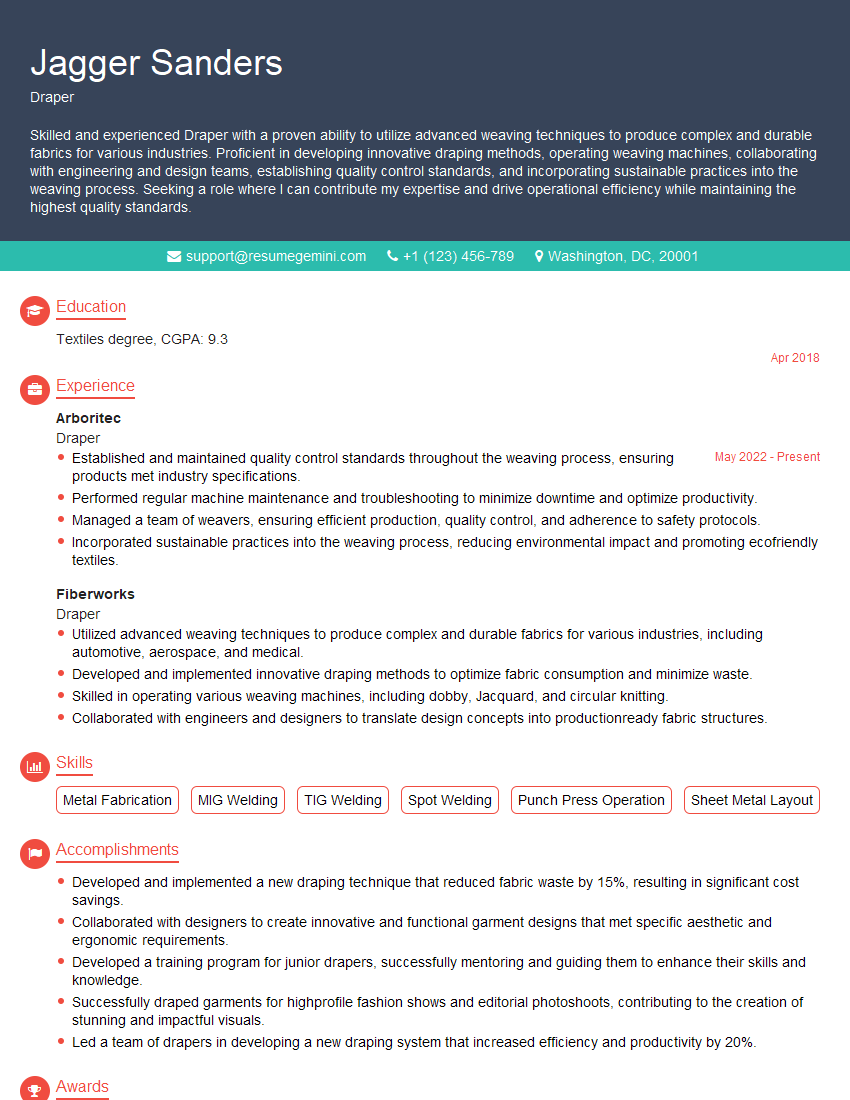
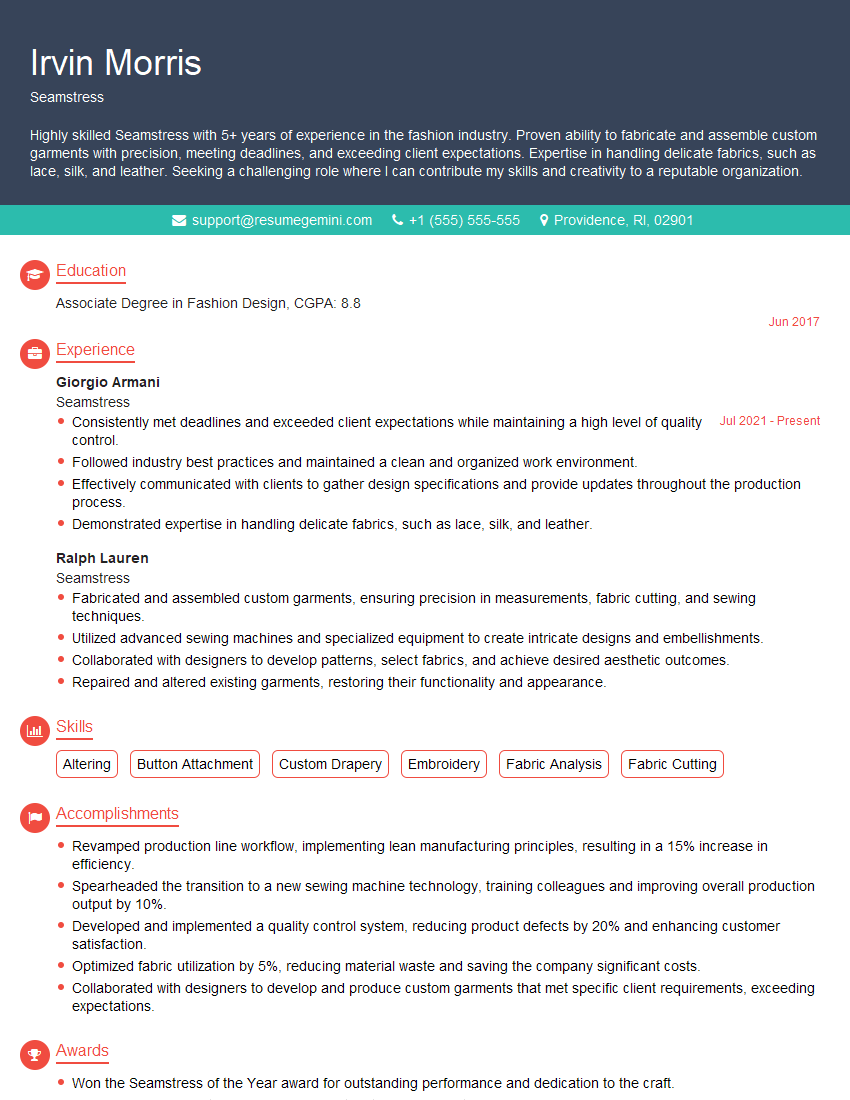
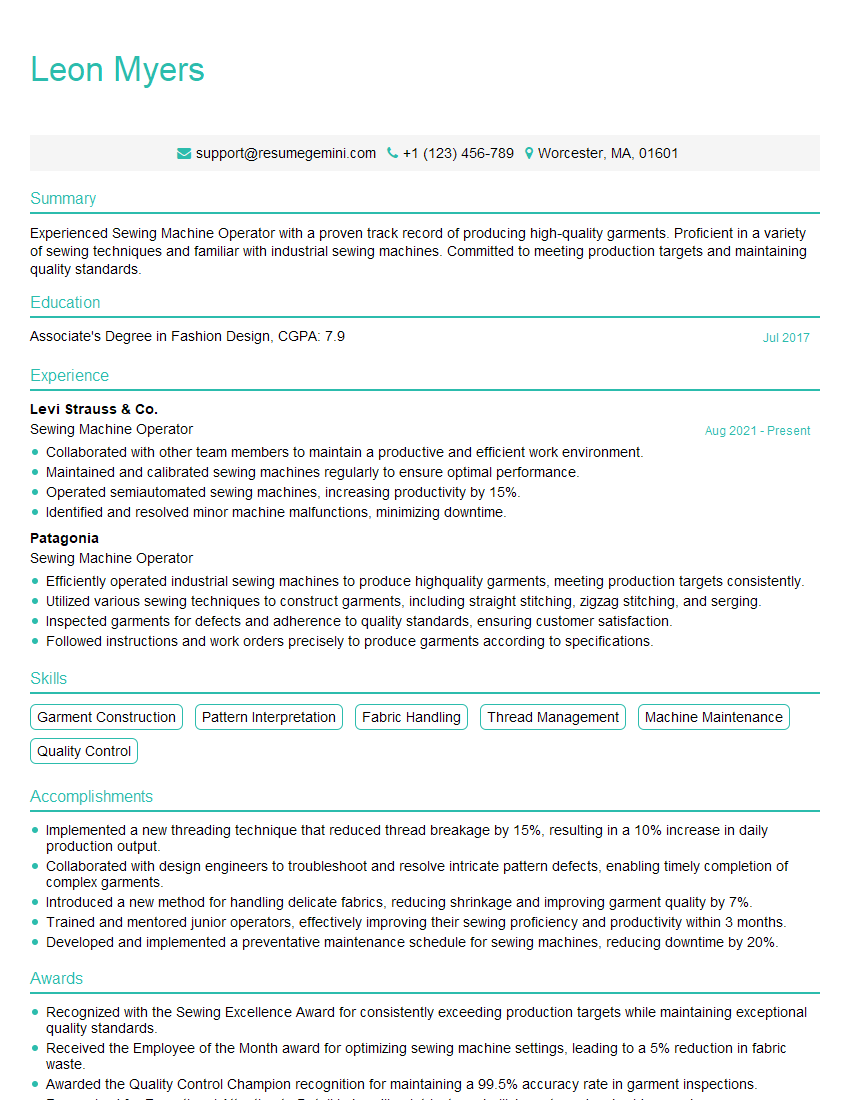
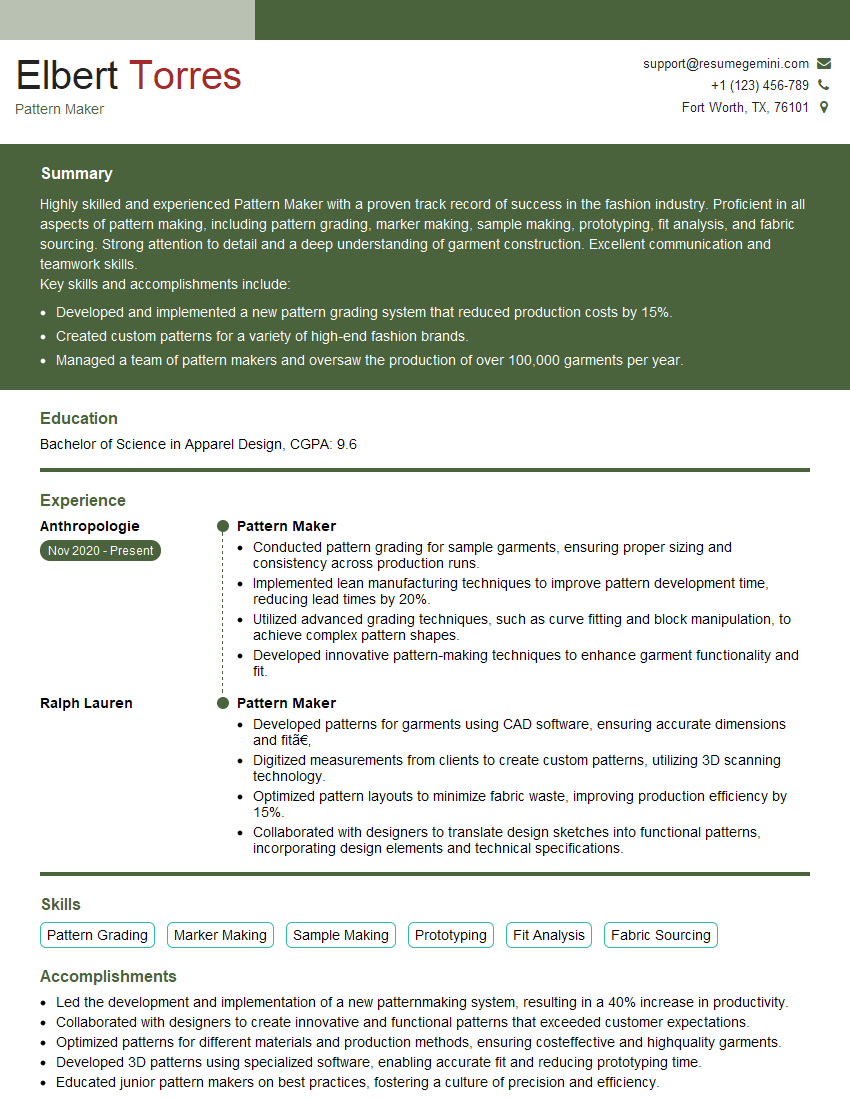
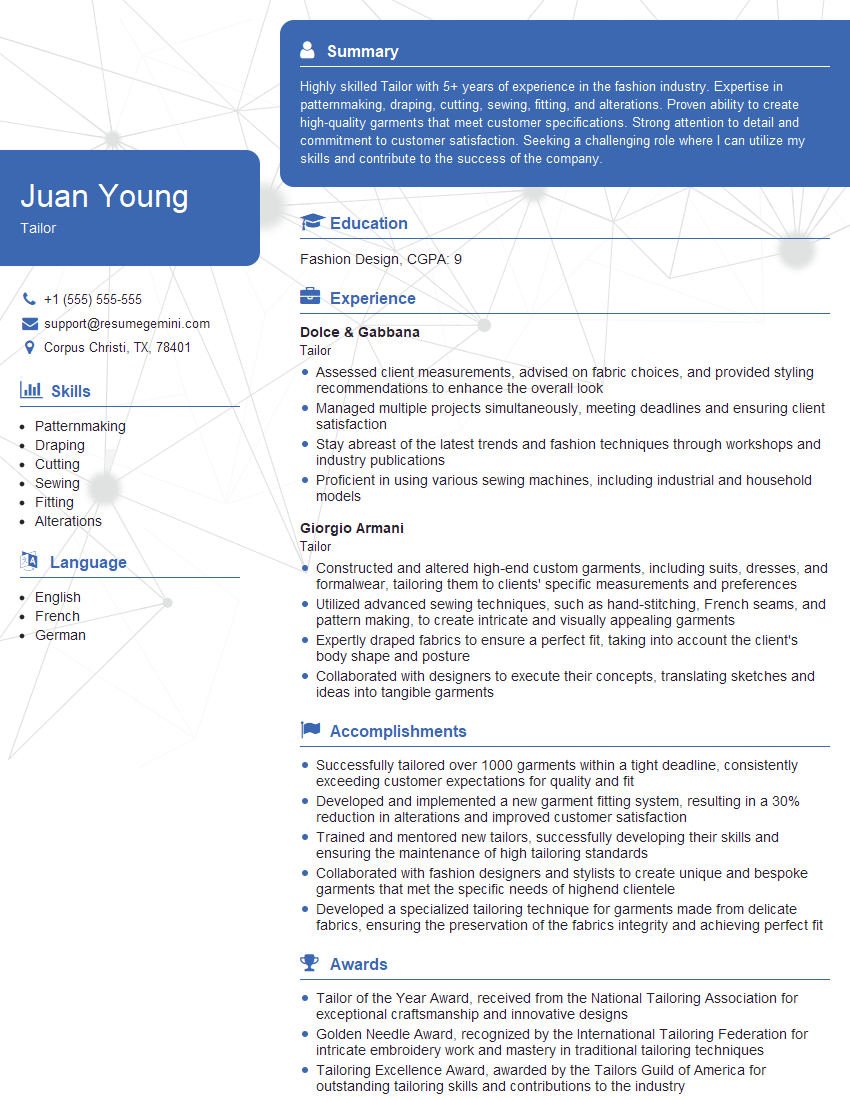
Mastering clothing alteration and repair opens doors to a rewarding career with diverse opportunities for growth, from independent tailoring to working in high-end boutiques or alterations shops. To maximize your job prospects, focus on creating a compelling and ATS-friendly resume that highlights your skills and experience. ResumeGemini is a trusted resource to help you build a professional resume that truly showcases your capabilities. We offer examples of resumes tailored to the Clothing Alteration and Repair field to help you get started.
Explore more articles
Users Rating of Our Blogs
Share Your Experience
We value your feedback! Please rate our content and share your thoughts (optional).
What Readers Say About Our Blog
Very informative content, great job.
good