Every successful interview starts with knowing what to expect. In this blog, we’ll take you through the top Precise Equipment Control interview questions, breaking them down with expert tips to help you deliver impactful answers. Step into your next interview fully prepared and ready to succeed.
Questions Asked in Precise Equipment Control Interview
Q 1. Explain the concept of PID control.
PID control, or Proportional-Integral-Derivative control, is a feedback control loop mechanism widely used in industrial automation to maintain a desired setpoint. Think of it like a self-adjusting thermostat: it constantly monitors the current temperature and makes adjustments to the heating/cooling system to reach and maintain the target temperature.
It works by combining three distinct control actions:
- Proportional (P): This action is proportional to the difference between the setpoint (desired value) and the process variable (current value). A larger error results in a larger corrective action. Imagine turning the thermostat up more aggressively if the room is significantly colder than desired.
- Integral (I): This action addresses persistent errors. It accumulates the error over time, providing a corrective action even if the proportional action alone isn’t sufficient to eliminate the error completely. This handles slow drifts or offsets, ensuring the system eventually reaches the setpoint.
- Derivative (D): This action anticipates future errors based on the rate of change of the error. It dampens oscillations and prevents overshooting, leading to smoother and more stable control. It’s like gently easing off the gas pedal as you approach your desired speed.
The PID controller continuously calculates and adjusts the control signal based on these three components, ensuring the controlled variable stays as close as possible to the setpoint. The weighting of each component (P, I, D) is adjusted (tuned) to optimize the controller’s performance for a specific application.
For example, in a chemical process, a PID controller might regulate the flow of reactants to maintain a specific temperature or pressure within a reactor.
Q 2. Describe your experience with PLC programming (e.g., Allen-Bradley, Siemens).
I have extensive experience programming PLCs from both Allen-Bradley and Siemens platforms. My expertise spans various applications, from simple on/off control to complex sequential control systems incorporating intricate timing and logic. I’m proficient in ladder logic, structured text, and function block diagrams.
With Allen-Bradley, I’ve worked extensively with RSLogix 5000, developing and deploying programs for automated assembly lines, including error handling and data logging. A particular project involved optimizing a robotic arm’s movements through careful tuning of PID controllers embedded within the PLC program, significantly improving production speed and accuracy. This involved extensive testing and iterative adjustments of the PID parameters to achieve optimal performance within the system’s constraints.
My Siemens experience focuses primarily on TIA Portal and Step 7, where I’ve designed and implemented SCADA interfaces for monitoring and controlling processes in a water treatment facility. This included creating user-friendly HMI screens, configuring communication protocols, and integrating data acquisition systems. A key challenge was managing real-time data acquisition and processing from numerous sensors, ensuring the system could respond quickly to changes in process conditions.
In both environments, I’ve consistently prioritized code readability, maintainability, and adherence to industry best practices, resulting in robust and reliable control systems.
Q 3. How do you troubleshoot malfunctions in precise equipment?
Troubleshooting precise equipment malfunctions requires a systematic approach. I typically start with a thorough review of the system’s operational history, checking logs for errors or unusual behavior. This helps identify potential causes and prioritize investigation areas.
My troubleshooting methodology follows these steps:
- Identify the symptom: Precisely define the malfunction. What is not working as expected? Is it an accuracy problem, speed issue, or complete failure?
- Isolate the problem: Examine the system systematically, focusing on the immediate surroundings of the malfunction. Is it a sensor issue, actuator problem, or software glitch?
- Gather data: Use diagnostic tools to collect data and analyze system parameters. This may include data acquisition from PLCs, sensors, and actuators. Are there any unusual readings?
- Formulate a hypothesis: Based on gathered data, develop potential causes of the malfunction. This often involves understanding the system architecture and the interdependencies of different components.
- Test the hypothesis: Carefully conduct tests to verify or refute your hypotheses. This might involve swapping out suspected faulty components, simulating conditions, or running diagnostic routines.
- Implement the solution: Once the cause has been identified and verified, implement the necessary repair or adjustment.
- Verify the solution: After making repairs, thoroughly test the system to ensure the malfunction has been resolved and that other aspects of the system remain unaffected.
- Document the findings: Meticulously record all troubleshooting steps, findings, and corrective actions. This is crucial for future reference and preventative maintenance.
For instance, if a robotic arm’s positioning is inaccurate, I might check the arm’s encoders for faulty readings, inspect the motor for mechanical issues, or review the PLC program for logic errors in the motion control routines. The systematic approach enables efficient pinpointing of the root cause and reduces downtime.
Q 4. What are common sensors used in precise equipment control systems?
Precise equipment control systems utilize a wide range of sensors, each specialized for specific measurements. The choice of sensor depends on the required accuracy, operating conditions, and the physical quantity being measured.
Common sensor types include:
- Linear Encoders/Rotary Encoders: Measure linear or angular displacement with high accuracy. Essential for precise positioning and motion control in robotic systems and CNC machines.
- LVDTs (Linear Variable Differential Transformers): Measure linear displacement, offering excellent accuracy and repeatability. They’re commonly used in high-precision measurement applications.
- Strain Gauges: Measure strain or force, often used in load cells or pressure sensors. Crucial for monitoring stress and load in structural components.
- Thermocouples/RTDs (Resistance Temperature Detectors): Measure temperature, providing accurate and reliable temperature readings across a wide range of applications.
- Pressure Sensors: Measure pressure, vital in process control systems for monitoring and regulating pressures in vessels and pipelines.
- Flow Sensors: Measure flow rate, essential in applications requiring precise control over fluid flow.
- Proximity Sensors: Detect the presence or absence of objects without physical contact. Used for object detection and positioning in automated systems.
Selecting the appropriate sensor is a critical aspect of designing a precise control system, as the sensor’s accuracy and reliability directly affect the overall system performance.
Q 5. Explain the difference between open-loop and closed-loop control systems.
The key difference between open-loop and closed-loop control systems lies in their feedback mechanisms.
Open-loop control systems operate without feedback. The control action is determined solely by the input signal, regardless of the system’s actual output. Think of a simple timer controlling a sprinkler system; it runs for a predetermined time, regardless of whether the lawn is actually wet enough. These are simpler to design and implement but lack the precision and robustness of closed-loop systems. They are susceptible to disturbances and uncertainties.
Closed-loop control systems (also known as feedback control systems) use feedback to adjust their control action. They continuously monitor the output and compare it to the desired setpoint. The difference (error) between the setpoint and the output is used to generate a control signal that adjusts the system to minimize the error. The thermostat example is a perfect illustration: it constantly monitors the room temperature and adjusts the heating/cooling accordingly.
Closed-loop systems are more precise, robust, and less susceptible to disturbances because they continuously correct for deviations from the setpoint. Almost all precise equipment control systems employ closed-loop control to achieve high accuracy and repeatability.
Q 6. Describe your experience with SCADA systems.
My SCADA (Supervisory Control and Data Acquisition) system experience encompasses design, implementation, and maintenance of SCADA systems for various industrial processes. I’m proficient in using various SCADA platforms, including Ignition and Wonderware.
I’ve worked on projects that involve:
- Designing and implementing HMIs (Human-Machine Interfaces): Creating user-friendly interfaces for operators to monitor and control processes.
- Configuring communication protocols: Establishing seamless communication between PLCs, sensors, actuators, and the SCADA system.
- Data acquisition and logging: Collecting and storing real-time data for analysis, reporting, and historical trend analysis.
- Alarm management: Setting up alarm conditions and notifications to alert operators to critical events.
- Report generation: Developing custom reports for data analysis and process optimization.
A notable project involved developing a SCADA system for a large-scale water distribution network. This required integrating data from numerous remote sites, implementing complex alarm management, and providing operators with a clear overview of the entire network’s performance. It highlighted the importance of robust data management, secure communication protocols, and a user-friendly interface for effective system operation.
Q 7. How do you ensure the accuracy and precision of equipment calibration?
Ensuring accuracy and precision in equipment calibration is paramount for maintaining reliable system performance. My approach involves a multi-faceted strategy encompassing meticulous planning, rigorous execution, and detailed documentation.
The process typically includes:
- Defining calibration standards: Establishing traceable standards that meet the required accuracy levels. This often involves using certified reference instruments and adhering to relevant industry standards.
- Developing a calibration plan: Defining the scope of the calibration, the instruments to be calibrated, the calibration procedures, and the acceptance criteria.
- Selecting appropriate instruments: Choosing calibration instruments with accuracy levels exceeding those of the equipment being calibrated.
- Performing the calibration: Following established procedures carefully and recording all measurements and observations. This may involve using automated calibration systems or manual methods, depending on the complexity of the equipment.
- Analyzing results: Evaluating calibration data to determine whether the equipment meets the defined acceptance criteria. Any deviations must be thoroughly investigated and understood.
- Generating calibration certificates: Creating comprehensive certificates documenting the calibration process, results, and any necessary adjustments or repairs.
- Maintaining calibration records: Keeping detailed records of all calibrations, including dates, results, and any corrective actions. This facilitates traceability and ensures compliance with regulatory requirements.
For example, calibrating a high-precision pressure sensor would involve comparing its readings against a certified pressure standard using a calibrated pressure source. Any discrepancies would be documented, and adjustments made if necessary. The entire process is meticulously documented, ensuring full traceability and compliance.
Q 8. What are the safety protocols you follow when working with precise equipment?
Safety is paramount when working with precise equipment. My approach is layered, incorporating personal protective equipment (PPE), adherence to strict operational procedures, and rigorous pre-operational checks. PPE includes safety glasses, gloves, and sometimes specialized clothing depending on the equipment and materials involved. Before any operation, I meticulously inspect the equipment for any signs of damage, loose connections, or leaks. I then follow a standardized checklist that ensures all safety interlocks and emergency stops are functional. This checklist also verifies correct calibration and power supply stability. For example, before operating a high-precision laser cutting system, I would ensure the laser enclosure is properly sealed, the emergency shutoff switch is easily accessible, and the material being cut is securely clamped in place to prevent unexpected movement. Furthermore, I always work within established safety zones and clearly communicate any potential hazards to colleagues.
Q 9. Explain your understanding of feedback control mechanisms.
Feedback control mechanisms are crucial for precise equipment operation. They involve continuously monitoring the output of a system and comparing it to a desired setpoint. Any discrepancy between the actual output and the setpoint generates an error signal, which is then used to adjust the system’s input to minimize the error. Think of a thermostat controlling room temperature. The setpoint is the desired temperature, the sensor measures the actual temperature, and the error signal dictates whether the heating or cooling system should turn on or off. In more sophisticated systems, proportional-integral-derivative (PID) controllers are frequently used. A PID controller uses three distinct terms – proportional (P), integral (I), and derivative (D) – to adjust the control output. The proportional term responds to the current error, the integral term accounts for past errors, and the derivative term anticipates future errors based on the rate of change of the error. The weights assigned to each term (P, I, D gains) are tuned to achieve optimal control performance. For instance, in a robotic arm controlling a welding process, a PID controller would precisely manage the arm’s position and orientation to ensure accurate weld placement.
//Example PID controller structure (pseudocode) error = setpoint - measuredValue; output = Kp * error + Ki * integral(error) + Kd * derivative(error);Q 10. How do you handle unexpected equipment failures during operation?
Unexpected equipment failures demand a calm, methodical response. My first priority is always safety – immediately engaging emergency stops and ensuring the safety of personnel and the surrounding environment. Next, I systematically diagnose the failure. This typically involves reviewing error logs, checking sensor readings, and visually inspecting the equipment for any obvious problems. Depending on the nature of the failure, I might attempt a controlled shutdown or initiate a safe mode of operation. If the problem cannot be resolved immediately, I thoroughly document the failure, including the time of occurrence, error messages, and any relevant observations. This documentation is critical for troubleshooting and preventing future occurrences. Then, I follow established escalation procedures, notifying my supervisor or maintenance personnel to initiate repairs or replacements. For example, if a robotic arm malfunctions during an automated assembly process, I’d immediately stop the arm, assess the situation for any immediate danger (e.g., potential for uncontrolled movement), and then follow the documented troubleshooting steps; perhaps checking power supply, motor status, and communication links, before calling for technical assistance.
Q 11. What are the advantages and disadvantages of different control algorithms?
Various control algorithms offer different advantages and disadvantages. PID controllers, as discussed earlier, are widely used due to their simplicity and effectiveness, but they can struggle with non-linear systems or significant disturbances. Model Predictive Control (MPC) algorithms are more complex but can handle constraints and predict future system behavior, making them suitable for complex processes such as chemical reactors. However, MPC requires a detailed model of the system, which can be challenging to obtain. Fuzzy logic controllers excel in handling uncertainty and imprecise information, suitable for systems with vague or subjective control requirements, like automated driving systems. Their main drawback is the need for extensive rule-base design. Finally, neural network controllers can learn from data and adapt to changing system dynamics, making them robust but demanding significant training data and computational power. The choice of algorithm depends on the specific application and its requirements for accuracy, robustness, complexity, and computational resources.
Q 12. Describe your experience with robotic control systems.
I have extensive experience with robotic control systems, encompassing both industrial robots and collaborative robots (cobots). My work has involved programming robots for tasks such as welding, assembly, material handling, and painting using various programming languages like RAPID (ABB robots) and ROS (Robot Operating System). I’m proficient in path planning algorithms, trajectory generation, and sensor integration for robotic manipulation. I’ve also worked on implementing safety protocols for collaborative robots to ensure safe human-robot interaction. For instance, I was involved in a project where we programmed a robotic arm to accurately place components on a circuit board with sub-millimeter precision using vision feedback. This project required precise calibration of the robotic arm, development of an effective control algorithm (PID controller in this case), and integration with a vision system to provide real-time feedback.
Q 13. How do you interpret sensor data to make control adjustments?
Interpreting sensor data is essential for making effective control adjustments. This involves understanding the sensor’s characteristics (accuracy, precision, noise levels), properly calibrating the sensors, and using appropriate signal processing techniques to extract meaningful information. For example, a force sensor on a robotic arm might provide data indicating excessive force during an assembly operation. This data would trigger a control adjustment to reduce the applied force, preventing damage to the components. Furthermore, interpreting sensor data often requires considering multiple sensors simultaneously and correlating their readings. For example, in a navigation system, data from GPS, IMU (Inertial Measurement Unit), and lidar would be fused to estimate the robot’s pose (position and orientation) accurately. Often, algorithms like Kalman filtering are employed to fuse sensor data, accounting for noise and uncertainties. This fusion process leads to more robust and reliable control decisions.
Q 14. Explain your experience with data acquisition systems.
My experience with data acquisition systems encompasses designing, implementing, and maintaining systems for collecting and processing various types of sensor data. This involves selecting appropriate hardware (e.g., data loggers, analog-to-digital converters, and sensors), developing software for data acquisition and pre-processing, and managing large datasets. I’m proficient in using software like LabVIEW and Python with libraries like Pandas and NumPy for data analysis and visualization. For example, I’ve worked on projects involving the acquisition of high-speed vibration data from rotating machinery to monitor its health. This involved synchronizing multiple sensors, implementing real-time data processing for fault detection, and storing large amounts of data for offline analysis. Proper data logging and archiving practices are critical to maintain data integrity and facilitate future troubleshooting and analysis.
Q 15. What software packages are you proficient in for precise equipment control?
My proficiency in software for precise equipment control spans several packages, each tailored to different aspects of the process. For real-time control and data acquisition, I’m highly experienced with LabVIEW, known for its intuitive graphical programming and robust libraries for instrumentation communication. I’m also proficient in MATLAB/Simulink, which I utilize extensively for control system design, simulation, and analysis. Its powerful modeling capabilities allow me to optimize control strategies before implementation. Finally, I’m comfortable working with Python, particularly for data processing, analysis, and automation tasks related to equipment control, often using libraries like NumPy and SciPy for numerical computations.
For example, in a recent project involving a high-precision robotic arm, I used LabVIEW to interface with the arm’s controllers, acquire sensor data (position, force, etc.), and implement a closed-loop control algorithm. MATLAB/Simulink was then used to model the system dynamics and fine-tune the control parameters to achieve optimal performance. Finally, Python scripts automated data logging and analysis, generating comprehensive reports on the robotic arm’s accuracy and repeatability.
Career Expert Tips:
- Ace those interviews! Prepare effectively by reviewing the Top 50 Most Common Interview Questions on ResumeGemini.
- Navigate your job search with confidence! Explore a wide range of Career Tips on ResumeGemini. Learn about common challenges and recommendations to overcome them.
- Craft the perfect resume! Master the Art of Resume Writing with ResumeGemini’s guide. Showcase your unique qualifications and achievements effectively.
- Don’t miss out on holiday savings! Build your dream resume with ResumeGemini’s ATS optimized templates.
Q 16. Describe a time you had to troubleshoot a complex control system issue.
During a project involving a complex multi-axis motion control system for a semiconductor manufacturing process, we experienced unexpected oscillations in one of the axes. Initial diagnostics pointed to a potential issue with the feedback sensor, but replacing the sensor didn’t resolve the problem. The oscillations only occurred under specific operating conditions, adding to the complexity.
My approach involved a systematic troubleshooting process. First, I reviewed the system’s control algorithm, checking for any coding errors or parameter mismatches. I then meticulously analyzed the sensor data, comparing it to the commanded motion profiles. This revealed a subtle phase lag between the sensor signal and the controller’s output, suggesting a problem in the communication pathway between the sensor and the controller. Further investigation uncovered a loose connection within the wiring harness.
Solving the issue involved tightening the loose connection. The oscillations disappeared immediately, verifying my diagnosis. This experience underscored the importance of systematic troubleshooting, combining code review, data analysis, and physical inspection to pinpoint the root cause of complex system failures.
Q 17. How do you ensure the accuracy and repeatability of equipment performance?
Ensuring accuracy and repeatability in equipment performance relies on a multifaceted approach. It begins with meticulous calibration and verification of all sensors and actuators, ensuring their readings are reliable and consistent. Regular calibration against traceable standards is crucial. This needs to be documented and logged for regulatory compliance and for tracking performance drift.
Beyond hardware, software plays a significant role. Control algorithms must be carefully designed to minimize errors and disturbances. Implementing robust feedback control loops is essential to compensate for variations in the system’s dynamics and external factors. Techniques like PID tuning (Proportional-Integral-Derivative) are often employed to optimize controller performance. Regular software verification and validation are necessary to guarantee code integrity and avoid unexpected behavior.
Finally, environmental factors such as temperature and vibration can significantly impact equipment performance. Maintaining a stable and controlled environment is essential to minimize these influences and maximize accuracy and repeatability. For example, precise temperature control may be necessary for maintaining the dimensional accuracy of a machining operation.
Q 18. What is your experience with preventive maintenance of precise equipment?
Preventive maintenance of precise equipment is paramount to its long-term reliability and performance. My experience encompasses a proactive approach, focusing on scheduled maintenance activities and predictive maintenance strategies.
Scheduled maintenance involves regular inspections, cleaning, and lubrication of critical components, according to the manufacturer’s recommendations. This may include tasks such as checking for wear and tear, replacing worn parts, and verifying the proper function of safety mechanisms. For example, regular lubrication of linear bearings in a precision motion system is crucial to prevent excessive friction and wear.
Predictive maintenance uses data analysis to anticipate potential failures. Monitoring key performance indicators (KPIs), such as vibration levels, temperature, and power consumption, enables early detection of anomalies that may indicate impending problems. This allows for proactive intervention, preventing costly downtime and ensuring continuous operation. A shift from reactive to predictive maintenance significantly reduces operational costs and enhances system reliability.
Q 19. Explain your understanding of control system architectures.
Control system architectures define the structure and organization of a control system. I’m familiar with a range of architectures, including hierarchical, distributed, and decentralized systems. Understanding these architectures is critical for designing efficient and reliable control systems.
A hierarchical architecture organizes the control system into multiple layers, with higher layers overseeing lower layers. This is common in large-scale systems where independent sub-systems need to be coordinated. For instance, in a manufacturing plant, a supervisory layer might manage multiple robotic arms and other equipment, with each arm having its own local controller.
A distributed architecture uses multiple controllers distributed throughout the system. This improves robustness and scalability. A failure in one controller doesn’t necessarily bring down the entire system. Imagine a large network of sensors and actuators across a wide area, like a smart grid. A distributed control system would be resilient and efficient in this situation.
Decentralized architectures give individual components greater autonomy. This approach is suitable for systems where quick responses are crucial or where communication bandwidth is limited. This might be employed in a robotics swarm, where each robot makes its own decisions based on local sensor inputs.
Q 20. How do you validate the performance of a control system?
Validating the performance of a control system involves a rigorous process that ensures it meets the specified requirements. This generally involves both simulation and real-world testing. Simulation helps verify the control algorithms’ behavior under various conditions before deployment. This minimizes risks associated with unforeseen issues on real equipment.
Real-world testing involves running the control system on the actual equipment. This validates its performance in real operating conditions. Key metrics such as accuracy, repeatability, stability, and response time are carefully measured and compared against predefined specifications. Formal test plans are created, outlining test cases, acceptance criteria and procedures. These tests are designed to ensure the reliability and performance of the control system within its operating envelope.
Data collected during testing is thoroughly analyzed to identify any discrepancies or areas for improvement. This often leads to iterative refinements in the control algorithm or system hardware. The validation process needs thorough documentation for audit trails and regulatory compliance.
Q 21. Describe your experience with different types of actuators.
My experience encompasses a wide range of actuators, each suited for specific applications based on factors like precision, speed, force, and power requirements.
I’ve worked extensively with pneumatic actuators, which are cost-effective for applications requiring simple on/off control, but offer limited precision. Think of pneumatic cylinders used for basic positioning in industrial machinery.
Hydraulic actuators offer higher force and power capabilities, ideal for heavy-duty applications, but often at the cost of higher complexity and maintenance. These are frequently found in heavy construction machinery and aerospace systems.
Electric actuators, particularly servo motors and stepper motors, provide high precision and excellent controllability. Servo motors are preferred for precise positioning and high speed, while stepper motors are suitable for applications requiring precise step-wise movement. Robotics, 3D printers, and high-precision machine tools frequently utilize electric actuators.
Finally, I have experience with more specialized actuators such as piezoelectric actuators, known for their extremely precise, sub-nanometer movement, commonly used in microscopes and nanotechnology applications.
Q 22. How do you handle process variations in precise equipment control?
Handling process variations in precise equipment control is crucial for maintaining consistent product quality and operational efficiency. Think of it like baking a cake – you need the precise amount of each ingredient for the perfect result. Any deviation, like using too much flour or too little sugar, will alter the final product. In precise equipment control, we use several strategies to mitigate these variations.
Feedback Control Loops: These are the cornerstone of process control. Sensors constantly monitor the process variable (e.g., temperature, pressure, flow rate), and a controller compares this to the setpoint (desired value). Any deviation triggers a corrective action, adjusting the manipulated variable (e.g., valve position, heater power) to bring the process back to the setpoint. For example, in a chemical reactor, a temperature sensor detects a drop in temperature, and the controller increases the heat input to compensate.
Feedforward Control: This anticipates process variations based on known disturbances. Imagine you know a strong wind will cool your reactor. Feedforward control adjusts the heating system *before* the temperature drops, minimizing the deviation. This approach is predictive and improves response time.
Adaptive Control: This adjusts the controller parameters automatically based on changing process conditions. Imagine a process with varying viscosity. Adaptive control continuously optimizes the controller settings to maintain performance despite these changes, ensuring optimal control regardless of the conditions.
Statistical Process Control (SPC): This involves monitoring the process using statistical methods to identify trends and patterns. SPC helps us identify when a process is drifting out of control, allowing for proactive adjustments to prevent significant deviations.
In practice, we often combine these methods for robust control. A well-designed control system considers the sources of variation, chooses appropriate control strategies, and continuously monitors performance.
Q 23. What is your experience with implementing and maintaining control loops?
I have extensive experience in implementing and maintaining control loops across various industrial processes. My work has spanned from designing simple PID controllers for temperature regulation in food processing plants to advanced model predictive control (MPC) for optimizing complex chemical reactors. I’m proficient in selecting appropriate controllers (PID, cascade, ratio, etc.) based on process characteristics and performance requirements.
Maintaining control loops involves regular checks for accuracy, calibration of instruments, and detection of any anomalies or deviations. This includes reviewing process data, analyzing control performance, and identifying potential areas for improvement. I’m skilled in troubleshooting problems, such as identifying the source of oscillations or offset in the controlled variable and taking corrective actions.
For example, in one project involving a large-scale blending process, we implemented a cascade control loop to maintain precise mixing ratios. The inner loop controlled the flow rate of a specific component, while the outer loop regulated the overall concentration. This configuration significantly improved accuracy and stability compared to a single-loop system.
Q 24. Explain the concept of gain scheduling in control systems.
Gain scheduling is a powerful technique used to improve the performance of control systems that operate over a wide range of conditions. Imagine driving a car – you adjust your steering input (gain) differently at high speeds than at low speeds. Gain scheduling does something similar for control systems.
Instead of using a single set of controller parameters, gain scheduling uses multiple sets tailored to different operating points. The controller automatically switches between these parameter sets based on the current operating conditions, which are often measured using a scheduling variable. This scheduling variable could be something like temperature, pressure, or flow rate.
For example, consider a chemical reactor with varying feedstock concentrations. The controller’s responsiveness (gain) might need to be adjusted depending on the concentration – higher gain for dilute solutions to speed up response and lower gain for concentrated ones to avoid instability. Gain scheduling allows us to maintain optimal performance across the entire operating range.
Q 25. How do you ensure the reliability of a precise equipment control system?
Ensuring the reliability of a precise equipment control system involves a multi-faceted approach focusing on design, implementation, and maintenance. It’s like building a sturdy house; you wouldn’t use weak materials or skip crucial steps.
Redundancy: Critical components, such as sensors and actuators, should have backups. If one fails, the backup takes over seamlessly, preventing system failure. This is crucial for safety and continuous operation.
Robust Control Algorithms: Using control algorithms that are insensitive to noise and disturbances is essential. Properly tuned PID controllers or more advanced algorithms like MPC can withstand process variations and maintain stability.
Regular Maintenance: Preventative maintenance schedules help detect potential problems before they cause failures. This includes calibration of sensors and actuators, inspection of wiring and connections, and software updates.
Data Logging and Monitoring: Real-time monitoring of process parameters, control signals, and system diagnostics allows for early detection of anomalies and potential failures. Data logging enables analysis to identify trends and improve the system over time.
Safety Systems: Incorporating safety interlocks and emergency shutdown systems is paramount, especially in hazardous environments. These safeguards prevent accidents and protect personnel and equipment.
A comprehensive reliability program combines these elements to ensure continuous and safe operation of the control system. This improves overall efficiency and reduces downtime costs.
Q 26. Describe your experience with different types of control valves.
My experience encompasses a wide range of control valves, each suited to different applications. The choice of valve depends on factors like flow characteristics, pressure drop, required accuracy, and the nature of the controlled medium.
Globe Valves: These are versatile valves suitable for both on-off and throttling applications. They provide good control but can exhibit some inherent non-linearity.
Ball Valves: These offer quick on-off control and are used where tight shutoff is crucial, but they are not ideal for precise throttling applications.
Butterfly Valves: These are characterized by their compact size and are often used in large diameter lines for flow control. They are suitable for applications where precise control is not critical.
Control Valves (with positioners): These are specifically designed for precise control, often incorporating pneumatic or electric actuators and positioners to ensure accurate positioning and repeatability. Positioners provide feedback, enhancing precision and compensation for friction and hysteresis.
Selecting the right valve is critical. An improperly chosen valve can lead to poor control, increased maintenance, and even safety hazards. In my experience, properly designed and maintained control valves with appropriate positioners are key to achieving precise and reliable control.
Q 27. How do you use process instrumentation diagrams (P&IDs) in your work?
Process and Instrumentation Diagrams (P&IDs) are essential tools in my work, providing a detailed schematic representation of the process system, including piping, instrumentation, and control equipment. They are the blueprint for the control system.
I use P&IDs for:
System Design: Understanding the process flow, identifying instrumentation requirements, and designing the control system architecture.
Troubleshooting: Identifying the flow path of materials, locating instruments, and tracing signals during troubleshooting efforts.
Documentation: Providing a clear and concise representation of the system for operations, maintenance, and future modifications. A well-maintained P&ID ensures clarity for all stakeholders.
System Modifications: Planning and implementing changes to the process or control system, ensuring that all aspects are coordinated and documented.
P&IDs are crucial for effective communication and coordination among engineers, technicians, and operators. They ensure everyone is on the same page, leading to efficient project execution and minimized risks.
Q 28. What is your experience with industrial communication protocols (e.g., Profibus, Ethernet/IP)?
I have considerable experience with various industrial communication protocols, including Profibus, Ethernet/IP, Modbus, and others. The selection of the appropriate protocol depends on the specific application requirements, such as speed, distance, and the types of devices involved.
Profibus is a robust fieldbus system commonly used in process automation for its high speed and reliability. I’ve used it extensively in projects requiring deterministic communication, such as synchronized control of multiple actuators.
Ethernet/IP offers high bandwidth and flexibility, making it suitable for applications with large data volumes, such as advanced process control systems. I’ve leveraged its capabilities in integrating various devices and systems within a larger control network.
My experience extends to configuring and troubleshooting these protocols, including dealing with network issues, communication errors, and device integration. Understanding these protocols is crucial for building efficient and reliable industrial control systems. In essence, these protocols are the nervous system of the plant, ensuring seamless communication between all components.
Key Topics to Learn for Precise Equipment Control Interview
- Control System Architectures: Understanding different control system architectures (e.g., centralized, decentralized, distributed) and their applications in precise equipment control.
- Sensor Technologies and Integration: Familiarity with various sensor types (e.g., encoders, accelerometers, pressure sensors) and their role in providing feedback for precise control loops.
- Actuator Selection and Control: Knowledge of different actuator technologies (e.g., servo motors, stepper motors, pneumatic actuators) and their suitability for specific applications requiring precise movement.
- Control Algorithms and Tuning: Understanding fundamental control algorithms (PID, feedforward, etc.) and the methods for tuning these controllers to achieve optimal performance and stability.
- Real-time Systems and Programming: Familiarity with real-time operating systems (RTOS) and programming languages commonly used in industrial control systems (e.g., C, C++, LabVIEW).
- Troubleshooting and Diagnostics: Ability to analyze control system performance, identify sources of error, and implement effective troubleshooting strategies.
- Safety and Reliability: Understanding safety standards and best practices for designing and implementing reliable precise equipment control systems.
- Data Acquisition and Analysis: Experience with data acquisition systems and methods for analyzing control system performance data to improve control strategies.
- Calibration and Verification: Understanding the importance of proper calibration and verification procedures to ensure the accuracy and reliability of the control system.
Next Steps
Mastering Precise Equipment Control opens doors to exciting career opportunities in automation, robotics, and various advanced manufacturing sectors. To maximize your chances of landing your dream role, a strong, ATS-friendly resume is crucial. ResumeGemini is a trusted resource that can help you craft a professional and impactful resume tailored to highlight your skills and experience. ResumeGemini provides examples of resumes specifically designed for Precise Equipment Control roles to help guide you. Invest time in building a compelling resume – it’s your first impression on potential employers.
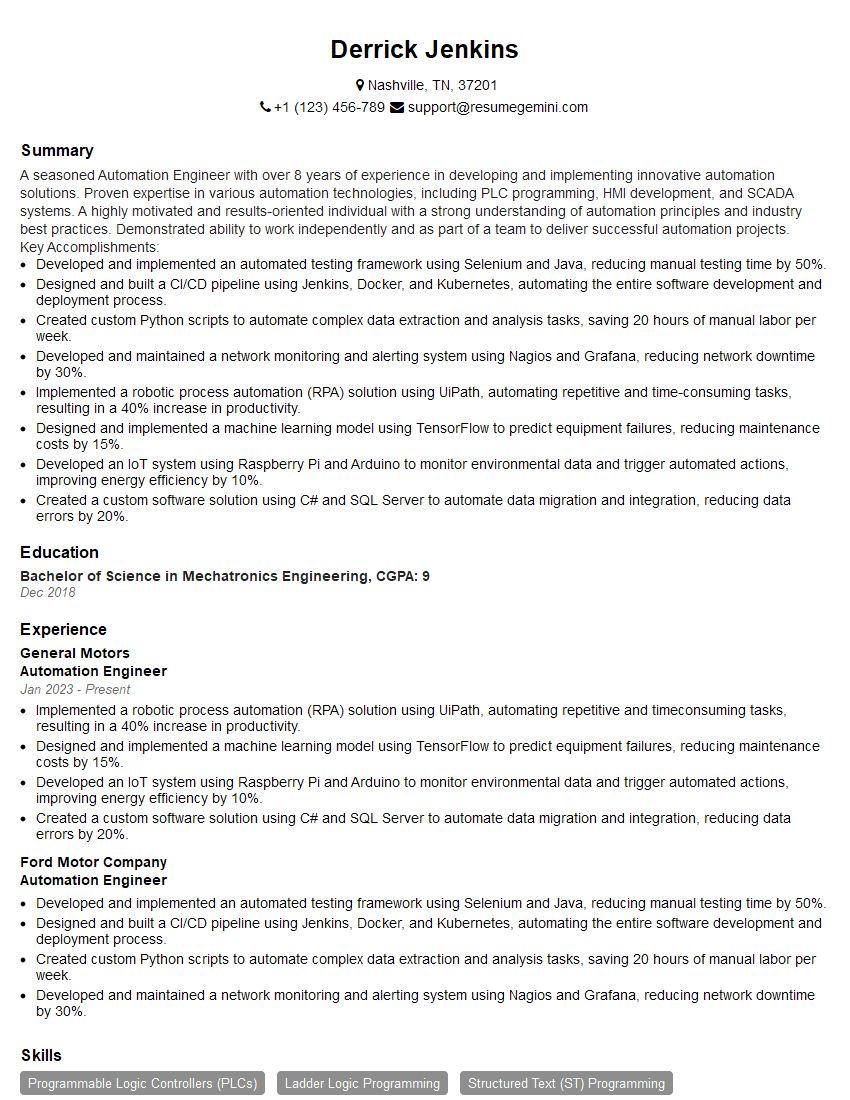
Automation Engineer Resume Sample
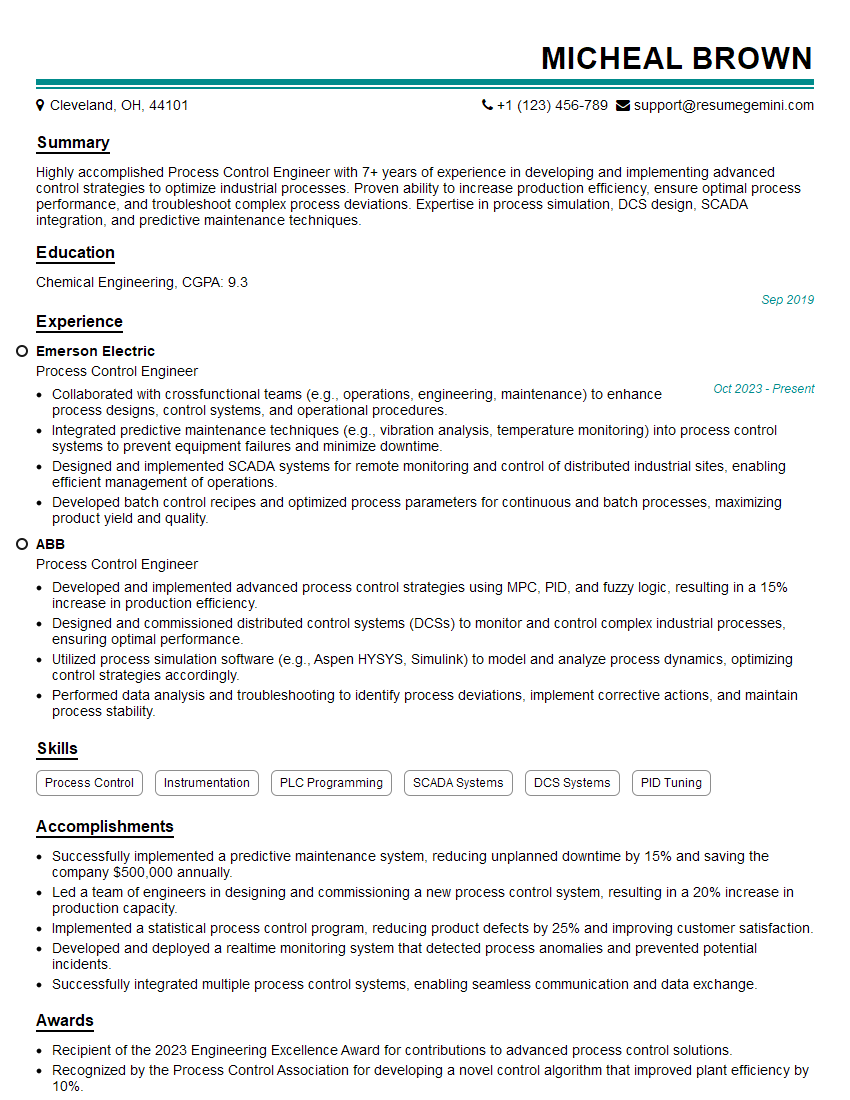
Process Control Engineer Resume Sample
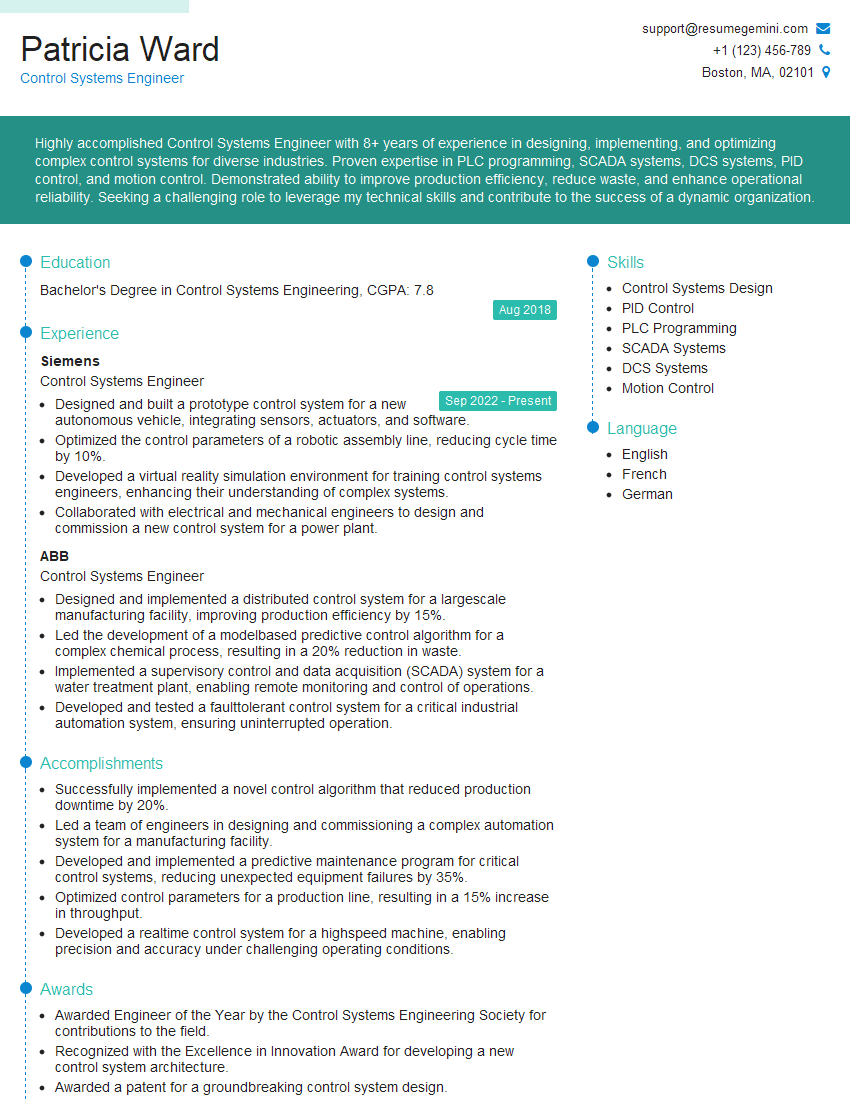
Control Systems Engineer Resume Sample
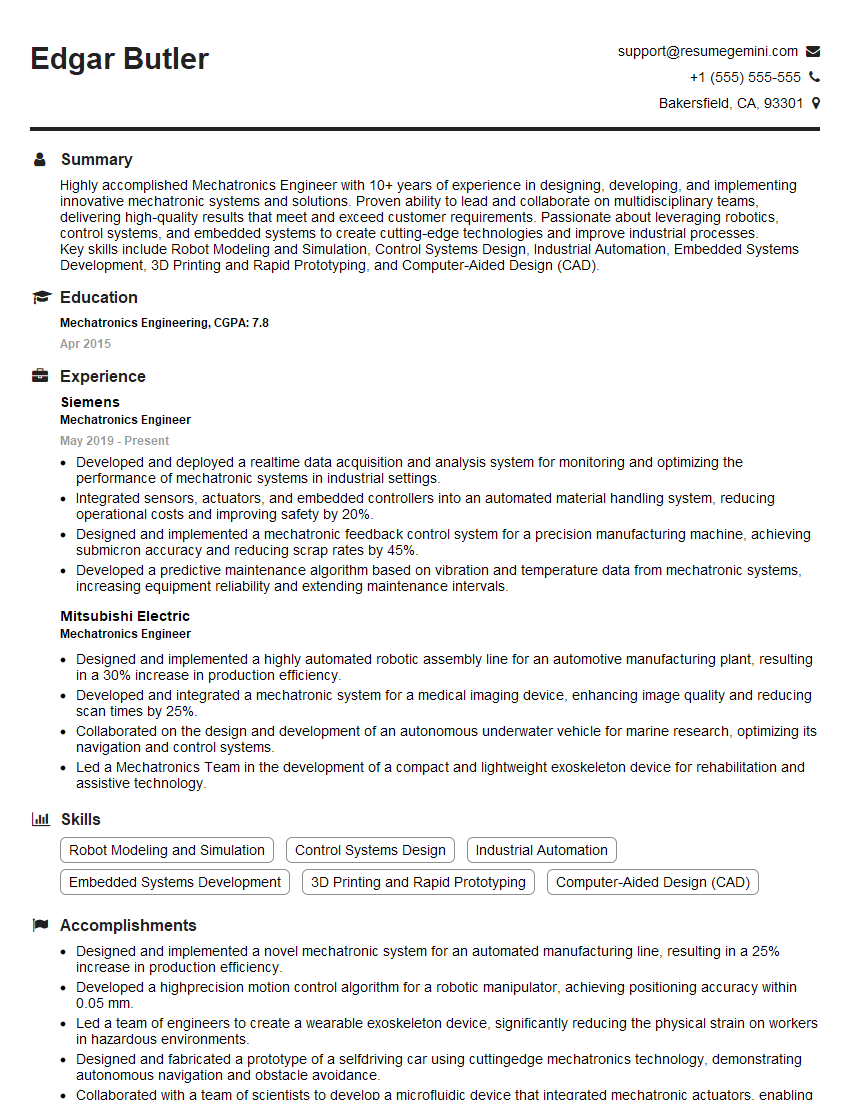
Mechatronics Engineer Resume Sample
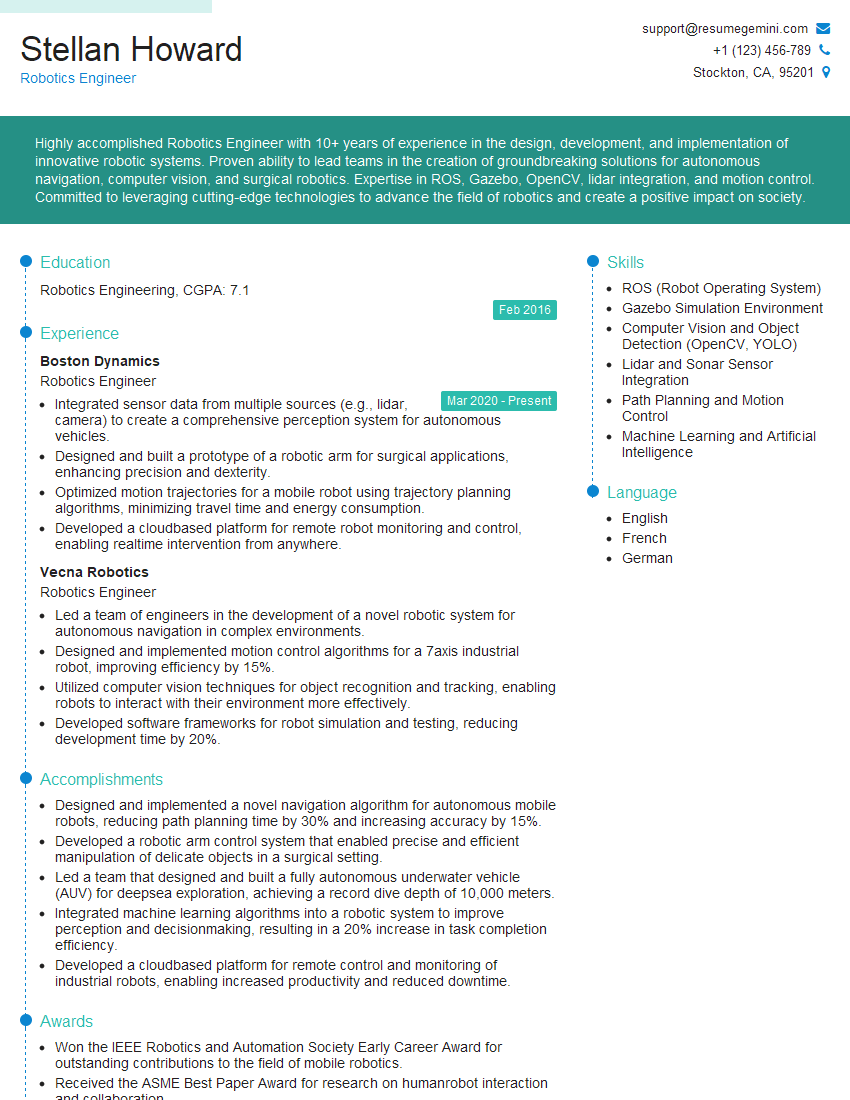
Robotics Engineer Resume Sample
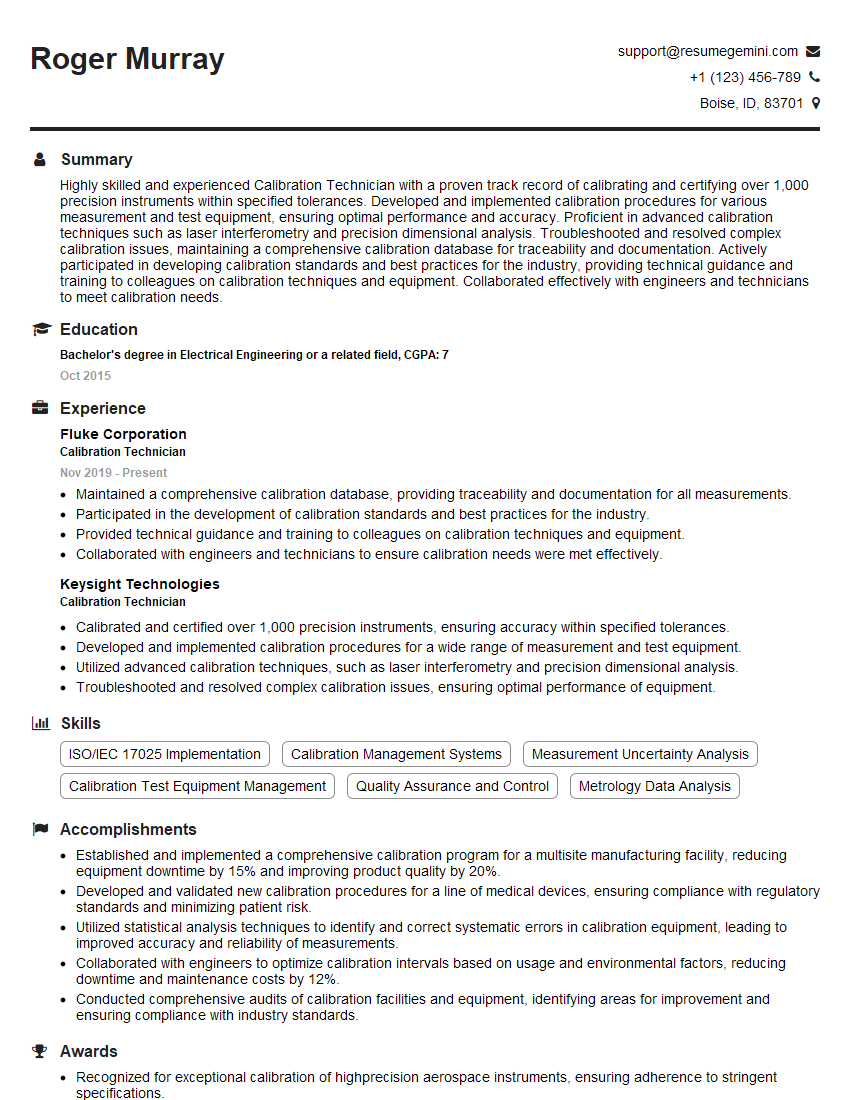
Calibration Technician Resume Sample
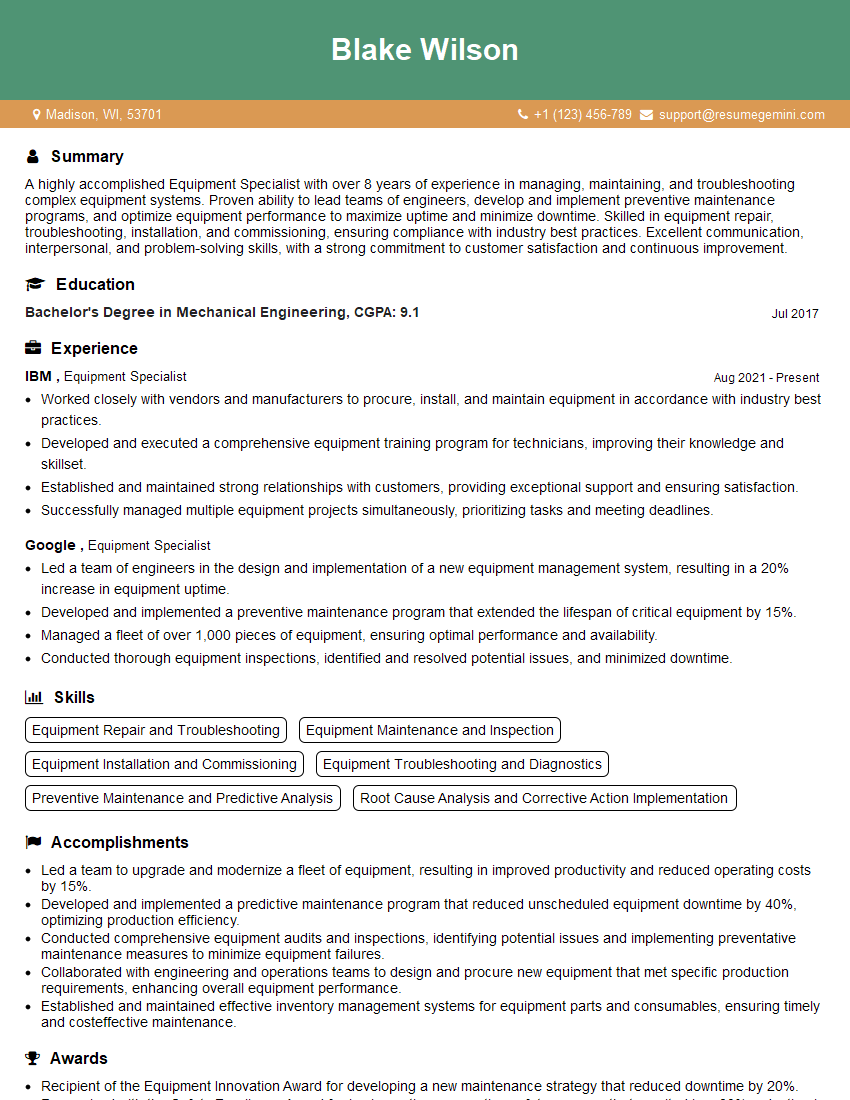
Equipment Specialist Resume Sample
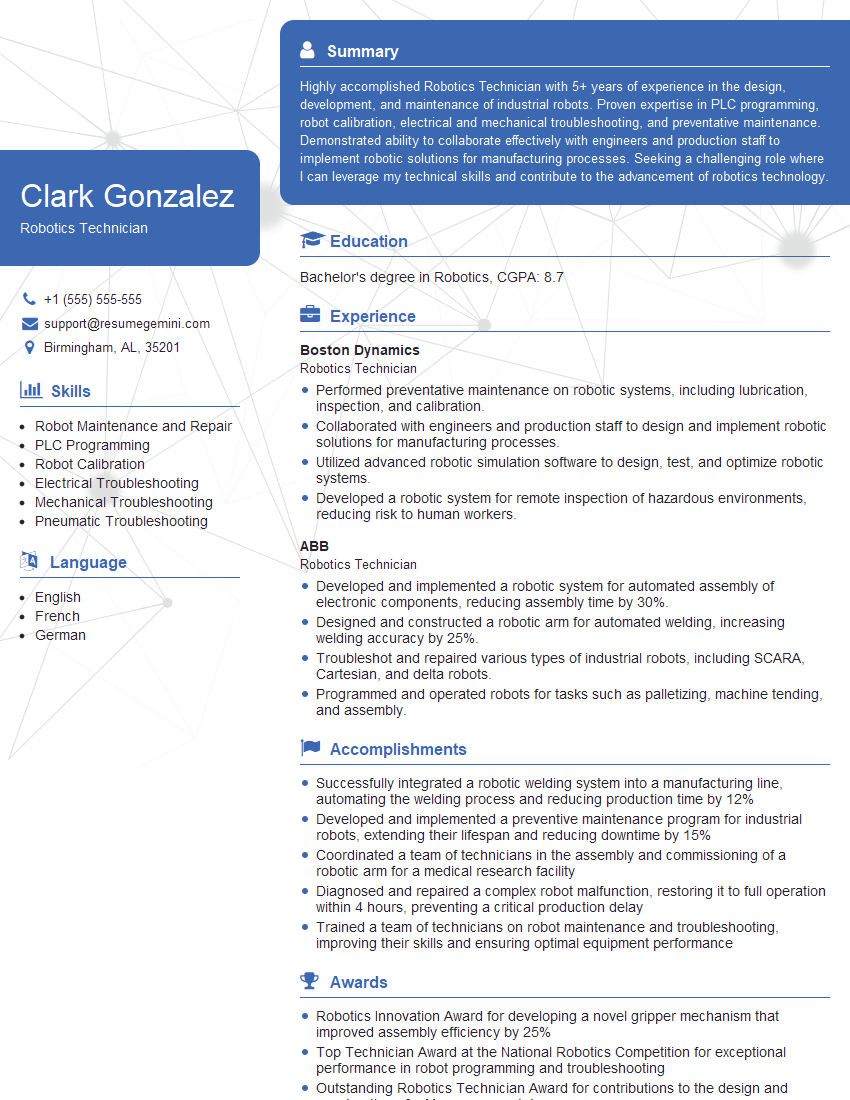
Robotics Technician Resume Sample
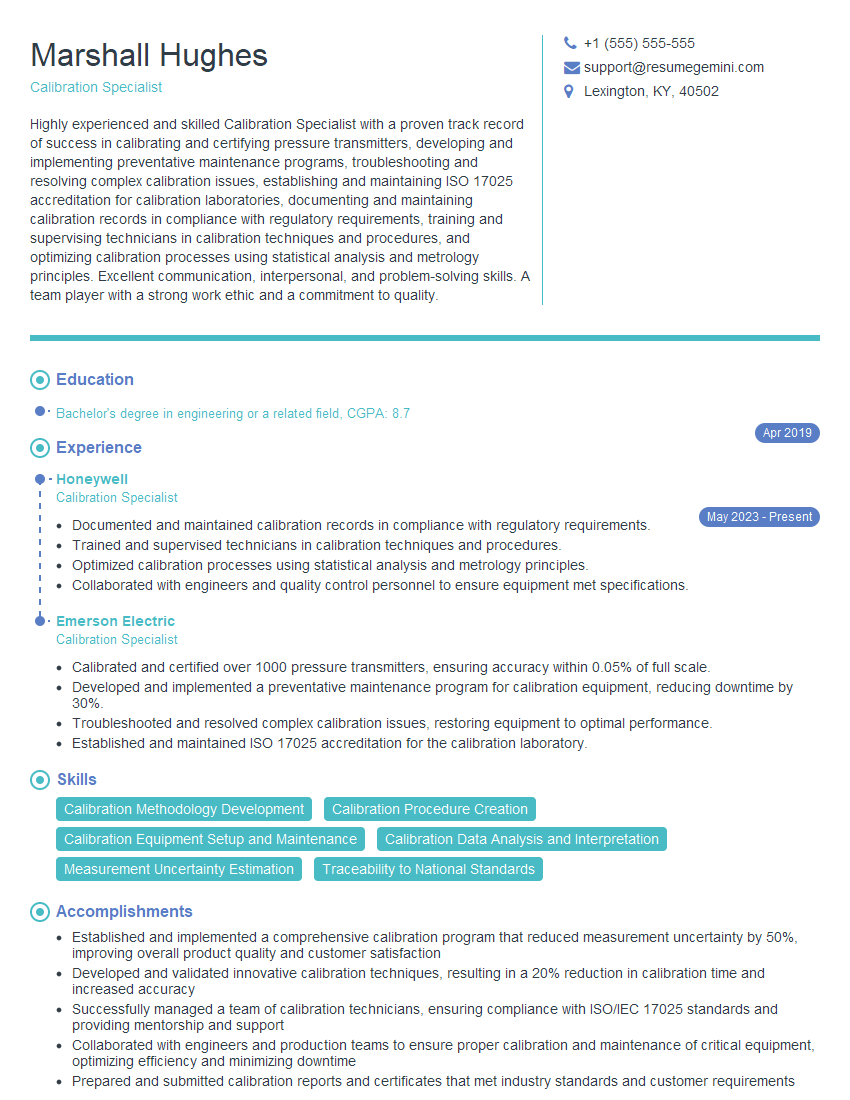
Calibration Specialist Resume Sample
Explore more articles
Users Rating of Our Blogs
Share Your Experience
We value your feedback! Please rate our content and share your thoughts (optional).
What Readers Say About Our Blog
Very informative content, great job.
good