Feeling uncertain about what to expect in your upcoming interview? We’ve got you covered! This blog highlights the most important Mooring and Berthing interview questions and provides actionable advice to help you stand out as the ideal candidate. Let’s pave the way for your success.
Questions Asked in Mooring and Berthing Interview
Q 1. Describe the different types of mooring systems.
Mooring systems are crucial for securing vessels in place, whether alongside a pier or at anchor. They vary greatly depending on the vessel size, location, and environmental conditions. Broadly, they can be categorized as follows:
- Anchoring Systems: These are used primarily for offshore mooring, employing anchors (e.g., Danforth, Bruce, or plow anchors) coupled with mooring lines that connect to the vessel. The number and type of anchors depend on the vessel’s size, environmental forces, and seabed conditions. For example, a large tanker in a hurricane-prone area would necessitate a complex system of multiple anchors and heavy-duty chains.
- Berthing Systems: These systems are used for securing vessels alongside piers, quays, or other structures. They typically employ mooring lines (made of synthetic materials like nylon or polyester) attached to bollards, cleats, or other fixed points on the structure. Fenders are an integral part of berthing systems, protecting both the vessel and the structure from damage during berthing operations.
- Single Point Mooring (SPM) Systems: SPMs are designed for efficient and safe mooring of large vessels, especially in deep waters or challenging environments. They utilize a single floating buoy or structure connected to the seabed by a mooring line system. The vessel connects to this central point, allowing it to weather changes in wind and current direction effectively. These are commonly seen in offshore oil and gas operations.
- Mooring Buoys: These are simpler systems where a floating buoy with attached lines is used to secure smaller vessels. They’re often used in marinas or sheltered areas.
The choice of mooring system is a critical design decision and requires careful consideration of many factors including vessel characteristics, environmental conditions, and operational requirements.
Q 2. Explain the process of securing a vessel alongside a pier.
Securing a vessel alongside a pier is a delicate process requiring careful planning and execution. Here’s a step-by-step overview:
- Approach: The vessel approaches the pier slowly and steadily, ideally with the assistance of tugboats if necessary. The captain must account for wind, current, and other vessels in the area.
- Line Handling: As the vessel nears the pier, the crew prepares the mooring lines. These are typically arranged in a forward and aft configuration, providing control and stability. Heaving lines (thin lines used to initially bring the mooring lines to the pier) are used first to extend the main lines.
- Making Fast: The lines are then secured to bollards or cleats on the pier. This process involves carefully taking up the slack, ensuring the lines are taut but not overly strained. Each line should be passed around bollards, then secured, typically with a round turn and two half-hitches.
- Fenders: Fenders are placed between the vessel’s hull and the pier to absorb impacts and prevent damage. Their placement is crucial in preventing friction and damage during the process.
- Final Adjustments: Once the main lines are secured, further lines may be added to improve stability, and the vessel is carefully positioned against the pier. The crew continually monitors the lines and adjusts them as needed to account for changes in tide or wind.
- Gangway: Once the vessel is secure, a gangway is deployed to allow safe passage between the ship and the pier.
Imagine it like parking a large car—precision and coordination are key, and a lack of care can result in damage.
Q 3. What are the safety precautions involved in mooring operations?
Safety is paramount in mooring operations. Failure to adhere to safety precautions can lead to serious accidents, injuries, and property damage. Key safety measures include:
- Risk Assessment: A thorough risk assessment of the specific situation before commencing any mooring operation is vital. This considers environmental factors (wind, currents, sea state), vessel characteristics, and the experience level of the crew.
- Proper Communication: Clear and concise communication between the bridge, deck crew, and anyone else involved (tugboat crews, pier personnel) is essential. Use of standardized terminology and hand signals are critical.
- Personal Protective Equipment (PPE): Crew members must wear appropriate PPE, including safety helmets, gloves, and high-visibility clothing. Life jackets should be readily available and worn where deemed necessary.
- Line Handling Techniques: Proper line handling techniques must be followed to avoid getting entangled or injured. Never use hands or fingers near a tightening line. Use line handling gloves and appropriate tools.
- Emergency Procedures: All personnel involved should be familiar with emergency procedures in case of line failure, vessel movement, or any other unexpected event. Designated emergency response procedures and crew training are necessary.
- Weather Monitoring: Continuously monitor weather conditions and adjust operations as necessary to mitigate risks associated with changing weather.
A strong safety culture, regular training, and clear communication protocols are indispensable for reducing risks and ensuring the safe execution of mooring operations.
Q 4. How do you calculate the required number of mooring lines?
Calculating the required number of mooring lines is not a simple formula but a judgment call based on several factors. There’s no single equation, but a careful analysis is required. Key factors to consider include:
- Vessel Size and Weight: Larger and heavier vessels obviously require more lines for secure mooring.
- Environmental Conditions: Strong winds and currents necessitate more lines and potentially stronger lines than calmer conditions.
- Location and Configuration: The type of berth, the presence of protection from wind and waves, and the distance between the vessel and the pier affect the necessary lines.
- Line Strength and Type: The material and diameter of the mooring lines directly impacts the number of lines required. Stronger lines can reduce the total number required.
- Berthing Arrangement: Whether the vessel is berthing alongside or using a stern-to arrangement changes line placement and quantity.
Generally, it’s better to have more lines than necessary, ensuring sufficient redundancy. Experienced mooring masters use their judgment based on years of experience and past events. Often, computer modeling or software tools are used for complex situations, especially in the design of offshore mooring systems.
Q 5. What are the factors to consider when selecting a mooring location?
Selecting a suitable mooring location is crucial for the safety and efficiency of operations. The factors to consider are multifaceted:
- Water Depth and Bottom Conditions: Sufficient water depth is essential to prevent grounding. The type of seabed (rock, mud, sand) also influences anchor selection and holding power.
- Protection from Wind and Waves: A sheltered location minimizes the forces acting on the vessel, reducing the risk of damage and simplifying mooring operations.
- Proximity to Services: The chosen location should provide easy access to essential services such as fuel, water, supplies, and maintenance facilities.
- Navigation and Access: Safe and easy access for the vessel and other vessels is paramount. Clear channels and sufficient maneuvering space are necessary.
- Environmental Considerations: Mooring locations must adhere to environmental regulations and minimize potential impacts on marine ecosystems. Potential issues such as damage to sensitive habitats or water pollution must be carefully considered.
- Security: Security considerations can influence location choice for high-value vessels or sensitive cargo.
The process of selecting a mooring location often involves a detailed survey and risk assessment by marine professionals.
Q 6. Describe the challenges of mooring in strong winds and currents.
Mooring in strong winds and currents presents significant challenges, increasing the risk of damage to the vessel and the mooring infrastructure. The increased forces demand:
- Increased Number of Mooring Lines: More lines are needed to distribute the loads and improve overall stability.
- Stronger Mooring Lines: Lines with higher breaking strength are required to withstand the greater tension.
- Proper Line Tensioning: Careful monitoring and adjustment of line tension is vital to prevent lines from snapping under stress.
- Use of Additional Aids: In extreme conditions, auxiliary systems like tugboats may be necessary to maintain vessel position and control.
- Increased Crew Vigilance: Constant monitoring of the mooring lines and the vessel’s position is essential. Crew members need to be prepared to react quickly to any changes in conditions.
- Potential for Vessel Swinging: The vessel may experience significant swinging or movement; planning for such movement is important.
Think of it as trying to hold onto a kite in a gale – significant strength and dexterity are required, and even then, control can be difficult.
Q 7. Explain the use of fenders in berthing operations.
Fenders are essential components in berthing operations, acting as shock absorbers to protect both the vessel and the pier or structure from damage. They are strategically placed between the vessel’s hull and the structure to minimize impact forces during berthing and unberthing. Fenders are designed to absorb energy by compressing, thus preventing friction and reducing the likelihood of damage to either the vessel or the structure.
Different types of fenders exist, including:
- Pneumatic Fenders: These are inflatable rubber fenders, offering good energy absorption and flexibility.
- Foam Fenders: These are made of high-density foam, providing excellent energy absorption and a long lifespan.
- Hurdles: These fenders are often made of wooden or metal structures and are designed to protect larger vessels.
The correct type and size of fender are chosen based on the vessel’s size, weight, and berthing conditions. Improper fender selection or placement can lead to substantial damage during contact.
Imagine fenders as large, compliant cushions—preventing harsh impacts between a steel ship and a concrete structure.
Q 8. How do you handle a mooring line that parts during berthing?
A parting mooring line during berthing is a serious incident requiring immediate and decisive action. The first priority is safety – ensuring no one is injured and preventing further damage to the vessel or the dock.
My procedure would be:
- Assess the situation: Immediately determine which line parted, the extent of the damage, and the vessel’s immediate drift. Is the vessel drifting towards anything dangerous?
- Communicate: Alert the bridge, tug boats (if present), and harbor authorities. Clear and concise communication is crucial.
- Take immediate action: If possible and safe, use remaining lines to control the vessel’s movement. Engage the engines to counteract the drift. If the drift is significant, I’d call for assistance from tugs.
- Secure the vessel: Once the immediate danger is mitigated, I’d work to secure the vessel using alternative mooring arrangements or by shifting to a different berth if necessary.
- Damage assessment and repair: After securing the vessel, a thorough inspection of the damaged line, its fittings, and associated equipment would be conducted to determine the cause of failure and plan repairs. This will involve documenting the incident for insurance and investigation purposes.
- Post-incident review: Finally, a post-incident review would analyze what happened, identify any shortcomings in procedures or equipment, and implement necessary corrective actions to prevent future occurrences.
For example, during a berthing operation of a large container vessel, a forward spring line parted due to a faulty shackle. We immediately used the remaining aft spring and breast lines to control the drift while contacting the harbor master and requesting tug assistance. The vessel was safely secured, the damage assessed, and the faulty shackle replaced, avoiding a costly collision.
Q 9. What are the different types of berthing aids?
Berthing aids are essential equipment that facilitates safe and efficient mooring and berthing operations. They significantly reduce the risk of damage to vessels and quays. Different types cater to various vessel sizes and port conditions. These include:
- Docks and wharves: These are the primary berthing structures.
- Piles and dolphins: These are robust structures used for mooring in open water.
- Fender systems: These are crucial for absorbing the impact of the vessel against the dock, preventing damage. Types include pneumatic, rubber, and roller fenders.
- Mooring bollards and cleats: Strong, fixed points on the quay used to secure mooring lines.
- Mooring buoys: Floating buoys used to secure vessels in open water.
- Spuds: Heavy, vertical piles driven into the seabed to provide additional mooring points.
- Tug boats: These provide extra assistance during berthing and unberthing operations, especially with large vessels in challenging conditions.
The selection of berthing aids depends on several factors including the vessel size and type, the port’s infrastructure, and environmental conditions (e.g., tides, currents, and wind).
Q 10. Describe the procedure for releasing a vessel from its moorings.
Releasing a vessel from its moorings, often termed ‘unberthing,’ is a carefully planned and executed operation that requires precise coordination. The procedure is broadly as follows:
- Pre-departure checks: Verify all systems are ready for departure. Confirm the lines are correctly secured and personnel are in place.
- Communication: Inform the port authority, tug boats (if used), and relevant personnel of the intended departure time and plan.
- Line handling: Slacken mooring lines slowly and systematically, starting from the lines furthest from the planned direction of departure. This minimizes stress on the remaining lines and the vessel’s hull.
- Engine use: Maneuver the vessel gently using its engines to maintain control throughout the unberthing process. Use the engines to maintain the vessel’s position and counteract any drift.
- Tug assistance: If necessary, use tug boats to assist with maneuvering the vessel clear of the berth.
- Line casting off: Once clear of the berth and maintaining control, cast off the remaining mooring lines.
- Departure: Proceed to the designated route, ensuring that all necessary clearances are obtained.
For instance, unberthing a tanker involves a more complex procedure due to its size and the potential hazards associated with its cargo. Close coordination with tugs is essential to navigate any tight spaces and strong currents.
Q 11. How do you assess the suitability of a mooring location?
Assessing the suitability of a mooring location requires a thorough evaluation of several factors to ensure the safety and efficiency of the mooring operation. Key considerations include:
- Water depth: Sufficient depth is crucial to ensure the vessel doesn’t ground.
- Bottom conditions: A stable seabed (e.g., sand or clay) is preferable to avoid anchoring difficulties.
- Currents and tides: Strong currents or tidal ranges can impact mooring operations, requiring stronger lines or additional support.
- Wind exposure: The location’s exposure to prevailing winds should be considered.
- Proximity to obstructions: The area should be free from obstructions like rocks, reefs, or other vessels.
- Navigational considerations: The location must allow for safe access and departure.
- Environmental factors: Protecting the environment from potential damage caused by the mooring process must be accounted for.
For example, when selecting a mooring location for a cruise ship, we would carefully analyze the water depth, currents, the proximity to other vessels, and the presence of any underwater obstructions to ensure a secure and safe berthing experience.
Q 12. What are the legal and regulatory requirements for mooring and berthing?
Mooring and berthing operations are subject to a range of legal and regulatory requirements, primarily focused on safety and environmental protection. These vary depending on location but typically include:
- Port regulations: Specific regulations are set by port authorities concerning berthing procedures, line handling, and safety measures.
- Maritime safety regulations: International and national maritime regulations (e.g., SOLAS, IMO) apply to vessel safety and operational procedures.
- Environmental regulations: Regulations are in place to protect the marine environment from pollution caused by vessels, including discharge of waste and prevention of oil spills.
- Licensing and certification: Personnel involved in mooring operations may require specific licenses and certifications (e.g., line handling certification).
- Insurance requirements: Appropriate insurance coverage is necessary to cover potential liabilities and damages.
Non-compliance can result in fines, suspension of operations, and even criminal charges in case of serious incidents. Regular audits and safety training are vital to ensure full compliance.
Q 13. Explain the importance of communication in mooring operations.
Effective communication is absolutely paramount during mooring operations. Miscommunication can lead to accidents and damage. It’s the cornerstone of a safe and efficient operation.
Clear communication involves:
- Pre-defined communication protocols: Establishing clear and concise communication procedures before any operation starts.
- Use of standardized terminology: Employing standard maritime terms and signals to avoid confusion.
- Multiple communication channels: Utilizing various methods (e.g., VHF radio, hand signals, visual aids) to ensure redundancy and reach all personnel.
- Regular updates: Providing frequent updates on progress, challenges, and potential risks.
- Confirmation of instructions: Requiring confirmation of instructions received to avoid misunderstandings.
- Post-operation debriefing: Conducting a post-operation debrief to analyze communication effectiveness and identify areas for improvement.
For example, during a night-time berthing operation, utilizing hand signals along with VHF radio ensures that everyone involved understands the required manoeuvres. This avoids any misunderstanding in the dark and reduces the risk of accidents.
Q 14. Describe your experience with different types of vessels (e.g., tankers, container ships).
My experience encompasses a broad range of vessel types, each presenting unique challenges and requiring specific mooring techniques.
- Tankers: I’ve worked extensively with various tanker sizes, from smaller product tankers to VLCCs (Very Large Crude Carriers). Mooring these vessels requires careful consideration of the cargo’s properties and potential environmental risks. The emphasis is on preventing spills and maintaining structural integrity during the mooring process.
- Container ships: My experience with container ships includes vessels ranging from feeders to megaships. The sheer size and weight of these vessels necessitates meticulous planning and precise execution. Efficient mooring is crucial for maximizing cargo handling efficiency.
- Cruise ships: I’ve worked with several cruise ships, understanding their operational needs and the importance of passenger safety and comfort. Mooring these vessels requires careful coordination to minimize disruption to passenger activities.
- Other vessels: My expertise also extends to other types of vessels, including bulk carriers, RoRo ships, and ferries, each with specific mooring requirements.
The ability to adapt my skills and knowledge to various vessel types is a key element of my competency. Each vessel presents its own set of complexities, and experience with varied vessel types is invaluable for handling a variety of mooring situations effectively and safely.
Q 15. How do you manage risk during mooring and berthing operations?
Risk management in mooring and berthing is paramount. It’s a multi-faceted process that begins with thorough planning and extends through meticulous execution and post-operation review. We employ a layered approach, incorporating several key strategies:
- Pre-operation Risk Assessment: This involves analyzing potential hazards like weather conditions (wind speed, waves, currents), vessel characteristics (size, draft, stability), port infrastructure limitations (berth capacity, fendering), and crew competency. We use checklists and risk matrices to identify potential failure points and their likelihood.
- Contingency Planning: Developing clear procedures for handling various emergencies, from equipment failure to sudden weather changes. This includes pre-assigned roles and responsibilities for the crew and communication protocols with shore-side personnel.
- Communication & Teamwork: Clear, concise, and timely communication is vital. This involves establishing effective communication channels between the bridge, deck crew, and shore-side personnel. Regular briefings and debriefings ensure everyone is informed and working towards a common goal.
- Regular Maintenance & Inspections: All mooring equipment (lines, chains, winches, anchors) undergoes regular inspection and maintenance according to strict schedules to prevent failures. This reduces the likelihood of unexpected problems during crucial operations.
- Use of Technology: We utilize advanced tools like dynamic positioning systems (DPS) for improved vessel control during maneuvering and mooring, and weather forecasting software for informed decision-making.
- Post-operation Review: Analyzing the entire operation to identify areas for improvement. This could involve lessons learned from near misses or actual incidents to refine procedures and further reduce risks. For example, if a mooring line chafed, the post-operation review would analyze the cause and implement better line handling techniques or protection measures.
Career Expert Tips:
- Ace those interviews! Prepare effectively by reviewing the Top 50 Most Common Interview Questions on ResumeGemini.
- Navigate your job search with confidence! Explore a wide range of Career Tips on ResumeGemini. Learn about common challenges and recommendations to overcome them.
- Craft the perfect resume! Master the Art of Resume Writing with ResumeGemini’s guide. Showcase your unique qualifications and achievements effectively.
- Don’t miss out on holiday savings! Build your dream resume with ResumeGemini’s ATS optimized templates.
Q 16. What are the common causes of mooring failures?
Mooring failures can stem from various causes, often originating from a combination of factors rather than a single point of failure. Here are some of the most common causes:
- Equipment Failure: This includes problems with mooring lines (snapping, chafing, deterioration), anchors (dragging, fouling), or winches (mechanical malfunction, power failure). Regular inspections and maintenance are crucial to mitigate this risk.
- Environmental Factors: Unexpected severe weather (high winds, strong currents, heavy seas) can overload mooring systems, leading to line breakage or anchor drag. Accurate weather forecasting and contingency planning are essential.
- Human Error: Inadequate training, poor communication, mistakes during line handling, improper use of equipment, or failure to follow procedures can lead to failures. Rigorous training, effective communication protocols, and clear procedures are vital.
- Improper Mooring Arrangement: An insufficient number of mooring lines, incorrect line tension, or inappropriate placement of lines can create weak points in the system. Proper planning and consideration of the vessel’s characteristics and the berth’s geometry are vital.
- Vessel-Specific Factors: A vessel’s condition (e.g., hull damage, stability issues), cargo distribution, or inadequate structural integrity can influence the stresses on the mooring system.
For instance, a case I encountered involved a mooring line failure due to unnoticed chafing against a rusty bollard. The regular inspection had missed this detail, highlighting the importance of thoroughness in preventative maintenance.
Q 17. How do you use weather forecasts to plan mooring operations?
Weather forecasting plays a crucial role in planning mooring operations. We rely on reliable sources like meteorological services and specialized maritime weather forecasting apps. The information gathered helps us make informed decisions about the timing and method of mooring, and also allows for contingency planning.
Before any operation, we analyze forecasts for several parameters including:
- Wind Speed and Direction: High winds can make maneuvering and securing the vessel difficult and increase the load on mooring lines.
- Wave Height and Period: Large waves can cause excessive vessel motion, making it challenging to secure lines and increasing the risk of damage.
- Currents: Strong currents can influence the vessel’s position and exert additional forces on the mooring lines.
- Visibility: Poor visibility can significantly impact safe maneuvering and line handling.
Based on the forecast, we determine the optimal time for mooring, select appropriate mooring lines and equipment, and develop contingency plans for changing weather conditions. For example, if strong winds are expected, we may opt for additional mooring lines or adjust the line tension accordingly. If a severe storm is anticipated, we may postpone the operation entirely until conditions improve.
Q 18. Explain your experience with using mooring winches and capstans.
My experience with mooring winches and capstans is extensive, encompassing various types and sizes. I’m proficient in their operation, maintenance, and troubleshooting. I’ve worked with hydraulic, electric, and manual systems on vessels ranging from small yachts to large tankers.
My responsibilities have included:
- Safe Operation: Ensuring correct procedures are followed during all winch and capstan operations to avoid accidents and damage.
- Maintenance and Inspections: Regularly inspecting and maintaining winches and capstans to ensure they are in good working order. This includes lubrication, checking brake systems, and identifying any potential problems.
- Troubleshooting: Diagnosing and resolving mechanical or electrical problems that arise during operation. This often involves understanding the hydraulic or electric systems powering the equipment.
- Training: Training junior crew members in the safe and proper use of winches and capstans.
For example, during a recent berthing operation, a hydraulic winch malfunctioned. My experience allowed me to quickly diagnose the issue—a leak in a hydraulic line—and implement a temporary fix using available spares. This prevented significant delays and ensured the operation’s completion without incident.
Q 19. Describe your experience with various mooring equipment (e.g., anchors, chains, ropes).
My experience encompasses a wide range of mooring equipment, including various types of anchors, chains, and ropes. I am familiar with the strengths, limitations, and appropriate applications of each.
- Anchors: I have worked with different anchor types, including stockless, mushroom, and fluke anchors, understanding their holding power in various seabed conditions. The selection depends on the seabed type (rock, mud, sand) and the expected environmental loads. A stockless anchor is preferable in rocky bottoms.
- Chains: I am familiar with the properties of different chain grades (e.g., stud link, short link) and their strengths, ensuring proper selection based on vessel size and environmental conditions. Regular inspections are crucial to detect any signs of wear and tear, particularly at the links near the shackle.
- Ropes: Experience with various rope materials (e.g., nylon, polyester, wire) and their respective strengths, elasticity, and suitability for specific applications. Nylon is often preferred for its elasticity, while wire ropes offer higher strength but less flexibility. The choice depends on the load, the environment (e.g., UV exposure), and the intended use.
One memorable experience involved assessing the condition of aging mooring lines on an aging vessel. I determined that several lines had exceeded their service life and needed replacement, preventing a potentially catastrophic failure.
Q 20. How do you handle emergencies during mooring operations?
Emergency response during mooring operations is crucial. Our procedures emphasize quick, decisive action based on a well-rehearsed plan.
Steps involved include:
- Immediate Assessment: Rapid assessment of the emergency situation to understand the nature of the problem (e.g., line breakage, equipment failure, sudden change in weather). This also involves identifying any immediate threats to personnel and the vessel.
- Emergency Procedures: Implementation of pre-defined emergency procedures. This includes activating emergency communication channels, securing loose equipment, and ensuring the safety of the crew.
- Damage Control: Taking immediate steps to control the situation and mitigate further damage. This may involve securing the vessel using alternative mooring arrangements, repairing damaged equipment (if feasible), or calling for external assistance.
- Communication: Maintaining effective communication with the bridge, deck crew, and shore-side personnel to coordinate response efforts.
- Post-Incident Analysis: After the emergency has subsided, a thorough analysis of the incident is conducted to identify the root cause, implement corrective actions, and prevent similar events in the future.
For example, during a severe squall, a mooring line parted. We immediately followed our emergency procedures, securing the vessel using remaining lines and informing the harbor authorities. This prevented any significant damage and ensured the safety of the crew and the vessel.
Q 21. What are the environmental considerations for mooring and berthing?
Environmental considerations are increasingly important in mooring and berthing operations. We aim to minimize our impact on the marine environment through various practices:
- Prevention of Pollution: Implementing measures to prevent oil spills and other forms of pollution. This includes regular inspections of the vessel’s hull and machinery, proper disposal of waste, and the use of oil spill containment equipment.
- Protection of Marine Life: Avoiding damage to sensitive marine habitats and minimizing disturbance to marine life during mooring and berthing operations. This can involve careful selection of mooring locations, and minimizing noise and light pollution.
- Sustainable Mooring Practices: Employing sustainable mooring equipment and techniques, such as using biodegradable mooring lines and anchors designed to minimize seabed disturbance.
- Compliance with Regulations: Adherence to all relevant environmental regulations and guidelines. This involves obtaining necessary permits and approvals, and submitting required reports.
For example, we avoid anchoring in sensitive areas like coral reefs, selecting alternative mooring locations that have minimal environmental impact. We also actively participate in initiatives to clean up marine debris found during operations. Environmental responsibility isn’t just a ‘nice-to-have’, but is vital for sustainable shipping.
Q 22. Explain your understanding of tidal effects on mooring operations.
Tidal effects significantly impact mooring operations because they cause variations in water levels, affecting the length and tension of mooring lines. Imagine a boat tied to a dock – at high tide, the lines are slacker, and at low tide, they are taut. This change in tension can be substantial, especially in areas with significant tidal ranges. Understanding tidal predictions is crucial for planning mooring operations. We need to account for the changing water levels when calculating the appropriate length of mooring lines to prevent over-tensioning or slackness, which can lead to damage to the vessel or mooring equipment, or even cause the vessel to break free.
For example, if we’re mooring a large vessel in a location with a 6-meter tidal range, we must ensure our lines are long enough to accommodate this variation. We might use adjustable mooring lines or deploy additional lines at different stages of the tide to maintain optimal tension. Failing to account for this could result in damage to the vessel’s hull or the dock infrastructure.
Furthermore, strong tidal currents can add another layer of complexity. These currents can exert considerable force on the vessel, requiring us to use stronger lines and potentially adjust our mooring strategy to compensate for the additional dynamic load. Proper tidal prediction and current analysis are integral parts of safe and effective mooring operations.
Q 23. How do you ensure the safety of personnel during mooring operations?
Safety of personnel is paramount in mooring operations. We achieve this through a multi-layered approach that begins with thorough risk assessment and planning. This includes careful consideration of environmental conditions (wind, waves, currents), the vessel’s characteristics, and the equipment being used. We always utilize appropriate Personal Protective Equipment (PPE) including safety helmets, life jackets, and high-visibility clothing.
Clear communication is key. Before starting any operation, a comprehensive briefing is conducted, ensuring everyone understands their roles, responsibilities, and the safety procedures. We use hand signals and radios for clear and efficient communication, especially in noisy environments. A designated safety officer oversees the operation, monitoring for any hazards and enforcing safety protocols.
Proper training and competency are also essential. All personnel involved are thoroughly trained in safe mooring procedures, including the use of equipment like winches and shackles. Regular drills and refresher courses ensure that everyone remains proficient and prepared to handle unexpected situations. Finally, we maintain a strict adherence to the company’s safety rules and regulations.
Q 24. What are the limitations of different mooring systems?
Different mooring systems have unique strengths and limitations. For instance, chain mooring systems are incredibly strong and durable, ideal for heavy vessels in exposed locations. However, they are bulky, expensive, and require significant storage space.
Nylon or polypropylene rope systems are lighter, more flexible, and easier to handle than chains. They offer good shock absorption but are susceptible to abrasion and UV degradation, limiting their lifespan in harsh conditions.
Mooring systems incorporating a combination of chain and rope (chain for the anchor, rope for the running line) attempt to leverage the advantages of each material. But, even these hybrid systems are not without drawbacks; the connection points between the materials can be a potential weak point.
Ultimately, the choice of mooring system depends on several factors including the vessel type, the environmental conditions, the duration of the mooring, and the budget. A careful analysis of these factors is critical to selecting the most appropriate and safe system.
Q 25. Describe your experience with different types of berthing maneuvers.
My experience encompasses a range of berthing maneuvers, including alongside berthing, breasting-in, bow-in, and stern-in approaches. Alongside berthing, the most common type, involves coming alongside a quay or another vessel and securing the vessel using fenders, mooring lines, and possibly breast lines.
Breasting-in involves approaching the berthing structure at a slight angle, using fenders to protect the hull. Bow-in and stern-in maneuvers are more challenging, often requiring more precise handling and engine control to accurately position the vessel.
I’ve successfully executed these maneuvers using various vessel types, from small yachts to large cargo ships, adapting my technique to the specific characteristics of each vessel and the prevailing environmental conditions. Factors like wind, currents, and the available space within the berth all influence the execution of these maneuvers. Accurate judgment, communication, and precise control of the vessel are paramount to a safe and efficient berthing operation.
Q 26. How do you work effectively as part of a mooring team?
Effective teamwork is the cornerstone of successful mooring operations. It starts with clear and concise communication. We use a combination of verbal commands, hand signals, and radio communication to ensure everyone understands their roles and the overall plan. I believe in fostering a collaborative environment where everyone feels comfortable contributing ideas and expressing concerns.
Respect for each team member’s expertise and experience is crucial. Mooring teams often consist of individuals with specialized skills, such as deckhands, mates, and sometimes even pilots. Leveraging these diverse skill sets is essential for efficiency and safety. We work in a coordinated manner; anticipating each other’s actions, and assisting each other as needed. Pre-planning and conducting regular team briefings before operations further enhance coordination. A team that works well together is much safer and more effective than one that isn’t.
Q 27. Describe a challenging mooring situation you have encountered and how you overcame it.
During a heavy storm in a congested port, a vessel I was assisting lost primary mooring lines. High winds and strong waves caused the vessel to start drifting dangerously close to another ship. The situation was extremely challenging due to the limited space and the severity of the weather.
My immediate response was to prioritize safety, ensuring all personnel were secured and out of harm’s way. Then, I worked with the team to quickly assess the situation and deploy emergency mooring lines, using a combination of ropes and available equipment. We needed to act swiftly and decisively given the rapidly deteriorating conditions. Communication was critical; we used a combination of hand signals and radio calls to effectively direct the crew. The damaged lines had to be carefully removed first, to prevent further entanglement and accidental damage.
We were able to successfully secure the vessel and prevent a collision. This experience highlighted the importance of rapid response, clear communication, and the ability to think critically and make sound judgments under pressure.
Q 28. Explain your knowledge of different knotting techniques used in mooring.
Various knotting techniques are employed in mooring, each suited to specific needs. The most common include the bowline (a strong, easily untied loop), the clove hitch (a quick and easy knot for securing a line around a bollard or piling), and the figure-eight knot (used as a stopper knot to prevent a line from running through a block).
The choice of knot depends on the line material (rope or chain), the type of fitting it is attached to, and the expected load. A poorly tied knot can lead to line failure and potentially serious incidents.
Beyond these basic knots, more specialized knots might be used, such as the rolling hitch for creating a loop around a standing part of a line. It’s crucial for a mooring specialist to have a comprehensive understanding of these various knotting techniques and to be proficient in their execution.
Key Topics to Learn for Mooring and Berthing Interview
- Vessel Handling Techniques: Understanding different mooring techniques (e.g., breast lines, spring lines, head lines) and their applications in various weather conditions and vessel types. Consider the practical implications of using different types of mooring equipment.
- Berthing Procedures: Mastering safe and efficient berthing procedures, including pre-berthing planning, communication protocols, and the role of crew members. Think about how to handle unexpected situations like strong currents or limited space.
- Mooring Equipment and Systems: Familiarize yourself with various mooring equipment (winches, shackles, fenders) and their maintenance. Understanding the functionality and limitations of different mooring systems is crucial.
- Safety Regulations and Procedures: Thorough knowledge of relevant safety regulations, emergency procedures, and risk assessment related to mooring and berthing operations. Be prepared to discuss specific safety protocols and their importance.
- Environmental Considerations: Understanding the environmental impact of mooring and berthing operations and the best practices for minimizing potential harm. This includes awareness of pollution prevention and responsible waste management.
- Navigation and Piloting Aspects: Understanding the role of navigation and piloting in safe and effective mooring and berthing. This includes knowledge of chart reading, tide calculations, and use of navigational aids.
- Problem-Solving and Decision-Making: Prepare to discuss scenarios requiring quick thinking and decisive action in challenging berthing situations. Highlight your ability to assess risks and make informed decisions under pressure.
Next Steps
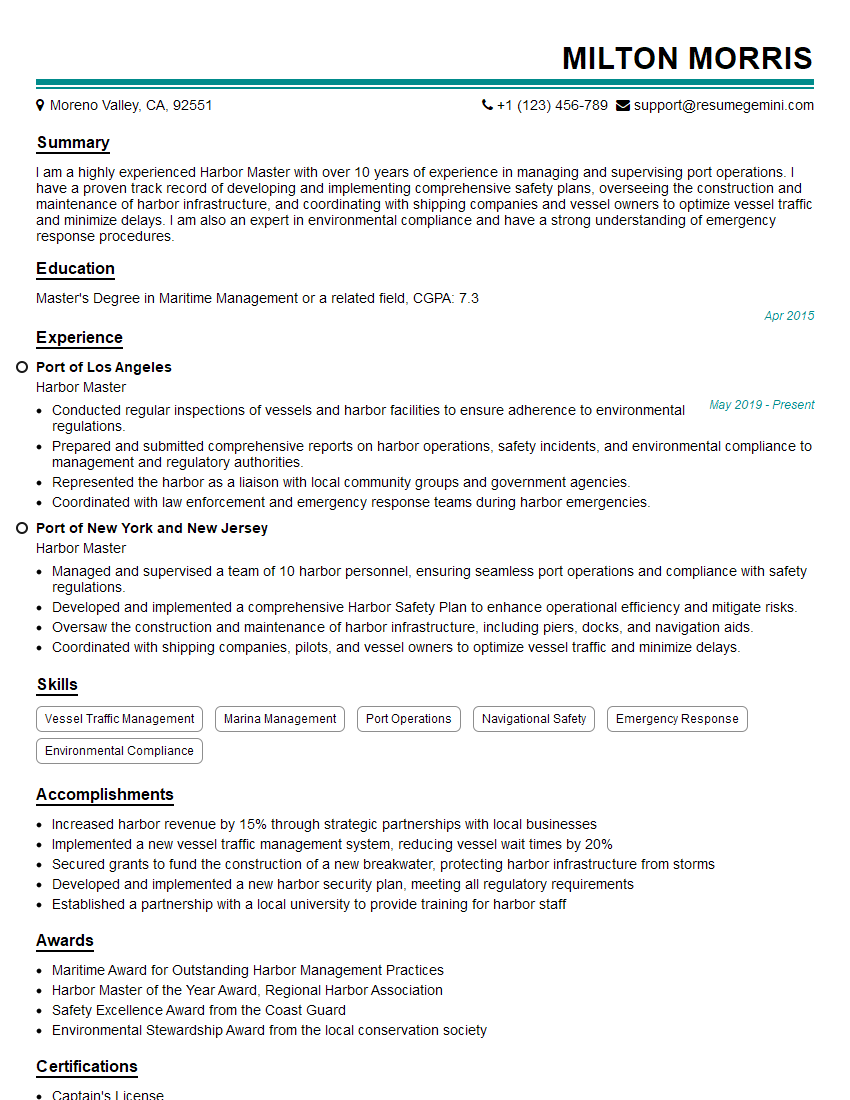
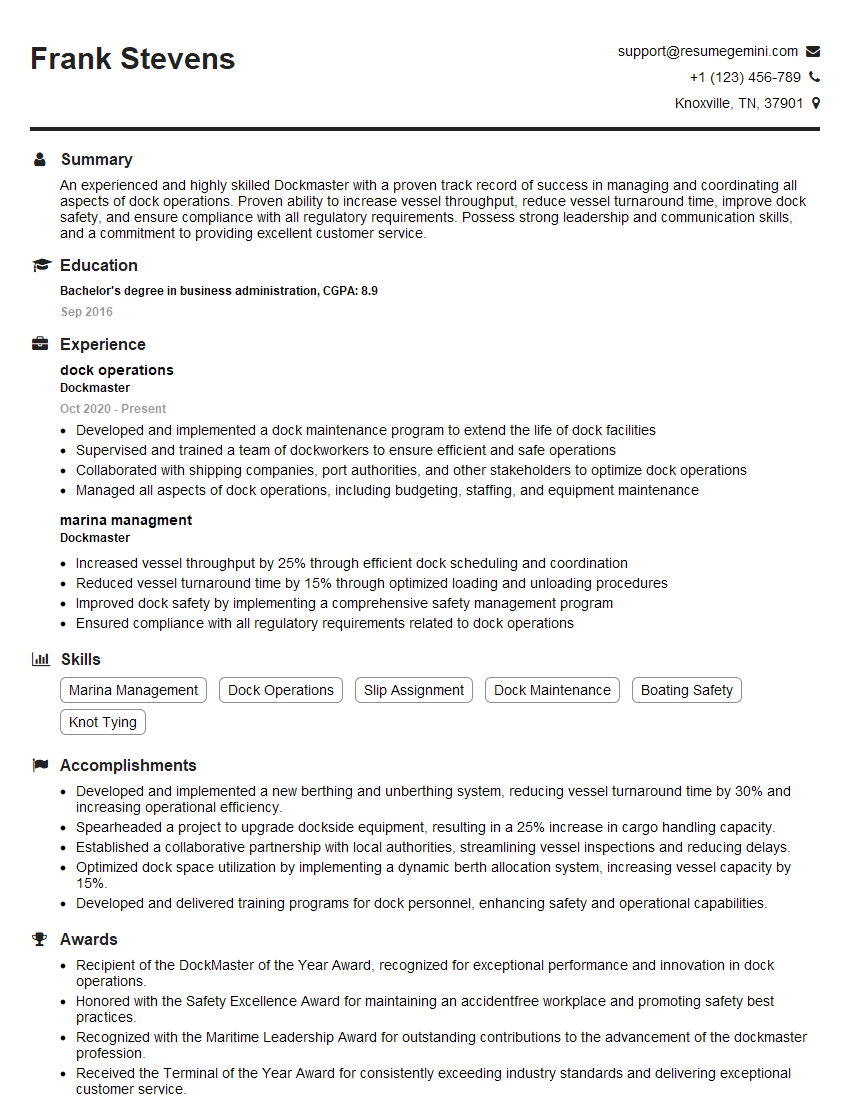
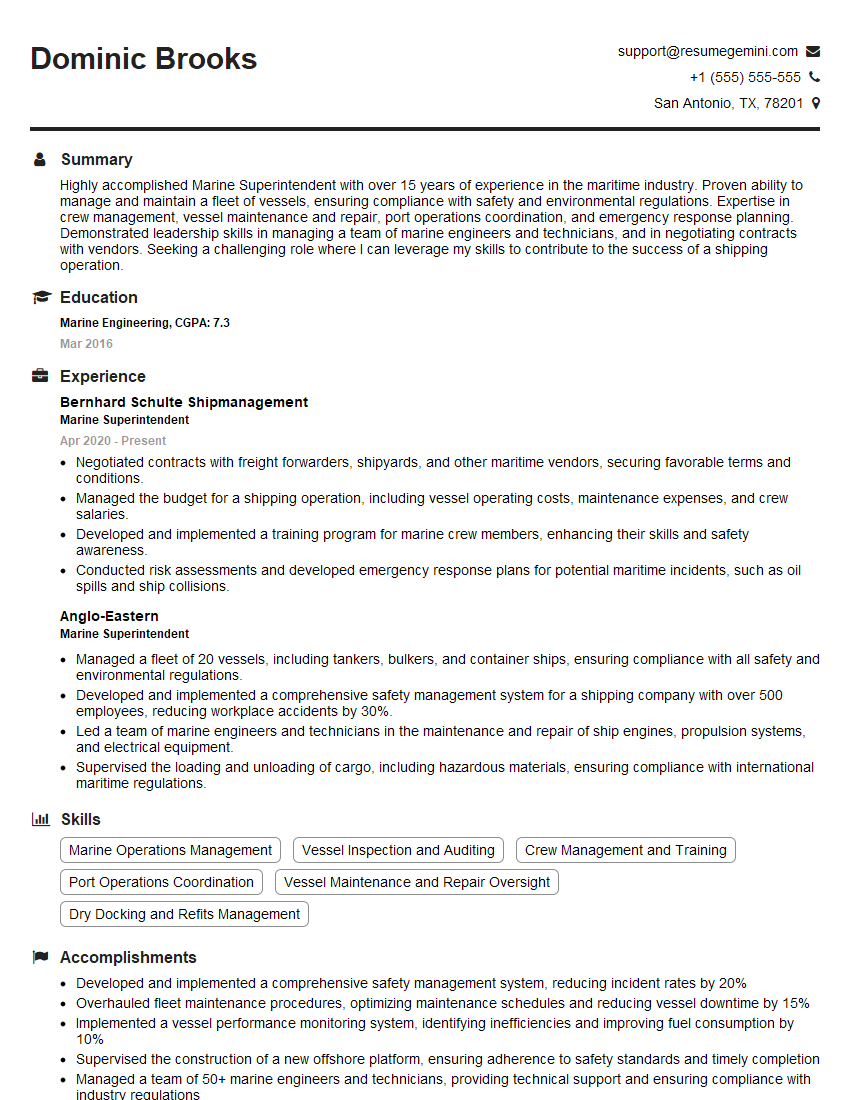
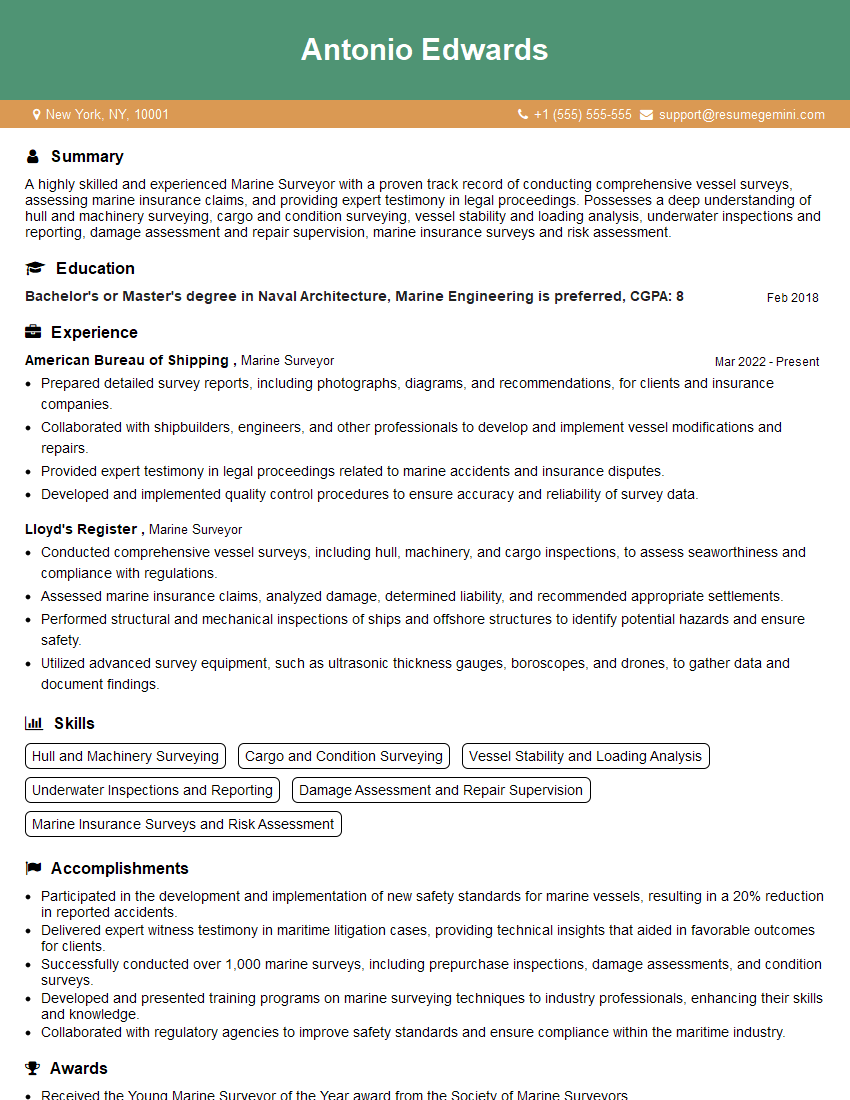
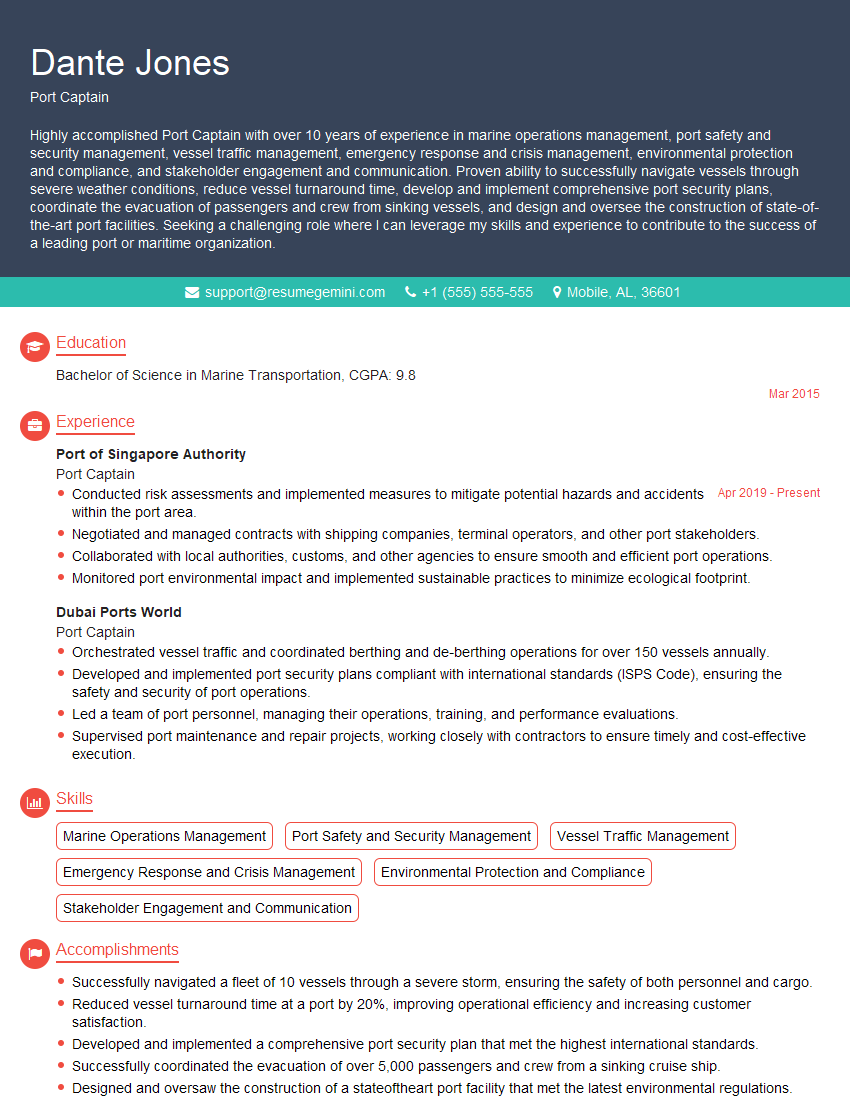
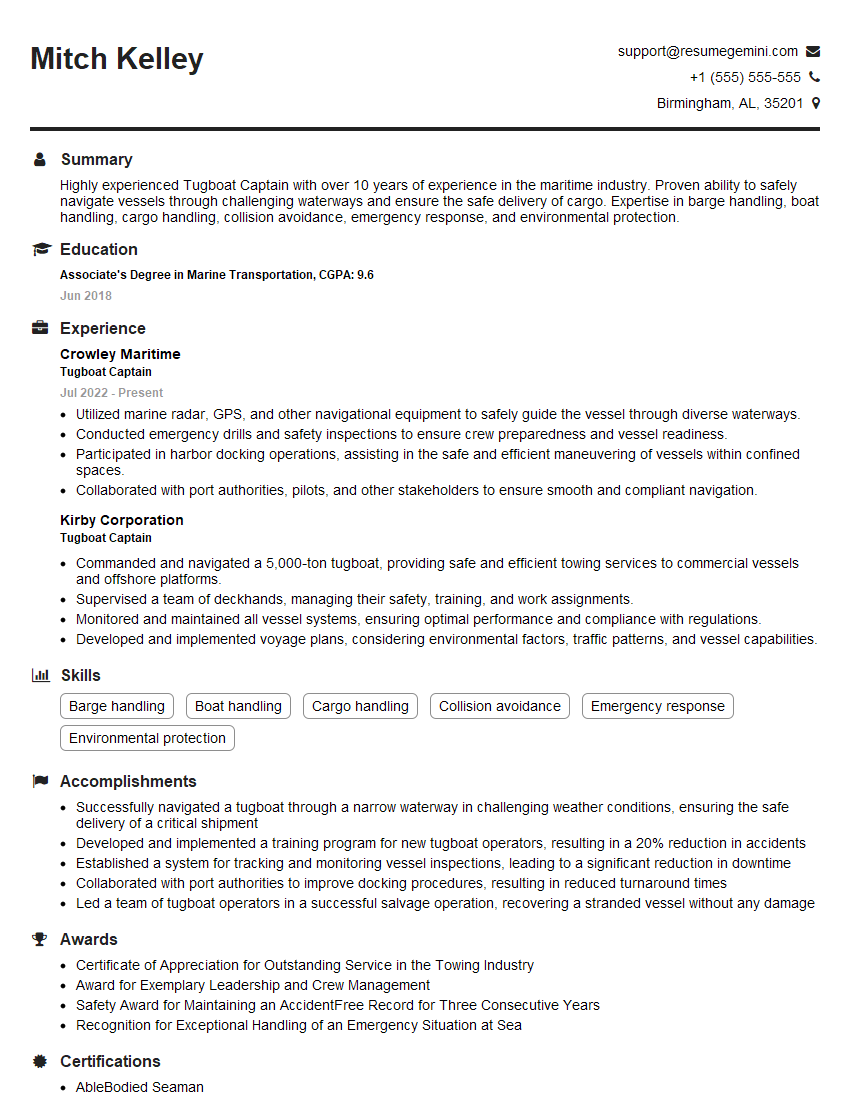
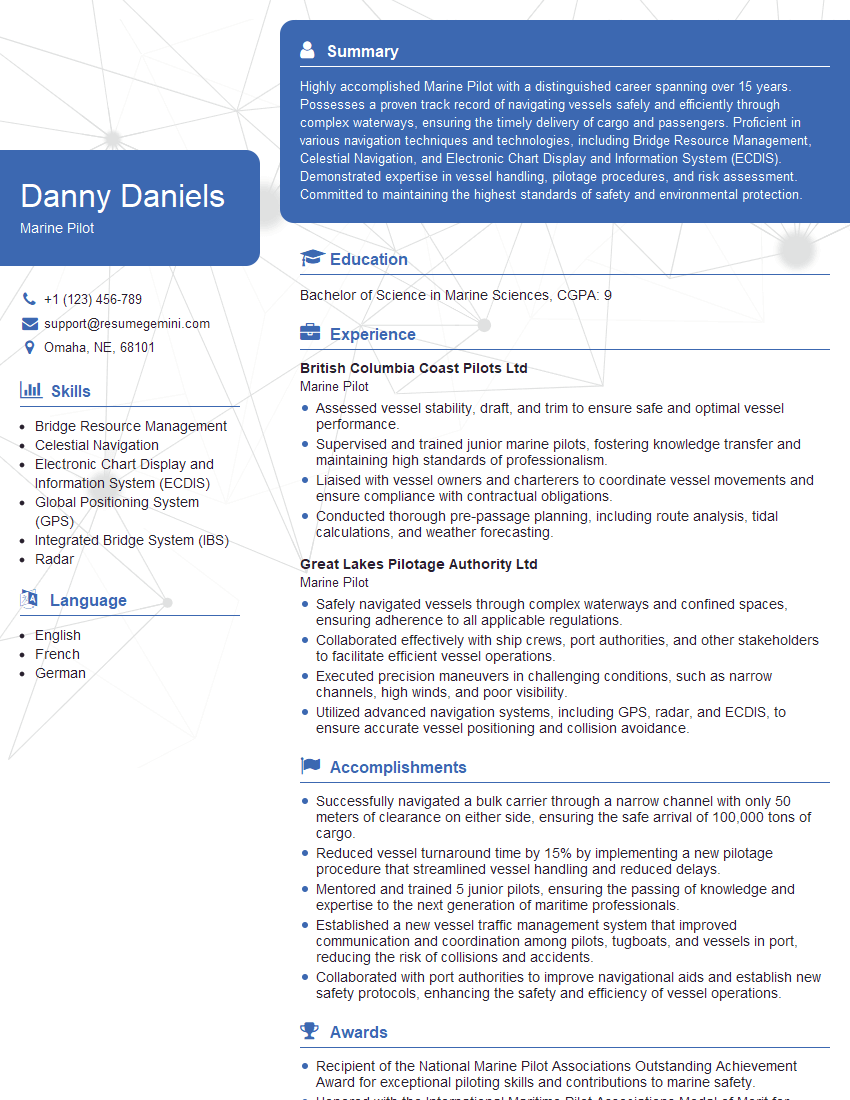
Mastering mooring and berthing techniques is crucial for career advancement in the maritime industry. It demonstrates a high level of skill and responsibility, opening doors to more challenging and rewarding roles. To maximize your job prospects, it’s essential to create an ATS-friendly resume that highlights your qualifications effectively. ResumeGemini is a trusted resource to help you build a professional and impactful resume. Use ResumeGemini to craft a compelling narrative that showcases your expertise. Examples of resumes tailored to Mooring and Berthing are available to guide you through this process.
Explore more articles
Users Rating of Our Blogs
Share Your Experience
We value your feedback! Please rate our content and share your thoughts (optional).
What Readers Say About Our Blog
Very informative content, great job.
good