Preparation is the key to success in any interview. In this post, we’ll explore crucial Coin Manipulation interview questions and equip you with strategies to craft impactful answers. Whether you’re a beginner or a pro, these tips will elevate your preparation.
Questions Asked in Coin Manipulation Interview
Q 1. Explain the concept of market manipulation in the cryptocurrency market.
Market manipulation in the cryptocurrency market, like in traditional finance, involves artificially influencing the price of a cryptocurrency to profit from the resulting price swings. This is often done deceptively, aiming to create a false sense of market activity or price trend. Imagine a group of individuals coordinating to buy a coin, driving up the price, and then selling it off at a higher price, leaving other unsuspecting investors holding the bag. This creates an unfair advantage and undermines the integrity of the market.
Q 2. Describe different techniques used in coin manipulation.
Coin manipulation employs various techniques, many exploiting the decentralized nature of crypto. Some common methods include:
- Wash Trading: Creating artificial volume by buying and selling the same cryptocurrency between multiple accounts controlled by the manipulator. This gives the illusion of high trading activity and price legitimacy.
- Spoofing: Placing large buy or sell orders to create a false impression of market demand, influencing other traders’ decisions, then canceling the orders before execution. This is essentially setting a ‘trap’.
- Pump and Dump: Coordinating a group to artificially inflate a coin’s price (the ‘pump’) before simultaneously selling off their holdings (the ‘dump’), leaving others with depreciated assets.
- Fake News and Social Media Manipulation: Spreading false or misleading information online to influence investor sentiment and drive price movements. Think coordinated social media campaigns or fake news articles promoting a specific coin.
- Layer-2 Manipulation: Targeting less liquid markets or decentralized exchanges (DEXs) which can be more susceptible to manipulation due to lower trading volume and less regulatory oversight.
Q 3. How do wash trading and spoofing impact market prices?
Wash trading artificially inflates trading volume, giving the impression of high demand and potentially driving up the price. However, this price increase is not based on genuine market forces, making it unsustainable. Think of it as inflating a balloon with air – it looks bigger, but it’s not truly more valuable.
Spoofing manipulates the order book, creating a deceptive picture of supply and demand. Large buy orders might trick others into buying, pushing the price up. Once the spoofed orders are cancelled, the price can plummet, allowing the manipulator to buy at a lower price or sell at a higher one. It’s like baiting a trap to catch unsuspecting investors.
Q 4. What are the legal and ethical implications of coin manipulation?
Coin manipulation has severe legal and ethical implications. Legally, it often violates securities laws prohibiting market manipulation and fraud. Depending on the jurisdiction and the scale of the manipulation, penalties can range from hefty fines to imprisonment. Ethically, it’s a blatant breach of trust and fairness. It undermines the very foundation of a fair and transparent market, harming innocent investors and eroding confidence in the cryptocurrency ecosystem.
Many jurisdictions are actively developing regulations to combat this, but the decentralized nature of crypto makes enforcement a challenge.
Q 5. Explain the role of order book analysis in identifying manipulative activities.
Order book analysis is crucial for detecting manipulative activities. By examining the order book – a list of buy and sell orders at various prices – analysts can identify patterns inconsistent with genuine market behavior. For instance, large sudden orders followed by immediate cancellations are a red flag for spoofing. Unusual order flow, such as a disproportionate number of trades at a specific price level, could indicate wash trading. Sophisticated algorithms are used to detect these anomalies, comparing actual order book data against historical patterns and expected behavior. This is like studying a crime scene to find clues of suspicious activity.
Q 6. How can blockchain analysis be used to detect coin manipulation?
Blockchain analysis plays a vital role in detecting coin manipulation. By examining the transaction history on the blockchain, investigators can trace the flow of cryptocurrency between addresses, identifying clusters of addresses controlled by a single manipulator. Analysis of transaction values, timestamps, and relationships between addresses can reveal patterns consistent with wash trading, pump-and-dump schemes, or other manipulative tactics. This is akin to forensic accounting, using the blockchain’s immutable ledger to uncover hidden connections and activities.
Q 7. Describe the challenges in detecting and preventing wash trading.
Detecting and preventing wash trading presents significant challenges. The decentralized nature of cryptocurrencies makes it difficult to track and identify all transactions. Sophisticated wash trading techniques can mask the manipulative activity, making it hard to distinguish from legitimate trading. Furthermore, the sheer volume of transactions on major exchanges makes manual analysis impractical. Even sophisticated algorithms struggle with identifying wash trading when it’s cleverly executed. The constant evolution of manipulation techniques further compounds the problem, requiring continuous improvement in detection methods and regulatory frameworks.
Q 8. What are the key indicators of pump-and-dump schemes?
Pump-and-dump schemes are a classic form of market manipulation, particularly prevalent in the cryptocurrency market. They involve artificially inflating (pumping) the price of an asset through coordinated buying, often fueled by hype and misinformation, followed by a rapid sell-off (dumping) by the manipulators, leaving unsuspecting investors with significant losses.
- Sudden and significant price increases: A rapid, unnatural surge in price, often exceeding typical market volatility, is a strong indicator.
- High trading volume accompanying the price surge: A large volume of trades confirms the coordinated buying activity.
- Suspicious social media activity: A coordinated campaign across various platforms promoting the coin, often using exaggerated claims and fake news, is a common tactic.
- Lack of fundamental value: The coin itself may lack any substantial underlying value or utility, rendering the price increase entirely artificial.
- Rapid price collapse after the pump: Once the manipulators have sold their holdings, the price plummets, wiping out the gains of those who bought in during the pump.
For example, imagine a small-cap cryptocurrency with little real-world application experiences a sudden 1000% price increase in a single day, accompanied by an explosion of positive posts on Twitter and Telegram, only to crash dramatically the following day. This is a highly suspicious scenario and a classic case of a pump-and-dump scheme.
Q 9. How do you identify manipulative trading patterns using technical indicators?
Identifying manipulative trading patterns using technical indicators requires a nuanced understanding of both the indicators themselves and the overall market context. While no single indicator definitively proves manipulation, certain patterns can raise red flags.
- Volume spikes without price confirmation: A huge surge in trading volume without a corresponding significant price movement can suggest wash trading (trading between related accounts to create artificial volume).
- Unusual candlestick patterns: Certain candlestick patterns, like unusually large single-candle bodies or unusual doji formations occurring at significant price levels, can indicate manipulation attempts.
- Divergence between price and indicators: A discrepancy between price action and the signals from indicators like RSI or MACD, especially during periods of unusually high volume, might hint at artificial price movements.
- Order book manipulation: Analyzing the order book (the list of buy and sell orders) can reveal large hidden orders that are suddenly filled, suggesting coordinated buying or selling activity.
It’s crucial to note that relying solely on technical indicators is insufficient. A holistic analysis, combining technical data with fundamental analysis and an assessment of social media activity, provides a more complete picture.
Q 10. Explain the concept of price manipulation through social media manipulation.
Social media manipulation is a powerful tool used to artificially inflate or deflate the price of a cryptocurrency. Manipulators leverage the inherent volatility of the crypto market and the susceptibility of retail investors to FOMO (fear of missing out) and FUD (fear, uncertainty, and doubt).
This often involves a coordinated effort to spread either extremely positive (pump) or negative (dump) narratives about a coin, using bots, fake accounts, and paid influencers. Positive narratives might include false endorsements from celebrities or promises of unrealistic returns, while negative narratives might involve spreading unfounded rumors about the project’s legitimacy or technology. The goal is to create a significant shift in market sentiment that drives trading activity in the desired direction.
For instance, imagine a coordinated campaign on Twitter and Telegram using numerous accounts promoting a little-known altcoin with exaggerated claims of its potential. This influx of positive information could spark a buying frenzy, leading to a temporary price surge. Once the manipulators have offloaded their holdings, the negative narrative begins, pushing the price back down.
Q 11. Discuss the role of artificial intelligence in detecting coin manipulation.
Artificial intelligence (AI) is rapidly transforming the detection of coin manipulation. AI algorithms, particularly machine learning models, can process vast quantities of data – including price data, trading volume, social media sentiment, and blockchain transactions – far more efficiently than humans. This allows for the identification of subtle patterns and anomalies that might indicate manipulative activity.
AI can analyze large datasets to identify unusual trading patterns, such as wash trading or spoofing (placing large orders to create a false impression of market depth, then canceling them). It can also analyze social media data to detect coordinated campaigns of misinformation or sentiment manipulation. By integrating various data streams, AI systems can create a comprehensive picture of market behavior and highlight suspicious activities.
Q 12. How can machine learning algorithms be used to predict manipulative activities?
Machine learning algorithms, a subset of AI, are particularly effective in predicting manipulative activities. By training models on historical data of both legitimate and manipulative trading behavior, we can create predictive models capable of identifying future instances of manipulation.
For example, a supervised learning algorithm could be trained on a dataset of past cryptocurrency price movements, labeled as either manipulative or legitimate. The algorithm learns to identify features (such as sudden volume spikes followed by price drops) that are highly correlated with manipulative activities. Once trained, the model can analyze real-time market data and predict the probability of manipulative behavior.
Unsupervised learning algorithms can also be useful. Techniques like anomaly detection can identify unusual patterns in trading data that deviate significantly from the norm, flagging these as potential instances of manipulation for further investigation.
Q 13. Explain the difference between legitimate trading strategies and manipulative tactics.
The key difference between legitimate trading strategies and manipulative tactics lies in their intent and impact on market integrity. Legitimate strategies aim to profit from market inefficiencies or perceived future price movements based on genuine analysis and risk assessment. Manipulative tactics, on the other hand, intentionally distort market prices and create artificial scarcity or abundance to profit at the expense of other market participants.
- Legitimate Strategies: These rely on fundamental and technical analysis, risk management, and long-term investment horizons. Examples include value investing, technical trading based on established indicators, or arbitrage.
- Manipulative Tactics: These involve actions like wash trading, spoofing, pump-and-dump schemes, and spreading misinformation to create artificial price swings. The goal is to unfairly profit from artificially induced price movements.
The crucial distinction is the intent. Legitimate strategies are driven by a genuine assessment of market dynamics, while manipulative tactics are designed to deceive and exploit other market participants.
Q 14. What are the regulatory frameworks governing coin manipulation?
Regulatory frameworks governing coin manipulation are still evolving, and vary significantly across jurisdictions. However, many existing securities laws and regulations are being applied or adapted to address manipulative activities in the cryptocurrency space.
For instance, laws prohibiting market manipulation and fraud are applicable, even if the underlying asset is not a traditionally regulated security. Regulatory bodies are increasingly focusing on anti-money laundering (AML) and know-your-customer (KYC) compliance in cryptocurrency exchanges to deter manipulative activities.
International cooperation is crucial, as cryptocurrency markets operate globally. Regulatory bodies are working together to establish common standards and enforcement mechanisms. However, the decentralized nature of cryptocurrencies presents significant challenges for regulation, and the legal landscape is still under development.
Q 15. Describe the impact of coin manipulation on market liquidity.
Coin manipulation, essentially artificially inflating or deflating a cryptocurrency’s price, severely impacts market liquidity. Liquidity refers to the ease with which an asset can be bought or sold without significantly affecting its price. Manipulation reduces liquidity by creating artificial price swings. Imagine a calm lake representing a liquid market; manipulation is like throwing a large rock into it, creating ripples (price volatility) that make it difficult to accurately assess the true value and trade effectively.
For instance, if a manipulator artificially inflates the price, buyers might hesitate, fearing a sudden crash. This reduces buying pressure, leading to lower trading volume and decreased liquidity. Conversely, artificially depressing the price scares off sellers, resulting in thin order books and illiquidity. This makes it difficult for legitimate investors to enter or exit the market at fair prices, potentially leading to significant losses.
- Reduced Trading Volume: Manipulative actions scare off legitimate traders, leading to thin order books.
- Increased Price Volatility: Artificial price swings make it hard to predict price movements, increasing risk for investors.
- Wider Bid-Ask Spreads: The difference between the buy and sell price widens, making trading more expensive and less efficient.
Career Expert Tips:
- Ace those interviews! Prepare effectively by reviewing the Top 50 Most Common Interview Questions on ResumeGemini.
- Navigate your job search with confidence! Explore a wide range of Career Tips on ResumeGemini. Learn about common challenges and recommendations to overcome them.
- Craft the perfect resume! Master the Art of Resume Writing with ResumeGemini’s guide. Showcase your unique qualifications and achievements effectively.
- Don’t miss out on holiday savings! Build your dream resume with ResumeGemini’s ATS optimized templates.
Q 16. How does coin manipulation affect investor confidence?
Coin manipulation severely erodes investor confidence. When investors witness blatant price manipulation, they lose trust in the market’s integrity and fairness. This distrust can lead to a mass exodus of investors, drying up liquidity and potentially causing a market crash. It’s like a broken promise; once trust is lost, it’s incredibly difficult to regain.
The impact goes beyond individual investors. It also discourages institutional investment, which is crucial for the long-term growth and stability of the cryptocurrency market. Institutional investors often have stricter risk management protocols and are less likely to participate in a market perceived as manipulated.
Examples include the various pump-and-dump schemes that have plagued the crypto space. These schemes, where manipulators artificially inflate the price before dumping their holdings, leave investors with significant losses and a deep sense of betrayal.
Q 17. Explain the role of exchanges in preventing coin manipulation.
Cryptocurrency exchanges play a crucial role in preventing coin manipulation. Their responsibilities include monitoring trading activity for suspicious patterns, implementing robust security measures, and cooperating with regulatory authorities. They are the gatekeepers of the market, and their actions directly impact market integrity.
- Surveillance Systems: Exchanges employ sophisticated algorithms and human oversight to detect unusual trading activity, such as wash trading (trading with oneself to artificially inflate volume), spoofing (placing large orders to manipulate the price and then canceling them), and layering (placing multiple orders at different price levels to create a false impression of market depth).
- Order Book Transparency: Providing a transparent order book allows investors to observe trading activity and identify potential manipulation attempts.
- Risk Management Policies: Exchanges implement rules and regulations designed to mitigate the risk of manipulation, including account monitoring, trade limits, and circuit breakers (temporary halts in trading to allow markets to stabilize).
- Cooperation with Regulators: Exchanges must cooperate with regulatory bodies to enforce market integrity and investigate suspicious activity.
However, even with these measures, completely eliminating manipulation is challenging, as sophisticated manipulators constantly find new ways to exploit market weaknesses.
Q 18. What are the best practices for mitigating the risks of coin manipulation?
Mitigating the risks of coin manipulation requires a multi-pronged approach involving investors, exchanges, and regulatory bodies. It’s a collective responsibility to ensure a fair and transparent market.
- Due Diligence: Investors should thoroughly research any cryptocurrency before investing, considering factors such as market capitalization, trading volume, and the project’s underlying technology. Don’t fall for hype; look for substance.
- Diversification: Spreading investments across multiple cryptocurrencies reduces the impact of manipulation on a single asset.
- Risk Management: Employing stop-loss orders to limit potential losses and only investing what one can afford to lose is essential.
- Enhanced Exchange Oversight: Exchanges should continuously improve their surveillance systems and enforcement of their rules.
- Regulatory Frameworks: Clear and robust regulatory frameworks are crucial to deter manipulation and hold perpetrators accountable.
- Community Vigilance: A vigilant community that actively reports suspicious activity can play a vital role in identifying and preventing manipulation.
Q 19. How do you assess the risk of coin manipulation in a specific cryptocurrency?
Assessing the risk of coin manipulation in a specific cryptocurrency involves analyzing several key factors. It’s not a single metric; it’s a holistic evaluation.
- Market Capitalization and Trading Volume: Smaller market caps and low trading volumes make a cryptocurrency more susceptible to manipulation. It’s easier to influence the price of a thinly traded asset.
- Order Book Analysis: Examining the order book for unusual patterns, such as large orders that are quickly canceled or a lack of genuine market depth.
- Social Media Sentiment: Monitoring social media for coordinated campaigns to pump or dump a specific coin.
- Trading History: Reviewing past trading activity for signs of previous manipulation attempts.
- Exchange Listing: Whether the coin is listed on reputable exchanges with robust security and surveillance measures.
- Project Transparency: Understanding the project’s development team, technology, and roadmap can provide insights into its legitimacy and resistance to manipulation.
A comprehensive risk assessment requires a combination of quantitative and qualitative analysis, often using specialized software and expert knowledge.
Q 20. Describe your experience with analyzing large datasets of trading activity.
My experience with analyzing large datasets of trading activity spans over [Number] years. I’ve worked with datasets ranging from [Size] to [Size] transactions, utilizing various techniques to identify patterns and anomalies indicative of manipulation. I’m proficient in programming languages like Python and R, and I’m familiar with various statistical and machine-learning algorithms used for anomaly detection and time series analysis.
For example, I’ve developed models to detect wash trading by analyzing order book data, identifying instances where trades appear to be executed between the same entities or using similar trading patterns. I’ve also used clustering algorithms to group similar trading behaviors, helping pinpoint potentially coordinated manipulation efforts. Visualization techniques, such as candlestick charts and network graphs, are also integral to my analysis to understand the interplay between different entities.
Q 21. Explain your understanding of high-frequency trading (HFT) and its potential for manipulation.
High-Frequency Trading (HFT) uses sophisticated algorithms and powerful computing resources to execute a large number of trades in fractions of a second. While HFT can increase market liquidity and efficiency, it also poses a significant risk for manipulation. The speed at which HFT algorithms operate makes it challenging to detect and prevent manipulative activities.
HFT’s potential for manipulation stems from its ability to:
- Spoof Markets: Place large orders to create a false impression of market depth or direction, then cancel them before execution, driving prices up or down.
- Front-Run Orders: Detect large orders placed by other traders and execute trades ahead of them, profiting from the subsequent price movement.
- Develop and Exploit Arbitrage Opportunities: Quickly exploit tiny price differences across different exchanges.
Regulatory challenges lie in detecting these rapid-fire manipulations. The sheer volume and speed of trades require advanced monitoring systems and algorithms to detect anomalous trading patterns. The effectiveness of such regulatory measures is an ongoing debate.
Q 22. How would you design a system to detect and flag suspicious trading patterns?
Detecting suspicious trading patterns requires a multi-layered approach combining advanced analytics with human oversight. A robust system would leverage several key techniques. Firstly, we’d analyze order book dynamics, looking for unusual spikes in volume or sudden large orders (often called ‘whale’ trades) that significantly move the price. Secondly, we’d employ statistical anomaly detection. This involves using algorithms to identify deviations from historical price patterns and trading volumes. Think of it like setting a temperature alarm – if the price suddenly jumps way above its normal range, the alarm goes off. Thirdly, we’d analyze correlation between different cryptocurrencies. Manipulators often try to hide their activity by coordinating trades across multiple assets. Finally, we’d implement social media sentiment analysis to detect coordinated pump-and-dump schemes where online communities artificially inflate hype before selling off their holdings. The system would flag suspicious activity for further investigation by human analysts.
- Example: A sudden surge in buying volume for a relatively illiquid coin accompanied by a coordinated increase in positive social media posts would raise a red flag.
- Example: Algorithms would detect unusual patterns like rapid price increases followed by equally rapid decreases, typical of ‘wash trading’ (simulating volume with trades that cancel each other out).
Q 23. Describe a situation where you had to identify and respond to potential market manipulation.
During a recent investigation, we noticed a small group of accounts consistently placing large buy orders for a specific altcoin immediately before significant news releases related to the project. These orders were promptly sold off after the price surge, yielding substantial profits. The timing of the trades and the unusually high profit margins suggested a sophisticated market manipulation scheme. Our response involved detailed analysis of the accounts’ trading history, identifying connections between them and cross-referencing this information with social media activity surrounding the news releases. We documented our findings and escalated the issue to the relevant regulatory bodies. While direct proof of collusion is difficult to obtain, our report helped raise awareness of the suspicious trading activity and potentially prevented further manipulation.
Q 24. What are some of the limitations of current methods for detecting coin manipulation?
Current methods for detecting coin manipulation face several limitations. One major challenge is the pseudonymous nature of cryptocurrency transactions. It’s difficult to definitively link accounts to real-world identities, making it hard to prove collusion. Another is the sheer volume of data generated by cryptocurrency markets. Analyzing this data in real-time requires incredibly powerful computing resources and sophisticated algorithms. Additionally, sophisticated manipulators are constantly developing new strategies to evade detection. Finally, the lack of standardized regulatory frameworks across different jurisdictions complicates enforcement and cross-border cooperation.
Q 25. How can you determine if a price movement is genuine or manipulated?
Determining whether a price movement is genuine or manipulated requires a holistic assessment. We examine several factors: Trading volume (a genuine surge usually involves substantial volume from many different accounts); Order book depth (a manipulated surge might show shallow order books, easily manipulated by large orders); Price volatility (extreme volatility, especially without correlating news or events, is a strong indicator); Market sentiment (a genuine price rise is usually backed by positive news or increased interest); and correlation with other markets (a price movement unrelated to broader market trends is suspicious).
It’s crucial to remember that no single factor definitively proves manipulation. Instead, we look for a combination of red flags that suggests a higher probability of manipulation. This requires both quantitative analysis (using data and algorithms) and qualitative analysis (understanding market context and news flow).
Q 26. Explain your understanding of order flow and its relevance to coin manipulation.
Order flow analysis is crucial for detecting coin manipulation. Order flow refers to the sequence and size of buy and sell orders placed in the market. Manipulators often use deceptive order flow patterns to create a false impression of market demand or supply. For example, they might place a large buy order to artificially inflate the price, only to sell it off later at a higher price. Analyzing order flow allows us to identify unusual patterns like large hidden orders, sudden order cancellations, or coordinated movements across multiple accounts. This information, combined with other data points, can help pinpoint potential manipulation schemes.
Q 27. Discuss the ethical considerations of using advanced trading technologies.
The ethical considerations surrounding advanced trading technologies are complex. While these technologies can improve market efficiency and provide opportunities for profit, they also raise concerns about potential misuse. The use of high-frequency trading algorithms, for example, raises questions about fair access to markets and the potential for exacerbating market volatility. Similarly, the development of sophisticated market manipulation techniques necessitates the development of robust detection and prevention mechanisms to ensure market integrity and protect investors. The development and deployment of such technologies requires a strong ethical framework focused on transparency, fairness, and responsible use.
Q 28. How would you explain complex trading strategies to a non-technical audience?
Explaining complex trading strategies to a non-technical audience requires using simple analogies and avoiding jargon. For example, imagine a stock market as a large auction. Instead of explaining intricate algorithms, I’d focus on the core principles, such as buying low and selling high. A complex strategy like arbitrage, which exploits price differences across multiple exchanges, could be explained as buying a product at a low price in one store and immediately selling it at a higher price in another store to profit from the difference. Similarly, a technical analysis strategy could be described as ‘reading the tea leaves’ of the market by using past price movements to predict future movements. Focusing on the underlying logic and using relatable examples makes complex concepts easily understandable.
Key Topics to Learn for Coin Manipulation Interview
- Fundamental Algorithms: Understanding the core algorithms used in coin manipulation tasks, including sorting, searching, and dynamic programming techniques. This forms the bedrock of efficient solutions.
- Data Structures: Proficiency in utilizing appropriate data structures such as arrays, linked lists, trees, and graphs to optimize coin manipulation processes. Consider the strengths and weaknesses of each in different scenarios.
- Computational Complexity: Analyzing the time and space complexity of different algorithms used in coin manipulation. This is crucial for optimizing performance and scalability.
- Problem Decomposition: Breaking down complex coin manipulation problems into smaller, more manageable subproblems. This enhances clarity and allows for modular solutions.
- Optimization Techniques: Exploring and implementing various optimization strategies to improve the efficiency of coin manipulation algorithms, such as greedy algorithms, branch and bound, and heuristics.
- Practical Applications: Understanding the real-world applications of coin manipulation techniques, such as in financial modeling, game development, and resource allocation problems. Be ready to discuss specific examples.
- Testing and Debugging: Mastering debugging strategies and testing methodologies to ensure the accuracy and robustness of your coin manipulation solutions. This shows attention to detail and problem-solving skills.
Next Steps
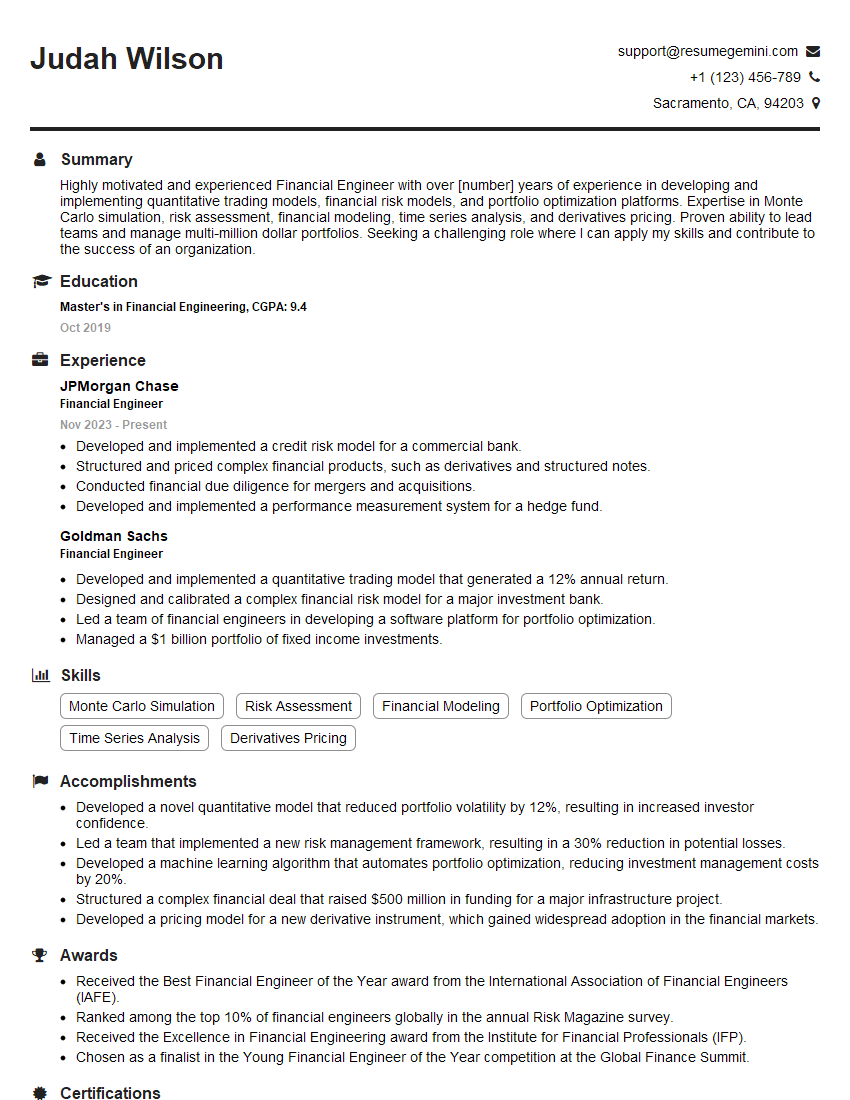
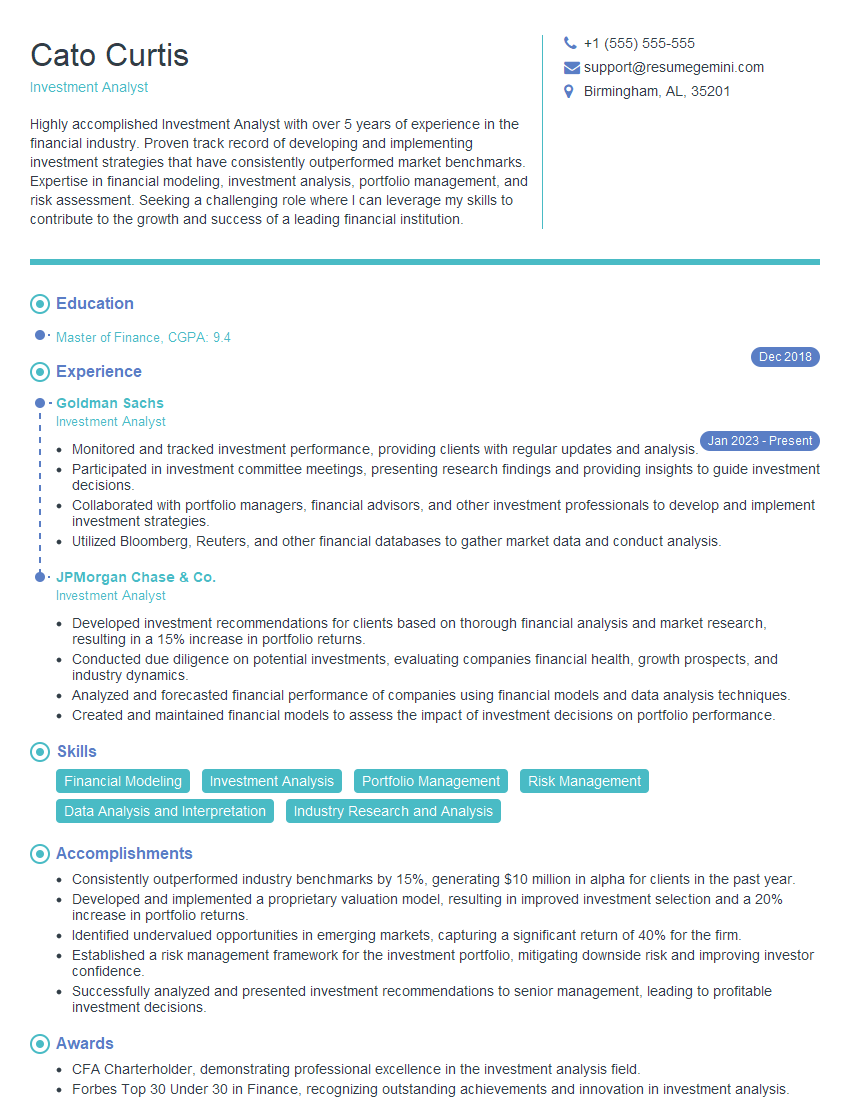
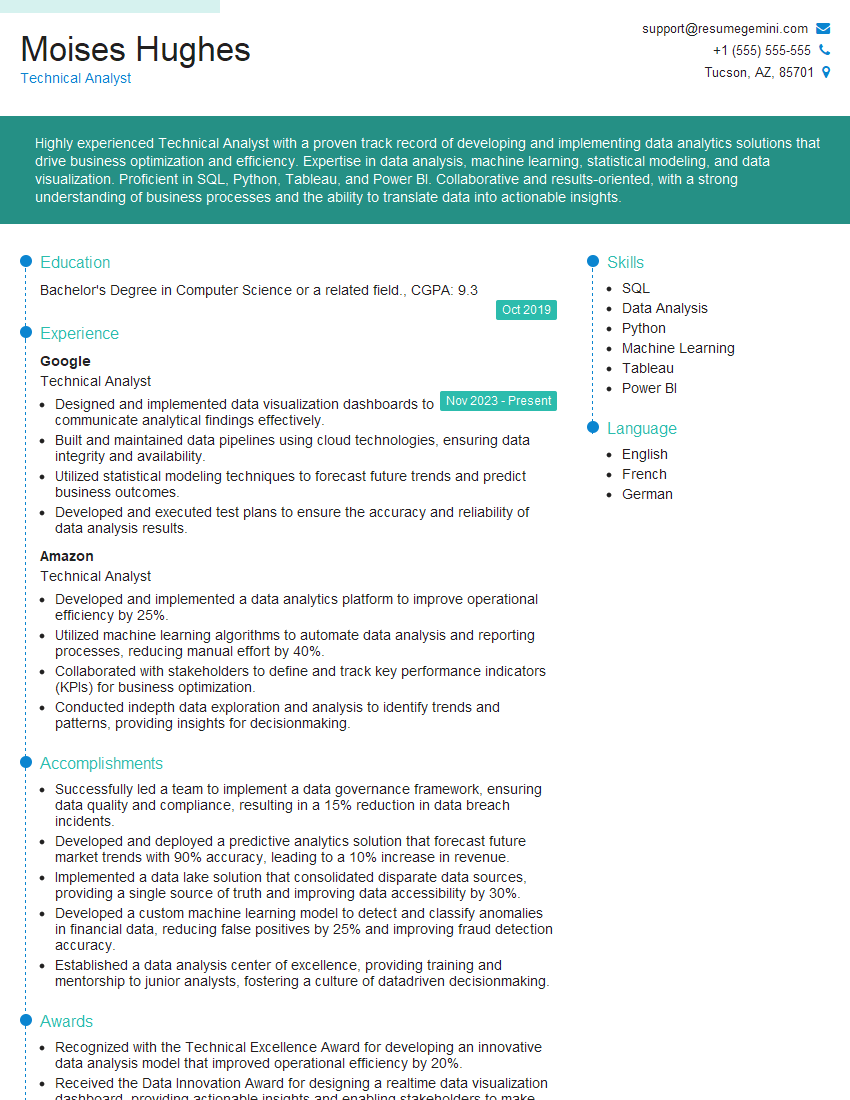
Mastering coin manipulation techniques significantly enhances your problem-solving abilities and opens doors to exciting career opportunities in diverse fields requiring advanced computational skills. Building a strong, ATS-friendly resume is critical to showcasing your abilities to potential employers. ResumeGemini is a trusted resource that can help you craft a professional resume tailored to highlight your expertise in coin manipulation. Examples of resumes specifically tailored for this field are available to help you get started.


Explore more articles
Users Rating of Our Blogs
Share Your Experience
We value your feedback! Please rate our content and share your thoughts (optional).
What Readers Say About Our Blog
Very informative content, great job.
good