Every successful interview starts with knowing what to expect. In this blog, we’ll take you through the top Ability to create visually appealing and impactful displays interview questions, breaking them down with expert tips to help you deliver impactful answers. Step into your next interview fully prepared and ready to succeed.
Questions Asked in Ability to create visually appealing and impactful displays Interview
Q 1. Describe your process for creating a visually appealing display.
Creating a visually appealing display is a multi-step process that blends art and science. It starts with a deep understanding of the message and target audience. I begin by defining the core message and objectives. What do I want viewers to take away? Then, I research the audience—their demographics, preferences, and the context in which they’ll encounter the display. This informs every design decision.
Next, I develop a mood board, collecting images, colors, and fonts that reflect the desired tone and style. This helps visualize the overall aesthetic. I then create sketches or wireframes to plan the layout, considering elements like typography, imagery, and whitespace. This is followed by digital design, using software like Adobe Illustrator or Photoshop, where I refine the layout, choose colors, and create or select visuals. Finally, I rigorously test the design for readability, clarity, and overall impact. Iterations are key; I often revisit earlier stages based on feedback and testing.
For example, when designing a trade show booth, I would first research the target attendees, the products being showcased, and the competitive landscape. The mood board would then help determine the style – modern, sleek, rustic, etc. The layout would prioritize easy navigation and product visibility.
Q 2. How do you incorporate user experience principles into your display designs?
User experience (UX) principles are paramount in display design. A visually stunning display is useless if it doesn’t effectively communicate its message or is difficult to navigate. I apply UX principles throughout the design process, focusing on:
- Clarity and Conciseness: The message must be easily understood at a glance. I avoid overwhelming the viewer with too much information.
- Intuitive Navigation: If the display involves multiple parts, the flow between elements should be logical and easy to follow. For example, visual cues like arrows or clear headings can guide the viewer’s eye.
- Accessibility: I ensure the display is usable by people with disabilities, adhering to accessibility guidelines (more on this later).
- Visual Hierarchy: Using size, color, and placement to guide the viewer’s eye to the most important information first. This creates a clear focal point.
- Feedback and Interaction: If the display includes interactive elements, clear feedback mechanisms are crucial to let users know their actions are registered.
For instance, in a museum exhibit, I would ensure clear labeling and ample spacing around exhibits to prevent overcrowding and confusion.
Q 3. What software and tools are you proficient in for display design?
My skillset encompasses a wide range of software and tools. I’m highly proficient in Adobe Creative Suite (Photoshop, Illustrator, InDesign), which are industry standards for graphic design. I’m also adept at using Sketch, Figma, and other digital design tools. Depending on the project, I might utilize video editing software like Adobe Premiere Pro or After Effects to integrate motion graphics or animation. For 3D modeling and rendering, I have experience with Blender and Cinema 4D.
Furthermore, I am familiar with various prototyping tools for interactive displays, and I can utilize HTML, CSS, and JavaScript for web-based displays. This broad skillset allows me to adapt to the specific requirements of each project, leveraging the best tools for the job.
Q 4. Explain your understanding of color theory and its impact on display design.
Color theory is fundamental to impactful display design. Understanding color relationships—hue, saturation, value, and temperature—is crucial for creating effective visual communication. Color evokes emotions and associations, and the right palette can significantly impact the message’s reception.
For example, warm colors like reds and oranges can create a sense of energy and excitement, while cool colors like blues and greens can evoke calmness and trust. Color contrast is essential for readability; using sufficient contrast between text and background is crucial for accessibility. I also consider color psychology when choosing a palette, selecting colors that align with the brand identity and the desired message. Using color palettes effectively enhances the overall aesthetic and helps establish a cohesive visual identity.
Q 5. How do you ensure your displays are accessible to diverse audiences?
Accessibility is a core principle in my design process. I strive to create displays that are usable and enjoyable for everyone, regardless of their abilities. This involves adhering to accessibility guidelines, such as WCAG (Web Content Accessibility Guidelines), which cover aspects like:
- Color Contrast: Ensuring sufficient contrast between text and background colors to improve readability for people with low vision.
- Font Size and Style: Using legible fonts and appropriate sizes for easy reading.
- Alternative Text for Images: Providing descriptive text for images to aid visually impaired users who rely on screen readers.
- Captioning and Transcription: Providing captions for videos and transcripts for audio content.
- Keyboard Navigation: Ensuring all interactive elements are accessible via keyboard for users who cannot use a mouse.
For example, in designing a digital signage display, I would use sufficient color contrast, legible fonts, and alternative text for all images. I’d also ensure the content is compatible with screen readers and is navigable using only a keyboard.
Q 6. Describe a time you had to create a display with limited resources.
In one instance, I was tasked with creating a compelling display for a local charity event with a very limited budget. Traditional printing and large-format displays were out of the question. Instead, I leveraged readily available materials like recycled cardboard, paint, and string lights. I designed a modular, easily transportable display system that was both visually striking and cost-effective.
I focused on creative typography and repurposed materials to create a unique and memorable display. The limited resources forced me to think outside the box, resulting in a design that was both impactful and sustainable. This experience taught me the importance of resourcefulness and ingenuity in design.
Q 7. How do you balance aesthetics and functionality in your designs?
Balancing aesthetics and functionality is crucial. A beautiful display is meaningless if it fails to communicate effectively. I approach this balance through iterative design, continually testing and refining the design to ensure both aspects are optimized.
For example, using high-quality visuals enhances the aesthetics but shouldn’t come at the cost of readability. A visually complex design might be aesthetically pleasing but hinder understanding. I prioritize clear communication, ensuring that the design serves its purpose without sacrificing visual appeal. This involves careful consideration of layout, typography, color, and imagery to create a seamless blend of form and function.
Q 8. What are some common mistakes to avoid when designing displays?
Common mistakes in display design often stem from neglecting the audience and the message. Poor readability is a major culprit – tiny text, clashing colors, and cluttered layouts make information hard to digest. Another frequent error is failing to consider the context. A vibrant, attention-grabbing display might be perfect for a trade show, but entirely inappropriate for a quiet library exhibit.
- Ignoring target audience: Designing for a general audience instead of a specific demographic leads to ineffective communication. For example, a display about advanced technology using overly technical jargon would alienate a non-technical audience.
- Poor information hierarchy: Not prioritizing key information visually makes it difficult for viewers to understand the main points. Using inconsistent font sizes, lack of clear headings, and haphazard placement of visual elements all contribute to this.
- Neglecting accessibility: Overlooking accessibility features like sufficient color contrast, alt text for images, and clear visual structure excludes people with disabilities from accessing the information.
- Ignoring the environment: A display designed for a brightly lit space will be ineffective in low-light conditions. Consider lighting, background noise, and overall ambience when designing.
Avoiding these mistakes requires careful planning, audience research, and thorough testing. A well-designed display should be clear, concise, and engaging, tailored to its specific environment and target audience.
Q 9. How do you stay updated on the latest design trends?
Staying ahead in display design requires a multi-faceted approach. I actively engage with various resources to keep my knowledge current.
- Industry publications and blogs: I regularly read design publications like AIGA Eye on Design and follow influential design blogs and websites, which often feature articles on the latest trends and techniques.
- Design conferences and workshops: Attending industry events allows me to network with other designers, learn about innovative technologies, and see the best practices firsthand. I actively participate in online webinars and workshops, often focused on specific software or design principles.
- Social media platforms: Platforms like Behance, Dribbble, and Instagram are invaluable for discovering new styles, techniques, and inspirational work from designers around the globe.
- Competitor analysis: Studying the displays of competitors and other businesses in related fields gives insights into current market preferences and effective display strategies.
This combination of formal and informal learning ensures I’m constantly exposed to fresh ideas and emerging technologies, enabling me to adapt my style and methodologies to the ever-evolving landscape of visual communication.
Q 10. Explain your approach to creating a display for a specific target audience.
My approach to designing for a specific target audience is deeply rooted in empathy and research. I start by defining the audience’s demographics, psychographics, and information needs. What are their existing knowledge levels? What are their motivations and expectations? What platform will they be interacting with the display on? The answers to these questions dictate the visual style, message, and overall approach.
For example, designing a display about financial planning for young adults would require a drastically different approach than a similar display targeting retirees. Young adults might respond better to a modern, minimalist design with interactive elements, whereas retirees might prefer a clean, legible design with clear, concise information and larger font sizes.
My process involves:
- Audience research: Conducting thorough research using surveys, focus groups, or analyzing existing data to understand their needs and preferences.
- Persona development: Creating representative profiles of ideal audience members to guide design choices.
- Storyboard and wireframing: Visualizing the flow of information and user interaction before proceeding to the visual design stage.
- Testing and iteration: Testing the design with the target audience to gather feedback and make necessary adjustments.
By putting the audience at the center of the design process, I can create displays that effectively communicate the intended message and resonate with the target demographic.
Q 11. How do you measure the effectiveness of your display designs?
Measuring the effectiveness of display designs isn’t solely about aesthetic appeal; it’s about quantifiable results. I use a combination of methods to assess impact.
- Engagement metrics (digital): For digital displays, I track metrics like dwell time, click-through rates, and social media shares to gauge user interaction and engagement.
- Surveys and feedback forms: Gathering direct feedback from viewers through surveys or feedback forms provides valuable insight into their understanding and reactions to the display.
- A/B testing: Comparing different versions of a display to determine which one is more effective in achieving its objectives. This helps in optimizing design choices.
- Sales data (commercial displays): In commercial settings, I track sales data or lead generation to measure the display’s impact on business outcomes.
- Observation: Direct observation of viewers interacting with the display can reveal valuable insights into their behavior and engagement.
By employing these methods, I can objectively evaluate the success of my designs, learn from any shortcomings, and refine my approach for future projects.
Q 12. Describe your experience with different display formats (e.g., print, digital).
My experience spans various display formats, each requiring unique design considerations. Print displays demand attention to print quality, material choices, and physical constraints. Digital displays offer greater flexibility with interactivity and animation but need to be responsive across various devices and screen sizes.
- Print: I’ve worked extensively with posters, brochures, banners, and trade show displays. For print, the focus is on high-resolution imagery, durable materials, and a design that is impactful even from a distance.
- Digital: My experience encompasses interactive kiosks, website banners, social media graphics, and digital signage. This requires expertise in responsive design, animation, and incorporating user interactions.
- Interactive installations: This involves designing displays that integrate with technology such as touch screens, projectors, and sensors for a more immersive and engaging experience.
Understanding the strengths and limitations of each format is crucial for effective design. For instance, the simplicity and clarity of a print brochure contrast with the dynamic possibilities of an interactive digital kiosk. I adapt my approach depending on the chosen medium.
Q 13. How do you handle feedback and revisions on your display designs?
Feedback and revisions are integral parts of the design process. I approach them as opportunities for improvement, not criticism. I encourage open communication and actively seek out constructive feedback from clients and stakeholders.
My approach to handling feedback involves:
- Active listening: Carefully listening to feedback without interruption, ensuring I fully understand the concerns and suggestions.
- Seeking clarification: Asking clarifying questions to ensure I accurately interpret the feedback.
- Documenting changes: Keeping detailed records of all revisions and the rationale behind them.
- Iterative design process: Implementing revisions in an iterative manner, presenting revised designs for approval at each stage.
- Professionalism: Maintaining a professional and respectful demeanor throughout the revision process.
I believe that incorporating constructive feedback enhances the final product and leads to a stronger, more effective design. This collaborative process strengthens the client relationship and ensures everyone is satisfied with the outcome.
Q 14. How do you incorporate branding guidelines into your display designs?
Branding guidelines are fundamental to maintaining brand consistency. I carefully integrate them into every aspect of my display designs, ensuring they accurately reflect the client’s brand identity.
My approach involves:
- Thorough review of brand guidelines: I meticulously review the brand’s style guide, logo usage, color palettes, typography, and overall brand voice to fully grasp the brand’s visual identity.
- Consistent application: I meticulously apply the brand guidelines to every design element, including fonts, colors, imagery, and layout.
- Asset utilization: I utilize approved brand assets, such as logos and fonts, to ensure consistency and brand recognition.
- Maintaining brand voice: The visual design should align with the brand’s communication style and target audience.
- Seeking approval: I seek approval from brand stakeholders before finalizing the designs to ensure adherence to the guidelines.
Adhering to brand guidelines not only ensures consistency but also contributes to a stronger brand image and reinforces brand recognition. It’s crucial for building a unified and memorable brand experience.
Q 15. Explain your understanding of typography and its role in display design.
Typography is the art and technique of arranging type to make written language legible, readable, and appealing. In display design, it’s absolutely crucial. Think of it as the foundation upon which you build your visual message. The right font choices, sizes, and spacing can dramatically impact how easily your audience understands and connects with your display. A poorly chosen font can render even the most stunning visuals ineffective.
For example, a bold sans-serif font like Roboto might work well for headings on a digital signage display in a bustling airport, where readability at a distance is key. Conversely, a more elegant serif font like Garamond might be perfect for a museum exhibit showcasing antique artifacts, where a feeling of classic sophistication is desired. I consider factors like legibility, tone, and overall aesthetic when making these choices.
- Legibility: Can the text be easily read from various distances and angles? This is especially important for large public displays.
- Tone: Does the font evoke the right feeling? A playful script font might work well for a children’s museum but would be inappropriate for a corporate presentation.
- Aesthetic: Does the font complement the overall design and brand identity?
Career Expert Tips:
- Ace those interviews! Prepare effectively by reviewing the Top 50 Most Common Interview Questions on ResumeGemini.
- Navigate your job search with confidence! Explore a wide range of Career Tips on ResumeGemini. Learn about common challenges and recommendations to overcome them.
- Craft the perfect resume! Master the Art of Resume Writing with ResumeGemini’s guide. Showcase your unique qualifications and achievements effectively.
- Don’t miss out on holiday savings! Build your dream resume with ResumeGemini’s ATS optimized templates.
Q 16. How do you choose appropriate imagery for your displays?
Choosing the right imagery is as critical as typography. It’s about more than just finding a pretty picture; it’s about finding imagery that supports and enhances the message of the display. I start by considering the target audience and the overall goal of the display. Is it to inform, persuade, entertain, or evoke a specific emotion?
For instance, if I’m designing a display for a health clinic promoting preventative care, I might use images of happy, healthy people engaging in physical activity. High-quality, authentic photos resonate much more strongly than generic stock images. I also consider the context. Images should be relevant, high-resolution, and consistent in style with the overall display design. If necessary, I’ll source images from reputable stock photography sites or, better yet, commission custom photography or illustrations for a truly unique look.
Beyond the image itself, I consider factors such as color palettes, composition, and the emotional impact the imagery conveys. I always ensure the images are appropriately licensed and free of copyright restrictions.
Q 17. Describe your experience with creating interactive displays.
I have extensive experience creating interactive displays using various technologies. This often involves incorporating touchscreen interfaces, motion sensors, augmented reality (AR) elements, or even voice control. One project involved designing an interactive map for a city museum, allowing visitors to explore historical sites using a large touchscreen. This required careful consideration of user experience (UX), ensuring the interface was intuitive and engaging for all ages and tech literacy levels. The success hinged on smooth transitions, responsive design, and clear visual cues.
Another project incorporated AR elements. We overlayed digital information onto physical exhibits using a tablet app. This demanded precise calibration between the app’s interface and the physical positioning of the displays to ensure a seamless user experience. These projects highlight my ability to blend visual appeal with cutting-edge technology to create enriching interactive experiences.
Q 18. How do you manage your time effectively when working on multiple display projects?
Managing multiple display projects effectively relies on meticulous organization and prioritization. I utilize project management tools such as Trello or Asana to track tasks, deadlines, and resources. Breaking down large projects into smaller, manageable tasks makes the overall process less daunting. I also prioritize tasks based on urgency and importance, focusing on critical milestones first.
Clear communication with clients and team members is essential. Regular progress updates and proactive identification of potential roadblocks help keep projects on track. Timeboxing specific tasks – allocating a fixed amount of time for each – helps improve focus and prevents tasks from expanding beyond their allocated time. This organized approach, coupled with efficient communication, allows me to handle multiple projects simultaneously without compromising quality.
Q 19. How do you handle unexpected challenges or technical issues during display creation?
Unexpected challenges are inevitable in any creative endeavor. My approach is to remain calm and systematic. I first identify the root cause of the issue; is it a technical glitch, a design flaw, or a misunderstanding with the client? Once identified, I systematically explore solutions.
For example, if I encounter a technical issue, I leverage my troubleshooting skills and online resources to find solutions. If a design element isn’t working as intended, I revisit the design brief and explore alternative approaches. Open communication with the client is crucial to address any misunderstandings. I embrace these challenges as opportunities for growth and learning. Often, problem-solving leads to innovative solutions that ultimately enhance the final product.
Q 20. What is your preferred workflow for creating a display from concept to completion?
My workflow typically follows these steps: First, I collaborate closely with the client to understand their vision, target audience, and objectives. This includes detailed discussions, brainstorming sessions, and mood board creation. This phase establishes a solid foundation for the design process.
Next, I develop initial concepts, sketches, and wireframes. These serve as visual representations of the display and help refine the overall design. Then, I move into the design phase, refining the layouts, typography, imagery, and interactive elements. Throughout this phase, I regularly share progress updates with the client to ensure the design meets their expectations. Following this, I meticulously prepare the design files for production, ensuring they meet the technical specifications of the chosen medium. The final stage includes rigorous testing to guarantee the display functions flawlessly and delivers the intended user experience. This iterative process ensures a high-quality and effective final product.
Q 21. Describe your approach to testing and iterating on your designs.
Testing and iteration are integral to my design process. I conduct usability testing with representative users to gauge their reactions and identify areas for improvement. This might involve observing users interacting with a prototype or conducting surveys to gather feedback. Data analysis from this testing informs design adjustments.
Based on user feedback and my own critical evaluation, I iterate on the design. This may involve refinements to the layout, color palette, typography, or interactive elements. I use A/B testing to compare different design versions to determine which performs better. This iterative process ensures the final display is user-friendly, effective, and visually appealing. This rigorous approach guarantees a high level of user satisfaction and achieves the project’s objectives effectively.
Q 22. How do you ensure consistency in your display designs across different platforms?
Maintaining design consistency across platforms is crucial for a cohesive brand experience. I achieve this through a multi-pronged approach focusing on design systems and flexible design patterns. A well-defined design system acts as a single source of truth, containing reusable components like buttons, typography styles, and color palettes. This system is meticulously documented, often using tools like Figma or Sketch, with clear specifications for each element’s appearance and behavior across different screen sizes and resolutions.
For example, I’d create a button style guide that dictates size, padding, font, and hover effects. This ensures the button looks and behaves consistently whether it’s on a desktop website, a mobile app, or an interactive kiosk. Furthermore, I leverage responsive design principles to ensure the layout adapts seamlessly to various screen sizes, maintaining the visual hierarchy and brand consistency regardless of the platform.
Beyond the design system, I use platform-agnostic design tools and technologies. For instance, utilizing vector graphics instead of raster images ensures scalability without loss of quality, while employing CSS frameworks like Bootstrap or Tailwind CSS allows for efficient responsive design across different platforms and browsers.
Q 23. Explain your understanding of the principles of visual hierarchy.
Visual hierarchy is the arrangement of elements within a display to guide the viewer’s eye and communicate information effectively. Think of it as creating a visual ‘story’ – where do you want the reader to start, and where do you want them to end up? I use several techniques to establish this hierarchy:
- Size: Larger elements naturally draw more attention. A headline will be significantly larger than body text.
- Color: Bold, contrasting colors will stand out. Think of a bright call-to-action button against a neutral background.
- Placement: Elements positioned prominently (top left, for example, within Western cultures) tend to be seen first.
- Spacing: White space (or negative space) is incredibly important. It helps visually separate elements and create breathing room, guiding the eye naturally.
- Typography: Different font weights (bold, italic) and styles further emphasize important information.
For instance, in designing a website homepage, I would prioritize the headline and hero image using larger sizes and strategic placement. Subheadings would be smaller, body text even smaller, and calls to action clearly distinguished through color and button design. This deliberate arrangement ensures that the viewer’s attention is guided in a logical and engaging manner.
Q 24. How do you incorporate data visualization techniques into your display designs?
Data visualization is key to transforming complex information into easily digestible displays. I utilize various techniques depending on the data and target audience. For example:
- Bar charts: Ideal for comparing discrete categories.
- Line graphs: Excellent for showing trends over time.
- Pie charts: Effective for showing proportions of a whole.
- Heatmaps: Useful for highlighting patterns and correlations within large datasets.
- Interactive dashboards: Allow users to explore data at their own pace, filtering and drilling down into specific areas of interest.
Before incorporating any visualization, I carefully consider the data’s context, the intended message, and the audience’s understanding. For instance, a complex scatter plot might be inappropriate for a non-technical audience. Instead, I might opt for a simpler bar chart or a clear narrative summary of the key findings. I often use data visualization tools like Tableau or Power BI to create interactive and engaging dashboards and reports, making complex data accessible and understandable.
Q 25. What are some examples of successful displays you have created?
I’ve been fortunate to work on several successful projects. One involved designing an interactive exhibit for a science museum, incorporating augmented reality to bring scientific concepts to life. The display used a combination of physical models, interactive touchscreens, and projected animations, all seamlessly integrated. User feedback was overwhelmingly positive, showcasing high engagement and understanding of complex scientific principles. Another project was developing a data dashboard for a large corporation that helped improve internal efficiency by 15% through improved data accessibility.
In a different project, I designed a series of infographics for a non-profit organization. The infographics successfully communicated complex statistics about poverty in a simple and compelling manner, resulting in a significant increase in donations. These projects highlight my ability to adapt my design skills to different contexts and achieve specific communication objectives.
Q 26. How do you adapt your design style to different contexts and client needs?
Adaptability is critical in design. I approach each project by deeply understanding the context, target audience, and client’s specific needs. This involves thorough research and collaboration with clients to define objectives, target audience, and desired outcomes. I consider the overall brand identity and communication goals. For a corporate client, the design might lean towards a minimalist, professional style, while a playful, vibrant approach might be more appropriate for a children’s product.
For example, while I might use a sophisticated color palette and typography for a financial institution’s website, I would adopt a brighter, more informal style for a social media campaign targeting a younger demographic. My design style acts as a tool to effectively communicate the intended message and resonate with the target audience. Open communication and iterative feedback loops with clients are crucial to ensuring the design meets their expectations.
Q 27. Describe your experience working collaboratively with other designers or stakeholders.
Collaboration is fundamental to my workflow. I thrive in team environments, actively participating in brainstorming sessions and design critiques. I believe in open communication and transparent decision-making, where everyone’s input is valued. I’m adept at incorporating feedback from designers, developers, project managers, and clients to create the best possible outcome. I utilize collaborative design tools like Figma or Adobe XD, which allow for real-time feedback and concurrent design work.
For example, in a recent project, I worked closely with a UX researcher to understand user needs and ensure the design was both aesthetically pleasing and user-friendly. With developers, I ensured the design was feasible and adhered to technical constraints. This collaborative approach led to a superior design that met both aesthetic and functional requirements.
Q 28. How do you ensure your displays are consistent with the overall brand message?
Brand consistency is paramount. Before starting any project, I thoroughly research the client’s brand guidelines, including their logo, color palette, typography, and overall brand voice. This forms the foundation of my design choices. I ensure every element, from the color scheme to the typography and imagery, aligns with the established brand identity. This maintains a cohesive brand experience across all platforms and touchpoints.
For example, if a client’s brand is associated with elegance and sophistication, I would choose a refined color palette, elegant typography, and high-quality imagery. Conversely, a brand known for its playfulness might call for a brighter palette, bolder typography, and more casual imagery. By maintaining this consistency, I help reinforce the brand’s message and strengthen its identity.
Key Topics to Learn for Ability to create visually appealing and impactful displays Interview
- Visual Communication Principles: Understanding design elements like color theory, typography, and layout to create engaging visuals. Consider how these elements impact message delivery and audience engagement.
- Data Visualization Techniques: Mastering charts, graphs, and infographics to effectively communicate complex data in a clear and concise manner. Practice choosing the right visualization for different data sets and audiences.
- Software Proficiency: Demonstrating expertise in relevant design software (e.g., Adobe Creative Suite, Figma, Canva). Be prepared to discuss your experience and proficiency level with specific tools.
- User Experience (UX) Design Principles: Applying UX best practices to ensure your displays are user-friendly and intuitive. This includes considering accessibility and usability.
- Storytelling through Visuals: Learn to craft a narrative using visual elements to capture attention and leave a lasting impression. Think about how you can create a compelling visual story.
- Adaptability and Responsiveness: Understanding how to create displays that are adaptable to different screen sizes and devices (responsive design). Discuss your experience creating visuals for various platforms.
- Problem-Solving & Iteration: Describe your approach to tackling design challenges, including how you gather feedback and iterate on your designs to improve effectiveness.
- Accessibility Considerations: Demonstrate awareness of accessibility guidelines and best practices for creating inclusive visuals for diverse audiences.
Next Steps
Mastering the ability to create visually appealing and impactful displays is crucial for career advancement across numerous fields. Strong visual communication skills are highly valued by employers, leading to increased opportunities and higher earning potential. To maximize your job prospects, focus on crafting an ATS-friendly resume that effectively showcases your skills and experience. ResumeGemini is a trusted resource to help you build a professional and impactful resume. Examples of resumes tailored to highlight expertise in creating visually appealing and impactful displays are available to guide your creation process. Use these resources to present yourself confidently and land your dream job.
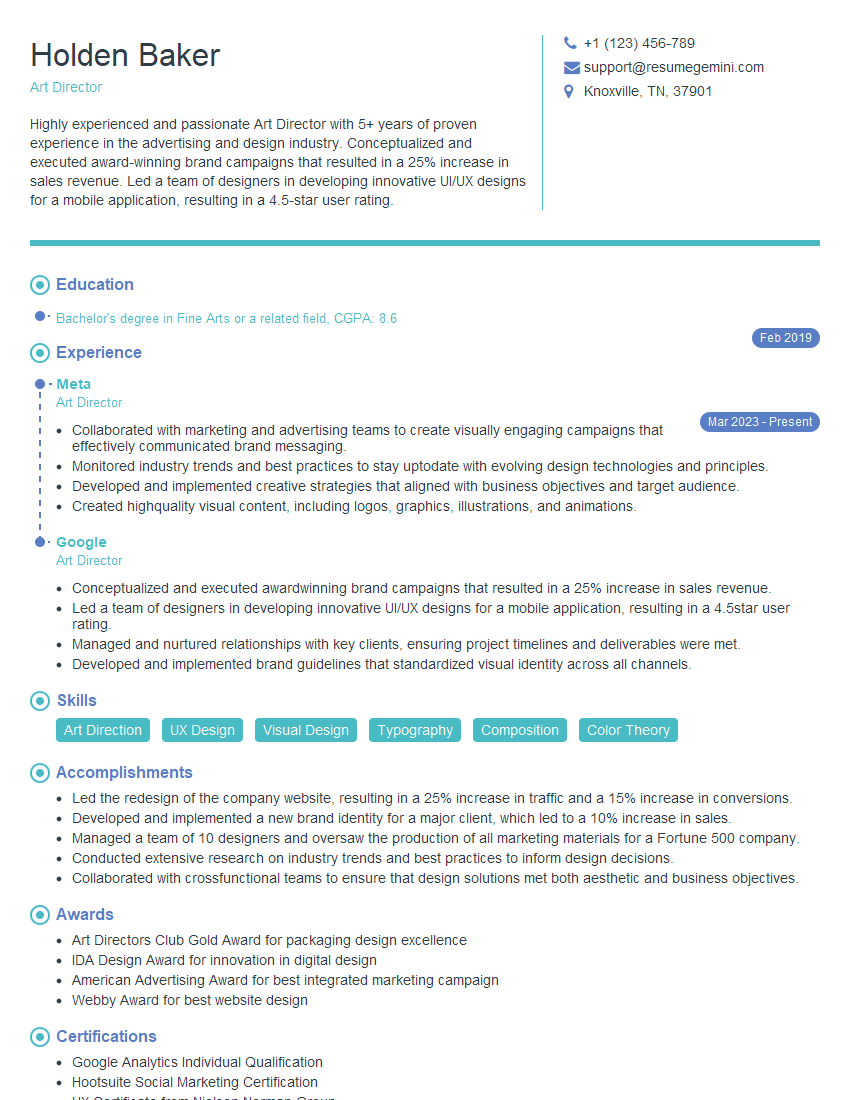
Art Director Resume Sample

Creative Director Resume Sample
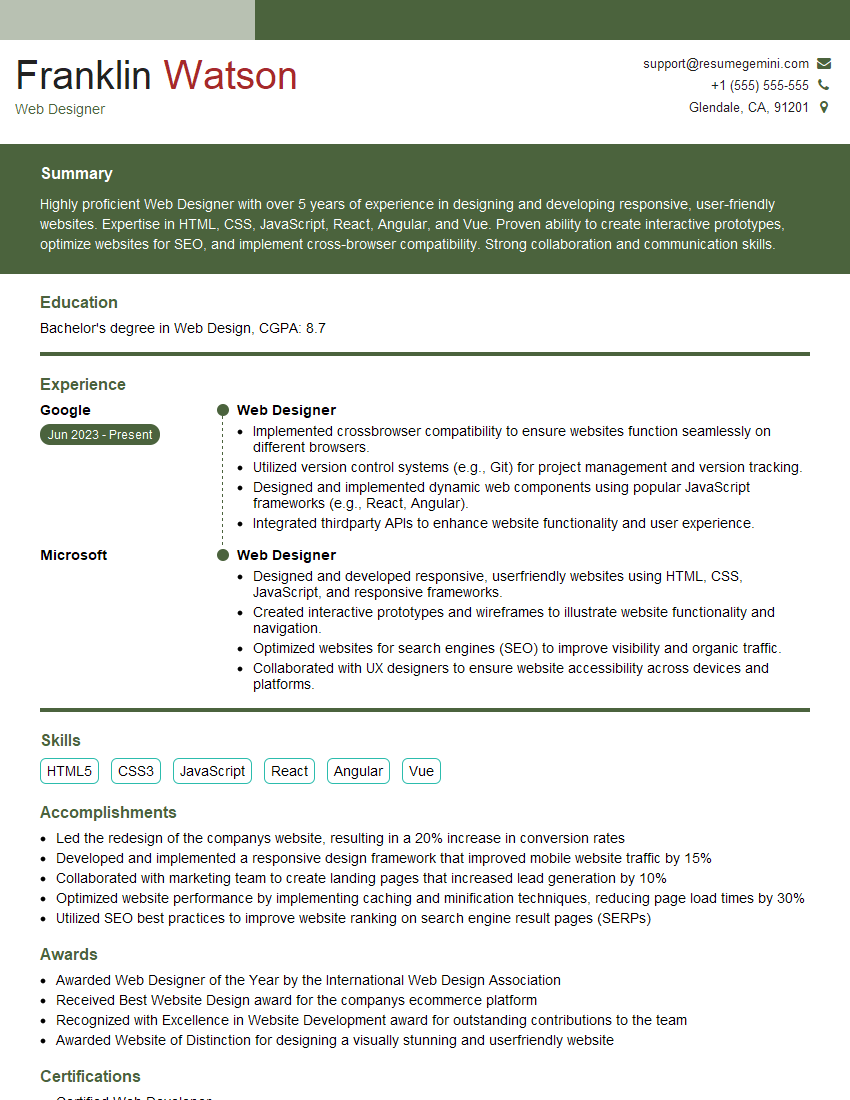
Web Designer Resume Sample
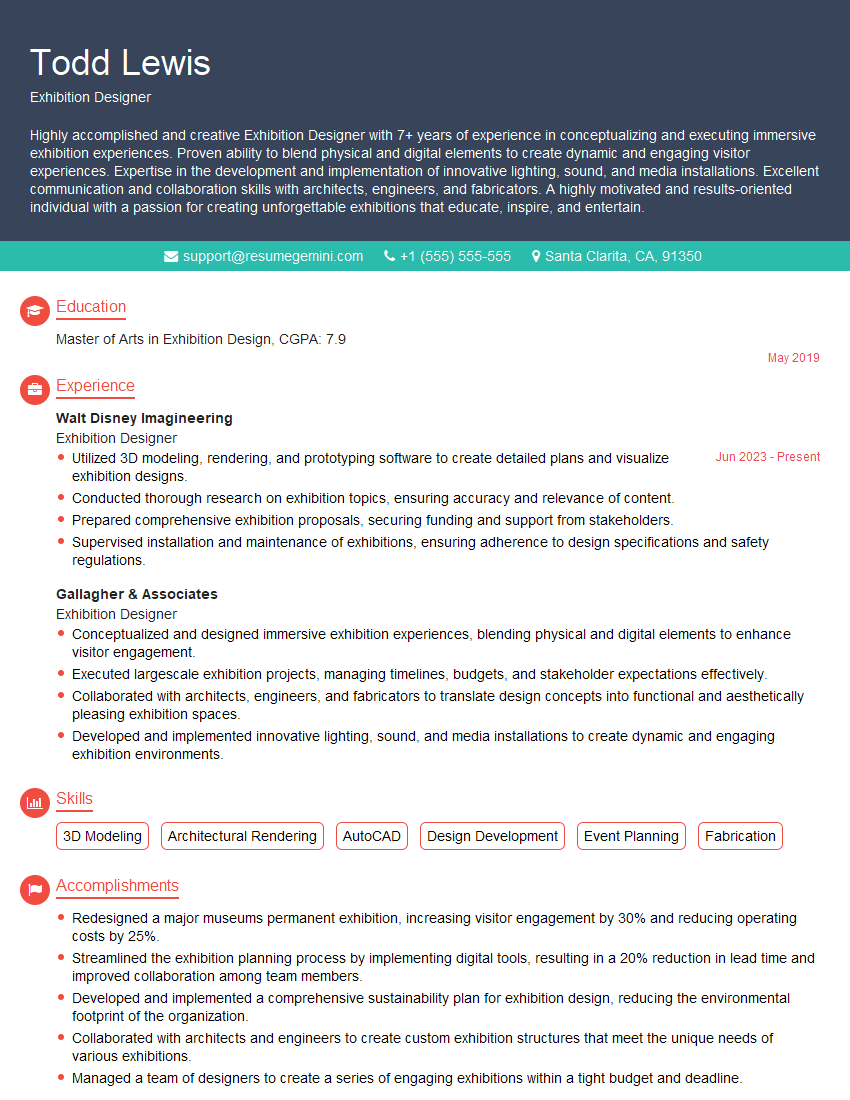
Exhibition Designer Resume Sample
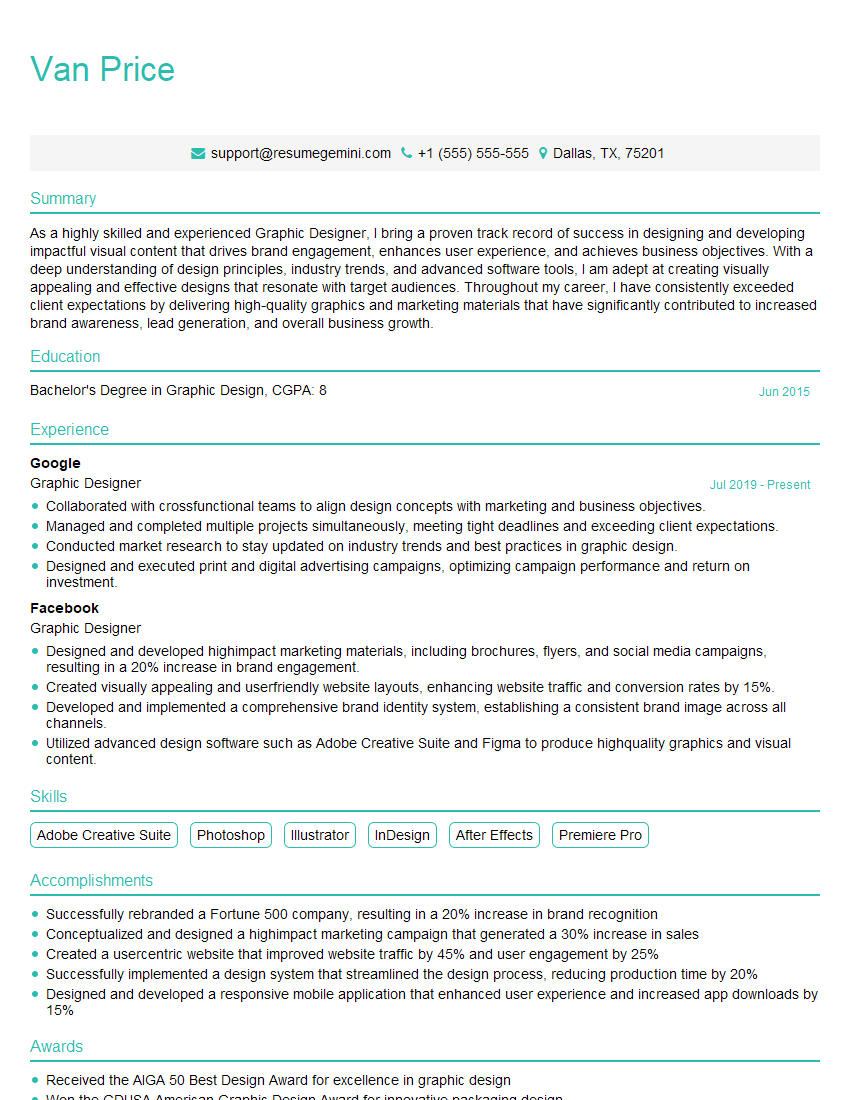
Graphic Designer Resume Sample
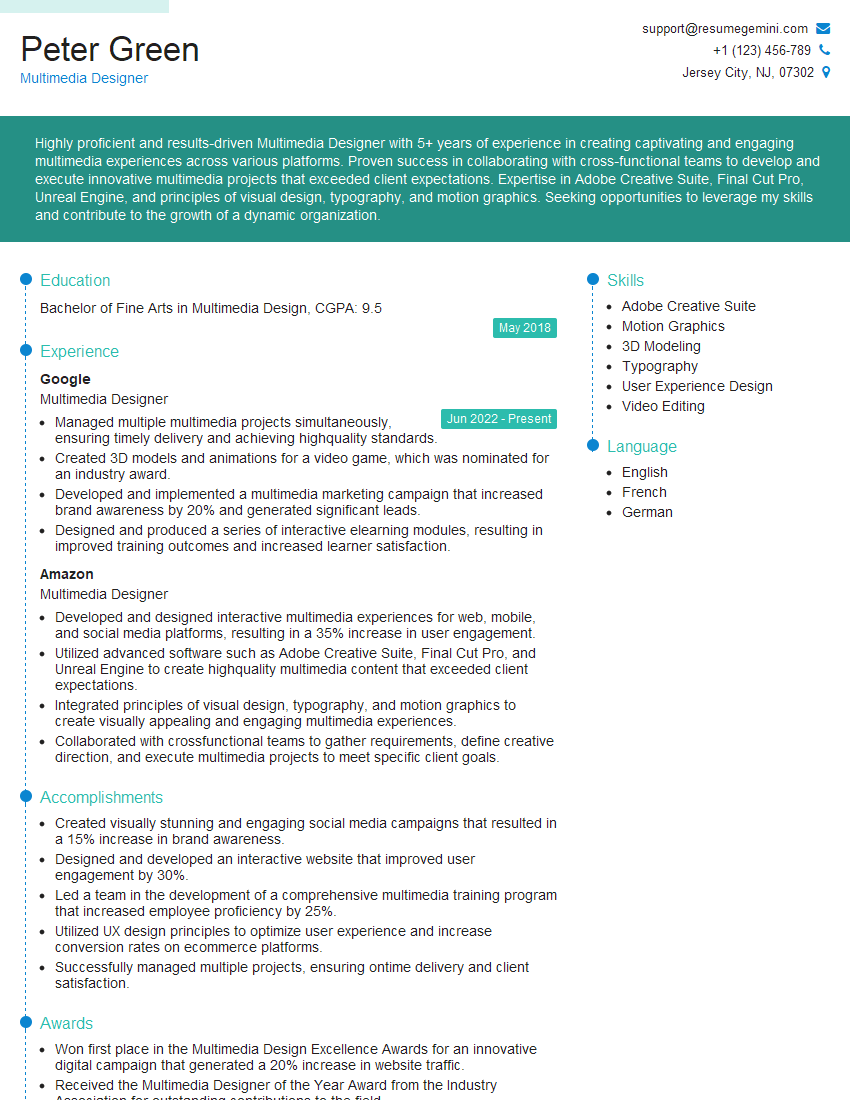
Multimedia Designer Resume Sample
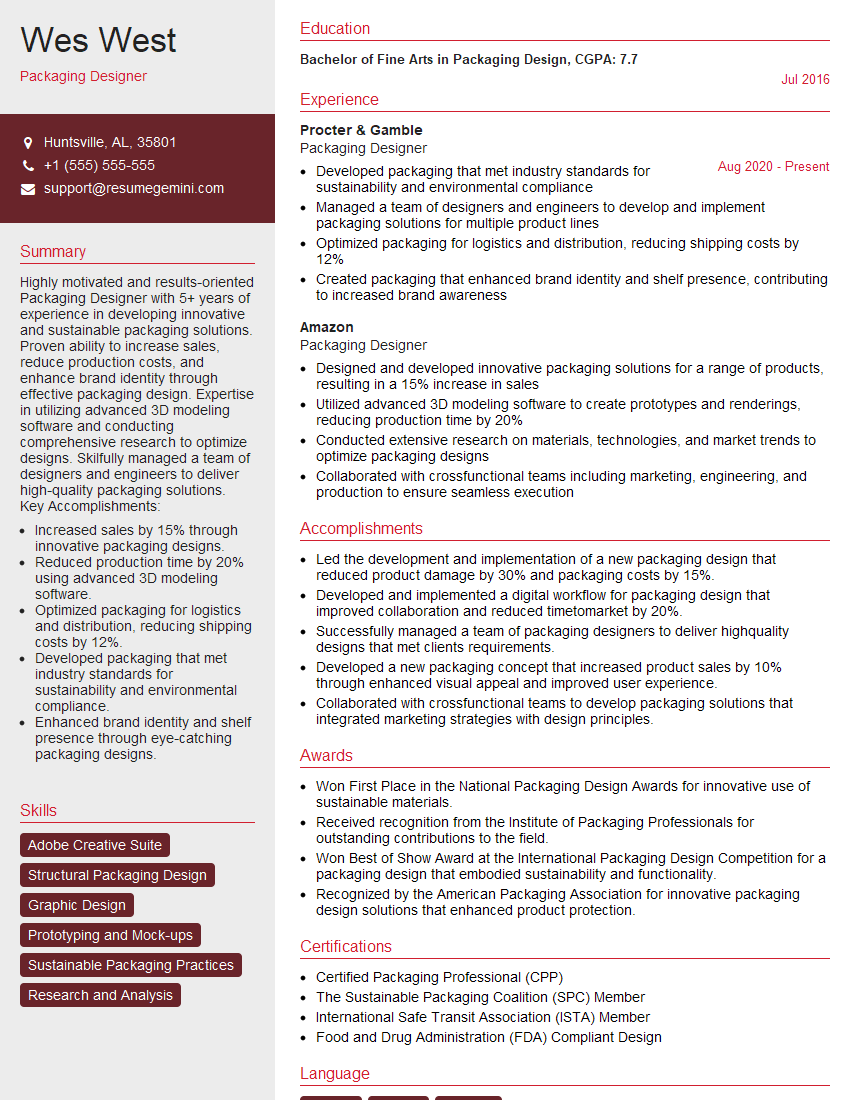
Packaging Designer Resume Sample
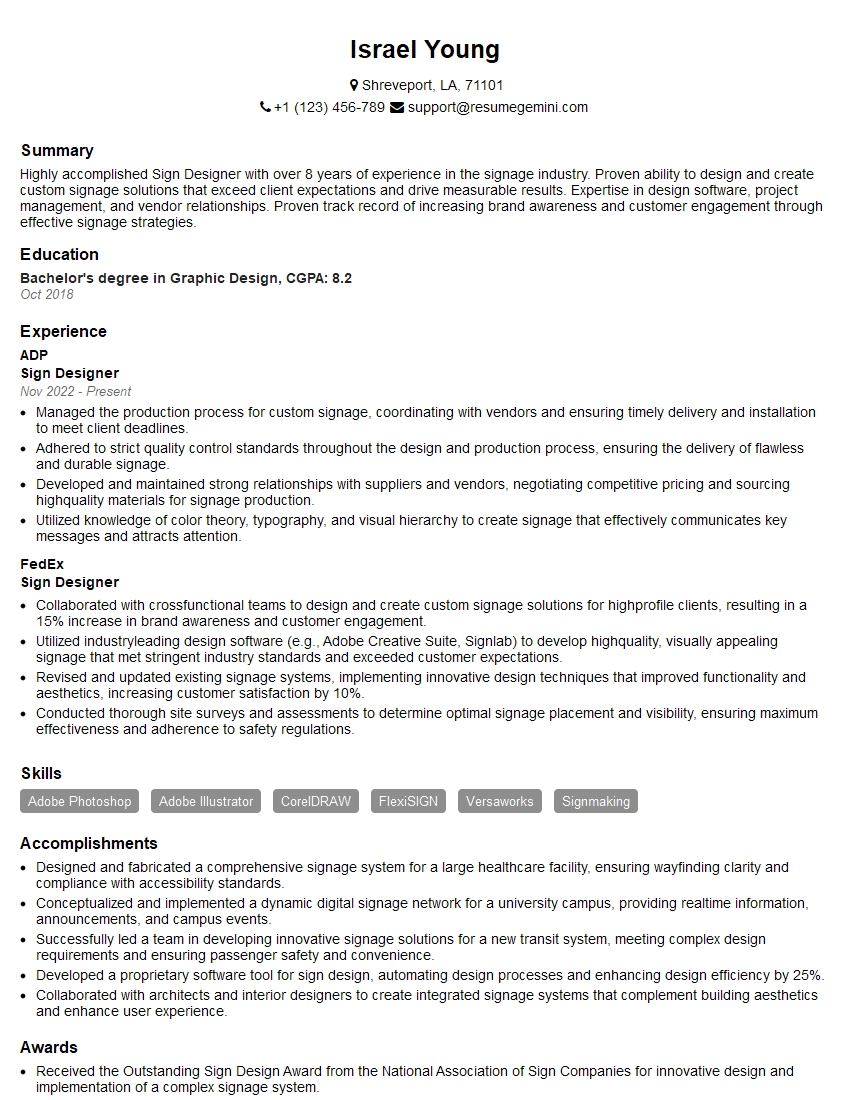
Sign Designer Resume Sample
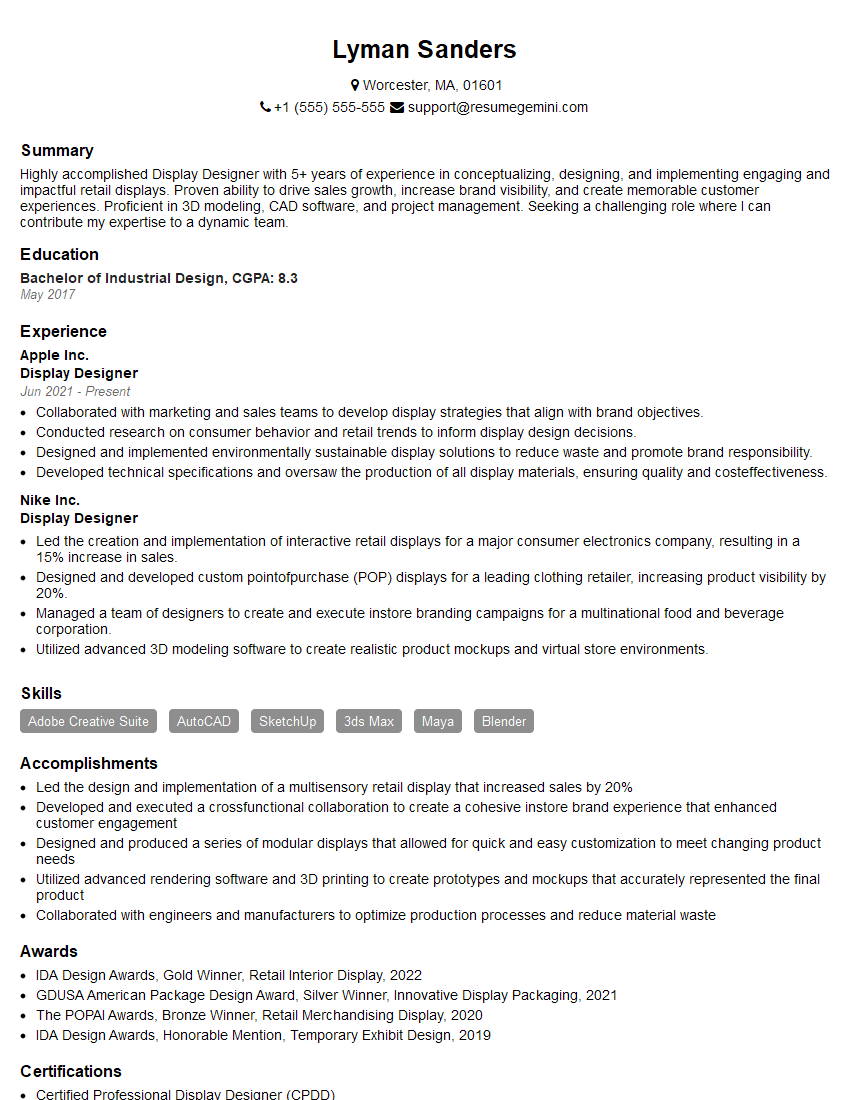
Display Designer Resume Sample
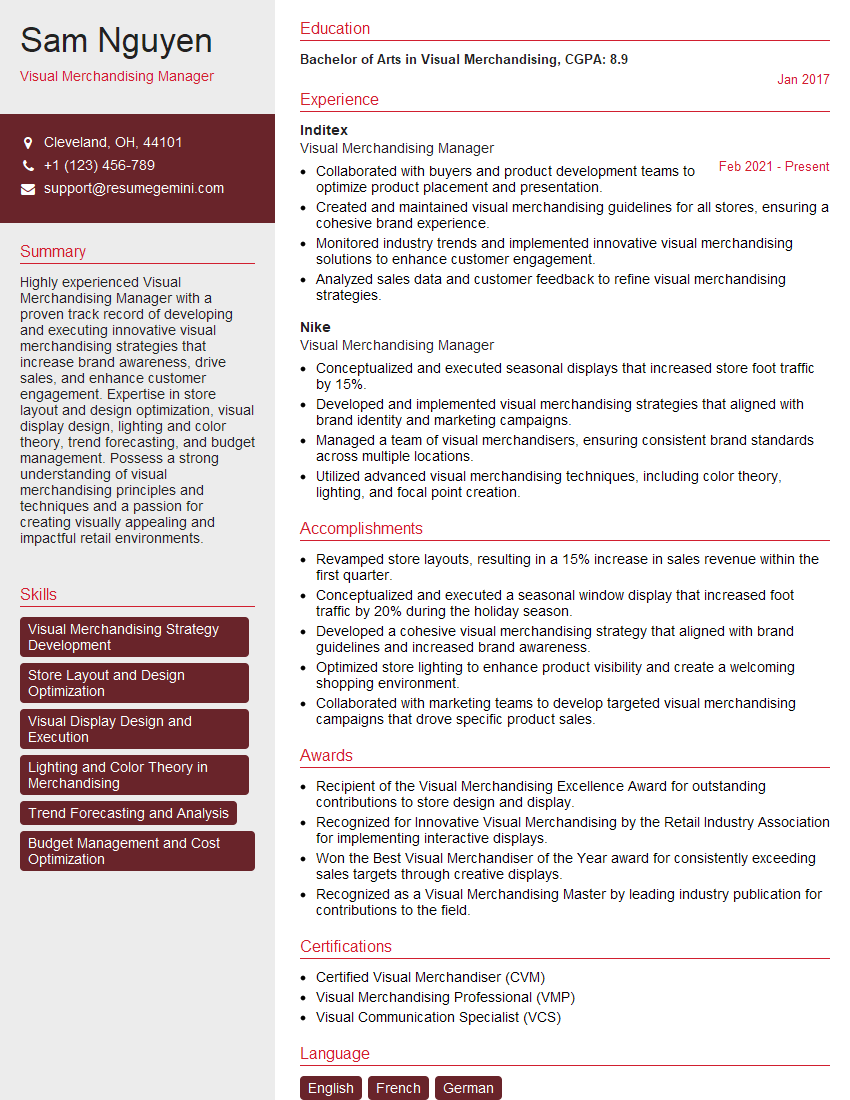
Visual Merchandising Manager Resume Sample
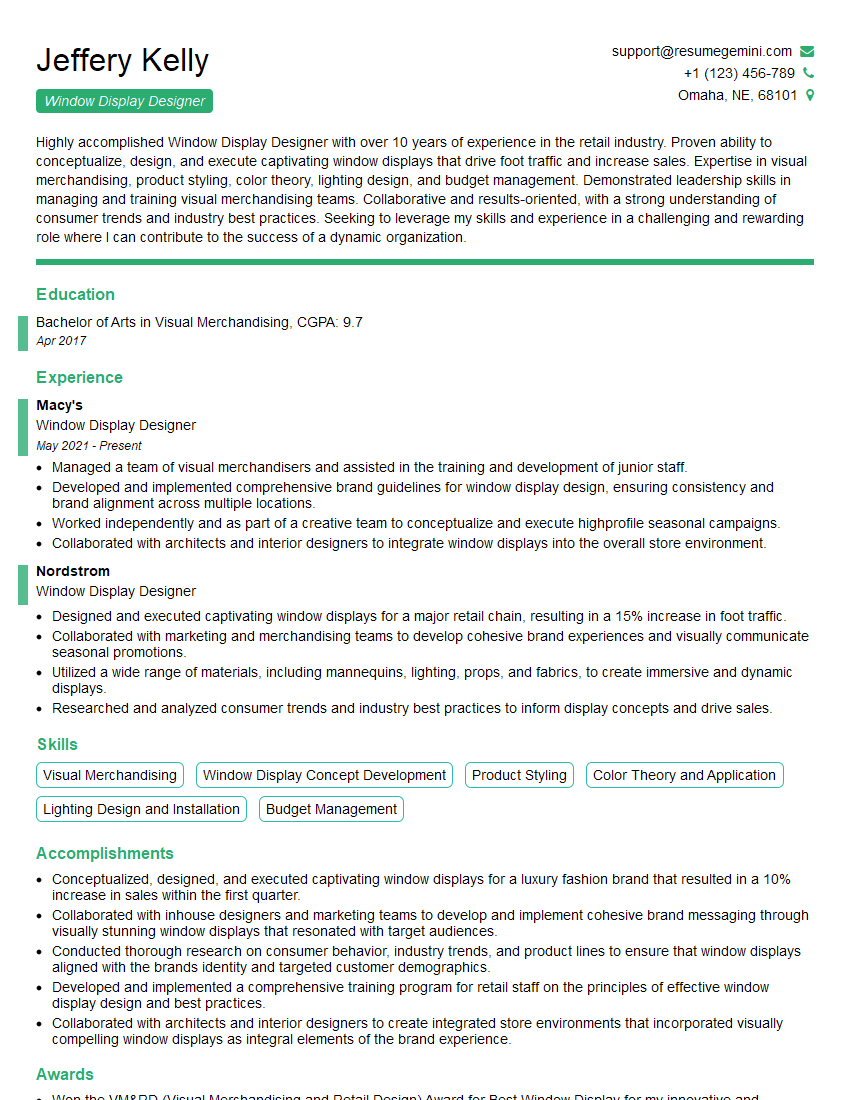
Window Display Designer Resume Sample
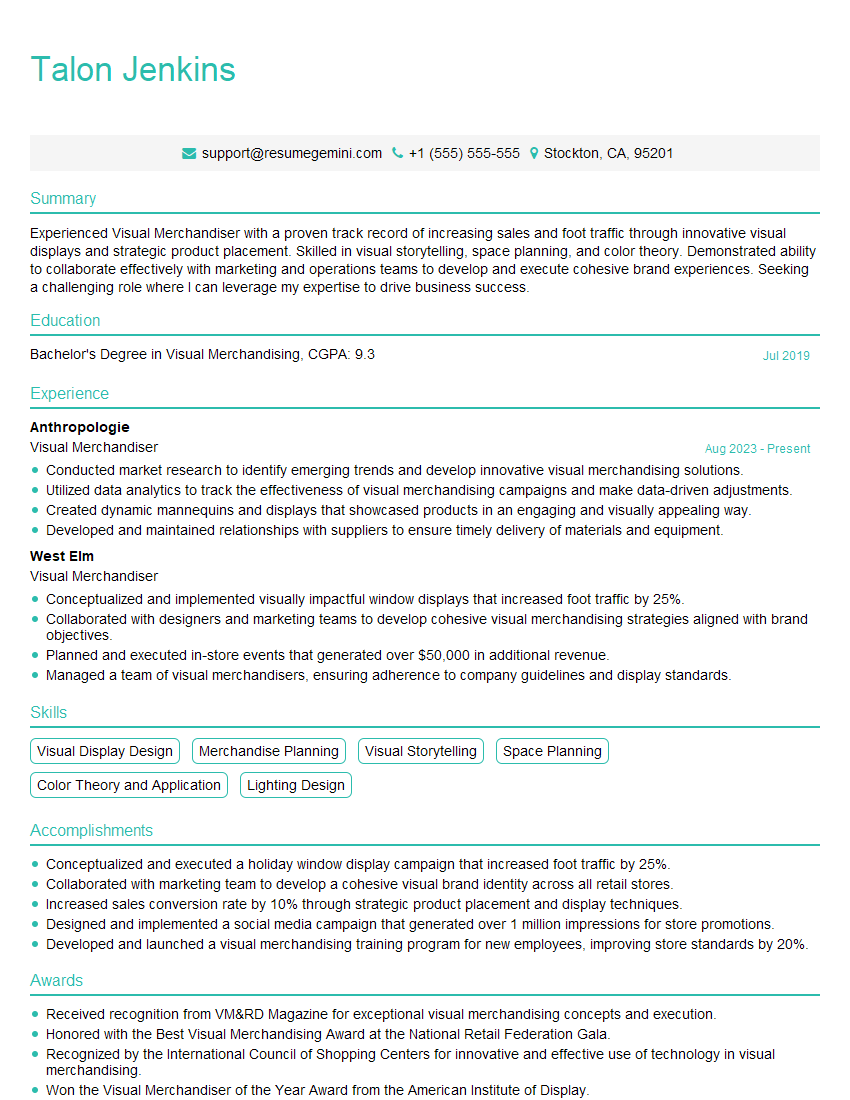
Visual Merchandiser Resume Sample
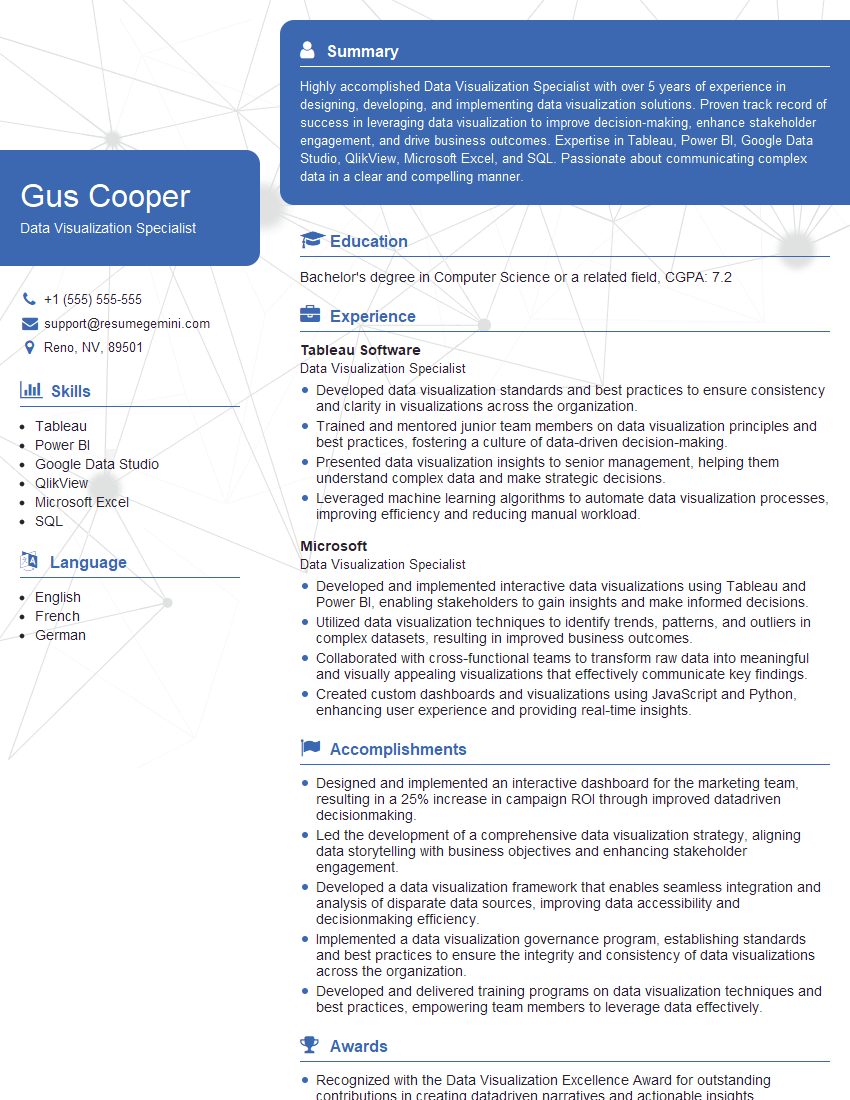
Data Visualization Specialist Resume Sample
Explore more articles
Users Rating of Our Blogs
Share Your Experience
We value your feedback! Please rate our content and share your thoughts (optional).
What Readers Say About Our Blog
Attention music lovers!
Wow, All the best Sax Summer music !!!
Spotify: https://open.spotify.com/artist/6ShcdIT7rPVVaFEpgZQbUk
Apple Music: https://music.apple.com/fr/artist/jimmy-sax-black/1530501936
YouTube: https://music.youtube.com/browse/VLOLAK5uy_noClmC7abM6YpZsnySxRqt3LoalPf88No
Other Platforms and Free Downloads : https://fanlink.tv/jimmysaxblack
on google : https://www.google.com/search?q=22+AND+22+AND+22
on ChatGPT : https://chat.openai.com?q=who20jlJimmy20Black20Sax20Producer
Get back into the groove with Jimmy sax Black
Best regards,
Jimmy sax Black
www.jimmysaxblack.com
Hi I am a troller at The aquatic interview center and I suddenly went so fast in Roblox and it was gone when I reset.
Hi,
Business owners spend hours every week worrying about their website—or avoiding it because it feels overwhelming.
We’d like to take that off your plate:
$69/month. Everything handled.
Our team will:
Design a custom website—or completely overhaul your current one
Take care of hosting as an option
Handle edits and improvements—up to 60 minutes of work included every month
No setup fees, no annual commitments. Just a site that makes a strong first impression.
Find out if it’s right for you:
https://websolutionsgenius.com/awardwinningwebsites
Hello,
we currently offer a complimentary backlink and URL indexing test for search engine optimization professionals.
You can get complimentary indexing credits to test how link discovery works in practice.
No credit card is required and there is no recurring fee.
You can find details here:
https://wikipedia-backlinks.com/indexing/
Regards
NICE RESPONSE TO Q & A
hi
The aim of this message is regarding an unclaimed deposit of a deceased nationale that bears the same name as you. You are not relate to him as there are millions of people answering the names across around the world. But i will use my position to influence the release of the deposit to you for our mutual benefit.
Respond for full details and how to claim the deposit. This is 100% risk free. Send hello to my email id: lukachachibaialuka@gmail.com
Luka Chachibaialuka
Hey interviewgemini.com, just wanted to follow up on my last email.
We just launched Call the Monster, an parenting app that lets you summon friendly ‘monsters’ kids actually listen to.
We’re also running a giveaway for everyone who downloads the app. Since it’s brand new, there aren’t many users yet, which means you’ve got a much better chance of winning some great prizes.
You can check it out here: https://bit.ly/callamonsterapp
Or follow us on Instagram: https://www.instagram.com/callamonsterapp
Thanks,
Ryan
CEO – Call the Monster App
Hey interviewgemini.com, I saw your website and love your approach.
I just want this to look like spam email, but want to share something important to you. We just launched Call the Monster, a parenting app that lets you summon friendly ‘monsters’ kids actually listen to.
Parents are loving it for calming chaos before bedtime. Thought you might want to try it: https://bit.ly/callamonsterapp or just follow our fun monster lore on Instagram: https://www.instagram.com/callamonsterapp
Thanks,
Ryan
CEO – Call A Monster APP
To the interviewgemini.com Owner.
Dear interviewgemini.com Webmaster!
Hi interviewgemini.com Webmaster!
Dear interviewgemini.com Webmaster!
excellent
Hello,
We found issues with your domain’s email setup that may be sending your messages to spam or blocking them completely. InboxShield Mini shows you how to fix it in minutes — no tech skills required.
Scan your domain now for details: https://inboxshield-mini.com/
— Adam @ InboxShield Mini
support@inboxshield-mini.com
Reply STOP to unsubscribe
Hi, are you owner of interviewgemini.com? What if I told you I could help you find extra time in your schedule, reconnect with leads you didn’t even realize you missed, and bring in more “I want to work with you” conversations, without increasing your ad spend or hiring a full-time employee?
All with a flexible, budget-friendly service that could easily pay for itself. Sounds good?
Would it be nice to jump on a quick 10-minute call so I can show you exactly how we make this work?
Best,
Hapei
Marketing Director
Hey, I know you’re the owner of interviewgemini.com. I’ll be quick.
Fundraising for your business is tough and time-consuming. We make it easier by guaranteeing two private investor meetings each month, for six months. No demos, no pitch events – just direct introductions to active investors matched to your startup.
If youR17;re raising, this could help you build real momentum. Want me to send more info?
Hi, I represent an SEO company that specialises in getting you AI citations and higher rankings on Google. I’d like to offer you a 100% free SEO audit for your website. Would you be interested?
Hi, I represent an SEO company that specialises in getting you AI citations and higher rankings on Google. I’d like to offer you a 100% free SEO audit for your website. Would you be interested?