Feeling uncertain about what to expect in your upcoming interview? We’ve got you covered! This blog highlights the most important Ability to read and interpret patterns interview questions and provides actionable advice to help you stand out as the ideal candidate. Let’s pave the way for your success.
Questions Asked in Ability to read and interpret patterns Interview
Q 1. Describe a time you identified a pattern in a complex dataset. What methods did you use?
In a previous project analyzing customer churn for a telecommunications company, I identified a pattern in a large dataset encompassing demographics, service usage, and customer support interactions. My initial approach involved exploratory data analysis using data visualization techniques. I created histograms and scatter plots to identify potential relationships between variables. For instance, I noticed a strong correlation between the number of customer support tickets and the likelihood of churn. Further, I employed statistical methods such as clustering (K-means) to group customers with similar characteristics. This revealed distinct clusters of high-churn-risk customers, allowing me to identify common traits like infrequent usage of premium features and a high volume of negative customer support interactions. I also used Principal Component Analysis (PCA) to reduce the dimensionality of the data and highlight the most important features driving churn. This multifaceted approach allowed me to pinpoint specific patterns leading to customer attrition.
More specifically, I used the following methods:
- Exploratory Data Analysis (EDA): Visualizing the data through histograms, scatter plots, and box plots helped identify potential correlations and outliers.
- Clustering (K-means): This unsupervised learning technique grouped customers into distinct clusters based on their characteristics, revealing common patterns within each group.
- Principal Component Analysis (PCA): This dimensionality reduction technique allowed me to identify the key features most strongly correlated with customer churn.
- Statistical Hypothesis Testing: To confirm if the observed patterns were statistically significant and not random occurrences.
Q 2. How would you approach identifying a recurring pattern in a series of seemingly random events?
Identifying recurring patterns in seemingly random events often requires a shift in perspective. Instead of focusing on immediate randomness, we need to look for underlying structures or dependencies. One effective approach involves employing time series analysis techniques. For example, if we are analyzing the frequency of server crashes, we can plot the crashes over time and look for seasonality (e.g., more crashes during peak usage hours), trends (e.g., an overall increasing or decreasing trend), or cyclical patterns. Autocorrelation and partial autocorrelation functions can help quantify the strength and duration of these dependencies. We can also investigate external factors that may influence the events. For instance, if the server crashes are correlated with specific software updates or external network events, this provides valuable information to predict future events.
Another powerful technique is Markov Chain modeling. This approach allows us to model the probability of transitioning between different states. For instance, each state can represent a phase in a customer journey. By analyzing the transition probabilities, we can identify states with high self-transition probabilities, suggesting recurring patterns or ‘sticky’ points in the customer journey.
Q 3. Explain the difference between correlation and causation in the context of pattern recognition.
Correlation and causation are frequently confused when interpreting patterns. Correlation simply indicates a statistical relationship between two or more variables; they tend to change together. Causation, however, implies that one variable directly influences or causes a change in another.
Example: Ice cream sales and drowning incidents both increase during summer. There is a correlation between them, but ice cream sales do not cause drowning. The underlying factor is the hot weather, which causes both events.
In pattern recognition, establishing causation requires rigorous analysis, often involving controlled experiments or advanced statistical techniques like Granger causality tests to demonstrate a direct causal link rather than just a correlation.
Q 4. How do you handle situations where the apparent pattern is inconsistent or incomplete?
Handling inconsistent or incomplete patterns requires a methodical approach. First, it’s crucial to assess the extent of the inconsistency. Is the pattern partially visible, or are there multiple, conflicting patterns? If the pattern is partially visible, techniques like data imputation (filling in missing values) or smoothing (reducing noise) might help reveal the underlying trend. Imputation methods might include mean/median imputation, or more sophisticated techniques like k-Nearest Neighbors. Smoothing could involve moving averages or exponential smoothing.
If there are multiple competing patterns, more complex modeling techniques, such as Bayesian networks or Hidden Markov Models (HMMs), may be necessary. These models can handle uncertainty and multiple, possibly overlapping patterns. It’s also important to be cautious and consider if the apparent inconsistency might suggest the absence of a true, underlying pattern. Overfitting is a risk here; we must prioritize parsimony and avoid creating complex explanations for random noise.
Q 5. Describe a situation where misinterpreting a pattern led to a negative outcome. What did you learn?
In a previous project involving stock market analysis, I misinterpreted a short-term price surge as a reliable indicator of sustained growth. This led to a significant investment based on a flawed pattern recognition. The price surge turned out to be a temporary market anomaly, and the investment resulted in considerable losses.
The key lesson learned was the importance of considering the broader context and multiple factors rather than relying on isolated patterns. I now emphasize rigorous validation and testing of any identified pattern before drawing conclusions or making decisions. Specifically, I incorporated more robust statistical testing, longer-term data analysis, and a focus on understanding the underlying economic and market dynamics to ensure the identified patterns are not merely coincidences.
Q 6. How would you use pattern recognition to predict future trends based on historical data?
Predicting future trends using historical data relies heavily on pattern recognition and appropriate forecasting techniques. Time series models, like ARIMA (Autoregressive Integrated Moving Average) or exponential smoothing, are commonly used. These models identify patterns such as seasonality, trends, and autocorrelations in the historical data and extrapolate them into the future. Machine learning techniques, such as recurrent neural networks (RNNs) including LSTMs (Long Short-Term Memory) are also effective at recognizing complex temporal patterns in sequential data.
Before applying any model, it’s vital to clean and preprocess the data, handling missing values and outliers appropriately. Feature engineering might also be crucial. For instance, creating lagged variables or incorporating external factors (economic indicators, market sentiment) can significantly improve the prediction accuracy. It’s essential to perform rigorous testing and validation on a holdout dataset to assess the generalizability of the chosen model.
Q 7. What techniques do you use to validate the significance of an identified pattern?
Validating the significance of an identified pattern requires several steps. First, the statistical significance of the pattern should be assessed using appropriate tests (e.g., chi-squared test for categorical data, t-test for comparing means, ANOVA for comparing multiple groups). The p-value indicates the probability of observing the pattern by random chance; a low p-value (typically below 0.05) suggests statistical significance. Next, we evaluate the pattern’s robustness by checking its consistency across different subsets of the data. Does the pattern hold true when considering different time periods, demographics, or other relevant subgroups?
Additionally, a cross-validation approach provides a more robust measure of the pattern’s generalizability. This involves splitting the data into multiple folds, training the model on some folds and testing on others, and then averaging the performance across all folds. A good cross-validation score indicates the pattern’s reliability. Finally, subject matter expertise should always be considered; does the pattern make sense in the real-world context?
Q 8. How do you visualize patterns to aid understanding and communication?
Visualizing patterns is crucial for both understanding them myself and communicating them effectively to others. I utilize a variety of techniques depending on the nature of the data. For numerical data, I often use charts and graphs like scatter plots, histograms, and heatmaps to reveal trends and correlations. For sequential data, time series plots are invaluable. With categorical data, I might employ bar charts or treemaps. For more complex, multi-dimensional datasets, I leverage techniques like dimensionality reduction (PCA, t-SNE) to project the data into a lower-dimensional space that’s easier to visualize. Interactive dashboards are also very useful, allowing for exploration and dynamic filtering. For example, visualizing customer purchase history using a heatmap can easily reveal seasonal trends or product affinities. I also find creating visual representations of network structures, such as graphs, especially useful for analyzing relationships between data points. The key is selecting the most appropriate visualization method to clearly highlight the underlying patterns.
Q 9. How do you differentiate between noise and meaningful patterns in data?
Differentiating between noise and meaningful patterns requires a combination of statistical methods, domain expertise, and careful consideration of the context. Noise represents random fluctuations or errors in the data, while meaningful patterns exhibit statistically significant regularities. I often start by applying statistical tests, such as hypothesis testing or significance analysis, to determine if observed patterns are likely due to chance or represent a genuine underlying structure. Techniques like smoothing and filtering can help reduce the impact of noise. Visual inspection of the data using the visualization techniques mentioned earlier is also crucial. A key aspect is also considering the potential sources of noise. For instance, outliers might represent genuine extreme events or data entry errors. Domain expertise allows me to make informed judgments about what constitutes noise and what is a meaningful signal. For example, in analyzing stock prices, a single day’s dramatic fluctuation might be noise, whereas a consistent upward trend over several months represents a meaningful pattern.
Q 10. Explain how you would approach identifying a pattern in unstructured data (e.g., text, images).
Identifying patterns in unstructured data, like text or images, requires specialized techniques. For text data, I might employ natural language processing (NLP) techniques such as topic modeling (LDA, NMF) to identify recurring themes and topics. Sentiment analysis helps gauge the emotional tone of text, revealing underlying opinions or attitudes. For images, I utilize computer vision techniques. Feature extraction methods, like convolutional neural networks (CNNs), can identify relevant features within images, allowing for pattern recognition based on these features. Clustering algorithms (k-means, hierarchical clustering) can group similar images together. Object detection and image segmentation are also powerful tools for identifying patterns within images. For example, analyzing customer reviews using topic modeling can reveal key product features customers are praising or criticizing. Similarly, image recognition can be used to identify defective products on a production line based on visual patterns.
Q 11. How would you handle missing data when attempting to identify patterns?
Missing data is a common challenge in pattern analysis. Ignoring missing data can lead to biased or inaccurate results. My approach involves several strategies, depending on the extent and nature of the missing data. Simple imputation techniques, such as replacing missing values with the mean or median, can be used for small amounts of missing data. More sophisticated methods include k-nearest neighbors imputation, which uses the values of similar data points to estimate the missing values. Multiple imputation generates multiple plausible imputed datasets, allowing for uncertainty estimation. For complex datasets, I might use model-based imputation techniques that leverage the underlying structure of the data to estimate the missing values. The choice of method depends on the type of data, the amount of missing data, and the desired level of accuracy. In some cases, it might be necessary to exclude data points with too many missing values.
Q 12. What tools or software are you proficient in using for pattern analysis?
I’m proficient in a range of tools and software for pattern analysis. My programming skills include Python, utilizing libraries such as Pandas, NumPy, Scikit-learn, and TensorFlow/Keras for data manipulation, statistical analysis, machine learning, and deep learning. I also have experience with R and its statistical packages. For data visualization, I use tools like Tableau, Power BI, and Matplotlib/Seaborn. For database management, I’m familiar with SQL and NoSQL databases. Finally, I’m comfortable using cloud-based platforms like AWS and Google Cloud for large-scale data processing and analysis.
Q 13. Describe a time you used pattern recognition to solve a problem in your previous role.
In my previous role, we were experiencing a high churn rate among our subscription-based service users. We had a large dataset of user activity and demographic information, but no clear understanding of why users were cancelling. I used clustering techniques to segment our users based on their usage patterns and demographics. This revealed three distinct user groups: those who were highly engaged but cancelled due to pricing concerns; those who were under-engaged and lacked feature adoption; and those who cancelled due to technical issues. This pattern recognition enabled us to tailor our retention strategies. We implemented targeted pricing adjustments for the first group, enhanced onboarding for the second, and improved our customer support for the third. This led to a significant reduction in churn within six months.
Q 14. How do you prioritize different patterns based on their potential impact?
Prioritizing patterns depends on their potential impact and the business objectives. I use a framework that considers several factors: the statistical significance of the pattern (how likely is it to be real, not random noise?), the magnitude of the effect (how big is the impact of this pattern?), and the feasibility of acting on the pattern (can we realistically do something about it?). I often create a matrix that ranks patterns based on these factors, allowing for a systematic prioritization. Patterns with high statistical significance, large magnitude of effect, and actionable implications receive higher priority. For example, if a pattern reveals that a particular marketing campaign is significantly boosting sales, it gets a higher priority than a pattern that shows a subtle correlation between two variables with little practical implication.
Q 15. Explain the importance of considering context when identifying patterns.
Context is paramount in pattern recognition because patterns rarely exist in isolation. Think of it like this: seeing a single bird doesn’t tell you much, but seeing many birds of the same species migrating in a V-formation reveals a significant behavioral pattern. Ignoring context – the species, time of year, geographical location – might lead to misinterpreting the observed behavior. For example, you might mistake a flock of starlings performing murmuration for a different kind of swarm.
In data analysis, context involves considering factors like the data source, collection methods, and any known biases. A seemingly random pattern in sales data might reveal a clear seasonal trend once you factor in the time of year or marketing campaigns. Failing to consider context leads to inaccurate conclusions and ineffective actions. Always understand the ‘big picture’ before drawing inferences from patterns.
Career Expert Tips:
- Ace those interviews! Prepare effectively by reviewing the Top 50 Most Common Interview Questions on ResumeGemini.
- Navigate your job search with confidence! Explore a wide range of Career Tips on ResumeGemini. Learn about common challenges and recommendations to overcome them.
- Craft the perfect resume! Master the Art of Resume Writing with ResumeGemini’s guide. Showcase your unique qualifications and achievements effectively.
- Don’t miss out on holiday savings! Build your dream resume with ResumeGemini’s ATS optimized templates.
Q 16. How do you determine the appropriate level of detail when analyzing patterns?
Determining the appropriate level of detail requires a careful balance between precision and practicality. Overly granular detail can bury important signals in noise, while overly broad analysis can miss subtle yet crucial patterns. The best approach is iterative and guided by the goals of your analysis.
- Start Broad, then Refine: Begin with a high-level overview to identify general trends. Then, zoom in on specific areas of interest for deeper analysis.
- Consider the Purpose: The required detail depends on the objective. A marketing campaign might need a detailed analysis of customer segments, while a risk assessment might only need high-level trends.
- Data Quality and Volume: The volume and quality of your data affect the level of detail you can reasonably attain. Noisy or sparse data might require a less granular approach.
For instance, analyzing website traffic might start by identifying overall traffic trends. Then you might drill down to specific pages, demographics, or devices to better understand user behavior and optimize the website accordingly.
Q 17. Describe a time you had to explain a complex pattern to someone with limited technical expertise.
During a project analyzing customer churn for a telecommunications company, I had to explain complex patterns in customer usage data to a non-technical executive team. Instead of using jargon like ‘correlation coefficients’ and ‘regression analysis,’ I focused on storytelling and visualizations.
I used a simple bar chart showing the churn rate across different customer segments, highlighting the segment with the highest churn. Then, I used a map to visualize the geographical distribution of this segment, pointing out clustering in certain areas. This allowed them to immediately understand the areas needing attention. I further supplemented this with simple analogies: I explained the relationship between data usage and churn using the analogy of a leaky bucket – higher usage, more likely to ‘leak’ out. This visual and narrative approach helped them grasp the key findings without getting bogged down in technical details.
Q 18. How do you ensure that identified patterns are accurate and reliable?
Ensuring accuracy and reliability involves a multi-pronged approach:
- Data Validation and Cleaning: Thoroughly check the data for errors, outliers, and inconsistencies before analysis. Clean data is crucial for accurate pattern identification.
- Robust Statistical Methods: Use appropriate statistical techniques to analyze the data, accounting for potential biases and uncertainties. Cross-validation and other methods can help confirm findings.
- Multiple Perspectives: Validate findings by exploring patterns using different methods and algorithms. A pattern detected using multiple approaches is more likely to be reliable.
- Domain Expertise: Incorporate domain knowledge to interpret patterns within the context of the problem. This can help distinguish true patterns from spurious correlations.
- Peer Review: Have colleagues review the analysis and findings to identify potential flaws or biases.
For example, in fraud detection, multiple models might be used, each looking at different aspects of transactions. Only when these independent models converge on a particular pattern is a fraud alert triggered.
Q 19. What are some common pitfalls to avoid when interpreting patterns?
Several common pitfalls hinder accurate pattern interpretation:
- Confirmation Bias: Seeking only evidence that supports pre-existing beliefs and ignoring contradictory data.
- Overfitting: Creating a model that fits the training data too closely, resulting in poor generalization to new data.
- Spurious Correlations: Mistaking random coincidences as meaningful relationships. Correlation does not equal causation.
- Ignoring Noise: Failing to distinguish between true patterns and random fluctuations in the data.
- Lack of Generalizability: Identifying a pattern in one specific context and assuming it applies universally.
For example, finding a correlation between ice cream sales and drowning incidents doesn’t mean ice cream causes drowning; both are likely correlated with warmer weather.
Q 20. How do you stay current with the latest advances in pattern recognition techniques?
Staying current in pattern recognition involves continuous learning and engagement with the field. I achieve this through several strategies:
- Academic Publications: Regularly reading research papers from journals such as the Journal of Machine Learning Research and Pattern Recognition.
- Conferences and Workshops: Attending conferences like the International Conference on Machine Learning (ICML) and Computer Vision and Pattern Recognition (CVPR) to learn about the latest breakthroughs.
- Online Courses and Tutorials: Utilizing platforms like Coursera, edX, and Udacity for specialized courses in pattern recognition and related fields.
- Industry Blogs and Newsletters: Following industry blogs and newsletters to stay updated on new techniques and applications.
- Open Source Projects: Exploring open-source projects on GitHub to see how pattern recognition techniques are implemented in real-world applications.
Q 21. Can you explain a specific algorithm used for pattern recognition and its limitations?
One widely used algorithm is the k-Nearest Neighbors (k-NN) algorithm. It’s a simple, non-parametric method for classification and regression. It works by classifying a data point based on the majority class among its k nearest neighbors in the feature space.
For example, if k=3, and a new data point is surrounded by two instances of class A and one instance of class B, it would be classified as class A.
Limitations:
- Computational Cost: Calculating distances to all neighbors can be computationally expensive for large datasets. This can be mitigated using techniques like approximate nearest neighbor search.
- Sensitivity to Irrelevant Features: The algorithm can be sensitive to irrelevant or noisy features, potentially affecting classification accuracy. Feature selection techniques help alleviate this.
- Curse of Dimensionality: Performance degrades in high-dimensional spaces, as distances become less meaningful. Dimensionality reduction techniques can mitigate this.
- Noisy Data Sensitivity: The algorithm is sensitive to noisy data, as the nearest neighbors might be heavily influenced by noise.
While k-NN is straightforward and easy to understand, its limitations highlight the need for careful data preprocessing and the selection of appropriate algorithms for different tasks.
Q 22. How do you handle conflicting patterns or contradictory evidence?
Conflicting patterns are a common challenge in pattern recognition. Think of it like detective work: sometimes clues contradict each other. My approach involves a multi-step process. First, I meticulously document all observed patterns, noting any inconsistencies. Then, I delve deeper into the data, examining the context and potential sources of error. This might involve checking data quality, considering alternative interpretations, or looking for underlying, unifying factors that reconcile the apparent contradictions. For instance, in analyzing sales data, a dip in sales in one region might contradict an overall sales increase. Further investigation could reveal a temporary local market disruption (e.g., a road closure), explaining the discrepancy. Finally, if true contradictions remain, I’ll prioritize the most robust patterns supported by strong evidence, acknowledging the limitations and uncertainties surrounding the conflicting information.
- Verification: Cross-referencing with other datasets or independent sources.
- Statistical Significance Testing: Determining if the seemingly contradictory patterns are statistically significant or merely random noise.
- Qualitative Analysis: Considering contextual factors and domain expertise to interpret conflicting data.
Q 23. How do you use pattern recognition to make informed decisions under pressure?
Making informed decisions under pressure requires a strategic approach to pattern recognition. It’s not about speed alone; it’s about combining speed with accuracy and a critical eye. I prioritize identifying the most salient patterns first—those with the highest potential impact. Think of it like a firefighter dealing with a blaze: you focus on the immediate threats first, and then tackle the less critical ones as you can. I utilize mental shortcuts and heuristics (learned rules of thumb) honed over experience to quickly process information. For example, if I’m monitoring server performance metrics under a website traffic surge, I’d instantly recognize patterns indicative of a resource bottleneck based on the sudden increase in latency. Then I wouldn’t waste time looking at less important data. However, I always check my initial assessments with a rigorous analysis before taking any consequential action, to avoid making costly mistakes from impulsive pattern recognition.
Q 24. Describe your experience working with large datasets to identify patterns.
I have extensive experience working with large datasets, often leveraging tools like Python with libraries such as Pandas and Scikit-learn. One project involved analyzing millions of customer transactions to identify purchasing patterns. My approach involved several stages: data cleaning (handling missing values and outliers), data transformation (feature scaling and encoding), and then employing various pattern recognition techniques, including clustering algorithms (like K-means) to segment customers based on buying habits and association rule mining (like Apriori) to uncover product relationships. Visualizing the data using tools like Matplotlib and Seaborn proved instrumental in identifying patterns that might have been missed in numerical analysis alone. For instance, we discovered a previously unknown customer segment highly responsive to specific promotional offers by using these techniques. It is crucial to be familiar with the limitations of the datasets. Working with such data also emphasizes the importance of robust data pre-processing techniques and efficient algorithms to manage computational costs and ensure optimal performance.
Q 25. How do you balance speed and accuracy in pattern identification?
Balancing speed and accuracy in pattern identification is crucial. It’s a constant trade-off. I employ a tiered approach. Initially, I prioritize speed using quick, heuristic-based methods to get a preliminary understanding. This allows for rapid identification of potential problems or opportunities. Think of it as a quick scan to catch obvious issues. However, I then follow this with a more thorough, accuracy-focused analysis, using robust statistical methods and validation techniques to confirm my initial findings and eliminate false positives. In the example of server monitoring, a quick glance at graphs might show increased latency. However, a deeper dive into logs and system metrics is necessary to pinpoint the root cause.
Q 26. How adaptable are your pattern recognition skills to different types of data?
My pattern recognition skills are highly adaptable. The core principles—identifying regularities, anomalies, and relationships—remain consistent across various data types. However, the specific techniques and tools employed vary. For example, analyzing time-series data (like stock prices) requires different approaches than analyzing images or text data. With time-series data, I might use ARIMA models or exponential smoothing; with images, convolutional neural networks; and with text, natural language processing techniques. The key is to understand the underlying structure and characteristics of the data and select the appropriate tools and methods accordingly. My adaptability comes from continuous learning and staying abreast of the latest advancements in various data analysis techniques.
Q 27. Describe your experience using statistical methods for pattern analysis.
Statistical methods form the bedrock of my pattern analysis work. I regularly utilize techniques like regression analysis (linear, logistic, etc.) to model relationships between variables, hypothesis testing (t-tests, ANOVA) to assess statistical significance of observed patterns, and principal component analysis (PCA) for dimensionality reduction. In a project involving customer churn prediction, I used logistic regression to model the probability of a customer canceling their subscription based on various factors (usage patterns, demographics, etc.). The statistical significance of the model’s coefficients helped me identify the most influential factors contributing to churn. Moreover, understanding statistical concepts like confidence intervals and p-values is crucial for assessing the reliability and generalizability of my findings.
Q 28. How do you communicate your findings effectively to stakeholders after identifying a significant pattern?
Communicating findings effectively is as crucial as the analysis itself. My approach involves tailoring the communication to the audience and the context. For technical audiences, I utilize precise language, statistical measures, and visualizations to convey the technical details of my findings. For non-technical stakeholders, I use clear, concise language, avoiding jargon and focusing on the implications of the patterns, for example using clear visuals such as charts and graphs that effectively summarize complex information and highlight key insights. I ensure my reports are well-structured, using storytelling techniques to guide the audience through the key findings and avoid overwhelming them with excessive data. For example, when presenting findings to executives regarding sales trends, I’d focus on the overall impact and actionable strategies, rather than getting bogged down in minute details.
Key Topics to Learn for Ability to Read and Interpret Patterns Interview
- Identifying Patterns: Learn to recognize recurring themes, trends, and sequences in data sets, regardless of their format (numerical, visual, textual).
- Data Analysis Techniques: Explore methods like frequency analysis, correlation analysis, and regression to understand relationships within data and predict future outcomes based on observed patterns.
- Visual Pattern Recognition: Practice identifying patterns in charts, graphs, diagrams, and other visual representations of data. Develop the skill of quickly extracting key insights.
- Logical Reasoning and Deduction: Hone your ability to draw logical conclusions and inferences based on identified patterns. Practice deductive reasoning exercises.
- Problem-Solving using Patterns: Learn to approach problems by first identifying underlying patterns. This includes breaking down complex problems into smaller, manageable parts based on pattern recognition.
- Pattern Disruption and Anomaly Detection: Understand how to identify outliers and anomalies that deviate from established patterns. This skill is crucial for identifying potential problems or opportunities.
- Abstract Thinking and Generalization: Practice abstracting concepts from specific examples and generalize findings to broader contexts. This allows for flexible application of pattern recognition skills.
Next Steps
Mastering the ability to read and interpret patterns is crucial for success in many roles, allowing you to make data-driven decisions, anticipate trends, and solve complex problems effectively, leading to significant career advancement. Building a strong, ATS-friendly resume is essential to highlight these skills to potential employers. To help you craft a compelling resume that showcases your pattern recognition abilities, consider using ResumeGemini. ResumeGemini provides the tools and resources to build a professional resume, and we offer examples of resumes tailored to highlight “Ability to read and interpret patterns” to help you get started.
Operations Manager Resume Sample

Project Manager Resume Sample

Risk Manager Resume Sample
Supply Chain Analyst Resume Sample
Business Analyst Resume Sample
Market Research Analyst Resume Sample
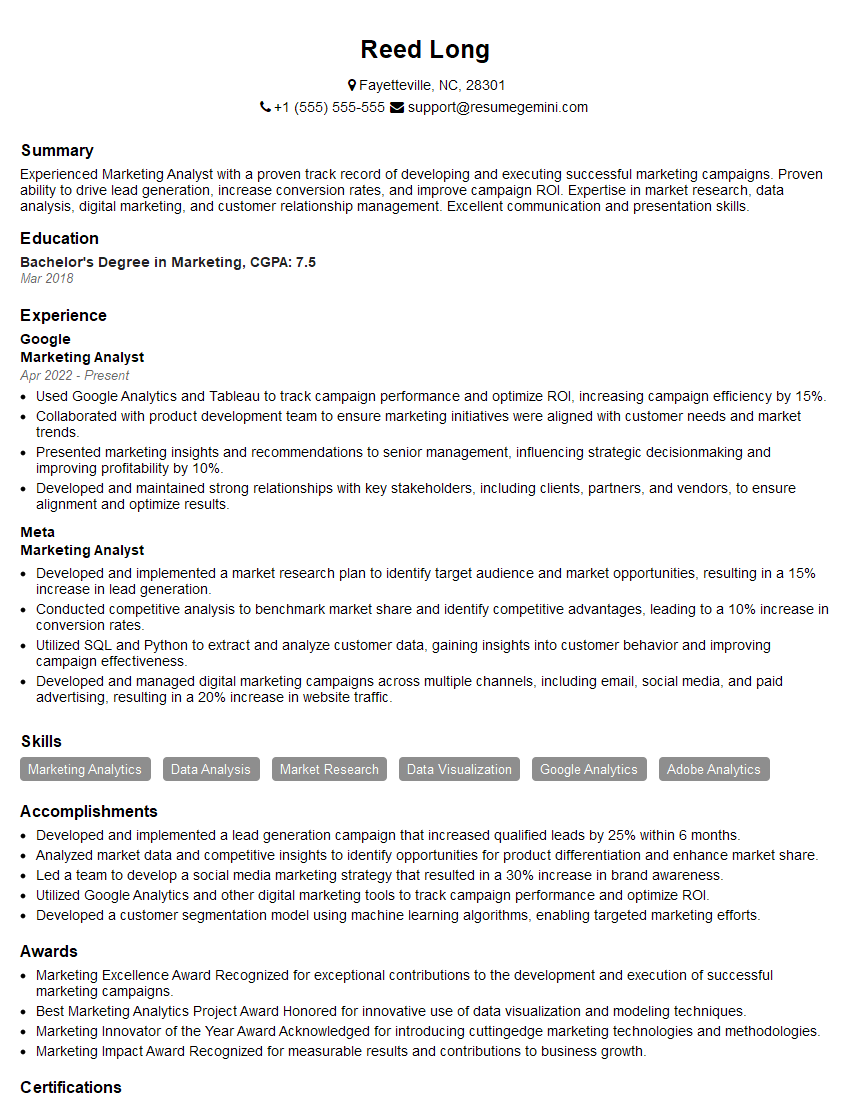
Marketing Analyst Resume Sample

Financial Analyst Resume Sample
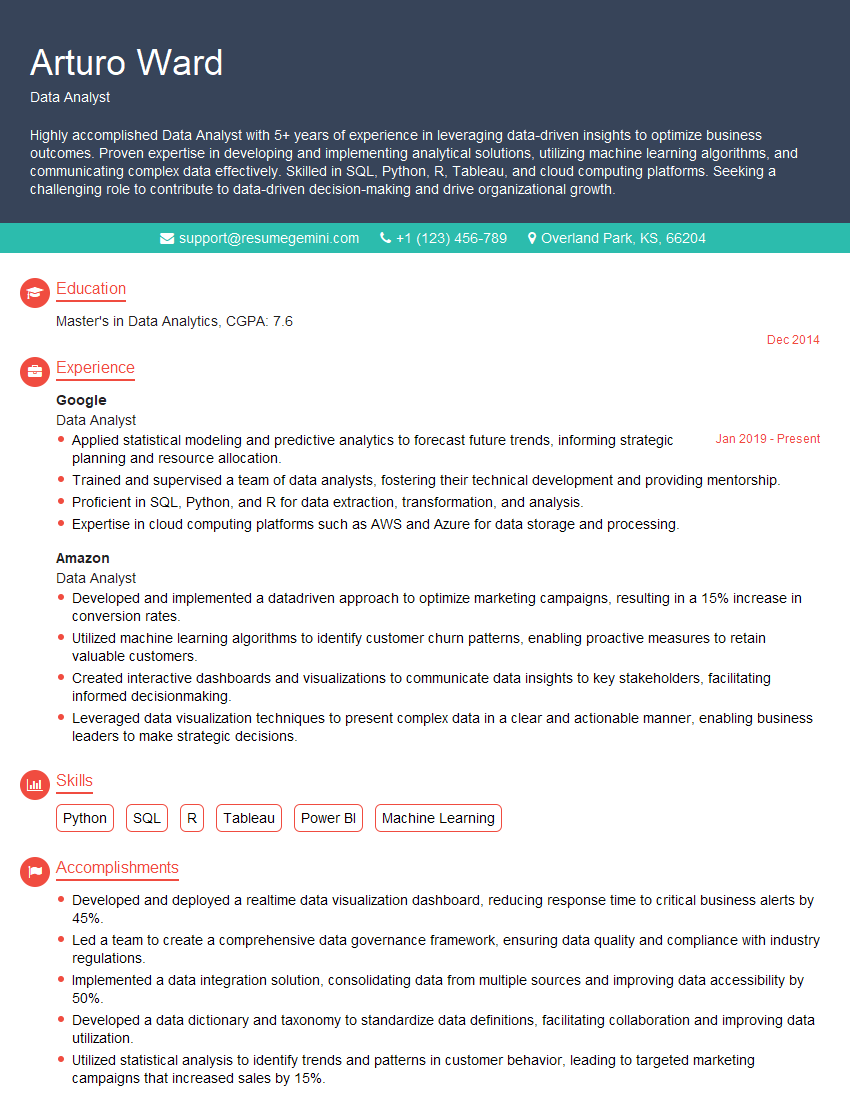
Data Analyst Resume Sample

Fraud Investigator Resume Sample
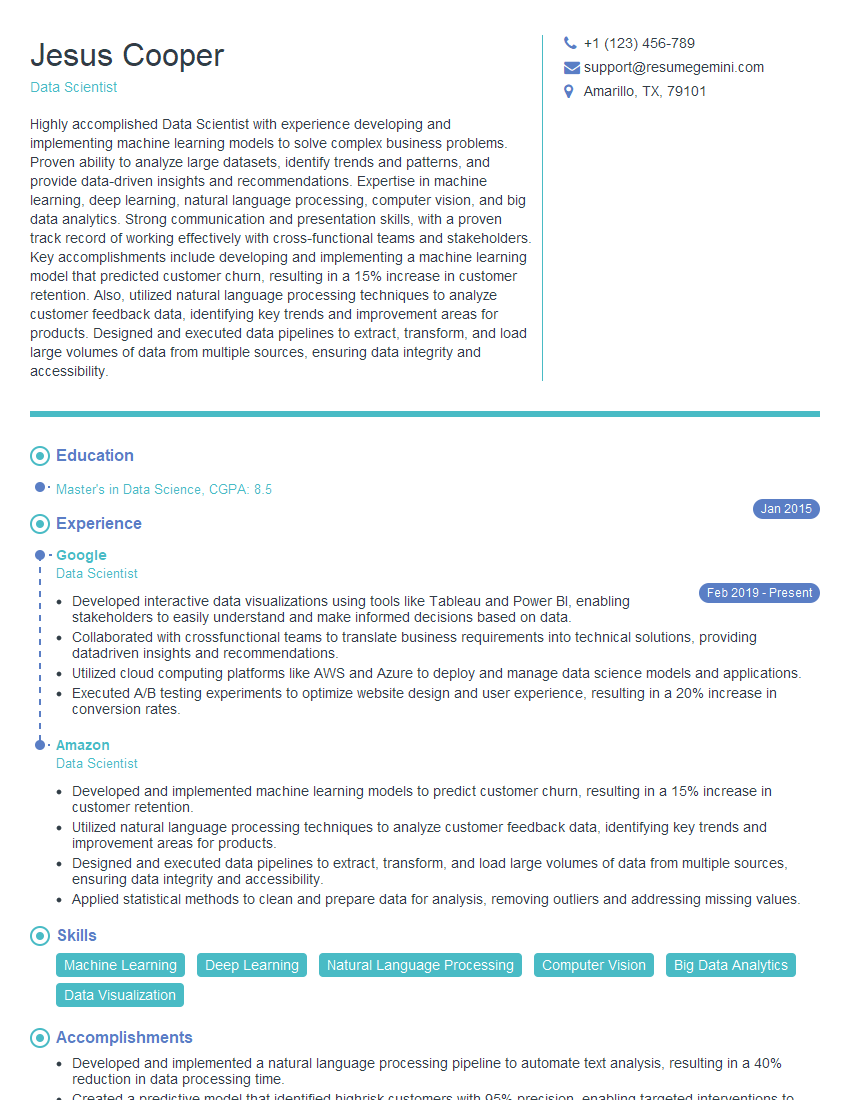
Data Scientist Resume Sample

Software Engineer Resume Sample
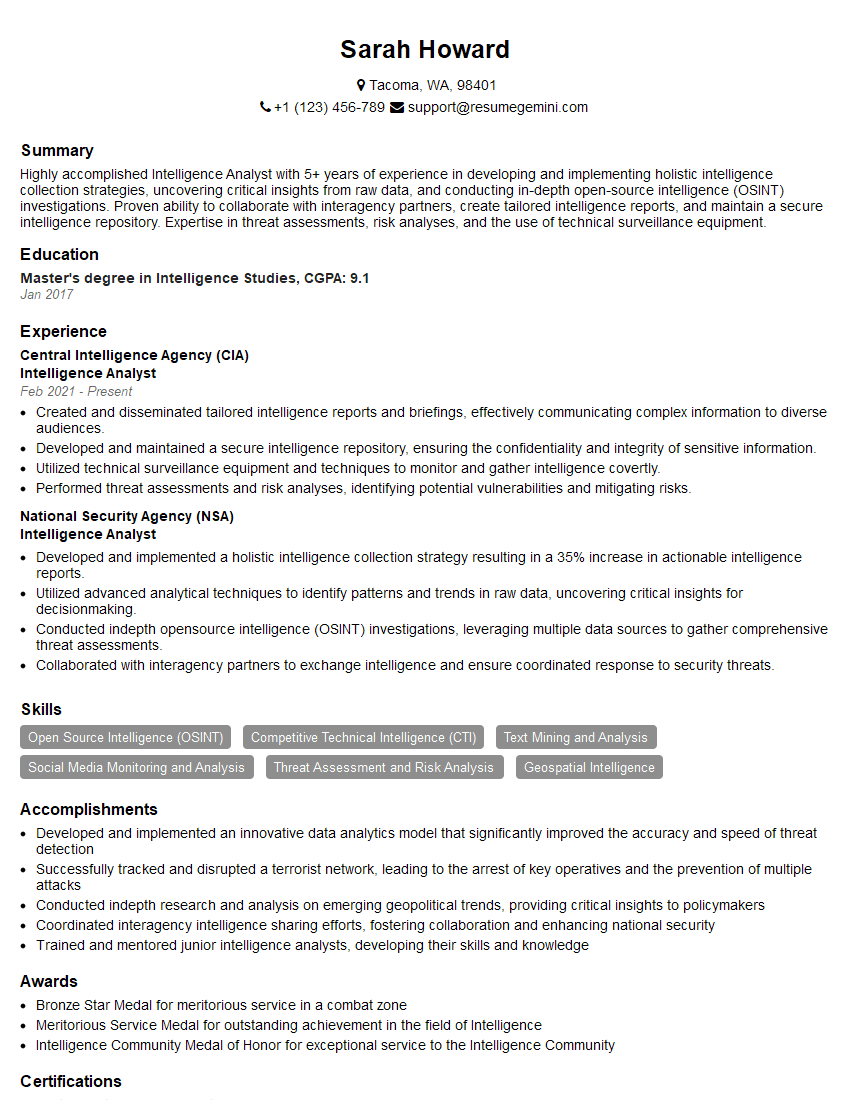
Intelligence Analyst Resume Sample
Game Designer Resume Sample

Actuary Resume Sample
Statistician Resume Sample

Epidemiologist Resume Sample
Medical Researcher Resume Sample
Economist Resume Sample

Medical Coder Resume Sample

Quality Control Inspector Resume Sample

Machine Learning Engineer Resume Sample
- Operations Manager
- Project Manager
- Risk Manager
- Supply Chain Analyst
- Business Analyst
- Market Research Analyst
- Marketing Analyst
- Financial Analyst
- Data Analyst
- Fraud Investigator
- Data Scientist
- Software Engineer
- Intelligence Analyst
- Game Designer
- Actuary
- Statistician
- Epidemiologist
- Medical Researcher
- Economist
- Medical Coder
- Quality Control Inspector
- Machine Learning Engineer
Explore more articles
Users Rating of Our Blogs
Share Your Experience
We value your feedback! Please rate our content and share your thoughts (optional).
What Readers Say About Our Blog
Hello,
we currently offer a complimentary backlink and URL indexing test for search engine optimization professionals.
You can get complimentary indexing credits to test how link discovery works in practice.
No credit card is required and there is no recurring fee.
You can find details here:
https://wikipedia-backlinks.com/indexing/
Regards
NICE RESPONSE TO Q & A
hi
The aim of this message is regarding an unclaimed deposit of a deceased nationale that bears the same name as you. You are not relate to him as there are millions of people answering the names across around the world. But i will use my position to influence the release of the deposit to you for our mutual benefit.
Respond for full details and how to claim the deposit. This is 100% risk free. Send hello to my email id: [email protected]
Luka Chachibaialuka
Hey interviewgemini.com, just wanted to follow up on my last email.
We just launched Call the Monster, an parenting app that lets you summon friendly ‘monsters’ kids actually listen to.
We’re also running a giveaway for everyone who downloads the app. Since it’s brand new, there aren’t many users yet, which means you’ve got a much better chance of winning some great prizes.
You can check it out here: https://bit.ly/callamonsterapp
Or follow us on Instagram: https://www.instagram.com/callamonsterapp
Thanks,
Ryan
CEO – Call the Monster App
Hey interviewgemini.com, I saw your website and love your approach.
I just want this to look like spam email, but want to share something important to you. We just launched Call the Monster, a parenting app that lets you summon friendly ‘monsters’ kids actually listen to.
Parents are loving it for calming chaos before bedtime. Thought you might want to try it: https://bit.ly/callamonsterapp or just follow our fun monster lore on Instagram: https://www.instagram.com/callamonsterapp
Thanks,
Ryan
CEO – Call A Monster APP
To the interviewgemini.com Owner.
Dear interviewgemini.com Webmaster!
Hi interviewgemini.com Webmaster!
Dear interviewgemini.com Webmaster!
excellent
Hello,
We found issues with your domain’s email setup that may be sending your messages to spam or blocking them completely. InboxShield Mini shows you how to fix it in minutes — no tech skills required.
Scan your domain now for details: https://inboxshield-mini.com/
— Adam @ InboxShield Mini
Reply STOP to unsubscribe
Hi, are you owner of interviewgemini.com? What if I told you I could help you find extra time in your schedule, reconnect with leads you didn’t even realize you missed, and bring in more “I want to work with you” conversations, without increasing your ad spend or hiring a full-time employee?
All with a flexible, budget-friendly service that could easily pay for itself. Sounds good?
Would it be nice to jump on a quick 10-minute call so I can show you exactly how we make this work?
Best,
Hapei
Marketing Director
Hey, I know you’re the owner of interviewgemini.com. I’ll be quick.
Fundraising for your business is tough and time-consuming. We make it easier by guaranteeing two private investor meetings each month, for six months. No demos, no pitch events – just direct introductions to active investors matched to your startup.
If youR17;re raising, this could help you build real momentum. Want me to send more info?
Hi, I represent an SEO company that specialises in getting you AI citations and higher rankings on Google. I’d like to offer you a 100% free SEO audit for your website. Would you be interested?
Hi, I represent an SEO company that specialises in getting you AI citations and higher rankings on Google. I’d like to offer you a 100% free SEO audit for your website. Would you be interested?
good