Cracking a skill-specific interview, like one for Advanced Knowledge of Typography and Design Principles, requires understanding the nuances of the role. In this blog, we present the questions you’re most likely to encounter, along with insights into how to answer them effectively. Let’s ensure you’re ready to make a strong impression.
Questions Asked in Advanced Knowledge of Typography and Design Principles Interview
Q 1. Explain the difference between kerning and tracking.
Kerning and tracking are both methods for adjusting the spacing between letters, but they operate at different levels. Think of it like adjusting the spacing between individual teeth (kerning) versus adjusting the spacing between your entire row of teeth (tracking).
Kerning refers to the adjustment of space between two specific characters. It’s a fine-tuning process that addresses the optical spacing between individual letter pairs. For example, the pair ‘AV’ often needs kerning because the ‘A’ has a wide bowl, and the ‘V’ a sharp point; without kerning, the space between them might look too wide.
Tracking, on the other hand, adjusts the spacing between all characters within a selected block of text. It’s a global adjustment, affecting the overall tightness or looseness of a line or paragraph. Think of it as setting the overall ‘density’ of the text. Tight tracking is useful for headlines, while loose tracking enhances readability in body text.
In professional design software, you’ll find kerning tools that allow you to manually adjust space between pairs, while tracking controls set a uniform adjustment for all selected characters. Using both effectively is crucial for creating balanced, visually appealing, and readable typography.
Q 2. Describe the principles of Gestalt theory and how they apply to typography.
Gestalt theory is a school of psychology that explores how humans perceive visual information. It posits that we see things as organized wholes rather than isolated parts. Several principles are highly relevant to typography:
- Proximity: Elements placed close together are perceived as a group. In typography, this means grouping related words or phrases together through closer spacing to improve readability and comprehension. For instance, a bulleted list uses proximity to visually separate each point.
- Similarity: Similar elements are perceived as a group. Typographically, using the same typeface, size, and color for headings, subheadings, and body text creates visual hierarchy and clear structure.
- Closure: We tend to complete incomplete shapes. This influences typography through the design of letterforms; even though a circle isn’t fully enclosed in the letter ‘o’, our brain automatically completes the shape.
- Continuity: The eye follows lines or curves. This is applicable in typography with leading (line spacing) and the alignment of text. Using consistent line spacing prevents visual disruption and guides the reader’s eye smoothly through the text.
- Figure/Ground: We distinguish figures (objects) from their background (ground). In typography, this principle dictates how text stands out against the page background. Sufficient contrast between text and background is vital for readability.
By understanding and applying Gestalt principles, designers can create typography that is not only visually appealing but also easy to read and understand. A well-designed layout, considering these principles, guides the reader’s eye effortlessly through the information.
Q 3. What are some common typefaces and their typical uses?
Many typefaces exist, each with its own personality and best use-cases. Here are some common examples:
- Times New Roman: A classic serif typeface, highly readable and often used for body text in books, newspapers, and formal documents.
- Arial: A widely used sans-serif typeface, clean and versatile, suitable for both print and screen, often used for body text and headlines where a modern and neutral feel is desired.
- Helvetica: Another popular sans-serif typeface known for its neutrality and readability; often used in corporate branding and wayfinding.
- Garamond: An elegant serif typeface suitable for body text in high-quality print materials, often used for books, magazines, and invitations that require a sophisticated and timeless feel.
- Georgia: A serif typeface designed for screen readability, featuring slightly thicker strokes for improved clarity on lower resolutions.
- Gill Sans: A geometric sans-serif typeface, known for its readability and clarity, often used in branding and signage.
The choice of typeface depends on the specific project, target audience, and desired aesthetic. There’s no one-size-fits-all answer, and exploring different typefaces is crucial for finding the perfect match.
Q 4. How would you choose an appropriate typeface for a website aimed at a young, tech-savvy audience?
For a young, tech-savvy audience, the typeface choice should reflect a modern, clean, and perhaps slightly playful aesthetic. Avoid overly traditional or formal typefaces. Consider these steps:
- Prioritize readability: Choose a typeface with good legibility on screens. Sans-serif fonts are generally better for on-screen use.
- Consider a modern sans-serif: Look at typefaces like Open Sans, Lato, Montserrat, or Roboto. They’re popular choices due to their clean lines and good readability.
- Incorporate a touch of personality: While maintaining readability, you could introduce a secondary typeface for headings or accents, something slightly more playful or unconventional (but still legible). Ensure good contrast.
- Test on various devices: Ensure the chosen typeface is rendered well on different screen sizes and resolutions.
- Maintain consistency: Stick to a limited number of typefaces to avoid visual clutter. Good visual hierarchy comes through size and weight differences in the fonts rather than switching fonts excessively.
Remember to test your selections extensively, considering aspects like visual appeal, responsiveness across devices, and overall user experience. User feedback is invaluable.
Q 5. Explain the concept of x-height and its importance in readability.
The x-height refers to the height of the lowercase letter ‘x’ in a particular typeface. It’s a crucial factor influencing readability because it directly relates to the overall size of the text.
A larger x-height makes the text appear more open and easier to read, as the body of the lowercase letters is more prominent. Smaller x-heights can lead to denser and more difficult-to-read text. Think of it as the ‘ground floor’ of the letters. If the ground floor is high, the whole building feels more open and less cramped.
When selecting a typeface, particularly for body text where readability is paramount, a typeface with a reasonable x-height is essential for ensuring that the text is comfortable to read, even over extended periods. If you’re designing for users with low vision, a larger x-height is particularly beneficial.
Q 6. Discuss the differences between serif and sans-serif typefaces.
The primary difference between serif and sans-serif typefaces lies in the presence or absence of ‘serifs’.
Serif typefaces have small decorative strokes (serifs) at the ends of their letterforms. They are often considered more traditional, elegant, and potentially more readable in large blocks of text (especially print) as the serifs act as visual guides to the eye.
Sans-serif typefaces, on the other hand, lack these decorative strokes. They generally appear more modern, clean, and minimalistic, often preferred for on-screen use and situations where a more contemporary feel is required. They typically work better for shorter text segments and headlines.
The choice between serif and sans-serif impacts the overall aesthetic and readability of the design. The context matters greatly. While serifs can enhance readability in print, sans-serif fonts often offer better clarity on screen.
Q 7. What are some considerations for designing typography for accessibility?
Designing for accessibility in typography is crucial for ensuring inclusivity. Key considerations include:
- Sufficient contrast: Ensure adequate color contrast between the text and background to meet WCAG (Web Content Accessibility Guidelines) standards. Tools are available to check contrast ratios.
- Font size: Choose a base font size that’s easily legible without zooming, and allow users to adjust font sizes.
- Font family: Select typefaces with good readability, considering those with larger x-heights and appropriate weight. Avoid overly decorative or thin typefaces.
- Line spacing (leading): Ensure adequate spacing between lines to improve readability, particularly for those with visual impairments.
- Letter spacing (tracking): Appropriate tracking ensures sufficient space between letters for clarity.
- Dyslexia-friendly fonts: Consider using fonts specifically designed to mitigate issues for readers with dyslexia. These fonts often have increased letter spacing and clear distinctions between letters.
- Text justification: Avoid fully justified text as it can create inconsistent spacing and negatively impact readability.
Regularly testing your designs with screen readers and users with diverse needs is vital to validate your accessibility efforts. Accessibility isn’t just a checkbox; it’s fundamental to creating truly inclusive design.
Q 8. How do you ensure legibility in various screen sizes and resolutions?
Ensuring legibility across various screen sizes and resolutions hinges on understanding responsive design principles and employing flexible typography. It’s not just about the font size, but a holistic approach that considers font choice, line-height, letter-spacing, and the overall layout.
Fluid Typography: Instead of fixed pixel sizes, use viewport units (
vw,vh) or relative units (em,rem) for font sizes. This allows text to scale proportionally with the screen size, maintaining optimal readability on smaller devices and larger monitors. For example:font-size: 1.5rem;Responsive Layout: Ensure your layout adapts to different screen sizes. A design that works beautifully on a desktop might be cluttered and unreadable on a phone. Using media queries (
@media screen and (max-width: 768px) { ... }) allows you to apply different styles based on the screen width, potentially adjusting font sizes, line-heights, and column layouts for improved readability.Font Choice: Select fonts with excellent clarity at different sizes. Some fonts are more legible at smaller sizes than others. Serif fonts can be harder to read on screens, so sans-serif fonts are often preferred for digital interfaces.
Line-height and Letter-spacing: Adjust the line-height (
line-height: 1.6;) to provide sufficient vertical space between lines, preventing text from feeling cramped. Letter-spacing (letter-spacing: 0.05em;) can improve readability, especially at smaller sizes, by subtly increasing the space between letters.
For example, I once worked on a website where the original design used fixed pixel sizes for typography. After implementing fluid typography and responsive layout adjustments, we saw a significant improvement in user engagement and feedback, proving the importance of this approach.
Q 9. Describe your experience with typography in responsive design.
My experience with typography in responsive design is extensive. I’ve consistently incorporated techniques like fluid typography and media queries to ensure optimal readability on diverse screens. I believe responsive typography is not just about scaling font sizes; it’s about understanding how the entire design and layout impact readability at different viewport widths.
In a recent project for a mobile-first e-commerce platform, I used rem units for font sizing, which allowed for a scalable typographic system. I also incorporated media queries to make adjustments to line-height, column widths, and even font choices based on screen size. This ensured the text remained comfortable to read on both mobile and desktop screens, resulting in a more enjoyable user experience. Smaller screens benefitted from larger line-height and single-column layouts, while larger screens could handle more intricate layouts with multi-column structures.
Q 10. How do you handle different language scripts and their typographic requirements?
Handling different language scripts requires careful consideration of their unique typographic needs. This goes beyond simply selecting a font that supports the script; it involves understanding the nuances of each language’s character spacing, ligatures, kerning, and potential issues with text direction (left-to-right, right-to-left).
Font Selection: Choose fonts designed to support the specific script (e.g., Arabic, Hebrew, Cyrillic, Chinese, Japanese). OpenType features within these fonts handle things like ligatures and kerning automatically.
Language Support: Ensure your web pages and design tools are properly configured to handle different languages and character encodings (e.g., UTF-8).
Directionality: Implement appropriate styling for right-to-left languages, reversing text direction and potentially adjusting the layout to maintain visual flow.
Kerning and Tracking: Manually adjust kerning (spacing between individual characters) and tracking (spacing between groups of characters) might be needed for optimal readability and visual balance in certain languages.
For a multilingual website I worked on, selecting appropriate fonts that supported multiple languages, such as Arabic and English, was crucial. Careful attention to directionality and the correct character encoding was vital for preventing display issues and ensuring legibility.
Q 11. Explain your understanding of leading, and its effect on readability.
Leading, or line-height, refers to the vertical spacing between lines of text. It significantly impacts readability and overall visual appeal. Insufficient leading can lead to cramped, difficult-to-read text, while excessive leading can make text feel too airy and disconnected.
The optimal leading value depends on the font, font size, and the desired visual effect. A common guideline is to use a leading value between 1.2 and 1.5 times the font size (e.g., if the font size is 16px, the leading could be between 19.2px and 24px). However, this is a general rule of thumb; adjustments are frequently needed based on context and aesthetic considerations.
Experimenting with leading is key. Too little leading results in dense, unappealing text. Too much leading creates overly spacious text that can disrupt the flow. Finding the sweet spot improves both readability and the overall aesthetic balance.
Q 12. What are some common issues with using too many different typefaces in one design?
Using too many different typefaces in one design often leads to visual chaos and reduces readability. Too much variety creates visual conflict and distracts the reader from the content. The resulting effect is disharmony.
Visual Confusion: Multiple typefaces compete for attention, making it difficult for the reader to focus on the content.
Inconsistent Hierarchy: It becomes challenging to establish a clear visual hierarchy with various typefaces, making it hard to distinguish between headings, subheadings, body text, etc.
Lack of Cohesion: The design loses its visual unity and feels disjointed.
It’s best to limit the number of typefaces to two or three, at most. Usually, one typeface for headings and one for body text creates a strong visual consistency and clearly defined hierarchy. Consider using variations of the same typeface (e.g., bold, italic, condensed) for visual differentiation rather than introducing entirely new fonts.
Q 13. How do you balance aesthetics and functionality when making typographic decisions?
Balancing aesthetics and functionality in typographic decisions requires a keen understanding of design principles and user experience. The goal is not just to make the text look pretty but to ensure it is easily readable and supports the overall message.
For example, an elegant script typeface might look beautiful but prove difficult to read in body text. In such cases, prioritizing readability requires choosing a more functional font. Conversely, a design might look slightly less aesthetically pleasing with a more utilitarian font but result in a considerably improved user experience. The key is finding the right compromise between form and function, making informed choices to maximize both the visual appeal and usability of the text.
Q 14. Describe your experience with using typography to create a hierarchy in a design.
Typography plays a crucial role in establishing a clear visual hierarchy. This guides the reader’s eye through the content and highlights important information. The most important information receives the most visual prominence. This is achieved through various typographic elements:
Font Size: Larger font sizes for headings and titles draw immediate attention.
Font Weight: Bold typefaces emphasize key elements.
Font Style: Italics can be used for emphasis or to highlight specific information.
Spacing: Generous leading and paragraph spacing improves readability and provides visual breathing room.
Color: Color contrast between text and background ensures visibility and hierarchy.
In a recent project designing a brochure, I used a large, bold serif font for the main title, a slightly smaller sans-serif font for section headings, and a smaller sans-serif font for the body text. This clear hierarchy guided the reader’s eye through the content and made the information easy to digest. The choice of fonts also reflected the brand’s identity, blending aesthetics and functionality.
Q 15. Explain the role of whitespace in typography and design.
Whitespace, often overlooked, is the unsung hero of typography and design. It’s the space between words, lines, paragraphs, and elements on a page—the ‘negative space’. It’s not just empty; it actively shapes the visual hierarchy, improves readability, and creates visual breathing room.
- Improved Readability: Sufficient whitespace between lines (leading) and words (tracking/kerning) prevents crowding, making the text easier on the eyes and reducing fatigue. Think of it like the margins of a road – they provide safe space for drivers (readers).
- Visual Hierarchy: Strategic use of whitespace guides the reader’s eye, emphasizing key elements and de-emphasizing less important ones. A large block of text surrounded by ample white space naturally draws more attention than a similarly sized block crammed into a tight corner.
- Enhanced Aesthetics: Whitespace contributes significantly to the overall aesthetic appeal of a design. It creates a sense of balance, cleanliness, and professionalism, making the content feel more inviting and less overwhelming.
For example, compare a newspaper column with tiny fonts and minimal spacing to a well-designed website. The latter often uses generous margins, ample space between paragraphs, and strategic use of white space to create a cleaner, more inviting reading experience.
Career Expert Tips:
- Ace those interviews! Prepare effectively by reviewing the Top 50 Most Common Interview Questions on ResumeGemini.
- Navigate your job search with confidence! Explore a wide range of Career Tips on ResumeGemini. Learn about common challenges and recommendations to overcome them.
- Craft the perfect resume! Master the Art of Resume Writing with ResumeGemini’s guide. Showcase your unique qualifications and achievements effectively.
- Don’t miss out on holiday savings! Build your dream resume with ResumeGemini’s ATS optimized templates.
Q 16. What are your favorite typographic resources and why?
My favorite typographic resources are a mix of online and print materials. I rely heavily on resources like:
- Typewolf: It showcases beautiful websites and identifies the fonts used, inspiring me with real-world applications of typography.
- Fonts In Use: A fantastic archive documenting fonts used in notable design projects. It’s a great way to see how different typefaces function in a practical context, inspiring me to push my creative boundaries.
- The Elements of Typographic Style by Robert Bringhurst: This book is a classic, providing an in-depth exploration of typographic principles and practices. It’s a valuable reference for both theoretical understanding and practical application.
- Various foundry websites: Foundries like Hoefler & Co., Font Bureau and Google Fonts provide excellent resources on their typeface families, including usage guides and examples, often showcasing stylistic alternates and the versatility of each font.
I prefer a multi-faceted approach because each resource offers a unique perspective, from practical examples to the underlying theories. This helps me develop a holistic understanding of typography and its potential.
Q 17. How do you stay updated with the latest typography trends?
Staying current in the dynamic world of typography requires a proactive approach. I utilize several methods:
- Following design blogs and publications: I regularly read publications like Creative Bloq, AIGA Eye on Design, and It’s Nice That, which feature articles on emerging trends and techniques.
- Attending conferences and workshops: In-person events provide invaluable networking opportunities and expose me to cutting-edge ideas from leading typographers and designers.
- Engaging with online communities: I actively participate in online forums, such as those on Reddit or Typeform, discussing typography, sharing insights, and learning from other professionals’ experiences.
- Exploring new font releases and updates: I keep track of new font releases from major foundries and independent designers, experimenting with them to evaluate their capabilities and explore their stylistic potential.
This combination ensures I stay informed, allowing me to adapt my skillset and creatively integrate new trends into my work.
Q 18. Explain the concept of visual weight in typography.
Visual weight refers to how much a specific element attracts the viewer’s eye within a design. In typography, this is influenced by several factors:
- Font Weight: Bold fonts naturally have more visual weight than lighter ones. A bold headline commands more attention than a light-weight body text.
- Font Size: Larger fonts carry greater weight, drawing the reader’s focus. This is why headlines are typically much larger than body text.
- Font Style: Italics or condensed fonts can have slightly different visual weights compared to their regular counterparts. The visual weight often changes depending on the specific typeface family.
- Color Contrast: Dark text on a light background has a stronger visual weight than light text on a dark background. Using contrast effectively guides the reader’s attention.
- Spacing: Isolation through whitespace can increase the perceived weight of a typographic element.
Understanding visual weight is crucial for creating effective typographic hierarchies. By carefully manipulating these elements, designers can guide the reader’s eye through the content, ensuring key information is highlighted effectively.
Q 19. What software are you proficient in for typography design?
My proficiency extends across several software applications vital for typography design:
- Adobe InDesign: My primary tool for print and digital layout. InDesign offers precision control over typography, including kerning, tracking, leading, and advanced typographic features for optimal readability and aesthetics.
- Adobe Illustrator: Crucial for creating custom letterforms or illustrations integrated with typographic designs. Its vector capabilities allow for flexibility and scalability.
- Adobe Photoshop: Used for advanced image manipulation and integration with typographic designs, ensuring seamless visual cohesion between text and imagery.
- FontLab Studio (or similar): I’m experienced in using professional font creation software. While not used daily, this skill allows me to understand font construction deeply and tailor typography to specific projects.
This software suite allows me to approach typography design holistically, from conceptualization and font selection to layout and final output.
Q 20. How would you approach designing typography for a print publication?
Designing typography for a print publication involves a systematic approach focusing on readability, aesthetic appeal, and the specific constraints of the print medium:
- Understanding the Publication’s Identity: Begin by thoroughly understanding the publication’s brand identity, target audience, and overall tone. This informs font selection, style, and overall visual approach.
- Font Selection: Choose fonts that are highly legible at the intended print size and that align with the publication’s personality. Consider pairing fonts effectively, using one for headings and another for body text, ensuring contrast and harmony.
- Setting Type Specifications: Precisely define the point size, leading, tracking, and kerning for each text element. This ensures consistent readability and visual appeal across the publication.
- Creating a Hierarchy: Establish a clear visual hierarchy to guide the reader’s eye. Use variations in font size, weight, and style to distinguish headlines, subheadings, body text, and captions.
- Considering Paper and Ink: Select appropriate paper stock and ink colors that complement the chosen fonts and overall design. The paper’s texture and ink’s quality can significantly impact the visual appearance of the typography.
- Proofreading and Testing: Thoroughly proofread the final layout for any errors and consider printing a test print to assess the final appearance. This addresses potential issues before mass production.
Each step ensures the typography enhances the content, making it engaging and accessible to the target audience.
Q 21. How would you assess the readability of a given text block?
Assessing the readability of a text block involves a multi-faceted approach, considering several factors:
- Font Choice: Is the font legible at the chosen size? Serif fonts are often considered more readable for larger blocks of text, while sans-serif fonts can be suitable for shorter passages or digital displays. Avoid overly decorative or unusual typefaces that compromise readability.
- Font Size and Leading: Is the font size appropriate for the reading distance? Is there sufficient leading (vertical spacing) to prevent lines from crowding and impairing readability? The optimal leading often exceeds the point size of the font.
- Tracking and Kerning: Is the tracking (overall letter spacing) consistent and appropriate? Is kerning (adjustment of space between individual letter pairs) correctly applied to avoid awkward letter combinations?
- Line Length: Are the lines appropriately long? Lines that are too long or too short can both reduce readability. A generally accepted rule is to keep lines between 45-75 characters.
- Contrast: Is there sufficient contrast between the text color and the background color? Poor contrast makes text difficult to read.
- Visual Noise: Is there excessive visual clutter surrounding the text block that detracts from its readability? Ensure the text block is clearly separated from distracting elements.
By systematically evaluating these aspects, one can effectively assess the readability of a given text block and make necessary adjustments for optimal comprehension.
Q 22. Describe your experience with designing for different cultural contexts.
Designing for different cultural contexts requires deep sensitivity and understanding. It’s not just about translating text; it’s about adapting the entire visual communication to resonate with the target audience’s values, aesthetics, and reading habits. This involves understanding the nuances of language, including directionality (right-to-left vs. left-to-right), character sets (like Arabic or Cyrillic scripts requiring specific font support), and cultural symbolism associated with colors and imagery.
For example, color palettes might need adjustments. Red, signifying good fortune in some cultures, might represent danger or mourning in others. Similarly, font choices must align with cultural preferences – a modern sans-serif font might be ideal for a tech company targeting a young Western audience, while a more traditional serif font might be more appropriate for a financial institution in a more conservative Eastern market. Thorough research, consultation with cultural experts, and user testing are crucial to ensure effective communication and avoid unintentional offense.
In a recent project for a global food company, we adjusted the typography and color schemes for various regional campaigns. For example, the campaign in Japan featured a more minimalist design with a clean sans-serif font and subtle color palettes, while the campaign in Brazil utilized bolder colors and a slightly more playful typeface to reflect the country’s vibrant culture.
Q 23. How do you use typography to convey a specific brand identity?
Typography is a powerful tool for shaping brand identity. The right typeface can instantly communicate a brand’s personality, values, and target audience. Consider a playful script font for a boutique, a bold sans-serif for a tech company, or an elegant serif for a luxury brand. Each choice subtly influences perception.
Beyond the typeface itself, other typographic elements play a crucial role. Kerning (adjusting space between individual letters), tracking (adjusting space between all letters in a word or line), and leading (space between lines) all contribute to readability and the overall visual impact. The weight (boldness) and style (italic, condensed, etc.) of the typeface also contribute significantly to the brand’s image. Consistency is paramount; a strong brand will maintain a cohesive typographic system across all its materials, from websites and social media to packaging and print collateral.
For instance, a brand aiming for a feeling of modern minimalism might use a geometric sans-serif font with tight tracking and generous leading. Conversely, a brand desiring a feeling of tradition and authority might utilize a classic serif font with looser tracking and more conservative leading.
Q 24. How do you solve typographic problems in a collaborative setting?
Solving typographic problems collaboratively requires open communication, clear articulation of goals, and a willingness to compromise. I always begin by clearly defining the project’s objectives and the desired aesthetic. Then, I present different typographic options, explaining the rationale behind each choice and its potential impact on readability and brand perception.
Active listening is critical. I encourage team members to voice their opinions and concerns, respecting diverse perspectives. When disagreements arise, I facilitate a discussion to analyze the pros and cons of different approaches, focusing on data and user feedback rather than subjective preferences. We often use A/B testing to compare different typographic solutions and gather empirical evidence to support decision-making. Compromise is key – sometimes, the best solution is a blend of different ideas.
In one project, we had conflicting views on the ideal typeface for a website redesign. By presenting data on readability tests and user preferences, we managed to reach a consensus on a typeface that balanced aesthetic appeal with practical considerations.
Q 25. Explain the difference between a font and a typeface.
The terms ‘font’ and ‘typeface’ are often used interchangeably, but there’s a subtle yet crucial distinction. A typeface is the overall design of a lettering family, encompassing its various weights (light, regular, bold), styles (italic, condensed), and widths. Think of it as the blueprint.
A font, on the other hand, is a specific implementation of a typeface. It’s the digital file containing the instructions for rendering the characters at a particular size, weight, and style. So, Arial Regular, Arial Bold, and Arial Italic are all different fonts from the same Arial typeface. A single typeface can have dozens of fonts.
Think of it like this: a typeface is like an architectural design for a building, while a font is like a specific set of construction blueprints for building that design at a particular scale and with specific materials.
Q 26. What are some common pitfalls to avoid when designing with typography?
Several common pitfalls can hinder effective typographic design. One major issue is poor readability, caused by factors like insufficient contrast between text and background, overly small font sizes, inadequate line spacing, or using overly decorative or hard-to-read typefaces. Another pitfall is inconsistency – switching between multiple typefaces without a clear rationale, or inconsistently applying kerning, tracking, and leading, can create a chaotic and unprofessional look.
Overusing decorative elements, such as excessive drop shadows, outlines, or gradients, can also distract from the core message and reduce readability. Finally, ignoring accessibility considerations is a critical mistake. Not considering users with visual impairments, for instance, by failing to provide sufficient color contrast or alternative text for images, is both unethical and counterproductive.
To avoid these pitfalls, designers should focus on clarity, consistency, and accessibility. Prioritizing readability, carefully selecting typefaces, and adhering to established best practices are crucial steps towards creating effective and visually appealing typographic designs.
Q 27. Describe a time when you had to make a difficult typographic decision. How did you approach it?
I once faced a difficult decision regarding the typeface selection for a high-profile museum exhibition. The client initially favored a highly decorative, ornate typeface that, while aesthetically pleasing, significantly compromised readability, especially for older visitors. This conflicted with the museum’s goal of providing an accessible and informative experience to a diverse audience.
My approach was methodical. I started by presenting data comparing the readability of the client’s preferred typeface with several alternatives using legibility tests and focusing on font metrics like x-height (the height of lowercase letters) and contrast. I also created mock-ups showing how each typeface would appear in the exhibition’s various informational panels and brochures. Through a series of collaborative discussions and presentations, I demonstrated the negative impact of low readability on the visitor experience. Ultimately, we arrived at a compromise – a more contemporary serif typeface that balanced aesthetic appeal with excellent readability and aligned with the exhibition’s branding.
Q 28. How do you ensure consistency in typography across different platforms?
Ensuring typographic consistency across different platforms requires a well-defined style guide and a robust workflow. The style guide should specify the primary typeface, its various weights and styles, font sizes for different headings and body text, line spacing, and other crucial parameters. This style guide needs to be accessible to all team members working on different platforms. Ideally, it should be living document that can be adapted over time.
For web development, using CSS variables (custom properties) and a consistent naming convention for typography classes makes it easier to maintain consistency and update styles globally. Similarly, for print designs, using master pages and style sheets in applications like InDesign or QuarkXPress ensures uniformity across all documents. For branding across multiple platforms (web, mobile app, print), a style guide, combined with efficient asset management systems, helps to ensure consistency in typography across different media.
Regular reviews of the style guide and consistent use of design system tools are also important. For example, using a design system with pre-defined components and typography styles across web and app design can significantly increase consistency and maintainability. Regular audits of the design across different platforms help identify and correct any deviations from the specified style guide.
Key Topics to Learn for Advanced Knowledge of Typography and Design Principles Interview
- Typography Fundamentals: Mastering kerning, tracking, leading, and the nuances of various typefaces (serif, sans-serif, script, etc.) and their appropriate application.
- Grid Systems and Layout: Understanding and applying different grid systems (e.g., modular, baseline) to create balanced and harmonious designs. Practical application includes demonstrating proficiency in creating responsive layouts.
- Color Theory and Application: Beyond basic color palettes, showcasing expertise in color harmony, contrast, and accessibility considerations (e.g., WCAG compliance).
- Visual Hierarchy and Emphasis: Demonstrating the ability to guide the viewer’s eye effectively using size, weight, color, and spacing to create a clear visual hierarchy.
- Image and Text Integration: Understanding how to effectively combine imagery and typography to enhance communication and create visually compelling designs. This includes considerations for image scaling, resolution, and file formats.
- Design Principles: Articulating a strong understanding of principles like balance, proportion, rhythm, unity, and contrast, and demonstrating how they are applied in practical design solutions.
- Advanced Typography Techniques: Explore concepts like OpenType features, ligatures, and stylistic alternates to demonstrate a high level of typographic skill.
- Design Software Proficiency: Highlighting practical experience and skills in industry-standard design software (e.g., Adobe Creative Suite, Figma, Sketch).
- Problem-Solving and Design Thinking: Prepare examples that demonstrate your ability to approach design challenges systematically and creatively, explaining your design rationale and decision-making process.
- Design Trends and Innovation: Staying up-to-date with current design trends and demonstrating an understanding of how these trends influence typographic and design choices.
Next Steps
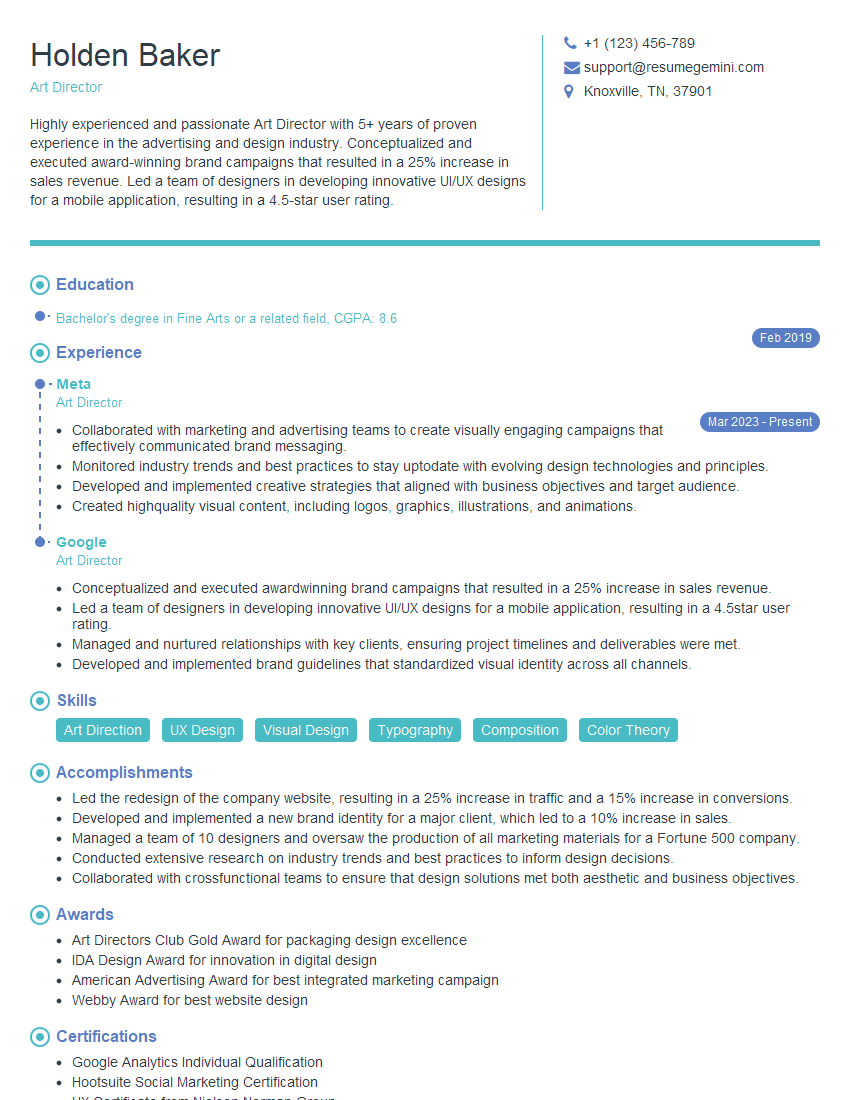
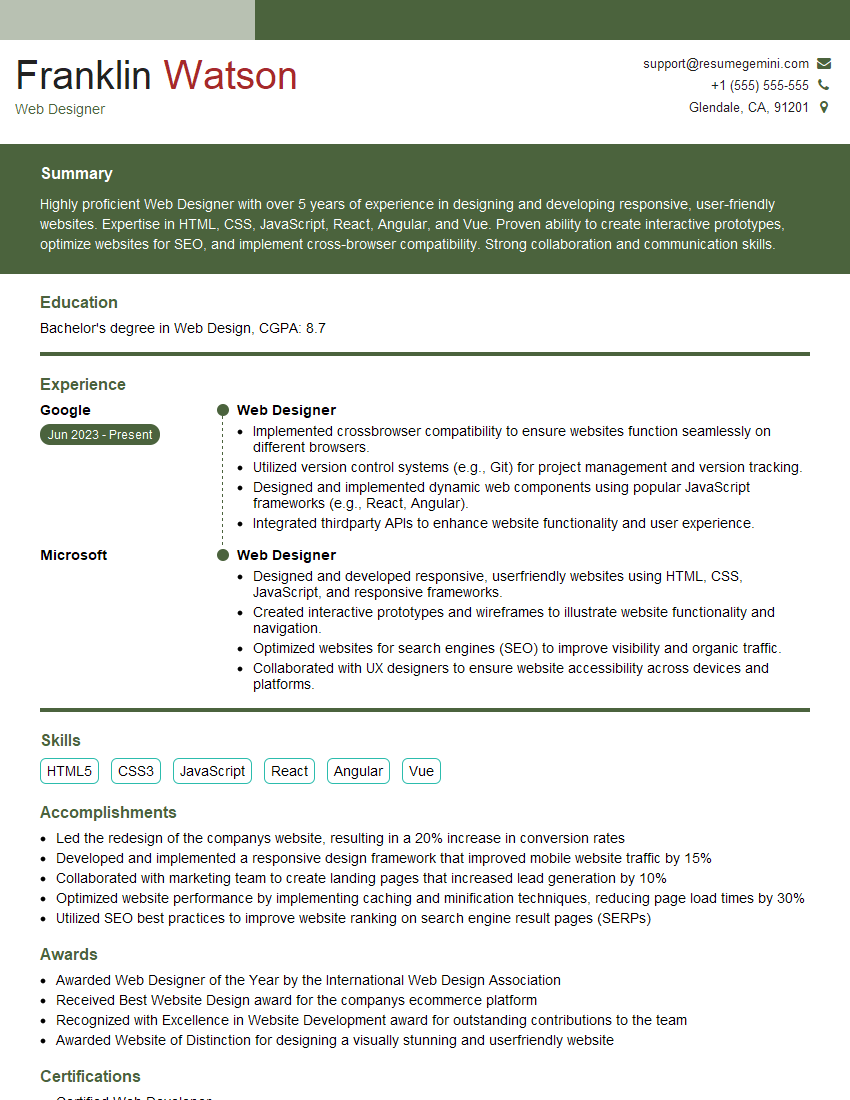
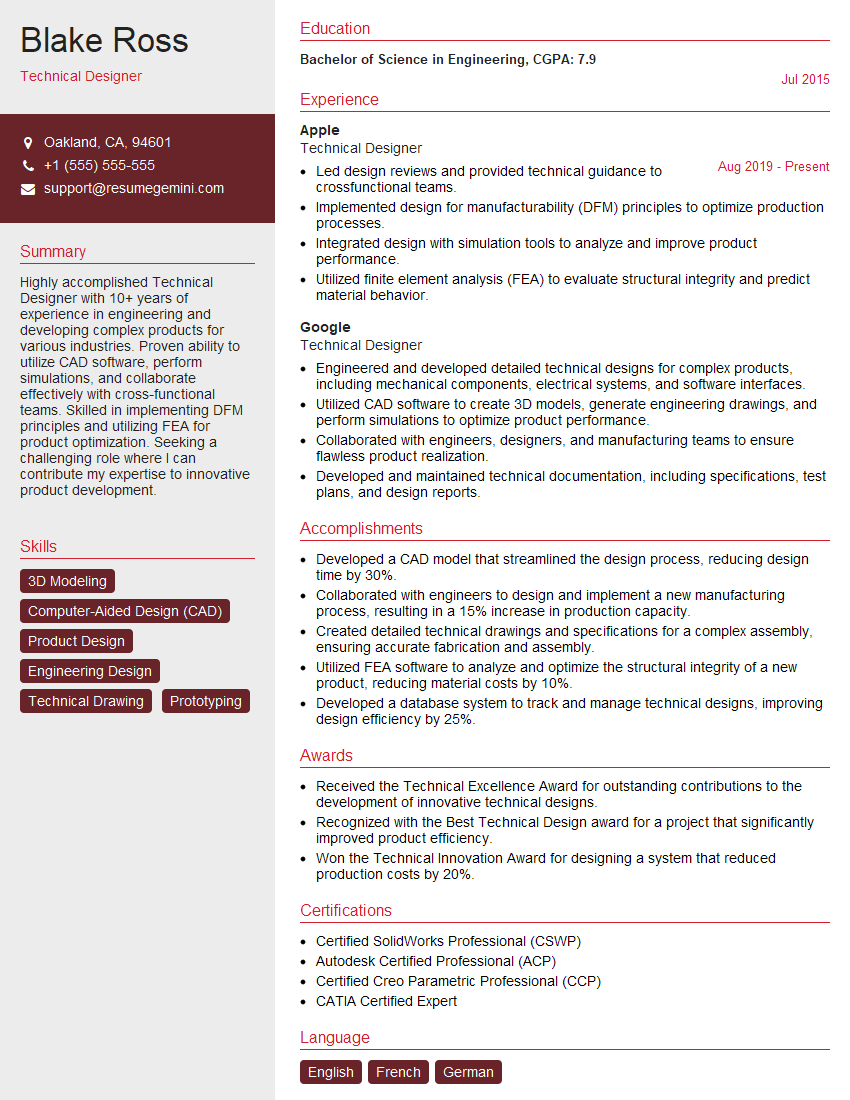
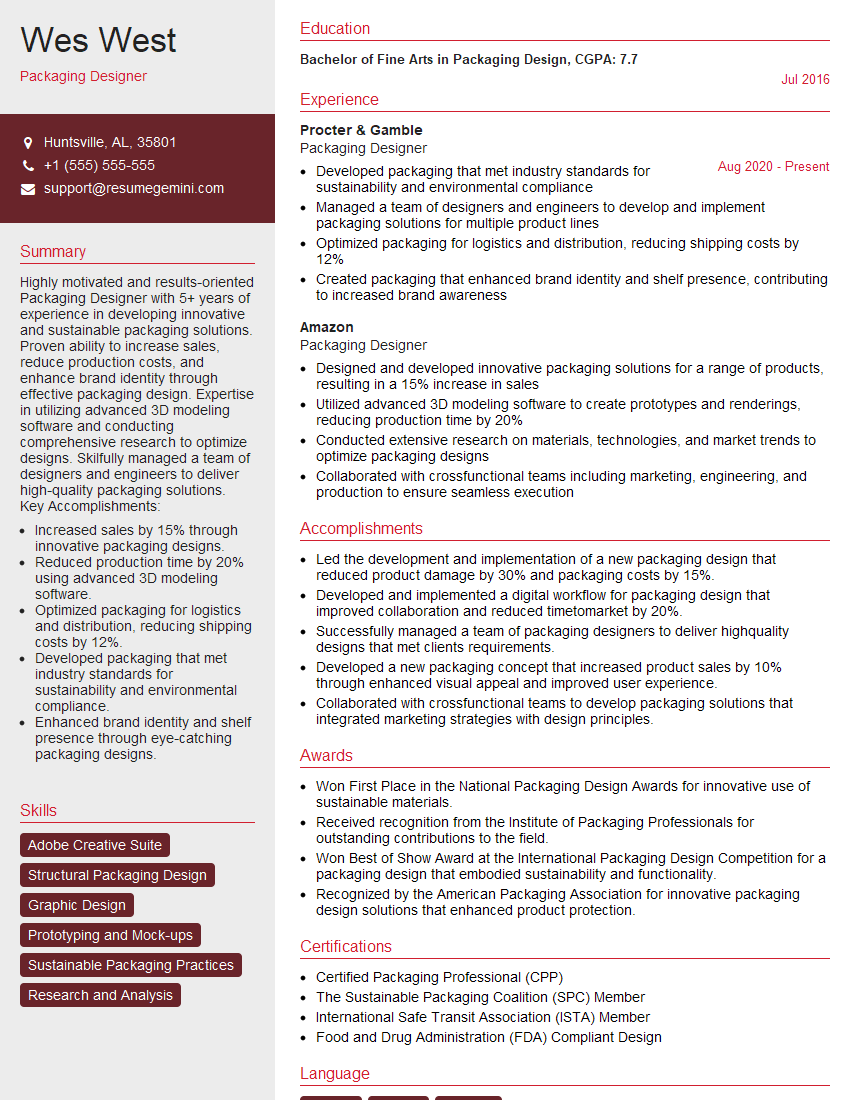
Mastering advanced typography and design principles significantly enhances your career prospects, opening doors to more challenging and rewarding roles within the design industry. A strong understanding of these principles is crucial for demonstrating your expertise and securing your dream position. To maximize your job search success, create an ATS-friendly resume that effectively highlights your skills and experience. ResumeGemini is a trusted resource that can help you build a professional and impactful resume. Examples of resumes tailored to showcasing advanced knowledge of typography and design principles are available to guide you.


Explore more articles
Users Rating of Our Blogs
Share Your Experience
We value your feedback! Please rate our content and share your thoughts (optional).
What Readers Say About Our Blog
Attention music lovers!
Wow, All the best Sax Summer music !!!
Spotify: https://open.spotify.com/artist/6ShcdIT7rPVVaFEpgZQbUk
Apple Music: https://music.apple.com/fr/artist/jimmy-sax-black/1530501936
YouTube: https://music.youtube.com/browse/VLOLAK5uy_noClmC7abM6YpZsnySxRqt3LoalPf88No
Other Platforms and Free Downloads : https://fanlink.tv/jimmysaxblack
on google : https://www.google.com/search?q=22+AND+22+AND+22
on ChatGPT : https://chat.openai.com?q=who20jlJimmy20Black20Sax20Producer
Get back into the groove with Jimmy sax Black
Best regards,
Jimmy sax Black
www.jimmysaxblack.com
Hi I am a troller at The aquatic interview center and I suddenly went so fast in Roblox and it was gone when I reset.
Hi,
Business owners spend hours every week worrying about their website—or avoiding it because it feels overwhelming.
We’d like to take that off your plate:
$69/month. Everything handled.
Our team will:
Design a custom website—or completely overhaul your current one
Take care of hosting as an option
Handle edits and improvements—up to 60 minutes of work included every month
No setup fees, no annual commitments. Just a site that makes a strong first impression.
Find out if it’s right for you:
https://websolutionsgenius.com/awardwinningwebsites
Hello,
we currently offer a complimentary backlink and URL indexing test for search engine optimization professionals.
You can get complimentary indexing credits to test how link discovery works in practice.
No credit card is required and there is no recurring fee.
You can find details here:
https://wikipedia-backlinks.com/indexing/
Regards
NICE RESPONSE TO Q & A
hi
The aim of this message is regarding an unclaimed deposit of a deceased nationale that bears the same name as you. You are not relate to him as there are millions of people answering the names across around the world. But i will use my position to influence the release of the deposit to you for our mutual benefit.
Respond for full details and how to claim the deposit. This is 100% risk free. Send hello to my email id: lukachachibaialuka@gmail.com
Luka Chachibaialuka
Hey interviewgemini.com, just wanted to follow up on my last email.
We just launched Call the Monster, an parenting app that lets you summon friendly ‘monsters’ kids actually listen to.
We’re also running a giveaway for everyone who downloads the app. Since it’s brand new, there aren’t many users yet, which means you’ve got a much better chance of winning some great prizes.
You can check it out here: https://bit.ly/callamonsterapp
Or follow us on Instagram: https://www.instagram.com/callamonsterapp
Thanks,
Ryan
CEO – Call the Monster App
Hey interviewgemini.com, I saw your website and love your approach.
I just want this to look like spam email, but want to share something important to you. We just launched Call the Monster, a parenting app that lets you summon friendly ‘monsters’ kids actually listen to.
Parents are loving it for calming chaos before bedtime. Thought you might want to try it: https://bit.ly/callamonsterapp or just follow our fun monster lore on Instagram: https://www.instagram.com/callamonsterapp
Thanks,
Ryan
CEO – Call A Monster APP
To the interviewgemini.com Owner.
Dear interviewgemini.com Webmaster!
Hi interviewgemini.com Webmaster!
Dear interviewgemini.com Webmaster!
excellent
Hello,
We found issues with your domain’s email setup that may be sending your messages to spam or blocking them completely. InboxShield Mini shows you how to fix it in minutes — no tech skills required.
Scan your domain now for details: https://inboxshield-mini.com/
— Adam @ InboxShield Mini
support@inboxshield-mini.com
Reply STOP to unsubscribe
Hi, are you owner of interviewgemini.com? What if I told you I could help you find extra time in your schedule, reconnect with leads you didn’t even realize you missed, and bring in more “I want to work with you” conversations, without increasing your ad spend or hiring a full-time employee?
All with a flexible, budget-friendly service that could easily pay for itself. Sounds good?
Would it be nice to jump on a quick 10-minute call so I can show you exactly how we make this work?
Best,
Hapei
Marketing Director
Hey, I know you’re the owner of interviewgemini.com. I’ll be quick.
Fundraising for your business is tough and time-consuming. We make it easier by guaranteeing two private investor meetings each month, for six months. No demos, no pitch events – just direct introductions to active investors matched to your startup.
If youR17;re raising, this could help you build real momentum. Want me to send more info?
Hi, I represent an SEO company that specialises in getting you AI citations and higher rankings on Google. I’d like to offer you a 100% free SEO audit for your website. Would you be interested?
Hi, I represent an SEO company that specialises in getting you AI citations and higher rankings on Google. I’d like to offer you a 100% free SEO audit for your website. Would you be interested?