Interviews are more than just a Q&A session—they’re a chance to prove your worth. This blog dives into essential Aerospace Manufacturing interview questions and expert tips to help you align your answers with what hiring managers are looking for. Start preparing to shine!
Questions Asked in Aerospace Manufacturing Interview
Q 1. Explain your understanding of different aerospace manufacturing processes (e.g., machining, forging, casting).
Aerospace manufacturing relies on a diverse range of processes to create lightweight, high-strength components capable of withstanding extreme conditions. Let’s look at three key methods: machining, forging, and casting.
- Machining: This subtractive process involves removing material from a workpiece using tools like mills, lathes, and drills. It offers high precision and is ideal for creating complex geometries. Think of the intricate parts of a jet engine – many are machined from solid blocks of metal. The process allows for tight tolerances and excellent surface finish, crucial for aerospace applications where even minor imperfections can compromise performance.
- Forging: This is a forming process where metal is shaped using compressive forces. A heated metal blank is hammered or pressed into the desired shape using specialized dies. Forging produces exceptionally strong parts with excellent grain structure, ideal for high-stress components like landing gear. The process creates a dense, fiber-like structure within the metal, increasing strength and fatigue resistance compared to castings.
- Casting: This process involves pouring molten metal into a mold, allowing it to solidify into the desired shape. Casting is cost-effective for creating complex shapes, particularly when high production volumes are needed. However, it typically results in lower strength and precision compared to machining or forging. Investment casting, a sophisticated variant, is frequently used in aerospace to produce intricate turbine blades and other components needing a high level of detail.
The choice of process depends on factors like part complexity, required strength, production volume, and cost considerations. Often, a combination of processes is used to achieve optimal results.
Q 2. Describe your experience with quality control methodologies in aerospace manufacturing.
Quality control in aerospace manufacturing is paramount; a single flaw can have catastrophic consequences. My experience encompasses a range of methodologies, including:
- Statistical Process Control (SPC): I’ve used control charts (e.g., X-bar and R charts) to monitor key process parameters during production, identifying trends and preventing deviations from specifications. This proactive approach helps catch potential problems early before they become major defects.
- Non-Destructive Testing (NDT): I am proficient in various NDT methods such as radiography (X-ray inspection), ultrasonic testing, and dye penetrant inspection to detect internal and surface flaws without damaging the component. These techniques are vital for ensuring the integrity of critical parts.
- Dimensional Inspection: I have extensive experience using coordinate measuring machines (CMMs) and other precision measuring instruments to verify that parts conform to strict design specifications. Precise measurement is critical, especially for parts that need to fit together with extremely tight tolerances.
- Material Testing: This includes tensile testing, hardness testing, and chemical analysis to verify the quality and properties of the raw materials used in the manufacturing process, ensuring they meet the required standards before being used.
Furthermore, I’m experienced in implementing and managing quality management systems to ensure traceability and documentation throughout the production process, from raw materials to the finished product. This traceability is critical for auditing and identifying the root cause of any issues.
Q 3. How familiar are you with industry standards like AS9100?
I am very familiar with AS9100, the international quality management standard specific to the aerospace industry. I understand its requirements for quality management systems, including planning, resource management, product realization, measurement, analysis, and improvement. I’ve worked directly with companies certified to AS9100 and understand the rigorous audits and documentation involved in maintaining compliance. My experience includes developing and implementing quality control plans that ensure alignment with AS9100 requirements, leading internal audits, and participating in external audits conducted by certification bodies. This ensures the consistent production of high-quality, safe, and reliable aerospace products.
Q 4. What are your experiences with Lean Manufacturing principles in an aerospace setting?
Lean manufacturing principles are crucial in aerospace, where efficiency and minimizing waste are critical for competitiveness. My experience includes implementing various lean tools and techniques, such as:
- 5S Methodology: Implementing 5S (Sort, Set in Order, Shine, Standardize, Sustain) to create a more organized and efficient work environment, minimizing wasted time searching for tools and materials.
- Value Stream Mapping: Mapping the entire production process to identify and eliminate non-value-added activities, streamlining the flow of materials and information.
- Kaizen Events: Participating in and leading Kaizen events (continuous improvement workshops) to identify and implement process improvements, often involving cross-functional teams to solve complex problems collaboratively.
- Kanban Systems: Implementing Kanban to manage and control the flow of work, ensuring that production aligns with demand and minimizing inventory.
These initiatives have led to significant reductions in lead times, improved productivity, and reduced waste in the aerospace manufacturing environments I’ve worked in. The focus is always on delivering quality products efficiently, while also enhancing employee morale and safety.
Q 5. Explain your experience with different materials used in aerospace manufacturing (e.g., aluminum alloys, composites, titanium).
Aerospace manufacturing utilizes a wide range of materials, each selected for its unique properties. Here are some examples:
- Aluminum Alloys: Widely used due to their high strength-to-weight ratio, excellent corrosion resistance, and relatively low cost. Specific alloys are chosen based on factors like strength, formability, and weldability. For instance, 7075 aluminum is known for its high strength and is often used in airframe structures.
- Titanium Alloys: Possess exceptional strength, high temperature resistance, and excellent corrosion resistance, making them ideal for high-stress components in engines and airframes where weight savings are crucial. However, they are more expensive and difficult to machine than aluminum.
- Composites: Materials like carbon fiber reinforced polymers (CFRP) and other composite materials offer extremely high strength-to-weight ratios, allowing for lighter and more fuel-efficient aircraft. They are used extensively in advanced aircraft structures, but their manufacturing processes are more complex and require specialized expertise.
- Steel Alloys: Certain high-strength steel alloys are still utilized in specific aerospace applications, where their toughness and strength are needed, especially in high-stress landing gear components.
Material selection is a critical aspect of aerospace design. The choice depends on a complex interplay of factors like strength, weight, cost, corrosion resistance, and the manufacturing process used.
Q 6. Describe your experience with CAD/CAM software used in aerospace manufacturing.
I’m proficient in several CAD/CAM software packages commonly used in aerospace manufacturing, including CATIA, NX, and SolidWorks. My experience encompasses:
- 3D Modeling: Creating and modifying 3D models of aerospace components, ensuring that designs meet stringent geometric tolerances and other requirements.
- Computer-Aided Manufacturing (CAM) Programming: Generating CNC machine tool paths from 3D models, optimizing machining parameters for efficiency and surface finish. This includes selecting appropriate cutting tools, speeds, and feeds to achieve the desired results while minimizing tool wear.
- Simulation and Analysis: Using simulation tools to predict machining performance and identify potential issues before actual manufacturing, thereby reducing the risk of errors and rework.
- Data Management: Managing and organizing large CAD/CAM datasets, ensuring data integrity and accessibility throughout the design and manufacturing process.
My skills in CAD/CAM software are crucial for efficient design and manufacturing of complex aerospace components. I’m experienced in working collaboratively with design and manufacturing engineers to ensure the seamless transition from design to production.
Q 7. How would you handle a situation where a manufacturing defect is discovered late in the production process?
Discovering a manufacturing defect late in the production process is a serious issue requiring a prompt and thorough response. My approach would involve:
- Immediate Containment: First, I would immediately stop further processing of affected components to prevent the propagation of the defect. This is crucial to minimize the impact of the problem.
- Root Cause Analysis: A thorough investigation would be launched to determine the root cause of the defect. This may involve reviewing manufacturing records, conducting inspections, and interviewing personnel. Tools like Fishbone diagrams and 5 Whys can help identify root causes effectively.
- Corrective Actions: Once the root cause is identified, appropriate corrective actions would be implemented to prevent recurrence. This might include adjusting machine settings, improving operator training, or modifying manufacturing processes. These actions must be documented and verified.
- Containment and Repair/Scrap: Depending on the nature and severity of the defect, a decision would be made whether to repair the affected components or scrap them. Repairing requires rigorous testing to verify integrity. Scraping involves proper disposal following environmental regulations.
- Notification and Communication: Relevant stakeholders, including management, customers, and regulatory bodies (if necessary), must be promptly notified about the defect, corrective actions, and the impact on the delivery schedule.
- Preventive Measures: Implementation of preventive measures to avoid similar defects in the future. This might include enhanced quality control checks, improved process monitoring, or changes in material specifications.
Effective communication and documentation throughout this process are critical to ensure transparency and accountability. The priority is always to ensure the safety and airworthiness of the final product.
Q 8. Explain your understanding of supply chain management within the aerospace industry.
Supply chain management in aerospace is incredibly complex due to the high value, stringent regulations, and long lead times associated with aircraft parts. It’s not just about procuring materials; it’s about managing a global network of suppliers, ensuring quality control at every stage, and coordinating logistics with precision.
Think of it like a highly intricate clock: each part, from the smallest fastener to the most complex engine component, must be delivered at the right time to the right place. A single delay can cause significant disruptions and cost overruns. Effective aerospace supply chain management involves:
- Supplier Relationship Management (SRM): Building strong, collaborative relationships with key suppliers to ensure timely delivery of high-quality components. This often involves rigorous audits and performance monitoring.
- Risk Management: Identifying and mitigating potential risks throughout the supply chain, such as geopolitical instability, natural disasters, and supplier failures. Diversification of suppliers is crucial.
- Inventory Management: Balancing the need to have sufficient inventory to meet production demands with the high costs of holding large quantities of expensive components. Just-in-time inventory strategies are frequently employed.
- Logistics and Transportation: Managing the movement of goods across international borders, adhering to strict regulations and security protocols. This involves careful planning and coordination of shipping routes, customs clearance, and handling.
- Traceability and Transparency: Maintaining a complete record of the origin, handling, and processing of every component throughout the supply chain. This is vital for quality control, safety, and compliance.
In my experience, I’ve successfully implemented robust supply chain management systems, using ERP software and advanced analytics to optimize inventory levels, improve supplier performance, and reduce lead times. For example, I once spearheaded a project to implement a new supplier portal that significantly improved communication and collaboration, resulting in a 15% reduction in lead times.
Q 9. How do you ensure adherence to safety regulations in an aerospace manufacturing environment?
Safety is paramount in aerospace manufacturing. Adherence to regulations is not simply a matter of compliance; it’s a fundamental aspect of our professional responsibility, directly impacting human lives. We achieve this through a multi-layered approach:
- Strict adherence to regulatory standards: This includes following FAA (Federal Aviation Administration), EASA (European Union Aviation Safety Agency), and other relevant national and international regulations. These regulations cover everything from material specifications to manufacturing processes and quality control.
- Comprehensive safety management systems (SMS): Implementing a robust SMS that identifies and mitigates hazards, manages risks, and continually improves safety performance. This often involves regular safety audits and risk assessments.
- Thorough documentation and traceability: Maintaining meticulous records of every step of the manufacturing process, ensuring complete traceability of materials and components. This allows for immediate investigation in case of any incidents.
- Regular training and competency assessment: Ensuring all personnel are thoroughly trained and competent in safe work practices, relevant regulations, and the use of safety equipment. Regular refresher training is critical.
- Robust quality control systems: Implementing rigorous quality control procedures at every stage of manufacturing, including thorough inspections and non-destructive testing (NDT) to identify defects.
For instance, I once led a team that identified a potential safety hazard related to a specific welding process. By implementing a new procedural guideline and providing additional training, we significantly reduced the risk and improved overall safety performance.
Q 10. What experience do you have with different types of joining processes (e.g., welding, riveting, bonding)?
My experience encompasses a wide range of joining processes commonly used in aerospace manufacturing. Each method offers unique advantages and limitations, making the selection process highly dependent on the specific application and material properties.
- Welding: I’m proficient in various welding techniques, including Gas Tungsten Arc Welding (GTAW), Gas Metal Arc Welding (GMAW), and resistance welding. My expertise includes selecting appropriate filler materials, optimizing welding parameters (current, voltage, travel speed), and ensuring consistent weld quality.
- Riveting: I have extensive experience in both manual and automated riveting, employing different rivet types (solid, blind, etc.) based on structural requirements. This includes understanding rivet spacing, hole preparation, and proper installation techniques to ensure sufficient structural integrity.
- Bonding: I’m familiar with various adhesive bonding techniques, including the selection of appropriate adhesives, surface preparation, and curing processes. This involves understanding the limitations of bonded joints and designing for them effectively. I have experience with both structural and non-structural bonding applications.
A specific example from my career involves developing a novel bonding process for composite materials, which resulted in a 10% weight reduction in a critical aircraft component without sacrificing structural integrity. This involved rigorous testing and validation to ensure the process met all safety and performance standards.
Q 11. Describe your experience with non-destructive testing (NDT) methods.
Non-destructive testing (NDT) is essential for ensuring the structural integrity and safety of aerospace components. It allows us to detect flaws without damaging the part, preventing catastrophic failures.
My experience includes various NDT methods, such as:
- Ultrasonic testing (UT): Used to detect internal flaws in materials using high-frequency sound waves. I’m experienced in interpreting UT results and identifying the nature and extent of defects.
- Radiographic testing (RT): Using X-rays or gamma rays to create images of internal structures and detect flaws. I’m proficient in interpreting radiographs and identifying anomalies.
- Liquid penetrant testing (PT): A surface inspection method used to detect cracks and other surface-breaking defects. This is particularly useful for detecting small cracks in complex geometries.
- Magnetic particle testing (MT): Used to detect surface and near-surface flaws in ferromagnetic materials. I’m skilled in interpreting the indications and determining the severity of defects.
In a recent project, we used a combination of UT and RT to identify a subtle crack in a critical engine component. This early detection prevented a potential catastrophic failure and demonstrated the effectiveness of a multi-method NDT approach.
Q 12. How do you manage project timelines and budgets in an aerospace manufacturing setting?
Managing project timelines and budgets in aerospace is a challenging but crucial aspect of the job. It requires meticulous planning, proactive risk management, and constant monitoring.
My approach involves:
- Detailed project planning: Creating a comprehensive project plan with clearly defined tasks, milestones, and deadlines. This includes identifying critical path activities and potential risks.
- Resource allocation: Careful allocation of resources, including personnel, equipment, and materials, to ensure timely completion of tasks. This often involves using project management software to track progress and resources.
- Regular progress monitoring: Closely monitoring progress against the project plan and identifying any deviations early on. This allows for proactive intervention and mitigation of potential delays.
- Risk management: Identifying and assessing potential risks that could impact timelines or budgets. This involves developing contingency plans to mitigate these risks.
- Cost control: Tracking project costs meticulously and implementing cost-control measures to ensure the project stays within budget. This requires regular cost analysis and reporting.
For example, on a recent project with a tight deadline, I used Agile project management techniques to break the project into smaller, manageable sprints. This allowed for greater flexibility and responsiveness to changes, ultimately enabling us to complete the project on time and within budget despite several unexpected challenges.
Q 13. What is your experience with root cause analysis in manufacturing?
Root cause analysis is crucial for preventing recurrence of manufacturing defects or process failures. It’s not just about fixing the immediate problem; it’s about understanding the underlying causes to prevent future occurrences. My experience involves employing various techniques such as:
- 5 Whys: A simple yet effective technique that involves repeatedly asking “Why?” to drill down to the root cause of a problem. This helps to uncover the underlying issues rather than just addressing superficial symptoms.
- Fishbone diagrams (Ishikawa diagrams): A visual tool that helps to identify potential causes of a problem by categorizing them into different categories (e.g., materials, methods, manpower, machinery, environment, measurement). This fosters brainstorming and collaborative problem-solving.
- Fault tree analysis (FTA): A top-down approach that identifies potential causes of a failure by systematically breaking down the system into its components and identifying potential failure modes.
For example, I once used the 5 Whys technique to investigate a recurring defect in a composite part. This led us to identify a previously overlooked problem with the curing process, which was easily rectified, resulting in a significant reduction in defects.
Q 14. Describe your understanding of Statistical Process Control (SPC).
Statistical Process Control (SPC) is a powerful set of techniques used to monitor and control manufacturing processes. It involves using statistical methods to identify variations in the process and determine whether these variations are due to common causes (random variation) or special causes (assignable causes). This allows for timely intervention to prevent defects and improve process capability.
My understanding of SPC encompasses:
- Control charts: Using control charts (e.g., X-bar and R charts, p-charts, c-charts) to monitor process parameters and detect shifts in the process mean or variability. I’m proficient in interpreting control charts and identifying patterns indicating out-of-control conditions.
- Process capability analysis: Assessing the capability of a process to meet customer specifications. This involves calculating process capability indices (e.g., Cp, Cpk) to determine whether the process is capable of producing parts within the required tolerances.
- Design of experiments (DOE): Using DOE techniques to optimize manufacturing processes and reduce variability. This involves systematically changing process parameters and analyzing the results to determine the optimal settings.
In one instance, I implemented an SPC program to monitor a critical machining process. By using control charts to identify and address variations in the process, we reduced the defect rate by 40% and significantly improved process consistency. This also helped us to pinpoint root causes for process instability and create effective corrective measures.
Q 15. How familiar are you with the use of robotics and automation in aerospace manufacturing?
Robotics and automation are absolutely critical in modern aerospace manufacturing. They’re not just about increasing speed; they’re about achieving the unparalleled precision and repeatability demanded by the industry. Think about assembling a jet engine – the tolerances are incredibly tight, and human error is unacceptable. Robots excel at these repetitive, high-precision tasks, such as riveting, drilling, and welding, consistently producing parts to exacting specifications.
My experience encompasses working with both industrial robots (like those from FANUC or KUKA) and collaborative robots (cobots), such as Universal Robots. I’ve been involved in projects integrating these robots into assembly lines, performing tasks ranging from automated material handling to complex part manipulation. For example, I helped implement a robotic system for automated fastener installation on aircraft wings, significantly reducing cycle time and improving consistency compared to manual processes.
Furthermore, I’m familiar with the software and programming involved in robot control, including the use of robot programming languages (like RAPID for ABB robots) and integrating robots into overall production management systems. The future of aerospace manufacturing strongly relies on advanced robotic systems capable of adapting to complex geometries and performing tasks requiring advanced sensing and control, and I’m actively involved in exploring these advancements.
Career Expert Tips:
- Ace those interviews! Prepare effectively by reviewing the Top 50 Most Common Interview Questions on ResumeGemini.
- Navigate your job search with confidence! Explore a wide range of Career Tips on ResumeGemini. Learn about common challenges and recommendations to overcome them.
- Craft the perfect resume! Master the Art of Resume Writing with ResumeGemini’s guide. Showcase your unique qualifications and achievements effectively.
- Don’t miss out on holiday savings! Build your dream resume with ResumeGemini’s ATS optimized templates.
Q 16. Explain your experience with process improvement methodologies (e.g., Six Sigma, Kaizen).
Process improvement is central to aerospace manufacturing, where efficiency and quality are paramount. I’ve extensively utilized Six Sigma and Kaizen methodologies to optimize processes and eliminate waste. Six Sigma, with its focus on statistical analysis and data-driven decision-making, has been instrumental in reducing defects and improving process capability. I’ve led projects using DMAIC (Define, Measure, Analyze, Improve, Control) to identify and eliminate bottlenecks in our production lines.
For instance, in one project, we used Six Sigma to analyze a recurring issue with a specific component’s dimensional accuracy. By applying statistical process control (SPC) techniques and carefully analyzing the data, we pinpointed the root cause to a slight variation in the tooling. Implementing corrective actions reduced the defect rate by over 80%. Kaizen, with its emphasis on continuous improvement and employee involvement, is a complementary approach. I’ve facilitated Kaizen events, engaging teams to identify and implement small, incremental improvements that accumulate into significant gains in efficiency and quality. This often involves suggesting practical, low-cost solutions driven by those who work directly on the shop floor, fostering a culture of continuous improvement.
Q 17. What is your understanding of the importance of traceability in aerospace manufacturing?
Traceability in aerospace manufacturing is not just important; it’s absolutely crucial for safety and regulatory compliance. Every single part, from the smallest fastener to the largest structural component, needs to be tracked throughout its entire lifecycle – from raw material sourcing to final assembly and beyond. This ensures that we can identify the origin of any potential defects, trace the history of each component, and verify that all parts meet the required specifications and certifications. Lack of complete traceability can lead to costly recalls, safety risks, and regulatory penalties.
We utilize various systems to ensure comprehensive traceability, including barcoding, RFID tagging, and specialized software solutions. These systems record and manage the complete history of each component, including its manufacturing processes, inspections, and testing results. This data is critical for audits, compliance, and managing potential issues across the supply chain. Imagine a scenario where a faulty component is discovered – without comprehensive traceability, identifying the source of the problem and recalling only the affected parts could be incredibly difficult and costly.
Q 18. How do you ensure compliance with regulatory requirements (e.g., FAA, EASA)?
Compliance with regulatory requirements like those set by the FAA (Federal Aviation Administration) and EASA (European Union Aviation Safety Agency) is paramount. These regulations are stringent and rightly so, as failure to comply can have severe consequences. My approach involves a multi-pronged strategy:
- Proactive Monitoring: We stay updated on all relevant regulations and changes through regular training, industry publications, and participation in regulatory meetings.
- Rigorous Documentation: We maintain meticulous records of all processes, inspections, tests, and certifications. This includes meticulously documented procedures (SOPs), inspection reports, and certification documents.
- Internal Audits: We conduct regular internal audits to ensure that our processes and procedures are in full compliance with the relevant regulations. These audits are designed to identify areas for improvement and prevent potential non-compliances before they become issues.
- Collaboration with Regulatory Bodies: We work closely with regulatory bodies to clarify any ambiguities or address specific concerns.
Any deviation from these regulations is documented, investigated, and rectified immediately, with appropriate corrective and preventative actions (CAPA) implemented to prevent recurrence. Non-compliance is simply not an option in aerospace manufacturing.
Q 19. Describe your experience with managing a team in an aerospace manufacturing environment.
Leading teams in aerospace manufacturing demands a blend of technical expertise, strong communication, and a commitment to fostering a collaborative environment. My experience includes managing teams of varying sizes, from small, specialized groups to larger cross-functional teams. I believe in fostering a culture of empowerment, providing my team members with the necessary training, resources, and support to excel. Clear communication and open feedback are key components of my management style, fostering a transparent and collaborative atmosphere.
For example, during a particularly challenging project involving the integration of a new automated assembly system, I leveraged each team member’s strengths to create a highly effective, cohesive unit. By establishing clear roles, responsibilities, and communication channels, we successfully navigated obstacles and delivered the project on time and within budget. It involved regular progress meetings, addressing concerns promptly, and celebrating successes along the way, building a sense of collective ownership and accomplishment. Conflict resolution and mentorship are also integral components, ensuring a positive and productive team dynamic.
Q 20. How do you prioritize tasks and manage competing deadlines?
Prioritizing tasks and managing competing deadlines in aerospace manufacturing requires a structured and organized approach. I typically utilize project management methodologies, such as Agile or Kanban, adapting them to suit the specific needs of the project. This often involves:
- Defining Clear Objectives: Establishing clear, measurable, achievable, relevant, and time-bound (SMART) goals is the first step.
- Task Breakdown: Breaking down larger projects into smaller, manageable tasks allows for better tracking and allocation of resources.
- Prioritization Matrix: Employing a prioritization matrix (e.g., Eisenhower Matrix – Urgent/Important) helps identify critical tasks that need immediate attention.
- Resource Allocation: Efficiently allocating resources, both human and material, to ensure tasks are completed within the defined timelines.
- Regular Monitoring & Communication: Regularly monitoring progress, identifying potential roadblocks, and communicating effectively with the team and stakeholders are crucial for keeping projects on track.
When facing competing deadlines, I work closely with stakeholders to re-prioritize tasks based on their criticality and potential impact. This involves transparent communication and collaborative decision-making to ensure that the most critical tasks are completed first, minimizing potential delays and ensuring project success.
Q 21. What is your experience with using ERP systems in manufacturing?
Enterprise Resource Planning (ERP) systems are indispensable tools in aerospace manufacturing, providing a centralized system for managing various aspects of the business, including planning, manufacturing, inventory, and supply chain management. My experience includes working with several ERP systems, including SAP and Oracle. I’m proficient in utilizing these systems for production planning, materials management, inventory control, and tracking key performance indicators (KPIs).
For instance, I’ve utilized ERP systems to optimize production schedules, minimizing lead times and improving on-time delivery. I’ve also leveraged ERP data to identify and address bottlenecks in the production process, improving efficiency and reducing waste. ERP systems provide invaluable data for decision-making, enabling real-time monitoring of production progress, resource utilization, and cost management, significantly impacting profitability and efficiency across the entire enterprise. Data analysis from ERP systems is crucial for informed decisions about capacity planning, resource allocation, and continuous improvement initiatives.
Q 22. Explain your knowledge of different manufacturing planning techniques (e.g., MRP, Kanban).
Manufacturing planning is crucial in aerospace, where precision and timely delivery are paramount. Two prominent techniques are Material Requirements Planning (MRP) and Kanban.
MRP is a computer-based inventory management system that uses a bill of materials and a master production schedule to calculate the exact quantities of materials needed at specific times. It’s like a detailed recipe for your aircraft, ensuring you have all the ingredients (parts) at the right time to assemble the final product. This helps minimize inventory costs and prevents production delays. For example, in building a wing assembly, MRP would calculate the precise number of rivets, fasteners, and composite panels needed, scheduling their arrival at the assembly line in a timely manner. It also factors in lead times, ensuring parts arrive before they are needed.
Kanban, on the other hand, is a visual system that relies on ‘pull’ production. Instead of a pre-defined schedule, production is triggered by actual demand. Think of it like a supermarket shelf – when an item is taken, a signal is sent to replenish it. This approach minimizes waste and improves flexibility. In aerospace, Kanban might be implemented within a sub-assembly process, where a new batch of parts is only produced when the preceding station signals that it needs more. This is particularly useful in smaller batches or for components with variable demand.
Both systems have their strengths. MRP is best for large-scale production with predictable demand, while Kanban excels in environments requiring flexibility and responsiveness to changes.
Q 23. How would you address a conflict between engineering and manufacturing teams?
Conflicts between engineering and manufacturing are common but avoidable with effective communication and collaboration. I’ve addressed these by facilitating open dialogues, focusing on shared goals, and using data-driven analysis. For example, if engineering proposes a design change that increases manufacturing complexity and costs, I’d start by understanding the engineering rationale. We’d then analyze the impact on production timelines, costs, and quality using simulation and cost modeling. Perhaps a slightly modified design could achieve the same engineering goals while remaining within manufacturing capabilities. This collaborative approach involves finding a compromise where both teams feel heard and valued, resulting in a solution that optimizes both performance and manufacturability.
A structured approach, such as utilizing a Design for Manufacturing and Assembly (DFMA) process from the outset, can significantly reduce such conflicts. DFMA involves integrating manufacturing expertise early in the design process, minimizing future issues.
Q 24. Describe your experience with implementing new technologies in an aerospace manufacturing facility.
I was instrumental in implementing automated fiber placement (AFP) technology in a previous role. This involved everything from selecting the appropriate equipment, training personnel, to integrating the new system with our existing ERP and MES systems. This wasn’t just a technological upgrade; it demanded extensive change management, ensuring smooth integration within existing workflows. We faced initial challenges in calibrating the AFP system for precision and consistency, but through rigorous testing and collaboration with the vendor, we overcame these obstacles. This implementation resulted in a 20% increase in production efficiency and a 15% reduction in material waste, demonstrating a significant return on investment.
Q 25. What are your strengths and weaknesses as a manufacturing engineer?
My greatest strength is my analytical problem-solving ability coupled with my strong communication skills. I thrive in complex environments, dissecting intricate problems and developing efficient, practical solutions. For example, I once identified a bottleneck in the production line using data analysis, leading to a process optimization that reduced production time by 10%. My communication skills allow me to effectively convey technical information to both technical and non-technical audiences.
My weakness is my perfectionism. While this drives me to produce high-quality work, it can sometimes lead to spending too much time on details. I’m actively working on improving my time management skills and delegating tasks when appropriate to maintain efficiency without compromising quality.
Q 26. How do you stay current with the latest advancements in aerospace manufacturing technology?
Staying current in aerospace manufacturing requires a multi-faceted approach. I regularly attend industry conferences, such as the SAE International Aerospace Manufacturing and Design Engineering Conference, and subscribe to relevant journals like the Journal of Manufacturing Science and Engineering. I also actively participate in online professional communities, engaging in discussions and learning from peers. Furthermore, I utilize online learning platforms to stay updated on the latest technologies and techniques, such as additive manufacturing and advanced materials processing. Continuous professional development is crucial in this rapidly evolving field.
Q 27. Describe your experience with working with international suppliers.
I’ve worked extensively with international suppliers in Asia and Europe, primarily for procuring specialized components and materials. Successful collaboration requires clear communication, well-defined contracts, and a strong understanding of cultural nuances. Effective communication is key—we use video conferencing for regular updates and utilize project management software to ensure everyone is aligned on timelines and quality standards. Furthermore, understanding the regulatory frameworks and quality standards in different countries is vital to ensure compliance and minimize risks. For instance, navigating the differences in quality control standards between European and Asian suppliers demanded careful planning and meticulous oversight.
Q 28. What is your salary expectation for this role?
Based on my experience and the requirements of this role, my salary expectation is between $120,000 and $150,000 per year. I am open to discussing this further based on the specifics of the compensation package.
Key Topics to Learn for Aerospace Manufacturing Interview
- Materials Science in Aerospace: Understanding material properties (strength, weight, fatigue resistance) crucial for aircraft and spacecraft construction. Practical application: Evaluating the suitability of different alloys for specific components under various stress conditions.
- Manufacturing Processes: Proficiency in techniques like machining, casting, forging, welding, and composite manufacturing. Practical application: Troubleshooting issues in a production line involving composite layup or identifying optimal machining parameters for a specific part.
- Quality Control and Assurance: Deep understanding of ISO 9001 and other relevant standards, including non-destructive testing (NDT) methods. Practical application: Implementing quality control measures to minimize defects and ensure compliance with industry regulations.
- Supply Chain Management: Knowledge of procurement, logistics, and inventory management within the aerospace manufacturing context. Practical application: Optimizing the supply chain to reduce lead times and minimize costs while ensuring timely delivery of parts.
- Safety and Regulations: Familiarity with OSHA regulations and industry best practices for safety in manufacturing environments. Practical application: Implementing safety protocols to mitigate risks and ensure a safe working environment for all personnel.
- Lean Manufacturing and Six Sigma: Understanding and applying lean principles to optimize production processes and reduce waste. Practical application: Identifying and eliminating bottlenecks in the manufacturing process to improve efficiency and productivity.
- Advanced Manufacturing Technologies: Familiarity with concepts like additive manufacturing (3D printing), robotics, and automation in aerospace manufacturing. Practical application: Evaluating the feasibility and cost-effectiveness of implementing robotic systems in a manufacturing facility.
Next Steps
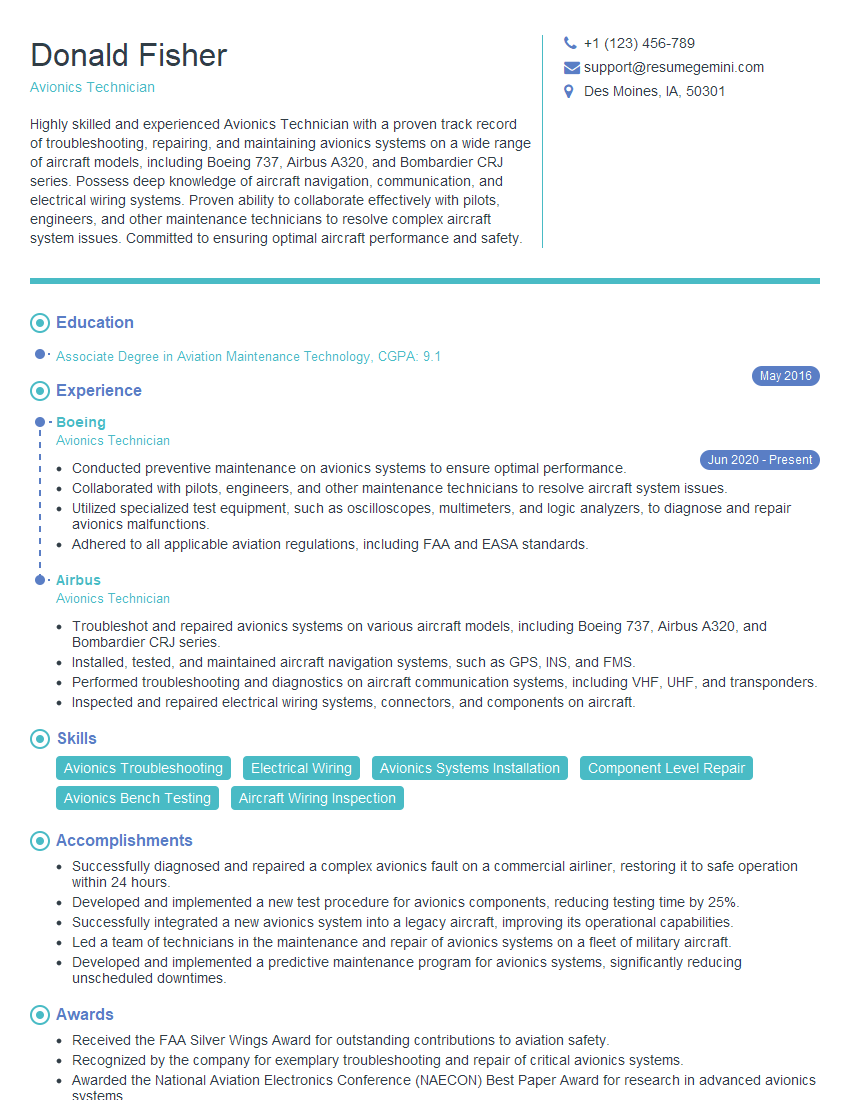
Mastering the intricacies of Aerospace Manufacturing opens doors to a rewarding and impactful career, offering opportunities for innovation and contributing to cutting-edge technologies. To significantly boost your job prospects, crafting an ATS-friendly resume is crucial. ResumeGemini is a trusted resource that can help you build a professional and impactful resume tailored to the aerospace industry. We provide examples of resumes specifically designed for Aerospace Manufacturing roles to help you create a compelling application that stands out from the competition.
Explore more articles
Users Rating of Our Blogs
Share Your Experience
We value your feedback! Please rate our content and share your thoughts (optional).
What Readers Say About Our Blog
Very informative content, great job.
good