Unlock your full potential by mastering the most common Air Attack Planning interview questions. This blog offers a deep dive into the critical topics, ensuring you’re not only prepared to answer but to excel. With these insights, you’ll approach your interview with clarity and confidence.
Questions Asked in Air Attack Planning Interview
Q 1. Describe the process of developing an air attack plan.
Developing an air attack plan is a meticulous process, akin to orchestrating a complex symphony. It begins with a clear understanding of the operational objective – what are we trying to achieve? This objective then drives every subsequent step.
- Target Selection and Prioritization: Identifying the high-value targets that will contribute most to mission success. This often involves detailed intelligence analysis (discussed further in the next question).
- Mission Design: This encompasses route planning, considering factors like weather, terrain, and enemy defenses. It also involves determining the optimal number and type of aircraft, along with their ordnance.
- De-confliction and Coordination: Ensuring the planned mission doesn’t conflict with other friendly air or ground operations. This may involve coordination with multiple agencies or branches of the military.
- Risk Assessment and Mitigation: Identifying potential threats and implementing measures to minimize risk to friendly forces and civilians. This includes calculating probabilities of enemy engagement, potential for collateral damage, and outlining emergency procedures.
- Execution Plan and Contingency Planning: Outlining a step-by-step procedure for the mission, along with detailed plans for handling unforeseen circumstances, like weather changes or enemy countermeasures.
- Post-Mission Debrief: Analyzing the mission’s effectiveness to learn from successes and failures, leading to continuous improvement of future plans.
Each stage requires meticulous planning and collaboration among various specialists, from intelligence analysts to pilots and mission planners.
Q 2. Explain the role of intelligence in air attack planning.
Intelligence is the backbone of any effective air attack plan. It provides the critical information needed to make informed decisions throughout the entire process. Think of it as the eyes and ears of the operation.
- Target Identification and Location: Intelligence pinpoints the exact location of targets, their size, and their vulnerability to air attack.
- Threat Assessment: It assesses the nature and capabilities of enemy defenses, such as air defense systems, anti-aircraft artillery, and fighter aircraft. This informs the selection of aircraft, weapons, and tactics.
- Environmental Conditions: Intelligence gathers information about weather patterns, terrain, and obstacles that could impact mission success.
- Collateral Damage Assessment: It helps estimate the potential impact on non-combatants and civilian infrastructure.
For example, during Operation Desert Storm, detailed intelligence on Iraqi air defenses was crucial in planning successful coalition air attacks, minimizing friendly losses and maximizing effectiveness.
Q 3. How do you prioritize targets in an air attack plan?
Target prioritization is a critical aspect of air attack planning, ensuring that the most valuable targets are engaged first. This often involves a multi-faceted approach.
- Military Significance: Targets that directly contribute to the enemy’s war-fighting capabilities (e.g., command centers, airfields, missile sites) are generally prioritized.
- Impact on the Enemy: Targets whose destruction would inflict maximum damage on the enemy’s capacity to wage war are given precedence.
- Vulnerability: Targets that are more easily attacked and less defended are often targeted earlier.
- Risk vs. Reward: A cost-benefit analysis weighs the potential gains against the risk to friendly forces.
A classic example is the prioritization of enemy airfields during a campaign – neutralizing these eliminates the enemy’s ability to effectively respond, setting the stage for further operations.
Q 4. What are the key considerations for selecting the appropriate aircraft for a mission?
Aircraft selection is driven by several crucial factors, each significantly influencing mission success.
- Mission Requirements: The type of target, its defenses, and the required payload directly dictate the aircraft type. A heavily defended target might need stealth aircraft, while a lightly defended target could use less sophisticated, but more numerous, aircraft.
- Range and Endurance: The distance to the target and the time needed to complete the mission determine the required aircraft range and fuel capacity.
- Payload Capacity: The size and type of ordnance required impact the aircraft’s payload capacity.
- Survivability: The threat level dictates the need for aircraft with advanced defensive systems and stealth capabilities.
- Availability: The availability of aircraft and their associated crews and support systems are also important considerations.
For instance, precision bombing of a hardened target might call for a B-2 Spirit bomber, while close air support for ground troops might utilize A-10 Warthogs.
Q 5. How do you assess the risk to friendly forces during air attacks?
Assessing risk to friendly forces is paramount. A thorough risk assessment involves considering various factors and proactively implementing mitigation strategies.
- Enemy Air Defenses: Identifying the range, capabilities, and deployment of enemy air defense systems is crucial in planning attack routes and employing appropriate countermeasures.
- Ground Fire: Assessing the likelihood of encountering ground fire from small arms, anti-aircraft weapons, or other ground-based threats.
- Friendly Fire: Minimizing the risk of accidentally striking friendly forces through precise targeting, clear communication, and thorough coordination with ground forces.
- Environmental Hazards: Taking into account weather conditions and terrain that could compromise mission safety.
This assessment often involves employing sophisticated modeling and simulation tools to predict potential outcomes under various scenarios, ensuring that safety and mission success are balanced effectively.
Q 6. Explain the concept of collateral damage and how it’s mitigated in planning.
Collateral damage refers to unintended harm to civilians, civilian structures, or the environment during military operations. Minimizing collateral damage is not only a moral imperative but also crucial for maintaining public support and adherence to international laws.
- Precise Targeting: Employing precision-guided munitions and advanced targeting techniques to minimize the impact on non-military targets.
- Damage Assessment: Thorough pre-strike intelligence gathering to identify and avoid potential civilian presence or critical infrastructure.
- Risk Mitigation Strategies: Developing strategies to reduce the risk of collateral damage, such as employing standoff weapons or adjusting attack tactics.
- Post-Strike Assessment: Evaluating the effectiveness of mitigation efforts and learning from any unintended consequences.
The ethical considerations and legal ramifications of collateral damage are carefully factored into every stage of planning. For instance, selecting munitions with smaller blast radii and more precise targeting capabilities minimizes the chance of harming civilians.
Q 7. Describe your experience with air tasking orders (ATO).
Air Tasking Orders (ATOs) are the formal instructions issued by higher headquarters to subordinate units outlining air operations. My experience with ATOs spans many years, involving both the creation and execution of these critical documents.
- ATO Creation: I’ve been involved in developing ATOs, ensuring they are clear, concise, and contain all the necessary information for successful mission execution, including target coordinates, mission type, aircraft assignments, and contingency plans.
- ATO Dissemination: I’ve been responsible for the timely and accurate dissemination of ATOs to relevant units, employing secure communication channels.
- ATO Execution: I’ve participated in the monitoring and coordination of air operations guided by ATOs, ensuring compliance with instructions and adapting to changing circumstances.
- ATO Analysis and Improvement: I’ve analyzed post-mission data to evaluate the effectiveness of ATOs and identify areas for improvement in future operations.
My understanding of ATOs is crucial to coordinating and successfully executing complex air campaigns, providing a structured framework for managing the complexities of large-scale air operations.
Q 8. How do you integrate airpower with ground forces in an operation?
Integrating airpower with ground forces requires meticulous coordination and a shared understanding of objectives. Think of it like a well-orchestrated symphony – each instrument (air and ground units) plays a crucial role, but the conductor (command and control) ensures harmony. This integration is achieved through close communication, detailed planning, and a common operational picture.
- Close Air Support (CAS): Airpower directly supports ground troops engaged in combat. This could involve precision strikes on enemy positions, suppressing enemy fire, or providing reconnaissance.
- Air Interdiction: Airpower targets enemy forces and supplies before they can reach the battlefield, disrupting their ability to support ground operations. This is like cutting off the enemy’s supply lines, hindering their maneuverability and effectiveness.
- Battlefield Air Interdiction (BAI): A more focused version of air interdiction where air assets disrupt enemy forces within close proximity of friendly ground forces.
- Deep Operations: Airpower targets key enemy infrastructure, command and control nodes, and logistics far behind enemy lines, weakening their overall capability.
For example, during an offensive operation, CAS might neutralize enemy anti-tank weapons while air interdiction prevents reinforcements from reaching the front lines. Effective integration relies on clear communication protocols, shared intelligence, and a robust joint command structure.
Q 9. What are the different types of air attacks (e.g., CAS, Interdiction)?
Air attacks are categorized based on their objectives and the targets they engage. Each type requires a different planning approach and execution strategy.
- Close Air Support (CAS): Direct air support for ground troops in contact with the enemy. This demands high precision to minimize collateral damage and ensure the safety of friendly forces.
- Air Interdiction: Attacks against enemy forces and supplies to disrupt their operations before they reach the battlefield. This often targets transportation hubs, supply lines, and enemy concentrations.
- Strategic Bombing: Attacks on high-value targets that contribute significantly to the enemy’s war-making capacity. These targets could include industrial centers, military bases, and command and control facilities.
- Suppression of Enemy Air Defenses (SEAD): Attacks specifically targeting enemy air defense systems to create a safe environment for other air operations. This involves neutralizing radar, surface-to-air missile sites, and anti-aircraft artillery.
- Destruction of Enemy Air Defenses (DEAD): Similar to SEAD but with the objective of complete destruction rather than just suppression. Often a more risky and resource-intensive operation.
Choosing the right type of air attack depends on the overall military objective, the enemy’s capabilities, and the available resources. A well-rounded air campaign often integrates multiple types of attacks.
Q 10. How do you plan for and address enemy air defenses?
Planning for and addressing enemy air defenses (EAD) is critical to mission success and aircrew survival. This involves a multi-layered approach.
- Intelligence Gathering: Accurate and timely intelligence on the enemy’s EAD capabilities is paramount. This includes the type, location, and strength of radar systems, surface-to-air missiles, and anti-aircraft artillery.
- SEAD/DEAD Operations: Employing SEAD/DEAD assets to neutralize or destroy high-threat EAD before the main attack commences. This could involve using electronic warfare to jam enemy radars or employing precision-guided munitions to destroy missile sites.
- Route Planning: Carefully selecting flight paths that minimize exposure to EAD. This may involve flying at low altitudes to reduce radar detection or utilizing terrain masking.
- Electronic Warfare: Using electronic countermeasures (ECM) to disrupt or deceive enemy radar systems. This could involve jamming signals, deploying decoys, or employing other electronic warfare tactics.
- Suppression of enemy fire: using coordinated air attacks and ground fire to mitigate the enemy’s capabilities to effectively engage air assets.
The effectiveness of these measures is often assessed through post-mission debriefs and operational analysis to refine future planning. Failing to account for EAD can lead to significant losses.
Q 11. Explain the role of weather in air attack planning.
Weather plays a significant role in air attack planning, impacting almost every aspect of the operation from mission feasibility to weapon effectiveness.
- Visibility: Poor visibility due to clouds, fog, or rain can severely limit the effectiveness of visual bombing and hinder navigation, increasing reliance on precision-guided munitions (PGMs).
- Wind: Strong winds can affect aircraft performance, weapon accuracy, and the ability to accurately predict the trajectory of air-to-ground weapons. Wind shear can be particularly hazardous during low-level flight.
- Precipitation: Rain, snow, or hail can reduce visibility and affect the accuracy of weapons systems. Heavy precipitation can also lead to hazardous flying conditions.
- Temperature and humidity: Extreme temperatures and humidity can impact aircraft performance and the reliability of equipment.
- Ceiling and Visibility: These are critical parameters when determining if an aircraft can safely and effectively perform the assigned mission.
Weather forecasts are crucial for planning the timing, routes, and types of aircraft employed. Operations may be delayed or even aborted if weather conditions become too hazardous or detrimental to mission success. Advanced weather forecasting and the integration of meteorological data into mission planning software are essential for mitigating weather-related risks. I have personally experienced mission delays due to unexpected thunderstorms and have had to adjust mission plans based on updated forecasts.
Q 12. How do you assess the effectiveness of an air attack?
Assessing the effectiveness of an air attack is a crucial step in evaluating mission success and informing future operations. It involves a multi-faceted approach combining quantitative and qualitative data.
- Damage Assessment: Determining the extent of damage inflicted on the target using various methods like post-strike reconnaissance, satellite imagery, and intelligence reports. This includes assessing damage to enemy infrastructure, equipment, and personnel.
- Operational Effectiveness: Evaluating the impact of the air attack on the enemy’s operational capabilities. Did the attack disrupt enemy movements, communications, or supply lines? Did it achieve its intended military objective?
- Combat Assessment: Evaluating the impact on the enemy’s fighting capacity and their reaction to the air attack. This could be the reduction in enemy troop strength, equipment destroyed, or the disruption of their military activities.
- Casualty Assessment: Assessing the number of enemy casualties inflicted. The assessment of enemy casualties is often difficult to obtain and verify.
- Collateral Damage Assessment: Evaluating the unintended damage inflicted on civilian infrastructure or non-combatants. Minimizing collateral damage is a critical concern in all air operations.
These different data points are combined to form a comprehensive assessment of the air attack’s success. Post-mission debriefs with aircrews and ground forces are vital in understanding the overall effectiveness and identifying areas for improvement.
Q 13. What are the key performance indicators (KPIs) for air attack planning?
Key Performance Indicators (KPIs) for air attack planning help measure the effectiveness and efficiency of the operation. These KPIs are tailored to the specific objectives of the mission, but some common ones include:
- Target Acquisition Rate: The percentage of planned targets successfully acquired and engaged.
- Weapon Delivery Accuracy: The precision with which munitions hit intended targets.
- Mission Completion Rate: The percentage of missions successfully completed without major incidents.
- Collateral Damage Rate: The percentage of unintended damage inflicted on civilian infrastructure or non-combatants.
- Sortie Rate: The number of sorties flown per unit of time.
- Aircraft Survivability: The rate of aircraft losses due to enemy actions or other factors.
- Time to Target: The speed and efficiency with which targets are engaged and destroyed.
- Cost-Effectiveness: Assessing the cost of achieving the mission’s objective relative to the resources expended.
These KPIs allow planners to track progress, identify weaknesses, and improve future planning. Regular monitoring and analysis of KPIs are essential for optimizing air operations.
Q 14. Describe your experience using air attack planning software.
Throughout my career, I’ve extensively utilized various air attack planning software packages. These systems enhance mission planning by providing comprehensive modeling, simulation, and visualization capabilities.
For instance, I have significant experience using [mention specific software names, e.g., a Joint Planning and Execution System (JPES) like the JOPES or a commercially available system]. These tools allow us to create detailed mission plans, integrate real-time intelligence data, model different scenarios, and assess potential risks. Specifically, these systems facilitated aspects of the planning process such as:
- Route Planning: Simulating flight paths, considering terrain, weather, and enemy threats.
- Weapon Selection: Choosing the optimal weapons based on target characteristics and available resources.
- Time Sequencing: Coordinating the actions of different aircraft and weapon systems.
- Damage Assessment: Modeling the potential effects of various weapons and assessing the expected damage to targets.
- Risk Assessment: Evaluating potential risks associated with the mission and implementing mitigation strategies.
These software tools significantly improve the efficiency and effectiveness of air attack planning and reduce the margin of error in complex military operations. The ability to use and understand this software is crucial for mission success.
Q 15. How do you handle unexpected changes or contingencies during an operation?
Handling unexpected changes during an air attack operation requires a robust, adaptable plan and a team capable of swift, decisive action. We utilize a tiered contingency planning approach. The initial plan addresses the most likely scenarios. However, we develop secondary and tertiary plans to address less probable but still significant contingencies such as equipment malfunctions, unexpected enemy actions, or changes in weather conditions. For example, if our primary target is obscured by unexpected cloud cover, we immediately shift to the pre-planned alternate target or a designated holding pattern while reassessing the situation. This requires constant monitoring of intelligence feeds and real-time communication among all involved units. Regular rehearsals and simulations of various contingencies are crucial for ensuring seamless transitions and effective execution of these backup plans.
Think of it like a football game – the initial game plan is crucial, but a great coach always has alternative plays ready depending on how the opponent reacts. Our team undergoes rigorous training to adapt to the ‘game’ unfolding before us, and quick decision-making is paramount.
Career Expert Tips:
- Ace those interviews! Prepare effectively by reviewing the Top 50 Most Common Interview Questions on ResumeGemini.
- Navigate your job search with confidence! Explore a wide range of Career Tips on ResumeGemini. Learn about common challenges and recommendations to overcome them.
- Craft the perfect resume! Master the Art of Resume Writing with ResumeGemini’s guide. Showcase your unique qualifications and achievements effectively.
- Don’t miss out on holiday savings! Build your dream resume with ResumeGemini’s ATS optimized templates.
Q 16. Explain the process of deconflicting air operations.
Deconflicting air operations is a critical safety measure that prevents mid-air collisions and ensures the safe and efficient flow of air traffic. It involves coordinating all air assets within a given airspace to ensure that their flight paths and operational times don’t overlap. This complex process relies on a multitude of tools and communication channels. We use sophisticated airspace management systems and flight planning software to visualize the positions and trajectories of all aircraft. Air controllers play a vital role in managing the flow of traffic, issuing instructions and clearances, and resolving potential conflicts. Detailed flight plans, submitted well in advance, are meticulously reviewed and checked for conflicts. Communication is key— constant updates on aircraft positions, changes in plans, and potential hazards are shared through established channels like tactical data links and radio communication. A failure to deconflict effectively can lead to catastrophic consequences, so meticulous attention to detail is non-negotiable.
Imagine a busy highway system. Deconflicting is like the traffic control system ensuring that cars don’t crash into each other. We use similar principles but with far greater complexity, given the speed and altitude involved.
Q 17. How do you ensure communication and coordination among different units involved in air attacks?
Ensuring seamless communication and coordination among different units in air attacks relies on a robust and redundant communication architecture. We employ a multi-layered approach, including secure voice and data links. This might involve dedicated tactical data links for rapid exchange of critical information like target locations, friendly force positions, and threat assessments. Radio communication remains a vital backup and often used for quick tactical changes. Pre-mission briefings, checklists, and shared situational awareness displays ensure everyone is on the same page before, during, and after the mission. We also leverage command and control systems to monitor progress, manage resources, and provide real-time guidance to various units. Standardized communication protocols and procedures are critical to avoid confusion and ensure clarity, especially under pressure.
Think of it like a well-orchestrated symphony. Each instrument (unit) plays a crucial part, but the conductor (command center) ensures that everyone is in sync and playing at the right time.
Q 18. What are the ethical considerations in air attack planning?
Ethical considerations are paramount in air attack planning. We adhere to strict rules of engagement (ROE) which are designed to minimize civilian casualties and collateral damage. This includes a rigorous target selection process that prioritizes military targets and avoids civilian areas. We meticulously analyze potential risks to civilians and implement measures to mitigate them, such as employing precision-guided munitions where feasible. Strict adherence to international humanitarian law, including the laws of war, is fundamental. Post-strike assessments are conducted to evaluate the effectiveness of the operation and identify any unintended consequences. Transparency and accountability are crucial, as we continuously strive to improve our operational processes and minimize the impact on innocent civilians. The decision-making process must always consider the potential for unintended harm, balancing military objectives against the preservation of human life.
Q 19. How do you incorporate lessons learned from previous air attacks into future planning?
Incorporating lessons learned is a continuous process. After each operation, we conduct a thorough after-action review (AAR) involving all participating units. This process identifies areas for improvement, both in planning and execution. We analyze data collected during the mission, including intelligence reports, sensor data, and debriefs from participating personnel. This information is documented and used to update our standard operating procedures, training programs, and planning templates. We also leverage lessons learned from other similar operations, both domestically and internationally, through knowledge sharing and collaborative efforts. This iterative process of learning and improvement is vital for maintaining operational effectiveness and minimizing risk. This constant cycle of reflection and adaptation is crucial to enhancing our future capabilities.
Q 20. Describe your experience with different types of ordnance used in air attacks.
My experience encompasses a wide range of ordnance, from general-purpose bombs to precision-guided munitions (PGMs). General-purpose bombs offer wide-area effects but lack the precision of PGMs. PGMs, such as laser-guided bombs and GPS-guided bombs, allow for greater accuracy, minimizing collateral damage. We also utilize cluster munitions, though their use is carefully considered due to the potential for unexploded ordnance. The selection of ordnance depends on the specific target, the environment, and the desired effect. Factors such as target hardness, surrounding structures, and the presence of civilians all inform the selection process. We are also increasingly utilizing newer technologies, such as smart munitions, which offer enhanced capabilities in terms of accuracy, effectiveness, and safety. Understanding the capabilities and limitations of each type of ordnance is essential to successful mission planning and execution.
Q 21. How do you manage resources effectively in air attack planning?
Effective resource management in air attack planning is crucial. It involves optimizing the use of available aircraft, personnel, ordnance, and intelligence assets. This includes developing a detailed resource allocation plan based on the mission’s objectives and the available resources. We use sophisticated modeling and simulation tools to assess resource requirements and optimize the allocation of assets. Prioritization is key—we allocate resources based on the importance of the targets and the potential impact of the mission. Continuous monitoring of resource consumption during the operation enables us to adjust our plans and make necessary reallocations to ensure mission success without exceeding available capabilities. Efficient logistical planning and close coordination with supporting units are crucial for resource management. Effective resource management isn’t just about minimizing costs, it’s about maximizing effectiveness.
Q 22. What are the limitations of air power?
Air power, while incredibly potent, isn’t without its limitations. Its effectiveness is heavily reliant on several factors. One key limitation is weather; adverse conditions like heavy cloud cover, rain, or extreme temperatures can significantly hinder operations, grounding aircraft or reducing their effectiveness. Another constraint is geography; mountainous terrain, dense forests, or urban landscapes can restrict access and maneuverability. Furthermore, enemy air defenses, including surface-to-air missiles (SAMs) and anti-aircraft artillery (AAA), pose a constant threat, demanding sophisticated tactics and countermeasures. Finally, the political context surrounding an air campaign is crucial; public opinion, international relations, and the risk of escalation can all influence the scope and duration of air operations.
For example, during the Vietnam War, the dense jungle canopy and sophisticated anti-aircraft systems greatly hampered the effectiveness of US air power. Similarly, the use of air power in urban environments, as seen in various conflicts, often faces ethical and logistical challenges due to the risk of collateral damage to civilian populations.
Q 23. Explain the concept of air superiority and its importance in air attack planning.
Air superiority is the ability to dictate the terms of engagement in the air. It’s achieved by gaining control of the airspace, neutralizing enemy air power, and preventing effective enemy air operations. In simple terms, it’s about having the upper hand in the sky. This is absolutely paramount in air attack planning because it allows friendly aircraft to operate freely, reducing the risks of losses and maximizing the effectiveness of strikes. Without air superiority, even the most meticulously planned air attack could fail due to constant threat of enemy interception and engagement.
Imagine planning a ground offensive: without neutralizing enemy artillery, the ground forces would be significantly hampered. Air superiority is the aerial equivalent of that neutralization. It allows for precision strikes on high-value targets, unimpeded reconnaissance flights to gather crucial information, and safe transport of personnel and equipment. Achieving and maintaining air superiority often requires a multi-faceted approach that might include suppression of enemy air defenses (SEAD), electronic warfare (EW), and the use of superior fighter aircraft.
Q 24. How do you account for the impact of electronic warfare on air operations?
Electronic warfare (EW) plays a critical role in shaping the air battle space and can dramatically influence air operations. EW encompasses actions involving the use of electromagnetic energy and directed energy to control the electromagnetic spectrum or to attack the enemy’s use of it. This includes electronic attack (EA), electronic protection (EP), and electronic support (ES). EA aims to disrupt or degrade enemy capabilities, EP protects friendly forces from enemy EA, and ES involves gathering information on enemy electronic activity.
In air attack planning, EW must be integrated to mitigate threats. For instance, we need to anticipate the enemy’s ability to use radar to detect and track our aircraft. We might employ EA to jam enemy radar, making it difficult for them to effectively target our aircraft, or use EP measures like employing chaff and flares to deceive enemy radar-guided missiles. A comprehensive EW strategy also involves careful planning of communications to ensure secure and reliable communication links among our own units, which will be absolutely crucial for coordination and success of the mission.
Q 25. Describe the role of air reconnaissance in the planning process.
Air reconnaissance is the process of gathering intelligence about the enemy and the battlefield from the air. This is vital in the planning process, as it provides critical information needed to design effective air attacks. It informs target selection, assesses enemy defenses, evaluates potential risks and helps to predict enemy reactions. Reconnaissance can use various platforms, ranging from manned and unmanned aircraft equipped with cameras and sensors to satellites.
For example, satellite imagery might reveal the layout of an enemy airbase, identifying key structures such as aircraft hangars and runways which can then be prioritized as targets. Unmanned aerial vehicles (UAVs) can provide real-time video feeds of enemy movements, helping adjust the attack plan in response to changing circumstances. The information gathered is crucial for determining the most effective weapons, approaches and timing for an air strike.
Q 26. How do you integrate airlift and air refueling into an air attack plan?
Airlift and air refueling are essential components of a comprehensive air attack plan, particularly for operations conducted at a distance from friendly bases. Airlift involves the movement of troops and equipment by air. This can be vital for deploying forces rapidly to a target area or for supplying them with essential equipment and supplies. Air refueling, on the other hand, extends the range and endurance of combat aircraft, enabling them to stay in the air longer, to reach more distant targets, and to conduct more prolonged operations.
Consider an air attack on a distant target. Airlift would transport specialized troops and necessary equipment to a forward operating base closer to the target. Then, air refueling would allow combat aircraft to reach the target, execute the attack and return to base without needing to land to refuel. The integration of both airlift and air refueling ensures the seamless execution of the air campaign, optimizing efficiency and responsiveness.
Q 27. Describe your experience working within a joint or combined air operations environment.
I’ve had extensive experience in joint and combined air operations environments, particularly during my time at [Previous Organization/Military Unit – remove sensitive info]. This involved working closely with personnel from diverse backgrounds and services, including the Air Force, Army, Navy, and even international allies. These operations required a high degree of collaboration and coordination. We utilized standardized procedures and communication protocols to ensure seamless information sharing and effective execution of the plans. Successful joint operations rely on trust, mutual understanding, and a clear command structure, along with clear articulation of each branch’s capabilities and responsibilities.
One specific example involved planning and executing a large-scale air operation with forces from several NATO nations. The success of this mission hinged upon effective communication, interoperability of systems and a shared understanding of our collective goals. Overcoming the initial challenges posed by different operating procedures and technological incompatibilities required a considerable investment in pre-planning and coordination. It also required a deep understanding of the strategic objectives, and how each participating force could best contribute to achieving those objectives.
Key Topics to Learn for Air Attack Planning Interview
- Target Acquisition and Identification: Understanding sensor technologies, data fusion, and the process of identifying and verifying targets.
- Weapons Selection and Employment: Matching appropriate munitions to targets, considering factors like range, accuracy, collateral damage, and legal constraints. Practical application includes scenario-based exercises evaluating different weapon systems.
- Route Planning and Navigation: Optimizing flight paths, considering terrain, weather, threat environments, and fuel efficiency. This includes understanding different navigation systems and their limitations.
- Air-to-Ground Coordination: Effective communication and collaboration with ground forces, including the use of Joint Tactical Radio Systems (JTRS) and other communication protocols.
- Mission Planning and Execution: Developing detailed mission plans, including contingency plans, deconfliction procedures, and risk assessment. Understanding the iterative nature of mission planning and execution in dynamic environments.
- Battle Damage Assessment (BDA): Methods for assessing the effectiveness of air attacks, including the use of imagery analysis and reporting. This involves understanding different BDA techniques and their limitations.
- Rules of Engagement (ROE) and Law of Armed Conflict (LOAC): Thorough understanding of legal and ethical considerations in air operations, ensuring compliance with international and national laws.
- Air Power Theory and Doctrine: Understanding the fundamental principles and concepts of air power, including its application in different operational contexts.
- Simulation and Modeling: Experience with using simulation tools to plan and analyze air attacks, and the ability to interpret and utilize the results for decision-making.
- Threat Assessment and Mitigation: Analyzing potential threats, developing mitigation strategies, and understanding the capabilities and limitations of different countermeasures.
Next Steps
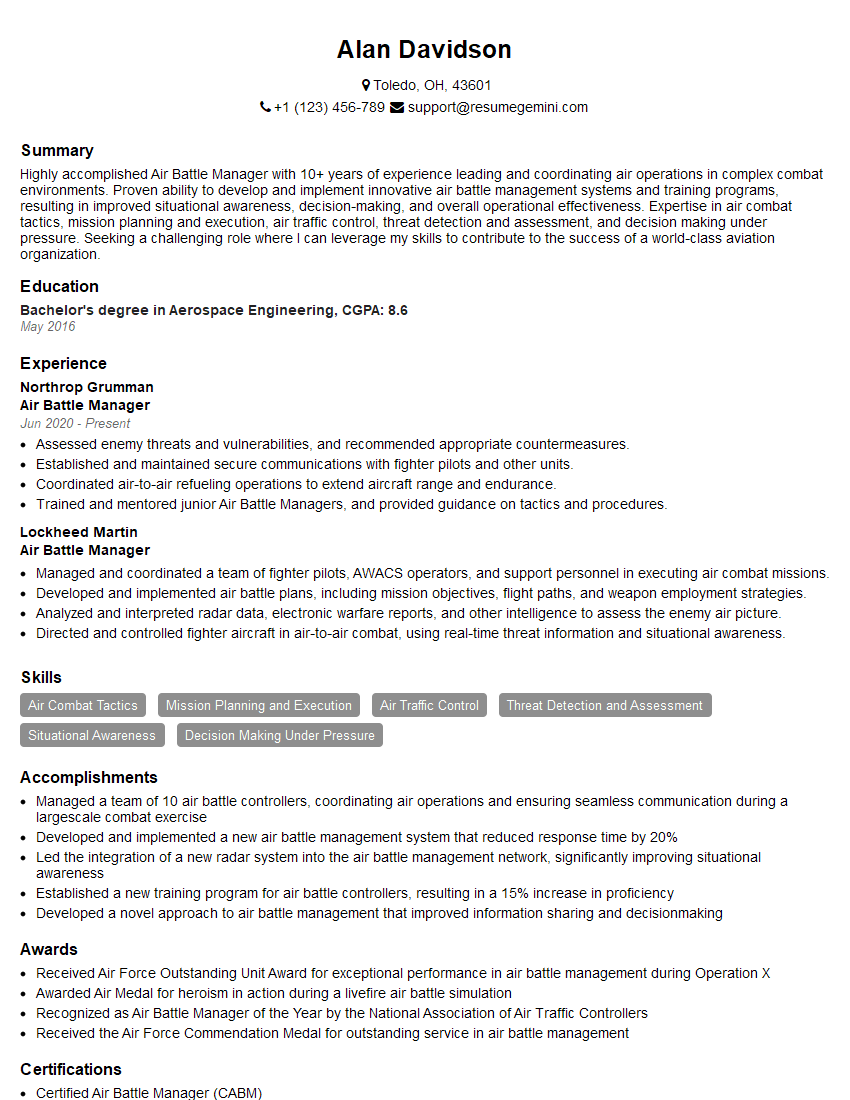
Mastering Air Attack Planning significantly enhances your career prospects, opening doors to leadership roles and specialized assignments within the aerospace and defense industries. To maximize your chances of securing your desired position, it’s crucial to present yourself effectively. Creating an ATS-friendly resume is paramount in today’s competitive job market. ResumeGemini is a trusted resource for building professional, impactful resumes that attract recruiters’ attention. We offer examples of resumes tailored to Air Attack Planning to help you present your skills and experience compellingly. Invest in your future – build a resume that reflects your expertise and ambition.
Explore more articles
Users Rating of Our Blogs
Share Your Experience
We value your feedback! Please rate our content and share your thoughts (optional).
What Readers Say About Our Blog
Attention music lovers!
Wow, All the best Sax Summer music !!!
Spotify: https://open.spotify.com/artist/6ShcdIT7rPVVaFEpgZQbUk
Apple Music: https://music.apple.com/fr/artist/jimmy-sax-black/1530501936
YouTube: https://music.youtube.com/browse/VLOLAK5uy_noClmC7abM6YpZsnySxRqt3LoalPf88No
Other Platforms and Free Downloads : https://fanlink.tv/jimmysaxblack
on google : https://www.google.com/search?q=22+AND+22+AND+22
on ChatGPT : https://chat.openai.com?q=who20jlJimmy20Black20Sax20Producer
Get back into the groove with Jimmy sax Black
Best regards,
Jimmy sax Black
www.jimmysaxblack.com
Hi I am a troller at The aquatic interview center and I suddenly went so fast in Roblox and it was gone when I reset.
Hi,
Business owners spend hours every week worrying about their website—or avoiding it because it feels overwhelming.
We’d like to take that off your plate:
$69/month. Everything handled.
Our team will:
Design a custom website—or completely overhaul your current one
Take care of hosting as an option
Handle edits and improvements—up to 60 minutes of work included every month
No setup fees, no annual commitments. Just a site that makes a strong first impression.
Find out if it’s right for you:
https://websolutionsgenius.com/awardwinningwebsites
Hello,
we currently offer a complimentary backlink and URL indexing test for search engine optimization professionals.
You can get complimentary indexing credits to test how link discovery works in practice.
No credit card is required and there is no recurring fee.
You can find details here:
https://wikipedia-backlinks.com/indexing/
Regards
NICE RESPONSE TO Q & A
hi
The aim of this message is regarding an unclaimed deposit of a deceased nationale that bears the same name as you. You are not relate to him as there are millions of people answering the names across around the world. But i will use my position to influence the release of the deposit to you for our mutual benefit.
Respond for full details and how to claim the deposit. This is 100% risk free. Send hello to my email id: lukachachibaialuka@gmail.com
Luka Chachibaialuka
Hey interviewgemini.com, just wanted to follow up on my last email.
We just launched Call the Monster, an parenting app that lets you summon friendly ‘monsters’ kids actually listen to.
We’re also running a giveaway for everyone who downloads the app. Since it’s brand new, there aren’t many users yet, which means you’ve got a much better chance of winning some great prizes.
You can check it out here: https://bit.ly/callamonsterapp
Or follow us on Instagram: https://www.instagram.com/callamonsterapp
Thanks,
Ryan
CEO – Call the Monster App
Hey interviewgemini.com, I saw your website and love your approach.
I just want this to look like spam email, but want to share something important to you. We just launched Call the Monster, a parenting app that lets you summon friendly ‘monsters’ kids actually listen to.
Parents are loving it for calming chaos before bedtime. Thought you might want to try it: https://bit.ly/callamonsterapp or just follow our fun monster lore on Instagram: https://www.instagram.com/callamonsterapp
Thanks,
Ryan
CEO – Call A Monster APP
To the interviewgemini.com Owner.
Dear interviewgemini.com Webmaster!
Hi interviewgemini.com Webmaster!
Dear interviewgemini.com Webmaster!
excellent
Hello,
We found issues with your domain’s email setup that may be sending your messages to spam or blocking them completely. InboxShield Mini shows you how to fix it in minutes — no tech skills required.
Scan your domain now for details: https://inboxshield-mini.com/
— Adam @ InboxShield Mini
support@inboxshield-mini.com
Reply STOP to unsubscribe
Hi, are you owner of interviewgemini.com? What if I told you I could help you find extra time in your schedule, reconnect with leads you didn’t even realize you missed, and bring in more “I want to work with you” conversations, without increasing your ad spend or hiring a full-time employee?
All with a flexible, budget-friendly service that could easily pay for itself. Sounds good?
Would it be nice to jump on a quick 10-minute call so I can show you exactly how we make this work?
Best,
Hapei
Marketing Director
Hey, I know you’re the owner of interviewgemini.com. I’ll be quick.
Fundraising for your business is tough and time-consuming. We make it easier by guaranteeing two private investor meetings each month, for six months. No demos, no pitch events – just direct introductions to active investors matched to your startup.
If youR17;re raising, this could help you build real momentum. Want me to send more info?
Hi, I represent an SEO company that specialises in getting you AI citations and higher rankings on Google. I’d like to offer you a 100% free SEO audit for your website. Would you be interested?
Hi, I represent an SEO company that specialises in getting you AI citations and higher rankings on Google. I’d like to offer you a 100% free SEO audit for your website. Would you be interested?