Feeling uncertain about what to expect in your upcoming interview? We’ve got you covered! This blog highlights the most important Animal Control Laws and Regulations interview questions and provides actionable advice to help you stand out as the ideal candidate. Let’s pave the way for your success.
Questions Asked in Animal Control Laws and Regulations Interview
Q 1. What are the key components of your jurisdiction’s animal cruelty laws?
Our jurisdiction’s animal cruelty laws are multifaceted, focusing on preventing unnecessary suffering and ensuring responsible animal ownership. Key components include definitions of what constitutes cruelty (e.g., deprivation of food, water, or veterinary care; intentional infliction of pain or injury; neglect leading to serious harm); prohibitions against various forms of abuse (e.g., fighting, abandonment, tethering without adequate shelter); and enforcement mechanisms such as investigations, seizure of animals, prosecution of offenders, and potential penalties including fines, community service, and even imprisonment. For instance, leaving a dog outside in extreme heat without access to shade or water would be considered a violation. Similarly, intentionally harming a pet would result in serious legal repercussions.
- Specific Acts of Cruelty: The law meticulously details what actions qualify as animal cruelty, providing clear guidelines for law enforcement.
- Neglect: It covers various forms of neglect, including failure to provide adequate food, water, shelter, or veterinary care.
- Penalties: The severity of penalties is generally tiered based on the severity of the cruelty, from misdemeanors for minor offenses to felonies for egregious acts.
Q 2. Explain the legal process for impounding a stray animal.
Impounding a stray animal follows a specific legal process. First, an animal control officer must observe the animal and determine that it’s indeed stray, meaning it’s unattended and its owner cannot be readily identified. The officer then impounds the animal, taking it to a designated shelter or facility. The animal is held for a designated period (often 72 hours), allowing time for its owner to be located and reclaim it. Notice of the impounded animal is typically posted or published, and the owner is responsible for paying impound fees and any incurred veterinary costs upon reclaiming the animal. If the owner isn’t found, the animal may be placed for adoption after the holding period.
For example, if a dog is found wandering in a park without tags or identification, the animal control officer follows the impounding procedure. They would thoroughly check for a microchip, search for identification tags, and make attempts to locate the owner through neighborhood inquiries. The holding period begins as soon as the animal is secured.
Q 3. Describe the procedures for handling a dangerous animal complaint.
Handling a dangerous animal complaint involves a multi-step process prioritizing public safety. Upon receiving a complaint, an animal control officer or law enforcement officer will investigate. This typically involves interviewing witnesses, assessing the animal’s behavior, examining past incident reports (if any), and determining whether the animal poses an immediate threat. If the animal is deemed dangerous, the officer will take appropriate action, which might include temporarily quarantining the animal, issuing citations to the owner, or initiating legal proceedings for potential seizure of the animal. The severity of the response is determined by factors like the nature of the threat, prior incidents, and the animal’s breed. For example, a dog that has previously bitten someone is more likely to be subject to stricter regulations than a dog involved in a minor, non-injurious incident.
Q 4. What are the legal requirements for licensing dogs and cats?
Legal requirements for licensing dogs and cats vary, but generally aim to track pet ownership, assist with the identification of lost pets, and help fund animal control services. Licensing often involves registering the pet with the local animal control agency, obtaining a tag or microchip for identification, and paying an annual fee. Failure to license pets usually results in fines. The license may also include details about rabies vaccination, which is often a requirement for licensing and helps prevent the spread of rabies. For instance, many jurisdictions mandate annual rabies vaccination verification for license renewal. Proof of vaccination is often a condition for obtaining or renewing a license.
Q 5. How do you handle a situation involving a dog bite?
Dog bite incidents require prompt and thorough handling. The immediate priority is to ensure the safety of the victim. First aid should be administered, and medical attention should be sought as needed. The animal control agency should be contacted immediately. The involved dog will be identified, its owner will be contacted, and a thorough investigation will be conducted to determine the circumstances of the bite and assess the dog’s history. The owner may be required to quarantine the dog for observation, and legal liability for the incident may be determined based on state law. In some cases, the dog may be deemed dangerous, leading to additional restrictions on ownership, including potential euthanasia.
For example, if a child is bitten by a neighbor’s dog, the parents should immediately seek medical attention for the child and contact animal control. The officer will gather information, collect evidence (e.g., photos), and speak with witnesses. The dog’s owner will be held responsible for any medical costs incurred by the victim.
Q 6. What are the legal restrictions on owning certain breeds of dogs?
Many jurisdictions have breed-specific legislation restricting or prohibiting the ownership of certain dog breeds deemed to be potentially dangerous (e.g., Pit Bulls, Rottweilers, Doberman Pinschers). These restrictions might include mandatory muzzling, special licensing requirements, or outright bans. The rationale behind these laws often cites breed characteristics and potential for aggression. The legality and enforcement of breed-specific legislation are subjects of ongoing debate, with some arguing that these laws are unfair and ineffective, while others maintain that they are necessary for public safety. It’s crucial to consult your local ordinances for specific breed restrictions.
Q 7. Explain the differences between state and local animal control ordinances.
State and local animal control ordinances often work in tandem but have distinct roles. State laws provide a broad framework and minimum standards for animal welfare, encompassing cruelty prevention and public safety. They establish overarching rules related to dangerous animals, dog bites, and licensing requirements. Local ordinances, however, often add detail and specificity to the state framework, tailoring regulations to local needs and conditions. They may include stipulations on leash laws, noise restrictions, and restrictions on animal numbers. For example, a state might mandate rabies vaccinations, but a local ordinance might specify where and when animals can receive vaccines. The state might regulate dangerous dog breeds, while the city adds specific requirements for their ownership, such as mandatory training or liability insurance.
Q 8. What are the ethical considerations in euthanizing animals?
Euthanasia, the humane killing of an animal, is a deeply ethical issue in animal control. The decision is never taken lightly and should always be guided by principles of minimizing suffering and upholding animal welfare. Ethical considerations include ensuring the method used is quick, painless, and causes minimal distress. This often means employing a veterinarian and utilizing approved techniques like intravenous injection of barbiturates. The decision to euthanize must also be carefully justified, considering factors like the animal’s quality of life, the potential for rehabilitation, and the risk to public safety. For example, an animal suffering from an incurable and painful disease with no reasonable prospect of recovery would be a candidate, while a mildly injured animal with a good prognosis would not. Ethical dilemmas arise when dealing with animals with behavioral issues; euthanasia should only be considered as a last resort after exploring all other humane options, like behavioral modification training and responsible rehoming.
Transparency and accountability are crucial. Detailed records documenting the reasons for euthanasia, the methods used, and the veterinarian involved are essential for maintaining ethical standards and allowing for review.
Q 9. How do you enforce leash laws and other animal control regulations?
Enforcing leash laws and other animal control regulations involves a multi-pronged approach. Firstly, proactive measures such as public education campaigns are crucial. We inform the public about the importance of responsible pet ownership, including leash laws, vaccination requirements, and waste disposal. Secondly, reactive enforcement relies on community engagement. We respond to complaints about unleashed dogs or other violations. This might involve issuing warnings, issuing citations for violations, or in severe cases, impounding the animal. We also conduct routine patrols in parks and public areas, particularly those known for issues with unleashed dogs.
Documentation is key. All interactions, warnings, and citations are carefully recorded. Finally, collaboration with other agencies, such as law enforcement, is important, especially when dealing with dangerous animals or owners who repeatedly violate regulations.
For example, a dog found running loose might receive a warning on a first offense; repeated violations may lead to fines or impoundment. Aggressive dogs, especially those with a history of bites, might face more stringent penalties, including potential euthanasia if deemed a public safety risk.
Q 10. How do you manage aggressive or feral animal populations?
Managing aggressive or feral animal populations is a complex challenge. It requires a humane and strategic approach that considers both animal welfare and public safety. Strategies often involve a combination of techniques. For aggressive dogs, this might include trap-neuter-return (TNR) programs, aiming to reduce the population over time. Aggressive behavior is often linked to poor socialization, but TNR can reduce the number of aggressive individuals over the long term. In the case of feral cats, TNR is a widely accepted approach. Cats are trapped, sterilized, vaccinated (against rabies), and then released back into their territory. This prevents further reproduction without removing the cats entirely from their habitat.
For truly dangerous animals, capture and relocation or euthanasia may be necessary, but these should be last resorts and only employed after carefully assessing all other possibilities and evaluating the potential risks to public safety. In some circumstances, lethal control might be necessary to prevent spread of disease or to address animals posing an immediate threat.
Q 11. What are the reporting requirements for animal bites and attacks?
Reporting requirements for animal bites and attacks vary by jurisdiction, but generally involve immediate reporting to animal control authorities. This usually includes providing details about the incident, the animal involved (if known), the victim’s injuries, and any relevant witnesses. The animal control agency will then conduct an investigation to determine the animal’s status (vaccination history, rabies testing), and the owner’s compliance with the law. In many cases, the animal may need to be quarantined for observation, and the victim may receive medical attention and potentially a rabies prophylaxis, depending on the severity of the bite and the circumstances.
Failure to report an animal bite or attack can have serious legal consequences for the owner, potentially including fines or criminal charges. The importance of accurate and complete reporting cannot be overstated, both for the victim’s safety and to ensure responsible management of animal populations.
Q 12. Describe your experience handling animal hoarding cases.
Handling animal hoarding cases is emotionally challenging and requires a multi-agency approach. Animal hoarding is defined as the accumulation of a large number of animals beyond the owner’s ability to provide adequate care. We typically receive reports from neighbors, animal welfare groups or the police. Our investigation involves assessing the living conditions, the number and health of the animals, and the owner’s ability to provide proper care. This often requires obtaining search warrants due to the complexities involved in accessing a property with so many animals. We often collaborate with veterinarians, law enforcement, and social services to handle both the animal welfare aspect and the owner’s underlying mental health conditions.
The animals are removed and undergo veterinary evaluation, treatment, and often extensive rehabilitation. The owner usually faces legal consequences such as fines, animal relinquishment and potential criminal charges, depending on the severity of the neglect. Working with social services to address the underlying issues that led to the hoarding situation is a major part of achieving a long-term, positive outcome.
Q 13. How do you investigate suspected cases of animal neglect or abuse?
Investigating suspected cases of animal neglect or abuse begins with receiving a complaint. This could come from neighbors, concerned citizens, or animal welfare organizations. We then conduct a thorough investigation, which may involve visiting the premises (with appropriate legal authorization when necessary). This includes assessing the animals’ condition—their health, hygiene, and overall well-being—and the environment they’re living in. We look for signs of malnutrition, dehydration, injury, unsanitary living conditions, lack of adequate veterinary care, and inadequate shelter from the elements. We document our findings through photographs, videos, and detailed reports.
If neglect or abuse is suspected, we might seize the animals and place them in the care of a veterinarian or an animal shelter. The owner will then face legal consequences, ranging from warnings and fines to more serious penalties, depending on the severity of the situation. Collaboration with law enforcement is often crucial in these cases, particularly if criminal charges are warranted.
Q 14. What is your understanding of the legal definition of ‘neglect’ in animal welfare cases?
The legal definition of ‘neglect’ in animal welfare cases generally means the failure to provide for an animal’s basic needs, resulting in harm or suffering. This is not simply a matter of opinion; it’s defined by specific criteria. These criteria typically include: failure to provide adequate food, water, shelter from the elements, or veterinary care when needed; failure to maintain a sanitary living environment, resulting in illness or injury; and causing unnecessary pain or suffering to an animal. The severity of the neglect determines the legal repercussions. For example, withholding food and water leading to significant weight loss and health issues is far more serious than simply neglecting to groom an animal regularly.
The courts usually consider the totality of the circumstances when determining if neglect occurred, including the animal’s species, age, and health condition; the owner’s knowledge and awareness of the animal’s needs; and the duration of the neglect. These factors all contribute to evaluating whether the owner’s actions or omissions constitute legal neglect.
Q 15. Explain the process for quarantining an animal suspected of having a rabies exposure.
Quarantining an animal suspected of rabies exposure is a critical step in preventing the spread of this deadly virus. The process begins with immediate isolation of the animal, ideally in a secure, dedicated facility that prevents contact with other animals and humans. The length of quarantine depends on the animal’s species and the specifics of the exposure. For example, a dog showing no symptoms might be quarantined for 10 days, while other animals might require longer observation periods.
The quarantine process involves close monitoring for signs of rabies, which can include behavioral changes, aggression, paralysis, and excessive salivation. Veterinary examination is crucial, and often involves testing for the rabies virus, typically through analysis of brain tissue. During quarantine, the animal’s needs—food, water, and appropriate shelter—must be carefully met. If the animal shows signs of rabies or tests positive, euthanasia is unfortunately necessary to prevent further transmission. If the animal remains healthy throughout the quarantine period and testing is negative, it can then be released. Proper documentation of the entire process is essential, both for legal purposes and to track potential outbreaks.
- Immediate Isolation: The animal is immediately separated from other animals and people.
- Veterinary Examination and Testing: A vet assesses the animal and may conduct rabies tests.
- Quarantine Period: The length of quarantine varies depending on the animal and exposure.
- Monitoring for Symptoms: Animal health professionals carefully observe the animal for any signs of rabies.
- Outcome: Release if healthy and test negative; euthanasia if signs of rabies or a positive test.
Career Expert Tips:
- Ace those interviews! Prepare effectively by reviewing the Top 50 Most Common Interview Questions on ResumeGemini.
- Navigate your job search with confidence! Explore a wide range of Career Tips on ResumeGemini. Learn about common challenges and recommendations to overcome them.
- Craft the perfect resume! Master the Art of Resume Writing with ResumeGemini’s guide. Showcase your unique qualifications and achievements effectively.
- Don’t miss out on holiday savings! Build your dream resume with ResumeGemini’s ATS optimized templates.
Q 16. How do you handle situations involving wildlife conflicts with humans?
Wildlife conflicts are a frequent concern, often involving animals like raccoons, deer, or bears entering residential areas in search of food or shelter. My approach is multifaceted and focuses on both immediate safety and long-term prevention. First, I assess the situation’s urgency and risk to public safety. Immediate threats, such as a bear approaching a house, require rapid response, potentially involving tranquilization or relocation by trained professionals. Less urgent situations, like a raccoon in a trash can, can be handled with preventative measures, such as educating residents on proper waste disposal.
I frequently collaborate with wildlife rehabilitators to ensure the animals are handled safely and humanely. Relocation is often preferred over euthanasia, but only if it is safe and feasible and doesn’t cause displacement problems elsewhere. We aim for sustainable solutions that both protect humans and minimize harm to the wildlife. Public education is critical—we often hold workshops and distribute materials on coexisting with wildlife, such as how to secure trash and protect gardens. My experience has shown that proactive measures are far more effective than reactive measures.
Q 17. What is your experience with public education on responsible pet ownership?
Public education is a cornerstone of responsible pet ownership and effective animal control. I have extensive experience developing and delivering educational programs on topics such as responsible pet care, dog bite prevention, leash laws, and the importance of spaying and neutering. These programs utilize a variety of methods, including community workshops, school presentations, social media campaigns, and collaboration with local veterinarians and animal shelters.
One successful campaign I developed involved partnering with local schools to teach children about safe animal interactions. This program combined interactive sessions and age-appropriate materials and resulted in a noticeable decrease in animal-related incidents involving children. I’ve also found that engaging with the community through public forums and online resources is incredibly effective, building rapport and fostering a sense of shared responsibility for animal welfare.
Q 18. How do you handle complaints about excessive animal noise?
Complaints about excessive animal noise are common, requiring a balanced and fair approach. My process begins with careful investigation. This includes determining the source of the noise (e.g., barking dogs, loud birds), its frequency and intensity, and the impact it’s having on neighbors. I document all complaints and observations thoroughly.
I then attempt to work with the pet owner to resolve the issue collaboratively. This often involves educating them about noise ordinances and suggesting practical solutions like training, changes in the pet’s environment, or adjusting their schedules. In cases where the problem persists despite these efforts, formal warnings may be issued, and further action, including fines or legal intervention, may be necessary, depending on local regulations.
Q 19. What are your strategies for working collaboratively with other agencies (e.g., police, animal shelters)?
Effective animal control requires strong collaborations. I maintain close working relationships with police departments, animal shelters, wildlife rehabilitation centers, and veterinary services. These collaborations are essential for efficient response to emergencies, sharing resources, and ensuring the well-being of animals in need.
For example, we have a system in place with the local police department for responding to aggressive animal calls; police officers provide support and safety, while animal control officers handle the animal. We frequently partner with shelters to find homes for surrendered or impounded animals. This interconnected network allows us to provide comprehensive and effective animal control services. Regular meetings and shared databases are key to maintaining this strong collaboration.
Q 20. How do you prioritize emergency calls and allocate resources effectively during peak demand?
Prioritizing emergency calls and allocating resources effectively is critical, especially during peak demand. We utilize a tiered system where calls are classified based on urgency and severity: immediate threats to public safety (e.g., aggressive animals) receive top priority, followed by urgent but less immediate situations (e.g., injured animals), and then non-emergency calls (e.g., noise complaints).
During peak demand, we may implement call-back systems for non-emergencies and utilize extra staff or call on partner agencies for assistance. Dispatch software plays a key role in tracking call volume, assigning personnel, and optimizing response times. Regular staff training on emergency response protocols and ongoing evaluation of our procedures help us maintain efficiency and effectiveness even during high-stress situations.
Q 21. Describe your experience using animal control technology (e.g., GPS tracking, animal scanning)?
Animal control technology has significantly improved our efficiency and effectiveness. We use GPS tracking devices on animals during investigations, especially in cases involving missing pets or animals involved in wildlife conflicts. This allows us to monitor their movements and location, assisting in their safe retrieval. We also utilize animal scanners to identify microchipped pets, greatly increasing our ability to reunite lost animals with their owners.
In the future, I anticipate increased use of predictive analytics to better anticipate potential animal-related issues and proactively address them. The use of body cameras and improved data management systems will also improve accountability and reporting. I believe embracing technology will continue to enhance animal welfare and public safety in our community.
Q 22. How do you maintain accurate records and documentation in animal control cases?
Maintaining accurate records in animal control is paramount for legal compliance, effective case management, and animal welfare. We utilize a comprehensive, digital record-keeping system, often incorporating specialized software designed for animal control agencies. This system allows for detailed logging of every interaction, from initial calls to final dispositions.
- Incident Reports: Each incident is documented with a unique ID, date, time, location, nature of the call (e.g., aggressive dog, stray animal, animal cruelty), and involved parties.
- Animal Information: Detailed descriptions of the animal(s) involved, including species, breed, age, sex, markings, microchip information, and any visible injuries or health concerns are recorded. Photographs and videos are also crucial components.
- Actions Taken: A chronological log of all actions taken, including attempts to contact owners, animal apprehension methods, veterinary treatment provided, impoundment details, and any court proceedings, is meticulously maintained.
- Disposition Records: Final disposition of the animal is recorded, whether it was returned to the owner, transferred to a shelter, adopted, euthanized (with justification), or otherwise handled. This section often includes dates and locations relevant to the disposition.
Regular data backups and security measures are in place to prevent data loss or unauthorized access. This rigorous documentation ensures transparency, accountability, and the ability to reconstruct the timeline of events in any investigation or court proceeding.
Q 23. How familiar are you with the Americans with Disabilities Act (ADA) as it relates to service animals?
I am very familiar with the Americans with Disabilities Act (ADA) as it pertains to service animals. The ADA defines a service animal as a dog (or in some limited circumstances, a miniature horse) that is individually trained to do work or perform tasks for an individual with a disability. It’s crucial to understand that the ADA does not require animal control officers to verify the disability or the animal’s training. However, we are trained to identify potential service animals based on their behavior, harness, and accompanying documentation.
We are instructed to defer to the person with a disability regarding their service animal. In situations where there are legitimate concerns regarding an animal’s behavior or potential threat to public safety, we would carefully assess the situation, prioritizing de-escalation and understanding. Falsely claiming a pet is a service animal to avoid restrictions is against the law, and we’re prepared to handle those instances accordingly, but we must always remain mindful of not infringing on the rights of individuals with disabilities.
Q 24. Explain the legal implications of seizing or confiscating animals.
Seizing or confiscating animals carries significant legal implications. It’s a critical action that must be justified by probable cause and adherence to due process. We must have a legitimate reason, such as evidence of animal neglect, abuse, or a threat to public safety, to justify seizure. The legal process involves:
- Probable Cause: Sufficient evidence to believe a violation has occurred. This might include witness testimonies, veterinary reports, photographic evidence, or observations of the animal’s condition.
- Warrant or Legal Authority: Depending on the jurisdiction, a warrant might be required before seizing an animal. There are usually specific procedures and legal frameworks, like specific statutes and ordinances related to animal cruelty and neglect, to be followed.
- Proper Documentation: Meticulous documentation of the seizure, including the date, time, location, reason for seizure, the animal’s condition, and the names and contact information of those involved, is essential.
- Due Process: The owner is entitled to due process, which generally involves the opportunity to contest the seizure and present their case. Providing proper notice to the owner is legally mandatory.
- Animal Care and Welfare: Confiscated animals must be housed and cared for humanely until the legal process is complete. This includes appropriate veterinary care, food, water, and a safe environment.
Failure to adhere to these legal requirements could lead to the return of the animal to the owner, legal challenges, and potentially disciplinary actions against the agency or the officer involved. Improper seizures are a serious matter and could lead to legal repercussions for the involved parties. We’re always careful to act within the law.
Q 25. How do you ensure the safety of both animals and personnel during animal control operations?
Ensuring the safety of both animals and personnel is paramount in animal control operations. We follow strict protocols and utilize specialized equipment to minimize risk.
- Personal Protective Equipment (PPE): This includes bite-resistant gloves, sleeves, and possibly body armor depending on the situation and the animal involved. We use appropriate tools to safely restrain animals if necessary.
- Safe Restraint Techniques: Our officers are extensively trained in humane and safe animal restraint techniques. We prioritize minimizing stress and injury to the animal while ensuring officer safety. Different techniques are employed based on the species, size, and temperament of the animal.
- Non-Lethal Control Measures: We prioritize non-lethal methods, such as capture poles, nets, and tranquilizer darts (in appropriate situations and when permitted by protocol), to avoid harm to animals.
- Communication and De-escalation: Effective communication and de-escalation techniques are used when interacting with aggressive animals or their owners. A calm and controlled demeanor can often de-escalate tense situations.
- Emergency Protocols: Clear emergency response protocols are in place to handle situations where officers or animals are injured. This includes immediate first aid, veterinary assistance (if needed), and reporting procedures.
Regular training and refresher courses, updated PPE, and appropriate tools help guarantee safety and effectiveness. We always prioritize the ethical and humane handling of animals.
Q 26. What is your understanding of the legal implications of transporting animals?
Transporting animals has specific legal implications focusing on animal welfare and safety. Regulations vary by jurisdiction but generally include requirements for:
- Proper Vehicle and Containment: Animals must be transported in vehicles appropriate for their size and species. Secure and safe enclosures are vital to prevent escape and injury during transit. We use designated vehicles equipped to safely transport animals of various sizes and species.
- Environmental Conditions: Appropriate ventilation, temperature control, and protection from weather extremes must be ensured. The animals’ needs during transport are prioritized.
- Health and Safety: Animals requiring veterinary care during transport will receive it. Animals are transported humanely and avoiding unnecessary stress or discomfort.
- Documentation: Comprehensive records of the transport, including the date, time, origin, destination, species, and number of animals, are maintained. We follow specific guidelines for transporting potentially dangerous animals.
- Compliance with Regulations: Transport must always comply with relevant local, state, and federal regulations concerning the humane handling and transport of animals.
Failure to comply with transport regulations can lead to legal penalties, including fines and the potential for seizure of the animals.
Q 27. Describe your experience testifying in court regarding animal control cases.
Testifying in court is a regular part of my responsibilities. I’ve testified in numerous cases involving animal neglect, animal cruelty, dangerous animal ordinances, and bite cases. My testimony is always based on accurate and documented evidence.
To prepare, I meticulously review all case files, photographs, videos, and any other relevant documentation. I refresh my memory of the events, ensuring my recollection is precise and complete. I’m also prepared to explain the technical aspects of animal handling, capture methods, and animal behavior.
In court, I present factual information clearly and concisely, answering questions directly and honestly. My aim is to provide the court with an objective and unbiased account of the events I observed. I understand the importance of maintaining professionalism and credibility during my testimony. I’m confident in my ability to present the facts in a way that is easily understood by the judge and jury.
Q 28. How do you handle media inquiries regarding animal control incidents?
Handling media inquiries requires a measured and professional approach. We have established protocols for media relations to ensure accurate and consistent information is disseminated. We never comment on ongoing investigations, and we only release information that is factual, legally permissible and does not compromise the integrity of the case or the safety of individuals involved.
We typically designate a spokesperson to handle all media communications. This ensures a consistent message and prevents conflicting or inaccurate information from being released. Our spokesperson is trained to deal with stressful situations and to communicate effectively with the media, while adhering to established protocols and legal constraints. We prioritize transparency while protecting the integrity of the investigation and the privacy of those involved.
Key Topics to Learn for Animal Control Laws and Regulations Interview
- Animal Welfare Laws: Understanding the core principles of animal welfare legislation, including definitions of animal cruelty and neglect, and the legal responsibilities of animal owners.
- Dangerous Animals: Knowledge of regulations concerning dangerous or potentially dangerous animals, including breed-specific legislation, licensing requirements, and handling procedures. Practical application: Knowing how to assess a situation involving a dangerous animal and apply appropriate legal responses.
- Public Health and Safety: Understanding the intersection of animal control and public health, including rabies control, disease prevention, and the handling of animal bites. Practical application: Formulating effective strategies for managing public health risks associated with animals.
- Animal Control Procedures: Familiarity with standard operating procedures for animal control, including animal capture, handling, impoundment, and euthanasia. Consider the ethical implications of each.
- Legal Processes and Enforcement: Understanding the legal framework for enforcing animal control laws, including issuing citations, conducting investigations, and testifying in court. Problem-solving approach: Analyzing scenarios to determine the most appropriate legal course of action.
- Wildlife Management: Knowledge of regulations regarding wildlife, including nuisance wildlife control, endangered species protection, and habitat conservation. This often overlaps with local and state environmental regulations.
- Ethical Considerations: Analyzing ethical dilemmas in animal control, balancing the needs of animals with public safety and resource constraints. Practical application: Demonstrating thoughtful decision-making in challenging situations.
Next Steps
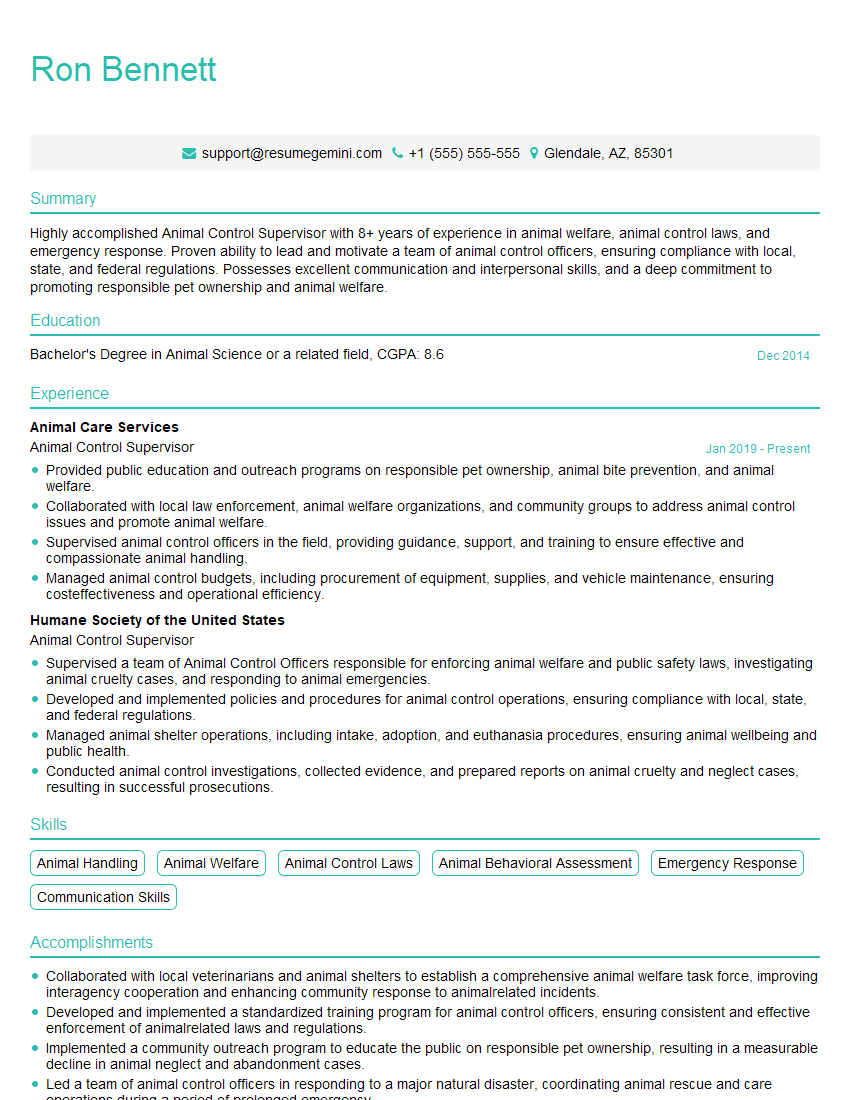
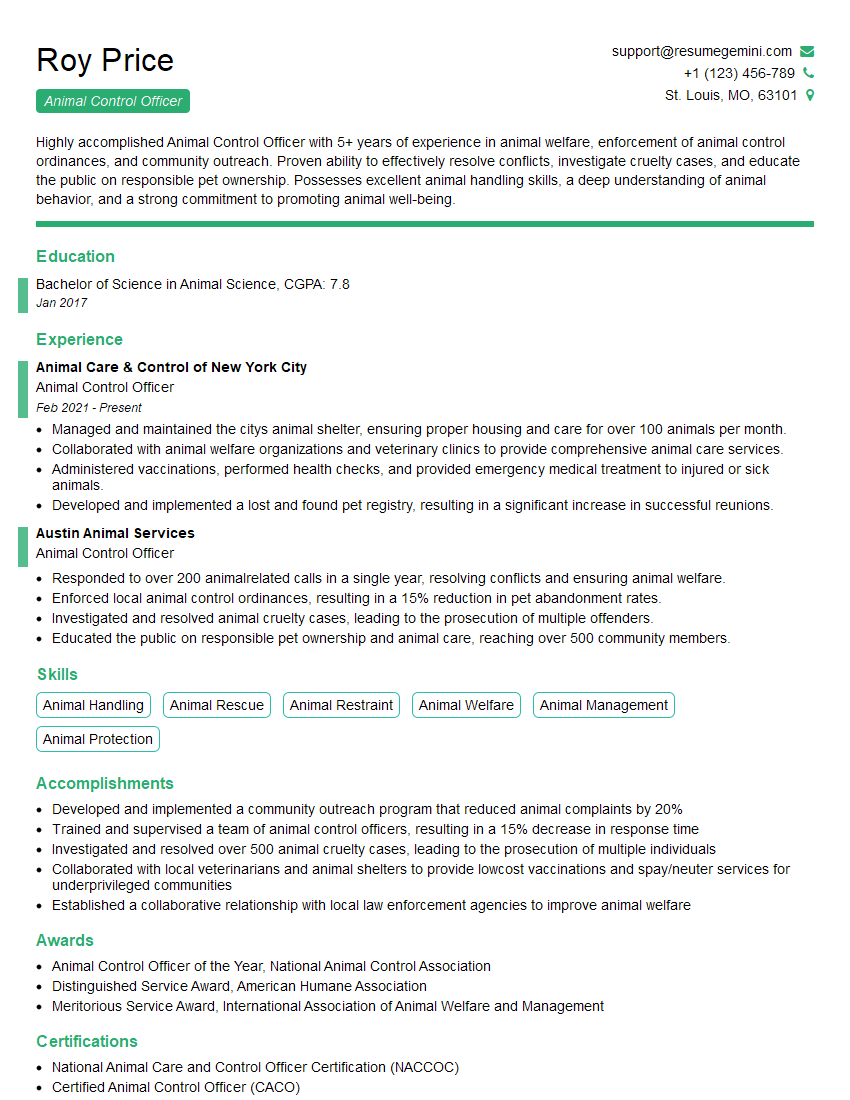
Mastering Animal Control Laws and Regulations is crucial for career advancement in this field. A strong understanding of these laws will set you apart from other candidates and demonstrate your commitment to responsible animal management and public safety. To maximize your job prospects, it’s vital to create an ATS-friendly resume that highlights your skills and experience effectively. ResumeGemini is a trusted resource to help you build a professional and impactful resume that catches the eye of potential employers. Examples of resumes tailored to Animal Control Laws and Regulations are available through ResumeGemini to provide you with inspiration and guidance. Take the next step in your career journey – build a winning resume today!
Explore more articles
Users Rating of Our Blogs
Share Your Experience
We value your feedback! Please rate our content and share your thoughts (optional).
What Readers Say About Our Blog
Very informative content, great job.
good