Every successful interview starts with knowing what to expect. In this blog, we’ll take you through the top Animation Script Writing interview questions, breaking them down with expert tips to help you deliver impactful answers. Step into your next interview fully prepared and ready to succeed.
Questions Asked in Animation Script Writing Interview
Q 1. Explain your process for developing a compelling narrative arc in an animation script.
Crafting a compelling narrative arc in animation is like building a rollercoaster. You need a captivating beginning, a thrilling middle, and a satisfying resolution. It starts with a strong premise – a central conflict or question that drives the story. Then, we build the rising action, introducing challenges and obstacles that escalate the protagonist’s journey. The climax is the peak of tension, where the protagonist confronts the main conflict directly. This is followed by the falling action, the aftermath of the climax, and finally, the resolution, where loose ends are tied up and the story reaches a satisfying conclusion.
For example, in a children’s animation, the premise could be a young animal learning to survive in the wild. The rising action could involve encountering various predators or challenges like finding food and shelter. The climax might be a confrontation with a larger, more dangerous animal. The falling action would show the animal overcoming the challenge, and the resolution could be the animal finding its place within the community.
I use a three-act structure as a guiding framework, but I’m flexible enough to adapt it based on the needs of the story. It’s vital to map out the major plot points and character arcs before diving into the scriptwriting process, ensuring that every scene contributes to the overall arc.
Q 2. How do you ensure your script adheres to the visual style and target audience of the animation project?
Aligning the script with the visual style and target audience is crucial. I begin by thoroughly understanding the animation style – be it the vibrant colors of 2D anime, the photorealistic detail of 3D CGI, or the tactile charm of stop-motion – and how it impacts pacing, character design, and narrative delivery. For example, a fast-paced, slapstick comedy in 2D animation might require shorter dialogue, more visual gags, and a quicker narrative pace compared to a slow-burn drama rendered in 3D.
Understanding the target audience informs the language, themes, and overall tone. A script for preschoolers will use simpler language, clear visuals, and avoid complex themes, while a script for teenagers can delve into more mature subjects and use nuanced language. I often create character sketches and mood boards to visualize how the story should feel and look, ensuring consistent tone and style throughout.
Q 3. Describe your experience with different animation styles (e.g., 2D, 3D, stop-motion) and how it influences your scriptwriting.
My experience spans various animation styles, and each influences my scriptwriting process significantly. With 2D animation, I focus on creating dynamic dialogue and visually descriptive action lines, recognizing the style’s ability to convey emotion through character expressions and movement. In 3D animation, I leverage the possibilities of complex camera work and environments, crafting scenes that utilize the depth and realism achievable. Stop-motion, on the other hand, demands a more deliberate and tactile approach to action. The limitations inherent in the medium often inspire creative solutions, emphasizing character interactions and emphasizing impactful moments that will stand out visually.
For instance, a chase scene in 2D might focus on exaggerated movements and dynamic angles, while the same scene in 3D would emphasize the physicality of the characters and the realism of the environment. In stop-motion, the scene would be broken down into smaller, more manageable movements, carefully planned to create the illusion of fluid motion. Understanding these inherent differences allows me to tailor the script to best suit the strengths of each animation style.
Q 4. How do you incorporate humor or emotional depth into your animation scripts?
Humor and emotional depth are essential for creating engaging animations. Humor can be incorporated through various techniques, including witty dialogue, slapstick comedy, irony, and visual gags. The type of humor employed depends heavily on the target audience and the overall tone of the animation. For example, a subtle, ironic joke might work well for an older audience, while a slapstick gag would resonate better with younger viewers.
Emotional depth is built through well-developed characters and compelling relationships. This requires crafting authentic emotional arcs for the characters, ensuring that their actions and decisions reflect their personalities and motivations. This includes showcasing vulnerability, showing characters struggle with internal conflicts, and depicting meaningful relationships. Often, subtle details in dialogue, character expressions, and even background elements can enhance emotional impact. A well-placed pause or a specific character reaction can speak volumes.
Q 5. How do you balance character development with plot progression in your scripts?
Balancing character development with plot progression is crucial. I avoid making character development a separate, side plot. Instead, I weave it into the main plot line. Character growth should be driven by the challenges they face and the decisions they make within the narrative. Each obstacle encountered should not only advance the plot but also reveal something new about the character’s personality, strengths, or weaknesses.
For instance, a character might start the story as selfish, only to learn the importance of teamwork through a series of events that force them to collaborate with others. This collaborative experience simultaneously furthers the plot and changes the character for the better. This integrated approach ensures that character arcs are organic, believable, and relevant to the main story, avoiding unnecessary subplots or info dumps that might slow down the pace.
Q 6. What software or tools do you utilize for scriptwriting and storyboarding?
My primary scriptwriting tool is Final Draft, which offers excellent formatting and organization for screenplays. However, for more collaborative efforts and storyboarding, I often use Celtx, which combines scriptwriting, storyboarding, and scheduling functions. For storyboarding itself, I often use Adobe Photoshop or Procreate to create visual representations of key scenes. This allows me to easily share my vision with the animation team and get early feedback on pacing and visual storytelling.
Beyond software, I utilize physical tools like index cards or whiteboards for brainstorming and outlining the story structure. This hands-on approach helps me visualize the story’s flow and identify potential structural issues before I start writing the script itself. Combining digital tools with analog techniques often allows for a more streamlined and effective workflow.
Q 7. How do you handle revisions and feedback on your animation scripts?
Handling revisions and feedback is a collaborative process. I always approach feedback as an opportunity for improvement, rather than a criticism. I actively encourage feedback from various stakeholders – directors, producers, animators, and even members of the target audience. I usually schedule feedback sessions where we can discuss the suggestions openly.
I treat revisions as a part of the iterative process of perfecting the script. I maintain a detailed record of all changes and track the rationale behind each decision. This creates a clear history of the script’s development. I often use color-coded revision tracking to make it easy to identify changes during the feedback process, maintaining clear communication with collaborators. By working constructively, this ensures the final product reflects a cohesive vision and addresses the needs of all stakeholders.
Q 8. Describe your experience with writing dialogue for animated characters.
Writing dialogue for animation requires a deep understanding of character, audience, and the medium itself. It’s not just about crafting witty lines; it’s about creating believable interactions that are both engaging and visually dynamic. I approach this by first defining each character’s distinct voice and personality. This includes their vocabulary, sentence structure, speech patterns (e.g., fast-talking, hesitant, formal), and even their physicality as it relates to speech. For example, a gruff pirate captain might use salty language and clipped sentences, while a timid librarian might speak softly and use more precise, formal wording. I then build the dialogue around these established characteristics, ensuring each line contributes to the story and reveals something about the character. I often use storyboards and animatic previews to visualize how the dialogue will look and feel when paired with visuals, allowing me to fine-tune the pacing and timing of the lines for optimal impact.
In practice, I’ll often write multiple versions of a scene, experimenting with different dialogue approaches until I find the perfect blend of character, humor, and narrative progression. I also pay close attention to subtext, making sure the unspoken emotions and intentions are communicated effectively through actions and expressions as much as through words. This collaboration between words and visuals is key to successful animated dialogue.
Q 9. Explain how you would adapt a script for different age groups.
Adapting a script for different age groups involves a careful consideration of vocabulary, themes, pacing, and humor. For younger audiences (e.g., preschoolers), scripts need to be concise, use simple language, and focus on clear, relatable narratives with strong emotional cores. Jokes should be simple and visual, relying on slapstick or relatable situations rather than complex wordplay. For older children (e.g., tweens), scripts can incorporate more complex plots and character development, along with sophisticated humor and nuanced emotional themes. Teenagers, on the other hand, can handle more mature themes, complex character relationships, and satirical humor. The key is to tailor the language, complexity, and themes appropriately for each age range while maintaining the overall integrity of the story and characters.
For example, a scene involving a mischievous character stealing cookies might be simplified for preschoolers, focusing on the visual humor of the act and the character’s gleeful expression. For older children, the scene could involve more intricate planning and consequences, perhaps adding elements of suspense and moral dilemmas. A teen audience might see this same scene as a commentary on societal rules and expectations, with the cookie theft serving as a metaphor for rebellion or challenging authority. Adapting scripts requires a deep understanding of child development and cognitive abilities at each stage.
Q 10. How do you collaborate effectively with animators, directors, and other team members?
Effective collaboration is crucial in animation. I foster open communication through regular meetings, feedback sessions, and transparent communication tools. I approach collaboration as a continuous process of refinement, proactively seeking input from animators, directors, and other team members at various stages of script development. I regularly share drafts and receive feedback on story structure, dialogue effectiveness, character arc consistency and visual possibilities. I find it useful to have a detailed, shared document or project management system to track changes and ensure everyone’s on the same page. I also believe in active listening and valuing diverse perspectives, understanding that different team members bring unique expertise and insights to the process.
For instance, animators may highlight limitations in a scene that appear visually difficult to execute. This allows me to revise the script, perhaps simplifying actions or re-wording dialogue to accommodate production constraints. Directors provide crucial guidance on overall pacing, tone, and the visual style that should complement the script. The iterative feedback loop guarantees the final product meets the vision of the entire team, resulting in a more cohesive and polished final animation.
Q 11. Describe a challenging scriptwriting problem you encountered and how you solved it.
One particularly challenging script problem I faced involved a climax scene where the protagonist needed to deliver a powerful, emotional speech but couldn’t rely on traditional dialogue delivery due to the character’s inability to speak. The character was mute. Initially, I struggled to find a way to convey the emotional weight of the moment without resorting to clichés or relying solely on visual cues.
My solution involved a multi-layered approach. Firstly, I focused on the character’s body language, expressions, and actions, building a visually compelling sequence to reflect the internal turmoil and the message the character was trying to convey. Then I integrated elements of sound design – evocative music, ambient noises, and even distorted sounds to represent the character’s inner struggle – to create a powerful emotional resonance. Finally, I incorporated visual metaphors, such as symbolic imagery within the environment, to reinforce the underlying message without explicit dialogue. By combining all these elements, we created a powerful and moving climax that transcended the limitations of spoken language.
Q 12. How do you ensure your script is visually engaging and feasible for animators?
Ensuring a script is both visually engaging and feasible for animators requires careful planning and collaboration from the outset. I begin by visualizing the story, often sketching out key scenes or creating simple storyboards even in early stages to see how the animation might translate the action and dialogue. I also meticulously describe settings, actions, and character expressions to guide the animators. This includes specifying camera angles, lighting, and special effects, which allows animators to better understand the overall visual style and plan accordingly.
Furthermore, I maintain close contact with the animation team, actively discussing potential challenges in translating the script to screen. This ensures that the script’s ambition aligns with the technical capabilities of the animation team. For example, excessively complex action sequences or intricate sets might need to be simplified to maintain production feasibility without sacrificing the overall impact. The goal is to create a balance between ambitious storytelling and practical animation constraints, ensuring a visually stunning result.
Q 13. How familiar are you with industry-standard script formats for animation?
I am very familiar with industry-standard script formats for animation, including both the traditional screenplay format and the more detailed breakdown scripts used in many animation studios. I am proficient in using software like Celtx and Final Draft for script writing and formatting. I understand the importance of clear scene headings, action lines, character names, dialogue, and parentheticals to ensure smooth communication with the animation team. These include elements such as scene numbers, descriptions of the setting, character actions, and clear indications of camera angles and movement. My scripts are always formatted in a way that is easily understood and used by everyone involved in the production.
Beyond the standard formats, I also understand and incorporate elements specific to animation like beat sheets (a scene-by-scene outline emphasizing emotional beats) and animatics (rough sketches of the animation with the dialogue laid over). This allows me to bridge the gap between words on a page and the animated final product more effectively.
Q 14. How do you ensure your script maintains a consistent tone and style?
Maintaining consistent tone and style throughout a script is crucial for a cohesive narrative. I establish the desired tone and style early in the process, drawing upon a detailed style guide that outlines the overall mood, humor, pacing, and character voices. This guide serves as a compass, ensuring that every scene and every line reflects the intended feel of the story. I also utilize consistent narrative voice and characterization. For example, if the overall tone is whimsical, all elements, from the dialogue to the character’s actions, reflect this playfulness. Conversely, a darker, more serious story will demand consistent somber tones in both language and action descriptions.
Regularly reviewing and editing the script at different stages helps to identify inconsistencies or deviations from the established style. I also use a consistent method of outlining and storyboarding in the early stages to maintain the unity of the animation’s vision. This ensures that the tone and style are maintained throughout the script, creating a unified and immersive experience for the audience.
Q 15. Describe your experience with writing for different animation genres (e.g., comedy, action, drama).
My experience spans a wide range of animation genres, and I’ve found that each requires a distinct approach to storytelling. Comedy, for instance, relies heavily on witty dialogue, surprising juxtapositions, and physical humor. I’ve worked on projects where the challenge was to craft dialogue that’s both funny and character-appropriate, such as a grumpy old wizard forced into an unlikely friendship with a hyperactive squirrel. In action animation, the focus shifts to pacing, clear visual descriptions of fight choreography, and heightened stakes. A recent action sequence I wrote involved a thrilling chase through a futuristic city, requiring precise descriptions of movement and environment to ensure the animators could accurately convey the speed and danger. Drama, on the other hand, demands emotional depth and believable character arcs. In a dramatic piece, I focused on a character’s internal conflict and journey, using subtle shifts in dialogue and action to illustrate their emotional transformation. Each genre demands a unique understanding of comedic timing, dramatic tension, or action sequences, demanding adaptability and careful consideration of the visual medium.
Career Expert Tips:
- Ace those interviews! Prepare effectively by reviewing the Top 50 Most Common Interview Questions on ResumeGemini.
- Navigate your job search with confidence! Explore a wide range of Career Tips on ResumeGemini. Learn about common challenges and recommendations to overcome them.
- Craft the perfect resume! Master the Art of Resume Writing with ResumeGemini’s guide. Showcase your unique qualifications and achievements effectively.
- Don’t miss out on holiday savings! Build your dream resume with ResumeGemini’s ATS optimized templates.
Q 16. How do you research and develop believable and engaging characters?
Developing believable and engaging characters is a multi-step process that begins with extensive research. This involves studying human behavior, observing real people, and analyzing existing characters in animation and literature. For example, if I’m creating a character who’s a skilled blacksmith, I’d spend time observing blacksmiths at work, paying attention to their mannerisms, the tools they use, and the physical demands of the job. This groundwork helps inform their physicality, their dialogue, and their overall personality. Beyond physical traits, I consider their backstory, motivations, relationships, and internal conflicts. I often create detailed character profiles outlining their personality traits, their relationships with other characters, and their goals, both short-term and long-term. These profiles help ensure consistency in the character’s actions and dialogue throughout the animation. Think of it like building a complex three-dimensional puzzle – each piece (backstory, motivation, relationships) adds to the final picture of a believable character.
Q 17. How do you handle pacing and timing in your animation scripts?
Pacing and timing are crucial in animation, determining the rhythm and emotional impact of the story. I approach pacing by structuring the script with a clear understanding of the overall arc. I use a combination of fast-paced action sequences, moments of quiet reflection, and comedic interludes to maintain audience engagement. For instance, a tense scene might be followed by a humorous moment to release tension before building it back up. Timing is equally important, particularly in comedic sequences. A simple pause at the right moment can amplify the humor, while poorly timed dialogue can kill a joke. I use beat sheets and detailed scene breakdowns to plot out these crucial moments, ensuring the pacing supports the narrative arc and emotion. I visualize the scenes while writing, imagining how long certain actions should take to properly convey emotion or set a comedic tone. I also provide clear indications in my script of how long pauses should be, using phrases like ‘beat’ or ‘pause’ to guide the animators.
Q 18. How familiar are you with storyboarding and its role in the animation process?
I’m very familiar with storyboarding and consider it an essential part of the animation process. Storyboarding provides a visual roadmap for the animators, translating the script into a series of images that show the action, camera angles, and character movements. A well-constructed storyboard helps to identify potential problems early on, such as pacing issues or inconsistencies in the narrative. I actively participate in the storyboarding process, collaborating closely with the storyboard artists to ensure that the visual representation accurately reflects the script’s intent. I often provide detailed scene descriptions and notes directly on the script, illustrating camera angles, character positioning, and any specific visual elements that are critical to the scene. This collaboration ensures a smooth transition from script to animation, avoiding costly revisions later in production. In essence, the storyboard functions as a vital bridge between the script’s intentions and the animator’s execution.
Q 19. How do you incorporate sound effects and music into your scriptwriting process?
I integrate sound effects and music into the scriptwriting process from the outset, treating them as essential storytelling elements rather than mere afterthoughts. While writing, I envision how sound and music can enhance the emotional impact and create a more immersive experience for the viewer. My scripts include detailed descriptions of sound effects, such as ‘SFX: Creaking door, ominous footsteps, distant howl,’ or musical cues, like ‘Music: Ominous strings swell as the villain approaches.’ This detailed approach helps the sound designers understand the mood and atmosphere I aim to create. I often work closely with sound designers, providing them with reference tracks and detailed notes to assist in their creative process. The synergy between script, visuals, and sound design elevates the final product, creating a harmonious blend of narrative and sensory experience. The meticulous approach ensures that the auditory and visual elements work in perfect harmony to augment the storyline.
Q 20. How do you ensure your script is culturally sensitive and avoids stereotypes?
Cultural sensitivity is paramount in animation, and I’m committed to creating inclusive and respectful narratives. Before writing, I conduct thorough research on the cultures represented in my scripts to avoid perpetuating harmful stereotypes. I consult cultural resources, seek feedback from subject matter experts, and ensure that the portrayal of different cultures is accurate and nuanced. For example, if I’m depicting a character from a specific cultural background, I collaborate with consultants from that culture to verify the accuracy and avoid stereotypes. I actively strive to create diverse and complex characters that reflect the richness and variety of human experiences. This conscious effort ensures that my scripts not only entertain but also promote understanding and empathy across cultures. It is not merely about avoiding offense, but creating a truly enriching and representative experience for audiences worldwide.
Q 21. Describe your experience using scene descriptions to guide animators.
Scene descriptions are crucial in guiding animators. My scripts provide detailed descriptions of settings, character actions, camera angles, and overall mood for each scene. I go beyond simple descriptions, focusing on the visual storytelling aspects. For example, instead of simply writing ‘The character walks into the room,’ I’d write ‘The character, silhouetted against the setting sun, slowly enters the dimly lit room, his footsteps echoing ominously.’ This level of detail allows animators to visualize the scene accurately, grasp the intended mood, and understand the character’s emotional state. I often include visual references, like descriptions of lighting, color palettes, and specific details to inspire the animators. This collaborative effort ensures that the final animated product faithfully reflects my script’s vision and avoids ambiguity. Detailed scene descriptions transform the script from mere words into a concrete visual representation, setting the stage for compelling animation.
Q 22. How do you manage multiple projects or deadlines simultaneously?
Managing multiple animation projects and deadlines effectively requires a structured approach. I use a combination of project management tools and personal strategies. Firstly, I break down each project into smaller, manageable tasks with clear deadlines. I then utilize tools like Trello or Asana to visually track progress and dependencies across all projects. This allows me to easily see which tasks are urgent and prioritize accordingly. Secondly, I dedicate specific time blocks in my day or week for each project, preventing task-switching and maintaining focus. Finally, regular review and adjustment are key. I regularly reassess deadlines and resource allocation to ensure everything stays on track. Think of it like conducting an orchestra; each instrument (project) needs attention, but the conductor (me) ensures harmony and timely completion.
Q 23. How familiar are you with the animation production pipeline?
I have a comprehensive understanding of the animation production pipeline, from initial concept and scriptwriting to final rendering and distribution. I’m familiar with each stage, including:
- Storyboarding: Visualizing the script through rough sketches.
- Animatic: Creating a rough animation sequence with the storyboard and audio.
- Character design and modeling: Developing the visual look of characters and environments.
- Rigging: Setting up the character’s skeleton for animation.
- Animation: Bringing the characters to life.
- FX and Lighting: Adding special effects and lighting to enhance the visual appeal.
- Compositing: Combining all the elements together.
- Rendering: Creating the final high-resolution images or video.
This understanding allows me to write scripts that are feasible and efficient to produce, considering the constraints and capabilities of each stage. For example, I avoid writing scenes requiring excessively complex CGI if the budget or timeline is limited.
Q 24. Describe your understanding of character arcs and how you incorporate them into your scripts.
Character arcs are crucial for compelling storytelling. They depict a character’s transformation or journey throughout the narrative. This can be a change in personality, understanding, or worldview. I incorporate character arcs by:
- Establishing a clear starting point: Defining the character’s initial traits, motivations, and flaws.
- Identifying a central conflict: A problem or challenge that forces the character to grow or change.
- Mapping the transformation: Planning the character’s development through various plot points, revealing their growth or decline.
- Showing, not telling: Revealing the character’s arc through their actions, dialogue, and interactions, rather than explicitly stating it.
For example, in a story about a selfish character, their arc might involve them learning empathy and compassion through their interactions with others. This transformation is usually triggered by events in the story causing them to reflect on their own behavior.
Q 25. How do you create suspense and anticipation in your scripts?
Building suspense and anticipation involves carefully controlling information and creating dramatic irony. I achieve this by:
- Creating unanswered questions: Introducing mysteries or unresolved conflicts that keep the audience engaged.
- Using foreshadowing: Hinting at future events without revealing too much.
- Building tension through pacing: Slowing down the pace in crucial moments, increasing the dramatic weight.
- Employing cliffhangers: Ending scenes or acts on a dramatic note that leaves the audience wanting more.
- Using visual cues: Employing camera angles, music, and sound design to heighten the tension.
For example, a looming threat that is only partially visible can generate suspense, especially when coupled with anxious music and close-up shots of the characters.
Q 26. What is your approach to creating conflict and resolution in your animation stories?
Conflict is the engine of a story. In animation, conflict can be external (character vs. character, character vs. nature) or internal (character vs. self). Resolution involves the outcome of that conflict. I create conflict and resolution by:
- Establishing clear stakes: Defining what the characters stand to gain or lose.
- Creating obstacles: Placing challenges in the characters’ path that force them to make difficult choices.
- Developing believable motivations: Ensuring the characters’ actions are driven by understandable desires or needs.
- Providing satisfying resolutions: The ending should feel earned and resolve the main conflicts in a way that feels meaningful.
A classic example is a hero’s journey, where the hero faces many challenges (conflict) before ultimately overcoming the main antagonist and achieving their goal (resolution). The resolution should feel like a natural consequence of the journey and the lessons learned.
Q 27. How do you incorporate themes and messages effectively into your animation scripts?
Themes and messages are woven into the narrative through the characters’ actions, dialogue, and the overall story arc. I ensure these themes are not explicitly stated but are instead subtly conveyed. This can involve:
- Using symbolism: Employing visual metaphors to represent deeper meaning.
- Creating relatable characters: The audience should connect emotionally to the characters and their struggles.
- Developing a strong narrative: The story itself should serve as a vehicle to convey the message.
- Utilizing the setting: The environment can reflect and reinforce the theme.
For instance, a story about environmental conservation might show the devastating effects of pollution through vivid visuals and compelling characters who fight to protect their home. The message is conveyed through the narrative and imagery rather than through preachy dialogue.
Q 28. How do you stay up-to-date with current trends and best practices in animation scriptwriting?
Staying current is vital in any creative field. I use several methods to keep abreast of animation scriptwriting trends and best practices:
- Attending industry events and workshops: Conferences and masterclasses offer invaluable insights and networking opportunities.
- Reading industry publications and blogs: Staying informed about emerging technologies and creative approaches.
- Analyzing successful animated films and shows: Deconstructing what works and identifying new techniques.
- Networking with other writers and animators: Sharing knowledge and gaining fresh perspectives.
- Continuously practicing and experimenting: Developing my skills through personal projects and collaborations.
It’s crucial to maintain a balance between established principles and innovative approaches, adapting my style while keeping sight of effective storytelling fundamentals.
Key Topics to Learn for Your Animation Script Writing Interview
- Story Structure & Narrative Arc: Understanding classic storytelling structures (e.g., three-act structure, Hero’s Journey) and how to apply them to animation scripts. Practical application: Analyzing existing animated films to identify their narrative structure.
- Character Development & Dialogue: Creating believable and engaging characters with distinct voices and motivations. Practical application: Developing character sketches and sample dialogue scenes.
- Visual Storytelling & Pacing: Understanding how visuals and timing contribute to the narrative. Practical application: Creating a storyboard sequence to illustrate a key scene.
- Genre Conventions & Style: Familiarity with different animation genres (comedy, drama, action, etc.) and their specific storytelling conventions. Practical application: Analyzing scripts from your preferred genres.
- Script Formatting & Industry Standards: Adhering to proper script formatting guidelines used in the animation industry. Practical application: Practicing writing scripts using industry-standard software.
- Collaboration & Feedback: Understanding the collaborative nature of animation production and how to effectively incorporate feedback. Practical application: Participating in script workshops or critiques.
- World-Building & Setting: Crafting detailed and immersive settings that enhance the narrative. Practical application: Creating a detailed description of a fictional setting relevant to your script ideas.
- Humor & Comedy Writing (if applicable): Understanding comedic timing, structure, and techniques if applying for roles focused on comedy. Practical application: Analyzing successful comedic animation scripts.
Next Steps: Unlock Your Animation Career
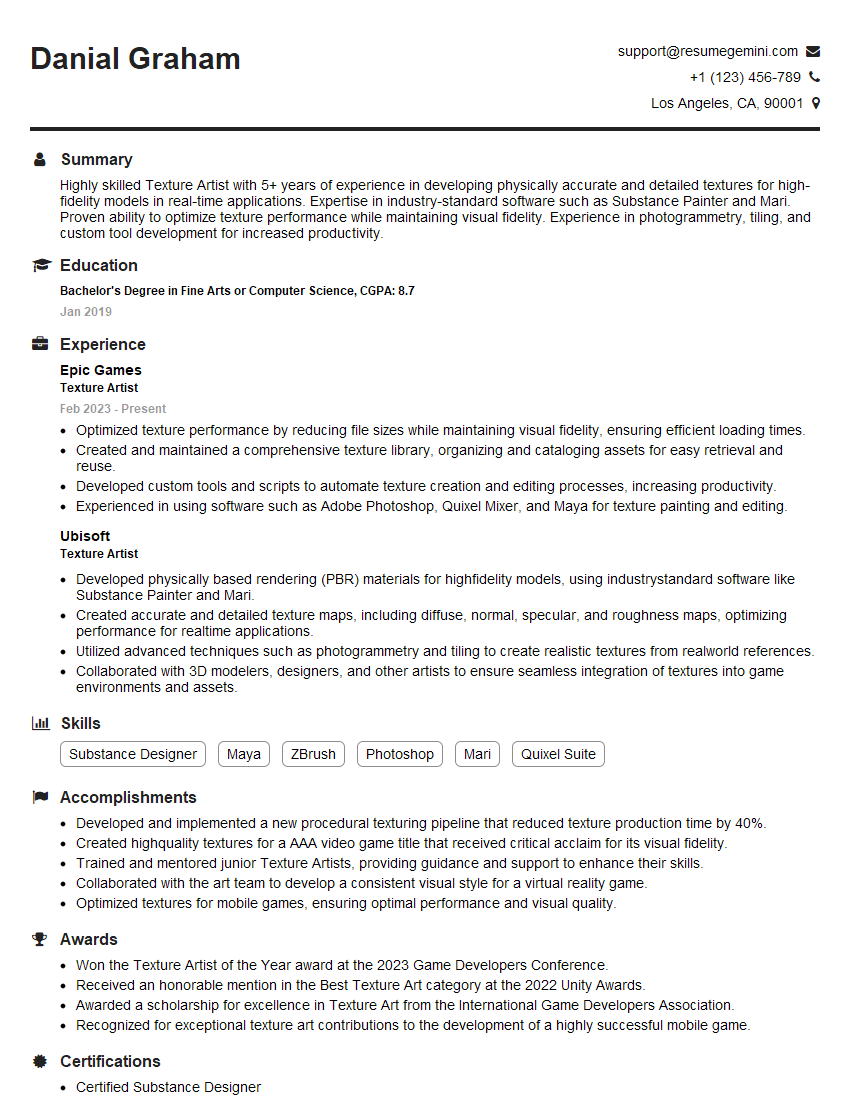
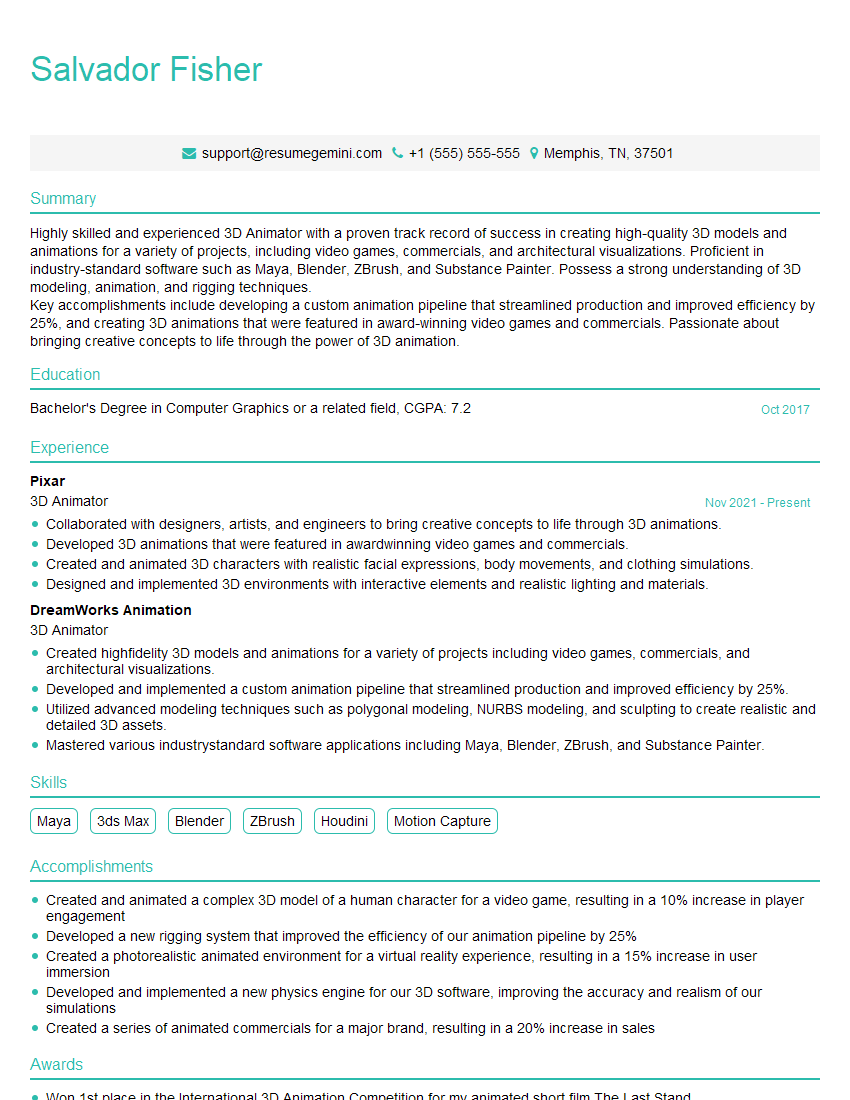
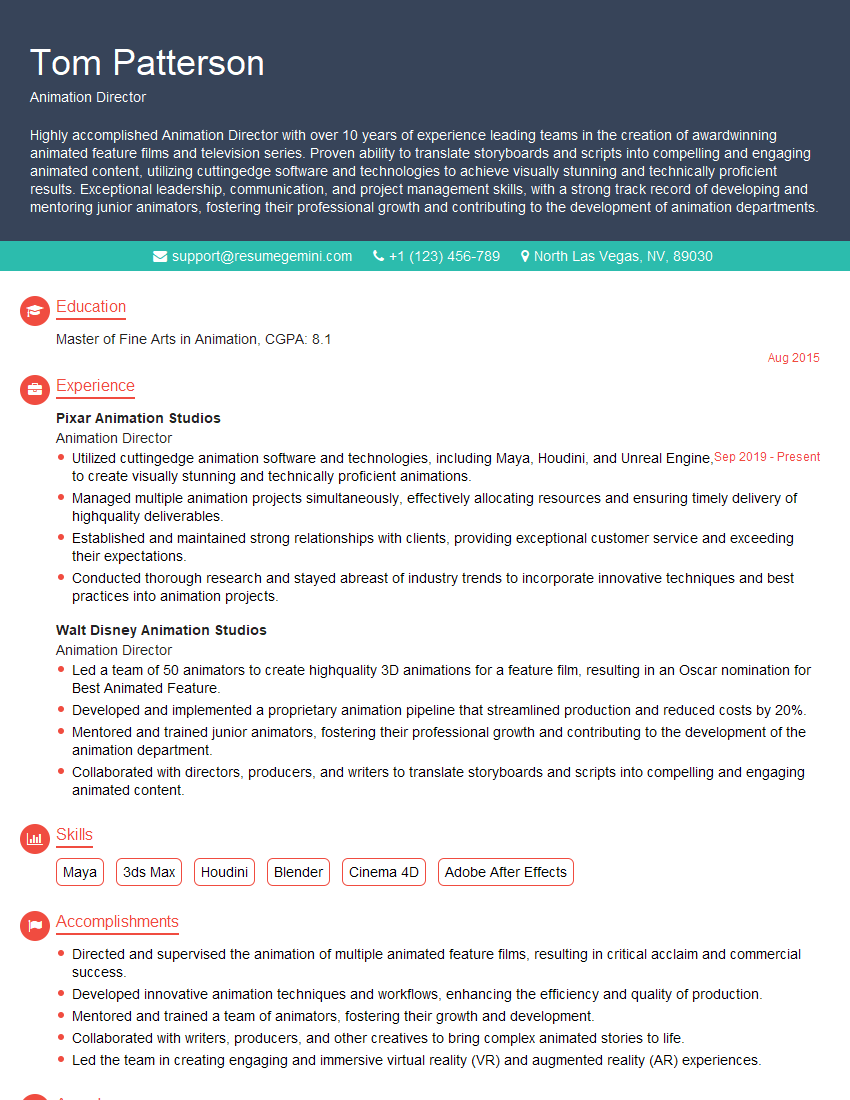
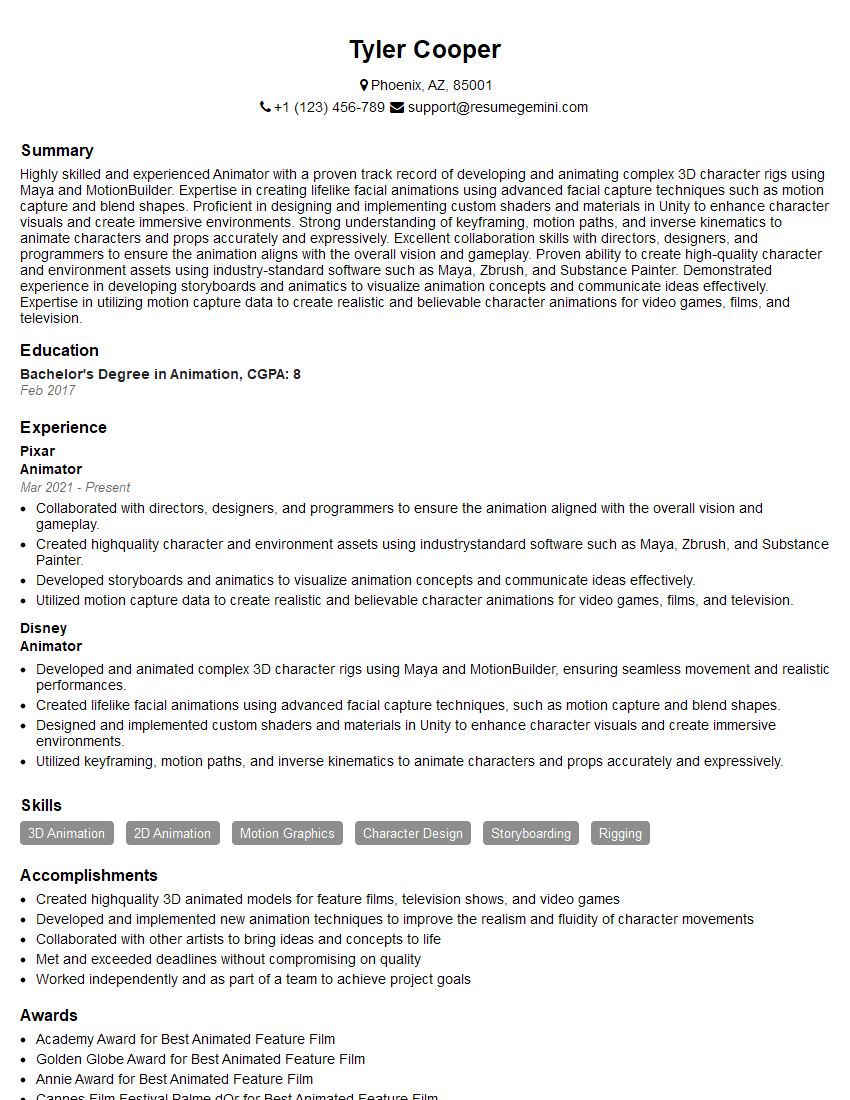
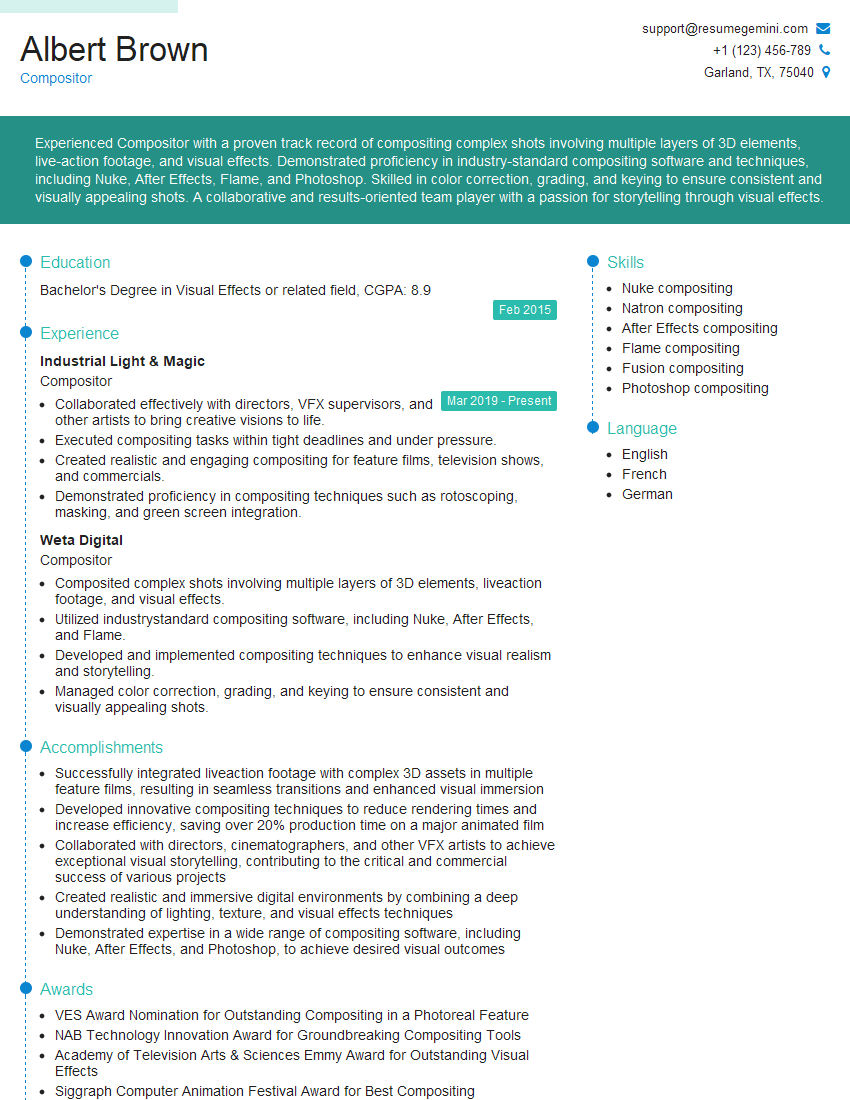
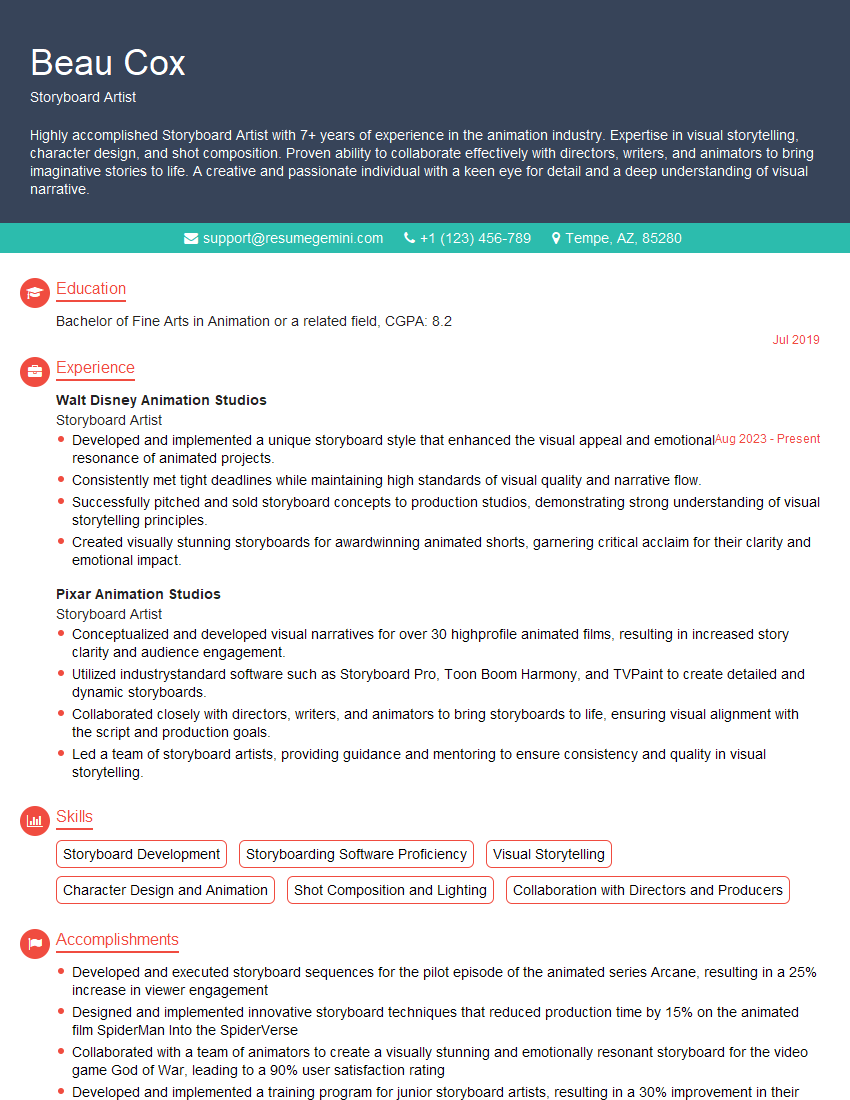
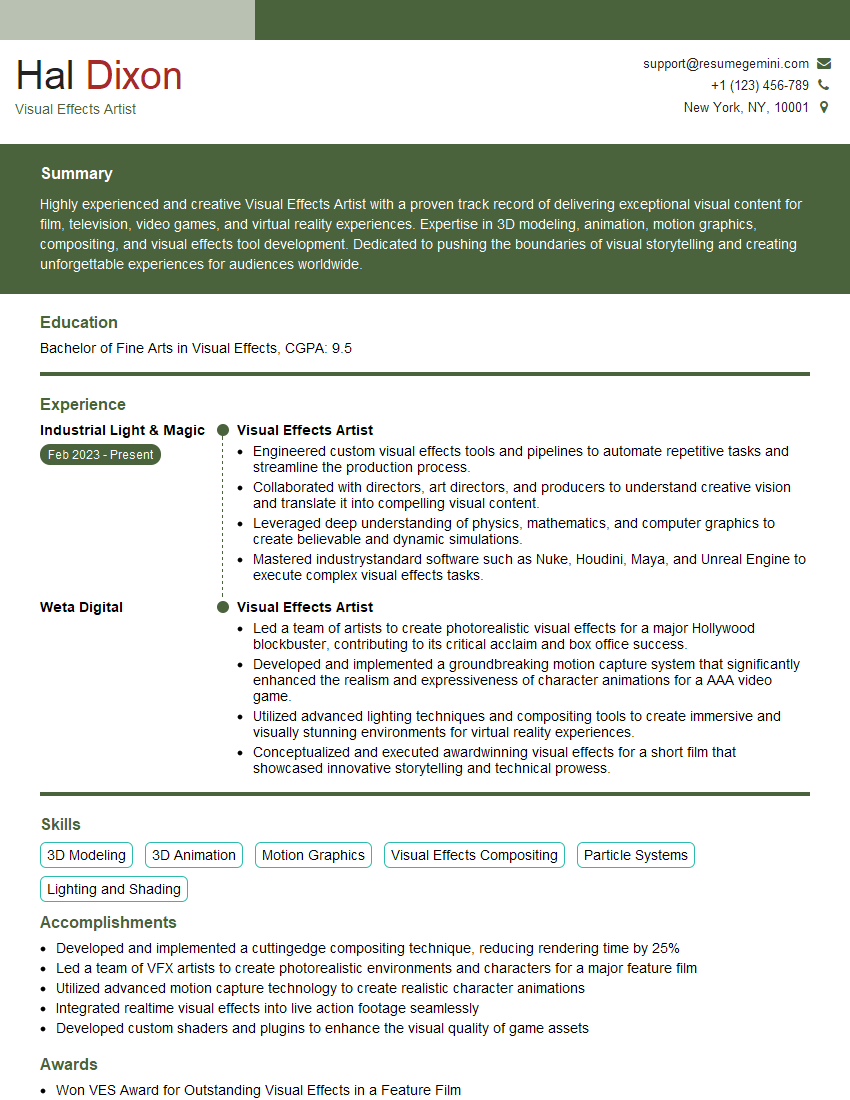
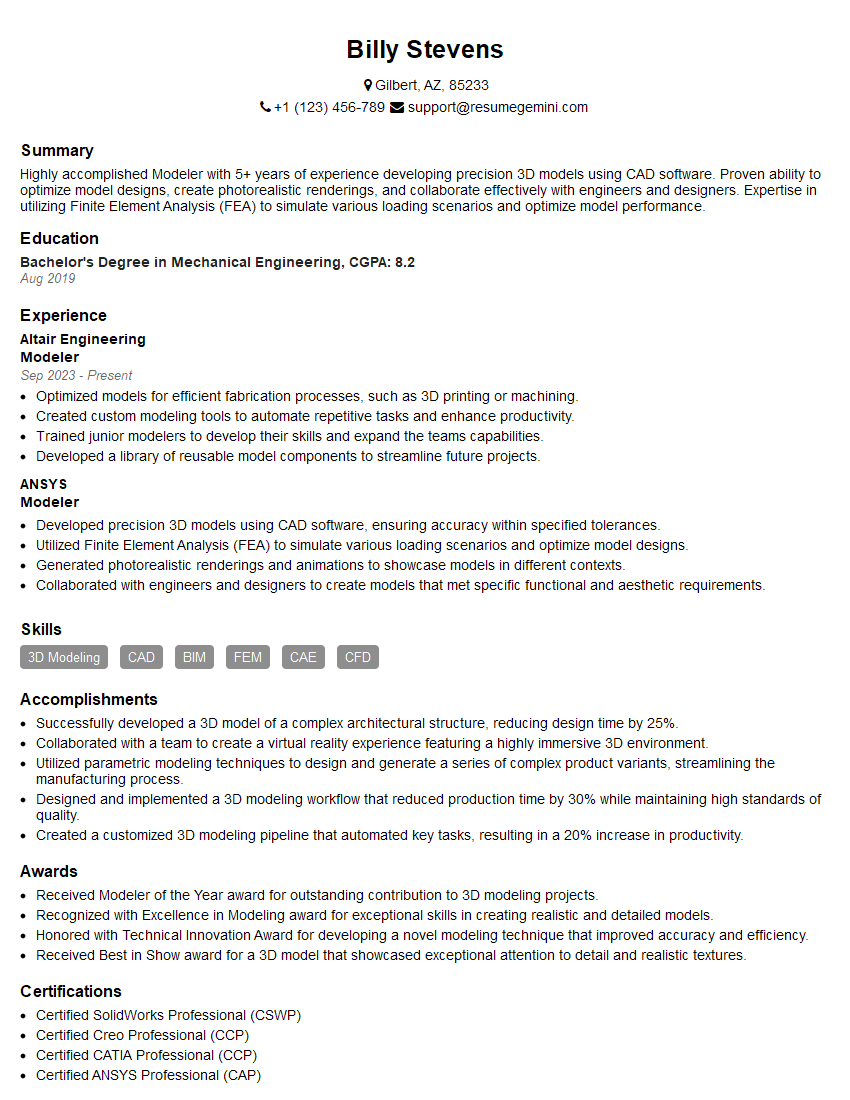
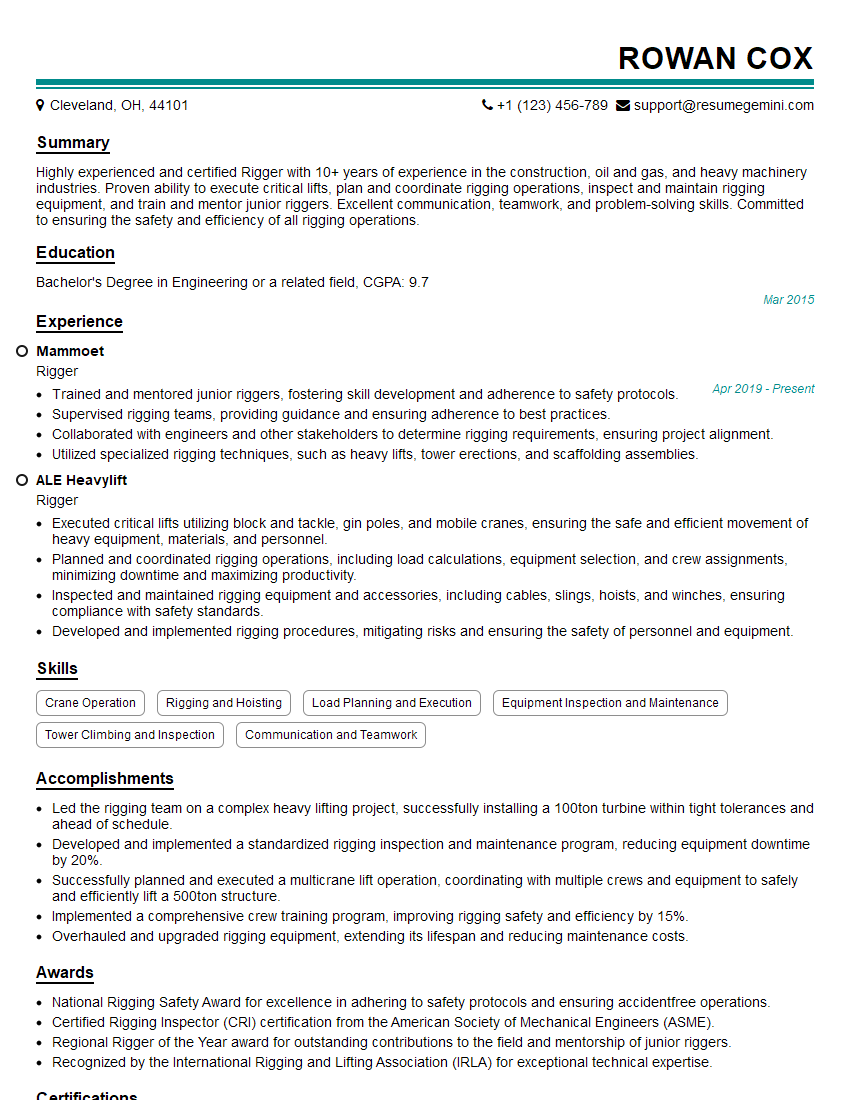
Mastering animation scriptwriting is crucial for a successful career in the dynamic world of animation. It’s the foundation upon which captivating stories are built. To maximize your job prospects, creating a strong, ATS-friendly resume is essential. ResumeGemini can help you build a professional and impactful resume tailored to the animation industry. We provide examples of resumes specifically designed for animation script writers to help you showcase your skills and experience effectively. Take the next step towards your dream animation career – build your best resume with ResumeGemini!
Explore more articles
Users Rating of Our Blogs
Share Your Experience
We value your feedback! Please rate our content and share your thoughts (optional).
What Readers Say About Our Blog
Hello,
we currently offer a complimentary backlink and URL indexing test for search engine optimization professionals.
You can get complimentary indexing credits to test how link discovery works in practice.
No credit card is required and there is no recurring fee.
You can find details here:
https://wikipedia-backlinks.com/indexing/
Regards
NICE RESPONSE TO Q & A
hi
The aim of this message is regarding an unclaimed deposit of a deceased nationale that bears the same name as you. You are not relate to him as there are millions of people answering the names across around the world. But i will use my position to influence the release of the deposit to you for our mutual benefit.
Respond for full details and how to claim the deposit. This is 100% risk free. Send hello to my email id: [email protected]
Luka Chachibaialuka
Hey interviewgemini.com, just wanted to follow up on my last email.
We just launched Call the Monster, an parenting app that lets you summon friendly ‘monsters’ kids actually listen to.
We’re also running a giveaway for everyone who downloads the app. Since it’s brand new, there aren’t many users yet, which means you’ve got a much better chance of winning some great prizes.
You can check it out here: https://bit.ly/callamonsterapp
Or follow us on Instagram: https://www.instagram.com/callamonsterapp
Thanks,
Ryan
CEO – Call the Monster App
Hey interviewgemini.com, I saw your website and love your approach.
I just want this to look like spam email, but want to share something important to you. We just launched Call the Monster, a parenting app that lets you summon friendly ‘monsters’ kids actually listen to.
Parents are loving it for calming chaos before bedtime. Thought you might want to try it: https://bit.ly/callamonsterapp or just follow our fun monster lore on Instagram: https://www.instagram.com/callamonsterapp
Thanks,
Ryan
CEO – Call A Monster APP
To the interviewgemini.com Owner.
Dear interviewgemini.com Webmaster!
Hi interviewgemini.com Webmaster!
Dear interviewgemini.com Webmaster!
excellent
Hello,
We found issues with your domain’s email setup that may be sending your messages to spam or blocking them completely. InboxShield Mini shows you how to fix it in minutes — no tech skills required.
Scan your domain now for details: https://inboxshield-mini.com/
— Adam @ InboxShield Mini
Reply STOP to unsubscribe
Hi, are you owner of interviewgemini.com? What if I told you I could help you find extra time in your schedule, reconnect with leads you didn’t even realize you missed, and bring in more “I want to work with you” conversations, without increasing your ad spend or hiring a full-time employee?
All with a flexible, budget-friendly service that could easily pay for itself. Sounds good?
Would it be nice to jump on a quick 10-minute call so I can show you exactly how we make this work?
Best,
Hapei
Marketing Director
Hey, I know you’re the owner of interviewgemini.com. I’ll be quick.
Fundraising for your business is tough and time-consuming. We make it easier by guaranteeing two private investor meetings each month, for six months. No demos, no pitch events – just direct introductions to active investors matched to your startup.
If youR17;re raising, this could help you build real momentum. Want me to send more info?
Hi, I represent an SEO company that specialises in getting you AI citations and higher rankings on Google. I’d like to offer you a 100% free SEO audit for your website. Would you be interested?
Hi, I represent an SEO company that specialises in getting you AI citations and higher rankings on Google. I’d like to offer you a 100% free SEO audit for your website. Would you be interested?
good