Unlock your full potential by mastering the most common Assessing compliance with building codes interview questions. This blog offers a deep dive into the critical topics, ensuring you’re not only prepared to answer but to excel. With these insights, you’ll approach your interview with clarity and confidence.
Questions Asked in Assessing compliance with building codes Interview
Q 1. Explain the process of reviewing building plans for code compliance.
Reviewing building plans for code compliance is a meticulous process that ensures the proposed structure adheres to all relevant safety and building regulations. It typically involves a systematic check against the adopted building code, often the International Building Code (IBC) or a locally amended version.
- Plan Check: First, I thoroughly review the architectural, structural, mechanical, electrical, and plumbing (MEP) drawings. I verify that all dimensions, materials, and systems are clearly indicated and meet code requirements. This includes checking for proper fire separations, egress routes, accessibility features, structural integrity, and energy efficiency.
- Code Cross-referencing: I then cross-reference specific plan details with the relevant code sections. For example, I might check the fire-resistance rating of a wall against the IBC’s requirements for that specific occupancy type. This often involves using the code’s tables and charts.
- Calculations and Simulations: Sometimes, calculations or simulations are necessary to verify code compliance, such as structural load calculations or HVAC system sizing. I carefully scrutinize these calculations to ensure they’re accurate and meet the code’s minimum standards.
- Reporting and Communication: Finally, I prepare a detailed report that outlines any code violations or areas requiring clarification. This report is communicated to the applicant, and we work collaboratively to resolve any identified issues before the construction permits are issued.
Think of it like a detailed puzzle: each piece (drawing, specification, code section) must fit perfectly to create a safe and compliant structure.
Q 2. Describe your experience identifying and documenting code violations.
Throughout my career, I’ve identified and documented numerous code violations, ranging from minor discrepancies to significant safety hazards. My approach is always objective, focusing on factual observations and clear documentation.
- Clear and Concise Documentation: I meticulously document each violation with photographs, detailed descriptions, and precise references to the relevant code sections. For instance, if an egress window is too small, I’d include a photo of the window, its dimensions, the code section violated (e.g., IBC 1007.1), and a concise explanation of the discrepancy.
- Prioritizing Safety Hazards: I prioritize violations that pose immediate safety risks, such as inadequate fire protection or structural instability. These are addressed immediately, often requiring temporary work stoppages until corrections are made.
- Using Standardized Forms: My organization uses standardized forms for documenting violations, which ensures consistency and clarity in reporting.
- Maintaining a Detailed Log: I maintain a comprehensive log of all violations, including dates, actions taken, and resolutions. This is invaluable for tracking progress and ensuring accountability.
For example, I once discovered inadequate bracing in a newly constructed building’s framing. This was documented with photos, measurements, and references to the structural code. Immediate action was taken to ensure the building’s stability before further work could proceed.
Q 3. How do you handle disagreements with contractors regarding code interpretations?
Disagreements over code interpretation are common. My approach focuses on professional dialogue, collaboration, and a clear understanding of the code’s intent.
- Reviewing the Code Together: I initiate a discussion by reviewing the relevant code sections with the contractor, clarifying any ambiguities, and highlighting the specific interpretations that are in conflict.
- Providing Technical Justification: I provide clear and concise technical justifications for my interpretations, referencing relevant code sections, industry standards, and accepted engineering practices.
- Seeking Clarification from Authorities: If we cannot reach a consensus, I recommend seeking clarification from higher authorities, such as the building department’s plan review team or a qualified code official.
- Documenting the Resolution: The agreed-upon resolution, including any necessary modifications to the plans or construction methods, is formally documented and communicated to all parties involved.
This collaborative approach ensures that everyone is on the same page and that the project meets code requirements without unnecessary delays or disputes.
Q 4. What are the key differences between the International Building Code (IBC) and your local building codes?
The International Building Code (IBC) is a widely adopted model code, serving as a baseline for many jurisdictions. However, local building codes often incorporate modifications and additions based on regional climate, geographic conditions, and specific local needs.
- Variations in Requirements: Local codes may amend or supersede certain IBC provisions. For example, the IBC might prescribe minimum snow load requirements, but a locality with heavier snowfall might have a more stringent local code.
- Inclusion of Special Regulations: Local codes frequently include regulations specific to the area, such as requirements related to seismic activity, coastal construction, or unique environmental concerns.
- Adoption and Amendments: A locality can adopt the IBC in its entirety, adopt it with modifications, or develop its own code based on the IBC framework. Changes and amendments to the local code are typically made through formal processes such as public hearings and council approvals.
It’s essential to consult both the IBC and the specific local building code for a given project to ensure complete compliance. Ignoring local amendments can result in costly rework or project delays.
Q 5. How do you stay updated on changes and amendments to building codes?
Staying current with building code changes is crucial for maintaining professional competency. I utilize several strategies to ensure I am always up to date:
- Subscription to Code Updates: I subscribe to updates and notifications from the International Code Council (ICC) and my local building department.
- Professional Development Courses: I regularly attend training courses and seminars on building codes and their applications. These courses often cover recent amendments and offer insights into code interpretation.
- Networking with Professionals: I actively participate in professional organizations and networking events to discuss current code interpretations and challenges with other building officials and industry professionals.
- Reviewing Code Bulletins: I regularly review code bulletins and technical advisories issued by code authorities, which address specific interpretations or clarifications.
Staying informed ensures that my inspections and reviews are accurate, consistent, and aligned with the latest code requirements.
Q 6. Explain your experience with different types of building inspections (e.g., pre-construction, during construction, final).
My experience encompasses various types of building inspections, each with unique focuses and requirements:
- Pre-construction Inspections: These inspections verify that the site is prepared according to the approved plans, utilities are correctly installed, and the foundation is adequate for the proposed structure.
- During-Construction Inspections: These are conducted at various stages of construction, focusing on compliance with the approved plans and the building code as work progresses. This allows for early detection of violations and helps ensure that any necessary corrections are made timely. Typical inspections include framing, insulation, mechanical, electrical, and plumbing inspections.
- Final Inspections: These are the culminating inspections, ensuring that the completed building meets all code requirements and is ready for occupancy. They involve a comprehensive review of all aspects of the building, including finishes, safety systems, and occupancy suitability.
The frequency and specifics of these inspections are guided by the local jurisdiction’s requirements and often tailored to the complexity and scale of each project.
Q 7. Describe a situation where you had to interpret ambiguous code language. How did you resolve it?
I once encountered ambiguous language regarding the required fire-resistance rating of a shared wall between two different occupancy types. The code seemingly offered conflicting interpretations.
Resolution: I first carefully reviewed all relevant code sections, paying close attention to the definitions of terms and the overall intent of the code. I then researched relevant commentary and interpretations published by the ICC, as well as consulted previous rulings from the building department on similar cases. I also consulted with experienced colleagues to gather diverse perspectives.
The ambiguity stemmed from differing interpretations of a particular phrase within the code. Based on the collective review and the prevailing interpretations, I recommended a solution that prioritized the higher fire-resistance rating to ensure maximum safety. This was documented in a detailed report, presented to the building department, and accepted as a sound interpretation aligned with the spirit of the building code.
This experience highlighted the importance of comprehensive code research, collaboration with colleagues, and a deep understanding of code principles to resolve ambiguous situations.
Q 8. How familiar are you with accessibility requirements under the ADA?
I possess extensive familiarity with the Americans with Disabilities Act (ADA) accessibility requirements, specifically as they pertain to building codes. My understanding encompasses not only the letter of the law but also the spirit, which focuses on ensuring equal access for individuals with disabilities. This includes thorough knowledge of the ADA Standards for Accessible Design, which cover a broad range of aspects, from building entrances and ramps to restroom facilities, signage, and assistive listening systems.
- Understanding scope: I understand that accessibility isn’t just about complying with specific measurements; it’s about creating a usable and enjoyable built environment for everyone. This includes considering various types of disabilities, such as mobility impairments, visual impairments, and hearing impairments.
- Practical Application: For example, I’ve reviewed numerous plans where proposed ramp slopes exceeded the maximum allowable grade. I’ve also worked on projects where inadequate signage or poorly placed grab bars were identified and corrected to meet ADA compliance.
- Staying updated: I regularly review updates and interpretations of the ADA Standards to ensure my knowledge remains current. The ADA is frequently subject to revisions and legal interpretations which impacts how we review projects.
Q 9. Explain your experience using building code software or databases.
I’m proficient in utilizing several building code software and databases. My experience includes working with ICC’s International Code Council software, which contains the most recent model codes, as well as specialized software for plan review and permit issuance. I’m also comfortable navigating online code databases provided by various jurisdictions.
My experience transcends simply data entry; I use these tools to efficiently analyze plans, identify potential code violations, generate reports, and track progress on projects. This includes leveraging the search functions to quickly locate specific code sections and utilizing the annotation features to highlight discrepancies or concerns. For example, I recently used ICC Evaluation Service software to verify the compliance of a new type of fire-rated door assembly, ensuring it met all relevant building code requirements.
Q 10. What are the common causes of building code violations you’ve encountered?
Over the years, I’ve observed several recurring causes of building code violations. These can be broadly categorized into three main areas: design flaws, inadequate construction practices, and insufficient inspections.
- Design Flaws: This often stems from incomplete plans, overlooking crucial code requirements during the design phase (e.g., inadequate egress planning, insufficient fire separation). For instance, I encountered a project where the designer had not properly calculated the required number of exits based on the occupancy load.
- Inadequate Construction Practices: This encompasses using substandard materials, incorrect installation techniques, deviations from approved plans without proper documentation. I’ve seen numerous cases where electrical wiring wasn’t properly grounded, leading to significant safety hazards.
- Insufficient Inspections: A lack of thorough inspection at various construction stages can allow violations to go unnoticed until the final inspection, potentially resulting in costly rework. One memorable instance involved a project where improper framing was discovered during a final inspection, requiring a significant portion of the work to be redone.
Q 11. How do you prioritize multiple inspection requests and deadlines?
Prioritizing multiple inspection requests and deadlines requires a systematic approach. I utilize a combination of techniques, including:
- Scheduling Software: Employing calendar and scheduling software helps me visually manage deadlines and allocate time effectively.
- Urgency Assessment: I prioritize inspections based on urgency, considering factors like potential safety hazards, project timelines, and permit expiration dates. Inspections related to life safety always take precedence.
- Risk Assessment: A higher-risk project, with a greater likelihood of code violations, would receive priority over a lower-risk project.
- Communication: Maintaining clear communication with contractors, architects, and clients allows for proactive scheduling adjustments and prevents conflicts.
Think of it like an air traffic controller managing multiple flights—each flight (inspection) has its own priority and timing, and efficient management is crucial for smooth operations.
Q 12. Describe your experience working with architects, engineers, and contractors.
Collaboration with architects, engineers, and contractors is integral to successful building code compliance. My approach centers around open communication, mutual respect, and a shared understanding of code requirements. I often act as a consultant, guiding them through the process, providing clarifications, and helping them avoid potential code violations. I’ve found that proactive engagement early in the design phase leads to fewer conflicts during construction.
For example, I frequently work with engineers to verify structural calculations, and with contractors to confirm proper installation of various building systems. A strong collaborative relationship allows us to resolve potential discrepancies efficiently and ensures compliance.
Q 13. How do you ensure fair and consistent application of building codes?
Ensuring fair and consistent application of building codes is paramount. I achieve this through:
- Thorough Knowledge of Codes: Maintaining up-to-date knowledge of the relevant codes and their interpretations is fundamental. This allows for consistent application across different projects.
- Objective Assessment: I always strive for objective evaluations, based solely on the established code requirements, and avoiding personal bias.
- Documented Procedures: My inspections follow clear, documented procedures and checklists. This ensures consistency and accountability. Every decision and observation are thoroughly documented.
- Regular Training and Updates: Ongoing professional development keeps me informed of code changes, new technologies, and best practices. This also helps me stay up-to-date with new interpretations and legal rulings.
Fairness is achieved through applying the code equally to all parties, regardless of size, reputation, or influence.
Q 14. Explain the process of issuing stop-work orders and related procedures.
Issuing a stop-work order is a serious step taken when significant code violations pose an immediate threat to public safety or health. The process typically involves:
- Identifying the Violation: A clear and documented identification of the code violation(s) that necessitate a stop-work order. Photos and detailed descriptions are key.
- Written Notification: Issuing a formal, written stop-work order, clearly specifying the violations and the required corrective actions. The order is delivered to the contractor, and potentially to the owner/developer.
- Documentation: Meticulous documentation of all communications, inspections, and the reasons for issuing the stop-work order. This is critical for liability purposes.
- Follow-up Inspections: Conducting follow-up inspections to verify that the violations have been corrected before allowing work to resume.
- Legal Considerations: Understanding the legal ramifications and procedures for issuing and enforcing a stop-work order, including potential legal challenges.
The goal is not to halt progress unnecessarily but to protect public safety. Therefore, every effort is made to work collaboratively with contractors and developers to quickly resolve the issues and lift the stop-work order.
Q 15. How do you handle complaints from the public regarding building code violations?
When a public complaint regarding building code violations comes in, my first step is to acknowledge the complaint and assure the complainant that their concerns are being taken seriously. I then systematically investigate the complaint. This involves a thorough on-site inspection, reviewing relevant building permits and plans, and potentially interviewing witnesses or gathering photographic evidence.
For example, if a complaint involves a lack of accessible ramps, I’d verify the building’s occupancy permit and compare it to the International Building Code (IBC) accessibility requirements. I’d measure ramp slopes, assess handrail installation, and document everything meticulously. Based on my findings, I would then issue a notice of violation to the property owner, outlining the specific code violations and providing a timeframe for correction. If the violations are not addressed, further enforcement actions like fines or even court orders can be pursued. Throughout the process, maintaining clear and consistent communication with the complainant and the property owner is crucial. Transparency builds trust and ensures everyone is aware of the process and the expected outcome.
Career Expert Tips:
- Ace those interviews! Prepare effectively by reviewing the Top 50 Most Common Interview Questions on ResumeGemini.
- Navigate your job search with confidence! Explore a wide range of Career Tips on ResumeGemini. Learn about common challenges and recommendations to overcome them.
- Craft the perfect resume! Master the Art of Resume Writing with ResumeGemini’s guide. Showcase your unique qualifications and achievements effectively.
- Don’t miss out on holiday savings! Build your dream resume with ResumeGemini’s ATS optimized templates.
Q 16. What is your familiarity with life safety codes?
My familiarity with life safety codes is extensive. I have years of experience interpreting and enforcing codes related to fire protection, egress, emergency lighting, and accessibility for people with disabilities. I’m proficient in understanding and applying codes like the International Fire Code (IFC) and the relevant sections of the IBC. I understand how these codes impact building design, construction, and ongoing maintenance. I know how to identify potential hazards like blocked exits, inadequate fire suppression systems, and insufficient emergency lighting, and I’m trained to assess the risks associated with these hazards. I’m familiar with the specific requirements for different building types and occupancies, understanding that life safety codes vary depending on factors such as building size, the number of occupants, and the nature of the building’s use. For instance, a high-rise office building will have significantly different life safety requirements compared to a single-family dwelling.
Q 17. Describe your experience with building code enforcement procedures.
My experience with building code enforcement procedures is comprehensive. It begins with reviewing submitted plans for compliance with the applicable codes, ensuring that the design meets all safety and accessibility requirements. During construction, I conduct regular inspections at various stages, from foundation to final completion, to verify that the construction adheres to the approved plans and building codes. Any deviations are documented and addressed immediately, This might involve issuing stop-work orders if significant code violations are found. After construction is completed, a final inspection is done to confirm compliance before an occupancy permit is issued. I’m adept at using various inspection tools and techniques, including but not limited to visual inspections, measurements, and testing of installed systems. I’m also skilled in drafting detailed inspection reports, documenting findings, and issuing notices of violation when necessary. My experience includes handling appeals and appearing before boards or tribunals to defend enforcement actions. A recent example involved a project where the contractor failed to install proper fire-resistant materials in a critical area. This resulted in a stop-work order until the corrections were made.
Q 18. How do you handle situations involving potentially hazardous building conditions?
When dealing with potentially hazardous building conditions, my immediate priority is ensuring the safety of occupants and the public. I follow a systematic approach: First, I assess the immediate threat level. If there is an imminent danger, like a structural collapse risk, I would take immediate action to evacuate the building and secure the area. I then would notify the relevant authorities like fire departments or emergency medical services. Secondly, I thoroughly investigate the source of the hazard, identifying the specific code violations that contributed to the dangerous situation. This often involves consulting engineering experts to ascertain the extent of the structural or mechanical problems. Third, I would issue appropriate orders to address the hazard, this may include temporary closures, emergency repairs, or even demolition depending on the severity of the risk. Finally, I would ensure all remedial actions are implemented correctly and thoroughly documented. In one case, I discovered significant structural damage in an older building after receiving a complaint. The building was immediately evacuated, and structural engineers were called in. The building was deemed unsafe until the necessary repairs were undertaken.
Q 19. What are your strengths and weaknesses in interpreting and enforcing building codes?
My strengths lie in my ability to accurately interpret complex building codes and apply them consistently and fairly. I possess a deep understanding of the interrelationship between different codes and regulations. My ability to effectively communicate technical information to both technical and non-technical audiences is a key strength, enabling me to clearly explain code requirements to builders, owners, and the public. I can systematically investigate code violations, gather evidence, and prepare detailed reports that support enforcement actions. My systematic approach is crucial in managing complex issues.
A weakness I’m actively working on is staying completely up to date with the rapidly evolving changes in building materials and technologies. The construction industry is constantly innovating, which requires continual learning and professional development to ensure proficiency with the latest materials and methods. To address this, I actively participate in continuing education programs and network with other professionals in the field.
Q 20. Explain your experience with different building materials and construction methods.
My experience encompasses a wide range of building materials and construction methods. I’m familiar with traditional materials such as wood, concrete, steel, masonry, and various types of roofing and insulation. I’m also knowledgeable about newer materials and technologies, including composite materials, high-performance insulation, and sustainable building practices. My understanding extends to different construction methods, such as wood-frame construction, concrete construction, steel-frame construction, and various prefabricated building systems. I can assess the structural integrity of buildings constructed using diverse methods and materials, ensuring that they meet code requirements for strength, durability, fire resistance, and energy efficiency. For example, I understand the specific requirements for fireproofing steel structures and the proper installation of insulation to meet energy efficiency standards. I am also proficient in reviewing structural calculations and engineering reports to ensure the design meets all necessary code requirements.
Q 21. How do you maintain accurate and comprehensive records of inspections and findings?
Maintaining accurate and comprehensive records is paramount in building code enforcement. I utilize a combination of digital and physical record-keeping systems. Digital records include a sophisticated database that stores inspection reports, permit applications, violation notices, photographs, and other relevant documentation. This database allows for easy retrieval and analysis of information. Physical records, such as original permit applications and inspection checklists, are securely stored in a designated archive. The system I use ensures traceability and accountability for all actions. Each inspection is thoroughly documented with detailed notes, photographs, and sketches. The database is regularly backed up to prevent data loss, and access is controlled to protect sensitive information. This rigorous system enables me to easily track the progress of projects, generate reports for management and regulatory bodies, and provide detailed evidence in case of disputes or legal proceedings. Every detail, from minor discrepancies to major violations, is logged and tracked, building a complete history of the project and its compliance with building codes.
Q 22. Describe your approach to providing technical assistance to contractors and developers.
My approach to providing technical assistance to contractors and developers centers around clear communication, proactive collaboration, and a deep understanding of the building codes. I begin by actively listening to their concerns and understanding their project goals. Then, I translate complex code requirements into practical, on-site solutions. This often involves providing detailed interpretations of code sections, suggesting alternative designs that meet compliance, and offering guidance on best practices. I find that visual aids, such as diagrams and annotated code excerpts, are incredibly effective in facilitating understanding.
For instance, if a contractor is struggling with the requirements for egress in a complex building layout, I wouldn’t simply point to the relevant code section. Instead, I would work with them to develop several possible solutions, modeling them using sketches or even simple CAD drawings. We’d then discuss the pros and cons of each option in terms of cost, feasibility, and compliance, collaboratively selecting the most suitable approach.
I also emphasize preventative measures. Pre-construction consultations allow me to identify potential code conflicts early on, minimizing costly rework later in the project. This proactive approach saves both time and money, fostering positive relationships with contractors and developers.
Q 23. How do you ensure the safety of yourself and others during inspections?
Ensuring safety during inspections is paramount. My approach is multi-faceted and prioritizes risk mitigation. Before each inspection, I carefully assess the site conditions. This involves checking for obvious hazards like exposed wires, unstable structures, or hazardous materials. I always wear appropriate personal protective equipment (PPE), including hard hats, safety glasses, and high-visibility clothing.
I also communicate clearly with the contractor or developer before, during, and after the inspection. This establishes a shared understanding of the inspection process and highlights any potential hazards. I maintain a safe distance from any ongoing work, particularly heavy machinery, and ensure that the work area is adequately secured. In areas where access is difficult or potentially unsafe, I would delay the inspection or request appropriate safety measures from the site supervisor before proceeding.
Finally, I regularly review and update my knowledge of safety regulations and best practices. Staying informed on industry standards helps me proactively identify and avoid potential risks.
Q 24. Describe a challenging code compliance issue you encountered and how you resolved it.
One particularly challenging issue involved a historical building renovation project. The existing structure incorporated many non-standard features, making compliance with modern accessibility codes particularly difficult. Specifically, the original staircase was too narrow and steep to meet current ADA requirements, while altering it significantly would have compromised the building’s historical integrity.
To resolve this, I employed a multi-pronged approach. First, I thoroughly documented the existing conditions and their deviation from current codes. I then collaborated with the architect, historical preservation experts, and accessibility consultants to explore several potential solutions. We considered installing an external elevator, adding a second, compliant staircase, and modifying the existing staircase as minimally as possible. After careful analysis, taking into account budget constraints and the building’s historical significance, we opted for a combination of solutions: minor modifications to the existing staircase to improve accessibility and the addition of a small elevator discreetly integrated into the structure. This compromise ensured both compliance and the preservation of the building’s historical charm. Thorough documentation of the process, including justifications for the chosen solutions, was essential in ensuring approval from the relevant authorities.
Q 25. What software or tools do you use to document inspections and findings?
My documentation process relies on a combination of software and tools. I primarily utilize a Building Information Modeling (BIM) platform for visual documentation and analysis. This allows me to overlay code requirements onto the building’s digital model, quickly identifying potential discrepancies. I then create detailed inspection reports using specialized software that allows me to generate professional-looking documents with images, annotations, and customized templates. This software integrates with my mobile device, allowing me to take photos directly in the field and attach them to the report, streamlining the documentation process.
In addition to this, I use a cloud-based system for document storage and sharing, ensuring secure access to all inspection-related files for stakeholders. This centralized system also enables efficient collaboration and ensures that everyone involved has access to the most current information. Finally, I utilize a digital checklist to ensure a consistent and thorough inspection procedure every time.
Q 26. How do you handle situations where a building is found to be non-compliant after construction is complete?
Handling non-compliance after construction is more complex, requiring a careful and systematic approach. The first step is to clearly document all violations with photographs and detailed descriptions. I then schedule a meeting with the contractor, developer, and relevant stakeholders to discuss the findings and explore remediation options. I present a clear outline of the necessary corrections, referencing the specific code violations and providing guidance on how to address them.
Depending on the severity of the violation, different courses of action may be required. Minor infractions might be addressed with relatively simple fixes and a follow-up inspection. More significant issues may necessitate more extensive modifications, potentially leading to legal action if the necessary corrections are not implemented. This process always involves providing clear timelines, outlining costs associated with rectifications, and ensuring proper documentation throughout the process. Ultimately, the goal is to achieve compliance while minimizing disruption and maintaining professional relationships.
Q 27. What is your understanding of the legal ramifications of building code violations?
Building code violations carry significant legal ramifications. The penalties can vary depending on the severity of the violation, the jurisdiction, and the history of the involved parties. Minor violations might result in warnings or fines. However, more serious violations, especially those affecting safety and structural integrity, can lead to stop-work orders, costly legal battles, and even criminal charges in some extreme cases.
Furthermore, violations can impact insurance coverage, as insurers may refuse to provide liability coverage for non-compliant structures. Owners of non-compliant buildings could also face lawsuits from individuals injured due to the building’s unsafe condition. Understanding the potential legal consequences is crucial for both the enforcement of building codes and the protection of public safety.
Q 28. Describe your experience working within a team environment to ensure code compliance.
Teamwork is integral to ensuring code compliance. In my experience, effective collaboration requires clear communication, defined roles, and mutual respect. I’ve been part of teams comprising architects, engineers, contractors, developers, and other code officials, working collaboratively to achieve a shared objective: a safe and compliant building. Open communication is key; regular meetings, progress reports, and clear documentation facilitate informed decision-making.
For example, in a large-scale project, I’ve worked with a team where the architect was responsible for design compliance, the engineers handled structural integrity, and the contractor oversaw the physical construction. My role involved providing technical expertise, mediating potential conflicts between team members, and ensuring that everyone adhered to the relevant building codes. Through regular meetings and detailed documentation, we successfully navigated complex code issues, ensuring the project’s timely completion while meeting all compliance requirements. Effective teamwork not only ensures compliance but also enhances efficiency and fosters a positive project environment.
Key Topics to Learn for Assessing Compliance with Building Codes Interview
- Understanding Building Codes: Familiarize yourself with the various building codes relevant to your region (e.g., IBC, local amendments). Focus on the key principles and their underlying rationale.
- Plan Review and Inspection Procedures: Learn the process of reviewing building plans for code compliance and conducting thorough on-site inspections. Understand the documentation requirements at each stage.
- Code Interpretation and Application: Develop your skills in interpreting complex code language and applying it to real-world scenarios. Practice analyzing different situations and making informed judgments.
- Common Code Violations and Remediation: Study common violations encountered during plan review and inspections. Understand the appropriate methods for addressing and remediating these issues.
- Safety Regulations and Risk Assessment: Gain a deep understanding of building safety regulations and how to conduct risk assessments to identify potential hazards.
- Communication and Collaboration: Develop effective communication skills for interacting with architects, engineers, contractors, and building owners. Practice explaining complex technical information clearly and concisely.
- Legal and Ethical Considerations: Understand your responsibilities and the legal implications of non-compliance. Familiarize yourself with ethical conduct in the building inspection profession.
- Emerging Technologies and Sustainable Practices: Explore how new technologies and sustainable building practices are impacting code compliance and inspection techniques.
- Problem-Solving and Decision-Making: Practice your problem-solving skills by working through hypothetical scenarios related to code compliance issues. Develop your ability to make sound and well-justified decisions.
Next Steps
Mastering the assessment of building code compliance is crucial for career advancement in the construction and engineering fields. It demonstrates a commitment to safety, quality, and legal adherence, opening doors to more senior roles and increased earning potential. To maximize your job prospects, create an ATS-friendly resume that highlights your relevant skills and experience. ResumeGemini is a trusted resource for building a professional resume that will impress potential employers. Examples of resumes tailored to assessing compliance with building codes are available to help you craft a compelling application.
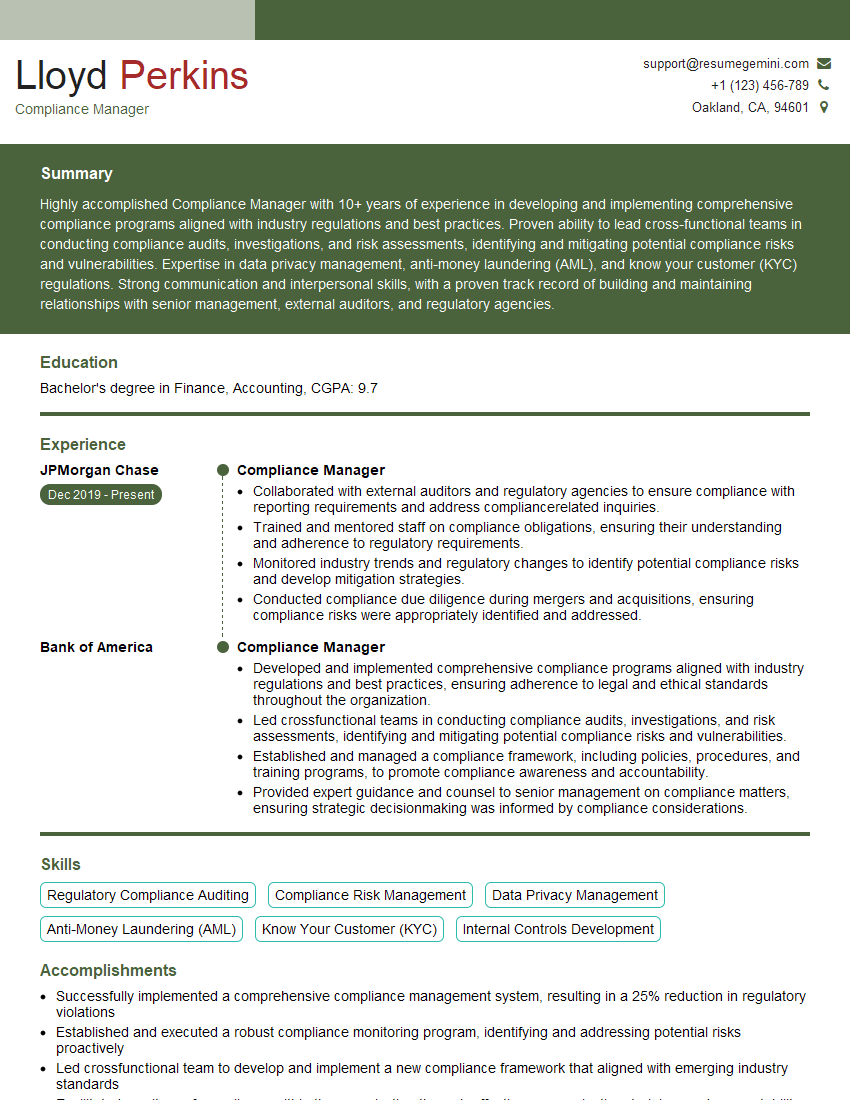
Compliance Manager Resume Sample
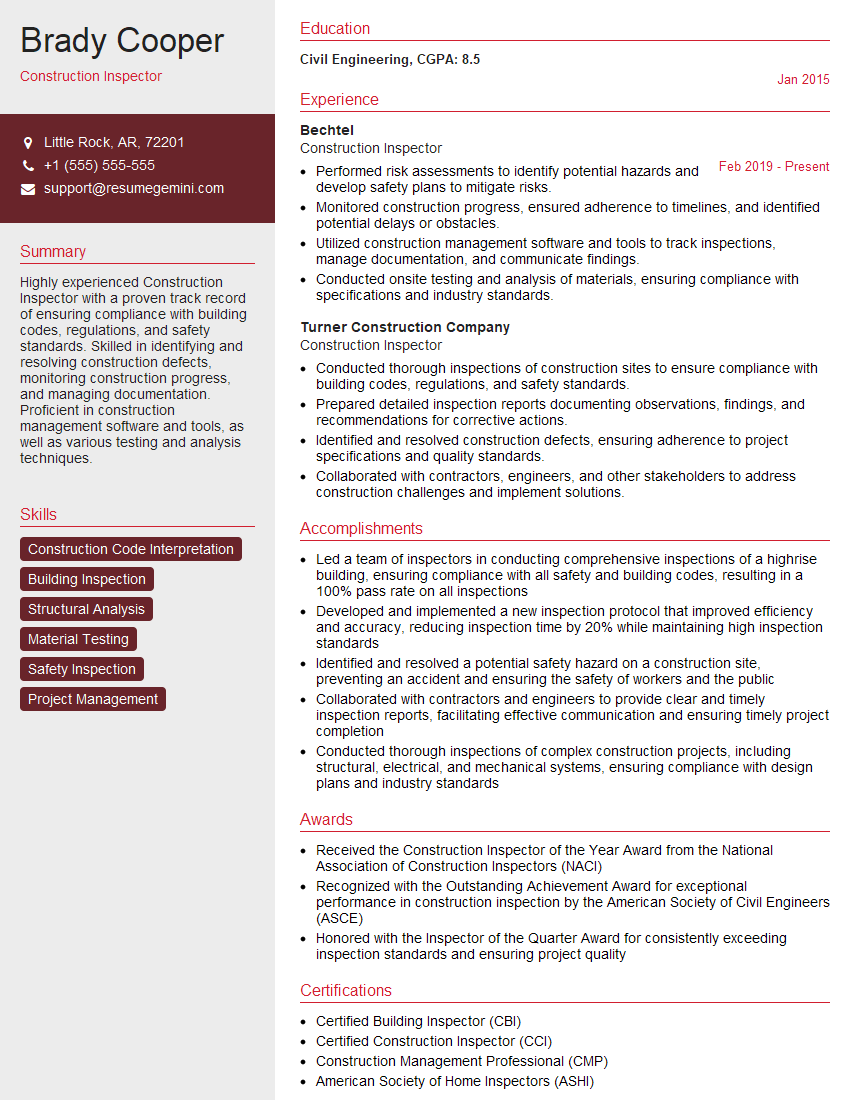
Construction Inspector Resume Sample
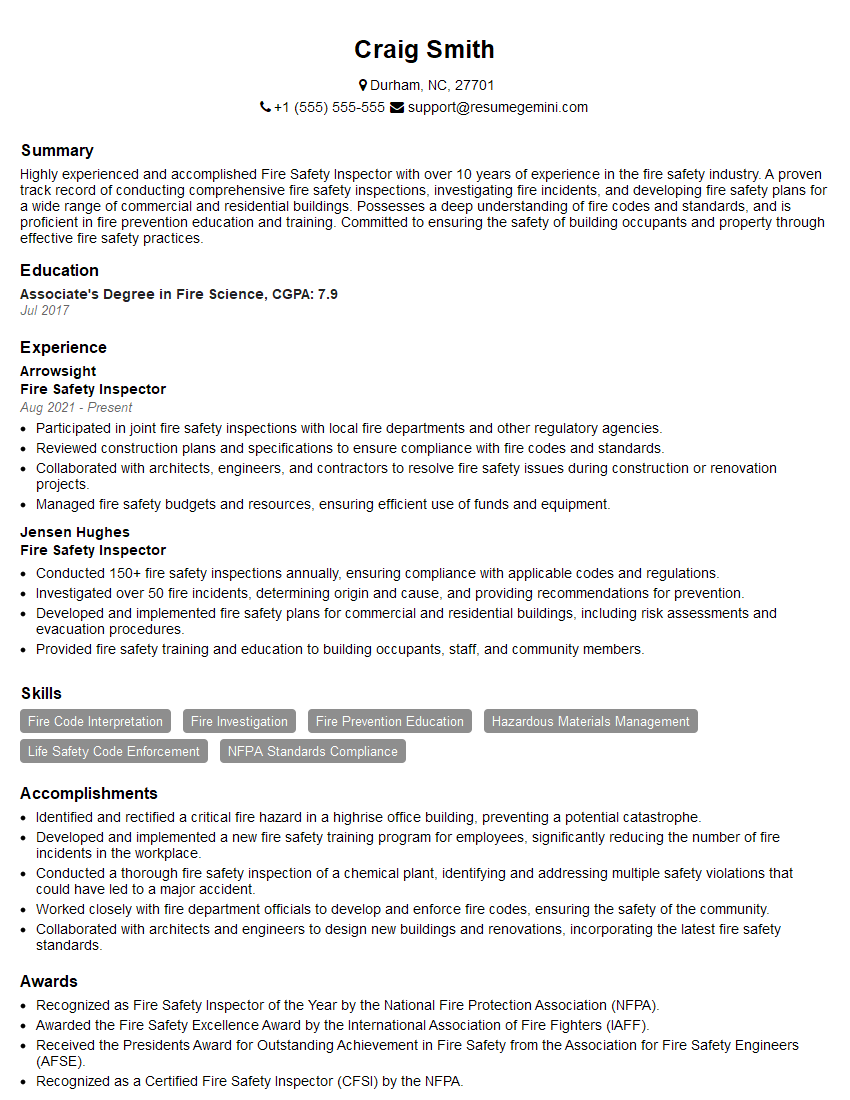
Fire Safety Inspector Resume Sample
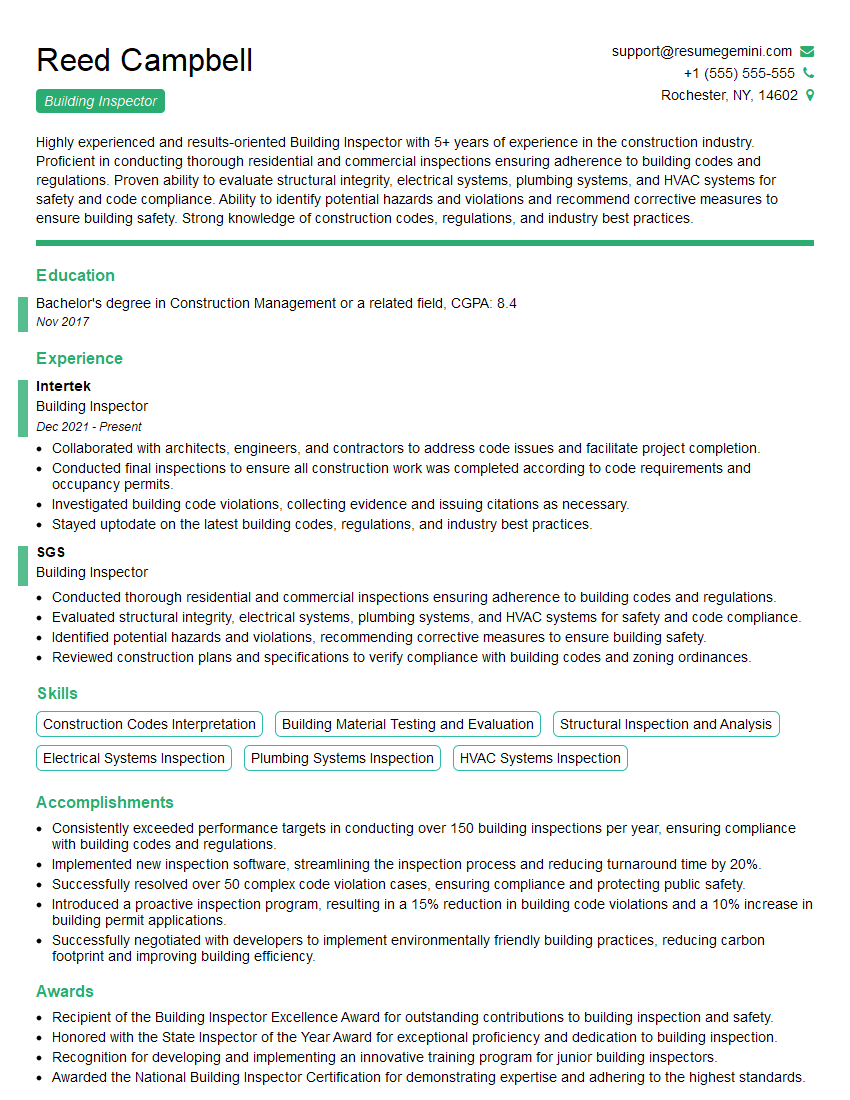
Building Inspector Resume Sample
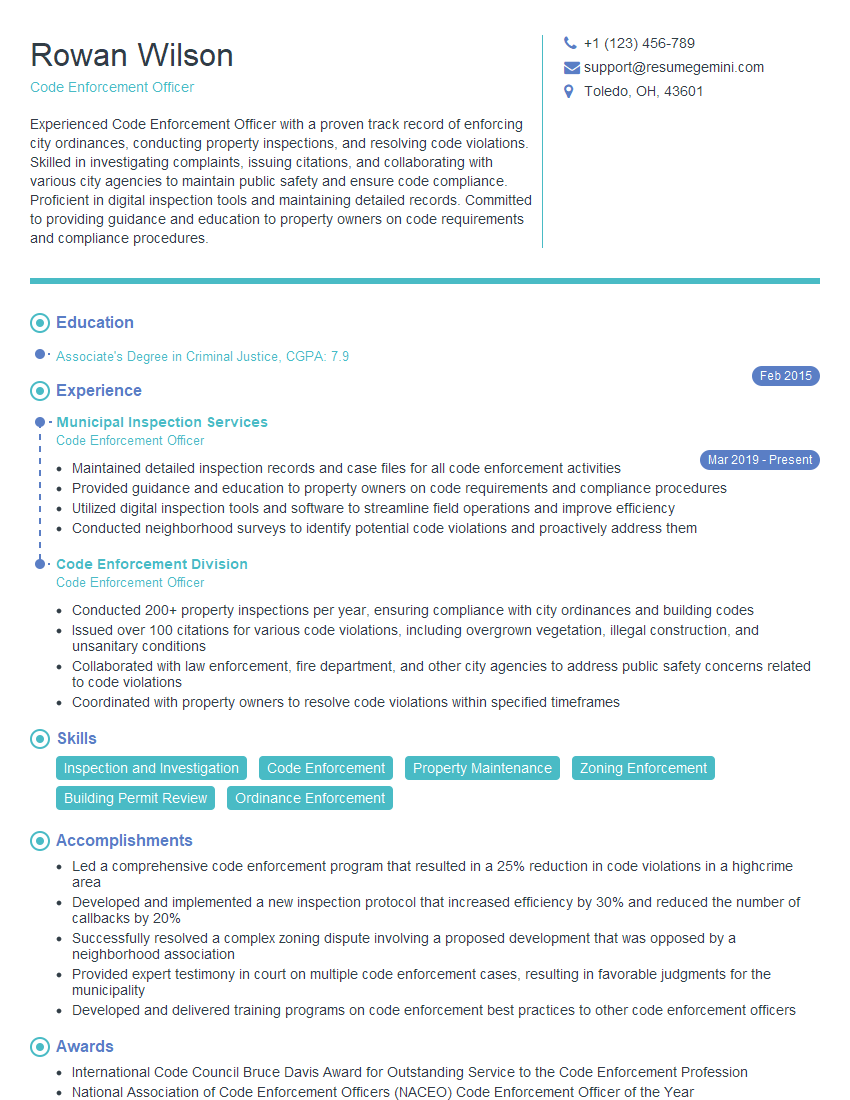
Code Enforcement Officer Resume Sample
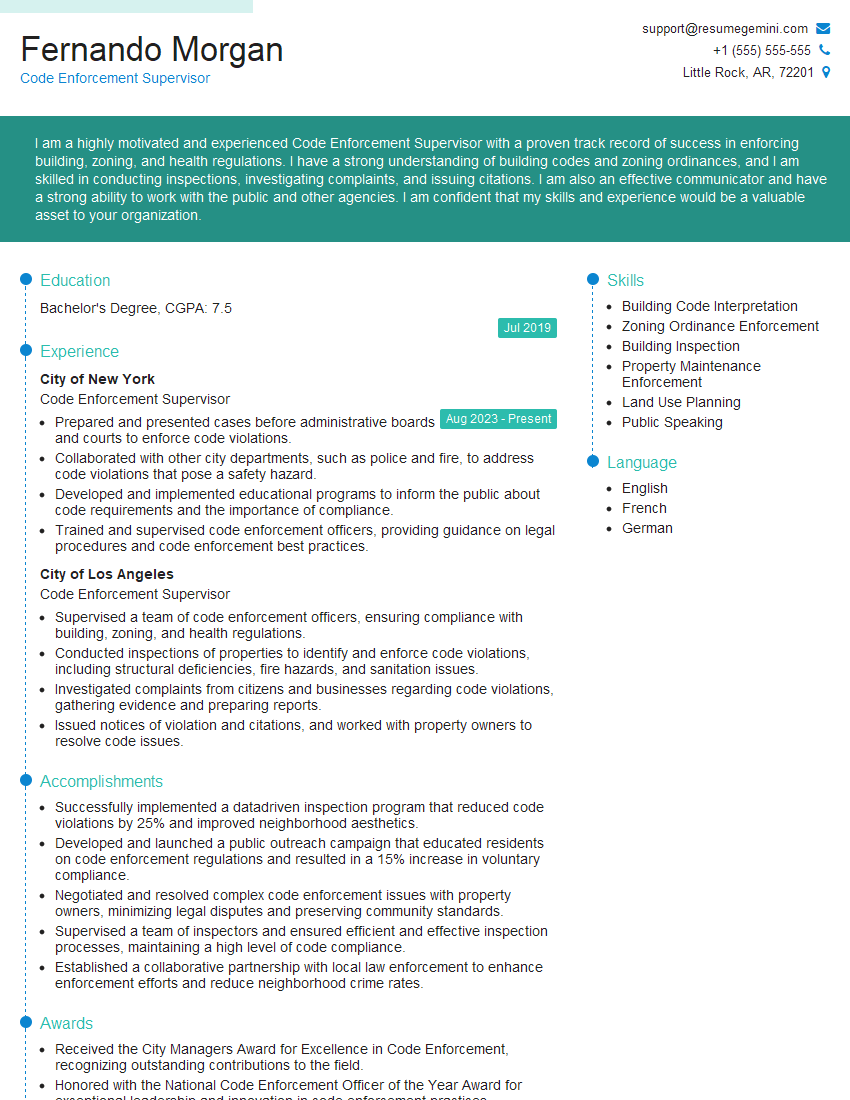
Code Enforcement Supervisor Resume Sample
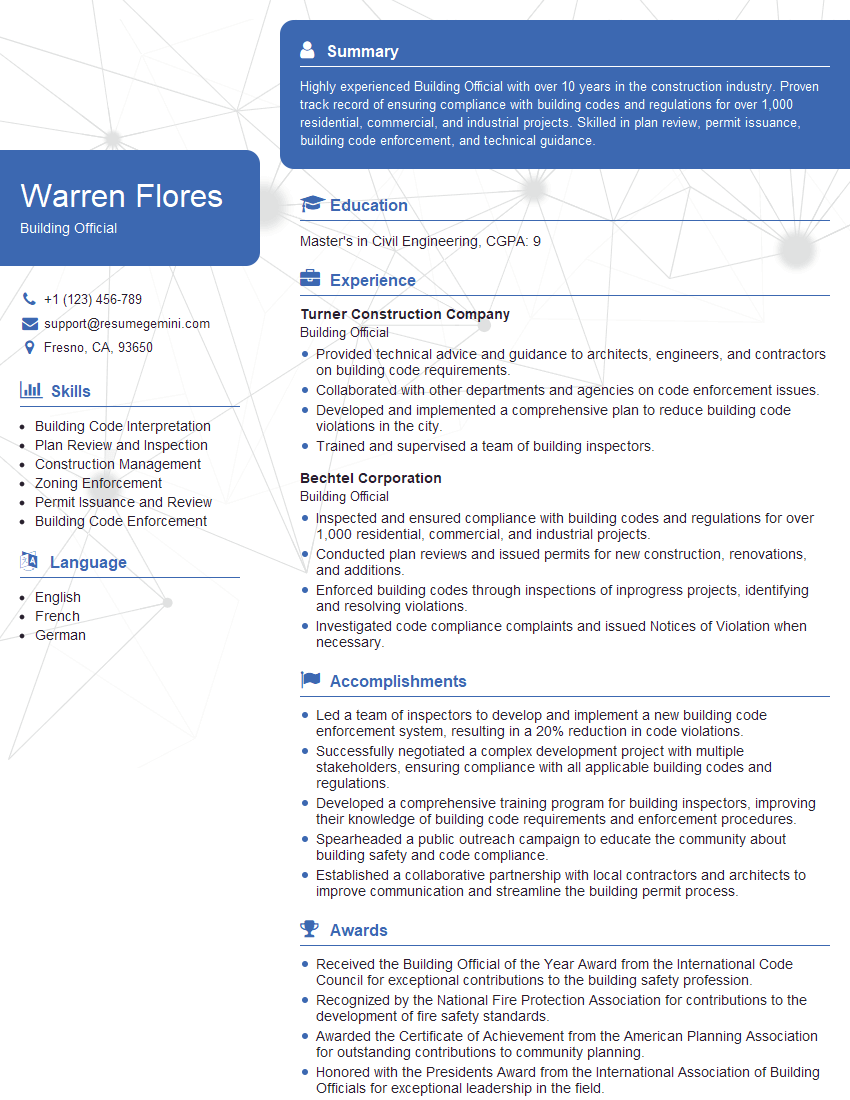
Building Official Resume Sample
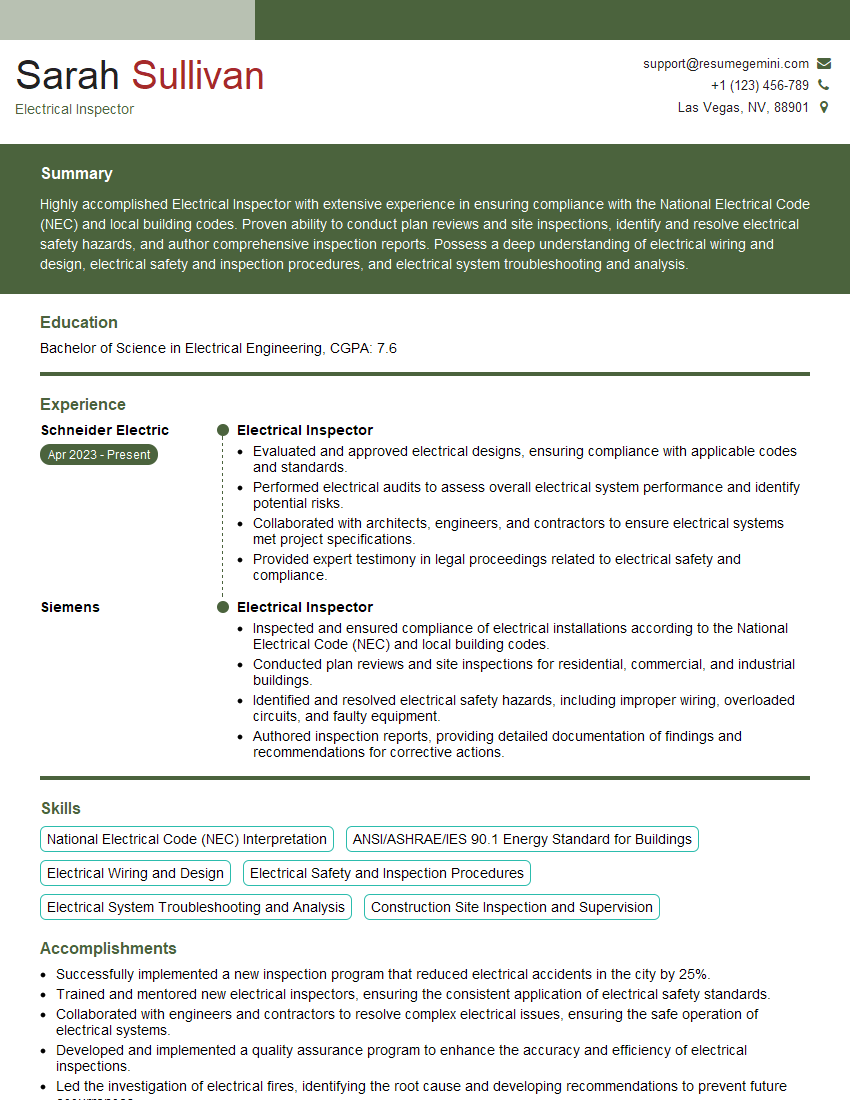
Electrical Inspector Resume Sample
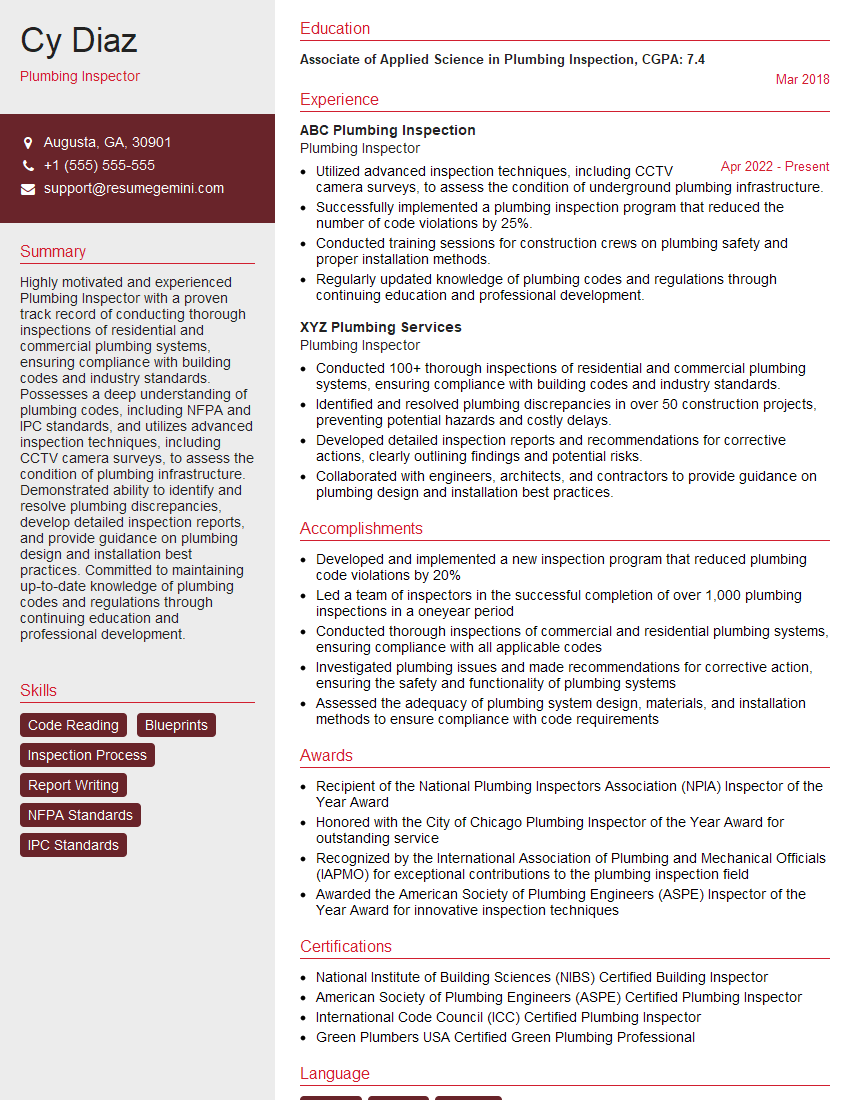
Plumbing Inspector Resume Sample
Explore more articles
Users Rating of Our Blogs
Share Your Experience
We value your feedback! Please rate our content and share your thoughts (optional).
What Readers Say About Our Blog
Attention music lovers!
Wow, All the best Sax Summer music !!!
Spotify: https://open.spotify.com/artist/6ShcdIT7rPVVaFEpgZQbUk
Apple Music: https://music.apple.com/fr/artist/jimmy-sax-black/1530501936
YouTube: https://music.youtube.com/browse/VLOLAK5uy_noClmC7abM6YpZsnySxRqt3LoalPf88No
Other Platforms and Free Downloads : https://fanlink.tv/jimmysaxblack
on google : https://www.google.com/search?q=22+AND+22+AND+22
on ChatGPT : https://chat.openai.com?q=who20jlJimmy20Black20Sax20Producer
Get back into the groove with Jimmy sax Black
Best regards,
Jimmy sax Black
www.jimmysaxblack.com
Hi I am a troller at The aquatic interview center and I suddenly went so fast in Roblox and it was gone when I reset.
Hi,
Business owners spend hours every week worrying about their website—or avoiding it because it feels overwhelming.
We’d like to take that off your plate:
$69/month. Everything handled.
Our team will:
Design a custom website—or completely overhaul your current one
Take care of hosting as an option
Handle edits and improvements—up to 60 minutes of work included every month
No setup fees, no annual commitments. Just a site that makes a strong first impression.
Find out if it’s right for you:
https://websolutionsgenius.com/awardwinningwebsites
Hello,
we currently offer a complimentary backlink and URL indexing test for search engine optimization professionals.
You can get complimentary indexing credits to test how link discovery works in practice.
No credit card is required and there is no recurring fee.
You can find details here:
https://wikipedia-backlinks.com/indexing/
Regards
NICE RESPONSE TO Q & A
hi
The aim of this message is regarding an unclaimed deposit of a deceased nationale that bears the same name as you. You are not relate to him as there are millions of people answering the names across around the world. But i will use my position to influence the release of the deposit to you for our mutual benefit.
Respond for full details and how to claim the deposit. This is 100% risk free. Send hello to my email id: lukachachibaialuka@gmail.com
Luka Chachibaialuka
Hey interviewgemini.com, just wanted to follow up on my last email.
We just launched Call the Monster, an parenting app that lets you summon friendly ‘monsters’ kids actually listen to.
We’re also running a giveaway for everyone who downloads the app. Since it’s brand new, there aren’t many users yet, which means you’ve got a much better chance of winning some great prizes.
You can check it out here: https://bit.ly/callamonsterapp
Or follow us on Instagram: https://www.instagram.com/callamonsterapp
Thanks,
Ryan
CEO – Call the Monster App
Hey interviewgemini.com, I saw your website and love your approach.
I just want this to look like spam email, but want to share something important to you. We just launched Call the Monster, a parenting app that lets you summon friendly ‘monsters’ kids actually listen to.
Parents are loving it for calming chaos before bedtime. Thought you might want to try it: https://bit.ly/callamonsterapp or just follow our fun monster lore on Instagram: https://www.instagram.com/callamonsterapp
Thanks,
Ryan
CEO – Call A Monster APP
To the interviewgemini.com Owner.
Dear interviewgemini.com Webmaster!
Hi interviewgemini.com Webmaster!
Dear interviewgemini.com Webmaster!
excellent
Hello,
We found issues with your domain’s email setup that may be sending your messages to spam or blocking them completely. InboxShield Mini shows you how to fix it in minutes — no tech skills required.
Scan your domain now for details: https://inboxshield-mini.com/
— Adam @ InboxShield Mini
support@inboxshield-mini.com
Reply STOP to unsubscribe
Hi, are you owner of interviewgemini.com? What if I told you I could help you find extra time in your schedule, reconnect with leads you didn’t even realize you missed, and bring in more “I want to work with you” conversations, without increasing your ad spend or hiring a full-time employee?
All with a flexible, budget-friendly service that could easily pay for itself. Sounds good?
Would it be nice to jump on a quick 10-minute call so I can show you exactly how we make this work?
Best,
Hapei
Marketing Director
Hey, I know you’re the owner of interviewgemini.com. I’ll be quick.
Fundraising for your business is tough and time-consuming. We make it easier by guaranteeing two private investor meetings each month, for six months. No demos, no pitch events – just direct introductions to active investors matched to your startup.
If youR17;re raising, this could help you build real momentum. Want me to send more info?
Hi, I represent an SEO company that specialises in getting you AI citations and higher rankings on Google. I’d like to offer you a 100% free SEO audit for your website. Would you be interested?
Hi, I represent an SEO company that specialises in getting you AI citations and higher rankings on Google. I’d like to offer you a 100% free SEO audit for your website. Would you be interested?