The right preparation can turn an interview into an opportunity to showcase your expertise. This guide to BackEnd Web Development interview questions is your ultimate resource, providing key insights and tips to help you ace your responses and stand out as a top candidate.
Questions Asked in BackEnd Web Development Interview
Q 1. Explain the difference between REST and GraphQL APIs.
REST (Representational State Transfer) and GraphQL are both architectural styles for building APIs, but they differ significantly in how they retrieve data.
REST relies on a resource-based approach. Each resource is identified by a unique URI (Uniform Resource Identifier), and interactions are performed using standard HTTP methods (GET, POST, PUT, DELETE). Clients typically make multiple requests to different endpoints to fetch related data. Think of it like ordering items from a menu a la carte – you order each dish individually. For example, to get a user and their associated posts, you’d make separate GET requests to /users/123 and /posts?userId=123.
GraphQL, on the other hand, is a query language. Clients specify exactly the data they need in a single request, and the server returns only that data. This is like ordering a custom meal – you get exactly what you want, nothing more, nothing less. A single GraphQL query can fetch user data and their posts in one go.
- REST Advantages: Simple to implement, widely adopted, good caching mechanisms.
- REST Disadvantages: Over-fetching or under-fetching of data, multiple requests can lead to performance issues.
- GraphQL Advantages: Efficient data fetching, client specifies exactly what’s needed, reduces network overhead.
- GraphQL Disadvantages: More complex implementation, caching can be more challenging.
In essence, REST is about resources and HTTP methods, while GraphQL is about querying specific data. The best choice depends on the project’s complexity and specific requirements.
Q 2. Describe your experience with database design and normalization.
Database design and normalization are crucial for building robust and scalable applications. My experience spans various relational databases like PostgreSQL and MySQL. I’m proficient in designing schemas that are efficient, maintainable, and avoid data redundancy.
Normalization is a systematic process of organizing data to reduce redundancy and improve data integrity. I typically follow the normalization forms (1NF, 2NF, 3NF, etc.), aiming for a balance between normalization level and query performance. Over-normalization can lead to performance bottlenecks due to increased join operations.
For example, in designing an e-commerce database, I would avoid storing customer addresses directly within the customer table. Instead, I’d create a separate ‘addresses’ table with a foreign key referencing the customer ID. This reduces redundancy because a customer can have multiple addresses. This is a basic example of 1NF. Going further, I’d ensure there’s no transitive dependency in the data. For example, I wouldn’t store the state within the address table, but create a separate table for states and link using a foreign key.
I also consider performance implications during the design phase. Using appropriate indexes, query optimization techniques, and understanding database features like materialized views are crucial for building efficient database systems. I utilize database profiling tools to identify performance bottlenecks and optimize queries as needed.
Q 3. What are the advantages and disadvantages of using microservices?
Microservices architecture involves breaking down a large application into smaller, independent services. This approach offers several advantages but also presents challenges.
- Advantages:
- Improved Scalability: Each microservice can be scaled independently based on its specific needs.
- Enhanced Agility: Teams can work on individual services concurrently, accelerating development cycles.
- Technology Diversity: Different services can be built using different technologies best suited for their specific tasks.
- Increased Resilience: Failure of one service doesn’t necessarily bring down the entire application.
- Disadvantages:
- Increased Complexity: Managing a large number of services can be complex. Requires robust monitoring and deployment pipelines.
- Inter-service Communication Overhead: Communication between services can introduce latency.
- Data Consistency Challenges: Maintaining data consistency across multiple services requires careful planning.
- Testing and Debugging: Testing and debugging distributed systems can be more challenging than monolithic applications.
In a real-world scenario, consider an e-commerce platform. It could be broken down into services for user accounts, product catalog, shopping cart, order processing, and payment gateway. Each service can be developed and scaled independently, offering great flexibility and resilience.
Q 4. How do you handle database transactions and concurrency?
Handling database transactions and concurrency is crucial for maintaining data integrity and consistency, especially in high-traffic applications.
Transactions ensure that a series of database operations are treated as a single unit of work. Either all operations succeed, or none do. This is achieved through ACID properties (Atomicity, Consistency, Isolation, Durability). For example, when transferring money between two accounts, a transaction guarantees that the debit from one account and the credit to the other happen atomically; if one fails, the other is rolled back.
Concurrency refers to multiple users or processes accessing and modifying the database simultaneously. Without proper handling, this can lead to race conditions and data inconsistencies. Techniques like:
- Pessimistic Locking: Acquiring exclusive locks on data before modifying it. Prevents concurrent access but can impact performance.
- Optimistic Locking: Checking for conflicts after modifications. Generally better for performance but requires careful handling of conflict resolution.
- Transactions with Isolation Levels: Selecting an appropriate isolation level (e.g., Serializable, Read Committed) controls the level of concurrency and data visibility.
In practice, I choose the right approach based on the specific application needs and expected concurrency levels. For instance, in a low-concurrency system, optimistic locking might suffice; however, in a high-throughput environment, a combination of pessimistic locking and transactions with appropriate isolation levels may be needed.
BEGIN TRANSACTION; -- Start a transactionUPDATE accounts SET balance = balance - 100 WHERE id = 1;UPDATE accounts SET balance = balance + 100 WHERE id = 2;COMMIT; -- Commit the transaction
This code snippet demonstrates a simple transaction for transferring money between two accounts. The COMMIT statement ensures both updates succeed or fail together.
Q 5. Explain different approaches to caching and their trade-offs.
Caching is a vital technique for improving the performance of backend systems by storing frequently accessed data in a faster, readily accessible location. Different approaches exist, each with its own trade-offs.
- HTTP Caching: Leverage browser and CDN caches to store static assets (images, CSS, JavaScript) and API responses. This reduces server load and improves response times. However, cache invalidation strategies are critical to ensure data consistency.
- In-Memory Caching (e.g., Redis, Memcached): Store frequently accessed data in RAM for incredibly fast access. Suitable for frequently changing data and short-lived sessions. The trade-off is the limited storage capacity of RAM; data may need to be evicted based on a replacement policy like LRU (Least Recently Used).
- Database Caching (e.g., Query Caching): Caches query results directly within the database. Reduces database load for repetitive queries. The database itself manages the cache invalidation, but performance might be affected if the cache is poorly managed.
- Distributed Caching: Use distributed caches (e.g., Redis Cluster) to store data across multiple servers, improving scalability and availability. The added complexity of managing the distributed environment is the trade-off.
The choice of caching approach depends on factors such as data volatility, access patterns, and the required scalability. For instance, a social media platform might use a combination of HTTP caching for static assets, in-memory caching for session data, and database caching for frequently queried user profiles.
Q 6. Describe your experience with different message queues (e.g., RabbitMQ, Kafka).
Message queues are crucial for building asynchronous and scalable systems. My experience includes working with RabbitMQ and Kafka, both powerful message brokers with distinct characteristics.
RabbitMQ is a lightweight, versatile message broker known for its ease of use and robust feature set. It utilizes the AMQP (Advanced Message Queuing Protocol) and supports various messaging patterns like point-to-point and publish/subscribe. I’ve used it in applications requiring reliable message delivery and flexible routing. It’s a good choice for smaller-scale applications or those requiring fine-grained control over message delivery.
Kafka is a high-throughput, distributed streaming platform designed for handling massive data streams. It excels in scenarios requiring high scalability and fault tolerance. Its use of partitions and replicas ensures high availability and performance. I have used it in applications where handling large volumes of real-time data is critical, such as log aggregation and event processing. Its scalability makes it ideal for large-scale systems.
The choice between RabbitMQ and Kafka depends on the specific requirements. RabbitMQ is excellent for applications requiring reliable message delivery and complex routing, while Kafka is ideal for high-throughput streaming applications that need to handle massive data volumes and high availability.
Q 7. How would you design a rate-limiting system for an API?
Designing a rate-limiting system for an API is essential to prevent abuse and ensure fair access for all users. The system needs to control the rate of requests from a specific client within a given time window.
A common approach involves using a combination of techniques:
- Request Counting: Track the number of requests from a given IP address or API key within a specified time window (e.g., 100 requests per minute). This can be implemented using in-memory data structures (like Redis) or databases. If the request count exceeds the limit, the request is rejected.
- Sliding Window Algorithm: A more sophisticated approach that tracks requests over a sliding time window. This provides more granular control and prevents bursts of requests from exceeding the limit.
- Leaky Bucket Algorithm: Allows a certain rate of requests per unit of time. Requests exceeding the rate are queued. Excess requests are dropped if the queue is full.
- Token Bucket Algorithm: Similar to the leaky bucket, but allows for bursts of requests by maintaining a bucket of tokens.
Implementing a rate-limiting system typically involves:
- Identifying the User: This could be based on IP address, API key, or user authentication.
- Tracking Requests: Use a data structure (in-memory or database) to track requests.
- Enforcing Limits: Check if the request count exceeds the limit. If it does, return an appropriate HTTP status code (e.g., 429 Too Many Requests).
- Handling Exceptions: Implement proper error handling for various scenarios.
Choosing the appropriate algorithm and data structure depends on factors like scalability requirements and performance considerations. For high-volume APIs, a distributed rate-limiting system might be needed.
Q 8. Explain your experience with API security best practices (e.g., OAuth, JWT).
API security is paramount for any backend application. My experience encompasses robust implementation of OAuth 2.0 and JSON Web Tokens (JWT) to secure access and authorization. OAuth 2.0 is an authorization framework that allows a third-party application to obtain limited access to an HTTP service, either on behalf of a resource owner by orchestrating an approval interaction between the resource owner and the HTTP service, or by allowing the third-party application to obtain access on its own behalf. JWT, on the other hand, is a compact, self-contained way for securely transmitting information between parties as a JSON object. Think of it like a digital passport.
In a recent project, we used OAuth 2.0 with the authorization code grant type for a social login feature. This ensured that user credentials never directly touched our servers, enhancing security. We implemented JWT for API calls to ensure each request was authenticated and authorized. The JWT contained user ID and roles, allowing fine-grained access control to different parts of the application. For example, an admin user would have a different JWT than a regular user, granting them access to administrative functionalities. We also implemented robust measures to prevent common attacks, like token injection and replay attacks, by using short-lived tokens and secure storage mechanisms.
Beyond OAuth and JWT, my security practices include input validation, output encoding to prevent XSS vulnerabilities, and using HTTPS to encrypt communication. Regular security audits and penetration testing are crucial for identifying and addressing potential vulnerabilities proactively.
Q 9. Describe your experience with different types of databases (SQL, NoSQL).
My experience spans both SQL and NoSQL databases. SQL databases, like PostgreSQL and MySQL, are relational and excel in structured data management. They offer ACID properties (Atomicity, Consistency, Isolation, Durability), ensuring data integrity. NoSQL databases, like MongoDB and Cassandra, are non-relational and are better suited for handling large volumes of unstructured or semi-structured data, offering flexibility and scalability. The choice depends entirely on the application’s needs.
For instance, in a project involving e-commerce, we used PostgreSQL for managing product information, customer details, and orders due to its relational structure and ACID properties, ensuring data integrity and consistency in transactions. For storing user reviews and other unstructured data with high write throughput, we chose MongoDB for its flexibility and scalability. Understanding the strengths and weaknesses of each type allows for optimal database selection based on specific project requirements.
Q 10. How do you ensure the scalability and performance of your backend applications?
Ensuring scalability and performance is critical. My approach involves a multi-pronged strategy that starts with choosing appropriate technologies and architectures. This includes leveraging cloud services (like AWS or Google Cloud), using load balancers to distribute traffic, and implementing caching mechanisms (like Redis or Memcached) to reduce database load. Database optimization, including proper indexing and query tuning, is also vital.
For example, to handle a spike in traffic during a promotional event, we implemented a horizontal scaling strategy where we added more instances of our application servers behind a load balancer. This distributed the traffic and prevented the system from crashing. We also implemented caching to serve frequently accessed data faster, significantly reducing database load and response times. Profiling tools are used regularly to monitor performance bottlenecks and identify areas for optimization. Continuous monitoring and performance testing are vital for maintaining optimal performance.
Q 11. What are your preferred debugging and logging techniques?
Effective debugging and logging are crucial for maintaining a healthy backend application. I utilize a combination of techniques, starting with comprehensive logging. My logging strategy includes detailed error messages with timestamps, stack traces, and relevant contextual information. I favor structured logging formats like JSON for easier parsing and analysis.
Debugging tools like debuggers (within IDEs) are used for stepping through code and identifying the exact source of errors. I also utilize logging frameworks that allow different log levels (DEBUG, INFO, WARN, ERROR) for filtering information and managing log volume. Remote debugging capabilities are invaluable for tackling issues in production environments. Furthermore, using robust monitoring tools and alerting systems allow for quick identification and resolution of critical issues.
For instance, if a user reports an error, I would start by reviewing the logs for any corresponding errors around that time. The detailed information within the logs (timestamp, error message, user details, etc.) helps to pinpoint the problem and identify the root cause, whether it’s a database query issue, a network problem, or a bug in my code.
Q 12. Explain your experience with version control systems (e.g., Git).
Git is my primary version control system. I’m proficient in using Git for branching, merging, rebasing, and resolving conflicts. I understand the importance of a well-structured Git workflow, typically using a branching strategy like Gitflow to manage development, testing, and deployment stages. This allows for parallel development and efficient integration of code changes.
My experience includes using Git for collaborative projects, where I contribute to the codebase and resolve merge conflicts effectively. I’m comfortable using various Git commands and tools, and I follow best practices for commit messages, which make tracking and understanding changes easy. Using pull requests and code reviews is an integral part of my workflow, ensuring code quality and collaboration.
Q 13. How do you handle errors and exceptions in your code?
Error handling is a critical aspect of backend development. I always wrap potentially problematic code blocks in try-catch blocks and handle exceptions gracefully, preventing application crashes and providing meaningful error messages to users or other systems. This includes logging the error details for later analysis and reporting. The type of exception handling depends on the context: for example, user-facing errors may have different messaging than internal errors logged for debugging purposes.
For example, if a database connection fails, I would catch the exception, log the error, and return a user-friendly message like “We’re experiencing a temporary issue. Please try again later.” This avoids exposing internal error details to the user while still capturing the information for debugging. Custom exceptions can be defined to represent specific error conditions in the application logic.
Q 14. Describe your experience with testing frameworks and methodologies (unit, integration, etc.).
Testing is an integral part of my development process. I employ various testing methodologies, including unit, integration, and end-to-end testing. For unit tests, I typically use frameworks like Jest or pytest, ensuring individual components function correctly. Integration tests, often using frameworks like Postman or REST-assured, verify the interaction between different components. End-to-end tests cover the entire application flow, ensuring that everything works as intended.
Test-driven development (TDD) is a common practice, where tests are written before the code, guiding development and ensuring that the code meets the specified requirements. I also use mocking to isolate components during testing and create more reliable and repeatable tests. Continuous integration/continuous deployment (CI/CD) pipelines automatically run tests and deploy code, ensuring that any code changes are thoroughly tested before reaching production.
A recent project involved building a microservices architecture. We used a combination of unit, integration, and contract tests to ensure that each microservice worked independently and that their interactions were correctly handled. This modular testing approach significantly reduced testing complexity and improved the overall quality of the application.
Q 15. What are your preferred tools and technologies for backend development?
My preferred backend technologies are quite versatile and depend on the project’s specific needs. However, I have extensive experience with several key players. For languages, I favor Node.js with JavaScript for its speed of development, large community support, and ease of scaling, and Python with its robust libraries like Django or Flask for projects requiring rapid prototyping or complex data analysis. I also have experience with Go, particularly for microservices, appreciating its concurrency features and efficiency. For databases, I’m proficient with PostgreSQL for its robustness and relational features, MongoDB for its flexibility as a NoSQL solution, and Redis for caching and in-memory data storage. Finally, I’m comfortable using cloud platforms like AWS and Google Cloud Platform (GCP) for deployment and scaling.
The choice of technology is always contextual. For instance, a real-time chat application might lean heavily on Node.js’s event-driven architecture, while a data-intensive application might benefit from Python’s scientific computing libraries. I always prioritize selecting the tools that best fit the project’s demands and long-term maintainability.
Career Expert Tips:
- Ace those interviews! Prepare effectively by reviewing the Top 50 Most Common Interview Questions on ResumeGemini.
- Navigate your job search with confidence! Explore a wide range of Career Tips on ResumeGemini. Learn about common challenges and recommendations to overcome them.
- Craft the perfect resume! Master the Art of Resume Writing with ResumeGemini’s guide. Showcase your unique qualifications and achievements effectively.
- Don’t miss out on holiday savings! Build your dream resume with ResumeGemini’s ATS optimized templates.
Q 16. Explain your understanding of design patterns (e.g., Singleton, Factory, MVC).
Design patterns are reusable solutions to common software design problems. They offer a blueprint for structuring code, promoting consistency, readability, and maintainability.
- Singleton: This pattern ensures that only one instance of a class is created. Imagine a database connection – you wouldn’t want multiple connections competing for resources. A singleton manages this, providing a single point of access to the database.
- Factory: The Factory pattern provides an interface for creating objects without specifying the exact class of object that will be created. This is useful for decoupling object creation from the client code. Think of a car factory – you can request a ‘car’ without specifying if it’s a sedan or SUV; the factory handles the specifics.
- MVC (Model-View-Controller): This is an architectural pattern separating concerns into three interconnected parts: the Model (data and business logic), the View (user interface), and the Controller (handling user input and updating the Model and View). This separation makes code more organized, easier to test, and easier to maintain. For example, in a blog application, the Model would handle blog post data, the View would display the posts, and the Controller would manage user actions like creating or editing posts.
Understanding and applying design patterns is crucial for building robust, scalable, and maintainable backend systems. They provide a vocabulary for developers to communicate effectively about design decisions, and they help prevent common design flaws. Choosing the right pattern is vital; it depends entirely on the nature of the problem you are trying to solve.
Q 17. How do you approach problem-solving in a backend development context?
My approach to problem-solving in backend development is systematic and iterative. It generally involves these steps:
- Understanding the problem: I start by clearly defining the problem, gathering all relevant information, and identifying constraints. This often includes discussions with stakeholders to ensure a shared understanding.
- Breaking down the problem: I break down the problem into smaller, more manageable parts. This helps to simplify complexity and identify individual components that can be addressed separately.
- Planning a solution: Once the problem is broken down, I develop a plan, outlining the steps needed to implement the solution. This includes considering different approaches and selecting the optimal one based on factors like efficiency, scalability, and maintainability.
- Implementation: I implement the solution, writing clean, well-documented code, adhering to best practices and coding standards. I use version control (like Git) to track changes and collaborate effectively.
- Testing: Thorough testing is paramount. I employ unit tests, integration tests, and end-to-end tests to ensure the solution functions correctly and meets requirements. Automated testing is crucial for efficiency and identifying issues early.
- Deployment: After successful testing, the solution is deployed. I utilize appropriate deployment strategies, potentially incorporating CI/CD pipelines for automation.
- Monitoring and maintenance: Post-deployment, I monitor the system’s performance and address any issues that may arise. Regular maintenance and updates are essential for long-term stability and security.
This iterative approach allows for flexibility and adjustments throughout the process. If needed, I can revisit earlier stages to refine the solution or address unforeseen challenges.
Q 18. Describe your experience with serverless architectures.
I have significant experience with serverless architectures, primarily using AWS Lambda and Google Cloud Functions. Serverless offers several advantages, including reduced operational overhead, cost efficiency (pay-per-use model), and improved scalability. You essentially upload your code (functions) and the cloud provider handles everything else – scaling, infrastructure, and maintenance.
For example, I’ve used serverless functions to handle image processing, data transformations, and API endpoints. The benefits are substantial. I don’t need to manage servers; the cloud provider handles scaling automatically based on demand, and I only pay for the compute time my functions actually consume. This allows for focusing on the core application logic, leading to faster development and deployment cycles.
However, serverless also presents challenges. Cold starts (the initial invocation of a function) can introduce latency, and debugging can sometimes be more complex than in traditional server-based environments. Understanding these trade-offs is crucial when deciding whether a serverless architecture is the right choice for a project.
Q 19. Explain your understanding of different HTTP methods and their uses.
HTTP methods are verbs that define the type of action a client (like a web browser) wants to perform on a server. They’re crucial for designing RESTful APIs and defining how resources are manipulated.
- GET: Retrieves data from the server. For example,
GET /usersmight fetch a list of users. - POST: Submits data to be processed to the server, often creating a new resource. For example,
POST /usersmight create a new user account. - PUT: Replaces all current representations of the target resource with the uploaded content. For example,
PUT /users/123might update all user details for user with ID 123. - PATCH: Applies partial modifications to a resource.
PATCH /users/123might update only the email address of user 123. - DELETE: Deletes a resource.
DELETE /users/123might delete user 123.
Using the correct HTTP method is essential for building a well-structured and intuitive API. Each method has a specific purpose, and misusing them can lead to confusion and errors.
Q 20. How do you ensure the security of user data in your applications?
Security is paramount in backend development. I employ a multi-layered approach to protect user data:
- Input validation: Rigorous validation of all user inputs to prevent injection attacks (SQL injection, cross-site scripting).
- Authentication and authorization: Secure authentication mechanisms (like OAuth 2.0, JWT) to verify user identities and authorization policies (RBAC, ABAC) to control access to resources.
- Data encryption: Encrypting sensitive data both in transit (using HTTPS) and at rest (using encryption at the database level).
- Secure coding practices: Following secure coding guidelines to avoid common vulnerabilities.
- Regular security audits and penetration testing: Proactive identification of vulnerabilities and security weaknesses.
- Database security: Implementing proper database security measures to protect against unauthorized access and data breaches.
- Regular software updates: Keeping all software components up-to-date to patch known vulnerabilities.
Security is not a one-time task but an ongoing process that requires vigilance and continuous improvement. I regularly review and update my security measures to stay ahead of emerging threats.
Q 21. Describe your experience with containerization technologies (e.g., Docker, Kubernetes).
I have extensive experience with Docker and Kubernetes for containerization. Docker allows packaging applications and their dependencies into containers, ensuring consistent execution across different environments. Kubernetes orchestrates and manages these containers at scale, providing features like automatic scaling, load balancing, and self-healing.
In a recent project, we used Docker to create consistent development and production environments for a microservices-based application. Each microservice was packaged as a Docker container, ensuring that the application ran reliably across different machines and cloud providers. Kubernetes then managed the deployment, scaling, and overall health of these containers, making the application highly available and resilient. Using Docker and Kubernetes simplifies deployment, improves efficiency, and enhances scalability. The ability to seamlessly move applications between different environments (development, testing, production) is a key advantage.
Q 22. How do you monitor and maintain the performance of your backend applications?
Monitoring and maintaining backend application performance is crucial for ensuring a smooth user experience and preventing outages. My approach is multifaceted and involves several key strategies.
Application Performance Monitoring (APM) Tools: I leverage tools like Datadog, New Relic, or Prometheus to track key metrics such as response times, error rates, CPU usage, memory consumption, and database query performance. These tools provide real-time dashboards and alerts, enabling proactive identification and resolution of performance bottlenecks. For instance, a sudden spike in database query latency flagged by New Relic might indicate a need to optimize a specific query or scale the database.
Logging and Log Aggregation: Comprehensive logging is essential. I use structured logging formats (like JSON) and aggregate logs using tools like Elasticsearch, Fluentd, and Kibana (the ELK stack) or similar solutions. This allows for efficient searching, filtering, and analysis of logs to pinpoint the root cause of performance issues. For example, searching for specific error messages within the logs can quickly identify problematic code sections.
Profiling and Code Optimization: Periodic profiling of the application code using tools like YourKit or JProfiler (Java) helps identify performance hotspots – sections of code consuming excessive resources. This information informs targeted optimizations, such as algorithm improvements or caching strategies.
Load Testing and Stress Testing: Before deployments, I conduct load tests using tools like JMeter or k6 to simulate realistic user loads and identify the application’s breaking points. Stress testing pushes the system beyond its normal capacity to uncover vulnerabilities and potential scaling issues.
Automated Monitoring and Alerting: Automated alerts are set up for critical metrics. For example, if the error rate exceeds a predefined threshold, or response time surpasses a certain limit, automated alerts notify the development team immediately, facilitating swift remediation.
By combining these methods, I ensure continuous monitoring, proactive identification of issues, and rapid resolution, leading to a consistently high-performing application.
Q 23. Explain your experience with different deployment strategies (e.g., CI/CD).
My experience encompasses various deployment strategies, primarily focusing on Continuous Integration/Continuous Deployment (CI/CD) pipelines. I’ve worked with various tools and methodologies, adapting my approach to the specific project requirements.
CI/CD Pipelines: I’m proficient in building and managing CI/CD pipelines using tools like Jenkins, GitLab CI, GitHub Actions, or CircleCI. These pipelines automate the build, test, and deployment processes, ensuring rapid and reliable releases. A typical pipeline might involve automated unit and integration tests, code quality checks (e.g., linters), and deployment to staging and production environments.
Deployment Strategies: I’ve employed different deployment strategies, such as blue/green deployments (minimizing downtime by switching between two identical environments), canary deployments (gradually rolling out new versions to a subset of users), and rolling deployments (incrementally updating instances). The choice depends on the application’s sensitivity to downtime and the complexity of the update.
Containerization (Docker & Kubernetes): I have extensive experience with containerization using Docker to package applications and their dependencies, making deployment consistent across environments. For orchestrating containers at scale, I utilize Kubernetes, managing deployments, scaling, and resource allocation efficiently.
Infrastructure as Code (IaC): I use IaC tools like Terraform or Ansible to manage infrastructure automatically, ensuring consistent and repeatable deployments across different environments (development, staging, production). This improves consistency and reduces manual configuration errors.
In a recent project, we migrated from a manual deployment process to a fully automated CI/CD pipeline using Jenkins. This resulted in a significant reduction in deployment time and a substantial decrease in the number of deployment-related errors.
Q 24. How do you handle database migrations and schema updates?
Database migrations and schema updates are crucial for maintaining data integrity and application functionality. I employ a structured approach to ensure smooth and controlled updates.
Version Control for Schema: I always use version control (like Git) for database schema changes, ensuring traceability and enabling rollbacks if needed. This is crucial for collaborative development and allows for auditing of schema changes.
Migration Tools: I utilize database migration tools tailored to the specific database system (e.g., Flyway, Liquibase for relational databases; Alembic for SQLAlchemy in Python). These tools manage the application of schema changes in a controlled and repeatable manner. They also track which migrations have been applied, preventing accidental re-application.
Testing Migrations: Before deploying migrations to production, I thoroughly test them in a staging environment to verify their correctness and to avoid potential data loss or corruption.
Atomic Operations: I ensure that all schema changes are implemented using atomic operations to guarantee data consistency even in case of errors. This prevents partially applied migrations, which can lead to inconsistencies.
Rollback Strategy: A robust rollback strategy is crucial. Migration tools often provide mechanisms for reverting to previous schema versions, facilitating quick recovery from failed updates.
For example, using Liquibase, I define changesets (SQL scripts) to update the database schema. Liquibase tracks which changesets have been applied, preventing duplicate executions and enabling easy rollbacks. This process ensures a safe and controlled approach to database schema management.
Q 25. Explain your understanding of asynchronous programming.
Asynchronous programming is a paradigm where tasks run concurrently without blocking each other. It’s crucial for building responsive and scalable backend applications, particularly those handling I/O-bound operations (like network requests or database queries).
Benefits: Asynchronous programming enhances responsiveness by preventing long-running operations from blocking the main thread. It increases scalability by allowing a single thread to handle multiple concurrent requests.
Implementation: Asynchronous programming can be implemented using various techniques, depending on the programming language and framework. Common approaches include:
Callbacks: Defining functions to be executed upon completion of an asynchronous operation.
Promises/Futures: Representing the eventual result of an asynchronous operation.
Asynchronous Frameworks: Utilizing frameworks like Node.js (with its event loop) or Python’s asyncio to simplify asynchronous programming.
Example (Python with asyncio):
async def fetch_data(): # Asynchronous function
    # ... perform an I/O-bound operation ...
    return data

async def main():
    result = await fetch_data() # Await the result
    # ... process the result ...
Real-world Application: In a web application, asynchronous programming is invaluable for handling multiple concurrent requests. Instead of blocking while waiting for a database query to complete, the server can handle other requests simultaneously, greatly improving performance and responsiveness.
Understanding and implementing asynchronous programming is a critical skill for building modern, efficient backend systems.
Q 26. How do you optimize database queries for performance?
Optimizing database queries is paramount for backend performance. Slow queries can lead to significant performance bottlenecks and negatively impact user experience.
Indexing: Creating appropriate indexes on frequently queried columns dramatically speeds up query execution. Indexes act like a book’s index, allowing the database to quickly locate specific data.
Query Optimization Techniques:
Avoid SELECT * : Only select the necessary columns to reduce data transfer.
Use EXPLAIN: Most database systems provide an EXPLAIN or similar command to analyze query execution plans, identifying potential performance issues.
Proper JOINs: Use appropriate join types (INNER JOIN, LEFT JOIN, etc.) based on the data retrieval requirements. Avoid unnecessary JOINs.
Limit Data Retrieval: Use LIMIT and OFFSET clauses (or equivalent) to retrieve only the required number of rows, especially for paginated results.
Caching: Caching frequently accessed data (using Redis, Memcached, or database-level caching) can significantly reduce database load.
Connection Pooling: Reuse database connections rather than creating new ones for each request. This reduces overhead and improves efficiency.
Database Design: Well-normalized database design minimizes data redundancy and improves query performance. Data normalization helps prevent data anomalies and reduces the need for complex joins.
Database Tuning: Optimizing database configuration parameters (e.g., buffer pool size, connection limits) can significantly improve performance. This often requires understanding the specific database system’s configuration options.
For instance, if a query involves filtering data based on a specific column, adding an index to that column can drastically improve its execution time. Regularly analyzing query execution plans using tools provided by the database system is essential for proactive identification and resolution of performance issues.
Q 27. Describe your experience with API documentation tools (e.g., Swagger, OpenAPI).
API documentation is crucial for the success of any backend project. It ensures that developers using the API (internal or external) understand its functionalities and usage.
Swagger/OpenAPI: I extensively use Swagger/OpenAPI to create interactive and comprehensive API documentation. OpenAPI Specification (OAS) defines a standard format for describing RESTful APIs. Tools like Swagger UI generate interactive documentation from OAS specifications, allowing developers to test API endpoints directly within the documentation.
Benefits of using Swagger/OpenAPI:
Machine-readable: Allows for automated testing and integration with other tools.
Interactive Documentation: Provides an interactive environment for exploring API endpoints and testing requests directly in the browser.
Improved Collaboration: Facilitates better communication and collaboration between frontend and backend teams.
Automated Generation: Many frameworks and tools can automatically generate Swagger/OpenAPI specifications from code.
Other Documentation Tools: While Swagger/OpenAPI is my preferred choice, I’m also familiar with other tools, such as Postman collections for documenting and testing APIs. The best tool depends on project needs and preferences.
In a recent project, we used Swagger to generate comprehensive API documentation, including detailed descriptions of endpoints, request/response formats, authentication mechanisms, and examples. This significantly streamlined the integration process for frontend developers and reduced the number of integration-related issues.
Key Topics to Learn for BackEnd Web Development Interview
- Databases: Understanding relational (SQL) and NoSQL databases, database design principles (normalization, indexing), and writing efficient queries is crucial. Practical application: Designing a database schema for an e-commerce platform.
- API Design and RESTful Principles: Mastering RESTful API design, including HTTP methods, status codes, and API documentation (e.g., OpenAPI/Swagger). Practical application: Designing and implementing an API for user authentication and authorization.
- Server-Side Frameworks: Gain proficiency in at least one popular back-end framework (Node.js, Python/Django/Flask, Java/Spring, Ruby on Rails, etc.). Understanding framework architecture and best practices is essential. Practical application: Building a REST API using your chosen framework.
- Data Structures and Algorithms: A strong foundation in data structures (arrays, linked lists, trees, graphs) and algorithms (searching, sorting, graph traversal) is vital for problem-solving during interviews. Practical application: Optimizing database queries or designing efficient caching mechanisms.
- Security Best Practices: Understanding common web vulnerabilities (SQL injection, cross-site scripting, cross-site request forgery) and implementing secure coding practices is paramount. Practical application: Implementing authentication and authorization mechanisms to protect sensitive data.
- Version Control (Git): Demonstrate a solid understanding of Git for collaborative development and code management. Practical application: Explain your workflow for branching, merging, and resolving conflicts.
- Testing and Debugging: Familiarity with testing methodologies (unit, integration, end-to-end) and debugging techniques is crucial for building robust and reliable applications. Practical application: Writing unit tests for your back-end code.
- System Design: Prepare to discuss the design of larger systems, considering scalability, performance, and maintainability. Practical application: Designing a system for handling high traffic volumes.
Next Steps
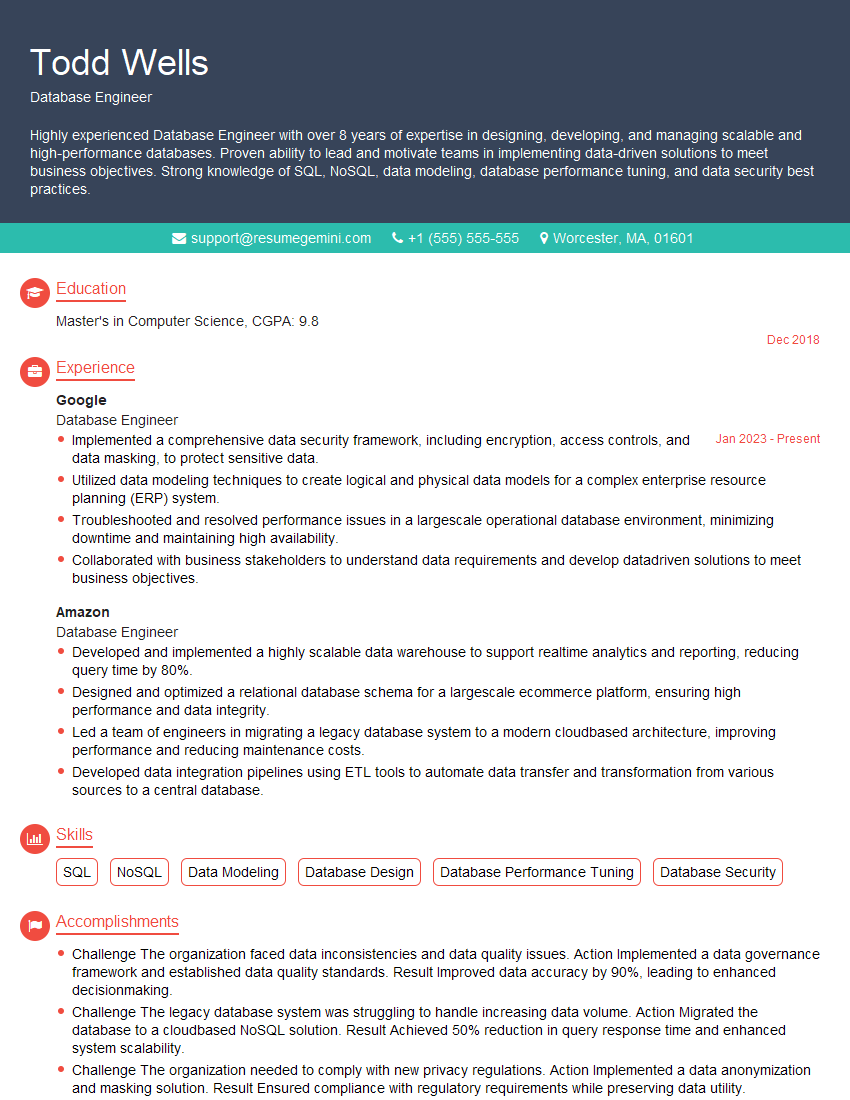
Mastering back-end web development opens doors to exciting and rewarding career opportunities, offering high demand and excellent growth potential. To maximize your job prospects, creating a compelling and ATS-friendly resume is key. ResumeGemini is a trusted resource to help you build a professional and effective resume that showcases your skills and experience. ResumeGemini provides examples of resumes tailored to BackEnd Web Development to guide you through the process. Take the next step towards your dream career today!
Explore more articles
Users Rating of Our Blogs
Share Your Experience
We value your feedback! Please rate our content and share your thoughts (optional).
What Readers Say About Our Blog
Hello,
we currently offer a complimentary backlink and URL indexing test for search engine optimization professionals.
You can get complimentary indexing credits to test how link discovery works in practice.
No credit card is required and there is no recurring fee.
You can find details here:
https://wikipedia-backlinks.com/indexing/
Regards
NICE RESPONSE TO Q & A
hi
The aim of this message is regarding an unclaimed deposit of a deceased nationale that bears the same name as you. You are not relate to him as there are millions of people answering the names across around the world. But i will use my position to influence the release of the deposit to you for our mutual benefit.
Respond for full details and how to claim the deposit. This is 100% risk free. Send hello to my email id: [email protected]
Luka Chachibaialuka
Hey interviewgemini.com, just wanted to follow up on my last email.
We just launched Call the Monster, an parenting app that lets you summon friendly ‘monsters’ kids actually listen to.
We’re also running a giveaway for everyone who downloads the app. Since it’s brand new, there aren’t many users yet, which means you’ve got a much better chance of winning some great prizes.
You can check it out here: https://bit.ly/callamonsterapp
Or follow us on Instagram: https://www.instagram.com/callamonsterapp
Thanks,
Ryan
CEO – Call the Monster App
Hey interviewgemini.com, I saw your website and love your approach.
I just want this to look like spam email, but want to share something important to you. We just launched Call the Monster, a parenting app that lets you summon friendly ‘monsters’ kids actually listen to.
Parents are loving it for calming chaos before bedtime. Thought you might want to try it: https://bit.ly/callamonsterapp or just follow our fun monster lore on Instagram: https://www.instagram.com/callamonsterapp
Thanks,
Ryan
CEO – Call A Monster APP
To the interviewgemini.com Owner.
Dear interviewgemini.com Webmaster!
Hi interviewgemini.com Webmaster!
Dear interviewgemini.com Webmaster!
excellent
Hello,
We found issues with your domain’s email setup that may be sending your messages to spam or blocking them completely. InboxShield Mini shows you how to fix it in minutes — no tech skills required.
Scan your domain now for details: https://inboxshield-mini.com/
— Adam @ InboxShield Mini
Reply STOP to unsubscribe
Hi, are you owner of interviewgemini.com? What if I told you I could help you find extra time in your schedule, reconnect with leads you didn’t even realize you missed, and bring in more “I want to work with you” conversations, without increasing your ad spend or hiring a full-time employee?
All with a flexible, budget-friendly service that could easily pay for itself. Sounds good?
Would it be nice to jump on a quick 10-minute call so I can show you exactly how we make this work?
Best,
Hapei
Marketing Director
Hey, I know you’re the owner of interviewgemini.com. I’ll be quick.
Fundraising for your business is tough and time-consuming. We make it easier by guaranteeing two private investor meetings each month, for six months. No demos, no pitch events – just direct introductions to active investors matched to your startup.
If youR17;re raising, this could help you build real momentum. Want me to send more info?
Hi, I represent an SEO company that specialises in getting you AI citations and higher rankings on Google. I’d like to offer you a 100% free SEO audit for your website. Would you be interested?
Hi, I represent an SEO company that specialises in getting you AI citations and higher rankings on Google. I’d like to offer you a 100% free SEO audit for your website. Would you be interested?
good