The right preparation can turn an interview into an opportunity to showcase your expertise. This guide to Basic understanding of electronics and electrical systems interview questions is your ultimate resource, providing key insights and tips to help you ace your responses and stand out as a top candidate.
Questions Asked in Basic understanding of electronics and electrical systems Interview
Q 1. What is the difference between AC and DC current?
The key difference between AC (Alternating Current) and DC (Direct Current) lies in the direction of electron flow. In DC, electrons flow consistently in one direction, like a river flowing downstream. This is the type of current produced by batteries. AC, on the other hand, periodically reverses its direction. Think of it like a seesaw; the electrons flow one way, then the other, repeatedly. This cyclical change is what allows AC to be easily transformed to different voltages, a crucial advantage in power distribution.
Practical Application: DC is commonly used in electronic devices like smartphones and laptops, while AC is used in household power outlets and large-scale power transmission.
Q 2. Explain Ohm’s Law.
Ohm’s Law describes the relationship between voltage (V), current (I), and resistance (R) in an electrical circuit. It states that the current flowing through a conductor is directly proportional to the voltage across it and inversely proportional to its resistance. This relationship is expressed mathematically as:
V = I * RExample: If you have a 12-volt battery (V) connected to a circuit with 4 ohms of resistance (R), the current (I) flowing through the circuit will be 3 amps (12V / 4Ω = 3A).
Practical Application: Ohm’s Law is fundamental to circuit analysis and design. It allows engineers to calculate the required components to meet specific electrical requirements in a circuit.
Q 3. What is a resistor and how is it used?
A resistor is a passive two-terminal electrical component that implements electrical resistance as a circuit element. It restricts the flow of current in a circuit. Think of it as a bottleneck in a water pipe—the narrower the pipe, the less water can flow through. The resistance is measured in ohms (Ω).
How it’s used: Resistors are used to control voltage levels, limit current, and create voltage dividers. They’re essential components in almost every electronic circuit.
Example: In a simple LED circuit, a resistor is used to limit the current flowing to the LED to prevent it from burning out.
Q 4. What is a capacitor and how is it used?
A capacitor is a passive two-terminal electrical component that stores electrical energy in an electric field. Imagine it as a tiny reservoir that can hold a charge. It’s made of two conductive plates separated by an insulator (dielectric).
How it’s used: Capacitors are used for various purposes, including filtering noise, smoothing voltage fluctuations, storing energy (as in camera flashes), and forming resonant circuits (in radio tuners).
Example: In a power supply, capacitors are used to smooth the output voltage to make it more stable.
Q 5. What is an inductor and how is it used?
An inductor is a passive two-terminal electrical component that stores electrical energy in a magnetic field. It consists of a coil of wire, often wrapped around a core material.
How it’s used: Inductors are used in various applications, including filtering signals (removing unwanted frequencies), storing energy in power supplies, creating resonant circuits (in radios and other tuned circuits), and building transformers.
Example: In a switching power supply, inductors are used to store energy during one part of the switching cycle and release it during another part, to create a more efficient power conversion.
Q 6. Explain the concept of voltage, current, and resistance.
Let’s understand these three fundamental electrical quantities:
- Voltage (V): Voltage is the electrical pressure that pushes electrons through a circuit. It’s measured in volts (V) and is analogous to water pressure in a pipe. A higher voltage means a stronger push, resulting in more current flow.
- Current (I): Current is the flow of electrons through a conductor. It’s measured in amperes (A) or amps and is analogous to the flow rate of water in a pipe. A higher current means more electrons are flowing per unit of time.
- Resistance (R): Resistance is the opposition to the flow of current. It’s measured in ohms (Ω) and is analogous to the pipe’s diameter; a smaller diameter restricts the water flow. Higher resistance means less current will flow for a given voltage.
Analogy: Think of a water pipe system. Voltage is the water pressure, current is the water flow rate, and resistance is the pipe’s diameter.
Q 7. What are different types of resistors?
Resistors come in various types, each suited for different applications:
- Carbon Film Resistors: Common, inexpensive, and widely used. They are made by depositing a carbon film onto a ceramic core.
- Metal Film Resistors: More precise and stable than carbon film resistors, offering better temperature stability and tolerance.
- Wire-Wound Resistors: Made by winding a resistive wire around a core. They are ideal for high-power applications due to their ability to handle significant heat.
- Surface Mount Resistors (SMD): Small resistors designed for surface mounting on printed circuit boards (PCBs). They are widely used in modern electronics due to their small size and efficiency.
- Variable Resistors (Potentiometers): Allow for adjusting resistance manually, often used for volume controls or other adjustable settings.
Q 8. What are different types of capacitors?
Capacitors are passive electronic components that store electrical energy in an electric field. Different types are categorized based on their dielectric material (the insulating material between the conductive plates) and physical construction. Here are some common types:
- Ceramic Capacitors: These are common, inexpensive, and come in various sizes and capacitances. They use ceramic as the dielectric and are widely used in many circuits.
- Film Capacitors: These use a thin plastic film as the dielectric, offering better stability and higher tolerances than ceramic capacitors. Examples include polyester, polypropylene, and Teflon film capacitors, each with varying characteristics suitable for different applications.
- Electrolytic Capacitors: These have a much higher capacitance for their size compared to other types. They use an electrolytic solution as the dielectric and are polarized, meaning they must be connected with the correct polarity (+ and -). Aluminum electrolytic capacitors are very common, but tantalum electrolytic capacitors offer better stability and higher operating frequencies.
- Variable Capacitors: These allow for adjustment of capacitance, often used in tuning circuits like radio receivers. They typically have overlapping plates whose capacitance changes as they rotate.
- Supercapacitors (Ultracapacitors): These store significantly more energy than conventional capacitors, bridging the gap between capacitors and batteries. They find use in applications needing high power bursts or energy recovery.
The choice of capacitor type depends heavily on the application’s specific requirements for capacitance, voltage rating, temperature range, frequency response, and size constraints.
Q 9. Describe a simple series circuit.
A simple series circuit is one where components are connected end-to-end, forming a single path for current to flow. Imagine a single road with cars (electrons) traveling in one direction. The current is the same at every point in the circuit.
For example, a simple series circuit could consist of a battery, a resistor, and a light bulb connected in a single loop. The current leaving the battery flows through the resistor, reducing the voltage (causing a voltage drop across the resistor), then through the light bulb, causing it to glow, before returning to the battery. The same current flows through the resistor and the light bulb.

Q 10. Describe a simple parallel circuit.
In a simple parallel circuit, components are connected across each other, providing multiple paths for current to flow. Think of it like a multi-lane highway – the traffic (current) can split across the different lanes. The voltage across each component is the same, but the current can differ depending on the component’s resistance.
A common example is household wiring. Multiple lights or appliances are connected in parallel across the main power supply. If one light bulb goes out, the others remain unaffected because the current can still flow through the other paths.

Q 11. How do you calculate the total resistance in a series circuit?
In a series circuit, the total resistance (Rtotal) is simply the sum of the individual resistances (R1, R2, R3,…).
Formula: Rtotal = R1 + R2 + R3 + ...
Example: If you have three resistors with values of 10 ohms, 20 ohms, and 30 ohms connected in series, the total resistance is 10 + 20 + 30 = 60 ohms.
Q 12. How do you calculate the total resistance in a parallel circuit?
Calculating the total resistance (Rtotal) in a parallel circuit is a bit more complex. It’s the reciprocal of the sum of the reciprocals of the individual resistances.
Formula: 1/Rtotal = 1/R1 + 1/R2 + 1/R3 + ...
To get Rtotal, you need to calculate the reciprocal of the sum: Rtotal = 1 / (1/R1 + 1/R2 + 1/R3 + ...)
Example: For three resistors of 10 ohms, 20 ohms, and 30 ohms in parallel:
1/Rtotal = 1/10 + 1/20 + 1/30 = 0.1 + 0.05 + 0.0333 = 0.1833
Rtotal = 1 / 0.1833 ≈ 5.45 ohms
Notice that the total resistance in a parallel circuit is always less than the smallest individual resistance.
Q 13. Explain Kirchhoff’s Current Law.
Kirchhoff’s Current Law (KCL) states that the sum of currents entering a node (or junction) in a circuit equals the sum of currents leaving that node. In simpler terms, current doesn’t magically appear or disappear at a junction.
Think of a water pipe system. If water flows into a junction from two pipes, the combined flow equals the water flowing out from the other pipe(s) connected to the junction. No water is lost or gained at the junction.
This law is crucial for analyzing complex circuits and solving for unknown currents.
Q 14. Explain Kirchhoff’s Voltage Law.
Kirchhoff’s Voltage Law (KVL) states that the sum of voltage drops around any closed loop in a circuit is zero. This means that the voltage supplied by the source(s) is equal to the sum of voltage drops across the components in that loop.
Imagine a roller coaster. The potential energy gained climbing a hill (voltage source) is entirely used up in overcoming friction and descending (voltage drops across components). When the coaster completes the loop, it is back at its starting energy level.
KVL is essential for analyzing complex circuits, especially those with multiple loops and voltage sources.
Q 15. What is a transistor and how does it work?
A transistor is a semiconductor device used to amplify or switch electronic signals and electrical power. Think of it as a tiny electronic switch controlled by a small electrical signal. It has three terminals: base, collector, and emitter.
How it works (Bipolar Junction Transistor – BJT, a common type): A small current or voltage applied to the base controls a much larger current flowing between the collector and emitter. If the base current is present (ON), the collector-emitter current flows freely; if the base current is absent (OFF), the collector-emitter current is significantly reduced or blocked. This ability to control a large current with a small one is the basis of its amplifying and switching capabilities.
Example: In a simple audio amplifier, a small audio signal applied to the base of a transistor controls a larger current flowing through a speaker, thus amplifying the sound. In a computer circuit, transistors act as switches, turning on and off rapidly to process information.
Career Expert Tips:
- Ace those interviews! Prepare effectively by reviewing the Top 50 Most Common Interview Questions on ResumeGemini.
- Navigate your job search with confidence! Explore a wide range of Career Tips on ResumeGemini. Learn about common challenges and recommendations to overcome them.
- Craft the perfect resume! Master the Art of Resume Writing with ResumeGemini’s guide. Showcase your unique qualifications and achievements effectively.
- Don’t miss out on holiday savings! Build your dream resume with ResumeGemini’s ATS optimized templates.
Q 16. What is a diode and how does it work?
A diode is a two-terminal semiconductor device that allows current to flow in only one direction. It’s essentially a one-way valve for electricity. It acts like a check valve in a plumbing system – water can flow through in one direction but not the other.
How it works: A diode is made of two types of semiconductor material, P-type and N-type, joined together. The junction between these materials creates a barrier that allows current flow only when the positive terminal of the voltage source is connected to the P-side (anode) and the negative terminal to the N-side (cathode). Reverse bias (opposite polarity) will block the current flow.
Example: Diodes are used in power supplies to rectify alternating current (AC) into direct current (DC). They are also used to protect sensitive electronic components from voltage spikes.
Q 17. What is a multimeter and how is it used?
A multimeter is a hand-held electronic measuring instrument used to measure various electrical properties like voltage, current, and resistance. It’s an essential tool for any electronics enthusiast or technician.
How it’s used: The multimeter has different settings for measuring different quantities. To measure voltage, you connect the probes across the component; for current, you connect the probes in series with the component; and for resistance, you connect the probes across the component (ensure the circuit is de-energized).
Example: Troubleshooting a faulty circuit – you can use a multimeter to measure the voltage at various points to identify the location of the problem. Checking the battery voltage of a device before using it to ensure it’s adequately charged.
- Always select the appropriate range before taking a measurement to avoid damaging the meter.
- Ensure proper probe placement to avoid inaccurate readings or short circuits.
Q 18. What safety precautions should be taken when working with electricity?
Working with electricity can be dangerous if safety precautions aren’t followed. Here are some crucial safety measures:
- Always de-energize the circuit: Turn off the power source before working on any electrical component or circuit. Never assume a circuit is off; always double-check.
- Use insulated tools: Use tools with insulated handles to avoid electric shock.
- Wear appropriate personal protective equipment (PPE): This may include safety glasses, gloves, and non-conductive footwear.
- Avoid working in wet conditions: Water increases conductivity, enhancing the risk of electric shock.
- Be aware of potential hazards: Understand the risks associated with the specific equipment and voltage levels you are working with.
- Never work alone: Always have someone nearby who can provide assistance in case of an emergency.
Ignoring safety precautions can lead to severe injury or even death.
Q 19. Explain the concept of grounding.
Grounding, also known as earthing, is the process of connecting a conductive object to the earth (ground) using a low-resistance path. It provides a safe return path for electrical current in case of a fault.
How it works: The earth acts as a virtually infinite sink for electrical current, safely dissipating any stray current or surges that might otherwise cause damage or harm. Grounding protects equipment and people from electrical shocks by providing an alternate path for fault currents.
Example: The third prong on a standard electrical plug provides a ground connection. If a fault occurs within an appliance, the current will flow through the ground wire instead of through the user, preventing electric shock. In electronic circuits, grounding is crucial for preventing noise and ensuring proper circuit operation.
Q 20. What is a schematic diagram?
A schematic diagram is a simplified graphical representation of an electrical circuit, showing the components and their interconnections. Unlike a physical layout, it uses standardized symbols to represent components and focuses on the circuit’s function rather than its physical arrangement.
Example: A schematic for a simple light switch shows the switch, the light bulb, and the power source, connected with lines representing wires. This allows you to understand how the components work together without needing to see the physical wiring.
Q 21. How do you read a schematic diagram?
Reading a schematic diagram requires understanding the standard symbols used to represent components. Start by identifying the power source (typically a battery or AC power symbol). Then follow the connections to see how the different components are linked together. The flow of current can often be understood by tracing the lines.
Example: If you see a resistor symbol connected between the positive and negative terminals of a battery, with a light bulb connected in series, you can infer that current from the battery flows through the resistor and then through the light bulb, illuminating it.
Practicing reading schematics regularly is key to mastering it. Refer to symbol guides if necessary to understand the components being represented. The more complex the circuit, the more careful you must be in tracing paths.
Q 22. What are some common troubleshooting techniques for electrical circuits?
Troubleshooting electrical circuits involves a systematic approach to identify and fix malfunctions. It often begins with safety precautions – always disconnect power before working on a live circuit!
Visual Inspection: Start by carefully examining the circuit for any obvious problems like loose connections, damaged wires, burned components (resistors, capacitors), or overheating parts. Look for discoloration, physical damage, or anything out of the ordinary.
Testing with a Multimeter: A multimeter is your best friend. Use it to check voltage, current, and resistance at various points in the circuit. Compare your readings to the expected values based on the circuit diagram. This helps pinpoint faulty components.
Systematic Elimination: If the problem isn’t immediately obvious, start isolating sections of the circuit. For example, if you have a complex circuit, temporarily disconnect parts to see if the problem persists. This helps narrow down the source of the fault.
Circuit Diagram Review: Refer to the circuit diagram (schematic) to understand the expected behavior of the circuit. Tracing the signal path from input to output can help you identify potential weak points or areas where problems might occur.
Using a Logic Probe (for digital circuits): For digital circuits, a logic probe can quickly identify if signals are high (logic 1) or low (logic 0) at various points. This aids in determining the flow of logic and identifying faulty gates or other digital components.
Example: Imagine a simple light circuit that isn’t working. First, check the bulb; is it burnt out? Next, use a multimeter to check the voltage at the switch and at the bulb socket. If you find no voltage at the socket but voltage at the switch, the problem lies in the wiring between the two.
Q 23. What is a circuit breaker and how does it work?
A circuit breaker is an automatic safety device designed to protect an electrical circuit from damage caused by overcurrent or short circuits. Think of it as a switch that automatically trips (opens) when the current exceeds a predetermined threshold.
How it works: Circuit breakers typically use either a bimetallic strip or an electromagnet. The bimetallic strip bends and breaks the circuit when heated by excessive current. The electromagnet pulls a mechanism to interrupt the circuit when a high current flows. Once the fault is resolved, the breaker can be manually reset, closing the circuit again.
Real-world application: Circuit breakers are ubiquitous in homes and buildings, protecting individual circuits and appliances from overloads. For instance, if you plug too many high-power devices into one outlet, the circuit breaker will trip, preventing a fire hazard.
Q 24. What is a fuse and how does it work?
A fuse is another safety device, similar to a circuit breaker, that protects circuits from overcurrent. However, unlike a circuit breaker which can be reset, a fuse is a one-time use device.
How it works: A fuse contains a thin wire or metal strip that melts and breaks the circuit when the current exceeds its rated value. The heat generated by the excessive current melts the fuse element, thus opening the circuit.
Real-world application: Fuses are commonly found in older homes or in specific applications like protecting individual appliances. They offer a simple and inexpensive protection mechanism. Once a fuse blows, it needs to be replaced with a new one of the same rating.
Q 25. Explain the difference between series and parallel circuits in terms of voltage and current.
Series and parallel circuits differ significantly in how they distribute voltage and current.
Series Circuit: In a series circuit, components are connected end-to-end, forming a single path for current flow. The current is the same throughout the entire circuit. The voltage, however, is divided across the components; each component receives a portion of the total voltage, proportional to its resistance (Ohm’s Law: V = IR).
Parallel Circuit: In a parallel circuit, components are connected across each other, providing multiple paths for current flow. The voltage is the same across all components connected in parallel. The total current, however, is the sum of the currents flowing through each branch of the parallel circuit.
Example: Imagine Christmas lights. Older sets were wired in series; if one bulb burned out, the whole string went dark. Modern sets often use parallel wiring, allowing the rest of the lights to stay on even if one bulb fails.
Q 26. What is the purpose of a transformer?
A transformer is a passive electrical device that transfers electrical energy between two or more circuits through electromagnetic induction. Its primary function is to change the voltage level of an alternating current (AC) power supply.
How it works: A transformer consists of two coils of wire (primary and secondary) wound around a common ferromagnetic core. When AC current flows through the primary coil, it creates a changing magnetic field in the core. This changing field induces a voltage in the secondary coil. The voltage ratio between the primary and secondary coils is determined by the number of turns in each coil.
Real-world application: Transformers are essential components in power distribution systems, stepping voltage up for long-distance transmission and stepping it down for safe use in homes and businesses. They are also found in many electronic devices, such as power supplies for computers and smartphones.
Q 27. Describe different types of wiring systems.
Several types of wiring systems are used in buildings and other installations, each with its own advantages and disadvantages.
Romex (Non-Metallic Sheathed Cable): A common type for residential wiring, it consists of insulated conductors encased within a flexible plastic sheath.
BX (Flexible Metal Conduit): This type uses insulated conductors run inside a flexible metal conduit for protection. It’s more durable than Romex and offers better protection against damage.
Conduit Wiring (Rigid Conduit): This system uses rigid metal pipes (conduits) to protect wires. It’s widely used in commercial and industrial settings where durability and fire safety are paramount.
Aluminum Wiring: While less common now due to safety concerns (potential for overheating and loose connections), it was used extensively in the past. Proper installation and maintenance are critical.
The choice of wiring system depends on factors such as building codes, budget, and the specific application. Each system has unique installation requirements.
Q 28. What are some common tools used in electrical work?
Electricians use a variety of tools depending on the task. Here are some common ones:
Multimeter: To measure voltage, current, and resistance.
Voltage Tester: A non-contact voltage tester to quickly check for the presence of voltage without direct contact.
Wire Strippers/Cutters: To remove insulation from wires and cut wires to the correct length.
Screwdrivers (Phillips and Flathead): Various sizes for working with screws in electrical boxes and fixtures.
Pliers (Needle-nose, Lineman’s): For gripping and bending wires.
Fish Tape: To pull wires through conduits.
Drill and Drill Bits: To create holes for electrical boxes and other installations.
Level: To ensure that electrical boxes and fixtures are installed properly.
Safety equipment such as insulated gloves and eye protection is crucial for all electrical work.
Key Topics to Learn for Basic Understanding of Electronics and Electrical Systems Interview
- Circuit Fundamentals: Understand basic circuit components (resistors, capacitors, inductors), Ohm’s Law, Kirchhoff’s Laws, and series/parallel circuits. Consider practical applications like simple resistor divider circuits or LED driver circuits.
- DC and AC Circuits: Differentiate between direct current (DC) and alternating current (AC) circuits. Understand concepts like voltage, current, power, and frequency. Explore practical applications such as power supplies and AC motor control.
- Semiconductors: Gain a foundational understanding of diodes, transistors (BJT, FET), and operational amplifiers (op-amps). Consider their roles in switching circuits, amplification, and signal processing.
- Digital Logic: Familiarize yourself with Boolean algebra, logic gates (AND, OR, NOT, XOR), and basic digital logic circuits. Explore applications in digital signal processing and microcontroller systems.
- Basic Instrumentation: Understand the principles of common measurement instruments like multimeters, oscilloscopes, and function generators. Practice interpreting readings and troubleshooting simple circuits.
- Safety Procedures: Review basic electrical safety practices, including proper handling of tools and equipment, understanding voltage hazards, and the importance of safety precautions in electrical work.
- Troubleshooting Techniques: Develop problem-solving skills by practicing identifying faults in simple circuits using systematic approaches such as visual inspection, multimeter testing, and logical deduction.
Next Steps
Mastering a basic understanding of electronics and electrical systems is crucial for career advancement in numerous technical fields. A strong foundation in these principles opens doors to exciting opportunities and allows you to contribute effectively to innovative projects. To enhance your job prospects, create an ATS-friendly resume that highlights your skills and experience effectively. ResumeGemini is a trusted resource that can help you build a professional and impactful resume tailored to your specific experience. Examples of resumes tailored to showcasing a basic understanding of electronics and electrical systems are available to help you get started.

Network Technician Resume Sample
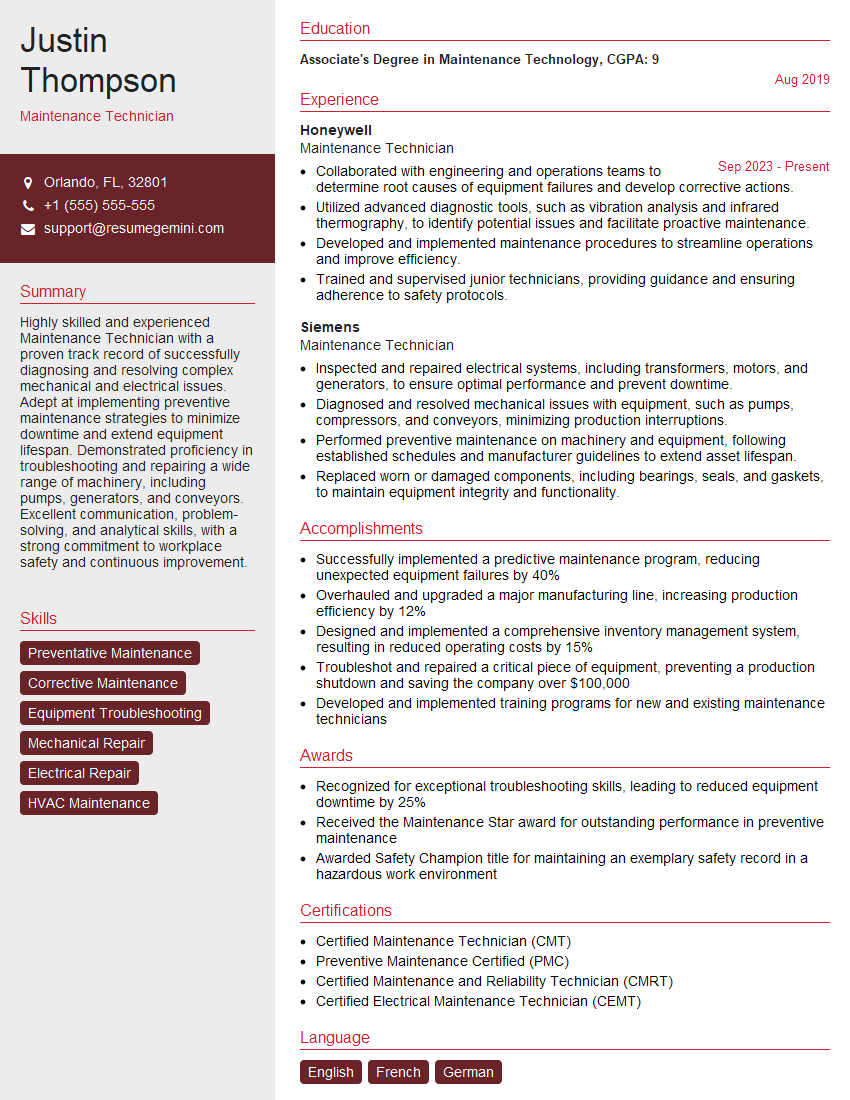
Maintenance Technician Resume Sample
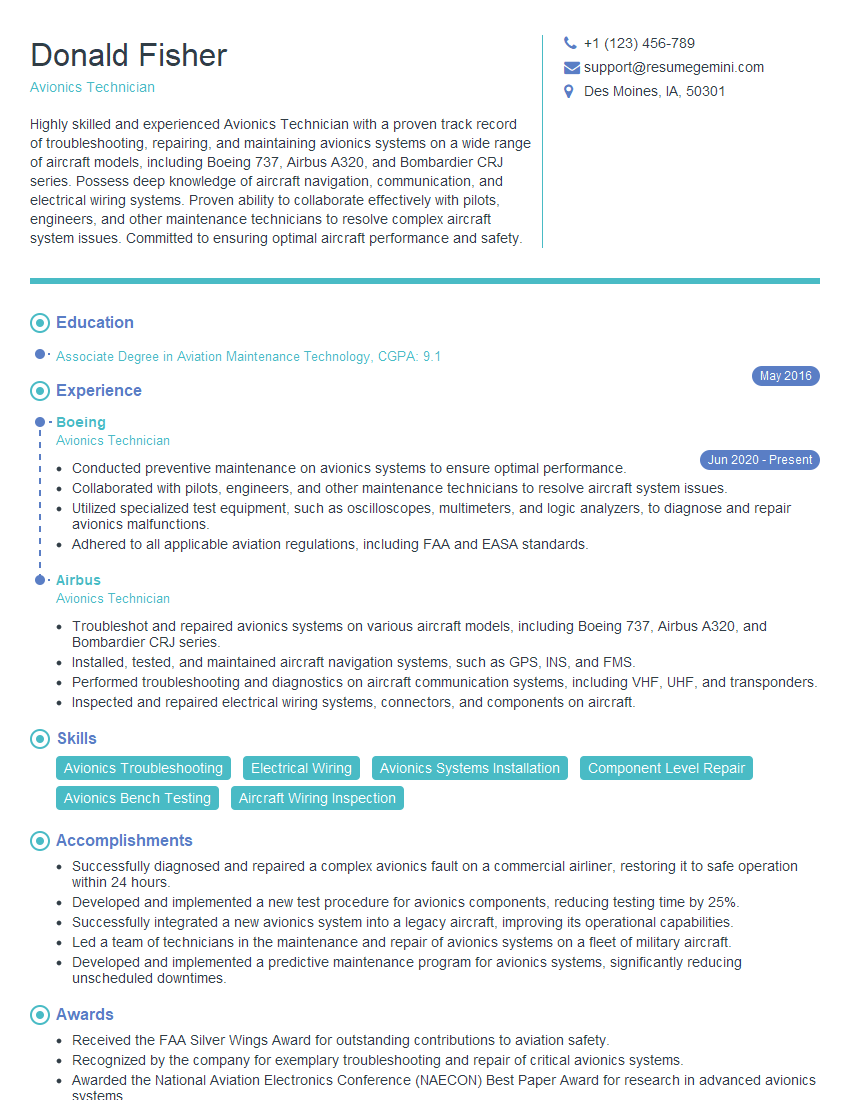
Avionics Technician Resume Sample
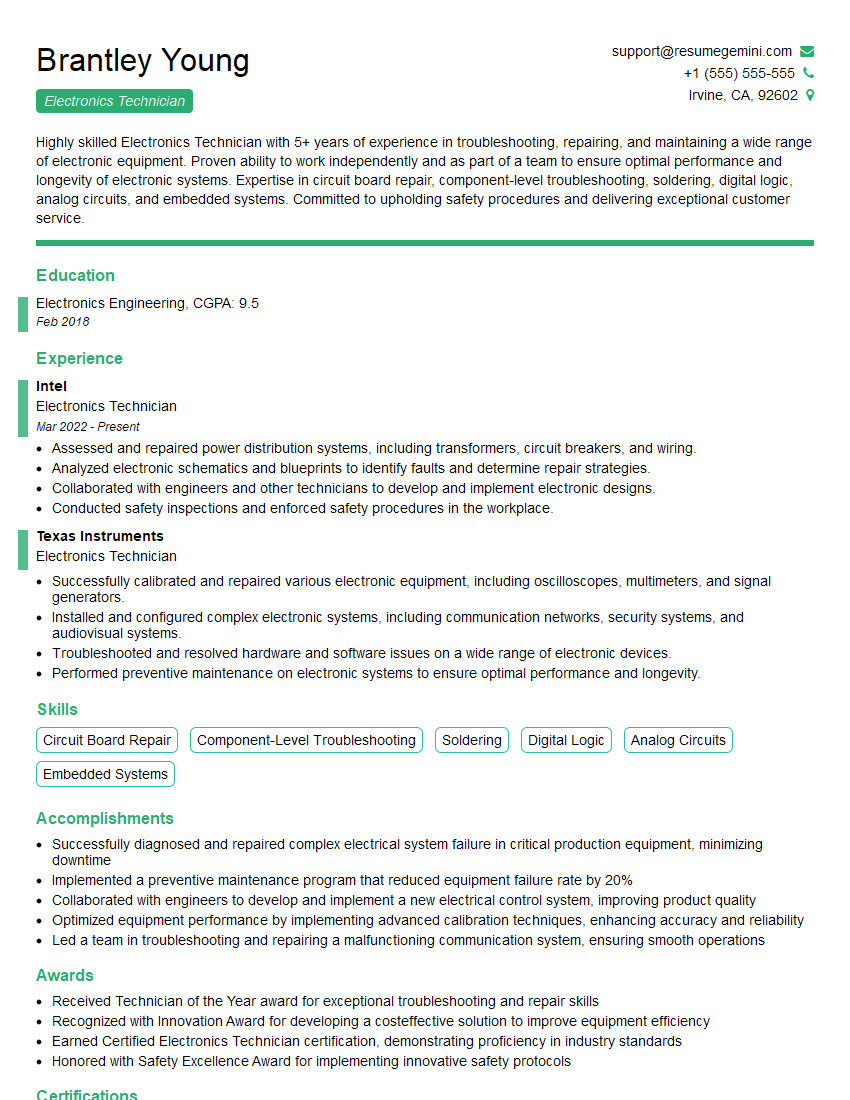
Electronics Technician Resume Sample
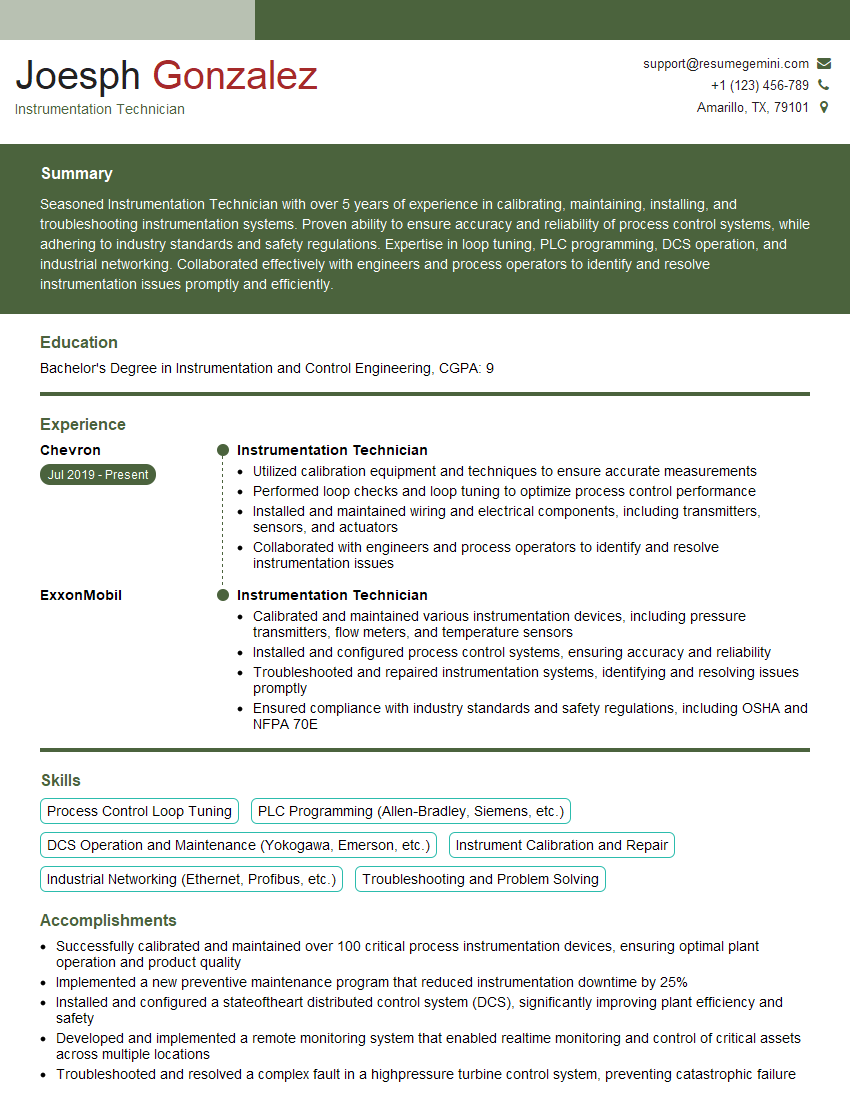
Instrumentation Technician Resume Sample
Test Technician Resume Sample
Electrical Technician Resume Sample
Field Service Technician Resume Sample
Robotics Technician Resume Sample
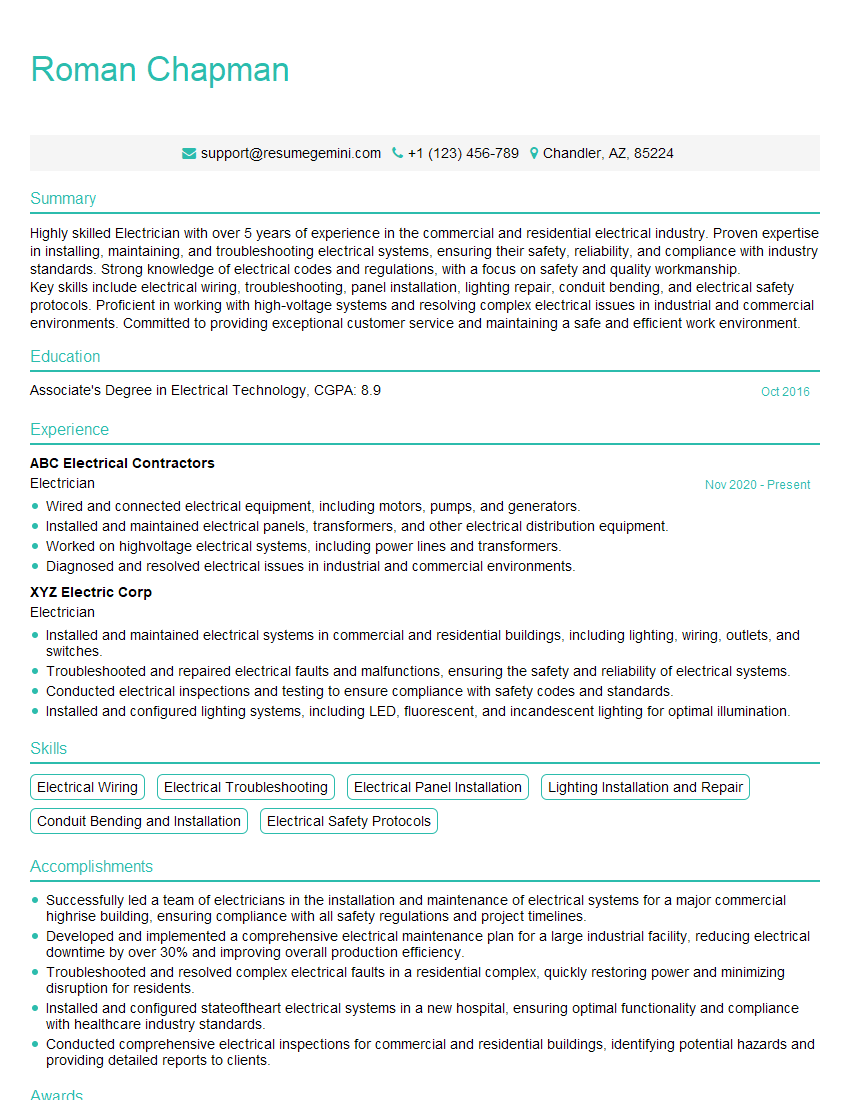
Electrician Resume Sample
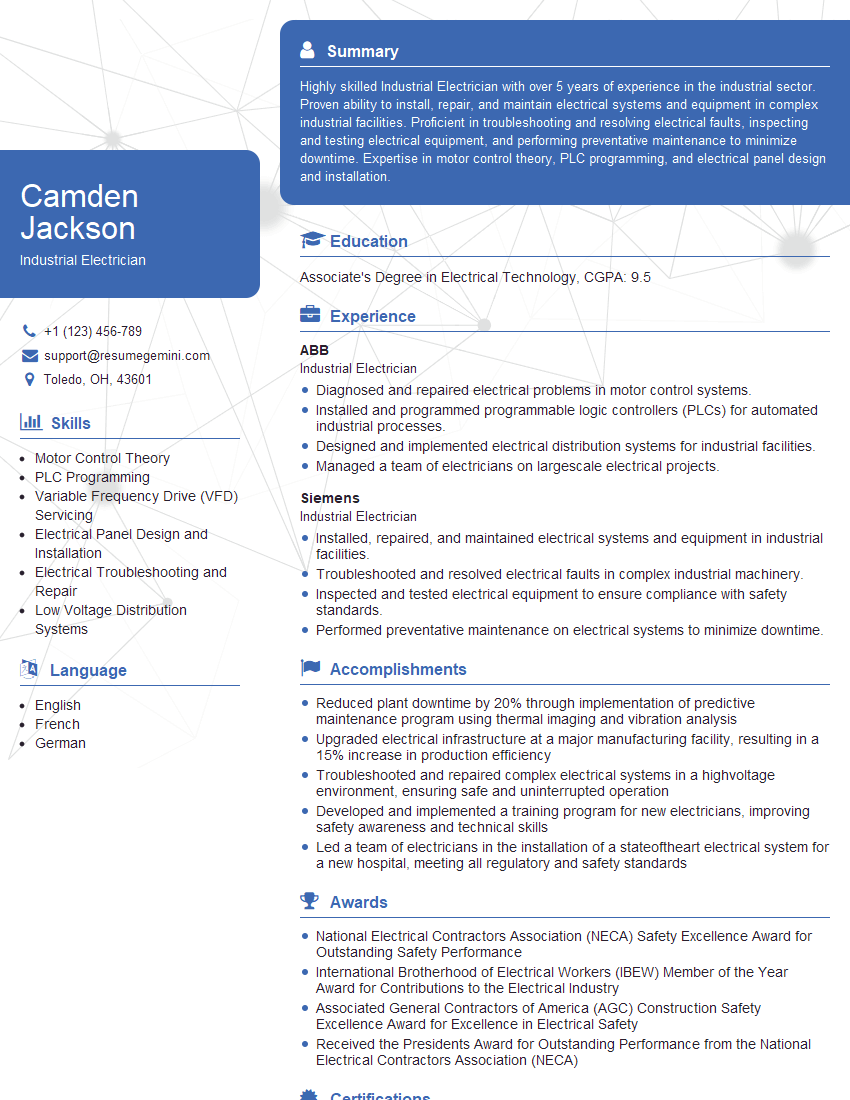
Industrial Electrician Resume Sample
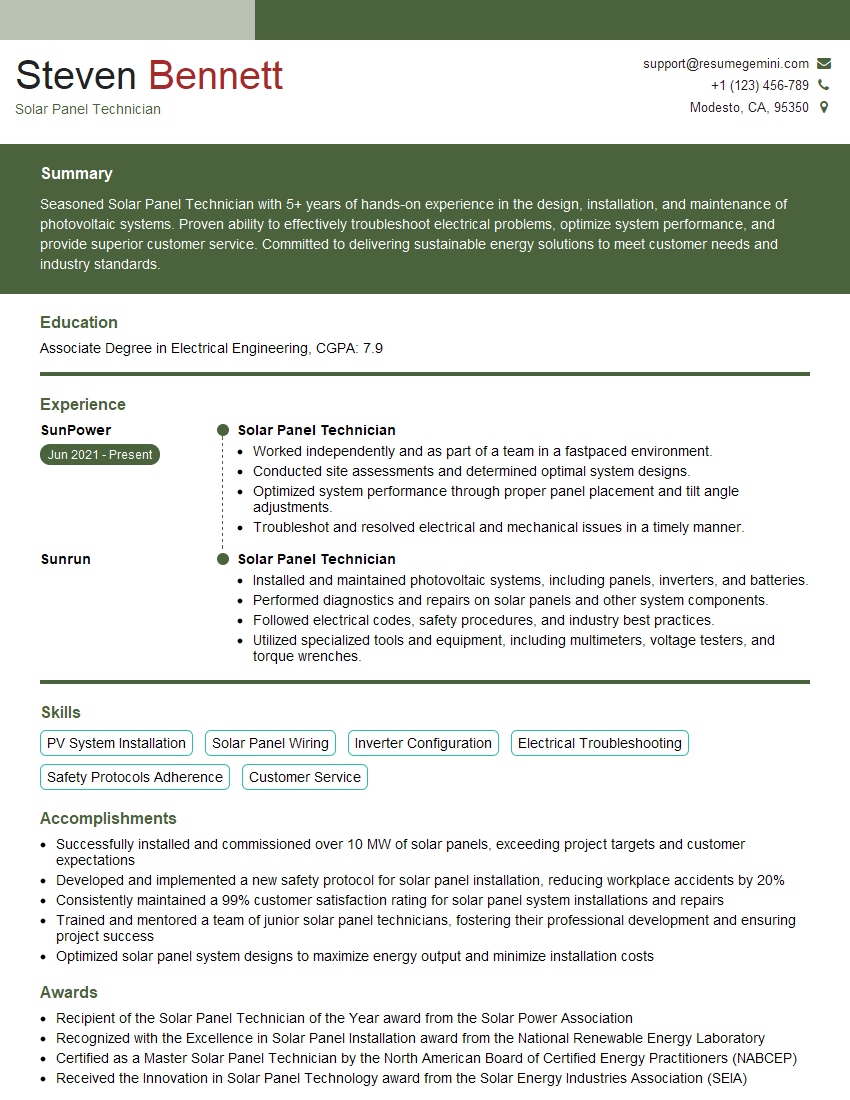
Solar Panel Technician Resume Sample
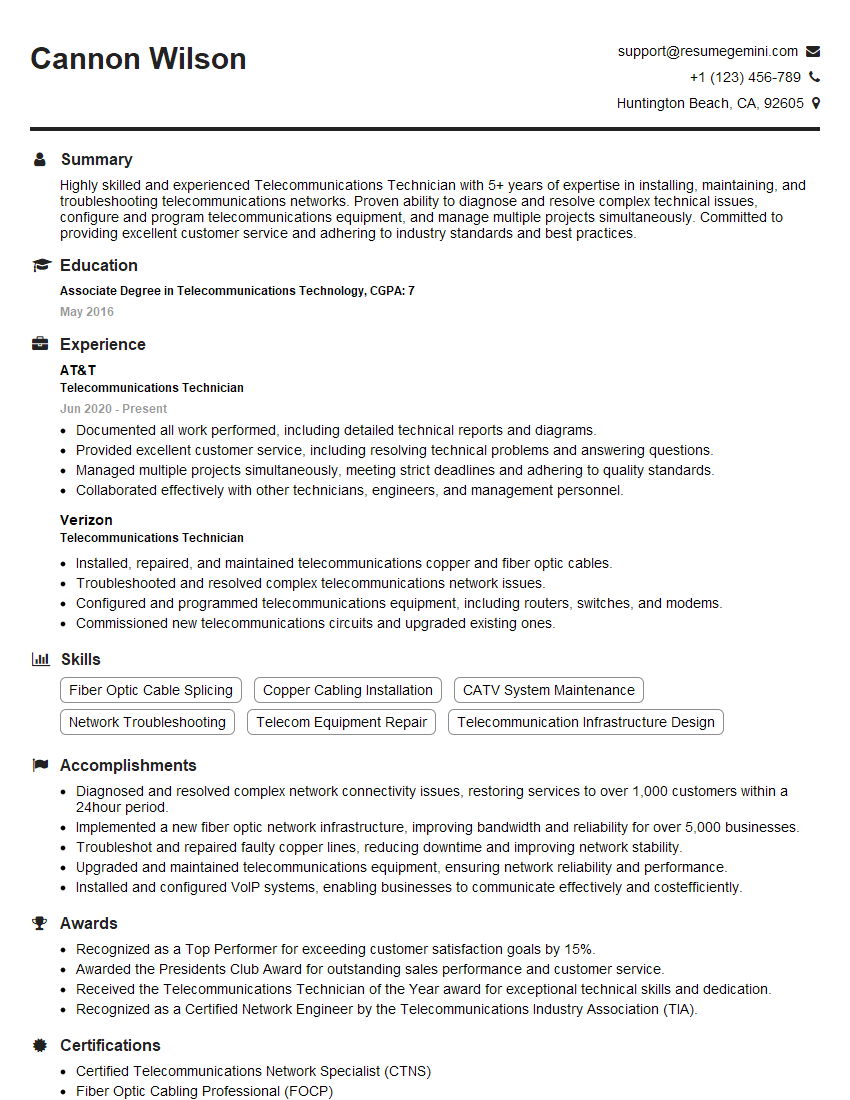
Telecommunications Technician Resume Sample
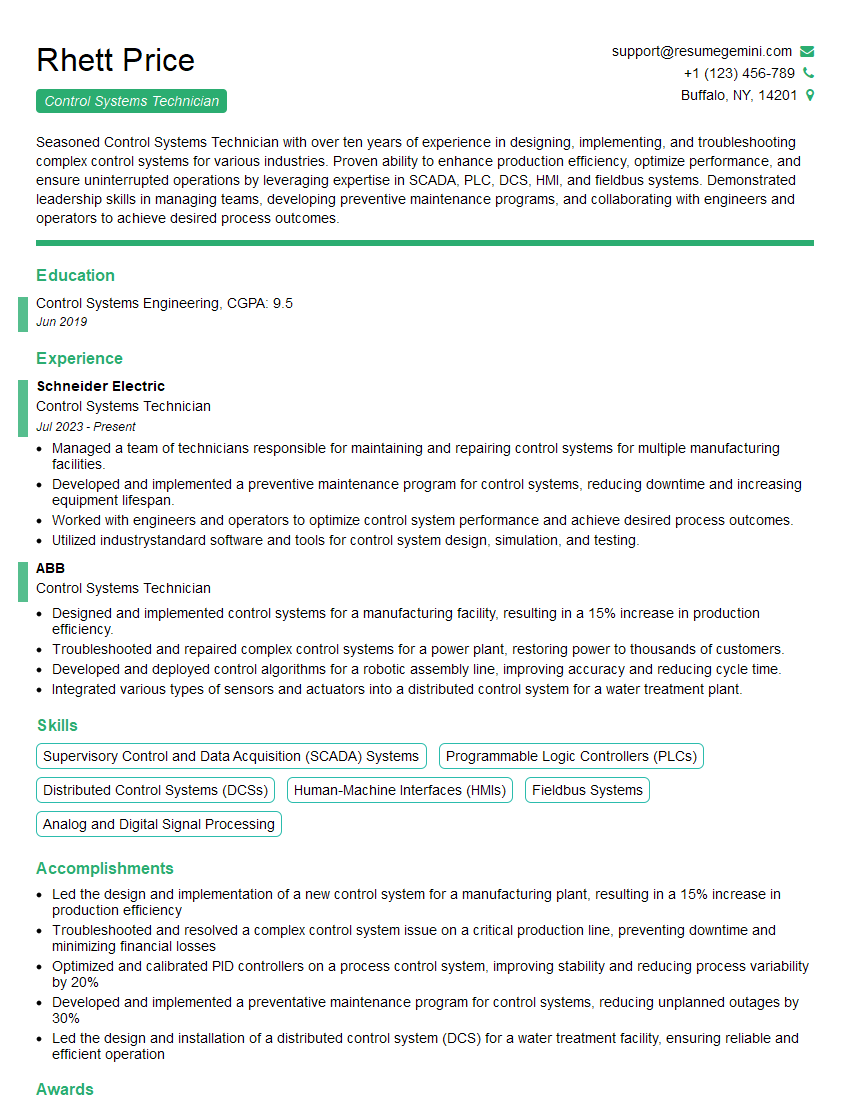
Control Systems Technician Resume Sample
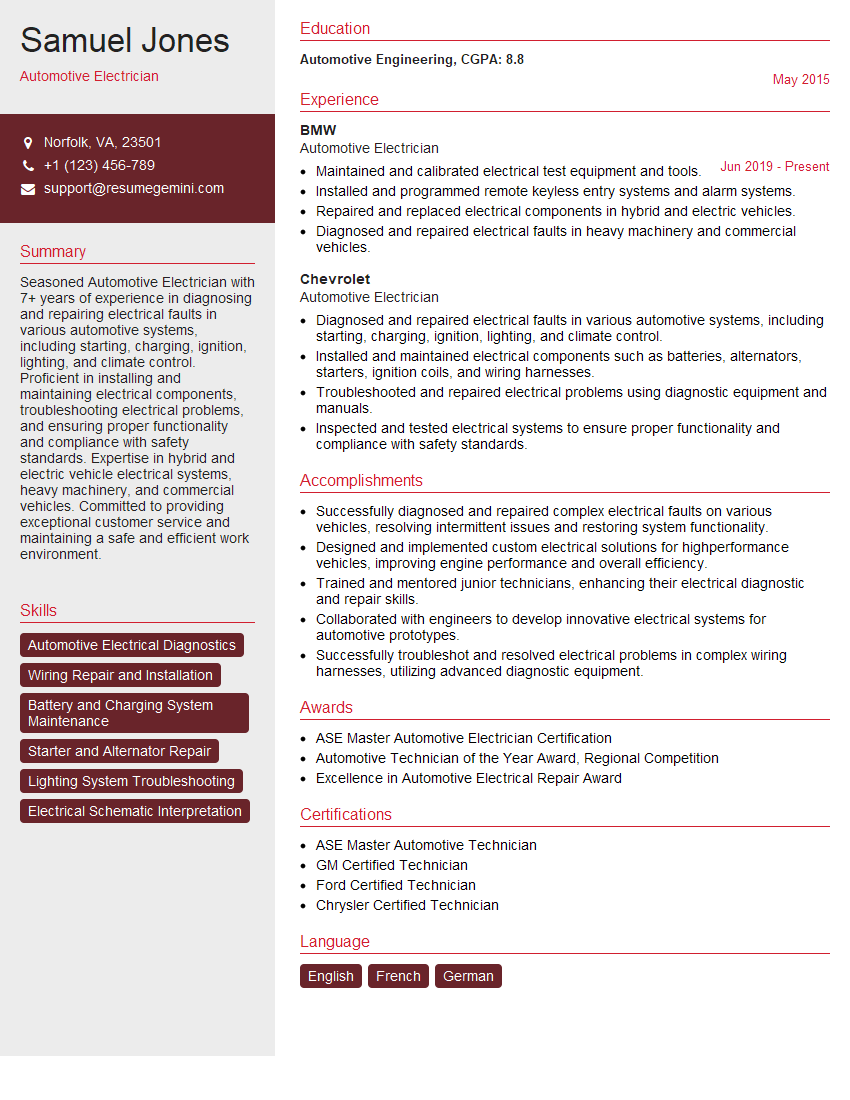
Automotive Electrician Resume Sample
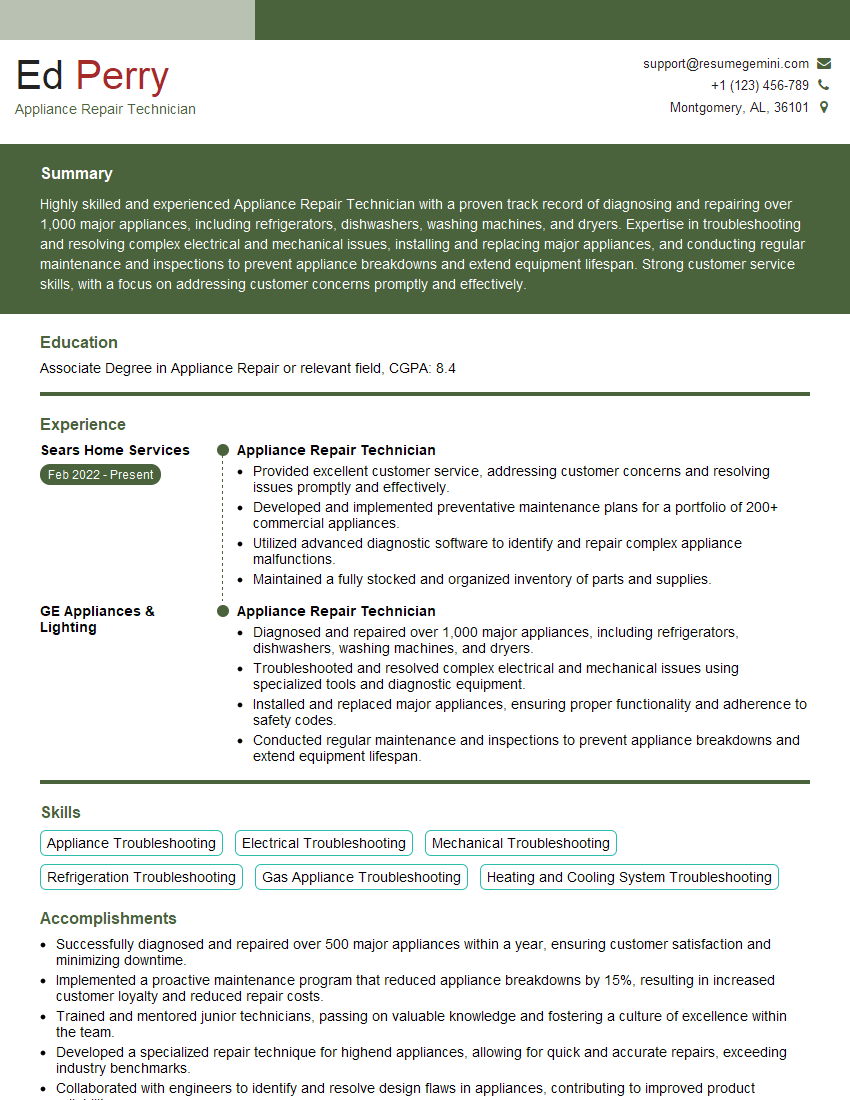
Appliance Repair Technician Resume Sample
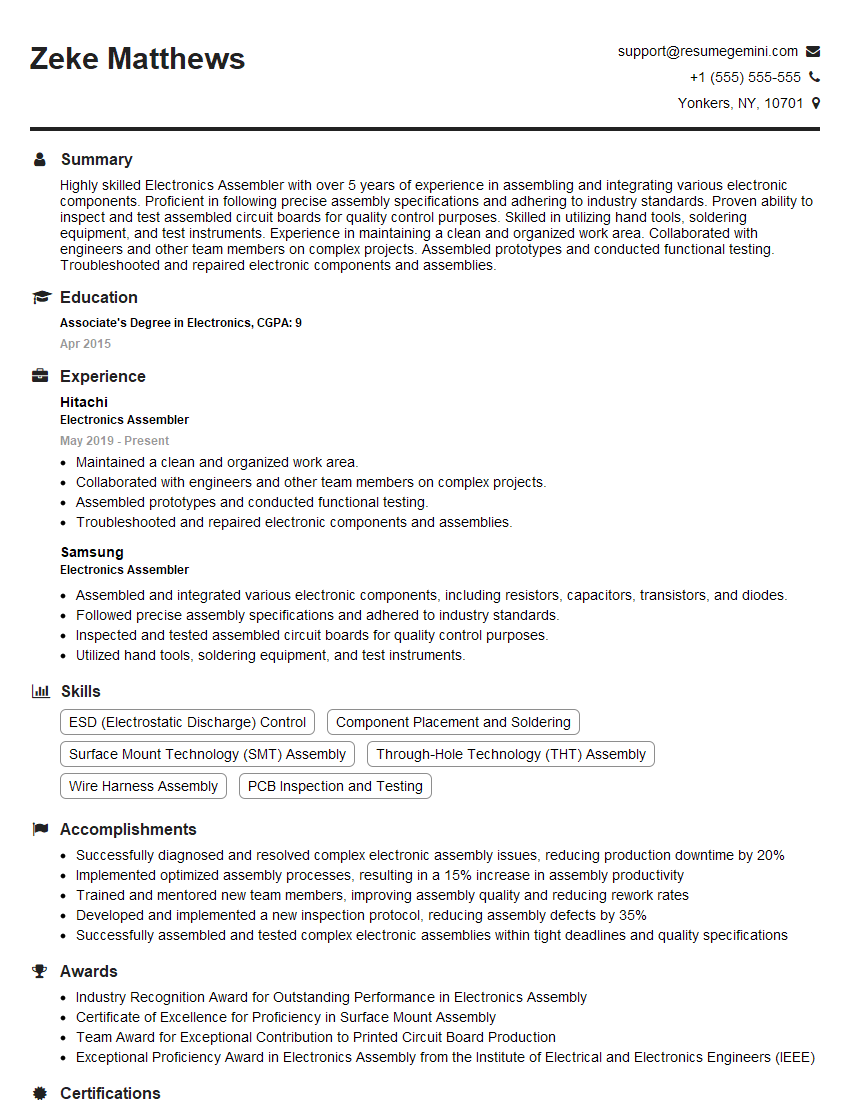
Electronics Assembler Resume Sample
- Network Technician
- Maintenance Technician
- Avionics Technician
- Electronics Technician
- Instrumentation Technician
- Test Technician
- Electrical Technician
- Field Service Technician
- Robotics Technician
- Electrician
- Industrial Electrician
- Solar Panel Technician
- Telecommunications Technician
- Control Systems Technician
- Automotive Electrician
- Appliance Repair Technician
- Electronics Assembler
Explore more articles
Users Rating of Our Blogs
Share Your Experience
We value your feedback! Please rate our content and share your thoughts (optional).
What Readers Say About Our Blog
Hello,
we currently offer a complimentary backlink and URL indexing test for search engine optimization professionals.
You can get complimentary indexing credits to test how link discovery works in practice.
No credit card is required and there is no recurring fee.
You can find details here:
https://wikipedia-backlinks.com/indexing/
Regards
NICE RESPONSE TO Q & A
hi
The aim of this message is regarding an unclaimed deposit of a deceased nationale that bears the same name as you. You are not relate to him as there are millions of people answering the names across around the world. But i will use my position to influence the release of the deposit to you for our mutual benefit.
Respond for full details and how to claim the deposit. This is 100% risk free. Send hello to my email id: [email protected]
Luka Chachibaialuka
Hey interviewgemini.com, just wanted to follow up on my last email.
We just launched Call the Monster, an parenting app that lets you summon friendly ‘monsters’ kids actually listen to.
We’re also running a giveaway for everyone who downloads the app. Since it’s brand new, there aren’t many users yet, which means you’ve got a much better chance of winning some great prizes.
You can check it out here: https://bit.ly/callamonsterapp
Or follow us on Instagram: https://www.instagram.com/callamonsterapp
Thanks,
Ryan
CEO – Call the Monster App
Hey interviewgemini.com, I saw your website and love your approach.
I just want this to look like spam email, but want to share something important to you. We just launched Call the Monster, a parenting app that lets you summon friendly ‘monsters’ kids actually listen to.
Parents are loving it for calming chaos before bedtime. Thought you might want to try it: https://bit.ly/callamonsterapp or just follow our fun monster lore on Instagram: https://www.instagram.com/callamonsterapp
Thanks,
Ryan
CEO – Call A Monster APP
To the interviewgemini.com Owner.
Dear interviewgemini.com Webmaster!
Hi interviewgemini.com Webmaster!
Dear interviewgemini.com Webmaster!
excellent
Hello,
We found issues with your domain’s email setup that may be sending your messages to spam or blocking them completely. InboxShield Mini shows you how to fix it in minutes — no tech skills required.
Scan your domain now for details: https://inboxshield-mini.com/
— Adam @ InboxShield Mini
Reply STOP to unsubscribe
Hi, are you owner of interviewgemini.com? What if I told you I could help you find extra time in your schedule, reconnect with leads you didn’t even realize you missed, and bring in more “I want to work with you” conversations, without increasing your ad spend or hiring a full-time employee?
All with a flexible, budget-friendly service that could easily pay for itself. Sounds good?
Would it be nice to jump on a quick 10-minute call so I can show you exactly how we make this work?
Best,
Hapei
Marketing Director
Hey, I know you’re the owner of interviewgemini.com. I’ll be quick.
Fundraising for your business is tough and time-consuming. We make it easier by guaranteeing two private investor meetings each month, for six months. No demos, no pitch events – just direct introductions to active investors matched to your startup.
If youR17;re raising, this could help you build real momentum. Want me to send more info?
Hi, I represent an SEO company that specialises in getting you AI citations and higher rankings on Google. I’d like to offer you a 100% free SEO audit for your website. Would you be interested?
Hi, I represent an SEO company that specialises in getting you AI citations and higher rankings on Google. I’d like to offer you a 100% free SEO audit for your website. Would you be interested?
good