Cracking a skill-specific interview, like one for Boating, requires understanding the nuances of the role. In this blog, we present the questions you’re most likely to encounter, along with insights into how to answer them effectively. Let’s ensure you’re ready to make a strong impression.
Questions Asked in Boating Interview
Q 1. Describe your experience with different types of boat hulls.
My experience encompasses a wide range of boat hulls, each designed for specific purposes and performance characteristics. I’ve worked extensively with displacement hulls, planing hulls, semi-displacement hulls, catamarans, and hydrofoils.
- Displacement hulls: These are slower, more stable hulls that push water aside, ideal for longer journeys and rough seas. Think of a traditional sailboat or a sturdy trawler. Their stability comes from their wide beam and relatively shallow draft. Maintenance focuses on hull integrity and preventing fouling.
- Planing hulls: These hulls are designed to lift out of the water at higher speeds, offering greater efficiency and speed. Powerboats and high-performance sailboats often utilize planing hulls. Maintenance focuses on the integrity of the bottom and preventing damage from high-speed impacts.
- Semi-displacement hulls: These are a hybrid, combining features of both displacement and planing hulls. They provide a balance of speed and stability, commonly seen in larger motor yachts. Maintenance includes regular checks for hull stress and propeller alignment.
- Catamarans: With two hulls, catamarans offer exceptional stability, especially in rough seas. They tend to be faster and more fuel-efficient than monohulls of similar size. Maintenance is critical to ensuring both hulls remain watertight and structural integrity is maintained.
- Hydrofoils: These lift the hull out of the water using underwater foils at higher speeds, drastically reducing drag and increasing speed. Maintenance involves careful inspection of the foils and their mechanisms, which are delicate and prone to damage from debris.
Understanding the strengths and weaknesses of each hull type is crucial for safe and efficient operation, matching the vessel to the intended use and environmental conditions.
Q 2. Explain the principles of buoyancy and stability.
Buoyancy and stability are fundamental principles governing a boat’s ability to float and remain upright. Buoyancy is the upward force exerted on an object submerged in a fluid (water), equal to the weight of the fluid displaced by the object (Archimedes’ principle). A boat floats because its hull displaces a volume of water weighing more than the boat itself.
Stability refers to a boat’s resistance to capsizing. Several factors contribute to stability: the shape of the hull (wider beams increase stability), the center of gravity (lower is better), and the center of buoyancy (the center of the underwater volume). A boat is stable when its center of gravity is below its metacenter (a theoretical point above the center of buoyancy).
Imagine a simple wooden block: If it’s light enough, it floats because the water it displaces weighs more than the block. The block is stable if it’s wide and low to the water. Conversely, a tall, narrow block might float but is much less stable and could easily tip over.
Q 3. What are the different types of marine engines and their maintenance requirements?
Marine engines are broadly classified into inboard, outboard, and sterndrive configurations. Each has unique maintenance requirements:
- Inboard engines: These are located inside the hull, typically diesel or gasoline. Maintenance involves regular oil changes, cooling system checks (freshwater or raw water), fuel filter replacements, and belt inspections.
- Outboard engines: These are mounted on the transom (back) of the boat. They are generally gasoline-powered and require similar maintenance as inboards but with added attention to the lower unit (propeller and gearcase), which needs lubrication and periodic servicing.
- Sterndrive engines: These combine features of inboards and outboards, with the engine inside the hull and a drive unit extending to the stern. Maintenance is a mix of both, demanding careful attention to the drive unit’s gimbal bearings, bellows, and seals to prevent water ingress.
Regardless of the engine type, regular maintenance is paramount to prevent costly repairs and ensure safe operation. This includes checking fluid levels (oil, coolant, fuel), inspecting belts and hoses, and addressing any unusual noises or vibrations promptly. A well-maintained engine is a reliable engine.
Q 4. How do you perform a pre-departure checklist on a boat?
My pre-departure checklist is meticulous and tailored to the specific vessel but generally includes:
- Engine check: Verify oil levels, coolant levels, fuel levels, and check for leaks. Start the engine and allow it to warm up, noting any unusual sounds or behavior.
- Navigation systems check: Ensure GPS, charts, and other electronic navigational aids are functioning correctly. Verify the vessel’s location.
- Safety equipment check: Inspect life jackets, flares, fire extinguishers, first-aid kit, and other required safety gear. Ensure they are readily accessible and in good condition.
- Bilge check: Examine the bilge for water accumulation or leaks. If present, investigate the cause and address it before departing.
- Lines and fenders: Inspect docklines and fenders, ensuring they are securely stowed or ready for use.
- Weather check: Obtain an updated weather forecast and assess its implications for the intended voyage.
- Communication check: Verify that VHF radio and other communication devices are functioning correctly. Let someone know your float plan.
- Visual inspection: Perform a thorough visual inspection of the boat’s hull, deck, and superstructure, checking for any signs of damage or potential hazards.
This checklist is a guideline and may vary depending on the size, type, and condition of the vessel and the intended voyage.
Q 5. Explain the procedures for handling a man overboard situation.
Handling a man overboard (MOB) situation requires immediate and coordinated action. The primary goal is to quickly recover the person in the water while minimizing further risk.
- Immediate Action: The first person to notice the MOB should shout “Man overboard!” and point in the direction of the casualty. This alerts others on board. The person who made the observation should maintain visual contact with the person in the water.
- Activate MOB Button (if available): If the vessel has a dedicated MOB button on the GPS or other navigation system, activate it immediately. This will mark the location on the chart plotter.
- Throw a life ring or flotation device: Quickly throw a life ring or other flotation device to the person in the water.
- Turn the vessel around: Immediately turn the boat around to make a recovery. It is imperative to note that this maneuver should be done while avoiding excessive speed that could endanger the victim in the water.
- Approach the person carefully: Approach the person in the water slowly and cautiously from downwind to avoid running over them or creating excessive wash.
- Recovery: Once alongside the person in the water, recover them using a rescue line, ladder, or other suitable method, bearing in mind the condition of the person and potential for further injury during retrieval.
- Post-Rescue Actions: Once on board, assess the person’s condition, provide first aid if needed, and contact emergency services if required.
Regular MOB drills are crucial for developing a coordinated and effective response in a real-world emergency. Practicing these procedures ensures that everyone on board knows their roles and responsibilities.
Q 6. Describe your experience with navigation using charts and GPS.
My experience with navigation encompasses both traditional chart reading and the use of modern GPS technology. I’m proficient in interpreting nautical charts, understanding chart symbols, and plotting courses. I can accurately determine position using various methods, including GPS, compass bearings, and visual fixes.
Charts provide detailed information about water depths, hazards, aids to navigation, and other crucial information for safe passage. GPS provides precise position information, but it is vital to understand that GPS signals can be affected by various factors and should be used in conjunction with other navigational tools. I frequently cross-reference GPS data with traditional chart navigation to ensure accuracy and redundancy.
For example, I might use a GPS to track our position while utilizing paper charts to plan a course, identify potential hazards, and check for recommended safe water depths. In addition to this, the compass is also a valuable asset, especially in the case of electronic equipment failure. This layered approach ensures a robust navigation strategy, reducing the risk of errors.
Q 7. How do you interpret weather forecasts and make decisions based on them?
Interpreting weather forecasts and making sound decisions based on them is crucial for boating safety. I utilize various sources, including marine-specific weather forecasts, weather apps, and radio broadcasts, to gather comprehensive information. I pay close attention to factors such as wind speed and direction, wave height, visibility, and predicted changes in weather patterns.
I look for trends and patterns to anticipate potential problems. For example, a forecast of increasing winds might lead to changing course to find more sheltered waters or deciding to postpone a trip entirely. Similarly, poor visibility might dictate a slower speed, more cautious navigation, or a change in plans. Safety is paramount, and I prioritize decision-making that minimizes risk.
I always maintain a safety margin, factoring in potential unexpected changes in the weather. It’s much better to be overly cautious than to be caught unprepared. My approach is pragmatic and data-driven, combining professional training with real-world experience to make informed decisions that prioritize safety.
Q 8. What are the regulations regarding safe boating practices in your area?
Safe boating practices in my area are governed by a combination of federal, state, and local regulations. These regulations cover a wide range of aspects, from vessel registration and licensing to equipment requirements and navigation rules. At the federal level, the United States Coast Guard plays a crucial role, enforcing regulations related to safety equipment, such as life jackets, fire extinguishers, and navigation lights. They also set standards for vessel construction and maintenance. State regulations often build upon the federal guidelines, sometimes adding more stringent requirements specific to the local waterways. For example, some states have stricter rules about alcohol consumption while boating or operating personal watercraft. Local ordinances may further restrict activities in specific areas, such as speed limits in certain zones or designated no-wake zones near shorelines. It’s vital to be thoroughly familiar with all applicable regulations in your area before operating a boat, as violations can lead to fines or even legal consequences. I always consult the Coast Guard’s website and my state’s boating regulations annually to ensure complete compliance.
Q 9. Describe your experience with engine troubleshooting and repair.
My experience with engine troubleshooting and repair is extensive. I’m proficient in diagnosing and resolving a variety of issues, from minor tune-ups to more complex repairs involving fuel systems, electrical systems, and internal engine components. For example, I once successfully diagnosed a sputtering engine by systematically checking the fuel lines for blockages, eventually discovering a clogged fuel filter. Replacing the filter immediately resolved the problem. I’m also experienced in performing routine maintenance, such as changing oil and spark plugs, which are vital for preventing major engine breakdowns. Beyond practical experience, I have a thorough understanding of marine engine mechanics, including the principles of combustion, cooling systems, and lubrication. I regularly consult engine manuals and technical resources to stay updated on the latest troubleshooting techniques and best practices. My toolbox is equipped with all the necessary diagnostic tools, including a multimeter, compression tester, and specialized wrenches.
Q 10. Explain the different types of knots and their applications in boating.
Knots are fundamental to boating safety and efficiency. Different knots serve distinct purposes, and knowing how to tie them correctly is essential for securing lines, mooring, and performing various tasks on the water. Some common knots include the bowline (a strong loop that won’t slip), the clove hitch (used for quickly attaching a line to a cleat or piling), the figure eight (a stopper knot to prevent a rope from running through a pulley), and the round turn and two half hitches (a secure fastening knot). The bowline, for instance, is crucial for creating a reliable loop to secure a mooring line to a boat’s cleat. The clove hitch allows for quick attachment and detachment, useful for securing a boat to a dock. The applications vary greatly; a strong bowline is critical for securing a life raft, while a reliable clove hitch could be the difference between a secure mooring and an accident. I consistently practice tying these and other knots to maintain proficiency and ensure I can perform them quickly and correctly under pressure.
Q 11. How do you maintain the cleanliness and upkeep of a boat?
Maintaining a boat’s cleanliness and upkeep is crucial for its longevity and performance. My approach is proactive, focusing on regular cleaning and preventative maintenance. After every trip, I rinse the boat thoroughly with fresh water to remove salt, grime, and debris that can cause corrosion. I pay close attention to the hull, deck, and interior, using appropriate cleaning agents to remove stains and mildew. Regular waxing protects the gel coat and prevents fading. Engine maintenance is a critical part of upkeep; I regularly check oil and fluid levels, change oil and filters as recommended, and inspect the engine for any signs of wear or damage. I also inspect and lubricate moving parts to prevent premature wear. Additionally, I meticulously check all safety equipment, ensuring everything is in good working order and readily accessible. For larger projects, I’ll enlist professional help, but for regular maintenance, my skillset is sufficient.
Q 12. What is your experience with various types of marine radios and communication systems?
I have experience with various types of marine radios and communication systems, ranging from VHF radios to satellite communication systems. VHF radios are essential for short-range communication with other vessels and shore stations. I am comfortable operating a VHF radio, understanding proper channel usage, distress calls, and communication protocols. I understand the importance of selecting the correct channels for different purposes, ensuring clear and efficient communication. I’ve also used satellite communication systems for longer-range communication, particularly in offshore situations where VHF may not be sufficient. These systems provide greater range and reliability, crucial in emergencies or remote locations. Knowing how to effectively use both VHF and satellite communications is pivotal for safety and efficient operations, particularly in challenging environments. Regular testing and maintenance of these systems is also paramount.
Q 13. How do you handle emergencies such as fire or flooding?
Handling emergencies, such as fire or flooding, requires quick thinking and decisive action. My training emphasizes prevention and preparedness. I regularly check and maintain fire extinguishers, ensuring they are adequately charged and readily accessible. In the event of a fire, my response involves immediately activating the fire suppression system, if equipped, and using extinguishers to put out the flames while simultaneously contacting emergency services. For flooding, I know the importance of quickly identifying the source of the leak and attempting to control the inflow. Using bilge pumps effectively and properly assessing the situation is essential, while simultaneously using radio communication to summon help is critical. In all emergency situations, ensuring the safety of everyone on board is my top priority. Regular drills and training sessions help to maintain preparedness and coordination.
Q 14. Explain your experience with docking and maneuvering a boat in various conditions.
Docking and maneuvering a boat in various conditions requires skill and experience. I’m proficient in docking alongside, stern-to, and bow-in, adapting my technique based on wind, current, and space constraints. I consider factors like wind direction and strength, current speed and direction, and the available space when planning my approach. For example, when docking in strong winds, I account for the wind’s influence on the boat’s movement, using fenders and lines strategically to mitigate potential collisions. I also adjust my speed and maneuvering accordingly. In tight spaces, precise throttle control and skillful use of the boat’s engines and steering are crucial. I’ve consistently practiced these maneuvers in various conditions, building confidence and refining my technique over time. My experience includes docking in challenging environments, including crowded marinas and busy waterways, under varied weather conditions. Safety always remains my primary focus when maneuvering a vessel.
Q 15. Describe your experience with sail handling and trimming.
Sail handling and trimming are fundamental skills in sailing, involving manipulating sails to optimize boat speed and performance. My experience encompasses years of handling various sail types, from simple jibs and mainsails on smaller boats to complex sail plans on larger yachts. This includes understanding the effects of wind angle (points of sail), sail shape (twist, luff curve, leech), and trim adjustments (halyard tension, sheet tension, outhaul, vang).
For instance, when sailing close-hauled (into the wind), I precisely adjust the halyard tension to maintain a tight, efficient luff curve, and carefully trim the sheets to create proper twist and prevent luffing. Conversely, when sailing broad reach or running (with the wind), I ease the sheets to allow the sails to fill and prevent over-powering the boat. I understand how to use telltales and sail trim indicators effectively to fine-tune sail shape and balance.
I’ve successfully handled sail changes under challenging conditions, including heavy weather, utilizing techniques like reefing the mainsail to reduce sail area and prevent damage. My experience extends to understanding sail materials and their strengths and limitations, enabling me to safely manage the sails under different weather conditions. I am confident in my ability to efficiently and safely trim sails to maximize performance regardless of wind conditions and boat type.
Career Expert Tips:
- Ace those interviews! Prepare effectively by reviewing the Top 50 Most Common Interview Questions on ResumeGemini.
- Navigate your job search with confidence! Explore a wide range of Career Tips on ResumeGemini. Learn about common challenges and recommendations to overcome them.
- Craft the perfect resume! Master the Art of Resume Writing with ResumeGemini’s guide. Showcase your unique qualifications and achievements effectively.
- Don’t miss out on holiday savings! Build your dream resume with ResumeGemini’s ATS optimized templates.
Q 16. What is your experience with maintaining onboard safety equipment?
Maintaining onboard safety equipment is paramount for a successful and safe voyage. My experience includes regular inspection and maintenance of all safety gear, including life jackets (checking buoyancy and straps), flares (verifying expiration dates and proper storage), EPIRB (Emergency Position-Indicating Radio Beacon), ensuring it’s properly registered and tested, and first-aid kit (checking supplies and expiration dates).
I understand the importance of having readily accessible and properly functioning safety equipment, and I meticulously check its condition before every trip. I also regularly conduct safety drills with the crew to ensure everyone is familiar with the location and use of all safety gear. This includes practicing man overboard drills, fire drills, and emergency procedures. Furthermore, I have experience using and maintaining specialized safety equipment such as life rafts, and performing regular servicing and inspections based on manufacturer guidelines.
Beyond equipment maintenance, I stress proactive safety measures. I know how to assess weather conditions and make informed decisions about proceeding or delaying a trip. I prioritize crew briefing on potential hazards and safety procedures. I ensure we have appropriate communication equipment and emergency plans in place. For example, I have managed situations in which bad weather approached suddenly, and promptly utilized our safety equipment and emergency protocols to reach safety.
Q 17. How familiar are you with the International Regulations for Preventing Collisions at Sea (COLREGs)?
I am very familiar with the International Regulations for Preventing Collisions at Sea (COLREGs). These rules are fundamental for safe navigation and avoiding collisions. My understanding encompasses the rules concerning lights, shapes, sound signals, and the general principles of safe navigation in various situations. I know how to interpret these rules in diverse scenarios, including restricted visibility, crossing situations, overtaking, and navigating narrow channels.
For example, I understand the rules of precedence when two vessels are on a crossing course, the correct use of sound signals to indicate intentions, and the importance of maintaining a proper lookout. I can demonstrate a practical application of these rules through real-world examples from my experience, such as navigating a busy harbor entrance or encountering other vessels at night.
I regularly review and update my knowledge of COLREGs to stay current with any changes. I find the consistent application of these rules to be crucial for safe and responsible boating, and I’m able to explain and demonstrate them effectively to crew members.
Q 18. Describe your experience with chart reading and plotting courses.
Chart reading and course plotting are essential skills for safe and efficient navigation. My experience includes using paper charts and electronic chart plotters (ECPs). I am proficient in interpreting various chart symbols, understanding nautical charts’ scales, and calculating distances and bearings using parallel rules or digital tools.
Plotting a course involves identifying a starting point and destination on a chart, determining a safe and efficient route, accounting for hazards like shoals, rocks, and other vessels, and calculating waypoints. I’m experienced in using compass roses and calculating magnetic variation to determine true headings. I understand how to adjust for tidal currents and set and drift. I’ve plotted courses for both coastal cruising and offshore passages.
For example, I have successfully navigated through complex waterways, avoiding potential hazards, using a combination of paper charts and ECPs. In addition, I can accurately predict and account for changes in tidal currents affecting vessel transit time.
Q 19. How do you use a depth sounder and radar effectively?
Depth sounders and radar are crucial navigational instruments. A depth sounder measures water depth beneath the vessel. I understand how to interpret the readings, account for tidal changes and ensure safe passage through shallow waters. I know how to identify potential grounding hazards by carefully monitoring depth readings, particularly in unfamiliar areas.
Radar, on the other hand, detects objects and other vessels within range. I can interpret radar returns to identify targets, determine their range, and assess their potential threat. I understand how to adjust radar settings for optimal performance under various conditions like rain, fog, and sea clutter. I understand the limitations of radar and how to interpret its data alongside other navigation tools such as visual observation and AIS (Automatic Identification System) information.
I have experience using both depth sounders and radar to safely navigate in various conditions, including low visibility. For instance, I have used radar to avoid collision with other vessels during fog or at night. I’ve used the depth sounder to navigate safely through shallow channels and harbors.
Q 20. What is your experience with boat maintenance and repair using fiberglass and wood?
Boat maintenance and repair are vital for ensuring the vessel’s seaworthiness. My experience includes working with both fiberglass and wood materials. I’m familiar with fiberglass repair techniques such as gelcoat repair, fairing, and laminating. I understand how to properly prepare surfaces, apply resin and cloth, and finish the repair for a smooth, durable finish.
With wooden boats, I have experience in carrying out tasks like caulking, replacing planks, and treating rot. I am proficient in various woodworking techniques, including sanding, painting, and varnishing. I can identify wood rot and structural damage. I understand the proper techniques for protecting wood against the elements.
I’ve performed various maintenance tasks, such as engine servicing, through-hull fitting checks, and rigging maintenance. I approach maintenance tasks systematically, using proper tools and safety precautions. I maintain detailed records of all maintenance and repairs carried out.
For example, I once successfully repaired a significant crack in a fiberglass hull using appropriate materials and techniques, preventing further damage and ensuring the boat’s seaworthiness. I am also skilled at identifying and resolving issues before they become serious problems.
Q 21. How do you manage a crew and delegate tasks effectively?
Effective crew management and task delegation are critical for a safe and efficient voyage. My approach focuses on clear communication, establishing roles and responsibilities, and empowering crew members to take ownership of their tasks. Prior to departure, I conduct a thorough briefing outlining the voyage plan, roles, and responsibilities of each crew member.
I delegate tasks based on crew members’ skills and experience, ensuring everyone understands their responsibilities and the importance of their contribution. I encourage open communication, providing opportunities for feedback and addressing concerns promptly. I create a positive and collaborative atmosphere, fostering teamwork and mutual respect.
I also emphasize situational awareness and adaptability. My experience includes adjusting tasks and responsibilities as needed in response to changing conditions. I always maintain a calm and decisive demeanor, effectively managing stress during challenging situations. For example, I have successfully managed a diverse crew during a challenging offshore passage, ensuring every task was completed safely and efficiently, leading to a positive and successful experience.
Q 22. How do you handle difficult or challenging passengers or customers?
Handling challenging passengers requires a calm and professional approach. My strategy focuses on clear communication, empathy, and setting firm boundaries. First, I actively listen to their concerns, validating their feelings without necessarily agreeing with their perspective. This helps de-escalate any tension. Then, I clearly explain safety regulations and procedures, ensuring everyone understands the rules and expectations. If the behavior continues to be disruptive or poses a safety risk, I don’t hesitate to implement consequences, such as asking them to modify their behavior or, in extreme cases, requesting they leave the vessel. For instance, I once had a passenger who became increasingly agitated due to seasickness. By providing them with medication, offering a comfortable place to rest, and calmly explaining the expected duration of the rough seas, I was able to reassure them and ensure their safety and the comfort of other passengers.
Q 23. Explain your understanding of tides and currents.
Tides and currents are crucial for safe navigation. Tides are the rise and fall of sea levels caused by the gravitational pull of the moon and sun. Currents are the continuous movement of water in a specific direction, driven by factors like wind, tides, and the Earth’s rotation. Understanding both is paramount. High tide and low tide significantly affect water depth, especially in shallow areas, determining whether a vessel can safely navigate certain passages. Currents can push a boat off course, increase or decrease speed, and make docking challenging. I always consult tidal charts and current predictions before any voyage, adjusting my route and timing accordingly. For example, I wouldn’t attempt to navigate a shallow inlet during a low tide with a strong outgoing current, as grounding or being swept away from the intended course would be a significant risk. I always factor tidal height and current strength into the estimation of my arrival time at a destination.
Q 24. What is your experience with different types of anchors and anchoring techniques?
My experience encompasses various anchors, each suited for different conditions. I’m proficient with Danforth anchors (good in sand and mud), Plow anchors (versatile for various seabed types), and Bruce anchors (excellent in rocky areas). Anchoring technique involves choosing the right anchor for the seabed, deploying it properly, and verifying its holding power. I always ensure sufficient scope (the length of anchor rode – the rope or chain connecting the anchor to the boat) – typically 5:1 or 7:1 ratio of depth to scope – depending on the conditions. I also check the set by gently pulling on the rode to confirm a secure hold. Failing to adequately set an anchor can lead to dragging and potential grounding or collision. I recall an instance where anchoring in a rocky cove. Using a Bruce anchor with appropriate scope and verifying the set several times was crucial in preventing the boat from drifting during a sudden gust of wind.
Q 25. How do you plan a safe and efficient voyage?
Safe and efficient voyage planning is a multi-step process. It begins with determining the destination, checking weather forecasts (including wind, waves, visibility), and consulting nautical charts to identify potential hazards (shallow areas, rocks, reefs). I then calculate the estimated time of arrival (ETA), factoring in speed, currents, and tides. Fuel consumption is also carefully considered, ensuring sufficient reserves for the trip and any unexpected delays. Pre-departure checks include verifying the vessel’s mechanical systems, safety equipment (life jackets, flares, communication devices), and navigation instruments. Regular communication with other vessels and appropriate authorities is maintained throughout the voyage. This methodical approach is vital to ensuring a smooth, safe journey. For example, on a recent offshore voyage, I meticulously reviewed the weather forecast, plotting alternative routes to avoid a predicted storm, ensuring a timely return to avoid worsening conditions.
Q 26. Describe your experience with search and rescue procedures.
My experience with search and rescue (SAR) procedures involves both participating in exercises and understanding the protocols. I’m familiar with distress signaling (visual and auditory), using VHF radio for communication, conducting a visual search pattern, and providing assistance to those in distress. I understand the importance of reporting any incidents to the appropriate authorities immediately. Safety at sea is paramount; familiarity with SAR protocols helps to effectively respond to emergencies. During a training exercise, I played a crucial role in coordinating the recovery of simulated casualties, demonstrating my proficiency in search patterns and communication with emergency services. Understanding the chain of command and effective communication are critical aspects of successful SAR operations.
Q 27. Explain your experience with handling different types of marine wildlife encounters.
Marine wildlife encounters require respect and caution. I’m experienced in navigating around marine mammals (whales, dolphins, seals) while maintaining a safe distance to avoid disturbing them. For instance, it’s crucial to slow down and avoid sudden movements, and respect established guidelines to minimize impact. Similarly, encountering birds, fish, and other marine life calls for responsible observation and avoiding activities that may harm them or their environment. Respecting marine wildlife ensures both their safety and the safety of passengers and the crew. I have always maintained a safe distance from whales observed in the ocean, giving them the space they need to avoid any negative impact from our presence.
Q 28. Describe your experience with maintaining logbooks and records.
Maintaining accurate logbooks and records is crucial for safety and compliance. My logbooks meticulously document voyage details, including dates, times, locations, weather conditions, engine hours, fuel consumption, maintenance tasks, and any incidents or noteworthy events. These records are essential for insurance purposes, regulatory compliance, and troubleshooting any issues. They are also useful for tracking vessel performance and planning future voyages. A well-maintained logbook serves as a comprehensive history of the vessel’s operation and can prove invaluable in case of an incident or investigation. I consistently ensure that all entries are clear, accurate and made promptly. My records show a consistently high level of attention to detail and accuracy, making them readily useful for regulatory compliance or investigations.
Key Topics to Learn for Your Boating Interview
- Navigation & Chart Reading: Understanding nautical charts, GPS systems, compass use, and safe navigation techniques. Practical application includes planning a route, identifying hazards, and reacting to changing conditions.
- Boat Handling & Maneuvering: Mastering docking, anchoring, and maneuvering in various conditions (e.g., tight spaces, strong currents). Consider the impact of wind, tide, and vessel characteristics on maneuverability.
- Boat Systems & Maintenance: Familiarity with engine operation, fuel systems, electrical systems, plumbing, and basic maintenance procedures. Be prepared to discuss troubleshooting common issues.
- Safety Regulations & Procedures: Knowledge of relevant safety regulations, emergency procedures, and personal flotation device (PFD) usage. Discuss responsible boating practices and risk mitigation strategies.
- Seamanship & Weather Awareness: Understanding weather patterns, interpreting weather forecasts, and adapting to changing conditions. Discuss seamanship principles and best practices for safe boating.
- Boat Types & Capabilities: Familiarity with different types of boats (sailboats, powerboats, etc.) and their unique characteristics and capabilities. Be able to discuss the strengths and limitations of various hull designs.
- Communication & Teamwork: Effective communication with crew members, understanding radio communication protocols, and working collaboratively in a team environment. This is vital for safe and efficient operation.
Next Steps
Mastering the skills and knowledge related to boating opens doors to exciting and rewarding careers in a dynamic industry. To significantly increase your job prospects, create a compelling and ATS-friendly resume that highlights your qualifications and experience. ResumeGemini is a trusted resource that can help you build a professional resume tailored to the boating industry. Examples of resumes specifically designed for boating positions are available to guide you. Invest the time to craft a strong resume—it’s your first impression and a crucial step towards landing your dream job.
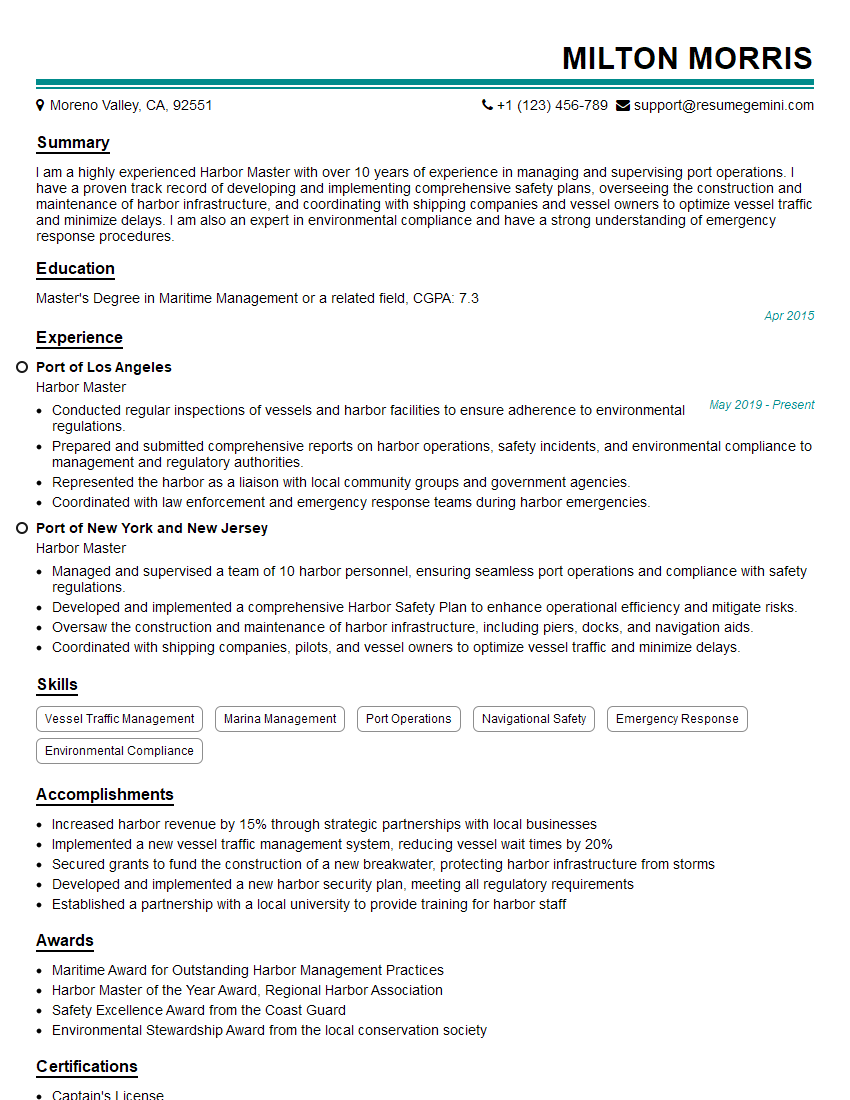
Harbor Master Resume Sample
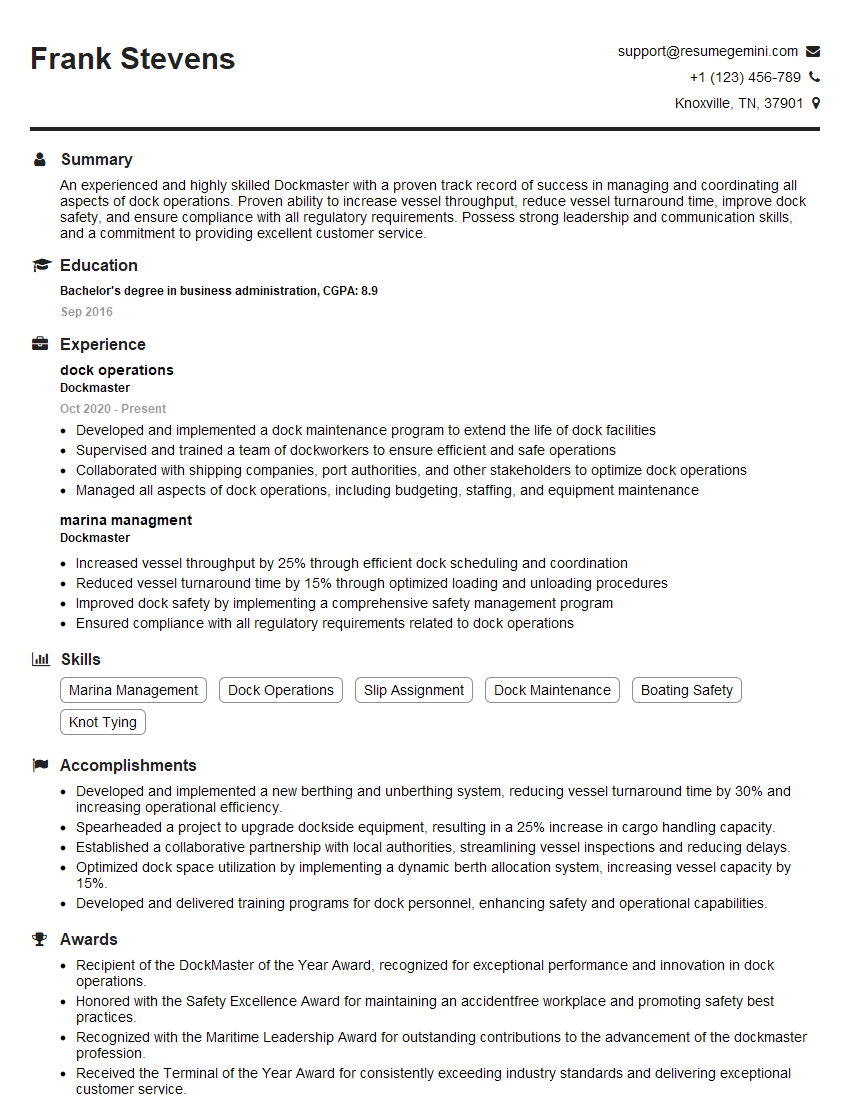
Dockmaster Resume Sample
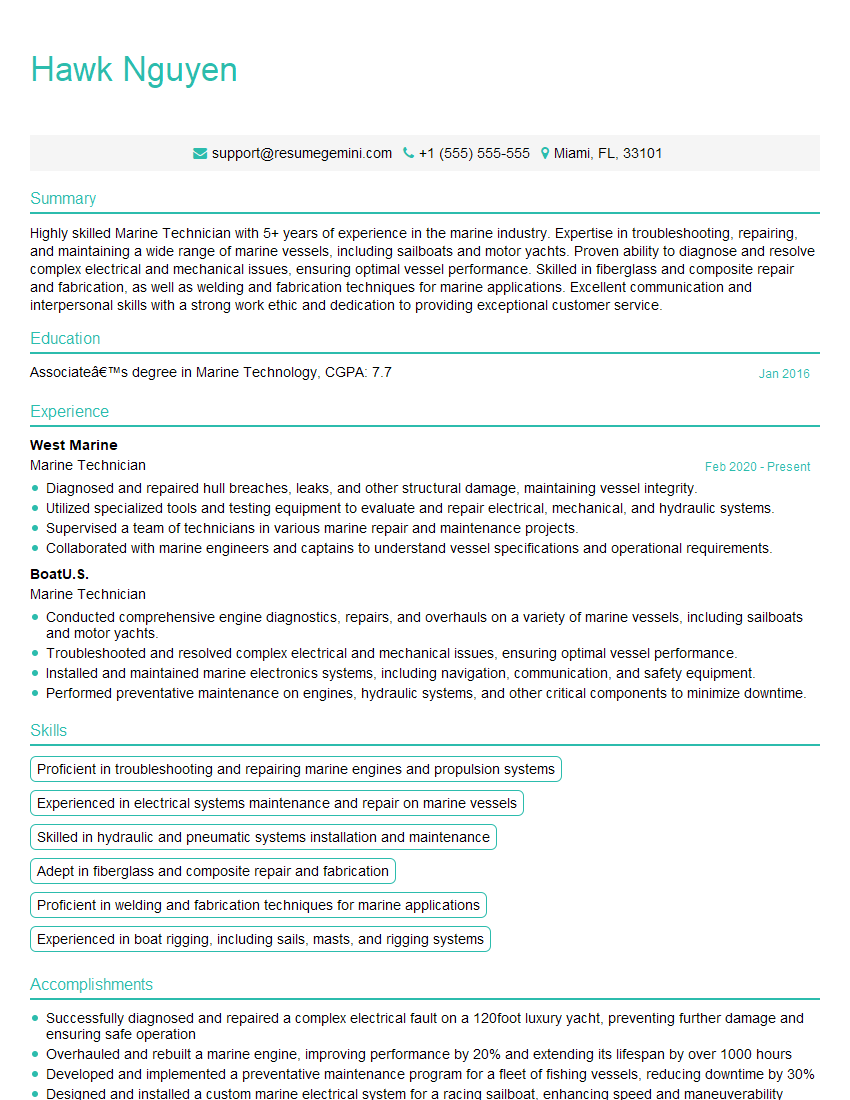
Marine Technician Resume Sample
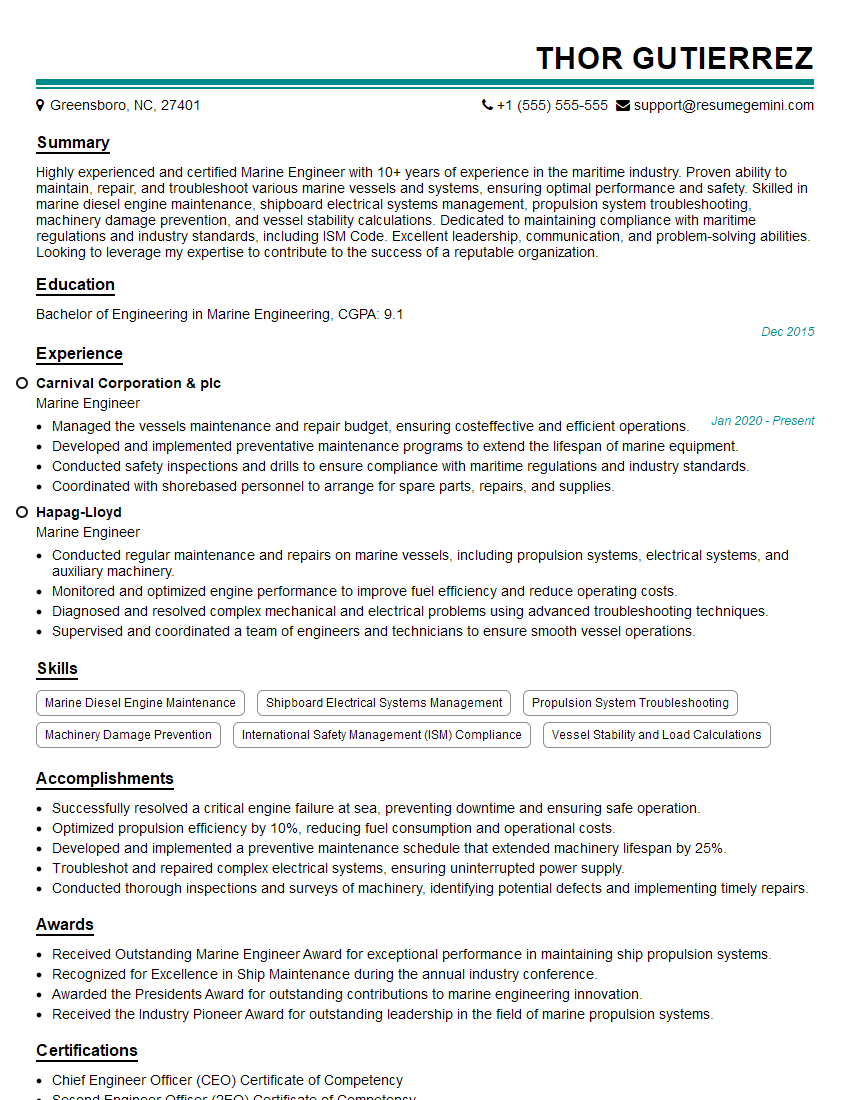
Marine Engineer Resume Sample
Marine Surveyor Resume Sample
Boat Builder Resume Sample
Naval Architect Resume Sample
Sailing Instructor Resume Sample
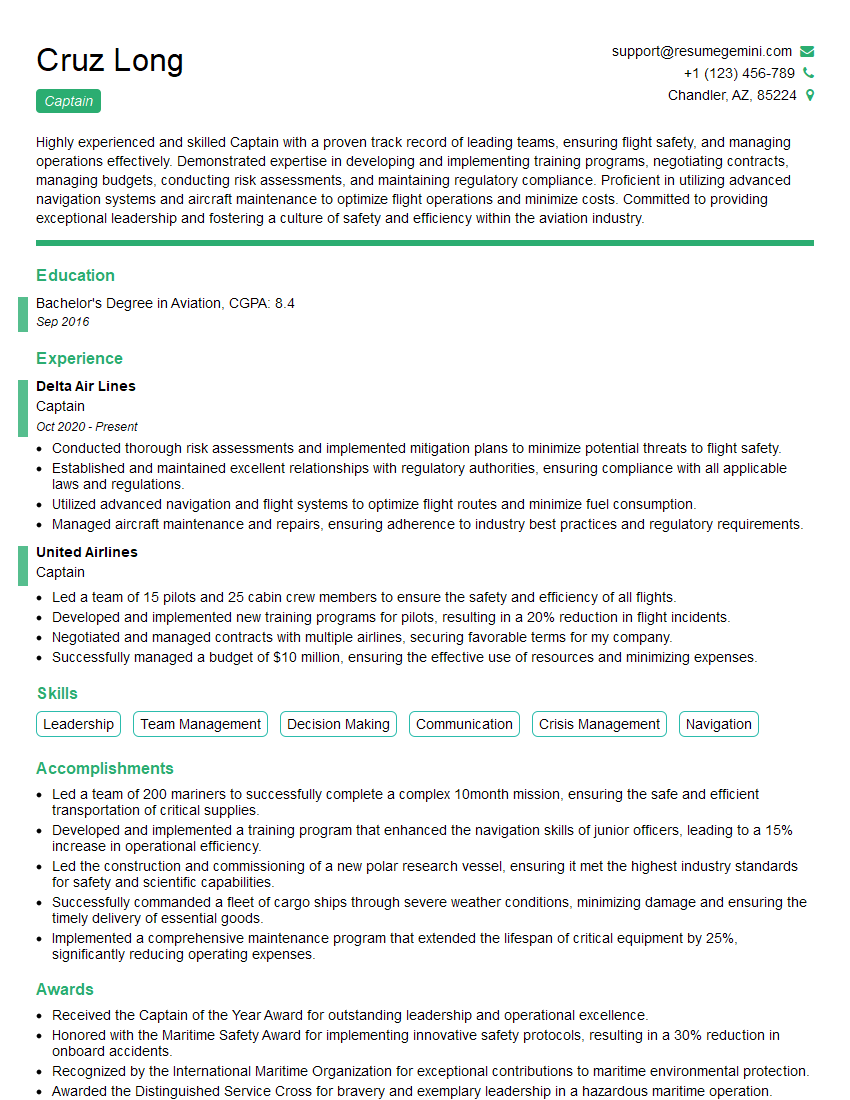
Captain Resume Sample
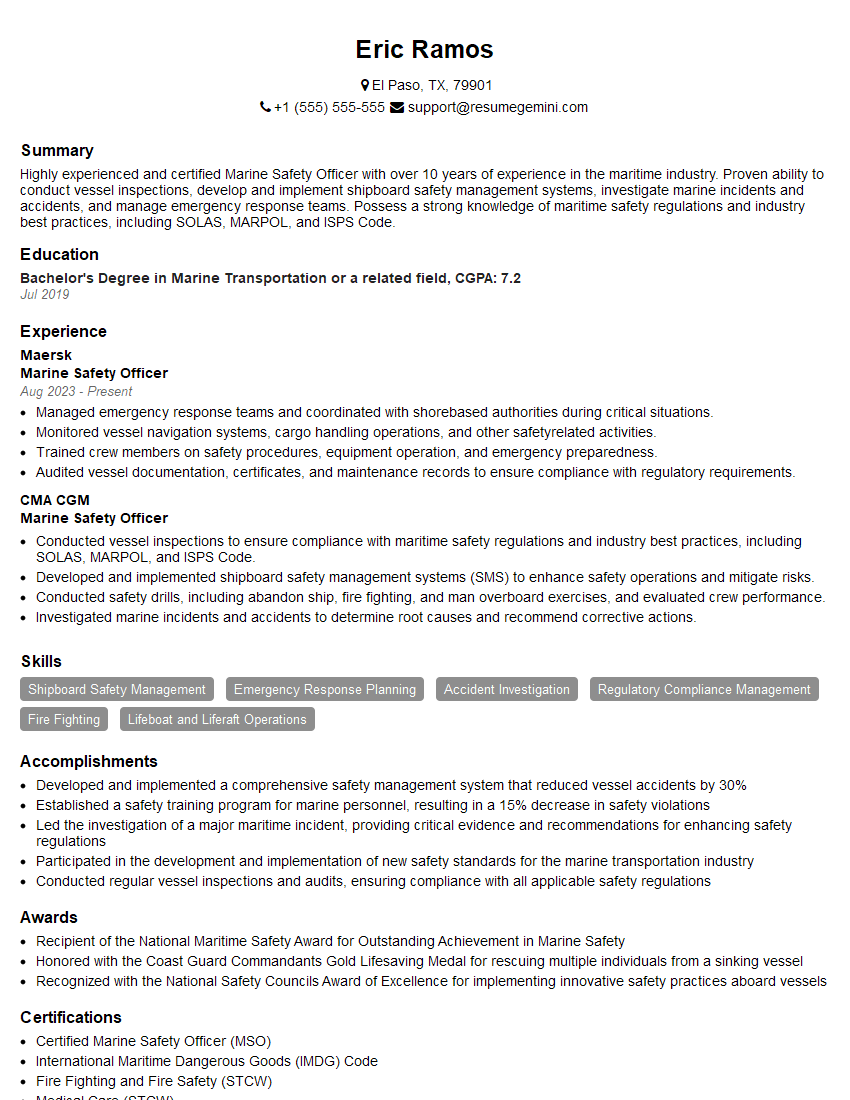
Marine Safety Officer Resume Sample
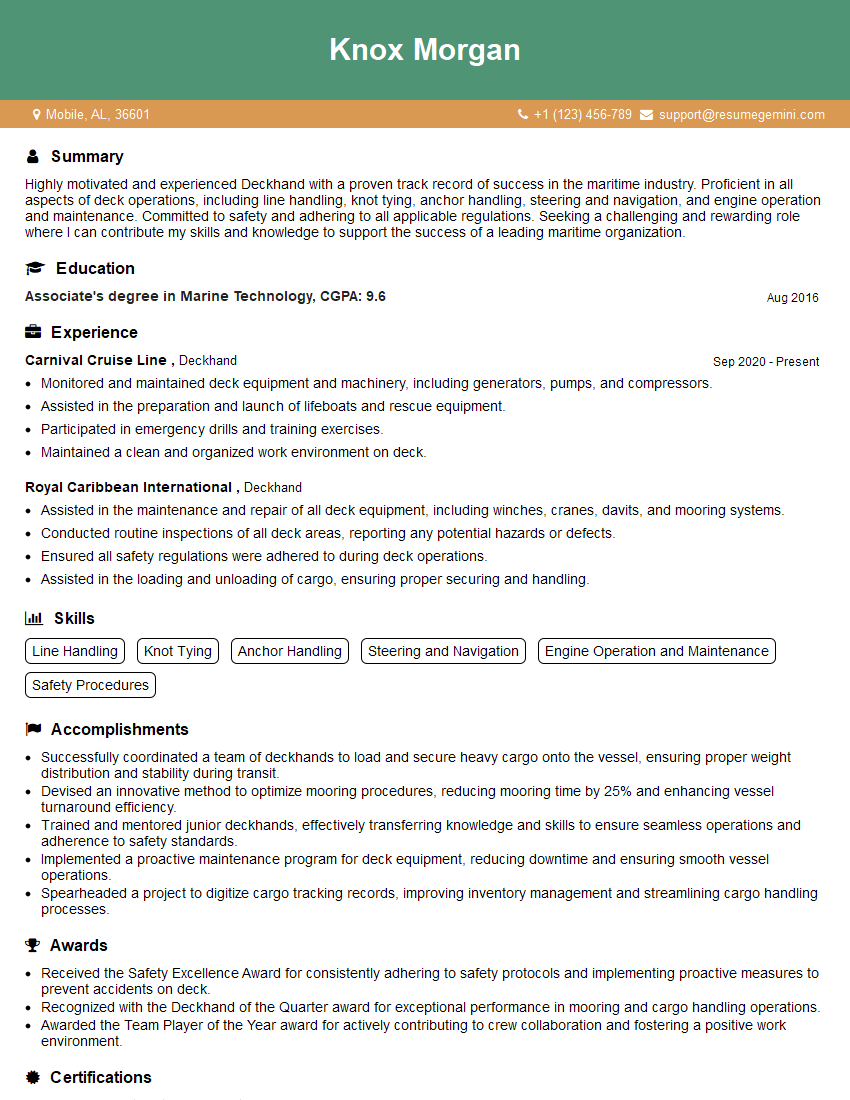
Deckhand Resume Sample
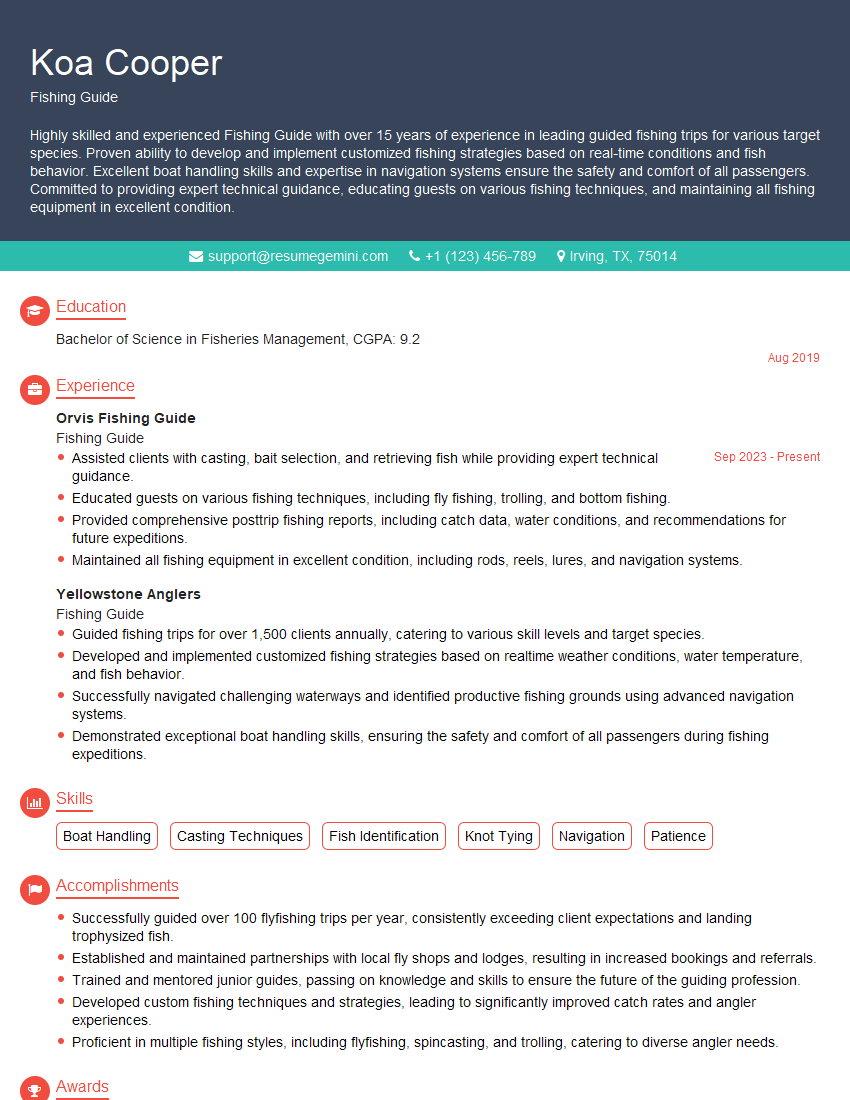
Fishing Guide Resume Sample
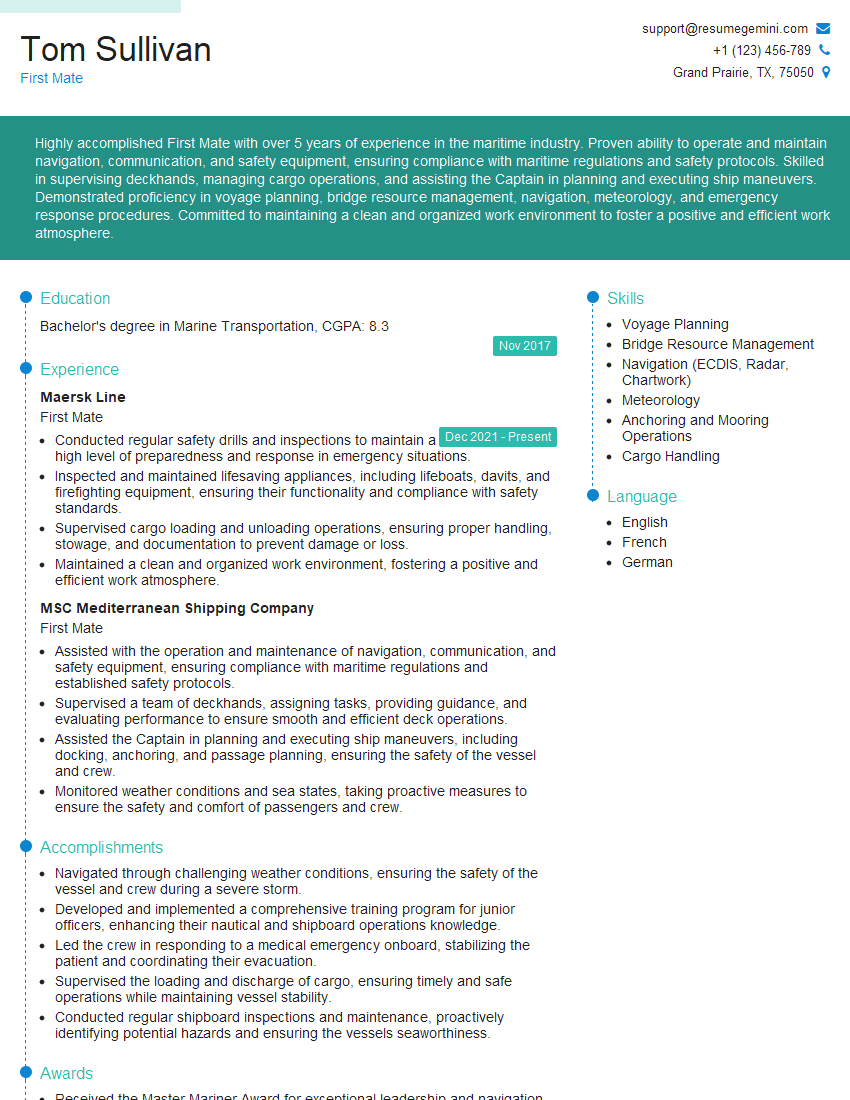
First Mate Resume Sample
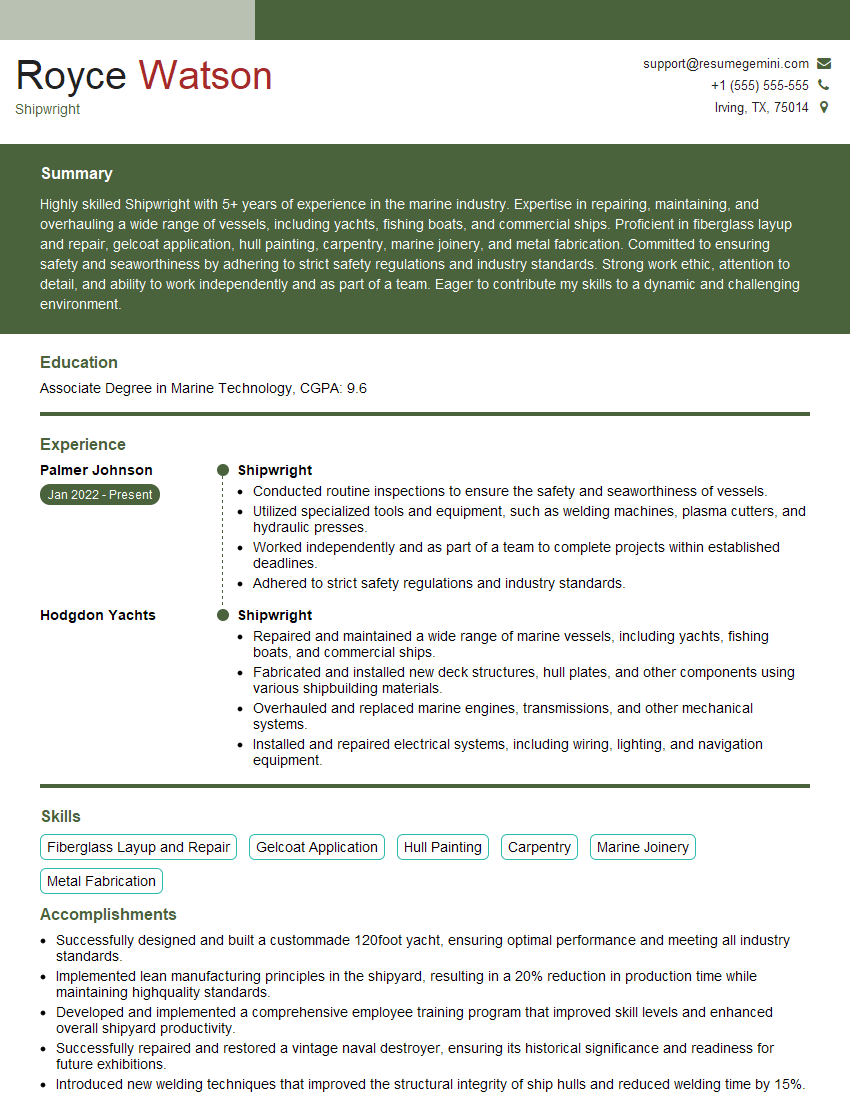
Shipwright Resume Sample
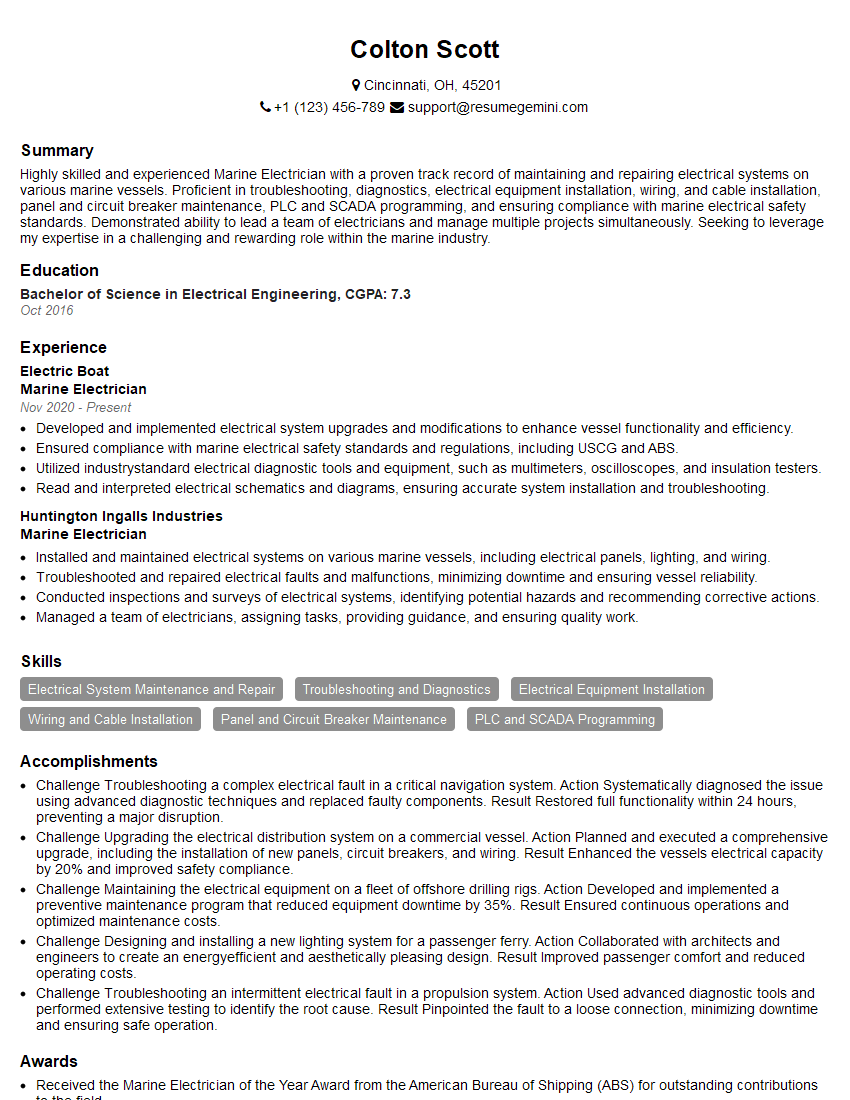
Marine Electrician Resume Sample
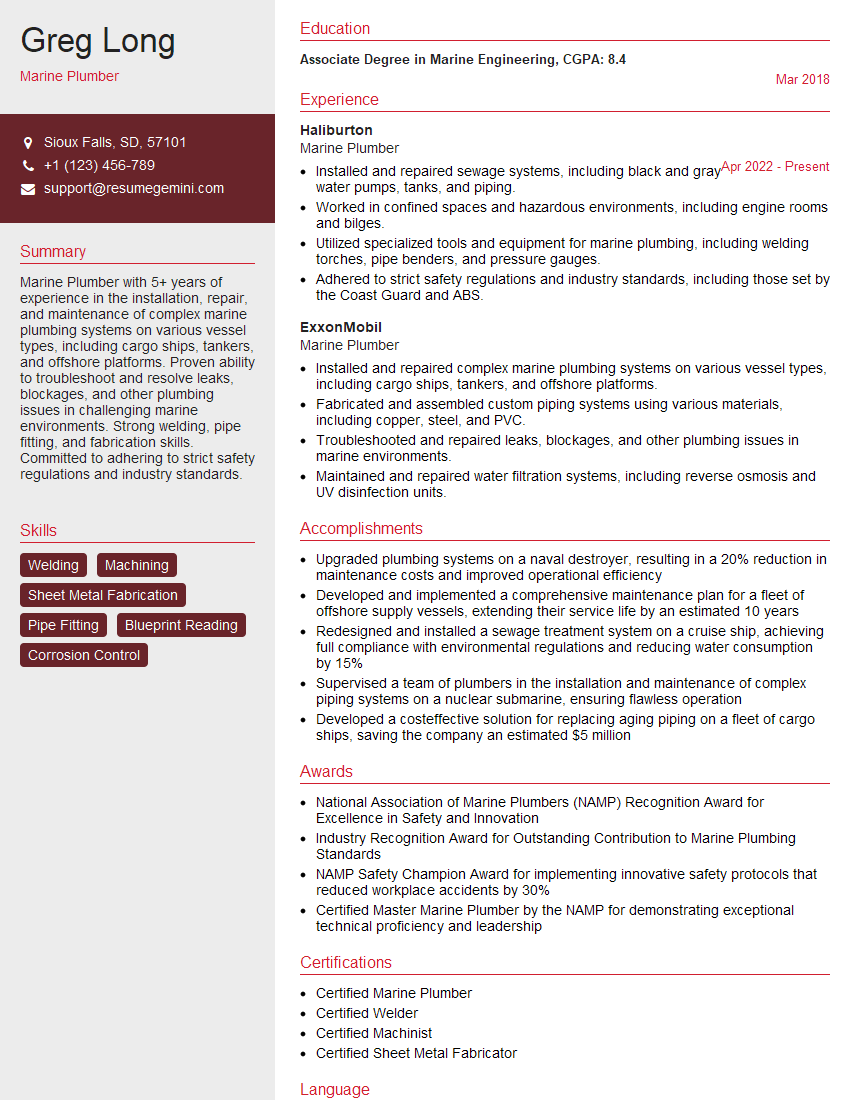
Marine Plumber Resume Sample
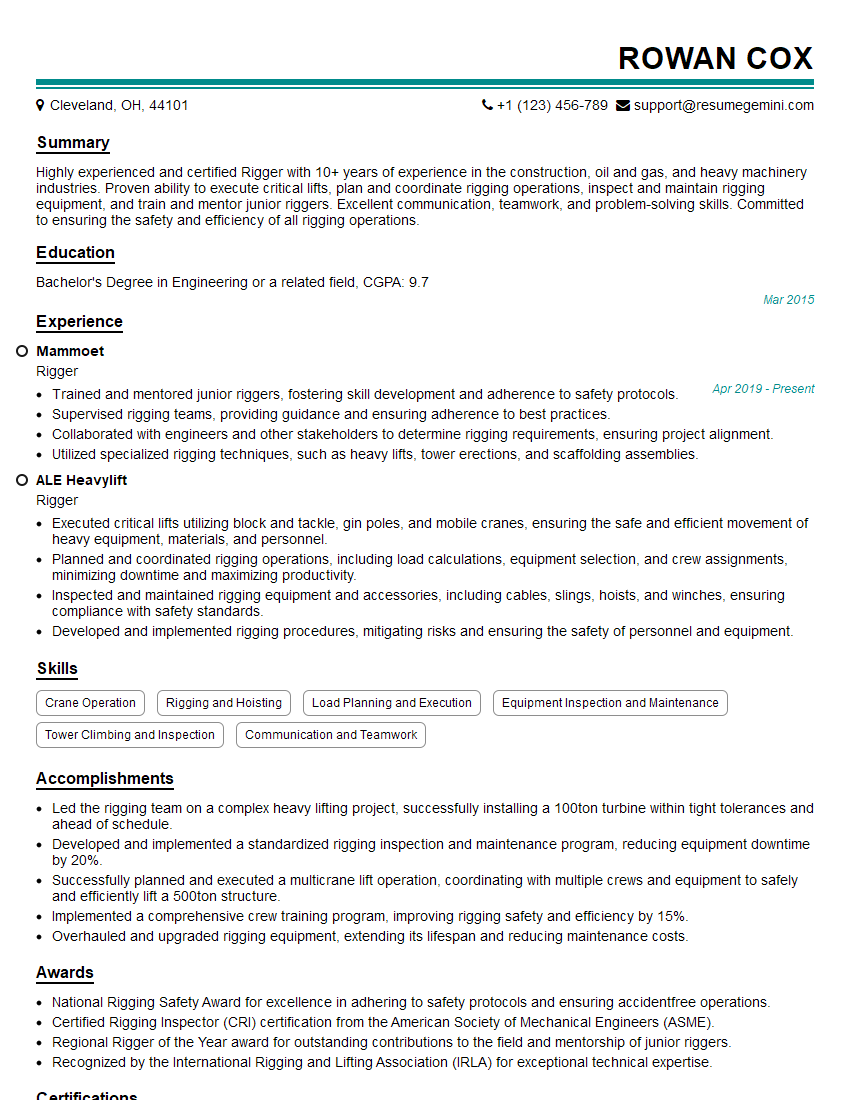
Rigger Resume Sample
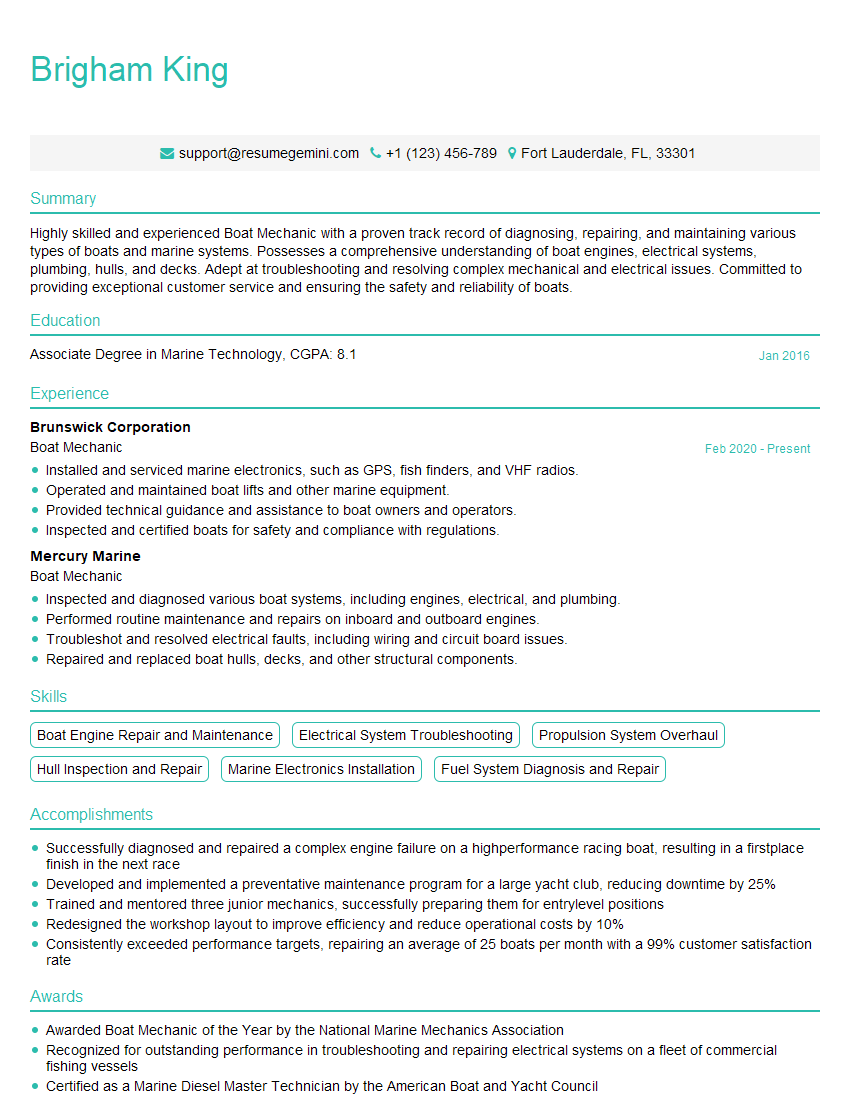
Boat Mechanic Resume Sample
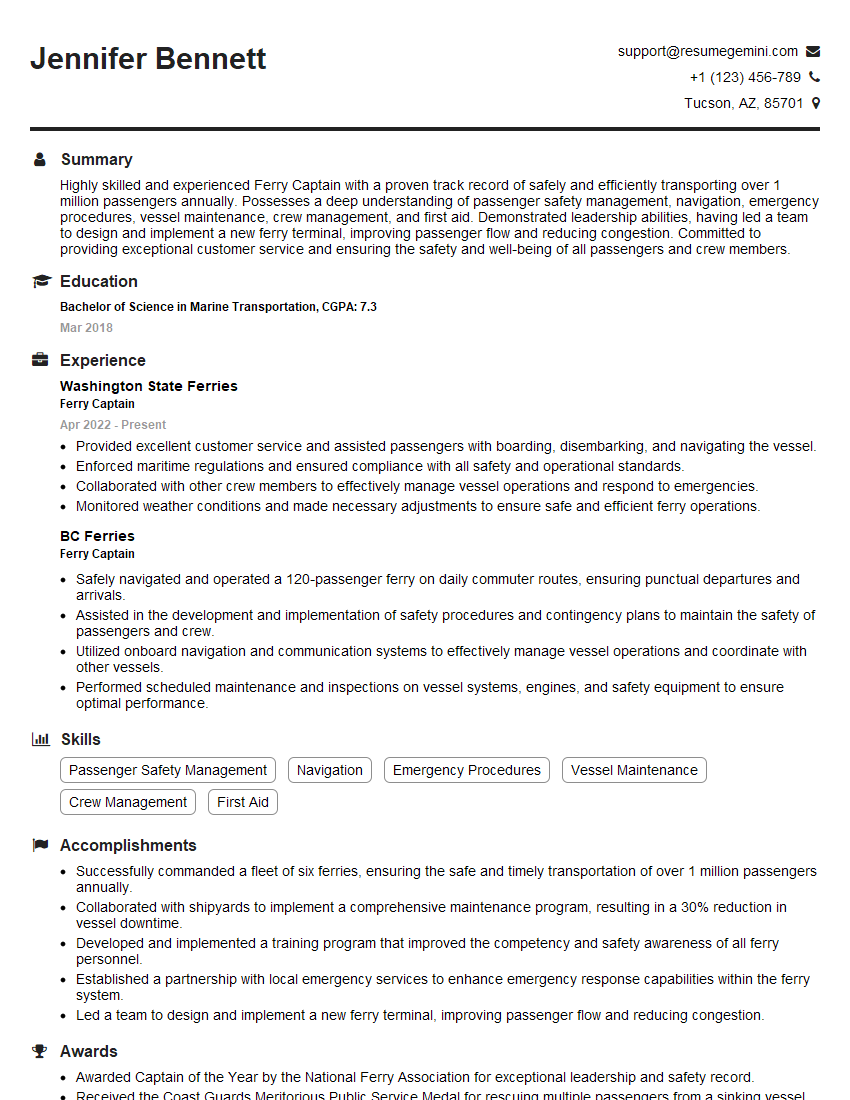
Ferry Captain Resume Sample
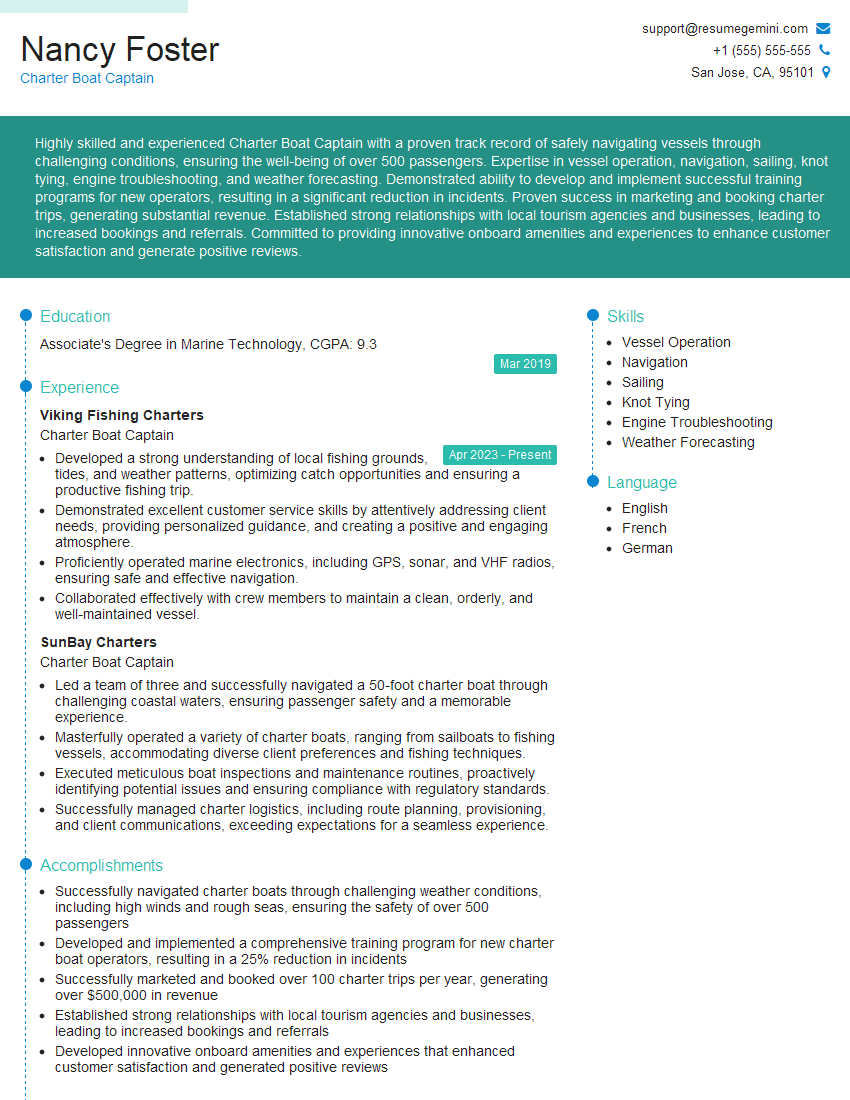
Charter Boat Captain Resume Sample
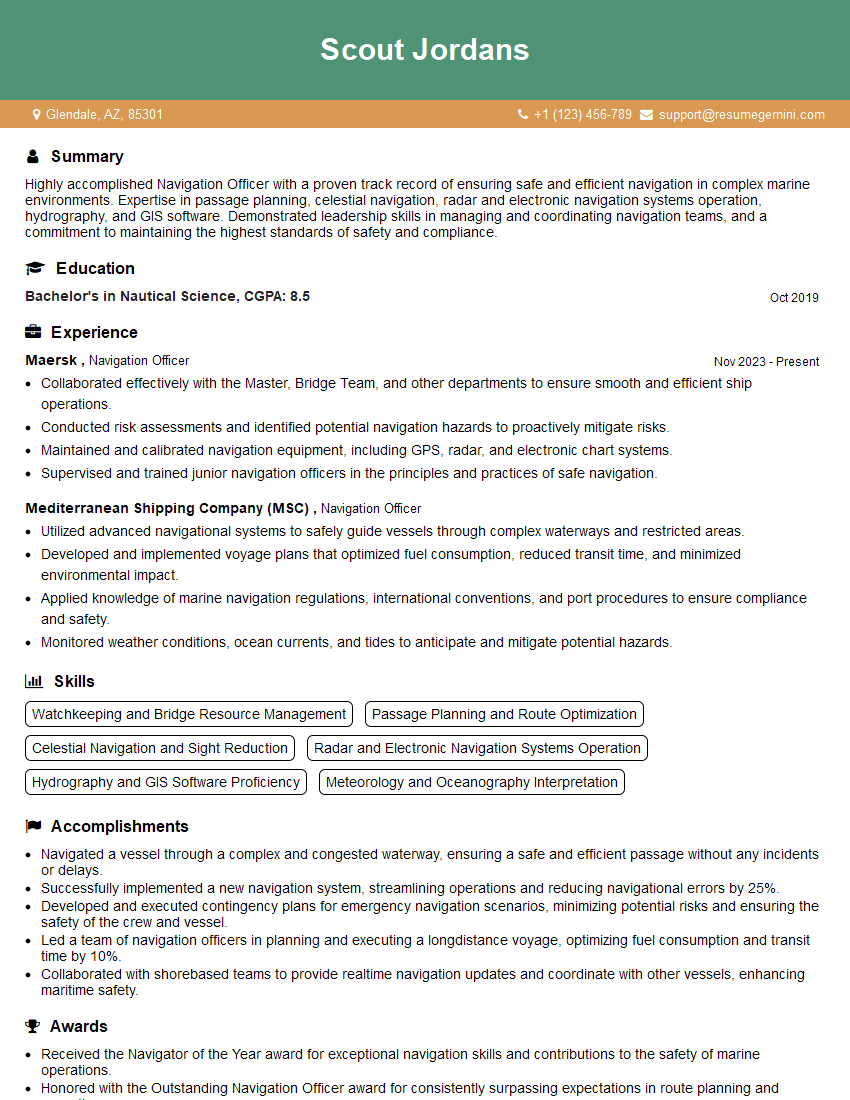
Navigation Officer Resume Sample
- Harbor Master
- Dockmaster
- Marine Technician
- Marine Engineer
- Marine Surveyor
- Boat Builder
- Naval Architect
- Sailing Instructor
- Captain
- Marine Safety Officer
- Deckhand
- Fishing Guide
- First Mate
- Shipwright
- Marine Electrician
- Marine Plumber
- Rigger
- Boat Mechanic
- Ferry Captain
- Charter Boat Captain
- Navigation Officer
Explore more articles
Users Rating of Our Blogs
Share Your Experience
We value your feedback! Please rate our content and share your thoughts (optional).
What Readers Say About Our Blog
Attention music lovers!
Wow, All the best Sax Summer music !!!
Spotify: https://open.spotify.com/artist/6ShcdIT7rPVVaFEpgZQbUk
Apple Music: https://music.apple.com/fr/artist/jimmy-sax-black/1530501936
YouTube: https://music.youtube.com/browse/VLOLAK5uy_noClmC7abM6YpZsnySxRqt3LoalPf88No
Other Platforms and Free Downloads : https://fanlink.tv/jimmysaxblack
on google : https://www.google.com/search?q=22+AND+22+AND+22
on ChatGPT : https://chat.openai.com?q=who20jlJimmy20Black20Sax20Producer
Get back into the groove with Jimmy sax Black
Best regards,
Jimmy sax Black
www.jimmysaxblack.com
Hi I am a troller at The aquatic interview center and I suddenly went so fast in Roblox and it was gone when I reset.
Hi,
Business owners spend hours every week worrying about their website—or avoiding it because it feels overwhelming.
We’d like to take that off your plate:
$69/month. Everything handled.
Our team will:
Design a custom website—or completely overhaul your current one
Take care of hosting as an option
Handle edits and improvements—up to 60 minutes of work included every month
No setup fees, no annual commitments. Just a site that makes a strong first impression.
Find out if it’s right for you:
https://websolutionsgenius.com/awardwinningwebsites
Hello,
we currently offer a complimentary backlink and URL indexing test for search engine optimization professionals.
You can get complimentary indexing credits to test how link discovery works in practice.
No credit card is required and there is no recurring fee.
You can find details here:
https://wikipedia-backlinks.com/indexing/
Regards
NICE RESPONSE TO Q & A
hi
The aim of this message is regarding an unclaimed deposit of a deceased nationale that bears the same name as you. You are not relate to him as there are millions of people answering the names across around the world. But i will use my position to influence the release of the deposit to you for our mutual benefit.
Respond for full details and how to claim the deposit. This is 100% risk free. Send hello to my email id: lukachachibaialuka@gmail.com
Luka Chachibaialuka
Hey interviewgemini.com, just wanted to follow up on my last email.
We just launched Call the Monster, an parenting app that lets you summon friendly ‘monsters’ kids actually listen to.
We’re also running a giveaway for everyone who downloads the app. Since it’s brand new, there aren’t many users yet, which means you’ve got a much better chance of winning some great prizes.
You can check it out here: https://bit.ly/callamonsterapp
Or follow us on Instagram: https://www.instagram.com/callamonsterapp
Thanks,
Ryan
CEO – Call the Monster App
Hey interviewgemini.com, I saw your website and love your approach.
I just want this to look like spam email, but want to share something important to you. We just launched Call the Monster, a parenting app that lets you summon friendly ‘monsters’ kids actually listen to.
Parents are loving it for calming chaos before bedtime. Thought you might want to try it: https://bit.ly/callamonsterapp or just follow our fun monster lore on Instagram: https://www.instagram.com/callamonsterapp
Thanks,
Ryan
CEO – Call A Monster APP
To the interviewgemini.com Owner.
Dear interviewgemini.com Webmaster!
Hi interviewgemini.com Webmaster!
Dear interviewgemini.com Webmaster!
excellent
Hello,
We found issues with your domain’s email setup that may be sending your messages to spam or blocking them completely. InboxShield Mini shows you how to fix it in minutes — no tech skills required.
Scan your domain now for details: https://inboxshield-mini.com/
— Adam @ InboxShield Mini
support@inboxshield-mini.com
Reply STOP to unsubscribe
Hi, are you owner of interviewgemini.com? What if I told you I could help you find extra time in your schedule, reconnect with leads you didn’t even realize you missed, and bring in more “I want to work with you” conversations, without increasing your ad spend or hiring a full-time employee?
All with a flexible, budget-friendly service that could easily pay for itself. Sounds good?
Would it be nice to jump on a quick 10-minute call so I can show you exactly how we make this work?
Best,
Hapei
Marketing Director
Hey, I know you’re the owner of interviewgemini.com. I’ll be quick.
Fundraising for your business is tough and time-consuming. We make it easier by guaranteeing two private investor meetings each month, for six months. No demos, no pitch events – just direct introductions to active investors matched to your startup.
If youR17;re raising, this could help you build real momentum. Want me to send more info?
Hi, I represent an SEO company that specialises in getting you AI citations and higher rankings on Google. I’d like to offer you a 100% free SEO audit for your website. Would you be interested?
Hi, I represent an SEO company that specialises in getting you AI citations and higher rankings on Google. I’d like to offer you a 100% free SEO audit for your website. Would you be interested?