The right preparation can turn an interview into an opportunity to showcase your expertise. This guide to Boiler and Auxiliary Equipment Operation interview questions is your ultimate resource, providing key insights and tips to help you ace your responses and stand out as a top candidate.
Questions Asked in Boiler and Auxiliary Equipment Operation Interview
Q 1. Describe the different types of boilers and their applications.
Boilers are classified based on various factors, primarily their design and fuel source. Let’s explore some common types:
- Fire-tube boilers: Hot gases from combustion pass through tubes surrounded by water. These are simpler, typically smaller, and often used in smaller industrial applications or for heating buildings. Think of a classic steam engine – its boiler was likely a fire-tube type.
- Water-tube boilers: Water circulates inside tubes that are surrounded by hot gases. They are more efficient at higher pressures and capacities, ideal for larger power plants and industrial processes requiring vast amounts of steam. Many modern power plants utilize water-tube boilers.
- Electric boilers: These use electricity to heat water directly, bypassing the combustion process. They’re often used where clean energy and precise temperature control are critical, such as in certain pharmaceutical applications or specialized industrial processes. They are particularly suitable for smaller-scale applications where space is limited or emissions control is paramount.
- Packaged boilers: These are pre-assembled units designed for easy installation and operation. They’re commonly found in smaller industrial facilities and commercial buildings, offering a convenient solution for heating needs. Their modular design simplifies maintenance.
The choice of boiler type depends heavily on the application’s specific steam requirements, fuel availability, space constraints, budget, and environmental regulations. For instance, a large chemical plant might require a high-capacity water-tube boiler, while a small bakery might utilize a compact packaged boiler.
Q 2. Explain the water treatment process for boiler feedwater.
Boiler feedwater treatment is crucial to prevent scale formation, corrosion, and other problems that can severely damage the boiler and reduce its efficiency. The process typically involves several stages:
- Pre-treatment: This often includes clarification (removing suspended solids), coagulation (using chemicals to clump particles together), and filtration (removing remaining solids).
- Chemical Treatment: This stage uses various chemicals to adjust the water’s properties. For example:
- Oxygen scavengers (e.g., sodium sulfite): Remove dissolved oxygen, which causes corrosion.
- Phosphate treatment: Controls scale formation by reacting with calcium and magnesium ions.
- pH adjustment: Maintains the water’s acidity/alkalinity within the optimal range for corrosion prevention.
- De-aeration: This removes dissolved gases, particularly oxygen and carbon dioxide, which contribute to corrosion.
- Softening: Reduces the hardness of the water by removing calcium and magnesium ions, preventing scale buildup. This can involve ion exchange or other methods.
The specific treatment needed depends on the feedwater’s initial quality and the boiler’s operating conditions. A detailed water analysis is essential for designing an effective treatment program. Imagine it like giving your boiler a regular spa day – a customized treatment plan keeps it healthy and running smoothly.
Q 3. What are the safety precautions for operating a boiler?
Boiler operation demands strict adherence to safety protocols. Key precautions include:
- Proper Training: Only trained and authorized personnel should operate and maintain boilers.
- Regular Inspections: Scheduled inspections are crucial to identify potential problems before they escalate. This includes checking pressure gauges, safety valves, and water levels regularly.
- Safety Devices: Ensuring all safety devices, such as pressure relief valves, low-water fuel cut-offs, and flame safeguards, are functioning correctly is paramount.
- Personal Protective Equipment (PPE): Appropriate PPE, such as heat-resistant gloves, safety glasses, and hearing protection, must be worn during operation and maintenance.
- Lockout/Tagout Procedures: Strict adherence to lockout/tagout procedures is crucial when performing maintenance or repairs to prevent accidental startup.
- Emergency Procedures: All personnel should be familiar with emergency procedures in case of leaks, fires, or other malfunctions.
- Ventilation: Proper ventilation is vital to prevent the buildup of combustion products, especially carbon monoxide.
Safety isn’t just a suggestion; it’s a non-negotiable aspect of boiler operation. A single lapse in safety can have devastating consequences.
Q 4. How do you monitor boiler water levels and pressure?
Boiler water level and pressure are continuously monitored using several instruments:
- Water Level Gauges: These gauges, often including both water column gauges and electronic level indicators, provide a visual indication of the water level within the boiler drum. They are critical for preventing low-water conditions which can lead to overheating and damage.
- Pressure Gauges: These display the steam pressure within the boiler. Monitoring pressure ensures safe operation and prevents exceeding the boiler’s design limits. A sudden pressure drop can indicate a leak or other problem.
- Electronic Monitoring Systems: Modern boilers often incorporate computerized systems that continuously monitor water level and pressure. These systems provide alarms and shutdowns in case of abnormalities, enhancing safety and efficiency.
Regular and accurate monitoring of both water level and pressure is essential for safe and efficient boiler operation. Ignoring these readings can lead to serious incidents.
Q 5. Describe the process of starting up and shutting down a boiler.
Starting and shutting down a boiler is a procedural process requiring careful attention to detail:
Startup:
- Pre-start checks: Inspect all safety devices, gauges, and controls. Check water level and fuel supply.
- Water filling: Slowly fill the boiler with treated water to the appropriate level.
- Purging: Purge air from the system to prevent pockets of air from causing overheating.
- Ignition: Light the burner according to the manufacturer’s instructions.
- Warm-up: Gradually increase the heat input and monitor pressure and temperature.
- Load increase: Increase the steam output gradually to the desired level.
Shutdown:
- Reduce load: Gradually reduce the steam output to a minimum.
- Turn off burner: Shut down the fuel supply and burner.
- Cool-down: Allow the boiler to cool down slowly, monitoring pressure and temperature. Rapid cooling can cause thermal stress and damage.
- Drain: Drain the boiler water according to the manufacturer’s instructions.
- Inspection: After cooling, inspect the boiler for any signs of damage or leaks.
Improper startup or shutdown procedures can lead to serious damage or accidents. Following the manufacturer’s guidelines is crucial.
Q 6. What are the common causes of boiler tube leaks?
Boiler tube leaks can stem from various causes:
- Corrosion: This is a major contributor. Oxygen, acidic water, and impurities in the water can cause corrosion, leading to thinning of the tube walls and eventual failure. This is often exacerbated by improper water treatment.
- Erosion: High-velocity water flow, especially at bends or restrictions, can erode tube walls. This is more common in older or poorly designed systems.
- Overheating: Lack of water circulation, low water levels, or scale buildup can cause overheating, leading to tube failure. This often leads to localized weaknesses that eventually result in a leak.
- Water hammer: Sudden changes in water flow can create shockwaves (water hammer) that damage tubes. This is often linked to improper valve operation.
- Scale buildup: Hard water deposits can insulate tubes, leading to overheating and eventual failure. Proper water treatment is crucial in preventing this.
- Fouling: Deposits from fuel combustion or other impurities can clog tubes, restricting flow and potentially causing overheating.
Identifying the root cause is crucial for effective repair and prevention. A thorough inspection and water analysis often are needed.
Q 7. How do you troubleshoot boiler malfunctions?
Troubleshooting boiler malfunctions requires a systematic approach:
- Safety First: Prioritize safety. If a serious problem is suspected, shut down the boiler and evacuate the area.
- Gather Information: Collect data on the malfunction – what symptoms are observed? When did it start? What were the operating conditions?
- Check Gauges and Indicators: Examine water level, pressure, temperature, and fuel flow indicators. Look for any unusual readings.
- Visual Inspection: Check for leaks, damage, or signs of overheating.
- Systematic Checks: Check fuel supply, burner operation, controls, and safety devices. Work through a logical process of elimination.
- Consult Manuals: Refer to the boiler’s operating and maintenance manuals for troubleshooting guidance.
- Expert Assistance: If the problem persists or is beyond your expertise, seek assistance from qualified boiler technicians or engineers.
Effective troubleshooting requires both technical knowledge and problem-solving skills. A methodical approach helps to quickly and safely identify the cause of a boiler malfunction.
Q 8. Explain the function of different boiler safety devices (e.g., pressure relief valves, low-water fuel cutoff).
Boiler safety devices are crucial for preventing accidents and ensuring safe operation. They act as fail-safes, automatically shutting down the boiler or mitigating dangerous situations.
- Pressure Relief Valves (PRVs): These valves automatically open when the boiler pressure exceeds a predetermined setpoint. This prevents dangerous pressure buildup that could lead to explosions. Think of them like a pressure release valve on a pressure cooker – they prevent a catastrophic event. Different types exist, including spring-loaded and pilot-operated valves, each with its own advantages and applications. Regular inspections and testing are vital for their proper functioning.
- Low-Water Fuel Cutoff (LWFC): This device automatically shuts off the fuel supply to the boiler if the water level drops below a safe minimum. Imagine trying to boil a pot with no water – it would be catastrophic! The LWFC prevents this, avoiding overheating and potential damage to the boiler tubes.
- High-Temperature Cutoff: This safety device shuts down the boiler if the steam temperature exceeds a safe limit. This prevents overheating and potential damage to the boiler and its components.
- Flame Failure Safeguard: This system detects the absence of a flame and automatically shuts off the fuel supply, preventing the release of unburnt fuel into the boiler. This is crucial for safety and efficiency.
Regular maintenance and testing of these devices are paramount for ensuring the safe operation of the boiler system. Failure to properly maintain these safety mechanisms can lead to serious consequences, including equipment damage, injury, and even fatality.
Q 9. What are the different types of auxiliary equipment used in a boiler plant?
Auxiliary equipment in a boiler plant supports the main boiler operation, enhancing efficiency and safety. They’re like the supporting cast in a play, crucial to the main performance. These include:
- Feedwater Pumps: These pumps supply water to the boiler to replace steam that’s generated.
- Condensers: These devices condense exhaust steam from turbines into water, improving efficiency and recovering heat.
- Air Preheaters: These preheat the combustion air, improving combustion efficiency and reducing fuel consumption. Think of it as preheating your oven for better baking results.
- Economizers: These heat the feedwater using the waste heat from the flue gases, further improving efficiency.
- Deaerators: These remove dissolved gases from the feedwater, preventing corrosion in the boiler.
- Chemical Treatment Systems: These systems add chemicals to the water to prevent corrosion and scale formation.
- Soot Blowers: These devices remove soot and ash buildup from the boiler tubes, improving heat transfer and efficiency.
- Instrumentation and Control Systems: These monitor and control various parameters of the boiler system, such as pressure, temperature, and water level. Think of the dashboard of a car, providing all vital information at a glance.
Q 10. Explain the operation of a feedwater pump.
A feedwater pump is the heart of a boiler system, responsible for delivering the necessary feedwater to the boiler. It works much like the heart pumps blood through our bodies. The pump draws water from a storage tank or deaerator, increases its pressure, and then forces it into the boiler. Different types of pumps exist, including centrifugal pumps (the most common) and positive displacement pumps. Centrifugal pumps use a rotating impeller to increase the water’s velocity and pressure, while positive displacement pumps use a mechanism to trap and displace a fixed volume of water. The operation involves suction from a reservoir, pressure increase through the impeller, and discharge to the boiler. Proper operation and maintenance, including regular lubrication and leak checks, are key to preventing failures.
Q 11. Describe the function of a condenser.
A condenser’s main job is to convert exhaust steam from a turbine back into liquid water. This is crucial for two reasons: efficiency and water conservation. The steam exiting a turbine still carries significant energy. A condenser reclaims this energy by cooling the steam, causing it to condense. This condensate can then be reused as boiler feedwater, reducing water consumption and operational costs. Think of it like capturing rainwater from your roof; it reduces your reliance on the main water supply. Condensers can be surface condensers (where steam and cooling water are separated by a surface) or jet condensers (where steam and cooling water mix directly). The choice depends on factors like available cooling water and operational requirements. Efficient condenser operation is crucial for maximizing power plant efficiency.
Q 12. How do you maintain boiler auxiliary equipment?
Maintaining boiler auxiliary equipment is critical for ensuring safety, reliability, and optimal performance. This involves a combination of preventative and corrective maintenance strategies. Preventative maintenance includes:
- Regular Inspections: Visual inspections, pressure testing, and leak checks should be performed at defined intervals.
- Lubrication: Proper lubrication of moving parts prevents wear and tear.
- Cleaning: Cleaning of components such as heat exchangers and filters is essential for efficient operation.
- Calibration: Regular calibration of instruments and control systems ensures accurate readings and control.
Corrective maintenance addresses problems as they occur. A comprehensive maintenance plan and detailed records are essential for effective management. The specific maintenance tasks and schedules depend on the type of equipment and operational conditions, as well as manufacturer recommendations. Proper maintenance dramatically extends equipment life and reduces unplanned downtime.
Q 13. What are the different types of boiler fuels and their properties?
Boilers can use various fuels, each with specific properties influencing their suitability. The choice depends on factors like availability, cost, and environmental regulations.
- Natural Gas: A clean-burning fuel with high efficiency, readily available through pipelines. Its relatively low emissions make it a popular choice.
- Fuel Oil: A liquid fuel available in various grades (e.g., No. 2, No. 6) with different viscosity and sulfur content. It’s typically stored in tanks and is less environmentally friendly than natural gas.
- Coal: A solid fuel with high energy density but associated with significant air pollution. Its use is decreasing due to environmental concerns.
- Biomass: Renewable fuels derived from organic matter, such as wood chips or agricultural residues. While offering sustainability, they can present handling and combustion challenges.
The selection of fuel depends on factors like availability, cost, emission regulations, and boiler design. For instance, a smaller boiler might use natural gas for cleaner operation, while a larger industrial boiler may use fuel oil or even coal for cost-effectiveness depending on location and regulations.
Q 14. Explain the concept of boiler efficiency and how it is calculated.
Boiler efficiency represents how effectively the boiler converts fuel energy into usable heat. It’s a crucial measure for evaluating performance and identifying areas for improvement. A higher efficiency means less fuel consumption for the same amount of heat production, leading to cost savings and reduced emissions.
Boiler efficiency is calculated by comparing the heat output to the heat input. A simplified formula is:
Efficiency = (Heat Output / Heat Input) x 100%The heat output is the amount of heat transferred to the water or steam. The heat input is the energy content of the fuel consumed. Precise calculation requires considering losses from various sources, such as radiation, convection, and unburnt fuel. Advanced methods might include specialized software and instrumentation. Optimizing boiler efficiency involves strategies like proper combustion control, regular maintenance, and efficient heat recovery systems. For example, adding an economizer can significantly boost efficiency by using waste heat from flue gases to preheat feedwater.
Q 15. What is the importance of boiler water chemistry?
Boiler water chemistry is critically important for efficient and safe boiler operation. Maintaining the correct chemical balance prevents scaling, corrosion, and foaming, all of which can lead to significant operational problems and potential equipment damage. Think of it like this: your boiler’s water is its lifeblood. If that lifeblood is impure, the entire system suffers.
Specifically, we monitor and control parameters like:
- pH: Maintaining the optimal pH prevents corrosion and scaling. Too acidic, and the metal will corrode; too alkaline, and scaling (deposits of minerals) will occur, reducing efficiency and potentially causing tube failures.
- Dissolved Oxygen (DO): Oxygen is a major contributor to corrosion. We use chemical treatments to effectively scavenge oxygen and protect the boiler’s internal surfaces.
- Alkalinity: Proper alkalinity helps buffer against pH changes and protects against corrosion. It’s like a shock absorber for the water’s acidity.
- Silica: High silica levels can cause deposits on turbine blades if the steam is used to generate power, leading to reduced efficiency and potential damage. We need to diligently control silica concentration.
- Total Dissolved Solids (TDS): High TDS indicates impurities and contributes to scaling and corrosion. Regular blowdown helps manage TDS levels.
Regular water testing and adjustments based on these parameters are essential for preventing costly repairs and downtime.
Career Expert Tips:
- Ace those interviews! Prepare effectively by reviewing the Top 50 Most Common Interview Questions on ResumeGemini.
- Navigate your job search with confidence! Explore a wide range of Career Tips on ResumeGemini. Learn about common challenges and recommendations to overcome them.
- Craft the perfect resume! Master the Art of Resume Writing with ResumeGemini’s guide. Showcase your unique qualifications and achievements effectively.
- Don’t miss out on holiday savings! Build your dream resume with ResumeGemini’s ATS optimized templates.
Q 16. Describe the process of boiler blowdown.
Boiler blowdown is the process of periodically removing a portion of the boiler water to control the concentration of dissolved solids and impurities. Imagine it as a controlled ‘bleeding’ of the system to maintain water purity. This is crucial because as water evaporates, the concentration of dissolved solids increases, leading to potential problems.
There are two main types:
- Continuous blowdown: A small, continuous flow of water is removed from the boiler, preventing a significant buildup of impurities. Think of this as a slow, steady drip to keep the water clean.
- Intermittent blowdown: A larger volume of water is removed periodically, usually manually or automatically, to quickly reduce the concentration of dissolved solids. This is like a more intense flushing of the system.
The frequency and amount of blowdown depend on factors such as boiler pressure, water quality, and the type of boiler. Improper blowdown can waste energy and water, while insufficient blowdown risks boiler damage. Proper blowdown management is essential for both efficiency and safety.
Q 17. What are the environmental regulations related to boiler operation?
Environmental regulations concerning boiler operation primarily focus on emissions. The specific regulations vary by location (country, state, etc.), but generally include limits on:
- Particulate Matter (PM): Ash and other solid particles released during combustion.
- Sulfur Dioxide (SO2): A harmful gas produced when burning fuels containing sulfur.
- Nitrogen Oxides (NOx): Gases formed during high-temperature combustion.
- Carbon Monoxide (CO): A toxic gas produced by incomplete combustion.
- Water discharge: Regulations control the quality and quantity of water discharged from blowdown and other processes to prevent water pollution.
Compliance requires regular monitoring of emissions, using appropriate pollution control equipment (such as scrubbers and selective catalytic reduction (SCR) systems), and maintaining accurate records. Failure to comply can result in significant fines and legal repercussions.
Q 18. How do you handle emergency situations in a boiler plant?
Handling emergencies in a boiler plant requires a calm, systematic approach. Our emergency response plan is based on a structured approach, prioritizing safety first.
Typical emergency situations might include:
- Low water level: Immediately cease fuel supply, and investigate the cause (feedwater pump failure, leak, etc.).
- High pressure: Initiate safety valves, and investigate the cause (overfiring, malfunctioning safety valves).
- Boiler trip: Investigate the cause (low water, high pressure, flame failure), and ensure safe shutdown procedures are followed.
- Fire: Activate fire suppression systems, evacuate the area, and call emergency services.
Our training emphasizes rapid response, effective communication, and adherence to established safety protocols. Regular drills reinforce the plan and build confidence in handling potential emergencies.
Q 19. Explain the role of instrumentation and control systems in boiler operation.
Instrumentation and control systems are the nervous system of a boiler plant, providing vital information and automated control to ensure safe and efficient operation. These systems monitor critical parameters (pressure, temperature, water level, fuel flow, etc.), allowing for precise control and immediate response to changing conditions.
Key components include:
- Sensors: Measure various parameters and send signals to the control system (e.g., thermocouples, pressure transmitters, level switches).
- Control system: A programmable logic controller (PLC) or distributed control system (DCS) that processes sensor data and sends commands to actuators.
- Actuators: Devices that respond to control system commands (e.g., valves, pumps, dampers).
- Human-machine interface (HMI): A computer screen or panel that displays real-time data and allows operators to monitor and control the boiler.
Modern systems often incorporate advanced features like predictive maintenance and automated optimization, improving efficiency and reducing downtime. The data logged by these systems are also valuable for performance analysis and regulatory compliance.
Q 20. Describe your experience with boiler combustion optimization.
My experience in boiler combustion optimization includes working with various techniques to improve efficiency and reduce emissions. A key aspect is understanding the relationship between fuel, air, and combustion temperature. For example, optimizing air-fuel ratio is crucial. Too little air leads to incomplete combustion and increased CO emissions, while too much air reduces efficiency by cooling the combustion process.
I’ve used several methods, including:
- Air-fuel ratio adjustment: Using oxygen analyzers and combustion control systems to fine-tune the air-fuel mixture for optimal combustion.
- Overfire air optimization: Controlling the amount of secondary air injected above the flame to improve combustion completeness and reduce NOx formation.
- Fuel quality analysis: Understanding the properties of the fuel (e.g., heating value, sulfur content) to adjust the combustion process accordingly.
- Combustion efficiency monitoring: Regularly tracking parameters like stack gas oxygen and CO levels to assess combustion efficiency and identify areas for improvement.
In one project, through optimized air-fuel ratio adjustments and implementation of overfire air control, we achieved a 5% increase in boiler efficiency and a 10% reduction in NOx emissions. This translates to significant cost savings and environmental benefits.
Q 21. What are the different types of boiler controls?
Boiler control systems can be categorized into several types:
- On-off control: A simple system where the fuel supply is either fully on or fully off, based on a setpoint. While simple, this method can lead to oscillations and inefficiency.
- Proportional control: The fuel supply is adjusted proportionally to the deviation from the setpoint. This offers smoother control than on-off.
- Proportional-integral-derivative (PID) control: A more advanced system that incorporates proportional, integral, and derivative terms to provide precise and stable control. PID control anticipates and corrects deviations, leading to tighter regulation.
- Cascade control: This system uses multiple control loops, where the output of one loop becomes the setpoint for another. This allows for complex control strategies, such as managing both fuel flow and air flow simultaneously.
- Advanced control systems: Modern systems often incorporate sophisticated algorithms, such as model predictive control (MPC), which use mathematical models to predict future behavior and optimize control strategies in real-time.
The choice of control system depends on the boiler’s size, complexity, and the required level of control accuracy. In my experience, PID control is commonly used in many boiler applications, offering a good balance between performance and complexity.
Q 22. How do you interpret boiler performance data?
Interpreting boiler performance data involves analyzing key parameters to assess efficiency, identify potential issues, and optimize operation. This isn’t just about looking at numbers; it’s about understanding the relationships between them and what they reveal about the boiler’s health.
Efficiency Metrics: We start with parameters like thermal efficiency (the ratio of heat output to fuel input), which tells us how effectively the boiler is converting fuel into usable heat. A drop in efficiency often points to issues like scaling, fouling, or burner malfunctions. We also look at combustion efficiency, examining oxygen levels in the flue gas. High oxygen suggests incomplete combustion and wasted fuel, while low oxygen could indicate unsafe conditions.
Operational Parameters: Steam pressure, temperature, and flow rate are crucial indicators. Consistent deviations from setpoints might signify problems with feedwater control, steam demand, or even valve leakage. We monitor water levels diligently to prevent dry firing or flooding, which can cause significant damage.
Fuel Consumption: Tracking fuel consumption per unit of steam produced provides insights into overall efficiency. Unexpected increases can point to various problems, prompting further investigation into other data points.
Example: In one instance, I noticed a gradual decrease in boiler thermal efficiency over several weeks. By analyzing the data, we pinpointed the cause to be a buildup of scale within the tubes, restricting heat transfer. A scheduled chemical cleaning promptly restored efficiency levels.
Q 23. Describe your experience with preventative maintenance on boilers and auxiliary equipment.
Preventative maintenance is the cornerstone of reliable boiler operation. My experience involves a comprehensive approach encompassing both scheduled and condition-based maintenance.
Scheduled Maintenance: This follows a rigorous plan, including regular inspections of all components – burners, pumps, valves, tubes, and safety devices. Tasks include cleaning, lubrication, and replacing worn parts before they fail. We adhere to manufacturer’s recommendations and industry best practices. Documentation is meticulously maintained.
Condition-Based Maintenance: This involves continuous monitoring of key parameters using data analytics (as discussed previously) to identify potential problems early. For example, vibration analysis on pumps and fans helps predict bearing failures before they cause significant downtime. Regular water chemistry testing prevents scaling and corrosion.
Example: During a routine inspection, I noticed excessive wear on the burner nozzle. Replacing it proactively prevented a potential flame instability issue and avoided costly emergency repairs and potential safety risks. This approach has consistently minimized unscheduled downtime and extended the lifespan of our equipment.
Q 24. Explain your understanding of boiler codes and standards.
Understanding boiler codes and standards is paramount for safety and compliance. I’m familiar with ASME (American Society of Mechanical Engineers) codes, specifically Section I (Power Boilers) and Section VIII (Pressure Vessels). These codes establish design, fabrication, inspection, and testing requirements to ensure safe operation.
ASME Section I: This focuses on the construction and installation of power boilers. Key aspects include material specifications, stress calculations, safety valve sizing, and pressure testing procedures. It addresses everything from the boiler’s design to its operation and maintenance.
ASME Section VIII: This deals with the design and construction of pressure vessels, many of which are crucial components of boiler systems. It covers topics similar to Section I, ensuring pressure vessels operate safely within their design limits. I also have knowledge of local and national regulations concerning boiler operation and emissions.
Compliance with these codes is non-negotiable for safe and legal operation. Regular inspections and documentation are crucial to maintaining compliance.
Q 25. Describe your experience with boiler inspections and testing.
Boiler inspections and testing are crucial for ensuring safe and efficient operation. My experience encompasses both internal and external inspections, as well as various non-destructive testing methods.
Internal Inspections: These involve visual inspections of the internal components of the boiler, such as tubes, drums, and headers, checking for scaling, corrosion, pitting, or other damage. Specialized tools and techniques, like borescopes, are used for hard-to-reach areas.
External Inspections: These focus on the external components, like valves, fittings, piping, and insulation, verifying their integrity and proper functioning. Checks include looking for leaks, corrosion, and damage to the boiler’s casing.
Non-Destructive Testing (NDT): Methods like ultrasonic testing (UT), radiographic testing (RT), and magnetic particle testing (MT) are employed to detect internal flaws without damaging the boiler. This allows for early detection of problems that could lead to failure.
Hydrostatic Testing: This involves pressurizing the boiler with water to a pressure exceeding its operating pressure to check for leaks or weaknesses. It’s a critical part of ensuring the boiler’s structural integrity.
Example: During a recent inspection, ultrasonic testing revealed a previously undetected crack in a boiler tube. This was promptly repaired, preventing a potential catastrophic failure and minimizing downtime.
Q 26. What is your experience with different types of boiler burners?
I have experience with various types of boiler burners, each with its own characteristics and applications. The choice of burner depends heavily on the type of fuel used and the boiler’s design.
Oil Burners: These are commonly used in smaller boilers and can be either pressure atomizing or rotary cup types. They require careful control of oil pressure and atomization to ensure efficient combustion.
Gas Burners: These are widely used due to their relatively clean combustion and ease of control. They can range from simple single-stage burners to complex multi-stage burners with sophisticated control systems for modulating output.
Coal Burners: Used primarily in larger industrial and power generation boilers, these handle the complexities of coal combustion, including managing ash removal and ensuring efficient heat transfer.
Dual-Fuel Burners: These offer flexibility, allowing the boiler to switch between different fuel sources, providing redundancy and potentially cost savings depending on fuel prices.
My expertise extends to understanding the combustion process in each type of burner, troubleshooting issues like flame instability, incomplete combustion, and burner maintenance.
Q 27. How familiar are you with SCADA systems used in power plants?
I am proficient in using SCADA (Supervisory Control and Data Acquisition) systems in power plants. These systems are essential for monitoring and controlling various aspects of boiler operations, providing real-time data and enabling remote control capabilities.
My experience includes using SCADA systems to:
Monitor Key Parameters: Real-time data on steam pressure, temperature, water level, fuel flow, and emissions are continuously monitored through the SCADA system.
Control Boiler Operations: SCADA systems allow for automated control of fuel supply, air flow, and water feed, optimizing boiler efficiency and stability.
Alarm Management: The system generates alerts for deviations from setpoints or critical conditions, enabling timely intervention and preventing potential issues.
Data Logging and Reporting: SCADA systems record historical data, facilitating performance analysis, trend identification, and compliance reporting.
I’m familiar with various SCADA platforms and their applications in power plant environments, including data acquisition, process control, and visualization.
Q 28. What are your skills in troubleshooting and repairing boiler equipment?
Troubleshooting and repairing boiler equipment require a systematic approach combining knowledge, experience, and diagnostic skills. My approach involves a structured methodology.
Identify the Problem: Start by carefully assessing the symptoms, examining any error messages or unusual readings from the SCADA system. Gather information from operators and review maintenance logs.
Isolate the Cause: Systematically test individual components, using appropriate diagnostic tools to pinpoint the root cause. This may involve checking pressure gauges, temperature sensors, flow meters, and other instrumentation.
Develop a Repair Plan: Based on the diagnosis, create a plan for repair or replacement of faulty components, ensuring adherence to safety procedures and relevant codes and standards.
Implement the Repair: Carry out the repair, meticulously documenting each step to maintain accurate records.
Verify the Solution: After repair, rigorously test the system to ensure it is functioning correctly and within safe operating parameters. Document the results.
Example: I once encountered a situation where a boiler was experiencing low steam production. Through systematic troubleshooting, we discovered a blockage in the feedwater line. The blockage was cleared, restoring the boiler to full capacity. My experience spans a wide range of issues, from minor adjustments to complex repairs, always prioritizing safety and efficiency.
Key Topics to Learn for Boiler and Auxiliary Equipment Operation Interview
- Boiler Operation Principles: Understanding combustion processes, heat transfer mechanisms, steam generation, and boiler efficiency calculations. Practical application includes troubleshooting boiler malfunctions based on pressure, temperature, and water level readings.
- Auxiliary Equipment Systems: Familiarize yourself with the function and operation of pumps (feedwater, condensate, etc.), fans, heat exchangers, and water treatment systems. Practical application includes identifying the cause of a pump failure based on operational data and taking appropriate corrective action.
- Safety Procedures and Regulations: Mastering lockout/tagout procedures, understanding pressure vessel safety codes, and adhering to environmental regulations related to emissions. Practical application includes demonstrating a clear understanding of emergency shutdown procedures and safety protocols.
- Instrumentation and Controls: Knowledge of boiler control systems, instrumentation (pressure gauges, temperature sensors, flow meters), and data acquisition systems. Practical application includes interpreting control panel readings to diagnose and resolve operational issues.
- Troubleshooting and Maintenance: Developing a systematic approach to diagnosing malfunctions, performing routine maintenance tasks, and understanding preventative maintenance schedules. Practical application includes explaining your process for identifying the root cause of a boiler malfunction and implementing a solution.
- Energy Efficiency and Optimization: Understanding techniques for maximizing boiler efficiency, minimizing energy consumption, and reducing operational costs. Practical application includes proposing methods to improve boiler efficiency based on operational data analysis.
Next Steps
Mastering Boiler and Auxiliary Equipment Operation opens doors to rewarding and high-demand careers in power generation, industrial manufacturing, and various other sectors. A strong understanding of these systems is crucial for career advancement and securing higher-paying roles. To significantly boost your job prospects, it’s essential to create a compelling and ATS-friendly resume that highlights your skills and experience effectively. ResumeGemini is a trusted resource that can help you build a professional and impactful resume. We provide examples of resumes tailored to Boiler and Auxiliary Equipment Operation to guide you through the process. Take the next step towards your dream job today!
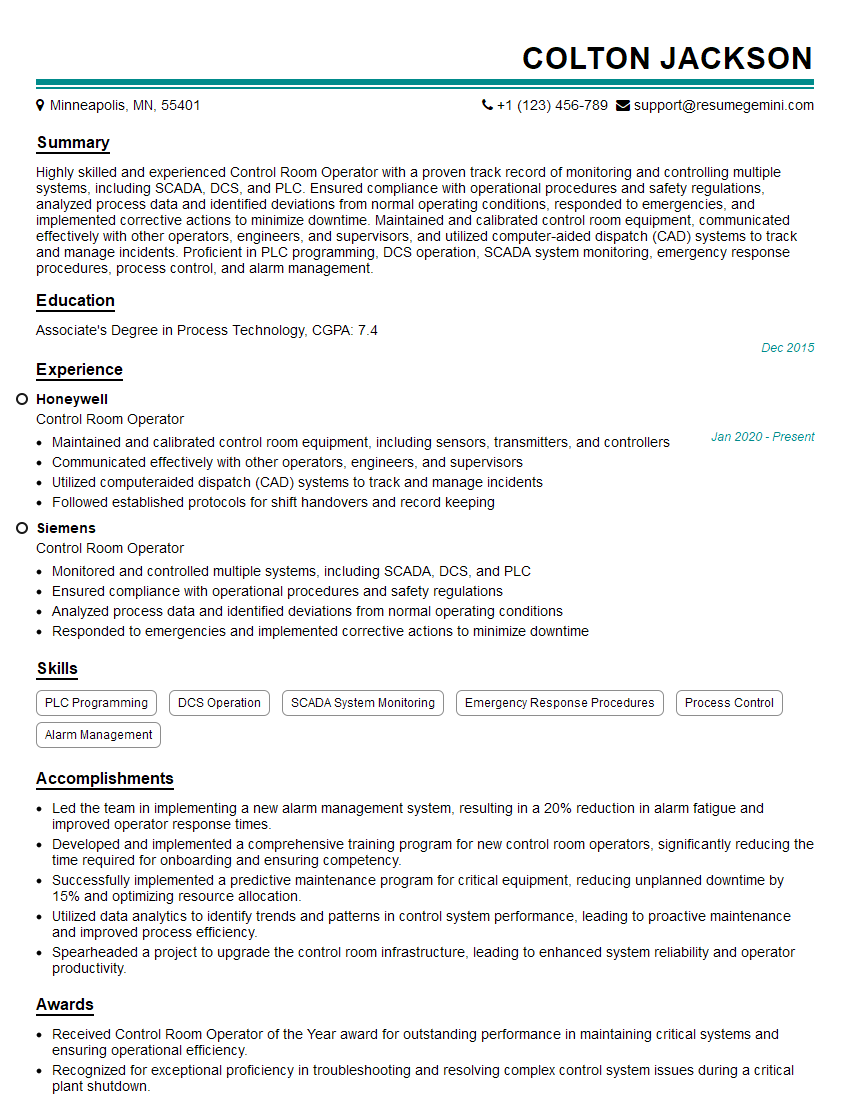
Control Room Operator Resume Sample
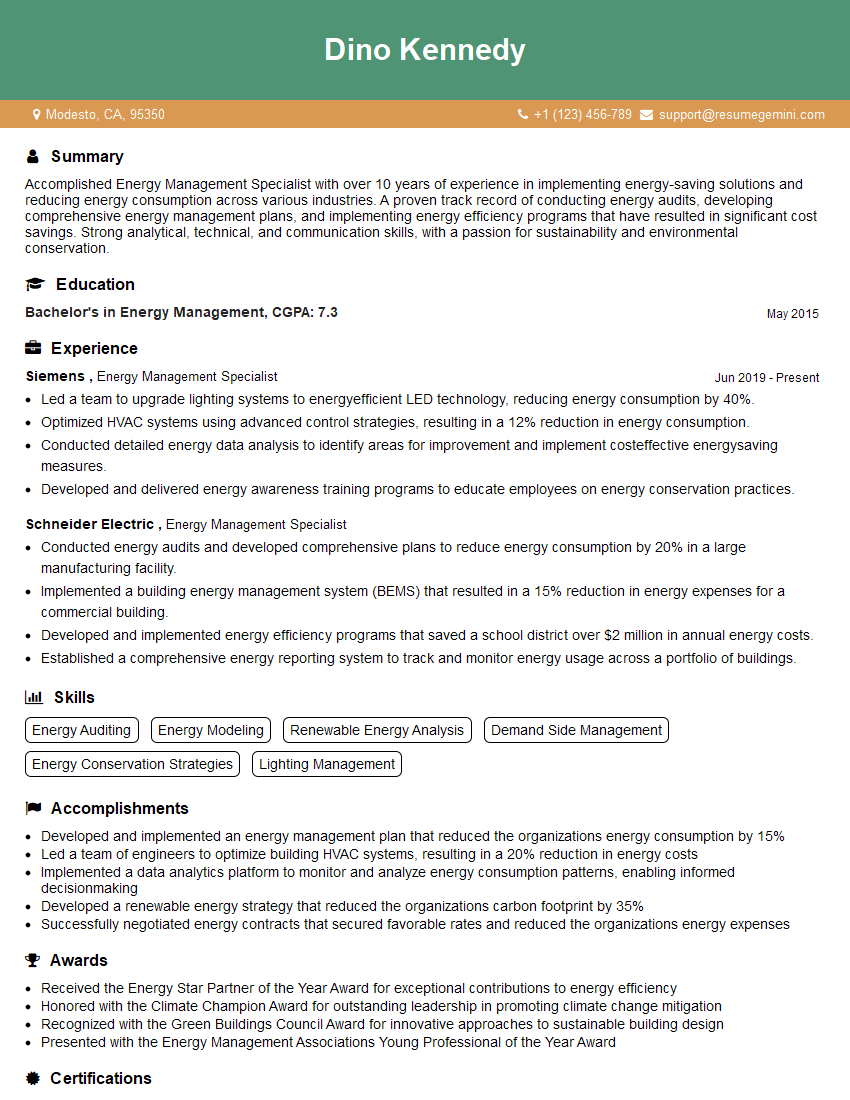
Energy Management Specialist Resume Sample
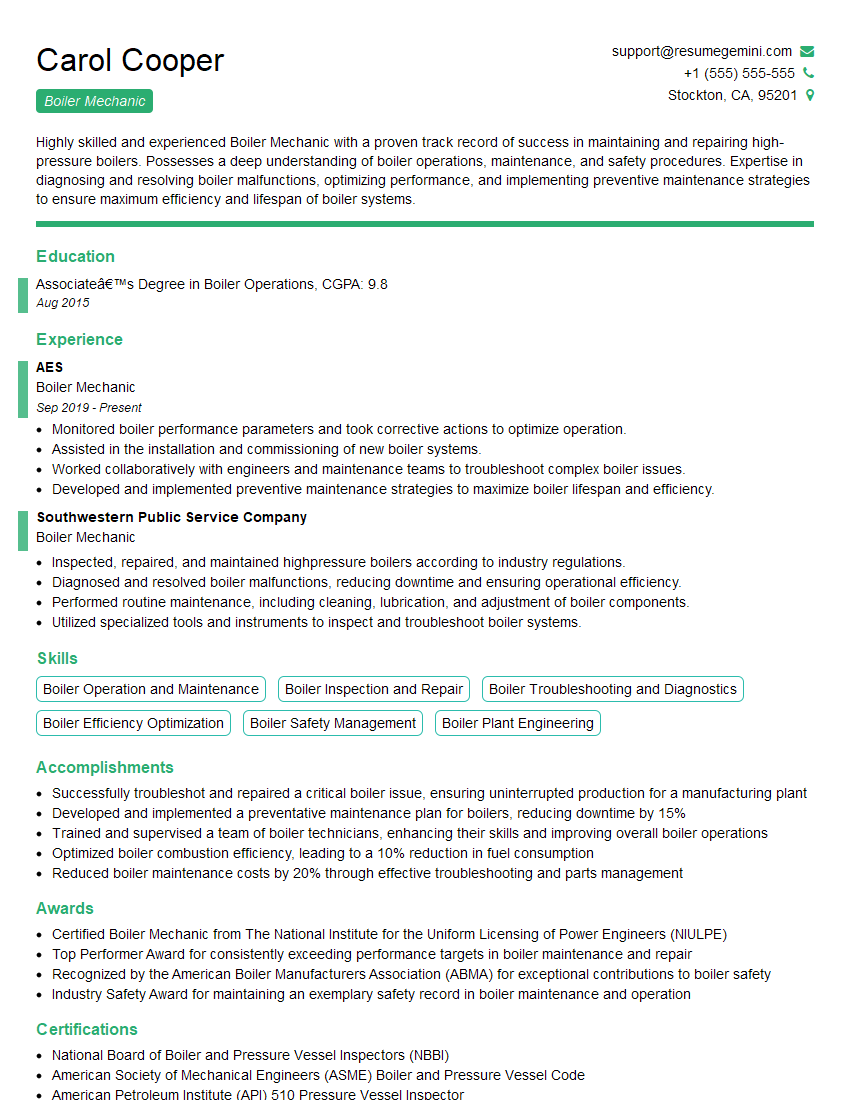
Boiler Mechanic Resume Sample
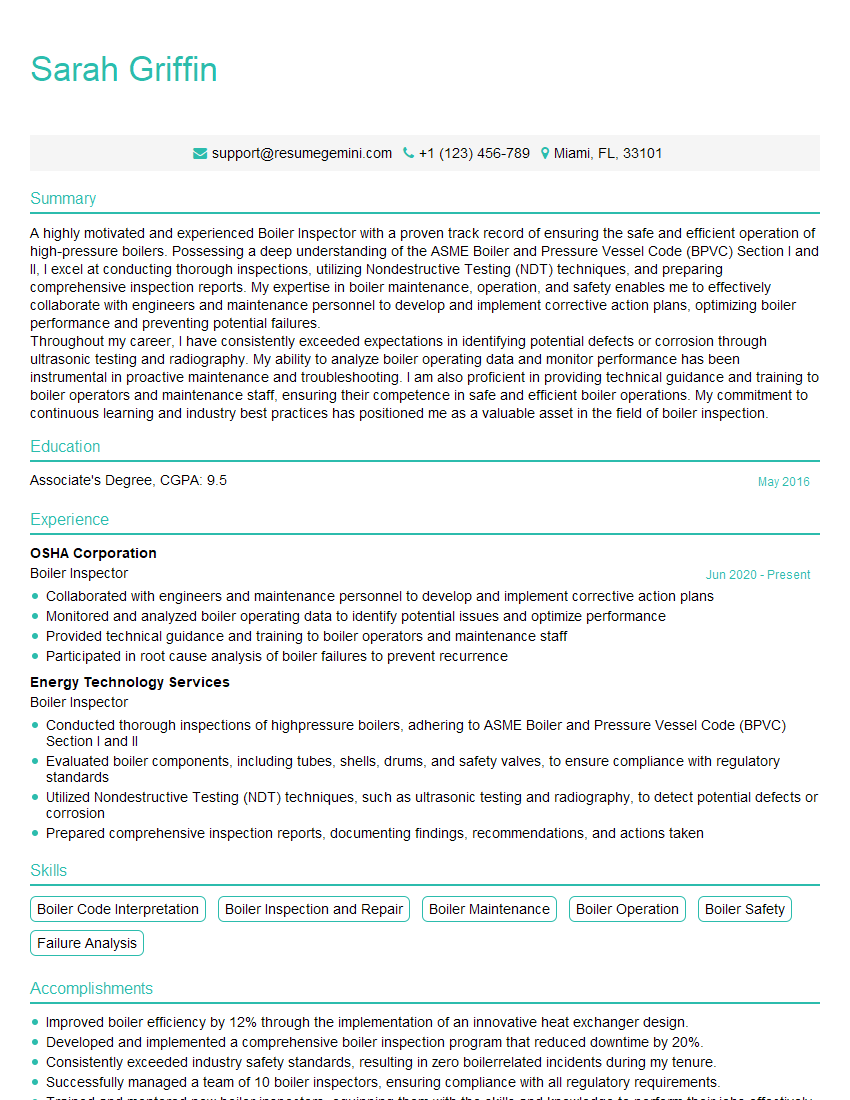
Boiler Inspector Resume Sample
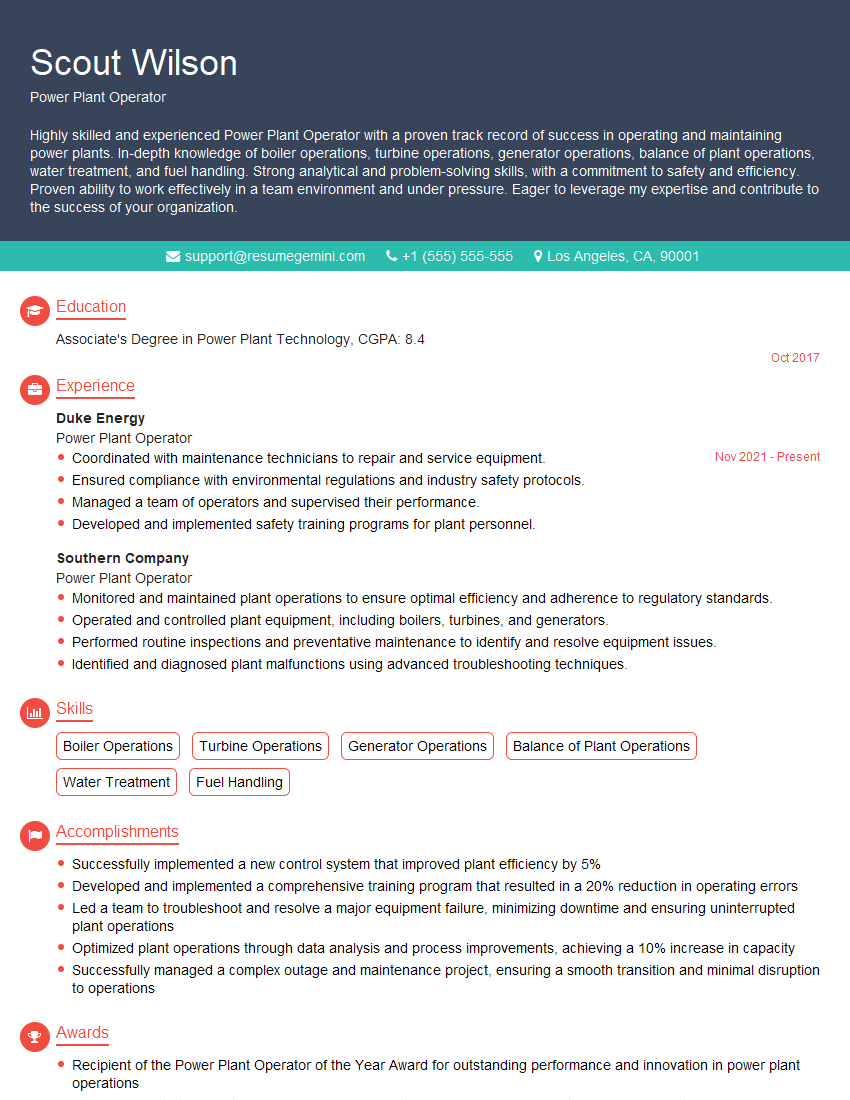
Power Plant Operator Resume Sample
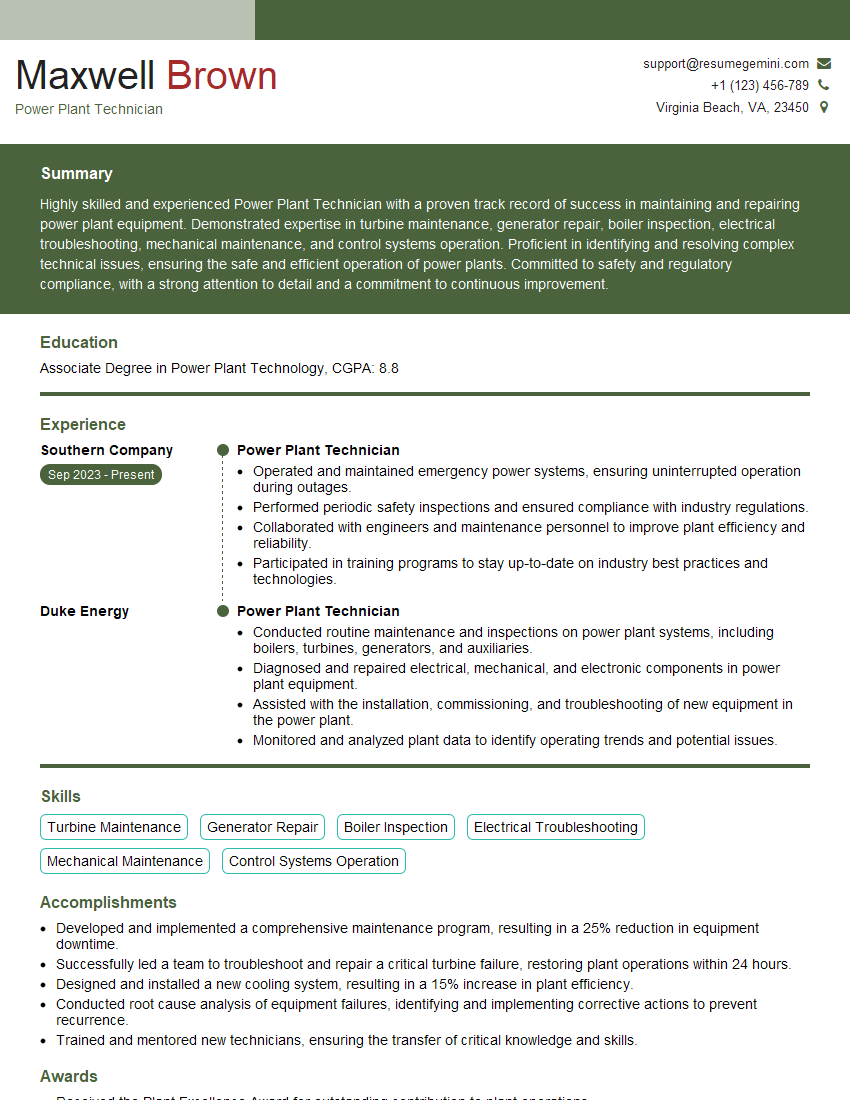
Power Plant Technician Resume Sample

Turbine Operator Resume Sample
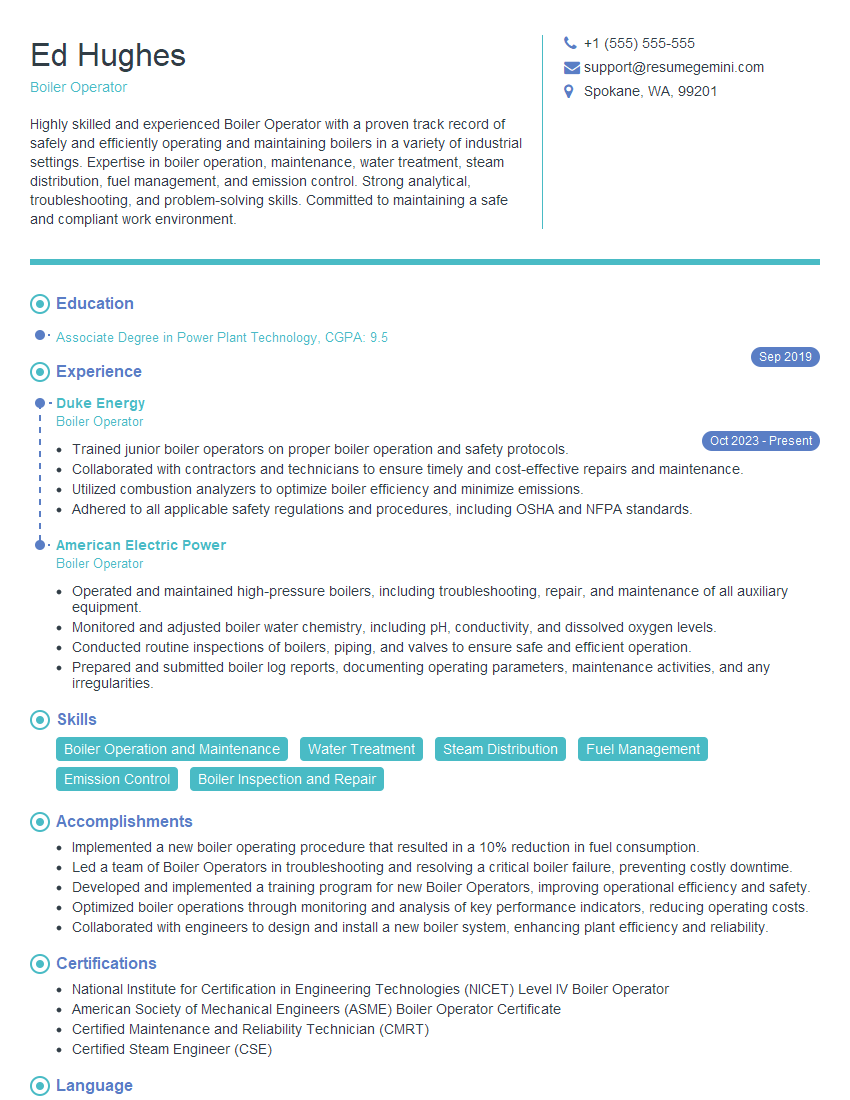
Boiler Operator Resume Sample
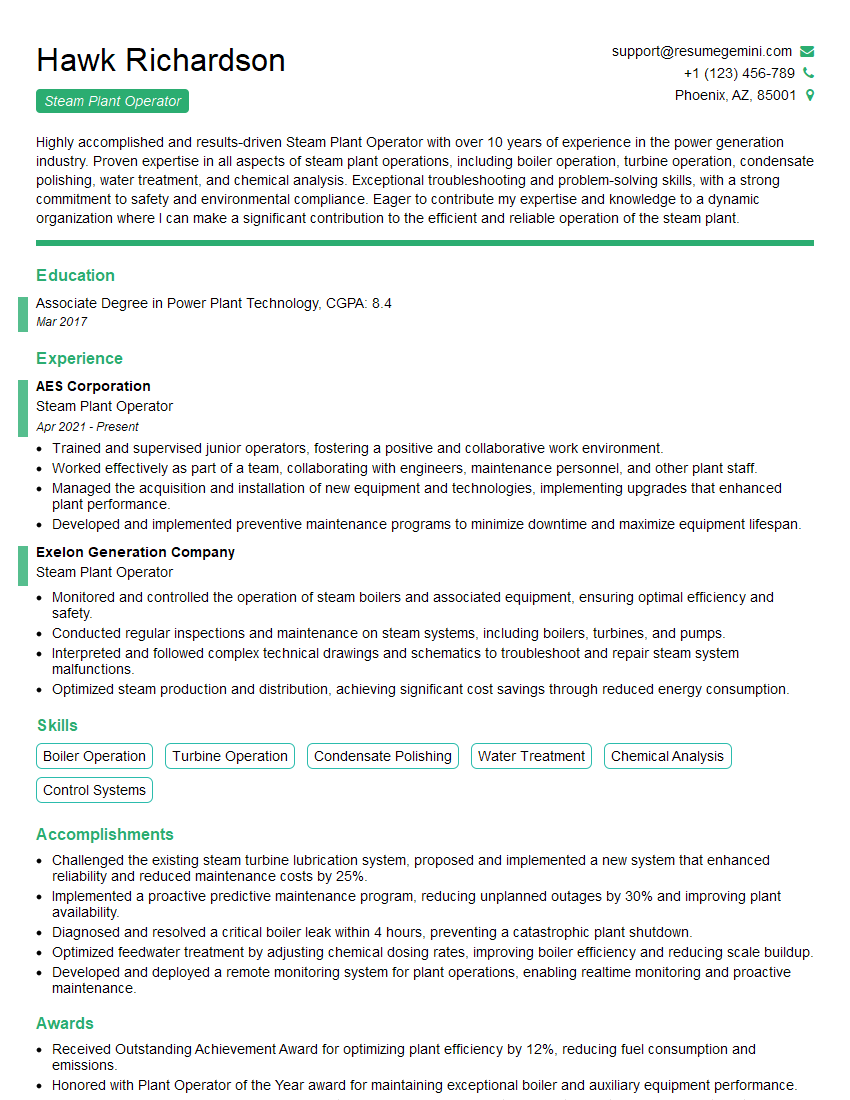
Steam Plant Operator Resume Sample
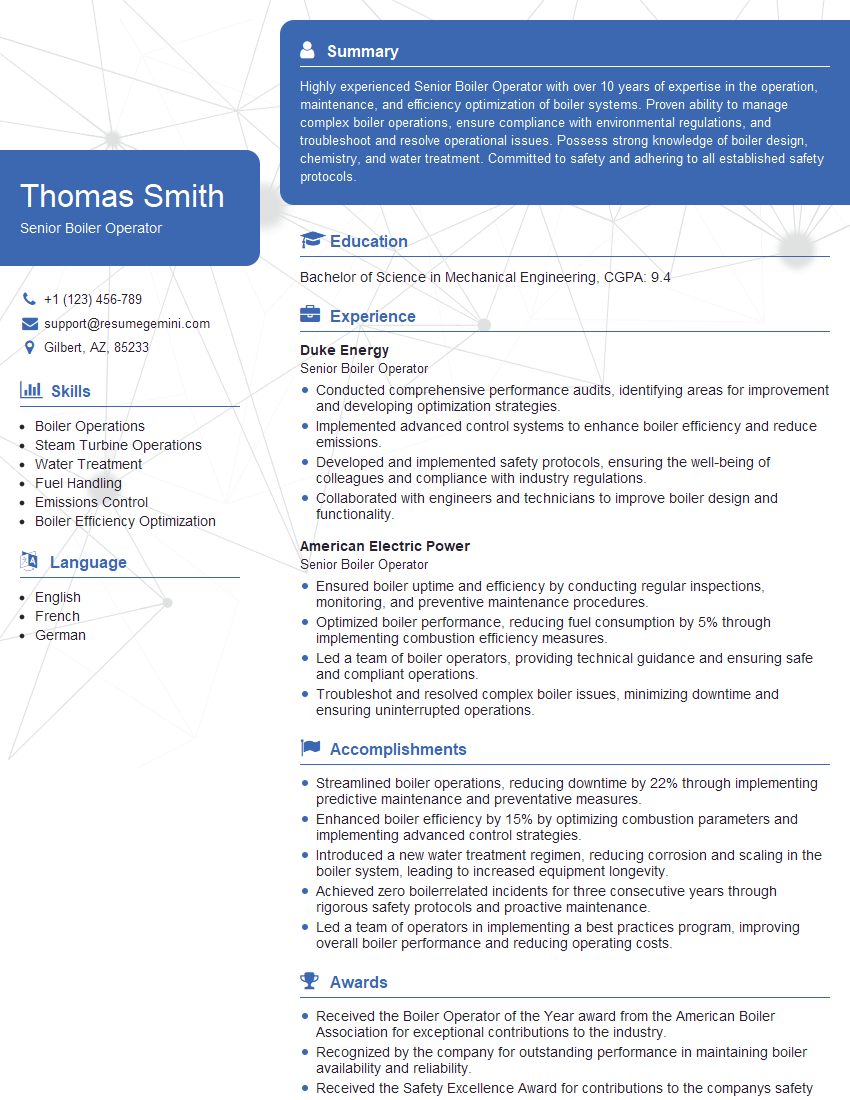
Senior Boiler Operator Resume Sample
Explore more articles
Users Rating of Our Blogs
Share Your Experience
We value your feedback! Please rate our content and share your thoughts (optional).
What Readers Say About Our Blog
Very informative content, great job.
good