Preparation is the key to success in any interview. In this post, we’ll explore crucial Bulk Cargo Stowage and Securement interview questions and equip you with strategies to craft impactful answers. Whether you’re a beginner or a pro, these tips will elevate your preparation.
Questions Asked in Bulk Cargo Stowage and Securement Interview
Q 1. Explain the importance of proper cargo stowage planning.
Proper cargo stowage planning is paramount for safe and efficient shipping. It’s the foundation upon which the entire voyage’s success rests. Think of it like building a house – a poorly planned foundation leads to instability and potential collapse. Similarly, inadequate cargo stowage planning can result in cargo damage, vessel instability, and even catastrophic accidents.
Effective planning involves considering many factors, including the type of cargo (its weight, dimensions, density, and hazardous nature), the vessel’s characteristics (structural strength, stability, and hold configuration), and the voyage conditions (weather forecasts and anticipated sea states). A well-defined plan outlines the precise location of each cargo unit, ensuring proper weight distribution and minimizing stress on the vessel’s structure. This prevents shifting during transit and reduces the risk of damage or loss.
For example, heavier cargo should generally be placed lower in the hold for better stability, while lighter cargo can be placed higher. Careful consideration is needed for the stowage of dangerous goods, requiring segregation and adherence to specific regulations. Using specialized software and employing experienced stowage planners greatly enhances the accuracy and efficiency of this critical process.
Q 2. Describe different methods of securing bulk cargo.
Securing bulk cargo effectively prevents shifting and damage during transit. Several methods are employed, often in combination, depending on the cargo type and voyage conditions. These methods focus on restricting movement in all three dimensions (fore-and-aft, athwartships, and vertically).
- Lashing: This involves using strong straps, chains, or wires to tightly secure cargo to the vessel’s structure. Think of it as tying down a load on a truck, but on a much larger scale. Proper tension is crucial to prevent slippage.
- Wedging: Filling gaps between cargo units with wood or other suitable materials prevents movement and provides additional support. This is akin to using packing peanuts to secure fragile items in a box.
- Blocking and Bracing: Using wooden or other strong blocks to support and restrain cargo from shifting, often combined with bracing to further immobilize them. Imagine building a wall of support around the cargo.
- Cargo Restraint Systems: Modern systems, often integrated with sensors and software, provide advanced monitoring and control, offering real-time data on cargo movement and tension levels.
The choice of securing method depends on numerous factors including cargo characteristics, vessel type, and voyage parameters. For instance, securing a heavy steel coil requires different techniques compared to securing a lighter bag of grains. A detailed securing plan is essential to comply with safety standards and prevent incidents.
Q 3. What are the key factors considered when determining cargo stability?
Cargo stability is critical for safe seafaring. It refers to the vessel’s ability to maintain its equilibrium and prevent capsizing or excessive listing (leaning to one side). Several key factors influence cargo stability:
- Center of Gravity (COG): The higher the COG, the less stable the vessel. Think of a stack of blocks; a tall, narrow stack is less stable than a short, wide one.
- Weight Distribution: Even weight distribution minimizes the risk of listing. Uneven distribution can lead to instability.
- Cargo Density: Denser cargo lowers the COG, improving stability. Lighter cargo can increase COG, potentially affecting stability negatively.
- Vessel’s Characteristics: The vessel’s design, dimensions, and inherent stability features influence its response to cargo weight distribution.
- Free Surface Effect: Liquids in partially filled tanks can create a significant free surface effect, reducing stability. This is because the liquid can shift, causing the COG to change.
Understanding and managing these factors are crucial in ensuring a stable and safe voyage. Experienced officers use various calculations and tools to ascertain and maintain stability throughout the voyage.
Q 4. How do you calculate the center of gravity of a cargo load?
Calculating the center of gravity (COG) of a cargo load is a complex process, often involving specialized software and calculations. The basic principle involves determining the weighted average of the vertical position of each cargo unit. However, for simplification, let’s consider a simplified scenario.
Simplified Example: Assume we have two cargo units:
- Unit 1: Weight = 10 tons, Height from keel (bottom of ship) = 5 meters
- Unit 2: Weight = 20 tons, Height from keel = 10 meters
To calculate the COG:
- Calculate the total weight: 10 tons + 20 tons = 30 tons
- Calculate the moment of each unit:
- Unit 1: 10 tons * 5 meters = 50 ton-meters
- Unit 2: 20 tons * 10 meters = 200 ton-meters
- Calculate the total moment: 50 ton-meters + 200 ton-meters = 250 ton-meters
- Calculate the COG: 250 ton-meters / 30 tons = 8.33 meters from the keel
This is a simplified example. Real-world calculations are significantly more complex and account for the three-dimensional distribution of the cargo within the vessel’s hold. Specialized software is typically employed for accurate and efficient COG determination.
Q 5. Explain the significance of the International Maritime Dangerous Goods (IMDG) Code.
The International Maritime Dangerous Goods (IMDG) Code is a crucial international regulation governing the safe transport of dangerous goods by sea. It’s essentially a comprehensive manual outlining the classification, handling, stowage, and documentation requirements for hazardous materials shipped globally. Failure to comply can lead to severe consequences, including environmental damage, injury, or even death.
The IMDG Code details specific requirements for packaging, labeling, marking, and documentation, ensuring that hazardous materials are handled safely throughout the entire transportation process. It also outlines segregation requirements to prevent dangerous interactions between different types of hazardous goods. For example, oxidizers should be kept away from flammable materials. The code is regularly updated to reflect advancements in safety and technology. Compliance with the IMDG Code is mandatory for all vessels carrying dangerous goods, and strict penalties are imposed for non-compliance.
Q 6. What are the risks associated with improper cargo stowage?
Improper cargo stowage poses numerous risks, all leading to potentially severe consequences. These risks include:
- Cargo Damage: Shifting or crushing can damage goods, leading to financial losses for shippers and receivers.
- Vessel Damage: Excessive stress on the vessel’s structure due to uneven weight distribution or poor securing can lead to structural damage, potentially jeopardizing the voyage.
- Injury or Death: Cargo shifting during rough seas or improper securing can cause injuries to crew members during loading or unloading operations.
- Pollution: Leakage or spillage of dangerous goods due to improper handling or stowage can severely pollute the marine environment.
- Vessel Instability: Poor weight distribution can lead to instability, increasing the risk of capsizing or listing, resulting in significant damage or loss of life.
- Delays and Increased Costs: Damage, delays in unloading, or port inspections due to improper stowage lead to substantial financial losses.
The consequences of improper stowage are far-reaching and highlight the importance of meticulous planning and execution.
Q 7. How do you address cargo shifting during transit?
Cargo shifting during transit is a serious concern. Addressing it requires immediate action and careful assessment to prevent further movement and potential damage. The response depends on the extent and nature of the shifting.
Immediate Actions:
- Assess the Situation: Determine the extent of shifting, the affected cargo, and any potential hazards.
- Inform the Master: The vessel’s master should be immediately informed to allow for proper assessment and decision-making.
- Secure the Affected Cargo: If safe to do so, immediately secure the shifted cargo using available methods such as additional lashing, wedging, or bracing.
- Monitor the Situation: Continuously monitor the affected area to assess for any further shifting.
Longer-Term Solutions:
- Re-stowage: If the shifting is extensive or poses a significant risk, re-stowage of the cargo might be necessary, potentially requiring a port visit.
- Reduce Speed: Reducing vessel speed helps to minimize the impact of waves and reduces the likelihood of further shifting.
- Alter Course: In some cases, altering the vessel’s course may be necessary to mitigate the effects of the weather and sea state on the cargo.
- Post-Voyage Inspection: A thorough inspection of the cargo and vessel after the voyage is crucial to assess the damage and improve future stowage practices.
Preventing cargo shifting begins with meticulous planning and securement before departure. However, having a clear plan for addressing shifting during transit is crucial to mitigating the risks associated with this common issue.
Q 8. Describe your experience with different types of bulk cargo (e.g., grains, ores, coal).
My experience encompasses a wide range of bulk cargoes, including grains (wheat, corn, soybeans), ores (iron ore, bauxite, manganese), and coal (metallurgical and thermal). Each presents unique challenges in stowage and securing. For instance, grains are susceptible to shifting and liquefaction, requiring careful trimming and consideration of the angle of repose. Ores, often having irregular shapes and sizes, demand efficient space utilization and robust securing methods to prevent damage and shifting. Coal, with its potential for dust and spontaneous combustion, necessitates meticulous attention to ventilation and segregation.
I’ve been involved in projects ranging from loading vessels with thousands of tons of iron ore for steel mills in Asia to ensuring the safe transport of grain across the Atlantic. This involved hands-on work alongside experienced teams, detailed planning, and meticulous attention to every stage of the process from pre-loading surveys to post-voyage inspections. Understanding the properties of each cargo – its density, flowability, moisture content, and susceptibility to damage – is crucial for successful stowage and securing.
Q 9. Explain the process of preparing a cargo securing plan.
Preparing a cargo securing plan is a systematic process requiring careful consideration of multiple factors. It starts with a thorough assessment of the cargo itself – its characteristics, quantity, and packaging – and the vessel – its dimensions, structural integrity, and stability. We then consider the voyage parameters: expected weather conditions, sea state, and duration of the journey. This information guides the selection of appropriate securing methods and materials.
The plan itself is usually a documented procedure that includes:
- Cargo details: Type, quantity, weight, dimensions, and any special handling requirements.
- Stowage plan: Detailed location of the cargo within the hold, including any necessary segregation or isolation.
- Securing method: Specification of lashing systems, dunnage, and other securing materials.
- Calculations: Verification of the adequacy of the securing system, taking into account potential stresses during the voyage.
- Emergency procedures: Contingency plans for dealing with unforeseen circumstances, such as bad weather or cargo shifting.
Finally, the plan undergoes a thorough review and approval process before implementation. It is essentially a blueprint for safe and efficient transportation, ensuring that the cargo reaches its destination without incident.
Q 10. How do you ensure compliance with relevant safety regulations?
Compliance with safety regulations is paramount. We adhere to international conventions such as the SOLAS (Safety of Life at Sea) convention and the IMO (International Maritime Organization) codes, along with national and port-specific regulations. This involves meticulous record-keeping, regular inspections, and the use of certified equipment and personnel.
Our compliance measures include:
- Regular training for all personnel involved in cargo handling, emphasizing safe practices and regulatory requirements.
- Thorough pre-loading inspections to identify any potential hazards or deficiencies in the vessel or cargo.
- Using only approved lashing systems and securing materials, ensuring they meet relevant standards.
- Maintaining detailed records of all cargo operations, including stowage plans, securing methods, and inspections.
- Continuous monitoring of the cargo during the voyage to identify any potential problems early on.
Non-compliance can result in serious consequences, including fines, delays, and reputational damage, not to mention the potential for accidents. Our commitment to safety is unwavering.
Q 11. What are the different types of lashing systems and their applications?
Various lashing systems are employed depending on the cargo type and the vessel’s design. Common types include:
- Wire rope lashings: Strong and versatile, suitable for heavy and diverse cargo. They require proper tensioning and securing to prevent slippage.
- Chain lashings: Often used in conjunction with wire rope, providing additional strength and security, especially for heavier loads.
- Polyester webbing straps: Lighter than wire rope, offering flexibility and ease of use. Primarily suited for lighter loads and less demanding conditions.
- Steel wire lashing binders: Used for tensioning and securing wire ropes and chains. They are vital for ensuring that lashings remain under adequate tension throughout the voyage.
The choice of lashing system depends on factors such as the cargo’s weight, dimensions, and fragility; the vessel’s structural strength; and the expected sea conditions. A risk assessment will always be conducted before selection and application.
For example, heavy containers might require multiple sets of wire ropes and chains while lighter palletized goods could utilize polyester webbing straps. Using the wrong system can lead to cargo shifting or damage, highlighting the importance of careful selection and application.
Q 12. How do you handle damaged or substandard cargo during loading/discharge?
Handling damaged or substandard cargo requires immediate action to prevent further damage and ensure the safety of personnel. Upon discovery, we initiate the following steps:
- Assessment: A thorough examination of the extent of the damage, identifying the cause if possible.
- Segregation: Isolating damaged cargo from undamaged goods to prevent further contamination or damage.
- Documentation: Detailed record of the damage, including photographs, descriptions, and measurements.
- Reporting: Informing relevant stakeholders (shippers, receivers, insurers) promptly.
- Mitigation: Implementing measures to prevent further damage during handling and transportation (e.g., additional lashing, protective packaging).
- Disposal/Repair: Determining whether the cargo can be repaired or needs to be disposed of according to regulations.
Substandard cargo may necessitate similar actions, possibly including rejection if it fails to meet specified quality standards or poses a safety risk.
For instance, if a shipment of grain shows signs of spoilage, it would be immediately segregated and the extent of damage assessed, leading to potential partial or total rejection of the cargo.
Q 13. What are your methods for identifying and mitigating potential cargo hazards?
Identifying and mitigating potential cargo hazards is a proactive process integrated throughout the entire handling cycle. We utilize a systematic approach based on risk assessment, encompassing various methods:
- Pre-loading inspection: Thorough examination of the cargo and vessel to detect potential hazards like damaged packaging, unstable stacking, or presence of hazardous materials.
- Cargo characteristics review: Understanding the inherent hazards of the cargo – for example, flammability, toxicity, or susceptibility to shifting.
- Weather forecasting: Assessing potential impact of adverse weather conditions on the cargo securing and stability of the vessel.
- Monitoring systems: Employing sensors and monitoring equipment to detect cargo movement, temperature changes (in case of temperature sensitive goods), or other anomalies.
- Regular inspections during voyage: Checking the integrity of lashings, cargo condition and stability.
Mitigation strategies are developed for identified hazards, ranging from adjusting stowage plans to implementing additional securing measures and implementing emergency procedures. Our goal is to minimize risk and ensure the safety of personnel, cargo, and the vessel.
Q 14. Explain the role of dunnage in securing bulk cargo.
Dunnage plays a critical role in securing bulk cargo by filling voids and providing a stable foundation for the cargo. It’s essentially the padding or support system that prevents shifting and damage during transportation. Different types of dunnage are used depending on the cargo and the vessel’s hold:
- Wood dunnage: Traditional materials such as timber planks, beams, and wedges, providing structural support and helping to distribute weight evenly.
- Plastic dunnage: Modern alternatives, often lighter and more durable than wood, offering similar support and stability.
- Inflatable dunnage bags: Flexible bags filled with air, providing customizable support and filling voids effectively.
Dunnage is crucial in preventing cargo shifting, particularly with free-flowing materials like grains or ores. It helps create a solid, level surface, reducing the risk of damage and ensuring the stability of the overall load. Improper use or insufficient dunnage can lead to serious consequences, such as cargo shifting, damage, and vessel instability. Therefore, the careful selection and placement of dunnage are essential elements in a safe and effective bulk cargo securing plan.
Q 15. How do you ensure the integrity of cargo holds before loading?
Ensuring the integrity of cargo holds before loading is paramount for safe and efficient transportation. It involves a thorough pre-loading inspection, focusing on structural soundness and cleanliness. This isn’t just a visual check; it’s a systematic process.
- Structural Survey: We examine the hold’s walls, floors, ceilings, and hatch covers for any signs of damage like cracks, rust, or deformation. Any weakness could compromise the cargo’s security or lead to structural failure. I often use a checklist to ensure all areas are thoroughly inspected.
- Cleanliness and Residual Contamination: The hold needs to be free of debris, previous cargo residues, or any substances that might contaminate the new shipment. This includes cleaning and potentially fumigating if necessary, especially if the previous cargo was susceptible to pests or carried hazardous materials. For example, if a hold previously carried grain, a thorough sweep is needed to prevent infestation in the next cargo.
- Watertight Integrity: We verify that all bilge pumps are functional and the hold is free of water. Leaks need to be identified and addressed promptly. This includes checking the integrity of the hatch covers and their seals to prevent water ingress. I personally test all drains and pumps and keep a log of the findings.
- Ventilation Checks: Proper ventilation is critical for many cargo types. We inspect ventilation systems to ensure they are operational and sufficient for the incoming cargo’s needs. This is crucial for preventing condensation, mold growth and the build-up of harmful gases.
Failing to properly inspect the cargo hold can lead to substantial losses due to damaged cargo, delays, and costly repairs.
Career Expert Tips:
- Ace those interviews! Prepare effectively by reviewing the Top 50 Most Common Interview Questions on ResumeGemini.
- Navigate your job search with confidence! Explore a wide range of Career Tips on ResumeGemini. Learn about common challenges and recommendations to overcome them.
- Craft the perfect resume! Master the Art of Resume Writing with ResumeGemini’s guide. Showcase your unique qualifications and achievements effectively.
- Don’t miss out on holiday savings! Build your dream resume with ResumeGemini’s ATS optimized templates.
Q 16. Describe your experience with using cargo securing software or systems.
I have extensive experience using various cargo securing software and systems. These tools are invaluable in planning and executing secure stowage plans. They help optimize space utilization and minimize risks. For example, I’ve utilized software that allows for 3D modeling of cargo holds, enabling me to virtually place cargo and assess stability before physical loading. This prevents costly mistakes and rework.
Another system I frequently use provides real-time tracking and monitoring of cargo movement during transit. This gives early warning of potential problems, allowing for timely corrective actions. This system often includes automated alerts for factors like excessive tilting or unexpected shifts that might otherwise go undetected.
These systems are not just about efficiency; they’re about safety. By accurately predicting stress points and potential instability, we can significantly reduce the risk of accidents or cargo damage.
Q 17. What are the common causes of cargo damage during transportation?
Cargo damage during transportation stems from a variety of factors, broadly categorized into:
- Improper Stowage and Securing: This is the most common cause. Inadequate lashing, insufficient dunnage (packing materials), incorrect weight distribution, and ignoring the specific requirements of different cargo types can all lead to shifting, crushing, or breakage. For instance, failing to properly secure heavy machinery can lead to catastrophic damage during rough seas.
- Environmental Factors: Exposure to moisture, extreme temperatures, or harsh weather conditions during transit can significantly damage sensitive cargo. For example, rain ingress or excessive heat can ruin electronics or certain food products.
- Rough Handling: Rough handling during loading, unloading, or transit, whether by cranes, forklifts, or even improper stacking, can cause breakage or damage. Careless operations are a frequent cause of loss.
- Inherent Cargo Defects: Sometimes, the cargo itself might be defective or poorly packaged before shipment, predisposing it to damage. This is particularly the case with fragile items that lack sufficient protection during transit.
- Insufficient Ventilation or Improper Temperature Control: Many goods require specific temperature or humidity levels. Failure to maintain these conditions results in deterioration or spoilage.
Identifying the root cause of cargo damage is crucial for implementing preventative measures and minimizing future losses. A thorough investigation, including documentation and witness statements, is essential.
Q 18. How do you communicate effectively with stevedores and other port personnel?
Effective communication with stevedores and port personnel is crucial for safe and efficient cargo handling. I utilize a multi-pronged approach:
- Clear and Concise Instructions: Providing detailed, unambiguous instructions, both written and verbal, about loading and securing procedures is critical. I use drawings or diagrams to complement my instructions, improving understanding of complex arrangements.
- Pre-Loading Briefings: Holding briefings before loading begins ensures everyone is on the same page regarding the cargo’s specifics, the stowage plan, and any potential hazards. This participatory approach involves seeking clarifications and addressing concerns from the stevedores.
- Open Communication Channels: Maintaining open communication throughout the process, using readily available channels like radios or smartphones, allows for immediate resolution of any issues that may arise during loading or unloading. I make sure to keep a log of every communication.
- Respectful and Collaborative Approach: Treat stevedores with respect and foster a collaborative environment. They are the hands-on professionals and their input can be invaluable to safety and efficiency. I actively invite feedback and address their concerns and questions.
Poor communication can easily lead to delays, accidents, and cargo damage. A proactive, collaborative approach significantly mitigates these risks.
Q 19. Explain the concept of trim and its impact on ship stability.
Trim refers to the difference in draft (the depth of the hull underwater) between the fore (front) and aft (rear) ends of a vessel. It significantly impacts ship stability. A ship with even draft (fore and aft drafts equal) is said to be ‘on even keel’.
Impact on Stability:
- Proper Trim: A vessel with proper trim, usually within specified limits, has a stable and efficient sailing performance. The proper trim may differ depending on the type of cargo and sea conditions.
- Negative Trim: When the vessel has a greater draft aft, it is said to have a negative trim. This increases the risk of stern-heavy situations which can negatively affect maneuverability and stability.
- Positive Trim: A greater draft at the fore denotes positive trim. This could be safer in some conditions, depending on the type of cargo and external factors.
The cargo’s weight distribution directly influences trim. Improper weight distribution, say, concentrating heavy cargo towards the stern, can lead to an unsafe negative trim, reducing stability and potentially causing dangerous pitching or even capsizing. Understanding and carefully planning trim management is crucial for maintaining ship stability and safe operations.
Q 20. What are the emergency procedures for dealing with cargo shifting or damage?
Emergency procedures for cargo shifting or damage must be swift and decisive. They prioritize safety and minimizing further damage.
- Immediate Assessment: The first step is to conduct a rapid assessment of the situation, determining the extent of the shifting or damage and identifying any immediate threats to the vessel’s stability or crew safety.
- Crew Safety: Ensuring the safety of the crew is paramount. If necessary, the area should be evacuated and access restricted.
- Damage Control: If possible and safe to do so, immediate steps should be taken to prevent further damage. This may include additional securing measures or shoring up weakened structures.
- Communication and Reporting: Report the incident to relevant authorities, including the ship’s master, the cargo owner, and the port authorities. Detailed documentation is crucial, including photographic evidence.
- Expert Assessment: In serious cases, a marine surveyor or cargo expert is usually brought in to assess the extent of the damage and determine its cause.
- Emergency Salvage if Necessary: Depending on the nature and severity of the incident, emergency salvage operations might be needed.
Regular training drills and established protocols are essential for effective emergency response. Crew members must be well-versed in the use of emergency equipment and familiar with the ship’s particular vulnerabilities.
Q 21. How do you monitor cargo condition during transit?
Monitoring cargo condition during transit involves a combination of visual checks and technological solutions, adjusted according to the type of cargo and the voyage’s length and complexity.
- Visual Inspections: Regular inspections during the voyage by the crew can identify early signs of shifting, damage, or leaks. This is particularly important in rough seas or long journeys.
- Sensors and Monitoring Systems: Modern vessels employ sophisticated sensor technology to monitor temperature, humidity, and even cargo movement inside the hold. Automated alerts warn of any deviations from pre-set parameters.
- Logbooks and Documentation: Meticulous record-keeping in logbooks is vital. All inspections, events, and any corrective actions taken are meticulously documented. This provides a complete picture of the cargo’s condition throughout the voyage.
- Regular Communication: Maintaining communication with the shore team or the cargo owner allows for updates on the cargo’s condition and any potential issues. This is especially important for perishable or sensitive goods.
Proactive monitoring minimizes losses and allows for timely intervention. The specific methods employed depend on the cargo’s nature and the available technology, but the principle remains the same: consistent observation and detailed record-keeping are essential for ensuring the cargo reaches its destination in good condition.
Q 22. What is your experience with SOLAS regulations concerning cargo securing?
My experience with SOLAS regulations concerning cargo securing is extensive. I’ve been involved in the safe carriage of various bulk cargoes for over 15 years, and SOLAS Chapter VI is a cornerstone of my practice. I understand the requirements for cargo securing arrangements, including the need for calculations to determine the necessary securing strength based on the cargo characteristics (weight, dimensions, and stowage location), the vessel’s particulars, and anticipated voyage conditions. This includes familiarity with the requirements for securing plans, documentation, and regular inspections. I’ve personally handled situations where non-compliance with SOLAS resulted in delays or required corrective actions, reinforcing the critical role of adherence to these international standards. For example, I once had to intervene on a shipment of heavy steel coils where the securing arrangement, while seemingly sufficient, lacked the appropriate documentation and calculations as per SOLAS requirements. This led to a thorough reassessment and ultimately a delay in departure until compliance was achieved. This experience underscored the importance of not only meeting the regulations but also meticulously documenting the process.
Q 23. Explain the use of different securing materials (e.g., chains, wire ropes, lashings).
Different securing materials are selected based on the specific characteristics of the cargo and the expected stresses during transit. Think of it like building a house – you wouldn’t use the same materials for the foundation as you would for the roof.
- Chains: These are incredibly strong and durable, ideal for heavy, rigid cargoes. However, they can be prone to wear and require regular inspection for damage like stretching or cracking. Their strength is easily calculable, making them suitable for precise securing arrangements.
- Wire ropes: Offer flexibility and are useful for securing oddly shaped or less rigid cargoes. They’re strong but susceptible to damage from abrasion or sharp edges. Regular greasing and inspection for fraying are crucial. Their strength is affected by factors like diameter and the number of strands.
- Lashings: These include various types such as polyester webbing, steel wire rope lashings, and chain lashings. They offer a versatile securing option, particularly useful for securing smaller items or for added support to other securing methods. Correct tensioning is critical to their effectiveness.
The selection of materials is a crucial decision that requires consideration of factors including cargo weight, size, shape, and the potential stresses during the voyage. Incorrect material choice can result in cargo shift or damage, potentially leading to accidents.
Q 24. How do you address weather conditions that affect cargo stability?
Adverse weather conditions pose significant risks to cargo stability. My approach involves a multi-pronged strategy.
- Pre-departure assessment: Before departure, I meticulously analyze the weather forecast. This helps us determine the appropriate securing methods and ensure we have the necessary materials on hand, such as additional lashings or dunnage (material used to fill spaces and prevent shifting).
- Dynamic securing: I avoid relying solely on static securing measures. For instance, during heavy seas, we might need to employ additional lashings or adjust the existing ones to maintain appropriate tension. Continual monitoring of the cargo is key during these times.
- Risk mitigation: Extreme weather might require adjusting the voyage plan. This could involve seeking shelter in a port or altering the route to avoid severe conditions. The safety of the crew and cargo always takes precedence.
- Documentation: All weather-related adjustments to the securing arrangements or voyage plan are meticulously documented. This provides a record for post-voyage analysis and helps in addressing potential future events.
For example, I once encountered unexpectedly severe storms during a voyage transporting timber. We employed extra lashings and closely monitored the cargo’s condition throughout the storm. The diligent monitoring prevented any significant shifting.
Q 25. Describe your experience with cargo inspections before, during, and after transit.
Cargo inspections are critical at various stages.
- Pre-transit: This involves a thorough examination of the cargo, verifying its condition, dimensions, and weight against the shipping documents. We check for any potential damage that could affect stowage or create safety hazards.
- During transit: Regular inspections throughout the voyage are essential, particularly during rough weather or in high-risk cargo situations. This helps in identifying any issues early on, allowing for prompt corrective action to maintain stability.
- Post-transit: A final inspection is carried out upon arrival at the destination. This helps to assess any damage that may have occurred during transit, and is crucial for insurance purposes. It also informs future cargo securement strategies.
These inspections aren’t simply visual checks. They involve using appropriate tools and techniques to assess the condition of securing materials, the stability of the cargo and ensuring that no hazards exist.
Q 26. What are the best practices for documentation related to cargo stowage and securing?
Proper documentation is paramount for legal compliance, insurance claims, and effective risk management. Best practices include:
- Detailed securing plans: These plans should include diagrams, calculations, and specifications of materials used, explaining the rationale behind the chosen methods.
- Cargo manifests: Accurate descriptions of the cargo, including weight, dimensions, and stowage details are essential.
- Inspection reports: Records of inspections before, during, and after transit, noting any damage or irregularities.
- Weather logs: Detailed records of weather conditions encountered during the voyage.
- Photographs and video evidence: Visual documentation supports written reports, providing comprehensive records.
All documentation should be well-organized, easily accessible, and maintained according to the regulations and company standards. This enables clear communication with relevant parties, including port authorities and insurance companies.
Q 27. How do you stay updated on the latest best practices and regulations in cargo stowage and securing?
Staying current requires a multi-faceted approach:
- Industry publications and journals: Regularly reading publications focused on maritime transport and cargo securing keeps me abreast of the latest techniques and technologies.
- Participation in conferences and workshops: Attending industry events allows me to network with other experts and learn about emerging trends.
- Online resources and training courses: Numerous online platforms provide up-to-date information and training on cargo securing best practices and regulatory changes.
- Collaboration with regulatory bodies: Staying in contact with relevant authorities helps ensure I’m compliant with the latest regulations and interpretations.
Continuous learning is vital in this field, given the constant evolution of regulations, cargo types, and securing technologies. Keeping updated ensures that I maintain the highest standards of safety and compliance.
Key Topics to Learn for Bulk Cargo Stowage and Securement Interview
- Understanding Different Cargo Types: Learn to classify various bulk cargoes (e.g., grains, ores, timber) and their unique stowage requirements, considering factors like density, moisture content, and susceptibility to damage.
- Stowage Planning and Stability: Master the principles of safe and efficient cargo placement, including trim, list, and stability calculations. Practice applying these concepts to different vessel types and cargo configurations.
- Securement Methods and Equipment: Familiarize yourself with various lashing techniques, securing devices (e.g., chains, wire ropes, lashing bars), and their proper application for different cargo types to prevent shifting during transit.
- International Maritime Regulations (IMO): Understand relevant SOLAS regulations, IMDG Code provisions, and other international standards related to safe cargo handling and securement.
- Risk Assessment and Mitigation: Develop your ability to identify potential hazards associated with bulk cargo handling and stowage, and implement appropriate preventative measures to minimize risks.
- Practical Application: Consider scenarios involving different cargo types, vessel sizes, and weather conditions. Practice problem-solving by determining appropriate stowage plans and securement methods.
- Emergency Procedures: Understand procedures for addressing cargo shifting, damage, or other emergencies during transit.
- Documentation and Reporting: Become familiar with the necessary documentation for cargo stowage and securement, including load plans, securing arrangements, and post-voyage reports.
Next Steps
Mastering Bulk Cargo Stowage and Securement is crucial for career advancement in the maritime industry, opening doors to more senior roles and higher earning potential. A strong understanding of these principles demonstrates your commitment to safety and efficiency, essential qualities sought after by employers. To significantly increase your chances of landing your dream job, invest time in crafting an ATS-friendly resume that effectively highlights your skills and experience. ResumeGemini is a trusted resource to help you build a professional and impactful resume. We provide examples of resumes tailored to Bulk Cargo Stowage and Securement to help guide you. This will give you the confidence and professionalism needed to make a strong impression on potential employers. Invest in your future – build a winning resume today!
Logistics Manager Resume Sample
Transportation Manager Resume Sample
Terminal Manager Resume Sample
Shipping Manager Resume Sample
Compliance Officer Resume Sample
Loss Prevention Specialist Resume Sample

Risk Management Specialist Resume Sample
Marine Engineer Resume Sample
Naval Architect Resume Sample
Safety Officer Resume Sample
Second Mate Resume Sample

Quality Control Inspector Resume Sample
Loadmaster Resume Sample
Deck Officer Resume Sample
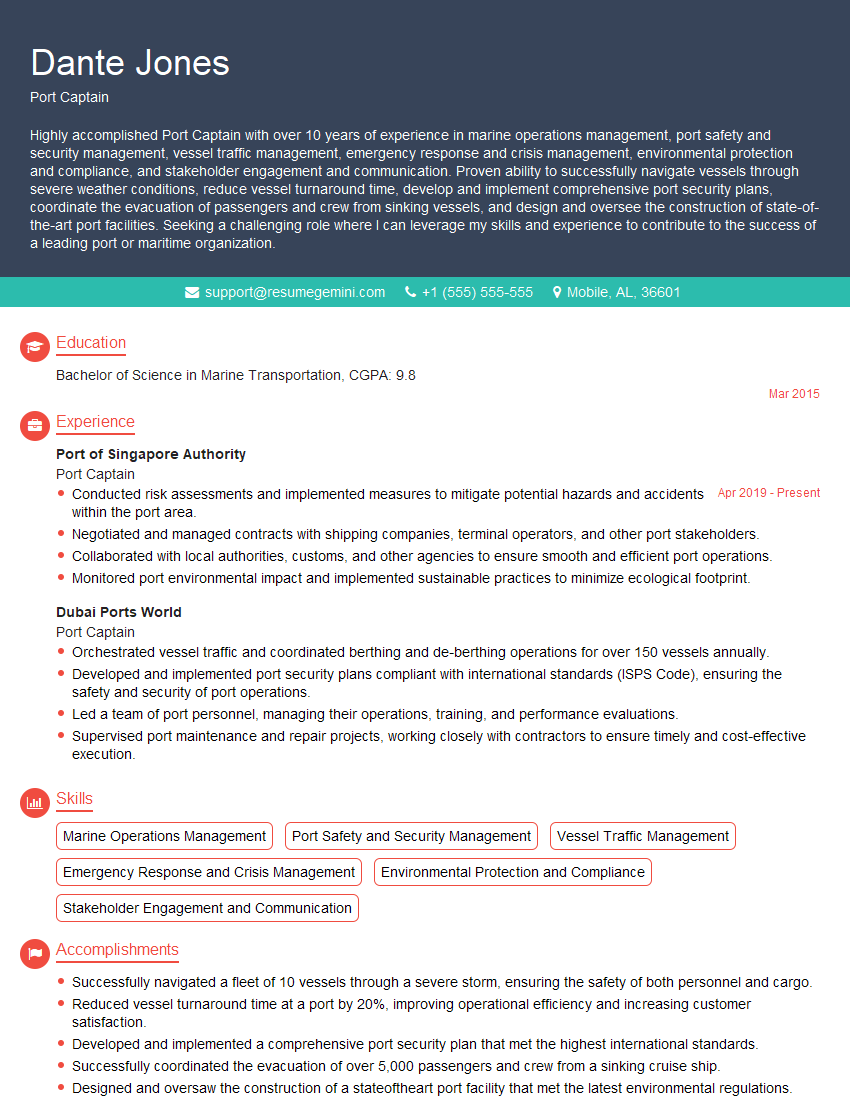
Port Captain Resume Sample
Explore more articles
Users Rating of Our Blogs
Share Your Experience
We value your feedback! Please rate our content and share your thoughts (optional).
What Readers Say About Our Blog
Attention music lovers!
Wow, All the best Sax Summer music !!!
Spotify: https://open.spotify.com/artist/6ShcdIT7rPVVaFEpgZQbUk
Apple Music: https://music.apple.com/fr/artist/jimmy-sax-black/1530501936
YouTube: https://music.youtube.com/browse/VLOLAK5uy_noClmC7abM6YpZsnySxRqt3LoalPf88No
Other Platforms and Free Downloads : https://fanlink.tv/jimmysaxblack
on google : https://www.google.com/search?q=22+AND+22+AND+22
on ChatGPT : https://chat.openai.com?q=who20jlJimmy20Black20Sax20Producer
Get back into the groove with Jimmy sax Black
Best regards,
Jimmy sax Black
www.jimmysaxblack.com
Hi I am a troller at The aquatic interview center and I suddenly went so fast in Roblox and it was gone when I reset.
Hi,
Business owners spend hours every week worrying about their website—or avoiding it because it feels overwhelming.
We’d like to take that off your plate:
$69/month. Everything handled.
Our team will:
Design a custom website—or completely overhaul your current one
Take care of hosting as an option
Handle edits and improvements—up to 60 minutes of work included every month
No setup fees, no annual commitments. Just a site that makes a strong first impression.
Find out if it’s right for you:
https://websolutionsgenius.com/awardwinningwebsites
Hello,
we currently offer a complimentary backlink and URL indexing test for search engine optimization professionals.
You can get complimentary indexing credits to test how link discovery works in practice.
No credit card is required and there is no recurring fee.
You can find details here:
https://wikipedia-backlinks.com/indexing/
Regards
NICE RESPONSE TO Q & A
hi
The aim of this message is regarding an unclaimed deposit of a deceased nationale that bears the same name as you. You are not relate to him as there are millions of people answering the names across around the world. But i will use my position to influence the release of the deposit to you for our mutual benefit.
Respond for full details and how to claim the deposit. This is 100% risk free. Send hello to my email id: lukachachibaialuka@gmail.com
Luka Chachibaialuka
Hey interviewgemini.com, just wanted to follow up on my last email.
We just launched Call the Monster, an parenting app that lets you summon friendly ‘monsters’ kids actually listen to.
We’re also running a giveaway for everyone who downloads the app. Since it’s brand new, there aren’t many users yet, which means you’ve got a much better chance of winning some great prizes.
You can check it out here: https://bit.ly/callamonsterapp
Or follow us on Instagram: https://www.instagram.com/callamonsterapp
Thanks,
Ryan
CEO – Call the Monster App
Hey interviewgemini.com, I saw your website and love your approach.
I just want this to look like spam email, but want to share something important to you. We just launched Call the Monster, a parenting app that lets you summon friendly ‘monsters’ kids actually listen to.
Parents are loving it for calming chaos before bedtime. Thought you might want to try it: https://bit.ly/callamonsterapp or just follow our fun monster lore on Instagram: https://www.instagram.com/callamonsterapp
Thanks,
Ryan
CEO – Call A Monster APP
To the interviewgemini.com Owner.
Dear interviewgemini.com Webmaster!
Hi interviewgemini.com Webmaster!
Dear interviewgemini.com Webmaster!
excellent
Hello,
We found issues with your domain’s email setup that may be sending your messages to spam or blocking them completely. InboxShield Mini shows you how to fix it in minutes — no tech skills required.
Scan your domain now for details: https://inboxshield-mini.com/
— Adam @ InboxShield Mini
support@inboxshield-mini.com
Reply STOP to unsubscribe
Hi, are you owner of interviewgemini.com? What if I told you I could help you find extra time in your schedule, reconnect with leads you didn’t even realize you missed, and bring in more “I want to work with you” conversations, without increasing your ad spend or hiring a full-time employee?
All with a flexible, budget-friendly service that could easily pay for itself. Sounds good?
Would it be nice to jump on a quick 10-minute call so I can show you exactly how we make this work?
Best,
Hapei
Marketing Director
Hey, I know you’re the owner of interviewgemini.com. I’ll be quick.
Fundraising for your business is tough and time-consuming. We make it easier by guaranteeing two private investor meetings each month, for six months. No demos, no pitch events – just direct introductions to active investors matched to your startup.
If youR17;re raising, this could help you build real momentum. Want me to send more info?
Hi, I represent an SEO company that specialises in getting you AI citations and higher rankings on Google. I’d like to offer you a 100% free SEO audit for your website. Would you be interested?
Hi, I represent an SEO company that specialises in getting you AI citations and higher rankings on Google. I’d like to offer you a 100% free SEO audit for your website. Would you be interested?