The right preparation can turn an interview into an opportunity to showcase your expertise. This guide to Chimney Construction interview questions is your ultimate resource, providing key insights and tips to help you ace your responses and stand out as a top candidate.
Questions Asked in Chimney Construction Interview
Q 1. Describe the different types of chimney materials and their suitability for various applications.
Chimney materials significantly impact durability, performance, and cost. The choice depends on factors like climate, fuel type, and aesthetic preferences.
- Brick: A classic and durable choice, offering excellent fire resistance and aesthetic appeal. Suitable for most applications, especially larger, more traditional structures. Requires skilled masonry for proper construction to avoid cracking and ensure longevity.
- Concrete: Often pre-fabricated, offering cost-effectiveness and faster installation. Can be less aesthetically pleasing than brick but provides adequate fire resistance and durability. Prone to cracking if not properly reinforced and cured.
- Metal (Stainless Steel, Aluminum): Used for liners and sometimes for entire chimney structures (especially in modern designs). Stainless steel offers superior corrosion resistance and high temperatures. Aluminum is lighter but less durable at high heat. Best for applications requiring a quick installation or where space is limited. Careful selection of gauge is critical for strength and longevity.
- Clay Tile: Historically used, offering good fire resistance and a unique aesthetic. Less common now due to higher installation costs and potential for cracking/damage.
For instance, a modern, energy-efficient home might use a stainless steel liner within a concrete or framed chimney, while a historic building might retain its original brick structure with necessary repairs and maintenance.
Q 2. Explain the process of installing a chimney liner.
Installing a chimney liner is crucial for fire safety and preventing creosote buildup. The process involves carefully inserting a flexible or rigid liner into the existing chimney flue.
- Inspection: A thorough inspection of the existing chimney is essential to assess its condition and determine the appropriate liner size and material.
- Preparation: Access to the chimney top and base is needed. Any obstructions or debris must be removed.
- Liner Installation: The liner is carefully fed down from the top, guided and secured with specialized tools. For flexible liners, a brush is often used to expand the liner and ensure a proper fit. Rigid liners require more precise measurements and fitting.
- Securing the Liner: The liner’s top and bottom must be securely fastened to prevent shifting. Methods vary depending on the liner material and chimney design.
- Testing: After installation, the liner is tested for any leaks or gaps using a smoke test or other appropriate methods.
Improper liner installation can lead to serious safety hazards, so this process should only be undertaken by experienced and qualified professionals.
Q 3. How do you identify and repair chimney cracks?
Identifying and repairing chimney cracks is crucial to prevent structural damage and fire hazards. Cracks can be detected through visual inspection (both internally and externally) and sometimes using specialized tools or cameras.
- Visual Inspection: Carefully examine the entire chimney structure, looking for cracks, spalling (chipping of the material), and missing mortar. Use binoculars to inspect hard-to-reach areas.
- Internal Inspection: A chimney camera allows a detailed inspection of the interior, often revealing cracks that are not visible from the outside.
- Repair Methods: Small cracks can sometimes be repaired using mortar and patching materials. Larger cracks or significant damage might require more extensive repairs involving rebuilding sections of the chimney or even replacing the entire structure. The choice of repair material needs to match the existing chimney material for best results.
Ignoring chimney cracks can lead to water penetration, structural weakening, and ultimately chimney collapse or fire. Professional assessment and repair are always recommended.
Q 4. What are the common causes of chimney fires, and how can they be prevented?
Chimney fires are dangerous and can cause extensive damage. They are often caused by the accumulation of creosote, a highly flammable byproduct of burning wood. Other causes include improper installation, blocked flues, and faulty appliances.
- Creosote Buildup: The primary cause. Insufficient ventilation, burning low-quality wood, and using too little air lead to more creosote.
- Blocked Flues: Birds’ nests, debris, or even animal carcasses can obstruct the flue, causing gases and smoke to build up, igniting accumulated creosote.
- Faulty Appliances: Damaged or improperly installed appliances can cause sparks or embers to enter the chimney, igniting creosote.
- Improper Installation: Lack of proper clearances around the chimney or incorrect construction can create fire hazards.
Prevention: Regular chimney cleaning, using seasoned wood, ensuring proper appliance ventilation, and regular inspections by a qualified professional are essential for preventing chimney fires.
Q 5. Describe the process of inspecting a chimney for structural damage.
Inspecting a chimney for structural damage involves a thorough visual examination and potentially additional tools for a more complete assessment.
- Exterior Examination: Check the chimney for cracks, leaning, loose bricks or stones, damaged mortar, and signs of water damage (efflorescence, staining). Look for any areas where the chimney may be separating from the house.
- Interior Examination: Examine the flue for cracks, spalling, obstructions, or signs of deterioration. A chimney camera is very helpful for this.
- Foundation Inspection: Check the chimney’s foundation for cracks, settling, or other signs of instability. This is crucial as a weak foundation will put the whole structure at risk.
- Cap and Crown Inspection: The chimney cap should be intact, and the crown (the top section) should be free from damage to prevent water ingress.
A detailed inspection report should be compiled, documenting all findings and recommending necessary repairs. Professional expertise is vital for accurate assessment and safe repair strategies.
Q 6. Explain the importance of proper chimney ventilation.
Proper chimney ventilation is vital for efficient combustion, preventing creosote buildup, and ensuring safe operation. It involves adequate airflow to remove combustion byproducts and prevent dangerous backdrafting.
- Draft: The chimney should have a sufficient draft to draw smoke and gases upwards. A weak draft can lead to smoke entering the home or increased creosote accumulation.
- Flue Size: The flue’s diameter should be appropriately sized for the appliance being used. Too small a flue can restrict airflow, while too large a flue can weaken the draft.
- Chimney Height: Sufficient height ensures proper dispersion of smoke and gases away from the house.
- Openings and Vents: Properly functioning vents and openings throughout the chimney system are essential for ensuring air circulation.
Inadequate ventilation can lead to a dangerous buildup of carbon monoxide, increased fire risk, and appliance malfunctions. Regular inspections and maintenance ensure optimal ventilation.
Q 7. How do you determine the correct size and type of chimney for a specific building?
Determining the correct chimney size and type requires careful consideration of several factors, including appliance type, fuel source, and building codes.
- Appliance Type and BTU Rating: The size of the chimney flue must match the BTU (British Thermal Unit) rating of the appliance. Larger appliances require larger flues.
- Fuel Type: Different fuels produce different amounts of smoke and gases, influencing flue size and material selection (e.g., wood-burning chimneys often require larger flues than gas chimneys).
- Building Codes and Regulations: Local building codes specify minimum requirements for chimney construction, including height, materials, and flue size.
- Building Design: The chimney’s design must integrate seamlessly with the building’s architecture and structural elements.
Incorrect sizing can lead to inefficient operation, smoke backup, fire hazards, and potential structural damage. Consulting with a qualified chimney professional is crucial to ensure the correct size and type of chimney for any building project.
Q 8. What are the safety regulations and codes related to chimney construction?
Chimney construction safety hinges on adherence to local building codes and nationally recognized standards like those from the International Code Council (ICC). These regulations cover everything from the materials used – ensuring they meet fire resistance and structural integrity standards – to the construction techniques employed. For instance, proper clearances around combustible materials are critical to prevent fires. Regulations also dictate the necessary support structures to ensure the chimney can withstand wind loads and its own weight. Ignoring these codes can lead to devastating consequences, including structural failure, chimney fires, and even loss of life. Regular inspections by certified professionals are vital for maintaining safety.
- Material Specifications: Codes often specify minimum compressive strength for masonry units and mortar.
- Clearances: Minimum distances between the chimney and nearby combustible materials are clearly defined.
- Flue Liner Requirements: Codes mandate the use of appropriate flue liners to contain hot gases and prevent chimney fires.
- Structural Support: Requirements for adequate support based on chimney height and load are detailed in codes.
Ignoring these safety measures is not only a violation of the law but also a serious risk to the building’s occupants and the surrounding community.
Q 9. Describe your experience with different types of chimney caps and their functions.
Chimney caps are essential for protecting the chimney from the elements and preventing damage. I’ve worked with a variety of caps, each designed for specific purposes.
- Standard Chimney Caps: These are simple, metal covers that protect against rain, snow, and debris. They are cost-effective but may not offer the same level of protection as more advanced options.
- Adjustable Chimney Caps: These caps allow for adjustments to accommodate varying chimney sizes, making them versatile for different projects.
- Rain Caps: Designed to shed water effectively away from the chimney crown, preventing water damage and leaks.
- Animal Guards: These caps prevent birds, squirrels, and other animals from nesting in the chimney, which can lead to blockages and fire hazards.
- Spark Arrestors: These are crucial for safety, preventing embers and sparks from escaping and causing fires. They are particularly important for wood-burning fireplaces.
The choice of chimney cap depends on factors such as the chimney’s size, material, and the local climate. For instance, in areas with heavy snowfall, a cap designed to effectively shed snow is vital. In areas with numerous birds or squirrels, animal guards are an absolute necessity. I always assess the specific needs of each project before recommending a particular type of cap.
Q 10. How do you diagnose and repair a leaking chimney?
Diagnosing a leaking chimney involves a systematic approach. First, I visually inspect the entire chimney structure, looking for cracks, missing mortar, damaged flashing, or deteriorated crown. I then check the areas around the chimney, both inside and outside the building, for signs of water damage. Using a moisture meter, I check the moisture content of the masonry. If a leak is detected, the next step involves identifying the source.
Repairs depend on the source of the leak. Minor cracks can often be sealed with high-quality, chimney-specific sealant. Larger cracks may require repointing, which involves removing deteriorated mortar and replacing it with new mortar. If the flashing is damaged, it needs to be replaced completely to ensure a proper seal. Severe crown damage might necessitate crown repair or replacement. The entire process requires careful attention to detail and the use of appropriate materials to ensure a long-lasting, waterproof seal.
For example, I once encountered a leak caused by a severely deteriorated crown. After removing the damaged crown, I meticulously poured a new concrete crown, ensuring it was properly sloped to shed water. This, along with careful repointing of surrounding masonry, completely resolved the leak.
Q 11. Explain the process of repointing a chimney.
Repointing a chimney involves replacing damaged or deteriorated mortar between the bricks or stones. It’s a crucial maintenance task that significantly improves the chimney’s structural integrity and prevents water penetration. The process starts with careful preparation.
- Cleaning: The old, loose mortar is thoroughly removed using appropriate tools, ensuring a clean surface for the new mortar.
- Preparation: The area around the damaged mortar is cleaned to remove debris and ensure a secure bond.
- Mortar Mixing: The correct type of mortar, suitable for chimney repair, is mixed according to the manufacturer’s instructions.
- Mortar Application: The new mortar is carefully applied, ensuring it’s firmly pressed into the joints and is level with the brick or stone faces. Tools like a pointing tool are used to shape the mortar joints neatly.
- Curing: The newly applied mortar is allowed to cure properly, following manufacturer’s recommendations, to ensure optimal strength and durability.
The key to successful repointing is using the correct type of mortar and paying close attention to detail. Using unsuitable mortar or rushing the process can lead to further damage. Using a type N mortar for repointing is often a good choice. Proper curing is equally critical for the strength and longevity of the repair.
Q 12. What are the common problems associated with chimney crowns, and how are they repaired?
Chimney crowns are the concrete caps at the top of the chimney. Common problems include cracks, deterioration from weathering, and improper slope, all leading to water damage. Cracks allow water to penetrate the chimney, damaging the masonry and potentially causing structural issues. Deterioration weakens the crown, making it susceptible to collapse. An improperly sloped crown doesn’t effectively shed water, leading to pooling and damage.
Repairs depend on the severity of the damage. Small cracks can be sealed with a high-quality, waterproof sealant designed for masonry. More extensive damage may necessitate a partial or complete crown repair or replacement. Repair involves carefully removing damaged sections, cleaning the surface, and applying a new layer of high-quality concrete, ensuring proper slope to facilitate water runoff. For complete replacement, the old crown is entirely removed, and a new one is poured. In either case, using a waterproof sealant afterwards is crucial for a lasting repair.
Q 13. Describe your experience with different types of mortar used in chimney construction.
Mortar selection is critical in chimney construction; it’s the glue that holds the bricks together. My experience encompasses various types, each with specific properties:
- Type N Mortar: A versatile mortar suitable for a wide range of masonry applications, including chimneys. It offers a good balance of strength and workability.
- Type S Mortar: A higher-strength mortar that’s ideal for applications where greater compressive strength is needed, such as chimneys in high-wind areas or those subjected to significant thermal stress.
- Lime Mortar: A traditional mortar that provides excellent water resistance and allows for some movement, making it suitable for older structures or those in areas prone to seismic activity.
- Specialty Mortars: These are specially formulated mortars designed to meet specific needs, such as high-temperature resistance for fireplaces or enhanced water repellency.
The choice of mortar depends on factors such as the chimney’s location, age, and the specific demands of the construction. I always select the mortar that best suits the project’s requirements, taking into consideration factors like weather conditions, structural integrity needs and the age and type of the chimney masonry. Choosing the wrong mortar can have significant long-term consequences on the chimney’s stability and longevity.
Q 14. How do you ensure proper flashing around a chimney?
Proper flashing around a chimney is crucial to prevent water from entering the building. Flashing is a metal sheet that creates a watertight seal between the chimney and the roof. The process involves several steps and requires careful attention to detail.
- Base Flashing: A continuous piece of flashing is installed under the roofing material, extending up the chimney and overlapping the counter flashing.
- Counter Flashing: This piece of flashing overlaps the base flashing and is tucked under the chimney’s masonry. It prevents water from running down behind the chimney.
- Step Flashing: For chimneys that extend beyond the roofline, step flashing is used. Each piece is installed individually, overlapping the base flashing and the roofing material, forming a watertight seal.
- Caulking: All joints and seams should be carefully sealed with high-quality, weatherproof caulking to ensure a complete seal.
Proper flashing installation requires experience and skill. Inadequate flashing can lead to serious water damage, compromising the structural integrity of the chimney and the surrounding building. I always use high-quality materials and meticulously ensure each step is correctly performed to create a durable and watertight seal.
Q 15. Explain the importance of chimney maintenance and cleaning.
Chimney maintenance and cleaning are paramount for ensuring safety and extending the lifespan of your chimney system. Regular cleaning removes creosote buildup, a highly flammable byproduct of wood combustion. Creosote accumulation is a leading cause of chimney fires, posing a significant threat to your home and family. Beyond fire prevention, cleaning improves draft efficiency, ensuring proper ventilation and preventing the backflow of dangerous gases like carbon monoxide into your living space. Maintenance also involves inspecting for cracks, deterioration, and structural issues that can compromise the chimney’s integrity. Think of it like regular car maintenance; neglecting it can lead to expensive repairs or even catastrophic failure.
- Cleaning: Professional chimney sweeps use specialized brushes and tools to remove creosote and debris from the flue. The frequency of cleaning depends on fuel type and usage but typically ranges from annually to biannually for wood-burning fireplaces.
- Inspection: A thorough inspection involves visually assessing the entire chimney system, from the crown to the firebox, looking for cracks, mortar deterioration, damage to the liner, and blockage. This often involves using a camera to inspect hard-to-reach areas.
Career Expert Tips:
- Ace those interviews! Prepare effectively by reviewing the Top 50 Most Common Interview Questions on ResumeGemini.
- Navigate your job search with confidence! Explore a wide range of Career Tips on ResumeGemini. Learn about common challenges and recommendations to overcome them.
- Craft the perfect resume! Master the Art of Resume Writing with ResumeGemini’s guide. Showcase your unique qualifications and achievements effectively.
- Don’t miss out on holiday savings! Build your dream resume with ResumeGemini’s ATS optimized templates.
Q 16. What are the signs of a damaged chimney flue?
Several signs indicate potential damage to a chimney flue. These can range from subtle indicators to obvious structural problems. Early detection is crucial to prevent escalation and costly repairs.
- Smoke Backdrafting: Smoke entering your living space instead of exiting through the flue indicates a blockage or draft issue, possibly caused by a cracked or deteriorated flue.
- Visible Cracks: Cracks in the flue lining or masonry are clear signs of damage, compromising the structural integrity and potentially allowing dangerous gases to leak into your home.
- Water Stains or Leaks: Water stains on the interior or exterior of the chimney indicate leaks, often resulting from damaged mortar, cracks, or a faulty crown. This can lead to freeze-thaw damage and further structural weakening.
- Missing or Damaged Mortar: Missing or crumbling mortar between bricks weakens the chimney structure, making it more susceptible to collapse.
- Unusual Sounds: Rattling or creaking noises during a fire may indicate loose bricks or other structural problems.
- Animal Activity: Evidence of birds’ nests, squirrels, or other animals in your chimney is a sign of gaps or weaknesses that need attention. These animals can further damage the flue.
Q 17. How do you assess the condition of a chimney damper?
Assessing a chimney damper involves a thorough visual inspection and functional test. The damper is a critical component regulating airflow and preventing heat loss when the fireplace is not in use. A faulty damper can lead to poor draft, heat loss, and even backdrafting.
- Visual Inspection: Look for cracks, rust, warping, or other signs of damage to the damper itself and its frame. Check the seals around the damper for any gaps or deterioration.
- Functional Test: Manually operate the damper to check its movement. It should open and close smoothly and completely. Any binding, sticking, or incomplete closure indicates a problem requiring repair or replacement.
- Draft Test (with a professional): A professional can perform a simple draft test to determine if the damper is properly sealing, preventing air leakage when closed.
If any issues are found, prompt repair or replacement is necessary to maintain the efficiency and safety of your chimney system.
Q 18. Describe your experience with chimney rebuilds and restorations.
I have extensive experience in chimney rebuilds and restorations, handling projects of varying complexity and scale. This involves everything from minor repairs to complete chimney reconstructions. My approach prioritizes preserving the historical integrity of older chimneys while ensuring their structural soundness and safety. One project I recall involved a 100-year-old brick chimney with significant mortar deterioration and cracks. We carefully removed damaged sections, replacing the mortar with a compatible, high-quality mix. In other instances, we’ve had to replace severely damaged sections of the flue liner using stainless steel liners to ensure longevity and prevent future problems. The process always starts with a thorough assessment using both visual inspection and sometimes specialized tools like fiber optic cameras. We then develop a detailed plan addressing all structural issues, providing clients with a clear outline of the process and projected costs.
Q 19. What are the different methods for waterproofing a chimney?
Waterproofing a chimney is essential to prevent water damage that can lead to deterioration and structural failure. Several methods exist, each suited to different chimney types and levels of damage.
- Mortar Repair/Replacement: Repairing or replacing damaged mortar is the first line of defense. This involves cleaning out deteriorated mortar, and replacing it with a high-quality, weather-resistant mortar.
- Crown Repair/Replacement: The chimney crown (the topmost layer) is a critical waterproofing element. Damage or deterioration requires repair or replacement, using materials like waterproof concrete or cast stone.
- Flashing Repair/Replacement: Flashing, the metalwork at the intersection of the chimney and roof, is crucial for preventing water penetration. Any gaps or damage should be repaired or replaced to ensure a watertight seal.
- Water-Repellent Sealants: Penetrating sealants can improve the water resistance of brick and mortar. These sealants are applied to the exterior of the chimney. However, this should only be considered as a supplementary measure after addressing any structural issues.
- Chimney Caps: Chimney caps act as a physical barrier, preventing rain, snow, and debris from entering the flue. This is a highly recommended addition to any chimney waterproofing strategy.
The most effective approach often involves a combination of these methods tailored to the specific needs of the chimney.
Q 20. How do you handle chimney repairs in various weather conditions?
Weather conditions significantly impact chimney repair work. Safety is paramount, and adjustments are needed to ensure both worker and structural safety.
- High Winds: Working at heights during high winds is extremely dangerous. Work may need to be postponed until conditions improve, or specialized safety equipment and procedures must be implemented.
- Rain/Snow: Working in wet conditions can be challenging. Materials can be damaged, and work may be slowed. Tarps and other protective measures are used to shield the work area and materials.
- Extreme Temperatures: Extreme heat or cold can affect the performance of materials and the physical stamina of the workers. Scheduled work during the most suitable weather is crucial. Cold weather can make mortar difficult to work with and may require special additives to maintain workability. Heat can cause mortar to dry too quickly, affecting its strength and durability.
We always prioritize safety and use appropriate safety equipment and techniques according to the prevailing weather conditions. We adhere strictly to safety protocols to prevent accidents and ensure the quality of our work.
Q 21. What are the potential hazards associated with chimney construction and repair?
Chimney construction and repair work involve several potential hazards, requiring meticulous safety precautions.
- Falls: Working at heights is inherently risky. Appropriate fall protection equipment, such as harnesses and safety lines, is crucial.
- Crushing Injuries: Loose bricks, falling debris, and collapsing structures pose a risk of crushing injuries. Proper demolition and shoring techniques are essential.
- Burns: Hot surfaces and potential fires present a burn risk, especially when working near fireplaces or during repairs.
- Inhalation Hazards: Exposure to dust, smoke, and gases during demolition and repair work can cause respiratory problems. Respirators and proper ventilation are necessary.
- Electrical Hazards: Working near power lines or electrical equipment requires additional precautions to prevent electrocution.
- Exposure to Asbestos and Lead: Older chimneys may contain asbestos or lead-based paint, posing health risks. Proper testing and abatement measures are essential before commencing any work.
Thorough risk assessments, appropriate safety equipment, and adherence to safety regulations are crucial to mitigate these hazards and ensure a safe work environment.
Q 22. How do you ensure the structural integrity of a chimney?
Ensuring a chimney’s structural integrity is paramount to safety and longevity. It’s a multi-faceted process that begins even before the first brick is laid. We start with a thorough assessment of the foundation, ensuring it can adequately support the weight of the chimney. This involves analyzing soil conditions and potentially conducting soil tests. The design itself is crucial; we use robust materials like high-quality bricks or concrete blocks, ensuring they meet stringent quality standards. The mortar we use is specifically formulated for its strength and weather resistance. During construction, we meticulously follow building codes and best practices, paying close attention to details like proper bonding patterns in brickwork, ensuring sufficient flue liner support and using appropriate flashing to prevent water ingress. Regular inspections throughout the construction process, and even after completion, are vital to catch any potential issues early on. Think of it like building a sturdy tower – each brick needs to be placed perfectly to avoid any weakness.
We also account for external factors like wind load and seismic activity, especially in areas prone to earthquakes or high winds. This might involve using reinforcement techniques or specialized construction methods. Finally, post-construction, we recommend regular chimney inspections to identify and address any potential problems before they escalate into major structural issues.
Q 23. Describe your experience with working at heights and using safety equipment.
Working at heights is an inherent part of chimney construction and repair. I have over 15 years of experience working safely at heights, and I’m fully certified in fall protection techniques. This includes extensive training in the proper use and inspection of safety harnesses, ropes, lanyards, and scaffolding. I’m proficient in various fall arrest systems and regularly undergo refresher courses to stay updated on safety regulations and best practices. Before commencing any work at height, a comprehensive risk assessment is conducted, and a detailed safety plan is implemented. This involves identifying potential hazards, implementing control measures, and selecting the appropriate personal protective equipment (PPE). I’ve always prioritized safety above all else, ensuring that myself and my team adhere strictly to all safety protocols. We use a buddy system, maintaining constant communication and ensuring that each team member is aware of potential risks.
Q 24. What are the common causes of chimney collapses, and how can they be prevented?
Chimney collapses are serious events, often caused by a combination of factors. One of the most common is deterioration due to age and weathering. Exposure to the elements – rain, freeze-thaw cycles, and wind – can weaken mortar and brickwork over time. Another significant cause is improper construction or maintenance. Insufficient support, inadequate flashing (the metal that prevents water penetration), and the use of low-quality materials can all contribute to structural failure. Furthermore, neglecting regular inspections and repairs can allow minor problems to escalate into major structural weaknesses. Finally, seismic activity or strong winds can exacerbate existing problems, leading to collapse. To prevent collapses, regular inspections (at least annually) are vital. Addressing any deterioration or damage promptly is crucial. Proper maintenance, including cleaning the flue and repairing any cracks or damage, significantly reduces the risk. Using quality materials during construction and adhering strictly to building codes are also essential preventative measures. Think of it like regular car maintenance – preventing small problems from becoming big ones saves you significant expense and risk in the long run.
Q 25. How do you manage a chimney construction project from start to finish?
Managing a chimney construction project involves several key stages. It begins with a thorough site assessment and initial consultation with the client to understand their needs and preferences. This is followed by a detailed design phase, which includes creating blueprints and obtaining necessary permits. The next stage is material procurement, ensuring that high-quality materials are sourced from reputable suppliers. The construction phase itself involves careful planning and execution, with regular inspections to ensure the work meets the required standards. Once the chimney is complete, we conduct a final inspection, which may include a draft test to ensure proper airflow. Finally, we provide the client with all necessary documentation and address any outstanding issues.
Effective communication and project management tools are essential throughout the entire process. We utilize project management software to track progress, manage timelines, and ensure efficient resource allocation. Regular communication with the client keeps them informed of the project’s status and allows us to address any concerns promptly. We believe in a collaborative approach, ensuring transparency and open communication at every stage.
Q 26. What software or tools do you use for chimney design or assessment?
While there isn’t specific software solely dedicated to chimney design, we utilize several tools to aid in the design and assessment process. This includes CAD (Computer-Aided Design) software for creating detailed blueprints and 3D models of the chimney. We also use specialized engineering software for structural analysis, ensuring the chimney’s design can withstand various loads and stresses. Furthermore, we often utilize thermal imaging cameras during inspections to identify any potential issues like heat loss or cracks that might not be visible to the naked eye. We also rely on our own experience and knowledge gained over years of working in the field – our practical expertise is a key component of our design and assessment process.
Q 27. Explain your experience with working with clients and managing their expectations.
Client management is a crucial aspect of my work. I believe in fostering strong relationships built on trust and clear communication. Before starting any project, I take the time to listen to my clients’ needs and expectations, ensuring we are on the same page. Regular updates throughout the construction process, coupled with transparent communication regarding potential challenges or delays, helps manage expectations effectively. I’m always available to answer questions and address concerns, ensuring the client feels involved and informed every step of the way. I pride myself on exceeding client expectations by delivering high-quality work and completing projects on time and within budget. Ultimately, my goal is to build long-term relationships based on mutual trust and respect.
Q 28. Describe a challenging chimney repair project and how you overcame the obstacles.
One particularly challenging project involved repairing a historic chimney that had suffered significant damage due to a lightning strike. The chimney was quite old, constructed using traditional methods with a complex structure. The initial assessment revealed extensive cracking, deteriorated mortar, and internal damage to the flue liner. The challenge was to repair the chimney while preserving its historical integrity. We carefully removed damaged sections, using specialized techniques to minimize disruption to the remaining structure. We then used a traditional lime mortar to repair the brickwork, ensuring a strong and aesthetically compatible repair. The flue liner was carefully replaced using techniques that preserved the chimney’s original appearance. The project required meticulous craftsmanship, a detailed understanding of historic building methods, and close collaboration with preservation specialists. Despite the numerous challenges, we successfully completed the repair, restoring the chimney to its former glory, exceeding the client’s expectations, and ensuring its structural integrity for many years to come.
Key Topics to Learn for Chimney Construction Interview
- Chimney Design & Codes: Understanding building codes, relevant safety regulations, and different chimney designs (e.g., masonry, prefabricated) and their suitability for various applications.
- Materials & Components: Familiarity with brick, mortar, flue liners, firebricks, dampers, and other essential components. Knowing the properties and applications of each material is crucial.
- Construction Techniques: Mastering the practical aspects, including bricklaying techniques, mortar mixing, proper installation of flue liners, and ensuring structural integrity.
- Troubleshooting & Repairs: Understanding common chimney problems like cracks, leaks, blockages, and creosote buildup, and the appropriate repair methods.
- Safety Procedures & Regulations: Demonstrating a strong understanding of safety protocols, including fall protection, respiratory protection, and working at heights.
- Inspection & Maintenance: Knowledge of chimney inspection techniques, identifying potential hazards, and recommending preventative maintenance strategies.
- Energy Efficiency & Sustainability: Understanding how chimney design and construction impact energy efficiency and exploring sustainable materials and practices.
- Estimating & Project Management: Ability to estimate material costs, labor, and project timelines. Understanding project management basics in the context of chimney construction.
Next Steps
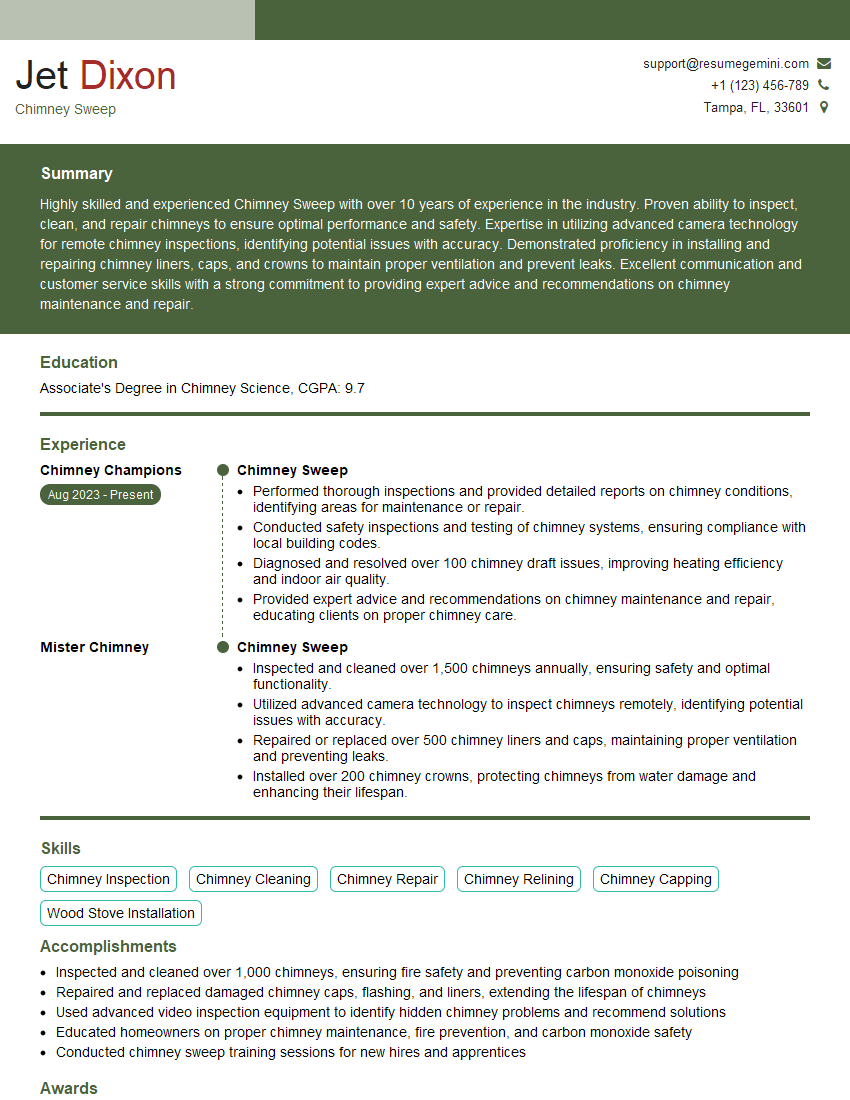
Mastering chimney construction opens doors to a rewarding career with excellent growth potential. Demand for skilled chimney professionals remains high, offering opportunities for advancement and specialization. To maximize your job prospects, it’s vital to create an ATS-friendly resume that showcases your skills and experience effectively. ResumeGemini is a trusted resource to help you build a professional and impactful resume that gets noticed by recruiters. We provide examples of resumes tailored to the Chimney Construction industry to help you get started.
Explore more articles
Users Rating of Our Blogs
Share Your Experience
We value your feedback! Please rate our content and share your thoughts (optional).
What Readers Say About Our Blog
Attention music lovers!
Wow, All the best Sax Summer music !!!
Spotify: https://open.spotify.com/artist/6ShcdIT7rPVVaFEpgZQbUk
Apple Music: https://music.apple.com/fr/artist/jimmy-sax-black/1530501936
YouTube: https://music.youtube.com/browse/VLOLAK5uy_noClmC7abM6YpZsnySxRqt3LoalPf88No
Other Platforms and Free Downloads : https://fanlink.tv/jimmysaxblack
on google : https://www.google.com/search?q=22+AND+22+AND+22
on ChatGPT : https://chat.openai.com?q=who20jlJimmy20Black20Sax20Producer
Get back into the groove with Jimmy sax Black
Best regards,
Jimmy sax Black
www.jimmysaxblack.com
Hi I am a troller at The aquatic interview center and I suddenly went so fast in Roblox and it was gone when I reset.
Hi,
Business owners spend hours every week worrying about their website—or avoiding it because it feels overwhelming.
We’d like to take that off your plate:
$69/month. Everything handled.
Our team will:
Design a custom website—or completely overhaul your current one
Take care of hosting as an option
Handle edits and improvements—up to 60 minutes of work included every month
No setup fees, no annual commitments. Just a site that makes a strong first impression.
Find out if it’s right for you:
https://websolutionsgenius.com/awardwinningwebsites
Hello,
we currently offer a complimentary backlink and URL indexing test for search engine optimization professionals.
You can get complimentary indexing credits to test how link discovery works in practice.
No credit card is required and there is no recurring fee.
You can find details here:
https://wikipedia-backlinks.com/indexing/
Regards
NICE RESPONSE TO Q & A
hi
The aim of this message is regarding an unclaimed deposit of a deceased nationale that bears the same name as you. You are not relate to him as there are millions of people answering the names across around the world. But i will use my position to influence the release of the deposit to you for our mutual benefit.
Respond for full details and how to claim the deposit. This is 100% risk free. Send hello to my email id: lukachachibaialuka@gmail.com
Luka Chachibaialuka
Hey interviewgemini.com, just wanted to follow up on my last email.
We just launched Call the Monster, an parenting app that lets you summon friendly ‘monsters’ kids actually listen to.
We’re also running a giveaway for everyone who downloads the app. Since it’s brand new, there aren’t many users yet, which means you’ve got a much better chance of winning some great prizes.
You can check it out here: https://bit.ly/callamonsterapp
Or follow us on Instagram: https://www.instagram.com/callamonsterapp
Thanks,
Ryan
CEO – Call the Monster App
Hey interviewgemini.com, I saw your website and love your approach.
I just want this to look like spam email, but want to share something important to you. We just launched Call the Monster, a parenting app that lets you summon friendly ‘monsters’ kids actually listen to.
Parents are loving it for calming chaos before bedtime. Thought you might want to try it: https://bit.ly/callamonsterapp or just follow our fun monster lore on Instagram: https://www.instagram.com/callamonsterapp
Thanks,
Ryan
CEO – Call A Monster APP
To the interviewgemini.com Owner.
Dear interviewgemini.com Webmaster!
Hi interviewgemini.com Webmaster!
Dear interviewgemini.com Webmaster!
excellent
Hello,
We found issues with your domain’s email setup that may be sending your messages to spam or blocking them completely. InboxShield Mini shows you how to fix it in minutes — no tech skills required.
Scan your domain now for details: https://inboxshield-mini.com/
— Adam @ InboxShield Mini
support@inboxshield-mini.com
Reply STOP to unsubscribe
Hi, are you owner of interviewgemini.com? What if I told you I could help you find extra time in your schedule, reconnect with leads you didn’t even realize you missed, and bring in more “I want to work with you” conversations, without increasing your ad spend or hiring a full-time employee?
All with a flexible, budget-friendly service that could easily pay for itself. Sounds good?
Would it be nice to jump on a quick 10-minute call so I can show you exactly how we make this work?
Best,
Hapei
Marketing Director
Hey, I know you’re the owner of interviewgemini.com. I’ll be quick.
Fundraising for your business is tough and time-consuming. We make it easier by guaranteeing two private investor meetings each month, for six months. No demos, no pitch events – just direct introductions to active investors matched to your startup.
If youR17;re raising, this could help you build real momentum. Want me to send more info?
Hi, I represent an SEO company that specialises in getting you AI citations and higher rankings on Google. I’d like to offer you a 100% free SEO audit for your website. Would you be interested?
Hi, I represent an SEO company that specialises in getting you AI citations and higher rankings on Google. I’d like to offer you a 100% free SEO audit for your website. Would you be interested?